
Noice Eiscue
Generation VIII · #10185 — Penguin Pokémon
The numbers on Eiscue-Noice tell you where to look first: HP at 50, well above what its ice typing alone would predict. This transformation is intrinsically tied to Eiscue's signature ability, Ice Face, which causes the Pokémon to switch forms whenever it takes a physical attack, creating a dynamic and strategic gameplay mechanic unique to this species.
Editor's Take
Noice Face Eiscue is what remains after the ice head is broken by a physical hit, trading enormous Defense for Speed — a genuinely interesting one-way transformation.
Base Stats
Height
1.4m
Weight
89.0kg
Category
Penguin Pokémon
Gender
Male 50% / Female 50%
Color
blue
Shape
upright
Abilities
The Pokémon’s ice head can take a physical attack as a substitute, but the attack also changes the Pokémon’s appearance. The ice will be restored when it snows.

Noice Eiscue Biology & Physical Characteristics
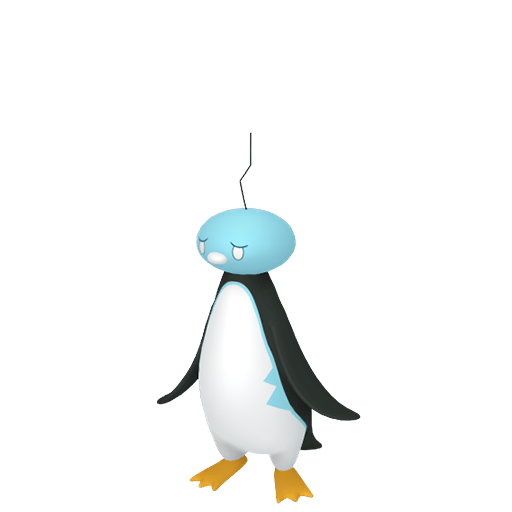
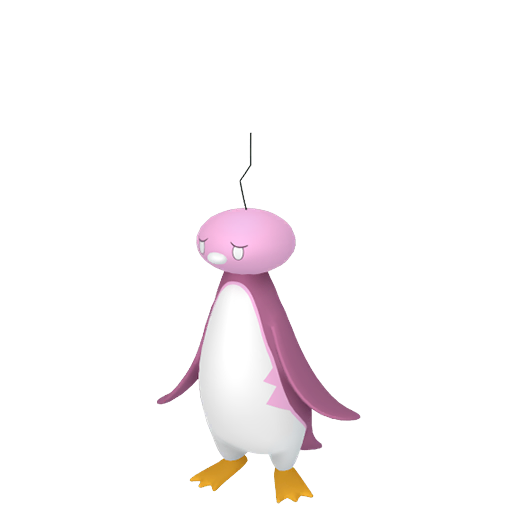
In its Noice Face form, Eiscue displays its true physiological nature—a light blue-colored face with distinctive white eyes, black eyebrows, and a white beak, all bearing an expression of concern or worry. The creature's body remains consistent across both forms: a penguin-like structure with black and white coloring accented by light blue around the belly region, complete with two flippers and yellow feet featuring three toes each. The most striking feature is the long, antenna-like hair protruding from where the ice once covered its head, which serves as a fishing lure when hunting for food in the ocean. Biologically, Eiscue produces cold air from within its head to manufacture and maintain its protective ice coating, a physiological adaptation that allows it to regulate its body temperature in warmer environments. When the ice shatters and reforms, the process begins around this distinctive hair first, gradually spreading across the head until the Pokémon is fully protected once more. The salty taste detected on Eiscue's ice is a direct result of its oceanic journeys, with minerals from seawater becoming embedded in the frozen layer through prolonged exposure.
Pokedex Numbers
Training
Breeding
Noice Eiscue Breeding, Gender Ratio & Egg Groups
Eiscue maintains a balanced gender ratio of 50% male and 50% female, allowing for straightforward breeding practices without gender-specific complications. Both male and female Eiscue are equally capable of producing offspring and participate equally in the breeding process, belonging to the Water 1 and Field egg groups. This dual egg group membership provides flexibility for breeders, as Eiscue can breed with a wide variety of Pokémon species from either category, enabling diverse genetic combinations and movepool inheritance. The species has a slow growth rate, consistent with many of the more powerful or unique Pokémon, requiring more experience points per level to reach higher tiers. Eiscue eggs require 25 cycles to hatch, translating to approximately 6,169 to 6,425 steps, making it a moderate commitment for dedicated breeders seeking competitive individuals. The base happiness value of 50 is considered neutral, neither particularly affectionate nor standoffish toward trainers, reflecting Eiscue's independent and easygoing nature. Female Eiscue are just as likely to encounter while catching in the wild, with a base capture rate of 60, making them reasonably obtainable without excessive resource investment.
Sprites




TMs & HMs
tm01
lets go pikachu lets go eevee
tm02
crystal
tm02
gold silver
tm03
ruby sapphire
tm03
platinum
tm03
firered leafgreen
tm03
heartgold soulsilver
tm03
diamond pearl
tm03
emerald
tm03
xd
tm03
colosseum
tm04
sword shield
tm05
lets go pikachu lets go eevee
tm07
ruby sapphire
tm07
emerald
tm07
firered leafgreen
tm07
heartgold soulsilver
tm07
platinum
tm07
colosseum
tm07
black white
+393 more TMs/HMs

Noice Eiscue Evolution, Mega Evolution & Special Forms
Eiscue does not evolve into or from any other Pokémon species, representing a singular evolutionary line with no predecessors or successors. However, the distinction between its two forms—Ice Face and Noice Face—functions as a unique form-change mechanic rather than a traditional evolution. The transformation occurs dynamically during battle through Eiscue's Ice Face ability: whenever the Pokémon takes damage from a physical attack, the ice shattering triggers an automatic form change to Noice Face, with the stat redistribution taking effect immediately. This mechanical change is reversed when it snows or hails during battle, allowing Eiscue to restore its ice head and return to Ice Face form with its original defensive stats reinstated. This automatic form-switching creates a strategic depth uncommon among Pokémon, as trainers must adapt their tactical approach based on which form Eiscue currently occupies. The design represents a brilliant integration of game mechanics with biological narrative—the ice is genuinely fragile and needs restoration, creating a mechanic that feels authentic to the Pokémon's nature rather than artificial.
Where to Find
Location data not available for this Pokémon in the database.
Noice Eiscue Behaviour and Natural Habitat
Eiscue originates from extremely frigid regions and relies on ocean currents to traverse vast distances, drifting aimlessly across seas to distant shores with remarkable equanimity. Despite its penguin-like appearance, Eiscue is surprisingly poor at swimming, preferring to float with only its ice-covered head at the surface rather than dive beneath the waves. The Noice Face form particularly reflects Eiscue's easygoing and adaptable nature—it displays no panic or distress when its protective ice shatters and must reform, instead continuing its daily routines with remarkable composure. Eiscue fishes using a unique hunting technique, dangling its single hair-like appendage into the sea to lure prey, demonstrating remarkable ingenuity despite its seemingly placid demeanor. On particularly hot days, multiple Eiscue have been observed pressing their ice cube heads together to share cooling effects, revealing a cooperative social behavior. The Pokémon's tendency to end up on unfamiliar shores demonstrates its passive approach to exploration—it simply accepts wherever the currents carry it, making it a true nomad of the polar seas.
Pokedex Entries
It drifted in on the flow of ocean waters from a frigid place. It keeps its head iced constantly to make sure it stays nice and cold.
This Pokémon keeps its heat-sensitive head cool with ice. It fishes for its food, dangling its single hair into the sea to lure in prey.
Noice Eiscue Name Origin & Design Inspiration
The name "Eiscue" derives from "Eis," the German word for ice, combined with "cue," a possible reference to its unique hair-like fishing lure that resembles a pool cue or fishing line. In Japanese, it is known as "Korippo" (コオリッポ), which combines "kori" (氷, ice) with "hippo" (ヒッポ), an unexpected reference to a hippopotamus that reflects the somewhat incongruous penguin-hippopotamus hybrid appearance the Pokémon presents. The "Noice Face" designation is a playful internet meme reference, celebrating the distinctive worried expression revealed when the ice shatters. Visually, Eiscue's penguin-like body design draws clear inspiration from real Antarctic penguins, while its oversized ice head and solitary hair appendage create a charmingly absurd silhouette that distinguishes it from conventional ice-type designs. The light blue coloring of both the ice head and true face reflects traditional ice Pokémon aesthetics, while the contrasting black-and-white body maintains recognizable penguin characteristics. The design philosophy appears to celebrate the intersection of vulnerability and adaptability—a penguin that must maintain an artificial defensive layer to survive, yet retains the resilience to continue functioning when that protection fails.
Learnable Moves
Noice Eiscue can learn 55 moves:
Move | Type | Cat. | Power | Acc. | PP |
|---|---|---|---|---|---|
| agility | psychic | Status | — | — | 30 |
| amnesia | psychic | Status | — | — | 20 |
| aqua ring | water | Status | — | — | 20 |
| attract | normal | Status | — | 100 | 15 |
| aurora veil | ice | Status | — | — | 20 |
| avalanche | ice | Physical | 60 | 100 | 10 |
| belly drum | normal | Status | — | — | 10 |
| blizzard | ice | Special | 110 | 70 | 5 |
| body slam | normal | Physical | 85 | 100 | 15 |
| brine | water | Special | 65 | 100 | 10 |
| chilling water | water | Special | 50 | 100 | 20 |
| dive | water | Physical | 80 | 100 | 10 |
| double edge | normal | Physical | 120 | 100 | 15 |
| endure | normal | Status | — | — | 10 |
| facade | normal | Physical | 70 | 100 | 20 |
| feather dance | flying | Status | — | 100 | 15 |
| flip turn | water | Physical | 60 | 100 | 20 |
| freeze dry | ice | Special | 70 | 100 | 20 |
| giga impact | normal | Physical | 150 | 90 | 5 |
| hail | ice | Status | — | — | 10 |
| head smash | rock | Physical | 150 | 80 | 5 |
| headbutt | normal | Physical | 70 | 100 | 15 |
| hydro pump | water | Special | 110 | 80 | 5 |
| hyper beam | normal | Special | 150 | 90 | 5 |
| ice beam | ice | Special | 90 | 100 | 10 |
| ice punch | ice | Physical | 75 | 100 | 15 |
| ice spinner | ice | Physical | 80 | 100 | 15 |
| icicle crash | ice | Physical | 85 | 90 | 10 |
| icicle spear | ice | Physical | 25 | 100 | 30 |
| icy wind | ice | Special | 55 | 95 | 15 |
| iron defense | steel | Status | — | — | 15 |
| iron head | steel | Physical | 80 | 100 | 15 |
| liquidation | water | Physical | 85 | 100 | 10 |
| mist | ice | Status | — | — | 30 |
| powder snow | ice | Special | 40 | 100 | 25 |
| protect | normal | Status | — | — | 10 |
| rain dance | water | Status | — | — | 5 |
| reflect | psychic | Status | — | — | 20 |
| rest | psychic | Status | — | — | 5 |
| reversal | fighting | Physical | — | 100 | 15 |
| round | normal | Special | 60 | 100 | 15 |
| sleep talk | normal | Status | — | — | 10 |
| snore | normal | Special | 50 | 100 | 15 |
| snowscape | ice | Status | 0 | — | 10 |
| soak | water | Status | — | 100 | 20 |
| substitute | normal | Status | — | — | 10 |
| surf | water | Special | 90 | 100 | 15 |
| tackle | normal | Physical | 40 | 100 | 35 |
| take down | normal | Physical | 90 | 85 | 20 |
| tera blast | normal | Special | 80 | 100 | 10 |
| water pulse | water | Special | 60 | 100 | 20 |
| waterfall | water | Physical | 80 | 100 | 15 |
| weather ball | normal | Special | 50 | 100 | 10 |
| whirlpool | water | Special | 35 | 85 | 15 |
| zen headbutt | psychic | Physical | 80 | 90 | 15 |
Noice Eiscue Competitive Battle Guide
In terms of competitive use, Eiscue's Noice Face form presents an entirely different strategic profile compared to its Ice Face counterpart, offering a high-speed alternative that transforms the Pokémon into a potential physical sweeper. With a Speed stat of 130, Noice Face Eiscue outpaces the vast majority of Pokémon in competitive environments, allowing it to act first in most matchups and capitalize on its base 80 Attack stat. However, this form comes with severe defensive liabilities: the Defense drop to 70 and Special Defense plummet to 50 leaves Noice Face Eiscue vulnerable to sustained offensive pressure from both physical and special attackers. The tactical deployment of Noice Face hinges on proper prediction of incoming physical attacks, forcing switches into Eiscue to trigger the form change strategically rather than allowing free physical hits. Competitive trainers must carefully manage when Eiscue takes physical damage to activate the form transformation at optimal moments, creating a high-skill ceiling playstyle that rewards game knowledge. The ability to revert to Ice Face through hail or snow effects provides additional strategic flexibility, though weather-dependent mechanics add another layer of team building consideration. Coverage moves and support options become critical when utilizing Noice Face, as its reduced defenses demand either offensive momentum or safe switching opportunities to avoid being exploited.
Commonly Asked Questions About Noice Eiscue
What type is Noice Eiscue?
Noice Eiscue is a ice type Pokemon.
What does Noice Eiscue evolve into?
Noice Eiscue does not evolve.
What are Noice Eiscue's weaknesses?
Noice Eiscue is weak to fighting, rock, steel and fire type moves.
Noice Eiscue Cultural Impact & Franchise History
Eiscue has captured the imagination of the Pokémon community since its introduction in Generation VIII, particularly through the internet's affectionate adoption of the "Noice Face" designation. The meme-adjacent nature of Eiscue's worried expression became instantly relatable to players, generating countless fan arts, jokes, and community references celebrating the Pokémon's apparent anxiety. The unique form-change mechanic established Eiscue as a design highlight of the Galar region, demonstrating Game Freak's commitment to creating mechanically innovative creatures rather than purely stat-based variations. Competitive players have appreciated the skill expression demanded by Eiscue's form switching, spawning tournament discussion and strategy guides focused on optimizing when to trigger transformations. The Pokémon's tragic backstory—a lonely creature drifting across oceans, forced to maintain an artificial ice head just to survive—has resonated with players seeking narratively complex creatures beyond simple "cute" or "powerful" archetypes. Fan communities have embraced Eiscue's earnest vulnerability, with the species becoming emblematic of the Sword and Shield generation's willingness to experiment with unconventional designs. Its prominence in online communities ensures Eiscue remains a memorable and beloved addition to the Pokédex.
Where to Find Noice Eiscue in Every Pokémon Game
Eiscue was introduced in Pokémon Sword and Shield (Generation VIII), where it appears in the Crown Tundra DLC area, a fitting location for a Pokémon hailing from frigid regions. In these games, Eiscue occupies National Pokédex slot 875 and local Pokédex number 370 in Sword/Shield. The species became available in Pokémon Scarlet and Violet for Generation IX, where it holds local Pokédex number 320, confirming its continued presence in current-generation games. With a base capture rate of 60, Eiscue presents a reasonably achievable encounter for standard Poké Ball captures, though players may benefit from applying status conditions or lowering its HP to improve success rates. The species cannot be obtained through evolution from another Pokémon, requiring direct encounters in the wild or receiving it through in-game trades, making location scouting necessary for players seeking to add it to their rosters. Eiscue's presence across multiple generations since its introduction indicates its acceptance as a standard Pokédex entry rather than a generation-exclusive rarity, ensuring long-term availability for new and veteran players alike. The availability across both Sword/Shield and Scarlet/Violet ensures that modern players on contemporary Nintendo platforms can readily obtain this unique ice-type penguin.