
Blue Striped Basculin
Generation V · #10016 — Hostile Pokémon
As a Generation V water-type, Basculin-Blue-Striped leans on rock head to cover what its raw numbers don't, particularly on the hp side. The blue-striped variant differs subtly from the red form in its ability distribution, particularly its access to Rock Head as its standard ability, which protects against recoil damage from moves like Double-Edge or Head Smash. This form has remained a staple of Water-type rosters since its introduction in Pokémon Black and White, representing one of the few aesthetically distinct forms that fundamentally alters a Pokémon's competitive viability.
Editor's Take
Blue-Striped Basculin's Rock Head removing recoil from Double-Edge is a genuinely different build to the Red-Striped Adaptability set, and it is the better of the two.
Base Stats
Height
1.0m
Weight
18.0kg
Category
Hostile Pokémon
Gender
Male 50% / Female 50%
Color
green
Shape
fish
Abilities
Protects against recoil damage.
Increases the same-type attack bonus from 1.5× to 2×.
Bypasses targets' abilities if they could hinder or prevent a move.

Blue Striped Basculin Biology & Physical Characteristics
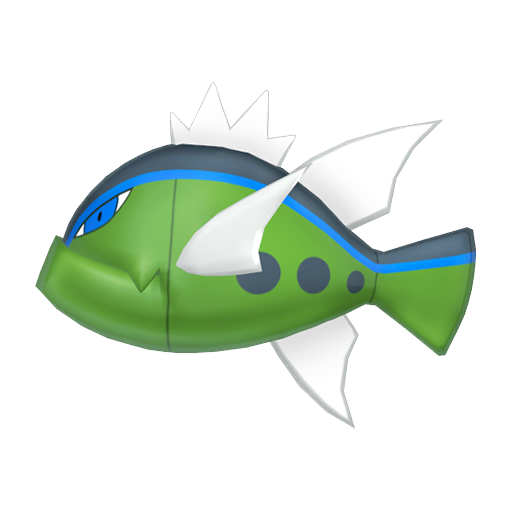
The blue-striped Basculin is a sleek, fish-like Pokémon measuring 1.0 meter in length and weighing approximately 18.0 kilograms, making it a compact yet powerful aquatic creature. Its body structure is optimized for rapid movement through water, with a streamlined silhouette and powerful tail fin that enables its impressive base speed of 98. The distinctive azure striping patterns serve not merely as coloration but appear to signify social hierarchy and territorial boundaries within schools of Basculin, as Pokédex entries note that blue and red variants typically segregate from one another. Internally, Basculin possesses a robust skeletal structure capable of withstanding the intense pressures of aggressive territorial combat, with musculature concentrated in its jaws and tail. The species exhibits sexual dimorphism in behavioral patterns rather than physical form, with both males and females sharing identical base statistics and appearance. The blue-striped form's connection to water-based ecosystems is profound, with its physiology perfectly adapted to both freshwater and brackish environments where Basculin populations naturally congregate.
Pokedex Numbers
Training
Breeding
Blue Striped Basculin Breeding, Gender Ratio & Egg Groups
Blue-striped Basculin maintains a perfect 50% male to 50% female gender ratio, ensuring balanced breeding opportunities regardless of chosen sex. Both males and females are identical in appearance and base statistics, with no sexual dimorphism affecting battle capability or physical structure, a design choice that emphasizes the species' unified aggressive nature across both genders. The species belongs to the Water 2 egg group, restricting breeding partners to other aquatic or semi-aquatic Pokémon species with compatible genetics. Breeding two Basculin requires patience, as they possess a high hatch counter of 40 cycles, translating to approximately 10,024 to 10,280 steps before an egg produces a new Basculin. The base happiness of 70 indicates moderate friendliness toward trainers, suggesting that blue-striped Basculin require reasonable care and effort to maintain strong trainer bonds despite their inherent hostility toward rival Pokémon. Newly hatched Basculin enter the world with identical base stats to wild-caught specimens, offering no advantages through breeding beyond genetic optimization through IV selection. The species' breeding mechanics in competitive play have generated interest among Pokémon breeding communities seeking perfect specimens with optimal nature combinations and individual values.
Sprites




Held Items
Deep Sea Scale
species-specific
Doubles Clamperl’s Special Defense. Traded on a Clamperl: Holder evolves into Gorebyss.
Cost: 2000
Deep Sea Scale
species-specific
Doubles Clamperl’s Special Defense. Traded on a Clamperl: Holder evolves into Gorebyss.
Cost: 2000
Deep Sea Scale
species-specific
Doubles Clamperl’s Special Defense. Traded on a Clamperl: Holder evolves into Gorebyss.
Cost: 2000
Deep Sea Scale
species-specific
Doubles Clamperl’s Special Defense. Traded on a Clamperl: Holder evolves into Gorebyss.
Cost: 2000
Deep Sea Scale
species-specific
Doubles Clamperl’s Special Defense. Traded on a Clamperl: Holder evolves into Gorebyss.
Cost: 2000
Deep Sea Scale
species-specific
Doubles Clamperl’s Special Defense. Traded on a Clamperl: Holder evolves into Gorebyss.
Cost: 2000
Deep Sea Scale
species-specific
Doubles Clamperl’s Special Defense. Traded on a Clamperl: Holder evolves into Gorebyss.
Cost: 2000
Deep Sea Scale
species-specific
Doubles Clamperl’s Special Defense. Traded on a Clamperl: Holder evolves into Gorebyss.
Cost: 2000
Deep Sea Scale
species-specific
Doubles Clamperl’s Special Defense. Traded on a Clamperl: Holder evolves into Gorebyss.
Cost: 2000
Deep Sea Scale
species-specific
Doubles Clamperl’s Special Defense. Traded on a Clamperl: Holder evolves into Gorebyss.
Cost: 2000
Deep Sea Scale
species-specific
Doubles Clamperl’s Special Defense. Traded on a Clamperl: Holder evolves into Gorebyss.
Cost: 2000
Deep Sea Scale
species-specific
Doubles Clamperl’s Special Defense. Traded on a Clamperl: Holder evolves into Gorebyss.
Cost: 2000
TMs & HMs
tm01
lets go pikachu lets go eevee
tm02
crystal
tm02
gold silver
tm02
lets go pikachu lets go eevee
tm03
ruby sapphire
tm03
platinum
tm03
firered leafgreen
tm03
heartgold soulsilver
tm03
diamond pearl
tm03
emerald
tm03
xd
tm03
colosseum
tm05
lets go pikachu lets go eevee
tm06
yellow
tm06
gold silver
tm06
red blue
tm06
crystal
tm06
emerald
tm06
firered leafgreen
tm06
diamond pearl
+542 more TMs/HMs
Regional & Special Forms
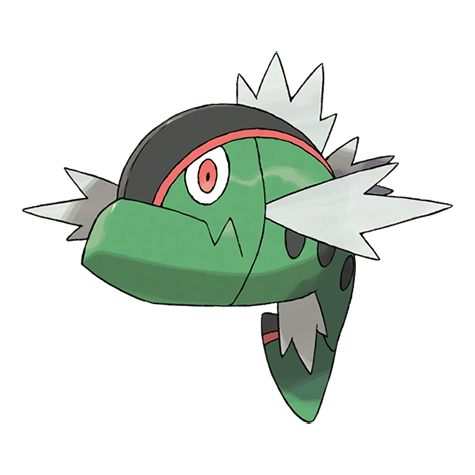
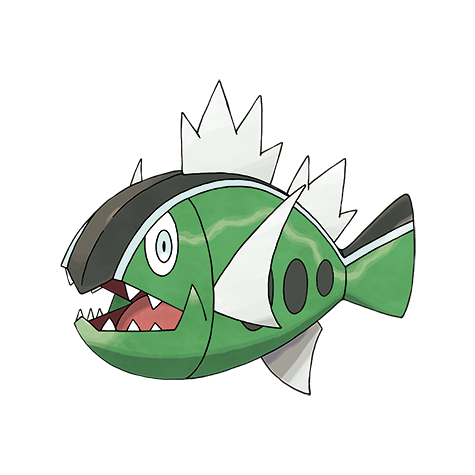
Blue Striped Basculin also has 2 related forms: Red Striped Basculin and White Striped Basculin.
Blue Striped Basculin's Evolution Chain


Blue Striped Basculin Evolution, Mega Evolution & Special Forms
The blue-striped form of Basculin does not evolve under standard conditions, remaining a terminal evolution stage throughout most canonical games. This contrasts with the white-striped variant introduced in Pokémon Legends: Arceus, which can evolve into Basculegion when leveled up after sustaining at least 294 HP from recoil damage without fainting, representing a unique evolution mechanism tied to accumulated battle scars. The blue-striped form's inability to evolve may reflect its aggressive nature as a complete and perfected predatory form, requiring no further development to fulfill its ecological role. Game Freak's decision to restrict evolution to the white-striped form exclusively suggests that the red and blue variants represent finalized evolutionary stages, possibly descended from an ancient common ancestor that the white form more closely resembles. Some players and theorists speculate that Basculin's form differences may indicate different evolutionary lineages or subspecies classifications, though official Pokédex documentation treats them as singular species variants rather than distinct evolutionary paths. The lack of mega evolution options for any Basculin form throughout the series maintains its role as a specialized but non-legendary Water-type choice.
Where to Find
Unova Route 3
unova
+16 more
Pinwheel Forest
unova
+17 more
Giant Chasm
unova
+18 more
Unova Route 11
unova
+11 more
Unova Route 6
unova
+17 more
Dragonspiral Tower
unova
+21 more
Unova Route 1
unova
+26 more
Wellspring Cave
unova
+21 more
Unova Victory Road
unova
+21 more
Unova Route 14
unova
+11 more
Striaton City
unova
+17 more
Village Bridge
unova
+14 more
Abundant Shrine
unova
+12 more
Challengers Cave
unova
+9 more
Lostlorn Forest
unova
+16 more
Floccesy Ranch
unova
+13 more
Relic Passage
unova
+5 more
Undella Town
unova
Aspertia City
unova
+9 more
Humilau City
unova
+15 more locations in other games
Blue Striped Basculin Behaviour and Natural Habitat
Blue-striped Basculin are among the most aggressively territorial Pokémon in existence, known for initiating combat with rival Basculin on sight, particularly with the red-striped variant. Pokédex entries from Black 2 and White 2 document that red and blue-striped Basculin are remarkably violent and perpetually engaged in fighting, suggesting that their populations exist in almost constant states of aquatic conflict. These hostile encounters serve ecological purposes beyond mere aggression, as they establish dominance hierarchies and maintain separation between the two color variants. Blue-striped Basculin typically inhabit flowing rivers and streams where they can utilize their superior speed to dominate localized territories. Despite their combative nature, Pokédex entries from Black and White note that on rare occasions, members of different schools do mingle peacefully, suggesting that aggressive behavior can be suppressed under specific environmental or social conditions. Their dietary preferences remain carnivorous, with blue-striped Basculin being noted as remarkably tasty to both predators and humans, a characteristic that has influenced their availability in game worlds and their ecological significance.
Pokedex Entries
Red and blue Basculin get along so poorly, they’ll start fighting instantly. These Pokémon are very hostile.
Red- and blue-striped Basculin are very violent and always fighting. They are also remarkably tasty.
Red and blue Basculin usually do not get along, but sometimes members of one school mingle with the other’s school.
Red- and blue-striped Basculin are very violent and always fighting. They are also remarkably tasty.
Red and blue Basculin usually do not get along, but sometimes members of one school mingle with the other’s school.
Red- and blue-striped Basculin are very violent and always fighting. They are also remarkably tasty.
Red and blue Basculin usually do not get along, but sometimes members of one school mingle with the other’s school.
Savage, violent Pokémon, red and blue Basculin are always fighting each other over territory.
When a school of Basculin appears in a lake, everything else disappears, except for Corphish and Crawdaunt. That’s how violent Basculin are.
Anglers love the fight this Pokémon puts up on the hook. And there are always more to catch— many people release them into lakes illicitly.
In the past, it often appeared on the dinner table. The meat of red-striped Basculin is on the fatty side, and it’s more popular with the youth.
Though it differs from other Basculin in several respects, including demeanor—this one is gentle—I have categorized it as a regional form given the vast array of shared qualities.
Blue Striped Basculin Name Origin & Design Inspiration
The blue-striped Basculin's name derives from 'Basil' and 'rascalin,' emphasizing its herbivorous temperament despite being a carnivorous Pokémon, or alternatively from the word 'basilisk,' reflecting its territorial and aggressive characteristics. The Japanese designation 'Bassrao' combines 'bass' (the fish) with a Japanese suffix suggesting violent or aggressive behavior, perfectly encapsulating the species' nature. Visually, Basculin's design draws heavy inspiration from real-world fish such as piranhas and angelfish, synthesizing the aggressive predatory nature of piranhas with the elegant fin structure and striped patterning of cichlids or angelfish species. The azure coloration of the blue-striped variant specifically echoes marine and freshwater fish that inhabit deep or cool waters, with the stripe pattern serving as distinctive visual identification against the red-striped competitor form. Game designer intent clearly positioned the color variants as rivals mirroring real biological competitive strategies observed in fish schools, where color variations can indicate different populations competing for the same resources. The form's aesthetic design efficiently communicates its hostile nature through aggressive fin positioning and the predatory mouth structure, making identification immediate even at small sprite sizes in earlier Generation games.
Learnable Moves
Blue Striped Basculin can learn 74 moves:
Move | Type | Cat. | Power | Acc. | PP |
|---|---|---|---|---|---|
| agility | psychic | Status | — | — | 30 |
| aqua jet | water | Physical | 40 | 100 | 20 |
| aqua tail | water | Physical | 90 | 90 | 10 |
| assurance | dark | Physical | 60 | 100 | 10 |
| attract | normal | Status | — | 100 | 15 |
| bite | dark | Physical | 60 | 100 | 25 |
| blizzard | ice | Special | 110 | 70 | 5 |
| bounce | flying | Physical | 85 | 85 | 5 |
| brine | water | Special | 65 | 100 | 10 |
| bubble beam | water | Special | 65 | 100 | 20 |
| chilling water | water | Special | 50 | 100 | 20 |
| chip away | normal | Physical | 70 | 100 | 20 |
| confide | normal | Status | — | — | 20 |
| crunch | dark | Physical | 80 | 100 | 15 |
| cut | normal | Physical | 50 | 95 | 30 |
| dive | water | Physical | 80 | 100 | 10 |
| double team | normal | Status | — | — | 15 |
| double edge | normal | Physical | 120 | 100 | 15 |
| endeavor | normal | Physical | — | 100 | 5 |
| endure | normal | Status | — | — | 10 |
| facade | normal | Physical | 70 | 100 | 20 |
| final gambit | fighting | Special | — | 100 | 5 |
| flail | normal | Physical | — | 100 | 15 |
| flip turn | water | Physical | 60 | 100 | 20 |
| frustration | normal | Physical | — | 100 | 20 |
| giga impact | normal | Physical | 150 | 90 | 5 |
| hail | ice | Status | — | — | 10 |
| head smash | rock | Physical | 150 | 80 | 5 |
| headbutt | normal | Physical | 70 | 100 | 15 |
| hidden power | normal | Special | 60 | 100 | 15 |
| hydro pump | water | Special | 110 | 80 | 5 |
| hyper beam | normal | Special | 150 | 90 | 5 |
| ice beam | ice | Special | 90 | 100 | 10 |
| ice fang | ice | Physical | 65 | 95 | 15 |
| icy wind | ice | Special | 55 | 95 | 15 |
| liquidation | water | Physical | 85 | 100 | 10 |
| mud shot | ground | Special | 55 | 95 | 15 |
| muddy water | water | Special | 90 | 85 | 10 |
| protect | normal | Status | — | — | 10 |
| psychic fangs | psychic | Physical | 85 | 100 | 10 |
| rage | normal | Physical | 20 | 100 | 20 |
| rain dance | water | Status | — | — | 5 |
| rest | psychic | Status | — | — | 5 |
| return | normal | Physical | — | 100 | 20 |
| revenge | fighting | Physical | 60 | 100 | 10 |
| reversal | fighting | Physical | — | 100 | 15 |
| round | normal | Special | 60 | 100 | 15 |
| scald | water | Special | 80 | 100 | 15 |
| scale shot | dragon | Physical | 25 | 90 | 20 |
| scary face | normal | Status | — | 100 | 10 |
| secret power | normal | Physical | 70 | 100 | 20 |
| sleep talk | normal | Status | — | — | 10 |
| snore | normal | Special | 50 | 100 | 15 |
| snowscape | ice | Status | 0 | — | 10 |
| soak | water | Status | — | 100 | 20 |
| substitute | normal | Status | — | — | 10 |
| superpower | fighting | Physical | 120 | 100 | 5 |
| surf | water | Special | 90 | 100 | 15 |
| swagger | normal | Status | — | 85 | 15 |
| swift | normal | Special | 60 | — | 20 |
| tackle | normal | Physical | 40 | 100 | 35 |
| tail whip | normal | Status | — | 100 | 30 |
| take down | normal | Physical | 90 | 85 | 20 |
| taunt | dark | Status | — | 100 | 20 |
| tera blast | normal | Special | 80 | 100 | 10 |
| thrash | normal | Physical | 120 | 100 | 10 |
| toxic | poison | Status | — | 90 | 10 |
| uproar | normal | Special | 90 | 100 | 10 |
| water gun | water | Special | 40 | 100 | 25 |
| water pulse | water | Special | 60 | 100 | 20 |
| waterfall | water | Physical | 80 | 100 | 15 |
| wave crash | water | Physical | 120 | 100 | 10 |
| whirlpool | water | Special | 35 | 85 | 15 |
| zen headbutt | psychic | Physical | 80 | 90 | 15 |
Blue Striped Basculin Competitive Battle Guide
Looking at its competitive profile, blue-striped Basculin occupies a niche role as a physical sweeper, leveraging its 92 Attack and exceptional 98 Speed to outpace and overwhelm many common threats. The Rock Head ability distinguishes this form from its red-striped counterpart, enabling consequence-free usage of powerful recoil-inducing moves like Double-Edge, Head Smash, or Brave Bird through egg move tutelage, maximizing damage output without HP penalty. Basculin's movepool emphasizes physical Water-type attacks such as Waterfall and Aqua Jet, supplemented by coverage moves like Stone Edge, Crunch, and various priority options for maintaining offensive momentum. Its weaknesses to Electric and Grass-type moves remain significant limitations, with base Special Defense of only 55 leaving it vulnerable to special sweepers, requiring careful team composition and speed stat investments to overcome. The hidden ability Mold Breaker offers strategic flexibility against defensive Pokémon reliant on abilities like Filter or Levitate, granting unexpected wallbreaking potential in competitive formats. Usage statistics vary across competitive tiers, with blue-striped Basculin finding occasional appearances in mid-tier competitive play where its speed and attack combination provides advantages before facing over-centralized meta threats. The adaptability of moveset construction, combined with multiple ability options, allows skilled trainers to tailor Basculin to specific strategic roles within their teams.
Commonly Asked Questions About Blue Striped Basculin
What type is Blue Striped Basculin?
Blue Striped Basculin is a water type Pokemon.
What does Blue Striped Basculin evolve into?
Blue Striped Basculin does not evolve into any other Pokemon. It is the final form in its evolution line.
What are Blue Striped Basculin's weaknesses?
Blue Striped Basculin is weak to grass and electric type moves.
Where can I find Blue Striped Basculin?
Blue Striped Basculin can be found in unova route 3 (unova), pinwheel forest (unova) and giant chasm (unova) and 32 other locations.
Blue Striped Basculin Cultural Impact & Franchise History
Basculin's dual-form design has generated lasting intrigue within the Pokémon community, particularly regarding the philosophical and biological implications of maintaining two apparently equal but hostile variants of identical Pokémon. The blue-striped form has inspired countless fan theories about hidden lore suggesting territorial or evolutionary relationships between the color forms, with some theorists proposing environmental factors determine coloration patterns. In competitive communities, blue-striped Basculin maintains consistent recognition as a legitimate choice for physical attacking strategies, appearing in competitive tournament placements and gaining respect for its ability to execute reliable sweeping roles. The species has influenced broader discussions about aggressive Pokémon design philosophy, with blue-striped Basculin becoming iconic representatives of the hostile nature aesthetic introduced prominently in Generation V. Japanese and international gaming communities have created substantial fan art and fan fiction exploring Basculin's aggressive territorial behavior, often depicting encounters between red and blue forms as dramatic confrontations. Merchandising featuring Basculin remains limited compared to more iconic water types, though dedicated enthusiasts maintain strong interest in the species. The introduction of white-striped Basculin in Pokémon Legends: Arceus reinvigorated cultural interest in the entire line, encouraging retrospective appreciation of the original red and blue forms.
Where to Find Blue Striped Basculin in Every Pokémon Game
Blue-striped Basculin becomes available to trainers relatively early in Pokémon Black and White, accessible through fishing in various bodies of water throughout the Unova region with moderate encounter rates. The species appears in subsequent generations with similar availability patterns, typically found in major water routes and fishing locations in games from Generation V onward, including Black 2, White 2, X, Y, Omega Ruby, Alpha Sapphire, Sun, Moon, Ultra Sun, and Ultra Moon. More recent entries including Sword and Shield feature Basculin populations in the Wild Area and various water routes, maintaining consistent availability throughout modern generations. In Pokémon Legends: Arceus, while primarily featuring the white-striped form, blue-striped Basculin remains obtainable through specific locations and evolution mechanics specific to that title's mechanics. Scarlet and Violet continue the tradition of widespread Basculin availability, allowing players to encounter either form through standard fishing mechanics or water-based encounters. Capture rates establish a challenge level of 25 with standard Poké Balls at full health, requiring approximately 3.3% encounter success rate, making patient fishing necessary for acquisition. The base friendship of 70 ensures newly caught wild Basculin maintain neutral disposition toward trainers, requiring gradual relationship building through gameplay progression. Trading between generations remains viable for obtaining blue-striped Basculin across multiple game versions, with compatibility maintained throughout generations V through the present.