
Gorging Cramorant
Generation VIII · #10183 — Gulp Pokémon
Cramorant is a dual-type Flying/Water Pokémon introduced in Generation VIII, classified as the Gulp Pokémon with National Pokédex number #845. This remarkable species possesses the unique Gulp Missile ability, which allows it to transform between distinct forms depending on its health status and battle circumstances. Standing at just 0.8 meters tall and weighing 18 kilograms, Cramorant maintains consistent base stats across its forms with a total of 475 points distributed across balanced offensive and defensive capabilities. The Gorging Form specifically represents Cramorant in a state of compromised health, having accidentally captured a Pikachu in its gullet rather than its preferred Arrokuda prey, making this form a testament to the species' indiscriminate appetite and somewhat absent-minded hunting behavior.
Editor's Take
Gorging Form Cramorant spits a Pikachu that paralyses the attacker, which is a better punishment than the Arrokuda and entirely determined by how much health it had.
Base Stats
Height
0.8m
Weight
18.0kg
Category
Gulp Pokémon
Gender
Male 50% / Female 50%
Color
blue
Shape
wings
Abilities
If a Cramorant with Gulp Missile uses Surf or Dive, it catches prey and changes its form depending on its remaining HP.

Gorging Cramorant Biology & Physical Characteristics
Cramorant is a striking avian Pokémon with a morphology closely resembling a real-world cormorant, featuring a predominantly blue plumage with distinctive characteristics that make it unmistakable in any environment. The species possesses bright green, circular eyes with small black pupils that seem perpetually alert, paired with a notably large and thin yellow beak designed for engulfing prey whole. Its body is adorned with a distinctive ruff of light gray feathers encircling its torso and extending backward, creating a bib-like appearance, while its head features a prominent crest of feathers with the largest clump pointing backward. Cramorant's feet are characteristically black, webbed, and three-toed, perfectly adapted for aquatic locomotion, while its wings remain perpetually spread outward on its sides in a somewhat permanent posture. The Gorging Form specifically shows Cramorant with a Pikachu visibly lodged in its gullet, creating a striking visual distinct from the Gulping Form which contains an Arrokuda—this difference directly correlates with the Pokémon's health status during battle, as the Gulp Missile ability triggers form changes based on remaining HP thresholds.
Pokedex Numbers
Training
Breeding
Gorging Cramorant Breeding, Gender Ratio & Egg Groups
Cramorant maintains a perfectly balanced gender distribution with exactly 50 percent male and 50 percent female specimens appearing in the wild and through breeding, ensuring equal representation of both sexes throughout the species' population. The species belongs to two compatible egg groups simultaneously—the Water 1 and Flying egg groups—providing considerable flexibility in breeding strategies and allowing Cramorant to be crossed with a diverse range of compatible Pokémon species. Breeding pairs produce eggs that require 20 cycles to hatch, translating to approximately 4,884 to 5,140 steps of travel before a Cramorant egg produces a hatchling. Baby Cramorant are not classified as a separate baby form, meaning eggs directly produce standard Cramorant rather than a pre-evolution variant, and newly hatched Cramorant begin their lives with a base friendship value of 50, representing a neutral disposition toward their trainer that must be built through positive interaction and care. The form-changing mechanics associated with Gulp Missile are not dependent on gender and manifest equally in both male and female individuals, though the preference for Arrokuda prey in Gulping Form and accidental capture of Pikachu in Gorging Form represents species-wide behavioral patterns rather than gender-specific traits.
Sprites




TMs & HMs
tm05
lets go pikachu lets go eevee
tm06
sword shield
tm07
lets go pikachu lets go eevee
tm08
lets go pikachu lets go eevee
tm08
sword shield
tm09
sword shield
tm95
sword shield
hm02
crystal
hm02
diamond pearl
hm02
heartgold soulsilver
hm03
ruby sapphire
hm03
platinum
hm03
omega ruby alpha sapphire
tr05
sword shield
hm06
gold silver
hm08
colosseum
tr39
sword shield
tr98
sword shield
tm50
scarlet violet
tm65
scarlet violet
+389 more TMs/HMs
Regional & Special Forms
Gorging Cramorant also has 2 related forms: Cramorant and Gulping Cramorant.
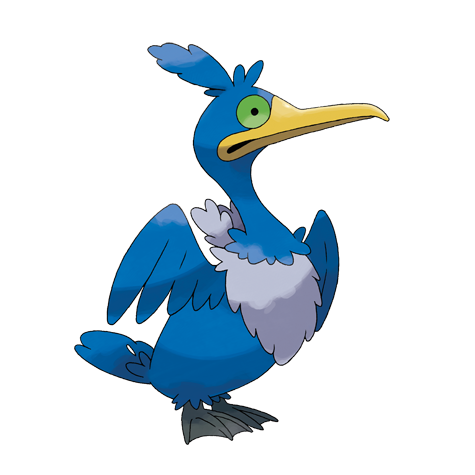
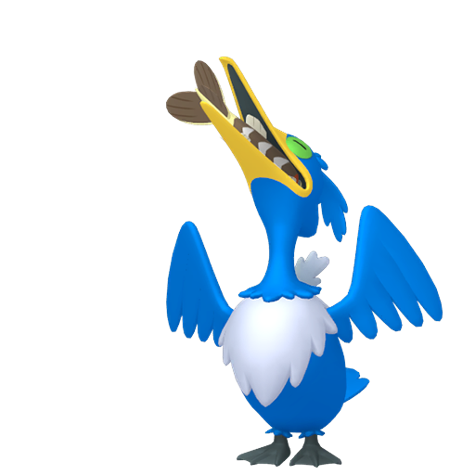
Gorging Cramorant Evolution, Mega Evolution & Special Forms
Cramorant does not evolve from or into any other Pokémon species, representing a complete and independent evolutionary line within Generation VIII. However, the species possesses a unique form-changing mechanic through its signature Gulp Missile ability that distinguishes it from traditional evolution or Mega Evolution mechanics. When Cramorant uses the moves Surf or Dive while maintaining HP above 50 percent, it enters its Gulping Form, catching an Arrokuda in its beak during the move's execution. Conversely, when these same moves are used while Cramorant's HP is at or below 50 percent, the Pokémon instead captures a Pikachu, transforming into its Gorging Form and shifting its visual appearance dramatically. This form-changing ability is directly tied to Cramorant's hunting success and health status—the presence of a Pikachu in the Gorging Form represents a failed hunt where the wrong prey species was captured, adding narrative depth to the mechanical transformation and making Cramorant's form changes a direct reflection of its battle circumstances rather than traditional level-based evolution.
Where to Find
Location data not available for this Pokémon in the database.
Gorging Cramorant Behaviour and Natural Habitat
Cramorant exhibits an almost obsessive gluttony, driven by an instinctive compulsion to swallow nearly anything whole without careful discrimination. The species typically hunts along riverbanks and aquatic environments where its preferred prey, Arrokuda, congregate in abundance, yet its careless feeding habits frequently result in mistakes where it attempts to consume entirely different Pokémon species such as Pikachu. According to Pokédex entries, Cramorant is remarkably strong, capable of knocking out some opponents in a single hit, though this formidable power is frequently undermined by the species' tendency to forget what it's battling mid-conflict due to its overwhelming fixation on feeding. Perhaps most peculiarly, Cramorant occasionally falls asleep while still actively swallowing its prey—a behavior so bizarre that it remains inexplicable even to researchers and, seemingly, to Cramorant itself. In its Gorging Form specifically, the Pikachu lodged in its throat causes mild choking, yet the Pokémon exhibits remarkable indifference to this discomfort, continuing to function in battle despite the obvious encumbrance.
Pokedex Entries
It’s so strong that it can knock out some opponents in a single hit, but it also may forget what it’s battling midfight.
This hungry Pokémon swallows Arrokuda whole. Occasionally, it makes a mistake and tries to swallow a Pokémon other than its preferred prey.
Gorging Cramorant Name Origin & Design Inspiration
The name Cramorant derives from a combination of 'cram,' reflecting the Pokémon's characteristic compulsion to stuff anything into its mouth, and 'cormorant,' the aquatic bird family whose morphology directly inspired Cramorant's design. The Japanese name, Uu (ウッウ), mimics the vocalizations of actual cormorants, creating a phonetic link between the fictional creature and its real-world biological inspiration. The Gorging Form variant emphasizes the 'gorging' aspect of its feeding behavior, highlighting the extreme nature of its appetite through visual representation—the presence of a distinctly different prey species (Pikachu instead of Arrokuda) serves as both comedic design choice and gameplay mechanic indicator. Cramorant's design brilliantly captures the essence of a gluttonous seabird taken to humorous extremes, transforming a real animal's feeding behavior into a Pokémon-specific mechanic that generates both visual interest and battle strategy implications. The species' genus designation as 'Gulp Pokémon' perfectly encapsulates its defining characteristic, immediately communicating to players that consumption and swallowing represent core aspects of what makes Cramorant distinctive within the broader Pokédex.
Learnable Moves
Gorging Cramorant can learn 51 moves:
Move | Type | Cat. | Power | Acc. | PP |
|---|---|---|---|---|---|
| aerial ace | flying | Physical | 60 | — | 20 |
| agility | psychic | Status | — | — | 30 |
| air slash | flying | Special | 75 | 95 | 15 |
| amnesia | psychic | Status | — | — | 20 |
| aqua ring | water | Status | — | — | 20 |
| assurance | dark | Physical | 60 | 100 | 10 |
| attract | normal | Status | — | 100 | 15 |
| belch | poison | Special | 120 | 90 | 10 |
| blizzard | ice | Special | 110 | 70 | 5 |
| brave bird | flying | Physical | 120 | 100 | 15 |
| defog | flying | Status | — | — | 15 |
| dive | water | Physical | 80 | 100 | 10 |
| drill peck | flying | Physical | 80 | 100 | 20 |
| dual wingbeat | flying | Physical | 40 | 90 | 10 |
| endure | normal | Status | — | — | 10 |
| facade | normal | Physical | 70 | 100 | 20 |
| feather dance | flying | Status | — | 100 | 15 |
| fly | flying | Physical | 90 | 95 | 15 |
| fury attack | normal | Physical | 15 | 85 | 20 |
| giga impact | normal | Physical | 150 | 90 | 5 |
| hurricane | flying | Special | 110 | 70 | 10 |
| hydro pump | water | Special | 110 | 80 | 5 |
| hyper beam | normal | Special | 150 | 90 | 5 |
| ice beam | ice | Special | 90 | 100 | 10 |
| icy wind | ice | Special | 55 | 95 | 15 |
| liquidation | water | Physical | 85 | 100 | 10 |
| peck | flying | Physical | 35 | 100 | 35 |
| pluck | flying | Physical | 60 | 100 | 20 |
| protect | normal | Status | — | — | 10 |
| rain dance | water | Status | — | — | 5 |
| rest | psychic | Status | — | — | 5 |
| reversal | fighting | Physical | — | 100 | 15 |
| roost | flying | Status | — | — | 5 |
| round | normal | Special | 60 | 100 | 15 |
| scald | water | Special | 80 | 100 | 15 |
| sleep talk | normal | Status | — | — | 10 |
| snore | normal | Special | 50 | 100 | 15 |
| spit up | normal | Special | — | 100 | 10 |
| steel wing | steel | Physical | 70 | 90 | 25 |
| stockpile | normal | Status | — | — | 20 |
| substitute | normal | Status | — | — | 10 |
| superpower | fighting | Physical | 120 | 100 | 5 |
| surf | water | Special | 90 | 100 | 15 |
| swallow | normal | Status | — | — | 10 |
| thief | dark | Physical | 60 | 100 | 25 |
| thrash | normal | Physical | 120 | 100 | 10 |
| throat chop | dark | Physical | 80 | 100 | 15 |
| uproar | normal | Special | 90 | 100 | 10 |
| water gun | water | Special | 40 | 100 | 25 |
| weather ball | normal | Special | 50 | 100 | 10 |
| whirlpool | water | Special | 35 | 85 | 15 |
Gorging Cramorant Competitive Battle Guide
Cramorant's competitive viability centers on its balanced stat distribution with a 475 total base stat pool that provides respectable offensive and defensive coverage without exceptional peaks in any single category. The species allocates its statistics judiciously with 70 HP, 85 Attack, 55 Defense, 85 Special Attack, 95 Special Defense, and 85 Speed, creating a versatile combatant capable of functioning as either a physical or special attacker while maintaining decent defensive capabilities. Its dual Flying/Water typing grants important resistances to Fighting, Bug, Fire, and Water-type moves while introducing notable weaknesses to Electric and Rock attacks—a critical vulnerability in competitive formats where Electric-type opponents are prevalent. The Gulp Missile ability provides unique strategic value by allowing Cramorant to change forms during battle, with the Gorging Form representing a damaged state that still maintains full battle effectiveness while visually confirming health status to opponents. Move availability includes critical coverage moves such as Hydro Pump (110 power, 80 accuracy), Drill Peck (80 power), and utility moves like Amnesia for special defense boosts, alongside the signature Surf and Dive moves that trigger form changes. However, competitive success remains limited by the lack of priority moves, relatively modest speed tier at 85, and the vulnerability to common competitive threats, making Cramorant a niche choice rather than a mainstream competitive staple.
Commonly Asked Questions About Gorging Cramorant
What type is Gorging Cramorant?
Gorging Cramorant is a flying and water type Pokemon.
What does Gorging Cramorant evolve into?
Gorging Cramorant does not evolve.
What are Gorging Cramorant's weaknesses?
Gorging Cramorant is weak to rock and electric type moves.
Gorging Cramorant Cultural Impact & Franchise History
Cramorant achieved considerable recognition among Generation VIII enthusiasts for its distinctive form-changing mechanic and the humorous visual of a Pikachu lodged comically in its throat, generating significant discussion within the Pokémon community regarding the implications of accidentally capturing the franchise's beloved mascot. The species' gluttonous personality and somewhat absent-minded nature endeared it to players who appreciated its quirky characterization as a Pokémon defined by appetite rather than aggression or cunning. Its appearances in Pokémon media, particularly in the animated series and Pokémon: Twilight Wings supplementary content, reinforced its comedic potential while establishing it as a memorable character within the broader Generation VIII roster. The contradiction between Cramorant's formidable offensive capabilities—capable of one-hit knockouts—and its propensity to forget mid-battle opponents created an entertaining dichotomy that resonated with casual and competitive players alike. Cramorant's representation in Pokémon UNITE and its inclusion in trading card game releases ensured continued visibility within the franchise's multimedia ecosystem, solidifying its position as a recognizable Generation VIII representative despite not achieving the cultural saturation of iconic legendary or pseudo-legendary creatures.
Where to Find Gorging Cramorant in Every Pokémon Game
Cramorant is available in Pokémon Sword and Shield as a standard catchable Pokémon, appearing in the base game with National Pokédex number 845 and local Pokédex number 0309 in the Galar region. The species can be encountered in various water-based locations throughout the game with a capture rate of 45, indicating moderate difficulty in capturing wild specimens compared to more common Pokémon. Additionally, Cramorant appears in The Isle of Armor DLC content as local Pokédex number 0093, providing an alternative availability window for players engaging with the expansion's additional content. The species maintains availability in subsequent Generation VIII remakes and appears in Generation IX titles including Pokémon Scarlet and Violet, where it maintains its dual Flying/Water typing and signature Gulp Missile ability alongside its complete move pool. Cramorant can also be obtained through breeding compatible parents from the Water 1 and Flying egg groups, allowing players to generate additional specimens with desired natures and individual values for competitive or collection purposes. The Pokémon's consistent availability across multiple generations ensures that players interested in adding Cramorant to their teams have multiple legitimate avenues for acquisition, from wild encounters to breeding programs to transferred specimens from previous generation games where applicable.