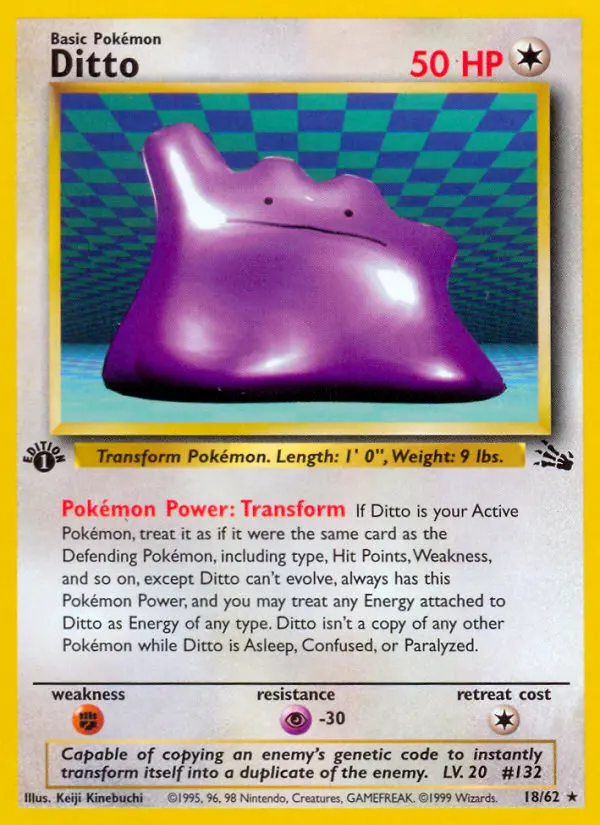
Ditto
Generation I · #0132 — Transform Pokémon
Since its Generation I debut, Ditto has carried a stat spread built around hp — 48 at base, its clearest strength.
Editor's Take
Ditto's Transform doesn't copy the target's base stats, it copies their current stats and moveset outright, which is why a well-built Ditto set is less about Ditto's own numbers and more about which Choice item lets it out-Speed whatever it just turned into.
Base Stats
Height
0.3m
Weight
4.0kg
Category
Transform Pokémon
Gender
Genderless
Color
purple
Shape
ball
Habitat
urban
Abilities
Prevents paralysis.
Transforms upon entering battle.

Ditto Biology & Physical Characteristics
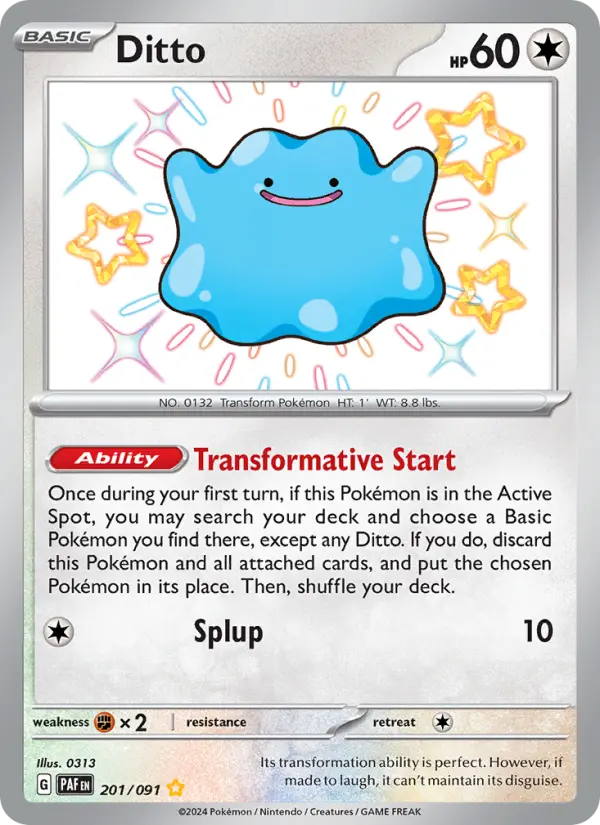
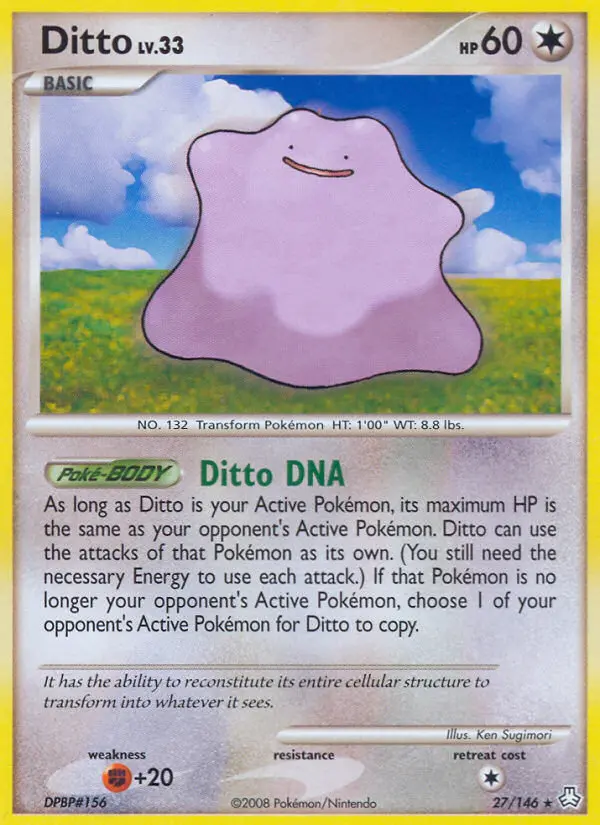
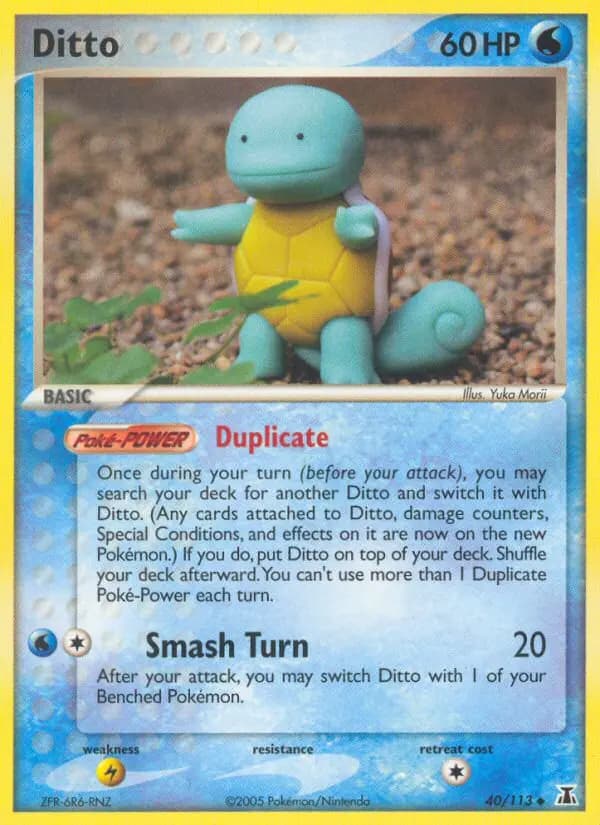
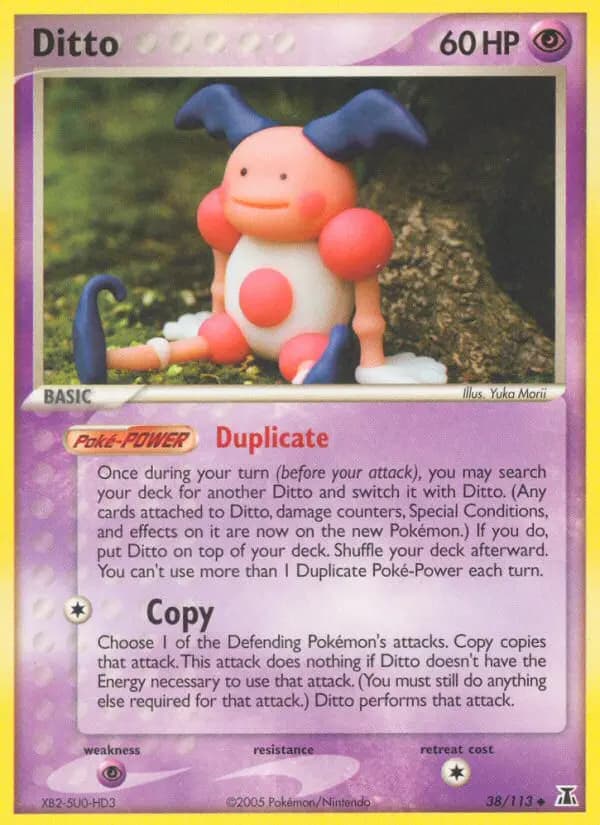
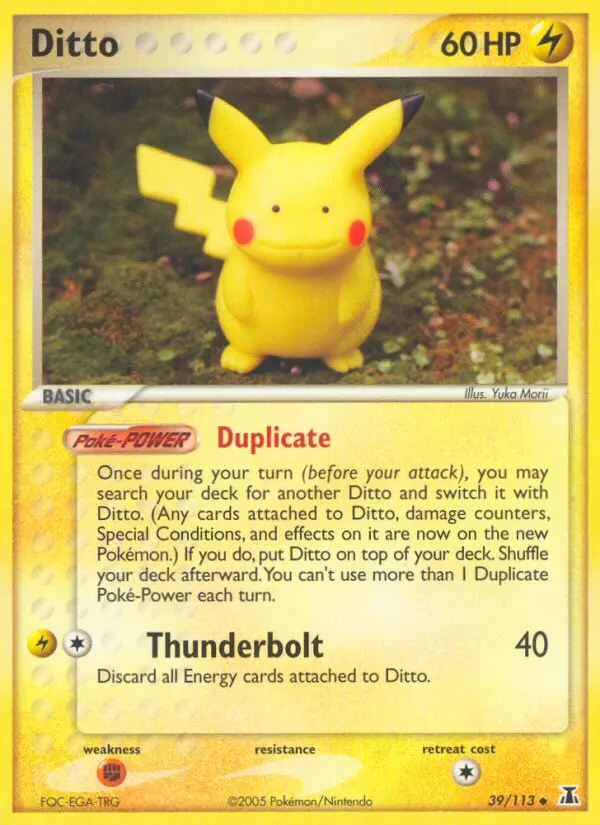
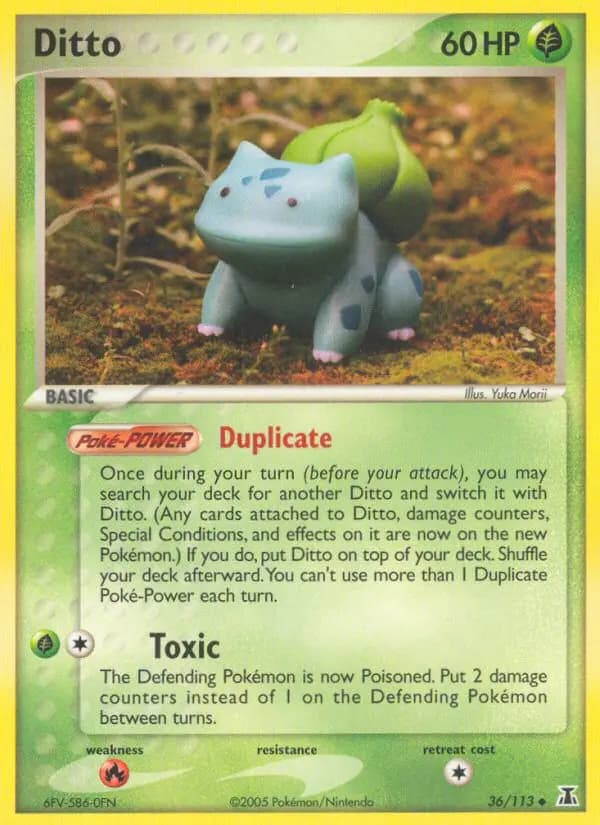
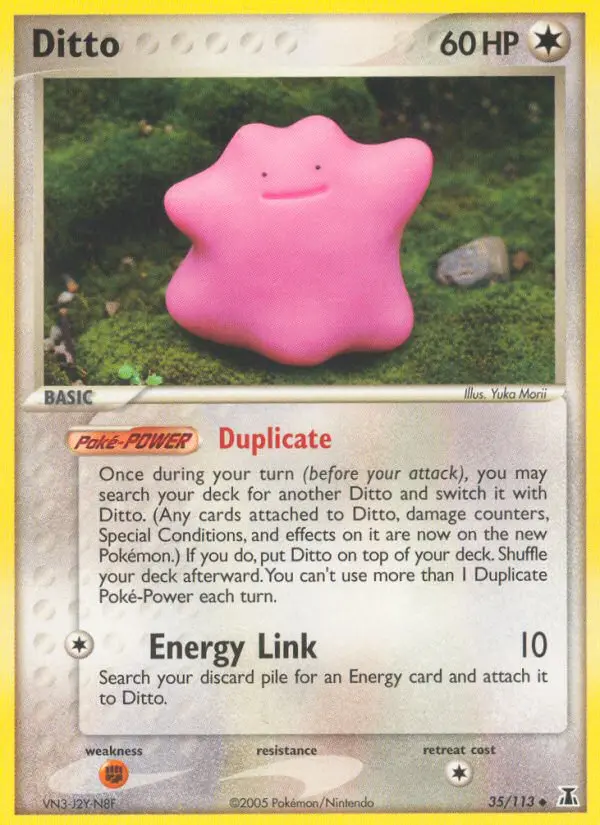
In its natural, untransformed state, Ditto is a light-purple or pink amorphous blob-like creature with a remarkably consistent yet simple anatomical structure. Its body features two small nubs protruding from its rounded head, a few soft lumps along its base, and two pseudopod-like protrusions that serve as arms. The most distinctive features of Ditto's face are its characteristic beady eyes and a simple mouth perpetually curved into what appears to be a smile, giving the Pokémon an almost innocent and unassuming demeanor. The fundamental mechanism behind Ditto's transformation ability lies in its unique cellular structure—it possesses the biological capacity to rearrange and recombine its entire cellular composition to match any Pokémon it observes, effectively copying the target's genetic code. However, this remarkable ability has limitations: according to Pokédex entries from Ruby and Sapphire, when Ditto attempts to transform based solely on memory rather than direct observation, the resulting duplicate often contains subtle errors in detail, suggesting that its transformation is most accurate when performed with a live template rather than from recollection. Like all Pokémon, Ditto has a rare Shiny variant with an alternate color palette — encountered far less often in the wild, but obtainable reliably through breeding with the Masuda Method, chain encounters, or Pokémon HOME transfers for trainers hunting a specific look.
Pokedex Numbers
Training
Breeding
Ditto Breeding, Gender Ratio & Egg Groups
One of Ditto's most revolutionary contributions to Pokémon mechanics lies in its breeding capabilities, which fundamentally altered how trainers approach egg production and competitive team building. Despite being genderless itself, Ditto can breed with virtually any Pokémon species except those in the 'No Eggs Discovered' group and notably cannot breed with other Ditto, creating a unique biological paradox where identical beings cannot reproduce with each other. This characteristic makes Ditto the single most valuable Pokémon for breeders attempting to produce eggs of specific species, as it eliminates the need to capture both male and female specimens of a desired Pokémon. When Ditto breeds with another Pokémon, it produces an egg containing the other species rather than Ditto itself, allowing trainers to multiply desirable Pokémon or create offspring with specific inherited traits such as beneficial natures or individual values. The mechanics of Ditto breeding have remained largely consistent across generations, though certain variations have been introduced in games featuring more sophisticated breeding systems, such as the ability to influence offspring natures through held items. Its genderless classification, combined with its reproductive compatibility, represents a unique position in the Pokémon ecosystem—Ditto functions as a universal genetic partner, capable of facilitating reproduction across species boundaries in ways that would be impossible in nature, making it an essential tool for any serious breeder or competitive player attempting to create optimized teams.
Sprites






Held Items
Metal Powder
species-specific
Raises Ditto’s Defense and Special Defense by 50%. The boost is lost after transforming.
Cost: 1000
Metal Powder
species-specific
Raises Ditto’s Defense and Special Defense by 50%. The boost is lost after transforming.
Cost: 1000
Metal Powder
species-specific
Raises Ditto’s Defense and Special Defense by 50%. The boost is lost after transforming.
Cost: 1000
Metal Powder
species-specific
Raises Ditto’s Defense and Special Defense by 50%. The boost is lost after transforming.
Cost: 1000
Metal Powder
species-specific
Raises Ditto’s Defense and Special Defense by 50%. The boost is lost after transforming.
Cost: 1000
Metal Powder
species-specific
Raises Ditto’s Defense and Special Defense by 50%. The boost is lost after transforming.
Cost: 1000
Metal Powder
species-specific
Raises Ditto’s Defense and Special Defense by 50%. The boost is lost after transforming.
Cost: 1000
Metal Powder
species-specific
Raises Ditto’s Defense and Special Defense by 50%. The boost is lost after transforming.
Cost: 1000
Metal Powder
species-specific
Raises Ditto’s Defense and Special Defense by 50%. The boost is lost after transforming.
Cost: 1000
Metal Powder
species-specific
Raises Ditto’s Defense and Special Defense by 50%. The boost is lost after transforming.
Cost: 1000
Metal Powder
species-specific
Raises Ditto’s Defense and Special Defense by 50%. The boost is lost after transforming.
Cost: 1000
Metal Powder
species-specific
Raises Ditto’s Defense and Special Defense by 50%. The boost is lost after transforming.
Cost: 1000
Metal Powder
species-specific
Raises Ditto’s Defense and Special Defense by 50%. The boost is lost after transforming.
Cost: 1000
Metal Powder
species-specific
Raises Ditto’s Defense and Special Defense by 50%. The boost is lost after transforming.
Cost: 1000
Metal Powder
species-specific
Raises Ditto’s Defense and Special Defense by 50%. The boost is lost after transforming.
Cost: 1000
Metal Powder
species-specific
Raises Ditto’s Defense and Special Defense by 50%. The boost is lost after transforming.
Cost: 1000
Metal Powder
species-specific
Raises Ditto’s Defense and Special Defense by 50%. The boost is lost after transforming.
Cost: 1000
Metal Powder
species-specific
Raises Ditto’s Defense and Special Defense by 50%. The boost is lost after transforming.
Cost: 1000
Metal Powder
species-specific
Raises Ditto’s Defense and Special Defense by 50%. The boost is lost after transforming.
Cost: 1000
Metal Powder
species-specific
Raises Ditto’s Defense and Special Defense by 50%. The boost is lost after transforming.
Cost: 1000
Metal Powder
species-specific
Raises Ditto’s Defense and Special Defense by 50%. The boost is lost after transforming.
Cost: 1000
Metal Powder
species-specific
Raises Ditto’s Defense and Special Defense by 50%. The boost is lost after transforming.
Cost: 1000
Quick Powder
species-specific
Doubles Ditto’s Speed when held. The boost is lost after transforming.
Cost: 1000
Quick Powder
species-specific
Doubles Ditto’s Speed when held. The boost is lost after transforming.
Cost: 1000
Quick Powder
species-specific
Doubles Ditto’s Speed when held. The boost is lost after transforming.
Cost: 1000
Quick Powder
species-specific
Doubles Ditto’s Speed when held. The boost is lost after transforming.
Cost: 1000
Quick Powder
species-specific
Doubles Ditto’s Speed when held. The boost is lost after transforming.
Cost: 1000
Quick Powder
species-specific
Doubles Ditto’s Speed when held. The boost is lost after transforming.
Cost: 1000
Quick Powder
species-specific
Doubles Ditto’s Speed when held. The boost is lost after transforming.
Cost: 1000
Quick Powder
species-specific
Doubles Ditto’s Speed when held. The boost is lost after transforming.
Cost: 1000
Quick Powder
species-specific
Doubles Ditto’s Speed when held. The boost is lost after transforming.
Cost: 1000
Quick Powder
species-specific
Doubles Ditto’s Speed when held. The boost is lost after transforming.
Cost: 1000
Quick Powder
species-specific
Doubles Ditto’s Speed when held. The boost is lost after transforming.
Cost: 1000
Quick Powder
species-specific
Doubles Ditto’s Speed when held. The boost is lost after transforming.
Cost: 1000
Quick Powder
species-specific
Doubles Ditto’s Speed when held. The boost is lost after transforming.
Cost: 1000
Quick Powder
species-specific
Doubles Ditto’s Speed when held. The boost is lost after transforming.
Cost: 1000
Quick Powder
species-specific
Doubles Ditto’s Speed when held. The boost is lost after transforming.
Cost: 1000
Quick Powder
species-specific
Doubles Ditto’s Speed when held. The boost is lost after transforming.
Cost: 1000
Quick Powder
species-specific
Doubles Ditto’s Speed when held. The boost is lost after transforming.
Cost: 1000
Metal Powder
species-specific
Raises Ditto’s Defense and Special Defense by 50%. The boost is lost after transforming.
Cost: 1000
Metal Powder
species-specific
Raises Ditto’s Defense and Special Defense by 50%. The boost is lost after transforming.
Cost: 1000
Metal Powder
species-specific
Raises Ditto’s Defense and Special Defense by 50%. The boost is lost after transforming.
Cost: 1000
Metal Powder
species-specific
Raises Ditto’s Defense and Special Defense by 50%. The boost is lost after transforming.
Cost: 1000
Metal Powder
species-specific
Raises Ditto’s Defense and Special Defense by 50%. The boost is lost after transforming.
Cost: 1000
Metal Powder
species-specific
Raises Ditto’s Defense and Special Defense by 50%. The boost is lost after transforming.
Cost: 1000
Metal Powder
species-specific
Raises Ditto’s Defense and Special Defense by 50%. The boost is lost after transforming.
Cost: 1000
Metal Powder
species-specific
Raises Ditto’s Defense and Special Defense by 50%. The boost is lost after transforming.
Cost: 1000
Metal Powder
species-specific
Raises Ditto’s Defense and Special Defense by 50%. The boost is lost after transforming.
Cost: 1000
Metal Powder
species-specific
Raises Ditto’s Defense and Special Defense by 50%. The boost is lost after transforming.
Cost: 1000
Metal Powder
species-specific
Raises Ditto’s Defense and Special Defense by 50%. The boost is lost after transforming.
Cost: 1000
Metal Powder
species-specific
Raises Ditto’s Defense and Special Defense by 50%. The boost is lost after transforming.
Cost: 1000
Metal Powder
species-specific
Raises Ditto’s Defense and Special Defense by 50%. The boost is lost after transforming.
Cost: 1000
Metal Powder
species-specific
Raises Ditto’s Defense and Special Defense by 50%. The boost is lost after transforming.
Cost: 1000
Metal Powder
species-specific
Raises Ditto’s Defense and Special Defense by 50%. The boost is lost after transforming.
Cost: 1000
Metal Powder
species-specific
Raises Ditto’s Defense and Special Defense by 50%. The boost is lost after transforming.
Cost: 1000
Metal Powder
species-specific
Raises Ditto’s Defense and Special Defense by 50%. The boost is lost after transforming.
Cost: 1000
Metal Powder
species-specific
Raises Ditto’s Defense and Special Defense by 50%. The boost is lost after transforming.
Cost: 1000
Metal Powder
species-specific
Raises Ditto’s Defense and Special Defense by 50%. The boost is lost after transforming.
Cost: 1000
Metal Powder
species-specific
Raises Ditto’s Defense and Special Defense by 50%. The boost is lost after transforming.
Cost: 1000
Metal Powder
species-specific
Raises Ditto’s Defense and Special Defense by 50%. The boost is lost after transforming.
Cost: 1000
Metal Powder
species-specific
Raises Ditto’s Defense and Special Defense by 50%. The boost is lost after transforming.
Cost: 1000
Quick Powder
species-specific
Doubles Ditto’s Speed when held. The boost is lost after transforming.
Cost: 1000
Quick Powder
species-specific
Doubles Ditto’s Speed when held. The boost is lost after transforming.
Cost: 1000
Quick Powder
species-specific
Doubles Ditto’s Speed when held. The boost is lost after transforming.
Cost: 1000
Quick Powder
species-specific
Doubles Ditto’s Speed when held. The boost is lost after transforming.
Cost: 1000
Quick Powder
species-specific
Doubles Ditto’s Speed when held. The boost is lost after transforming.
Cost: 1000
Quick Powder
species-specific
Doubles Ditto’s Speed when held. The boost is lost after transforming.
Cost: 1000
Quick Powder
species-specific
Doubles Ditto’s Speed when held. The boost is lost after transforming.
Cost: 1000
Quick Powder
species-specific
Doubles Ditto’s Speed when held. The boost is lost after transforming.
Cost: 1000
Quick Powder
species-specific
Doubles Ditto’s Speed when held. The boost is lost after transforming.
Cost: 1000
Quick Powder
species-specific
Doubles Ditto’s Speed when held. The boost is lost after transforming.
Cost: 1000
Quick Powder
species-specific
Doubles Ditto’s Speed when held. The boost is lost after transforming.
Cost: 1000
Quick Powder
species-specific
Doubles Ditto’s Speed when held. The boost is lost after transforming.
Cost: 1000
Quick Powder
species-specific
Doubles Ditto’s Speed when held. The boost is lost after transforming.
Cost: 1000
Quick Powder
species-specific
Doubles Ditto’s Speed when held. The boost is lost after transforming.
Cost: 1000
Quick Powder
species-specific
Doubles Ditto’s Speed when held. The boost is lost after transforming.
Cost: 1000
Quick Powder
species-specific
Doubles Ditto’s Speed when held. The boost is lost after transforming.
Cost: 1000
Quick Powder
species-specific
Doubles Ditto’s Speed when held. The boost is lost after transforming.
Cost: 1000
Ditto Evolution, Mega Evolution & Special Forms
Ditto stands as a singular point in the evolutionary tree, representing a Pokémon that neither evolves from any other species nor evolves into anything else. This makes Ditto one of the few Pokémon with a complete evolution chain consisting of merely itself, alongside other unusual Pokémon like Magnemite's evolutionary line variations and certain legendaries. The absence of evolution actually emphasizes Ditto's perfect biological design—it has no need to develop into a stronger form because its power derives entirely from its transformation ability rather than from traditional stat growth or type advancement. While Ditto does not receive a Mega Evolution in the traditional sense, its significance in competitive play has evolved considerably over successive generations, with the introduction of its hidden ability Imposter in later generations fundamentally changing how it operates in battle. This automatic transformation ability essentially allows Ditto to function as a perfect counter-pick, assuming the exact form and moveset of any opponent upon entry, though it still retains Ditto's own base HP stat, making it a strategic choice that relies on prediction and team composition rather than guaranteed superiority.
Where to Find
Kanto Route 15
kanto
+3 more
Cerulean Cave
kanto
+54 more
Kanto Route 23
kanto
+9 more
Kanto Route 13
kanto
+3 more
Kanto Route 14
kanto
+7 more
Pokemon Mansion
kanto
+10 more
Johto Route 35
johto
+18 more
Johto Route 34
johto
+11 more
Desert Underpass
hoenn
+3 more
Sinnoh Route 218
sinnoh
+5 more
Johto Route 47
johto
+11 more
Johto Safari Zone
johto
+1 more
Giant Chasm
unova
+21 more
Pokemon Village
kalos
+3 more
Mount Hokulani
alola
+3 more
Alola Route 9
alola
+3 more
Konikoni City
alola
+7 more
Ditto Behaviour and Natural Habitat
Ditto exhibits fascinating behavioral patterns that reflect its unique evolutionary niche as a transform-based Pokémon. The Pokédex entries across various generations reveal intriguing aspects of its conduct—most notably, when Ditto encounters another Ditto, it moves faster than normal speed in order to duplicate its counterpart exactly, suggesting an almost competitive instinct when faced with a genetic equal. In its resting state, Ditto demonstrates an interesting defensive mechanism: it transforms into stone to avoid being attacked while sleeping, a behavioral adaptation that suggests both vulnerability in its natural form and a sophisticated understanding of predator avoidance. The Gold version Pokédex entry indicates that Ditto can transform into virtually anything, expanding its capabilities beyond Pokémon mimicry. An unusual weakness mentioned in the Silver version is that if Ditto is made to laugh, it loses its ability to maintain its disguise, implying that emotional responses can disrupt its cellular concentration and stability. In terms of habitat, Ditto inhabits various locations throughout different Pokémon regions, though it is most commonly found in specific routes and areas where genetic diversity is notable, making these zones ideal observation points for a Pokémon dedicated to studying and replicating other species.
Pokedex Entries
Capable of copying an enemy's genetic code to instantly transform itself into a duplicate of the enemy.
When it spots an enemy, its body transfigures into an almost perfect copy of its oppo nent.
It can transform into anything. When it sleeps, it changes into a stone to avoid being attacked.
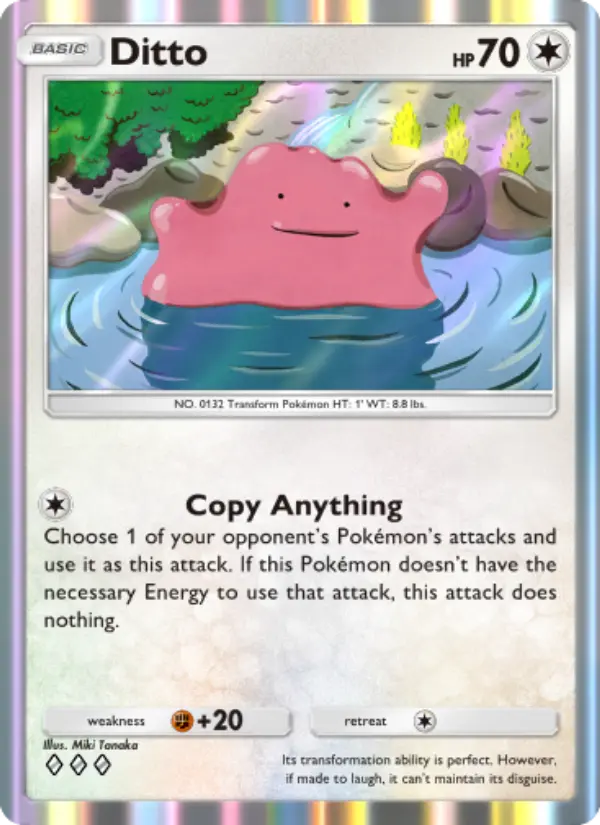
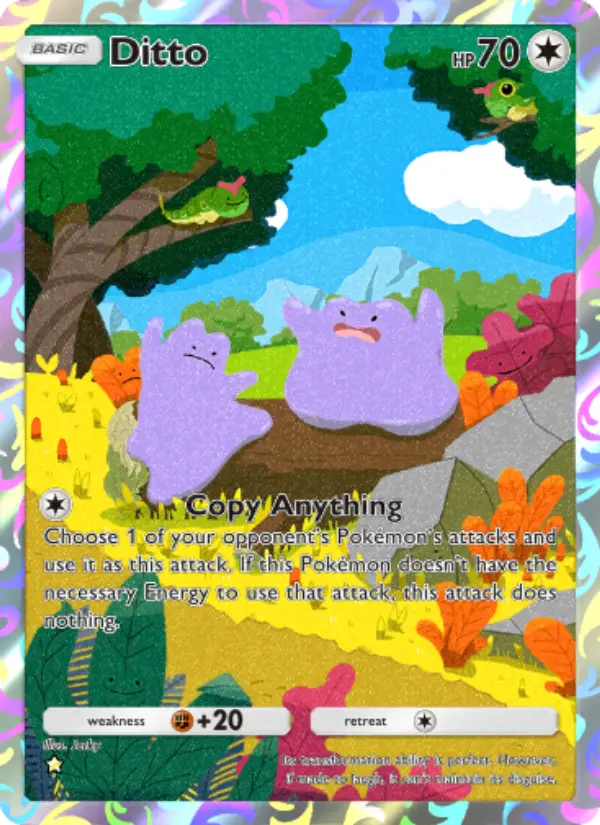
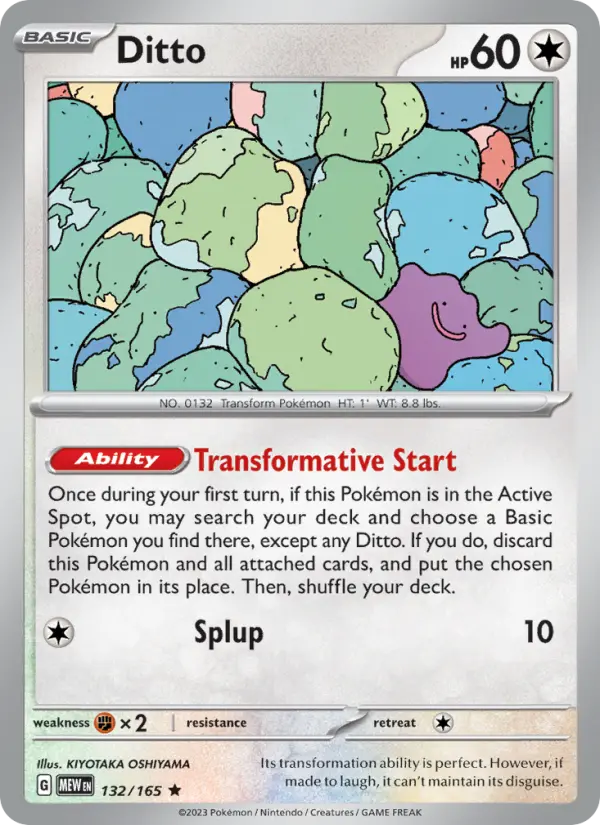
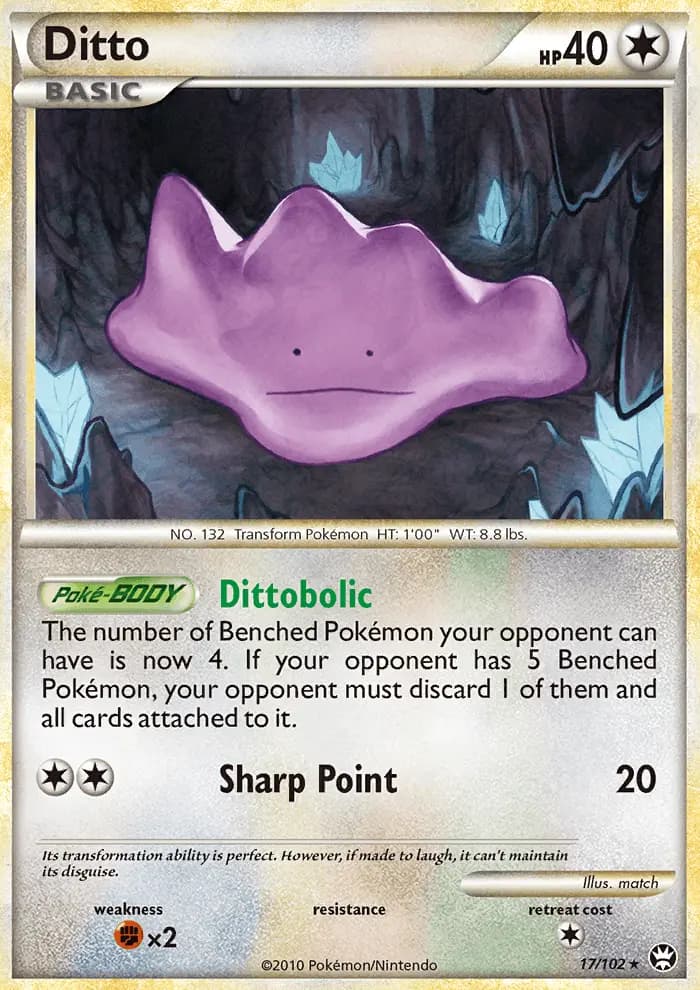
Its transformation ability is per fect. However, if made to laugh, it can't maintain its disguise.
When it encount ers another DITTO, it will move faster than normal to duplicate that opponent exactly.
DITTO rearranges its cell structure to transform itself into other shapes. However, if it tries to transform itself into something by relying on its memory, this POKéMON manages to get details wrong.
A DITTO rearranges its cell structure to transform itself. However, if it tries to change based on its memory, it will get details wrong.
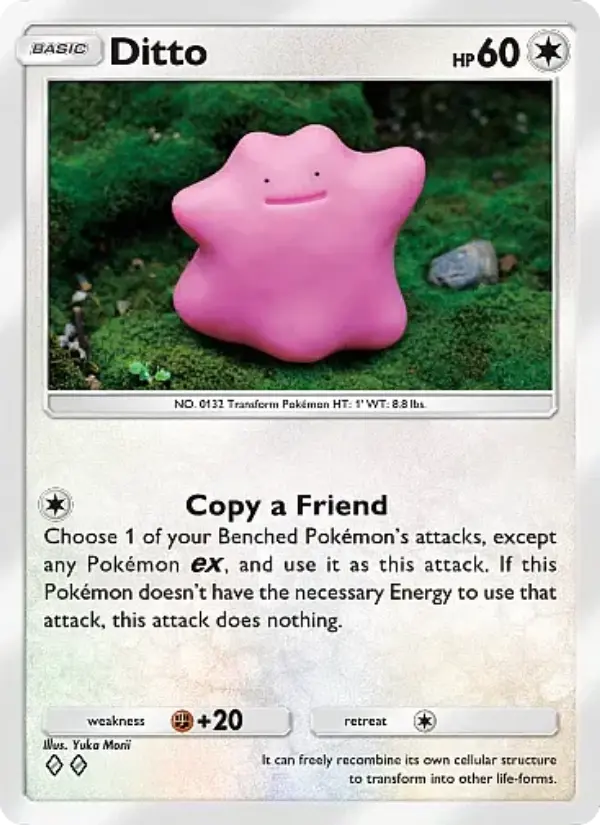
It can freely recombine its own cellular structure to transform into other life- forms.
Capable of copying an opponent’s genetic code to instantly transform itself into a duplicate of the enemy.
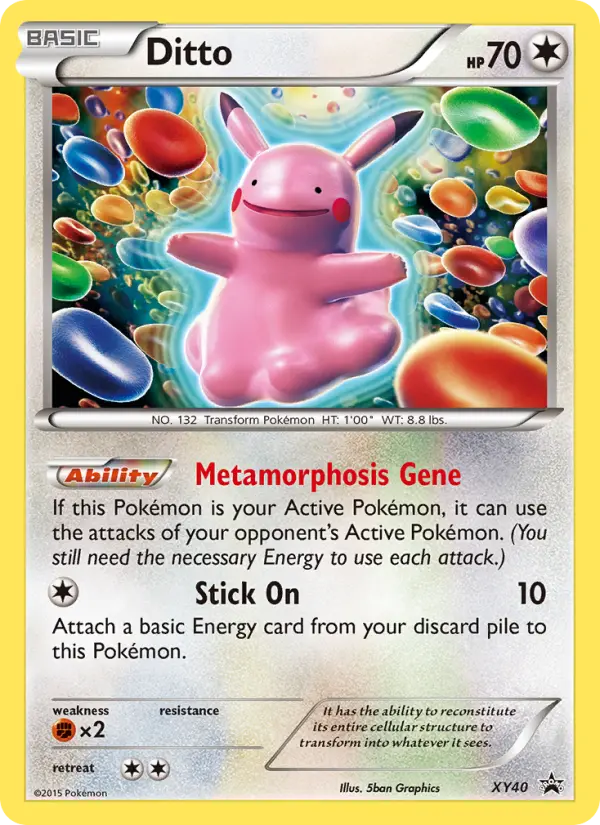
It has the ability to reconstitute its entire cellular structure to transform into whatever it sees.
It can transform into anything. When it sleeps, it changes into a stone to avoid being attacked.
Its transformation ability is perfect. However, if made to laugh, it can’t maintain its disguise.
It has the ability to reconstitute its entire cellular structure to transform into whatever it sees.
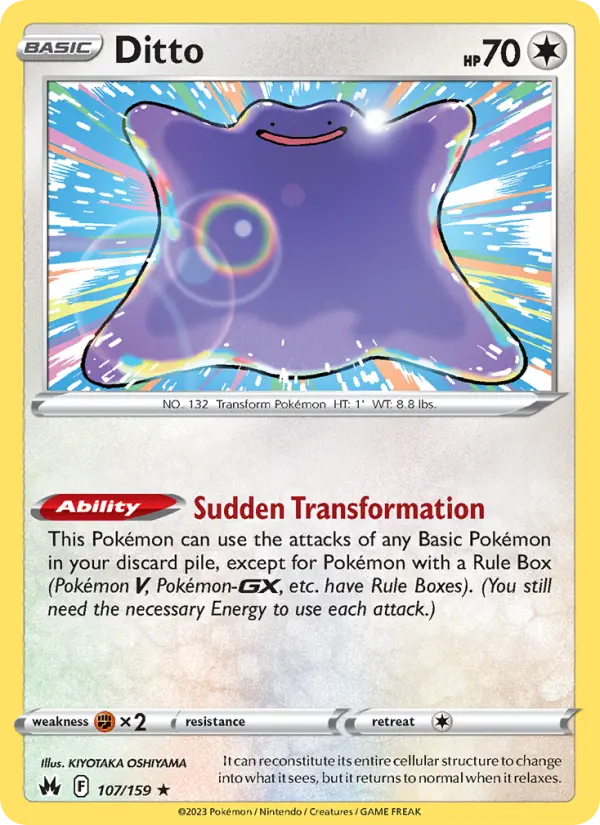
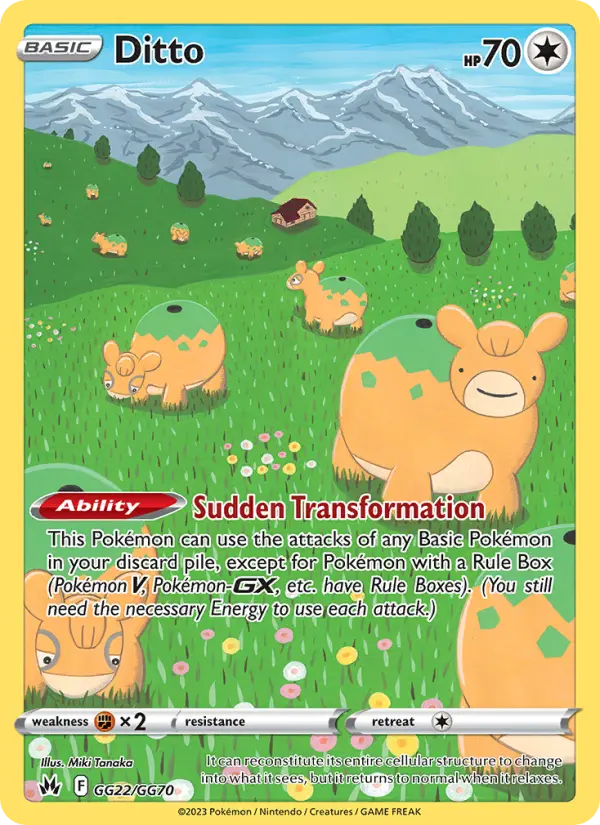
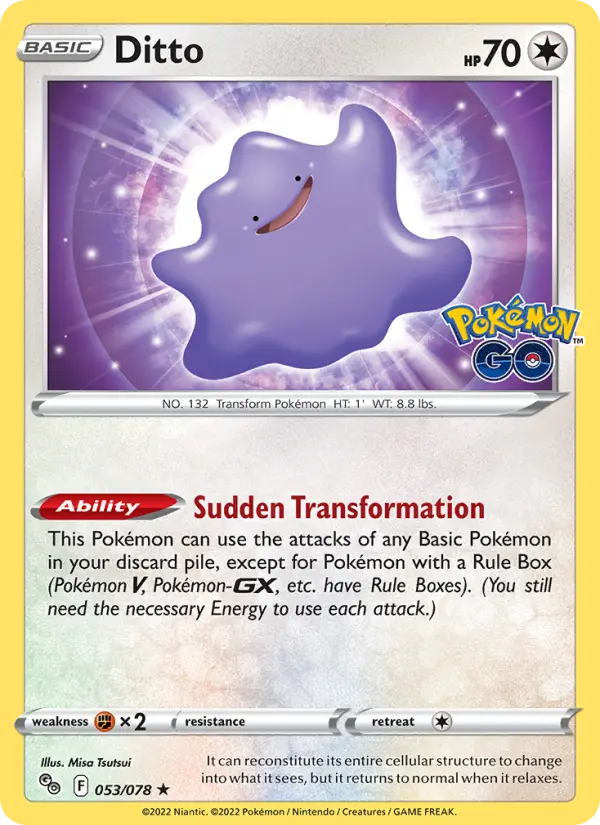
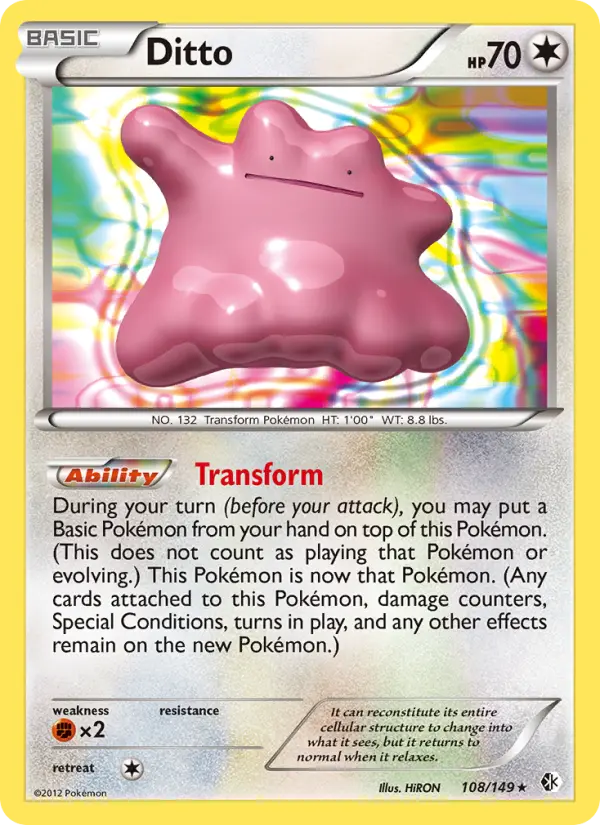
It can reconstitute its entire cellular structure to change into what it sees, but it returns to normal when it relaxes.
It has the ability to reconstitute its entire cellular structure to transform into whatever it sees.
It can freely recombine its own cellular structure to transform into other life-forms.
Ditto rearranges its cell structure to transform itself into other shapes. However, if it tries to transform itself into something by relying on its memory, this Pokémon manages to get details wrong.
It can reorganize its cells to make itself into a duplicate of anything it sees. The quality of the duplicate depends on the individual.
While it can transform into anything, each Ditto apparently has its own strengths and weaknesses when it comes to transformations.
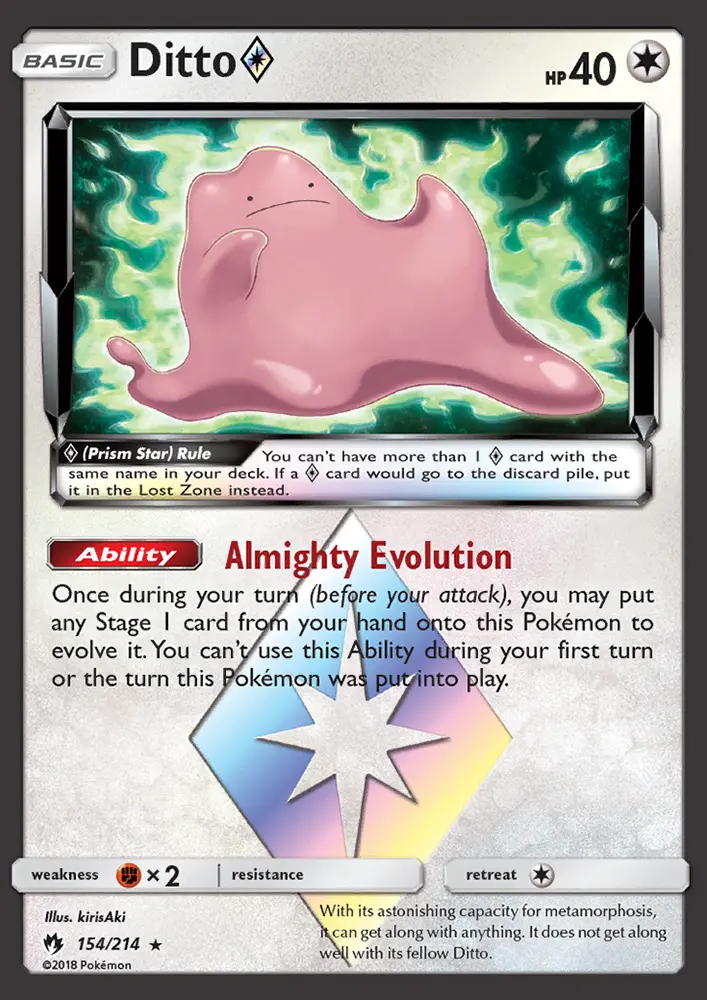
With its astonishing capacity for metamorphosis, it can get along with anything. It does not get along well with its fellow Ditto.
It transforms into whatever it sees. If the thing it’s transforming into isn’t right in front of it, Ditto relies on its memory—so sometimes it fails.
When it spots an enemy, its body transfigures into an almost-perfect copy of its opponent.
It can reconstitute its entire cellular structure to change into what it sees, but it returns to normal when it relaxes.
When it encounters another Ditto, it will move faster than normal to duplicate that opponent exactly.
Ditto Name Origin & Design Inspiration
The design of Ditto reflects a deliberate simplicity that belies its complex functionality, as evidenced by its blob-like, amorphous appearance with minimal distinguishing features in its default state. This minimalist aesthetic serves a logical purpose: a Pokémon with such basic, featureless characteristics can more easily transform into and convincingly mimic other species without the burden of distinctive traits that would persist through transformation. The Japanese name Metamon derives from the concept of metamorphosis, the biological process of transformation seen in insects and other organisms, directly referencing Ditto's core identity. The English name 'Ditto' carries multiple meanings—it can refer to the Latin phrase used in legal documents meaning 'the same,' emphasizing that Ditto makes itself identical to its targets, or it can suggest the word 'ditto' in common usage, which means to repeat or duplicate exactly. The design language of Ditto, with its perpetual smile and wide-eyed innocent expression, creates an approachable and somewhat endearing character despite its supernatural copying abilities, making it visually distinctive even before it transforms into something else. The choice to make Ditto genderless aligns with its role as a cellular duplicator rather than a sexually reproducing organism, though paradoxically it becomes essential to the breeding mechanics of countless other Pokémon species.
Learnable Moves
Ditto can learn 1 moves:
Move | Type | Cat. | Power | Acc. | PP |
|---|---|---|---|---|---|
| transform | normal | Status | — | — | 10 |
Ditto Competitive Battle Guide
From a competitive standpoint, Ditto occupies a remarkably niche yet strategically important role, despite its abysmal total stat allocation of 288 with every individual stat sitting at exactly 48. This severe statistical disadvantage is comprehensively offset by its transformation abilities, which allow it to become an identical copy of whatever Pokémon enters the field against it. In competitive formats before the introduction of the hidden ability Imposter, Ditto was primarily used as a team utility Pokémon, requiring manual transformation via its move set to gain relevance in battle. However, the introduction of Imposter as a hidden ability fundamentally transformed Ditto's competitive viability—this ability automatically transforms Ditto into a perfect duplicate of its opponent upon entering battle, including copying their stat boosts and moveset. This creates an extremely unpredictable strategic element, as an opponent may encounter either their own team member's copy or face potential surprise switch-ins where a Ditto with Imposter threatens to neutralize setup sweepers or heavy hitters. The primary limitation of Ditto in competitive play remains its lower overall durability—even when transformed into a bulky Pokémon, Ditto retains its own base HP stat of 48, which is significantly lower than most Pokémon, meaning it often falls to heavy attacks despite copying defensive stats. Strategic players often use Ditto as a surprise team member to punish overly predictable opponents or to provide unexpected coverage against meta-relevant threats, making it a consideration in team building despite never being considered a primary sweeper or wall.
Commonly Asked Questions About Ditto
What type is Ditto?
Ditto is a normal type Pokemon.
What does Ditto evolve from?
Ditto does not evolve.
What are Ditto's weaknesses?
Ditto is weak to fighting type moves.
Where can I find Ditto?
Ditto can be found in kanto route 15 (kanto), cerulean cave (kanto) and kanto route 23 (kanto) and 14 other locations.
Is Shiny Ditto different in stats from a normal Ditto?
No — a Shiny Ditto has identical base stats, abilities, and movepool to the standard form. The only difference is the color palette; nothing about its performance in or out of battle changes.
How rare is Shiny Ditto in the wild?
Like any Shiny Pokémon, a wild Shiny Ditto has roughly a 1-in-4096 base encounter rate in modern games (better with a Shiny Charm). Breeding with the Masuda Method or building up an Odds/chain encounter both shorten those odds significantly for trainers hunting one specifically.
Ditto Cultural Impact & Franchise History
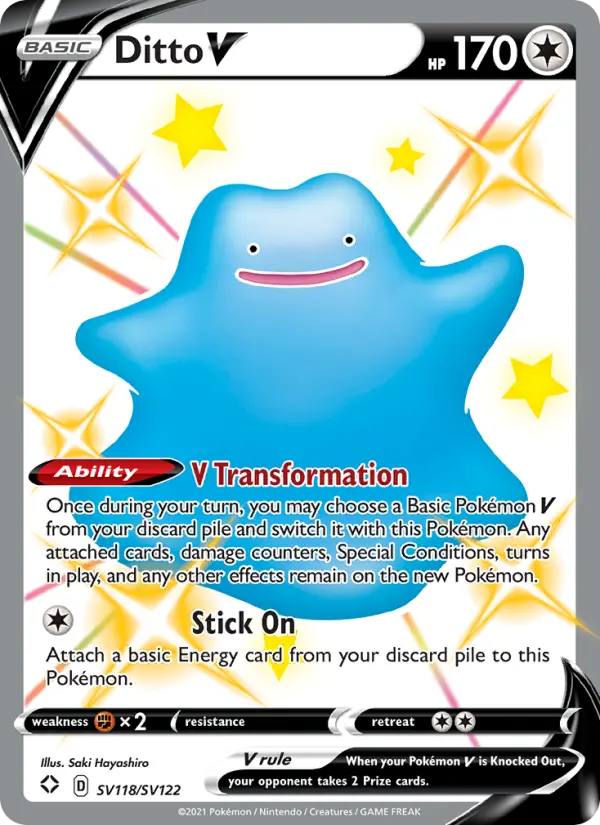
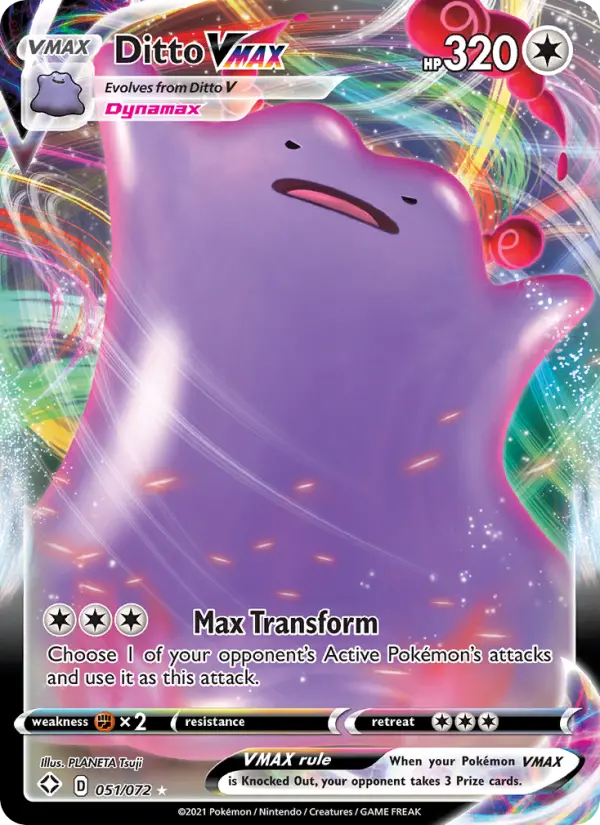
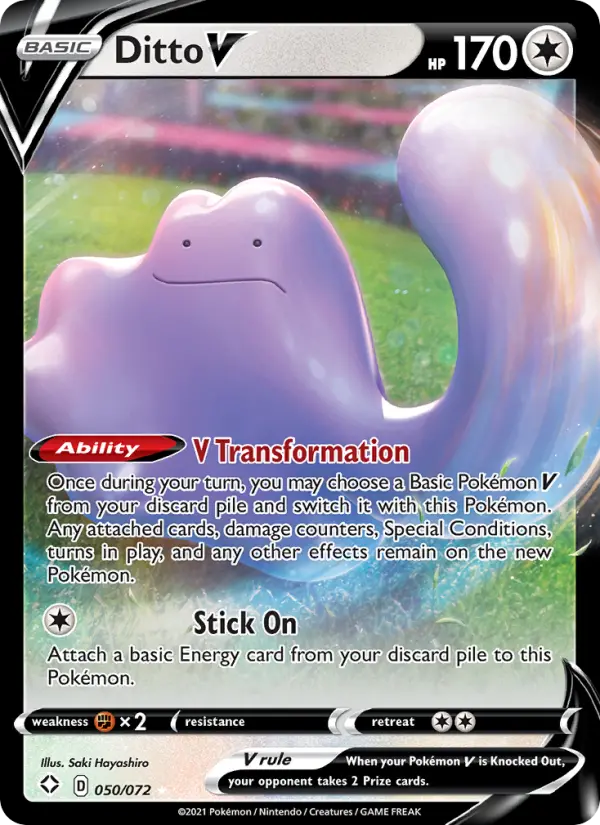
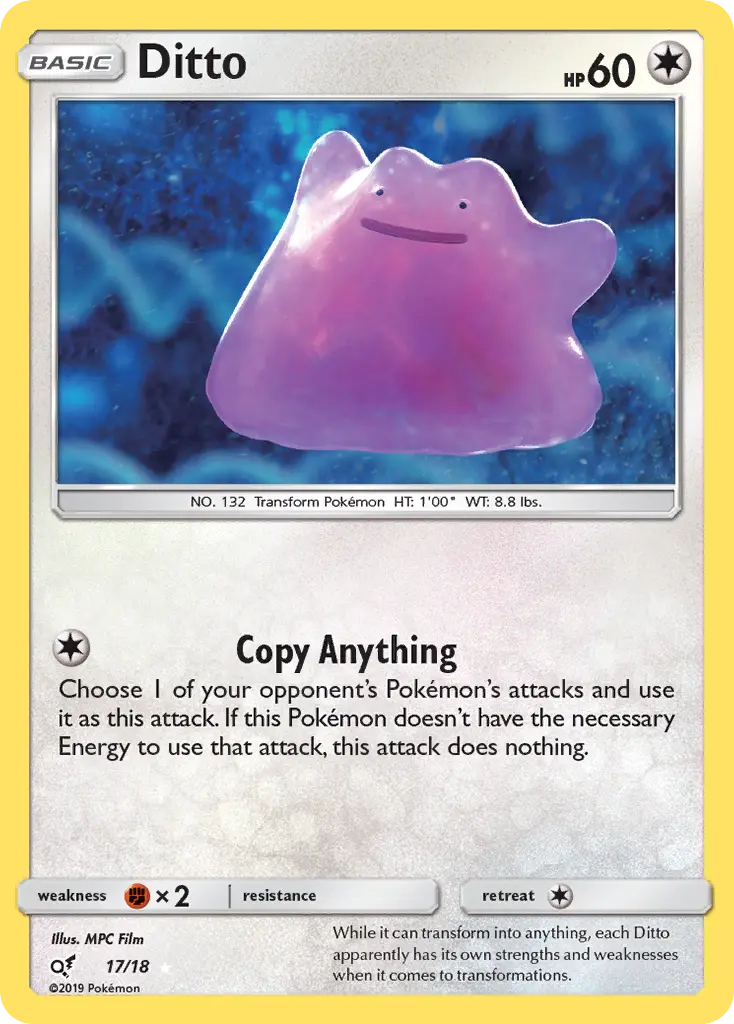
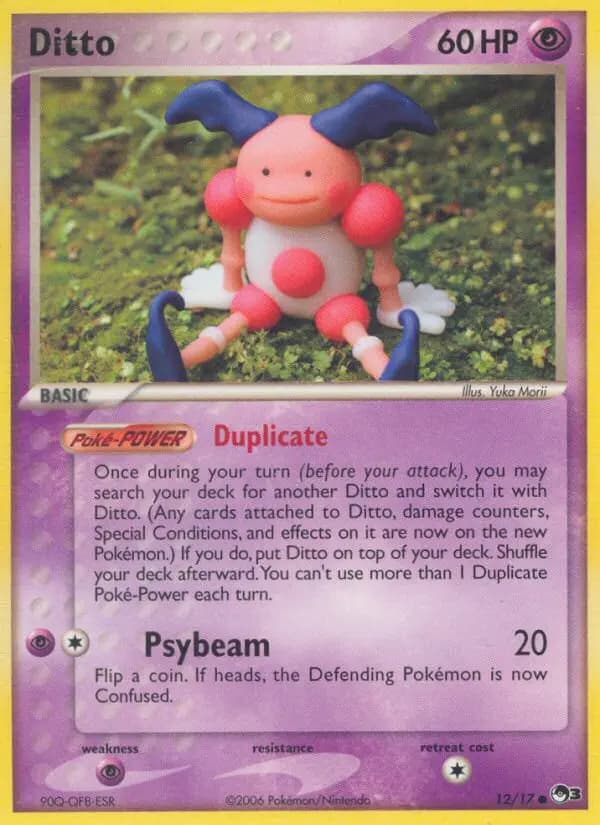
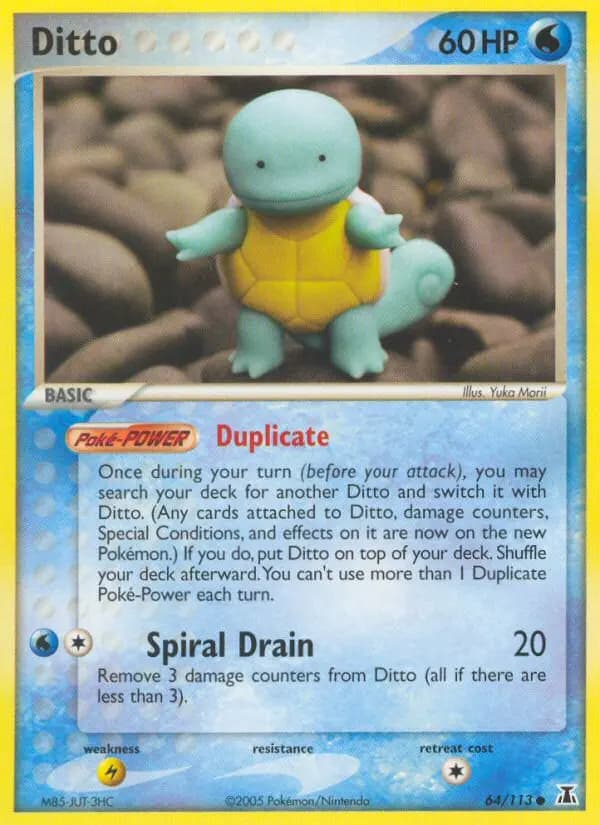
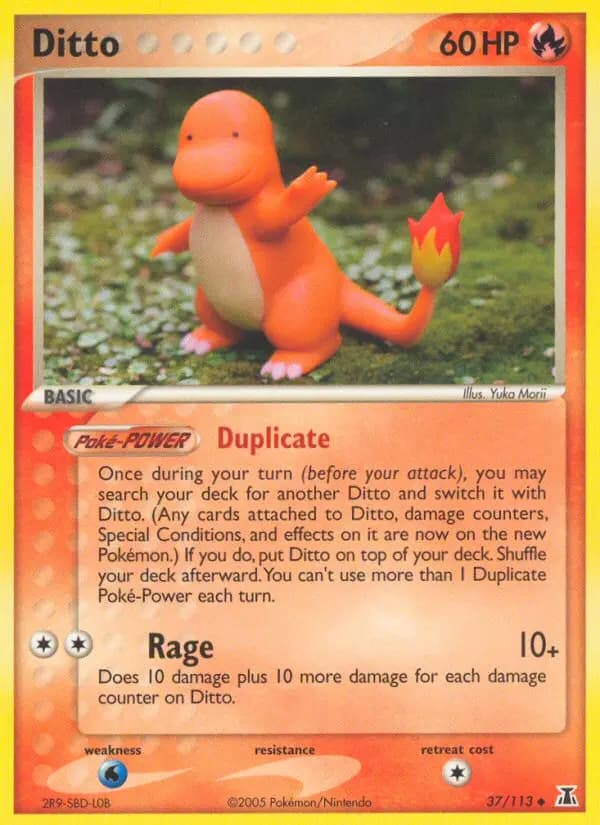
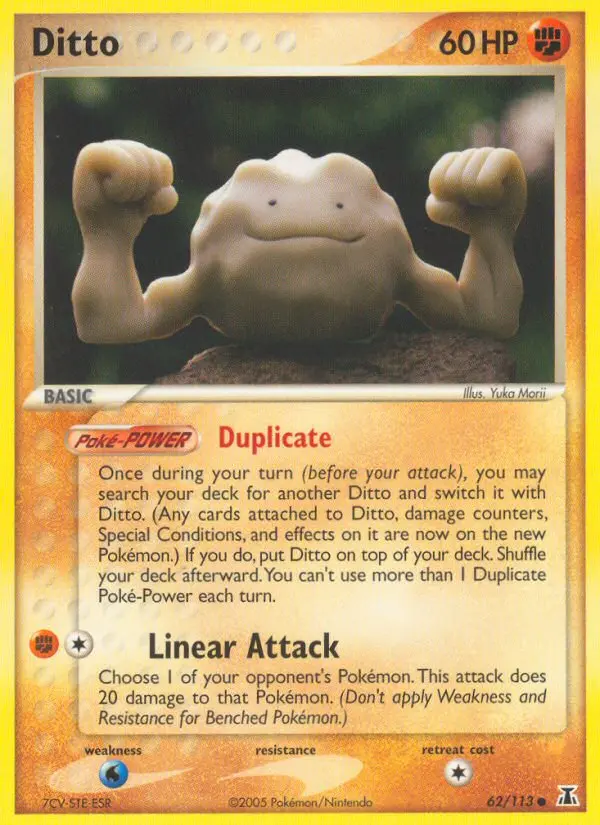
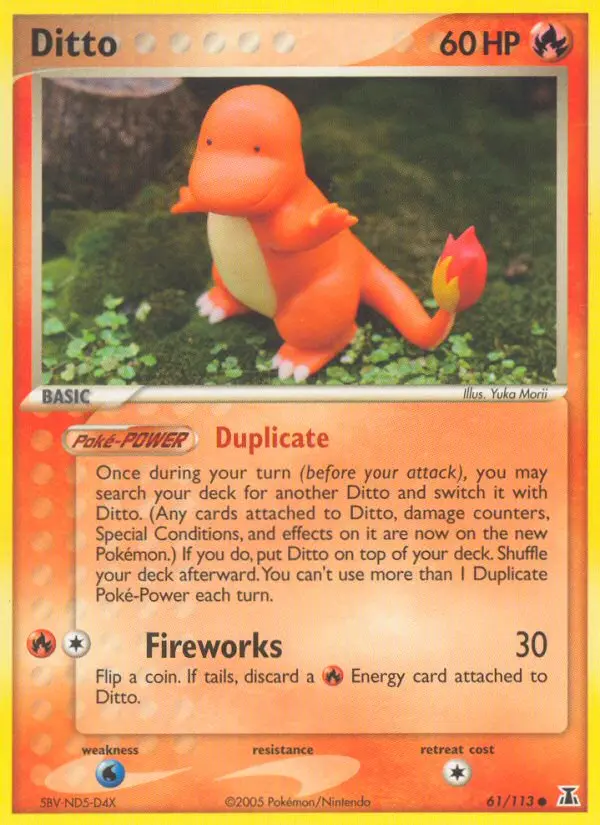
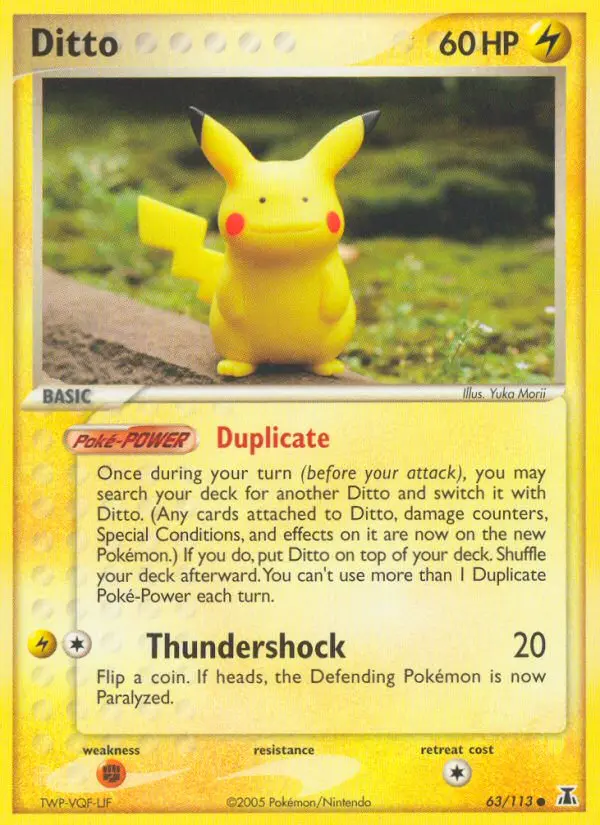
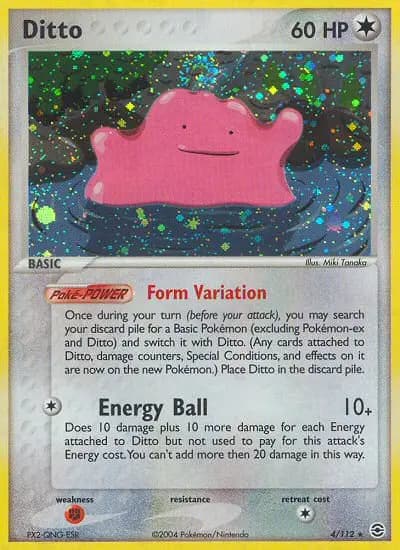
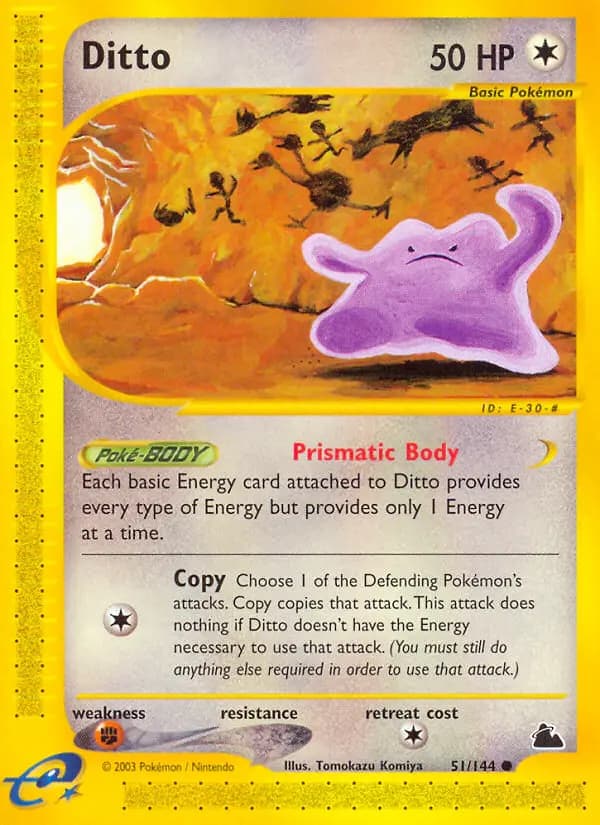
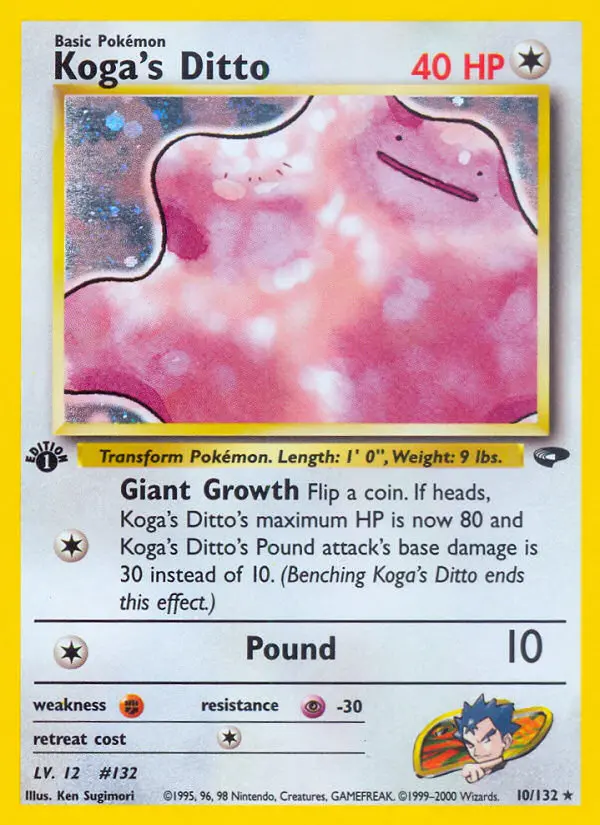
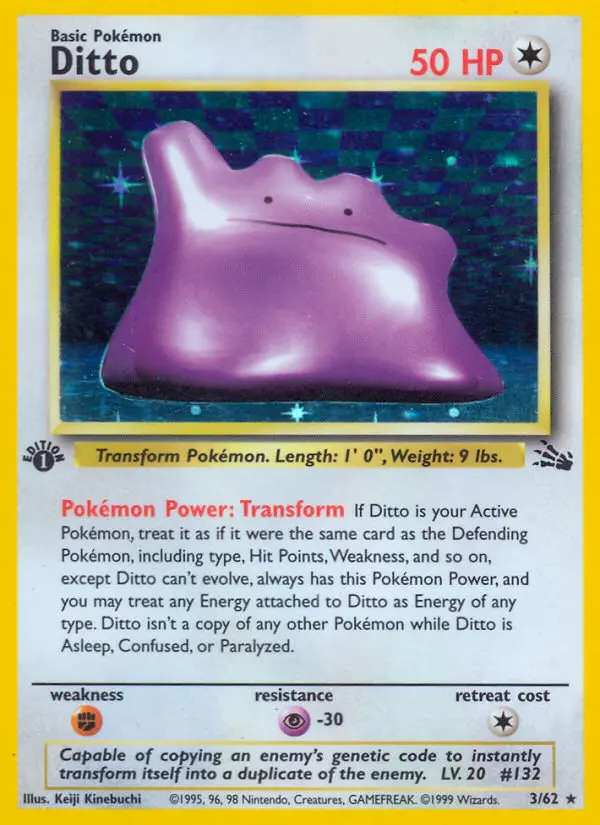
Ditto has achieved remarkable cultural significance within the Pokémon franchise and broader gaming community, becoming one of the most recognizable and beloved Pokémon despite never being a pseudolegendary, starter, or particularly powerful in traditional terms. Its iconic design and unique gameplay role have made it a frequent subject of fan art, merchandise, and internet culture, where Ditto's innocent expression and transformative abilities have inspired countless creative interpretations. In the Pokémon anime series, Ditto has featured prominently in several memorable episodes, most notably through Duplica's Ditto in the early Kanto arc, which captured the essence of the species' struggle to maintain perfect transformations and its emotional vulnerability when unable to perfectly replicate its targets. The species has transcended gaming to appear in numerous Pokémon media adaptations, spin-offs, and crossovers, including the Detective Pikachu film and various trading card game sets where it often receives special treatment and unique artwork reflecting its transformation theme. Beyond official media, Ditto has become an unexpected internet phenomenon in recent years, particularly through the release of Pokémon Scarlet and Violet, where its unique mechanics and appearance in Pokédex-related content have generated viral memes and renewed interest in the species. The announcement of an upcoming Pokémon theatrical release titled 'Pokémon Pokopia' featuring a Ditto protagonist in human form further demonstrates the species' cultural resonance and mainstream appeal, elevating it from a mechanical utility Pokémon to a character worthy of starring roles.
Where to Find Ditto in Every Pokémon Game
Ditto's availability has been strategically distributed across Pokémon games since its Generation I introduction, making it accessible but not trivially easy to obtain, reflecting its status as both a common species and one requiring dedicated searching. In the original Red, Blue, and Yellow versions, Ditto could be found in the Routes surrounding Cerulean City, particularly in areas where trainers typically battle other Ditto specimens. Across subsequent generations, Game Freak has maintained Ditto's presence in various regional Pokédexes, typically placing it in mid-to-late game areas accessible after acquiring several gym badges, ensuring that casual players can eventually obtain one while preventing it from being encountered too early to impact normal gameplay. In HeartGold and SoulSilver, Ditto appears in specific postgame areas, while in modern generation games like Sword and Shield or Scarlet and Violet, it has been placed in diverse habitats ranging from grassy routes to caves and wooded areas, reflecting its adaptable nature. The catch rate of 35 makes Ditto reasonably difficult to capture compared to common Pokémon, requiring either multiple Poké Balls or status effect applications to successfully capture, adding a layer of effort to obtaining this valuable species. Additionally, Pokémon GO and mobile games have featured Ditto with special mechanics that reward thorough gameplay, often hiding Ditto's appearance until after capture, creating memorable moments when trainers discover they have caught a Ditto rather than their intended target, referencing the species' transformative nature in a clever gameplay mechanic that appeals to both casual and experienced players alike.