Kricketot
Generation IV · #0401 — Cricket Pokémon
Kricketot's shed skin ability is the first thing worth knowing about it — everything else, from its bug typing to its build, follows from how that ability gets used. It measures 0.3 m and 2.2 kg, dimensions that pair with that stat lean in noticeable ways. This diminutive cricket Pokémon stands at merely 0.3 meters tall and weighs only 2.2 kilograms, making it one of the tiniest bug-type Pokémon available to new trainers. Despite its modest stature and minimal base stats totaling just 194, Kricketot possesses a distinctive charm and serves an important evolutionary stepping stone, advancing to the more formidable Kricketune at level 10. With a catch rate of 255, Kricketot is among the easiest Pokémon to capture, making it an accessible choice for players seeking a bug-type companion early in their adventure.
Editor's Take
Kricketot knows only Bide and Growl and evolves at level 10, which makes it one of the fastest early-game evolutions and one of the least eventful.
Base Stats
Height
0.3m
Weight
2.2kg
Category
Cricket Pokémon
Gender
Male 50% / Female 50%
Color
red
Shape
humanoid
Abilities
Has a 33% chance of curing any major status ailment after each turn.
Ensures success fleeing from wild battles.

Kricketot Biology & Physical Characteristics
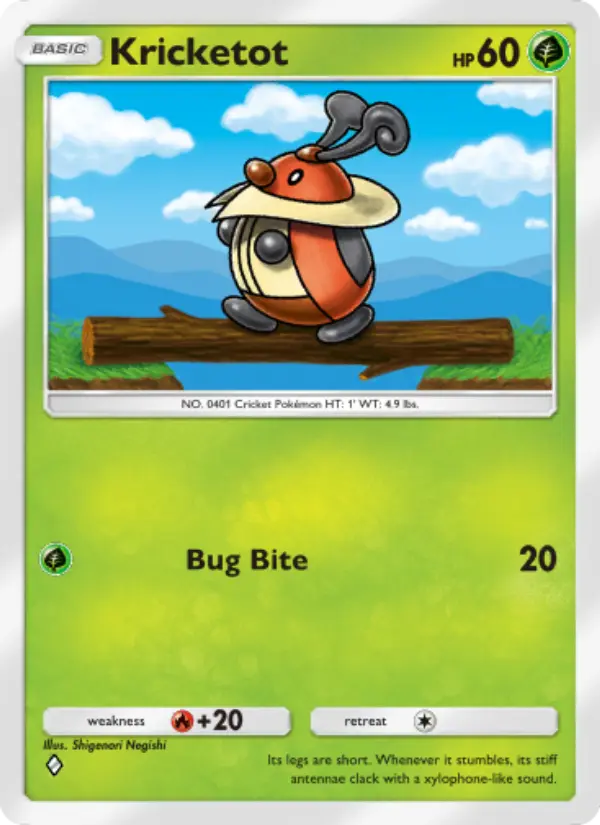
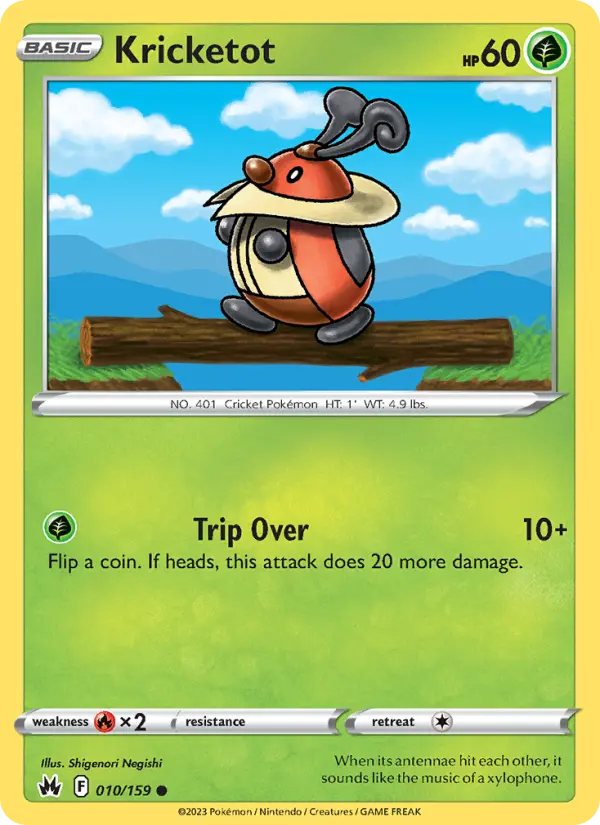
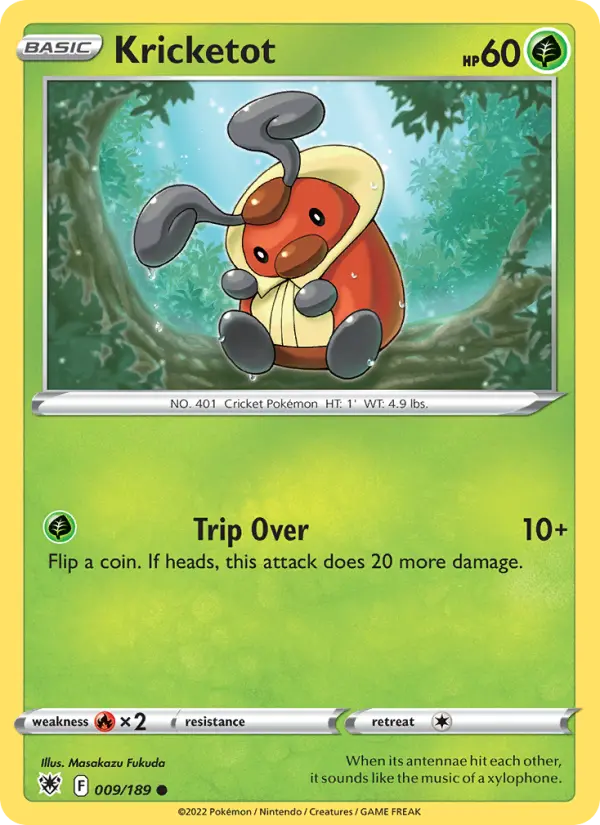
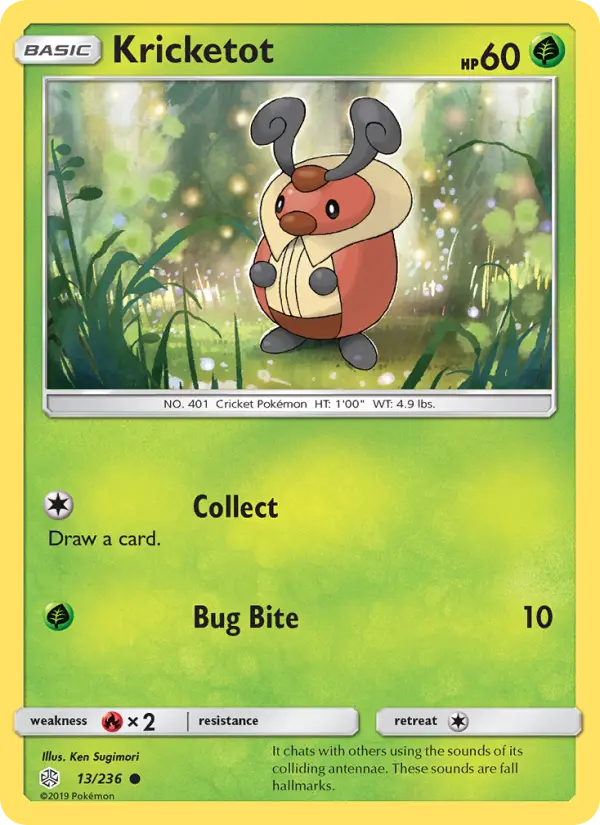
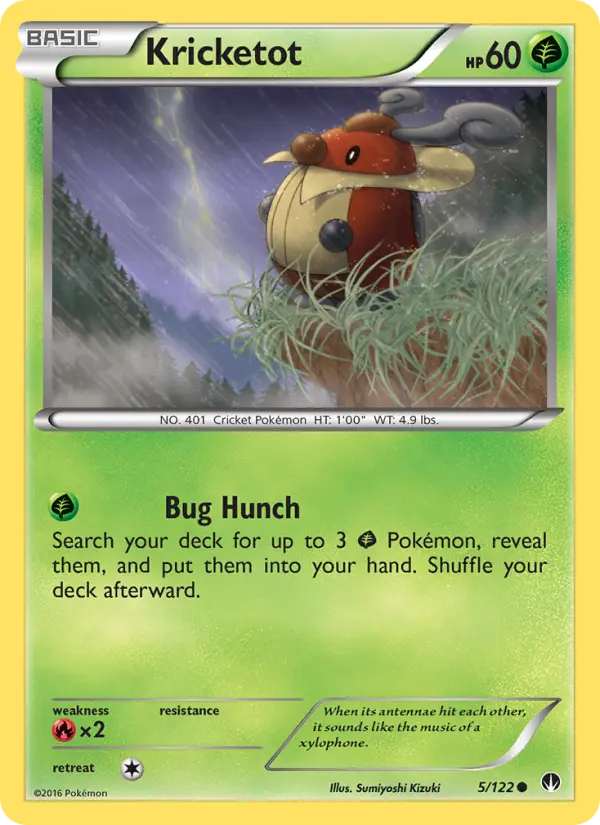
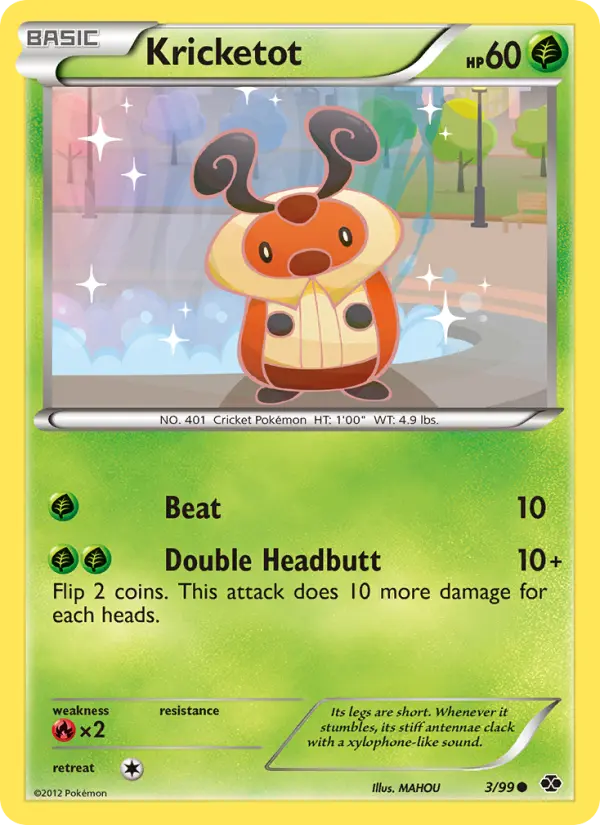
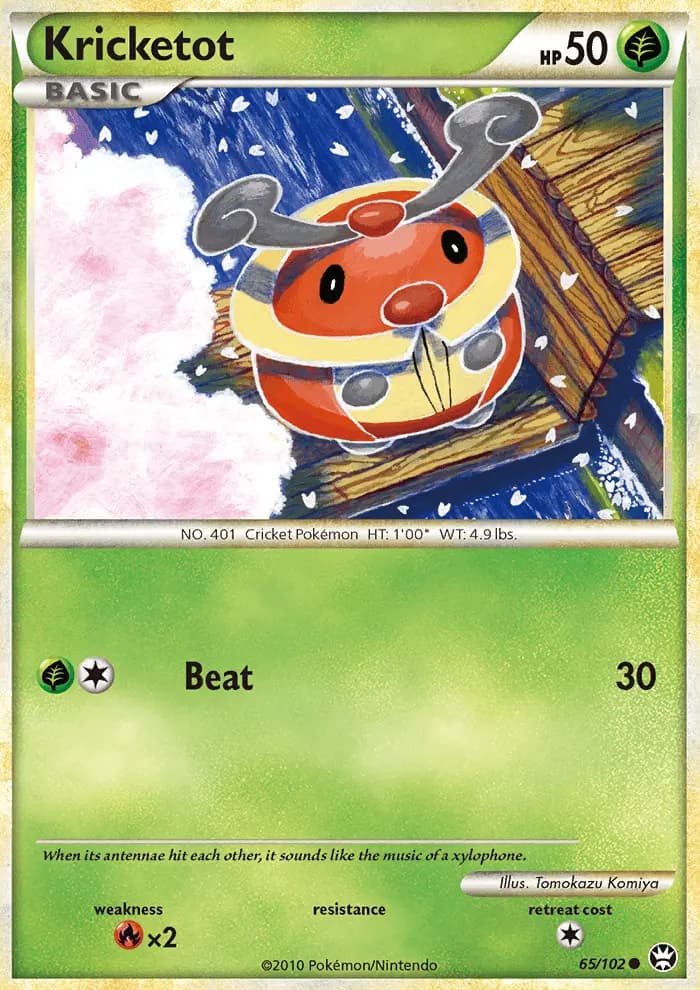
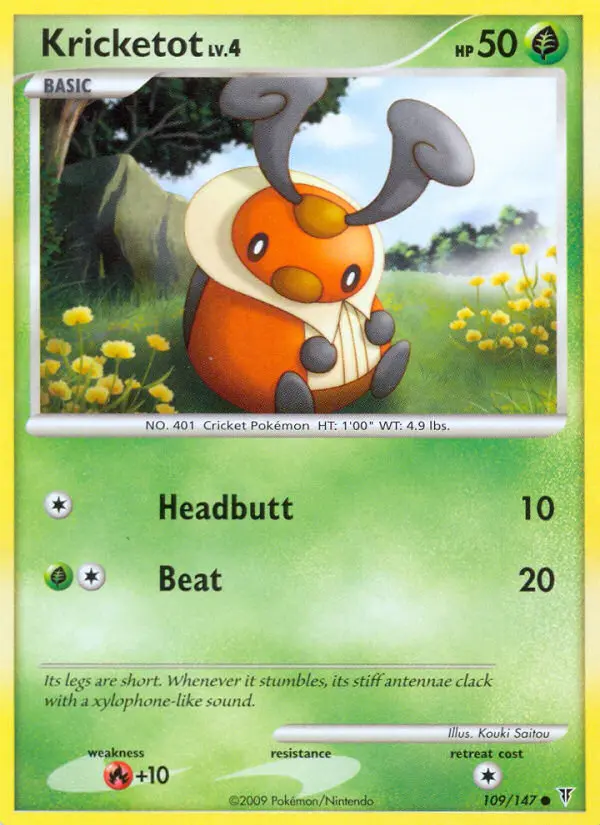
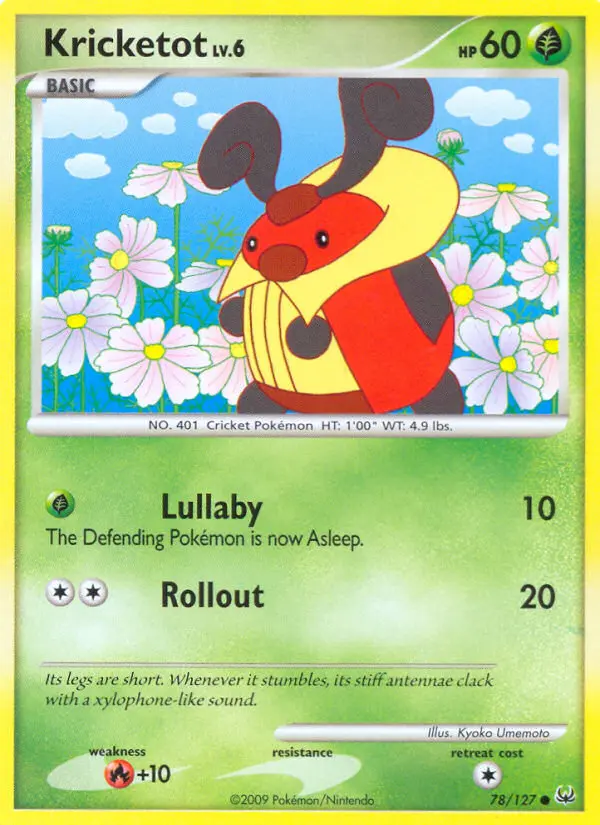
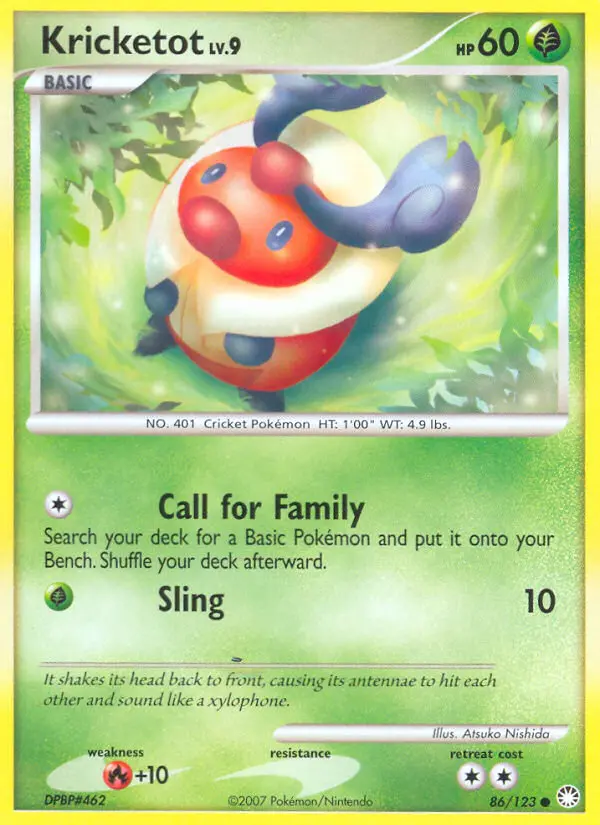
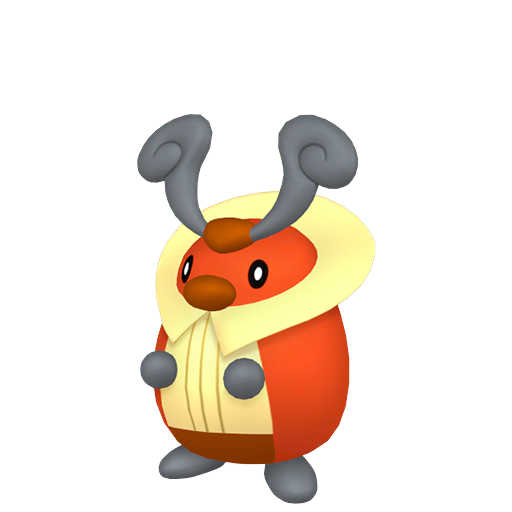
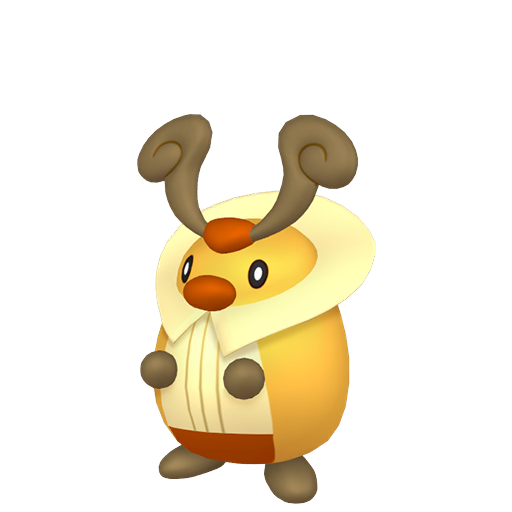
Kricketot is a bipedal insectoid Pokémon with a predominantly red coloration that gives it a cricket-like appearance. The majority of its compact body is bright red, contrasted by a pale yellow streak running down its front and a distinctive black cape-like marking adorning its back. Its most recognizable feature is the flat, pale yellow collar-like structure encircling its head, which displays sexual dimorphism—females possess a notably larger collar than males. Two prominent black antennae with characteristically curled tips extend from its head, connected via a dark red segment, while a similar dark red segment forms its nose. Its small black hands and feet are proportionally tiny relative to its body, contributing to its overall delicate appearance. Kricketot's most remarkable biological trait involves the production of sound through its antennae; by shaking its head back and forth and causing its stiff antennae to collide with one another, it generates a distinctive xylophone-like or marimba-like sound. According to Pokédex entries, these chirping sounds serve as a primary form of communication among individuals of the species, particularly during autumn nights when Kricketot gather in greater numbers.
Pokedex Numbers
Training
Breeding
Kricketot Breeding, Gender Ratio & Egg Groups
Kricketot maintains a perfect 50/50 gender ratio between males and females, with visual sexual dimorphism readily apparent in their appearance. Female Kricketot possess noticeably larger pale yellow collars compared to their male counterparts, making sex determination straightforward even for casual players. The species belongs to the Bug egg group, meaning Kricketot can only breed with other Pokémon within the same egg group, limiting breeding possibilities to various bug-type Pokémon. With a hatch counter of 15, Kricketot eggs require approximately 3,599 to 3,855 steps to hatch, placing them in the moderate range for incubation times. The species displays a base friendship value of 70 out of 255, indicating that while Kricketot aren't naturally hostile or distrustful toward trainers, they also don't bond instantaneously without effort. The medium-slow growth rate means Kricketot reaches higher levels somewhat gradually, though the early evolution at level 10 mitigates this concern for competitive gameplay. Breeding Kricketot for optimal individual values or specific natures requires standard breeding mechanics, though the species' humble stats mean most trainers view them primarily as stepping stones to Kricketune rather than investing significant breeding effort.
Sprites




Held Items
Metronome
held-items
Held: Consectutive uses of the same attack have a cumulative damage boost of 10%. Maximum 100% boost.
Cost: 4000
Metronome
held-items
Held: Consectutive uses of the same attack have a cumulative damage boost of 10%. Maximum 100% boost.
Cost: 4000
Metronome
held-items
Held: Consectutive uses of the same attack have a cumulative damage boost of 10%. Maximum 100% boost.
Cost: 4000
Metronome
held-items
Held: Consectutive uses of the same attack have a cumulative damage boost of 10%. Maximum 100% boost.
Cost: 4000
Metronome
held-items
Held: Consectutive uses of the same attack have a cumulative damage boost of 10%. Maximum 100% boost.
Cost: 4000
Metronome
held-items
Held: Consectutive uses of the same attack have a cumulative damage boost of 10%. Maximum 100% boost.
Cost: 4000
Metronome
held-items
Held: Consectutive uses of the same attack have a cumulative damage boost of 10%. Maximum 100% boost.
Cost: 4000
Metronome
held-items
Held: Consectutive uses of the same attack have a cumulative damage boost of 10%. Maximum 100% boost.
Cost: 4000
Metronome
held-items
Held: Consectutive uses of the same attack have a cumulative damage boost of 10%. Maximum 100% boost.
Cost: 4000
Metronome
held-items
Held: Consectutive uses of the same attack have a cumulative damage boost of 10%. Maximum 100% boost.
Cost: 4000
Metronome
held-items
Held: Consectutive uses of the same attack have a cumulative damage boost of 10%. Maximum 100% boost.
Cost: 4000
Metronome
held-items
Held: Consectutive uses of the same attack have a cumulative damage boost of 10%. Maximum 100% boost.
Cost: 4000
Metronome
held-items
Held: Consectutive uses of the same attack have a cumulative damage boost of 10%. Maximum 100% boost.
Cost: 4000
Metronome
held-items
Held: Consectutive uses of the same attack have a cumulative damage boost of 10%. Maximum 100% boost.
Cost: 4000
Metronome
held-items
Held: Consectutive uses of the same attack have a cumulative damage boost of 10%. Maximum 100% boost.
Cost: 4000
Metronome
held-items
Held: Consectutive uses of the same attack have a cumulative damage boost of 10%. Maximum 100% boost.
Cost: 4000
Metronome
held-items
Held: Consectutive uses of the same attack have a cumulative damage boost of 10%. Maximum 100% boost.
Cost: 4000
TMs & HMs
tm205
scarlet violet
tm182
scarlet violet
tm185
scarlet violet
tr35
sword shield
tm05
scarlet violet
tm171
scarlet violet
tm191
scarlet violet
tm13
gold silver
tm13
crystal
tm31
crystal
tm15
scarlet violet
tm185
the indigo disk
tm182
the teal mask
tm191
the teal mask
tm171
the indigo disk
tm185
the teal mask
tm219
the indigo disk
tm24
sword shield
tm31
gold silver
tm34
red blue
+9 more TMs/HMs
Gender Differences
This Pokémon has visible differences between male and female forms.


Kricketot Evolution, Mega Evolution & Special Forms
Kricketot evolves into Kricketune upon reaching level 10, a remarkably early evolution point that reflects the species' role as a basic-stage Pokémon. This evolution represents a significant transformation, as the diminutive cricket transforms into a more robust, violin-playing insect Pokémon. While Kricketot itself remains unchanging throughout different Pokémon games and generations, its evolutionary destination Kricketune gains considerable stat increases, particularly in Attack and Special Attack, along with greater HP and Defense. The evolution from Kricketot to Kricketune mirrors real-world cricket biology, transitioning from a juvenile form to an adult capable of producing more complex sounds. This early-level evolution makes the Kricketot line accessible for trainers seeking to quickly develop a more capable bug-type Pokémon, though the diminutive cricket's low base stats of 37 HP, 25 Attack, and 25 Special Attack mean that training one to level 10 requires careful strategy. The evolution is purely level-based with no special conditions required, making it straightforward and guaranteed for any trainer who invests minimal effort into their Kricketot.
Where to Find
Sinnoh Route 202
sinnoh
+5 more
Sinnoh Route 203
sinnoh
+3 more
Sinnoh Route 206
sinnoh
Sinnoh Route 204
sinnoh
+9 more
Sinnoh Route 207
sinnoh
+3 more
Eterna Forest
sinnoh
Sinnoh Route 201
sinnoh
Sinnoh Route 205
sinnoh
Viridian Forest
kanto
+1 more
Kricketot Behaviour and Natural Habitat
Kricketot exhibits behavior typical of cricket Pokémon, demonstrating a tendency to congregate during autumn evenings when they produce their characteristic sounds. The species is known for its somewhat clumsy nature due to its short legs, frequently stumbling—though these stumbles inadvertently produce the melodic antennae clacks that have become hallmarks of fall evenings across the Pokémon world. Kricketot use their xylophone-like vocalizations to communicate with one another, engaging in what might be described as musical chitchat that resonates through the cool autumn air. The species prefers grassy and wooded areas where insects naturally thrive, making them common encounters in early-game zones throughout the Sinnoh region. Despite their diminutive size and apparent fragility, Kricketot possess a base friendship value of 70, suggesting they bond relatively easily with trainers who treat them with care. Their natural habitat during autumn months and their gregarious behavior suggest Kricketot may migrate or congregate seasonally, following ecological patterns tied to temperature and seasonal changes.
Pokedex Entries
It shakes its head back to front, causing its antennae to hit each other and sound like a xylophone.
It chats with others using the sounds of its colliding antennae. These sounds are fall hallmarks.
Its legs are short. Whenever it stumbles, its stiff antennae clack with a xylophone-like sound.
When its antennae hit each other, it sounds like the music of a xylophone.
Its legs are short. Whenever it stumbles, its stiff antennae clack with a xylophone-like sound.
Its legs are short. Whenever it stumbles, its stiff antennae clack with a xylophone-like sound.
It chats with others using the sounds of its colliding antennae. These sounds are fall hallmarks.
When its antennae hit each other, it sounds like the music of a xylophone.
It chats with others using the sounds of its colliding antennae. These sounds are fall hallmarks.
When its antennae hit each other, it sounds like the music of a xylophone.
When the trees take on new hues, more of these Pokémon appear. The tone they create by striking their antennae together resembles that of the marimba, an instrument of foreign lands.
Kricketot Name Origin & Design Inspiration
Kricketot's name origin lies in a clever combination of 'cricket' and 'tot,' the latter suffix emphasizing its status as a small, juvenile Pokémon. Its Japanese name, Korobohshi, combines the onomatopoeia 'koro' (rolling or tumbling sound) with 'bohshi' (referring to a stick or rod), referencing both its tumbling behavior and rigid antennae. The design itself draws direct inspiration from real crickets, particularly house crickets and field crickets, capturing the essential visual elements including the characteristic antennae, compact body shape, and jumping legs. The pale yellow collar structure is a distinctly Pokémon design choice that adds visual appeal while allowing for sexual dimorphism through size variation. The red coloration combined with the black cape-like marking on its back gives Kricketot a somewhat formal appearance, almost as if wearing a tiny coat or cape. The emphasis on its antennae and the xylophone-like sounds they produce reflect real cricket biology—while actual crickets produce sound through wing-rubbing stridulation, Kricketot's design creatively reimagines this as antennae collision, making it visually distinctive and aurally memorable. This creative reinterpretation of cricket behavior into a fantastical sound-producing mechanism became one of the species' most defining characteristics across all Pokédex entries.
Learnable Moves
Kricketot can learn 15 moves:
Move | Type | Cat. | Power | Acc. | PP |
|---|---|---|---|---|---|
| absorb | grass | Special | 20 | 100 | 25 |
| bide | normal | Physical | — | — | 10 |
| bug bite | bug | Physical | 60 | 100 | 20 |
| endeavor | normal | Physical | — | 100 | 5 |
| growl | normal | Status | — | 100 | 40 |
| lunge | bug | Physical | 80 | 100 | 15 |
| mud slap | ground | Special | 20 | 100 | 10 |
| pound | normal | Physical | 40 | 100 | 35 |
| skitter smack | bug | Physical | 70 | 90 | 10 |
| snore | normal | Special | 50 | 100 | 15 |
| string shot | bug | Status | — | 95 | 40 |
| struggle bug | bug | Special | 50 | 100 | 20 |
| tackle | normal | Physical | 40 | 100 | 35 |
| tera blast | normal | Special | 80 | 100 | 10 |
| uproar | normal | Special | 90 | 100 | 10 |
Kricketot Competitive Battle Guide
Kricketot's competitive viability is severely limited by its base stats, which total only 194 with concerning distributions that emphasize neither offense nor special attack. With base Attack and Special Attack both sitting at merely 25, and Speed matching that abysmal figure, Kricketot cannot reliably deal damage to opposing Pokémon in competitive scenarios. Its defenses of 41 Defense and 41 Special Defense offer slightly better bulk relative to its other stats, yet remain insufficient to survive hits from competent opponents. The Shed Skin ability provides a 33% chance per turn of curing major status conditions, which offers some utility in longer battles by potentially removing paralysis, poison, or burns. The hidden ability Run Away guarantees escape from wild Pokémon battles, proving useless in competitive formats. Kricketot's viable move pool includes bug-type attacks like Bug Bite and Struggle Bug, yet its pitiful offensive stats render even these moves largely ineffective. Most competitive players immediately evolve Kricketot to Kricketune upon reaching level 10, as the evolution provides substantial stat improvements and access to superior moves, making Kricketot itself essentially obsolete in serious competitive play. The species serves purely as a stepping stone within its evolution line rather than a viable battler in its own right.
Commonly Asked Questions About Kricketot
What type is Kricketot?
Kricketot is a bug type Pokemon.
What does Kricketot evolve into?
Kricketot evolves into kricketune.
What are Kricketot's weaknesses?
Kricketot is weak to flying, rock and fire type moves.
Does Kricketot evolve by trading?
No — Kricketot evolves entirely through leveling up, with no trade required at any stage.
Where can I find Kricketot?
Kricketot can be found in sinnoh route 202 (sinnoh), sinnoh route 203 (sinnoh) and sinnoh route 206 (sinnoh) and 6 other locations.
Kricketot Cultural Impact & Franchise History
Kricketot has become iconic as the quintessential 'baby bug-type' Pokémon introduced in Generation IV, serving as many trainers' first experience with the franchise's cricket-inspired creatures. The xylophone-like sound created by its antennae has resonated with players metaphorically and literally, with the cricket's chirps becoming synonymous with autumn evenings in the Pokémon world. Multiple Pokédex entries across generations have emphasized the seasonal and musical aspects of Kricketot, creating a poetic association between the species and fall imagery that transcends typical Pokémon lore. In the anime adaptation, Kricketot appears across various episodes, establishing itself in the cultural consciousness of Pokémon fans who experienced Generation IV. The design's simplicity and charm have made Kricketot a favorite subject of fan art and fan culture, with its distinctive appearance and musical nature appealing to creative communities. The species also appears in multiple spin-off games and media, from Mystery Dungeon to Pokémon GO, ensuring continued visibility across the broader franchise. Kricketot's role as an early-game capture that evolves quickly into the more prominent Kricketune has established it as a gateway to understanding bug-type Pokémon mechanics for many newer players, cementing its position in the franchise's developmental ecosystem.
Where to Find Kricketot in Every Pokémon Game
Kricketot is most readily available in the Sinnoh region, where it appears in Diamond, Pearl, and Platinum versions, with continued access in Brilliant Diamond and Shining Pearl remakes. In the original Generation IV games, Kricketot can be encountered early in routes surrounding Jubilife City, with particularly good encounter rates in grassy areas during morning and daytime periods. The species maintains a catch rate of 255—the highest possible—making it trivially easy to capture even for new players without specialized Poké Balls. Beyond Sinnoh, Kricketot appears in various other games including HeartGold and SoulSilver through breeding or post-game content, though direct wild encounters are limited. Pokémon Legends: Arceus features Kricketot in Hisui's equivalent areas, with Pokédex entries noting its xylophone-like vocalizations. More recent games including Scarlet and Violet include Kricketot in their Pokédex, though availability varies by version and region. Pokémon GO has made Kricketot available during specific seasonal events, particularly during autumn months when the species' thematic connection to fall makes its appearance most appropriate. The species' consistent early-game availability across most mainline Pokémon games reflects its intended role as an accessible bug-type option for trainers seeking their first insectoid companion, ensuring that virtually any player earnest about obtaining Kricketot can do so with minimal difficulty.