
Family Of Three Maushold
Generation IX · #10257 — Family Pokémon
Maushold, the Family Pokémon introduced in Generation IX, represents a fascinating departure from traditional Pokémon design by embodying a collective entity rather than a singular creature. This Normal-type Pokémon exists in two distinct forms: the more common Family of Four and the exceedingly rare Family of Three variant. The Family of Three form is particularly intriguing, occurring with only a 1% chance when Tandemaus evolves at level 25 or higher through battle experience. Despite the unusual family structure of three members instead of four, this form maintains identical base statistics to its counterpart, boasting a respectable total of 470 base stats with exceptional Speed of 111 that makes it one of the faster Normal-type Pokémon available. With a height of merely 0.3 meters and weighing only 2.8 kilograms, Maushold represents the epitome of a small, family-oriented rodent Pokémon that prioritizes cooperation and protective behavior over individual strength.
Editor's Take
Family of Three Maushold is the rarer of the two outcomes and has slightly different stats, which makes the random evolution genuinely consequential rather than cosmetic.
Base Stats
Height
0.3m
Weight
2.8kg
Category
Family Pokémon
Gender
Genderless
Color
white
Shape
heads
Abilities
Decreases all direct damage taken by friendly Pokémon to 0.75×.
Restores HP upon eating a Berry, in addition to the Berry's effect.
Strengthens moves of 60 base power or less to 1.5× their power.

Family Of Three Maushold Biology & Physical Characteristics
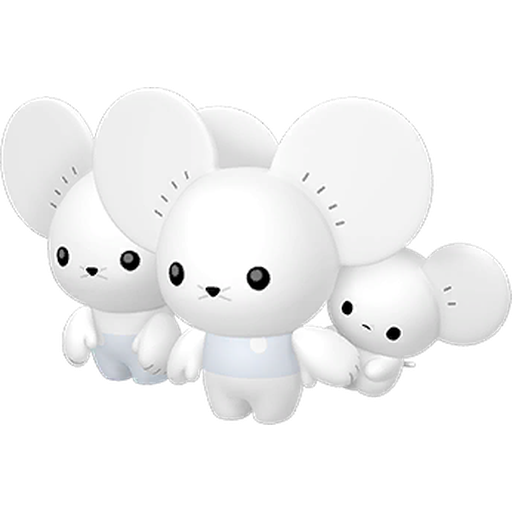
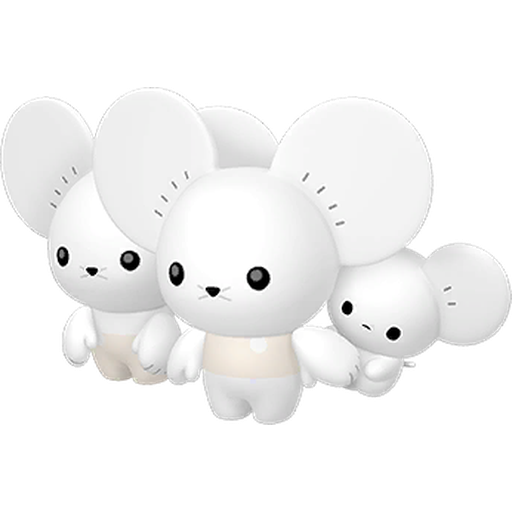
The Family of Three form of Maushold consists of three individual mouse-like rodent Pokémon that function as a unified organism, with two larger members and one noticeably smaller companion. Each individual member displays a small, white, bipedal frame characterized by a spherical head, large rounded ears, and stubby limbs equipped with oversized paws. Their most distinctive feature is an enormous mouth that can open to reveal a prominent upper incisor, taking up more than half of their facial structure when fully agape. The two larger members of the Family of Three exhibit light-gray patches of fur—one resembling a shirt across the chest area and another resembling pants around the legs—characteristics inherited from their Tandemaus ancestry. The solitary smaller member lacks these distinctive gray markings and features proportionally shorter tails and more diminutive limbs than its larger companions. Most remarkably, the smaller member habitually clings to the tips of the larger Pokémon's tails while walking, suggesting a genuine familial bond and mutual dependence within the group. The origin of the smaller member remains shrouded in mystery, with Pokédex entries acknowledging that 'the little one just appeared one day,' indicating that these creatures possess reproductive or summoning behaviors not yet fully understood by modern Pokémon science.
Pokedex Numbers
Training
Breeding
Family Of Three Maushold Breeding, Gender Ratio & Egg Groups
Maushold's Family of Three form presents an unusual breeding situation as a genderless Pokémon, classified within the Field and Fairy egg groups. The genderless classification is particularly notable given the obvious familial structure and the presence of what appears to be juvenile members within the group, yet Maushold reproduces asexually rather than through traditional gender-based breeding mechanics. This genderless status applies equally to both the Family of Three and Family of Four forms, suggesting that reproduction occurs through mechanisms entirely distinct from conventional Pokémon breeding. The assignment to both Field and Fairy egg groups indicates that Maushold can breed with a diverse range of Pokémon partners from these categories, expanding breeding possibilities beyond what might be expected from such a family-oriented species. Despite being genderless, the Pokédex entries and observable behavior clearly indicate familial relationships with distinct roles—protector parents and dependent offspring—suggesting that Maushold's reproductive system operates on principles fundamentally different from sexually reproducing species. The base friendship value of 50 indicates a neutral starting relationship with trainers, though their family-oriented nature and protective behaviors suggest they form strong bonds with those who care for them properly. For breeding purposes, the hatch counter of 10 cycles (equivalent to 2,314–2,570 steps) allows players to obtain eggs at a reasonable pace, with offspring emerging from the incubation process ready to begin their own family unit.
Sprites


TMs & HMs
tm02
lets go pikachu lets go eevee
tm03
ruby sapphire
tm03
platinum
tm03
firered leafgreen
tm03
heartgold soulsilver
tm03
diamond pearl
tm03
emerald
tm03
xd
tm03
colosseum
tm03
lets go pikachu lets go eevee
tm05
lets go pikachu lets go eevee
tm07
lets go pikachu lets go eevee
tm08
lets go pikachu lets go eevee
tm08
sword shield
tm09
yellow
tm09
red blue
tm09
ruby sapphire
tm09
firered leafgreen
tm09
emerald
tm09
diamond pearl
+366 more TMs/HMs
Regional & Special Forms
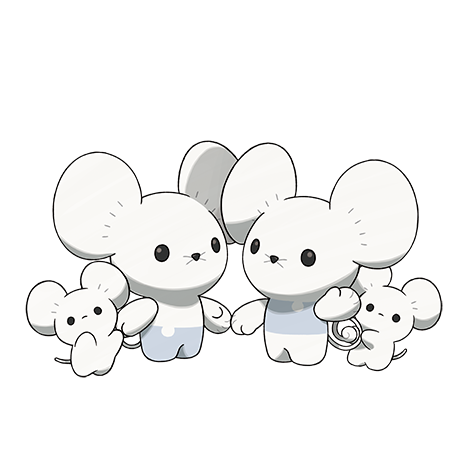
Family Of Three Maushold also has a related form: Family Of Four Maushold.
Family Of Three Maushold's Evolution Chain


Family Of Three Maushold Evolution, Mega Evolution & Special Forms
The Family of Three form of Maushold represents the evolved state of Tandemaus, occurring when the pre-evolution reaches level 25 and participates in battle. What distinguishes this particular form from the standard Family of Four Maushold is the exceedingly rare 1% evolution rate, making it one of the most difficult Pokémon variants to obtain in Generation IX games. The evolution process itself is conditional, requiring not merely leveling up but specifically gaining experience through active battle participation, emphasizing the importance of combat engagement in the formation of this particular family structure. Unlike most Pokémon evolutions that result in singular, permanent transformations, Maushold's dual forms suggest that the evolution mechanics are influenced by unknown variables—possibly environmental factors, individual stats, or mysterious chance events that determine whether a Tandemaus pair becomes a protective family of three or four. This rarity makes the Family of Three form a significant collectible for dedicated players and completionists. The identical base statistics of 470 total across both forms, including the same 74 HP, 75 Attack, 70 Defense, 65 Special Attack, 75 Special Defense, and 111 Speed, indicate that the numerical power difference between forms is negligible, positioning both as equally viable for competitive play despite their different composition. Notably, Maushold does not undergo Mega Evolution or any further evolutionary stages, marking it as a final evolution in its line.
Where to Find
Location data not available for this Pokémon in the database.
Family Of Three Maushold Behaviour and Natural Habitat
The Family of Three form of Maushold exhibits deeply cooperative social behavior centered around family structure and mutual protection, as documented in multiple Pokédex entries. According to Violet's Pokédex account, the larger pair actively protects the little one during battles, and when confronted with formidable opponents, the entire group joins the fight collectively, suggesting that despite their individual vulnerability, they possess the courage and tactical awareness to engage in combat as a unified force. These Pokémon are known to construct elaborate nests featuring multiple specialized rooms designed for distinct purposes including eating and sleeping, demonstrating remarkable architectural ability for creatures of such diminutive size. The Family of Three variant's decision to remain as a trio rather than four suggests either a different environmental circumstance or a unique familial composition that distinguishes them from their more common counterparts. Their base Speed stat of 111 indicates they are naturally swift runners, likely using this agility to evade predators and navigate the terrain of their habitat efficiently. The mysterious appearance of the smallest member suggests these creatures may possess unusual reproductive capabilities or social behaviors where younger members spontaneously join established family units, a phenomenon that contradicts conventional understanding of Pokémon breeding and warrants further scientific investigation.
Pokedex Entries
The two little ones just appeared one day. The group might be a family of related Pokémon, but nobody knows for sure.
The larger pair protects the little ones during battles. When facing strong opponents, the whole group will join the fight.
Family Of Three Maushold Name Origin & Design Inspiration
The name Maushold derives from a straightforward combination of 'mouse' and 'household,' perfectly encapsulating the concept of a domestic rodent family unit. The Japanese designation 'Ikkanezumi' similarly references 'ikkakete' (一家揃って, together as a family) and 'nezumi' (鼠, mouse), emphasizing the familial togetherness theme that permeates the species' entire identity. The design philosophy deliberately contrasts with singular Pokémon by presenting a collective organism composed of multiple individuals, paralleling designs like Exeggcute, Falinks, and its own pre-evolution Tandemaus. The visual distinction between larger and smaller members creates an intuitive family hierarchy, with the gray-patched larger members serving as protectors and the smaller, unadorned member as the protected offspring. The curious physiological choice to include massive mouths with prominent incisors reflects the Pokémon's rodent heritage while adding an element of visual distinctiveness. The Family of Three form specifically distinguishes itself through its reduced membership—three instead of four—a design choice that simultaneously makes it rarer and more intimate in its family structure. This design represents Game Freak's intentional effort to create a Pokémon that fundamentally challenges the paradigm of individual creature design by presenting a species that is literally incomplete without its family members, embodying themes of interdependence, protection, and communal responsibility.
Learnable Moves
Family Of Three Maushold can learn 49 moves:
Move | Type | Cat. | Power | Acc. | PP |
|---|---|---|---|---|---|
| aerial ace | flying | Physical | 60 | — | 20 |
| agility | psychic | Status | — | — | 30 |
| baby doll eyes | fairy | Status | — | 100 | 30 |
| beat up | dark | Physical | — | 100 | 10 |
| bullet seed | grass | Physical | 25 | 100 | 30 |
| charm | fairy | Status | — | 100 | 20 |
| chilling water | water | Special | 50 | 100 | 20 |
| copycat | normal | Status | — | — | 20 |
| crunch | dark | Physical | 80 | 100 | 15 |
| dig | ground | Physical | 80 | 100 | 10 |
| double hit | normal | Physical | 35 | 90 | 10 |
| double edge | normal | Physical | 120 | 100 | 15 |
| echoed voice | normal | Special | 40 | 100 | 15 |
| encore | normal | Status | — | 100 | 5 |
| endure | normal | Status | — | — | 10 |
| facade | normal | Physical | 70 | 100 | 20 |
| fake tears | dark | Status | — | 100 | 20 |
| follow me | normal | Status | — | — | 20 |
| giga impact | normal | Physical | 150 | 90 | 5 |
| grass knot | grass | Special | — | 100 | 20 |
| helping hand | normal | Status | — | — | 20 |
| hyper beam | normal | Special | 150 | 90 | 5 |
| hyper voice | normal | Special | 90 | 100 | 10 |
| low kick | fighting | Physical | — | 100 | 20 |
| low sweep | fighting | Physical | 65 | 100 | 20 |
| mud shot | ground | Special | 55 | 95 | 15 |
| mud slap | ground | Special | 20 | 100 | 10 |
| play rough | fairy | Physical | 90 | 90 | 10 |
| population bomb | normal | Physical | 20 | 90 | 10 |
| pound | normal | Physical | 40 | 100 | 35 |
| protect | normal | Status | — | — | 10 |
| rain dance | water | Status | — | — | 5 |
| rest | psychic | Status | — | — | 5 |
| seed bomb | grass | Physical | 80 | 100 | 15 |
| shadow claw | ghost | Physical | 70 | 100 | 15 |
| sleep talk | normal | Status | — | — | 10 |
| substitute | normal | Status | — | — | 10 |
| sunny day | fire | Status | — | — | 5 |
| super fang | normal | Physical | — | 90 | 10 |
| swift | normal | Special | 60 | — | 20 |
| take down | normal | Physical | 90 | 85 | 20 |
| taunt | dark | Status | — | 100 | 20 |
| tera blast | normal | Special | 80 | 100 | 10 |
| thief | dark | Physical | 60 | 100 | 25 |
| thunder wave | electric | Status | — | 90 | 20 |
| tidy up | normal | Status | 0 | — | 10 |
| trailblaze | grass | Physical | 50 | 100 | 20 |
| u turn | bug | Physical | 70 | 100 | 20 |
| water pulse | water | Special | 60 | 100 | 20 |
Family Of Three Maushold Competitive Battle Guide
In terms of competitive use, the Family of Three form of Maushold operates identically to its Family of Four counterpart due to sharing identical base statistics totaling 470 points. The exceptional Speed stat of 111 positions Maushold as one of the faster Normal-type options available, allowing it to outspeed many common threats and execute priority moves before opponents can respond. The relatively balanced distribution across other stats—74 HP, 75 Attack, 70 Defense, 65 Special Attack, and 75 Special Defense—creates a generalist that lacks any particular weakness but also possesses no exceptional strength in any single category. Maushold's three standard abilities provide distinct competitive advantages: Friend Guard reduces all direct damage taken by friendly Pokémon to 75% effectiveness, making it invaluable in double or triple battles where team protection is paramount; Cheek Pouch restores HP upon consuming berries, enabling a form of sustainable recovery that synergizes with berry-based strategies; and the hidden ability Technician amplifies all moves with 60 base power or less to 1.5× their original power, dramatically enhancing the effectiveness of Maushold's smaller attacks and quick priority moves. Strategically, Maushold functions best in double battles where Friend Guard can protect teammates from concentrated damage, or as a fast special wall that can switch into many common threats thanks to its Speed and Special Defense. The Family of Three form's rarity makes it a significant psychological advantage in competitive play, as opponents may be unfamiliar with its specific capabilities, though competitive viability ultimately depends on player skill and team synergy rather than the form itself.
Commonly Asked Questions About Family Of Three Maushold
What type is Family Of Three Maushold?
Family Of Three Maushold is a normal type Pokemon.
What does Family Of Three Maushold evolve into?
Family Of Three Maushold does not evolve into any other Pokemon. It is the final form in its evolution line.
What are Family Of Three Maushold's weaknesses?
Family Of Three Maushold is weak to fighting type moves.
Family Of Three Maushold Cultural Impact & Franchise History
Since its introduction in Generation IX, Maushold has captured the imagination of Pokémon fans worldwide through its innovative approach to character design and the compelling narrative of family bonds. The radical concept of a Pokémon species that is fundamentally a family unit rather than an individual creature has resonated deeply with players seeking more narrative depth and emotional connection to their teams. The Family of Three form, with its extremely rare 1% evolution rate, has become a highly sought collectible that spawned significant community discussion about evolution mechanics and probability. Social media platforms and fan communities frequently celebrate players who have successfully obtained a Family of Three Maushold, with breeding guides and evolution methodology discussions becoming staple content within the competitive and casual Pokémon communities. The species' emphasis on protection, family loyalty, and collective strength appeals particularly to players who value thematic team building and narrative-driven playthroughs. Fan art depicting Maushold frequently emphasizes the heartwarming protective dynamics between the larger members and the smaller offspring, creating emotionally resonant imagery that celebrates family structures and interdependence. The mysterious origin of the smallest family member has spawned numerous fan theories and creative interpretations, with some players speculating about potential lore connections to Pokémon reproduction mechanics that Game Freak has deliberately left ambiguous. This cultural phenomenon has positioned Maushold as one of Generation IX's most beloved and memorable Pokémon designs, particularly among players who appreciate character-driven narratives over raw competitive statistics.
Where to Find Family Of Three Maushold in Every Pokémon Game
The Family of Three form of Maushold is obtainable in Pokémon Scarlet and Violet as the evolved form of Tandemaus, though its acquisition requires meeting specific conditions that make it considerably more challenging to obtain than its Family of Four counterpart. Players must first capture or breed a Tandemaus, which appears in various locations throughout the Paldea region, then raise it to level 25 and ensure it participates in battle during the leveling process. The crucial factor determining which form the player receives involves a random 1% probability check at the moment of evolution—a 99% chance yields the standard Family of Four form, while only a 1% chance produces the Family of Three variant, making this form approximately 100 times rarer than normal evolution outcomes. This severe rarity constraint means that players intending to obtain a Family of Three Maushold should prepare to evolve multiple Tandemaus, potentially dozens or hundreds depending on random chance, or utilize soft-reset strategies for those willing to invest the time. The Pokédex assigns Maushold the national number 925 and local number 0072 in Scarlet and Violet, with expanded availability in The Teal Mask DLC where it receives local number 0098. The availability of both forms with identical 75 catch rates and 165 base experience yields ensures that once obtained, training a Family of Three Maushold proceeds identically to its more common counterpart. For players seeking to complete their Pokédex, obtaining the Family of Three form represents a genuine endgame achievement that demands dedication, patience, and acceptance of probabilistic mechanics that may require hours of gameplay to complete successfully.