
Green Minior
Generation VII · #10139 — Meteor Pokémon
As a Generation VII rock/flying-type, Minior-Green leans on shields down to cover what its raw numbers don't, particularly on the hp side.
Editor's Take
Core Form Minior loses its status immunity when the shell breaks, which is the trade for the offensive stats — a genuinely well-balanced transformation.
Base Stats
Height
0.3m
Weight
0.3kg
Category
Meteor Pokémon
Gender
Genderless
Color
brown
Shape
ball
Abilities
Transforms this Minior between Core Form and Meteor Form. Prevents major status ailments and drowsiness while in Meteor Form.
Green Minior Biology & Physical Characteristics
Minior originates from the stratosphere, born from an aggregation of mutated nanoparticles that coalesce and develop through the absorption of atmospheric particulate matter. These microscopic origins belie the Pokémon's remarkable durability, as Minior constructs both a distinctive core and an exceptionally hard outer shell through the gradual accumulation of environmental debris. The biological process of shell formation follows a consistent life cycle: young Minior absorb dust and particles while inhabiting the ozone layer, gradually building their protective coating. However, this process of continuous accretion eventually renders them too heavy to remain airborne, causing them to plummet toward the planet's surface. The green-core variant, like all Minior cores, represents the true organism beneath the meteorite-like exterior—a spherical entity measuring approximately 0.3 meters in diameter with a remarkable transformation capacity. When the protective shell remains intact (Meteor Form), Minior weighs considerably more at 40.0 kilograms, a dramatic contrast to the mere 0.3 kilograms of its exposed Core Form, demonstrating how much of its mass is attributable to the accumulated rocky exterior rather than the core itself.
Pokedex Numbers
Training
Breeding
Green Minior Breeding, Gender Ratio & Egg Groups
Minior exists as a genderless Pokémon, consistent with other mineral-based and extraterrestrial species within the broader Pokédex. This genderless classification reflects the Pokémon's mineral and nanoparticle origins, positioning it outside traditional biological reproduction frameworks. Despite its genderless nature, Minior belongs to the Mineral egg group, allowing it to breed when paired with another Mineral egg group member or with Ditto through the standard breeding mechanics available in most Pokémon games. The species shares this reproductive designation with other rock and mineral-based Pokémon, linking it to a broader biological category that includes creatures like Geodude, Onix, and Magnemite. When bred, Minior eggs require 25 cycles to hatch, translating to approximately 6,169 to 6,425 steps of travel before the young Pokémon emerges, placing it in the medium-slow growth rate category alongside Pokémon like Charmander and Squirtle. The base friendship value for newly hatched or caught Minior stands at 70, indicating a moderately receptive disposition toward their trainers from the outset. The randomized core coloration that determines a Minior's ultimate visual appearance occurs either upon capture in the wild or upon hatching from an egg, meaning each individual's distinctive green (or other color) core identity is essentially fixed from the moment it joins a trainer's team.
Sprites




TMs & HMs
tm04
gold silver
tm04
emerald
tm04
firered leafgreen
tm04
ruby sapphire
tm04
diamond pearl
tm04
crystal
tm04
xd
tm04
heartgold soulsilver
tm04
black white
tm04
colosseum
tm04
platinum
tm04
sun moon
tm04
ultra sun ultra moon
tm04
x y
tm04
omega ruby alpha sapphire
tm04
black 2 white 2
tm05
lets go pikachu lets go eevee
tm06
yellow
tm06
gold silver
tm06
red blue
+609 more TMs/HMs
Regional & Special Forms
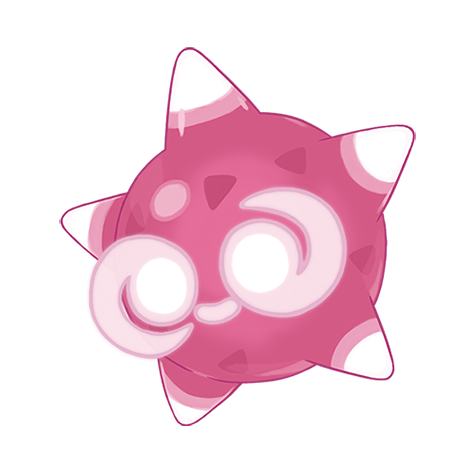
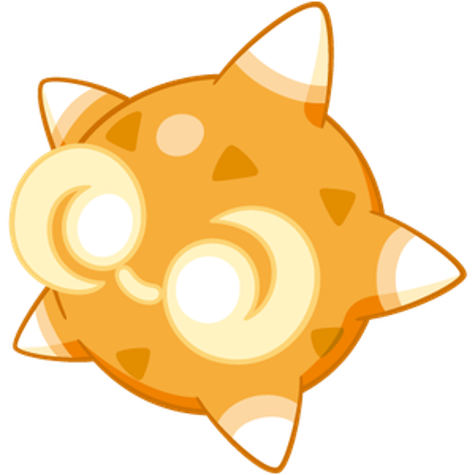
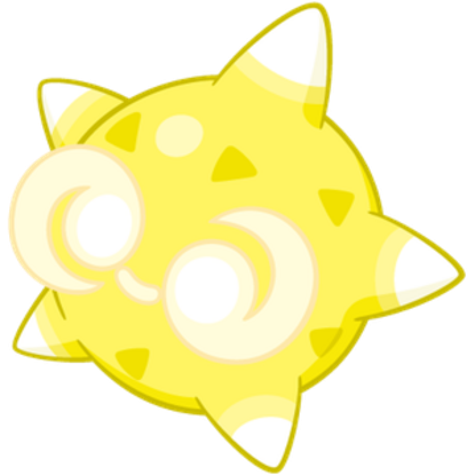
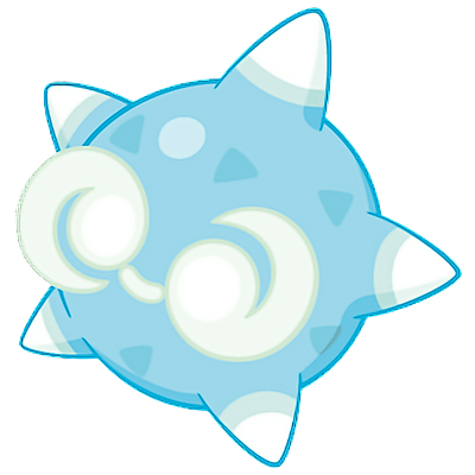
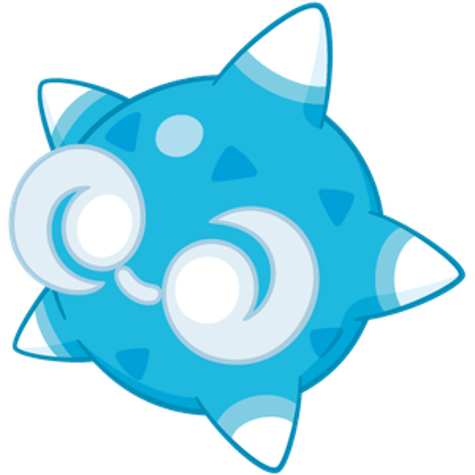
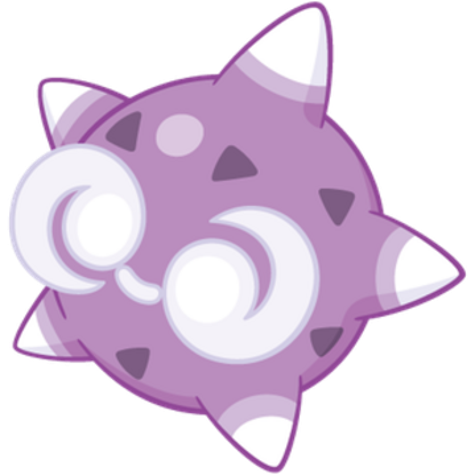
Green Minior also has 13 related forms: Red Meteor Minior, Orange Meteor Minior, Yellow Meteor Minior, Green Meteor Minior, Blue Meteor Minior, Indigo Meteor Minior, Violet Meteor Minior, Red Minior, Orange Minior, Yellow Minior, Blue Minior, Indigo Minior and Violet Minior.
Green Minior Evolution, Mega Evolution & Special Forms
Unlike the vast majority of Pokémon species, Minior does not evolve into or from any other Pokémon, representing a truly singular entry in the evolutionary ladder. Instead of traditional evolution, Minior undergoes remarkable transformation through its signature Shields Down ability, which operates as a conditional form-change mechanism rather than a permanent evolutionary progression. When Minior's health exceeds fifty percent of its maximum HP, it remains in its Meteor Form—a heavily armored state characterized by enhanced defensive capabilities (Defense and Special Defense both at 100) and reduced offensive stats. The moment its health drops to fifty percent or below, the protective shell shatters away automatically, revealing the Core Form and triggering a dramatic stat redistribution that emphasizes offensive and speed capabilities at the expense of defenses. This transformation is not permanent; should Minior's health be restored above the fifty-percent threshold through healing items, moves like Recover, or other restorative methods, its shell regenerates and it reverts to its Meteor Form. This unique form-change system creates compelling strategic depth, as trainers must carefully manage Minior's health to optimize its form for current battle conditions, making it neither a traditional evolution nor a purely cosmetic variation but rather a dynamic combat adaptation.
Where to Find
Location data not available for this Pokémon in the database.
Green Minior Behaviour and Natural Habitat
Minior maintains a distinctive ecological niche within the stratosphere and ozone layer, where it spends the majority of its existence feeding on atmospheric dust and particulate matter suspended at extreme altitudes. During its residence in these upper atmospheric regions, Minior serves as a crucial food source for more powerful flying-type Pokémon, making it vulnerable despite its durable shell. The Pokédex notes that when Minior attempts to flee from predators, its considerable weight causes it to lose altitude and ultimately tumble toward the ground, transforming what should be an escape into an uncontrolled descent. Once Minior falls to the planet's surface, the impact proves catastrophic for most individuals, as their shells—described as uncommonly durable—shatter upon striking the ground with such force. The Alola region represents one of the few documented locations where Minior successfully completes this perilous journey and survives the impact, suggesting specific environmental or gravitational conditions favorable to their survival. In battle, Minior's behavioral response to damage reflects its biological imperative: as its health drops below fifty percent, the protective shell fractures and falls away, revealing the verdant green core beneath and fundamentally altering its combat characteristics and tactical approach.
Pokedex Entries
Originally making its home in the ozone layer, it hurtles to the ground when the shell enclosing its body grows too heavy.
It lives in the ozone layer, where it becomes food for stronger Pokémon. When it tries to run away, it falls to the ground.
Strong impacts can knock it out of its shell. This Pokémon was born from mutated nanoparticles.
Although its outer shell is uncommonly durable, the shock of falling to the ground smashes the shell to smithereens.
Green Minior Name Origin & Design Inspiration
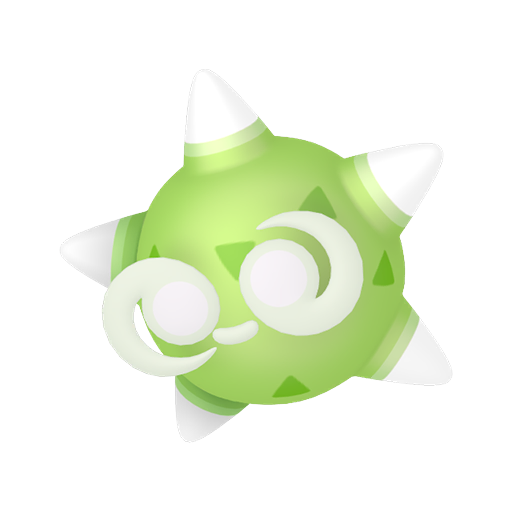
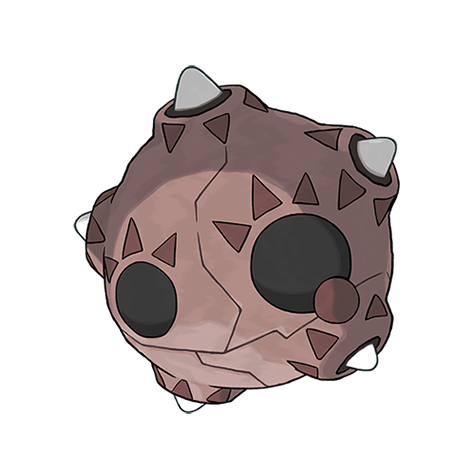
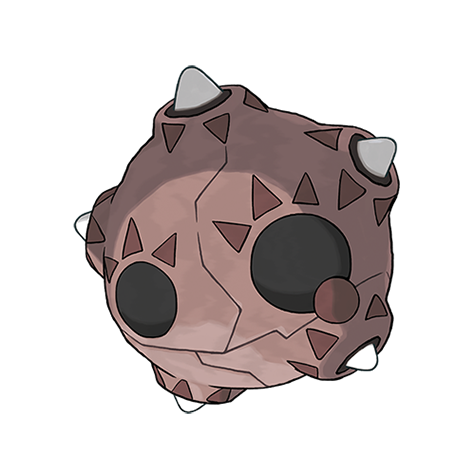
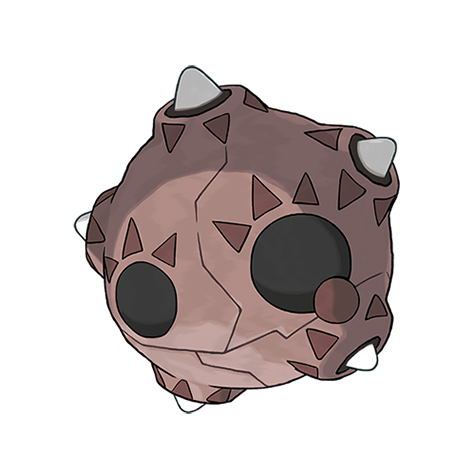
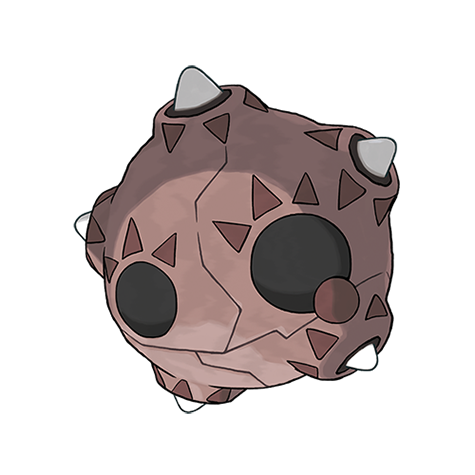
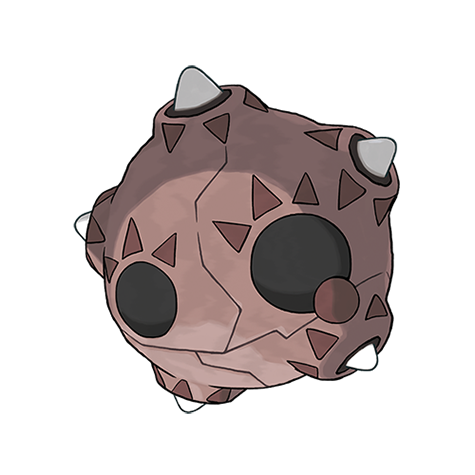
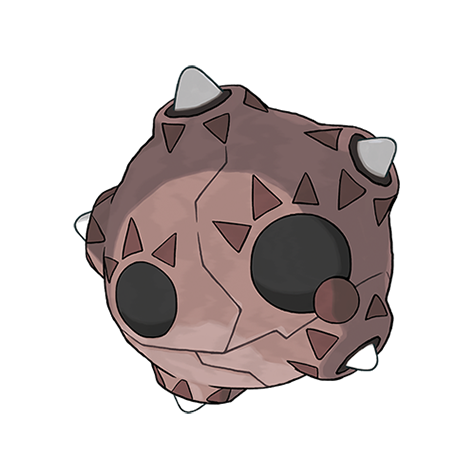
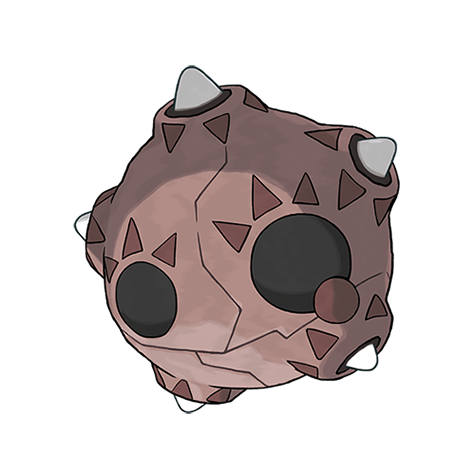
The Minior green-core variant exemplifies the intentional chromatic diversity built into the species' conceptual framework. The spherical design with its rocky exterior plating resembles a compressed meteorite or asteroid, complete with star-shaped white spikes protruding from its surface and prominent black spots that suggest eyes, creating an endearing appearance despite its extraterrestrial origins. The horizontal and vertical cracks dividing the exterior plates foreshadow the transformation mechanic, visually communicating to players that the shell is designed to separate and reveal something within. The vibrant green coloration of this particular core variant represents natural variety within the species, suggesting different elemental or environmental influences during development or mineral compositions that determine final coloration. The Japanese name, Meteno (メテノ), derives from the word "meteor," directly referencing the Pokémon's meteoritic appearance and atmospheric origins. The diminutive size—measured in centimeters rather than the typical meter-range of most Pokémon—reinforces its vulnerability despite its defensive capabilities, while the dramatic weight disparity between forms (40.0 kg for Meteor Form versus 0.3 kg for Core Form) emphasizes that the shell comprises the vast majority of its physical mass. This design philosophy creates a visually striking contrast between the bulky, inert-appearing Meteor Form and the delicate, exposed core form, making the transformation immediately recognizable and mechanically intuitive to players.
Learnable Moves
Green Minior can learn 64 moves:
Move | Type | Cat. | Power | Acc. | PP |
|---|---|---|---|---|---|
| acrobatics | flying | Physical | 55 | 100 | 15 |
| ancient power | rock | Special | 60 | 100 | 5 |
| attract | normal | Status | — | 100 | 15 |
| autotomize | steel | Status | — | — | 15 |
| bulldoze | ground | Physical | 60 | 100 | 20 |
| calm mind | psychic | Status | — | — | 20 |
| charge beam | electric | Special | 50 | 90 | 10 |
| confide | normal | Status | — | — | 20 |
| confuse ray | ghost | Status | — | 100 | 10 |
| cosmic power | psychic | Status | — | — | 20 |
| dazzling gleam | fairy | Special | 80 | 100 | 10 |
| defense curl | normal | Status | — | — | 40 |
| double team | normal | Status | — | — | 15 |
| double edge | normal | Physical | 120 | 100 | 15 |
| earth power | ground | Special | 90 | 100 | 10 |
| earthquake | ground | Physical | 100 | 100 | 10 |
| endeavor | normal | Physical | — | 100 | 5 |
| endure | normal | Status | — | — | 10 |
| explosion | normal | Physical | 250 | 100 | 5 |
| facade | normal | Physical | 70 | 100 | 20 |
| frustration | normal | Physical | — | 100 | 20 |
| giga impact | normal | Physical | 150 | 90 | 5 |
| gravity | psychic | Status | — | — | 5 |
| gyro ball | steel | Physical | — | 100 | 5 |
| hidden power | normal | Special | 60 | 100 | 15 |
| hyper beam | normal | Special | 150 | 90 | 5 |
| iron head | steel | Physical | 80 | 100 | 15 |
| last resort | normal | Physical | 140 | 100 | 5 |
| light screen | psychic | Status | — | — | 30 |
| magnet rise | electric | Status | — | — | 10 |
| meteor beam | rock | Special | 120 | 90 | 10 |
| power gem | rock | Special | 80 | 100 | 20 |
| protect | normal | Status | — | — | 10 |
| psych up | normal | Status | — | — | 10 |
| psychic | psychic | Special | 90 | 100 | 10 |
| reflect | psychic | Status | — | — | 20 |
| rest | psychic | Status | — | — | 5 |
| return | normal | Physical | — | 100 | 20 |
| rock blast | rock | Physical | 25 | 90 | 10 |
| rock polish | rock | Status | — | — | 20 |
| rock slide | rock | Physical | 75 | 90 | 10 |
| rock tomb | rock | Physical | 60 | 95 | 15 |
| rollout | rock | Physical | 30 | 90 | 20 |
| round | normal | Special | 60 | 100 | 15 |
| safeguard | normal | Status | — | — | 25 |
| sandstorm | rock | Status | — | — | 10 |
| scorching sands | ground | Special | 70 | 100 | 10 |
| self destruct | normal | Physical | 200 | 100 | 5 |
| shell smash | normal | Status | — | — | 15 |
| sleep talk | normal | Status | — | — | 10 |
| snore | normal | Special | 50 | 100 | 15 |
| solar beam | grass | Special | 120 | 100 | 10 |
| stealth rock | rock | Status | — | — | 20 |
| stone edge | rock | Physical | 100 | 80 | 5 |
| substitute | normal | Status | — | — | 10 |
| swagger | normal | Status | — | 85 | 15 |
| swift | normal | Special | 60 | — | 20 |
| tackle | normal | Physical | 40 | 100 | 35 |
| take down | normal | Physical | 90 | 85 | 20 |
| telekinesis | psychic | Status | — | — | 15 |
| tera blast | normal | Special | 80 | 100 | 10 |
| toxic | poison | Status | — | 90 | 10 |
| u turn | bug | Physical | 70 | 100 | 20 |
| zen headbutt | psychic | Physical | 80 | 90 | 15 |
Green Minior Competitive Battle Guide
Within competitive battling, Minior's green-core form occupies a specialized niche as a swift, offensively-oriented sweeper that demands careful team construction and strategic execution. The core form's base stat distribution—featuring 100 Attack, 100 Special Attack, and an impressive 120 Speed—creates a versatile attacker capable of functioning as either a physical or special sweeper depending on moveset configuration and coverage needs. Its dual Rock/Flying typing provides useful offensive coverage, with Rock-type moves striking bug, flying, and fire-type opponents super-effectively while flying-type moves threaten grass and fighting-type adversaries. However, this same typing introduces significant defensive liabilities, including a notorious 4x weakness to water-type moves and standard weaknesses to steel, electric, and rock-type attacks that competitive players frequently exploit. The Shields Down ability creates strategic complexity; while Meteor Form's enhanced defenses (100 Defense and Special Defense) offer survivability, most competitive applications prioritize aggressive offense in core form, accepting the defensive vulnerabilities as a necessary trade-off. Minior's movepool includes useful options like Power Gem (a reliable rock-type special attack), Close Combat (a powerful fighting-type move accessed through breeding), and acrobatics, though limited bulk often necessitates glass-cannon strategies where one-hit knockout potential or priority moves become essential for success. In competitive metagames, Minior generally functions as a team member rather than a cornerstone sweeper, requiring careful scouting and prediction to avoid its numerous type weaknesses.
Commonly Asked Questions About Green Minior
What type is Green Minior?
Green Minior is a rock and flying type Pokemon.
What does Green Minior evolve into?
Green Minior does not evolve.
What are Green Minior's weaknesses?
Green Minior is weak to ground, rock, steel, water, electric and ice type moves.
Green Minior Cultural Impact & Franchise History
Minior gained prominence within the Pokémon community following its introduction in Generation VII's Pokémon Sun and Moon, captivating players through its unique dual-form mechanic and charming diminutive appearance. The Pokémon's extraterrestrial origins and sci-fi aesthetic appealed strongly to fans fascinated by cosmic themes, establishing it as a memorable component of the Alola regional Pokédex. The seven distinct core colorations created immediate community engagement, with players discussing their favorite variants and hunting for specific colors, transforming what could have been a singular Pokémon into a collectible series within the species. Online fan communities developed extensive discussions regarding Minior's mechanics, with competitive players analyzing the form-change threshold as a tactical element and casual players appreciating the visual spectacle of shell shattering during battle. The species' tragic backstory—falling from the stratosphere where it serves as prey for stronger Pokémon, only to have its shell shatter upon impact with the ground—resonated with players who appreciated the melancholic worldbuilding embedded within its Pokédex entries. Minior received continued representation in subsequent generations including Pokémon Sword and Shield and the later Pokémon Scarlet and Violet, ensuring its presence remained relevant within the broader franchise. The design's appeal extended to merchandise, fan art communities, and competitive tournament environments, establishing Minior as a genuinely iconic Generation VII introduction despite its limited competitive viability.
Where to Find Green Minior in Every Pokémon Game
Minior first became available to players in Pokémon Sun and Moon, where it could be encountered in Alola's ultra wormholes and specific high-altitude locations befitting its stratospheric origins. In these initial Generation VII games, Minior occupied the Alola Pokédex at entry #0213 in Sun and Moon, and #0277 in Ultra Sun and Ultra Moon, making it a relatively late-game encounter for most players. The species received subsequent availability in Pokémon Sword and Shield, where it joined the expanded Galar Pokédex accessible through various means, and again in Pokémon Scarlet and Violet, where it appears in the post-game content designated as part of the Indigo Disk DLC at National Pokédex position #0106. Each game generation reflects Minior's extraterrestrial nature through specific encounter methods—typically appearing in locations with atmospheric themes, high altitudes, or special events like ultra wormholes that thematically connect to its stratospheric existence. The green-core variant, like all Minior color variants, has a non-negligible catch rate of 30, requiring standard pokéballs or specialized options to reliably capture wild specimens with full health, and appears randomly among all Minior encounters without specific methods to guarantee the green core specifically. Trading with other players remains the most reliable method for obtaining specific color variants, as the core coloration appears to be randomly determined upon encounter or hatching. Contemporary availability through Pokémon Home and various Nintendo Switch Online distributions has further democratized access to the species, allowing modern players to obtain Minior regardless of whether they own the specific generation where it appears most naturally.