
Indigo Meteor Minior
Generation VII · #10134 — Meteor Pokémon
Trainers who write off Minior-Indigo-Meteor on looks alone are missing that its HP of 50 is genuinely one of the higher marks among rock/flying-type Pokémon. This particular form serves as the defensive, protective state that Minior enters when its health is above 50%, making it a fascinating case study in dynamic battle mechanics within the Pokémon games.
Editor's Take
Minior having fourteen catalogued forms for what is functionally two states is one of the more excessive form splits in the Pokédex.
Base Stats
Height
0.3m
Weight
40.0kg
Category
Meteor Pokémon
Gender
Genderless
Color
brown
Shape
ball
Abilities
Transforms this Minior between Core Form and Meteor Form. Prevents major status ailments and drowsiness while in Meteor Form.
Indigo Meteor Minior Biology & Physical Characteristics
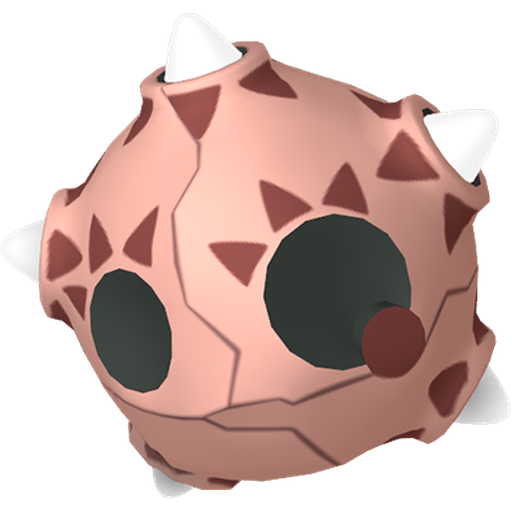
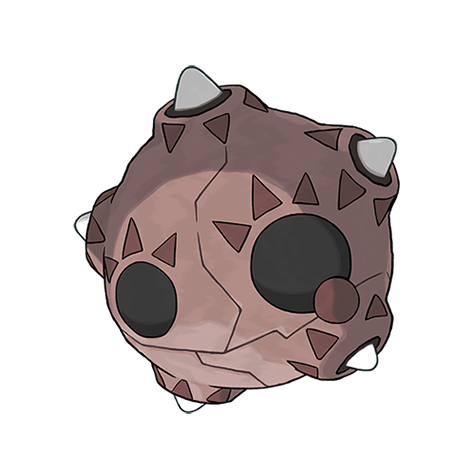
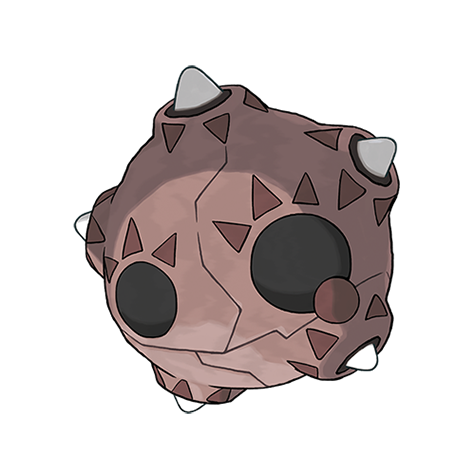
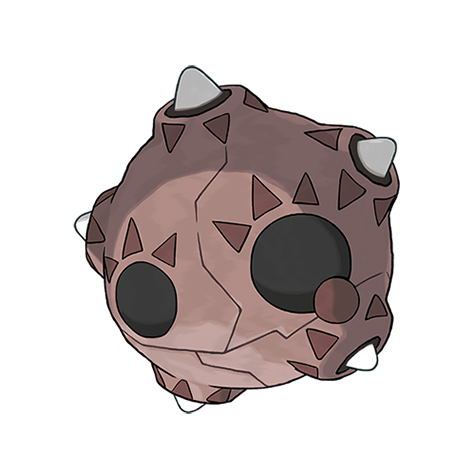
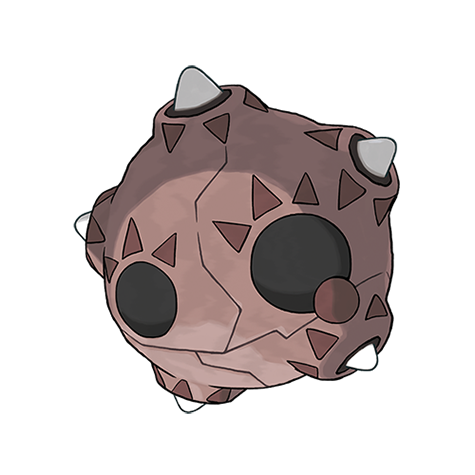
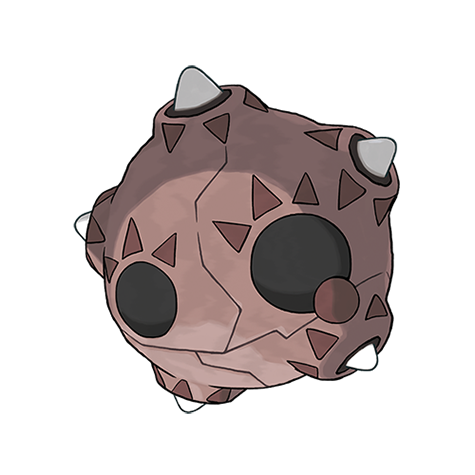
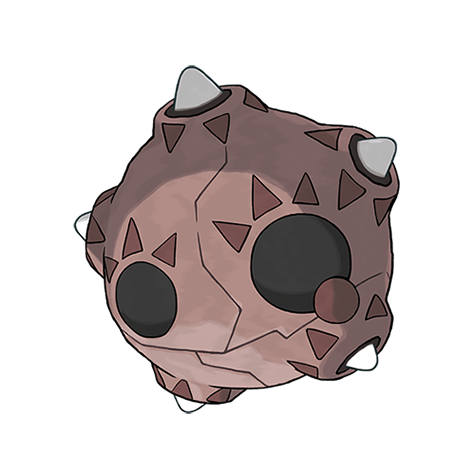
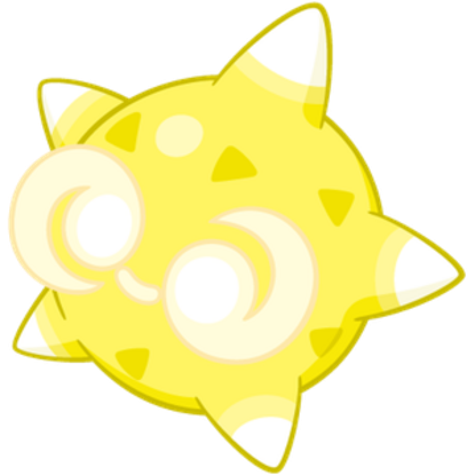
Minior originates not from the earth below, but from the stratosphere itself, where it is born from an aggregation of mutated nanoparticles floating in the upper atmosphere. The Pokémon's biology centers around a remarkable dual-structure composition: a delicate colored core at its center, encased within a durable rocky exterior composed of particulate matter it has accumulated over time. According to Pokédex entries, Minior constructs its protective shell by absorbing dust and particles from the environment, gradually building up layers that eventually become so heavy that gravity pulls the entire organism downward. The rocky coating in Meteor Form consists of four large segmented plates separated by distinctive cracks that run both horizontally and vertically around the spherical body. Five white spikes extend upward from the surface, creating a star-like silhouette that aids in its recognition. When its shell breaks or its health drops below 50%, the core form is exposed, revealing a vastly lighter structure weighing only 0.3 kilograms and displaying one of seven possible colors: red, orange, yellow, green, blue, indigo, or violet.
Pokedex Numbers
Training
Breeding
Indigo Meteor Minior Breeding, Gender Ratio & Egg Groups
Minior is classified as a genderless Pokémon, possessing no sexual differentiation despite belonging to the Mineral egg group. This classification aligns with Minior's origin as a non-organic entity composed of mutated nanoparticles and accumulated dust rather than biological tissue, making gender assignment scientifically inconsistent with its fundamental nature. Despite lacking gender, Minior can still breed when paired with compatible Pokémon from its egg group, producing eggs that hatch after approximately 25 cycles or 6,169 to 6,425 steps of in-game movement. The Mineral egg group contains various rock and metal-based Pokémon that share similar non-organic or crystalline compositions, creating a logical breeding compatibility framework. Trainers who wish to breed Minior must pair it with another Pokémon from the Mineral egg group, though the offspring will always be Minior rather than a hybrid species. This breeding system maintains consistency with Minior's portrayal as a naturally occurring phenomenon of the upper atmosphere rather than a traditionally biological creature.
Sprites



Held Items
Star Piece
loot
Platinum: Trade for one of each color Shard. Black and White: Trade for PP Up. Sell for 4900 Pokédollars, or to Ore Collector for 9800 Pokédollars.
Cost: 12000
Star Piece
loot
Platinum: Trade for one of each color Shard. Black and White: Trade for PP Up. Sell for 4900 Pokédollars, or to Ore Collector for 9800 Pokédollars.
Cost: 12000
Star Piece
loot
Platinum: Trade for one of each color Shard. Black and White: Trade for PP Up. Sell for 4900 Pokédollars, or to Ore Collector for 9800 Pokédollars.
Cost: 12000
Star Piece
loot
Platinum: Trade for one of each color Shard. Black and White: Trade for PP Up. Sell for 4900 Pokédollars, or to Ore Collector for 9800 Pokédollars.
Cost: 12000
TMs & HMs
tm04
gold silver
tm04
emerald
tm04
firered leafgreen
tm04
ruby sapphire
tm04
diamond pearl
tm04
crystal
tm04
xd
tm04
heartgold soulsilver
tm04
black white
tm04
colosseum
tm04
platinum
tm04
sun moon
tm04
ultra sun ultra moon
tm04
x y
tm04
omega ruby alpha sapphire
tm04
black 2 white 2
tm05
lets go pikachu lets go eevee
tm06
yellow
tm06
gold silver
tm06
red blue
+609 more TMs/HMs
Regional & Special Forms
Indigo Meteor Minior also has 13 related forms: Red Meteor Minior, Orange Meteor Minior, Yellow Meteor Minior, Green Meteor Minior, Blue Meteor Minior, Violet Meteor Minior, Red Minior, Orange Minior, Yellow Minior, Green Minior, Blue Minior, Indigo Minior and Violet Minior.






Indigo Meteor Minior Evolution, Mega Evolution & Special Forms
Minior does not evolve into or from any other Pokémon species, remaining a singular evolutionary line with no predecessors or successors in the traditional sense. However, Minior's form-changing mechanic through the Shields Down ability creates a pseudo-evolutionary transformation during battle that is functionally different from standard evolution. This ability automatically triggers when Minior's health falls below 50 percent, causing it to shed its Meteor Form and expose its Core Form beneath. Conversely, when the exposed core's health is restored above 50 percent, the rocky shell regenerates and Minior reverts to its Meteor Form. This dynamic transformation system is unique to Minior and represents an innovative approach to form mechanics introduced in Generation VII. The ability to change forms mid-battle provides strategic depth, as each form possesses different stat distributions and typing coverage, effectively giving trainers two distinct Pokémon states to work with during combat encounters.
Where to Find
Location data not available for this Pokémon in the database.
Indigo Meteor Minior Behaviour and Natural Habitat
Minior's natural habitat spans the ozone layer and stratosphere of Alola, where it drifts among clouds and consumes microscopic dust particles as its primary diet. The Pokédex describes how Minior originally makes its home in the ozone layer until the shell encasing its body grows too heavy, at which point it inevitably hurtles toward the ground below. During its time in the upper atmosphere, Minior serves as prey for stronger Pokémon, forcing it to develop survival mechanisms including its remarkable ability to shed its shell when impacted. The locations where Minior falls to the surface are extremely rare, making Alola one of the few confirmed regions where this phenomenon occurs regularly. Its defensive behavior in Meteor Form serves a protective function, as the hardened exterior shields its delicate core from damage and environmental hazards. The Pokémon's Shields Down ability prevents major status ailments and drowsiness while it remains in Meteor Form, indicating that its consciousness or vulnerability increases significantly once the shell breaks away.
Pokedex Entries
Originally making its home in the ozone layer, it hurtles to the ground when the shell enclosing its body grows too heavy.
It lives in the ozone layer, where it becomes food for stronger Pokémon. When it tries to run away, it falls to the ground.
Strong impacts can knock it out of its shell. This Pokémon was born from mutated nanoparticles.
Although its outer shell is uncommonly durable, the shock of falling to the ground smashes the shell to smithereens.
Indigo Meteor Minior Name Origin & Design Inspiration
The name Minior derives from combining "meteor" and "minor," reflecting both its celestial origin and diminutive stature among rock-type Pokémon. The Japanese name Meteno similarly emphasizes its meteoritic nature, drawing clear inspiration from meteors that fall from space to planetary surfaces. The design philosophy emphasizes a meteorite aesthetic, with the rocky exterior resembling a freshly fallen space rock complete with angular plating and surface texture. The distinctive five white spikes protruding upward create a crown-like or star-shaped appearance, visually communicating the Pokémon's celestial origin even while grounded. The indigo core form specifically represents one of seven possible color variations, each offering different visual appeals while maintaining the same biological function. The spherical overall shape suggests a comet or asteroid, reinforced by the crack-like patterns dividing the rocky shell into segments. This design elegantly communicates Minior's dual nature as both a heavenly body and an earthbound creature, with the exposed core symbolizing vulnerability and the meteor shell representing protection and power.
Learnable Moves
Indigo Meteor Minior can learn 64 moves:
Move | Type | Cat. | Power | Acc. | PP |
|---|---|---|---|---|---|
| acrobatics | flying | Physical | 55 | 100 | 15 |
| ancient power | rock | Special | 60 | 100 | 5 |
| attract | normal | Status | — | 100 | 15 |
| autotomize | steel | Status | — | — | 15 |
| bulldoze | ground | Physical | 60 | 100 | 20 |
| calm mind | psychic | Status | — | — | 20 |
| charge beam | electric | Special | 50 | 90 | 10 |
| confide | normal | Status | — | — | 20 |
| confuse ray | ghost | Status | — | 100 | 10 |
| cosmic power | psychic | Status | — | — | 20 |
| dazzling gleam | fairy | Special | 80 | 100 | 10 |
| defense curl | normal | Status | — | — | 40 |
| double team | normal | Status | — | — | 15 |
| double edge | normal | Physical | 120 | 100 | 15 |
| earth power | ground | Special | 90 | 100 | 10 |
| earthquake | ground | Physical | 100 | 100 | 10 |
| endeavor | normal | Physical | — | 100 | 5 |
| endure | normal | Status | — | — | 10 |
| explosion | normal | Physical | 250 | 100 | 5 |
| facade | normal | Physical | 70 | 100 | 20 |
| frustration | normal | Physical | — | 100 | 20 |
| giga impact | normal | Physical | 150 | 90 | 5 |
| gravity | psychic | Status | — | — | 5 |
| gyro ball | steel | Physical | — | 100 | 5 |
| hidden power | normal | Special | 60 | 100 | 15 |
| hyper beam | normal | Special | 150 | 90 | 5 |
| iron head | steel | Physical | 80 | 100 | 15 |
| last resort | normal | Physical | 140 | 100 | 5 |
| light screen | psychic | Status | — | — | 30 |
| magnet rise | electric | Status | — | — | 10 |
| meteor beam | rock | Special | 120 | 90 | 10 |
| power gem | rock | Special | 80 | 100 | 20 |
| protect | normal | Status | — | — | 10 |
| psych up | normal | Status | — | — | 10 |
| psychic | psychic | Special | 90 | 100 | 10 |
| reflect | psychic | Status | — | — | 20 |
| rest | psychic | Status | — | — | 5 |
| return | normal | Physical | — | 100 | 20 |
| rock blast | rock | Physical | 25 | 90 | 10 |
| rock polish | rock | Status | — | — | 20 |
| rock slide | rock | Physical | 75 | 90 | 10 |
| rock tomb | rock | Physical | 60 | 95 | 15 |
| rollout | rock | Physical | 30 | 90 | 20 |
| round | normal | Special | 60 | 100 | 15 |
| safeguard | normal | Status | — | — | 25 |
| sandstorm | rock | Status | — | — | 10 |
| scorching sands | ground | Special | 70 | 100 | 10 |
| self destruct | normal | Physical | 200 | 100 | 5 |
| shell smash | normal | Status | — | — | 15 |
| sleep talk | normal | Status | — | — | 10 |
| snore | normal | Special | 50 | 100 | 15 |
| solar beam | grass | Special | 120 | 100 | 10 |
| stealth rock | rock | Status | — | — | 20 |
| stone edge | rock | Physical | 100 | 80 | 5 |
| substitute | normal | Status | — | — | 10 |
| swagger | normal | Status | — | 85 | 15 |
| swift | normal | Special | 60 | — | 20 |
| tackle | normal | Physical | 40 | 100 | 35 |
| take down | normal | Physical | 90 | 85 | 20 |
| telekinesis | psychic | Status | — | — | 15 |
| tera blast | normal | Special | 80 | 100 | 10 |
| toxic | poison | Status | — | 90 | 10 |
| u turn | bug | Physical | 70 | 100 | 20 |
| zen headbutt | psychic | Physical | 80 | 90 | 15 |
Indigo Meteor Minior Competitive Battle Guide
In tournament-level play, Minior's Indigo Meteor Form serves as the durable defensive shell designed to absorb damage while the trainer maneuvers for advantageous positioning. With base Defense and Special Defense stats both standing at 100, Minior's Meteor Form excels at withstanding physical and special attacks respectively, making it a surprisingly resilient wall for its 440 total stat allocation. The dual Rock/Flying typing grants interesting defensive properties, resisting Normal, Flying, and Poison moves while taking neutral damage from the majority of common attack types. However, Minior's offensive capabilities in Meteor Form are limited, with modest Attack and Special Attack stats of 60 each, necessitating careful move selection to deal meaningful damage. The true strategic innovation lies in the form-change mechanic: once Minior's health drops below 50 percent, it transforms into its Core Form, which dramatically increases its Speed to 120 and its attacking stats to 100 each, fundamentally altering the Pokémon's role from tank to sweeper. This transformation catches unprepared opponents off-guard, as they must suddenly adjust their strategies when the slow, defensive Meteor Form suddenly becomes a rapid, offensive Core Form capable of threatening their team.
Commonly Asked Questions About Indigo Meteor Minior
What type is Indigo Meteor Minior?
Indigo Meteor Minior is a rock and flying type Pokemon.
What does Indigo Meteor Minior evolve into?
Indigo Meteor Minior does not evolve.
What are Indigo Meteor Minior's weaknesses?
Indigo Meteor Minior is weak to ground, rock, steel, water, electric and ice type moves.
Indigo Meteor Minior Cultural Impact & Franchise History
Minior represents a significant innovation in Pokémon design philosophy introduced during Generation VII, challenging the franchise's traditional understanding of form mechanics and Pokémon versatility. The unique Shields Down ability generated considerable discussion within the competitive and casual communities upon the games' release, with players immediately recognizing the strategic depth afforded by a mid-battle transformation that changes both offensive and defensive capabilities. The seven color variations of Minior's exposed core added a collectible element that appealed to players interested in form diversity, similar to Spinda's spot patterns or Alcremie's cream variations. The Pokémon's celestial origin story and visual design made it particularly memorable among the diverse Generation VII Pokédex, standing out as one of the more conceptually unique entries. Online communities and fan content regularly feature Minior prominently when discussing innovative battle mechanics and underrated Pokémon, with players appreciating both its creative design philosophy and its unexpected competitive viability. The Pokémon has maintained relevance across subsequent generations, appearing in Pokémon Sword and Shield's Expansion Pass and Pokémon Scarlet and Violet's DLC content, indicating its enduring appeal to both casual and competitive audiences.
Where to Find Indigo Meteor Minior in Every Pokémon Game
Minior was introduced in Pokémon Sun and Moon as a Generation VII Pokémon available within the Alola region, reflecting its thematic connection to the tropical archipelago where falling meteorites are canonically documented. In the original Sun and Moon games, Minior can be found in several locations including the exterior sections of various islands and specific rock-laden areas where meteorites would logically fall. The species maintains consistent availability throughout Generation VII titles, appearing in both Ultra Sun and Ultra Moon with similar location distributions and encounter rates. Subsequent Pokémon games including Sword and Shield (via Expansion Pass), Brilliant Diamond and Shining Pearl, and Scarlet and Violet's DLC content The Indigo Disk all feature Minior, ensuring trainers across multiple game generations can obtain this unique Pokémon. The relatively low catch rate of 30 reflects Minior's rarity and otherworldly nature, requiring patience or specialized catching techniques to successfully capture specimens in the wild. Additionally, Minior remains obtainable through breeding once a single specimen is acquired, allowing trainers to collect multiple cores of different colors to complete their collections.