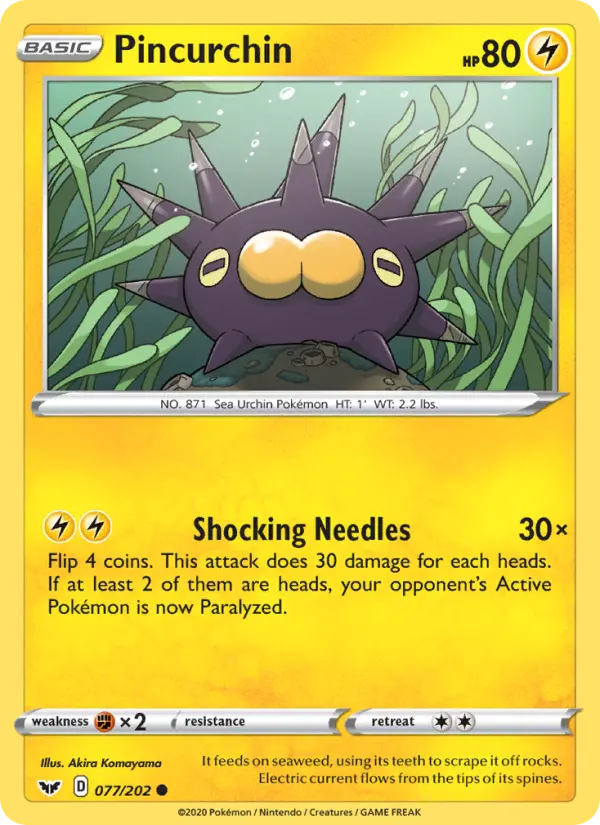
Pincurchin
Generation VIII · #0871 — Sea Urchin Pokémon
Pincurchin, known as the Sea Urchin Pokémon, is an Electric-type Pokémon introduced in Generation VIII that brings the fascinating biology of real-world sea urchins into the Pokémon universe. As National Pokédex entry #871, this diminutive creature stands merely 0.3 meters tall and weighs just 1.0 kilogram, making it one of the smallest Electric-type Pokémon available. Despite its tiny stature, Pincurchin packs considerable offensive capability with a base Attack stat of 101, complemented by respectable Special Attack (91) and Defense (95) ratings. The most striking aspect of Pincurchin is its inability to evolve—it exists as a complete, standalone Pokémon species with no evolutionary relatives, making it a unique ecological niche within the Galar region and beyond.
Editor's Take
Pincurchin might be the only sea-urchin Pokémon in the franchise, and Electric Surge setting Electric Terrain on switch-in gives it a real supportive niche despite genuinely poor base stats — it's a lead, not a sweeper, and building around that is the only way it's ever seen play.
Base Stats
Height
0.3m
Weight
1.0kg
Category
Sea Urchin Pokémon
Gender
Male 50% / Female 50%
Color
purple
Shape
tentacles
Abilities
Redirects single-target electric moves to this Pokémon where possible. Absorbs Electric moves, raising Special Attack one stage.
When this Pokémon enters battle, it changes the terrain to Electric Terrain.
Pincurchin Biology & Physical Characteristics
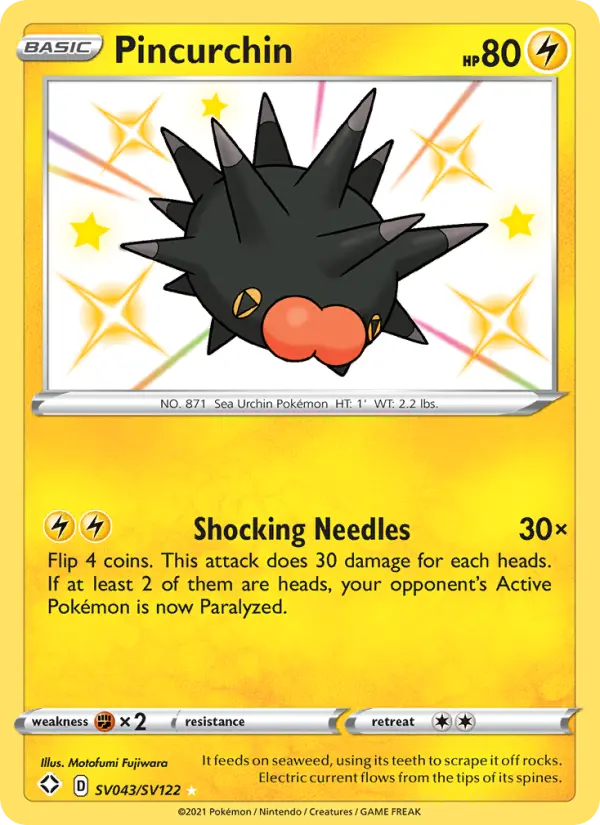
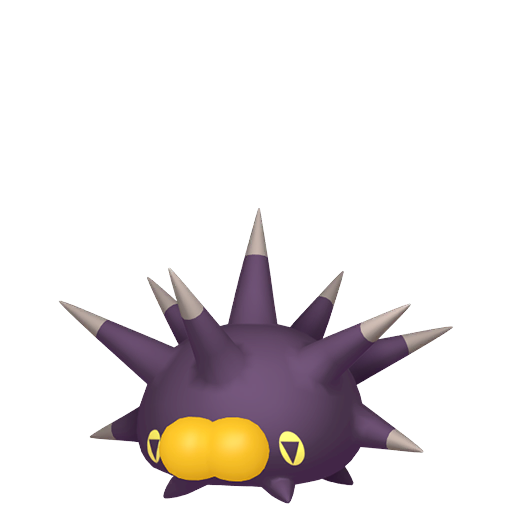
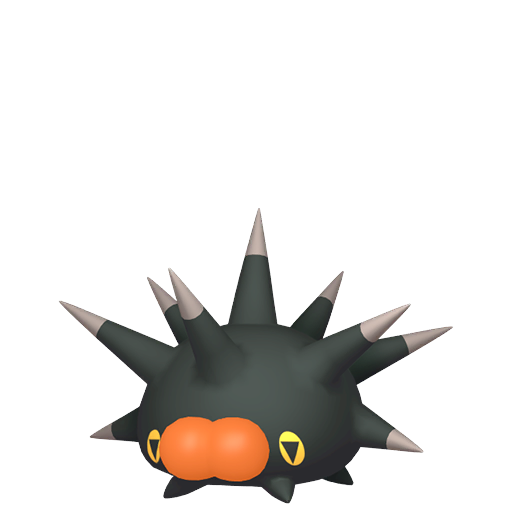
Pincurchin's design is a masterful representation of its real-world inspiration, featuring a predominantly black, rounded body characteristic of sea urchins, adorned with sharp spines running along its dorsal surface and sides. The creature possesses two bright yellow eyes with distinctive triangle-shaped pupils and matching yellow circular mouthparts, which interestingly do not conduct electricity despite the Pokémon's electrical nature. Its most notable biological feature is its five hard teeth, which serve the critical function of scraping seaweed from rocks and other surfaces to sustain its diet. As Pincurchin digests its food, it generates electrical energy that becomes stored within each of its spines, with the spine tips glowing yellow when current flows through them. Remarkably, even if a spine becomes detached from the main body, it will continue to emit electricity for approximately three hours, a remarkable adaptation that suggests the spines possess semi-autonomous electrical generation capabilities independent of the main organism. Shiny Pincurchin is a recolor rare enough that most players go through many standard encounters before finding one in the wild; breeding for the Masuda Method or building up an Odds chain remain the most reliable ways to guarantee one.
Pokedex Numbers
Training
Breeding
Pincurchin Breeding, Gender Ratio & Egg Groups
Pincurchin exhibits a balanced gender ratio of 50% male and 50% female, allowing for straightforward breeding in compatible environments. The species belongs to the Water 1 and Amorphous egg groups, making it compatible with a diverse range of breeding partners despite its relatively niche ecological role. With a base happiness value of 50 and a catch rate of 75, Pincurchin presents moderate difficulty in capture and requires some effort to develop affection with trainers, reflecting its naturally nervous and easily-frightened disposition. The species hatches from eggs after 20 cycles of travel, a relatively standard gestation period that suggests moderate parental investment compared to other aquatic Pokémon. Breeding Pincurchin can produce offspring with moves passed down from compatible parents, including egg moves such as those available through picnic-based breeding mechanics in Pokémon Scarlet and Violet, allowing trainers to create specialized movesets not available through standard leveling.
Sprites




TMs & HMs
tm03
crystal
tm03
gold silver
tm05
lets go pikachu lets go eevee
tm07
lets go pikachu lets go eevee
tm07
sword shield
tm08
red blue
tm08
yellow
tm08
lets go pikachu lets go eevee
tm08
sword shield
tm09
yellow
tm08
red green japan
tm08
blue japan
tm09
red blue
tm09
black 2 white 2
tm09
sword shield
tm11
yellow
hm03
ruby sapphire
hm03
platinum
hm03
omega ruby alpha sapphire
tr57
sword shield
+386 more TMs/HMs
Pincurchin Evolution, Mega Evolution & Special Forms
Pincurchin sits alone on the evolutionary tree, with no pre-evolution or evolution, existing as a singular, non-evolving form throughout its lifespan. This stands in contrast to most Pokémon, which typically possess evolutionary chains leading to more powerful forms. The lack of evolution does not diminish Pincurchin's viability as a Pokémon; rather, it represents a complete life form fully adapted to its ecological niche from birth. Whether this evolutionary independence reflects Pincurchin's ancient lineage or represents a more recent evolutionary dead-end remains a matter of speculation among Pokémon researchers. The creature's fixed form status makes it particularly interesting from a biological standpoint, as it suggests that whatever environmental pressures shaped Pincurchin's development resulted in a form so perfectly suited to its purpose that further evolutionary refinement was unnecessary.
Where to Find
Location data not available for this Pokémon in the database.
Pincurchin Behaviour and Natural Habitat
Pincurchin exhibits a notably timid and easily frightened temperament, readily discharging electrical current when startled or disturbed—even brushing against seaweed can trigger an involuntary electrical response, as documented in Pokédex entries from Pokémon Violet. This defensive mechanism serves as effective protection against its natural predator, Mareanie, which would otherwise prey upon this vulnerable creature. The electrical discharge, generated through digestive processes rather than specialized organs, represents a unique evolutionary adaptation among Electric-types. Pincurchin inhabits coastal marine environments where seaweed is abundant, making it perfectly suited for a lifestyle spent foraging among rocky outcrops and seaweed beds. Its timidity contrasts sharply with its electrical capabilities, creating an interesting ecological paradox—a creature simultaneously dangerous and vulnerable, protected by its own nervous disposition that makes it constantly prepared for danger.
Pokedex Entries
It feeds on seaweed, using its teeth to scrape it off rocks. Electric current flows from the tips of its spines.
It stores electricity in each spine. Even if one gets broken off, it still continues to emit electricity for at least three hours.
Pincurchin Name Origin & Design Inspiration
Pincurchin's name comes from a straightforward combination of 'pin' and 'urchin,' directly referencing both the sharp spines that characterize sea urchins and the electrical pins or prongs associated with electrical terminology. In Japanese, the creature is called Bachinuni, where 'bachin' mimics the sound of an electrical discharge or crackling noise, while 'uni' is the Japanese term for sea urchin. This bilingual naming convention elegantly captures both aspects of the Pokémon's identity—its biological inspiration and its electrical nature. The design itself deliberately emphasizes the spiny protrusions that define real sea urchins while overlaying Electric-type coloration patterns, including the characteristic yellow accents on the spine tips that glow with electrical energy. The yellow mouthparts, which deliberately do not conduct electricity, add an unexpected twist to the design, suggesting that even perfectly adapted creatures possess quirks and limitations that prevent them from being utterly predictable or entirely dangerous.
Learnable Moves
Pincurchin can learn 60 moves:
Move | Type | Cat. | Power | Acc. | PP |
|---|---|---|---|---|---|
| acupressure | normal | Status | — | — | 30 |
| assurance | dark | Physical | 60 | 100 | 10 |
| attract | normal | Status | — | 100 | 15 |
| body slam | normal | Physical | 85 | 100 | 15 |
| brine | water | Special | 65 | 100 | 10 |
| bubble beam | water | Special | 65 | 100 | 20 |
| charge | electric | Status | — | — | 20 |
| charge beam | electric | Special | 50 | 90 | 10 |
| chilling water | water | Special | 50 | 100 | 20 |
| curse | ghost | Status | — | — | 10 |
| discharge | electric | Special | 80 | 100 | 15 |
| electric terrain | electric | Status | — | — | 10 |
| electro ball | electric | Special | — | 100 | 10 |
| electroweb | electric | Special | 55 | 95 | 15 |
| endure | normal | Status | — | — | 10 |
| facade | normal | Physical | 70 | 100 | 20 |
| fury attack | normal | Physical | 15 | 85 | 20 |
| giga impact | normal | Physical | 150 | 90 | 5 |
| hex | ghost | Special | 65 | 100 | 10 |
| hydro pump | water | Special | 110 | 80 | 5 |
| hyper beam | normal | Special | 150 | 90 | 5 |
| liquidation | water | Physical | 85 | 100 | 10 |
| memento | dark | Status | — | 100 | 10 |
| muddy water | water | Special | 90 | 85 | 10 |
| pain split | normal | Status | — | — | 20 |
| payback | dark | Physical | 50 | 100 | 10 |
| peck | flying | Physical | 35 | 100 | 35 |
| pin missile | bug | Physical | 25 | 95 | 20 |
| poison jab | poison | Physical | 80 | 100 | 20 |
| protect | normal | Status | — | — | 10 |
| rain dance | water | Status | — | — | 5 |
| recover | normal | Status | — | — | 5 |
| rest | psychic | Status | — | — | 5 |
| reversal | fighting | Physical | — | 100 | 15 |
| rising voltage | electric | Special | 70 | 100 | 20 |
| round | normal | Special | 60 | 100 | 15 |
| scald | water | Special | 80 | 100 | 15 |
| self destruct | normal | Physical | 200 | 100 | 5 |
| sleep talk | normal | Status | — | — | 10 |
| snore | normal | Special | 50 | 100 | 15 |
| spark | electric | Physical | 65 | 100 | 20 |
| spikes | ground | Status | — | — | 20 |
| substitute | normal | Status | — | — | 10 |
| sucker punch | dark | Physical | 70 | 100 | 5 |
| supercell slam | electric | Physical | 100 | 95 | 15 |
| surf | water | Special | 90 | 100 | 15 |
| swift | normal | Special | 60 | — | 20 |
| take down | normal | Physical | 90 | 85 | 20 |
| tera blast | normal | Special | 80 | 100 | 10 |
| throat chop | dark | Physical | 80 | 100 | 15 |
| thunder | electric | Special | 110 | 70 | 10 |
| thunder shock | electric | Special | 40 | 100 | 30 |
| thunder wave | electric | Status | — | 90 | 20 |
| thunderbolt | electric | Special | 90 | 100 | 15 |
| toxic spikes | poison | Status | — | — | 20 |
| venom drench | poison | Status | — | 100 | 20 |
| venoshock | poison | Special | 65 | 100 | 10 |
| water gun | water | Special | 40 | 100 | 25 |
| wild charge | electric | Physical | 90 | 100 | 15 |
| zing zap | electric | Physical | 80 | 100 | 10 |
Pincurchin Competitive Battle Guide
Competitively, Pincurchin occupies a specialized niche defined primarily by its exceptional base Attack stat of 101, which represents the highest single stat in its arsenal. The Pokémon's base Special Attack of 91 provides competent special coverage, though its abysmal Speed stat of 15 represents one of the lowest in the entire Pokédex, making it effectively immobilized before most opponents can even act. Its dual-threat offensive capabilities allow it to function as a mixed attacker, with access to physical moves like Poison Jab and special moves like Discharge. Pincurchin's signature move in Generation IX is Zing Zap, an Electric-type special attack with 80 base power that has a 30% chance to paralyze opponents, providing valuable field control. The Lightning Rod ability allows Pincurchin to redirect single-target Electric moves and gain a Special Attack boost when absorbing them, while its hidden ability Electric Surge automatically sets Electric Terrain upon entry, granting a Speed boost to Electric-types and preventing sleep. Despite these interesting ability options, Pincurchin's dismal Speed stat and moderate bulk fundamentally limit its competitive viability in higher-tier metagames.
Commonly Asked Questions About Pincurchin
What type is Pincurchin?
Pincurchin is a electric type Pokemon.
What does Pincurchin evolve from?
Pincurchin does not evolve.
What are Pincurchin's weaknesses?
Pincurchin is weak to ground type moves.
Is Shiny Pincurchin different in stats from a normal Pincurchin?
No — a Shiny Pincurchin has identical base stats, abilities, and movepool to the standard form. The only difference is the color palette; nothing about its performance in or out of battle changes.
How rare is Shiny Pincurchin in the wild?
Like any Shiny Pokémon, a wild Shiny Pincurchin has roughly a 1-in-4096 base encounter rate in modern games (better with a Shiny Charm). Breeding with the Masuda Method or building up an Odds/chain encounter both shorten those odds significantly for trainers hunting one specifically.
Pincurchin Cultural Impact & Franchise History
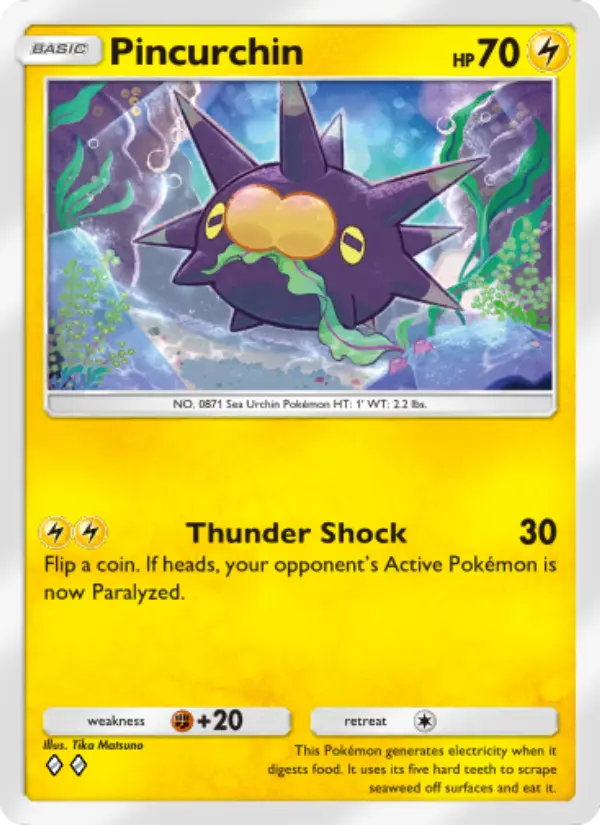
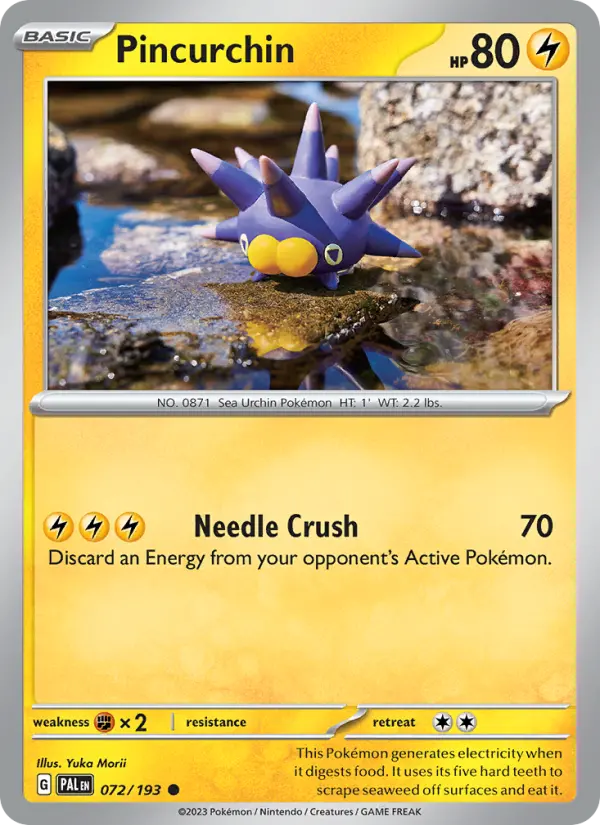
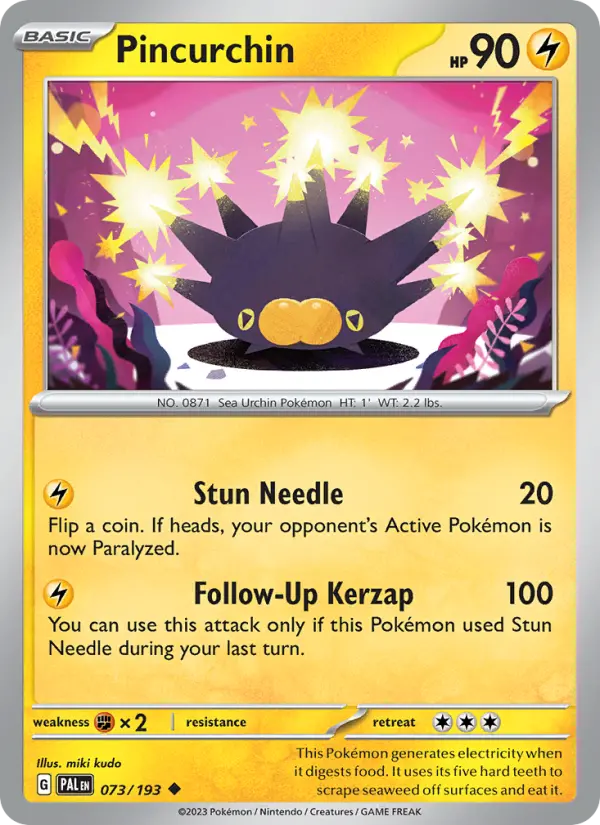
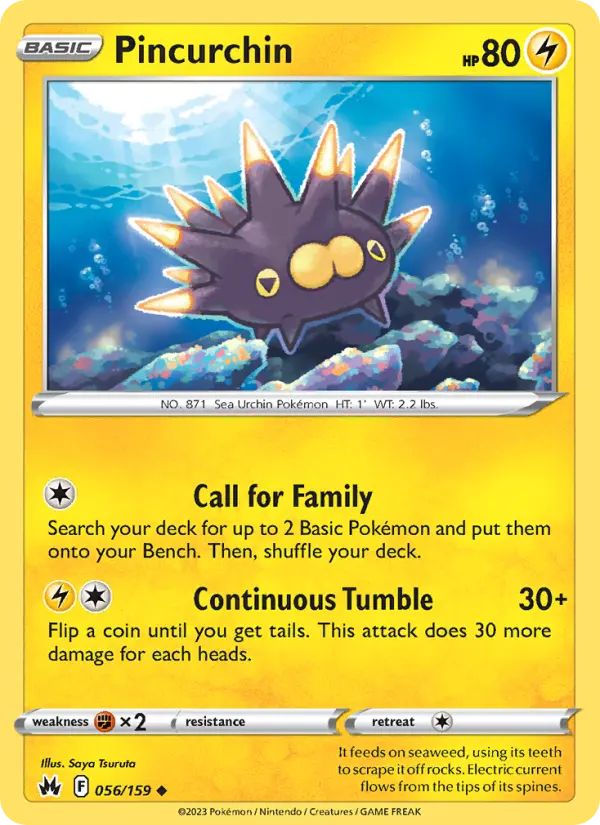
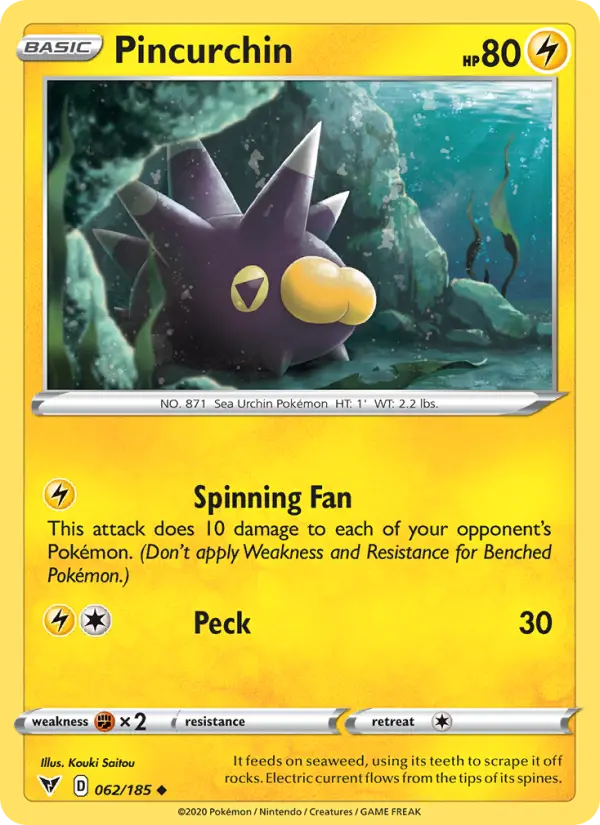
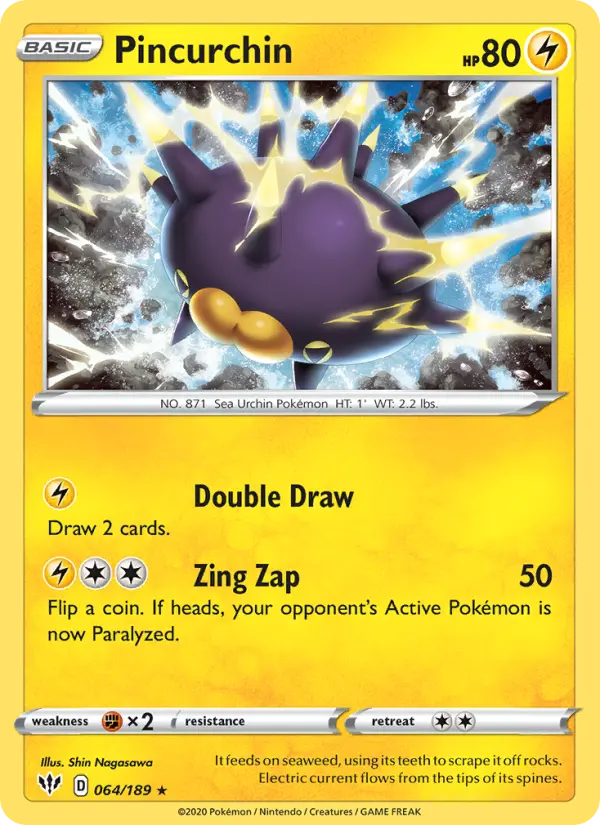
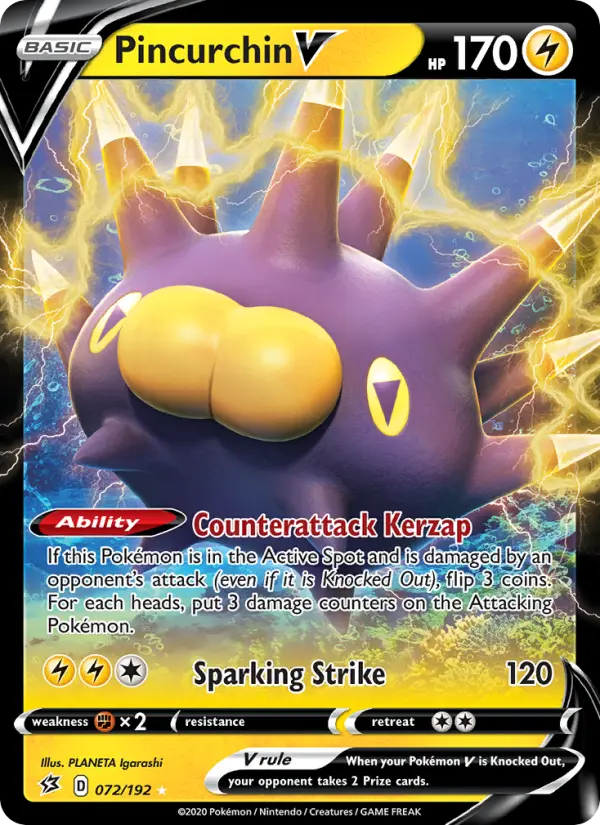
Since its introduction in Generation VIII's Pokémon Sword and Shield, Pincurchin has captured the imagination of players and fans through its unusual combination of an adorable, timid personality with powerful electrical capabilities. The species has achieved notable representation in the Pokémon anime, featuring memorable appearances in the main series where its nervous disposition provides comedic and dramatic moments. The design's biological accuracy—referencing real sea urchin biology while integrating Electric-type mechanics—has earned appreciation from players interested in scientifically-grounded creature design. Pincurchin's status as a non-evolving Pokémon has also generated discussion about evolutionary philosophy within the franchise, as its complete adaptation to its niche challenges conventional assumptions about Pokémon development. The creature's distinctive signature move, Zing Zap, has made it a recognizable symbol for Generation VIII's unique contributions to the Electric-type roster, appearing in trading card game releases and merchandise that celebrate Galar region innovations.
Where to Find Pincurchin in Every Pokémon Game
Pincurchin was first made available to trainers in Pokémon Sword and Shield, where it can be found within the Galar region as Pokédex entry #353. The species appears in multiple locations across the various expansions, including entry #126 in the Isle of Armor Pokédex and entry #158 in the Crown Tundra Pokédex, allowing players multiple opportunities to encounter and capture specimens. In Pokémon Scarlet and Violet, Pincurchin received expanded distribution, becoming Pokédex entry #321 in the Paldea region and also appearing in the Kitakami region. The species was notably absent from Pokémon Legends: Arceus, indicating that its evolutionary lineage did not exist in the ancient Hisui region. With a capture rate of 75, Pincurchin presents a moderate challenge to capture, requiring standard Poké Balls and reasonable strategy to secure without excessive damage. Its availability across multiple generations and regions has made it relatively accessible to players seeking to include this unique Electric-type in their teams.