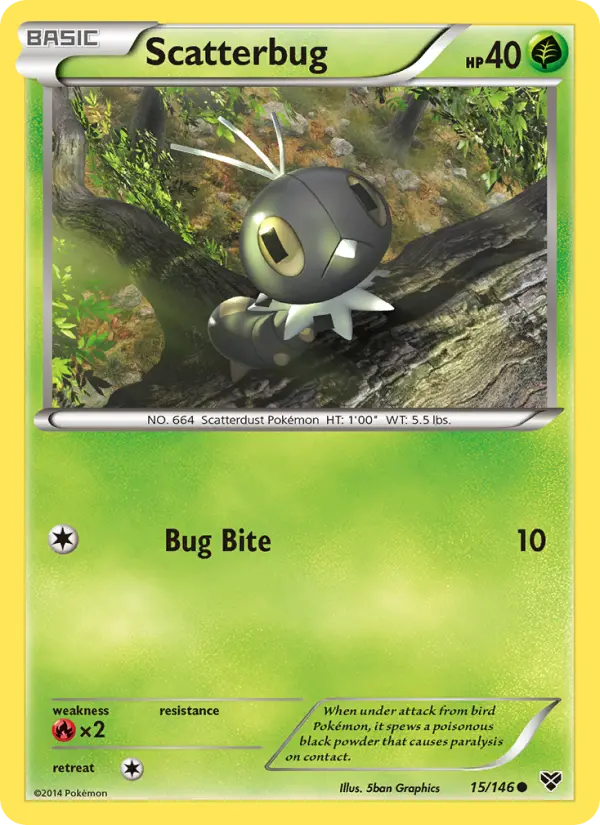
Scatterbug
Generation VI · #0664 — Scatterdust Pokémon
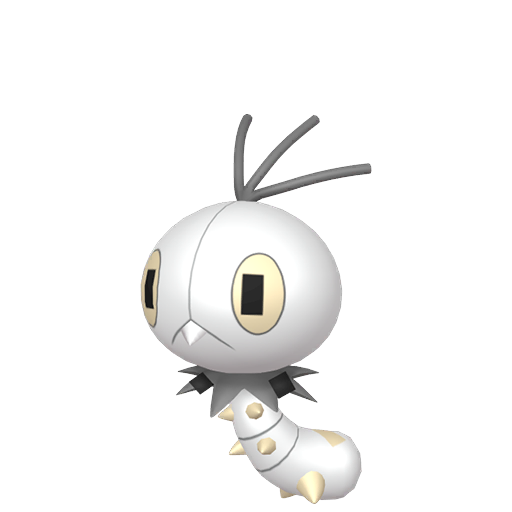
Scatterbug's profile is easy to undersell: 0.3 m, 2.5 kg, and a bug typing that doesn't scream power — until you look at its Defense of 40. With a aggregate stat total of 200 and a notably high catch rate of 255, Scatterbug is designed as an accessible starter Pokémon for players exploring the Kalos region. The sandstorm form variant represents one of twenty visually indistinct regional forms that Scatterbug can inhabit, each tied to the environment in which it is encountered and determining the ultimate appearance of its final evolution, Vivillon.
Editor's Take
Scatterbug's line ends in Vivillon, whose twenty wing patterns are determined by the real-world region of your console — the most elaborate cosmetic system in the series.
Base Stats
Height
0.3m
Weight
2.5kg
Category
Scatterdust Pokémon
Gender
Male 50% / Female 50%
Color
black
Shape
armor
Abilities
Protects against incoming moves' extra effects.
Increases moves' accuracy to 1.3×.
Decreases all direct damage taken by friendly Pokémon to 0.75×.

Scatterbug Biology & Physical Characteristics
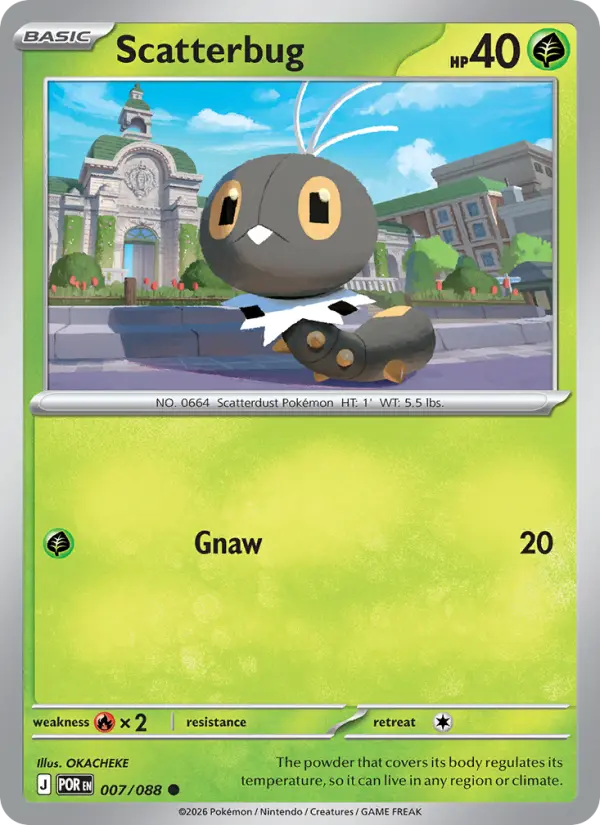
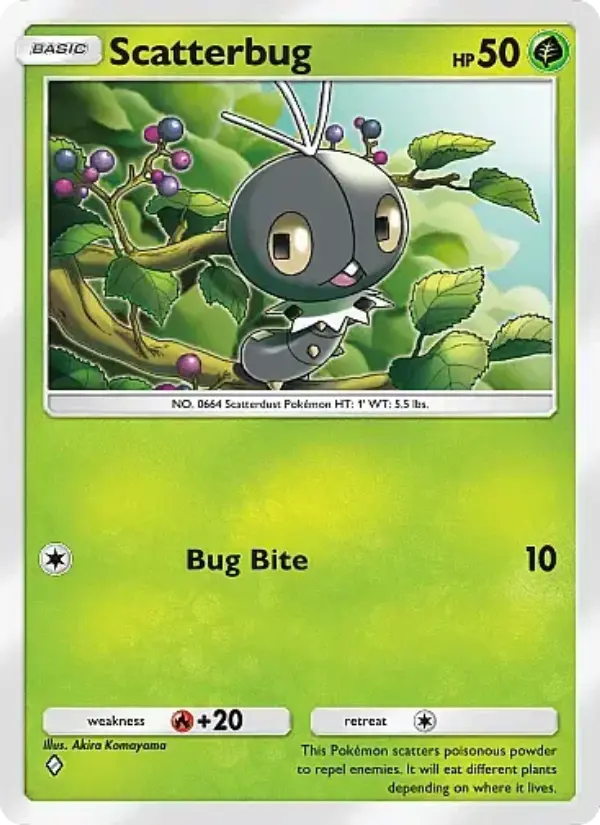
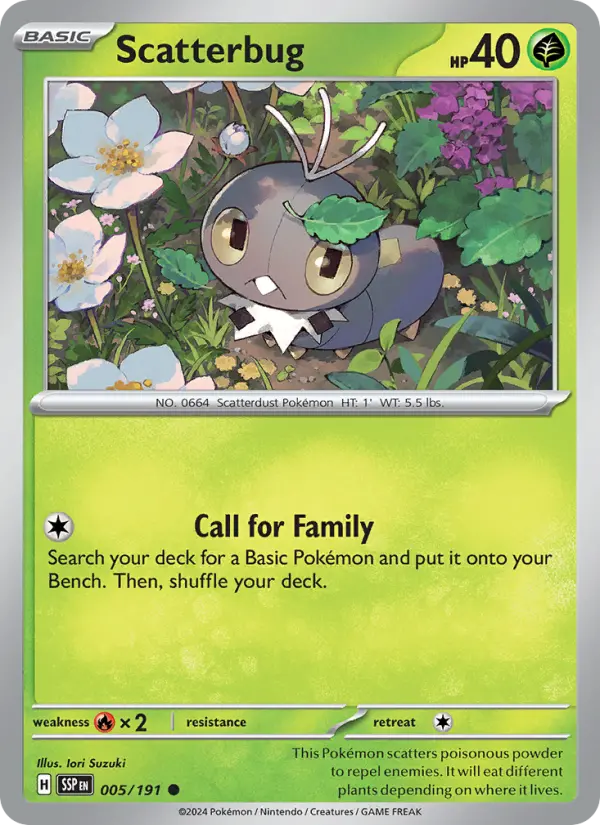
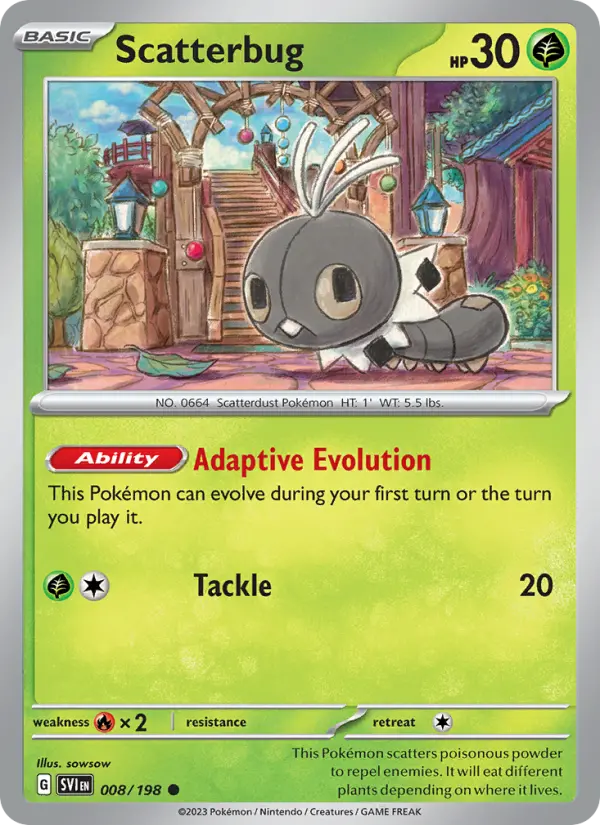
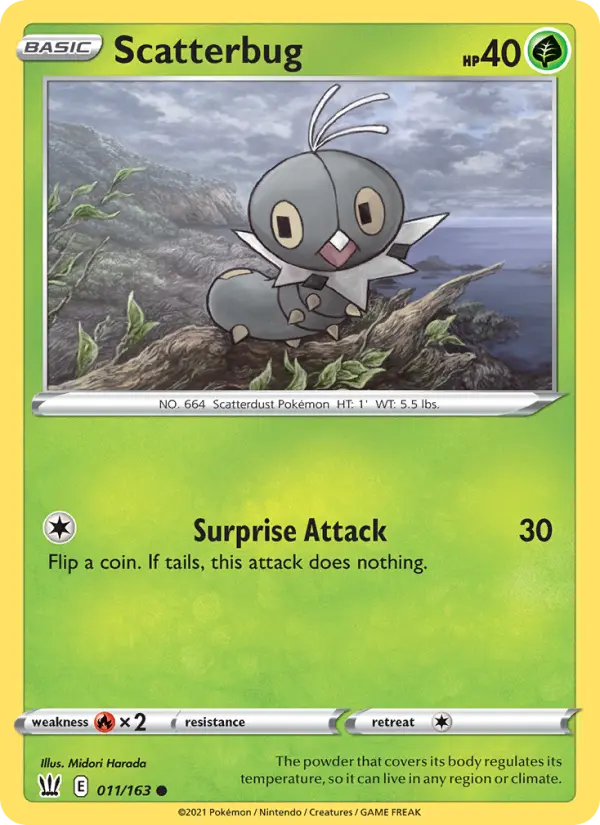
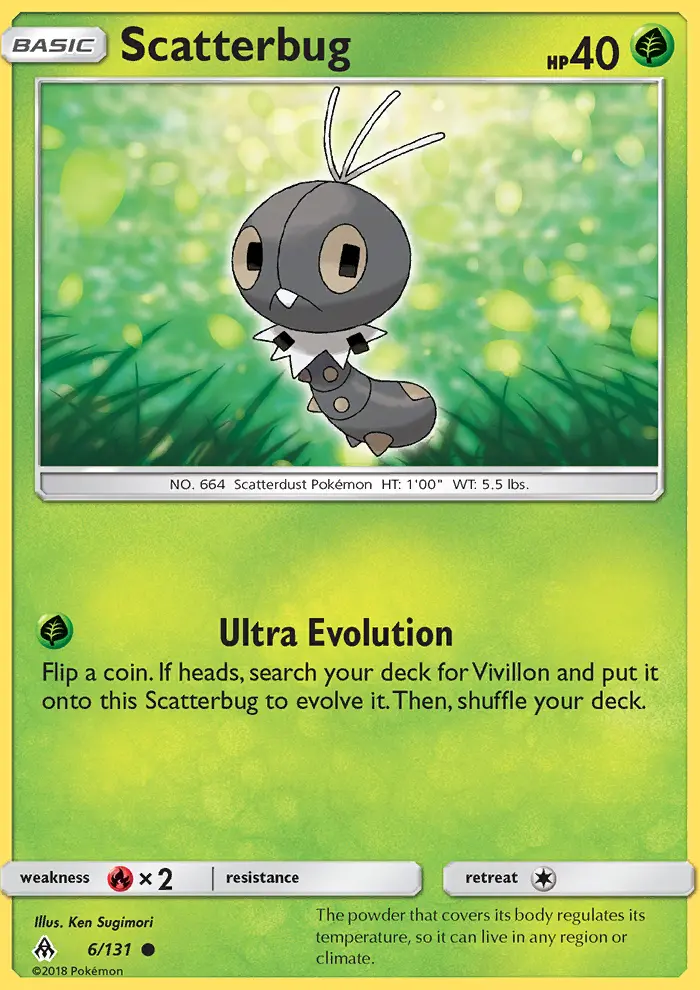
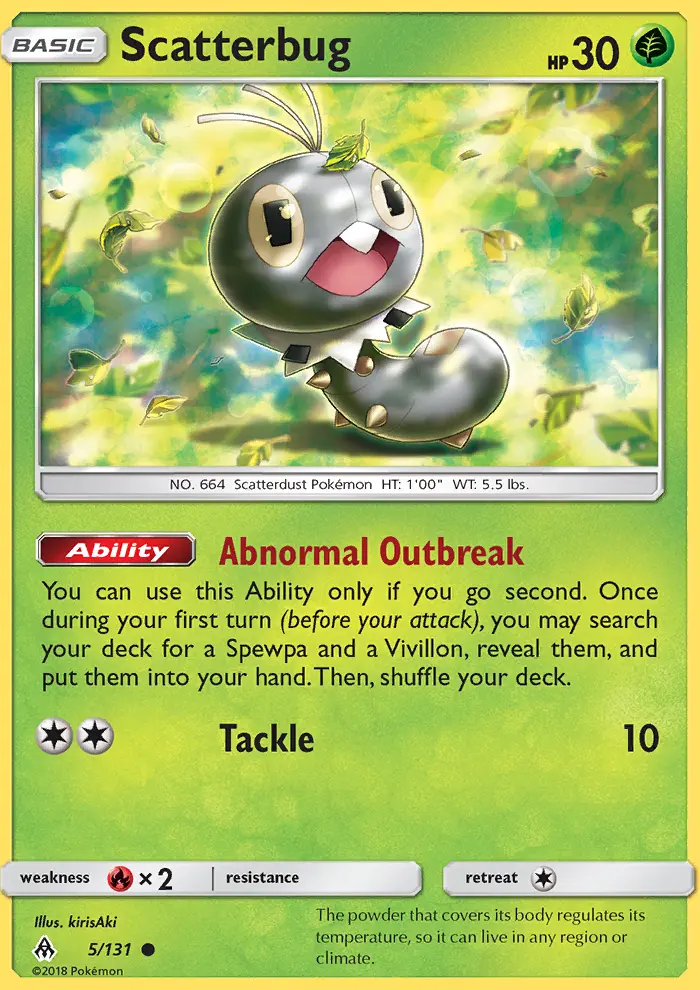
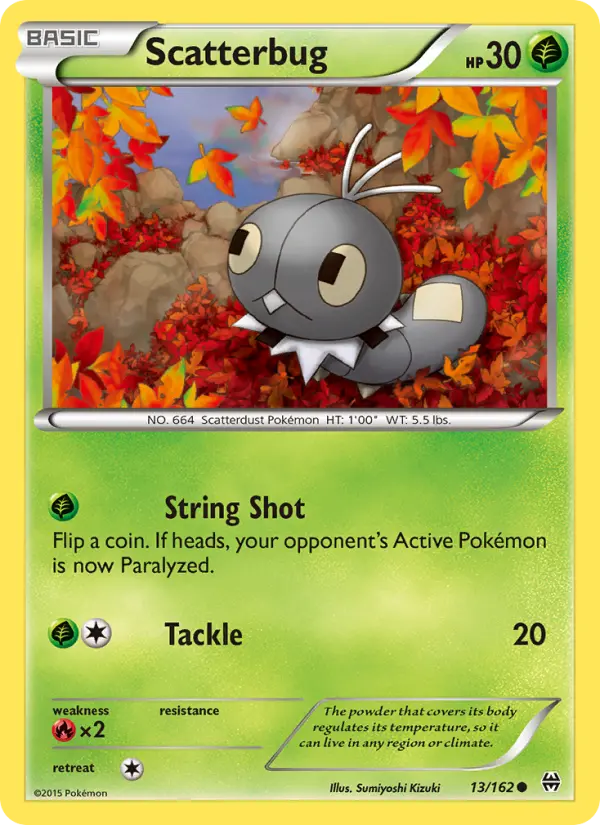
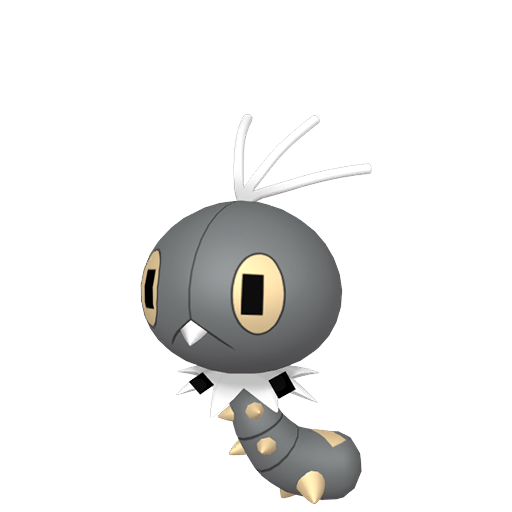
Scatterbug is a small, black-bodied larval Pokémon with a distinctly segmented structure consisting of three body sections, each supporting a pair of nubby, beige-colored legs. Its most prominent features include a relatively large head bisected by a vertical line running from forehead to mouth, large beige eyes with square black pupils, and a single pointed tooth protruding from its mouth alongside three white hairs sprouting from the top of its head. A distinctive white ruff of fur encircles its neck, and a large beige spot adorns its rear segment, marking the region where its most notable secretions originate. The defining characteristic of Scatterbug's biology lies in its unique powder production system: as it consumes various types of plants—including poisonous leaves and roots—the ingested toxins are processed through its specialized digestive system and converted into a paralyzing black powder that coats its entire body. This powder, which causes paralysis on contact with predators, also serves a thermoregulatory function, allowing Scatterbug to regulate its body temperature and survive in virtually any climate or region, from arid deserts to tropical forests.
Pokedex Numbers
Training
Breeding
Scatterbug Breeding, Gender Ratio & Egg Groups
Half of all Scatterbug are male, half are female — no skew to plan around. With a base friendship value of 70, Scatterbug demonstrates moderate loyalty to its trainer from the moment of capture, responding reasonably well to typical care and interaction while not requiring exceptional effort to maintain positive relationships. The species belongs exclusively to the Bug egg group, meaning it can only breed with other Bug-type Pokémon or with Ditto, significantly restricting breeding options compared to Pokémon with dual egg group compatibility. Despite these breeding limitations, Scatterbug serves an important role in Bug-type breeding chains within the Kalos region, and trainers interested in building a competitive Bug-type team would need to carefully plan their breeding strategy around these constraints. The relatively quick hatch counter of 15 cycles makes Scatterbug eggs moderately quick to hatch compared to many other Pokémon, requiring approximately 3,599 to 3,855 steps before the egg produces a new Scatterbug ready for training and eventual evolution.
Sprites




Forms
TMs & HMs
tm21
scarlet violet
tm182
scarlet violet
tm171
scarlet violet
tm15
scarlet violet
tm182
the teal mask
tm171
the indigo disk
tm76
black 2 white 2
tm76
omega ruby alpha sapphire
tm76
black white
tm76
x y
Forms
icy-snowDefaultScatterbug's Evolution Chain


Scatterbug Evolution, Mega Evolution & Special Forms
Scatterbug follows a linear three-stage evolutionary progression that culminates in the dual Bug/Flying-type Vivillon. At level 9, Scatterbug evolves into Spewpa, a cocoon-like intermediate stage that retains the Bug typing and begins to show physical hardening in preparation for its final metamorphosis. Subsequently, at level 12, Spewpa undergoes its final evolution into Vivillon, gaining the Flying-type and transforming from a larval form into a graceful butterfly Pokémon. The significance of Scatterbug and Spewpa lies in their capacity to exist in twenty visually indistinct regional forms, with each form corresponding to the specific environment in which the Pokémon is encountered. These forms are not merely cosmetic variations but are intrinsically tied to the geographic location where the Pokémon originates, determining the wing pattern and coloration that Vivillon will display upon evolution. This innovative approach to regional variation adds tremendous replay value and collectibility to the Kalos region's gameplay experience, as trainers seek to capture and evolve Scatterbug in different locales to obtain the complete collection of Vivillon patterns.
Where to Find
Kalos Route 2
kalos
+1 more
Santalune Forest
kalos
+1 more
Hauoli City
alola
Scatterbug Behaviour and Natural Habitat
Scatterbug resides primarily in forests and wild plains across the Kalos region, where it can be encountered in early-game areas such as Route 2. This Pokémon exhibits defensive behavior specifically adapted to avian predators, employing its paralyzing black powder as a deterrent when under attack from bird-type Pokémon. The powder's paralytic properties serve as a crucial survival mechanism, as Scatterbug lacks the speed and offensive capabilities to outrun or overpower its natural predators—most notably Grafaiai, which stands as its primary natural enemy. Rather than relying on combat prowess, Scatterbug adopts a strategy of environmental adaptation and chemical defense, using the fur around its neck as a sophisticated thermoregulation system that allows it to maintain optimal body temperature regardless of external conditions. This adaptation has enabled Scatterbug populations to establish themselves across diverse geographical regions and climates throughout the Kalos region, making it one of the most adaptable Bug-type Pokémon in its generation.
Pokedex Entries
When under attack from bird Pokémon, it spews a poisonous black powder that causes paralysis on contact.
The powder that covers its body regulates its temperature, so it can live in any region or climate.
When under attack from bird Pokémon, it spews a poisonous black powder that causes paralysis on contact.
The powder that covers its body regulates its temperature, so it can live in any region or climate.
Scatterbug Name Origin & Design Inspiration
The name Scatterbug derives directly from its primary characteristic behavior: the scattering of paralyzing powder across its body and the surrounding environment as a defensive mechanism. The Japanese name Kofukimushi combines 'kofuku' (powder) with 'mushi' (insect), more directly referencing the powder-based nature of the species. The Pokémon's visual design draws inspiration from real-world caterpillars and flour beetles, incorporating the characteristic segmented larval body structure while emphasizing the powder-producing capacity through its beige spots and coloration patterns. The species classification as the Scatterdust Pokémon reinforces this etymological focus on its powder-dispersal behavior. Visually, Scatterbug's black coloration with beige accents creates a striking contrast that makes the creature immediately recognizable while also suggesting the dark, powdery secretions it produces. The design philosophy reflects Generation VI's overall approach to the Kalos region, drawing heavily from European insects and nature while introducing innovative regional variation mechanics that would become a defining feature of subsequent generations.
Learnable Moves
Scatterbug Competitive Battle Guide
Scatterbug occupies an extremely limited role in competitive Pokémon battling due to its minimal aggregate stat total of 200, with particularly weak offensive and special offensive stats of only 35 and 27 respectively. Its defensive capabilities are similarly underwhelming, with base defense and special defense stats of 40 and 25, leaving it vulnerable to even moderately powerful attacks from early-game opponents. However, Scatterbug's movepool and ability selection do provide some utility in specific contexts: Shield Dust as an ability prevents secondary effects from incoming moves, Compound Eyes increases move accuracy to 1.3 times the normal value, and the hidden ability Friend Guard reduces direct damage taken by friendly Pokémon to 75% of normal damage. Competitive players would almost never field Scatterbug itself in battle, instead using it as a vehicle for breeding moves into more viable Bug-type Pokémon or as a stepping stone toward evolving it into Spewpa and eventually Vivillon. Move-wise, Scatterbug begins with String Shot for speed reduction and Tackle for reliable damage, later learning Stun Spore for paralysis support at level 7, which provides some utility in doubles or competitive environments where speed control proves valuable. Its function in competitive contexts remains entirely preparatory rather than performative.
Commonly Asked Questions About Scatterbug
What type is Scatterbug?
Scatterbug is a bug type Pokemon.
What does Scatterbug evolve into?
Scatterbug evolves into spewpa, then into vivillon.
What are Scatterbug's weaknesses?
Scatterbug is weak to flying, rock and fire type moves.
Does Scatterbug evolve by trading?
No — Scatterbug evolves entirely through leveling up, with no trade required at any stage.
Where can I find Scatterbug?
Scatterbug can be found in kalos route 2 (kalos), santalune forest (kalos) and hauoli city (alola).
Scatterbug Cultural Impact & Franchise History
Scatterbug and its evolution line represent a significant design innovation within the Pokémon franchise, introducing the regional form mechanic in a way that predated the later formal implementation of regional variants in Generation VII. The Vivillon line's twenty distinct patterns became highly sought-after among collectors, spawning an entire subculture of traders focused on completing their collections of all regional Vivillon variants. This collectibility extended Scatterbug's cultural relevance far beyond its competitive viability, making it essential to the completionist experience of Pokémon X and Y players worldwide. The species also gained prominence through its appearances in the Pokémon anime, where it served as a notable early-game encounter that helped establish the tone of the Kalos region's exploration. Additionally, Scatterbug's environmental adaptation ability and powder-based biology captured the imagination of players interested in Pokémon ecology and realistic adaptations, inspiring discussions and theories about how Bug-type Pokémon might function in naturalistic settings. The combination of accessibility, visual distinctiveness, and deep collectibility mechanics cemented Scatterbug's place in Pokémon's cultural landscape as an exemplary creature that balances the franchise's gameplay and lore requirements.
Where to Find Scatterbug in Every Pokémon Game
Scatterbug is primarily available in Pokémon X and Y during the early stages of the adventure, appearing on Route 2 and other early-game locations within the Central Kalos region, where it serves as Pokédex number 020 in the regional Pokédex. Its exceptional catch rate of 255 makes it extraordinarily easy to capture, typically requiring only a single Poké Ball throw even without inflicting status conditions or lowering the target's health. The twenty regional forms of Scatterbug are distributed across different locations within Kalos, with specific forms appearing in designated areas—trainers must visit multiple regions or trade with other players to obtain all variants. In Pokémon Omega Ruby and Alpha Sapphire, Scatterbug maintains its availability in the Hoenn region, allowing players in these games to begin their Vivillon collection. More recent generations have made Scatterbug increasingly difficult to access through normal gameplay, though it has appeared in specialized encounters in games like Pokémon Legends: Z-A and Pokémon Scarlet and Violet. Online trading communities and the Pokémon Home system have become essential resources for players seeking to complete their regional Vivillon collections, as the original distribution of specific forms was geographically limited and time-sensitive.