Green Plumage Squawkabilly
Generation IX · #0931 — Parrot Pokémon
As a Generation IX normal/flying-type, Squawkabilly-Green-Plumage leans on intimidate to cover what its raw numbers don't, particularly on the attack side.
Editor's Take
Squawkabilly's four plumage colours splitting across two different ability sets makes a route bird into a minor collector's puzzle, which is more than most of them get.
Base Stats
Height
0.6m
Weight
2.4kg
Category
Parrot Pokémon
Gender
Male 50% / Female 50%
Color
green
Shape
wings
Abilities
Lowers opponents' Attack one stage upon entering battle.
Strengthens physical moves to inflict 1.5× damage, but decreases their accuracy to 0.8×.
Increases Attack to 1.5× with a major status ailment.

Green Plumage Squawkabilly Biology & Physical Characteristics
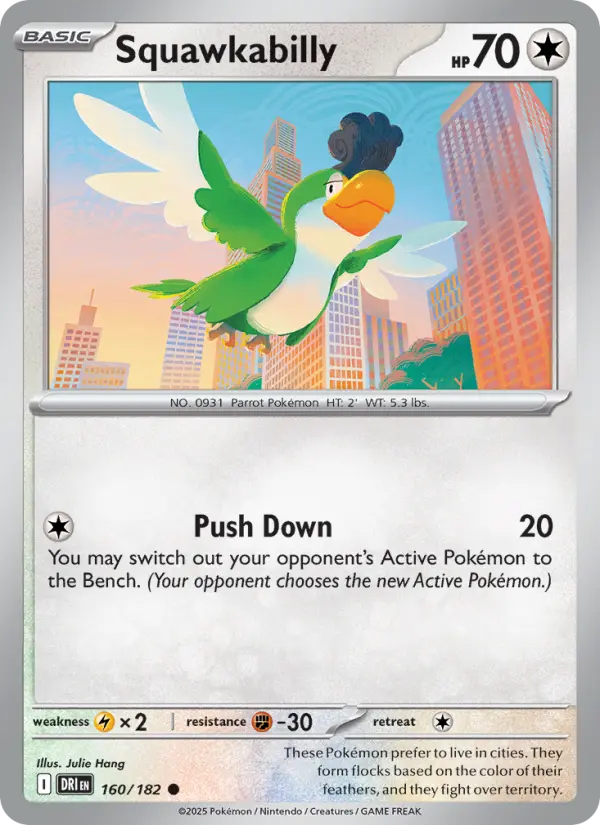
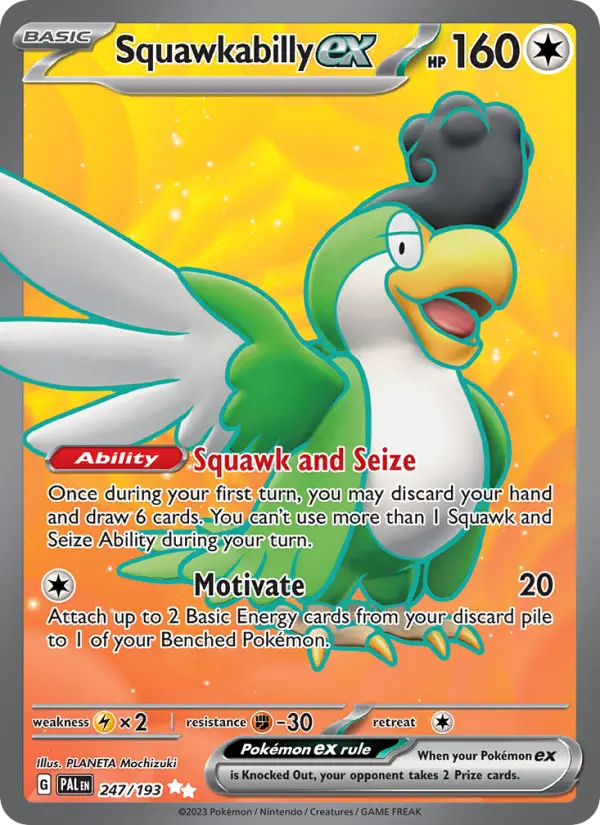
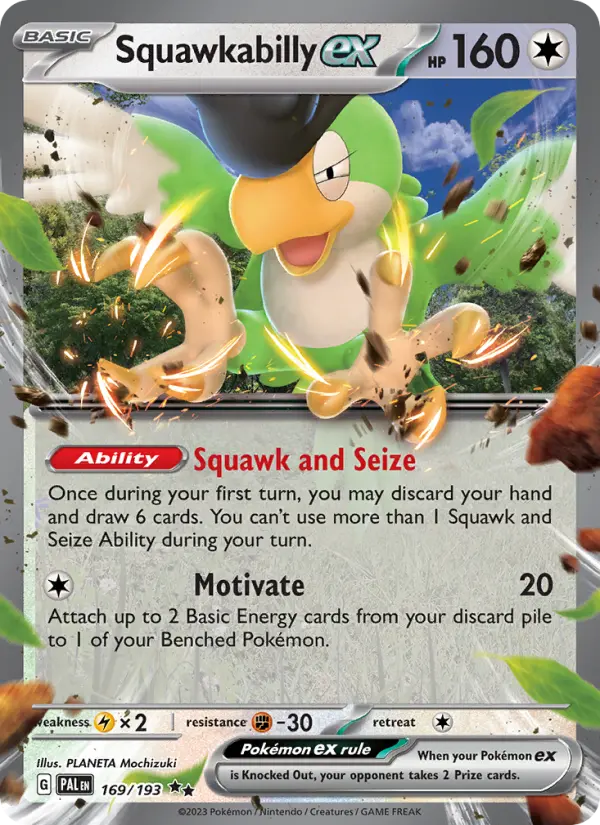
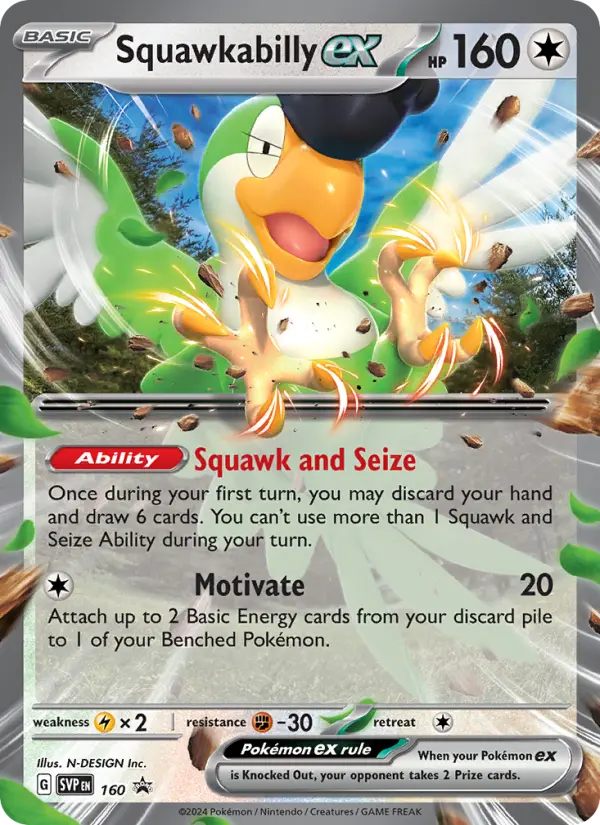
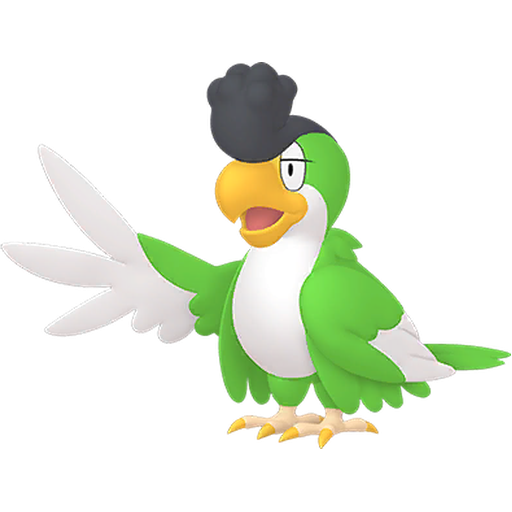
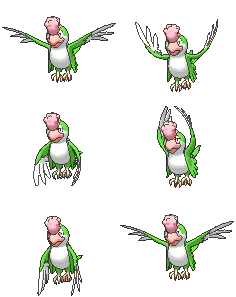
Squawkabilly presents a striking avian silhouette that instantly evokes comparison to real-world parrot species. All forms share distinctive anatomical features including white plumage adorning the breast, abdomen, and wingtip feathers, along with characteristic white eyelids that frame their uniquely lazy eyes marked by dotted pupils. The species possesses an instantly recognizable pompadour-like black crest crowning its head, combined with a rounded yellow beak suited to cracking seeds and nuts. Its most visually distinctive feature is the elongated side feathers that drape downward like an elaborate coat, while the back-of-neck feathers display a notably fluffier texture. The green-plumage form, being the most common variant, displays rich emerald coloration throughout its primary and secondary feathers. Zygodactyl feet—an arrangement featuring two toes directed forward and two backward, typical of true parrots—provide exceptional grip strength for perching on thin branches. Yellow claws cap each toe, providing both climbing efficiency and defensive capabilities during territorial disputes.
Pokedex Numbers
Training
Breeding
Green Plumage Squawkabilly Breeding, Gender Ratio & Egg Groups
Squawkabilly exhibits a perfectly balanced gender distribution with exactly 50 percent males and 50 percent females, reflecting an absence of any sex-linked traits or gender-specific form variations. The species belongs to the Flying egg group, categorizing it among aerial and avian Pokémon capable of producing viable offspring with compatible breeding partners. The egg cycle duration of 15 cycles translates to approximately 3,599 to 3,855 steps of overworld travel before hatching occurs, placing Squawkabilly among the moderately quick-hatching species. The base friendship value of 50 represents a neutral starting point—neither particularly hostile nor exceptionally affectionate toward newly-caught individuals—requiring deliberate effort through experience and care to build stronger bonds. Breeding two compatible Squawkabilly produces offspring that inherit the parent's plumage form, with green-form parents reliably producing green-form eggs. The species' Flying-only egg group membership limits breeding compatibility to other Flying-group Pokémon, though this restriction is offset by the substantial number of compatible partners across multiple generations.
Sprites


TMs & HMs
tm02
lets go pikachu lets go eevee
tm03
lets go pikachu lets go eevee
tm05
lets go pikachu lets go eevee
tm06
sword shield
tm07
lets go pikachu lets go eevee
tm08
lets go pikachu lets go eevee
tm08
sword shield
tm09
yellow
tm09
red blue
tm09
sword shield
tm11
platinum
tm11
xd
tm95
sword shield
hm02
crystal
hm02
diamond pearl
hm02
heartgold soulsilver
tr42
sword shield
tm65
scarlet violet
tm10
blue japan
tm11
diamond pearl
+310 more TMs/HMs
Regional & Special Forms
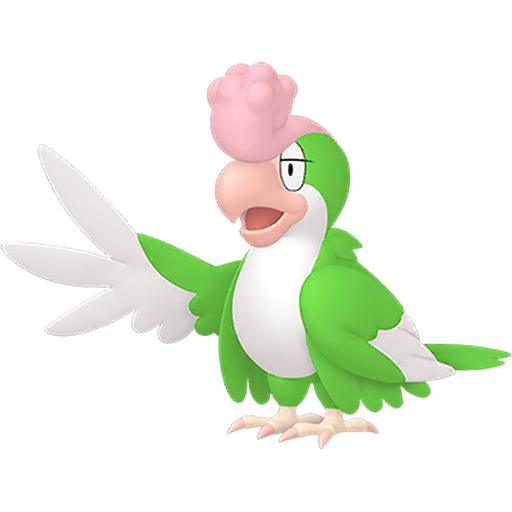
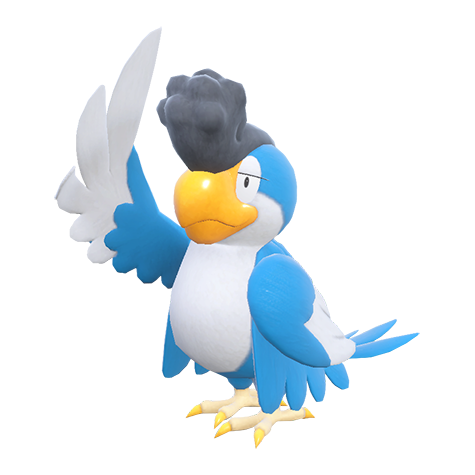
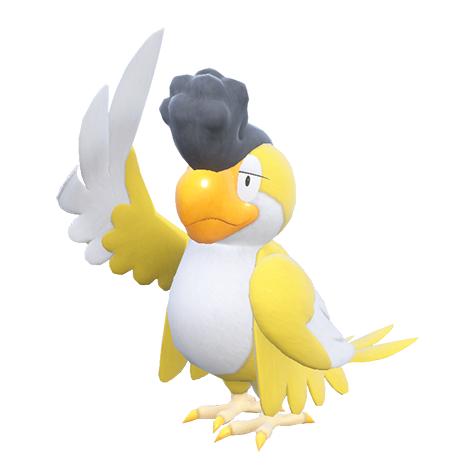
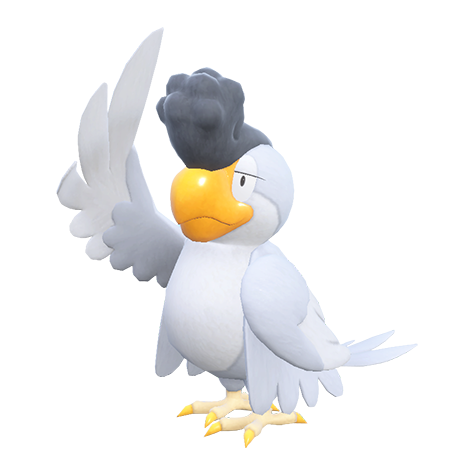
Green Plumage Squawkabilly also has 3 related forms: Blue Plumage Squawkabilly, Yellow Plumage Squawkabilly and White Plumage Squawkabilly.
Green Plumage Squawkabilly Evolution, Mega Evolution & Special Forms
Squawkabilly occupies a unique position within the Pokémon evolutionary tree as a standalone species with no known evolutionary predecessors or successors. Unlike the vast majority of Generation IX Pokémon, which form part of extended evolutionary lineages, Squawkabilly remains in its final form from initial encounter, suggesting that this species represents a complete evolutionary endpoint or possibly an ancient lineage with evolutionary adaptations already perfected. The four plumage forms—green, blue, yellow, and white—function as form variants rather than evolutionary stages, meaning a trainer's Squawkabilly will retain its original form throughout its entire lifespan regardless of leveling, friendship, or item usage. This distinction sets Squawkabilly apart from form-changing Pokémon like Rotom or Basculin, which can shift between forms through gameplay mechanics. The stability of Squawkabilly's form reflects its exceptional specialization as an urban-adapted species, where morphological perfection has already been achieved through natural selection favoring the traits present in its current form.
Where to Find
Location data not available for this Pokémon in the database.
Green Plumage Squawkabilly Behaviour and Natural Habitat
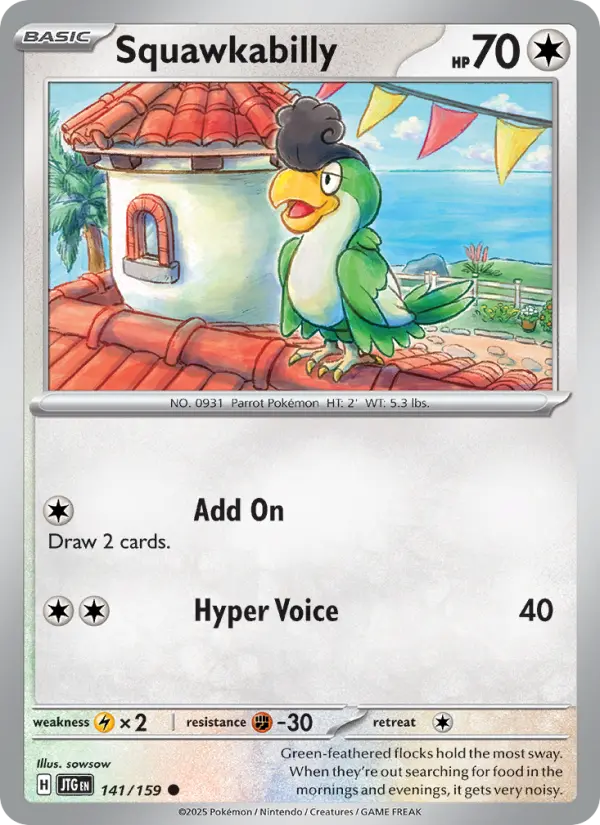
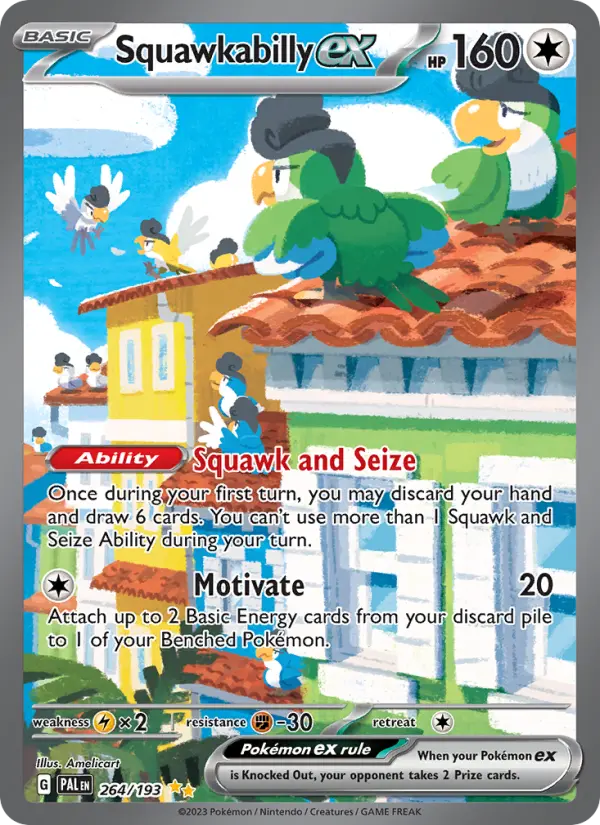
The green-feathered Squawkabilly represents the apex predator of the species' social hierarchy, with violet-version Pokédex data explicitly confirming that green-feathered flocks "hold the most sway" in their territorial arrangements. These birds exhibit pronounced diurnal and crepuscular activity patterns, becoming particularly vocal during morning and evening foraging expeditions when their cacophonous calls can penetrate entire neighborhoods with remarkable volume. Squawkabilly demonstrate an exceptional preference for urban environments over wild forests, thriving in cities where human structures provide abundant perching sites and concentrated food sources. They are fiercely territorial creatures that organize into flocks containing over fifty individuals united by feather coloration, establishing strict social hierarchies and engaging in frequent aggressive confrontations with competing flocks of different colors. Despite their combative nature with outsiders, Squawkabilly display strong communal bonds within their flock, showing a marked aversion to solitude and cooperating extensively for mutual benefit. Their exceptional noisiness during feeding hours represents both an adaptation for intra-flock communication and a deterrent against potential predators.
Pokedex Entries
These Pokémon prefer to live in cities. They form flocks based on the color of their feathers, and they fight over territory.
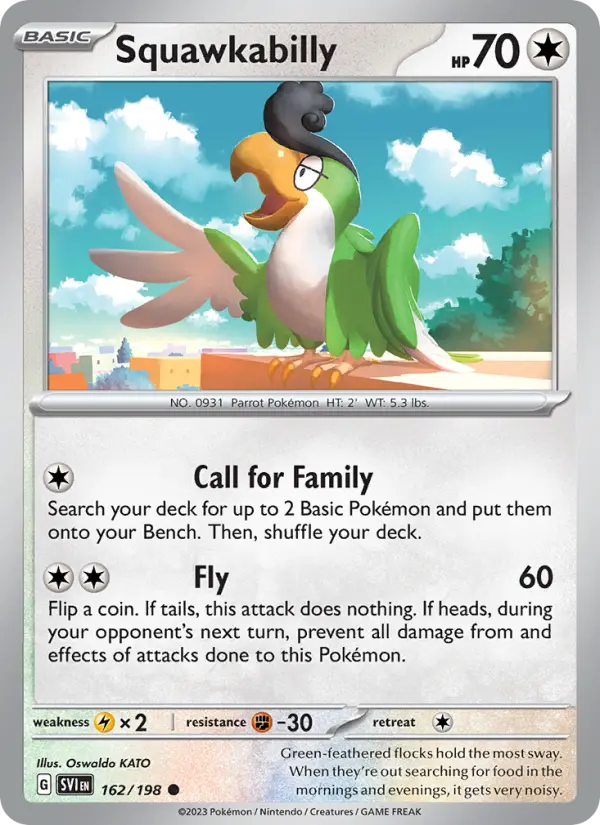
Green-feathered flocks hold the most sway. When they’re out searching for food in the mornings and evenings, it gets very noisy.
Green Plumage Squawkabilly Name Origin & Design Inspiration
The species name Squawkabilly derives directly from onomatopoeia, combining "squawk"—the harsh, loud cry produced by parrots and similar birds—with the diminutive suffix "-abilly," creating a name that simultaneously evokes both the vocal characteristics of the species and its somewhat comical, affectionate demeanor. The Japanese designation Ikirinko (イキリンコ) employs similar linguistic construction, merging "ikiru" (to live) with "rinko" (parrot), emphasizing the bird's urban lifestyle. The green-plumage form's aesthetic inspiration draws unmistakably from real-world parrot species, particularly the green parakeets and conures that have established invasive populations in numerous urban centers worldwide. The pompadour crest serves as the primary individualistic flourish distinguishing Squawkabilly from straightforward parrot representations, lending the species a playful, slightly defiant character reflected in its lazy expression and territorial behavior. The color polymorphism parallels natural variation in parrot populations while simultaneously drawing inspiration from the aesthetic diversity celebrated in certain bird-watching and ornithology communities.
Learnable Moves
Green Plumage Squawkabilly can learn 47 moves:
Move | Type | Cat. | Power | Acc. | PP |
|---|---|---|---|---|---|
| aerial ace | flying | Physical | 60 | — | 20 |
| air cutter | flying | Special | 60 | 95 | 25 |
| air slash | flying | Special | 75 | 95 | 15 |
| brave bird | flying | Physical | 120 | 100 | 15 |
| copycat | normal | Status | — | — | 20 |
| double edge | normal | Physical | 120 | 100 | 15 |
| dual wingbeat | flying | Physical | 40 | 90 | 10 |
| endeavor | normal | Physical | — | 100 | 5 |
| endure | normal | Status | — | — | 10 |
| facade | normal | Physical | 70 | 100 | 20 |
| fake tears | dark | Status | — | 100 | 20 |
| feather dance | flying | Status | — | 100 | 15 |
| final gambit | fighting | Special | — | 100 | 5 |
| flatter | dark | Status | — | 100 | 15 |
| fly | flying | Physical | 90 | 95 | 15 |
| foul play | dark | Physical | 95 | 100 | 15 |
| fury attack | normal | Physical | 15 | 85 | 20 |
| giga impact | normal | Physical | 150 | 90 | 5 |
| growl | normal | Status | — | 100 | 40 |
| heat wave | fire | Special | 95 | 90 | 10 |
| helping hand | normal | Status | — | — | 20 |
| hurricane | flying | Special | 110 | 70 | 10 |
| hyper beam | normal | Special | 150 | 90 | 5 |
| hyper voice | normal | Special | 90 | 100 | 10 |
| lash out | dark | Physical | 75 | 100 | 5 |
| mimic | normal | Status | — | — | 10 |
| parting shot | dark | Status | — | 100 | 20 |
| peck | flying | Physical | 35 | 100 | 35 |
| pounce | bug | Physical | 50 | 100 | 20 |
| protect | normal | Status | — | — | 10 |
| quick attack | normal | Physical | 40 | 100 | 30 |
| rest | psychic | Status | — | — | 5 |
| reversal | fighting | Physical | — | 100 | 15 |
| roost | flying | Status | — | — | 5 |
| scary face | normal | Status | — | 100 | 10 |
| sleep talk | normal | Status | — | — | 10 |
| substitute | normal | Status | — | — | 10 |
| sunny day | fire | Status | — | — | 5 |
| swagger | normal | Status | — | 85 | 15 |
| tailwind | flying | Status | — | — | 15 |
| take down | normal | Physical | 90 | 85 | 20 |
| taunt | dark | Status | — | 100 | 20 |
| tera blast | normal | Special | 80 | 100 | 10 |
| thief | dark | Physical | 60 | 100 | 25 |
| torment | dark | Status | — | 100 | 15 |
| u turn | bug | Physical | 70 | 100 | 20 |
| uproar | normal | Special | 90 | 100 | 10 |
Green Plumage Squawkabilly Competitive Battle Guide
In competitive Pokémon environments, Squawkabilly's green-plumage form occupies an interesting niche as a physical sweeper with respectable offensive statistics and exceptional Speed. The 96 Attack stat pairs excellently with its 92 Speed, enabling it to outpace many common threats while delivering substantial physical damage through moves like Brave Bird, Aerial Ace, and Close Combat learned through move tutor availability. The Intimidate ability ranks among the most valuable passive abilities in competitive play, reducing opponent Attack by one stage upon entry and fundamentally shifting damage calculations in favorable directions. The Hustle hidden ability offers an alternative playstyle emphasizing raw damage output through 1.5× physical move power despite the accompanying 0.8× accuracy reduction, particularly effective with high-accuracy, high-priority moves that minimize the downside. However, Squawkabilly's substandard defensive statistics—51 Defense and 51 Special Defense representing the species' primary weakness—render it vulnerable to priority moves and opposing physical threats, necessitating careful prediction and threat assessment. Its offensive typing grants excellent coverage potential, with Normal/Flying combination allowing access to diverse move pools that address common Paldean metagame threats while maintaining acceptable speed tiers for competitive viability.
Commonly Asked Questions About Green Plumage Squawkabilly
What type is Green Plumage Squawkabilly?
Green Plumage Squawkabilly is a normal and flying type Pokemon.
What does Green Plumage Squawkabilly evolve from?
Green Plumage Squawkabilly does not evolve.
What are Green Plumage Squawkabilly's weaknesses?
Green Plumage Squawkabilly is weak to rock, electric and ice type moves.
Green Plumage Squawkabilly Cultural Impact & Franchise History
Squawkabilly emerged as an immediate fan-favorite upon Pokémon Scarlet and Violet's release, with the species' expressive character design and territorial social dynamics resonating strongly with the community. The plumage polymorphism generated considerable discussion regarding real-world invasive parrot populations and ecological parallels, leading many players to research actual urban parrot species and their behavioral ecology. Content creators and competitive players embraced Squawkabilly's accessibility as a viable flying-type option, with its Intimidate ability earning particular recognition for enabling effective team building without relying on legendary Pokémon. The species achieved prominence in fan communities through its prominent role in Pokémon Paldean Winds animated content, where its characteristically loud and aggressive personality generated memorable comedic moments. Trading communities witnessed substantial activity surrounding plumage form collection, with trainers engaging in extensive exchanges to complete all four variants. The species' design philosophy—emphasizing personality and behavioral authenticity over statistical excellence—has influenced subsequent Game Freak design decisions, with Squawkabilly frequently cited in discussions regarding how species personality should supersede competitive viability.
Where to Find Green Plumage Squawkabilly in Every Pokémon Game
Squawkabilly exhibits remarkably widespread availability throughout Pokémon Scarlet and Violet, appearing consistently in both urban and semi-rural environments across Paldea's expansive map. The species holds a respectable capture rate of 190, classifying it among the moderately easy Pokémon to catch with standard Poké Balls, though the capture rate drops to approximately 24.8 percent when encountering full-health specimens. The green-plumage form represents the most readily encountered variant due to its canonical dominance in Paldean ecosystems, appearing with substantially higher encounter frequency than blue, yellow, or white forms. Players seeking specific forms must either invest time locating regional population centers where particular colors congregate, or engage in breeding programs to produce desired variants from parent Pokémon. The Violet Pokédex assigns Squawkabilly to local number 0113, indicating its prominence as a region-relevant species featured prominently in the game's early-stage roster recommendations. The base experience yield of 146, while modest compared to legendary species, provides reasonable progression rates for trainers incorporating Squawkabilly into their teams during the main campaign, with experience growth following an erratic curve that gradually accelerates toward higher levels.