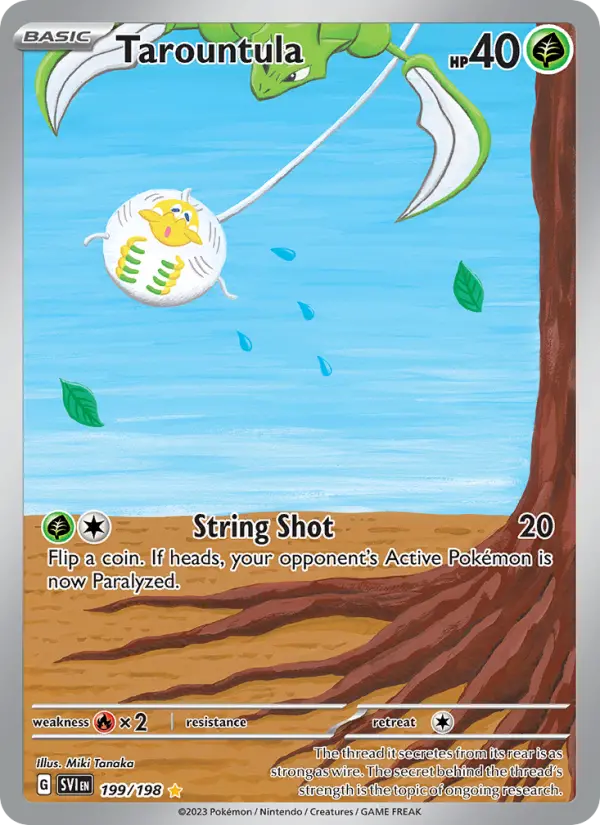
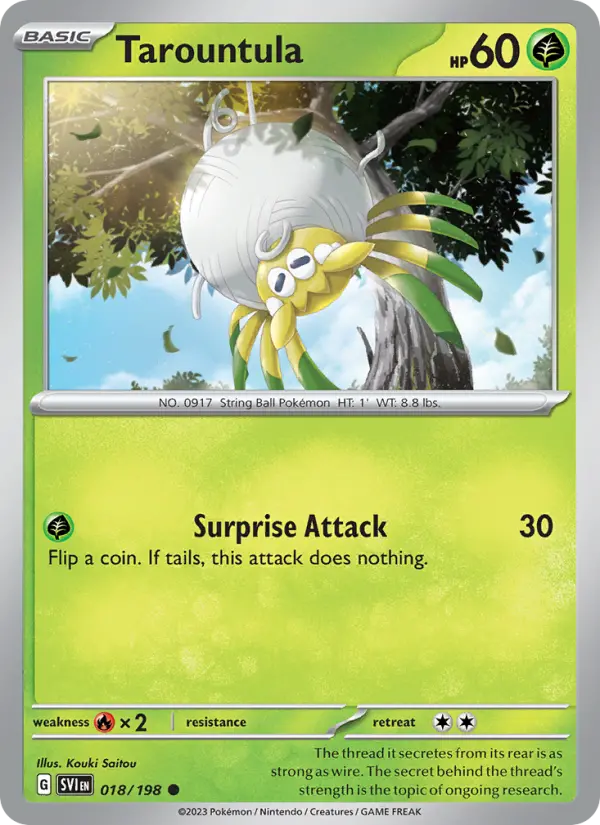
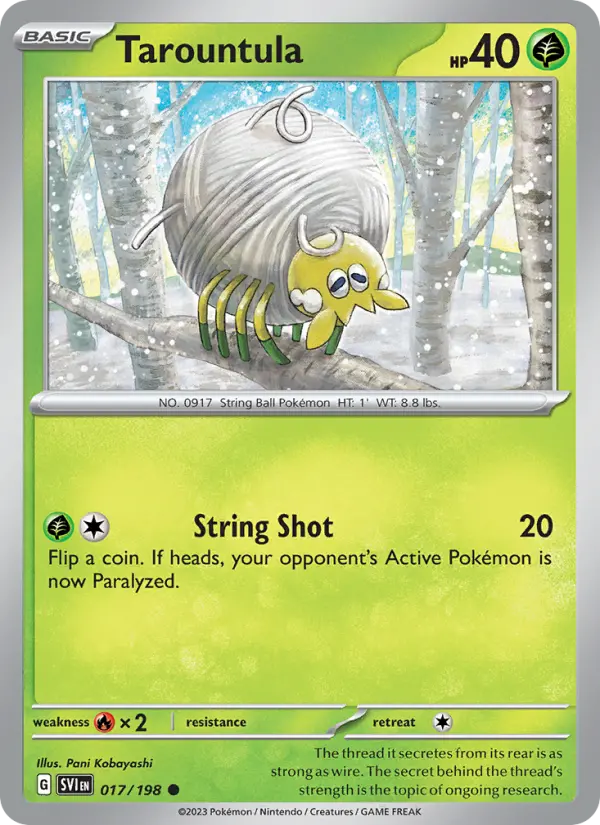
Tarountula
Generation IX · #0917 — String Ball Pokémon
Tarountula's profile is easy to undersell: 0.3 m, 4 kg, and a bug typing that doesn't scream power — until you look at its Defense of 45.
Editor's Take
Tarountula's line ends in Spidops, whose Sticky Web and Silk Trap access give it a real support role that its stat spread never lets it use.
Base Stats
Height
0.3m
Weight
4.0kg
Category
String Ball Pokémon
Gender
Male 50% / Female 50%
Color
white
Shape
armor
Abilities
Prevents sleep.
This Pokémon's moves have double power against Pokémon that switched in this turn.

Tarountula Biology & Physical Characteristics
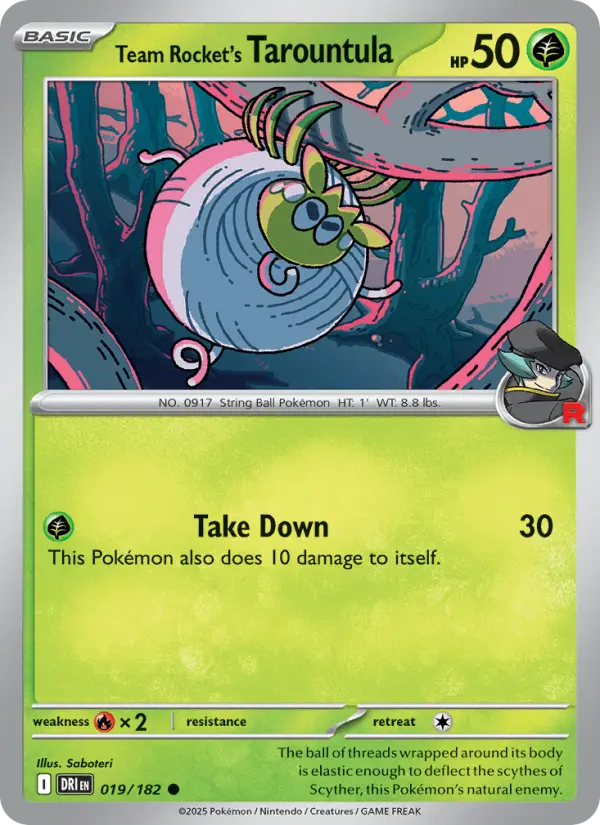
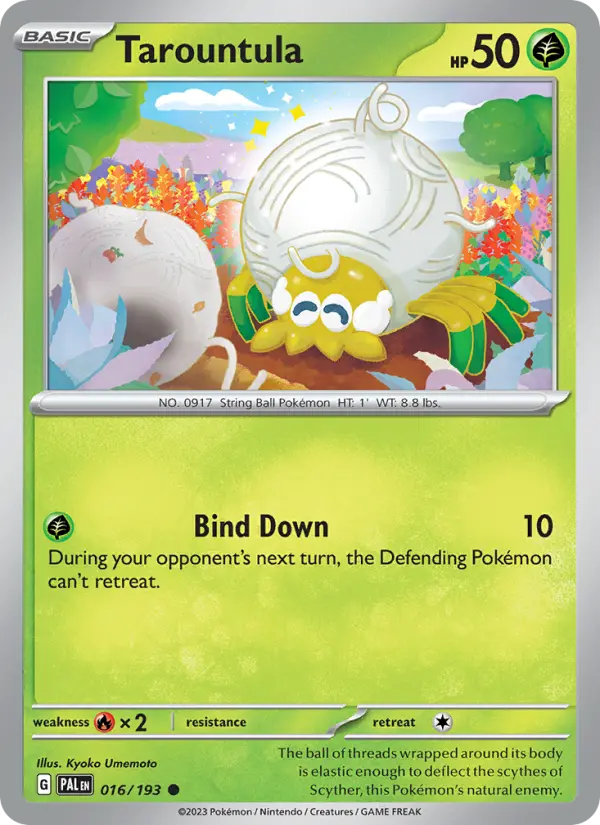
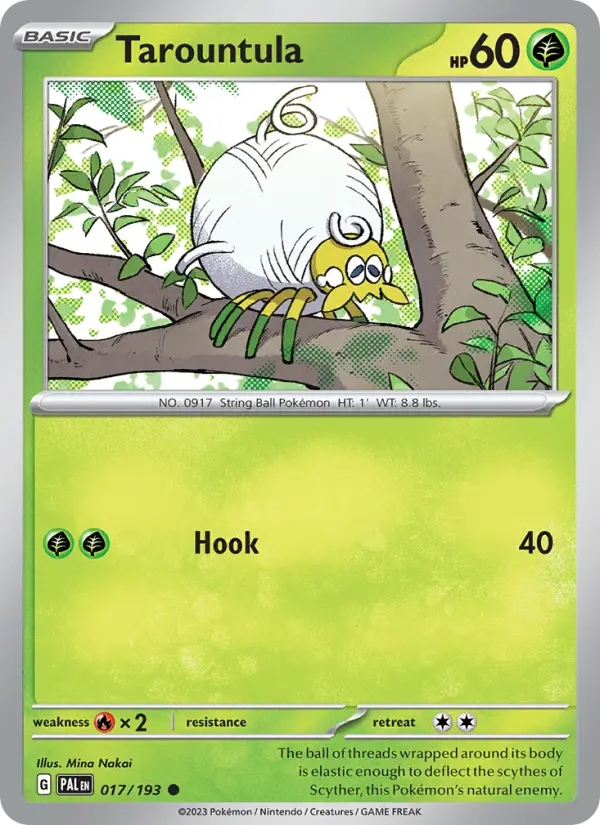
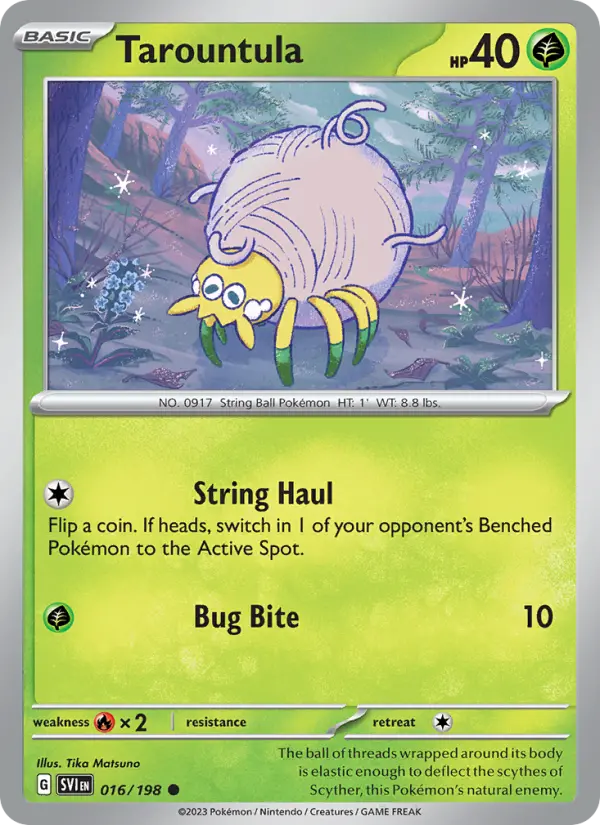
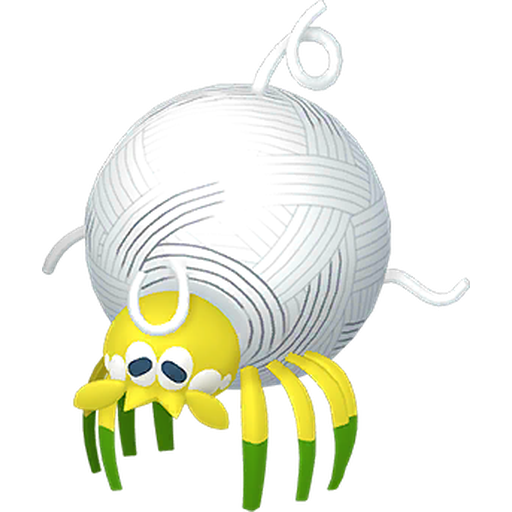
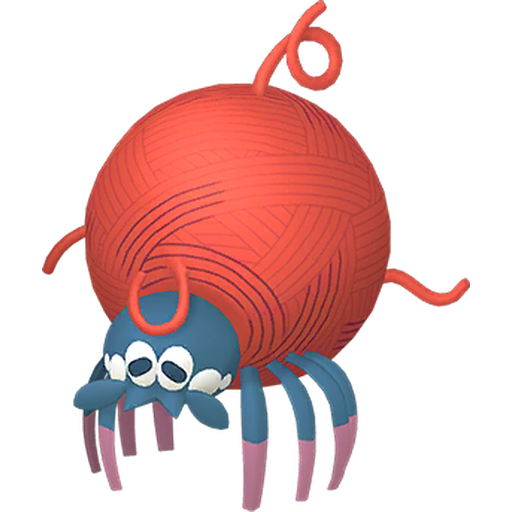
Tarountula is a lime-green arachnid Pokémon that bears the distinctive characteristic of being almost entirely covered in a cocoon-like ball of white threads that it secretes continuously from its abdomen. Beneath this protective covering lies a tiny body with eight spindly legs tipped with dark green coloration, allowing it to navigate its environment with surprising agility. Its face features white patterning flanking its two eyes on either side, along with two pairs of protrusions resembling chelicerae and pedipalps that conceal its minuscule mouth located on the underside of its head. The elastic nature of Tarountula's thread is extraordinary—research indicates it possesses a tensile strength comparable to steel wire, making it capable of absorbing and deflecting even the razor-sharp attacks of its arch-nemesis, Scyther. When necessary, Tarountula can willingly eject its ball of threads to reveal its lime-green abdomen beneath, though it will typically reconstruct this protective layer quickly. Tarountula frequently hangs upside down from tree branches and foliage using its thread, creating a nest-like appearance as it waits for unsuspecting prey to pass within striking distance.
Pokedex Numbers
Training
Breeding
Tarountula Breeding, Gender Ratio & Egg Groups
Tarountula exhibits a perfectly balanced gender ratio with 50% male and 50% female individuals occurring naturally in the wild, making breeding partnerships readily available for trainers seeking to hatch eggs. The species belongs to the Bug egg group, restricting breeding compatibility to other Bug-type Pokémon and ensuring that only appropriate species combinations can produce fertile eggs. Tarountula has a relatively short hatch time of 15 cycles, approximately 3,599 to 3,855 steps of travel required to hatch a freshly laid egg—a manageable duration that makes breeding a viable option even for trainers early in their Paldea adventure. Eggs produced through breeding inherit several beneficial traits from their parents, and Tarountula has access to several valuable egg moves including First Impression, Lunge, Memento, and Sucker Punch that provide competitive advantages not available through level-up training. The species' high catch rate of 255 and base friendship of 50 make it relatively easy to train and bond with, contributing to its popularity as a starter Bug-type option for many players.
Sprites




TMs & HMs
tm01
lets go pikachu lets go eevee
tm02
crystal
tm02
gold silver
tm05
lets go pikachu lets go eevee
tm07
lets go pikachu lets go eevee
tm08
red blue
tm08
yellow
tm08
lets go pikachu lets go eevee
tm09
yellow
tm08
red green japan
tm08
blue japan
tm09
red blue
tm09
ruby sapphire
tm09
firered leafgreen
tm09
emerald
tm09
diamond pearl
tm09
xd
tm11
platinum
tm11
xd
tr57
sword shield
+266 more TMs/HMs


Tarountula Evolution, Mega Evolution & Special Forms
Tarountula undergoes a single evolution into Spidops when it reaches level 15, a relatively early milestone that occurs shortly after capture or hatching. This evolution represents a dramatic transformation in both physical form and battle capability, with Spidops developing a more robust body structure, increased size, and significantly enhanced base stats across nearly all categories. The evolution process sees Tarountula's base stat total increase from 210 to 335, with particularly notable improvements in attack power and defensive capabilities. Spidops maintains the Bug-type classification while developing a more sophisticated and aggressive appearance that better reflects its predatory nature. Trainers often choose to evolve their Tarountula at or shortly after reaching level 15, as the stat improvements provide meaningful advantages in subsequent battles within Paldea's multiple difficulty routes.
Where to Find
Location data not available for this Pokémon in the database.
Tarountula Behaviour and Natural Habitat
Tarountula inhabits the diverse ecosystems of the Paldea region, with populations concentrated throughout the southern provinces including South Province Areas One through Five, as well as the scenic locations of Cabo Poco and Poco Path. These Pokémon are primarily encountered in forested and grassy environments where trees provide suitable anchoring points for their characteristic hanging behavior. True to its arachnid nature, Tarountula is an ambush predator that employs a sit-and-wait hunting strategy, suspending itself from branches by its powerful threads and remaining motionless until prey ventures near enough to attack. The species demonstrates territorial behavior, with individual Tarountula maintaining specific areas where they construct their thread cocoons. Despite their relatively passive daytime demeanor, Tarountula become considerably more active during twilight and nighttime hours, using their threads to sense vibrations in the air and on nearby surfaces—an ability that allows them to detect movement from considerable distances. Their natural wariness of humans and stronger predators is reflected in their ability to quickly retreat into dense foliage or drop from their perches when threatened.
Pokedex Entries
The ball of threads wrapped around its body is elastic enough to deflect the scythes of Scyther, this Pokémon’s natural enemy.
The thread it secretes from its rear is as strong as wire. The secret behind the thread’s strength is the topic of ongoing research.
Tarountula Name Origin & Design Inspiration
Tarountula's name origin lies in a combination of linguistic elements reflecting its nature: the Japanese name Tamantula blends 'tarantula,' the common name for large hunting spiders, with possible influences from onomatopoeia relating to its thread-spinning abilities. The English name similarly fuses 'tarantula' with elements suggesting its ball-like appearance when wrapped in threads. The design philosophy emphasizes the contradiction between something typically fierce and dangerous—the tarantula—reimagined as a small, vulnerable Pokémon whose primary defense mechanism is not fangs or venom but rather an ingenious wrapping of super-strong thread. This creative approach distinguishes Tarountula from traditional spider-inspired Pokémon like Ariados or Galvantula by focusing on a unique defensive strategy rather than offensive predatory traits. The lime-green coloration provides distinctive visual appeal while the white thread ball creates an instantly recognizable silhouette that makes Tarountula instantly identifiable among early-game Bug-types.
Learnable Moves
Tarountula can learn 44 moves:
Move | Type | Cat. | Power | Acc. | PP |
|---|---|---|---|---|---|
| assurance | dark | Physical | 60 | 100 | 10 |
| block | normal | Status | — | — | 5 |
| body slam | normal | Physical | 85 | 100 | 15 |
| bug bite | bug | Physical | 60 | 100 | 20 |
| bug buzz | bug | Special | 90 | 100 | 10 |
| bullet seed | grass | Physical | 25 | 100 | 30 |
| circle throw | fighting | Physical | 60 | 90 | 10 |
| counter | fighting | Physical | — | 100 | 20 |
| endure | normal | Status | — | — | 10 |
| facade | normal | Physical | 70 | 100 | 20 |
| false swipe | normal | Physical | 40 | 100 | 40 |
| feint | normal | Physical | 30 | 100 | 10 |
| first impression | bug | Physical | 90 | 100 | 10 |
| gastro acid | poison | Status | — | 100 | 10 |
| giga drain | grass | Special | 75 | 100 | 10 |
| grass knot | grass | Special | — | 100 | 20 |
| headbutt | normal | Physical | 70 | 100 | 15 |
| knock off | dark | Physical | 65 | 100 | 20 |
| leech life | bug | Physical | 80 | 100 | 10 |
| lunge | bug | Physical | 80 | 100 | 15 |
| memento | dark | Status | — | 100 | 10 |
| poison jab | poison | Physical | 80 | 100 | 20 |
| pounce | bug | Physical | 50 | 100 | 20 |
| protect | normal | Status | — | — | 10 |
| rain dance | water | Status | — | — | 5 |
| rest | psychic | Status | — | — | 5 |
| shadow claw | ghost | Physical | 70 | 100 | 15 |
| skitter smack | bug | Physical | 70 | 90 | 10 |
| sleep talk | normal | Status | — | — | 10 |
| spikes | ground | Status | — | — | 20 |
| sticky web | bug | Status | — | — | 20 |
| string shot | bug | Status | — | 95 | 40 |
| struggle bug | bug | Special | 50 | 100 | 20 |
| substitute | normal | Status | — | — | 10 |
| sucker punch | dark | Physical | 70 | 100 | 5 |
| sunny day | fire | Status | — | — | 5 |
| tackle | normal | Physical | 40 | 100 | 35 |
| take down | normal | Physical | 90 | 85 | 20 |
| tera blast | normal | Special | 80 | 100 | 10 |
| thief | dark | Physical | 60 | 100 | 25 |
| throat chop | dark | Physical | 80 | 100 | 15 |
| toxic spikes | poison | Status | — | — | 20 |
| trailblaze | grass | Physical | 50 | 100 | 20 |
| x scissor | bug | Physical | 80 | 100 | 15 |
Tarountula Competitive Battle Guide
Assessing its battle viability, Tarountula occupies a niche role as a potential lead or early-game Pokémon thanks to its hidden ability Stakeout, which doubles the power of its moves against opponents that switched into battle on the current turn. With base attack of 41 and access to moves like Bug Bite (base power 60), Struggle Bug (base power 50), and the egg move First Impression (base power 90), Tarountula can capitalize on predicted switches to deal respectable damage despite its modest offensive stats. Its ability Insomnia prevents sleep-inducing strategies, offering utility in specific matchups against sleep-focused opponents. However, Tarountula's significant weaknesses are equally notable: its base defense of 45 and base special defense of 40, combined with its pitiful base speed of 20, make it extremely fragile and slow—critical liabilities in competitive environments where faster, bulkier opponents dominate the metagame. Most competitive trainers rapidly transition Tarountula to its evolution Spidops before using it in serious battle scenarios, as the evolved form's substantially improved stats make it far more viable for tournament play. For casual play and early-game progression, however, Tarountula serves admirably as an accessible Bug-type with decent movepool options including Protect, Pounce, and Thief.
Commonly Asked Questions About Tarountula
What type is Tarountula?
Tarountula is a bug type Pokemon.
What does Tarountula evolve into?
Tarountula evolves into spidops.
What are Tarountula's weaknesses?
Tarountula is weak to flying, rock and fire type moves.
Does Tarountula evolve by trading?
No — Tarountula evolves entirely through leveling up, with no trade required at any stage.
Tarountula Cultural Impact & Franchise History
Tarountula marks an important addition to Generation IX's roster of Bug-type Pokémon, introducing a visually distinctive design that has resonated with players seeking something different from traditional arachnid-inspired creatures. The emphasis on the strength of its manufactured thread rather than biological venom or fangs appeals to trainers interested in non-traditional defensive mechanisms, while its small, almost adorable appearance when wrapped in its protective cocoon creates a compelling contrast with its role as a predatory hunter. Within the lore of Paldea, Tarountula's thread has become a subject of scientific interest, with researchers actively investigating the mechanisms behind its exceptional tensile strength—a narrative element that ties the species into the broader world-building of Pokémon Scarlet and Violet. The species has appeared in various media adaptations and merchandise, establishing itself as a recognizable face of Generation IX's Bug-type representation. Its relatively early availability in the game and straightforward evolution path have made it a popular choice for players building their first Bug-type team, contributing to its cultural presence within the fanbase.
Where to Find Tarountula in Every Pokémon Game
Tarountula is exclusively available in Pokémon Scarlet and Violet, appearing across multiple locations throughout the Paldea region's southern provinces. In both versions, Tarountula can be encountered in South Province Areas One, Two, Three, Four, and Five, as well as in the scenic locations of Cabo Poco and Poco Path, providing trainers with abundant opportunities to capture one relatively early in their adventure. The species' exceptionally high catch rate of 255 (approximately 43.9% with a standard Poké Ball when at full health) makes it one of the easiest Pokémon to capture in the game, eliminating the need for elaborate capture strategies or status-condition inducement. This accessibility, combined with its early evolution into Spidops at level 15, makes Tarountula an ideal choice for players seeking to round out their team with a Bug-type representative without requiring significant effort or resources. The species has not appeared in other games or generations prior to Scarlet and Violet, nor has it been confirmed for inclusion in Pokémon Legends: Z-A, maintaining its exclusive association with the Paldea region's ecosystem and ensuring that obtaining Tarountula requires playing the Generation IX titles.