Tropius
Generation III · #0357 — Fruit Pokémon
As a Generation III grass/flying-type, Tropius leans on chlorophyll to cover what its raw numbers don't, particularly on the hp side. The Fruit Pokémon earned its nickname through the distinctive bunches of sweet fruit that grow around its neck—a trait that has become its defining characteristic and primary contribution to human civilization in tropical regions.
Editor's Take
Tropius is a Grass/Flying dinosaur with bananas on its neck and Harvest, and it remains one of the most elaborately specific designs to never find a competitive role.
Base Stats
Height
2.0m
Weight
100.0kg
Category
Fruit Pokémon
Gender
Male 50% / Female 50%
Color
green
Shape
quadruped
Habitat
forest
Abilities
Doubles Speed during strong sunlight.
Increases Special Attack to 1.5× but costs 1/8 max HP after each turn during strong sunlight.
Has a 50% chance of restoring a used Berry after each turn if the Pokémon has held no items in the meantime.

Tropius Biology & Physical Characteristics
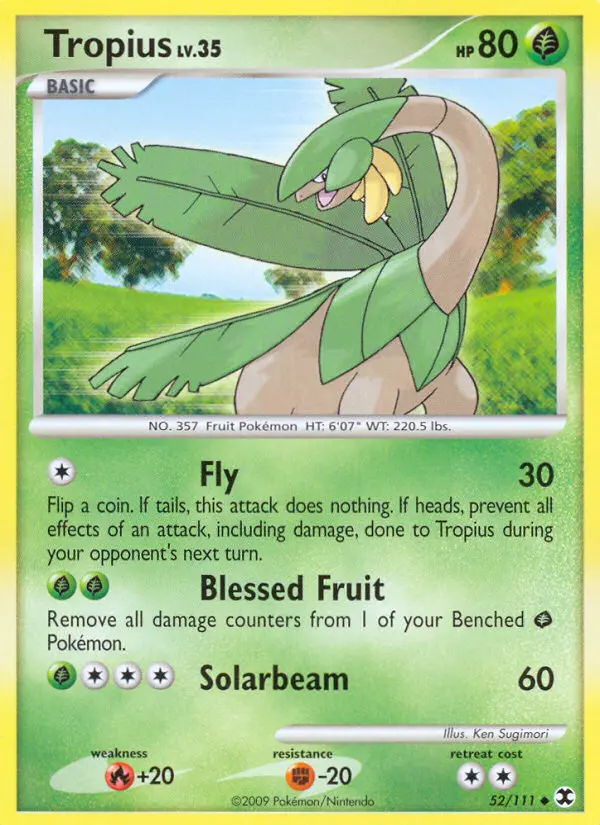
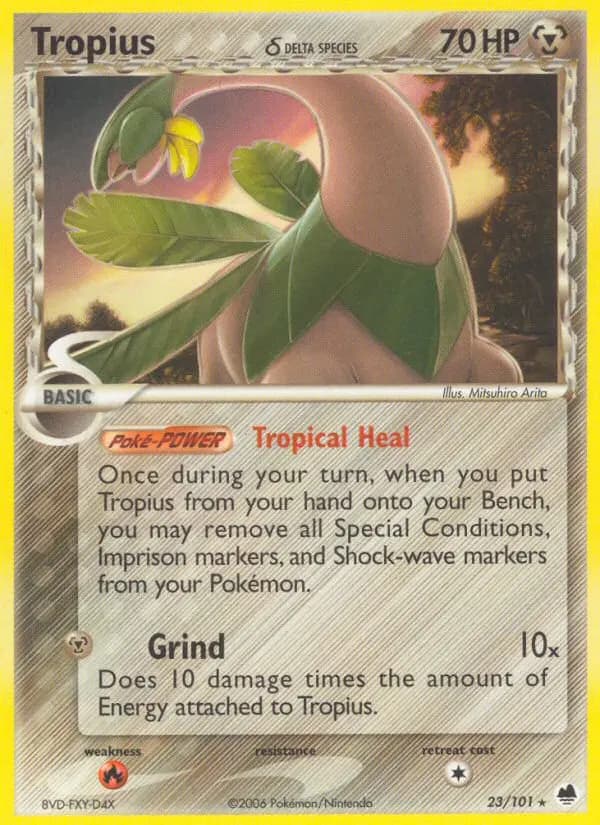
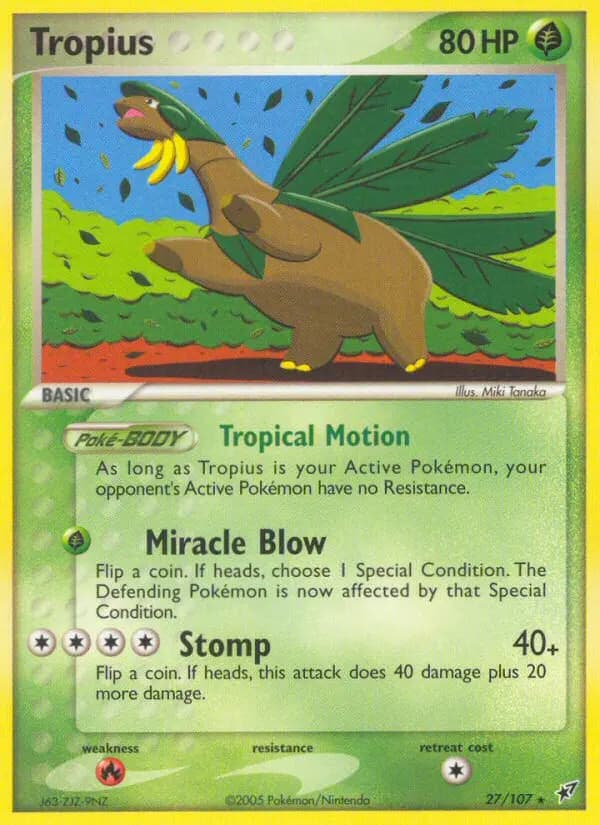
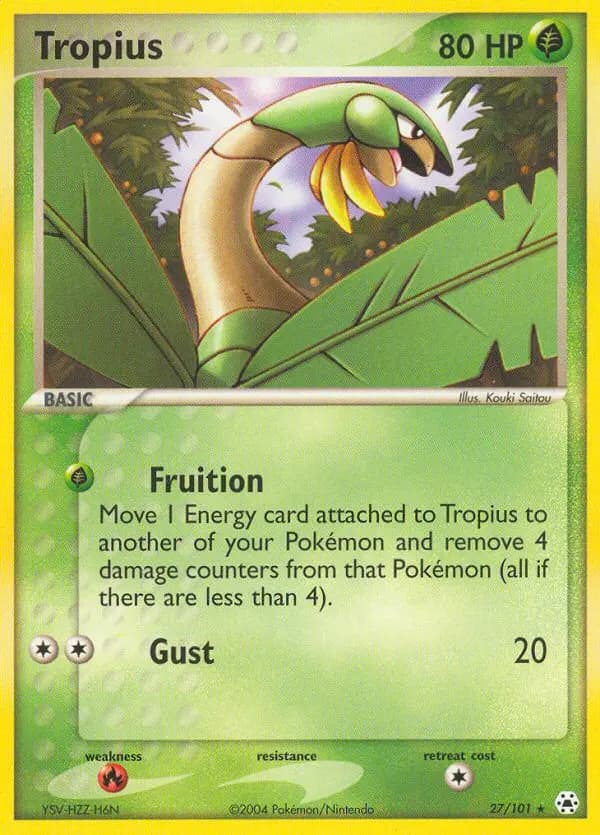
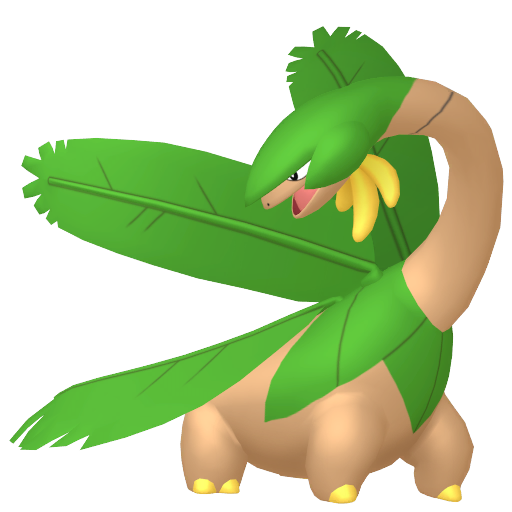
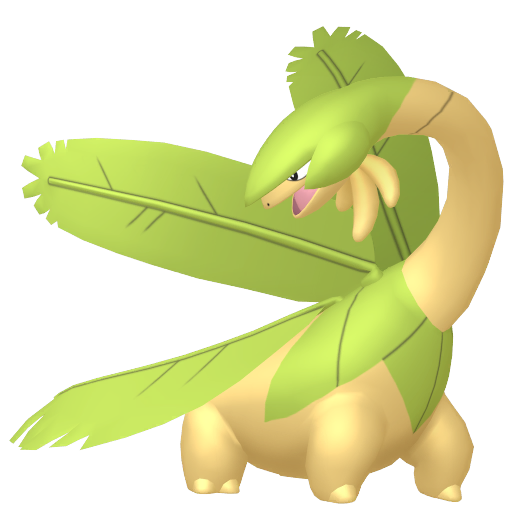
Tropius exhibits a remarkable physiology that blends avian and reptilian characteristics into a unique sauropod-like body plan. Its brown body is wrapped in green leaves concentrated on its chest and head, while two massive broad green leaves extend from its back, functioning both as wings for flight and as organs for photosynthetic sugar production. These leaves allow Tropius to achieve surprising maneuverability in the air despite its considerable bulk, using them to flap with surprising grace. The most distinctive feature is undoubtedly the bunch of yellow, banana-like fruits hanging from its neck in multiple clusters—fruits that ripen twice annually due to the rapid sugar synthesis occurring in its leaves. A thin black line encircles its long neck, which it extends to reach high treetops while foraging. Its feet are equipped with toenails colored identically to its fruit, suggesting a deep biological connection between all aspects of the Pokémon's fruiting system. According to Pokédex research, Tropius developed these neck fruits through continuous consumption of a single fruit type; the constant dietary preference gradually caused the fruit to begin growing directly on the Pokémon's body, creating a self-sustaining food source.
Pokedex Numbers
Training
Breeding
Tropius Breeding, Gender Ratio & Egg Groups
Tropius exhibits a perfectly balanced 50/50 male to female gender ratio, allowing for straightforward breeding in captivity without any complications arising from gender imbalance. The species belongs to both the Monster and Grass egg groups, making it compatible with a wide variety of other Pokémon for breeding purposes and providing trainers with flexibility in creating diverse movesets or training specific offspring. The breeding process for Tropius follows standard Pokémon reproduction protocols, with eggs requiring 25 cycles to hatch—translating to approximately 6,169 to 6,425 steps of travel before the egg produces a newly hatched Tropius. Interestingly, Tropius displays variation in its base friendship value depending on generation: in Generations 3 through 7, newborn Tropius began with a base friendship of 70, though this was adjusted downward to 50 in later generations, reflecting balance changes to breeding mechanics. The relatively high base happiness in earlier generations made Tropius one of the more naturally friendly Pokémon when caught, requiring less effort to bond with trainers compared to species starting with lower friendliness values. For breeders interested in developing multiple Tropius with diverse movepools or natures, the dual egg group classification and balanced gender ratio make the species an excellent candidate for breeding projects, particularly when the Monster egg group affiliation opens breeding options with other large, powerful Pokémon.
Sprites


TMs & HMs
tm01
lets go pikachu lets go eevee
tm02
yellow
tm02
red blue
tm02
crystal
tm02
gold silver
tm02
blue japan
tm02
red green japan
tm03
yellow
tm03
crystal
tm03
gold silver
tm03
red blue
tm03
lets go pikachu lets go eevee
tm04
yellow
tm03
blue japan
tm04
red blue
tm03
red green japan
tm04
red green japan
tm04
blue japan
tm05
ruby sapphire
tm05
emerald
+719 more TMs/HMs
Tropius Evolution, Mega Evolution & Special Forms
Tropius represents a unique case within Pokémon evolutionary biology—it is not known to evolve into or from any other Pokémon species, existing as a standalone evolutionary form that has remained unchanged throughout all generations since its introduction in Generation III. This distinction places Tropius among a select group of Pokémon that achieve their final form at initial capture or hatching, with no branching evolutionary paths or pre-evolution forms to consider. The species cannot Mega Evolve, as no Mega Stone has been discovered or developed that corresponds to Tropius. This lack of evolution options means that trainers capturing Tropius are immediately obtaining the complete final form, ready for immediate competitive use or full team integration. The biological explanation for this evolutionary stasis may relate to Tropius's specialized ecological niche and the highly successful adaptation it represents—the development of self-sustaining fruit production has allowed the species to thrive without requiring further evolutionary refinement. Some researchers theorize that ancient Tropius may have been even more prevalent before the modern era, with fossil evidence suggesting the species existed in ancient times, and its current form represents a stable endpoint of successful adaptation.
Where to Find
Hoenn Route 119
hoenn
+6 more
Great Marsh
sinnoh
+5 more
Unova Route 14
unova
+9 more
Unova Route 18
unova
+1 more
Exeggutor Island
alola
Poke Pelago
alola
Tropius Behaviour and Natural Habitat
Tropius is exclusively found in tropical jungle environments, where it has adapted perfectly to life among the dense canopy and warm climate. The species displays a gentle, herbivorous disposition, spending much of its time consuming fruit continuously throughout the day. In the spring season, Tropius scatters pollen from around its neck, playing an important ecological role in pollinating tropical flora. The sweet, delicious fruit that grows around its neck is highly valued by local human populations in southern tropical regions, where children traditionally eat the fruit as snacks—a practice that has created a symbiotic relationship between Tropius and humans. In warmer areas, particularly in regions like Alola where Tropius fruit is noted for exceptional sweetness compared to other geographic locations, ranches have been established specifically to raise and cultivate Tropius herds. The species is docile enough to coexist peacefully with human settlements, and its calm nature, reflected in its base happiness of 70, makes it relatively straightforward to befriend and train. Despite its large size, Tropius rarely exhibits aggressive behavior and seems content in its role as both a natural fruit producer and a gentle aerial presence in tropical skies.
Pokedex Entries
The bunches of fruit around TROPIUS’s neck are very popular with children. This POKéMON loves fruit, and eats it continuously. Apparently, its love for fruit resulted in its own outgrowth of fruit.
Children of the southern tropics eat as snacks the fruit that grows in bunches around the neck of TROPIUS. This POKéMON flies by flapping the leaves on its back as if they were wings.
It flies by flapping its broad leaves. The bunch of fruit that grows around its neck is deliciously sweet. In the spring, it scatters pollen from its neck.
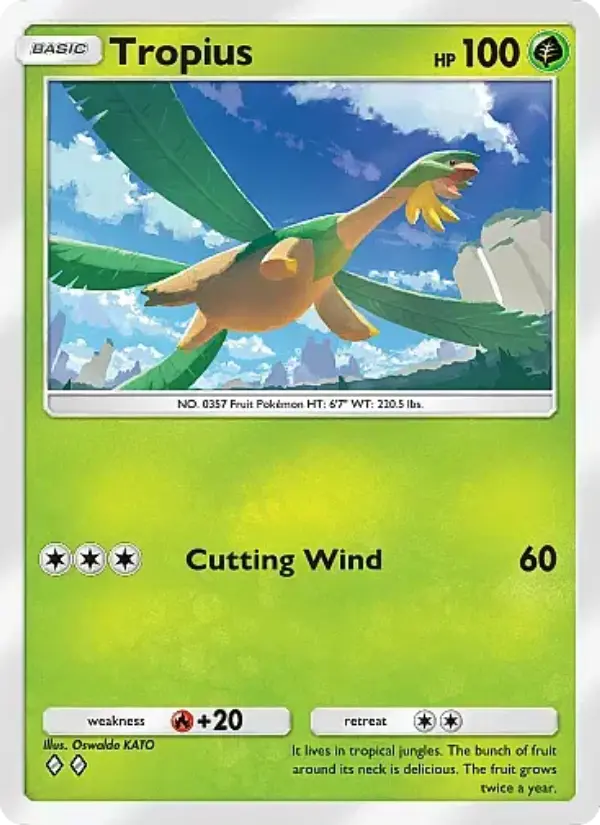
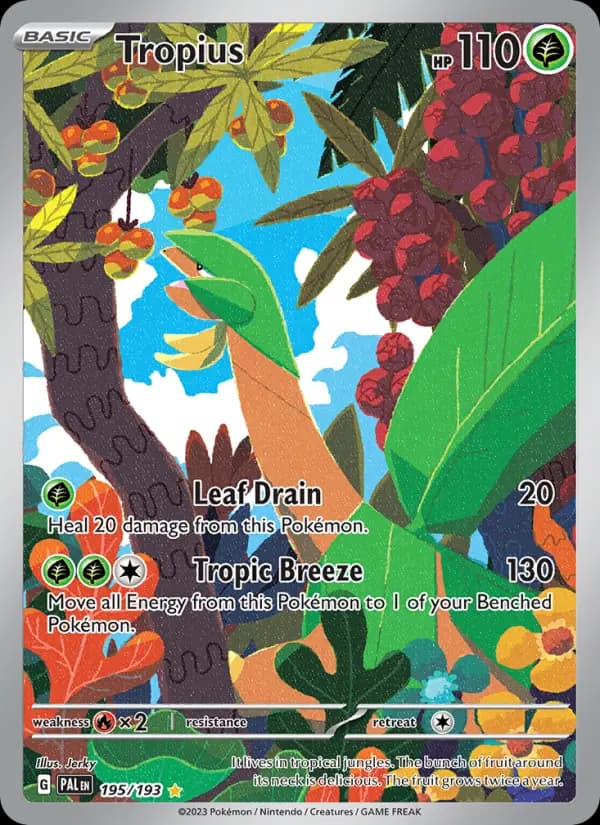
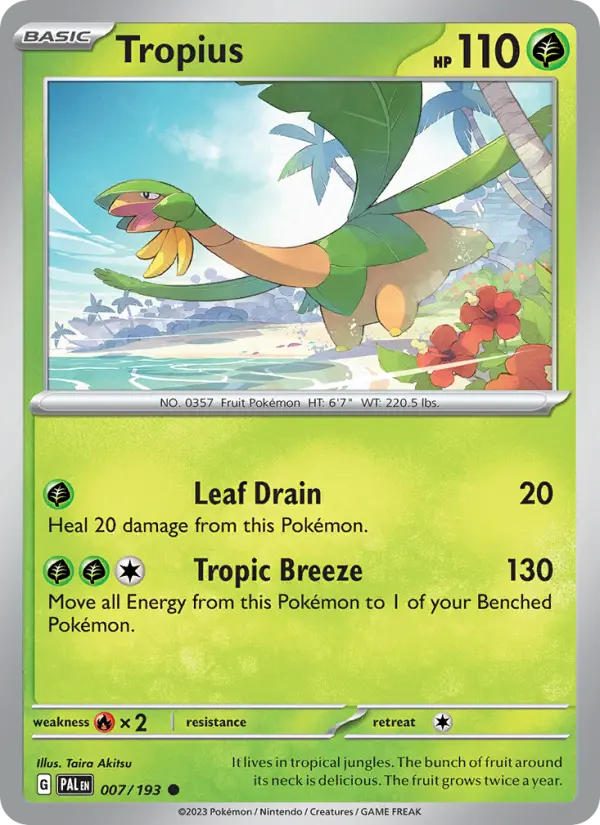
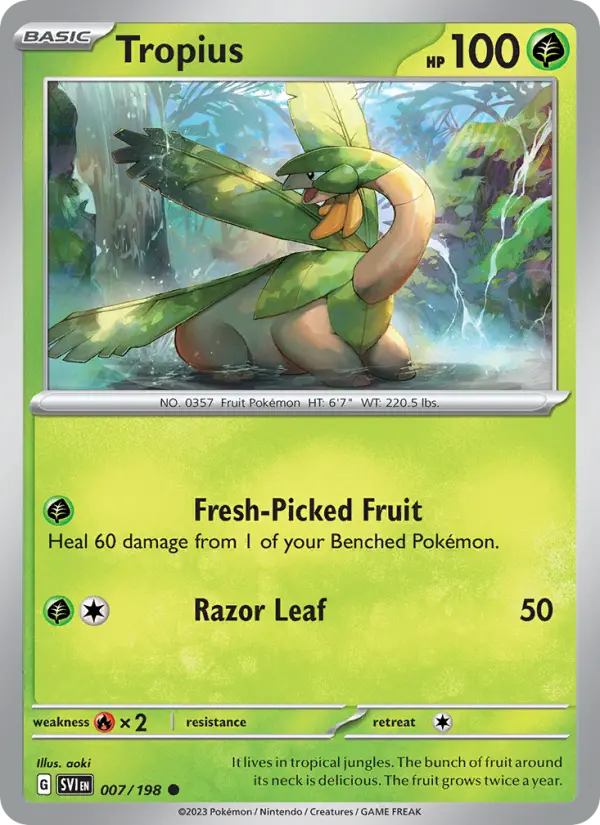
It lives in tropical jungles. The bunch of fruit around its neck is delicious. The fruit grows twice a year.
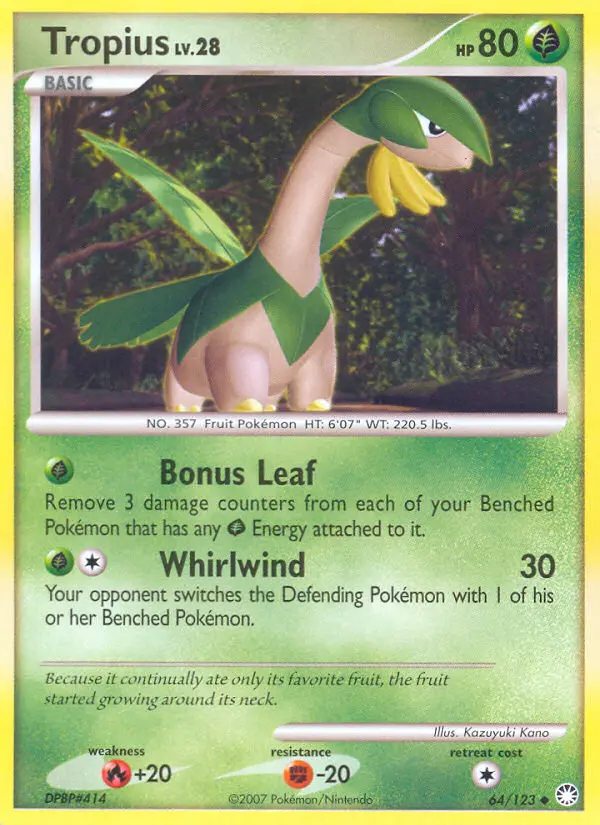
Because it continually ate only its favorite fruit, the fruit started growing around its neck.
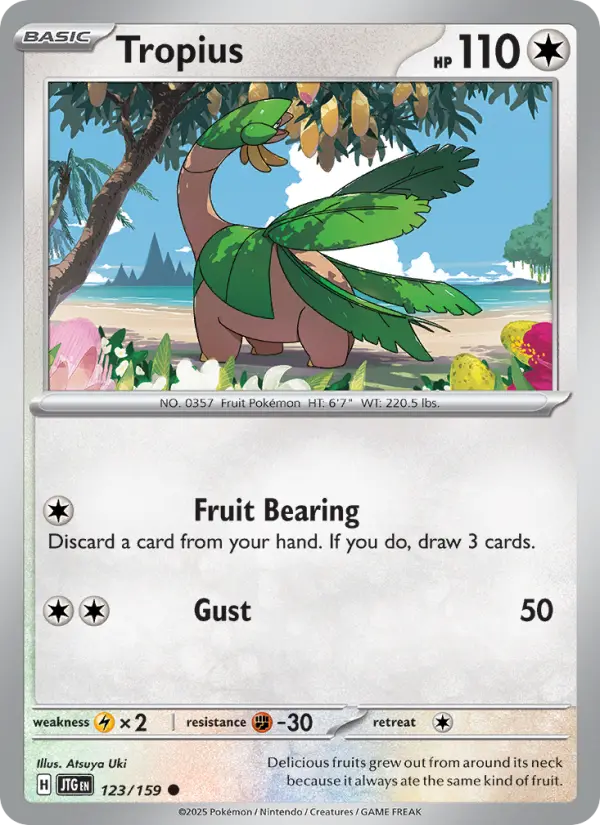
Delicious fruits grew out from around its neck because it always ate the same kind of fruit.
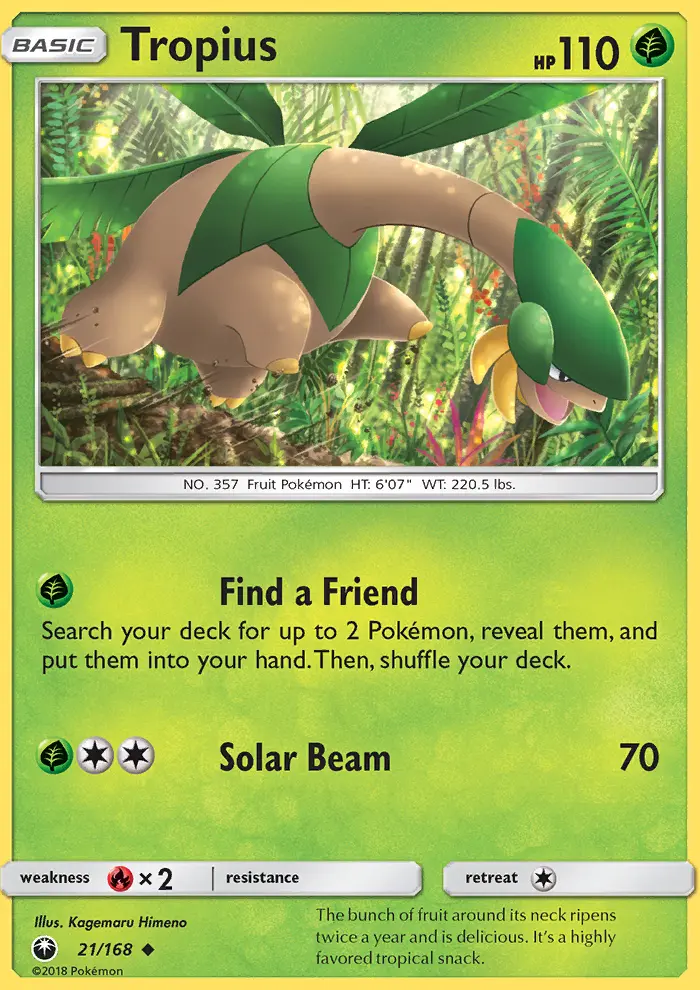
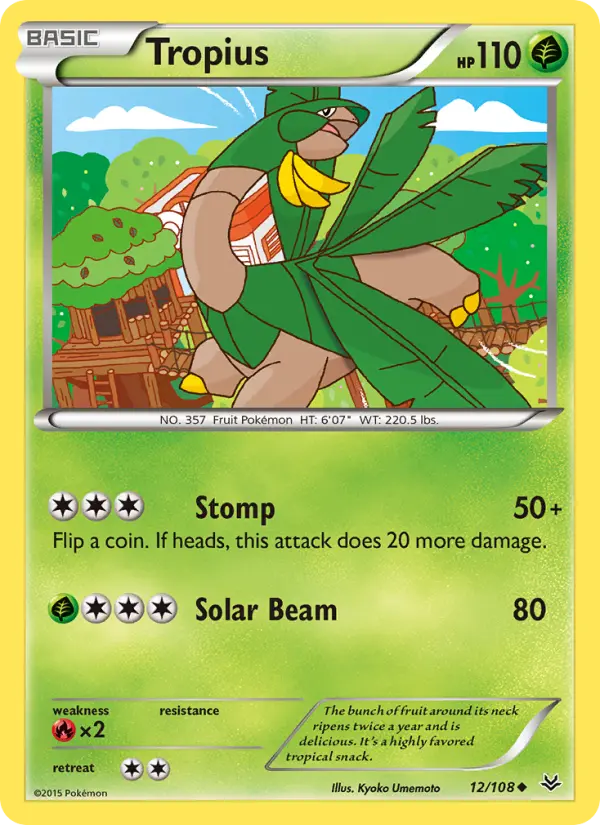
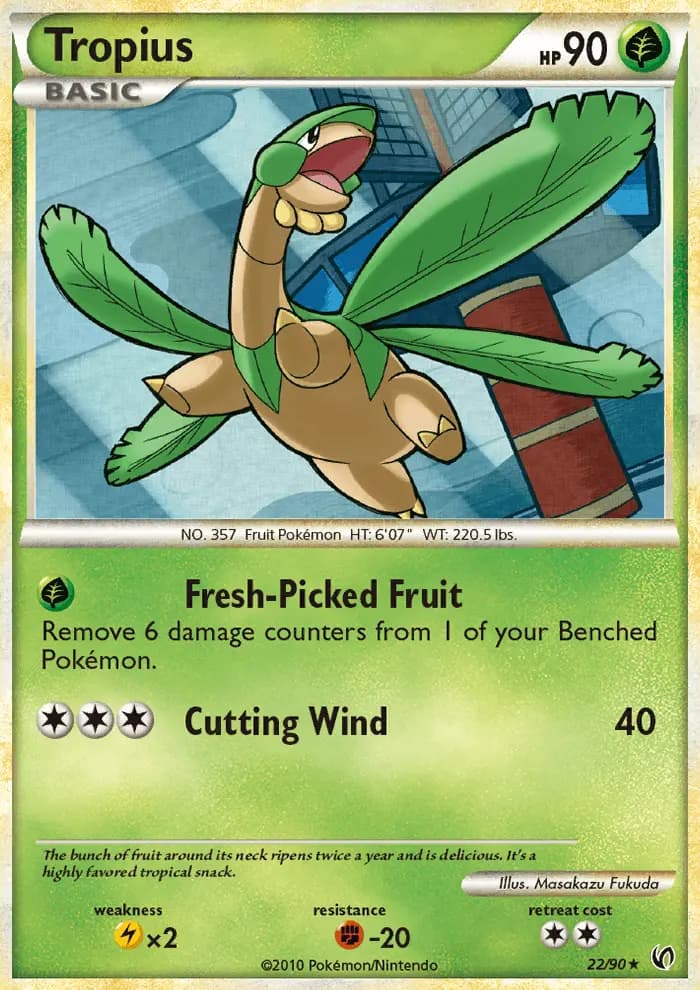
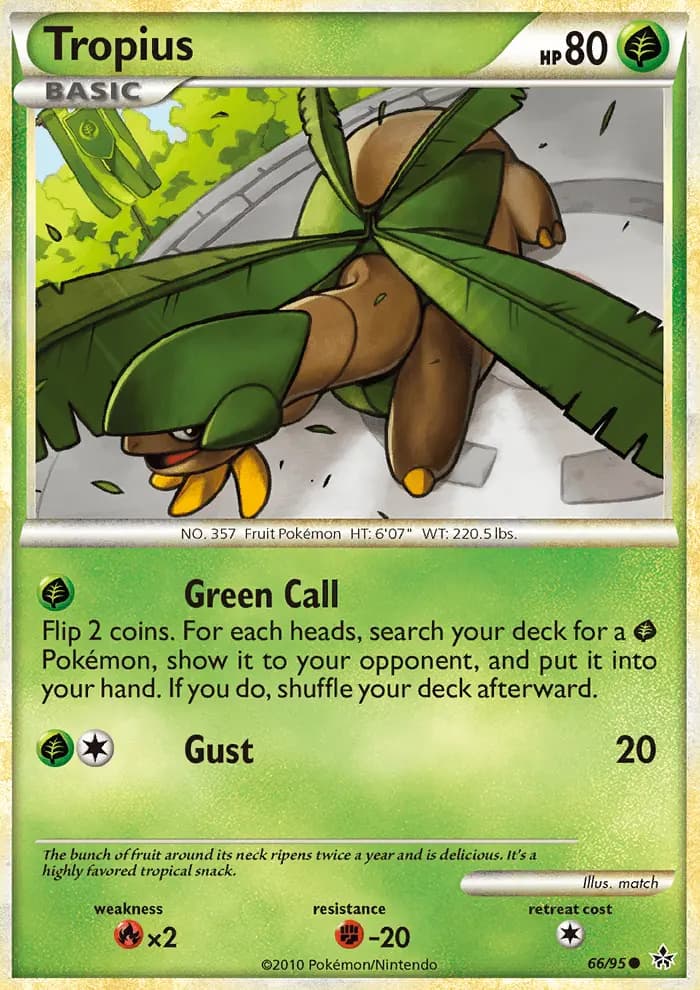
The bunch of fruit around its neck ripens twice a year and is delicious. It’s a highly favored tropical snack.
Delicious fruits grew out from around its neck because it always ate the same kind of fruit.
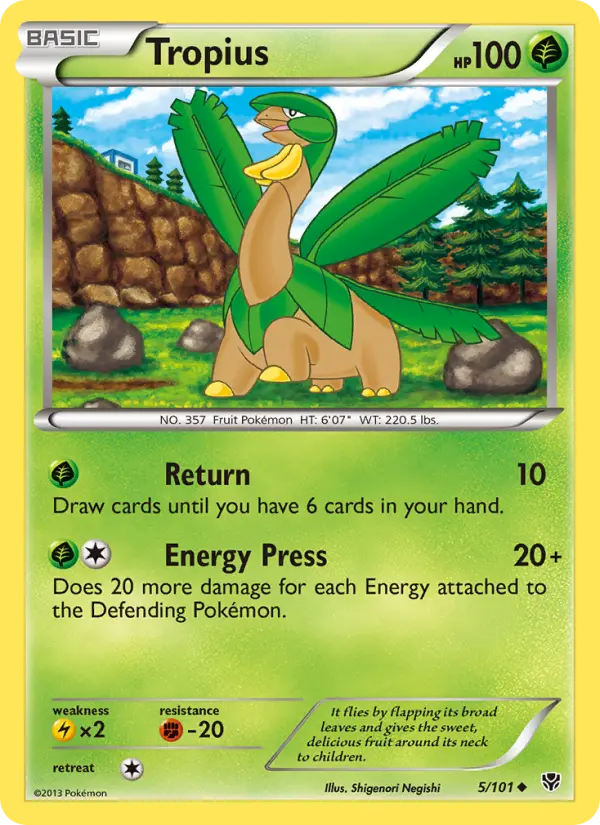
It flies by flapping its broad leaves and gives the sweet, delicious fruit around its neck to children.
It flies by flapping its broad leaves and gives the sweet, delicious fruit around its neck to children.
The bunch of fruit around its neck ripens twice a year and is delicious. It’s a highly favored tropical snack.
The bunches of fruit around Tropius’s neck are very popular with children. This Pokémon loves fruit, and eats it continuously. Apparently, its love for fruit resulted in its own outgrowth of fruit.
Children of the southern tropics eat as snacks the fruit that grows in bunches around the neck of Tropius. This Pokémon flies by flapping the leaves on its back as if they were wings.
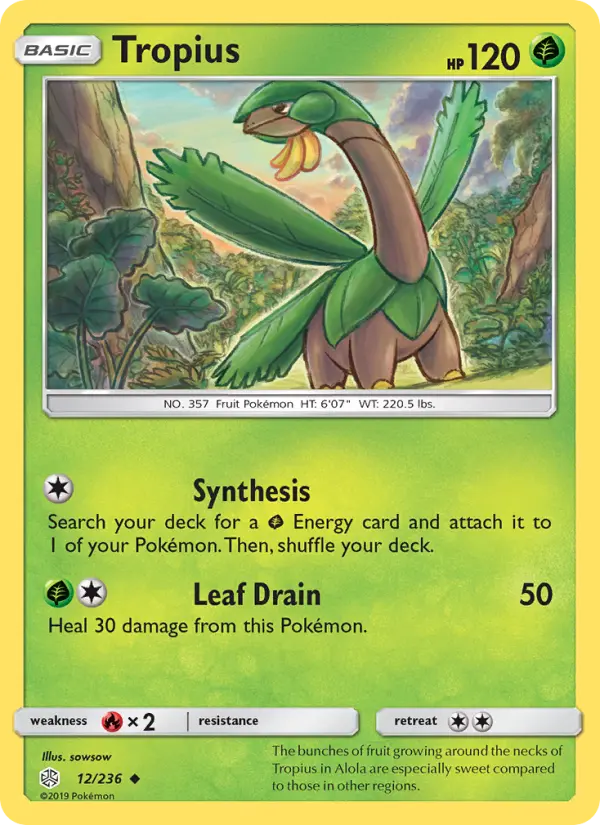
The bunches of fruit growing around the necks of Tropius in Alola are especially sweet compared to those in other regions.
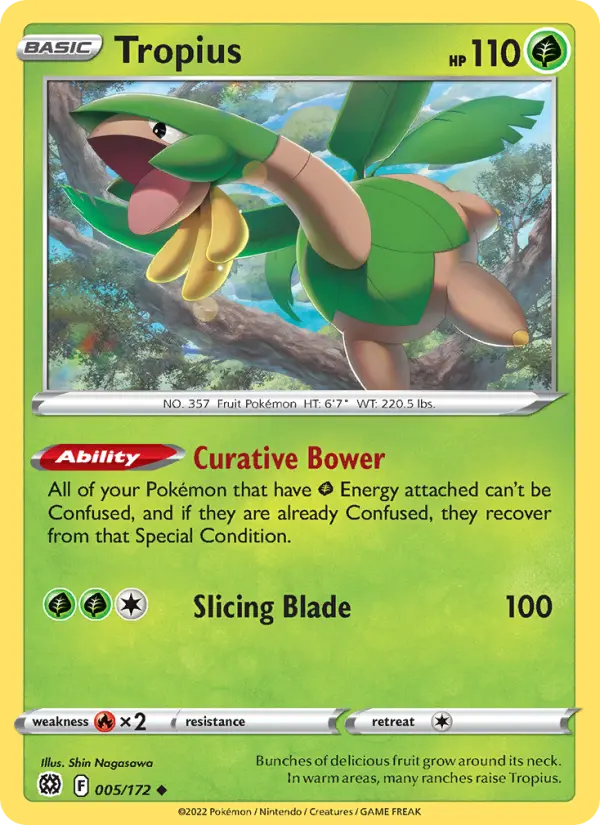
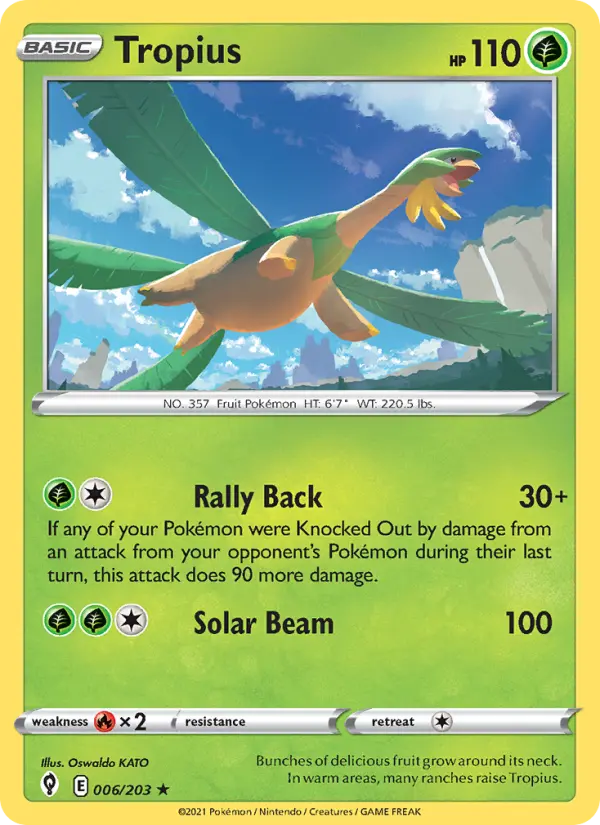
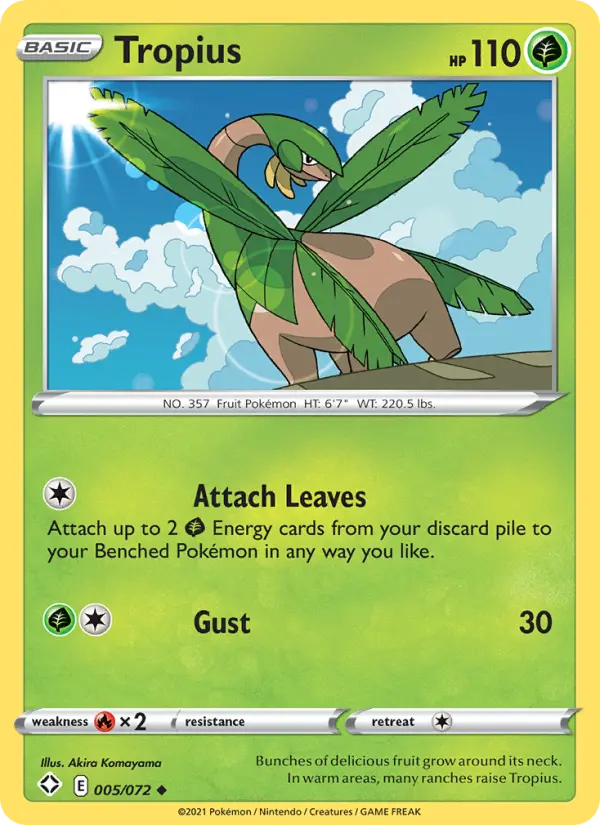
Bunches of delicious fruit grow around its neck. In warm areas, many ranches raise Tropius.
Tropius Name Origin & Design Inspiration
The name 'Tropius' is a straightforward portmanteau combining 'tropics' with '-ius,' a common Latin suffix used for Pokémon species names, directly reflecting the species's tropical jungle habitat and lifestyle. The design itself draws heavy inspiration from sauropod dinosaurs, particularly long-necked herbivorous creatures like Brachiosaurus, reinterpreted through a tropical botanical lens with the addition of flight capability. The green leaves covering its body and prominent on its back serve as visual representations of its grass-type nature while suggesting the photosynthetic capacity required to produce the copious fruit around its neck. The banana-like fruits themselves are instantly recognizable and immediately communicate the species's primary ecological function—living fruit production. The color palette of brown body, green leaves, and yellow fruit creates a harmonious tropical aesthetic that feels organic and naturalistic. The sauropod-like proportions, with their long neck ideal for reaching high vegetation, directly parallel the species's established behavior of reaching treetops to consume fruit. This design philosophy—combining dinosaurian inspiration with botanical and tropical elements—makes Tropius instantly memorable while conveying comprehensive information about its nature, habitat, and function through visual design alone.
Learnable Moves
Tropius can learn 95 moves:
Move | Type | Cat. | Power | Acc. | PP |
|---|---|---|---|---|---|
| aerial ace | flying | Physical | 60 | — | 20 |
| air cutter | flying | Special | 60 | 95 | 25 |
| air slash | flying | Special | 75 | 95 | 15 |
| attract | normal | Status | — | 100 | 15 |
| bestow | normal | Status | — | — | 15 |
| body press | fighting | Physical | 80 | 100 | 10 |
| body slam | normal | Physical | 85 | 100 | 15 |
| brutal swing | dark | Physical | 60 | 100 | 20 |
| bulldoze | ground | Physical | 60 | 100 | 20 |
| bullet seed | grass | Physical | 25 | 100 | 30 |
| captivate | normal | Status | — | 100 | 20 |
| confide | normal | Status | — | — | 20 |
| curse | ghost | Status | — | — | 10 |
| cut | normal | Physical | 50 | 95 | 30 |
| defog | flying | Status | — | — | 15 |
| double team | normal | Status | — | — | 15 |
| double edge | normal | Physical | 120 | 100 | 15 |
| dragon dance | dragon | Status | — | — | 20 |
| dragon hammer | dragon | Physical | 90 | 100 | 15 |
| dragon pulse | dragon | Special | 85 | 100 | 10 |
| dragon tail | dragon | Physical | 60 | 90 | 10 |
| dual wingbeat | flying | Physical | 40 | 90 | 10 |
| earthquake | ground | Physical | 100 | 100 | 10 |
| endure | normal | Status | — | — | 10 |
| energy ball | grass | Special | 90 | 100 | 10 |
| facade | normal | Physical | 70 | 100 | 20 |
| flash | normal | Status | — | 100 | 20 |
| fly | flying | Physical | 90 | 95 | 15 |
| frustration | normal | Physical | — | 100 | 20 |
| fury cutter | bug | Physical | 40 | 95 | 20 |
| giga drain | grass | Special | 75 | 100 | 10 |
| giga impact | normal | Physical | 150 | 90 | 5 |
| grass knot | grass | Special | — | 100 | 20 |
| grassy terrain | grass | Status | — | — | 10 |
| growth | normal | Status | — | — | 20 |
| gust | flying | Special | 40 | 100 | 35 |
| headbutt | normal | Physical | 70 | 100 | 15 |
| helping hand | normal | Status | — | — | 20 |
| hidden power | normal | Special | 60 | 100 | 15 |
| hurricane | flying | Special | 110 | 70 | 10 |
| hyper beam | normal | Special | 150 | 90 | 5 |
| leaf blade | grass | Physical | 90 | 100 | 15 |
| leaf storm | grass | Special | 130 | 90 | 5 |
| leaf tornado | grass | Special | 65 | 90 | 10 |
| leech seed | grass | Status | — | 90 | 10 |
| leer | normal | Status | — | 100 | 30 |
| magical leaf | grass | Special | 60 | — | 20 |
| mimic | normal | Status | — | — | 10 |
| mud slap | ground | Special | 20 | 100 | 10 |
| natural gift | normal | Physical | — | 100 | 15 |
| nature power | normal | Status | — | — | 20 |
| ominous wind | ghost | Special | 60 | 100 | 5 |
| outrage | dragon | Physical | 120 | 100 | 10 |
| petal blizzard | grass | Physical | 90 | 100 | 15 |
| protect | normal | Status | — | — | 10 |
| rain dance | water | Status | — | — | 5 |
| razor leaf | grass | Physical | 55 | 95 | 25 |
| razor wind | normal | Special | 80 | 100 | 10 |
| rest | psychic | Status | — | — | 5 |
| return | normal | Physical | — | 100 | 20 |
| roar | normal | Status | — | — | 20 |
| rock smash | fighting | Physical | 40 | 100 | 15 |
| roost | flying | Status | — | — | 5 |
| round | normal | Special | 60 | 100 | 15 |
| safeguard | normal | Status | — | — | 25 |
| secret power | normal | Physical | 70 | 100 | 20 |
| seed bomb | grass | Physical | 80 | 100 | 15 |
| silver wind | bug | Special | 60 | 100 | 5 |
| slam | normal | Physical | 80 | 75 | 20 |
| sleep talk | normal | Status | — | — | 10 |
| snore | normal | Special | 50 | 100 | 15 |
| solar beam | grass | Special | 120 | 100 | 10 |
| solar blade | grass | Physical | 125 | 100 | 10 |
| spite | ghost | Status | — | 100 | 10 |
| steel wing | steel | Physical | 70 | 90 | 25 |
| stomp | normal | Physical | 65 | 100 | 20 |
| stomping tantrum | ground | Physical | 75 | 100 | 10 |
| strength | normal | Physical | 80 | 100 | 15 |
| substitute | normal | Status | — | — | 10 |
| sunny day | fire | Status | — | — | 5 |
| swagger | normal | Status | — | 85 | 15 |
| sweet scent | normal | Status | — | 100 | 20 |
| swords dance | normal | Status | — | — | 20 |
| synthesis | grass | Status | — | — | 5 |
| tailwind | flying | Status | — | — | 15 |
| take down | normal | Physical | 90 | 85 | 20 |
| tera blast | normal | Special | 80 | 100 | 10 |
| toxic | poison | Status | — | 90 | 10 |
| trailblaze | grass | Physical | 50 | 100 | 20 |
| twister | dragon | Special | 40 | 100 | 20 |
| u turn | bug | Physical | 70 | 100 | 20 |
| whirlwind | normal | Status | — | — | 20 |
| wide guard | rock | Status | — | — | 10 |
| worry seed | grass | Status | — | 100 | 10 |
| zen headbutt | psychic | Physical | 80 | 90 | 15 |
Tropius Competitive Battle Guide
Assessing its battle viability, Tropius occupies a niche role as a bulky grass-type special attacker with surprising utility options. With base HP of 99 and special defense of 87, Tropius can comfortably absorb special attacks, making it viable in defensive-oriented teams, though its middling special attack stat of 72 limits damage output compared to dedicated special attackers. The choice of ability dramatically affects competitive viability: Chlorophyll doubles speed during strong sunlight, transforming Tropius from a frustratingly slow Pokémon (base speed of only 51) into a moderately fast striker during weather-dependent strategies. Solar Power provides an appealing alternative for sun teams, increasing special attack to 1.5× multiplier at the cost of 12.5% health drain per turn, creating an aggressive hit-and-switch playstyle. The hidden ability Harvest offers defensive utility, granting a 50% chance to recover consumed berries each turn, enabling strategies built around berry-based recovery and status management. Tropius's access to useful moves like Solar Beam, Leech Seed, Synthesis, and various coverage options provides reasonable strategic flexibility, though competition from superior grass-types like Venusaur and Tapu Bulu generally relegates it to lower competitive tiers. In casual play and lower-tier competitive formats, Tropius remains a respectable option for trainers seeking a bulky grass specialist with unique typing and ability-dependent strategies.
Commonly Asked Questions About Tropius
What type is Tropius?
Tropius is a grass and flying type Pokemon.
What does Tropius evolve from?
Tropius does not evolve.
What are Tropius's weaknesses?
Tropius is weak to flying, poison, rock, fire and ice type moves.
Where can I find Tropius?
Tropius can be found in hoenn route 119 (hoenn), great marsh (sinnoh) and unova route 14 (unova) and 3 other locations.
Tropius Cultural Impact & Franchise History
Tropius holds considerable cultural significance within Pokémon lore, particularly in tropical regions where the species appears prominently in human society and regional traditions. The sweet fruit that grows around Tropius's neck has become iconic as a regional delicacy, with children throughout southern tropical regions consuming the fruit as traditional snacks, creating a cultural bond between humans and the species. This practical relationship distinguishes Tropius from many Pokémon that exist primarily in battle or as companions, instead positioning it as a livestock-like species integrated into regional food production and agricultural practices. In Alola specifically, Tropius fruit gained particular renown for its exceptional sweetness, elevating the species to regional prominence and making it a symbol of Alolans' connection to natural resources and tropical abundance. The Pokédex entries across multiple generations consistently emphasize the fruit's popularity and culinary value, suggesting that Tropius represents a successful example of human-Pokémon coexistence built on mutual benefit rather than battle capacity. In Pokémon media appearances, Tropius has been portrayed as a gentle, reasonable species worthy of respect and admiration, often appearing in contexts emphasizing harmony with nature. The species embodies tropical paradise imagery throughout Pokémon media, becoming synonymous with relaxation, natural bounty, and the serene beauty of jungle environments.
Where to Find Tropius in Every Pokémon Game
Tropius availability varies significantly across different Pokémon games and regions, reflecting its role as a region-specific tropical Pokémon. The species first became available in Generation III's Pokémon Ruby, Sapphire, and Emerald, where it appeared in the Hoenn Pokédex as entry #150 and could be encountered in tropical areas. In subsequent games, Tropius received varying local Pokédex numbers: #185 in Pokémon Platinum, #288 in Black 2 and White 2, #156 in Omega Ruby and Alpha Sapphire, #354 in Ultra Sun and Ultra Moon (Alola Pokédex), and #246 in Pokémon Scarlet and Violet. The species has been omitted from several generations' regional Pokédexes but remains consistently available across most modern games through various methods. Tropius can typically be found in tropical jungle routes, tall grass encounters, or through transfer from previous generation games via mechanics like the Poké Transfer Lab or Pokémon Home. The capture rate of 200 classifies Tropius as relatively easy to catch compared to legendaries and many rarer species, making it accessible to trainers with standard Poké Balls once encountered. In Pokémon GO, Tropius has appeared as a region-locked Pokémon available primarily in tropical latitude zones, creating a special challenge for international collectors seeking to complete their regional Pokédexes. The consistent availability across multiple generations, combined with its trainable nature and reasonable capture difficulty, makes Tropius accessible to most players willing to explore tropical game routes or utilize transfer mechanics.