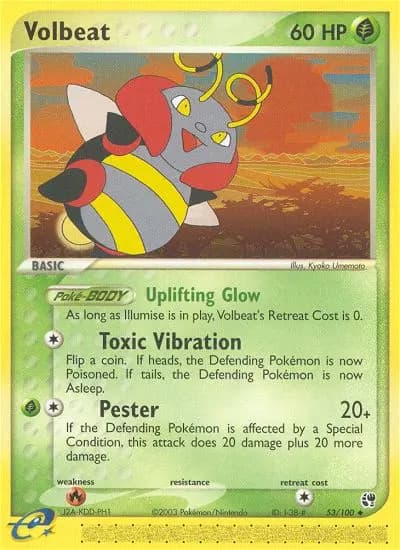
Volbeat
Generation III · #0313 — Firefly Pokémon
Volbeat's profile is easy to undersell: 0.7 m, 17.7 kg, and a bug typing that doesn't scream power — until you look at its Special Defense of 85. Standing at just 0.7 meters tall and weighing 17.7 kilograms, this diminutive creature possesses a cumulative stat total of 430, with particularly notable investments in Special Defense and Speed, both sitting at 85, making it a surprisingly nimble and resilient fighter for its size. Volbeat's significance in the Pokémon world extends beyond its individual capabilities, as it shares a fascinating relationship with Illumise, its female counterpart, creating one of the franchise's most intriguing gender-based species pairings that interact through mutual attraction and collaborative breeding mechanics.
Editor's Take
Volbeat and Illumise are gender counterparts that cannot breed with each other into a predictable outcome, and Prankster plus Tail Glow passing is the only strategy either ever had.
Base Stats
Height
0.7m
Weight
17.7kg
Category
Firefly Pokémon
Gender
100% Male
Color
gray
Shape
upright
Habitat
forest
Abilities
Doubles the wild encounter rate.
Strengthens bug moves to inflict 1.5× damage at 1/3 max HP or less.
Raises non-damaging moves' priority by one stage.

Volbeat Biology & Physical Characteristics
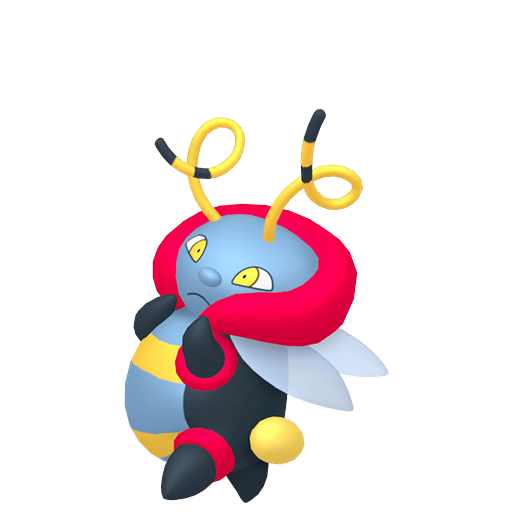
Volbeat is a distinctive firefly-like Pokémon with a bipedal stance and striking coloration that immediately evokes its real-world inspiration. Its body features a predominantly black frame contrasted by a luminous blue chest and abdomen, adorned with two prominent yellow stripes—one across its chest and another near its legs—that emphasize its segmented insectoid structure. A thick red band wraps incompletely around its shoulders, with thinner red bands separating each limb from its central body, creating a segmented appearance that reflects insect anatomy. Two delicate wings extend from the shoulder band, enabling the creature's airborne navigation essential to its nocturnal lifestyle. The most remarkable feature is its spherical, glowing yellow tail, which serves as both a bioluminescent organ and a sophisticated communication device. Volbeat possesses a blue face with striking yellow eyes and distinctive curly antennae with black striping, lending it an intelligent and almost anthropomorphic expression. In Generation III, Tail Glow was this species' exclusive signature move, emphasizing the primacy of its luminescent appendage in its biology and behavior.
Pokedex Numbers
Training
Breeding
Volbeat Breeding, Gender Ratio & Egg Groups
Volbeat exists as an exclusively male species, with a gender ratio of 100% male and 0% female, making it one of the most rigidly sex-determined Pokémon in the entire National Pokédex. This genetic constraint is intrinsically linked to its counterpart Illumise, which exists as an exclusively female species, creating a binary reproductive system unique within Pokémon biology. When breeding Volbeat with Ditto, the offspring produced can be either Volbeat or Illumise, allowing for controlled reproduction of both sexes despite individual Volbeat being universally male. This mechanic reflects the intense sexual dimorphism observed in many real-world firefly species, where males and females exhibit dramatically different morphologies and behaviors. Volbeat belongs to two Egg Groups: the Bug Group and the Human-Like Group, the latter assignment reflecting its bipedal stance and intelligent, communicative nature despite its insectoid classification. The species has a base happiness value of 70 in most generations (though some sources cite 50), indicating a moderate capacity for bonding with trainers. With a Hatch Counter of 15 egg cycles, Volbeat requires approximately 3,599 to 3,855 steps to hatch from its egg—a moderately swift incubation period that reflects its relatively small size and rapid life cycle compared to larger Pokémon species.
Sprites




Held Items
Bright Powder
held-items
Held: Increases the holder’s evasion by 1/9 (11 1/9%).
Cost: 4000
Bright Powder
held-items
Held: Increases the holder’s evasion by 1/9 (11 1/9%).
Cost: 4000
Bright Powder
held-items
Held: Increases the holder’s evasion by 1/9 (11 1/9%).
Cost: 4000
Bright Powder
held-items
Held: Increases the holder’s evasion by 1/9 (11 1/9%).
Cost: 4000
Bright Powder
held-items
Held: Increases the holder’s evasion by 1/9 (11 1/9%).
Cost: 4000
Bright Powder
held-items
Held: Increases the holder’s evasion by 1/9 (11 1/9%).
Cost: 4000
TMs & HMs
tm00
sword shield
tm01
yellow
tm01
gold silver
tm01
crystal
tm01
red blue
tm01
platinum
tm01
emerald
tm01
diamond pearl
tm01
firered leafgreen
tm01
ruby sapphire
tm01
xd
tm01
colosseum
tm01
heartgold soulsilver
tm01
blue japan
tm01
red green japan
tm01
sword shield
tm02
lets go pikachu lets go eevee
tm03
ruby sapphire
tm03
platinum
tm03
firered leafgreen
+715 more TMs/HMs
Volbeat Evolution, Mega Evolution & Special Forms
Volbeat represents a unique position within the evolutionary hierarchy of Pokémon, as it is not known to evolve from any prior species nor does it evolve into any subsequent form, making it a complete, standalone species. However, its relationship with Illumise, while not constituting a traditional evolution chain, creates a fascinating gender-based dichotomy that has no direct parallel elsewhere in the Pokédex. Prior to Generation V, Volbeat was considered completely isolated evolutionarily, but the introduction of breeding mechanics that allow Volbeat and Ditto to produce eggs containing either Volbeat or Illumise offspring established a more nuanced understanding of their relationship. This represents a departure from typical Pokémon biology, where a single species would exist in multiple gendered variants without reproductive separation. The inability to evolve does not diminish Volbeat's viability as a completed form; rather, it speaks to the evolutionary perfection the species achieved in adapting to its nocturnal, aquatic-adjacent ecological niche. Volbeat does not possess a Mega Evolution form, remaining unchanged across all generations since its introduction in Generation III.
Where to Find
Hoenn Route 117
hoenn
+3 more
Sinnoh Route 229
sinnoh
Kalos Route 7
kalos
+3 more
Volbeat Behaviour and Natural Habitat
Volbeat exhibits highly social and communicative behavior centered around its remarkable ability to generate and modulate light from its tail. According to multiple Pokédex entries, it communicates with other Volbeat by adjusting both the intensity and flashing patterns of its light, creating an elaborate non-verbal language unique among Pokémon species. During nighttime hours, Volbeat congregates in swarms where individuals work in concert, using their illuminated tails to draw intricate geometric shapes and designs across the night sky—a phenomenon that serves both aesthetic and communicative purposes within their colonies. The species exhibits a strong ecological preference for clean, freshwater environments, inhabiting areas around ponds and wetlands where water quality remains pristine. Volbeat demonstrates remarkable environmental awareness, as documented in the Emerald Pokédex entry, which notes that populations will relocate their nests if the water quality of their pond deteriorates, indicating sophisticated ecological sensitivity. Perhaps most notably, Volbeat exhibits a pronounced attraction to Illumise, the female firefly Pokémon, being drawn to the sweet aromatic compounds that Illumise naturally emits—a biological imperative that drives much of its behavioral ecology and reproductive cycle.
Pokedex Entries
With the arrival of night, VOLBEAT emits light from its tail. It communicates with others by adjusting the intensity and flashing of its light. This POKéMON is attracted by the sweet aroma of ILLUMISE.
VOLBEAT’s tail glows like a lightbulb. With other VOLBEAT, it uses its tail to draw geometric shapes in the night sky. This POKéMON loves the sweet aroma given off by ILLUMISE.
With their taillights lit, VOLBEAT fly in a swarm, drawing geometric designs in the night sky. They move their nests if their pond water becomes dirty.
It lives around clean ponds. At night, its rear lights up. It converses with others by flashing its light.
It communicates with others by lighting up its rear at night. It loves ILLUMISE’s sweet aroma.
It emits light from its tail to communicate. It loves the sweet aroma given off by ILLUMISE.
It communicates with others by lighting up its rear at night. It loves Illumise’s sweet aroma.
It communicates with others by lighting up its rear at night. It loves Illumise’s sweet aroma.
It communicates with others by lighting up its rear at night. It loves Illumise’s sweet aroma.
It lives around clean ponds. At night, its rear lights up. It converses with others by flashing its light.
With the arrival of night, Volbeat emits light from its tail. It communicates with others by adjusting the intensity and flashing of its light. This Pokémon is attracted by the sweet aroma of Illumise.
Volbeat’s tail glows like a lightbulb. With other Volbeat, it uses its tail to draw geometric shapes in the night sky. This Pokémon loves the sweet aroma given off by Illumise.
Volbeat Name Origin & Design Inspiration
Volbeat's name comes from a logical combination of 'volt' and 'beat,' referencing both the electrical nature of bioluminescence and the rhythmic, pulsing quality of firefly light communication. The Japanese name, Barubeat (バルビート), follows a similar etymological pattern, suggesting the 'beat' or rhythm of flashing light that defines the species' communicative behavior. Volbeat's design philosophy explicitly draws inspiration from real-world fireflies and lightning bugs (Lampyridae family), translating their natural bioluminescent abilities into a fantastical Pokémon context while maintaining recognizable anatomical features. The geometric patterns that Volbeat draws in the night sky reference actual firefly swarming behaviors, where colonies of fireflies create mesmerizing light displays that serve reproductive and social functions. The color palette—predominantly black with vibrant blue and yellow accents—mirrors the stark contrast between the night sky and bioluminescent light, making Volbeat visually distinctive while remaining thematically coherent. The spherical, prominent yellow tail is an exaggeration and concentration of the actual abdominal light organ found in real fireflies, transforming a subtle biological feature into the species' defining characteristic. The bipedal posture, while diverging from actual insect locomotion, grants Volbeat a more anthropomorphic quality that aligns with its intelligent, communicative nature and its classification within the Human-Like Egg Group.
Learnable Moves
Volbeat can learn 90 moves:
Move | Type | Cat. | Power | Acc. | PP |
|---|---|---|---|---|---|
| acrobatics | flying | Physical | 55 | 100 | 15 |
| aerial ace | flying | Physical | 60 | — | 20 |
| air cutter | flying | Special | 60 | 95 | 25 |
| air slash | flying | Special | 75 | 95 | 15 |
| attract | normal | Status | — | 100 | 15 |
| baton pass | normal | Status | — | — | 40 |
| body slam | normal | Physical | 85 | 100 | 15 |
| brick break | fighting | Physical | 75 | 100 | 15 |
| bug bite | bug | Physical | 60 | 100 | 20 |
| bug buzz | bug | Special | 90 | 100 | 10 |
| captivate | normal | Status | — | 100 | 20 |
| charge beam | electric | Special | 50 | 90 | 10 |
| chilling water | water | Special | 50 | 100 | 20 |
| confide | normal | Status | — | — | 20 |
| confuse ray | ghost | Status | — | 100 | 10 |
| counter | fighting | Physical | — | 100 | 20 |
| dazzling gleam | fairy | Special | 80 | 100 | 10 |
| defog | flying | Status | — | — | 15 |
| dizzy punch | normal | Physical | 70 | 100 | 10 |
| double team | normal | Status | — | — | 15 |
| double edge | normal | Physical | 120 | 100 | 15 |
| dynamic punch | fighting | Physical | 100 | 50 | 5 |
| encore | normal | Status | — | 100 | 5 |
| endeavor | normal | Physical | — | 100 | 5 |
| endure | normal | Status | — | — | 10 |
| facade | normal | Physical | 70 | 100 | 20 |
| flash | normal | Status | — | 100 | 20 |
| fling | dark | Physical | — | 100 | 10 |
| focus punch | fighting | Physical | 150 | 100 | 20 |
| frustration | normal | Physical | — | 100 | 20 |
| giga drain | grass | Special | 75 | 100 | 10 |
| helping hand | normal | Status | — | — | 20 |
| hidden power | normal | Special | 60 | 100 | 15 |
| ice punch | ice | Physical | 75 | 100 | 15 |
| infestation | bug | Special | 20 | 100 | 20 |
| light screen | psychic | Status | — | — | 30 |
| lunge | bug | Physical | 80 | 100 | 15 |
| mega kick | normal | Physical | 120 | 75 | 5 |
| mega punch | normal | Physical | 80 | 85 | 20 |
| metronome | normal | Status | — | — | 10 |
| mimic | normal | Status | — | — | 10 |
| moonlight | fairy | Status | — | — | 5 |
| mud slap | ground | Special | 20 | 100 | 10 |
| natural gift | normal | Physical | — | 100 | 15 |
| ominous wind | ghost | Special | 60 | 100 | 5 |
| play nice | normal | Status | — | — | 20 |
| play rough | fairy | Physical | 90 | 90 | 10 |
| pounce | bug | Physical | 50 | 100 | 20 |
| power up punch | fighting | Physical | 40 | 100 | 20 |
| protect | normal | Status | — | — | 10 |
| psych up | normal | Status | — | — | 10 |
| quick attack | normal | Physical | 40 | 100 | 30 |
| rain dance | water | Status | — | — | 5 |
| rest | psychic | Status | — | — | 5 |
| return | normal | Physical | — | 100 | 20 |
| roost | flying | Status | — | — | 5 |
| round | normal | Special | 60 | 100 | 15 |
| secret power | normal | Physical | 70 | 100 | 20 |
| seismic toss | fighting | Physical | — | 100 | 20 |
| shadow ball | ghost | Special | 80 | 100 | 15 |
| shock wave | electric | Special | 60 | — | 20 |
| signal beam | bug | Special | 75 | 100 | 15 |
| silver wind | bug | Special | 60 | 100 | 5 |
| skitter smack | bug | Physical | 70 | 90 | 10 |
| sleep talk | normal | Status | — | — | 10 |
| snore | normal | Special | 50 | 100 | 15 |
| solar beam | grass | Special | 120 | 100 | 10 |
| string shot | bug | Status | — | 95 | 40 |
| struggle bug | bug | Special | 50 | 100 | 20 |
| substitute | normal | Status | — | — | 10 |
| sunny day | fire | Status | — | — | 5 |
| swagger | normal | Status | — | 85 | 15 |
| swift | normal | Special | 60 | — | 20 |
| tackle | normal | Physical | 40 | 100 | 35 |
| tail glow | bug | Status | — | — | 20 |
| tailwind | flying | Status | — | — | 15 |
| take down | normal | Physical | 90 | 85 | 20 |
| taunt | dark | Status | — | 100 | 20 |
| tera blast | normal | Special | 80 | 100 | 10 |
| thief | dark | Physical | 60 | 100 | 25 |
| thunder | electric | Special | 110 | 70 | 10 |
| thunder punch | electric | Physical | 75 | 100 | 15 |
| thunder wave | electric | Status | — | 90 | 20 |
| thunderbolt | electric | Special | 90 | 100 | 15 |
| toxic | poison | Status | — | 90 | 10 |
| trailblaze | grass | Physical | 50 | 100 | 20 |
| trick | psychic | Status | — | 100 | 10 |
| u turn | bug | Physical | 70 | 100 | 20 |
| water pulse | water | Special | 60 | 100 | 20 |
| zen headbutt | psychic | Physical | 80 | 90 | 15 |
Volbeat Competitive Battle Guide
In terms of competitive use, Volbeat occupies a specialized niche as a support-oriented Bug-type with unusual stat distribution and movepool diversity that belies its modest cumulative stat total of 430. Its base Special Defense of 85 and Speed of 85 provide useful defensive and speed benchmarks, while a moderate Attack of 73 and Defense of 75 offer respectable bulk for an insect-type, though its Special Attack of 47 remains notably limited. Volbeat's most valuable competitive asset lies in its hidden ability, Prankster, which grants priority to all non-damaging moves—a game-changing mechanic that allows it to set up screens, screens, or other utility moves before faster opponents can act. This ability transforms Volbeat from a marginal attacker into a formidable support Pokémon capable of establishing favorable conditions for its team. Its standard abilities, Illuminate and Swarm, offer different strategic advantages; Illuminate increases wild encounter rates and can be leveraged in specific formats, while Swarm boosts Bug-type move power to 1.5× effectiveness when Volbeat's HP falls to one-third or lower, enabling potential sweeping scenarios in dire circumstances. Volbeat's movepool includes access to critical utility moves such as Reflect, Light Screen, Thunder Wave, and Encore, making it a valuable contributor to double or triple battle formats where team support proves essential. While Volbeat rarely functions as a primary offensive threat due to its limited special attack stat and modest physical attack, its role as a speed-control and defensive-setup specialist grants it legitimate competitive viability in lower tiers and niche metagames where its specific tools prove essential.
Commonly Asked Questions About Volbeat
What type is Volbeat?
Volbeat is a bug type Pokemon.
What does Volbeat evolve from?
Volbeat does not evolve.
What are Volbeat's weaknesses?
Volbeat is weak to flying, rock and fire type moves.
Where can I find Volbeat?
Volbeat can be found in hoenn route 117 (hoenn), sinnoh route 229 (sinnoh) and kalos route 7 (kalos).
Volbeat Cultural Impact & Franchise History
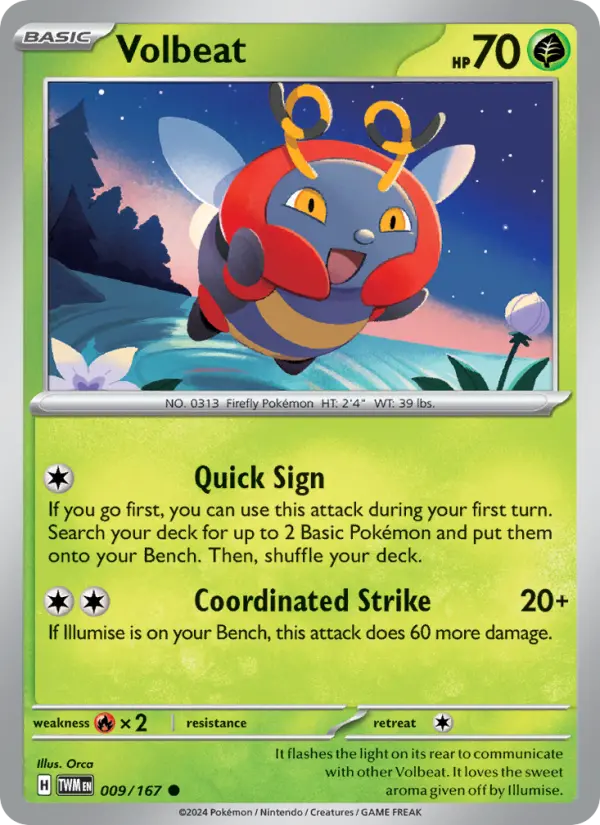
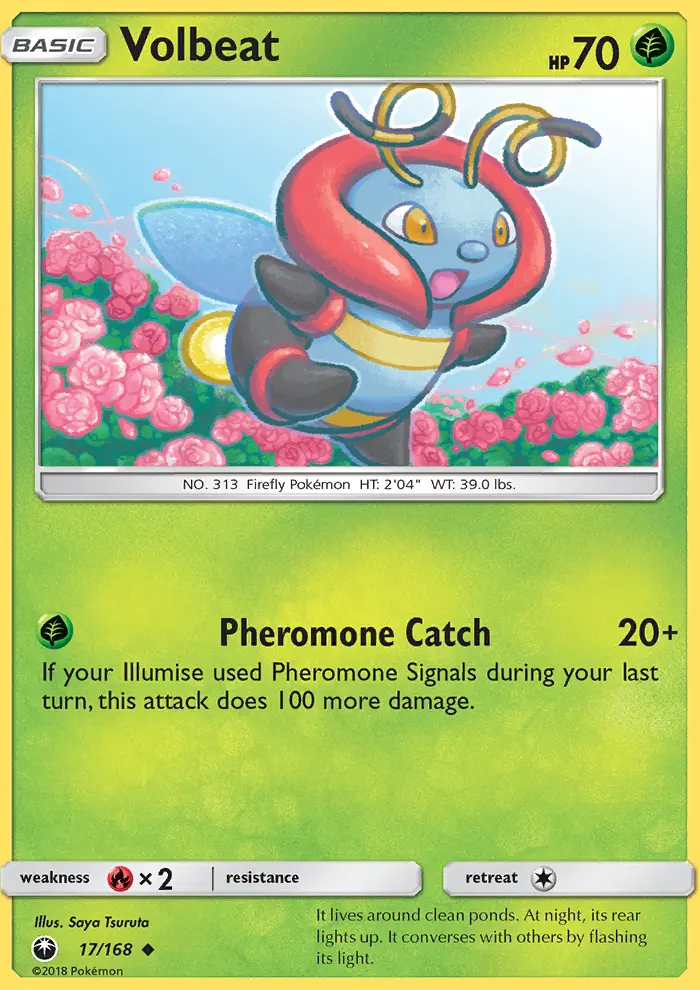
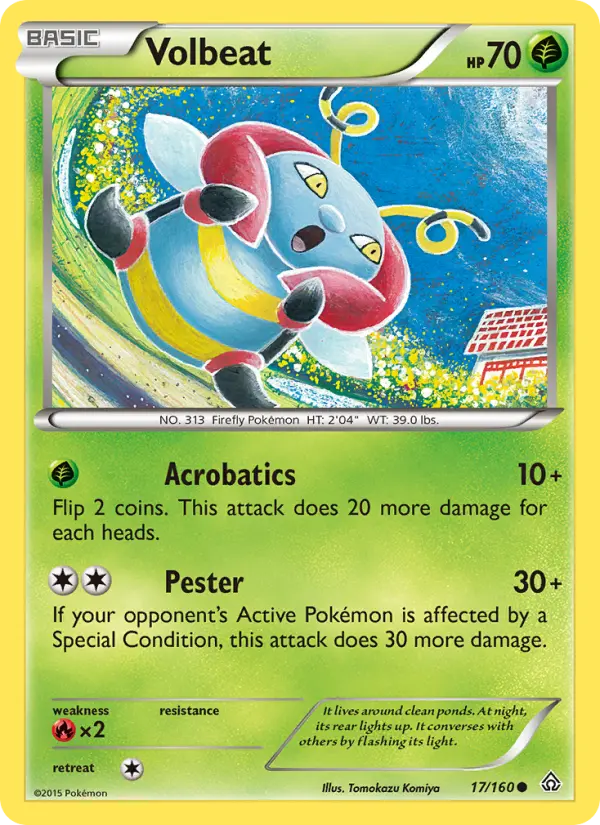
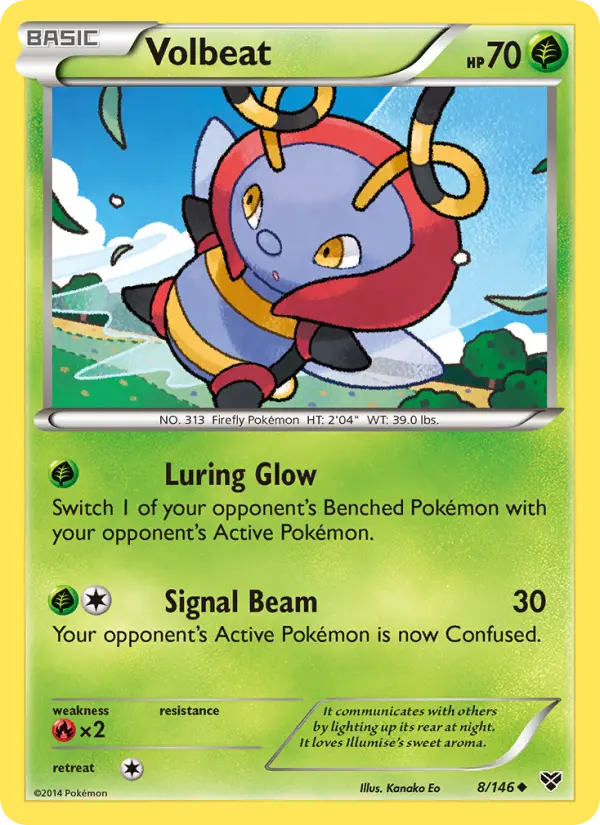
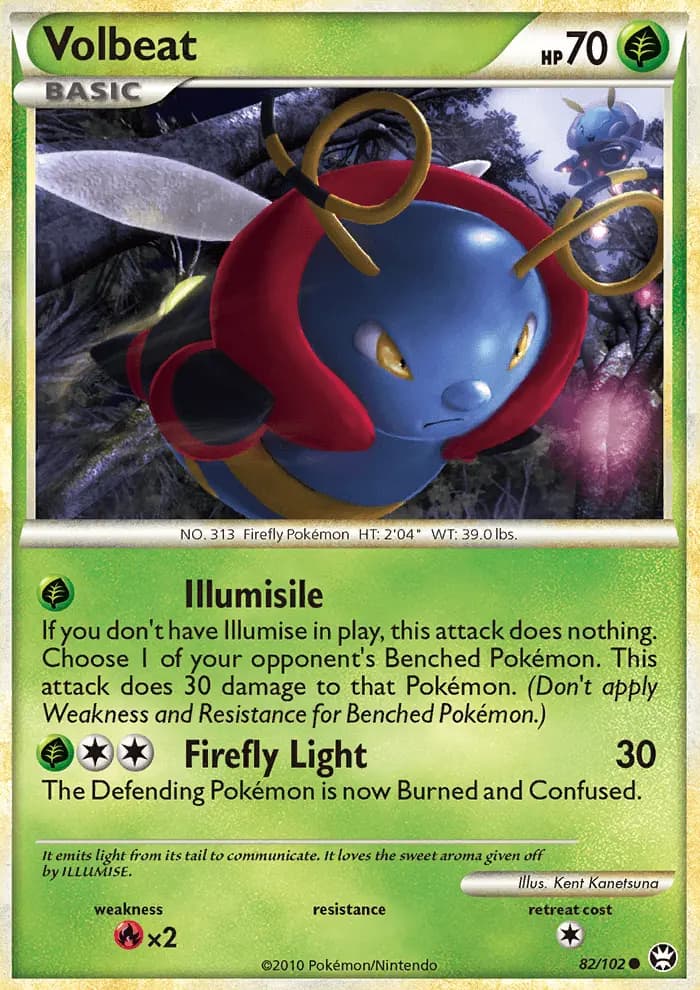
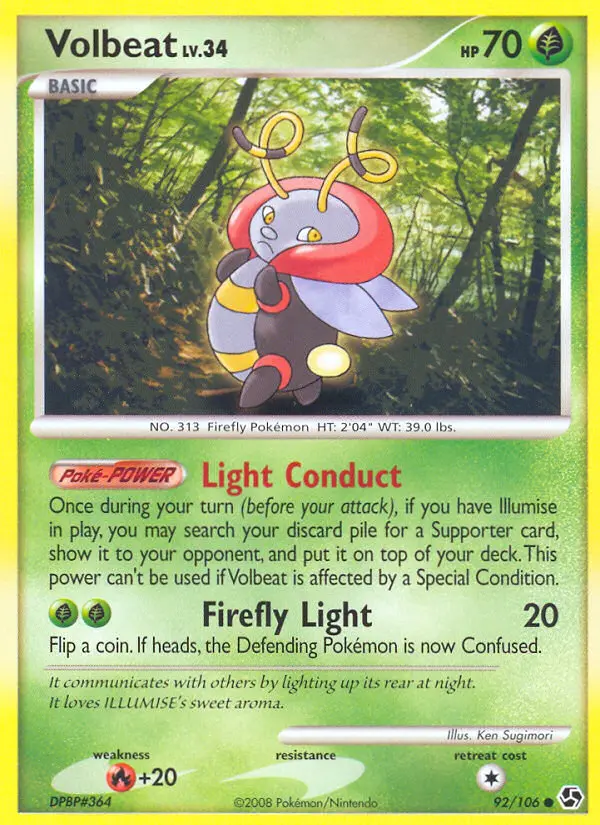
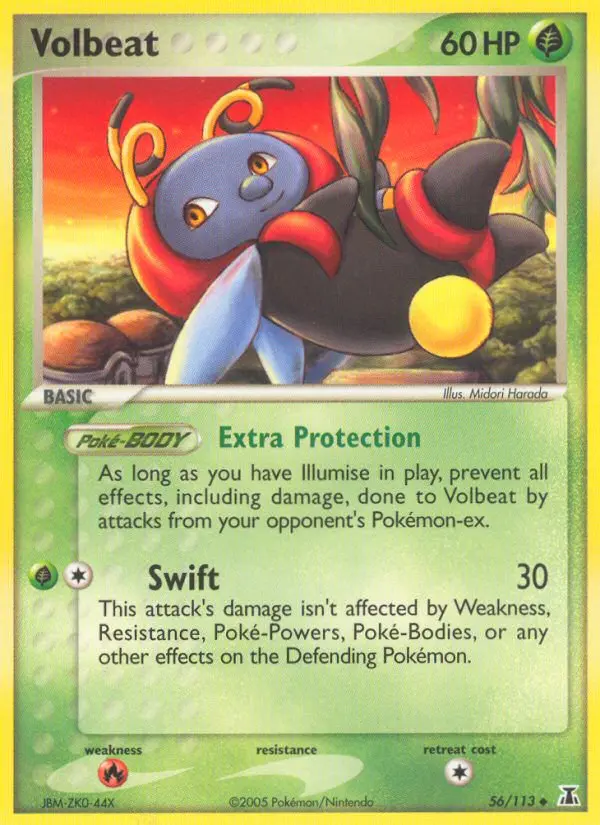
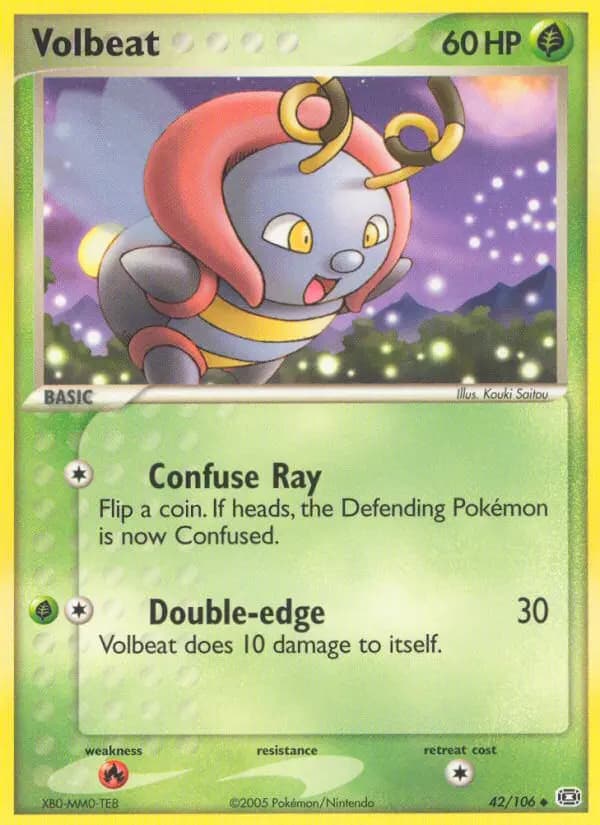
Volbeat has carved out a distinctive presence in Pokémon media and fan culture despite occupying a less prominent position than legendary or pseudo-legendary species. Its role as a primarily male species with a female counterpart in Illumise created significant discussion within the Pokémon community regarding gender representation and biological dimorphism in the franchise, generating considerable fan interest in the mechanics and lore surrounding their reproductive relationship. The species appears across multiple animated series appearances and has been featured in Pokémon Mystery Dungeon games, most notably in Explorers of Time and Darkness, where large congregations of Volbeat and Illumise create beautiful light displays at Fogbound Lake, emphasizing the ethereal, romantic quality of their interaction. In the trading card game, Volbeat has received various card iterations throughout multiple expansions, occasionally featuring mechanics that reflect its light-based communication abilities. The design's grounding in real-world firefly biology resonates with trainers who appreciate Pokémon that maintain clear connections to actual fauna while adding fantastical elements, making Volbeat a gateway Pokémon for players interested in insect-type species. Fan artwork frequently emphasizes Volbeat's bioluminescent qualities and its relationship dynamic with Illumise, with the romantic undertones of its attraction to Illumise's scent creating enduring shipping and headcanon discussions within fan communities.
Where to Find Volbeat in Every Pokémon Game
Volbeat's availability has fluctuated significantly across Pokémon generations and regional distributions, with the species debuting in Generation III's Hoenn region where it was categorized as Hoenn Pokédex #086. In the original Ruby, Sapphire, and Emerald versions, Volbeat could be encountered in various grassy areas and forests throughout Hoenn, particularly in locations near clean water sources that align with its ecological preferences. The species subsequently appeared in Fire Red and Leaf Green with updated availability in these Kanto remakes, and has maintained presence in most mainline games across subsequent generations. In more recent generations, Volbeat's availability has become regionally restricted in certain games; for instance, in Pokémon X and Y, it was available in the Central Kalos region with a National Pokédex assignment of #133, while Omega Ruby and Alpha Sapphire assigned it #089 within the Hoenn Pokédex. Scarlet and Violet's Paldea region included Volbeat with updated mechanics in The Teal Mask DLC, expanding accessibility for modern players. The species maintains consistent availability in Pokémon GO, where its capture encounters depend on regional biomes and event distributions, typically appearing in grassy and forest-adjacent habitats that mirror its Pokédex habitat requirements. Volbeat's catch rate of 150 classifies it as moderately difficult to capture, requiring more than minimal effort to secure specimens in the wild, though its Base Experience yield of 151 provides reasonable training efficiency for trainers developing their teams during early-game progression.