Combee
Generation IV · #0415 — Tiny Bee Pokémon
Combee's honey gather ability is the first thing worth knowing about it — everything else, from its bug/flying typing to its build, follows from how that ability gets used. Despite its small stature, Combee plays a vital role in its ecosystem as a devoted worker within the Vespiquen colony, constantly gathering honey and nectar to contribute to the greater hive. The species has maintained a consistent presence across multiple generations of Pokémon games, appearing in various regions and becoming a beloved early-game catch for those seeking Bug and Flying-type additions to their teams.
Editor's Take
Combee only evolves if it is female, which means 87.5% of all Combee are permanently stuck as a Pokémon with a base stat total of 244.
Base Stats
Height
0.3m
Weight
5.5kg
Category
Tiny Bee Pokémon
Gender
Male 87.5% / Female 12.5%
Color
yellow
Shape
heads
Abilities
The Pokémon may pick up honey after battle.
Strengthens physical moves to inflict 1.5× damage, but decreases their accuracy to 0.8×.

Combee Biology & Physical Characteristics
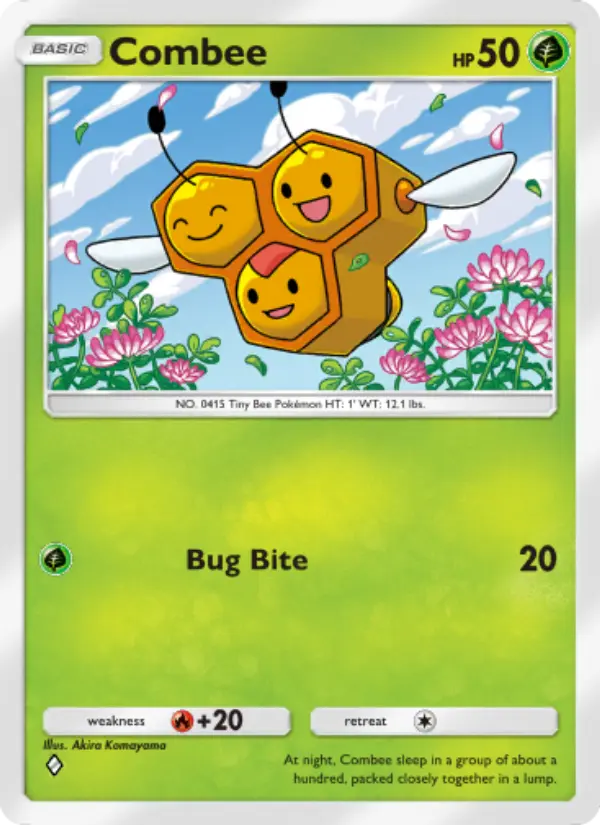
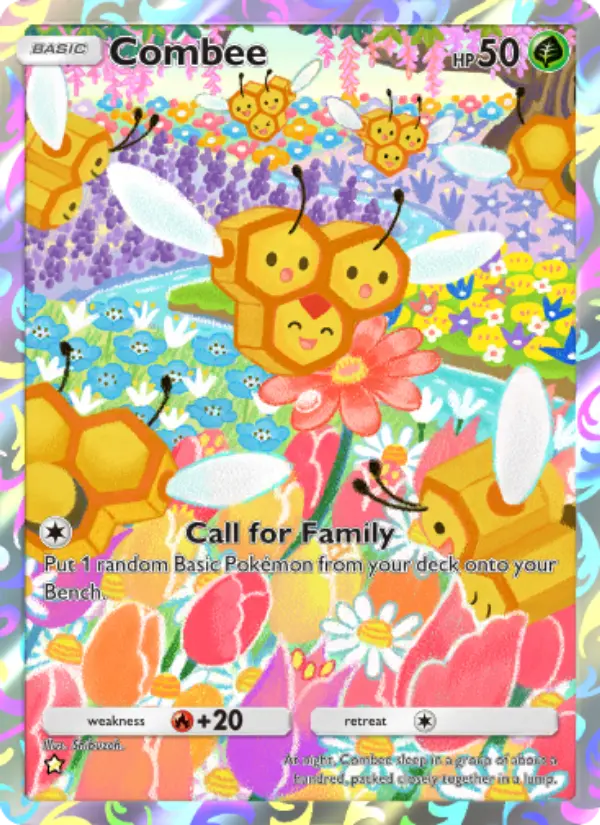
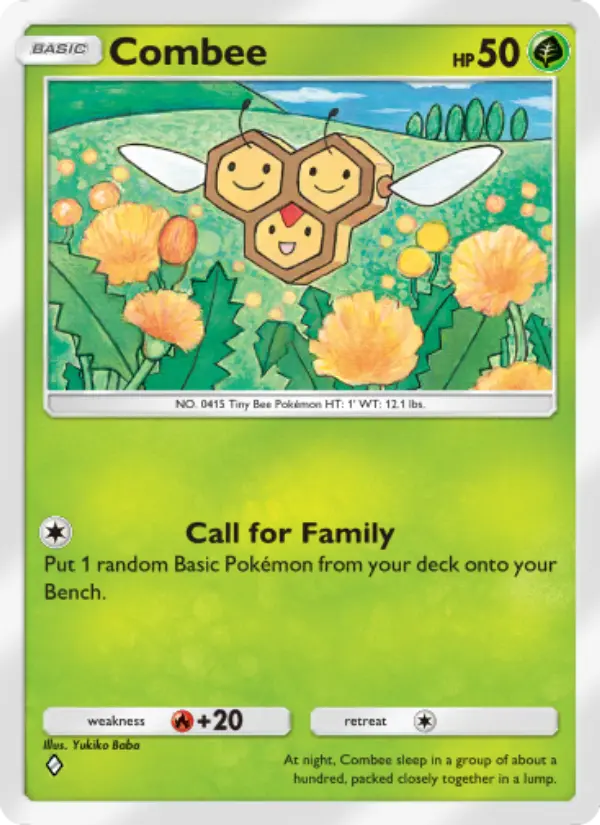
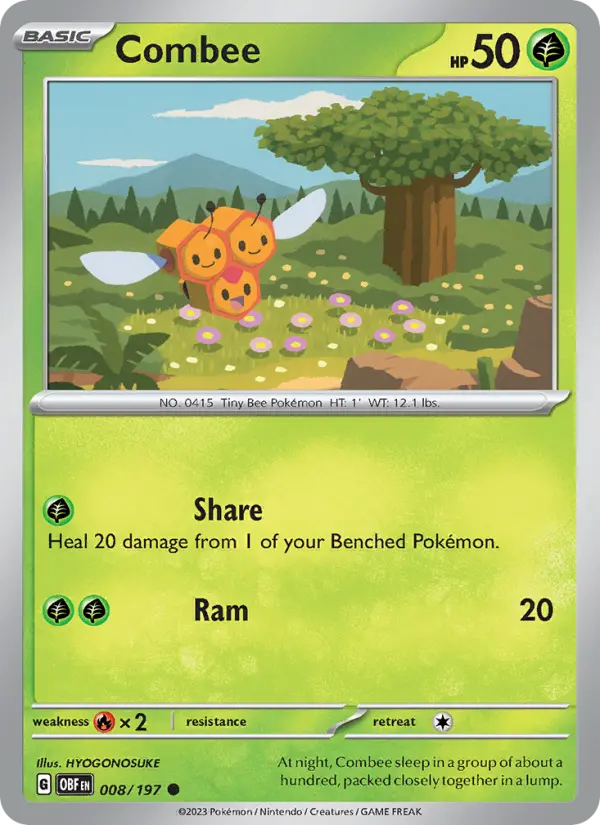
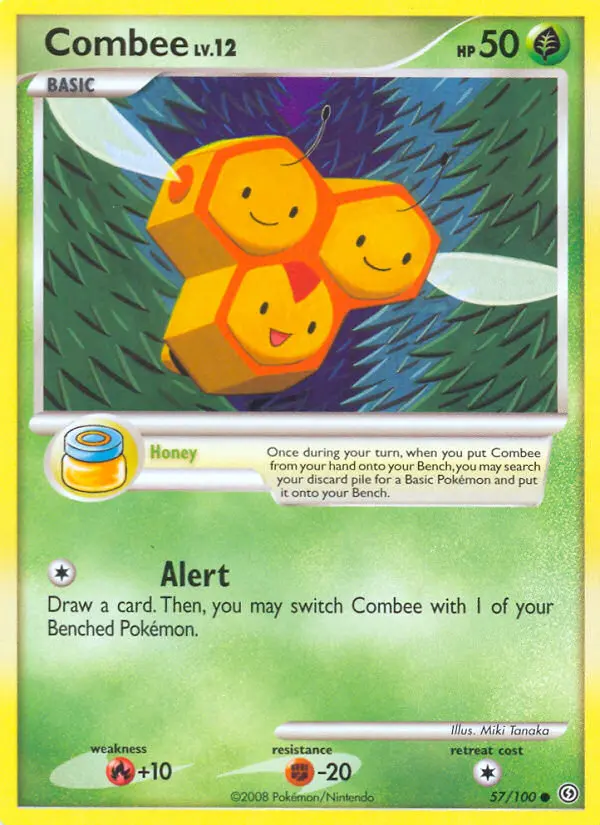
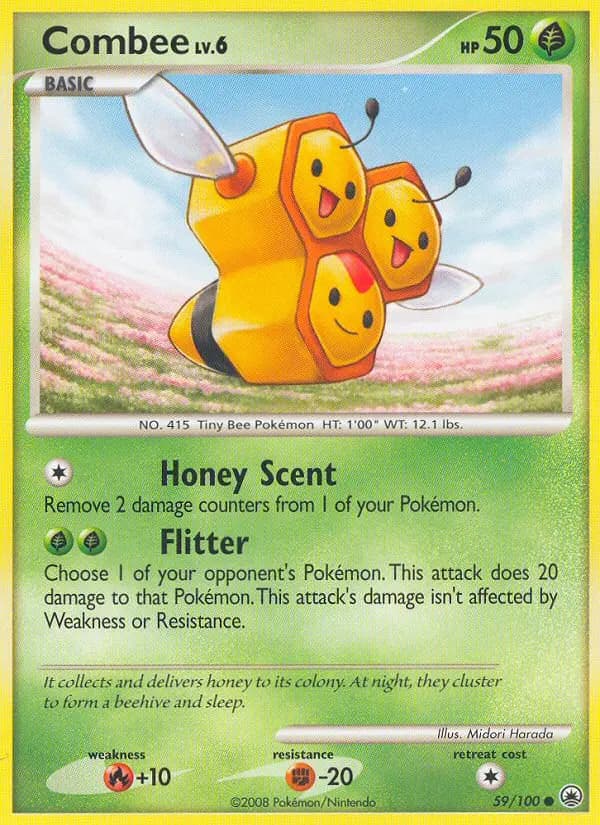
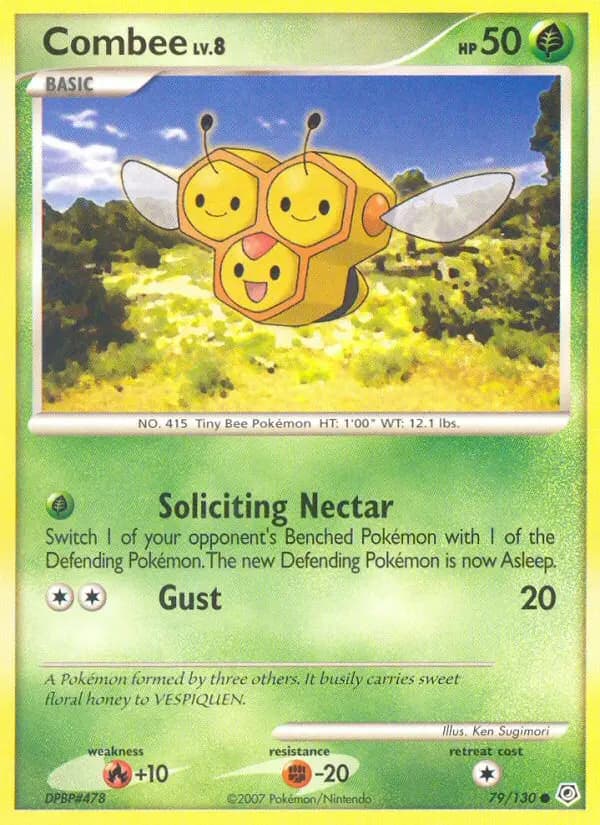
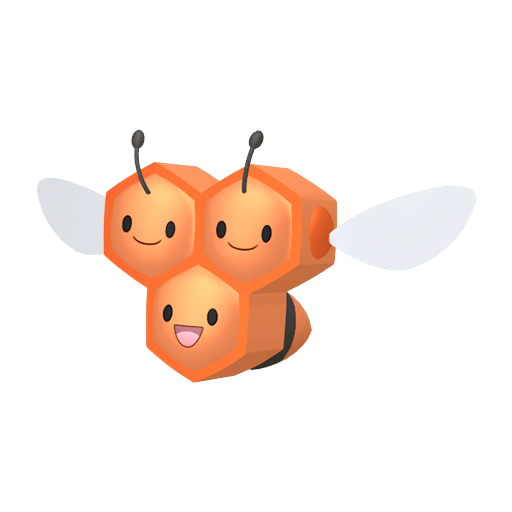
Combee presents a fascinating biological structure that defies conventional understanding of singular organisms. The Pokémon's body consists of three distinct hexagonal sections arranged in a triangular formation, with two orange hexagons positioned on top and a third hexagon nestled between and below them, creating a visually striking honeycomb-inspired appearance. Each hexagonal section possesses its own round, yellow face complete with black oval eyes and a curved mouth, with the upper two faces featuring thin black antennae with oval tips protruding from their foreheads. Each section of the body is equipped with translucent, rounded-triangle-shaped wings connected to orange domed joints on their sides, though notably these wings only function effectively when the top two faces coordinate their movements. The most distinctive feature separating male and female Combee is the presence of red, wedge-shaped spots on the forehead of the lower face in females, a marking entirely absent in their male counterparts. The lower face serves as the primary intellect of the trio, being the only section to possess a full insectoid abdomen with yellow coloring near the tip and a thick black stripe near the hexagonal frame. Like other multi-headed Pokémon such as Dugtrio and Dodrio, each of Combee's three faces maintains its own consciousness and individual preferences, with each member of the trio having distinctly different tastes in nectar and requiring coordinated effort to achieve flight.
Pokedex Numbers
Training
Breeding
Combee Breeding, Gender Ratio & Egg Groups
The gender ratio of Combee skews dramatically toward males, with an 87.5 percent male to 12.5 percent female distribution that significantly impacts breeding and evolutionary possibilities for trainers. This lopsided ratio reflects the biological reality of bee colonies, where male drones are produced in far greater numbers than fertile females, though in Combee's case it creates interesting strategic implications for team building. Female Combee are considerably rarer, making them more valuable to trainers seeking to obtain a Vespiquen, and their scarcity creates a meaningful challenge in the early game experience. Combee belongs to the Bug egg group, allowing it to breed with other Bug-type Pokémon and various creatures within compatible egg groups, though the rarity of females means that breeding for specific traits requires either exceptional luck or patient farming. The species exhibits a base happiness value of 70, indicating that Combee are naturally friendly and cooperative creatures that develop strong bonds with their trainers relatively quickly. With a hatch counter of 15 cycles, breeding Combee results in relatively quick egg maturation, encouraging trainers to invest in breeding programs without excessive time investment. The gender-specific evolution mechanics mean that the vast majority of wild-caught or randomly bred Combee will remain in their three-faced form permanently, creating an interesting dynamic where female Combee become treasured possessions among dedicated trainers.
Sprites





Held Items
Honey
dex-completion
Cost: 900
Honey
dex-completion
Cost: 900
Honey
dex-completion
Cost: 900
Honey
dex-completion
Cost: 900
Honey
dex-completion
Cost: 900
Honey
dex-completion
Cost: 900
Honey
dex-completion
Cost: 900
Honey
dex-completion
Cost: 900
Honey
dex-completion
Cost: 900
Honey
dex-completion
Cost: 900
Honey
dex-completion
Cost: 900
Honey
dex-completion
Cost: 900
Honey
dex-completion
Cost: 900
Honey
dex-completion
Cost: 900
Honey
dex-completion
Cost: 900
Honey
dex-completion
Cost: 900
Honey
dex-completion
Cost: 900
TMs & HMs
tm205
scarlet violet
tm40
scarlet violet
tm113
scarlet violet
tm182
scarlet violet
tr27
sword shield
tm185
scarlet violet
tm05
scarlet violet
tm32
scarlet violet
tm162
scarlet violet
tm171
scarlet violet
tm197
scarlet violet
tm12
crystal
tm12
gold silver
tm13
gold silver
tm13
crystal
tm31
crystal
tr61
sword shield
tm62
brilliant diamond shining pearl
tm15
scarlet violet
tm70
scarlet violet
+33 more TMs/HMs
Gender Differences
This Pokémon has visible differences between male and female forms.
Combee's Evolution Chain


Combee Evolution, Mega Evolution & Special Forms
Combee's evolutionary path represents one of the most gender-dependent progressions in the entire Pokémon franchise, creating a stark biological division between males and females of the species. Female Combee undergo a transformation into Vespiquen starting at level 21, a process that marks a fundamental shift in both appearance and societal role within the hive hierarchy. This evolution is exclusively available to females, as male Combee are not known to evolve into any other Pokémon species, remaining perpetually in their three-faced form regardless of level or circumstances. The distinction between genders becomes crucial for trainers seeking to develop a Vespiquen, as the 12.5% female ratio among wild Combee means that finding a female specimen requires either patience or specific breeding endeavors. When a female Combee reaches the requisite level, it evolves into Vespiquen, gaining significant improvements in stats and taking on the role of a queen-like Pokémon that serves as the matriarch of the colony. This gender-specific evolution mechanic reflects real-world bee colony dynamics, where queens hold the dominant position within the hierarchy, creating a fascinating parallel between Pokémon biology and actual insect societies.
Where to Find
Unova Route 12
unova
+5 more
Lostlorn Forest
unova
+1 more
Kalos Route 4
kalos
+5 more
Combee Behaviour and Natural Habitat
Combee exhibits highly social and cooperative behavior patterns that reflect its nature as a colonial creature intrinsically bound to Vespiquen and the broader hive structure. The trio of faces that comprise each Combee has been together since birth, forming an inseparable bond dedicated to a singular purpose: the constant gathering of honey and nectar from flowers to present to Vespiquen and please the colony. According to multiple Pokédex entries, Combee spends its days ceaselessly gathering nectar from sunrise to sundown, demonstrating an almost tireless work ethic that borders on obsessive dedication to its duties. The nocturnal behavior of Combee is equally remarkable, as approximately a thousand individual Combee cluster together at night, packing so closely that they form a massive lump that serves as a natural beehive for sleeping purposes. In some regions, this clustering behavior creates groups of around one hundred Combee that form giant communal hives for rest. This clustering behavior not only provides warmth and protection but also allows the colony to function as a unified organism during the vulnerable sleeping hours, demonstrating the deeply interconnected social structure of the species.
Pokedex Entries
A Pokémon formed by three others. It busily carries sweet floral honey to VESPIQUEN.
It collects and delivers honey to its colony. At night, they cluster to form a beehive and sleep.
The trio is together from birth. It constantly gathers honey from flowers to please VESPIQUEN.
At night, COMBEE sleep in a group of about a thousand, packed closely together in a lump.
The trio is together from birth. It constantly gathers honey from flowers to please Vespiquen.
This Pokémon is a set of three. When they sleep, they gather up and form a giant hive of 100 Combee.
The trio is together from birth. It constantly gathers honey from flowers to please Vespiquen.
It collects and delivers honey to its colony. At night, they cluster to form a beehive and sleep.
The trio is together from birth. It constantly gathers honey from flowers to please Vespiquen.
It collects and delivers honey to its colony. At night, they cluster to form a beehive and sleep.
The members of the trio spend all their time together. Each one has a slightly different taste in nectar.
It ceaselessly gathers nectar from sunrise to sundown, all for the sake of Vespiquen and the swarm.
They swear fealty to a queen Pokémon and work diligently to gather nectar. Each swarm produces a different flavor of honey.
Combee Name Origin & Design Inspiration
The design of Combee draws clear inspiration from honeybees and the structure of honeycomb itself, with the three hexagonal sections forming a literal representation of the geometric pattern found in beehives. The Japanese name "Mitsuhoney" combines "mitsu," meaning honey, with "honey," creating a straightforward descriptor that emphasizes the species' primary function within its ecosystem. The English name "Combee" represents a clever fusion of "comb," referring to honeycomb, and "bee," creating a concise identifier that immediately communicates the creature's nature to trainers. The hexagonal body structure is not merely aesthetic but serves as a visual metaphor for cooperation and unity, each section representing a distinct worker bee while the whole forming a cohesive unit. The coloration scheme employs warm oranges and yellows alongside black accents, mimicking the appearance of actual honeybees while maintaining the distinctive Pokémon aesthetic. The three faces with individual personalities serve a narrative purpose beyond mere visual uniqueness, representing the collective consciousness of a hive while maintaining individual identity—a design choice that makes Combee immediately recognizable and memorable among the Bug-type roster.
Learnable Moves
Combee can learn 18 moves:
Move | Type | Cat. | Power | Acc. | PP |
|---|---|---|---|---|---|
| air cutter | flying | Special | 60 | 95 | 25 |
| bug bite | bug | Physical | 60 | 100 | 20 |
| bug buzz | bug | Special | 90 | 100 | 10 |
| dual wingbeat | flying | Physical | 40 | 90 | 10 |
| endeavor | normal | Physical | — | 100 | 5 |
| gust | flying | Special | 40 | 100 | 35 |
| lunge | bug | Physical | 80 | 100 | 15 |
| mud slap | ground | Special | 20 | 100 | 10 |
| ominous wind | ghost | Special | 60 | 100 | 5 |
| skitter smack | bug | Physical | 70 | 90 | 10 |
| sleep talk | normal | Status | — | — | 10 |
| snore | normal | Special | 50 | 100 | 15 |
| string shot | bug | Status | — | 95 | 40 |
| struggle bug | bug | Special | 50 | 100 | 20 |
| sweet scent | normal | Status | — | 100 | 20 |
| swift | normal | Special | 60 | — | 20 |
| tailwind | flying | Status | — | — | 15 |
| tera blast | normal | Special | 80 | 100 | 10 |
Combee Competitive Battle Guide
Competitively, Combee occupies an extremely limited role due to its remarkably poor base stats, which total only 244 across all categories. With a base HP of 30, Attack and Special Attack each at 30, Defense and Special Defense at 42, and Speed at 70, Combee is essentially relegated to early-game encounters and casual play scenarios rather than serious competitive consideration. The species' ability pool offers marginal competitive viability through Honey Gather, which has no direct battle application as it only allows Combee to pick up honey after combat concludes, or through its hidden ability Hustle, which boosts physical moves to 1.5 times their damage output at the cost of reducing accuracy to 0.8 times. Hustle creates an interesting risk-reward dynamic where Combee trades accuracy for power, though the species' abysmal offensive stats mean this benefit translates to minimal practical advantage. Combee's movepool, while functional for an early-game Bug/Flying type, lacks the coverage options and power necessary to compete at any serious competitive level, and trainers looking for functional Bug or Flying types would find substantially better options across the Pokédex. The primary utility of Combee in competitive settings, if any exists, would be in novelty or challenge runs designed specifically to limit team options, where its underdog status might provide entertainment value rather than strategic advantage. However, its evolution into Vespiquen at level 21 represents a dramatic power increase that transforms it into a legitimately viable team member, making the investment in training a Combee worthwhile for trainers willing to guide it toward its final form.
Commonly Asked Questions About Combee
What type is Combee?
Combee is a bug and flying type Pokemon.
What does Combee evolve into?
Combee evolves into vespiquen.
What are Combee's weaknesses?
Combee is weak to flying, rock, fire, electric and ice type moves.
Does Combee evolve by trading?
No — Combee evolves entirely through leveling up, with no trade required at any stage.
Where can I find Combee?
Combee can be found in unova route 12 (unova), lostlorn forest (unova) and kalos route 4 (kalos).
Combee Cultural Impact & Franchise History
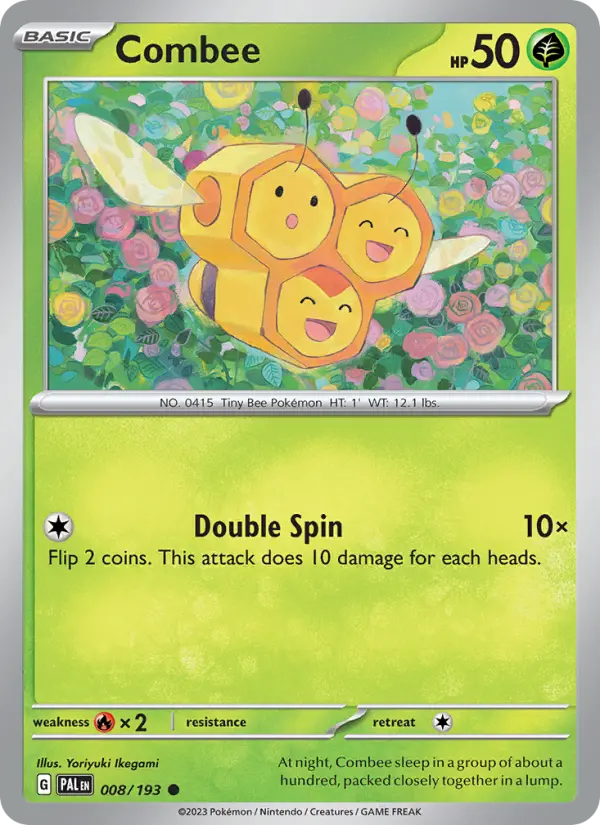
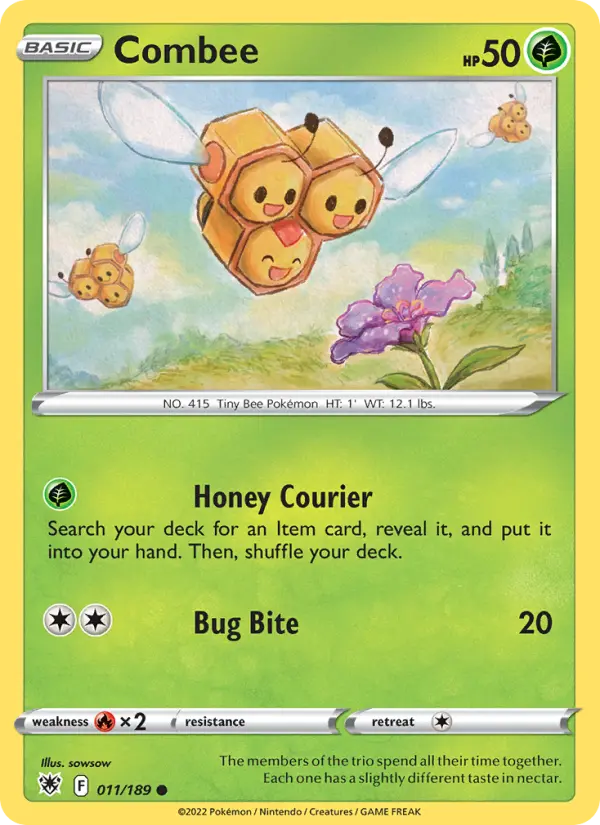
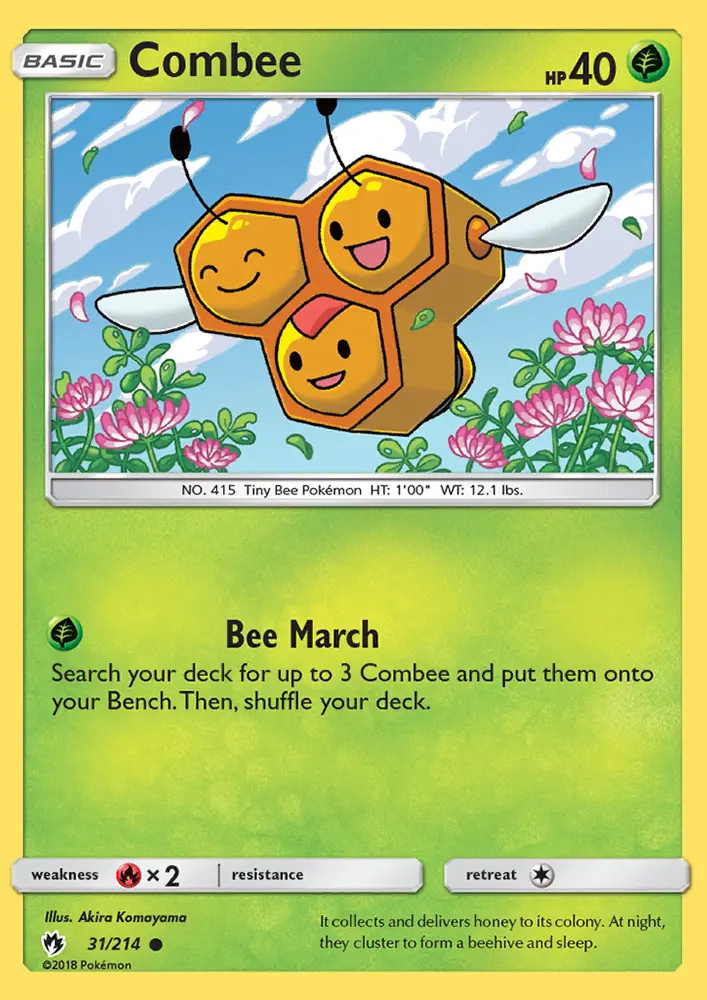
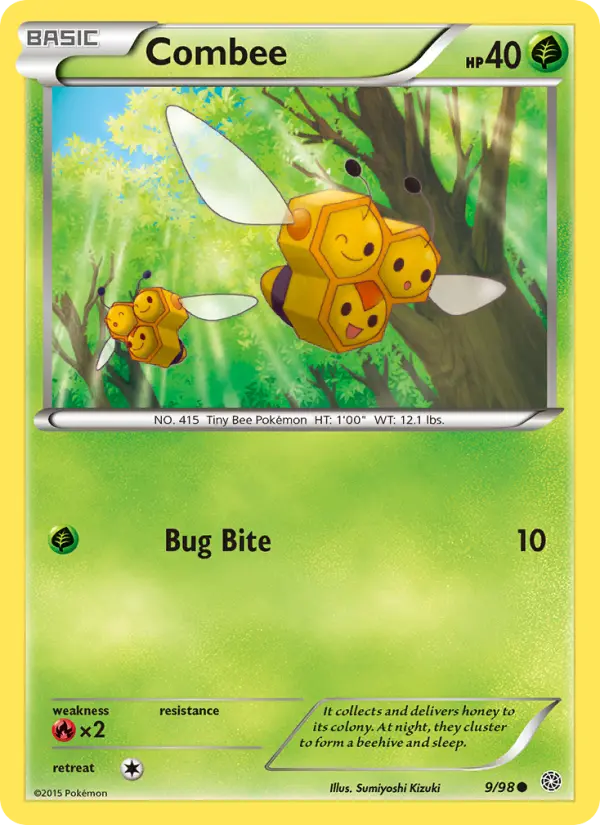
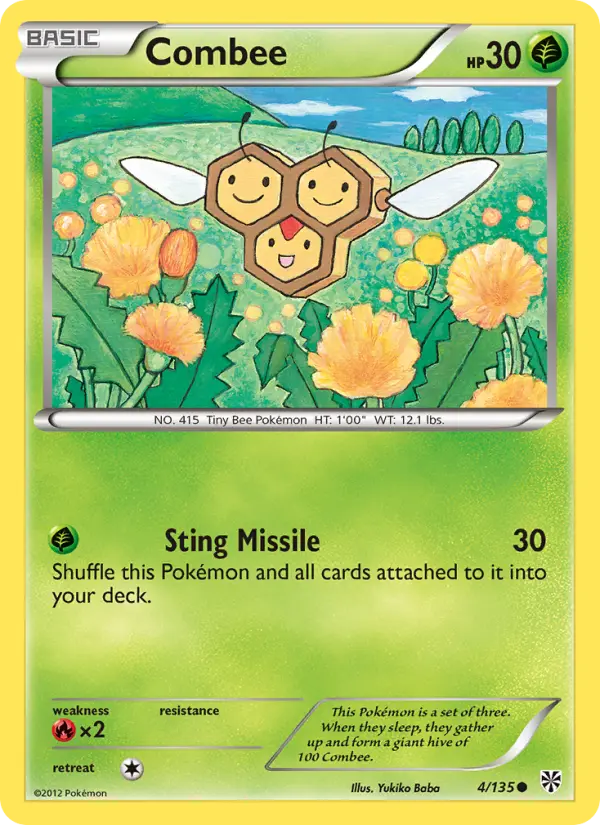
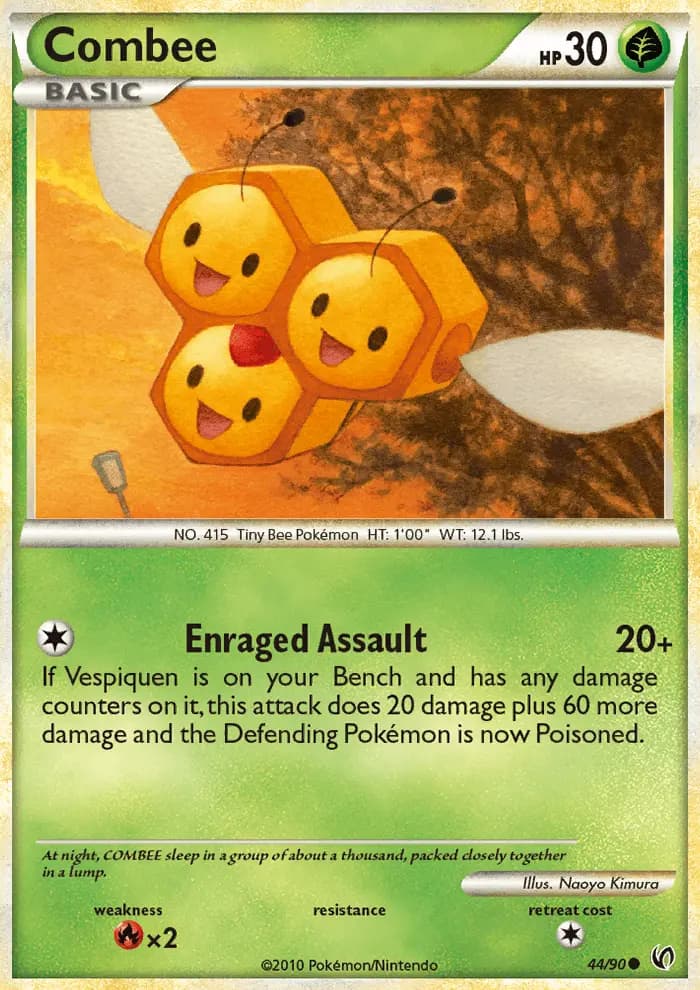
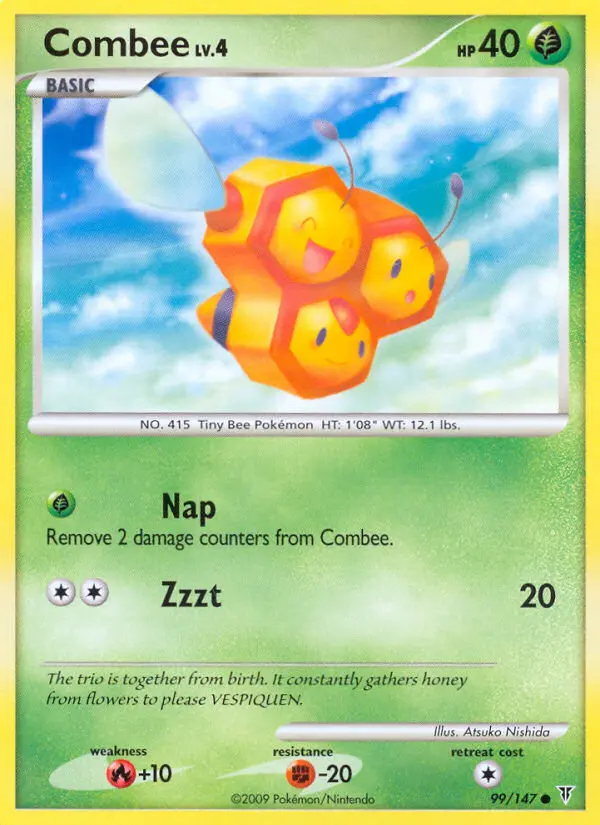
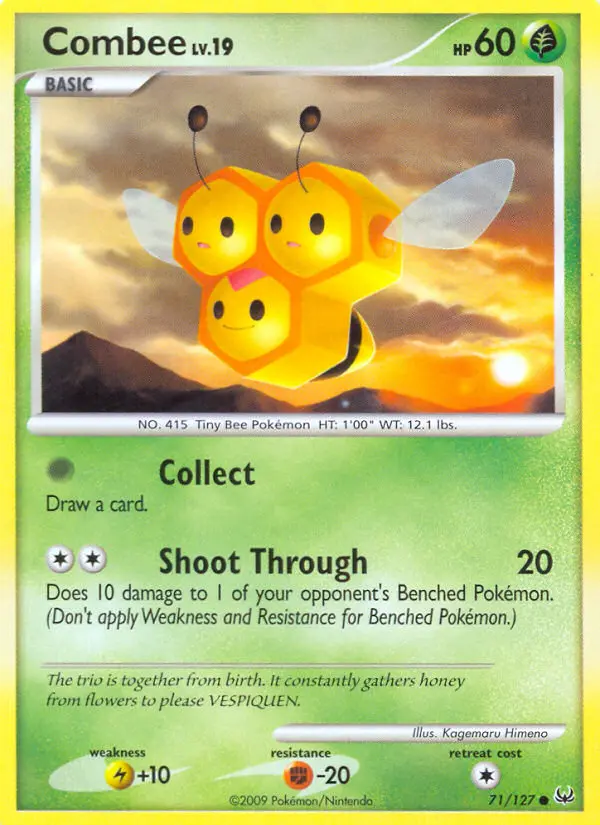
Combee has established itself as a charming and memorable member of the Pokémon roster despite its limited competitive viability, earning a dedicated fanbase through its unique design and appealing lore. The species has appeared in various Pokémon animated series episodes, including memorable encounters in the main series that showcase the Combee trio's personality and their relationship with Vespiquen. Trading card game representations of Combee have maintained consistent presence across multiple sets, allowing collectors to appreciate the species from a different creative angle and contributing to its recognition among both casual and competitive card players. The gender-specific evolution mechanic involving Combee and Vespiquen became culturally significant as one of the franchise's early explorations of meaningful gender differences in Pokémon development, sparking discussions about biological authenticity and game design. Fan communities have embraced Combee as a symbol of cooperation and dedication, with the species' tireless honey-gathering nature inspiring creative fan works and discussions about themes of duty and collective effort. The Pokémon has benefited from appearances in multiple game generations and regions, ensuring that new trainers continually discover its charm and contribute fresh perspectives to the ongoing cultural conversation surrounding the species. Merchandise featuring Combee, including plushies, figurines, and apparel, demonstrates sustained commercial appeal that justifies the species' inclusion across generations despite its limited competitive utility.
Where to Find Combee in Every Pokémon Game
Combee has maintained steady availability across multiple Pokémon game generations and regions, making it a relatively accessible species for trainers seeking to add it to their collection. In the original Generation IV games Pokémon Diamond and Pearl, Combee appears as a common encounter in various routes throughout the Sinnoh region, establishing its foundational availability. The species has subsequently appeared in Generation V, Generation VI, and beyond, with each generation providing different encounter methods and locations that ensure trainers have opportunities to capture this Bug/Flying type. In Pokémon Sword and Shield for the Nintendo Switch, Combee can be found in specific wild areas and routes, maintaining its status as an accessible early-game option for players building their teams. The latest generations including Pokémon Scarlet and Violet continue to include Combee in their regional Pokédex, demonstrating the species' enduring relevance and the developers' commitment to maintaining comprehensive Pokémon availability across new releases. Alternative methods of obtaining Combee include breeding programs, with trainers capable of generating new Combee by pairing compatible creatures through the in-game daycare or breeding facilities available in most modern Pokémon titles. Event distributions and special encounter mechanics occasionally feature Combee, providing additional opportunities for trainers to acquire specific specimens with favorable natures, abilities, or individual values. The relatively high base catch rate of 120 means that trainers encounter minimal difficulty capturing wild Combee without requiring specialized Poké Balls or extensive preparation, making it an excellent early-game addition for players beginning their journey through any region featuring this delightful species.