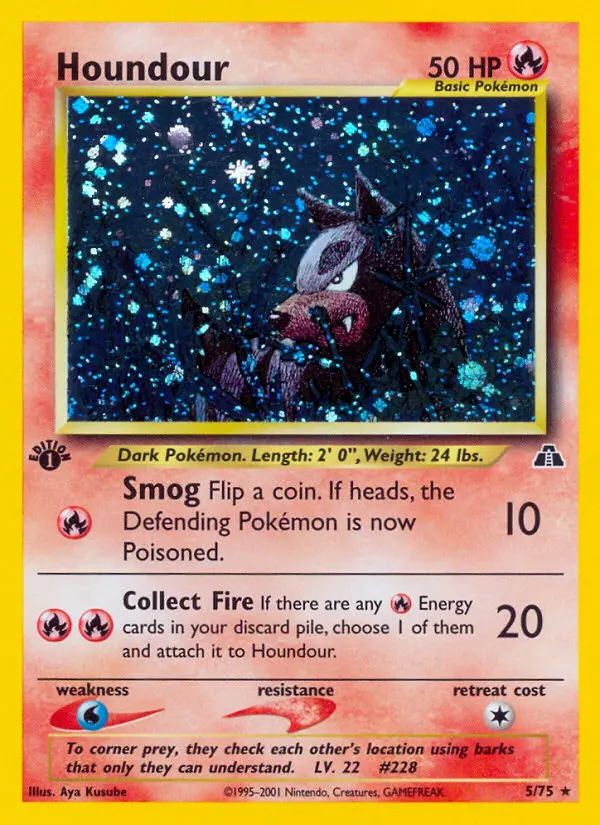
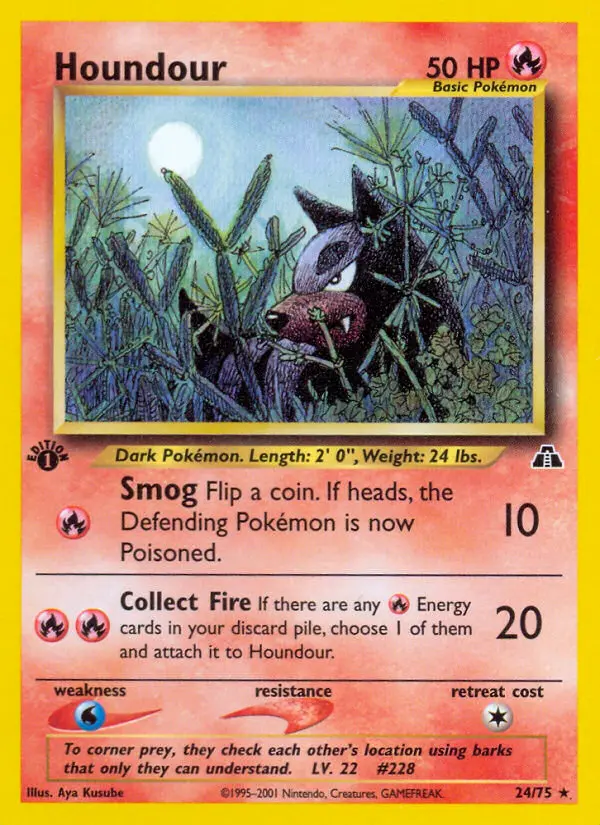
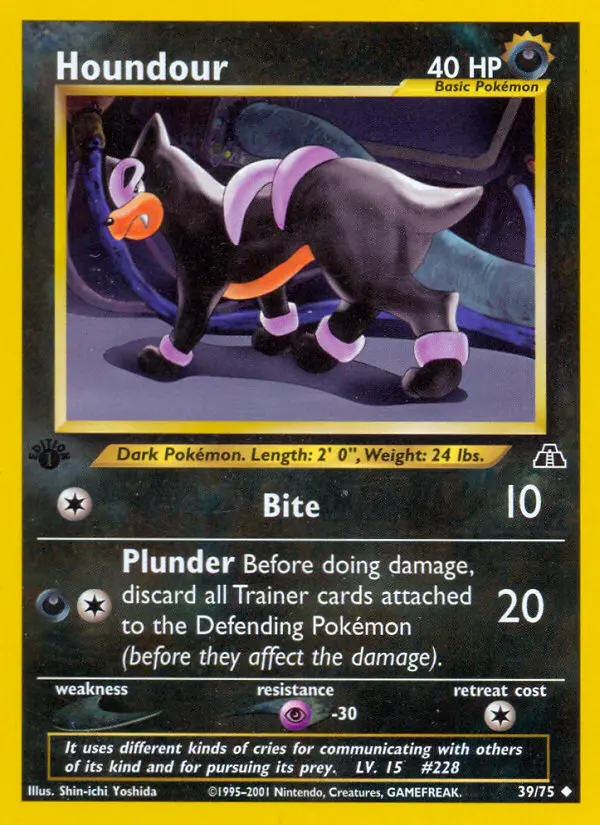
Houndour
Generation II · #0228 — Dark Pokémon
Houndour is built around Special Attack first — 80 at base is the clearest signal of how it's meant to be used, more than its dark/fire typing alone would suggest. The species exhibits a notably low base friendship value of 35, reflecting its inherently wild and untamed nature, though dedicated trainers who earn their trust will find Houndour to be remarkably loyal companions.
Editor's Take
Houndour's line was the first Dark/Fire type and remained the only one for a long time, and Nasty Plot Houndoom is still a legitimate threat in the tiers it inhabits.
Base Stats
Height
0.6m
Weight
10.8kg
Category
Dark Pokémon
Gender
Male 50% / Female 50%
Color
black
Shape
quadruped
Habitat
rough-terrain
Abilities
Makes sleep pass twice as quickly.
Protects against fire moves. Once one has been blocked, the Pokémon's own Fire moves inflict 1.5× damage until it leaves battle.
Prevents opposing Pokémon from eating held Berries.

Houndour Biology & Physical Characteristics
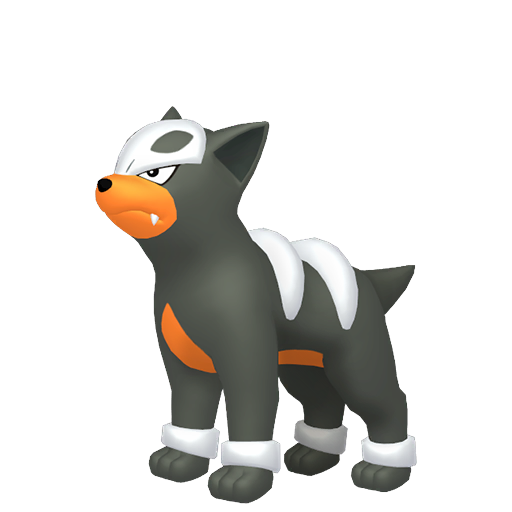
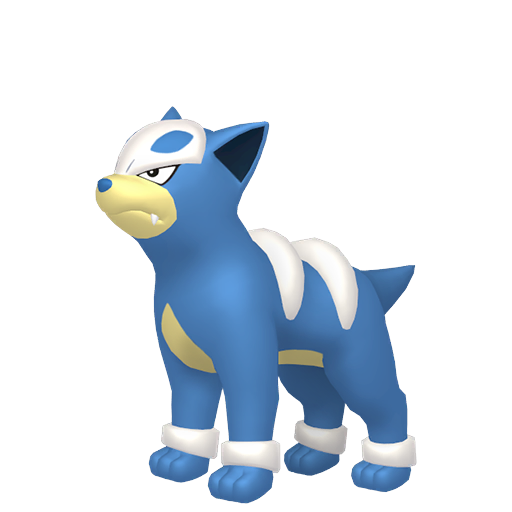
Houndour presents a striking visual design with its predominantly black quadrupedal canine form accentuated by a crimson underbelly and muzzle that immediately evokes its Fire-type nature. Its compact frame features short, pointed ears and an equally diminutive tail, while two prominent fangs protrude menacingly from its upper jaw above a triangular black nose. The most distinctive feature of Houndour's physiognomy is the stylized skull pattern adorning its forehead, with the eye orbits creating eyebrow-like markings above its actual eyes—a design choice that emphasizes the predatory nature of this species. White bands encircle its ankles, providing contrast to its obsidian fur, while rib-like ridges run along its back, further enhancing its skeletal appearance. Each of Houndour's three-toed paws terminates in circular red pads that match its underbelly coloration, creating a cohesive design that seamlessly blends its Dark and Fire typing into a single menacing package.
Pokedex Numbers
Training
Breeding
Houndour Breeding, Gender Ratio & Egg Groups
Houndour splits evenly down the middle — 50% male, 50% female, allowing equal representation across both sexes in breeding scenarios. The species belongs to the Field egg group, connecting it to other terrestrial and canine-like Pokémon through breeding chains. With a hatch counter of 20 cycles, Houndour eggs require approximately 4,884 to 5,140 steps to hatch, placing them in the middle range of hatching times. This makes Houndour moderately accessible to breeders who wish to obtain perfect-IV specimens or specific natures without excessive grinding. The species' low base happiness of 35 reflects its wild temperament and independent spirit, meaning freshly-caught or newly-hatched Houndour will require additional effort and care from their trainers to develop the bond necessary for optimal performance. However, this low starting friendship value creates a satisfying progression as trainers work to earn their Houndour's trust and loyalty over time.
Sprites




TMs & HMs
tm01
lets go pikachu lets go eevee
tm02
crystal
tm02
gold silver
tm02
lets go pikachu lets go eevee
tm03
crystal
tm03
gold silver
tm03
lets go pikachu lets go eevee
tm05
ruby sapphire
tm05
emerald
tm05
gold silver
tm05
crystal
tm05
diamond pearl
tm05
black white
tm05
platinum
tm05
heartgold soulsilver
tm05
firered leafgreen
tm05
black 2 white 2
tm05
omega ruby alpha sapphire
tm05
x y
tm05
xd
+637 more TMs/HMs
Houndour's Evolution Chain


Houndour Evolution, Mega Evolution & Special Forms
Houndour's evolutionary path is straightforward yet impactful, as it evolves into the formidable Houndoom upon reaching level 24. This evolution represents a significant power spike, with Houndoom gaining substantial increases to its Attack, Special Attack, and Speed stats, transforming from a promising youngster into a legitimate competitive threat. The evolution also grants Houndoom the addition of its signature Mega Evolution form in later generations, accessible through the appropriate Mega Stone, which further enhances its capabilities and competitive viability. The transition from Houndour to Houndoom marks not merely a physical transformation but a maturation in the creature's hunting abilities and prowess, reflecting the Pokédex entries' emphasis on pack coordination and tactical intelligence—themes that culminate in Houndoom's fearsome reputation.
Where to Find
Kanto Route 7
kanto
+6 more
Hoenn Altering Cave
hoenn
+9 more
Hoenn Safari Zone
hoenn
Kanto Altering Cave
kanto
+21 more
Sinnoh Route 214
sinnoh
+5 more
Valor Lakefront
sinnoh
Kalos Route 10
kalos
Poke Pelago
alola
Houndour Behaviour and Natural Habitat
Houndour exhibits remarkable behavioral complexity centered entirely on pack dynamics and coordinated hunting strategies. According to multiple Pokédex entries spanning generations, these creatures communicate with one another through a sophisticated system of varied barks and howls that appear to be understood exclusively within their pack, enabling them to coordinate hunting efforts with precision that has been described as unparalleled. The Gold version Pokédex notes that they employ different kinds of cries for communicating with pack members and pursuing prey, while the Silver entry specifically emphasizes their use of location-checking barks during hunts. Beyond their hunting prowess, Houndour demonstrates territorial behavior, as documented in the Crystal entry, which describes the species howling ominously around dawn to announce territorial claims. These Pokémon gravitate toward rough, mountainous terrain where they can establish hunting grounds and demonstrate fierce loyalty to their pack—an episode of the anime series titled "Hour of the Houndour" revealed that pack members will refuse to abandon a sick or injured companion, showcasing an unexpected degree of empathy beneath their fearsome exterior. Interestingly, Pokémon Sleep lore suggests that Houndour continues to howl while sleeping, presumably dreaming of coordinated pack hunts.
Pokedex Entries
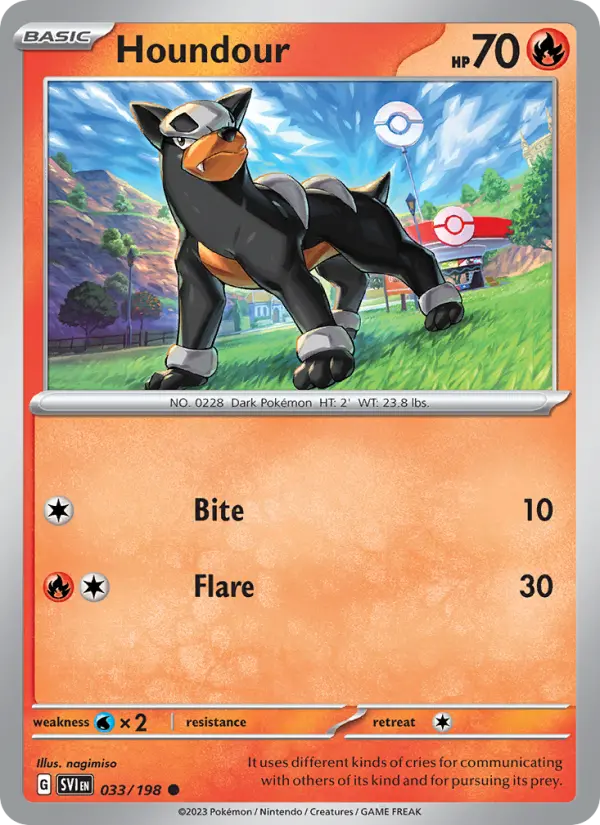
It uses different kinds of cries for communicating with others of its kind and for pursuing its prey.
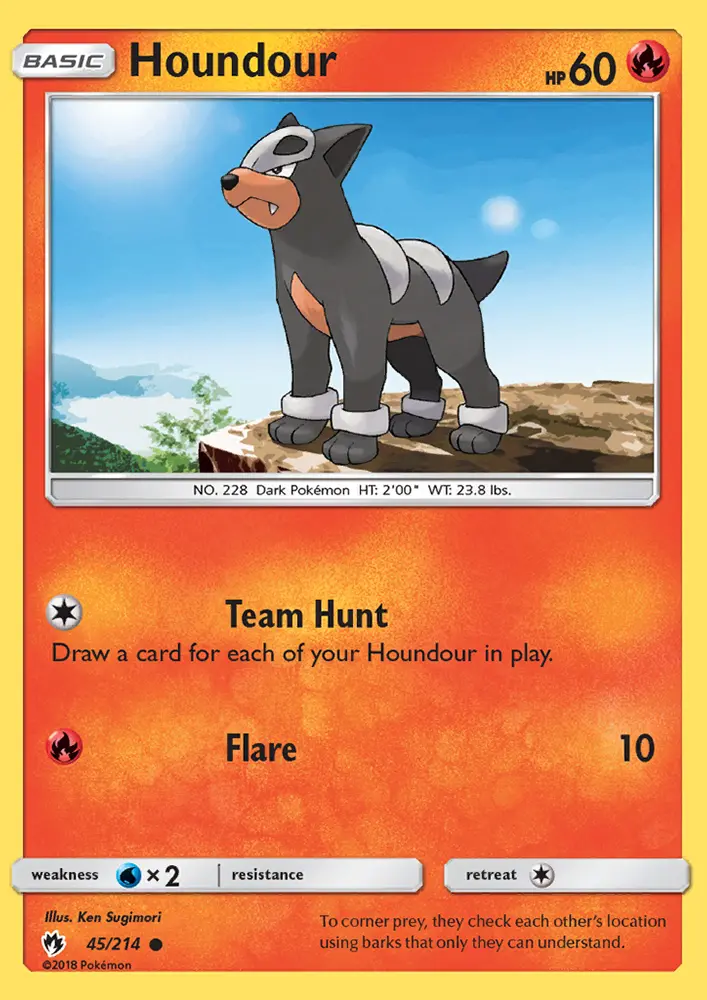
To corner prey, they check each other's location using barks that only they can understand.
Around dawn, its ominous howl echoes through the area to announce that this is its territory.
HOUNDOUR hunt as a coordinated pack. They communicate with each other using a variety of cries to corner their prey. This POKéMON’s remarkable teamwork is unparalleled.
HOUNDOUR communicate with each other using a variety of cries to corner their prey. This POKéMON’s remarkable teamwork is simply unparalleled.
To corner prey, they check each other’s location using barks that only they can understand.
It uses different kinds of cries for communicating with others of its kind and for pursuing prey.
It conveys its feelings using different cries. It works in a pack to cleverly take down prey.
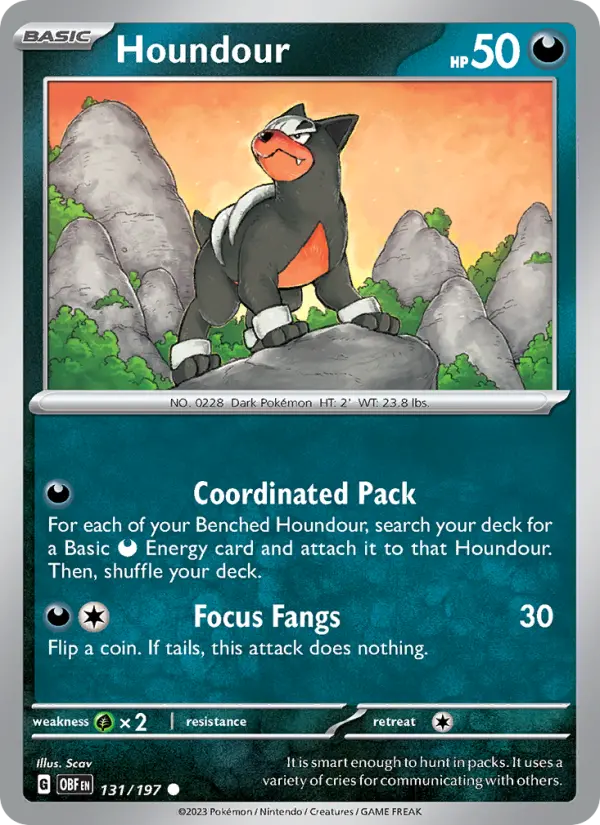
It is smart enough to hunt in packs. It uses a variety of cries for communicating with others.
It uses different kinds of cries for communicating with others of its kind and for pursuing its prey.
To corner prey, they check each other’s location using barks that only they can understand.
It is smart enough to hunt in packs. It uses a variety of cries for communicating with others.
It is smart enough to hunt in packs. It uses a variety of cries for communicating with others.
Around dawn, its ominous howl echoes through the area to announce that this is its territory.
To corner prey, they check each other’s location using barks that only they can understand.
Houndour hunt as a coordinated pack. They communicate with each other using a variety of cries to corner their prey. This Pokémon’s remarkable teamwork is unparalleled.
Houndour hunt as a coordinated pack. They communicate with each other using a variety of cries to corner their prey. This Pokémon’s remarkable teamwork is unparalleled.
It cooperates with others skillfully. When it becomes your partner, it’s very loyal to you as its Trainer and will obey your orders.
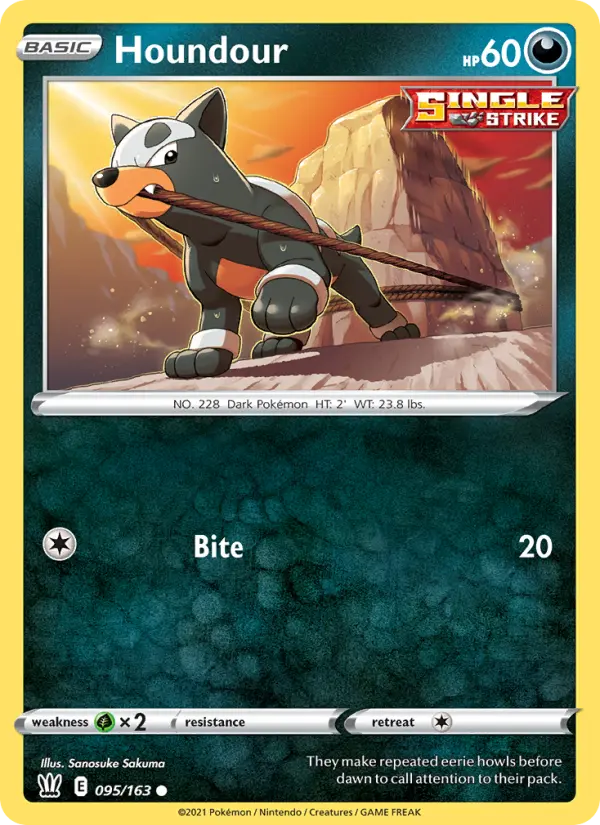
They make repeated eerie howls before dawn to call attention to their pack.
Houndour Name Origin & Design Inspiration
Houndour's name derives from the English words "hound" and "our," with the latter element possibly referencing "hour" or suggesting a possessive quality, though the exact etymology remains somewhat mysterious. The Japanese name, Delvil, appears to be a combination of "devil" and possibly "delve," capturing the creature's dark, devilish nature and subterranean hunting tactics. The design itself pulls heavily from classical demonic and infernal imagery—the skull marking on its forehead, the red coloration suggesting hellfire, and its pack-hunting behavior all contribute to an aesthetic that positions Houndour as a creature of darkness and danger. The rib-like ridges and skeletal appearance reinforce this infernal theming, while the specific choice to present it as a small, young version of Houndoom allows players to appreciate the creature's potential for growth and development. The dual Dark/Fire typing finds perfect expression in both its naming and visual design, creating a cohesive identity that immediately communicates its nature to players.
Learnable Moves
Houndour can learn 81 moves:
Move | Type | Cat. | Power | Acc. | PP |
|---|---|---|---|---|---|
| attract | normal | Status | — | 100 | 15 |
| beat up | dark | Physical | — | 100 | 10 |
| bite | dark | Physical | 60 | 100 | 25 |
| body slam | normal | Physical | 85 | 100 | 15 |
| captivate | normal | Status | — | 100 | 20 |
| counter | fighting | Physical | — | 100 | 20 |
| crunch | dark | Physical | 80 | 100 | 15 |
| curse | ghost | Status | — | — | 10 |
| dark pulse | dark | Special | 80 | 100 | 15 |
| destiny bond | ghost | Status | — | — | 5 |
| detect | fighting | Status | — | — | 5 |
| double team | normal | Status | — | — | 15 |
| double edge | normal | Physical | 120 | 100 | 15 |
| dream eater | psychic | Special | 100 | 100 | 15 |
| embargo | dark | Status | — | 100 | 15 |
| ember | fire | Special | 40 | 100 | 25 |
| endure | normal | Status | — | — | 10 |
| facade | normal | Physical | 70 | 100 | 20 |
| feint | normal | Physical | 30 | 100 | 10 |
| feint attack | dark | Physical | 60 | — | 20 |
| fire blast | fire | Special | 110 | 85 | 5 |
| fire fang | fire | Physical | 65 | 95 | 15 |
| fire spin | fire | Special | 35 | 85 | 15 |
| flame charge | fire | Physical | 50 | 100 | 20 |
| flamethrower | fire | Special | 90 | 100 | 15 |
| flare blitz | fire | Physical | 120 | 100 | 15 |
| foul play | dark | Physical | 95 | 100 | 15 |
| frustration | normal | Physical | — | 100 | 20 |
| headbutt | normal | Physical | 70 | 100 | 15 |
| heat wave | fire | Special | 95 | 90 | 10 |
| helping hand | normal | Status | — | — | 20 |
| hidden power | normal | Special | 60 | 100 | 15 |
| howl | normal | Status | — | — | 40 |
| hyper voice | normal | Special | 90 | 100 | 10 |
| iron tail | steel | Physical | 100 | 75 | 15 |
| leer | normal | Status | — | 100 | 30 |
| mimic | normal | Status | — | — | 10 |
| mud shot | ground | Special | 55 | 95 | 15 |
| mud slap | ground | Special | 20 | 100 | 10 |
| nasty plot | dark | Status | — | — | 20 |
| natural gift | normal | Physical | — | 100 | 15 |
| nightmare | ghost | Status | — | 100 | 15 |
| odor sleuth | normal | Status | — | — | 40 |
| overheat | fire | Special | 130 | 90 | 5 |
| pain split | normal | Status | — | — | 20 |
| payback | dark | Physical | 50 | 100 | 10 |
| protect | normal | Status | — | — | 10 |
| punishment | dark | Physical | — | 100 | 5 |
| pursuit | dark | Physical | 40 | 100 | 20 |
| rage | normal | Physical | 20 | 100 | 20 |
| rain dance | water | Status | — | — | 5 |
| rest | psychic | Status | — | — | 5 |
| return | normal | Physical | — | 100 | 20 |
| reversal | fighting | Physical | — | 100 | 15 |
| roar | normal | Status | — | — | 20 |
| rock smash | fighting | Physical | 40 | 100 | 15 |
| role play | psychic | Status | — | — | 10 |
| scary face | normal | Status | — | 100 | 10 |
| secret power | normal | Physical | 70 | 100 | 20 |
| shadow ball | ghost | Special | 80 | 100 | 15 |
| sleep talk | normal | Status | — | — | 10 |
| sludge bomb | poison | Special | 90 | 100 | 10 |
| smog | poison | Special | 30 | 70 | 20 |
| snatch | dark | Status | — | — | 10 |
| snore | normal | Special | 50 | 100 | 15 |
| solar beam | grass | Special | 120 | 100 | 10 |
| spite | ghost | Status | — | 100 | 10 |
| substitute | normal | Status | — | — | 10 |
| sucker punch | dark | Physical | 70 | 100 | 5 |
| sunny day | fire | Status | — | — | 5 |
| super fang | normal | Physical | — | 90 | 10 |
| swagger | normal | Status | — | 85 | 15 |
| swift | normal | Special | 60 | — | 20 |
| take down | normal | Physical | 90 | 85 | 20 |
| taunt | dark | Status | — | 100 | 20 |
| thief | dark | Physical | 60 | 100 | 25 |
| thunder fang | electric | Physical | 65 | 95 | 15 |
| torment | dark | Status | — | 100 | 15 |
| toxic | poison | Status | — | 90 | 10 |
| uproar | normal | Special | 90 | 100 | 10 |
| will o wisp | fire | Status | — | 85 | 15 |
Houndour Competitive Battle Guide
From a competitive standpoint, Houndour operates as a special attacker with a base Special Attack stat of 80 that becomes the primary avenue for dealing damage through moves like Fire Blast, Dark Pulse, and Sludge Bomb. Its moderate speed of 65 allows it to outpace many bulky defensive Pokémon but falls short against dedicated speed-based threats, positioning Houndour as a mid-tier sweeper rather than an outright cleaner. The creature's three ability options provide distinct tactical advantages: Early Bird halves sleep duration, proving invaluable against status-heavy teams; Flash Fire provides defensive utility by absorbing Fire-type moves and boosting subsequent Fire attacks by 50%, creating opportunities for both survival and counterattacking; and the hidden ability Unnerve prevents opponents from consuming held berries, disrupting common competitive recovery strategies. Houndour's relatively poor defensive statistics of 30 Defense and 50 Special Defense make it a liability if it fails to eliminate threats quickly, necessitating careful team building and strategic placement. However, with proper support and team synergy, Houndour's special attacking power and dual-type coverage can make it a threatening presence on both casual and competitive battlefields, particularly in formats where the evolution to Houndoom significantly amplifies its capabilities.
Commonly Asked Questions About Houndour
What type is Houndour?
Houndour is a dark and fire type Pokemon.
What does Houndour evolve into?
Houndour evolves into houndoom.
What are Houndour's weaknesses?
Houndour is weak to fighting, ground, rock and water type moves.
Does Houndour evolve by trading?
No — Houndour evolves entirely through leveling up, with no trade required at any stage.
Where can I find Houndour?
Houndour can be found in kanto route 7 (kanto), hoenn altering cave (hoenn) and hoenn safari zone (hoenn) and 5 other locations.
Houndour Cultural Impact & Franchise History
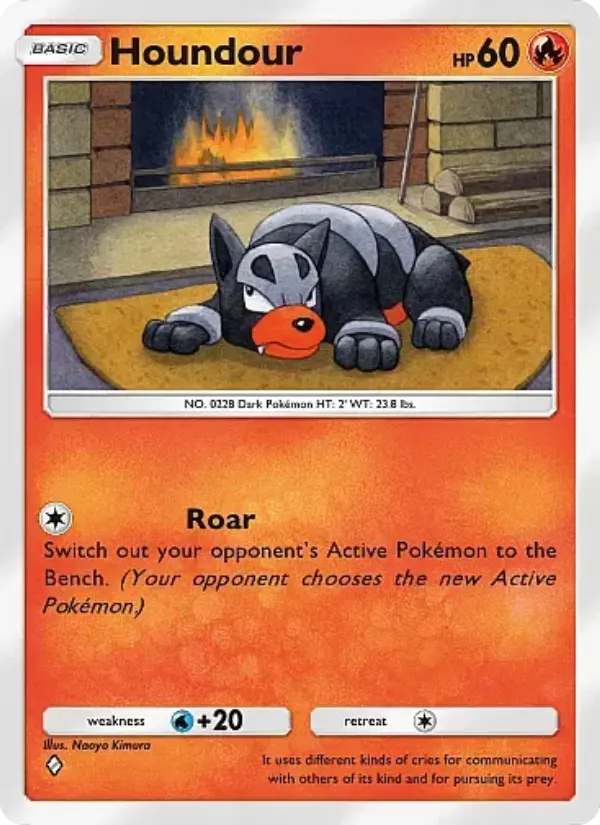
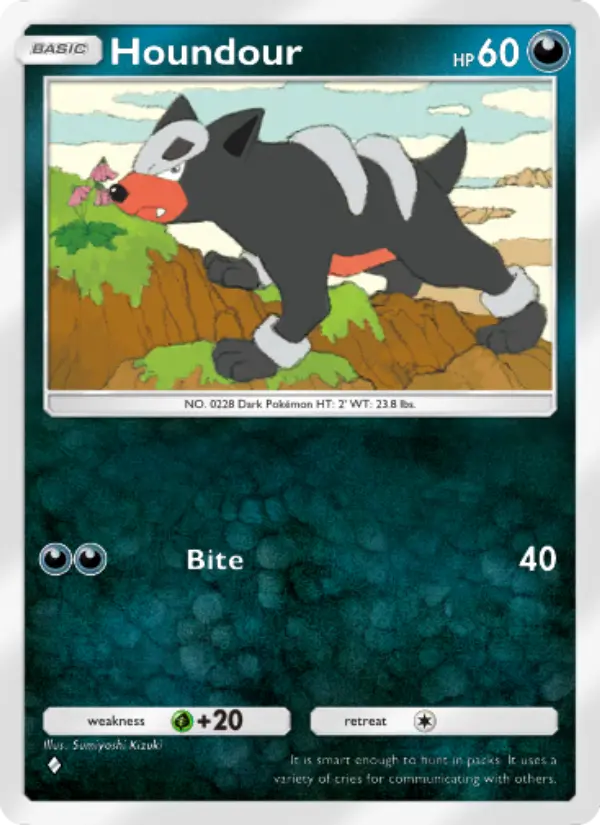
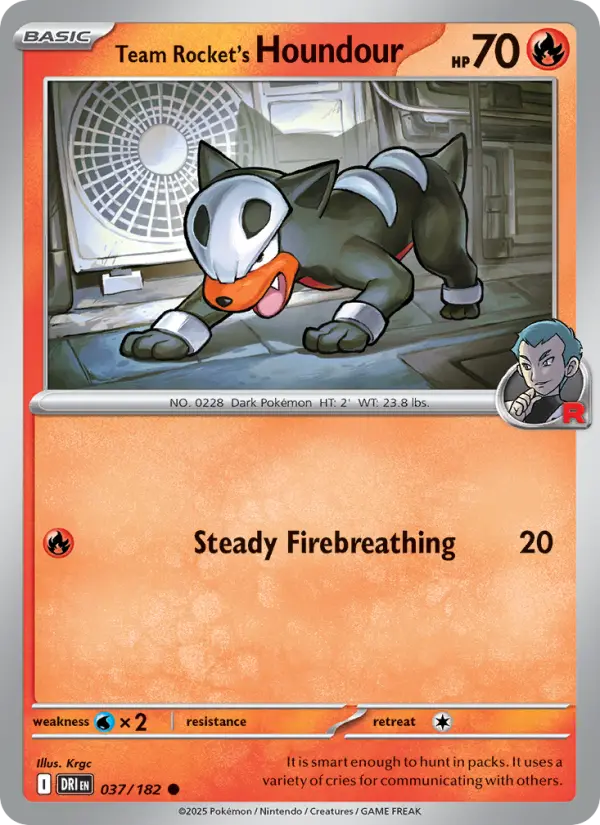
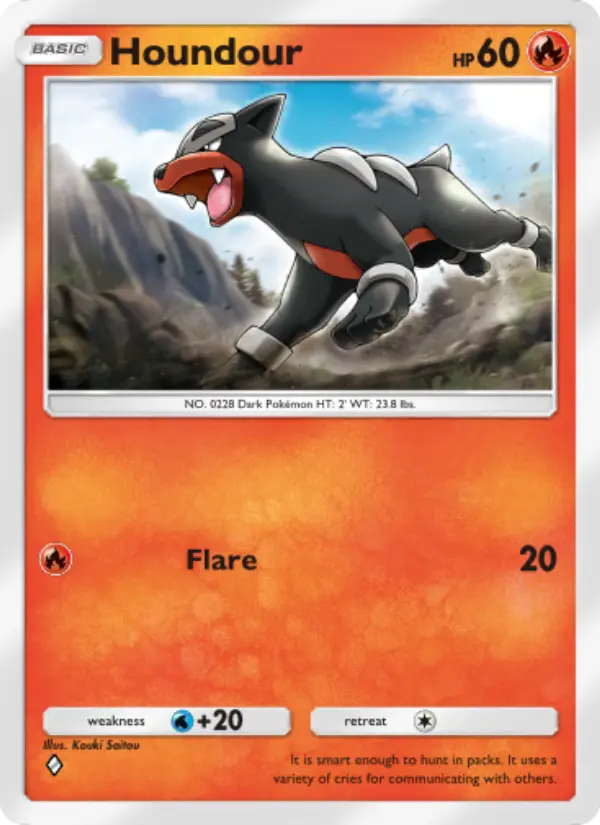
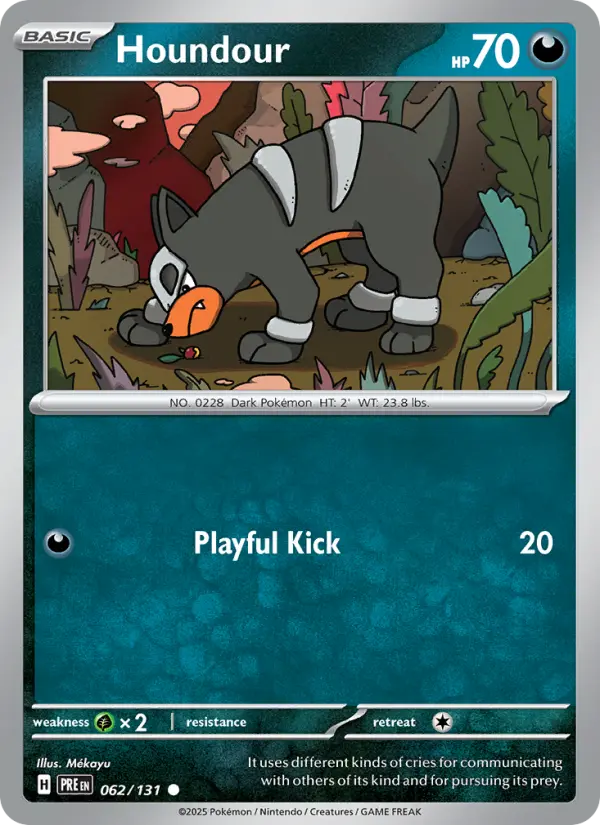
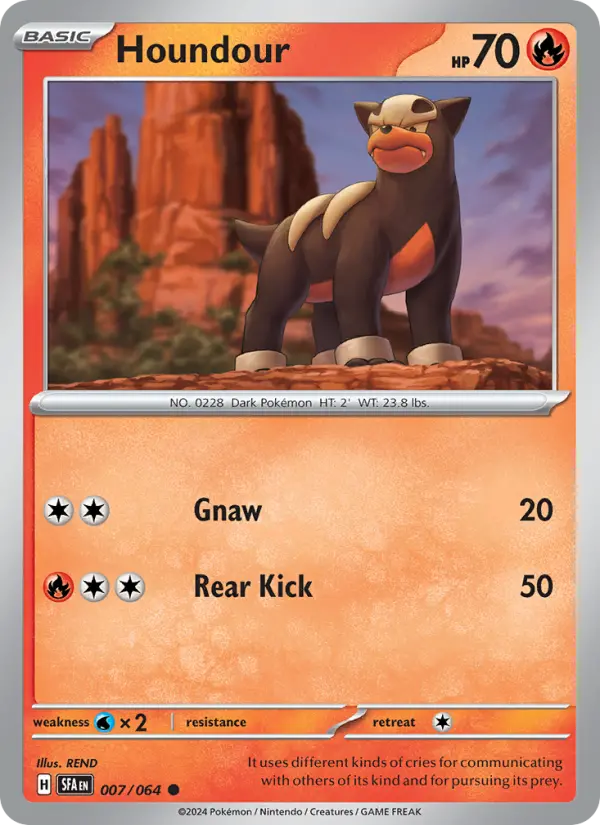
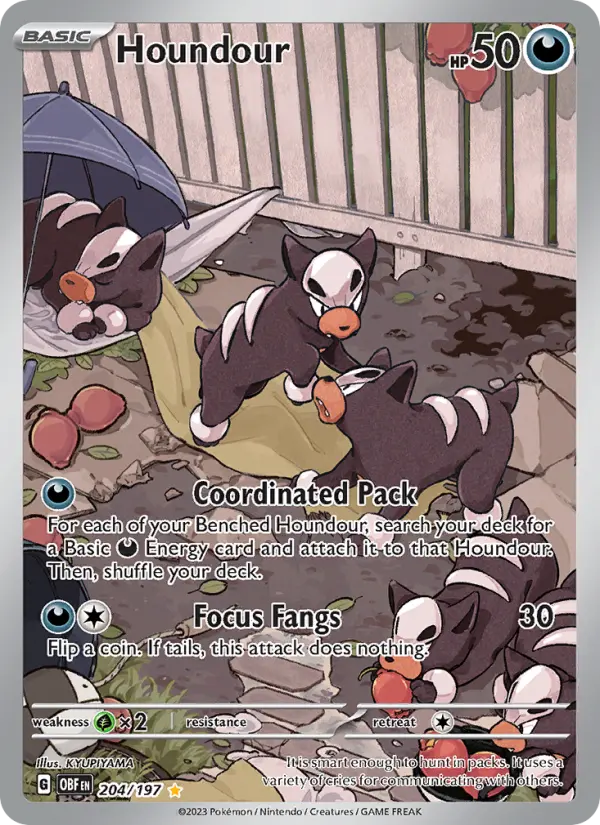
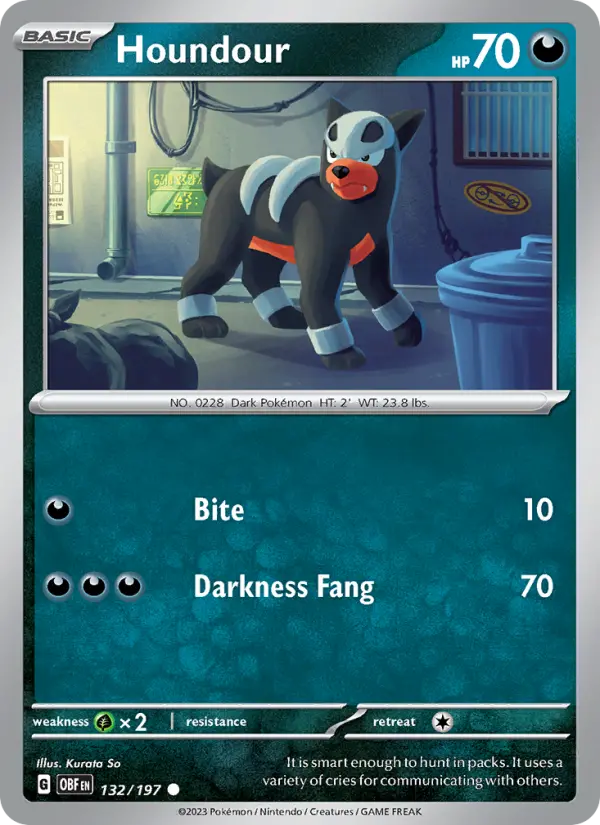
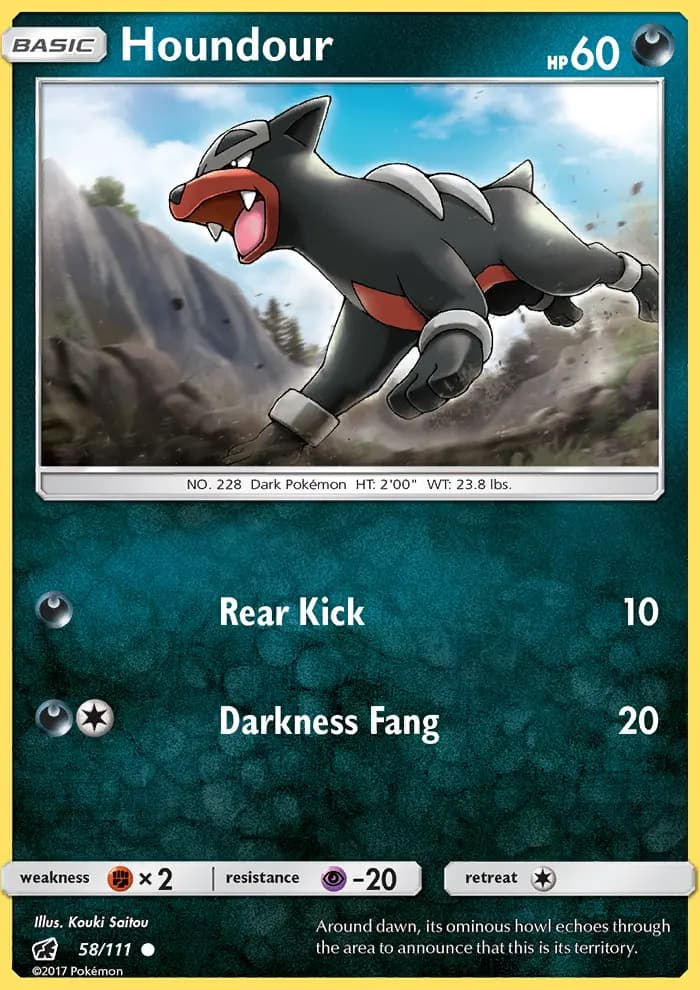
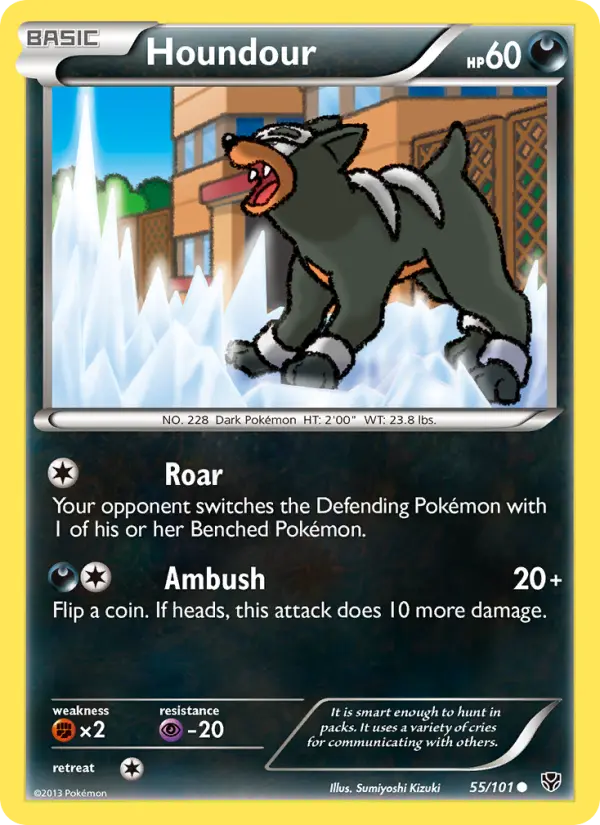
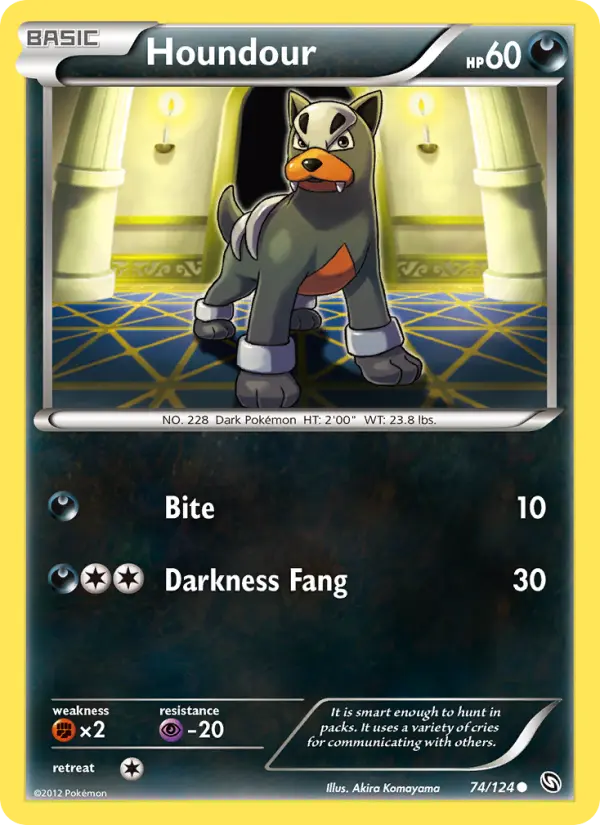
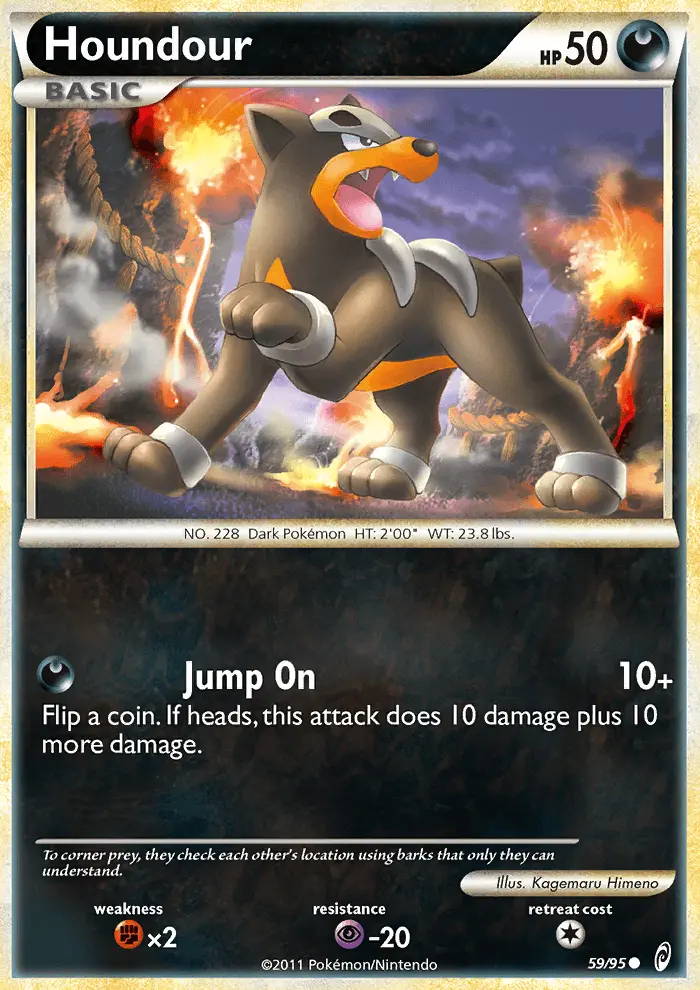
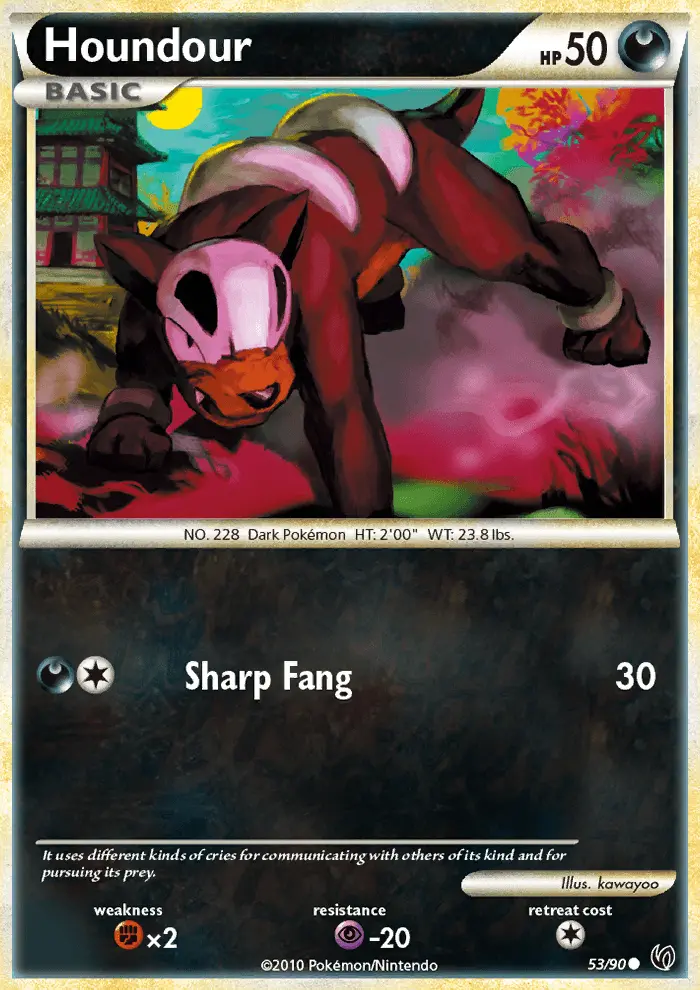
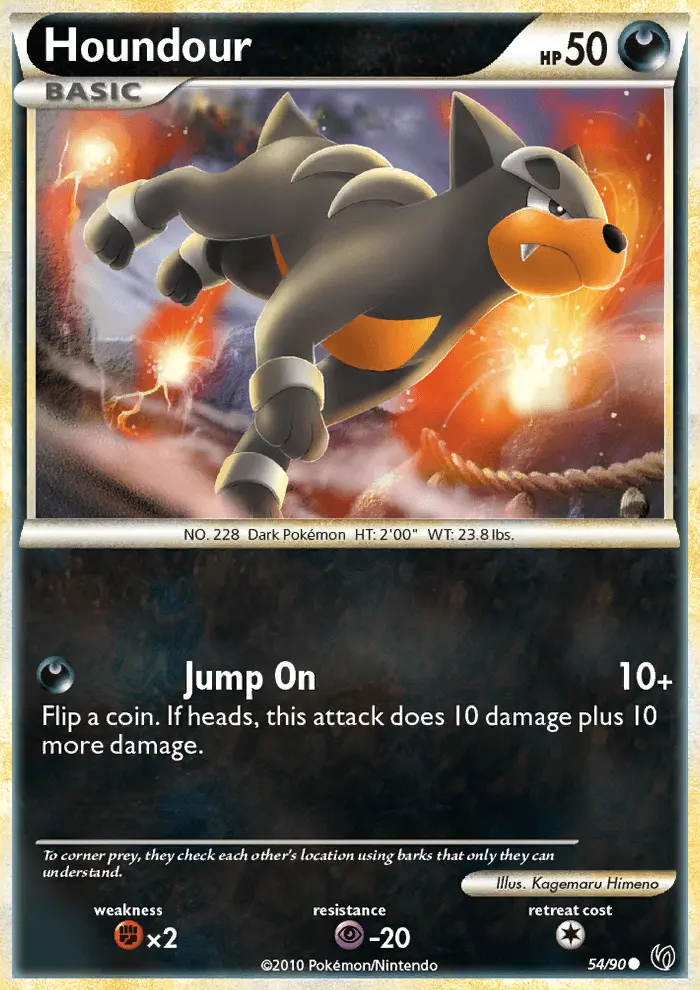
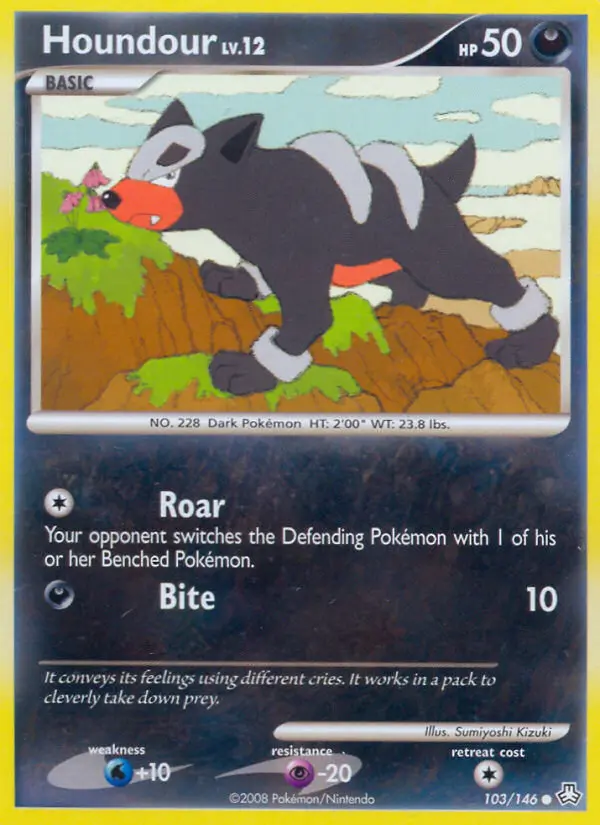
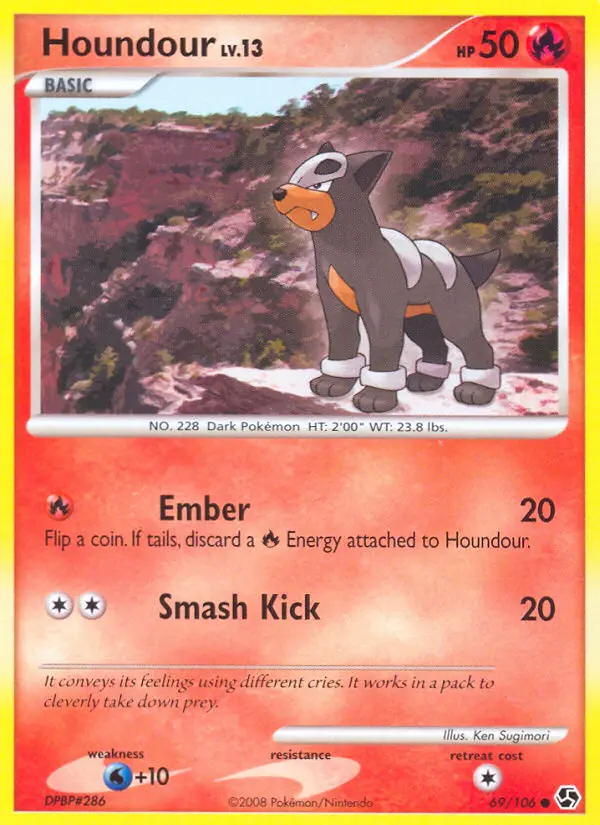
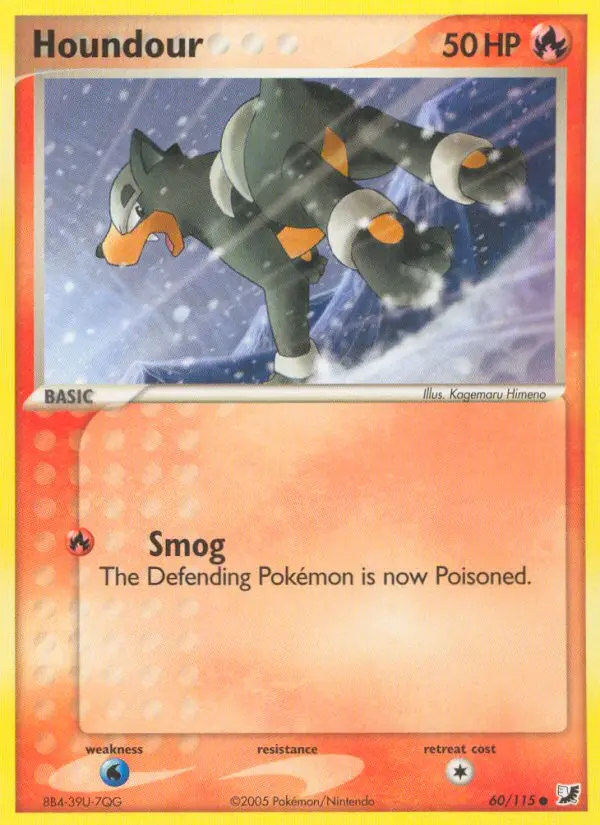
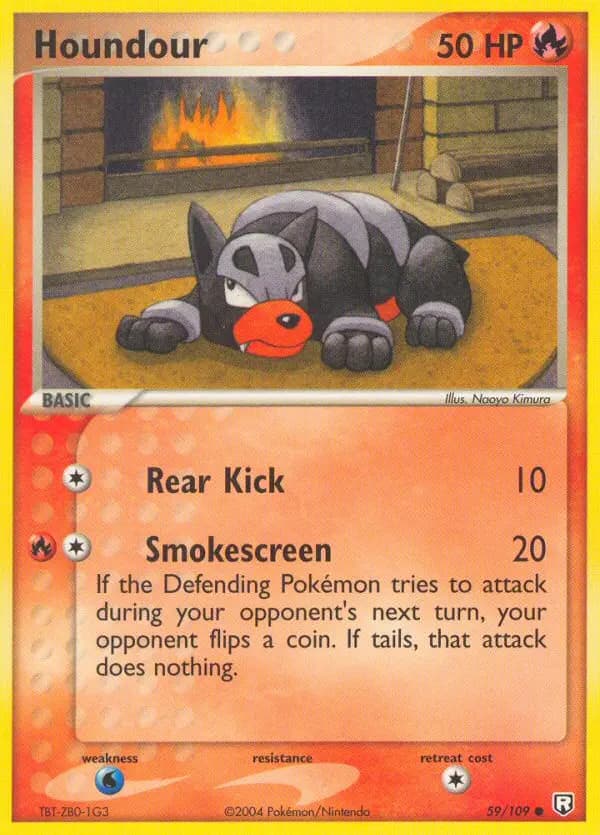
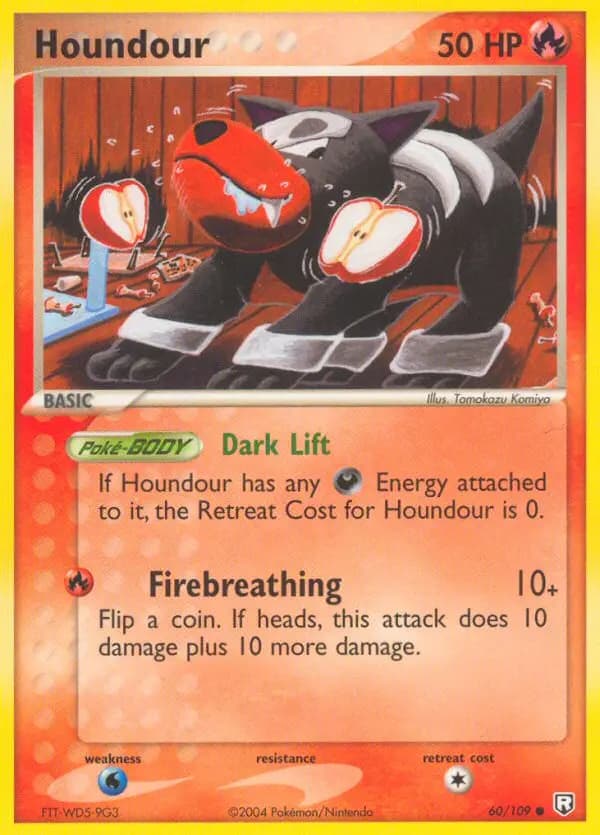
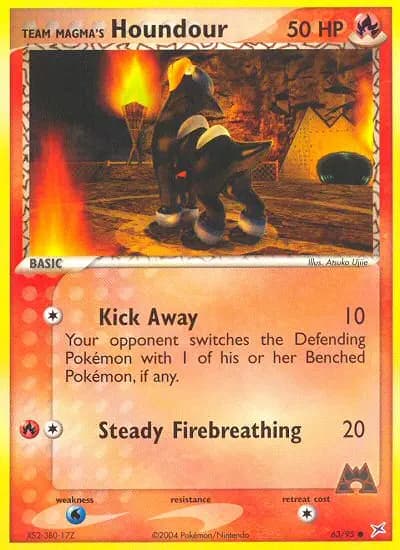
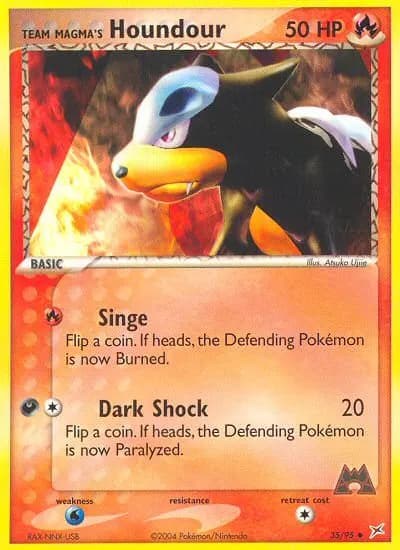
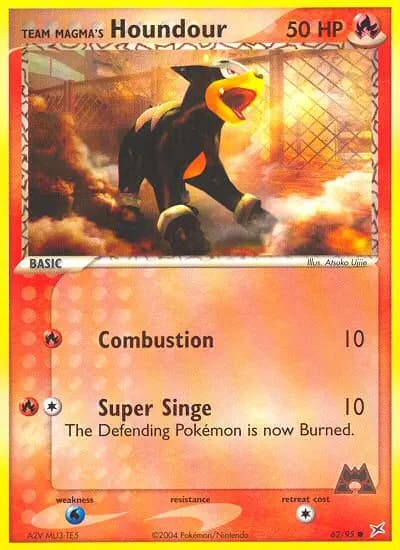
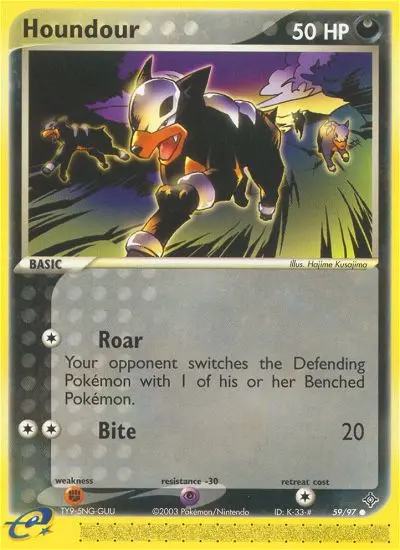
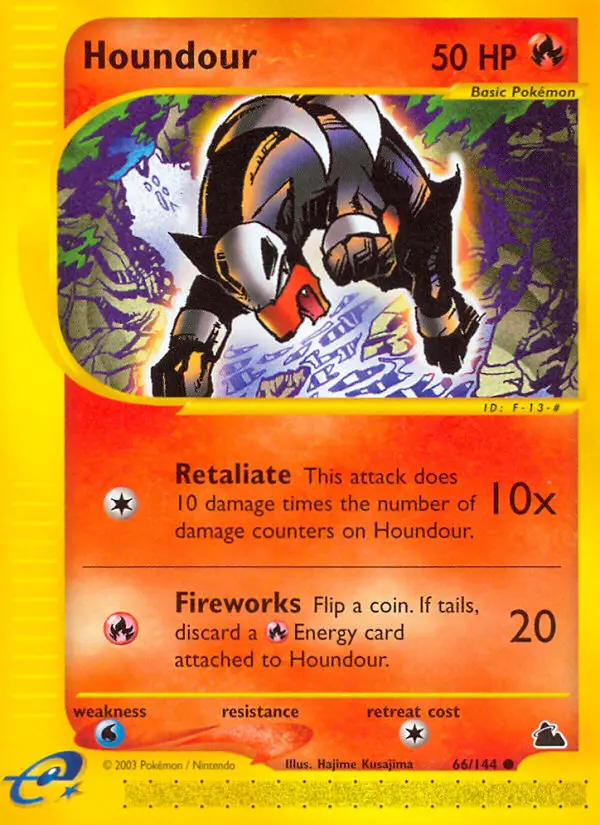
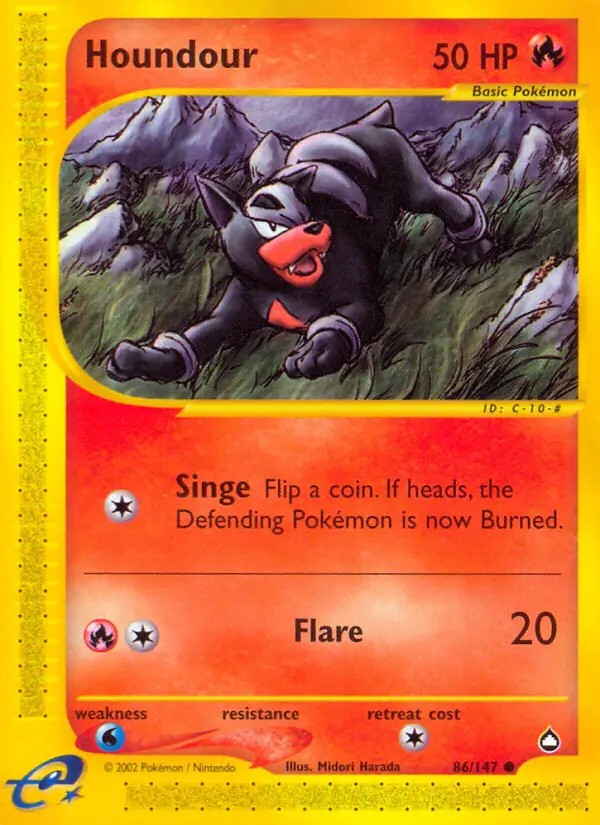
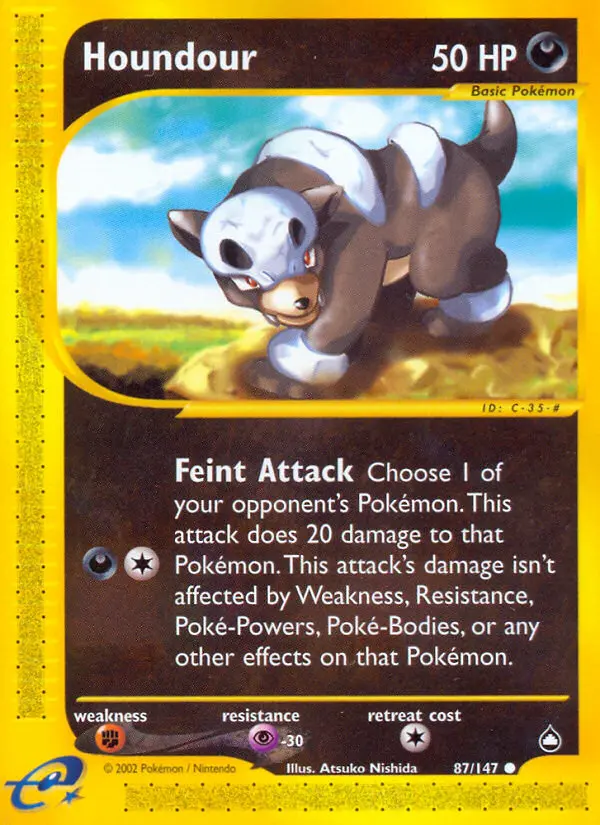
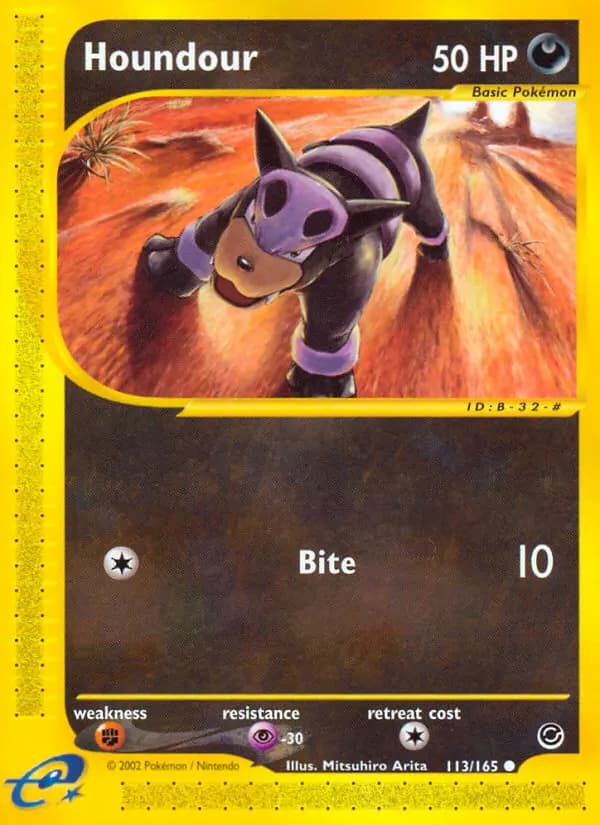
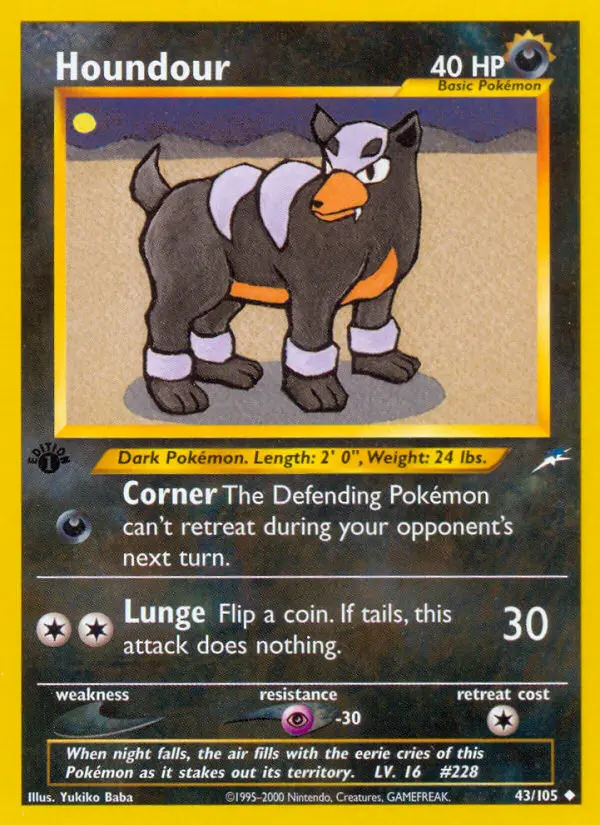
Houndour has maintained a steady presence in Pokémon media since its introduction in Generation II, capturing trainers' imaginations with its combination of underdog potential and sinister aesthetic. The species appeared prominently in the anime series episode "Hour of the Houndour," which explored themes of pack loyalty and compassion despite the Pokémon's fearsome reputation, resonating with audiences and establishing Houndour as more than simply a dark, dangerous creature. Its design has influenced subsequent Dark-type Pokémon, establishing visual and thematic precedents that many later generations have followed. In the Pokémon Trading Card Game, Houndour has received numerous cards spanning multiple sets, with some becoming collectible favorites among players and enthusiasts. The creature's presence in core games across nearly every generation since its debut speaks to its enduring appeal and competitive viability, ensuring that new players consistently encounter Houndour and contribute to its legacy. The species represents a particular appeal to trainers who appreciate darker aesthetics and pack-hunting dynamics, occupying a niche that makes it perpetually relevant to the broader Pokémon community.
Where to Find Houndour in Every Pokémon Game
Houndour's availability has shifted considerably across generations and game versions, reflecting the Pokédex's evolving regional distributions. In the original Gold, Silver, and Crystal versions, Houndour appeared in Johto with the local Pokédex number 0209, making it available to dedicated hunters exploring mountainous and rough terrain. Subsequent remakes like HeartGold and SoulSilver maintained its presence in Johto, though with adjusted encounter rates and locations. In Generation III, Houndour appeared in the Hoenn region, and it has since been included in the majority of mainline games including Platinum, Black 2/White 2, the X/Y generation (in Coastal Kalos), Sun/Moon, Sword/Shield, and most recently Scarlet and Violet. The species exhibits a base catch rate of 120, making it reasonably approachable for trainers using standard Poké Balls, particularly if the creature is weakened first. Its slow growth rate means that leveling Houndour to its evolution threshold at level 24 requires moderate grinding compared to faster-growing species. The consistency of Houndour's availability across generations has made it an accessible option for players seeking a Dark/Fire-type, though availability may vary by specific version and region. For those unable to find Houndour in their preferred version, breeding from a compatible parent species via the Field egg group remains a viable alternative.