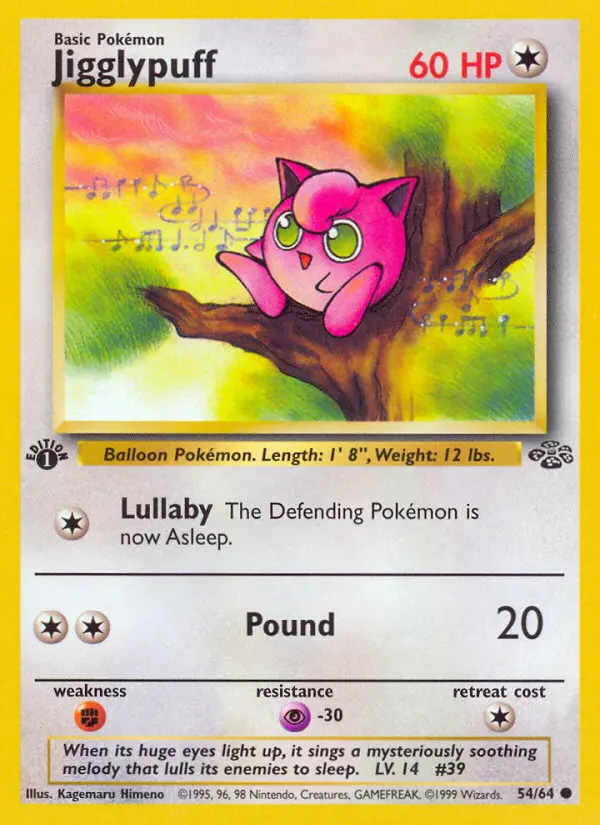
Jigglypuff
Generation I · #0039 — Balloon Pokémon
At 0.5 m and 5.5 kg, Jigglypuff doesn't look like much on paper, but its cute charm ability shapes how it actually plays more than its size suggests. This iconic Pokémon is renowned throughout the Pokémon world for its mysterious ability to sing a soothing melody that lulls opponents into an irresistible sleep. Despite its cute and unassuming appearance, Jigglypuff possesses remarkable biological adaptations that make it a fascinating subject of study, particularly regarding its vocal abilities and air-manipulation capabilities. The species achieved broader recognition beyond traditional gameplay through its prominent appearances in the Pokémon anime and various media adaptations, solidifying its place in popular culture.
Editor's Take
Jigglypuff's stat total is one of the lowest of any fully-evolved Pokémon in the game, and I think that's exactly why it's stuck around in Smash Bros longer than franchise mascots with actual competitive relevance — it was never going to win on numbers, so its identity had to come from somewhere else entirely.
Base Stats
Height
0.5m
Weight
5.5kg
Category
Balloon Pokémon
Gender
Male 25% / Female 75%
Color
pink
Shape
humanoid
Habitat
grassland
Abilities
Has a 30% chance of infatuating attacking Pokémon on contact.
Raises Special Attack by two stages upon having any stat lowered.
Decreases all direct damage taken by friendly Pokémon to 0.75×.

Jigglypuff Biology & Physical Characteristics
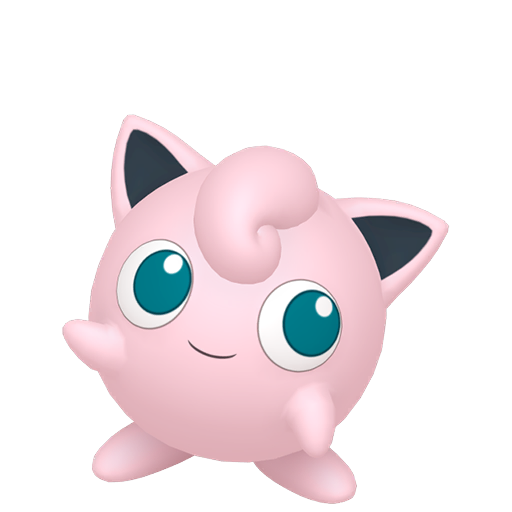
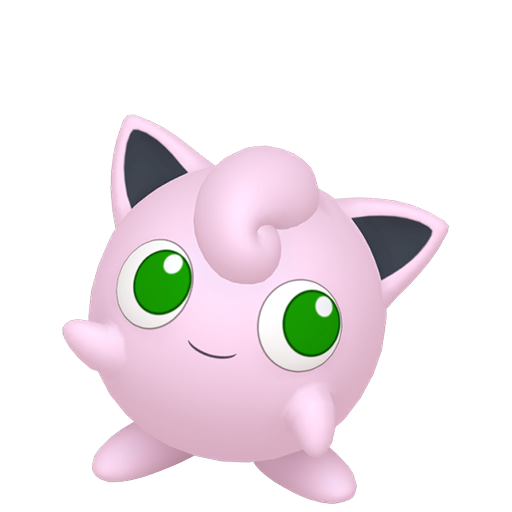
Jigglypuff is a small, spherical Pokémon standing only 0.5 meters tall and weighing a mere 5.5 kilograms, making it one of the lightest Normal-type Pokémon. Its body is composed primarily of air, giving it a balloon-like consistency that allows it to float and adjust its buoyancy by drawing additional air into its form, as documented in Pokémon Stadium observations. The Pokémon features a predominantly pink coloration with a distinctive curled tuft of fur adorning the top of its head, pointed ears with black inner coloring, and notably large blue eyes that serve as a critical component of its hypnotic abilities. Jigglypuff's physical structure includes small, stubby arms and slightly elongated feet proportional to its compact frame. Perhaps most remarkably, Jigglypuff possesses exceptional lung capacity that exceeds most other Pokémon species, enabling it to sustain its signature lullaby for extended periods. The Pokédex entries reveal that Jigglypuff's vocal cords can freely adjust the wavelength of its voice, allowing the Pokémon to sing at precisely the right frequency to induce drowsiness in opponents, though this ability carries inherent risk—if an opponent does not easily succumb to sleep, Jigglypuff may become so focused on singing that it forgets to breathe, potentially endangering its own life.
Pokedex Numbers
Training
Breeding
Jigglypuff Breeding, Gender Ratio & Egg Groups
Jigglypuff exhibits a notably skewed gender ratio, with females comprising 75 percent of the species while males account for only 25 percent, making females significantly more prevalent in natural populations. This gender distribution reflects breeding biology patterns also observed in Jigglypuff's evolutionary relatives and may relate to the species' overall reproductive strategy and egg-laying capabilities. As a member of the Fairy egg group, Jigglypuff shares breeding compatibility with other Fairy-type Pokémon and certain Normal-type species that fall within this classification. The species has a hatch counter value of 10 cycles, translating to approximately 2,314 to 2,570 steps required before an egg produces a new Jigglypuff, making it a relatively quick-hatching Pokémon compared to many others. With a base friendship value of 70 and a fast growth rate, Jigglypuff demonstrates relatively accessible breeding requirements for trainers seeking to obtain eggs through breeding centers. The pronounced female bias in the species suggests that trainer breeding programs may naturally lean toward maintaining female Jigglypuff for reproductive purposes, though males possess equal potential for battle competency. This gender distribution is maintained across all games and generations, indicating it represents an intentional design choice reflecting the species' biological nature rather than a programming oversight.
Sprites




Held Items
Moon Stone
evolution
Evolves a Clefairy into Clefable, a Jigglypuff into Wigglytuff, a Munna into Musharna, a Nidorina into Nidoqueen, a Nidorino into Nidoking, or a Skitty into Delcatty.
Cost: 3000
Moon Stone
evolution
Evolves a Clefairy into Clefable, a Jigglypuff into Wigglytuff, a Munna into Musharna, a Nidorina into Nidoqueen, a Nidorino into Nidoking, or a Skitty into Delcatty.
Cost: 3000
Moon Stone
evolution
Evolves a Clefairy into Clefable, a Jigglypuff into Wigglytuff, a Munna into Musharna, a Nidorina into Nidoqueen, a Nidorino into Nidoking, or a Skitty into Delcatty.
Cost: 3000
Moon Stone
evolution
Evolves a Clefairy into Clefable, a Jigglypuff into Wigglytuff, a Munna into Musharna, a Nidorina into Nidoqueen, a Nidorino into Nidoking, or a Skitty into Delcatty.
Cost: 3000
Oran Berry
medicine
Held: Consumed at 1/2 max HP to recover 10 HP.
Cost: 80
Oran Berry
medicine
Held: Consumed at 1/2 max HP to recover 10 HP.
Cost: 80
TMs & HMs
tm00
sword shield
tm01
yellow
tm01
red blue
tm01
lets go pikachu lets go eevee
tm01
blue japan
tm01
red green japan
tm01
sword shield
tm02
crystal
tm02
gold silver
tm03
crystal
tm03
gold silver
tm03
sword shield
tm04
gold silver
tm04
emerald
tm04
firered leafgreen
tm04
ruby sapphire
tm04
diamond pearl
tm04
crystal
tm04
xd
tm04
heartgold soulsilver
+750 more TMs/HMs
Jigglypuff's Evolution Chain


Jigglypuff Evolution, Mega Evolution & Special Forms
Jigglypuff occupies the middle stage of a three-Pokémon evolutionary line, evolving from Igglybuff upon reaching high friendship with its trainer and subsequently evolving into the larger, more formidable Wigglytuff when exposed to a Moon Stone. This evolutionary progression reflects a significant transformation in the Pokémon's capabilities and appearance. Upon evolution from Igglybuff, Jigglypuff gains considerably in its base HP stat, which rises to 115, providing it with respectable survivability despite its frail defensive stats. The evolutionary line demonstrates the species' connection to Fairy-type characteristics, as all three stages possess both Normal and Fairy typing, though this dual typing was only officially assigned in Generation VI when Jigglypuff's type was updated from pure Normal. The friendship requirement for evolving from Igglybuff emphasizes the deep bond necessary between trainer and Pokémon, rewarding dedicated trainers with a more powerful form. Further evolution into Wigglytuff through Moon Stone exposure provides substantial stat increases across the board, particularly enhancing Defense and Special Defense, transforming Jigglypuff from a delicate singer into a more robust combatant while maintaining its signature moves and abilities. The evolutionary journey from Igglybuff through Jigglypuff to Wigglytuff represents one of the classic evolutionary lines introduced in Generation I, offering trainers multiple stages at which they may choose to train and utilize this charming Pokémon.
Where to Find
Kanto Route 3
kanto
+25 more
Kanto Route 7
kanto
+5 more
Kanto Route 6
kanto
+5 more
Kanto Route 5
kanto
+5 more
Kanto Route 8
kanto
+4 more
Johto Route 46
johto
+9 more
Kanto Route 4
kanto
+7 more
Johto Route 34
johto
Johto Route 35
johto
Hoenn Route 115
hoenn
+3 more
Johto Safari Zone
johto
+31 more
Unova Route 14
unova
+1 more
Unova Route 2
unova
Dreamyard
unova
+3 more
Unova Route 1
unova
+1 more
Pokemon Village
kalos
+3 more
Kalos Route 20
kalos
+3 more
Alola Route 6
alola
+5 more
Alola Route 4
alola
+1 more
Jigglypuff Behaviour and Natural Habitat
Jigglypuff is a predominantly nocturnal Pokémon known for its peculiar habit of singing enchanting melodies, particularly during nighttime hours. The species uses its large, alluring eyes to captivate opponents before unleashing its drowsy-inducing song, a strategy reflected in various Pokédex entries describing how looking into Jigglypuff's cute, round eyes causes it to sing a relaxing melody. In battle situations, Jigglypuff employs these mesmerizing abilities as its primary defensive mechanism, as its base Attack stat of 45 and Defense stat of 20 indicate it relies heavily on special moves and status conditions rather than physical confrontation. When preparing to sing its most powerful lullaby, Jigglypuff inflates itself further, increasing its lung capacity and allowing for prolonged musical performance that guarantees drowsiness in its audience. The species appears to be social and seeks attention from others, evidenced by its willingness to perform and its base friendship value of 70, suggesting it bonds readily with trainers who show it proper care and affection. Jigglypuff inhabits various environments throughout the Pokémon world, though it shows a particular preference for areas where it can perform undisturbed and where its soothing songs will reach an appreciative audience.
Pokedex Entries
When its huge eyes light up, it sings a mysteriously soothing melody that lulls its enemies to sleep.
Uses its alluring eyes to enrapture its foe. It then sings a pleasing melody that lulls the foe to sleep.
If it inflates to SING a lullaby, it can perform longer and cause sure drowsiness in its audience.
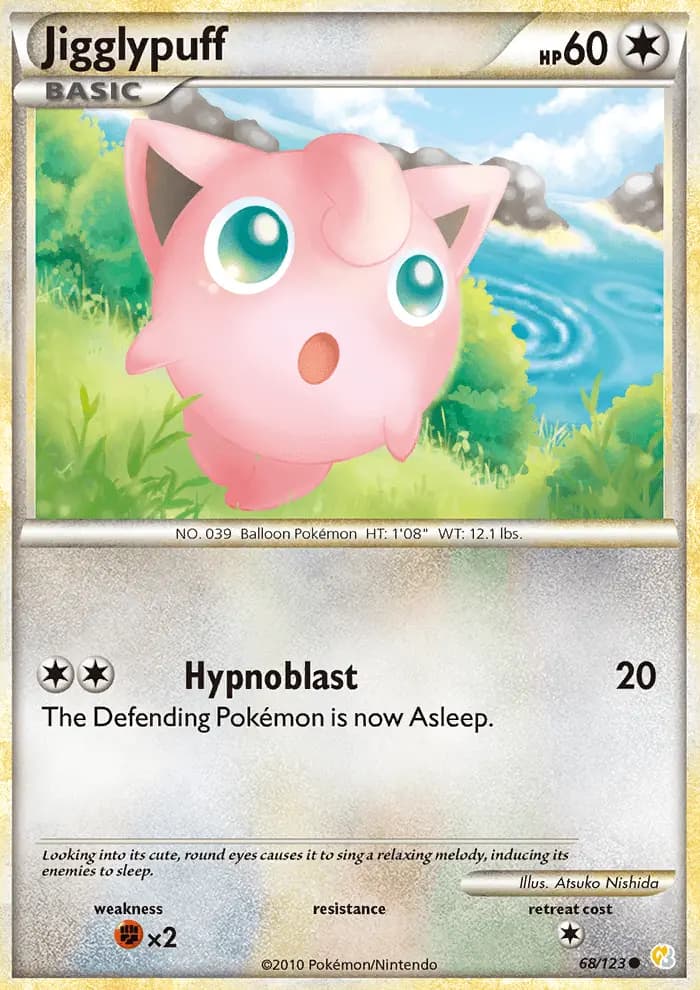
Looking into its cute, round eyes causes it to sing a relaxing melody, inducing its enemies to sleep.
It rolls its cute eyes as it sings a soothing lullaby. Its gentle song puts anyone who hears it to sleep.
JIGGLYPUFF’s vocal chords can freely adjust the wavelength of its voice. This POKéMON uses this ability to sing at precisely the right wavelength to make its foes most drowsy.
When this POKéMON sings, it never pauses to breathe. If it is in a battle against an opponent that does not easily fall asleep, JIGGLYPUFF cannot breathe, endangering its life.
Nothing can avoid falling asleep hearing a JIGGLYPUFF’s song. The sound waves of its singing voice match the brain waves of someone in a deep sleep.
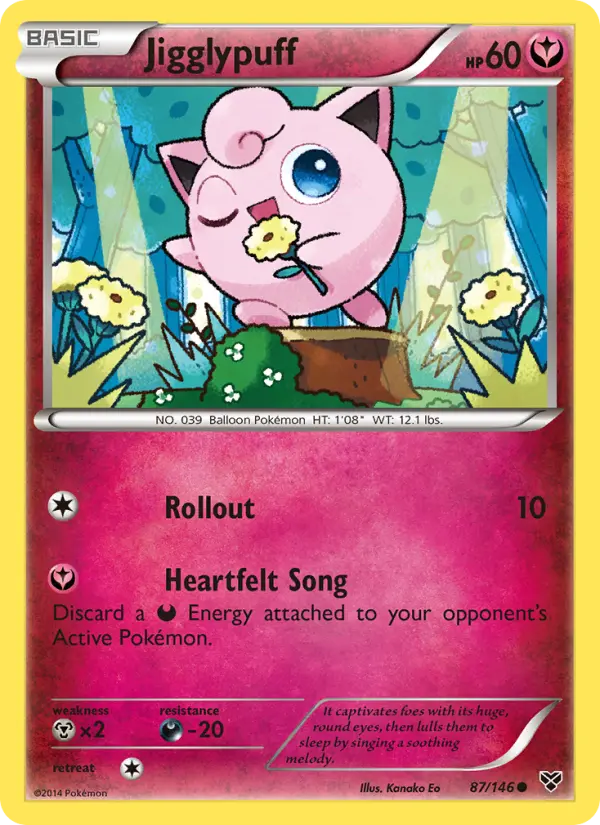
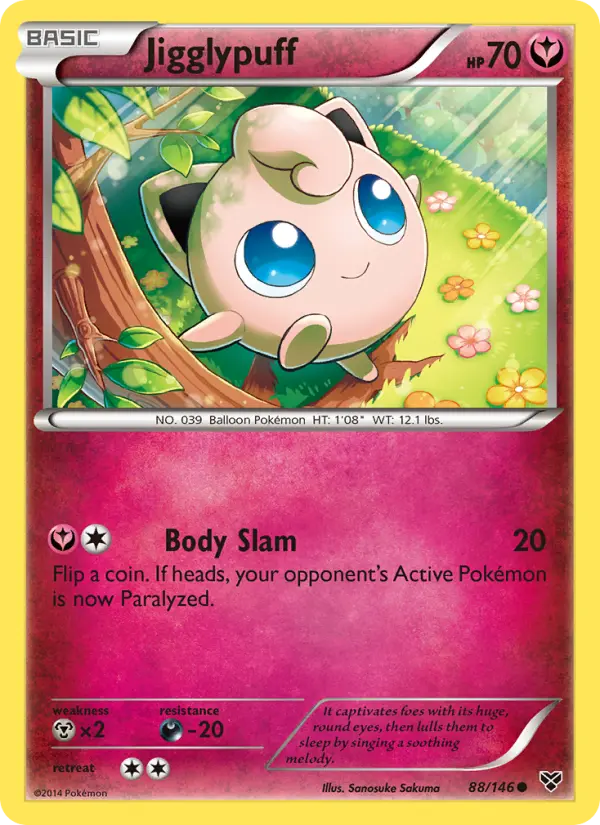
It captivates foes with its huge, round eyes, then lulls them to sleep by singing a soothing melody.
When its huge eyes waver, it sings a mysteriously soothing melody that lulls its enemies to sleep.
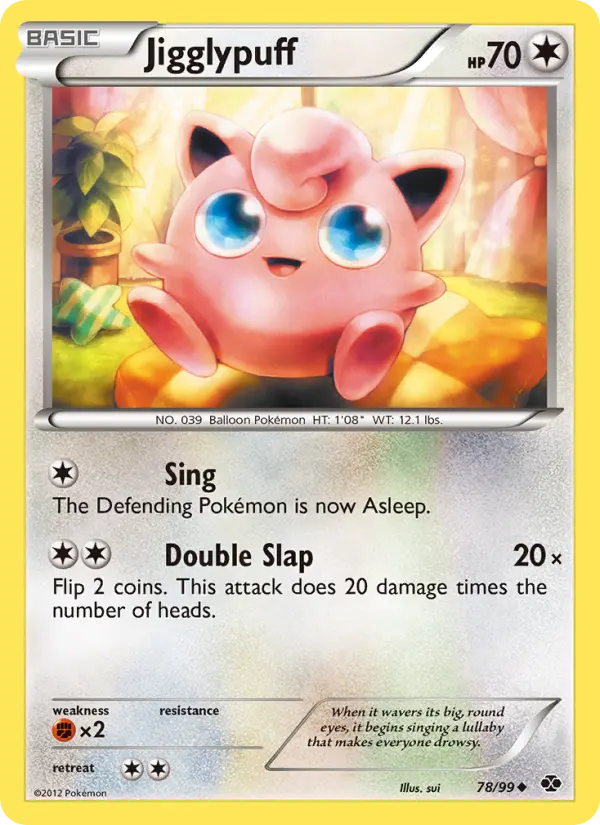
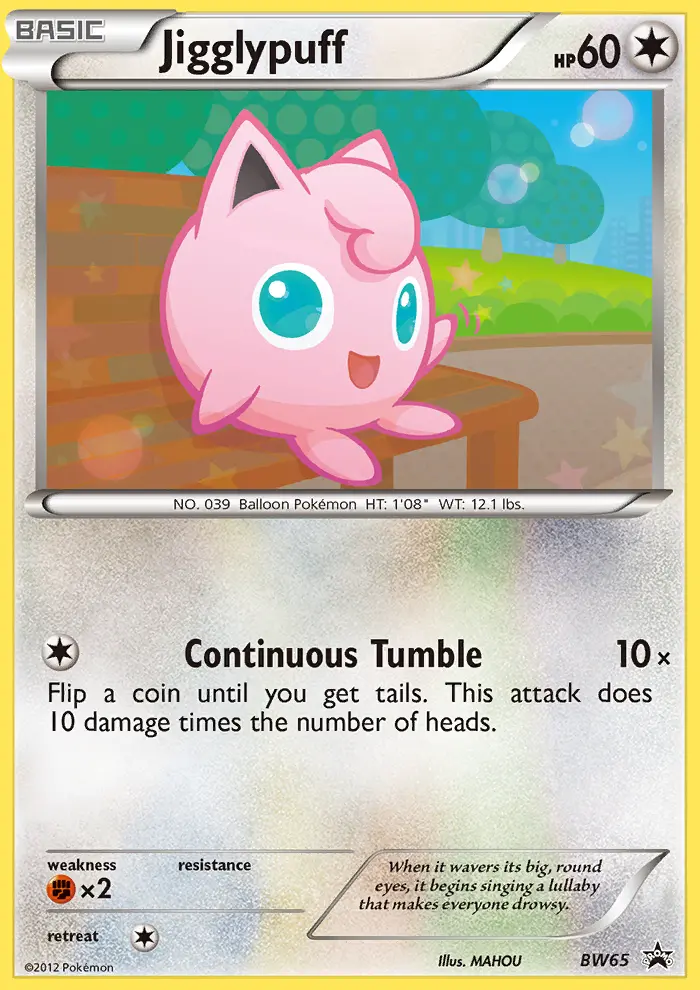
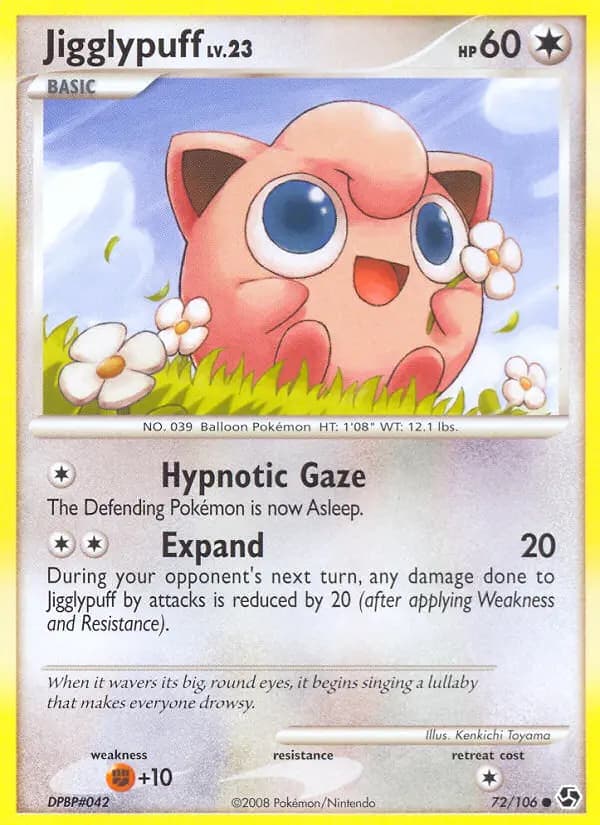
When it wavers its big, round eyes, it begins singing a lullaby that makes everyone drowsy.
If it inflates to sing a lullaby, it can perform longer and cause sure drowsiness in its audience.
Looking into its cute, round eyes causes it to sing a relaxing melody, inducing its enemies to sleep.
When it wavers its big, round eyes, it begins singing a lullaby that makes everyone drowsy.
Looking into its cute, round eyes makes it start singing a song so pleasant listeners can’t help but fall asleep.
It captivates foes with its huge, round eyes, then lulls them to sleep by singing a soothing melody.
If it inflates to sing a lullaby, it can perform longer and cause sure drowsiness in its audience.
Jigglypuff’s vocal cords can freely adjust the wavelength of its voice. This Pokémon uses this ability to sing at precisely the right wavelength to make its foes most drowsy.
When this Pokémon sings, it never pauses to breathe. If it is in a battle against an opponent that does not easily fall asleep, Jigglypuff cannot breathe, endangering its life.
It hugely inflates its stomach and sings a mysterious melody. If you hear this melody, you’ll become sleepy right away.
Recordings of Jigglypuff’s strange lullabies can be purchased from department stores. These CDs can be found near the bedding area.
Jigglypuff possess a vocal range that exceeds 12 octaves, but each individual’s singing skill depends on its own effort.
The songs they sing are totally different depending on the region they live in. Some even sound like they’re shouting!
Uses its cute round eyes to enrapture its foe. It then sings a pleasing melody that lulls the foe to sleep.
Jigglypuff has top-notch lung capacity, even by comparison to other Pokémon. It won’t stop singing its lullabies until its foes fall asleep.
By freely changing the wavelength of its voice, Jigglypuff sings a mysterious melody sure to make any listener sleepy.
Jigglypuff Name Origin & Design Inspiration
The name 'Jigglypuff' derives from the English words 'jiggle' and 'puff,' perfectly capturing the Pokémon's characteristic spherical, air-filled body that appears to wobble and bounce with even slight movements. The Japanese name 'Purin' (プリン) references 'pudding' or 'purin,' reflecting the Pokémon's soft, gelatinous appearance and dessert-like coloration. The design philosophy behind Jigglypuff centers on creating a deceptively innocent-looking Pokémon whose genuine threat emerges only when it begins to sing, embodying the concept of hidden danger beneath an adorable exterior. The prominent blue eyes and pink spherical form were deliberately crafted to invoke feelings of cuteness and harmlessness in observers, making the contrast with its sleep-inducing song all the more striking and memorable. The curled tuft of hair atop its head serves as a distinctive silhouette element that aids in species recognition while contributing to its whimsical, almost cloud-like aesthetic. The balloon-like quality of its design extends beyond mere visual appeal; it directly relates to its biological functionality as an air-filled creature capable of floating. Jigglypuff's overall aesthetic represents an excellent example of first-generation Pokémon design, combining memorable features with gameplay mechanics that make the species immediately recognizable and functionally distinct from other Pokémon in its type class.
Learnable Moves
Jigglypuff can learn 80 moves:
Move | Type | Cat. | Power | Acc. | PP |
|---|---|---|---|---|---|
| amnesia | psychic | Status | — | — | 20 |
| attract | normal | Status | — | 100 | 15 |
| bide | normal | Physical | — | — | 10 |
| blizzard | ice | Special | 110 | 70 | 5 |
| body slam | normal | Physical | 85 | 100 | 15 |
| bounce | flying | Physical | 85 | 85 | 5 |
| bubble beam | water | Special | 65 | 100 | 20 |
| calm mind | psychic | Status | — | — | 20 |
| charm | fairy | Status | — | 100 | 20 |
| counter | fighting | Physical | — | 100 | 20 |
| covet | normal | Physical | 60 | 100 | 25 |
| curse | ghost | Status | — | — | 10 |
| defense curl | normal | Status | — | — | 40 |
| detect | fighting | Status | — | — | 5 |
| dig | ground | Physical | 80 | 100 | 10 |
| disable | normal | Status | — | 100 | 20 |
| double slap | normal | Physical | 15 | 85 | 10 |
| double team | normal | Status | — | — | 15 |
| double edge | normal | Physical | 120 | 100 | 15 |
| dream eater | psychic | Special | 100 | 100 | 15 |
| endure | normal | Status | — | — | 10 |
| fake tears | dark | Status | — | 100 | 20 |
| fire blast | fire | Special | 110 | 85 | 5 |
| fire punch | fire | Physical | 75 | 100 | 15 |
| flamethrower | fire | Special | 90 | 100 | 15 |
| flash | normal | Status | — | 100 | 20 |
| frustration | normal | Physical | — | 100 | 20 |
| headbutt | normal | Physical | 70 | 100 | 15 |
| heal bell | normal | Status | — | — | 5 |
| hidden power | normal | Special | 60 | 100 | 15 |
| hyper voice | normal | Special | 90 | 100 | 10 |
| ice beam | ice | Special | 90 | 100 | 10 |
| ice punch | ice | Physical | 75 | 100 | 15 |
| icy wind | ice | Special | 55 | 95 | 15 |
| light screen | psychic | Status | — | — | 30 |
| magical leaf | grass | Special | 60 | — | 20 |
| mega kick | normal | Physical | 120 | 75 | 5 |
| mega punch | normal | Physical | 80 | 85 | 20 |
| metronome | normal | Status | — | — | 10 |
| mimic | normal | Status | — | — | 10 |
| mud slap | ground | Special | 20 | 100 | 10 |
| nightmare | ghost | Status | — | 100 | 15 |
| pound | normal | Physical | 40 | 100 | 35 |
| protect | normal | Status | — | — | 10 |
| psychic | psychic | Special | 90 | 100 | 10 |
| psywave | psychic | Special | — | 100 | 15 |
| rage | normal | Physical | 20 | 100 | 20 |
| rain dance | water | Status | — | — | 5 |
| reflect | psychic | Status | — | — | 20 |
| rest | psychic | Status | — | — | 5 |
| return | normal | Physical | — | 100 | 20 |
| rollout | rock | Physical | 30 | 90 | 20 |
| safeguard | normal | Status | — | — | 25 |
| sandstorm | rock | Status | — | — | 10 |
| screech | normal | Status | — | 85 | 40 |
| secret power | normal | Physical | 70 | 100 | 20 |
| seismic toss | fighting | Physical | — | 100 | 20 |
| self destruct | normal | Physical | 200 | 100 | 5 |
| sing | normal | Status | — | 55 | 15 |
| skull bash | normal | Physical | 130 | 100 | 10 |
| sleep talk | normal | Status | — | — | 10 |
| snore | normal | Special | 50 | 100 | 15 |
| solar beam | grass | Special | 120 | 100 | 10 |
| strength | normal | Physical | 80 | 100 | 15 |
| submission | fighting | Physical | 80 | 80 | 20 |
| substitute | normal | Status | — | — | 10 |
| swagger | normal | Status | — | 85 | 15 |
| sweet kiss | fairy | Status | — | 75 | 10 |
| swift | normal | Special | 60 | — | 20 |
| take down | normal | Physical | 90 | 85 | 20 |
| teleport | psychic | Status | — | — | 20 |
| thief | dark | Physical | 60 | 100 | 25 |
| thunder | electric | Special | 110 | 70 | 10 |
| thunder punch | electric | Physical | 75 | 100 | 15 |
| thunder wave | electric | Status | — | 90 | 20 |
| thunderbolt | electric | Special | 90 | 100 | 15 |
| toxic | poison | Status | — | 90 | 10 |
| tri attack | normal | Special | 80 | 100 | 10 |
| water gun | water | Special | 40 | 100 | 25 |
| zap cannon | electric | Special | 120 | 50 | 5 |
Jigglypuff Competitive Battle Guide
Competitively, Jigglypuff's unusual stat distribution creates interesting strategic possibilities despite its overall aggregate stat total of only 270. The species' most striking strength lies in its exceptional base HP of 115, which grants it substantial hit points for survival and provides a solid foundation for bulky support roles. However, Jigglypuff's defensive stats present significant challenges, with a base Defense of only 20 and Special Defense of 25, making it exceptionally vulnerable to physical and special attacks despite its high HP pool. The species' offensive capabilities are equally limited, featuring base Attack and Special Attack stats of 45 each, which severely restrict its ability to deal damage independently. Jigglypuff's base Speed stat of 20 ranks among the lowest in the entire Pokémon franchise, making it nearly impossible for Jigglypuff to act first in combat without substantial speed-boosting moves or items. The Cute Charm ability provides a 30 percent chance of infatuating attacking Pokémon upon contact, offering modest defensive utility, while the Competitive hidden ability raises Special Attack by two stages when any stat is lowered, potentially creating opportunities in specific metagames. Friend Guard, its other hidden ability, reduces damage taken by friendly Pokémon to 75 percent of normal, making Jigglypuff valuable in double and triple battles focused on team protection. Competitively, Jigglypuff functions best as a support Pokémon utilizing moves like Sing for sleep-inducing support, Heal Bell for team healing, or Thunder Wave for speed control, rather than as a primary damage dealer.
Commonly Asked Questions About Jigglypuff
What type is Jigglypuff?
Jigglypuff is a normal and fairy type Pokemon.
What does Jigglypuff evolve into?
Jigglypuff evolves into wigglytuff.
What are Jigglypuff's weaknesses?
Jigglypuff is weak to poison and steel type moves.
Does Jigglypuff evolve by trading?
No — Jigglypuff evolves entirely through leveling up, with no trade required at any stage.
Where can I find Jigglypuff?
Jigglypuff can be found in kanto route 3 (kanto), kanto route 7 (kanto) and kanto route 6 (kanto) and 16 other locations.
Jigglypuff Cultural Impact & Franchise History
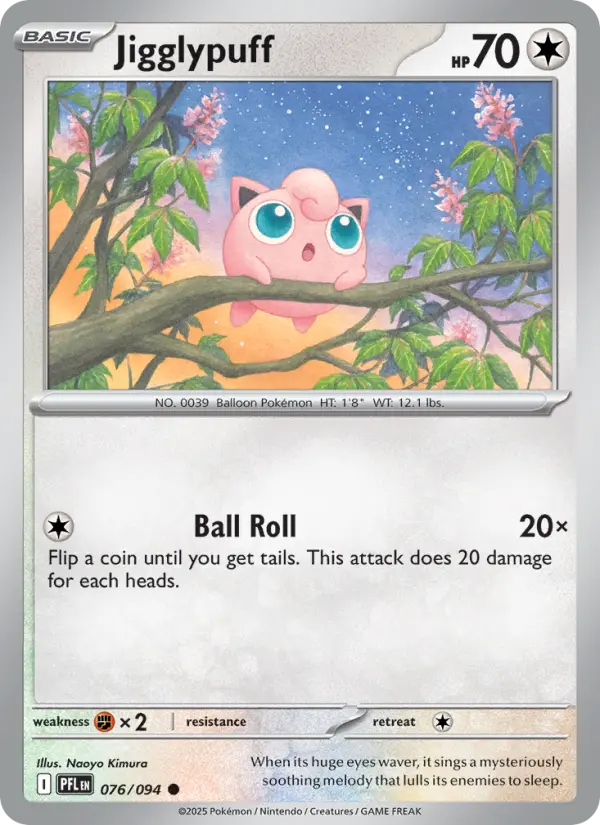
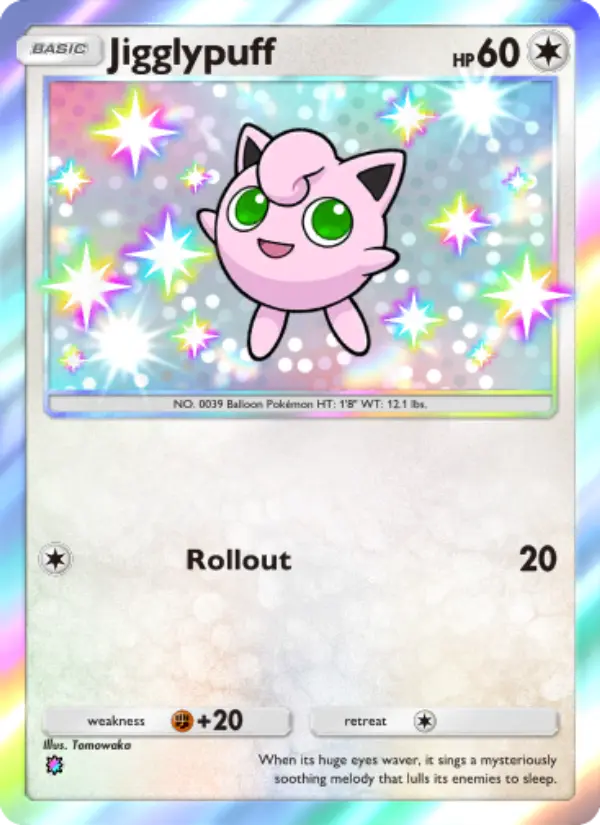
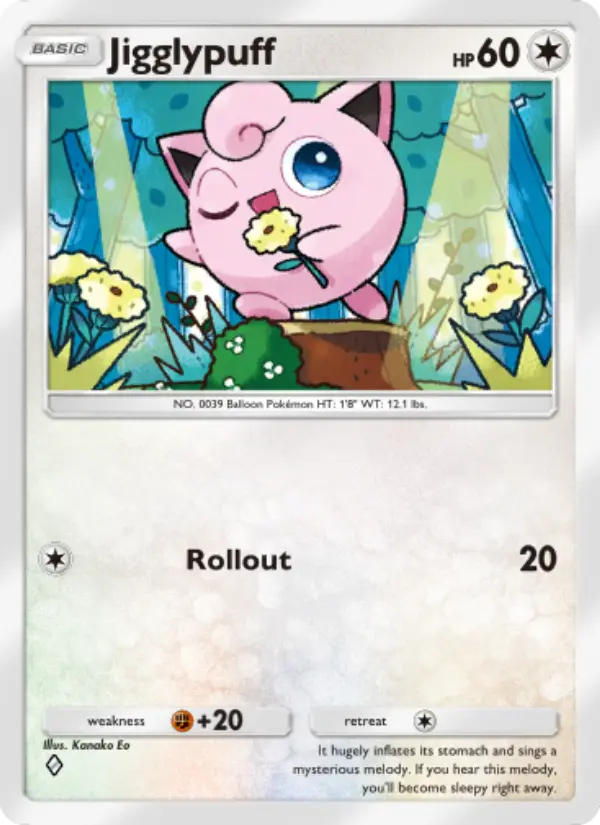
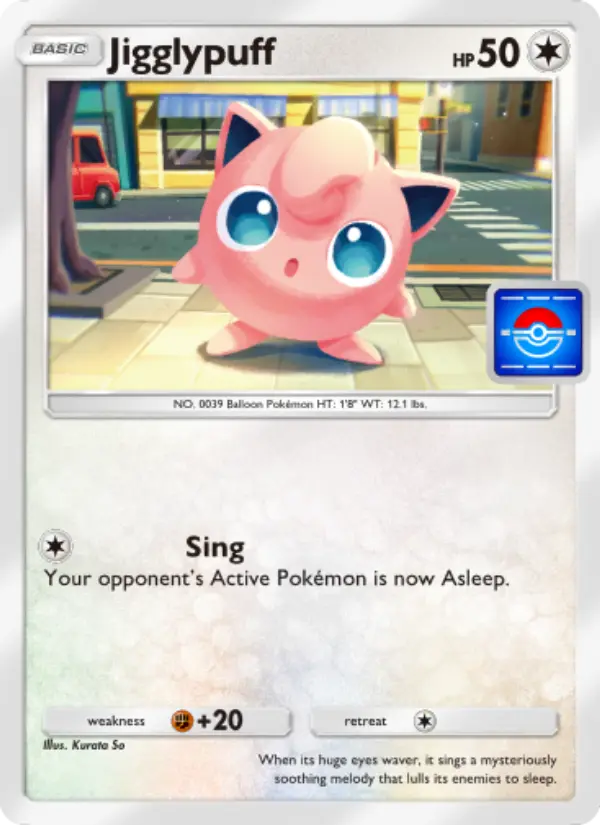
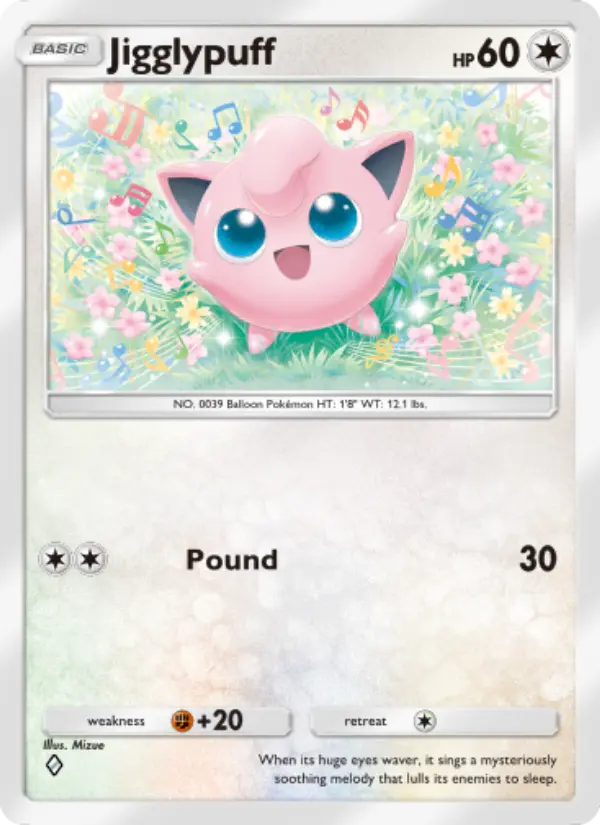
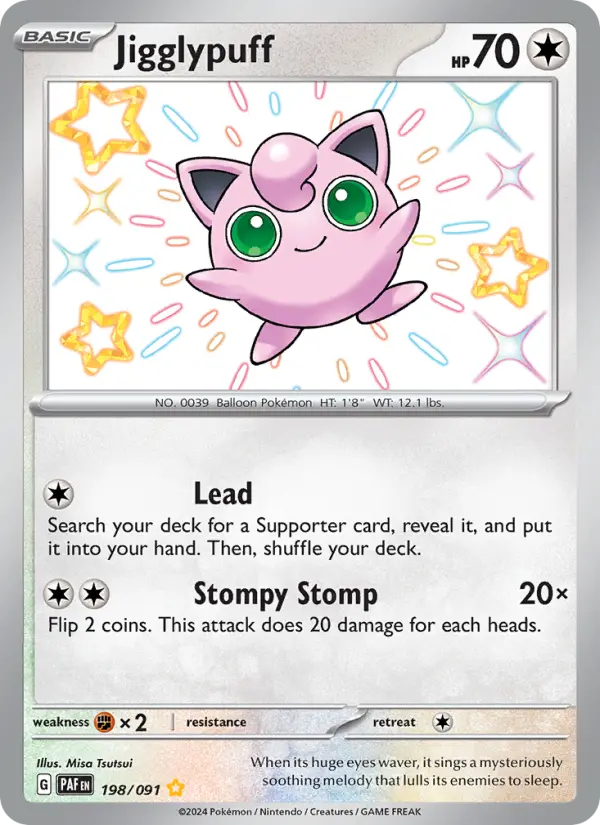
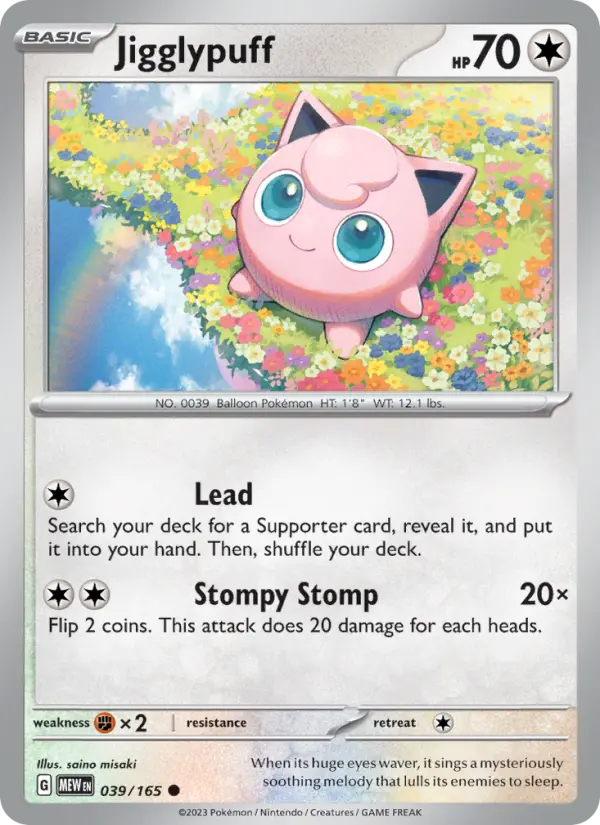
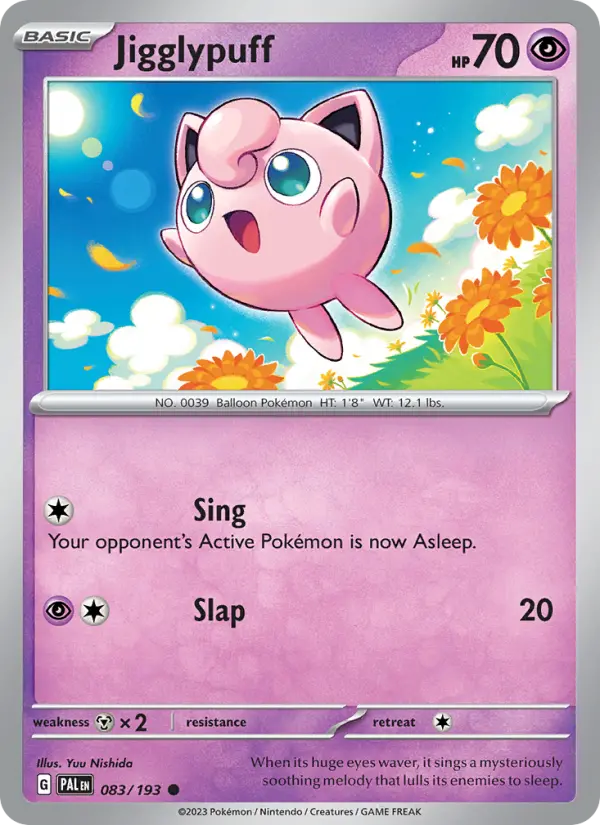
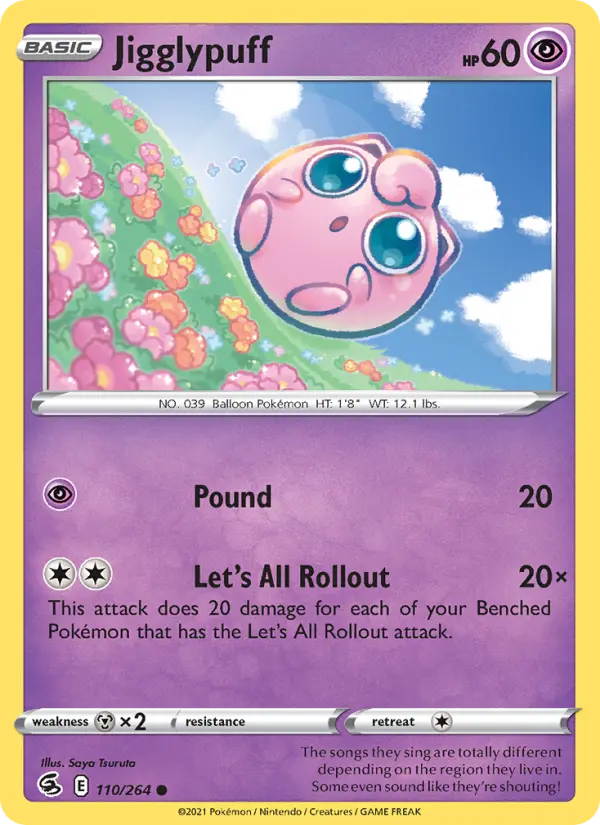
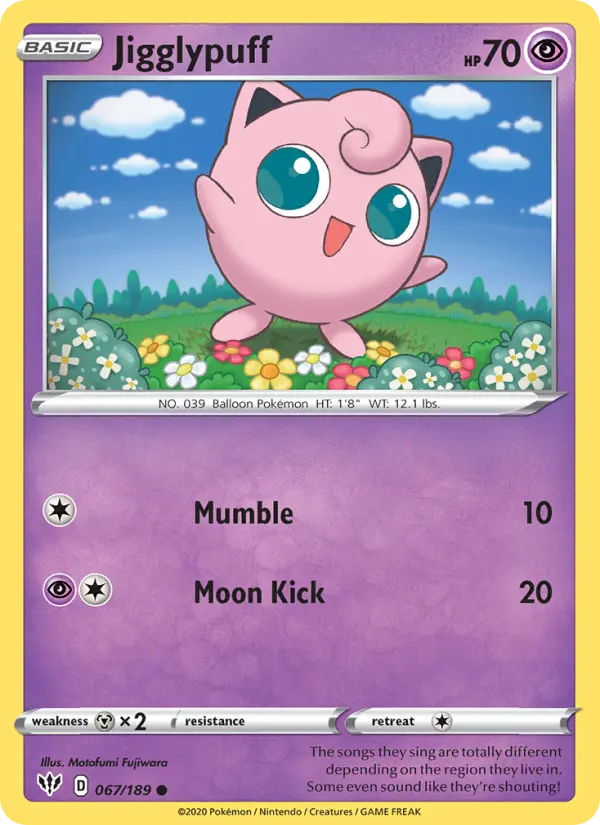
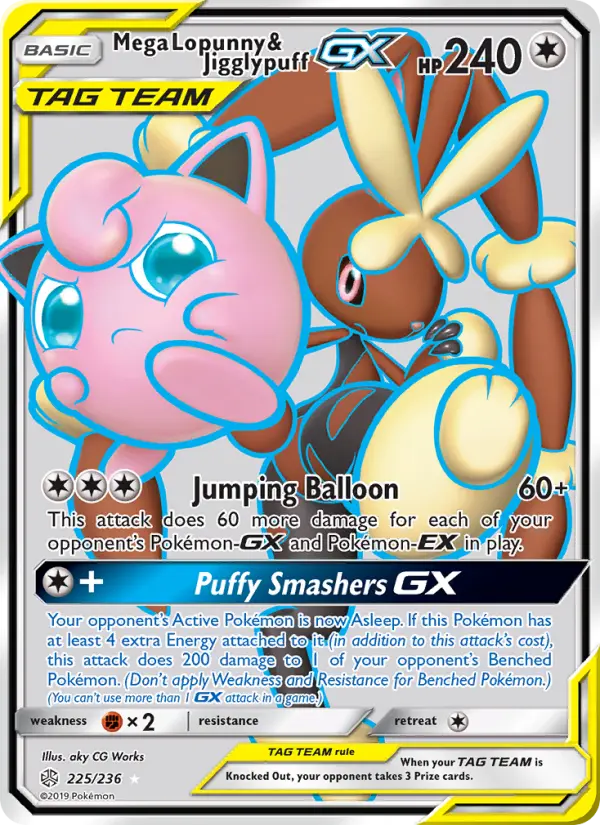
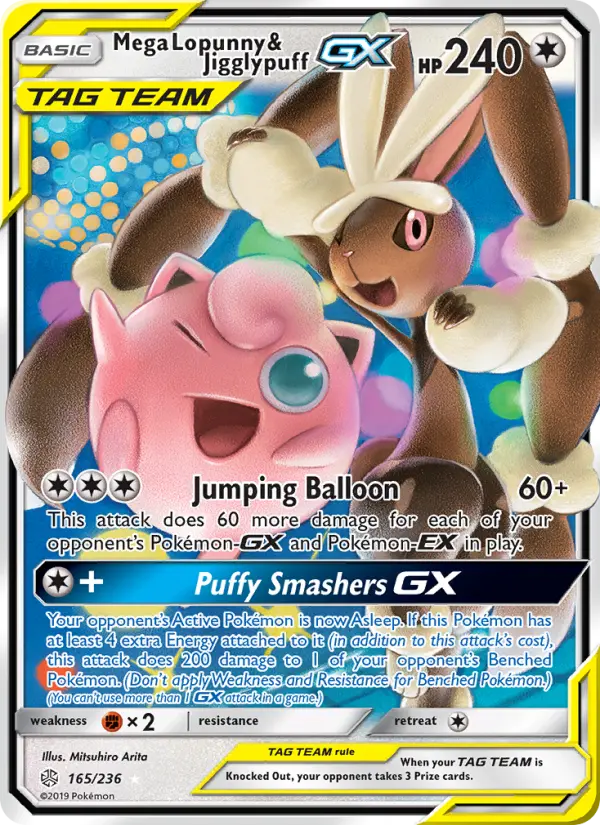
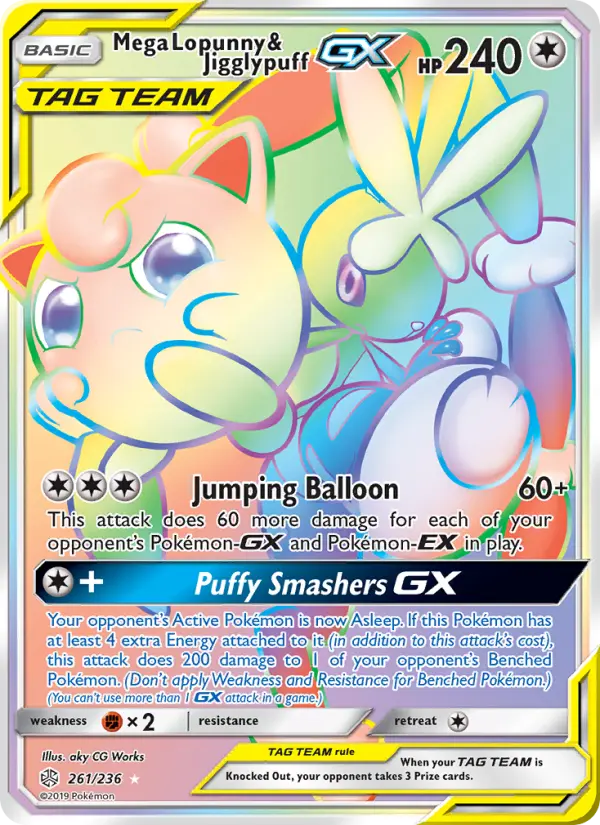
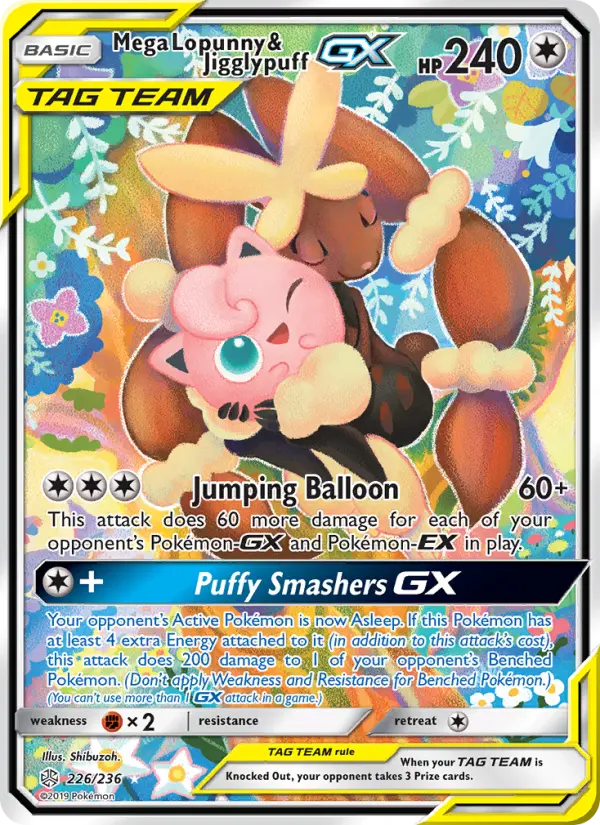
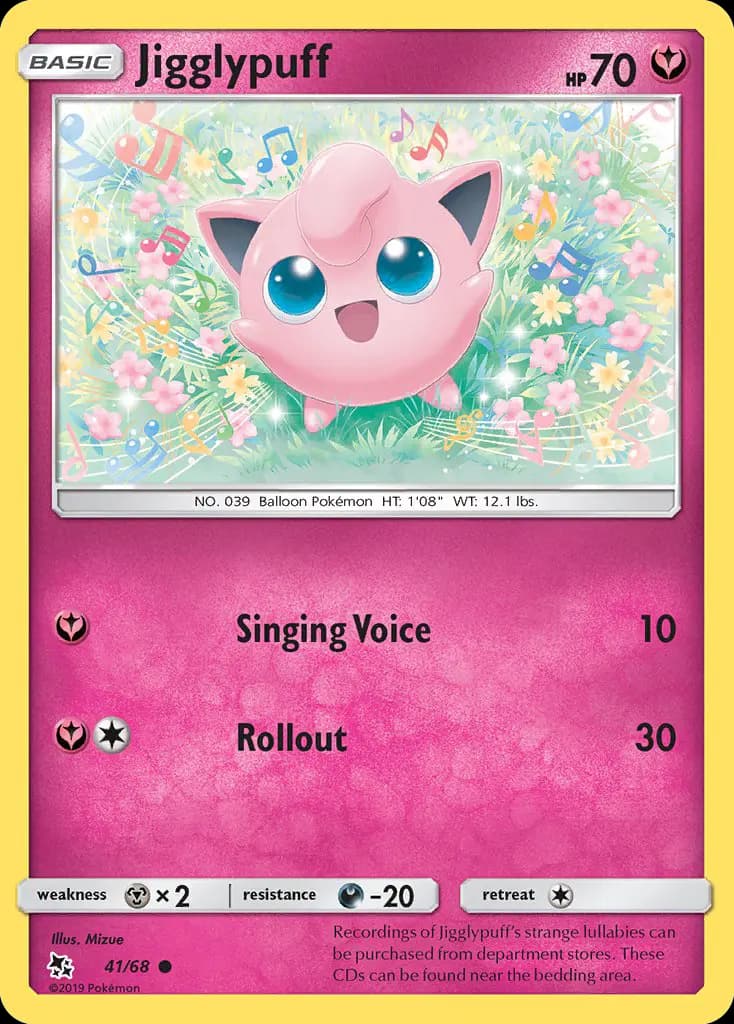
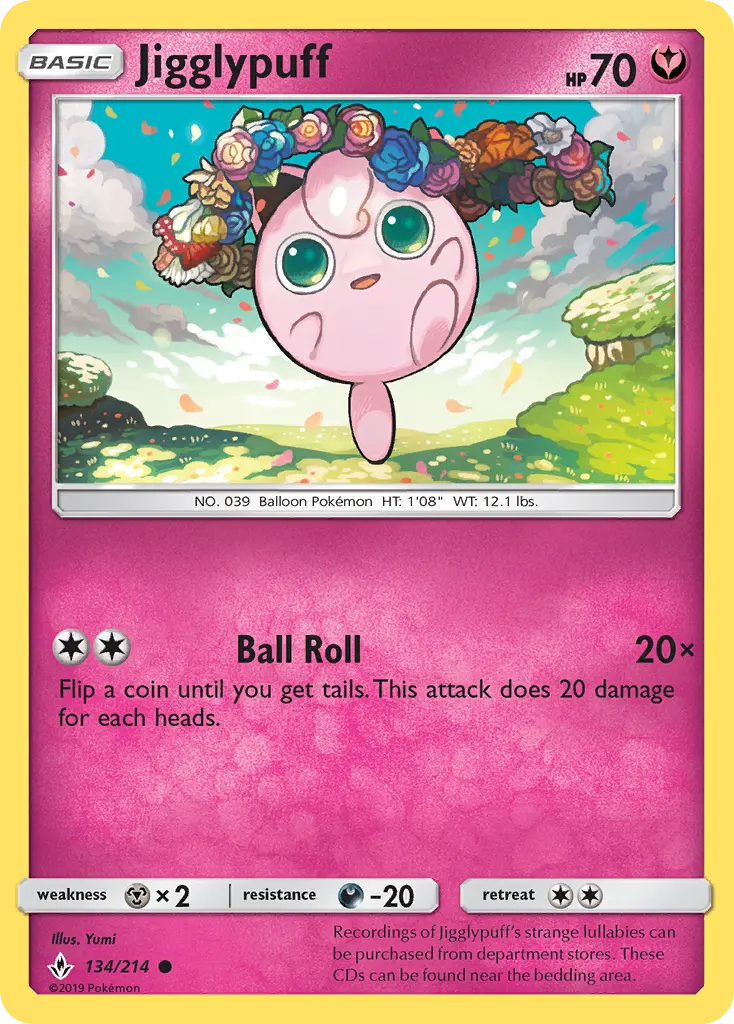
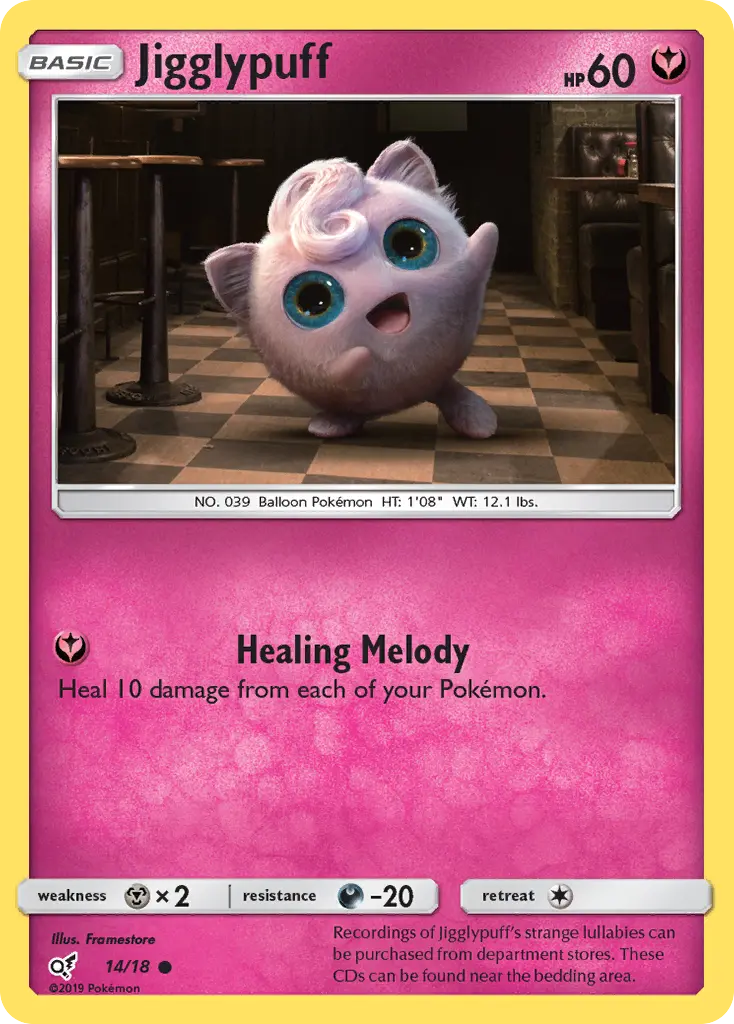
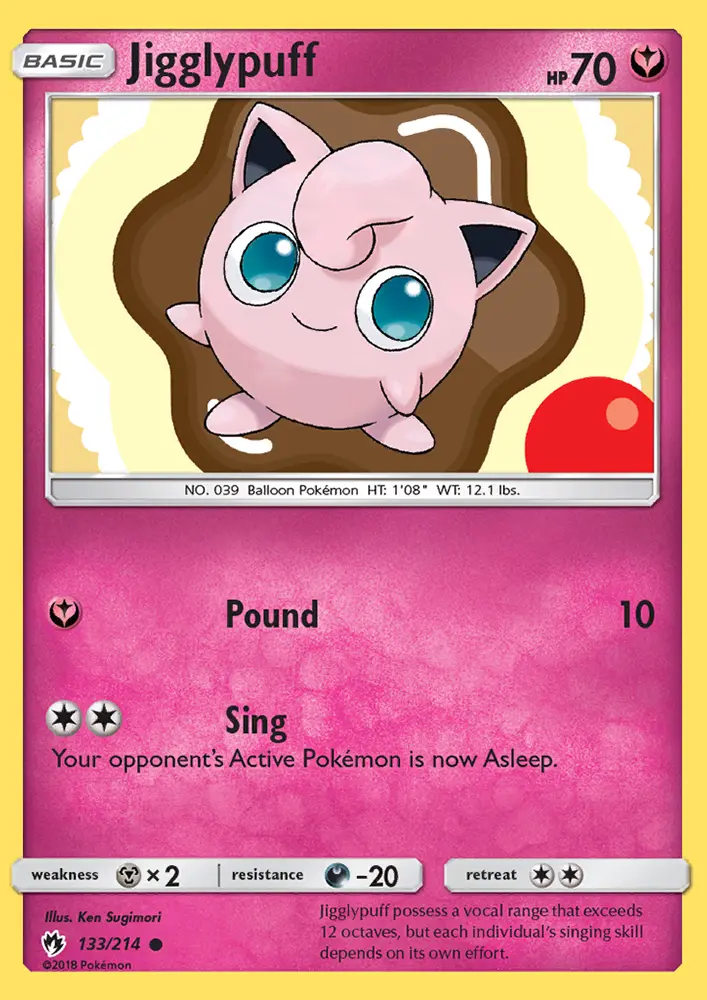
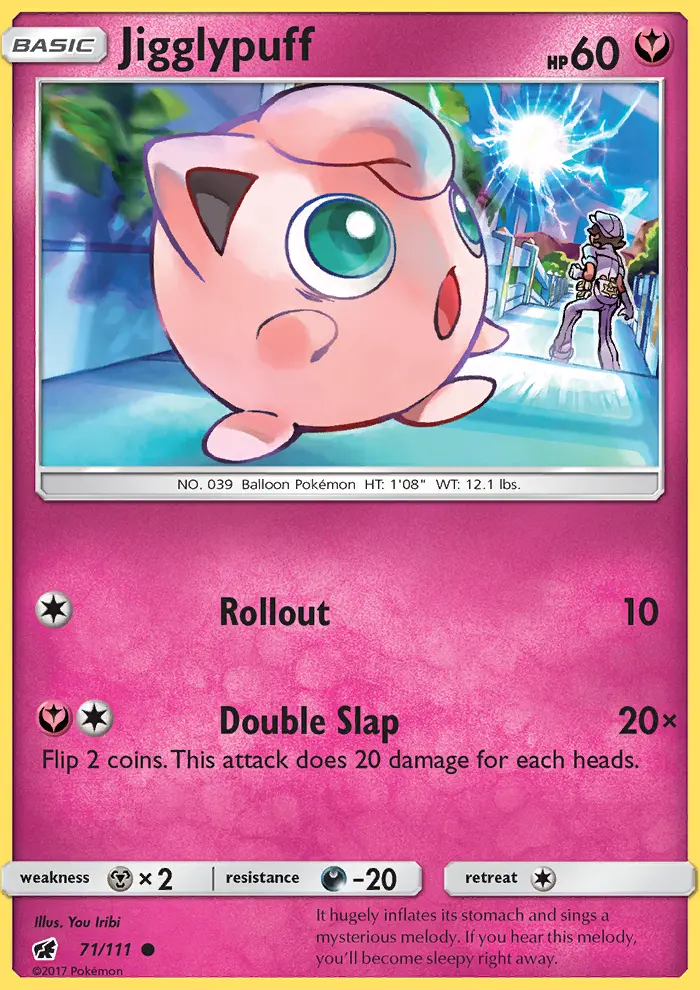
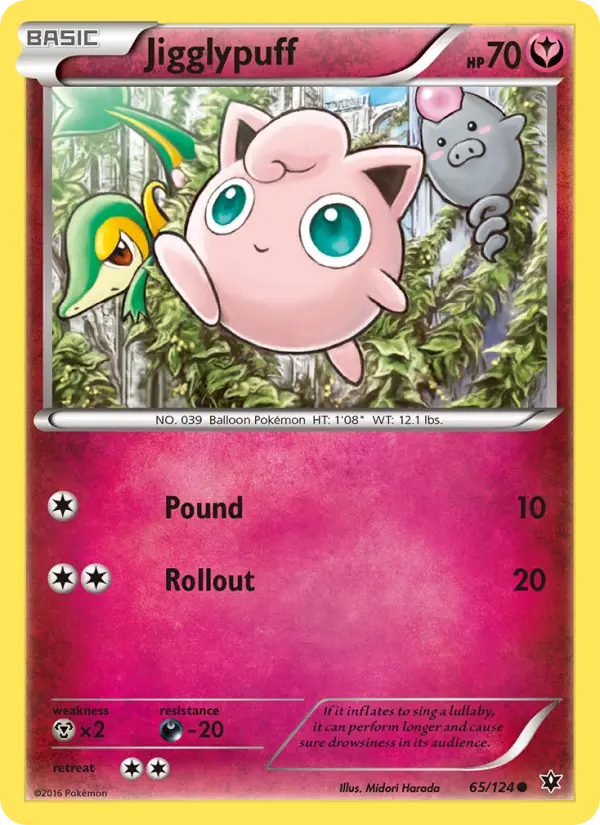
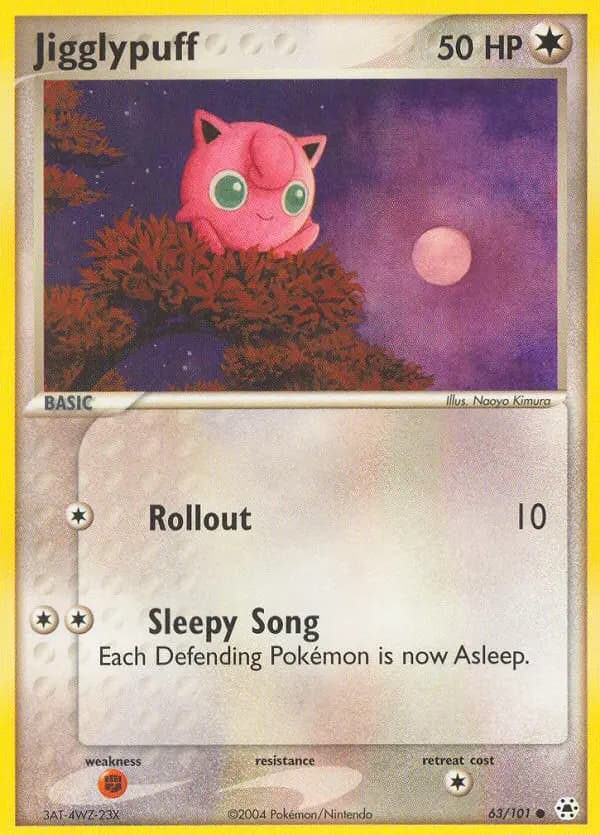
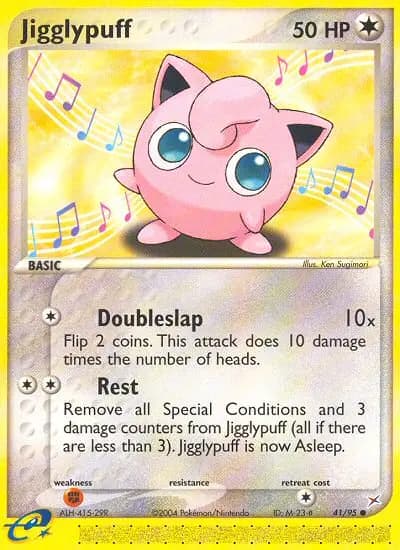
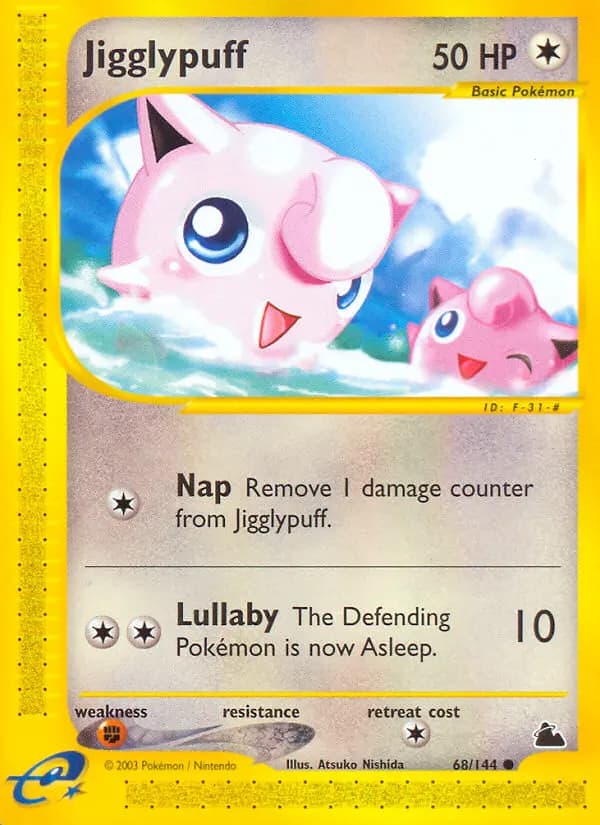
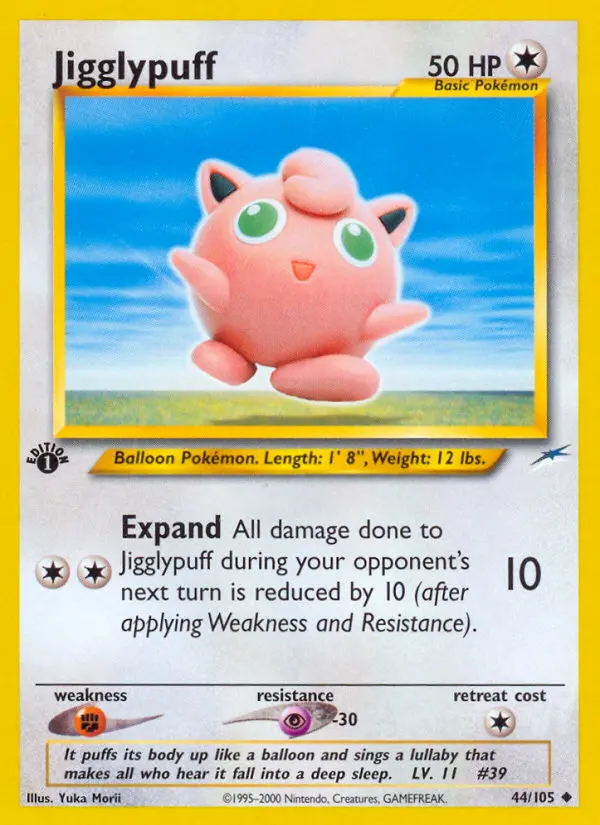
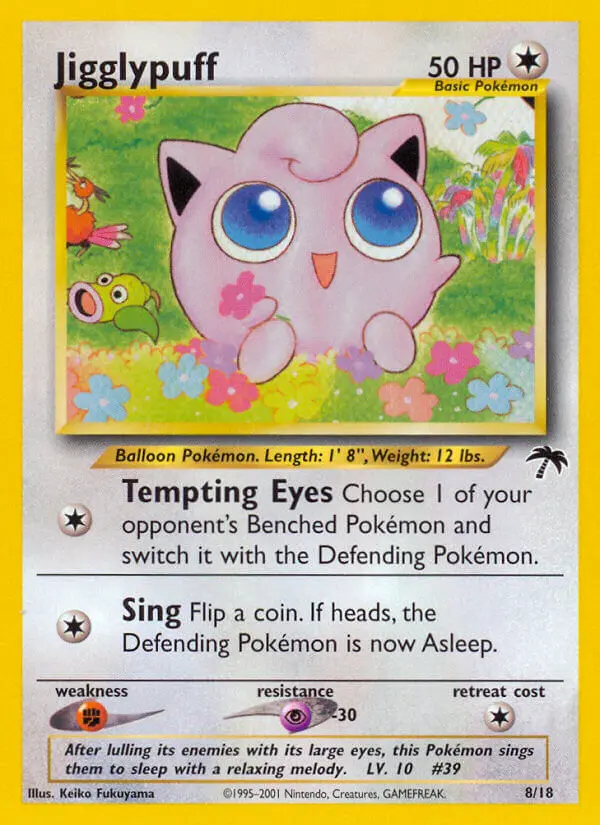
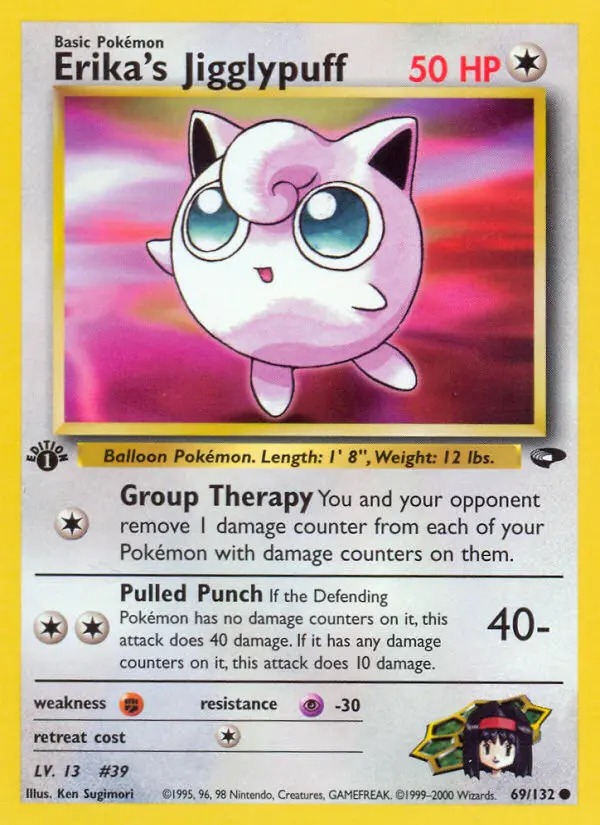
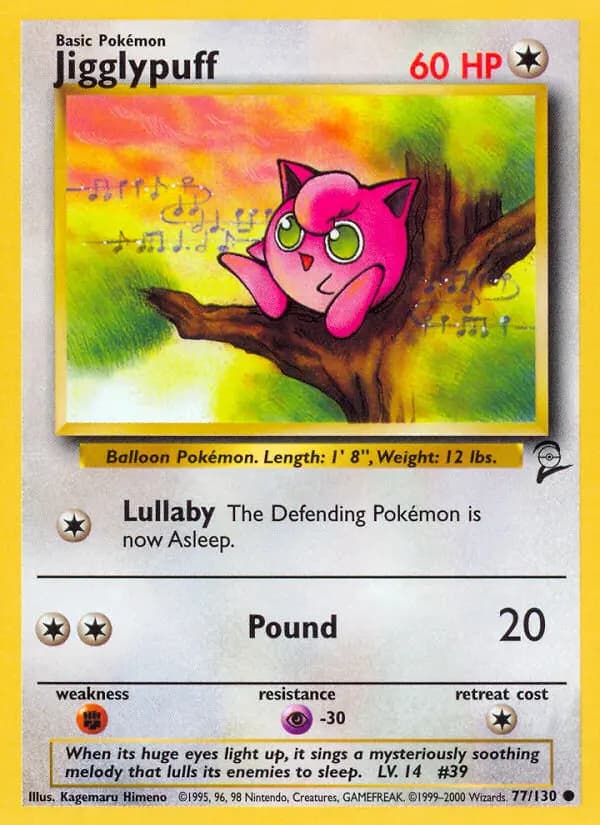
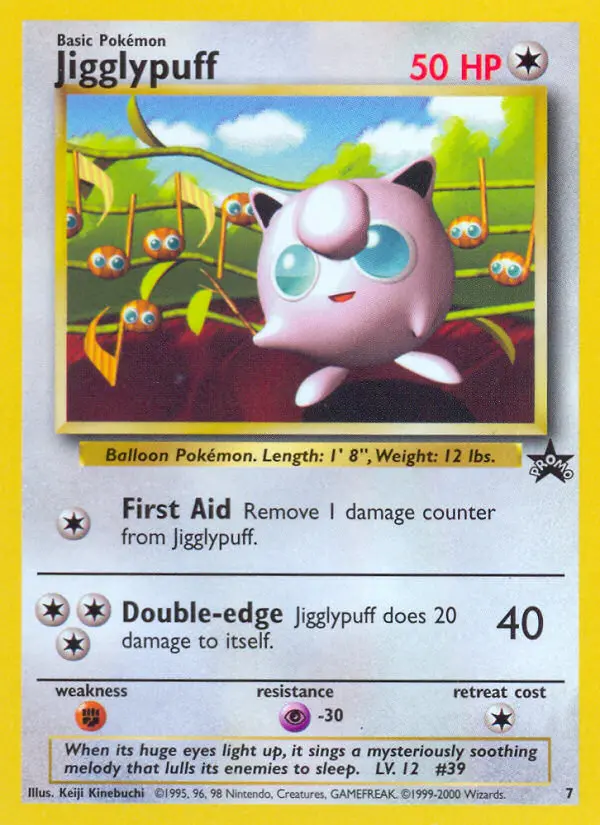
Jigglypuff has achieved iconic status in Pokémon media far beyond its base gameplay statistics, most notably through its prominent starring role in the Pokémon anime series. The character 'Jigglypuff' in the anime pursues Ash and his companions throughout numerous episodes, obsessively trying to lull them to sleep with its lullaby and growing frustrated when they fall asleep before hearing its entire performance, leading it to draw on their faces with a marker as punishment. This recurring narrative arc became a beloved running gag that endeared Jigglypuff to audiences and significantly increased its recognition among casual viewers and anime-only fans. The species has maintained consistent media presence across multiple Pokémon animated films, the live-action Detective Pikachu film, and various Pokémon television specials. In the Super Smash Bros. fighting game franchise, Jigglypuff appears as a playable character whose signature move involves inflating and floating, translating its biological abilities into competitive gaming mechanics that appeal to both Pokémon enthusiasts and general gamers. Trading card game representations of Jigglypuff remain collectible items with dedicated followings, and the Pokémon's distinctive appearance makes it instantly recognizable even to people with minimal Pokémon familiarity. The species' association with sleep and lullabies has made it a popular choice for merchandise aimed at children, including plushies designed for comfort and sleep. Jigglypuff's consistent presence across multiple generations of Pokémon games and media properties has cemented its position as one of the franchise's most recognizable and culturally significant creatures.
Where to Find Jigglypuff in Every Pokémon Game
Jigglypuff enjoys extensive availability across nearly all Pokémon game generations, though its specific locations vary significantly depending on the title and region. In the original Generation I games (Red, Blue, and Yellow versions), Jigglypuff can be encountered in various locations throughout Kanto, typically appearing at higher levels in cave systems and route areas. Subsequent games have placed Jigglypuff in diverse habitats ranging from grassy routes to mountainous regions, reflecting its adaptability to different environments. In the Let's Go Pikachu and Let's Go Eevee versions, which represent remakes of the original Generation I experience, Jigglypuff maintains strong availability and can be obtained relatively early in a trainer's journey. The Sword and Shield Expansion Pass The Isle of Armor content made Jigglypuff available in that specific DLC region, while Scarlet and Violet include the species in their Pokédex with appropriate encounter rates. The base happiness of 70 and fast growth rate make Jigglypuff a practical choice for trainers seeking an early-game special move user, though its actual competitiveness requires careful breeding and training. Jigglypuff can be obtained through breeding Igglybuff with another Fairy egg group Pokémon if trainers prefer to raise it from its baby form, taking advantage of the 10-cycle egg hatching time. Trading with other players remains another viable method of acquisition, particularly for obtaining specific natures or abilities. The high capture rate of 170 makes wild Jigglypuff encounters easily catchable with standard Poké Balls, encouraging trainer recruitment even in early-game situations when stronger Pokémon remain inaccessible.