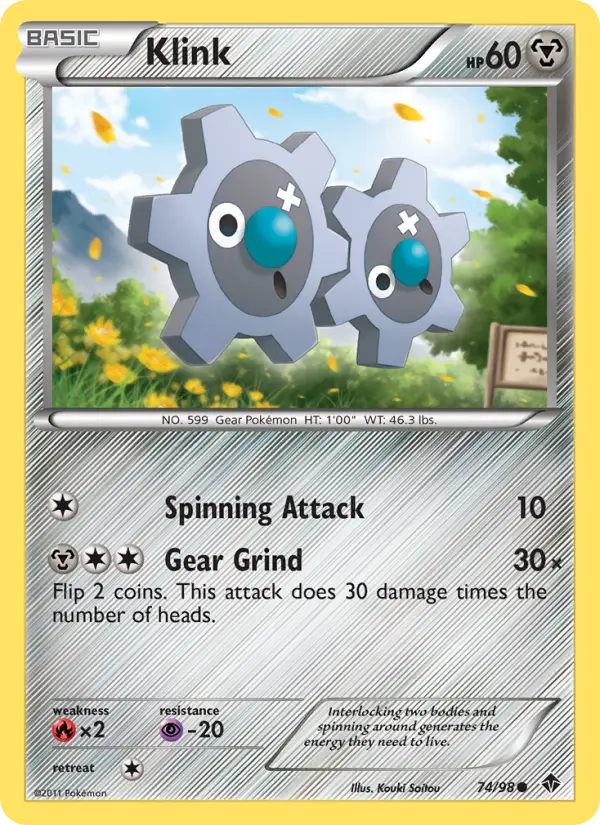
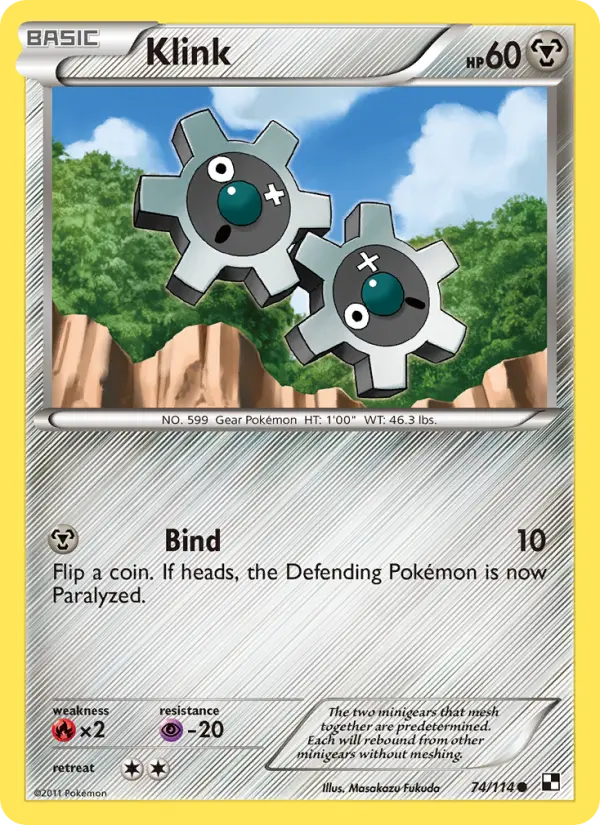
Klink
Generation V · #0599 — Gear Pokémon
Weighing 21 kg and standing 0.3 m, Klink carries its steel typing into battle with a stat spread that leans hardest into Defense. It measures 0.3 m and 21.0 kg, dimensions that pair with that stat lean in noticeable ways. Despite its small stature of just 0.3 meters tall and weighing only 21.0 kilograms, Klink possesses a unique dual-body structure where two predetermined minigears mesh together in perfect synchronization. The Pokémon is genderless by nature, belonging to the Mineral egg group, and demonstrates a moderate growth rate that leads to its evolution into Klang at level 38. With a aggregate stat total of 300 and a respectable catch rate of 130, Klink serves as an excellent entry point for trainers interested in Steel-type Pokémon, while also offering significant potential in competitive battling when properly trained.
Editor's Take
Klink's line is two gears that become six gears, which is one of the more literal evolution designs in the series and one of the least eventful.
Base Stats
Height
0.3m
Weight
21.0kg
Category
Gear Pokémon
Gender
Genderless
Color
gray
Shape
heads
Abilities
Increases Special Attack to 1.5× when a friendly Pokémon has plus or minus.
Increases Special Attack to 1.5× when a friendly Pokémon has plus or minus.
Prevents stats from being lowered by other Pokémon.
Klink Biology & Physical Characteristics
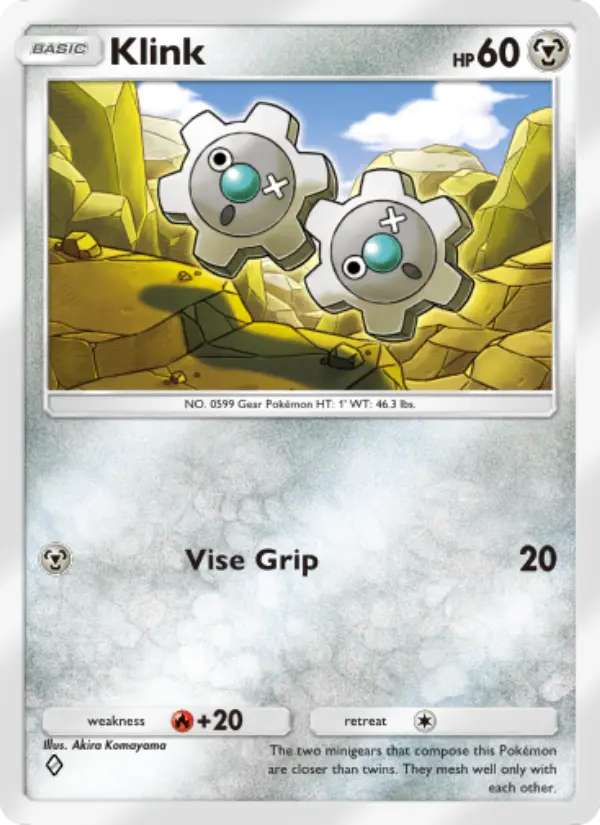
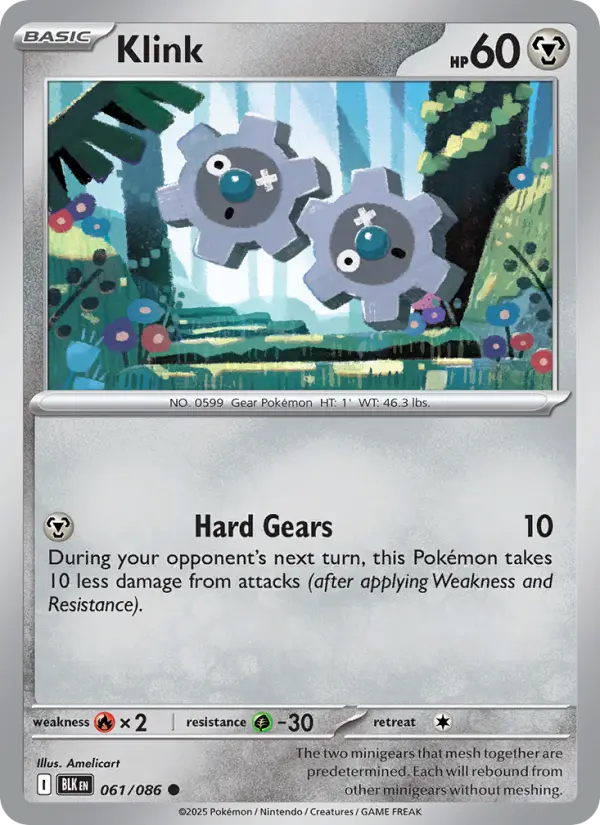
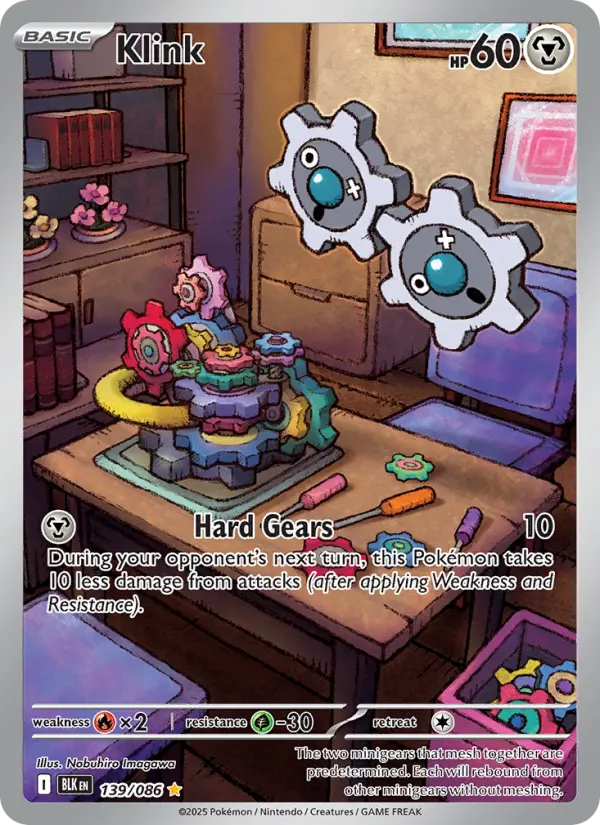
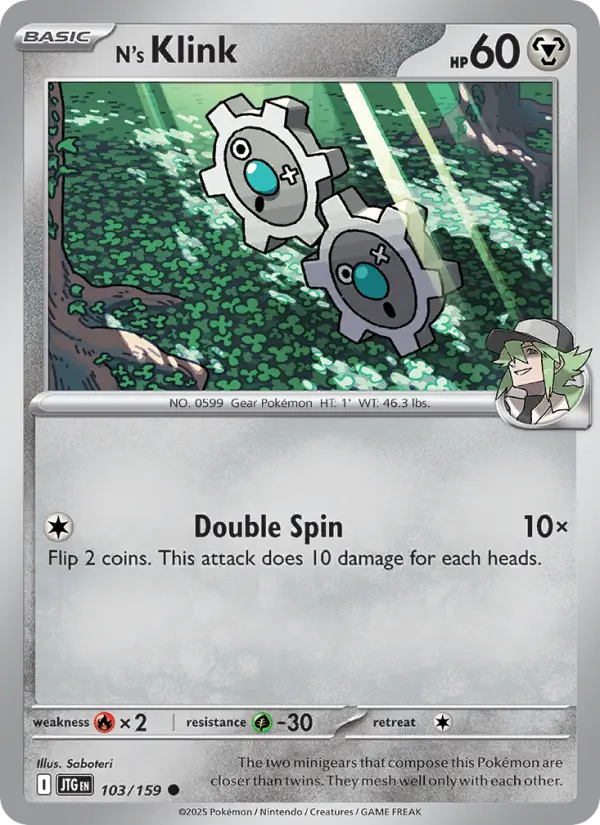
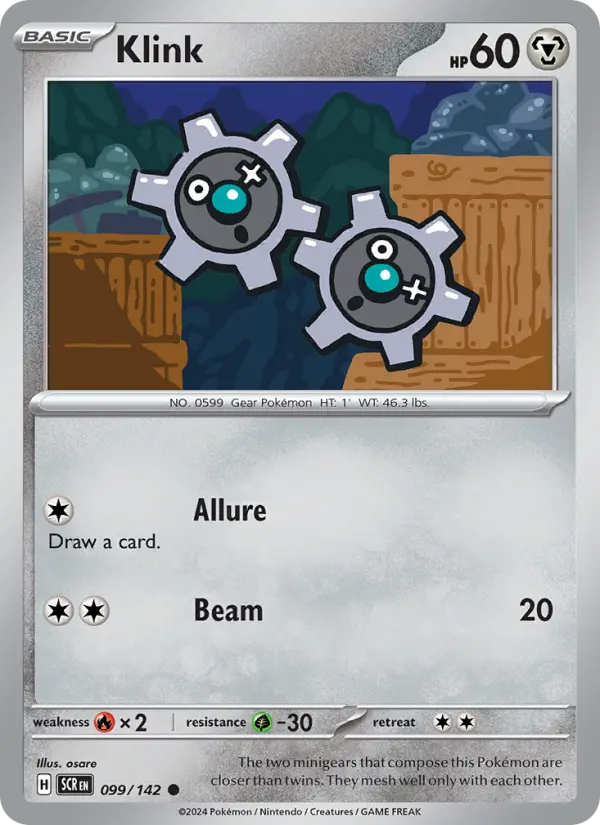
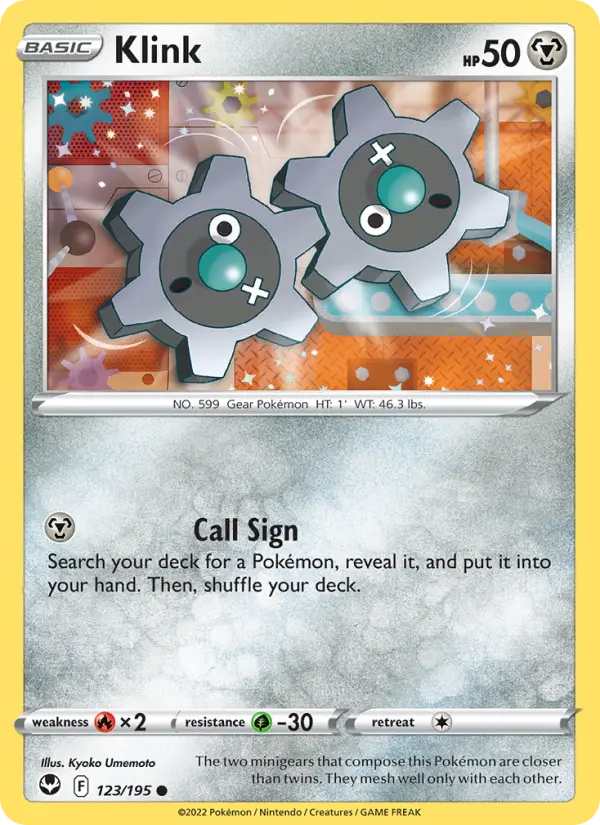
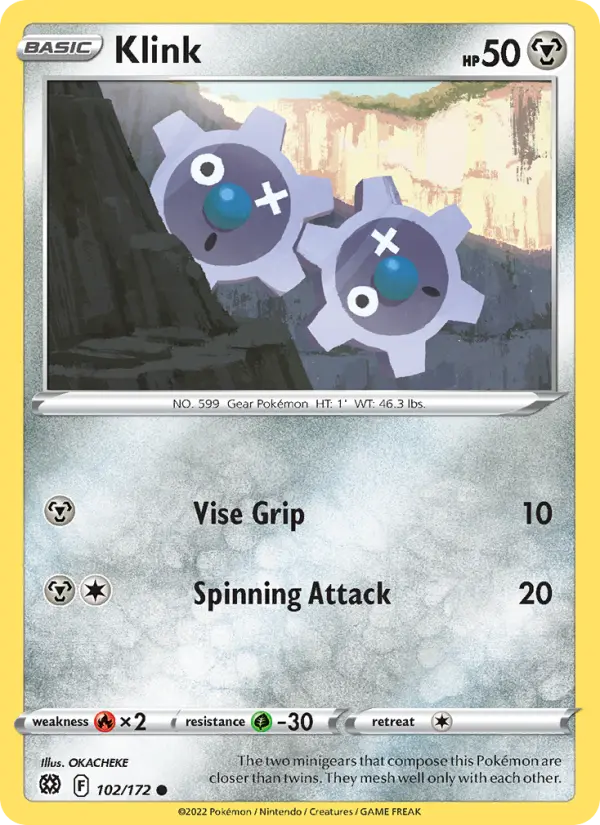
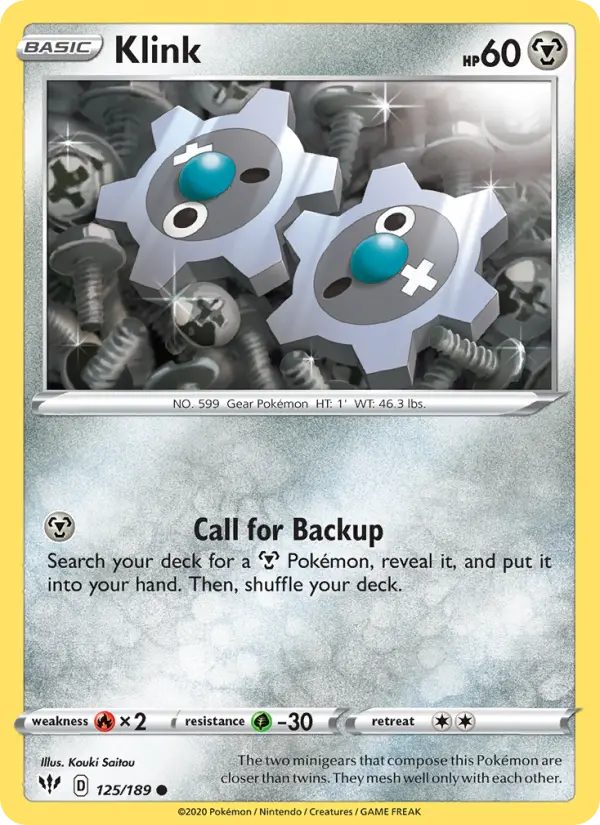
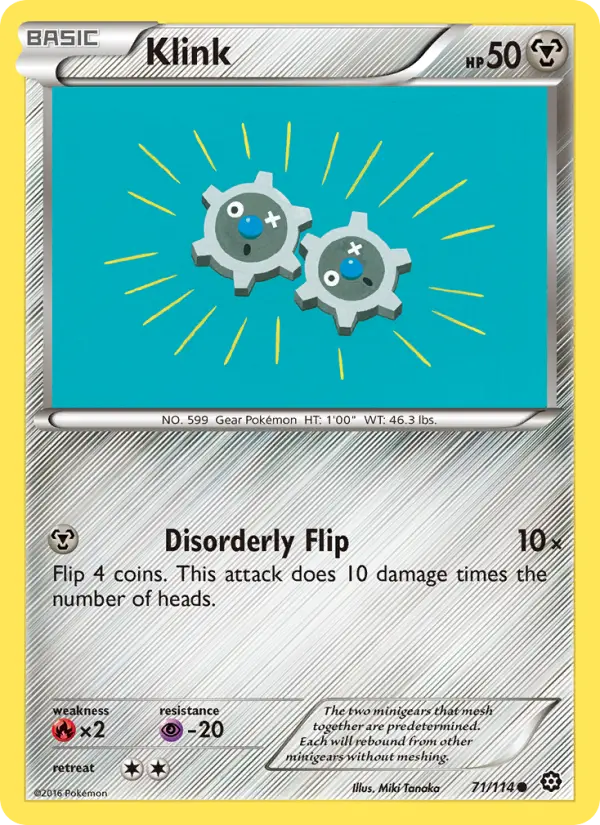
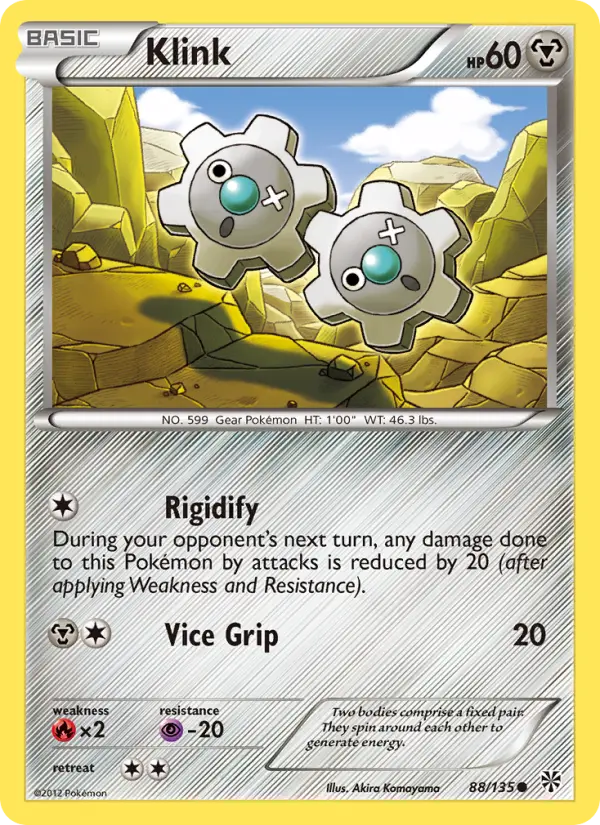
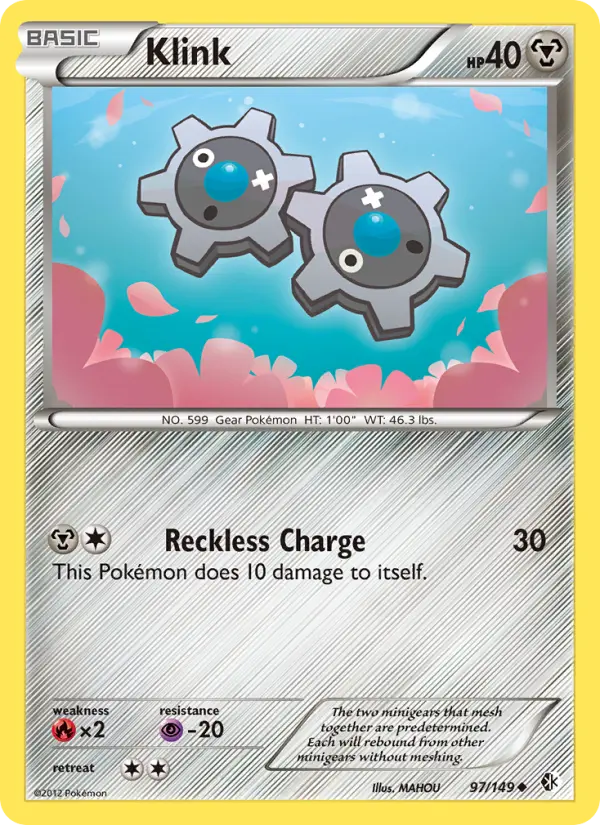
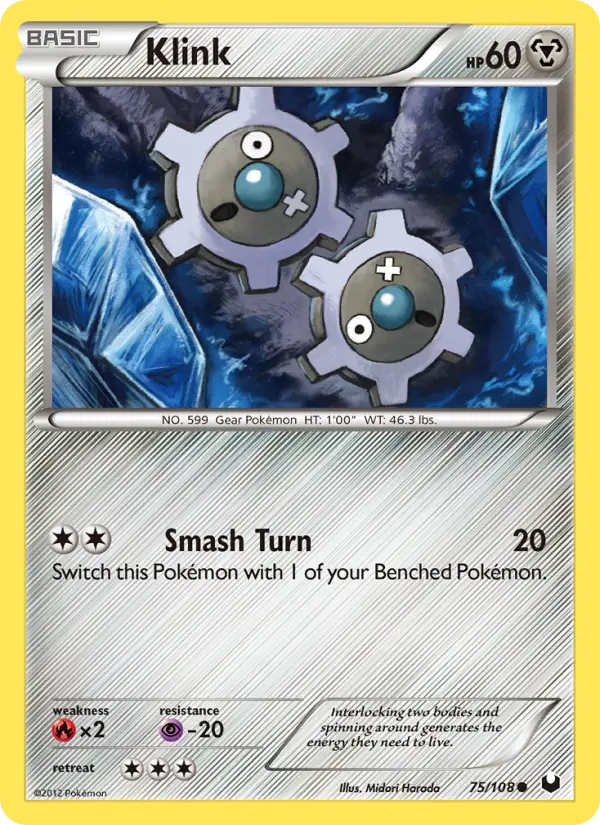
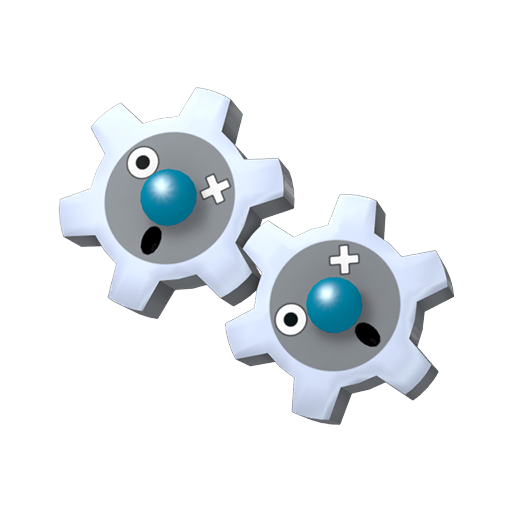
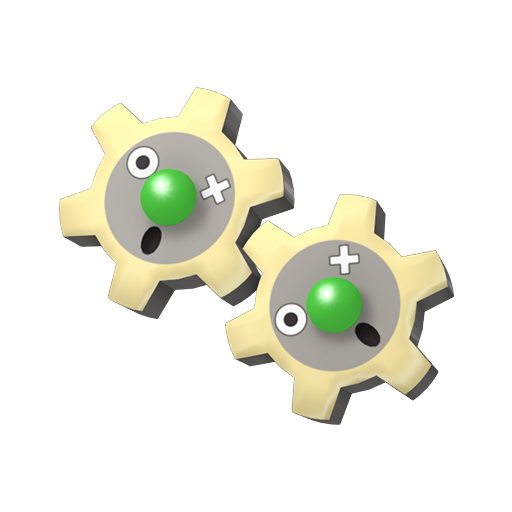
Klink's biological structure is unlike any other Pokémon, consisting of two distinct but permanently bonded gear-like bodies that comprise a single conscious entity. Each gear possesses six teeth rendered in light gray with a darker central region, and features distinctive facial characteristics including a white "X" marking where its left eye would be and a black-pupiled right eye with white sclera. The Pokémon sports a round turquoise nose and a small mouth on each of its gear components. According to Pokédex entries, the two minigears that mesh together are predetermined from birth, and once two bodies have joined, they cannot combine with any others without becoming permanently separated, indicating a deeply biological and irreversible bond. Klink generates its vital life energy through the continuous spinning motion of its interlocked gears, a process that is essential for its survival and physical functioning. Notably, Klink is the only known Pokémon capable of learning the move Gear Grind, and prior to Generation VII, it was among the exclusive learners of Shift Gear, moves that emphasize its mechanical nature. The Pokémon can launch itself at opponents with considerable force, making it a surprisingly mobile combatant despite its compact size.
Pokedex Numbers
Training
Breeding
Klink Breeding, Gender Ratio & Egg Groups
Klink, like all members of its evolutionary line, is classified as a genderless Pokémon, a designation that reflects its mechanical, non-biological reproduction method and places it within the Mineral egg group—a category that includes other artificial or geological Pokémon such as Magnemite and Geodude. The genderless classification is entirely appropriate for Klink given its nature as a fusion of two predetermined gear components, suggesting that reproduction and genetic passing occurs through mechanisms entirely foreign to biological organisms. Breeding Klink requires pairing it with Ditto, the only Pokémon capable of breeding with genderless species, resulting in the production of Klink eggs that require twenty cycles (approximately 4,884 to 5,140 steps) to hatch. This extended incubation period reflects the complexity of Klink's dual-component structure and the precise calibration required to produce properly synchronized gear pairs. Trainers seeking to breed competitive Klink specimens must account for this relatively lengthy hatching period, though the base friendship value of 70 (in Generations V-VII, adjusted to 50 in later generations) suggests that newly hatched Klink readily bond with their trainers. The Mineral egg group classification provides interesting competitive breeding opportunities, allowing Klink to inherit moves from other Mineral-group Pokémon through specific breeding combinations, though its signature move Gear Grind remains exclusive to its evolutionary line.
Sprites




TMs & HMs
tm05
lets go pikachu lets go eevee
tm06
yellow
tm06
gold silver
tm06
red blue
tm06
crystal
tm06
emerald
tm06
firered leafgreen
tm06
diamond pearl
tm06
platinum
tm06
ruby sapphire
tm06
colosseum
tm06
black 2 white 2
tm06
xd
tm06
black white
tm06
heartgold soulsilver
tm06
omega ruby alpha sapphire
tm06
ultra sun ultra moon
tm06
sun moon
tm06
x y
tm06
red green japan
+379 more TMs/HMs
Klink's Evolution Chain


Klink Evolution, Mega Evolution & Special Forms
Klink's evolutionary line represents a fascinating progression of gear-based Pokémon that culminates in one of the most impressive Steel-types available to trainers. At level 38, Klink evolves into Klang, a more complex two-gear system with increased physical dimensions and enhanced combat statistics. The transformation maintains Klink's Steel typing while substantially improving its defense stat and overall offensive capabilities. The final evolution occurs at level 49 when Klang becomes Klinklang, a three-gear powerhouse that represents the ultimate expression of mechanical Pokémon design. Klinklang serves as the apex predator of this evolutionary line, featuring dramatically improved stats across the board, particularly in defense where it reaches formidable defensive capabilities. Throughout this evolutionary progression, the Pokémon maintains its signature characteristics including its ability to learn Gear Grind and, in earlier generations, Shift Gear. The evolution line's progression from a simple two-gear design to a complex three-gear system mirrors technological advancement in real mechanical engineering, with each stage representing a more sophisticated and powerful iteration of the same fundamental concept. Unlike many Pokémon that gain additional forms or typing through evolution, Klink's line remains purely Steel-type throughout, allowing trainers to specialize their team composition around steel-type weaknesses and resistances with confidence.
Where to Find
Chargestone Cave
unova
+27 more
P2 Laboratory
unova
+1 more
Hauoli City
alola
Klink Behaviour and Natural Habitat
Klink is generally found inhabiting caves, particularly underground environments where its mechanical nature allows it to thrive in dark, mineral-rich surroundings. The species demonstrates remarkable historical documentation, with the first recorded evidence of Klink dating to approximately one hundred years ago in Chargestone Cave according to Professor Juniper's research, though the exact origin of the species remains somewhat mysterious. It is theorized that Klink may have suddenly appeared in Chargestone Cave at that time, or alternatively, that these remarkable Pokémon may have existed for far longer than historical records suggest. Beyond documented sightings, Klink has captured the imagination of historians and scientists, with some scholars proposing that Klink were the actual inspiration behind ancient peoples' invention of the first mechanical gears—a theory that suggests the Pokémon's influence on human technological development spans millennia. In combat situations, Klink demonstrates tactical awareness, using its spinning motion to generate both kinetic force and electrical energy through moves like Discharge and Thunder Shock. The Pokémon's behavior indicates a highly coordinated consciousness between its two gear components, suggesting a form of symbiotic partnership that borders on telepathic coordination.
Pokedex Entries
The two minigears that mesh together are predetermined. Each will rebound from other minigears without meshing.
Two bodies comprise a fixed pair. They spin around each other to generate energy.
Interlocking two bodies and spinning around generates the energy they need to live.
Interlocking two bodies and spinning around generates the energy they need to live.
The two minigears that mesh together are predetermined. Each will rebound from other minigears without meshing.
Interlocking two bodies and spinning around generates the energy they need to live.
The two minigears that mesh together are predetermined. Each will rebound from other minigears without meshing.
The two minigears that compose this Pokémon are closer than twins. They mesh well only with each other.
It’s suspected that Klink were the inspiration behind ancient people’s invention of the first gears.
Klink Name Origin & Design Inspiration
The name "Klink" derives from the onomatopoetic sound of metal gears clinking and colliding, perfectly encapsulating the Pokémon's mechanical essence and auditory presence in battle. In Japanese, Klink is known as "Giaru" (ギアル), which directly translates to "gear," establishing an immediate linguistic connection to its fundamental design concept. The Pokémon's visual design draws inspiration from mechanical gears and cogs, fundamental components of machinery and early industrial technology that have shaped human civilization for centuries. The deliberate choice to feature exactly six teeth on each of Klink's gear components reflects real mechanical engineering principles, where gear tooth count determines speed ratios and torque characteristics. The white "X" marking on one side of each gear and the black pupil on the other creates a balanced, symmetrical design that emphasizes the dual nature of Klink's existence as two unified components rather than a single entity. The turquoise coloring of Klink's nose contrasts with its predominantly gray metallic appearance, providing visual interest and making the Pokémon's face distinctly recognizable despite its geometric, mechanical design. This combination of scientific accuracy, phonetic appropriateness, and visual distinctiveness demonstrates the careful consideration Pokémon designers applied to Klink, ensuring it functioned equally well as both a mechanical concept and a living creature within the Pokémon universe.
Learnable Moves
Klink can learn 53 moves:
Move | Type | Cat. | Power | Acc. | PP |
|---|---|---|---|---|---|
| assurance | dark | Physical | 60 | 100 | 10 |
| autotomize | steel | Status | — | — | 15 |
| bind | normal | Physical | 15 | 85 | 20 |
| charge | electric | Status | — | — | 20 |
| charge beam | electric | Special | 50 | 90 | 10 |
| confide | normal | Status | — | — | 20 |
| discharge | electric | Special | 80 | 100 | 15 |
| double team | normal | Status | — | — | 15 |
| endure | normal | Status | — | — | 10 |
| facade | normal | Physical | 70 | 100 | 20 |
| flash cannon | steel | Special | 80 | 100 | 10 |
| frustration | normal | Physical | — | 100 | 20 |
| gear grind | steel | Physical | 50 | 85 | 15 |
| gravity | psychic | Status | — | — | 5 |
| hidden power | normal | Special | 60 | 100 | 15 |
| hyper beam | normal | Special | 150 | 90 | 5 |
| iron defense | steel | Status | — | — | 15 |
| lock on | normal | Status | — | — | 5 |
| magic coat | psychic | Status | — | — | 15 |
| magnet rise | electric | Status | — | — | 10 |
| metal sound | steel | Status | — | 85 | 40 |
| mirror shot | steel | Special | 65 | 85 | 10 |
| power gem | rock | Special | 80 | 100 | 20 |
| protect | normal | Status | — | — | 10 |
| recycle | normal | Status | — | — | 10 |
| rest | psychic | Status | — | — | 5 |
| return | normal | Physical | — | 100 | 20 |
| rising voltage | electric | Special | 70 | 100 | 20 |
| rock polish | rock | Status | — | — | 20 |
| rock smash | fighting | Physical | 40 | 100 | 15 |
| round | normal | Special | 60 | 100 | 15 |
| sandstorm | rock | Status | — | — | 10 |
| screech | normal | Status | — | 85 | 40 |
| secret power | normal | Physical | 70 | 100 | 20 |
| shift gear | steel | Status | — | — | 10 |
| shock wave | electric | Special | 60 | — | 20 |
| signal beam | bug | Special | 75 | 100 | 15 |
| sleep talk | normal | Status | — | — | 10 |
| snore | normal | Special | 50 | 100 | 15 |
| steel beam | steel | Special | 140 | 95 | 5 |
| steel roller | steel | Physical | 130 | 100 | 5 |
| substitute | normal | Status | — | — | 10 |
| swagger | normal | Status | — | 85 | 15 |
| telekinesis | psychic | Status | — | — | 15 |
| thunder shock | electric | Special | 40 | 100 | 30 |
| thunder wave | electric | Status | — | 90 | 20 |
| thunderbolt | electric | Special | 90 | 100 | 15 |
| toxic | poison | Status | — | 90 | 10 |
| uproar | normal | Special | 90 | 100 | 10 |
| vise grip | normal | Physical | 55 | 100 | 30 |
| volt switch | electric | Special | 70 | 100 | 20 |
| wild charge | electric | Physical | 90 | 100 | 15 |
| zap cannon | electric | Special | 120 | 50 | 5 |
Klink Competitive Battle Guide
Competitively, Klink serves primarily as a niche choice for specialized teams, though its evolutionary descendants, particularly Klinklang, demonstrate far greater viability at higher competitive tiers. Klink's base stats total only 300, with particular weaknesses in Special Attack (45) and Speed (30), making it poorly suited for offensive strategies or leading in battle. However, Klink's Defense stat of 70 provides a respectable foundation for defensive roles, and its ability to acquire the Plus or Minus abilities grants interesting team synergy options. The Plus ability grants a 1.5x Special Attack boost when a teammate possesses either Plus or Minus, creating potential combinations in doubles formats with complementary Pokémon like Magnezone or other electric-type companions. Klink's hidden ability, Clear Body, prevents stat reduction from opposing Pokémon, offering utility against common competitive threats that rely on stat manipulation. Klink's movepool includes valuable options such as Thunder Shock, Charge Beam, Metal Sound, Discharge, Gear Grind, and Shift Gear (in earlier generations), though the Pokémon's low Special Attack stat severely limits the effectiveness of special moves. In practice, competitive Klink usage is exceedingly rare, as trainers typically invest in its evolution line rather than maintaining Klink on their roster, though dedicated Mineral-type teams in casual formats may find creative applications for this mechanical pioneer.
Commonly Asked Questions About Klink
What type is Klink?
Klink is a steel type Pokemon.
What does Klink evolve into?
Klink evolves into klang, then into klinklang.
What are Klink's weaknesses?
Klink is weak to fighting, ground and fire type moves.
Does Klink evolve by trading?
No — Klink evolves entirely through leveling up, with no trade required at any stage.
Where can I find Klink?
Klink can be found in chargestone cave (unova), p2 laboratory (unova) and hauoli city (alola).
Klink Cultural Impact & Franchise History
Klink represents a significant cultural bridge between human mechanical engineering and Pokémon biology, with the Pokédex entry from Pokémon Shield explicitly suggesting that Klink were the inspiration behind ancient peoples' invention of the first gears. This concept transforms Klink from a mere mechanical Pokémon into a historically transformative species within the Pokémon world, suggesting that human technological development may have been influenced by or directly derived from interactions with Steel-type Pokémon. The visual simplicity and mathematical precision of Klink's design have made it a popular subject for fan art, mechanical engineering discussions, and philosophical debates about the nature of consciousness in composite organisms. Within the narrative framework of the Pokémon world, Klink's sudden appearance in Chargestone Cave roughly one hundred years prior to the events of Generation V games suggests mysterious origins and potential connections to ancient civilizations or undiscovered historical events. The Pokémon has inspired considerable fan speculation about whether similar mechanical Pokémon exist in other regions or whether Klink represents a unique phenomenon in Pokémon evolution. In merchandise and popular culture, Klink's elegant gear design has proven commercially appealing, appearing on everything from trading cards to mechanical toy replicas that actually spin and mesh realistically. The Pokémon's iconic design has secured its place in collective Pokémon memory despite its relative weakness in gameplay, demonstrating how compelling conceptual design transcends competitive viability.
Where to Find Klink in Every Pokémon Game
Klink's availability has varied significantly across different Pokémon game generations, reflecting its introduction in Generation V and subsequent fluctuations in regional Pokédexes. In Pokémon Black and White, Klink is available in the Unova regional Pokédex as entry #105, appearing in Chargestone Cave, a location entirely appropriate given the species' documented historical connection to that particular locale. In Pokémon Black 2 and White 2, Klink maintains availability but shifts to regional Pokédex #130, continuing to inhabit Chargestone Cave and making it an early-game acquisition for players exploring that cave system. The species' availability expanded in subsequent generations, with Klink appearing in various cave-based locations across different regions, maintaining consistency with its habitat preferences. In Pokémon X and Y, Klink can be obtained through the Friend Safari feature or through breeding, expanding accessibility options beyond traditional wild encounters. In Pokémon Sword and Shield, Klink appears in the regional Pokédex as #113 and can be found in various wild locations and through Pokémon Dens, making it readily accessible to modern players. The Pokémon has maintained consistent availability across most generations since its introduction, ensuring that players interested in obtaining or training Klink have multiple pathways to do so. Its moderate catch rate of 130 makes capture relatively straightforward with standard Poké Balls, and its base friendship of 70 encourages rapid bonding with new trainers, making Klink an accessible and beginner-friendly Pokémon despite its mechanical complexity.