
Yellow Meteor Minior
Generation VII · #10131 — Meteor Pokémon
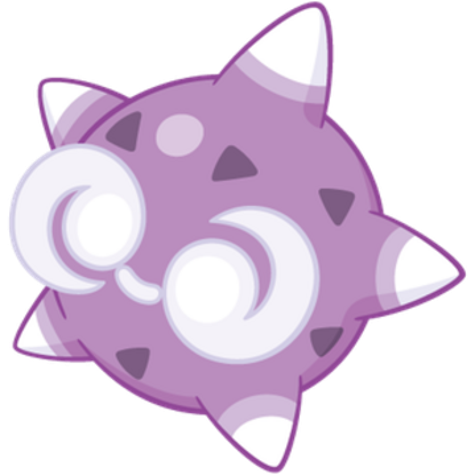
Minior-Yellow-Meteor measures in at 0.3 m and 40 kg, a build that matches its shields down ability better than it matches raw offense or defense. Its introduction in Pokémon Sun and Moon marked a significant design philosophy shift, presenting a creature whose form transformation is neither evolution nor Mega Evolution, but rather a strategic defensive adaptation tied directly to battle circumstances.
Editor's Take
Every Minior meteor form is mechanically identical regardless of core colour, which makes the seven variants a collector's distinction rather than a competitive one.
Base Stats
Height
0.3m
Weight
40.0kg
Category
Meteor Pokémon
Gender
Genderless
Color
brown
Shape
ball
Abilities
Transforms this Minior between Core Form and Meteor Form. Prevents major status ailments and drowsiness while in Meteor Form.
Yellow Meteor Minior Biology & Physical Characteristics
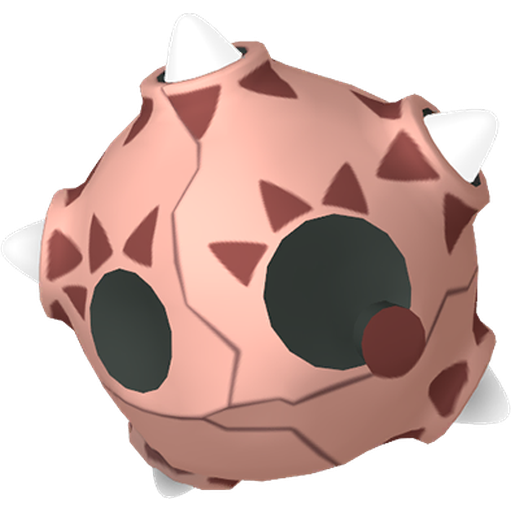
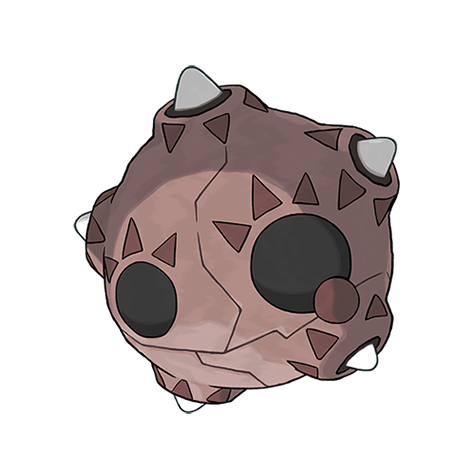
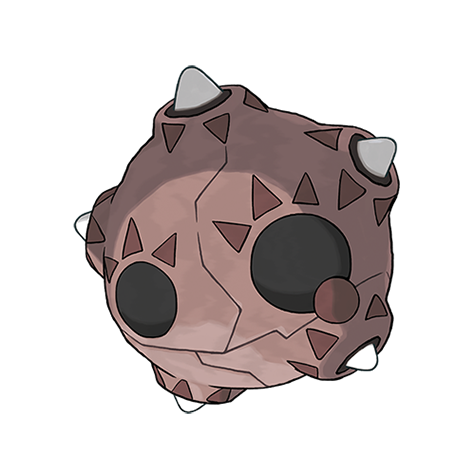
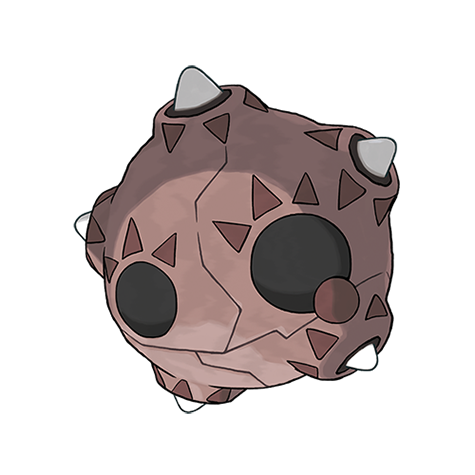
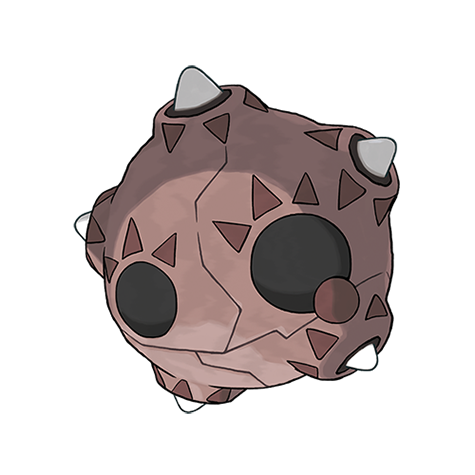
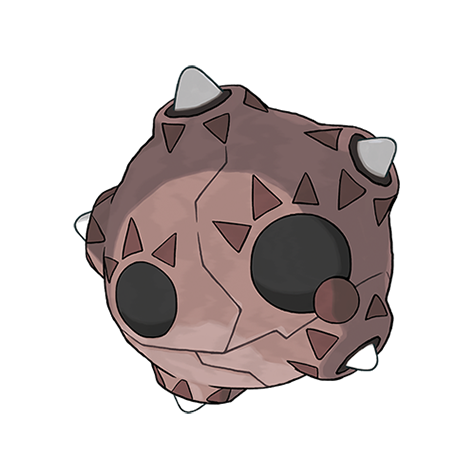
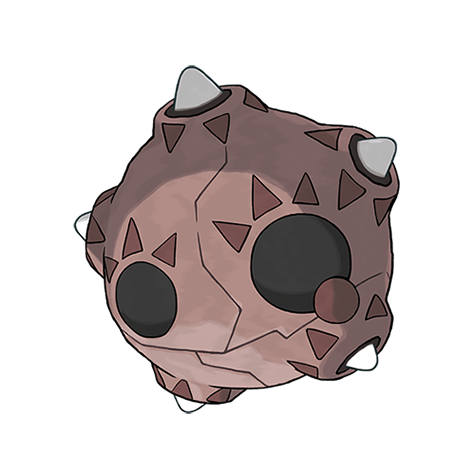
Minior originates from the stratosphere, a remarkable origin story grounded in genuine scientific wonder. According to Pokédex entries, this Pokémon is born from an aggregation of mutated nanoparticles in the ozone layer, where it begins its existence as a microscopic entity. As it matures, Minior consumes particulate matter and dust particles from the atmosphere, gradually accumulating mass that forms both its rocky outer shell and its colorful inner core. The yellow meteor form's core is composed of crystalline material that gives the Pokémon its distinctive appearance when exposed. The outer shell, composed of four large plates separated by horizontal and vertical cracks with five white spikes extending upward in a star pattern, serves as protection during atmospheric descent. This geological composition makes the Meteor Form exceptionally durable, with base Defense and Special Defense stats of 100 each, though the total weight reaches 40 kilograms. The core itself, by contrast, is remarkably lightweight at merely 0.3 kilograms, making Minior's exposed core form one of the lightest Rock and Flying-type Pokémon in existence. This dramatic weight differential—a reduction of approximately 99 percent—explains the stark behavioral and statistical differences between the two forms.
Pokedex Numbers
Training
Breeding
Yellow Meteor Minior Breeding, Gender Ratio & Egg Groups
Minior is classified as a genderless Pokémon, belonging exclusively to the Mineral egg group, a classification it shares with other rock and metal-based species like Geodude, Rhyhorn, and Beldum. This genderless designation means that Minior cannot breed with other Pokémon through traditional methods and instead must breed exclusively with Ditto, which possesses the unique capability to breed with any genderless species. The Mineral egg group generally encompasses Pokémon composed of inorganic materials or possessing crystalline structures, fitting Minior's origin as a nanoparticle-based organism perfectly. With a hatch counter value of 25, Minior eggs require approximately 6,169 to 6,425 steps to hatch, placing them in the medium-speed hatching range. The base friendship value of 70 indicates that freshly hatched Minior begin with considerable affection toward their trainer, slightly above average compared to many species. This genetic predisposition toward bonding may reflect Minior's relatively docile nature despite its defensive capabilities. The lack of sexual dimorphism or gender entirely eliminates breeding pair dynamics, instead emphasizing Minior's role as a solitary organism adapted for atmospheric survival rather than reproductive congregation. Players seeking Minior must either encounter them in the wild or breed with Ditto, making the acquisition process more straightforward than many other Pokémon species.
Sprites



Held Items
Star Piece
loot
Platinum: Trade for one of each color Shard. Black and White: Trade for PP Up. Sell for 4900 Pokédollars, or to Ore Collector for 9800 Pokédollars.
Cost: 12000
Star Piece
loot
Platinum: Trade for one of each color Shard. Black and White: Trade for PP Up. Sell for 4900 Pokédollars, or to Ore Collector for 9800 Pokédollars.
Cost: 12000
Star Piece
loot
Platinum: Trade for one of each color Shard. Black and White: Trade for PP Up. Sell for 4900 Pokédollars, or to Ore Collector for 9800 Pokédollars.
Cost: 12000
Star Piece
loot
Platinum: Trade for one of each color Shard. Black and White: Trade for PP Up. Sell for 4900 Pokédollars, or to Ore Collector for 9800 Pokédollars.
Cost: 12000
TMs & HMs
tm04
gold silver
tm04
emerald
tm04
firered leafgreen
tm04
ruby sapphire
tm04
diamond pearl
tm04
crystal
tm04
xd
tm04
heartgold soulsilver
tm04
black white
tm04
colosseum
tm04
platinum
tm04
sun moon
tm04
ultra sun ultra moon
tm04
x y
tm04
omega ruby alpha sapphire
tm04
black 2 white 2
tm05
lets go pikachu lets go eevee
tm06
yellow
tm06
gold silver
tm06
red blue
+609 more TMs/HMs
Regional & Special Forms
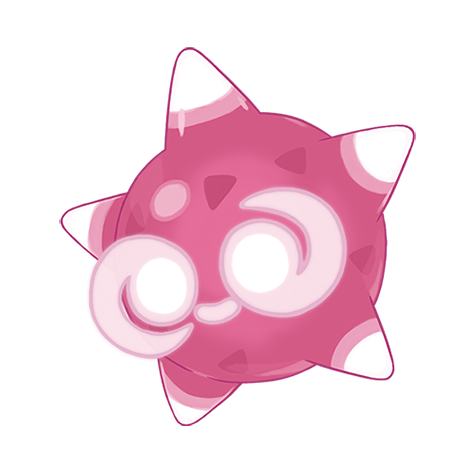
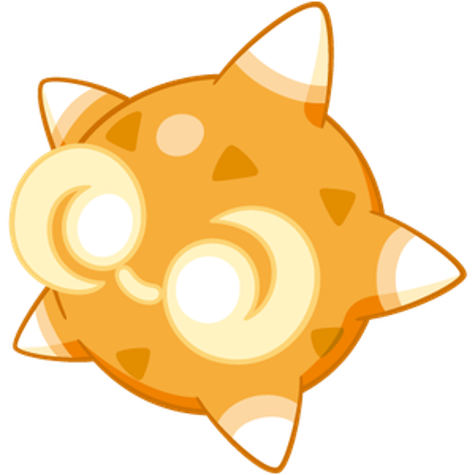
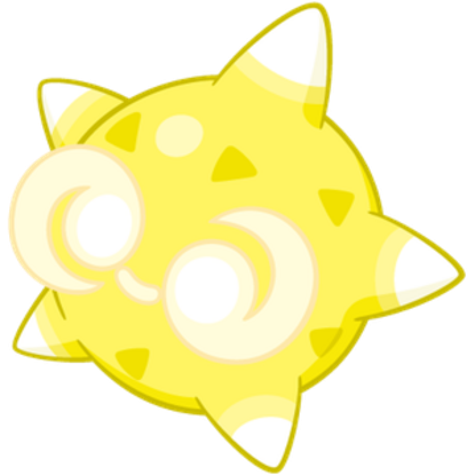
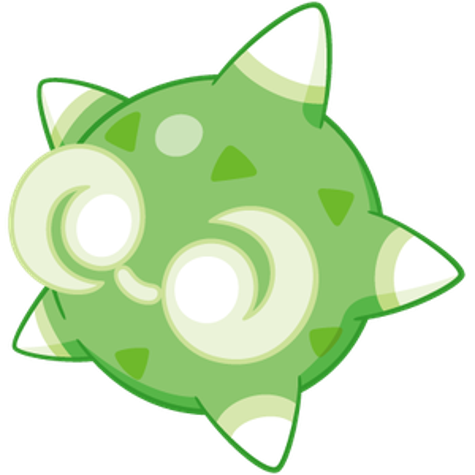
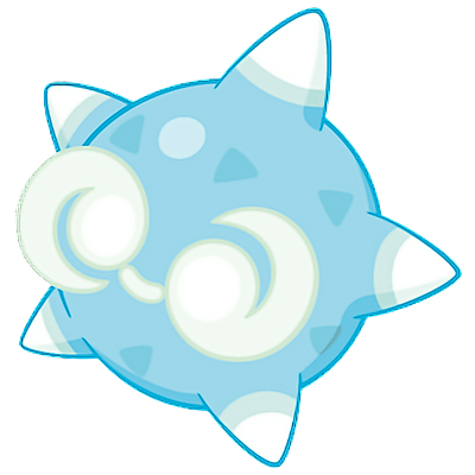
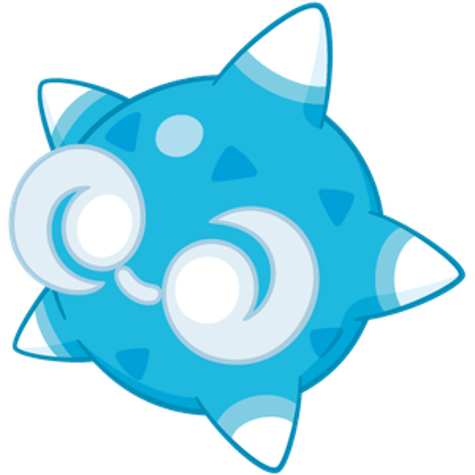
Yellow Meteor Minior also has 13 related forms: Red Meteor Minior, Orange Meteor Minior, Green Meteor Minior, Blue Meteor Minior, Indigo Meteor Minior, Violet Meteor Minior, Red Minior, Orange Minior, Yellow Minior, Green Minior, Blue Minior, Indigo Minior and Violet Minior.
Yellow Meteor Minior Evolution, Mega Evolution & Special Forms
Unlike the vast majority of Pokémon species, Minior does not evolve in the traditional sense, nor does it possess a Mega Evolution form. Instead, Minior's primary characteristic is its form-change mechanic governed by the exclusive Shields Down ability. This ability triggers an automatic transformation between Meteor Form and Core Form based on battle conditions: when Minior's health points fall below 50 percent of its maximum, the protective shell shatters and the core becomes exposed, transitioning into its Core Form with dramatically altered stats and abilities. Conversely, when the exposed core's HP is restored above 50 percent, the shell regenerates and Minior reverts to Meteor Form. This cyclical transformation system is unprecedented among Pokémon mechanics and represents an evolution alternative that emphasizes strategic depth rather than linear progression. The yellow core form, alongside six other color variants (red, orange, green, blue, indigo, and violet), are entirely cosmetic—the colors do not affect statistics, typing, or competitive viability. Each Minior specimen randomly determines its core color upon generation, making individual Minior yellow cores no functionally different from their color counterparts, though potentially more visually appealing to collectors. This design choice eliminates traditional evolution as a mechanic entirely, instead relying on in-battle adaptability and conditional stat redistribution.
Where to Find
Location data not available for this Pokémon in the database.
Yellow Meteor Minior Behaviour and Natural Habitat
Minior spends the majority of its lifecycle suspended in the ozone layer and stratosphere, where it feeds on atmospheric particles and dust. The Pokédex describes it as serving as food for stronger Pokémon in these high altitudes, positioning it as prey species despite its formidable defensive capabilities. When its shell becomes too heavy from accumulated matter, Minior eventually falls toward the planet's surface, with Alola being identified as one of the few regions where these descending meteors frequently land. During descent and impact, the protective shell often shatters, revealing the brightly colored core beneath. In its Meteor Form, Minior exhibits cautious, defensive behavior, relying on its sturdy exterior to survive. However, once the shell breaks and the core is exposed, the Pokémon's personality dramatically shifts—it becomes far more aggressive and mobile, with Speed increasing dramatically to 120 in Core Form compared to 60 in Meteor Form. This behavioral duality reflects genuine survival strategy: the heavy armor protects during vulnerable descent, while the exposed core compensates with enhanced mobility and offensive capability. The Shields Down ability further emphasizes this adaptation, preventing status ailments and sleep while in Meteor Form, suggesting the shell provides physiological protection beyond mere physical defense.
Pokedex Entries
Originally making its home in the ozone layer, it hurtles to the ground when the shell enclosing its body grows too heavy.
It lives in the ozone layer, where it becomes food for stronger Pokémon. When it tries to run away, it falls to the ground.
Strong impacts can knock it out of its shell. This Pokémon was born from mutated nanoparticles.
Although its outer shell is uncommonly durable, the shock of falling to the ground smashes the shell to smithereens.
Yellow Meteor Minior Name Origin & Design Inspiration
The yellow meteor form's design brilliantly evokes the image of a falling space rock, complete with its characteristic star-burst appearance created by five white spikes protruding from the rocky surface. The four large plates separated by prominent cracks suggest a body assembled from disparate geological fragments, reinforcing the concept of accumulated atmospheric particles coalescing into a singular organism. The yellow coloration of the exposed core represents one of the seven rainbow-inspired color schemes, deliberately evoking the traditional spectrum. The name 'Minior' derives from a combination of 'minor' and 'meteor,' while the Japanese designation 'Meteno' more directly references meteorological phenomena. Comparatively, the English name emphasizes the Pokémon's small stature relative to actual meteors, while the original Japanese name foregrounds the meteorological origin. The overall design philosophy merges geological realism with fantastical biology, creating a creature that feels simultaneously extraterrestrial and scientifically plausible. The yellow core specifically maintains warm, luminous tones suggesting energy or mineral content, contrasting beautifully with the dull grey and white of the protective meteor shell. This chromatic distinction aids in visual communication of the form-change mechanic—the vibrant core bursting forth from the drab exterior represents renewal and transformation.
Learnable Moves
Yellow Meteor Minior can learn 64 moves:
Move | Type | Cat. | Power | Acc. | PP |
|---|---|---|---|---|---|
| acrobatics | flying | Physical | 55 | 100 | 15 |
| ancient power | rock | Special | 60 | 100 | 5 |
| attract | normal | Status | — | 100 | 15 |
| autotomize | steel | Status | — | — | 15 |
| bulldoze | ground | Physical | 60 | 100 | 20 |
| calm mind | psychic | Status | — | — | 20 |
| charge beam | electric | Special | 50 | 90 | 10 |
| confide | normal | Status | — | — | 20 |
| confuse ray | ghost | Status | — | 100 | 10 |
| cosmic power | psychic | Status | — | — | 20 |
| dazzling gleam | fairy | Special | 80 | 100 | 10 |
| defense curl | normal | Status | — | — | 40 |
| double team | normal | Status | — | — | 15 |
| double edge | normal | Physical | 120 | 100 | 15 |
| earth power | ground | Special | 90 | 100 | 10 |
| earthquake | ground | Physical | 100 | 100 | 10 |
| endeavor | normal | Physical | — | 100 | 5 |
| endure | normal | Status | — | — | 10 |
| explosion | normal | Physical | 250 | 100 | 5 |
| facade | normal | Physical | 70 | 100 | 20 |
| frustration | normal | Physical | — | 100 | 20 |
| giga impact | normal | Physical | 150 | 90 | 5 |
| gravity | psychic | Status | — | — | 5 |
| gyro ball | steel | Physical | — | 100 | 5 |
| hidden power | normal | Special | 60 | 100 | 15 |
| hyper beam | normal | Special | 150 | 90 | 5 |
| iron head | steel | Physical | 80 | 100 | 15 |
| last resort | normal | Physical | 140 | 100 | 5 |
| light screen | psychic | Status | — | — | 30 |
| magnet rise | electric | Status | — | — | 10 |
| meteor beam | rock | Special | 120 | 90 | 10 |
| power gem | rock | Special | 80 | 100 | 20 |
| protect | normal | Status | — | — | 10 |
| psych up | normal | Status | — | — | 10 |
| psychic | psychic | Special | 90 | 100 | 10 |
| reflect | psychic | Status | — | — | 20 |
| rest | psychic | Status | — | — | 5 |
| return | normal | Physical | — | 100 | 20 |
| rock blast | rock | Physical | 25 | 90 | 10 |
| rock polish | rock | Status | — | — | 20 |
| rock slide | rock | Physical | 75 | 90 | 10 |
| rock tomb | rock | Physical | 60 | 95 | 15 |
| rollout | rock | Physical | 30 | 90 | 20 |
| round | normal | Special | 60 | 100 | 15 |
| safeguard | normal | Status | — | — | 25 |
| sandstorm | rock | Status | — | — | 10 |
| scorching sands | ground | Special | 70 | 100 | 10 |
| self destruct | normal | Physical | 200 | 100 | 5 |
| shell smash | normal | Status | — | — | 15 |
| sleep talk | normal | Status | — | — | 10 |
| snore | normal | Special | 50 | 100 | 15 |
| solar beam | grass | Special | 120 | 100 | 10 |
| stealth rock | rock | Status | — | — | 20 |
| stone edge | rock | Physical | 100 | 80 | 5 |
| substitute | normal | Status | — | — | 10 |
| swagger | normal | Status | — | 85 | 15 |
| swift | normal | Special | 60 | — | 20 |
| tackle | normal | Physical | 40 | 100 | 35 |
| take down | normal | Physical | 90 | 85 | 20 |
| telekinesis | psychic | Status | — | — | 15 |
| tera blast | normal | Special | 80 | 100 | 10 |
| toxic | poison | Status | — | 90 | 10 |
| u turn | bug | Physical | 70 | 100 | 20 |
| zen headbutt | psychic | Physical | 80 | 90 | 15 |
Yellow Meteor Minior Competitive Battle Guide
Minior's competitive viability centers entirely on its unique Shields Down ability and the stat redistribution that accompanies its form transitions. In Meteor Form, Minior presents itself as a defensive wall with respectable Defense and Special Defense values of 100 each, supported by 60 HP, creating a defensive archetype capable of absorbing neutral hits. However, this form's offensive capabilities remain underwhelming, with all three offensive stats capped at 60, severely limiting its damage output. The true competitive potential emerges once the core is exposed, transforming Minior into an aggressive sweeper with Attack and Special Attack jumping to 100 and Speed accelerating to 120, enabling rapid offensive operations. Strategically, players exploit this form-change as a bait-and-switch mechanism: Minior enters battle protected by its shell, absorbs concentrated damage, and once its health drops below 50 percent, it transitions into a rapid offensive form capable of revenge kills and sweeping. This mechanic allows skilled players to recover from seemingly disadvantageous positions by leveraging the stat transformation as a momentum swing. Competitive sets typically utilize Minior's Core Form for offense, employing moves like Power Gem, Acrobatics, and Close Combat to capitalize on the enhanced offensive stats and Speed tier. However, the Shields Down ability's status immunities in Meteor Form provide utility against strategies relying on paralysis or sleep, occasionally justifying defensive strategies. Minior remains moderately viable in competitive contexts, though it lacks the raw power or Speed to dominate higher-tier metagames, making it a niche choice suited to players who appreciate its mechanical novelty.
Commonly Asked Questions About Yellow Meteor Minior
What type is Yellow Meteor Minior?
Yellow Meteor Minior is a rock and flying type Pokemon.
What does Yellow Meteor Minior evolve into?
Yellow Meteor Minior does not evolve.
What are Yellow Meteor Minior's weaknesses?
Yellow Meteor Minior is weak to ground, rock, steel, water, electric and ice type moves.
Yellow Meteor Minior Cultural Impact & Franchise History
Minior occupies a unique position in Pokémon culture as one of the franchise's most mechanically innovative creatures, inspiring discussion about form-change mechanics and conditional stat distribution long after its introduction. The form-change system received widespread acclaim for circumventing traditional evolution narratives while maintaining strategic depth, influencing subsequent Pokémon designs that prioritize conditional mechanics over linear progression. The seven core color variants generated considerable collecting enthusiasm, with dedicated enthusiasts pursuing complete color sets despite their functional equivalence. In the Alola region narrative context, Minior achieves cultural significance as a natural phenomenon—falling meteors are celebrated as genuine cosmic events rather than merely biological occurrences, grounding the Pokémon in environmental storytelling. The yellow meteor form, in particular, has become iconic imagery in Pokémon Sun and Moon promotional materials, appearing frequently in official artwork and regional Pokédex illustrations. Fan communities developed extensive documentation of core color distribution mechanics, spawning speedrunning communities attempting to hatch specific color combinations. The Shields Down ability's precedent-setting design philosophy influenced subsequent game designs, with later generations adopting similar conditional mechanics for creatures like Wishiwashi and Mimikyu. Minior's combination of scientific plausibility and fantastical design has made it a favorite subject for educational Pokémon content, frequently cited as an example of how the franchise merges genuine physics principles with imaginative gameplay mechanics.
Where to Find Yellow Meteor Minior in Every Pokémon Game
Minior is native to the Alola region and appears throughout Pokémon Sun, Moon, Ultra Sun, and Ultra Moon as a relatively rare encounter in specific locations. In the original Sun and Moon games, Minior appears in the Alola Pokédex as entry #0213, encountered primarily through SOS battles and as random encounters in upper-altitude routes where meteorological conditions align with its atmospheric origin story. Ultra Sun and Ultra Moon repositioned Minior as entry #0277 in the regional Pokédex, maintaining its rarity while increasing encounter frequency in specific celestial-themed locations. The species was subsequently included in Pokémon Sword and Shield's Expansion Pass content, appearing in the Crown Tundra DLC area, and later became available in Pokémon Scarlet and Violet through The Indigo Disk DLC, classified as entry #0106 in that regional Pokédex. Wild Minior specimens encounter rates remain relatively low, with a base catch rate of 30, making them moderately challenging to capture, though not prohibitively so with standard Poké Balls. The form-change mechanic means that encountered Minior typically appear in Meteor Form initially, with the Core Form revealed only after sustained battle damage. All seven core color variants exist in nature with equal probability, meaning obtaining complete color sets requires considerable grinding or Ditto breeding. Trading with other players remains the most efficient method of acquiring specific core colors without extensive reencounter grinding, making Minior trading communities active even years after the original generation introduction.