
Orange Meteor Minior
Generation VII · #10130 — Meteor Pokémon
Minior-Orange-Meteor's shields down ability is the first thing worth knowing about it — everything else, from its rock/flying typing to its build, follows from how that ability gets used.
Editor's Take
Meteor Form Minior's Shields Down blocking all status while the shell holds is the more useful half of the mechanic, and the seven core colours are purely cosmetic.
Base Stats
Height
0.3m
Weight
40.0kg
Category
Meteor Pokémon
Gender
Genderless
Color
brown
Shape
ball
Abilities
Transforms this Minior between Core Form and Meteor Form. Prevents major status ailments and drowsiness while in Meteor Form.
Orange Meteor Minior Biology & Physical Characteristics
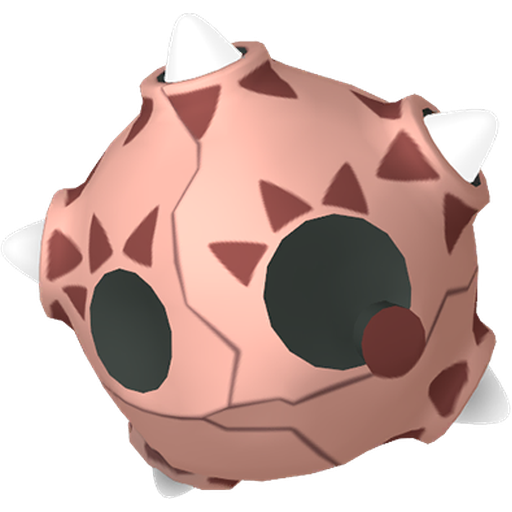
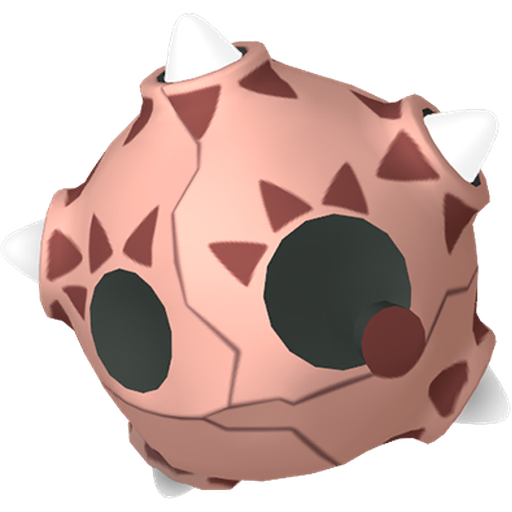
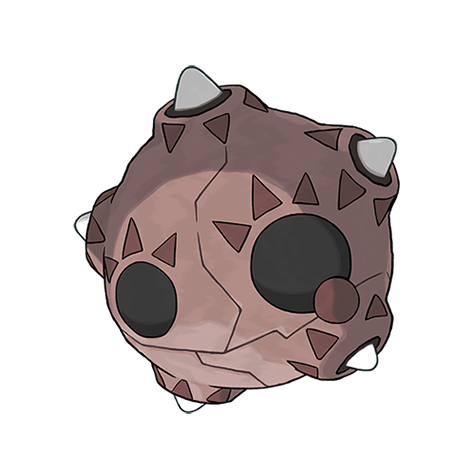
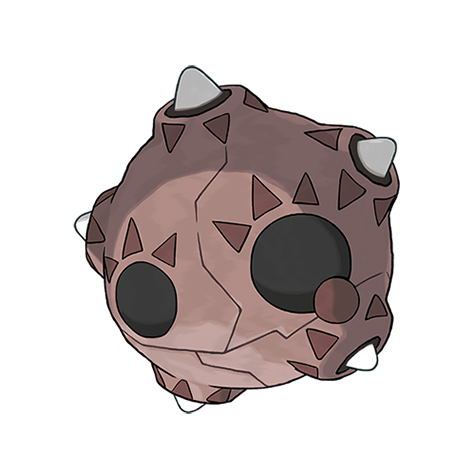
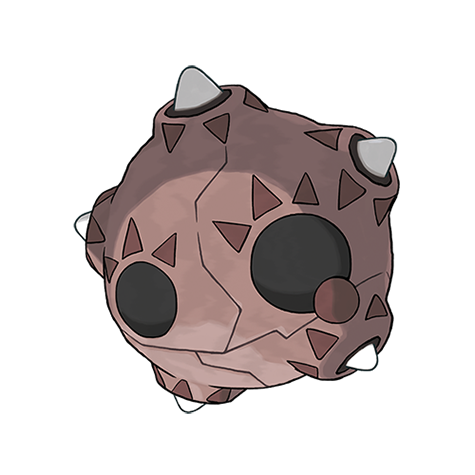
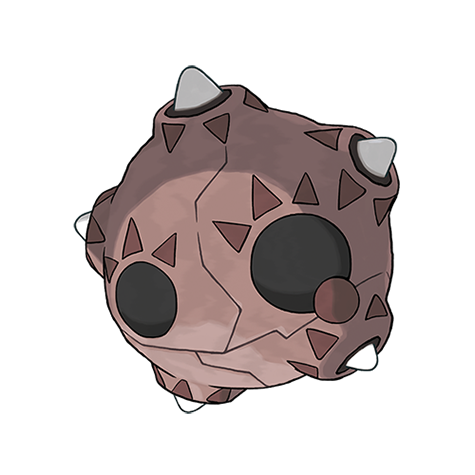
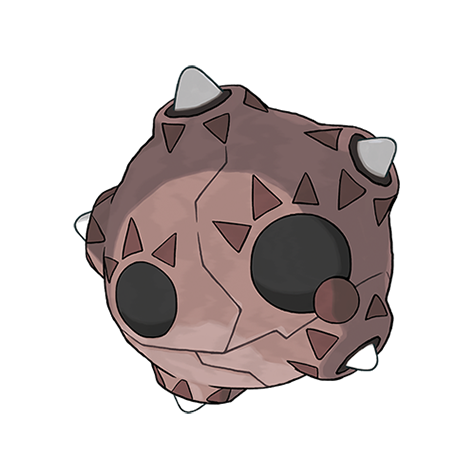
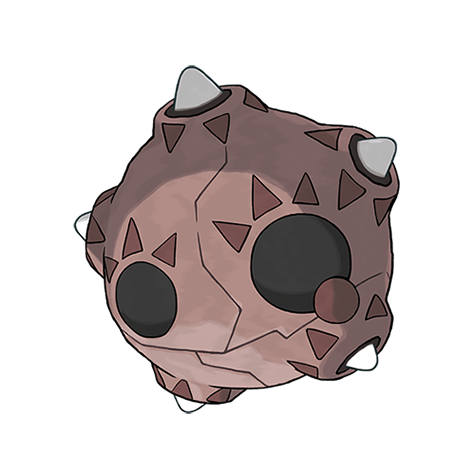
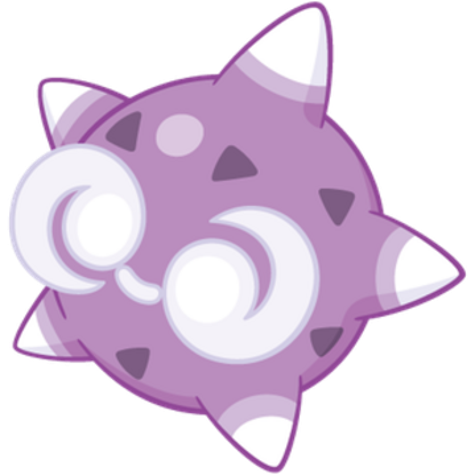
Minior originates from the stratosphere, where it is born from an aggregation of mutated nanoparticles in Earth's upper atmosphere. According to Pokédex entries, these creatures absorb particulate matter from the air, using this material to construct and reinforce their durable rocky cores and protective outer shells. The biological process of accumulating atmospheric debris continues throughout Minior's life in the ozone layer, gradually making its body heavier and heavier until eventually the weight becomes unsustainable. When this critical point is reached, Minior loses its ability to maintain altitude and plummets toward the planet's surface. In its natural habitat high above the ground, Minior serves as prey for stronger Pokémon, forcing it to develop its exceptional defensive shell as an evolutionary adaptation. The orange Meteor Form displays the characteristic four large rocky plates separated by horizontal and vertical cracks that encircle the Pokémon's spherical body, with five white spikes extending upward to create a distinctive star-like silhouette. Within this heavily armored exterior lies a vibrant orange core, one of seven possible color variations that determine Minior's identity and serve as visual markers of individuality among the species.
Pokedex Numbers
Training
Breeding
Orange Meteor Minior Breeding, Gender Ratio & Egg Groups
Minior is classified as a genderless Pokémon, meaning it has no male or female variations and cannot breed with other Pokémon in the traditional sense. This genderless status aligns Minior with other mineral-based and mechanical Pokémon, as well as legendary and mythical species. Being genderless does not reflect any legendary status—Minior is definitively not a legendary or mythical Pokémon—but rather represents its nature as a mineral-based life form similar to other species in the Mineral egg group. The Mineral egg group is the only breeding category to which Minior belongs, and genderless Pokémon in this group can only breed with other genderless Mineral-group members like Magnemite, Porygon, or Staryu. Minior has a base happiness value of 70 and follows a medium-slow growth rate, taking substantial experience to reach higher levels compared to fast-growth species. When bred with compatible partners, Minior has a hatch counter of 25 cycles, requiring approximately 6,169 to 6,425 steps before the egg hatches. The genderless nature also means that the color of a hatched Minior's core is randomly determined from the seven possible variations, with each individual Minior retaining its core color throughout its entire lifetime.
Sprites



Held Items
Star Piece
loot
Platinum: Trade for one of each color Shard. Black and White: Trade for PP Up. Sell for 4900 Pokédollars, or to Ore Collector for 9800 Pokédollars.
Cost: 12000
Star Piece
loot
Platinum: Trade for one of each color Shard. Black and White: Trade for PP Up. Sell for 4900 Pokédollars, or to Ore Collector for 9800 Pokédollars.
Cost: 12000
Star Piece
loot
Platinum: Trade for one of each color Shard. Black and White: Trade for PP Up. Sell for 4900 Pokédollars, or to Ore Collector for 9800 Pokédollars.
Cost: 12000
Star Piece
loot
Platinum: Trade for one of each color Shard. Black and White: Trade for PP Up. Sell for 4900 Pokédollars, or to Ore Collector for 9800 Pokédollars.
Cost: 12000
TMs & HMs
tm04
gold silver
tm04
emerald
tm04
firered leafgreen
tm04
ruby sapphire
tm04
diamond pearl
tm04
crystal
tm04
xd
tm04
heartgold soulsilver
tm04
black white
tm04
colosseum
tm04
platinum
tm04
sun moon
tm04
ultra sun ultra moon
tm04
x y
tm04
omega ruby alpha sapphire
tm04
black 2 white 2
tm05
lets go pikachu lets go eevee
tm06
yellow
tm06
gold silver
tm06
red blue
+609 more TMs/HMs
Regional & Special Forms
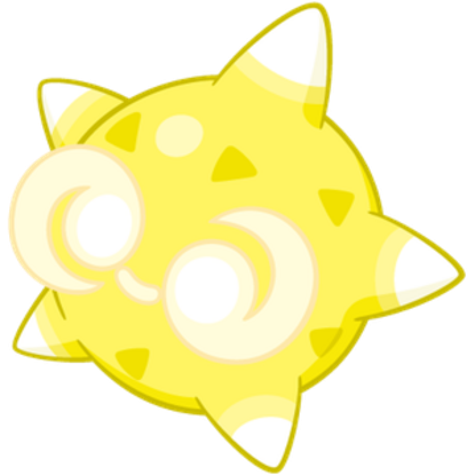
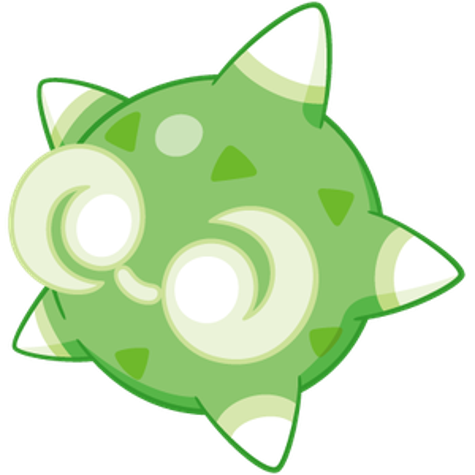
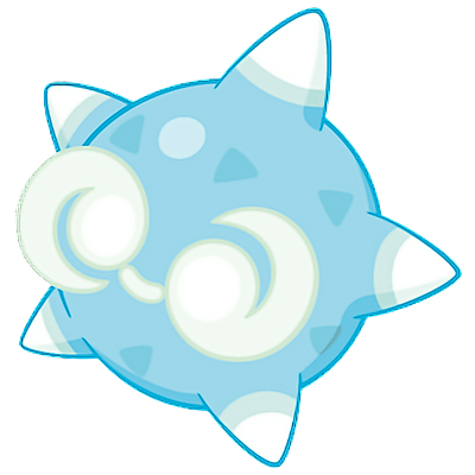
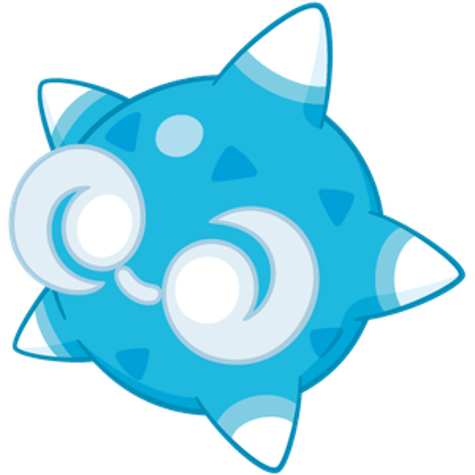
Orange Meteor Minior also has 13 related forms: Red Meteor Minior, Yellow Meteor Minior, Green Meteor Minior, Blue Meteor Minior, Indigo Meteor Minior, Violet Meteor Minior, Red Minior, Orange Minior, Yellow Minior, Green Minior, Blue Minior, Indigo Minior and Violet Minior.
Orange Meteor Minior Evolution, Mega Evolution & Special Forms
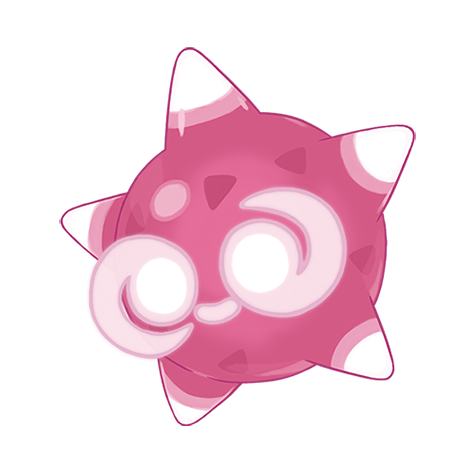
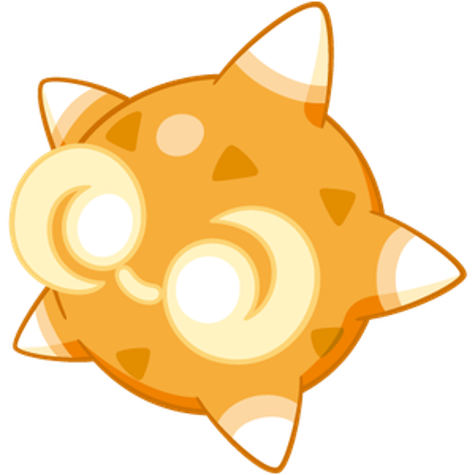
Unlike the vast majority of Pokémon species, Minior does not evolve into or from any other Pokémon, occupying a unique evolutionary status similar to legendary Pokémon and other singularly-evolved species. However, Minior experiences transformation that rivals evolution in terms of mechanical impact through its signature ability Shields Down. Rather than traditional evolution, Minior exists in two distinct forms that activate based on battle conditions: the heavy, defensive Meteor Form serves as the default state, while the Core Form emerges when Minior's health drops below fifty percent of its maximum HP. This form change is not merely cosmetic—it represents a complete statistical restructuring that transforms Minior from a defensive wall into an offensive speedster. When Minior's HP is restored above the fifty percent threshold, it automatically reverts to its Meteor Form, creating a cyclical transformation mechanic that encourages dynamic strategic thinking during combat. The seven possible core colors—red, orange, yellow, green, blue, indigo, and violet—are determined when a Minior is encountered or hatched and remain fixed throughout its lifetime, creating visual identity among individual specimens without affecting competitive viability or gameplay mechanics.
Where to Find
Location data not available for this Pokémon in the database.
Orange Meteor Minior Behaviour and Natural Habitat
Minior's natural habitat is exclusively the stratosphere and ozone layer, altitudes where it has evolved to thrive among clouds and cosmic radiation. These Pokémon spend their entire lives drifting through the upper atmosphere, consuming dust particles and atmospheric detritus as their primary food source, a dietary specialization that supports their unique biological composition. The Pokédex notes that Minior attempts to flee when threatened by larger aerial predators, but its heavy Meteor Form makes escape difficult, often resulting in the creature falling toward the ground. Alola has become one of the few known locations where Minior regularly falls to the surface, making it a distinctive part of that region's ecosystem. Once its protective shell becomes too heavy or is damaged by impact, Minior's behavior shifts dramatically when its core form is exposed. In this vulnerable state, the Pokémon becomes far more agile and aggressive, displaying heightened speed and offensive capabilities as if the removal of its outer shell unlocks a faster, more combat-ready version of itself. The species exhibits an interesting survival strategy where it can revert to its Meteor Form once its health recovers above fifty percent, essentially using its shell as both armor and a mechanism for managing its battle state.
Pokedex Entries
Originally making its home in the ozone layer, it hurtles to the ground when the shell enclosing its body grows too heavy.
It lives in the ozone layer, where it becomes food for stronger Pokémon. When it tries to run away, it falls to the ground.
Strong impacts can knock it out of its shell. This Pokémon was born from mutated nanoparticles.
Although its outer shell is uncommonly durable, the shock of falling to the ground smashes the shell to smithereens.
Orange Meteor Minior Name Origin & Design Inspiration
The name Minior derives from the Latin word 'minor' meaning smaller, combined with 'meteor,' perfectly capturing this Pokémon's identity as a small, rocky object falling from space. The Japanese name Meteno similarly combines 'meteor' with a suffix suggesting celestial origin. The design itself is unmistakably inspired by actual meteorites and space debris, with the orange Meteor Form resembling a spherical space rock that has accumulated mass through atmospheric friction and particle collection. The four-plate segmented structure with visible cracks suggests the natural fracture patterns seen in real meteorites after they strike planetary surfaces. The white spikes protruding from the surface serve both as defensive protrusions and as a visual design element that breaks up the spherical form, giving Minior visual interest despite its compact size. When the protective outer shell breaks away to reveal the orange core, the design shifts to represent raw, exposed mineral—a gleaming, precious gem-like center that contrasts sharply with the dull, rocky exterior. This visual transformation reinforces the theme that Minior's true value and power lie hidden beneath its unassuming surface, a design philosophy that extends to its stat distribution and battle mechanics.
Learnable Moves
Orange Meteor Minior can learn 64 moves:
Move | Type | Cat. | Power | Acc. | PP |
|---|---|---|---|---|---|
| acrobatics | flying | Physical | 55 | 100 | 15 |
| ancient power | rock | Special | 60 | 100 | 5 |
| attract | normal | Status | — | 100 | 15 |
| autotomize | steel | Status | — | — | 15 |
| bulldoze | ground | Physical | 60 | 100 | 20 |
| calm mind | psychic | Status | — | — | 20 |
| charge beam | electric | Special | 50 | 90 | 10 |
| confide | normal | Status | — | — | 20 |
| confuse ray | ghost | Status | — | 100 | 10 |
| cosmic power | psychic | Status | — | — | 20 |
| dazzling gleam | fairy | Special | 80 | 100 | 10 |
| defense curl | normal | Status | — | — | 40 |
| double team | normal | Status | — | — | 15 |
| double edge | normal | Physical | 120 | 100 | 15 |
| earth power | ground | Special | 90 | 100 | 10 |
| earthquake | ground | Physical | 100 | 100 | 10 |
| endeavor | normal | Physical | — | 100 | 5 |
| endure | normal | Status | — | — | 10 |
| explosion | normal | Physical | 250 | 100 | 5 |
| facade | normal | Physical | 70 | 100 | 20 |
| frustration | normal | Physical | — | 100 | 20 |
| giga impact | normal | Physical | 150 | 90 | 5 |
| gravity | psychic | Status | — | — | 5 |
| gyro ball | steel | Physical | — | 100 | 5 |
| hidden power | normal | Special | 60 | 100 | 15 |
| hyper beam | normal | Special | 150 | 90 | 5 |
| iron head | steel | Physical | 80 | 100 | 15 |
| last resort | normal | Physical | 140 | 100 | 5 |
| light screen | psychic | Status | — | — | 30 |
| magnet rise | electric | Status | — | — | 10 |
| meteor beam | rock | Special | 120 | 90 | 10 |
| power gem | rock | Special | 80 | 100 | 20 |
| protect | normal | Status | — | — | 10 |
| psych up | normal | Status | — | — | 10 |
| psychic | psychic | Special | 90 | 100 | 10 |
| reflect | psychic | Status | — | — | 20 |
| rest | psychic | Status | — | — | 5 |
| return | normal | Physical | — | 100 | 20 |
| rock blast | rock | Physical | 25 | 90 | 10 |
| rock polish | rock | Status | — | — | 20 |
| rock slide | rock | Physical | 75 | 90 | 10 |
| rock tomb | rock | Physical | 60 | 95 | 15 |
| rollout | rock | Physical | 30 | 90 | 20 |
| round | normal | Special | 60 | 100 | 15 |
| safeguard | normal | Status | — | — | 25 |
| sandstorm | rock | Status | — | — | 10 |
| scorching sands | ground | Special | 70 | 100 | 10 |
| self destruct | normal | Physical | 200 | 100 | 5 |
| shell smash | normal | Status | — | — | 15 |
| sleep talk | normal | Status | — | — | 10 |
| snore | normal | Special | 50 | 100 | 15 |
| solar beam | grass | Special | 120 | 100 | 10 |
| stealth rock | rock | Status | — | — | 20 |
| stone edge | rock | Physical | 100 | 80 | 5 |
| substitute | normal | Status | — | — | 10 |
| swagger | normal | Status | — | 85 | 15 |
| swift | normal | Special | 60 | — | 20 |
| tackle | normal | Physical | 40 | 100 | 35 |
| take down | normal | Physical | 90 | 85 | 20 |
| telekinesis | psychic | Status | — | — | 15 |
| tera blast | normal | Special | 80 | 100 | 10 |
| toxic | poison | Status | — | 90 | 10 |
| u turn | bug | Physical | 70 | 100 | 20 |
| zen headbutt | psychic | Physical | 80 | 90 | 15 |
Orange Meteor Minior Competitive Battle Guide
Judged by competitive standards, Minior's Shields Down ability creates a genuinely unique strategic niche that requires careful team building and battle awareness to exploit effectively. The Meteor Form provides balanced defensive capabilities with 100 Defense and 100 Special Defense, allowing Minior to function as a bulky wall capable of withstanding both physical and special attacks simultaneously. This defensive profile grants Minior a combined stat total of 440, respectable for many competitive formats, with the defensive stats providing genuine utility against common threats. However, the true competitive potential emerges when Minior's health drops below fifty percent, triggering its transformation into Core Form—a form with dramatically different stats including 120 Speed, 100 Attack, and 100 Special Attack, making it a dangerous offensive threat that can outpace many opponents. This transformation catches unprepared opponents off-guard, as trainers must account for Minior potentially shifting from tank to sweeper mid-battle. Players must carefully manage Minior's HP to control when transformation occurs, potentially using damage-reducing moves or items to maintain strategic advantage. The orange coloration provides no mechanical advantage over other core colors, making color preference purely aesthetic. Minior's movepool supports both defensive and offensive applications, allowing it to learn moves suitable for either form, though its limited speed in Meteor Form often necessitates primarily defensive coverage moves in that state.
Commonly Asked Questions About Orange Meteor Minior
What type is Orange Meteor Minior?
Orange Meteor Minior is a rock and flying type Pokemon.
What does Orange Meteor Minior evolve into?
Orange Meteor Minior does not evolve.
What are Orange Meteor Minior's weaknesses?
Orange Meteor Minior is weak to ground, rock, steel, water, electric and ice type moves.
Orange Meteor Minior Cultural Impact & Franchise History
Since its introduction in Generation VII's Pokémon Sun and Moon, Minior has earned appreciation among Pokémon fans for its innovative mechanics and charming extraterrestrial origin story. The concept of a Pokémon born in the stratosphere from mutated nanoparticles captured imaginations and sparked considerable discussion about the scientific worldbuilding within the Pokémon universe. Minior's unique Shields Down ability became a benchmark for creativity in Pokémon design, inspiring trainers to reconsider how form-changing mechanics could fundamentally alter competitive strategy. The seven core color variations created collecting appeal, with trainers seeking to obtain and display each color variant, leading to dedicated breeding projects and trading communities focused on Minior. In competitive circles, Minior achieved modest but notable popularity, particularly in formats that benefit from its defensive bulk and speed stats, making it a memorable unexpected threat in tournaments. The design has resonated with trainers who appreciate space-themed Pokémon and those drawn to the elegant elegance of its transformation mechanic. Minior has maintained a dedicated fan following across Pokémon communities, frequently appearing in fan art, merchandise, and discussions about underrated Generation VII Pokémon that deserve greater recognition.
Where to Find Orange Meteor Minior in Every Pokémon Game
Minior was first introduced in Pokémon Sun and Moon as a Generation VII Pokémon exclusive to the Alola region, where it appears as part of the regional Pokédex. In Pokémon Sun and Moon, Minior occupies Pokédex slot #213 in the Alola dex, while in Pokémon Ultra Sun and Ultra Moon it shifts to slot #277, reflecting the expanded regional Pokédex of those enhanced versions. The creature can be encountered in the wild primarily in areas with high altitude, reflecting its natural habitat in the upper atmosphere. Minior has since appeared in subsequent games including Pokémon Sword and Shield and Pokémon Scarlet and Violet, where it appears in The Indigo Disk DLC content at Pokédex slot #106. The species has a catch rate of 30, making it moderately difficult to catch in the wild compared to common Pokémon. Players can breed Minior in the Mineral egg group, resulting in eggs that hatch into offspring with randomly determined core colors from the full spectrum of seven available variations. Minior can be obtained through various in-game methods including wild encounters, breeding, and trade, with its availability varying by generation and specific game version. The orange core variation is one of the seven equally available core colors, meaning no particular effort or specific method is required to obtain the orange form over others.