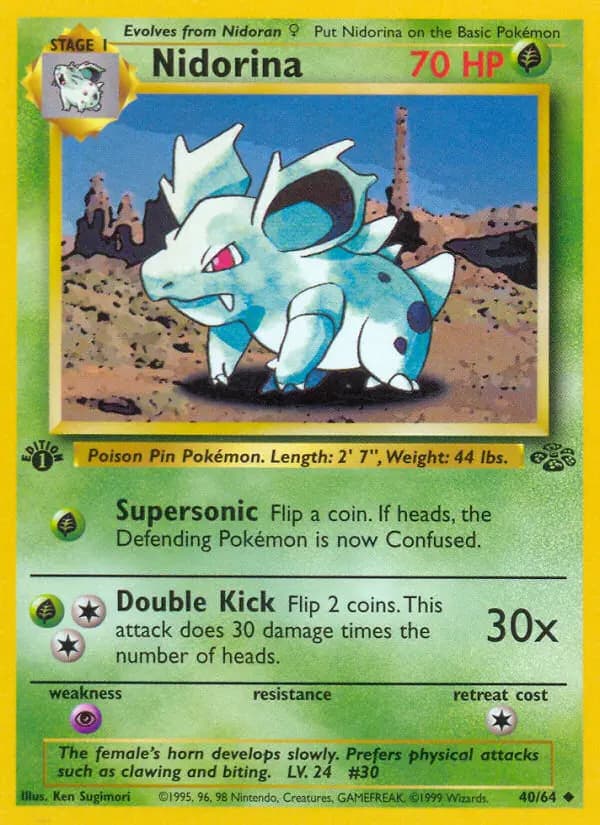
Nidorina
Generation I · #0030 — Poison Pin Pokémon
Nidorina entered the roster in Generation I as a poison-type, and what's stuck since is less its typing than its poison point ability. The species is notable for being exclusively female, a characteristic that defines its identity and gameplay mechanics within the Pokémon universe. Nidorina evolves from Nidoran♀ starting at level 16 and can further evolve into Nidoqueen through the use of a Moon Stone, making it a crucial stepping stone in one of Pokémon's most iconic evolutionary lines.
Editor's Take
Nidorina cannot breed despite being the female half of the line, which is one of the odder pieces of Gen 2 breeding logic and has never been changed.
Base Stats
Height
0.8m
Weight
20.0kg
Category
Poison Pin Pokémon
Gender
100% Female
Color
blue
Shape
quadruped
Habitat
grassland
Abilities
Has a 30% chance of poisoning attacking Pokémon on contact.
Increases damage inflicted to 1.25× against Pokémon of the same gender, but decreases damage to 0.75× against the opposite gender.
Strengthens physical moves to inflict 1.5× damage, but decreases their accuracy to 0.8×.
Nidorina Biology & Physical Characteristics
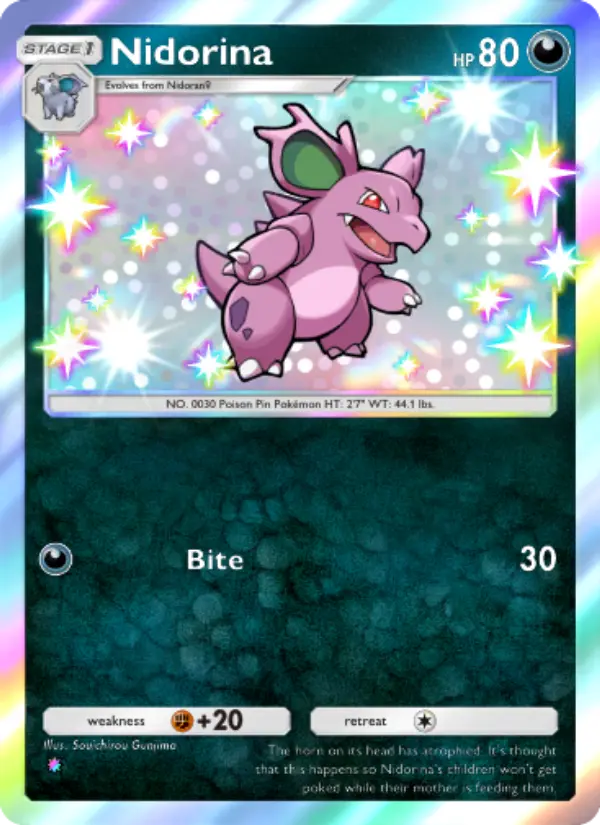
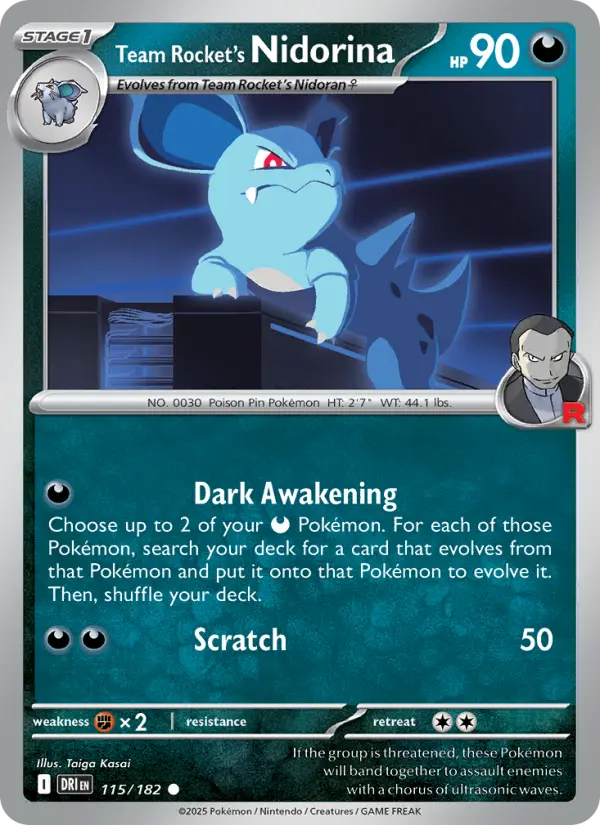
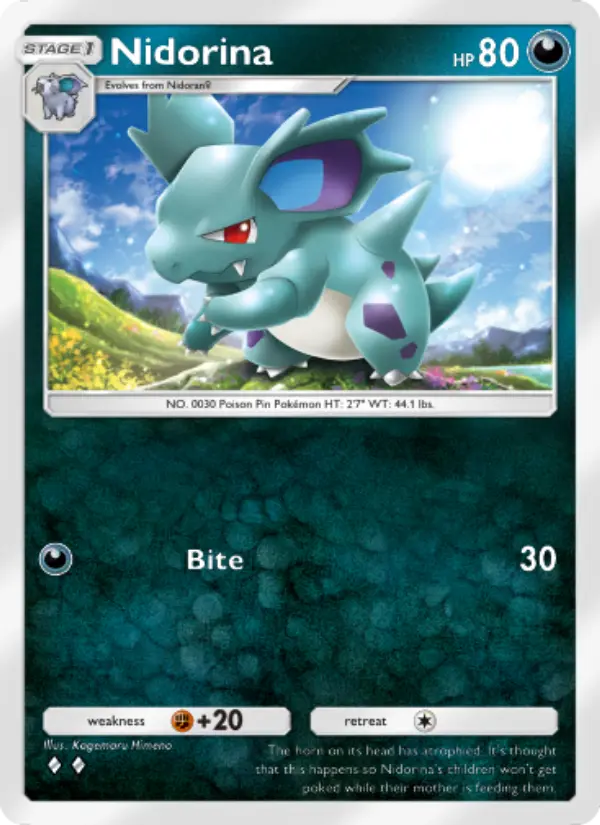
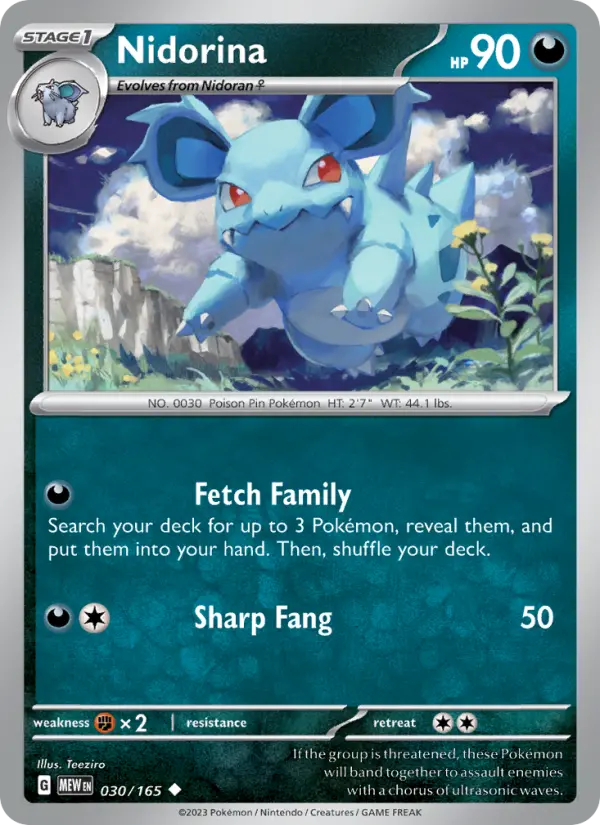
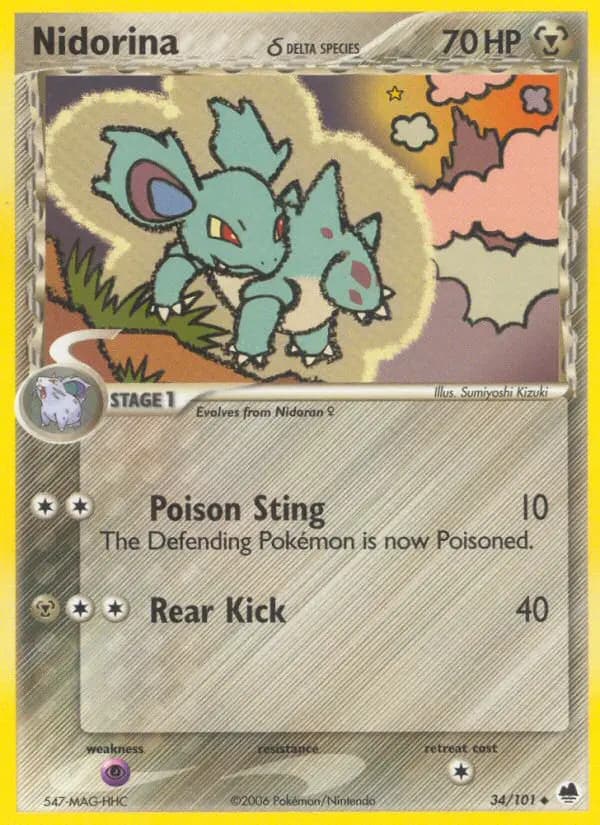
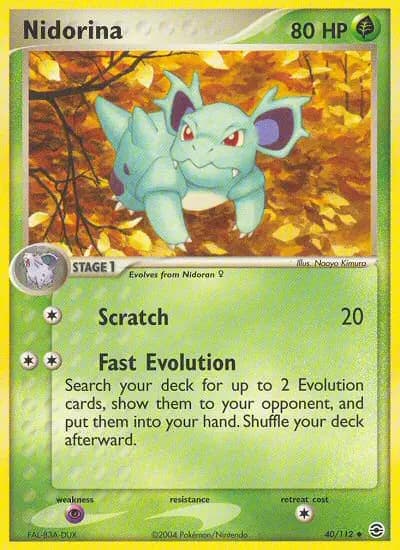
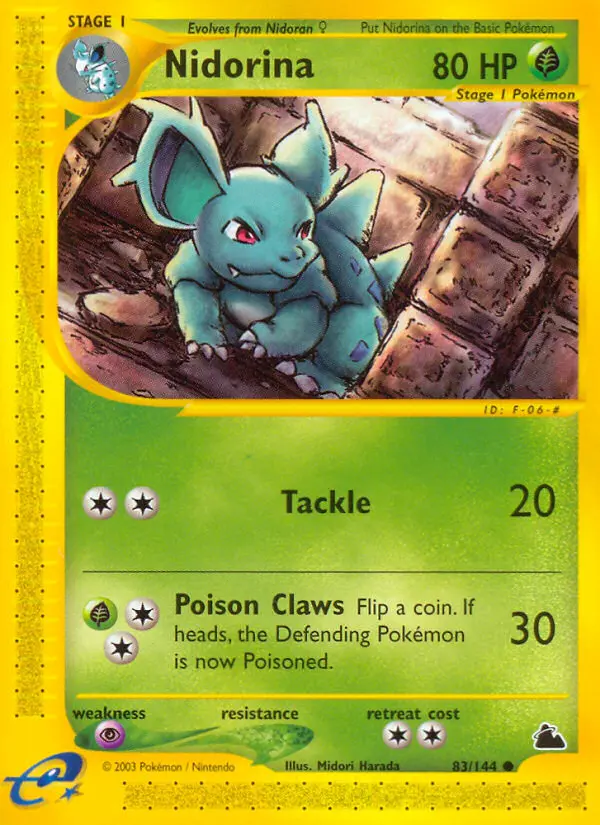
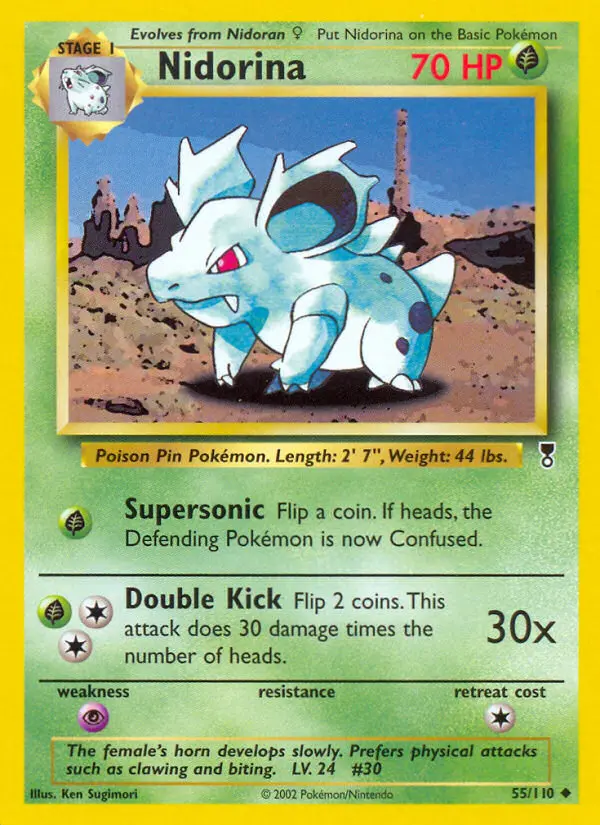
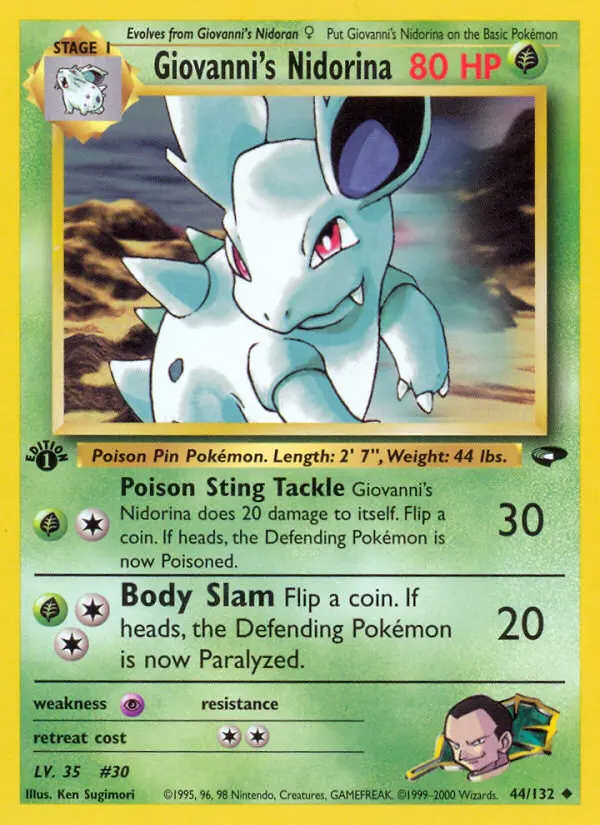
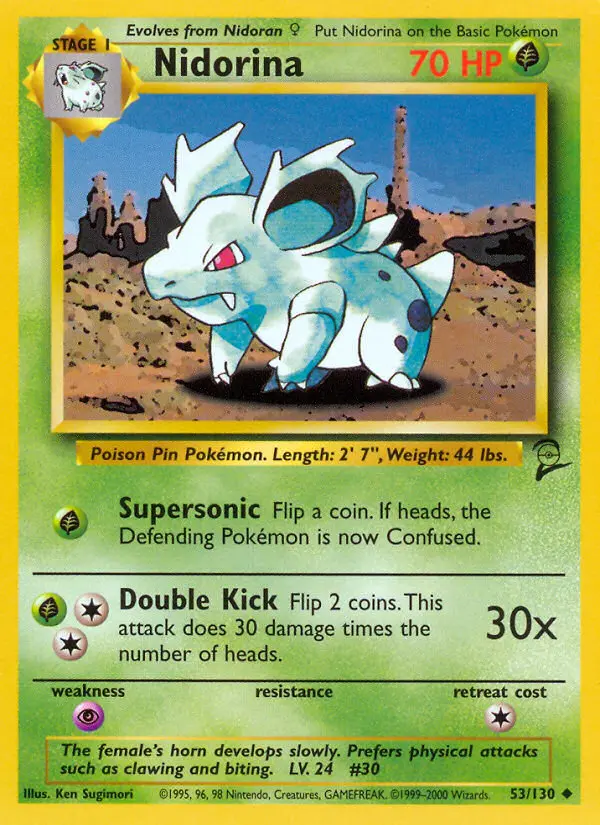
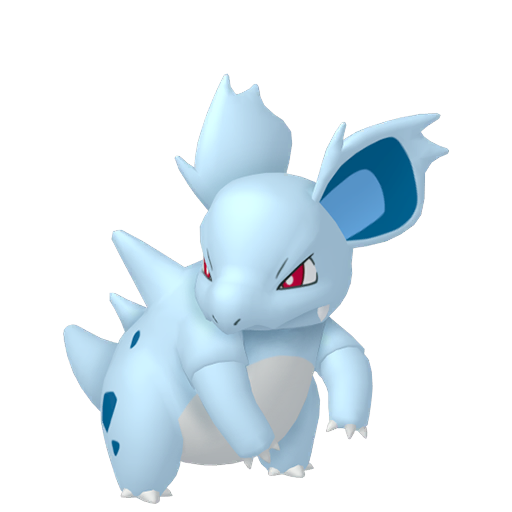
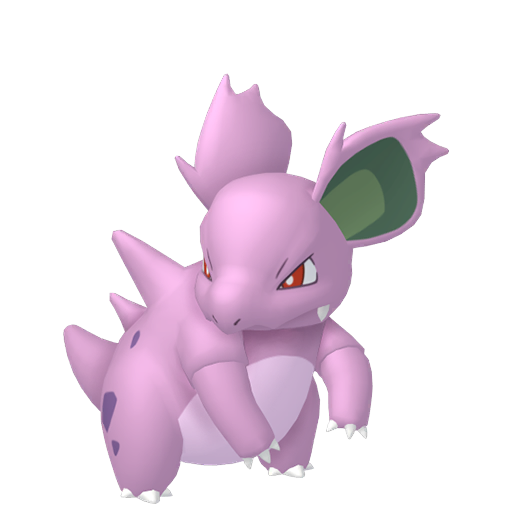
Nidorina is a quadrupedal, sky-blue mammalian Pokémon characterized by its distinctive dark-blue patches, large spiny ears, and red eyes that convey an alert yet gentle demeanor. The species possesses two pointed teeth protruding from its upper jaw and features large poison spikes distributed across its body, though notably these barbs retract when the Pokémon is at rest in its burrow or surrounded by family members—a behavioral adaptation that provides both physical comfort and emotional security. Standing 0.8 meters tall and weighing 20.0 kilograms, Nidorina has proportionally longer and thicker hind legs compared to its forelegs, allowing it to stand on its rear legs when necessary, though it typically moves on all fours. Its horn develops slowly throughout its lifetime, a distinguishing feature mentioned repeatedly across multiple Pokédex entries that directly influences its combat preferences and personality. The species possesses three claws on each paw, providing the physical adaptations necessary for the clawing and biting attacks it favors, and sports a short, stubby tail that provides balance during its terrestrial movements.
Pokedex Numbers
Training
Breeding
Nidorina Breeding, Gender Ratio & Egg Groups
Nidorina is exclusively female, representing one of Pokémon's most distinctly gender-specific species with a 0% male to 100% female ratio in wild populations and breeding outcomes. This exclusive femininity fundamentally shapes how players interact with the species, as wild Nidoran♀ can only evolve into Nidorina, creating a unique evolutionary dynamic where trainers desiring the female line must specifically seek out Nidoran♀ females rather than encountering random specimens. Interestingly, Nidorina belongs to the No Eggs Discovered egg group, meaning it cannot breed in standard gameplay despite being female and lacking the typical restrictions of legendary or mythical Pokémon. This breeding restriction creates a curious gameplay limitation where trainers cannot generate multiple Nidorina through breeding but must instead catch individual Nidoran♀ specimens and level them to 16 for each desired Nidorina. The exclusive female status extends thematic consistency through the species' portrayed nurturing behavior, with Pokédex entries emphasizing its role as a caring mother that prioritizes family welfare above competitive aggression. From a competitive perspective, Rivalry—one of Nidorina's standard abilities—creates interesting gender-based damage modifiers, dealing 1.25× damage to same-gender opponents while suffering 0.75× damage reduction against opposite-gender foes.
Sprites




TMs & HMs
tm01
black white
tm01
black 2 white 2
tm01
lets go pikachu lets go eevee
tm01
omega ruby alpha sapphire
tm01
x y
tm02
crystal
tm02
gold silver
tm03
crystal
tm03
gold silver
tm03
ruby sapphire
tm03
platinum
tm03
firered leafgreen
tm03
heartgold soulsilver
tm03
diamond pearl
tm03
emerald
tm03
xd
tm03
colosseum
tm03
lets go pikachu lets go eevee
tm05
lets go pikachu lets go eevee
tm06
yellow
+658 more TMs/HMs
Nidorina's Evolution Chain


Nidorina Evolution, Mega Evolution & Special Forms
Nidorina represents the crucial middle stage of the female Nidoran evolution line, evolving from Nidoran♀ at level 16 through standard leveling mechanics. The transition from Nidoran♀ to Nidorina marks a noticeable increase in physical capability, with improvements across all base stats—most notably in HP (from 55 to 70) and Defense (from 52 to 67), providing trainers with a more robust Pokémon suitable for mid-game challenges. The species retains its pure Poison typing at this stage, maintaining consistency with its pre-evolution before gaining a secondary Ground typing upon its final evolution into Nidoqueen through Moon Stone exposure. This evolution requirement makes Nidorina unique among Kanto Pokémon, as it cannot simply level up to reach its final form like many other pseudo-legendary or standard evolutionary lines, instead requiring a specific evolutionary stone that trainers must obtain through gameplay or acquisition. The evolution into Nidoqueen represents a substantial power spike, with base stats increasing dramatically to 465 total, making the Moon Stone investment a critical progression point for competitive players utilizing this line.
Where to Find
Kanto Safari Zone
kanto
+17 more
Kanto Route 9
kanto
Kanto Route 23
kanto
+1 more
Kanto Route 15
kanto
+9 more
Kanto Route 14
kanto
+9 more
Kanto Route 13
kanto
+9 more
Valor Lakefront
sinnoh
+3 more
Sinnoh Route 221
sinnoh
+3 more
Johto Safari Zone
johto
+3 more
Kalos Route 11
kalos
Kanto Route 10
kanto
Nidorina Behaviour and Natural Habitat
Nidorina exhibits a remarkably gentle and docile nature that stands in stark contrast to its venomous biology, displaying strong maternal instincts and deep familial bonds. The species is known for its caring demeanor toward offspring, actively chewing and tenderizing food before spitting it out for its young to consume—a behavior that demonstrates both nurturing capability and the extent of its parental investment. According to multiple Pokédex entries, Nidorina becomes notably nervous when separated from its family or friend group, highlighting its social dependency and emotional vulnerability despite its impressive defensive spikes. The species prefers to avoid direct confrontation due to its slowly developing horn, instead relying on physical attacks such as clawing and biting when forced into combat, and it can emit ultrasonic cries that have the power to befuddle opponents. Nidorina inhabits hot savannas and plains, living in burrows where it rests comfortably with its spines retracted. When threatened with imminent danger, the Pokémon raises all the barbs on its body as a defensive display, transforming from its typically calm appearance into a formidable-looking creature despite its reluctance to engage in violence.
Pokedex Entries
The female's horn develops slowly. Prefers physical attacks such as clawing and biting.
When resting deep in its burrow, its thorns always retract. This is proof that it is relaxed.
When feeding its young, it first chews and tender izes the food, then spits it out for the offspring.
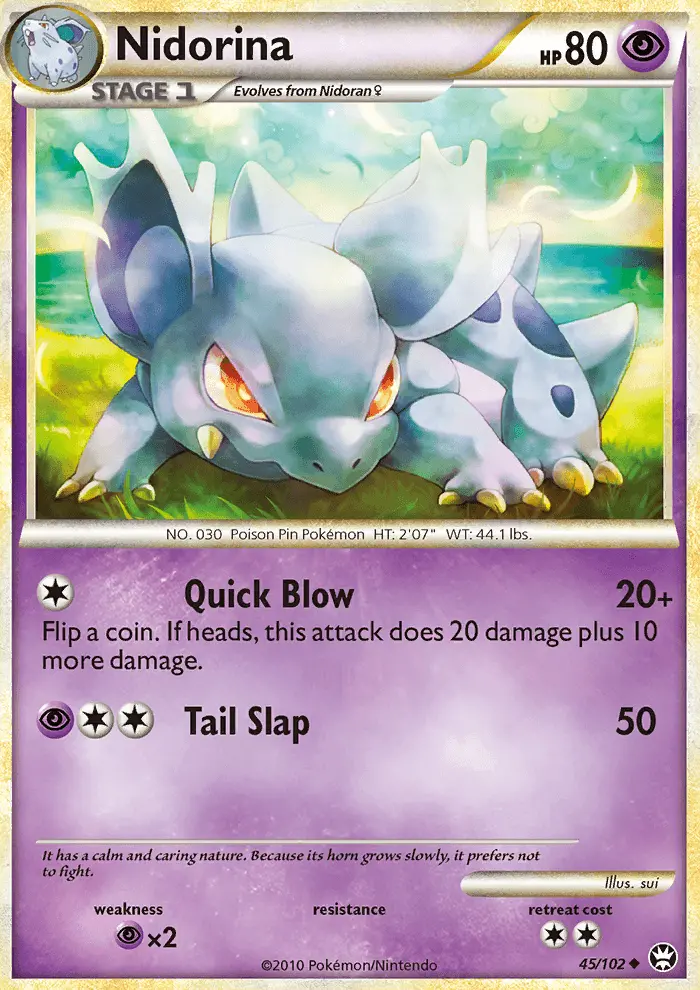
It has a calm and caring nature. Because its horn grows slowly, it prefers not to fight.
It has a docile nature. If it is threatened with attack, it raises the barbs that are all over its body.
When NIDORINA are with their friends or family, they keep their barbs tucked away to prevent hurting each other. This POKéMON appears to become nervous if separated from the others.
When it is with its friends or family, its barbs are tucked away to prevent injury. It appears to become nervous if separated from the others.
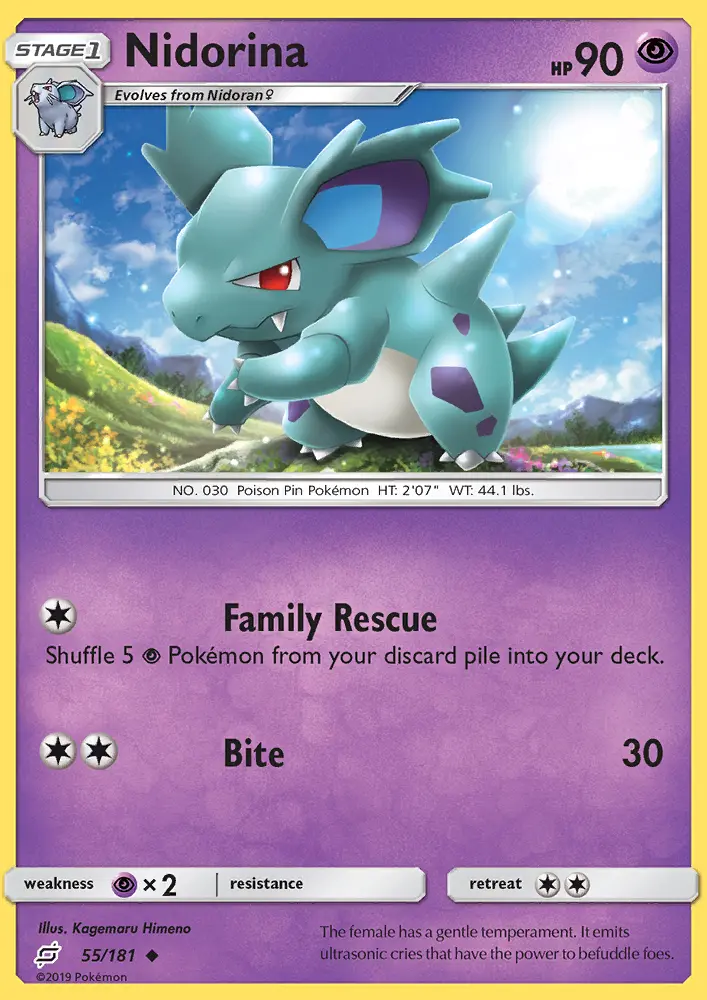
The female has a gentle temperament. It emits ultrasonic cries that have the power to befuddle foes.
The female’s horns develop slowly. Prefers physical attacks such as clawing and biting.
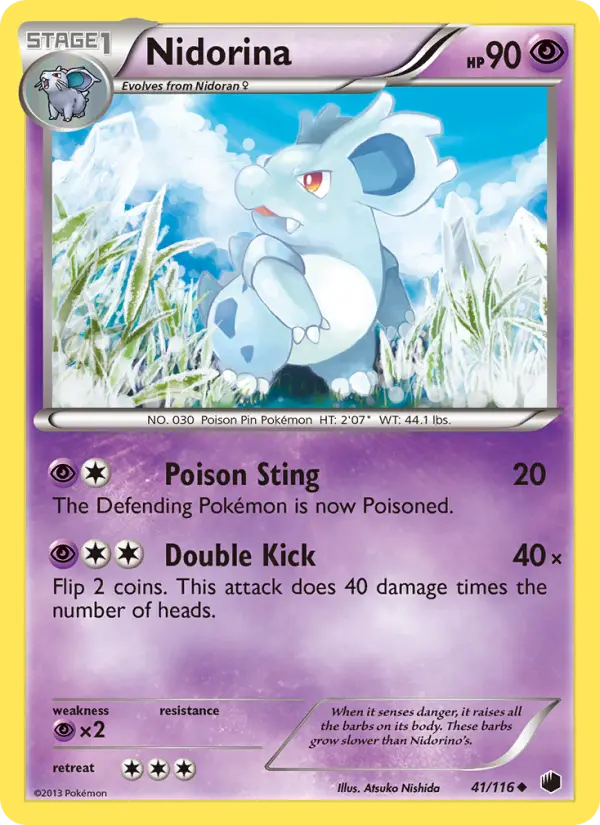
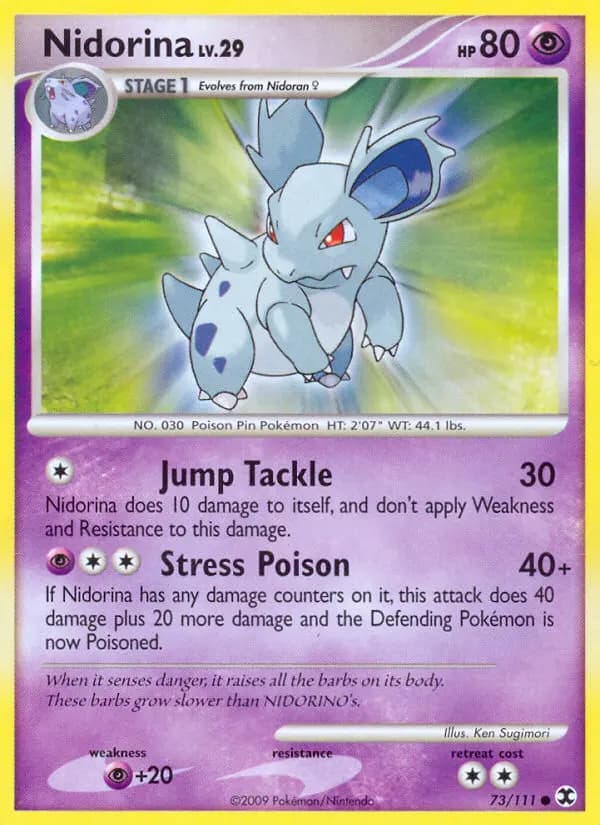
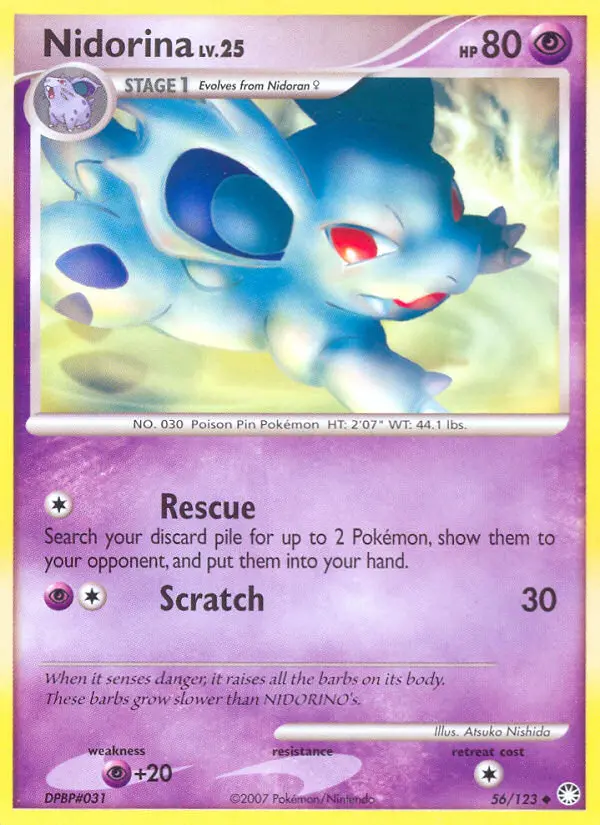
When it senses danger, it raises all the barbs on its body. These barbs grow slower than NIDORINO’s.
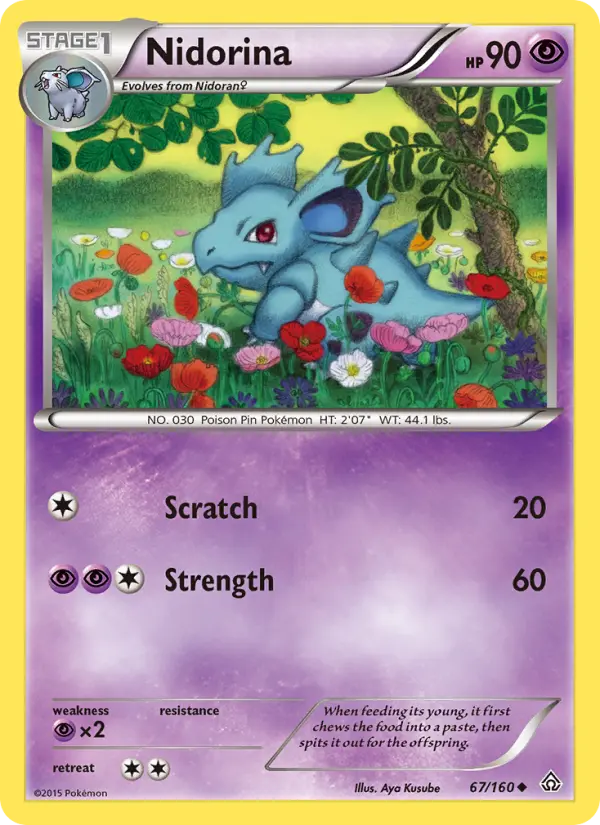
When feeding its young, it first chews the food into a paste, then spits it out for the offspring.
It has a calm and caring nature. Because its horn grows slowly, it prefers not to fight.
When it senses danger, it raises all the barbs on its body. These barbs grow slower than Nidorino’s.
When it senses danger, it raises all the barbs on its body. These barbs grow slower than Nidorino’s.
The female has a gentle temperament. It emits ultrasonic cries that have the power to befuddle foes.
When feeding its young, it first chews the food into a paste, then spits it out for the offspring.
When Nidorina are with their friends or family, they keep their barbs tucked away to prevent hurting each other. This Pokémon appears to become nervous if separated from the others.
When Nidorina are with their friends or family, they keep their barbs tucked away to prevent hurting each other. This Pokémon appears to become nervous if separated from the others.
When resting deep in its burrow, its barbs always retract. This is proof that it is relaxed.
The horn on its head has atrophied. It’s thought that this happens so Nidorina’s children won’t get poked while their mother is feeding them.
If the group is threatened, these Pokémon will band together to assault enemies with a chorus of ultrasonic waves.
Nidorina Name Origin & Design Inspiration
The name 'Nidorina' derives from the Japanese designation ニドリーナ, which itself appears to be a feminine adaptation of 'Nidor,' relating to the Latin word 'nidus' meaning nest, combined with a suffix suggesting femininity and refinement. The design philosophy emphasizes the contrast between Nidorina's gentle temperament and its formidable defensive capabilities through its visible poison spikes and venomous nature, creating a visual representation of the duality between danger and caring maternity. The sky-blue coloration with dark-blue patches provides distinctiveness from its pre-evolution while remaining aesthetically consistent with the broader Nidoran family design language. The species' most iconic feature—its slowly developing horn—serves as both a design element and a narrative device, appearing in Pokédex entries as justification for why Nidorina prefers not to fight and why it relies on alternative combat methods. The retractable spines represent an innovative biological concept within Pokémon design, allowing the species to express both danger and vulnerability depending on its emotional state and social context.
Learnable Moves
Nidorina can learn 77 moves:
Move | Type | Cat. | Power | Acc. | PP |
|---|---|---|---|---|---|
| aerial ace | flying | Physical | 60 | — | 20 |
| attract | normal | Status | — | 100 | 15 |
| beat up | dark | Physical | — | 100 | 10 |
| bide | normal | Physical | — | — | 10 |
| bite | dark | Physical | 60 | 100 | 25 |
| blizzard | ice | Special | 110 | 70 | 5 |
| body slam | normal | Physical | 85 | 100 | 15 |
| bubble beam | water | Special | 65 | 100 | 20 |
| captivate | normal | Status | — | 100 | 20 |
| charm | fairy | Status | — | 100 | 20 |
| confide | normal | Status | — | — | 20 |
| counter | fighting | Physical | — | 100 | 20 |
| crunch | dark | Physical | 80 | 100 | 15 |
| curse | ghost | Status | — | — | 10 |
| cut | normal | Physical | 50 | 95 | 30 |
| defense curl | normal | Status | — | — | 40 |
| detect | fighting | Status | — | — | 5 |
| dig | ground | Physical | 80 | 100 | 10 |
| double kick | fighting | Physical | 30 | 100 | 30 |
| double team | normal | Status | — | — | 15 |
| double edge | normal | Physical | 120 | 100 | 15 |
| earth power | ground | Special | 90 | 100 | 10 |
| echoed voice | normal | Special | 40 | 100 | 15 |
| endure | normal | Status | — | — | 10 |
| facade | normal | Physical | 70 | 100 | 20 |
| flatter | dark | Status | — | 100 | 15 |
| focus energy | normal | Status | — | — | 30 |
| frustration | normal | Physical | — | 100 | 20 |
| fury swipes | normal | Physical | 18 | 80 | 15 |
| growl | normal | Status | — | 100 | 40 |
| headbutt | normal | Physical | 70 | 100 | 15 |
| helping hand | normal | Status | — | — | 20 |
| hidden power | normal | Special | 60 | 100 | 15 |
| hone claws | dark | Status | — | — | 15 |
| horn drill | normal | Physical | — | 30 | 5 |
| ice beam | ice | Special | 90 | 100 | 10 |
| iron tail | steel | Physical | 100 | 75 | 15 |
| mimic | normal | Status | — | — | 10 |
| mud slap | ground | Special | 20 | 100 | 10 |
| natural gift | normal | Physical | — | 100 | 15 |
| poison fang | poison | Physical | 50 | 100 | 15 |
| poison jab | poison | Physical | 80 | 100 | 20 |
| poison sting | poison | Physical | 15 | 100 | 35 |
| protect | normal | Status | — | — | 10 |
| rage | normal | Physical | 20 | 100 | 20 |
| rain dance | water | Status | — | — | 5 |
| reflect | psychic | Status | — | — | 20 |
| rest | psychic | Status | — | — | 5 |
| return | normal | Physical | — | 100 | 20 |
| rock smash | fighting | Physical | 40 | 100 | 15 |
| round | normal | Special | 60 | 100 | 15 |
| scratch | normal | Physical | 40 | 100 | 35 |
| secret power | normal | Physical | 70 | 100 | 20 |
| shadow claw | ghost | Physical | 70 | 100 | 15 |
| shock wave | electric | Special | 60 | — | 20 |
| skull bash | normal | Physical | 130 | 100 | 10 |
| sleep talk | normal | Status | — | — | 10 |
| sludge bomb | poison | Special | 90 | 100 | 10 |
| snore | normal | Special | 50 | 100 | 15 |
| stomping tantrum | ground | Physical | 75 | 100 | 10 |
| strength | normal | Physical | 80 | 100 | 15 |
| substitute | normal | Status | — | — | 10 |
| sunny day | fire | Status | — | — | 5 |
| super fang | normal | Physical | — | 90 | 10 |
| swagger | normal | Status | — | 85 | 15 |
| tackle | normal | Physical | 40 | 100 | 35 |
| tail whip | normal | Status | — | 100 | 30 |
| take down | normal | Physical | 90 | 85 | 20 |
| thief | dark | Physical | 60 | 100 | 25 |
| thunder | electric | Special | 110 | 70 | 10 |
| thunderbolt | electric | Special | 90 | 100 | 15 |
| toxic | poison | Status | — | 90 | 10 |
| toxic spikes | poison | Status | — | — | 20 |
| venom drench | poison | Status | — | 100 | 20 |
| venoshock | poison | Special | 65 | 100 | 10 |
| water gun | water | Special | 40 | 100 | 25 |
| water pulse | water | Special | 60 | 100 | 20 |
Nidorina Competitive Battle Guide
Nidorina occupies an interesting niche in competitive Pokémon battling as a transitional stage rather than a primary competitive force, with its combined stat total of 365 placing it firmly in mid-tier viability. Its offensive capabilities are modest, with Attack (62) and Special Attack (55) representing its weakest offensive stats, though its physical bulk of 70 HP and 67 Defense provides reasonable survivability for defensive strategies. The species' ability lineup offers distinct competitive advantages: Poison Point grants a 30% chance to poison attacking Pokémon on contact, providing passive damage accumulation and status disruption; Rivalry increases physical attack power against same-gender opponents to 1.25× while reducing damage inflicted by opposite-gender foes to 0.75×, creating interesting team composition considerations; and its Hidden Ability Hustle boosts physical moves to 1.5× damage at the cost of reducing accuracy to 0.8×, providing a high-risk, high-reward option for coverage moves. In practice, most competitive players utilize Nidoqueen rather than Nidorina due to the former's superior stats and dual Poison/Ground typing, which provides exceptional type coverage and the important immunity to Electric-type moves. However, Nidorina remains viable in lower-tier competitive formats and casual play, where its balanced bulk and status-inducing capabilities provide value in attrition-focused strategies.
Commonly Asked Questions About Nidorina
What type is Nidorina?
Nidorina is a poison type Pokemon.
What does Nidorina evolve into?
Nidorina evolves into nidoqueen.
What are Nidorina's weaknesses?
Nidorina is weak to ground and psychic type moves.
Does Nidorina evolve by trading?
No — Nidorina evolves entirely through leveling up, with no trade required at any stage.
Where can I find Nidorina?
Nidorina can be found in kanto safari zone (kanto), kanto route 9 (kanto) and kanto route 23 (kanto) and 8 other locations.
Nidorina Cultural Impact & Franchise History
Nidorina holds a significant place within Pokémon culture as the archetypal female evolution counterpart, establishing a design precedent for gender-differentiated evolutionary lines that would continue throughout subsequent generations. The species represents one of the earliest instances of Pokémon prioritizing character and maternal instinct in female designs, with its caring nature and family-oriented behavior offering a refreshing alternative to aggressive or sexualized female character tropes common in gaming. Nidorina appears in various Pokémon anime episodes and manga adaptations, though typically as a supporting Pokémon rather than a major character focus, maintaining its role as a mid-stage evolution within narrative structures. The design has inspired considerable fan appreciation for its unique combination of vulnerability and defensive capability, with the retractable spines concept becoming iconic within Pokémon design discussions as an innovative biological feature. Within competitive Pokémon communities, Nidorina has become shorthand for discussing the limitations of mid-stage evolutions and the strategic considerations of evolutionary timing, with players frequently debating optimal progression through the Nidoran line. The species has maintained consistent presence across Pokémon generations despite not receiving significant mechanical updates or regional variants, demonstrating the enduring appeal of its core design philosophy.
Where to Find Nidorina in Every Pokémon Game
Nidorina's availability throughout the Pokémon game series reflects its status as a foundational Generation I species with consistent presence across multiple game iterations and regions. In the original Red, Blue, and Yellow versions, Nidorina could be found in specific grass areas or obtained by evolving Nidoran♀ at level 16, with subsequent remakes FireRed and LeafGreen maintaining this availability within the Kanto region. Throughout the Johto region games (Gold, Silver, Crystal, HeartGold, and SoulSilver), Nidorina remained accessible through wild encounters or evolution, establishing its presence as a consistently available species across multiple geographical settings. In modern generations, Nidorina maintains accessibility through various methods depending on the game title: in Pokémon X and Y, it appears in Coastal Kalos; in Sword and Shield's Crown Tundra DLC, it becomes available through progressive advancement. The species' relatively high catch rate of 120 makes it more easily capturable than many other Pokémon, with the base happiness value of 70 indicating reasonable affection potential for trainers seeking to maximize Pokémon bond mechanics. Nidorina typically requires a Moon Stone for evolution into Nidoqueen, which must be obtained through specific in-game locations, shops, or finding Moon Stones in designated areas, making the final evolutionary step a somewhat deliberate gameplay choice rather than an automatic progression.