Oranguru
Generation VII · #0765 — Sage Pokémon
Few normal/psychic-type Pokémon pair inner focus with a stat lean toward hp quite like Oranguru does. With a moderate catch rate of 45 and base happiness of 70, Oranguru represents a Pokémon best suited for veteran Trainers who can appreciate its lofty demeanor and complex psychological makeup.
Editor's Take
Oranguru's Instruct making an ally use its move again is one of the most genuinely creative doubles mechanics in the series, and it built entire team archetypes.
Base Stats
Height
1.5m
Weight
76.0kg
Category
Sage Pokémon
Gender
Male 50% / Female 50%
Color
white
Shape
humanoid
Abilities
Prevents flinching.
Protects against friendly Pokémon's damaging moves.
Passes the bearer's held item to an ally when the ally uses up its item.
Oranguru Biology & Physical Characteristics
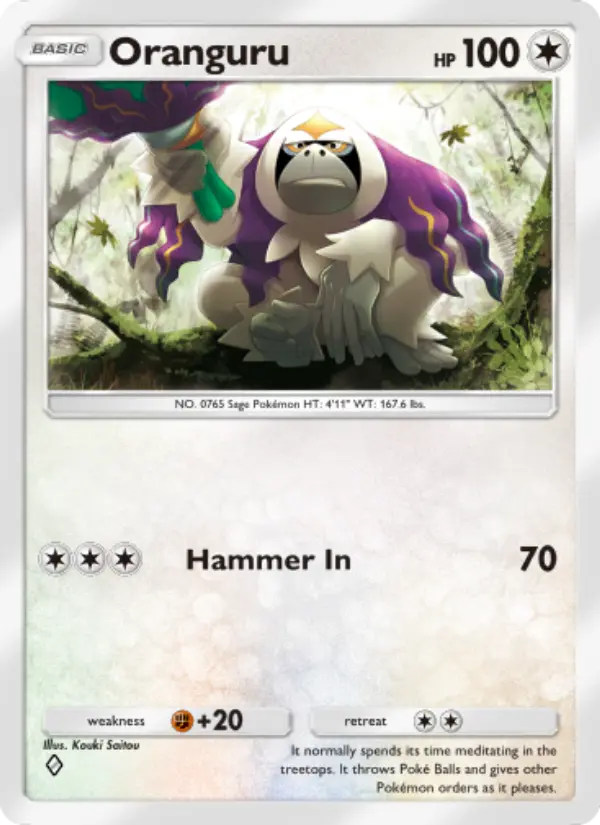
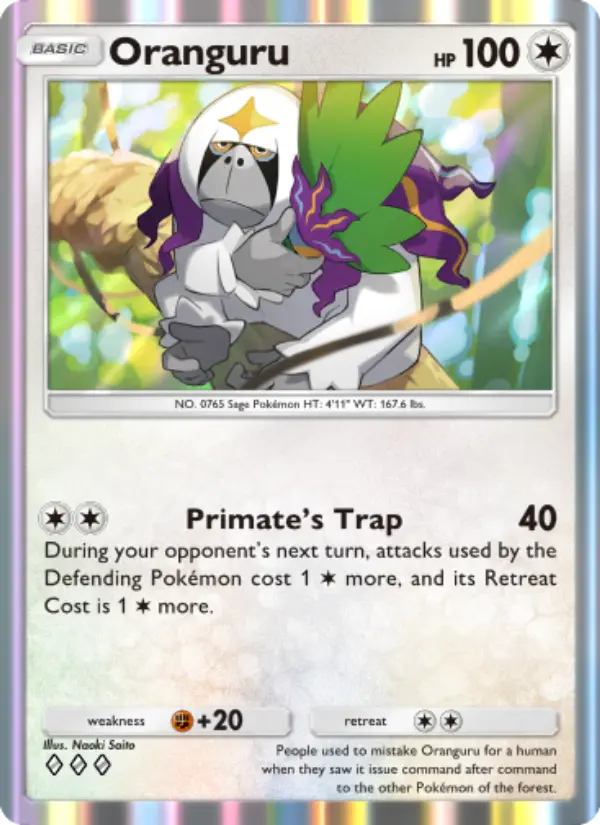
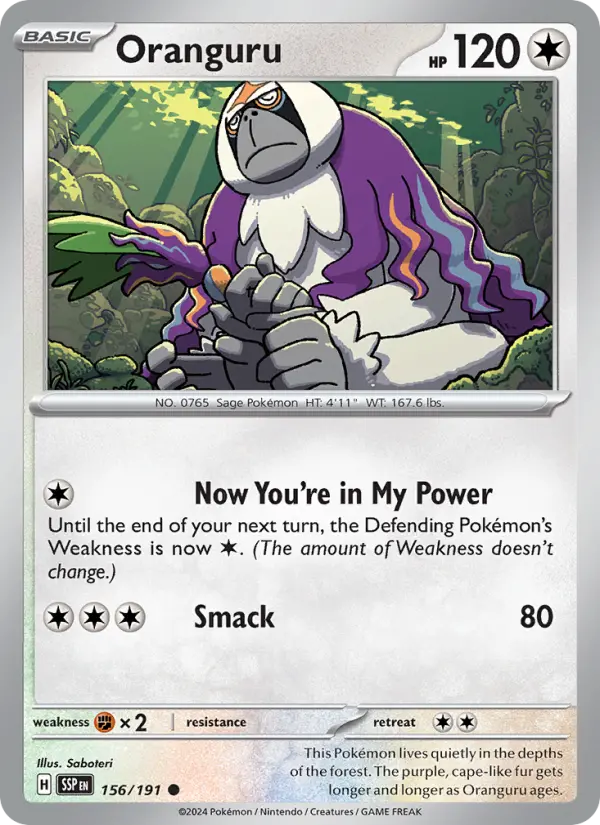
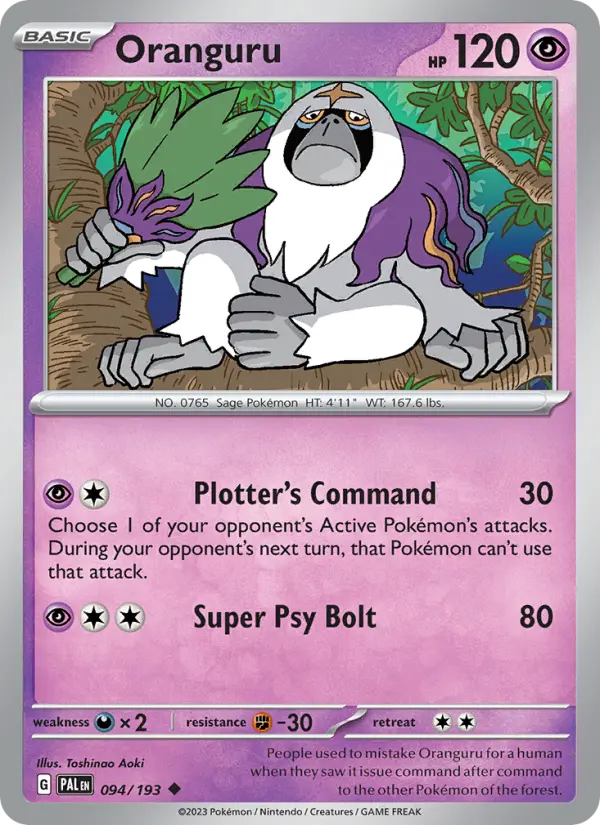
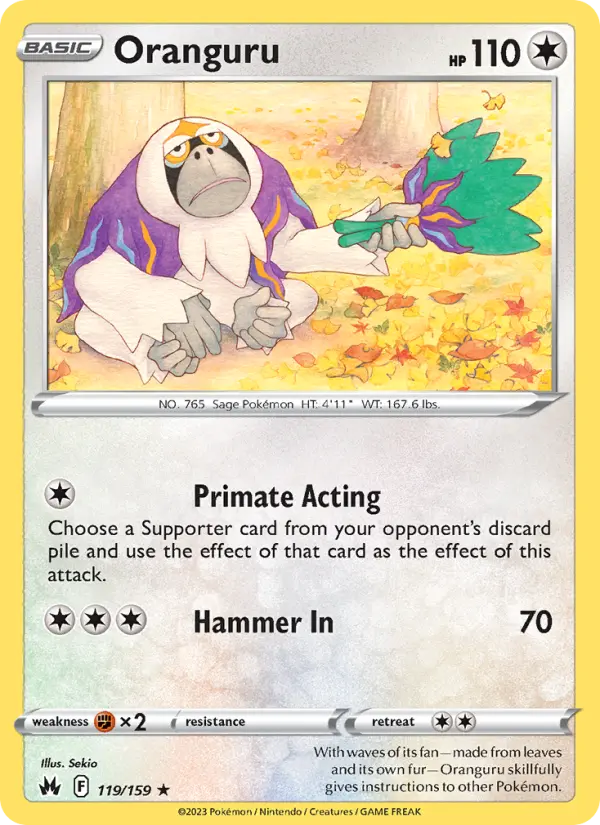
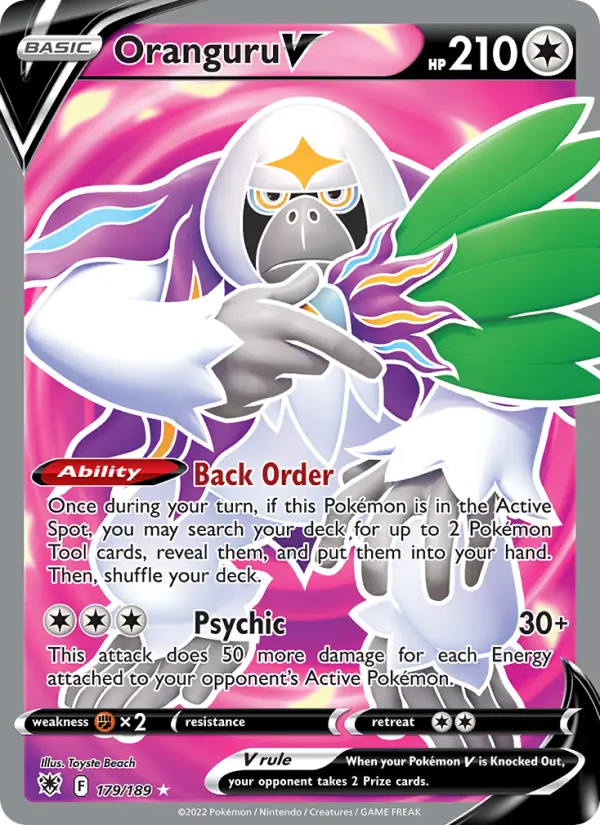
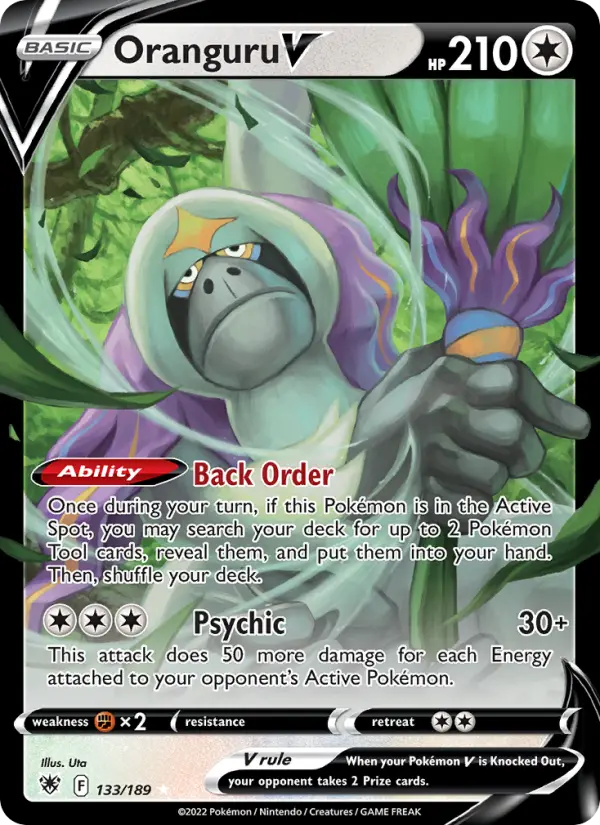
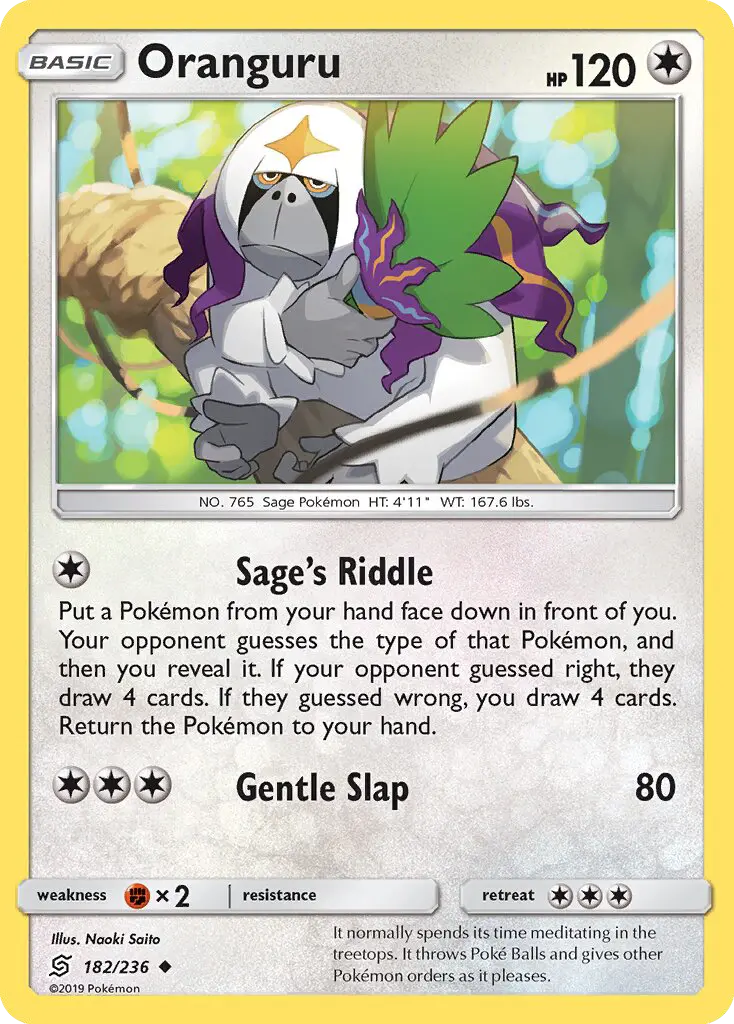
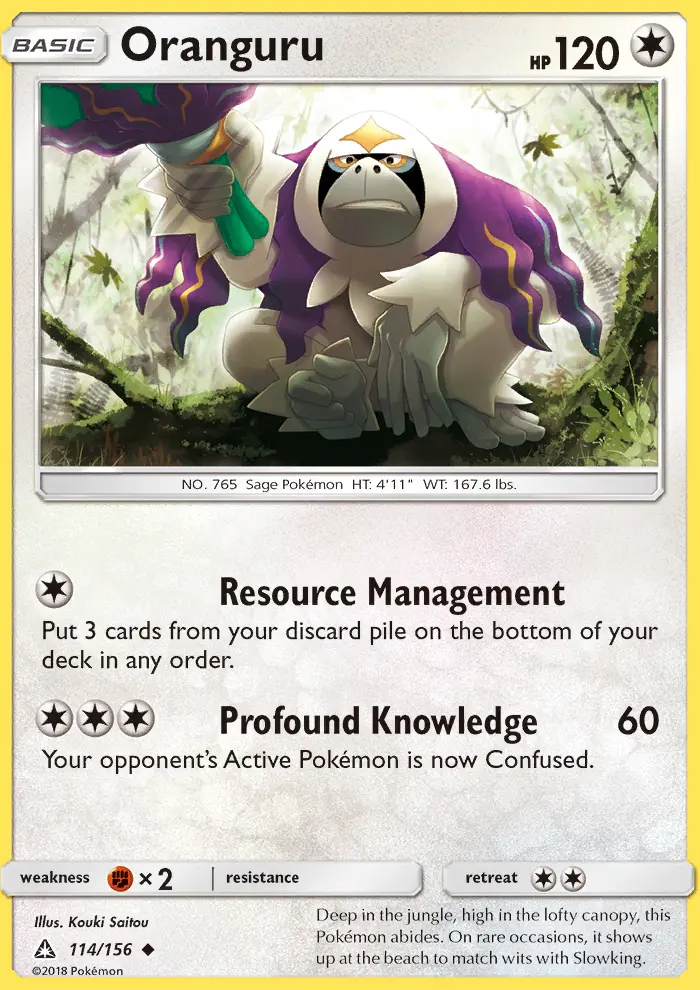
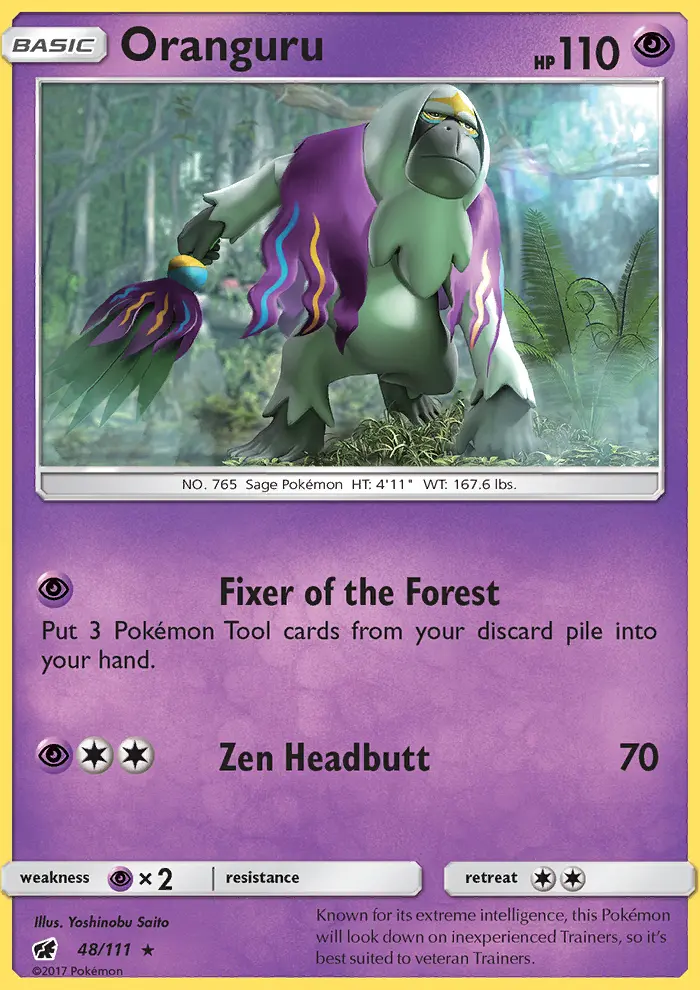
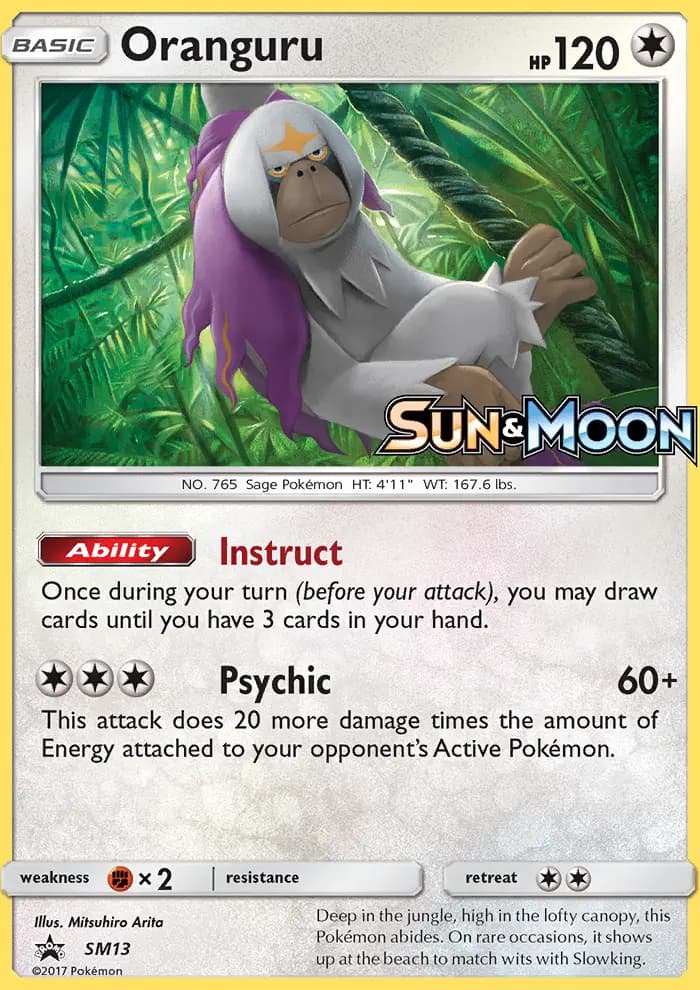
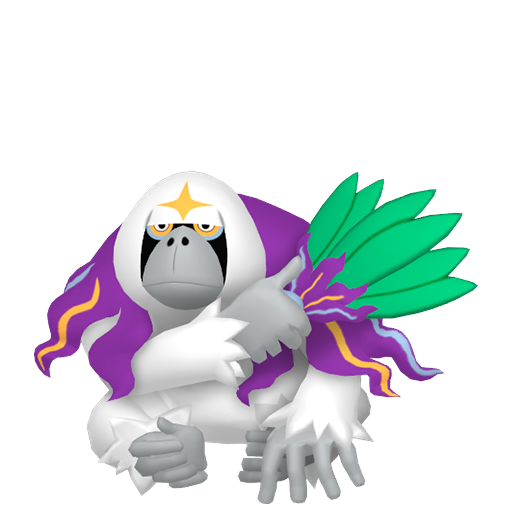
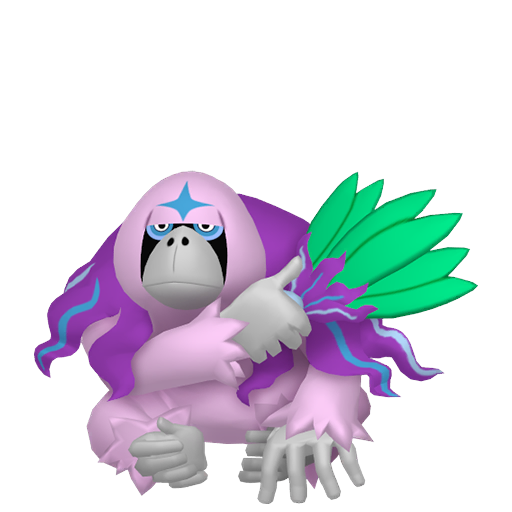
Oranguru is a primate Pokémon bearing striking resemblance to an orangutan, with a distinctive appearance that ancient peoples mistook for human inhabitants of the forest. Its body is predominantly covered in white fur, while its hands, feet, and snout display exposed light gray skin. The most striking features include the long white fur forming a beard-like structure around its head and chin, a broad flat nose, and distinctive eye markings consisting of yellow rings encircled by light blue rings. At the center of its forehead sits a four-pointed yellow star marking that seems to symbolize its intellectual prowess. Most notably, Oranguru wears a cape of purple fur covering its back, divided into wavy clumps interwoven with strands of orange and light blue. This cape grows longer as the Pokémon ages, adding to its sage-like appearance. The Pokémon holds a handmade fan constructed from green leaves carefully woven together with strands of its own purple fur, a tool it uses to skillfully direct other Pokémon.
Pokedex Numbers
Training
Breeding
Oranguru Breeding, Gender Ratio & Egg Groups
Oranguru has one of the simplest gender ratios in the game — a flat 50/50, ensuring equal representation of both sexes within the species. The Pokémon belongs to the Field egg group and requires 20 egg cycles—approximately 4,884 to 5,140 steps—to hatch from an egg, reflecting its slow growth rate that permeates all aspects of its development cycle. With a base friendship value of 70, Oranguru starts with moderate attachment to its trainer, requiring effort and positive interactions to increase bonds. The slow growth rate means that Oranguru takes considerably longer to reach higher experience levels compared to many other Pokémon, a fitting characteristic for a species that values contemplation and gradual development over rapid advancement. Breeding Oranguru requires understanding that individual specimens do not get along with one another, adding narrative depth to the difficulty of maintaining multiple members of the species in captivity.
Sprites




TMs & HMs
tm00
sword shield
tm01
yellow
tm01
red blue
tm01
ultra sun ultra moon
tm01
sun moon
tm01
blue japan
tm01
red green japan
tm01
sword shield
tm02
lets go pikachu lets go eevee
tm03
x y
tm03
black 2 white 2
tm03
black white
tm03
sun moon
tm03
ultra sun ultra moon
tm03
omega ruby alpha sapphire
tm04
emerald
tm04
firered leafgreen
tm04
ruby sapphire
tm04
diamond pearl
tm04
xd
+764 more TMs/HMs
Oranguru Evolution, Mega Evolution & Special Forms
Oranguru stands as an evolutionary dead end in both directions, representing a solitary point in its evolutionary line. This non-evolving status does not diminish its capabilities; rather, it emphasizes that Oranguru enters the world as a fully-formed sage entity. The Pokémon's slow growth rate means that reaching higher levels requires dedication and patience from its trainer, but this gradual development mirrors the contemplative nature of the species itself. Oranguru is considered a regional counterpart to Passimian, another Generation VII Pokémon, creating an interesting dynamic of paired but distinct species inhabiting the Alola region. While it lacks mega evolution, Oranguru's three ability options—Inner Focus, Telepathy, and the hidden ability Symbiosis—provide substantial strategic variety that allows trainers to customize their approach to battling and team composition.
Where to Find
Lush Jungle
alola
+5 more
Oranguru Behaviour and Natural Habitat
Oranguru inhabits the deepest reaches of jungles and forests, positioning itself high in the lofty canopy where it spends most of its time meditating in solitude. This Pokémon is naturally inactive and sedentary, reflecting its contemplative nature and intellectual focus. Despite its reclusive tendencies, Oranguru demonstrates remarkable compassion toward other forest Pokémon, providing medicinal herbs to those who are injured and food to those who are hungry. Remarkably, it has been observed using human tools and items, including Poké Balls, which it throws and manipulates with apparent understanding of their function. Oranguru possesses a hierarchical and somewhat arrogant temperament, readily looking down upon inexperienced Trainers and giving orders to other Pokémon as it pleases. Individual Oranguru are highly territorial and do not get along with others of their kind, instead engaging in frequent battles of wit to determine superiority. Notably, Oranguru occasionally ventures to the beach, where it has been documented matching wits with the equally intelligent Slowking in intellectual contests.
Pokedex Entries
Known for its extreme intelligence, this Pokémon will look down on inexperienced Trainers, so it’s best suited to veteran Trainers.
It normally spends its time meditating in the treetops. It throws Poké Balls and gives other Pokémon orders as it pleases.
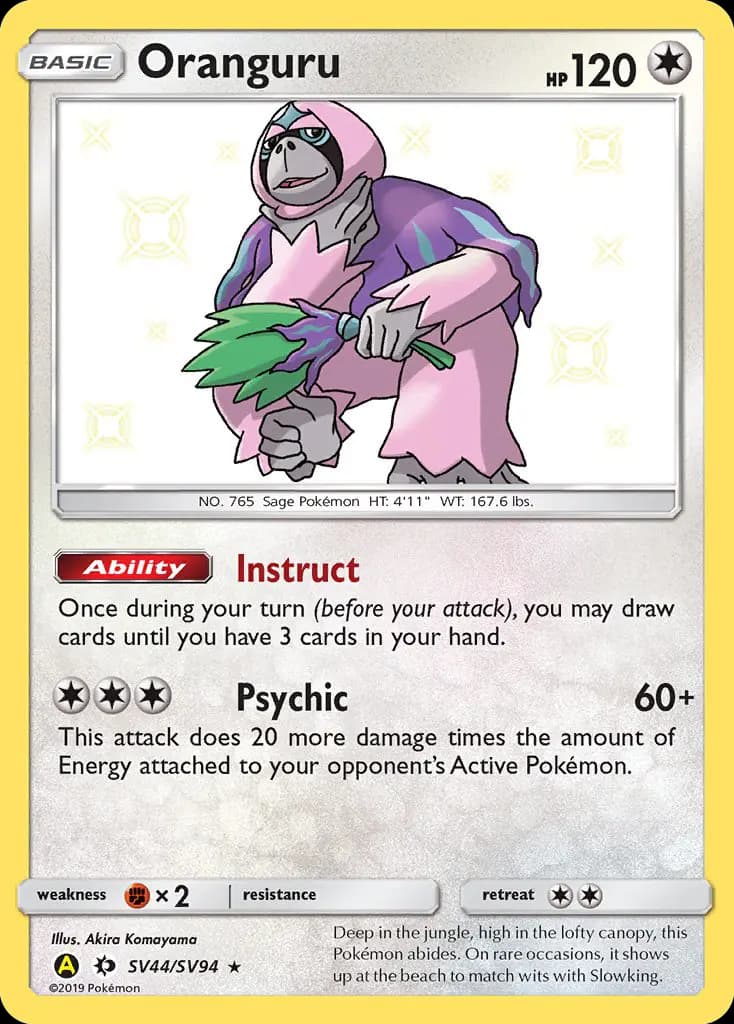
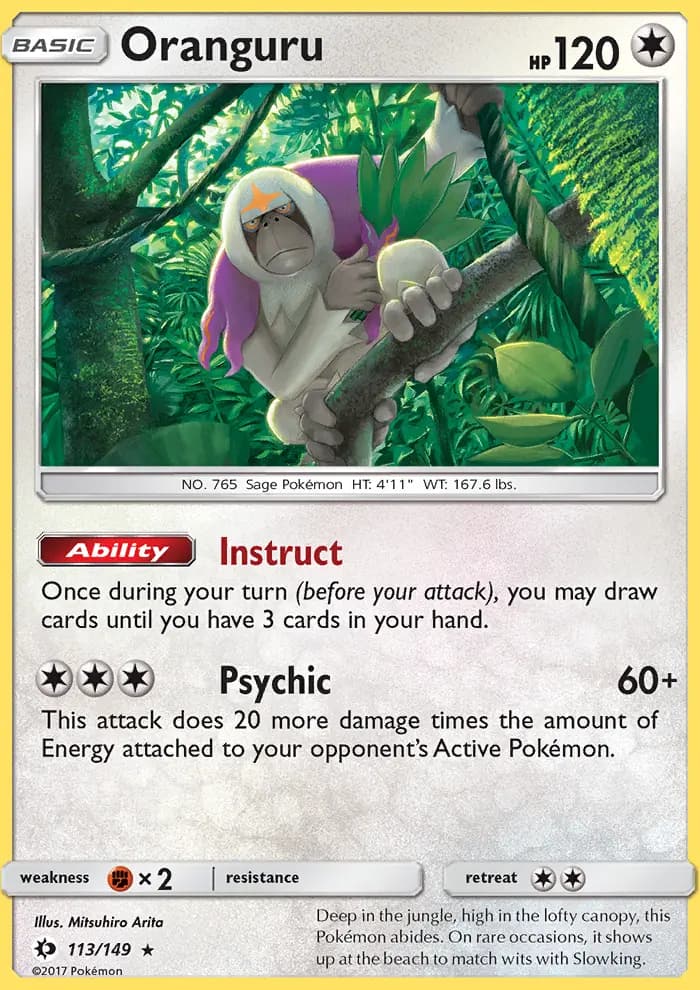
Deep in the jungle, high in the lofty canopy, this Pokémon abides. On rare occasions, it shows up at the beach to match wits with Slowking.
Oranguru don’t get along with each other, so they’re always engaging in battles of wits to decide which one is superior.
With waves of its fan—made from leaves and its own fur—Oranguru skillfully gives instructions to other Pokémon.
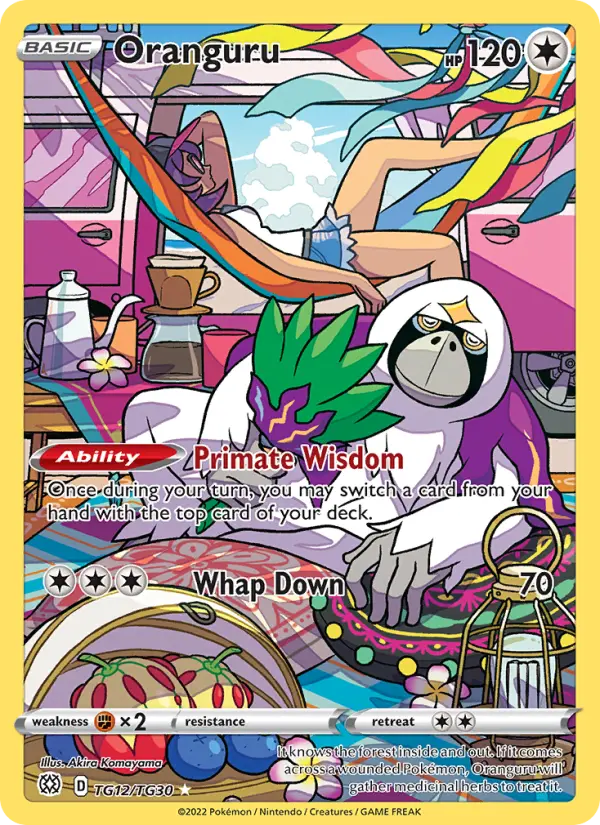
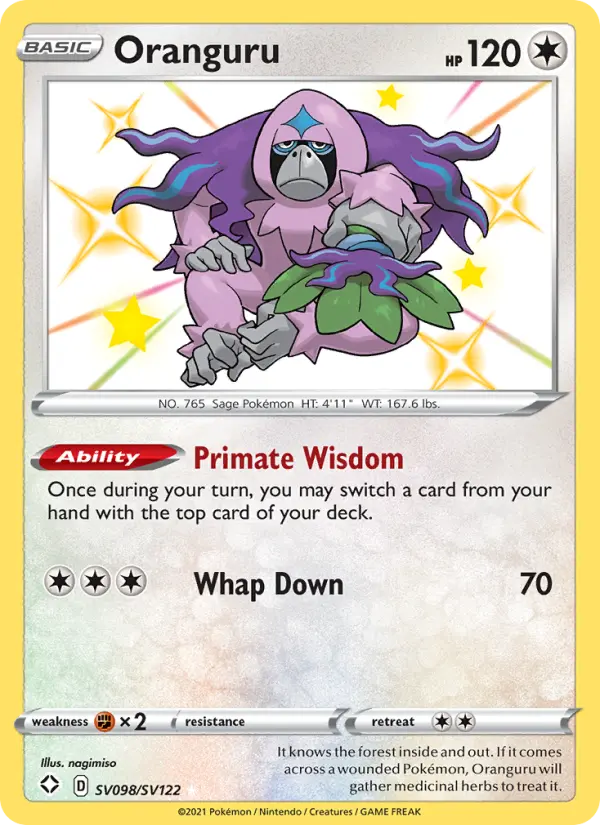
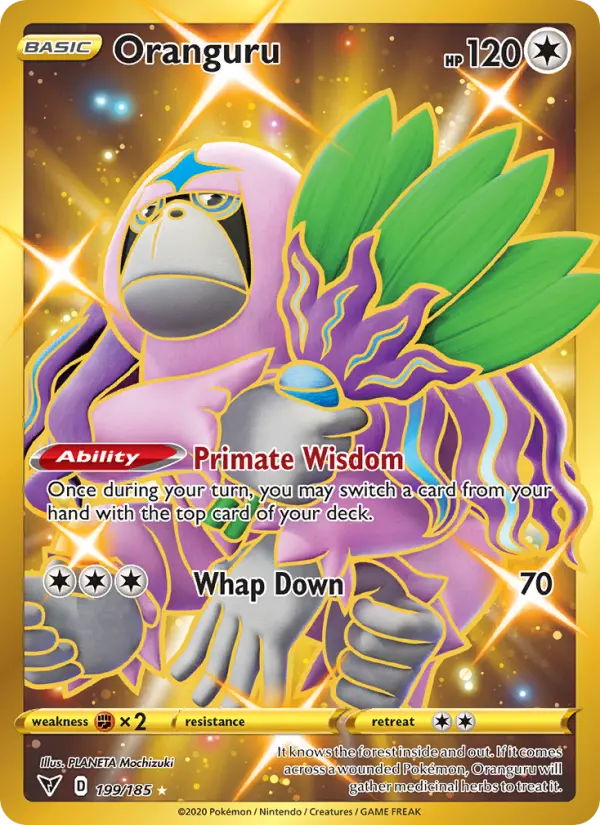
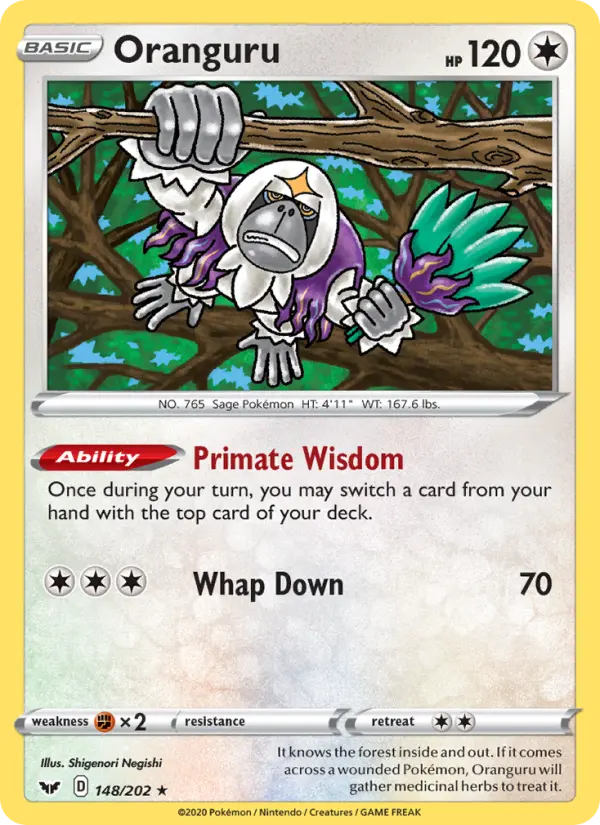
It knows the forest inside and out. If it comes across a wounded Pokémon, Oranguru will gather medicinal herbs to treat it.
Oranguru Name Origin & Design Inspiration
Oranguru's name can be traced to the combination of 'orangutan' and 'guru,' perfectly capturing the essence of this wise, ape-like Pokémon. Its Japanese name, Yareyuutan, follows a similar pattern, combining elements referencing both its simian appearance and sage-like qualities. The design itself draws heavily from real-world orangutans, particularly in its facial structure and body shape, but elevates the concept by incorporating mystical and intellectual elements. The four-pointed star on its forehead evokes Eastern symbolism often associated with spiritual wisdom and enlightenment, while the cape and fan suggest a character of authority and meditative discipline. The hand-woven fan made from leaves and fur is particularly significant, representing how Oranguru bridges the gap between natural elements and purposeful tool use—a key aspect of its characterization as an intelligent being. The white fur contrasting with its gray face and the striking eye markings create a visually distinctive appearance that conveys both the animal's primates roots and its supernatural, psychic nature.
Learnable Moves
Oranguru can learn 91 moves:
Move | Type | Cat. | Power | Acc. | PP |
|---|---|---|---|---|---|
| after you | normal | Status | — | — | 15 |
| ally switch | psychic | Status | — | — | 15 |
| attract | normal | Status | — | 100 | 15 |
| block | normal | Status | — | — | 5 |
| body slam | normal | Physical | 85 | 100 | 15 |
| brick break | fighting | Physical | 75 | 100 | 15 |
| brutal swing | dark | Physical | 60 | 100 | 20 |
| bulldoze | ground | Physical | 60 | 100 | 20 |
| calm mind | psychic | Status | — | — | 20 |
| charge beam | electric | Special | 50 | 90 | 10 |
| chilling water | water | Special | 50 | 100 | 20 |
| confide | normal | Status | — | — | 20 |
| confusion | psychic | Special | 50 | 100 | 25 |
| covet | normal | Physical | 60 | 100 | 25 |
| double team | normal | Status | — | — | 15 |
| dream eater | psychic | Special | 100 | 100 | 15 |
| earthquake | ground | Physical | 100 | 100 | 10 |
| embargo | dark | Status | — | 100 | 15 |
| encore | normal | Status | — | 100 | 5 |
| endeavor | normal | Physical | — | 100 | 5 |
| endure | normal | Status | — | — | 10 |
| energy ball | grass | Special | 90 | 100 | 10 |
| expanding force | psychic | Special | 80 | 100 | 10 |
| extrasensory | psychic | Special | 80 | 100 | 20 |
| facade | normal | Physical | 70 | 100 | 20 |
| feint attack | dark | Physical | 60 | — | 20 |
| fling | dark | Physical | — | 100 | 10 |
| focus blast | fighting | Special | 120 | 70 | 5 |
| foul play | dark | Physical | 95 | 100 | 15 |
| frustration | normal | Physical | — | 100 | 20 |
| future sight | psychic | Special | 120 | 100 | 10 |
| giga impact | normal | Physical | 150 | 90 | 5 |
| gravity | psychic | Status | — | — | 5 |
| hidden power | normal | Special | 60 | 100 | 15 |
| hyper beam | normal | Special | 150 | 90 | 5 |
| hyper voice | normal | Special | 90 | 100 | 10 |
| imprison | psychic | Status | — | — | 10 |
| instruct | psychic | Status | — | — | 15 |
| knock off | dark | Physical | 65 | 100 | 20 |
| last resort | normal | Physical | 140 | 100 | 5 |
| light screen | psychic | Status | — | — | 30 |
| magic coat | psychic | Status | — | — | 15 |
| magic room | psychic | Status | — | — | 10 |
| mega kick | normal | Physical | 120 | 75 | 5 |
| mega punch | normal | Physical | 80 | 85 | 20 |
| nasty plot | dark | Status | — | — | 20 |
| nature power | normal | Status | — | — | 20 |
| pain split | normal | Status | — | — | 20 |
| payback | dark | Physical | 50 | 100 | 10 |
| protect | normal | Status | — | — | 10 |
| psybeam | psychic | Special | 65 | 100 | 20 |
| psych up | normal | Status | — | — | 10 |
| psychic | psychic | Special | 90 | 100 | 10 |
| psychic noise | psychic | Special | 75 | 100 | 10 |
| psychic terrain | psychic | Status | — | — | 10 |
| psyshock | psychic | Special | 80 | 100 | 10 |
| quash | dark | Status | — | 100 | 15 |
| rain dance | water | Status | — | — | 5 |
| reflect | psychic | Status | — | — | 20 |
| rest | psychic | Status | — | — | 5 |
| return | normal | Physical | — | 100 | 20 |
| rock slide | rock | Physical | 75 | 90 | 10 |
| round | normal | Special | 60 | 100 | 15 |
| safeguard | normal | Status | — | — | 25 |
| scary face | normal | Status | — | 100 | 10 |
| shadow ball | ghost | Special | 80 | 100 | 15 |
| skill swap | psychic | Status | — | — | 10 |
| sleep talk | normal | Status | — | — | 10 |
| snatch | dark | Status | — | — | 10 |
| snore | normal | Special | 50 | 100 | 15 |
| spite | ghost | Status | — | 100 | 10 |
| stored power | psychic | Special | 20 | 100 | 10 |
| substitute | normal | Status | — | — | 10 |
| sunny day | fire | Status | — | — | 5 |
| swagger | normal | Status | — | 85 | 15 |
| swift | normal | Special | 60 | — | 20 |
| take down | normal | Physical | 90 | 85 | 20 |
| taunt | dark | Status | — | 100 | 20 |
| telekinesis | psychic | Status | — | — | 15 |
| tera blast | normal | Special | 80 | 100 | 10 |
| terrain pulse | normal | Special | 50 | 100 | 10 |
| thunder | electric | Special | 110 | 70 | 10 |
| thunderbolt | electric | Special | 90 | 100 | 15 |
| toxic | poison | Status | — | 90 | 10 |
| trailblaze | grass | Physical | 50 | 100 | 20 |
| trick | psychic | Status | — | 100 | 10 |
| trick room | psychic | Status | — | — | 5 |
| wonder room | psychic | Status | — | — | 10 |
| work up | normal | Status | — | — | 30 |
| yawn | normal | Status | — | — | 10 |
| zen headbutt | psychic | Physical | 80 | 90 | 15 |
Oranguru Competitive Battle Guide
Assessing its battle viability, Oranguru's balanced stat distribution and dual typing provide interesting strategic opportunities despite its modest attack statistics. With a Special Attack of 90 and Special Defense of 110, Oranguru functions best as a special tank with offensive capabilities, utilizing its Psychic-type moves to handle Fighting-type threats effectively. The Normal/Psychic typing grants immunity to Ghost-type attacks while providing resistance to Psychic moves, though it faces common weaknesses to Dark and Ghost-type attacks. Its signature move Instruct allows Oranguru to make an ally use its most recently executed move again, creating unique team synergy opportunities that reward careful planning and team composition. The three ability options provide tactical flexibility: Inner Focus prevents flinching from moves like Fake Out, Telepathy protects against friendly fire in double or triple battles, and the hidden ability Symbiosis enables item sharing with teammates who consume held items. However, Oranguru's modest Speed stat of 60 means it typically requires investment or external speed control to outpace threats, and its relatively low Attack of 60 limits its physical move options.
Commonly Asked Questions About Oranguru
What type is Oranguru?
Oranguru is a normal and psychic type Pokemon.
What does Oranguru evolve from?
Oranguru does not evolve.
What are Oranguru's weaknesses?
Oranguru is weak to bug, ghost and dark type moves.
Where can I find Oranguru?
Oranguru can be found in lush jungle (alola).
Oranguru Cultural Impact & Franchise History
Oranguru holds significant cultural importance within Pokémon lore and fan communities as a representation of wisdom and intellectual superiority. The Pokédex entries establish a fascinating historical context where ancient people mistook Oranguru for humans dwelling in forest depths, calling them the 'people of the forests'—a poetic notion that elevates the Pokémon beyond simple animal classification. This intellectual mystique has resonated with trainers and fans who appreciate Pokémon with depth of character and personality. The species' competitive nature and constant battles of wit appeal to players who enjoy strategy games and mental challenges within the Pokémon framework. Oranguru's appearances in the anime and manga have further solidified its place in the cultural landscape, particularly through its interactions with other intelligent Pokémon. The image of Oranguru meditating high in forest canopies has become iconic imagery associated with Eastern philosophy and spiritual wisdom within the Pokémon universe, influencing how fans conceptualize the relationship between intelligence, meditation, and nature.
Where to Find Oranguru in Every Pokémon Game
Oranguru first became available to trainers in Generation VII through Pokémon Sun and Moon, where it received a local Alola dex number of 0176, later changed to 0215 in Ultra Sun and Ultra Moon. The species maintained availability through subsequent games including Sword and Shield (dex number 0342), Scarlet and Violet (dex number 0313), and The Isle of Armor DLC (dex number 0089), ensuring consistent access for players across modern game generations. Its moderate catch rate of 45 makes it a reasonably attainable Pokémon in the wild, though capturing it requires some patience and preparation. The base experience yield of 172 contributes to its slow growth rate, requiring dedicated trainers to invest significant time in raising Oranguru to competitive levels. Oranguru has maintained compatibility with Pokémon HOME, allowing transfer between compatible games and ensuring that trainers who have bonded with individual specimens can maintain their teams across different game generations. Limited event distributions have also introduced special Oranguru to trainers, though these remain less common than standard encounters, making Oranguru a prized addition for collectors who specifically seek it out.