Petilil
Generation V · #0548 — Bulb Pokémon
Petilil is a grass-type Pokémon whose special attack — 70 at base — does more to define its role than its overall spread does. At 0.5 m and 6.6 kg, its build reflects a specialist role rather than a generalist one. Despite its small stature, Petilil possesses notable cultural significance, particularly among elderly populations who prize its medicinal leaves. The species is exclusively female, representing a unique characteristic in the Pokémon world where Petilil has no male counterpart whatsoever. With a cumulative stat total of 280, Petilil is clearly positioned as an early-game Pokémon, though its Special Attack stat of 70 suggests a focus on special moves rather than physical ones. Its evolution into Lilligant, triggered by exposure to a Sun Stone, marks a significant transformation in both appearance and combat capability.
Editor's Take
Petilil's line ends in Lilligant, whose Own Tempo Quiver Dance sets are a fine idea undermined by a pure Grass typing with nothing to pair it with.
Base Stats
Height
0.5m
Weight
6.6kg
Category
Bulb Pokémon
Gender
100% Female
Color
green
Shape
blob
Abilities
Doubles Speed during strong sunlight.
Prevents confusion.
Protects against major status ailments during strong sunlight.

Petilil Biology & Physical Characteristics
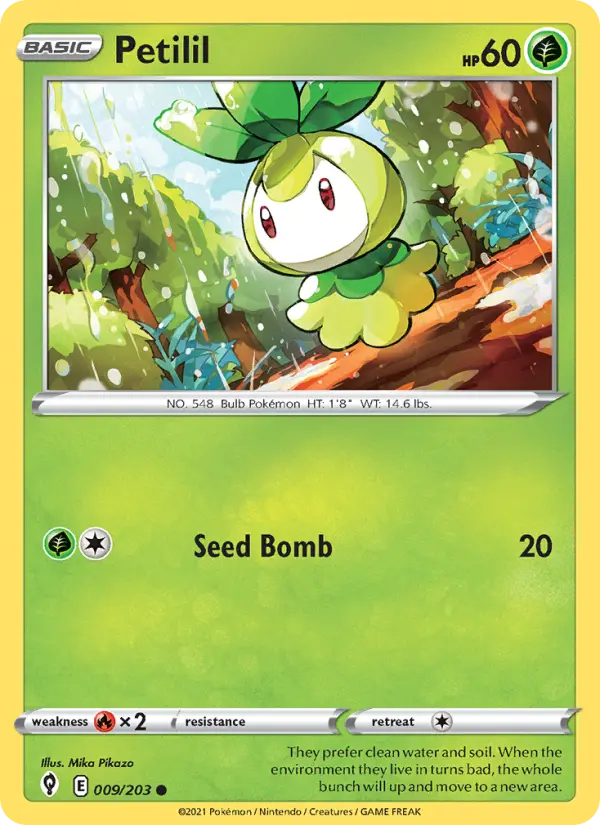
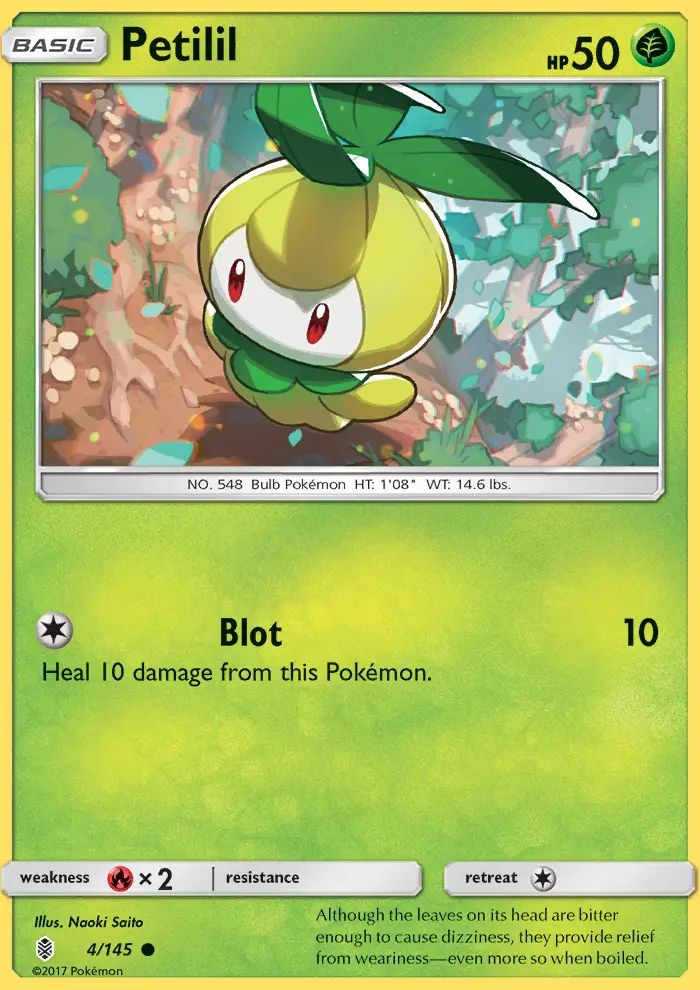
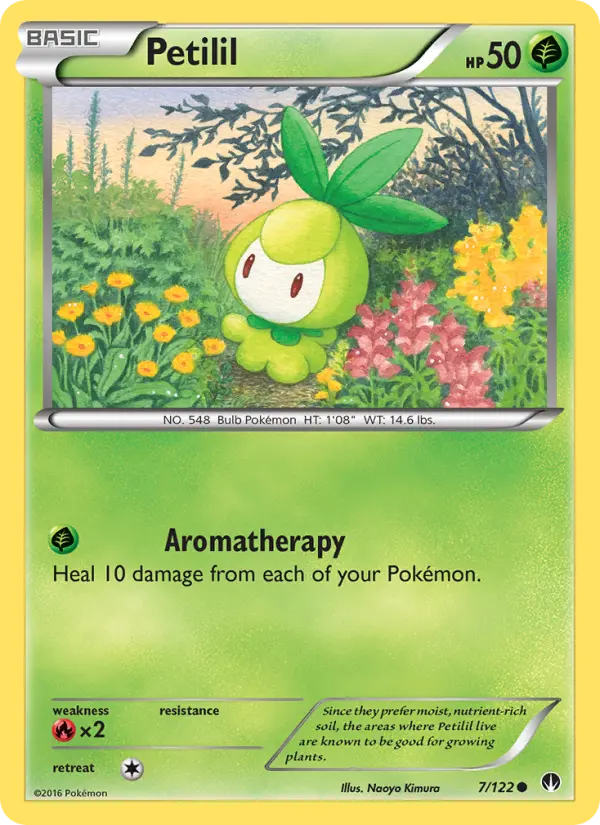
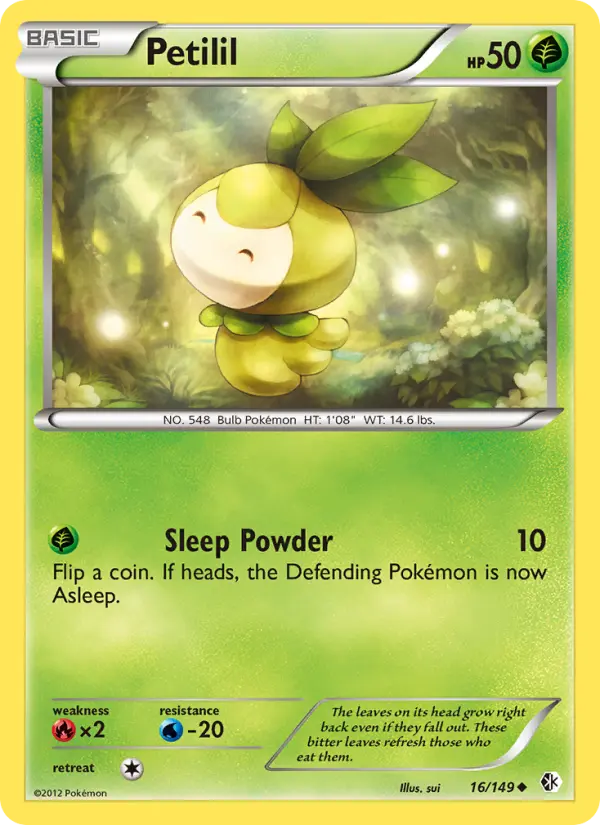
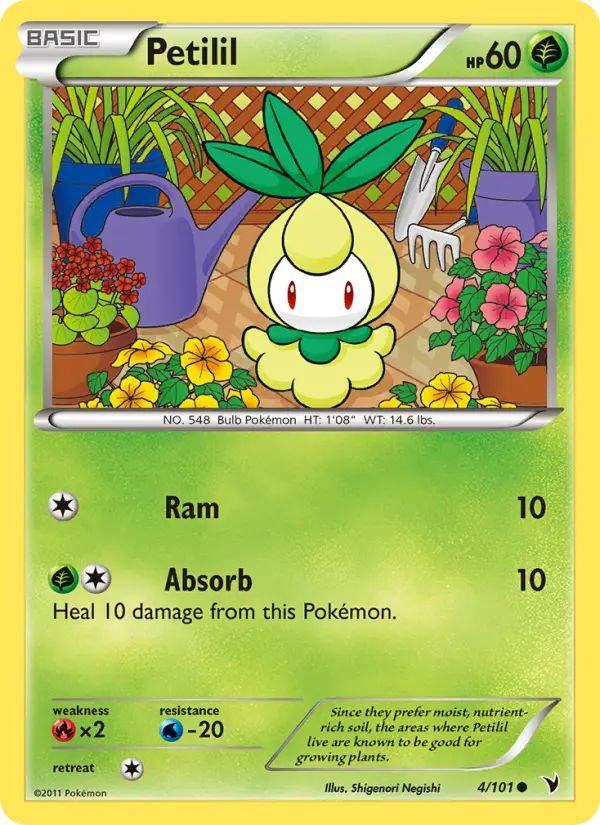
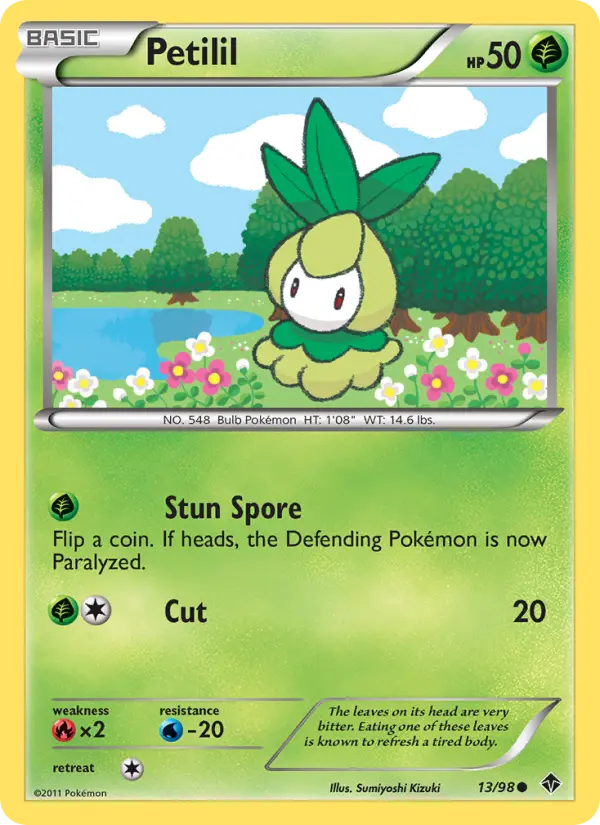
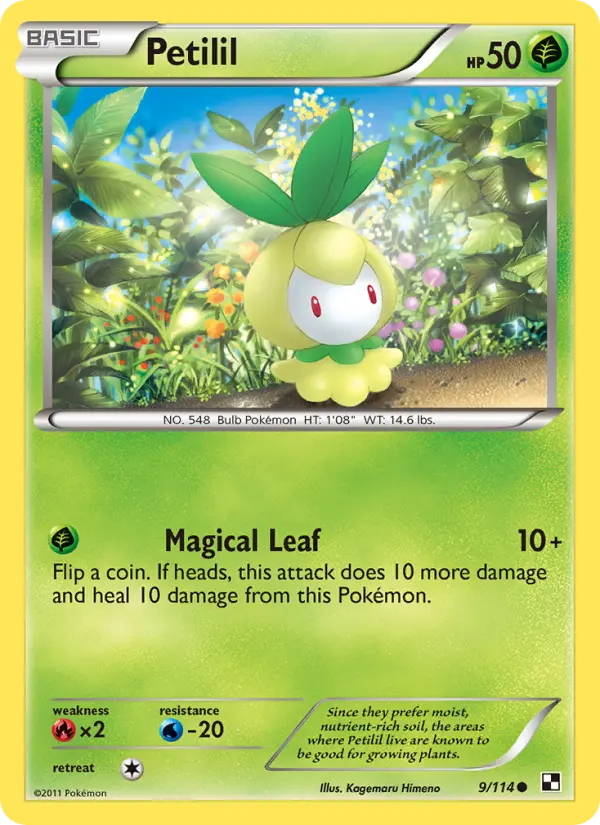
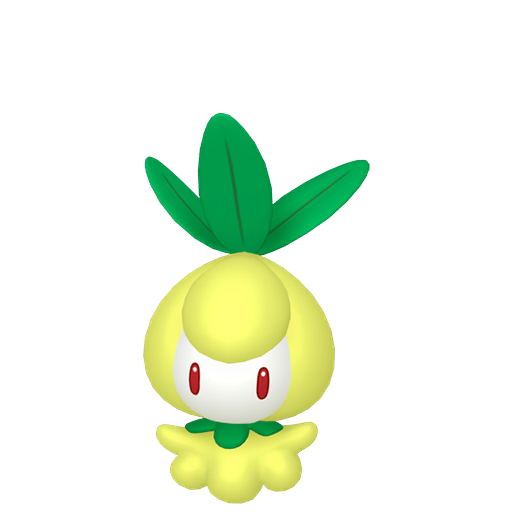
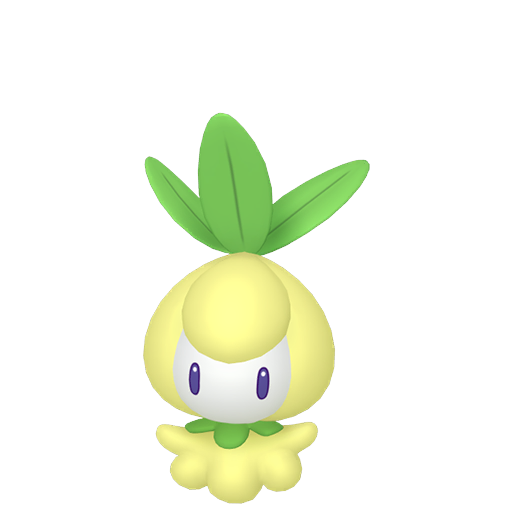
Petilil's design draws inspiration from plant bulbs and seedlings, presenting a primarily light green coloration with distinctive anatomical features. The most striking characteristic is the trio of oblong leaves crowning its head, which serve multiple functions and can vary in appearance to indicate the Pokémon's overall health status. Its face is crescent-shaped and predominantly white, featuring elongated brown oval eyes and a notable absence of visible nose or mouth structures, giving it an almost abstract botanical appearance. A green "bib" adorns its neck region, while its lower body consists of five stub-like appendages: two outer stubs function as arms, the central stub serves as its primary foot, and the two inner stubs facilitate locomotion across the ground. The leaves adorning Petilil's head possess remarkable regenerative properties, regrowing even if pruned or lost entirely. These leaves contain a distinctive bitter compound responsible for their characteristic taste, yet they provide powerful revitalizing effects capable of refreshing tired bodies and restoring vigor when consumed directly or prepared as an infusion through drying and boiling.
Pokedex Numbers
Training
Breeding
Petilil Breeding, Gender Ratio & Egg Groups
Petilil represents a rare instance within the Pokémon world of a species that is exclusively female, with a gender ratio of 0% male and 100% female individuals. This characteristic places Petilil in an exclusive category alongside only a handful of other Pokémon, making it botanically and biologically unique. The all-female nature of Petilil's species raises intriguing questions about reproduction and evolutionary strategy, though within the games and lore, Petilil can still breed when placed with appropriate Pokémon in the breeding groups. The Pokémon belongs to the Grass Egg Group, allowing it to breed with other Pokémon sharing this classification, enabling the production of Petilil offspring despite the species' exclusively female composition. With a base happiness value of 70, Petilil begins its relationship with trainers in a moderately positive emotional state, suggesting inherent friendliness and sociability. The species follows a Medium growth rate, requiring moderate experience accumulation to reach higher levels, and eggs require 20 cycles to hatch, translating to approximately 4,884 to 5,140 steps of travel before a young Petilil emerges.
Sprites




Held Items
Absorb Bulb
held-items
Held: Raises the holder’s Special Attack by one stage when it takes Water-type damage.
Cost: 4000
Absorb Bulb
held-items
Held: Raises the holder’s Special Attack by one stage when it takes Water-type damage.
Cost: 4000
Absorb Bulb
held-items
Held: Raises the holder’s Special Attack by one stage when it takes Water-type damage.
Cost: 4000
Absorb Bulb
held-items
Held: Raises the holder’s Special Attack by one stage when it takes Water-type damage.
Cost: 4000
TMs & HMs
tm03
lets go pikachu lets go eevee
tm05
lets go pikachu lets go eevee
tm06
yellow
tm06
gold silver
tm06
red blue
tm06
crystal
tm06
emerald
tm06
firered leafgreen
tm06
diamond pearl
tm06
platinum
tm06
ruby sapphire
tm06
colosseum
tm06
black 2 white 2
tm06
xd
tm06
black white
tm06
heartgold soulsilver
tm06
omega ruby alpha sapphire
tm06
ultra sun ultra moon
tm06
sun moon
tm06
x y
+418 more TMs/HMs


Petilil Evolution, Mega Evolution & Special Forms
Petilil's evolution into Lilligant represents a natural progression typical of early-stage Pokémon, triggered through exposure to a Sun Stone rather than level-based advancement. This evolutionary mechanism reflects Petilil's intrinsic connection to solar energy and sunlight, aligning with the species' botanical nature and its ability Chlorophyll, which doubles the Pokémon's speed during strong sunlight. Upon evolution, Petilil undergoes a dramatic transformation, developing a more sophisticated appearance with enhanced stats across the board. In the Hisui region, a unique regional variant exists where Petilil evolves into Hisuian Lilligant through Sun Stone exposure, acquiring the Fighting type alongside its Grass typing, reflecting the adaptation of the species to Hisui's snowy mountainous environment. This regional divergence demonstrates how Petilil's evolutionary potential adapts to local ecological conditions, a phenomenon that exemplifies the broader pattern of regional form differentiation introduced in recent Pokémon generations.
Where to Find
Pinwheel Forest
unova
+15 more
Abundant Shrine
unova
+7 more
Lostlorn Forest
unova
+11 more
Unova Victory Road 2
unova
+11 more
Castelia City
unova
+5 more
Poni Meadow
alola
Melemele Meadow
alola
Malie Garden
alola
Poni Plains
alola
+7 more
Ulaula Meadow
alola
Petilil Behaviour and Natural Habitat
Petilil exhibits a strong preference for clean water sources and demonstrates discriminating habitat selection, thriving exclusively in environments characterized by moist, nutrient-rich soil. They favor well-tended fields and cultivated flowerbeds where conditions support vigorous plant growth, and their presence is considered an indicator of fertile, productive soil suitable for agriculture. This Pokémon's environmental sensitivity manifests in their tendency to migrate away from areas experiencing ecological degradation or pollution, making them somewhat nomadic when their habitat quality declines. The species' association with clean water and healthy soil has made Petilil valuable to farmers and gardeners throughout the Pokémon world. Beyond their ecological preferences, Petilil are particularly cherished by elderly populations who employ their leaves in traditional wellness practices. The bitter leaves can be boiled into an infusion that provides relief from weariness and fatigue, and this preparation also possesses insecticidal properties, serving as a natural bug repellent when applied or distributed in agricultural settings.
Pokedex Entries
The leaves on its head are very bitter. Eating one of these leaves is known to refresh a tired body.
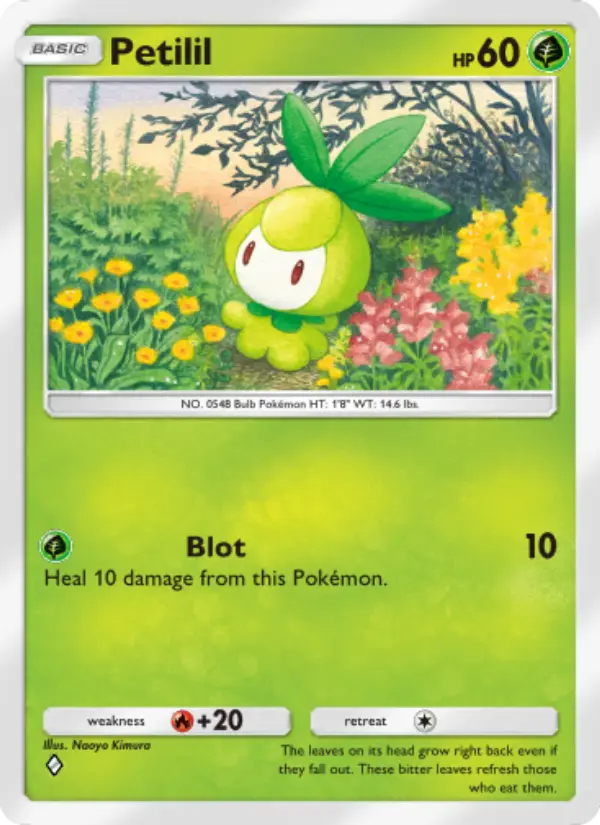
The leaves on its head grow right back even if they fall out. These bitter leaves refresh those who eat them.
Since they prefer moist, nutrient-rich soil, the areas where Petilil live are known to be good for growing plants.
The leaves on its head are very bitter. Eating one of these leaves is known to refresh a tired body.
Since they prefer moist, nutrient-rich soil, the areas where Petilil live are known to be good for growing plants.
The leaves on its head are very bitter. Eating one of these leaves is known to refresh a tired body.
Since they prefer moist, nutrient-rich soil, the areas where Petilil live are known to be good for growing plants.
Although the leaves on its head are bitter enough to cause dizziness, they provide relief from weariness—even more so when boiled.
Some say if you dry the leaves on its head, boil them down, and drink the infusion, your vigor will return, so Petilil is popular with the elderly.
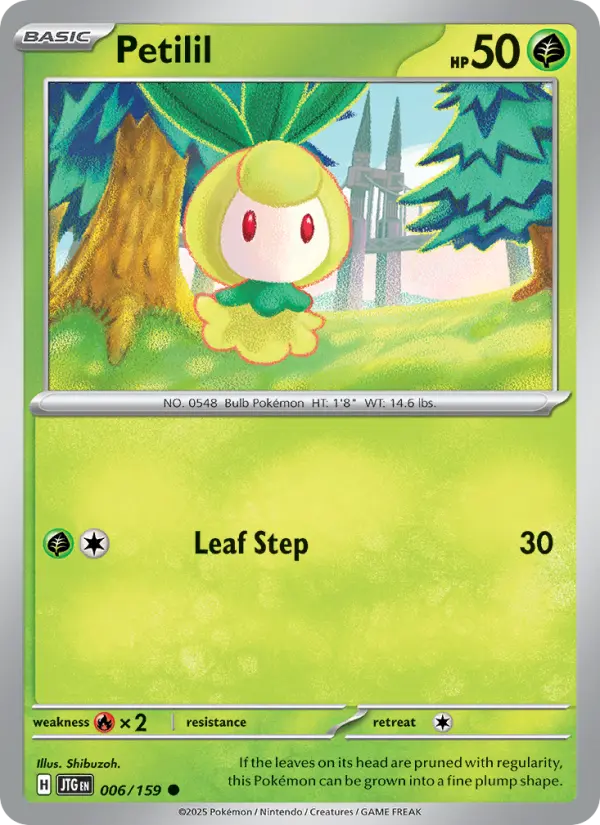
By pruning the leaves on its head with regularity, this Pokémon can be grown into a fine plump shape.
They prefer clean water and soil. When the environment they live in turns bad, the whole bunch will up and move to a new area.
Petilil appears around sources of clean water. Boiling leaves from this Pokémon’s head results in a liquid that’s sometimes used as a bug repellent.
The deeper the color of a Petilil’s leaves, the healthier the Pokémon is. Petilil sometimes makes its home in a well-tended field or flowerbed.
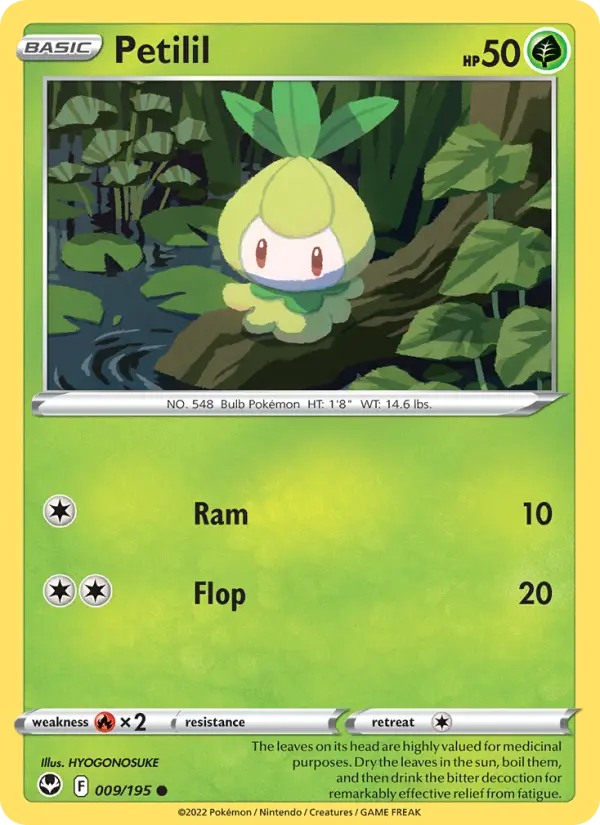
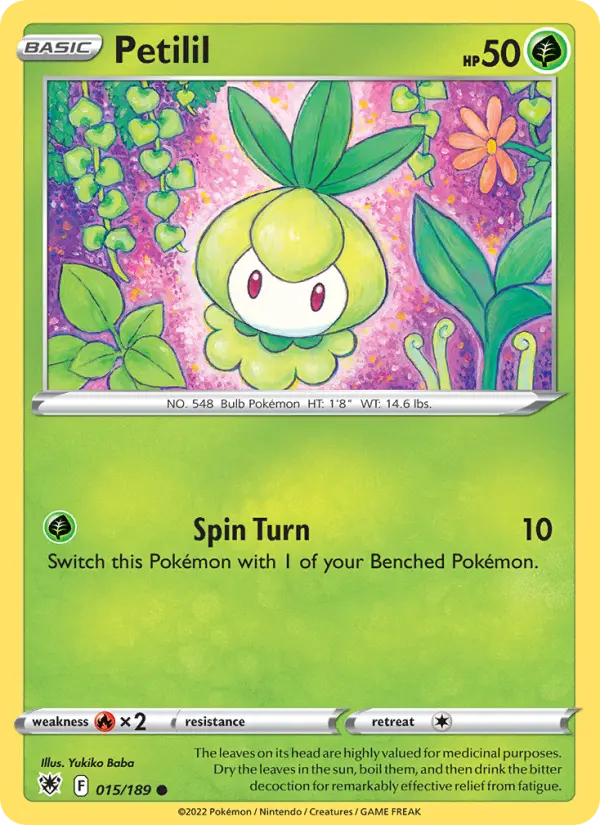
The leaves on its head are highly valued for medicinal purposes. Dry the leaves in the sun, boil them, and then drink the bitter decoction for remarkably effective relief from fatigue.
Petilil Name Origin & Design Inspiration
The Japanese name Churine derives from the botanical term for plants of the onion family, specifically referencing the resemblance to bulb-form vegetables and ornamental plants. The English name Petilil combines "petal" with "lily," directly referencing its floral characteristics and the three-leafed crown adorning its head. This nomenclature elegantly captures the Pokémon's status as an intermediate botanical form—not quite the delicate flower it will become upon evolution, but far beyond a simple seed or sprout. The design philosophy emphasizes the plant bulb concept, drawing visual parallels to onions, tulips, and similar bulbous plants that store nutrients in underground structures while displaying leafy crowns aboveground. The species' botanical inspiration extends to its abilities and characteristics, with moves like Synthesis, Leech Seed, and Growth appearing in its natural moveset, reinforcing its identity as a photosynthetic organism fundamentally dependent on sunlight and soil nutrients. The three leaves on its head create a distinctive silhouette immediately recognizable and serve as the primary design element distinguishing Petilil from other early-stage Grass-type Pokémon.
Learnable Moves
Petilil can learn 61 moves:
Move | Type | Cat. | Power | Acc. | PP |
|---|---|---|---|---|---|
| absorb | grass | Special | 20 | 100 | 25 |
| after you | normal | Status | — | — | 15 |
| aromatherapy | grass | Status | — | — | 5 |
| attract | normal | Status | — | 100 | 15 |
| bide | normal | Physical | — | — | 10 |
| bullet seed | grass | Physical | 25 | 100 | 30 |
| charm | fairy | Status | — | 100 | 20 |
| confide | normal | Status | — | — | 20 |
| covet | normal | Physical | 60 | 100 | 25 |
| cut | normal | Physical | 50 | 95 | 30 |
| double team | normal | Status | — | — | 15 |
| dream eater | psychic | Special | 100 | 100 | 15 |
| encore | normal | Status | — | 100 | 5 |
| endure | normal | Status | — | — | 10 |
| energy ball | grass | Special | 90 | 100 | 10 |
| entrainment | normal | Status | — | 100 | 15 |
| facade | normal | Physical | 70 | 100 | 20 |
| flash | normal | Status | — | 100 | 20 |
| frustration | normal | Physical | — | 100 | 20 |
| giga drain | grass | Special | 75 | 100 | 10 |
| grass knot | grass | Special | — | 100 | 20 |
| grass whistle | grass | Status | — | 55 | 15 |
| grassy glide | grass | Physical | 55 | 100 | 20 |
| growth | normal | Status | — | — | 20 |
| heal bell | normal | Status | — | — | 5 |
| healing wish | psychic | Status | — | — | 10 |
| helping hand | normal | Status | — | — | 20 |
| hidden power | normal | Special | 60 | 100 | 15 |
| ingrain | grass | Status | — | — | 20 |
| laser focus | normal | Status | — | — | 30 |
| leaf storm | grass | Special | 130 | 90 | 5 |
| leafage | grass | Physical | 40 | 100 | 40 |
| leech seed | grass | Status | — | 90 | 10 |
| magical leaf | grass | Special | 60 | — | 20 |
| mega drain | grass | Special | 40 | 100 | 15 |
| natural gift | normal | Physical | — | 100 | 15 |
| nature power | normal | Status | — | — | 20 |
| poison powder | poison | Status | — | 75 | 35 |
| pollen puff | bug | Special | 90 | 100 | 15 |
| protect | normal | Status | — | — | 10 |
| recover | normal | Status | — | — | 5 |
| rest | psychic | Status | — | — | 5 |
| return | normal | Physical | — | 100 | 20 |
| round | normal | Special | 60 | 100 | 15 |
| safeguard | normal | Status | — | — | 25 |
| secret power | normal | Physical | 70 | 100 | 20 |
| seed bomb | grass | Physical | 80 | 100 | 15 |
| sleep powder | grass | Status | — | 75 | 15 |
| sleep talk | normal | Status | — | — | 10 |
| snore | normal | Special | 50 | 100 | 15 |
| solar beam | grass | Special | 120 | 100 | 10 |
| stun spore | grass | Status | — | 75 | 30 |
| substitute | normal | Status | — | — | 10 |
| sunny day | fire | Status | — | — | 5 |
| swagger | normal | Status | — | 85 | 15 |
| sweet scent | normal | Status | — | 100 | 20 |
| synthesis | grass | Status | — | — | 5 |
| tera blast | normal | Special | 80 | 100 | 10 |
| toxic | poison | Status | — | 90 | 10 |
| trailblaze | grass | Physical | 50 | 100 | 20 |
| worry seed | grass | Status | — | 100 | 10 |
Petilil Competitive Battle Guide
From a competitive standpoint, Petilil remains primarily a early-game catch rather than a viable competitive option at higher levels, though its evolution Lilligant gains substantially more competitive viability. Petilil's base Special Attack of 70 represents its strongest offensive stat, supported by its Grass-type moves and access to moves like Synthesis and Leech Seed through leveling and breeding. The abilities available to Petilil offer distinct competitive niches: Chlorophyll doubles its Speed stat during sunlight weather conditions, potentially enabling faster gameplay in sun-based team compositions, while Own Tempo prevents confusion-inducing effects, and the hidden ability Leaf Guard provides immunity to major status conditions during sunny weather. With a base Speed of only 30, Petilil is notably slow, making it vulnerable to faster opponents unless Chlorophyll doubles its velocity through active sunlight. Its defensive stats of 50 in both Defense and Special Defense are adequate for early-game content but insufficient for competitive formats. Most competitive players who utilize Petilil's evolutionary line opt for Lilligant instead, which boasts significantly improved stats and a broader movepool, though Petilil occasionally appears in Trick Room-based strategies or sun-weather teams where its low base speed becomes an advantage.
Commonly Asked Questions About Petilil
What type is Petilil?
Petilil is a grass type Pokemon.
What does Petilil evolve into?
Petilil evolves into lilligant.
What are Petilil's weaknesses?
Petilil is weak to flying, poison, bug, fire and ice type moves.
Does Petilil evolve by trading?
No — Petilil evolves entirely through leveling up, with no trade required at any stage.
Where can I find Petilil?
Petilil can be found in pinwheel forest (unova), abundant shrine (unova) and lostlorn forest (unova) and 7 other locations.
Petilil Cultural Impact & Franchise History
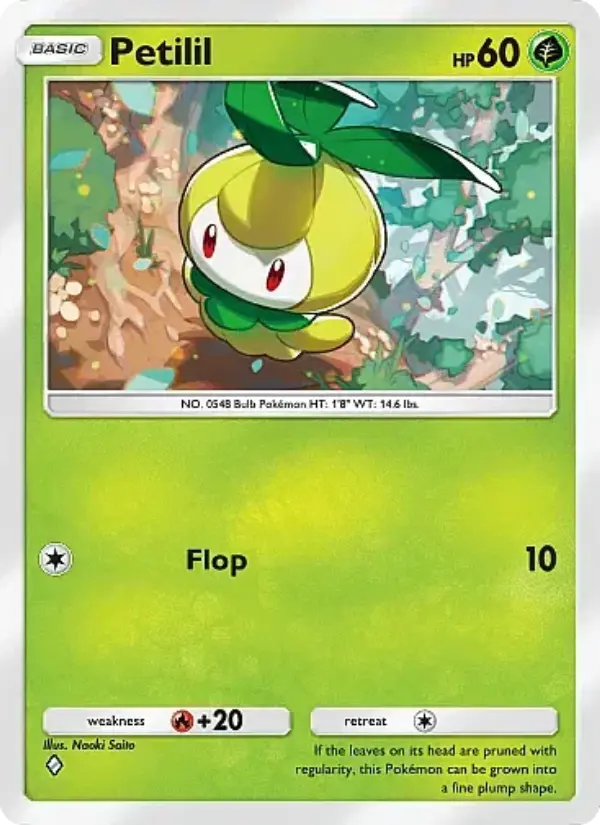
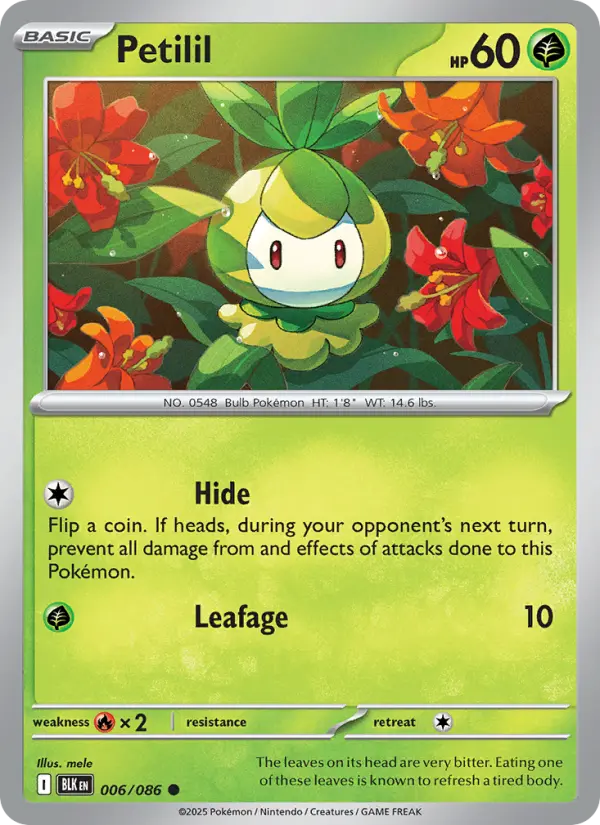
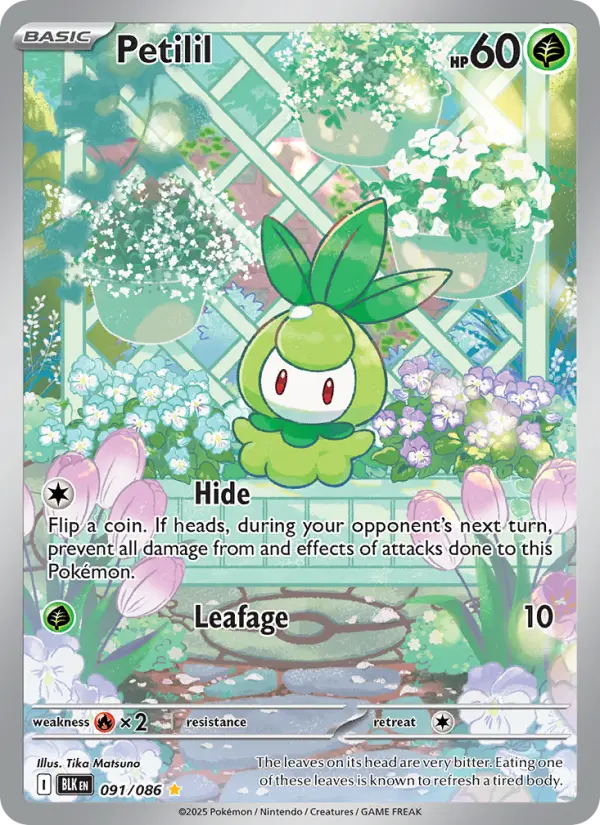
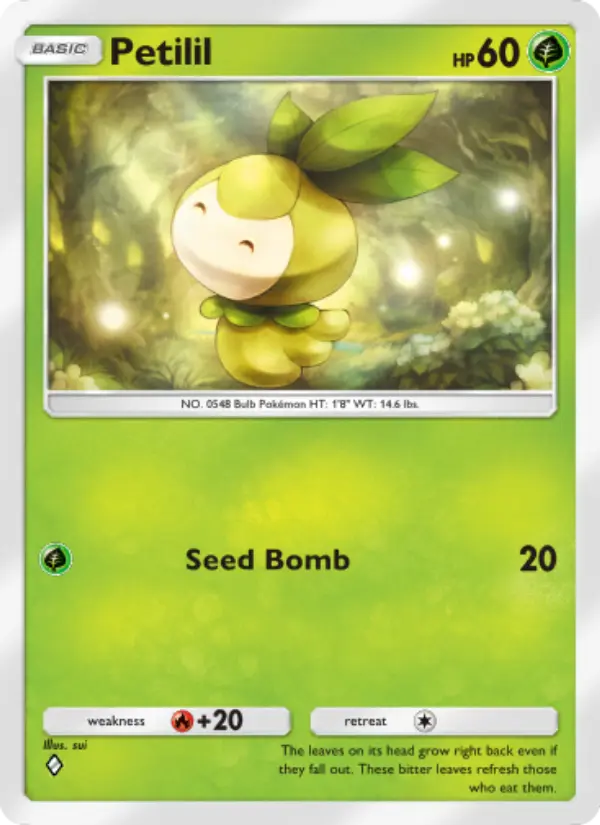
Petilil has achieved notable cultural significance, particularly within the Pokémon universe's aging population who prize the medicinal properties of its bitter leaves. The Pokédex explicitly notes that Petilil is "popular with the elderly," a characterization that reflects the species' role as a traditional health remedy and wellness plant. This cultural association extends to real-world interest, as Petilil's design incorporating botanical elements and healing properties resonates with players interested in plant-based medicine and natural wellness. The species appears in various Pokémon media, from the trading card game to animated series, where its gardening-related characteristics and gentle nature often position it as a creature of peace and natural harmony. Petilil's exclusively female status has also generated discussion within the fan community regarding biological diversity, gender representation in Pokémon design, and the parallels between fictional species biology and real-world botanical reproduction patterns. In Pokémon GO and mobile gaming contexts, Petilil's sunny weather association and accessible evolution requirements have made it a frequent subject of community events and challenges, introducing new generations of players to this understated but botanically compelling creature.
Where to Find Petilil in Every Pokémon Game
Petilil's availability varies significantly across different Pokémon games and regions. Originally introduced in Generation V, Petilil appeared in Pokémon Black and White games with Pokédex number 54. The species has maintained consistent availability across subsequent generations, appearing in Black 2 and White 2 with Pokédex number 84. In later titles, Petilil appears with different Pokédex numbers reflecting regional entries: number 85 in Sun and Moon's Alola Pokédex, number 103 in Ultra Sun and Ultra Moon, number 93 in Pokémon Legends: Arceus, and number 104 in Scarlet and Violet. The Pokémon can be found in various habitats consistent with its biological preferences—gardens, grassy areas, and locations near water sources. Petilil's high catch rate of 190, translating to approximately a 35.2% capture probability with a standard Poké Ball against a full-health specimen, makes it relatively easy to acquire once encountered. The species' availability in multiple generations and games, combined with its straightforward evolution method using a readily obtainable Sun Stone, ensures that trainers across different play styles and regions can incorporate Petilil into their teams without excessive difficulty, making it an accessible choice for players seeking a Grass-type Pokémon early in their adventure.