Spinda
Generation III · #0327 — Spot Panda Pokémon
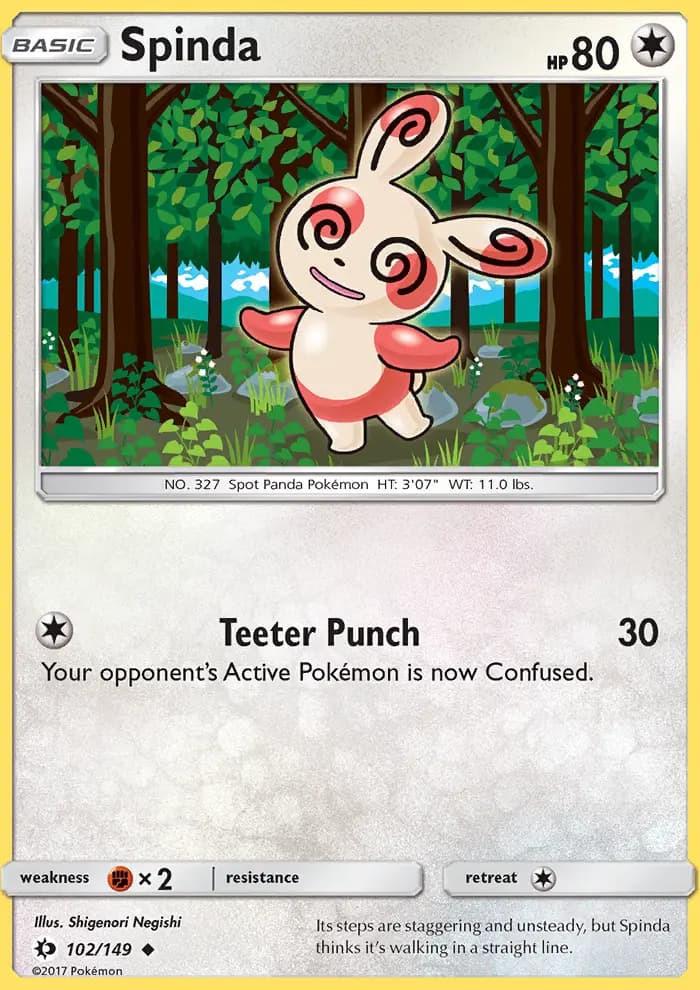
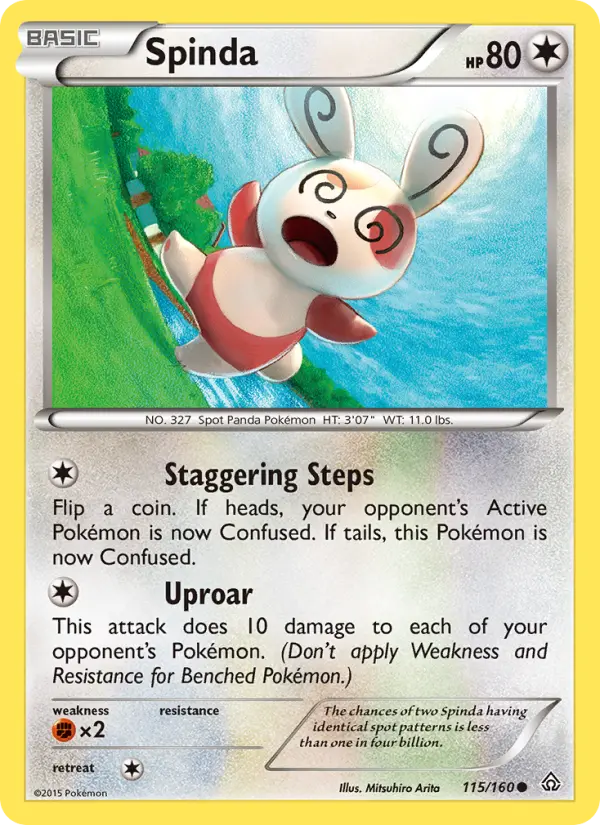
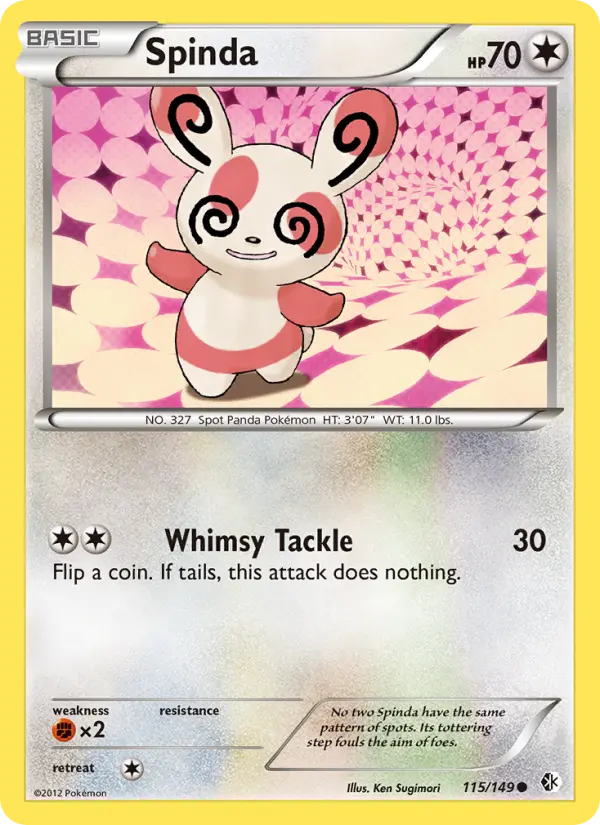
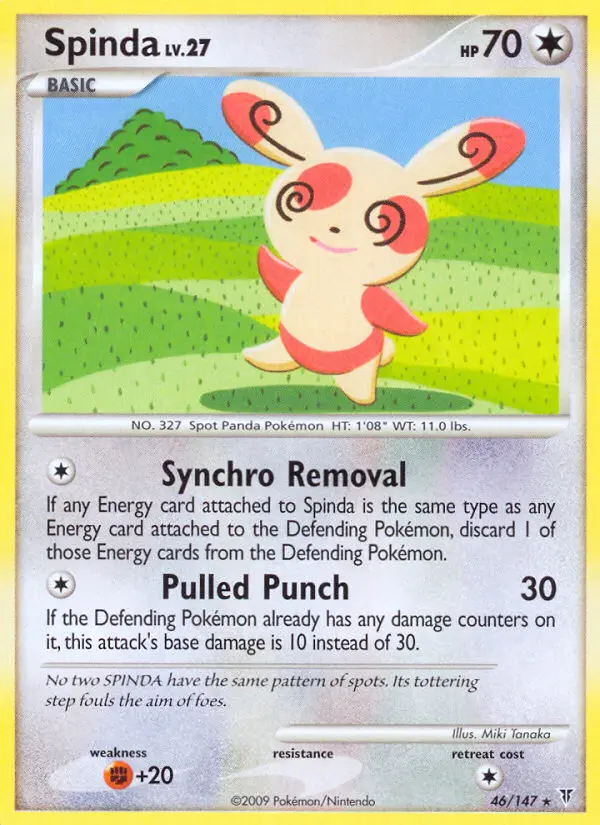
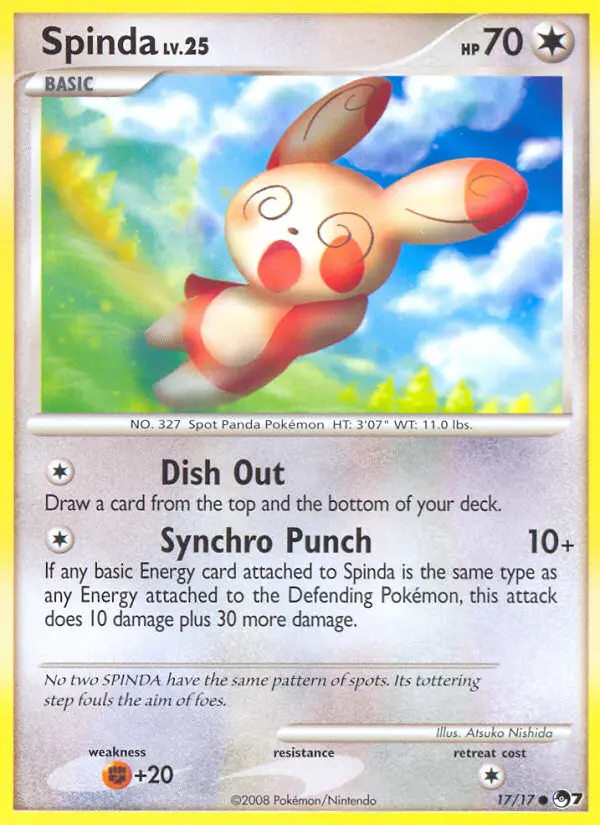
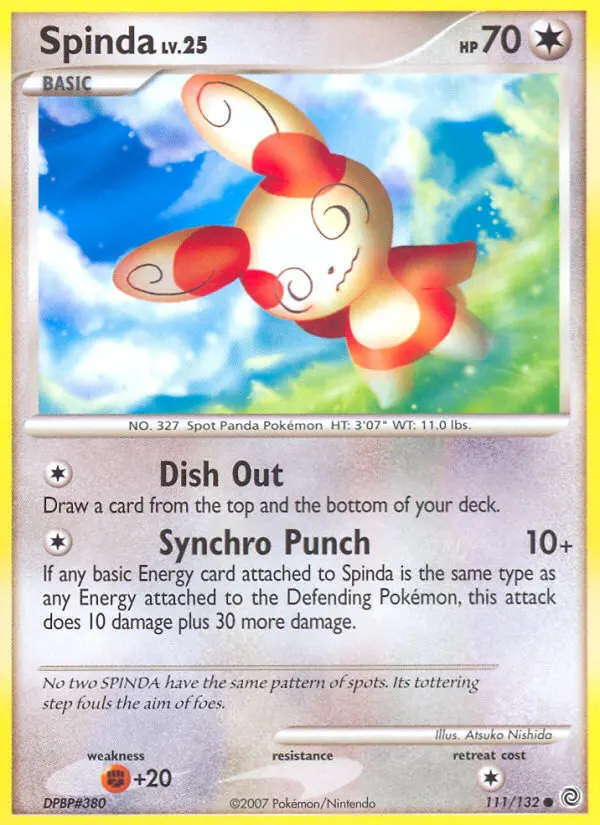
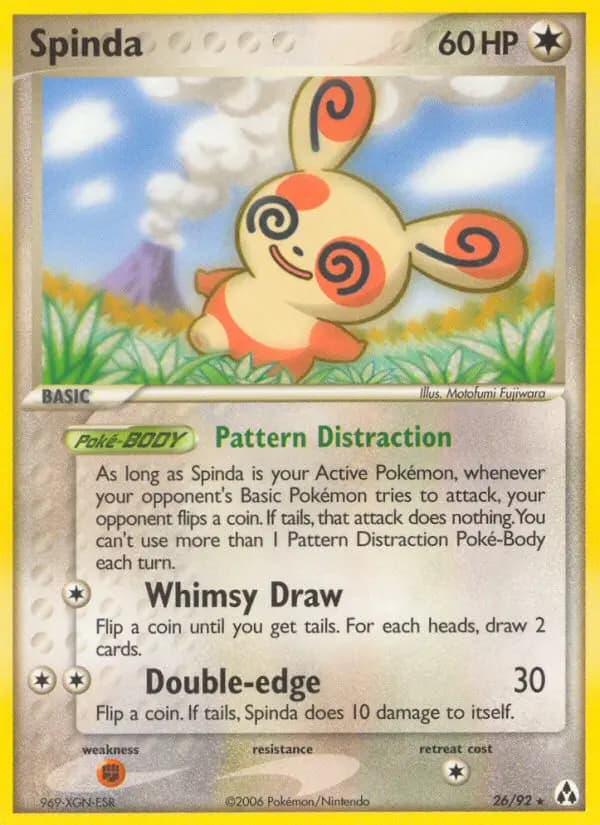
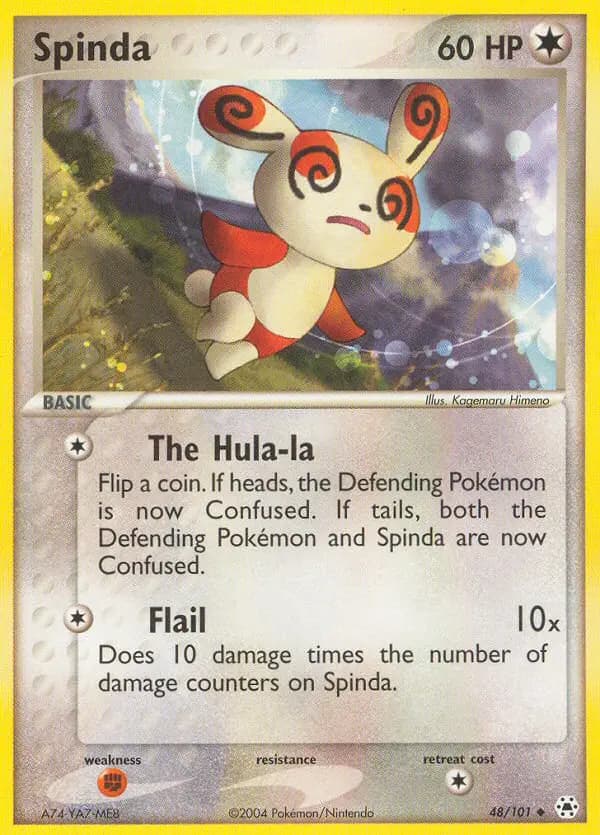
Spinda's profile is easy to undersell: 1.1 m, 5 kg, and a normal typing that doesn't scream power — until you look at its HP of 60. The statistical probability of this phenomenon is staggering—sources indicate that the chances of two Spinda sharing the same pattern is less than one in four billion, making each individual truly unique. This biological quirk has made Spinda a subject of fascination for both casual trainers and dedicated collectors, many of whom seek out different Spinda specifically to document their various spot configurations.
Editor's Take
Spinda has over four billion possible spot patterns and a base stat total of 360, which makes it the most elaborately randomised irrelevant Pokémon in the series.
Base Stats
Height
1.1m
Weight
5.0kg
Category
Spot Panda Pokémon
Gender
Male 50% / Female 50%
Color
brown
Shape
upright
Habitat
mountain
Abilities
Prevents confusion.
Doubles evasion when confused.
Inverts stat changes.

Spinda Biology & Physical Characteristics
Spinda is a bipedal Pokémon with a distinctive appearance that blends characteristics of a red panda with rabbit-like features, creating an endearing and somewhat comical aesthetic. Its most striking features are its spiral-shaped eyes that point in opposite directions from one another, mirrored by similar swirling patterns on its ears that give it a perpetually dizzy appearance. The Pokémon's small frame is supported by short, stumpy limbs, and its coat is primarily cream-colored with red arms and a red stripe that borders the bottom of its belly. Most notably, Spinda bears five spot markings: four that can appear anywhere on its face and ears, with a fifth positioned on the back of its head. These spots are the source of Spinda's infinite variety, as they vary dramatically in size, position, and combination across different individuals. Additionally, Spinda has two small spots on the soles of its feet, which are visible only upon close inspection.
Pokedex Numbers
Training
Breeding
Spinda Breeding, Gender Ratio & Egg Groups
Spinda has a balanced gender ratio of 50% male and 50% female, making it equally likely to encounter either sex in the wild or when breeding. The species belongs to the Field and Human-Like egg groups, allowing it to breed with a diverse range of compatible Pokémon partners. With a base happiness value of 70, Spinda is moderately friendly toward its trainer, though it takes some effort and care to maximize its affection. The Pokémon has a fast growth rate, meaning it reaches higher levels relatively quickly compared to species with slower growth curves, making it an attractive option for trainers seeking quicker progression. The species requires 15 egg cycles to hatch from an egg, translating to approximately 3,599 to 3,855 steps of travel, placing it in the moderate range for egg hatching times. Its exceptionally high catch rate of 255 means that wild Spinda are almost trivial to capture, making them easily obtainable for any trainer seeking to add one to their team or collection.
Sprites






Held Items
Chesto Berry
medicine
Held: Consumed when asleep to cure sleep.
Cost: 80
Chesto Berry
medicine
Held: Consumed when asleep to cure sleep.
Cost: 80
Chesto Berry
medicine
Held: Consumed when asleep to cure sleep.
Cost: 80
Chesto Berry
medicine
Held: Consumed when asleep to cure sleep.
Cost: 80
Chesto Berry
medicine
Held: Consumed when asleep to cure sleep.
Cost: 80
Chesto Berry
medicine
Held: Consumed when asleep to cure sleep.
Cost: 80
Chesto Berry
medicine
Held: Consumed when asleep to cure sleep.
Cost: 80
Chesto Berry
medicine
Held: Consumed when asleep to cure sleep.
Cost: 80
Chesto Berry
medicine
Held: Consumed when asleep to cure sleep.
Cost: 80
Chesto Berry
medicine
Held: Consumed when asleep to cure sleep.
Cost: 80
Chesto Berry
medicine
Held: Consumed when asleep to cure sleep.
Cost: 80
Chesto Berry
medicine
Held: Consumed when asleep to cure sleep.
Cost: 80
Chesto Berry
medicine
Held: Consumed when asleep to cure sleep.
Cost: 80
Chesto Berry
medicine
Held: Consumed when asleep to cure sleep.
Cost: 80
TMs & HMs
tm00
sword shield
tm01
yellow
tm01
gold silver
tm01
crystal
tm01
red blue
tm01
platinum
tm01
emerald
tm01
diamond pearl
tm01
firered leafgreen
tm01
ruby sapphire
tm01
xd
tm01
colosseum
tm01
heartgold soulsilver
tm01
lets go pikachu lets go eevee
tm01
ultra sun ultra moon
tm01
sun moon
tm01
blue japan
tm01
red green japan
tm01
sword shield
tm02
crystal
+721 more TMs/HMs
Spinda Evolution, Mega Evolution & Special Forms
Spinda is a Pokémon that does not evolve from any other species, nor does it evolve into any other form. It represents a complete evolutionary line unto itself, with no baby form, intermediate stages, or final evolution in any generation. This makes Spinda unique among many Generation III Pokémon that have branched evolutionary chains. Additionally, Spinda has not received a Mega Evolution form in the games where Mega Evolution was introduced, meaning it remains in its original form throughout all main series Pokémon games. The lack of an evolutionary progression is somewhat thematic for Spinda, as the Pokémon's singular, unchanging form stands in contrast to its infinite variety through spot patterns—while the species as a whole exhibits extraordinary diversity, each individual Spinda never transforms into anything else.
Where to Find
Hoenn Route 113
hoenn
+18 more
Sinnoh Route 227
sinnoh
+3 more
Bell Tower
johto
+33 more
Sprout Tower
johto
+5 more
Burned Tower
johto
+5 more
Kalos Route 21
kalos
+5 more
Ten Carat Hill
alola
+1 more
Spinda Behaviour and Natural Habitat
Spinda is known throughout its mountainous habitats for its peculiar and distinctive movement patterns that have become legendary in Pokémon culture. The Pokémon moves in what appears to be a dizzying, tottering manner, as if it is stumbling or stumbling in confusion, though Spinda itself believes it is walking in a perfectly straight line. This unsteady gait creates the illusion of a graceful, dance-like performance, causing observers to describe its movement as having an appearance of dancing. Most remarkably, these lurching, scattering movements serve a crucial combat function: they confuse Spinda's opponents and actively foul their aim, making it difficult for adversaries to land accurate attacks during battle. This combination of involuntary awkwardness and combat effectiveness makes Spinda a more formidable opponent than its small stature and modest base stats might initially suggest. The Pokémon's movements are so characteristic that it is virtually impossible to mistake a Spinda for any other species, and its swaying gait has become iconic in Pokémon battles and lore.
Pokedex Entries
All the SPINDA that exist in the world are said to have utterly unique spot patterns. The shaky, tottering steps of this POKéMON give it the appearance of dancing.
No two SPINDA are said to have identical spot patterns on their hides. This POKéMON moves in a curious manner as if it is stumbling in dizziness. Its lurching movements can cause the opponent to become confused.
It is distinguished by a pattern of spots that is always different. Its unsteady, tottering walk has the effect of fouling its foe’s aim.
No two SPINDA are said to have identical patterns. It confuses foes with its stumbling motions.
No two SPINDA have the same pattern of spots. Its tottering step fouls the aim of foes.
The chances of two SPINDA having identical spot patterns is less than one in four billion.
No two Spinda have the same pattern of spots. Its tottering step fouls the aim of foes.
No two Spinda have the same pattern of spots. Its tottering step fouls the aim of foes.
No two Spinda have the same pattern of spots. Its tottering step fouls the aim of foes.
The chances of two Spinda having identical spot patterns is less than one in four billion.
All the Spinda that exist in the world are said to have utterly unique spot patterns. The shaky, tottering steps of this Pokémon give it the appearance of dancing.
No two Spinda are said to have identical spot patterns on their hides. This Pokémon moves in a curious manner as if it is stumbling in dizziness. Its lurching movements can cause the opponent to become confused.
Its steps are staggering and unsteady, but Spinda thinks it’s walking in a straight line.
Its steps are shaky and stumbling. Walking for a long time makes it feel sick.
Each and every Spinda has a slightly different configuration of spots. There are collectors who enjoy the tiny differences in their spot patterns.
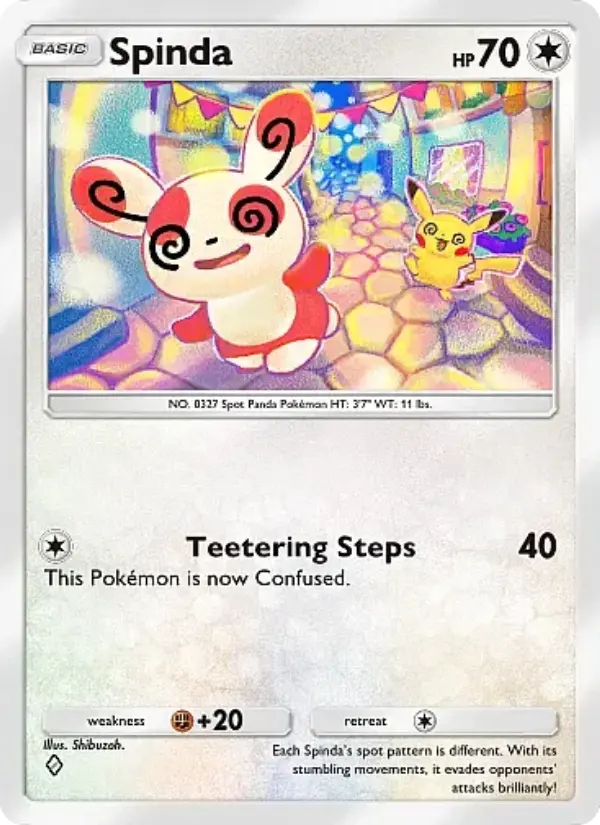
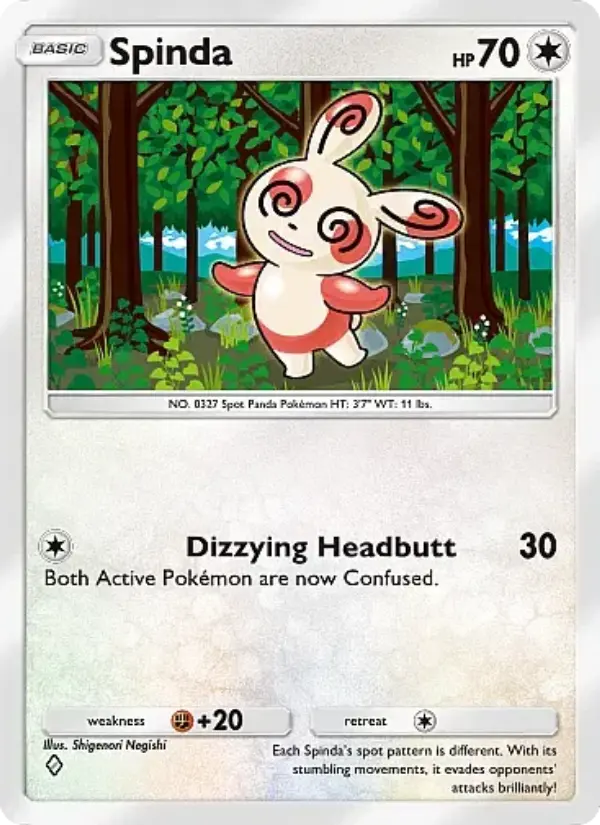
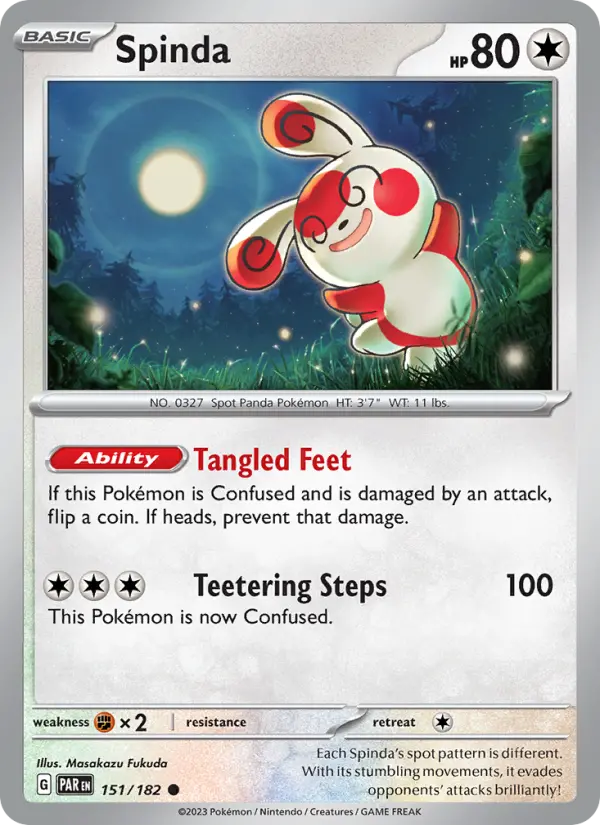
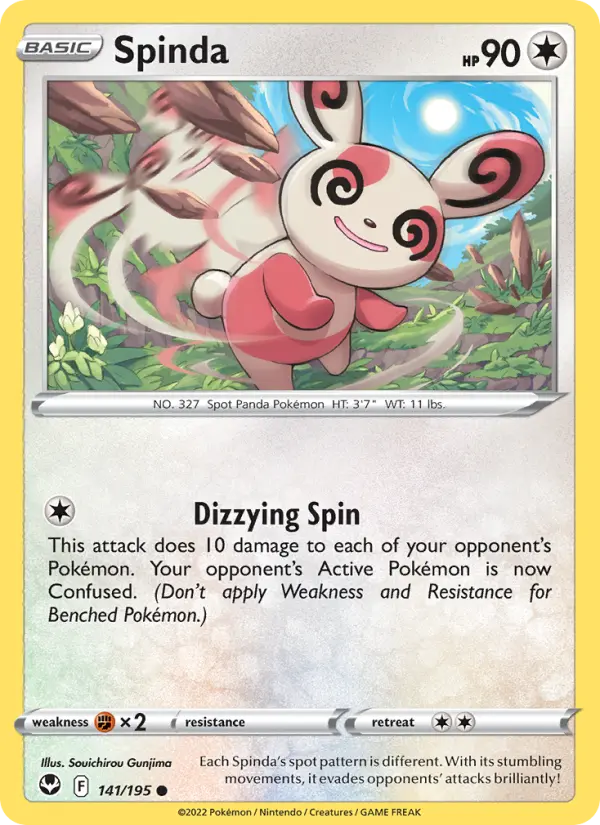
Each Spinda’s spot pattern is different. With its stumbling movements, it evades opponents’ attacks brilliantly!
Spinda Name Origin & Design Inspiration
Spinda's name can be traced to the Spanish word "panda," referencing the Pokémon's resemblance to a red panda combined with its own unique characteristics. In Japanese, Spinda is called Patcheel (パッチール), which comes from the English word "patch," directly referencing the distinctive spot markings that define the species. The design itself cleverly merges the gentle, rotund appearance of a panda with rabbit-like features such as its ear shape and eye configuration, creating a creature that is simultaneously cute and somewhat peculiar. The spiral eyes and swirling ear patterns reinforce the concept of dizziness and confusion that pervades Spinda's entire design philosophy. The distinctive spot pattern—the central gimmick of the species—draws inspiration from real-world panda markings and fingerprints, both naturally variable across individuals, making it a clever biological reference that gives scientific credibility to Spinda's fictional variation mechanic.
Learnable Moves
Spinda can learn 100 moves:
Move | Type | Cat. | Power | Acc. | PP |
|---|---|---|---|---|---|
| assist | normal | Status | — | — | 20 |
| attract | normal | Status | — | 100 | 15 |
| baton pass | normal | Status | — | — | 40 |
| body slam | normal | Physical | 85 | 100 | 15 |
| brick break | fighting | Physical | 75 | 100 | 15 |
| calm mind | psychic | Status | — | — | 20 |
| captivate | normal | Status | — | 100 | 20 |
| confide | normal | Status | — | — | 20 |
| copycat | normal | Status | — | — | 20 |
| counter | fighting | Physical | — | 100 | 20 |
| covet | normal | Physical | 60 | 100 | 25 |
| defense curl | normal | Status | — | — | 40 |
| dig | ground | Physical | 80 | 100 | 10 |
| disable | normal | Status | — | 100 | 20 |
| dizzy punch | normal | Physical | 70 | 100 | 10 |
| double team | normal | Status | — | — | 15 |
| double edge | normal | Physical | 120 | 100 | 15 |
| drain punch | fighting | Physical | 75 | 100 | 10 |
| dream eater | psychic | Special | 100 | 100 | 15 |
| dynamic punch | fighting | Physical | 100 | 50 | 5 |
| encore | normal | Status | — | 100 | 5 |
| endure | normal | Status | — | — | 10 |
| facade | normal | Physical | 70 | 100 | 20 |
| fake out | normal | Physical | 40 | 100 | 10 |
| fake tears | dark | Status | — | 100 | 20 |
| feint attack | dark | Physical | 60 | — | 20 |
| fire punch | fire | Physical | 75 | 100 | 15 |
| flail | normal | Physical | — | 100 | 15 |
| flash | normal | Status | — | 100 | 20 |
| fling | dark | Physical | — | 100 | 10 |
| focus punch | fighting | Physical | 150 | 100 | 20 |
| frustration | normal | Physical | — | 100 | 20 |
| guard split | psychic | Status | — | — | 10 |
| headbutt | normal | Physical | 70 | 100 | 15 |
| helping hand | normal | Status | — | — | 20 |
| hidden power | normal | Special | 60 | 100 | 15 |
| hyper voice | normal | Special | 90 | 100 | 10 |
| hypnosis | psychic | Status | — | 60 | 20 |
| ice punch | ice | Physical | 75 | 100 | 15 |
| icy wind | ice | Special | 55 | 95 | 15 |
| last resort | normal | Physical | 140 | 100 | 5 |
| low kick | fighting | Physical | — | 100 | 20 |
| mega kick | normal | Physical | 120 | 75 | 5 |
| mega punch | normal | Physical | 80 | 85 | 20 |
| metronome | normal | Status | — | — | 10 |
| mimic | normal | Status | — | — | 10 |
| mud slap | ground | Special | 20 | 100 | 10 |
| natural gift | normal | Physical | — | 100 | 15 |
| nightmare | ghost | Status | — | 100 | 15 |
| power up punch | fighting | Physical | 40 | 100 | 20 |
| protect | normal | Status | — | — | 10 |
| psybeam | psychic | Special | 65 | 100 | 20 |
| psych up | normal | Status | — | — | 10 |
| psychic | psychic | Special | 90 | 100 | 10 |
| psycho cut | psychic | Physical | 70 | 100 | 20 |
| psycho shift | psychic | Status | — | 100 | 10 |
| rain dance | water | Status | — | — | 5 |
| rapid spin | normal | Physical | 50 | 100 | 40 |
| recycle | normal | Status | — | — | 10 |
| rest | psychic | Status | — | — | 5 |
| retaliate | normal | Physical | 70 | 100 | 5 |
| return | normal | Physical | — | 100 | 20 |
| rock slide | rock | Physical | 75 | 90 | 10 |
| rock smash | fighting | Physical | 40 | 100 | 15 |
| rock tomb | rock | Physical | 60 | 95 | 15 |
| role play | psychic | Status | — | — | 10 |
| rollout | rock | Physical | 30 | 90 | 20 |
| round | normal | Special | 60 | 100 | 15 |
| safeguard | normal | Status | — | — | 25 |
| secret power | normal | Physical | 70 | 100 | 20 |
| seismic toss | fighting | Physical | — | 100 | 20 |
| shadow ball | ghost | Special | 80 | 100 | 15 |
| shock wave | electric | Special | 60 | — | 20 |
| skill swap | psychic | Status | — | — | 10 |
| sleep talk | normal | Status | — | — | 10 |
| smelling salts | normal | Physical | 70 | 100 | 10 |
| snatch | dark | Status | — | — | 10 |
| snore | normal | Special | 50 | 100 | 15 |
| spotlight | normal | Status | — | — | 15 |
| stomping tantrum | ground | Physical | 75 | 100 | 10 |
| strength | normal | Physical | 80 | 100 | 15 |
| substitute | normal | Status | — | — | 10 |
| sucker punch | dark | Physical | 70 | 100 | 5 |
| sunny day | fire | Status | — | — | 5 |
| swagger | normal | Status | — | 85 | 15 |
| swift | normal | Special | 60 | — | 20 |
| tackle | normal | Physical | 40 | 100 | 35 |
| teeter dance | normal | Status | — | 100 | 20 |
| thief | dark | Physical | 60 | 100 | 25 |
| thrash | normal | Physical | 120 | 100 | 10 |
| thunder punch | electric | Physical | 75 | 100 | 15 |
| toxic | poison | Status | — | 90 | 10 |
| trick | psychic | Status | — | 100 | 10 |
| trick room | psychic | Status | — | — | 5 |
| uproar | normal | Special | 90 | 100 | 10 |
| water pulse | water | Special | 60 | 100 | 20 |
| wild charge | electric | Physical | 90 | 100 | 15 |
| wish | normal | Status | — | — | 10 |
| work up | normal | Status | — | — | 30 |
| zen headbutt | psychic | Physical | 80 | 90 | 15 |
Spinda Competitive Battle Guide
Competitively, Spinda occupies an extremely niche position due to its completely balanced but modest base statistics. Every single base stat—HP, Attack, Defense, Special Attack, Special Defense, and Speed—is an identical 60, resulting in a total base stat of 360, well below the standards of competitive viability at higher levels of play. This perfectly even distribution means Spinda has no particular strengths to exploit and no obvious weaknesses to compensate for, making it fundamentally outclassed by most other Pokémon in organized competition. However, Spinda's abilities provide some interesting strategic possibilities: Own Tempo prevents confusion, which can be useful against confusion-inducing opponents; Tangled Feet doubles evasion when Spinda is confused, creating a niche defensive strategy; and its hidden ability Contrary inverts all stat changes, potentially turning stat drops into boosts in creative team compositions. Moves like Teeter Dance, Spinda's former signature move, and confusion-inducing attacks can create situational strategies, but such gimmicks rarely prove effective against optimized competitive teams. For the vast majority of serious competitive play, Spinda serves more as a novelty pick or a fun casual battle option rather than a legitimate tournament contender.
Commonly Asked Questions About Spinda
What type is Spinda?
Spinda is a normal type Pokemon.
What does Spinda evolve from?
Spinda does not evolve.
What are Spinda's weaknesses?
Spinda is weak to fighting type moves.
Where can I find Spinda?
Spinda can be found in hoenn route 113 (hoenn), sinnoh route 227 (sinnoh) and bell tower (johto) and 4 other locations.
Spinda Cultural Impact & Franchise History
Spinda has developed a cult following within the Pokémon community that extends far beyond its modest competitive utility, largely due to the mathematical and biological intrigue surrounding its infinite spot pattern variations. The concept that no two Spinda are identical in the entire world appeals to collectors and completionists who are fascinated by attempting to catalog or obtain multiple Spinda with dramatically different patterns. This has led to Spinda being featured prominently in discussions about Pokémon genetics and variation systems, making it a memorable example of procedural variation in gaming. The Pokémon's appearance in the Pokémon Mystery Dungeon games, where it plays a narrative role as a character seeking a legendary Mirage Pokémon, added additional character depth and lore significance beyond its base-game mechanics. Online communities have documented numerous Spinda patterns and created guides for finding specific pattern types, turning the seemingly simple Pokémon into a subject of genuine scientific and mathematical interest. Its quirky design, perpetually dizzy appearance, and the philosophical appeal of absolute individuality have made Spinda a beloved representative of Generation III's creative Pokémon designs.
Where to Find Spinda in Every Pokémon Game
Spinda was first introduced in Generation III and has maintained consistent availability across the majority of subsequent games, making it one of the more accessible Pokémon for trainers seeking to obtain it. In its native generation, Spinda could be found in Ruby, Sapphire, and Emerald versions in mountainous areas, establishing its expected habitat. The species has appeared in subsequent generations including the Sinnoh region (Diamond and Pearl), Unova (Black and White), Kalos (X and Y), Alola (Sun, Moon, Ultra Sun, and Ultra Moon), Galar, and Paldea, though specific locations and encounter methods vary by game. Its exceptionally high catch rate of 255 means that even at full health, a standard Poké Ball has an approximately 33.3% chance of successfully capturing a wild Spinda, making it one of the easiest Pokémon to add to any team. The species does not require trading or special conditions to obtain, and it is not version-exclusive to any particular game, ensuring that all trainers have fair access regardless of which version they choose. With a fast growth rate and a base experience yield of 126 (increased from 85 in later generations), Spinda gains levels efficiently once trained, making it viable for progression through a story campaign.