
Yellow Plumage Squawkabilly
Generation IX · #10261 — Parrot Pokémon
Squawkabilly, the Parrot Pokémon introduced in Generation IX, is a Normal/Flying-type that showcases remarkable plumage variation across four distinct forms. The yellow plumage form represents one of the less common color varieties among Squawkabilly populations, distinguished by its vibrant golden-yellow feathers that contrast sharply against its white breast, abdomen, and wingtips. With a National Pokédex number of #931, this form maintains identical base stats to its counterparts, boasting a total of 417 with particular strength in Attack (96) and Speed (92). Unlike the green plumage form which has Guts as its hidden ability, the yellow plumage variety features Sheer Force, enabling a unique strategic approach to competitive battling. These highly social and vocal Pokémon establish territorial hierarchies based on feather coloration, with yellow-feathered individuals forming their own distinct flocks separate from the more dominant green populations.
Editor's Take
Yellow Plumage Squawkabilly gets Hustle rather than Intimidate, which makes the colour choice a genuine competitive decision rather than a cosmetic one.
Base Stats
Height
0.6m
Weight
2.4kg
Category
Parrot Pokémon
Gender
Male 50% / Female 50%
Color
green
Shape
wings
Abilities
Lowers opponents' Attack one stage upon entering battle.
Strengthens physical moves to inflict 1.5× damage, but decreases their accuracy to 0.8×.
Strengthens moves with extra effects to 1.3× their power, but prevents their extra effects.

Yellow Plumage Squawkabilly Biology & Physical Characteristics
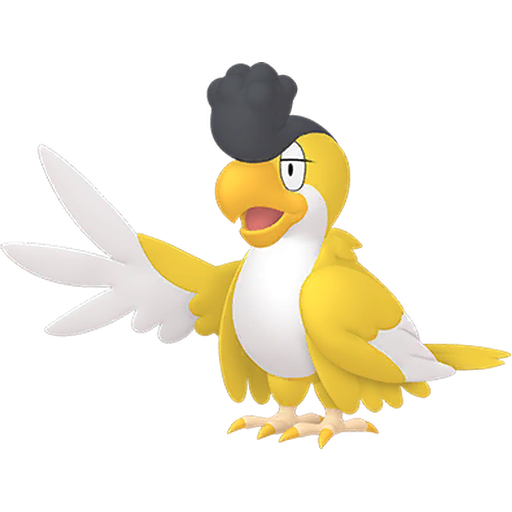
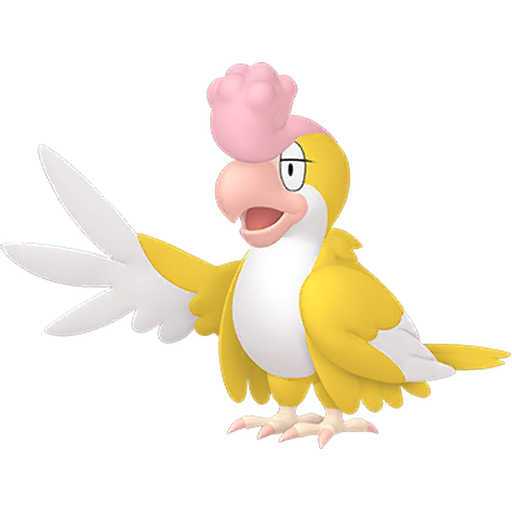
The yellow plumage form of Squawkabilly exhibits all the characteristic avian features of its species while displaying a striking yellow primary coloration. Standing at just 0.6 meters tall and weighing only 2.4 kilograms, this petite parrot possesses a rounded yellow beak, distinctive lazy eyes with dotted pupils, and a prominent black pompadour-like crest running across the top of its head. Its most visually distinctive feature is the elongated feathering along its sides, creating an impression reminiscent of a long coat, while fluffier feathers at the back of its neck add to its characteristic appearance. The yellow form shares the zygodactyl foot arrangement common to all Squawkabilly, with two toes on the front and back of each foot, each tipped with a yellow claw that complements its primary plumage color. Like all forms, the yellow plumage variant possesses white feathers on its eyelids, which give it a perpetually alert expression despite its seemingly tired gaze.
Pokedex Numbers
Training
Breeding
Yellow Plumage Squawkabilly Breeding, Gender Ratio & Egg Groups
The yellow plumage form of Squawkabilly maintains a perfectly balanced gender ratio of 50% male to 50% female, making breeding accessible regardless of the parent's sex. These Pokémon belong solely to the Flying Egg Group, meaning they can only breed with other Pokémon sharing this classification, such as Pidgeot, Dragonite, and Gyarados. The species exhibits a slow-then-very-fast growth rate, meaning they require significant experience early in development but accelerate substantially as they gain levels, reaching their statistical potential efficiently in mid-to-late-game scenarios. With a base happiness of 50, yellow plumage Squawkabilly require moderate friendship development to reach maximum affection, responding well to consistent training and care from dedicated trainers. Hatching from eggs requires approximately 15 cycles, translating to roughly 3,599 to 3,855 steps, making them moderately quick to breed compared to legendary or pseudo-legendary species. Their relatively high catch rate of 190 makes obtaining breeding specimens straightforward, even for trainers without advanced Poké Ball technology.
Sprites


TMs & HMs
tm02
lets go pikachu lets go eevee
tm03
lets go pikachu lets go eevee
tm05
lets go pikachu lets go eevee
tm06
sword shield
tm07
lets go pikachu lets go eevee
tm08
lets go pikachu lets go eevee
tm08
sword shield
tm09
yellow
tm09
red blue
tm09
sword shield
tm11
platinum
tm11
xd
tm95
sword shield
hm02
crystal
hm02
diamond pearl
hm02
heartgold soulsilver
tr42
sword shield
tm65
scarlet violet
tm10
blue japan
tm11
diamond pearl
+310 more TMs/HMs
Regional & Special Forms
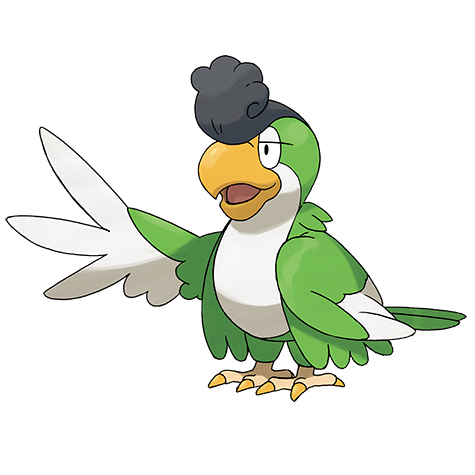
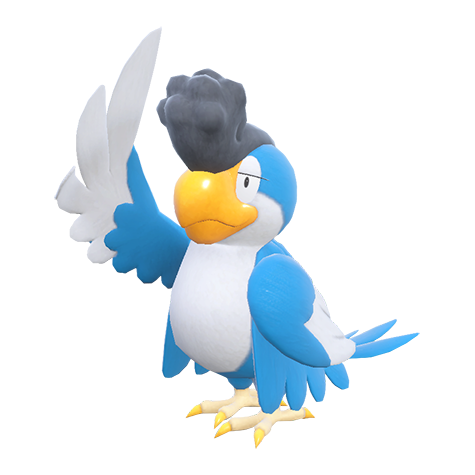
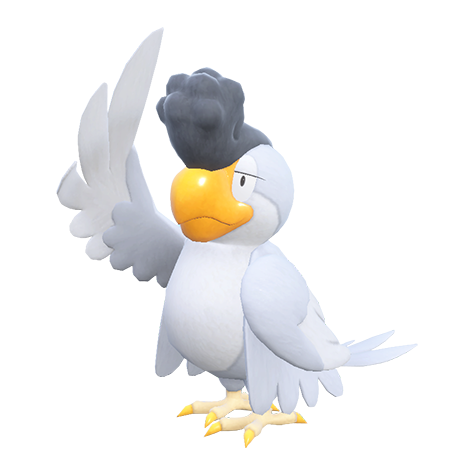
Yellow Plumage Squawkabilly also has 3 related forms: Green Plumage Squawkabilly, Blue Plumage Squawkabilly and White Plumage Squawkabilly.
Yellow Plumage Squawkabilly Evolution, Mega Evolution & Special Forms
Squawkabilly, including the yellow plumage form, represents a complete evolutionary line unto itself, not evolving from or into any other Pokémon species. This standalone status distinguishes it from many Generation IX Pokémon, making it a fully mature form upon capture or hatching. The yellow plumage variety cannot undergo Mega Evolution or any alternative evolutionary transformations, maintaining its fixed form throughout a trainer's journey. However, the presence of four distinct plumage forms—green, blue, yellow, and white—creates a form-changing system unique to the species that functions independently of traditional evolution mechanics. Each form can be encountered in the wild with equal capability for growth and development, though some forms prove notably rarer than others, with green being most common and white being exceptionally uncommon.
Where to Find
Location data not available for this Pokémon in the database.
Yellow Plumage Squawkabilly Behaviour and Natural Habitat
Yellow plumage Squawkabilly are notably territorial and exceptionally vocal, with their constant calls contributing significantly to the ambient noise of urban environments during morning and evening feeding periods. These Pokémon demonstrate a strong preference for city living compared to their forest-dwelling relatives, actively searching for food in towns and urban areas where they've adapted remarkably well to human civilization. The yellow form establishes flocks with other yellow-feathered individuals, creating distinct social hierarchies separate from the more dominant green-feathered groups documented in Pokédex entries. Despite their competitive nature toward other color varieties, yellow Squawkabilly show remarkable cooperation and community bonds within their own flocks, which can expand to contain over fifty individuals working together for territorial advantage and food acquisition. Their morning and evening foraging expeditions are characterized by intense vocalizations that have earned them a reputation as among the noisiest Pokémon species, often creating cacophonies that echo through city streets and residential areas.
Pokedex Entries
These Pokémon prefer to live in cities. They form flocks based on the color of their feathers, and they fight over territory.
Green-feathered flocks hold the most sway. When they’re out searching for food in the mornings and evenings, it gets very noisy.
Yellow Plumage Squawkabilly Name Origin & Design Inspiration
The Japanese name Ikirinko (イキリンコ) combines elements suggesting a proud or arrogant demeanor with rinko, relating to parrot characteristics, perfectly capturing this species' territorial and boisterous nature. Squawkabilly itself is a portmanteau of 'squawk,' reflecting the species' exceptionally loud vocalizations, and 'billy,' a common name for parrots. The yellow plumage form's design draws inspiration from real-world parrot species, particularly the macaw and conure families known for vibrant yellow coloration and gregarious behavior in urban environments. The pompadour-style crest and elongated side feathers evoke a fashionable, almost punk-rock aesthetic that contrasts amusingly with the Pokémon's lazy, disinterested eye expression. The color yellow itself carries symbolic weight, suggesting cheerfulness and social visibility—traits that define yellow Squawkabilly's territorial displays and flock coordination within their preferred urban habitats.
Learnable Moves
Yellow Plumage Squawkabilly can learn 47 moves:
Move | Type | Cat. | Power | Acc. | PP |
|---|---|---|---|---|---|
| aerial ace | flying | Physical | 60 | — | 20 |
| air cutter | flying | Special | 60 | 95 | 25 |
| air slash | flying | Special | 75 | 95 | 15 |
| brave bird | flying | Physical | 120 | 100 | 15 |
| copycat | normal | Status | — | — | 20 |
| double edge | normal | Physical | 120 | 100 | 15 |
| dual wingbeat | flying | Physical | 40 | 90 | 10 |
| endeavor | normal | Physical | — | 100 | 5 |
| endure | normal | Status | — | — | 10 |
| facade | normal | Physical | 70 | 100 | 20 |
| fake tears | dark | Status | — | 100 | 20 |
| feather dance | flying | Status | — | 100 | 15 |
| final gambit | fighting | Special | — | 100 | 5 |
| flatter | dark | Status | — | 100 | 15 |
| fly | flying | Physical | 90 | 95 | 15 |
| foul play | dark | Physical | 95 | 100 | 15 |
| fury attack | normal | Physical | 15 | 85 | 20 |
| giga impact | normal | Physical | 150 | 90 | 5 |
| growl | normal | Status | — | 100 | 40 |
| heat wave | fire | Special | 95 | 90 | 10 |
| helping hand | normal | Status | — | — | 20 |
| hurricane | flying | Special | 110 | 70 | 10 |
| hyper beam | normal | Special | 150 | 90 | 5 |
| hyper voice | normal | Special | 90 | 100 | 10 |
| lash out | dark | Physical | 75 | 100 | 5 |
| mimic | normal | Status | — | — | 10 |
| parting shot | dark | Status | — | 100 | 20 |
| peck | flying | Physical | 35 | 100 | 35 |
| pounce | bug | Physical | 50 | 100 | 20 |
| protect | normal | Status | — | — | 10 |
| quick attack | normal | Physical | 40 | 100 | 30 |
| rest | psychic | Status | — | — | 5 |
| reversal | fighting | Physical | — | 100 | 15 |
| roost | flying | Status | — | — | 5 |
| scary face | normal | Status | — | 100 | 10 |
| sleep talk | normal | Status | — | — | 10 |
| substitute | normal | Status | — | — | 10 |
| sunny day | fire | Status | — | — | 5 |
| swagger | normal | Status | — | 85 | 15 |
| tailwind | flying | Status | — | — | 15 |
| take down | normal | Physical | 90 | 85 | 20 |
| taunt | dark | Status | — | 100 | 20 |
| tera blast | normal | Special | 80 | 100 | 10 |
| thief | dark | Physical | 60 | 100 | 25 |
| torment | dark | Status | — | 100 | 15 |
| u turn | bug | Physical | 70 | 100 | 20 |
| uproar | normal | Special | 90 | 100 | 10 |
Yellow Plumage Squawkabilly Competitive Battle Guide
Assessing its battle viability, the yellow plumage form of Squawkabilly differentiates itself through access to Sheer Force as its hidden ability, a quality not shared by the green and blue plumage variants which instead possess Guts. Sheer Force amplifies moves with secondary effects to 1.3 times their normal power while eliminating those effects entirely, creating synergy with moves like Brave Bird, Close Combat, and various utility attacks that would otherwise apply status conditions. The 96 Attack stat provides respectable physical damage output, while a base Speed of 92 allows meaningful outspeeding of many common threats, positioning the yellow form as a serviceable physical attacker in competitive formats. Standard competitive sets typically employ Intimidate or Hustle as the primary ability depending on team composition and strategy, as Intimidate provides valuable team support by immediately lowering an opponent's Attack stat upon entry, while Hustle boosts physical damage to 1.5 times at the cost of reduced accuracy. However, the yellow form's relatively modest defenses at 51 for both Defense and Special Defense demand careful team building and positioning to maximize its potential impact before its frailty becomes exploitable.
Commonly Asked Questions About Yellow Plumage Squawkabilly
What type is Yellow Plumage Squawkabilly?
Yellow Plumage Squawkabilly is a normal and flying type Pokemon.
What does Yellow Plumage Squawkabilly evolve into?
Yellow Plumage Squawkabilly does not evolve.
What are Yellow Plumage Squawkabilly's weaknesses?
Yellow Plumage Squawkabilly is weak to rock, electric and ice type moves.
Yellow Plumage Squawkabilly Cultural Impact & Franchise History
Since its introduction in Pokémon Scarlet and Violet, Squawkabilly has become an iconic representation of Generation IX's focus on form variation and regional adaptation. The yellow plumage form specifically resonates with players seeking distinctive team members that stand apart from the more commonly encountered green variety, offering both aesthetic appeal and mechanical differentiation through its unique hidden ability. Fan communities have embraced Squawkabilly's territorial behavior and loud nature as endearing character traits, with countless memes celebrating the species' cacophonous presence in urban Paldean environments. The Pokémon has appeared prominently in official media, manga adaptations, and trading card game releases, establishing itself as a memorable Generation IX representative. The form-based design philosophy reflected in Squawkabilly's four distinct color varieties has influenced player discussions about Pokémon design philosophy, with many fans praising the species' approach to creating meaningful variation without requiring traditional evolutionary branching.
Where to Find Yellow Plumage Squawkabilly in Every Pokémon Game
Yellow plumage Squawkabilly appears in Pokémon Scarlet and Violet with a local Pokédex number of #0113, making it accessible relatively early in the player's adventure through Paldea. These Pokémon can be encountered in the wild throughout various urban and town environments where they've established populations, though the exact distribution favors certain regions of the map. The relatively high catch rate of 190 ensures that trainers without advanced Poké Ball options can successfully capture yellow plumage specimens, making them readily obtainable for team building purposes. Unlike some form-exclusive Pokémon, the yellow variety appears consistently in both Scarlet and Violet versions, though specific location data and encounter rates may vary between the two games. Players seeking to complete their Pokédex with all four Squawkabilly forms should prioritize yellow specimens early, as their urban habitat preference makes them consistently available throughout the game's duration, unlike the rarer white plumage form or region-exclusive color variants found in specific territories.