
Blue Plumage Squawkabilly
Generation IX · #10260 — Parrot Pokémon
Squawkabilly (blue plumage form) is a Normal/Flying-type Pokémon introduced in Generation IX, classified as the Parrot Pokémon and assigned the National Pokédex number #931. This form represents one of four distinct color variations of Squawkabilly, each of which forms separate territorial flocks in urban environments across the Paldea region. The blue plumage form distinguishes itself through its striking azure feathering, which sets it apart from the more common green variety and the rarer yellow and white forms. With a combined stat total of 417, Squawkabilly focuses its strengths on physical offense and speed, making it a swift striker in battle despite its diminutive stature of just 0.6 meters in height and a mere 2.4 kilograms in weight.
Editor's Take
Blue Plumage Squawkabilly shares Intimidate with the Green form, and the four-colour split mapping onto two ability sets is a reasonable middle ground.
Base Stats
Height
0.6m
Weight
2.4kg
Category
Parrot Pokémon
Gender
Male 50% / Female 50%
Color
green
Shape
wings
Abilities
Lowers opponents' Attack one stage upon entering battle.
Strengthens physical moves to inflict 1.5× damage, but decreases their accuracy to 0.8×.
Increases Attack to 1.5× with a major status ailment.

Blue Plumage Squawkabilly Biology & Physical Characteristics
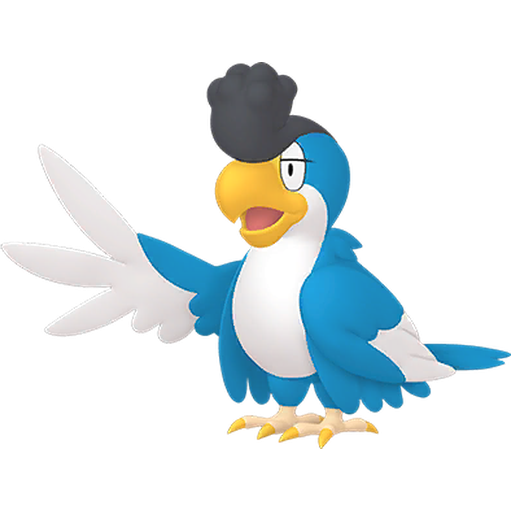
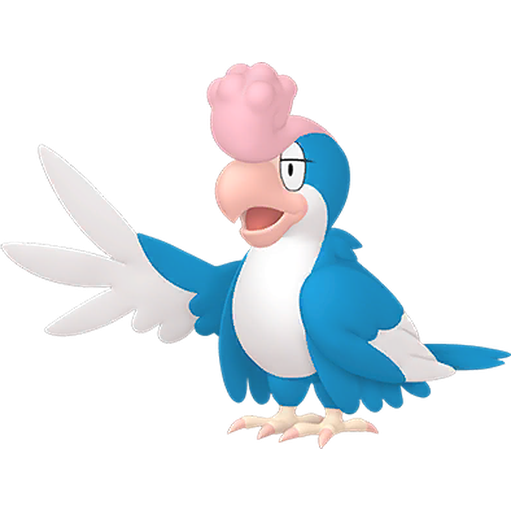
The blue plumage Squawkabilly maintains the characteristic avian morphology shared by all forms of the species, resembling a compact parrot with distinctly striking features. Its primary plumage displays a vibrant blue coloration across the majority of its body, while retaining the white feathering on its breast, abdomen, and wingtips that defines the entire species. The Pokémon possesses notably elongated side feathers that create the impression of wearing a flowing coat, paired with fluffier feathers adorning the back of its neck. Its most distinctive feature is the lumpy, pompadour-like black crest that runs across the top of its head, complementing its rounded yellow beak and characteristic lazy-eyed expression marked by dotted pupils. The blue form's feet are shaped in a zygodactyl arrangement—two toes each on the front and back—each equipped with a yellow claw, allowing for the precise grip necessary for perching and terrestrial movement.
Pokedex Numbers
Training
Breeding
Blue Plumage Squawkabilly Breeding, Gender Ratio & Egg Groups
Squawkabilly's blue plumage form maintains a perfectly balanced gender ratio of 50% male and 50% female individuals, allowing equal opportunity for either sex to be encountered in the wild or produced through breeding endeavors. The species belongs to the Flying egg group, meaning blue plumage Squawkabilly can breed with other members of this group to produce viable offspring, though breeding between different Squawkabilly forms produces offspring that may inherit any of the four color variants regardless of parental coloration. The incubation period for Squawkabilly eggs spans fifteen breeding cycles, equivalent to approximately 3,599 to 3,855 steps of travel with the egg in the player's party, making them relatively quick to hatch compared to many Generation IX Pokémon. The species exhibits a slow-then-very-fast growth rate pattern, meaning trainers will notice slower experience gains in early levels but accelerated progression as their Squawkabilly approaches higher levels, affecting the time investment required for breeding and training.
Sprites


TMs & HMs
tm02
lets go pikachu lets go eevee
tm03
lets go pikachu lets go eevee
tm05
lets go pikachu lets go eevee
tm06
sword shield
tm07
lets go pikachu lets go eevee
tm08
lets go pikachu lets go eevee
tm08
sword shield
tm09
yellow
tm09
red blue
tm09
sword shield
tm11
platinum
tm11
xd
tm95
sword shield
hm02
crystal
hm02
diamond pearl
hm02
heartgold soulsilver
tr42
sword shield
tm65
scarlet violet
tm10
blue japan
tm11
diamond pearl
+310 more TMs/HMs
Regional & Special Forms
Blue Plumage Squawkabilly also has 3 related forms: Green Plumage Squawkabilly, Yellow Plumage Squawkabilly and White Plumage Squawkabilly.
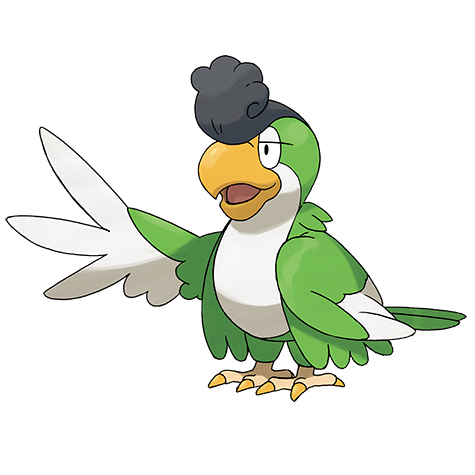
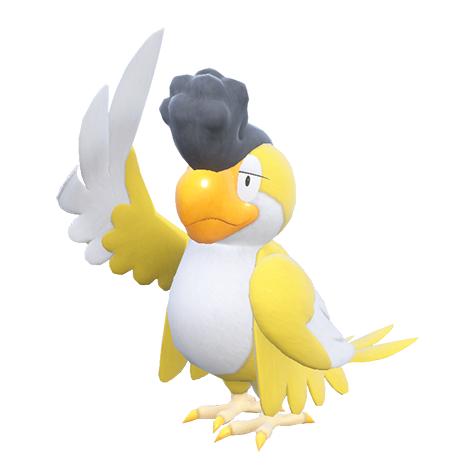
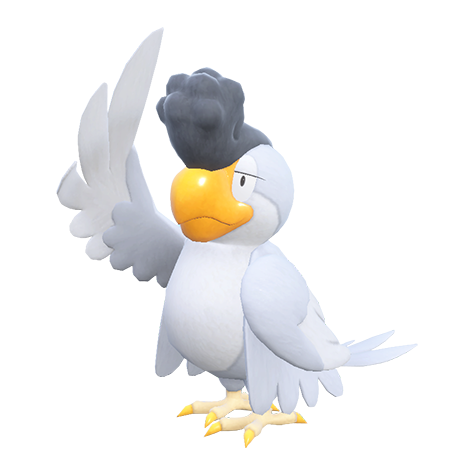
Blue Plumage Squawkabilly Evolution, Mega Evolution & Special Forms
Squawkabilly, including the blue plumage form, does not evolve into or from any other Pokémon species, existing as a standalone evolutionary line within the Generation IX Pokédex. The blue plumage variant is not a evolution but rather one of four permanent form variations, each with identical base statistics and movesets, though differing in their available abilities. Unlike Pokémon with mega evolutions or other transformation mechanics, Squawkabilly remains in its form throughout its lifespan, with the coloration determined either by capture circumstances in the wild or by breeding parameters. This design approach reflects the real-world biological concept of subspecific variation in parrot species, where plumage color represents stable inherited traits rather than developmental stages. Trainers seeking to expand their collection of Squawkabilly forms must catch multiple individuals from different flocks or breed Pokémon strategically to obtain each color variant.
Where to Find
Location data not available for this Pokémon in the database.
Blue Plumage Squawkabilly Behaviour and Natural Habitat
Blue plumage Squawkabilly exhibit the same exceptionally territorial and vocal nature as their color-variant cousins, though blue-feathered flocks occupy a distinct ecological and social niche within urban Paldean communities. These Pokémon demonstrate a pronounced sense of community and actively cooperate within their own color-based flocks, which can exceed fifty individuals, engaging in coordinated foraging and territorial defense against other plumage variants. According to Pokédex entries, while green-feathered flocks hold the greatest territorial sway in the region, blue flocks maintain significant presence and compete vigorously for dominance and resources. The blue form shares the species' strong preference for urban and city environments, where they conduct their most intensive foraging activities during morning and evening hours, creating considerable noise pollution that has become a defining characteristic of Paldean cityscapes. Their territorial disputes with other color forms are particularly intense and contribute to the dynamic social hierarchy within urban Squawkabilly populations.
Pokedex Entries
These Pokémon prefer to live in cities. They form flocks based on the color of their feathers, and they fight over territory.
Green-feathered flocks hold the most sway. When they’re out searching for food in the mornings and evenings, it gets very noisy.
Blue Plumage Squawkabilly Name Origin & Design Inspiration
The blue plumage Squawkabilly's name derives from the combination of 'squawk'—an onomatopoetic representation of the harsh, loud calls characteristic of parrots—and 'billy,' likely referencing the Billabong or the colloquial Australian term, though modern interpretations suggest a simple avian moniker. In its original Japanese designation as イキリンコ (Ikirinko), the name combines 'ikiru' (to live) and 'rinko' (apple), potentially referencing both the Pokémon's fruit-foraging behavior and its lively, spirited temperament. The blue plumage form's coloration draws inspiration from real-world parrots exhibiting blue or blue-dominant plumage patterns, such as various macaw species and Asian parrot varieties known for their vibrant azure feathering and aggressive territorial behaviors. The pompadour-like crest and lazy-eyed expression evoke a somewhat comedic, street-tough personality, while the white breast and wing-tips reflect authentic parrot anatomy patterns, grounding the design in zoological authenticity despite the Pokémon's fantastical nature.
Learnable Moves
Blue Plumage Squawkabilly can learn 47 moves:
Move | Type | Cat. | Power | Acc. | PP |
|---|---|---|---|---|---|
| aerial ace | flying | Physical | 60 | — | 20 |
| air cutter | flying | Special | 60 | 95 | 25 |
| air slash | flying | Special | 75 | 95 | 15 |
| brave bird | flying | Physical | 120 | 100 | 15 |
| copycat | normal | Status | — | — | 20 |
| double edge | normal | Physical | 120 | 100 | 15 |
| dual wingbeat | flying | Physical | 40 | 90 | 10 |
| endeavor | normal | Physical | — | 100 | 5 |
| endure | normal | Status | — | — | 10 |
| facade | normal | Physical | 70 | 100 | 20 |
| fake tears | dark | Status | — | 100 | 20 |
| feather dance | flying | Status | — | 100 | 15 |
| final gambit | fighting | Special | — | 100 | 5 |
| flatter | dark | Status | — | 100 | 15 |
| fly | flying | Physical | 90 | 95 | 15 |
| foul play | dark | Physical | 95 | 100 | 15 |
| fury attack | normal | Physical | 15 | 85 | 20 |
| giga impact | normal | Physical | 150 | 90 | 5 |
| growl | normal | Status | — | 100 | 40 |
| heat wave | fire | Special | 95 | 90 | 10 |
| helping hand | normal | Status | — | — | 20 |
| hurricane | flying | Special | 110 | 70 | 10 |
| hyper beam | normal | Special | 150 | 90 | 5 |
| hyper voice | normal | Special | 90 | 100 | 10 |
| lash out | dark | Physical | 75 | 100 | 5 |
| mimic | normal | Status | — | — | 10 |
| parting shot | dark | Status | — | 100 | 20 |
| peck | flying | Physical | 35 | 100 | 35 |
| pounce | bug | Physical | 50 | 100 | 20 |
| protect | normal | Status | — | — | 10 |
| quick attack | normal | Physical | 40 | 100 | 30 |
| rest | psychic | Status | — | — | 5 |
| reversal | fighting | Physical | — | 100 | 15 |
| roost | flying | Status | — | — | 5 |
| scary face | normal | Status | — | 100 | 10 |
| sleep talk | normal | Status | — | — | 10 |
| substitute | normal | Status | — | — | 10 |
| sunny day | fire | Status | — | — | 5 |
| swagger | normal | Status | — | 85 | 15 |
| tailwind | flying | Status | — | — | 15 |
| take down | normal | Physical | 90 | 85 | 20 |
| taunt | dark | Status | — | 100 | 20 |
| tera blast | normal | Special | 80 | 100 | 10 |
| thief | dark | Physical | 60 | 100 | 25 |
| torment | dark | Status | — | 100 | 15 |
| u turn | bug | Physical | 70 | 100 | 20 |
| uproar | normal | Special | 90 | 100 | 10 |
Blue Plumage Squawkabilly Competitive Battle Guide
From a competitive standpoint, the blue plumage Squawkabilly serves as an aggressive physical attacker, leveraging its base 96 Attack and respectable base 92 Speed to threaten opponents before they can respond. The species possesses three distinct abilities tailored to different competitive strategies: Intimidate immediately reduces opposing Pokémon's Attack upon entry, Hustle boosts physical move power to 1.5× at the cost of reduced accuracy, and the hidden ability Guts, which amplifies Attack to 1.5× when afflicted with a major status condition. These ability options make blue Squawkabilly flexible in team composition, capable of filling roles ranging from aggressive sweeper to defensive status support. However, the form's relatively low defenses (51 Defense, 51 Special Defense) and poor special attack stat (45 Special Attack) limit its longevity in extended battles, making it best suited for early-game advantages or dedicated physical-focused team structures. Its Normal/Flying typing grants it immunity to Ground-type moves and resistance to Fighting and Grass-type attacks, while leaving it vulnerable to Rock and Electric-type moves, factors that intelligent team builders must account for when deploying blue Squawkabilly.
Commonly Asked Questions About Blue Plumage Squawkabilly
What type is Blue Plumage Squawkabilly?
Blue Plumage Squawkabilly is a normal and flying type Pokemon.
What does Blue Plumage Squawkabilly evolve into?
Blue Plumage Squawkabilly does not evolve.
What are Blue Plumage Squawkabilly's weaknesses?
Blue Plumage Squawkabilly is weak to rock, electric and ice type moves.
Blue Plumage Squawkabilly Cultural Impact & Franchise History
While Squawkabilly itself emerged only in Generation IX, its blue plumage form has become particularly iconic within the Paldea region's cultural landscape, featured prominently in Scarlet and Violet's urban environments as an ever-present urban soundscape element. The species represents a modern take on region-specific Pokémon that interact with human civilization rather than existing in pristine wilderness, resonating with contemporary players who appreciate urban ecology concepts in game design. The territorial faction dynamics between different color forms—with green flocks holding dominance and blue flocks as secondary powers—created compelling worldbuilding that influenced subsequent Pokémon media and fan discussions about ecological hierarchy and competitive coexistence. The blue form's striking coloration and combative personality have generated substantial fan art and discussion communities focused on the aesthetic and behavioral differences between variants. In the greater Pokémon franchise, Squawkabilly's form system influenced design philosophies for subsequent Generation IX Pokémon and demonstrated renewed developer interest in cosmetic form variation as an alternative to traditional evolution mechanics.
Where to Find Blue Plumage Squawkabilly in Every Pokémon Game
Blue plumage Squawkabilly can be encountered in the wild throughout Pokémon Scarlet and Violet, with availability concentrated in urban and city environments across the Paldea region, including towns, cities, and developed areas where they form distinct territorial flocks. The species maintains a respectable catch rate of 190, making it reasonably accessible to trainers even without specialized capture items, though the specific plumage form encountered is determined by the location's flock territory, requiring travel to different urban centers to encounter the blue variant consistently. Base happiness begins at 50, indicating that captured blue Squawkabilly require some investment in bonding to reach optimal friendship levels for various in-game benefits. The species is assigned the local Pokédex number #0113 in Scarlet and Violet, placing it within the early-to-mid game encounter windows where trainers actively build their core teams. Additionally, blue plumage Squawkabilly can be obtained through breeding when two compatible Pokémon produce eggs that randomly inherit any of the four form variations, allowing dedicated players to assemble complete form collections through controlled breeding programs at Pokémon breeding facilities throughout the Paldea region.