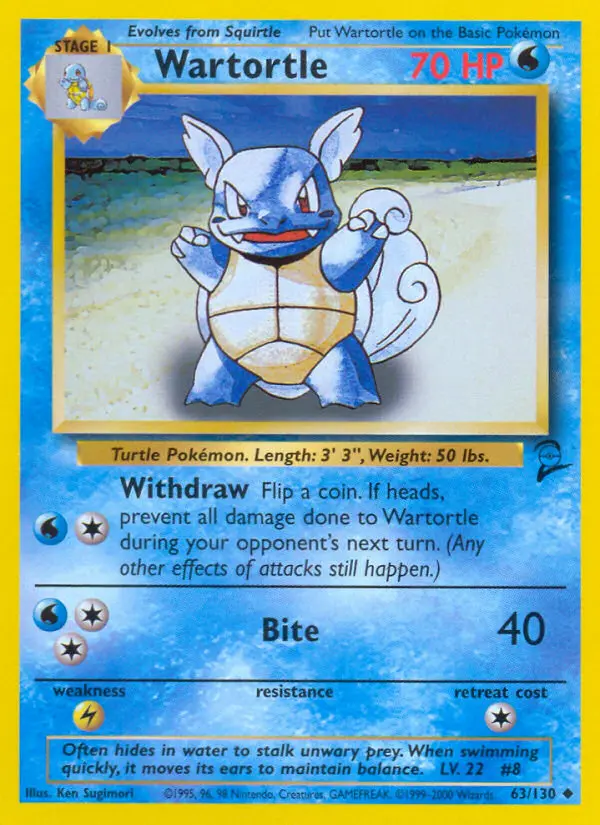
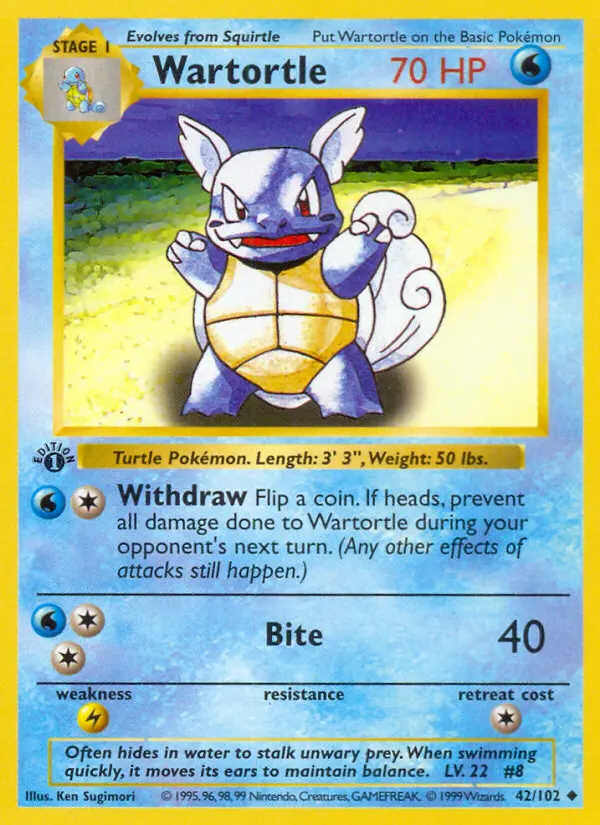
Wartortle
Generation I · #0008 — Turtle Pokémon
Wartortle, known as the Turtle Pokémon, is the second stage evolution in one of the most iconic starter lines in the entire Pokémon franchise. This Water-type Pokémon evolves from Squirtle at level 16 and serves as the intermediate form before its final evolution into the powerhouse Blastoise at level 36. With a National Pokédex number of #008, Wartortle maintains the classic blue coloration of its evolutionary line while developing distinctive new features that set it apart from both its pre-evolution and evolution. Its base stats total 405, with notable strengths in Defense and Special Defense, both sitting at a respectable 80, making it a more defensively oriented middle evolution. The species has maintained consistent characteristics across all generations since its introduction in Generation I, though various improvements to mechanics and move pools have enhanced its viability over the decades.
Editor's Take
Wartortle is the middle stage nobody thinks about, which is unfair — it's the point in the Squirtle line where the defensive stat spread that defines Blastoise actually starts showing up.
Base Stats
Height
1.0m
Weight
22.5kg
Category
Turtle Pokémon
Gender
Male 87.5% / Female 12.5%
Color
blue
Shape
upright
Habitat
waters-edge
Abilities
Strengthens water moves to inflict 1.5× damage at 1/3 max HP or less.
Heals for 1/16 max HP after each turn during rain.

Wartortle Biology & Physical Characteristics
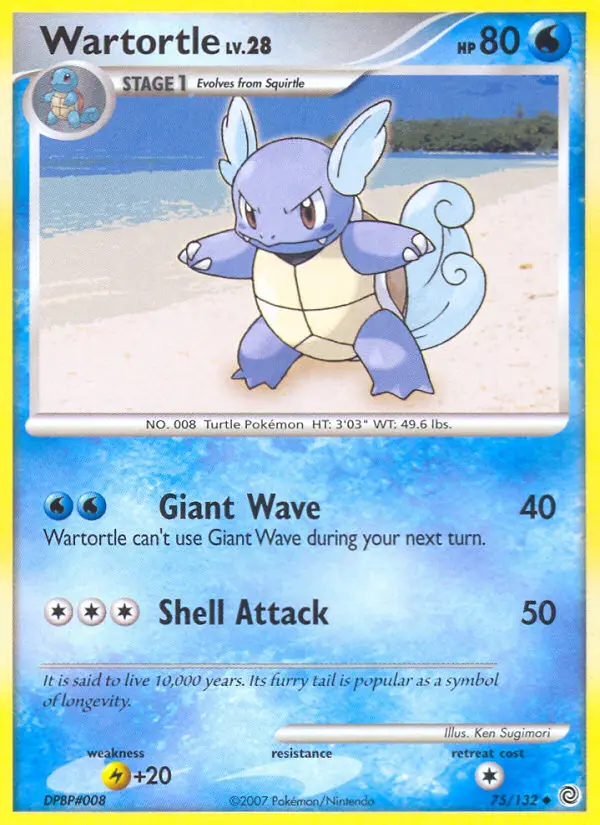
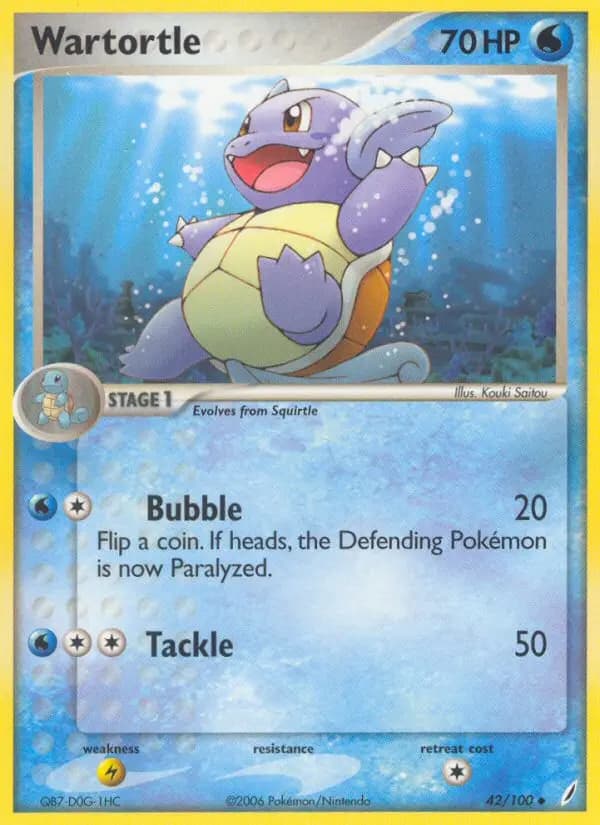
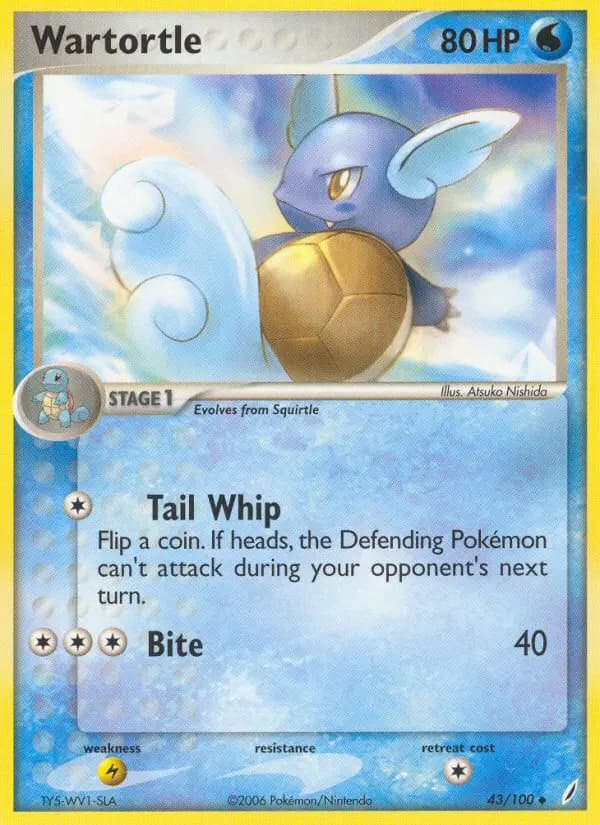
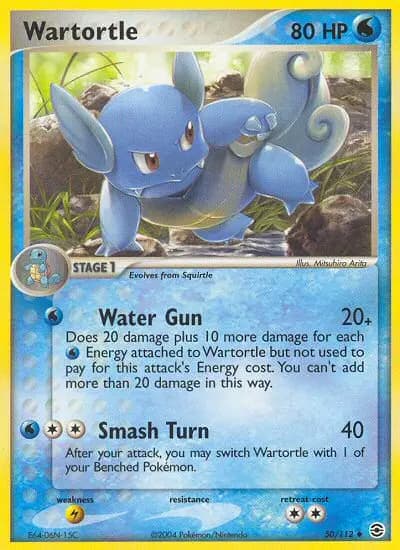
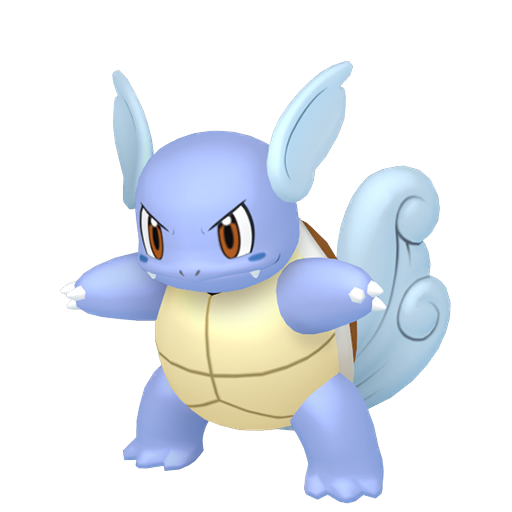
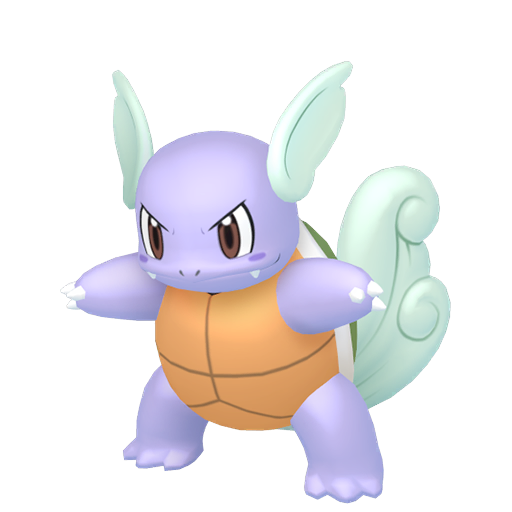
Wartortle is a bipedal, indigo-hued reptilian Pokémon that displays a clear progression from its pre-evolution Squirtle. The most striking feature distinguishing Wartortle from Squirtle is its prominent pair of feather-like ears covered in pale blue fur that protrude from the sides of its head, which it uses to maintain balance while swimming. Its most iconic characteristic is its thick, wavy tail protruding from the bottom of its shell, also covered in light blue fur that darkens with age—a trait that becomes increasingly deeper in color as the Wartortle matures, creating visible markers of its age and experience. The Pokémon possesses a brown shell with a pale yellow underside separated by a distinctive thick white rim, and its face features brown eyes, a dark blue streak on each cheek, and two sharp teeth protruding from its upper jaw. Its three-clawed fingers and pointed toes provide grip for both terrestrial and aquatic movement. According to Pokédex entries, an older Wartortle may accumulate scars and algae on its shell as evidence of its toughness as a battler, with some specimens living as long as 10,000 years.
Pokedex Numbers
Training
Breeding
Wartortle Breeding, Gender Ratio & Egg Groups
Wartortle follows the gender distribution found throughout the Squirtle line, with approximately 87.5% of the species being male and 12.5% being female, making female specimens notably rarer in the wild. Both males and females belong to the Monster and Water 1 egg groups, allowing for diverse breeding possibilities with compatible Pokémon. The species has a base happiness value of 70, indicating a reasonably friendly disposition toward trainers, though this varies based on individual treatment and experience. Wartortle has a hatch counter of 20 cycles, translating to approximately 4,884 to 5,140 steps for an egg to hatch, making it a moderate investment for breeders seeking to obtain Squirtle line specimens. The growth rate is classified as medium-slow, meaning it requires moderately high experience gains to reach higher levels compared to fast-growing Pokémon, but less than slow-growing species like Dragonite. When breeding Wartortle or eggs from the species, trainers should note that offspring from a female Wartortle will have a significantly higher chance of inheriting the Water 1 egg group traits, and any moves learned through breeding can provide competitive advantages that wouldn't be available through normal leveling.
Sprites




TMs & HMs
tm00
sword shield
tm01
yellow
tm01
gold silver
tm01
crystal
tm01
red blue
tm01
platinum
tm01
emerald
tm01
diamond pearl
tm01
firered leafgreen
tm01
ruby sapphire
tm01
xd
tm01
colosseum
tm01
heartgold soulsilver
tm01
lets go pikachu lets go eevee
tm01
ultra sun ultra moon
tm01
sun moon
tm01
blue japan
tm01
red green japan
tm01
sword shield
tm02
crystal
+684 more TMs/HMs
Wartortle's Evolution Chain


Wartortle Evolution, Mega Evolution & Special Forms
Wartortle occupies a crucial middle position in the Squirtle evolutionary line, serving as the bridge between the small, defensively-oriented Squirtle and the heavily armed Blastoise. The evolution from Squirtle occurs at level 16, marking a significant growth phase where the Pokémon develops its characteristic ears and tail while its shell expands further. At level 36, Wartortle undergoes its final evolution into Blastoise, a dramatic transformation that equips it with cannons protruding from its shell and dramatically increases its offensive capabilities, particularly its Special Attack stat. This progression follows a clear defensive-to-offensive trajectory, with Wartortle representing a balanced intermediate stage. The species' base stats reflect this position: while maintaining strong Defense and Special Defense values of 80 each, its Attack (63) and Special Attack (65) are merely moderate, suggesting that trainers using Wartortle should focus on its defensive capabilities until evolution provides the firepower needed for competitive battling. The evolutionary line as a whole remains one of the most beloved starter progressions in Pokémon history, with Wartortle serving an important role in both casual play and competitive scenarios.
Where to Find
Location data not available for this Pokémon in the database.
Wartortle Behaviour and Natural Habitat
Wartortle is known for its predatory behavior, often hiding in water to stalk unwary prey before striking with precision. Its furry ears and tail serve as sophisticated balancing mechanisms, allowing it to move with surprising grace through aquatic environments despite being larger and heavier than its pre-evolution. The species demonstrates intelligence in how it positions itself in water, using controlled movements of its ears and tail to maintain equilibrium while swimming at considerable speeds. This Pokémon is notably popular as a pet, though it requires appropriate aquatic habitats to thrive. Its preference for remaining in water is so pronounced that it can be difficult for Wartortle to maintain balance on land, suggesting it has adapted primarily for an aquatic lifestyle. The long, furry tail has earned Wartortle significant cultural recognition, particularly among older individuals who view the appendage as a symbol of longevity and good fortune, making the species a popular companion among elderly trainers and in regions where such symbolism holds cultural weight.
Pokedex Entries
Often hides in water to stalk unwary prey. For swimming fast, it moves its ears to maintain balance.
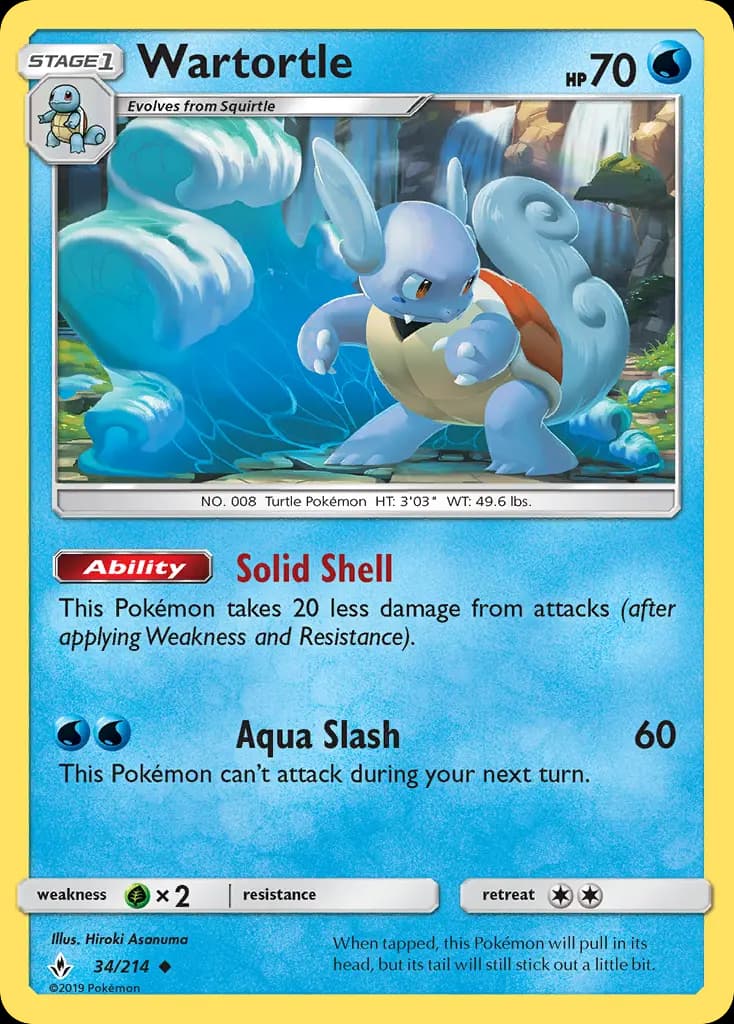
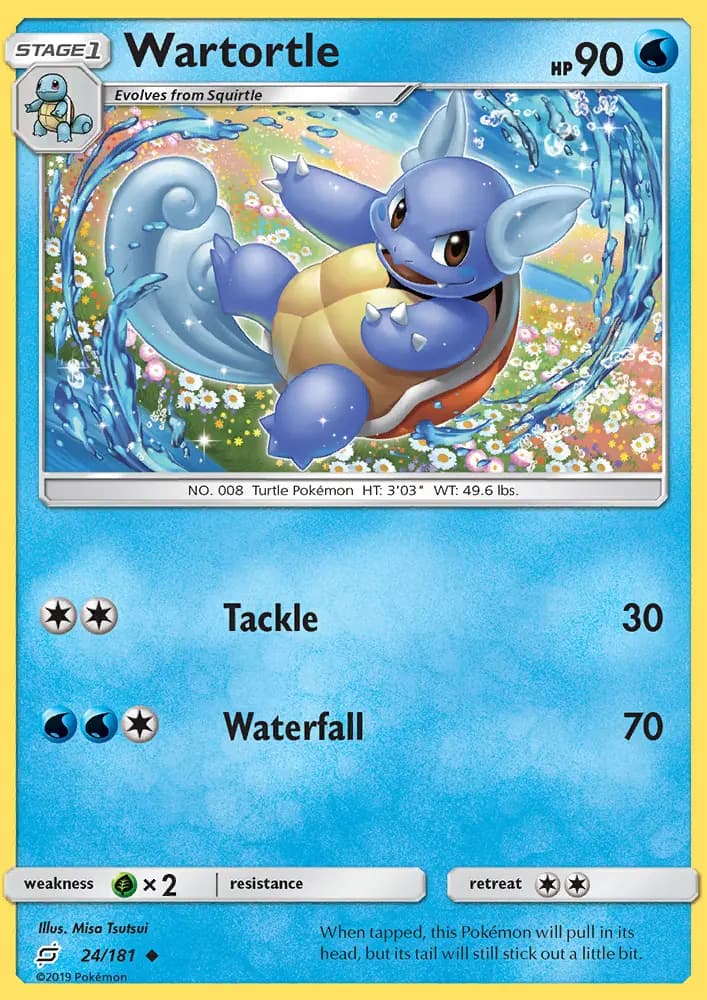
When tapped, this POKéMON will pull in its head, but its tail will still stick out a little bit.
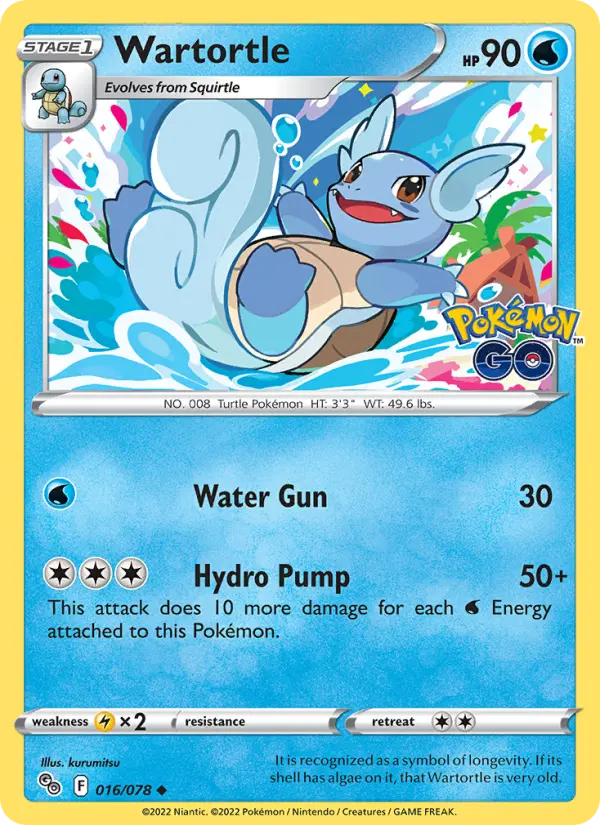
It is recognized as a symbol of longevity. If its shell has algae on it, that WARTORTLE is very old.
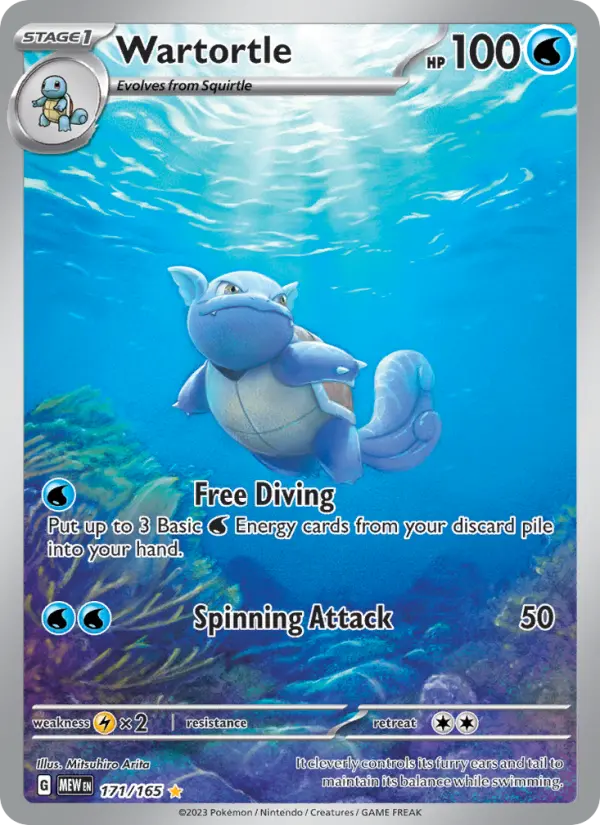
It cleverly con trols its furry ears and tail to maintain its balance while swimming.
Its long, furry tail is a symbol of longevity, making it quite popular among older people.
Its tail is large and covered with a rich, thick fur. The tail becomes increasingly deeper in color as WARTORTLE ages. The scratches on its shell are evidence of this POKéMON’s toughness as a battler.
Its large tail is covered with rich, thick fur that deepens in color with age. The scratches on its shell are evidence of this POKéMON’s toughness in battle.
This POKéMON is very popular as a pet. Its fur-covered tail is a symbol of its longevity.
It often hides in water to stalk unwary prey. For fast swimming, it moves its ears to maintain balance.
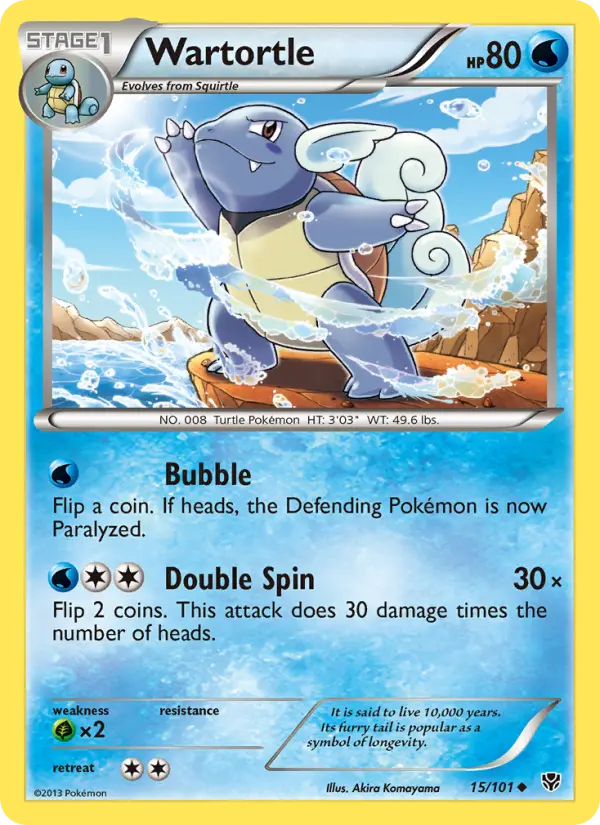
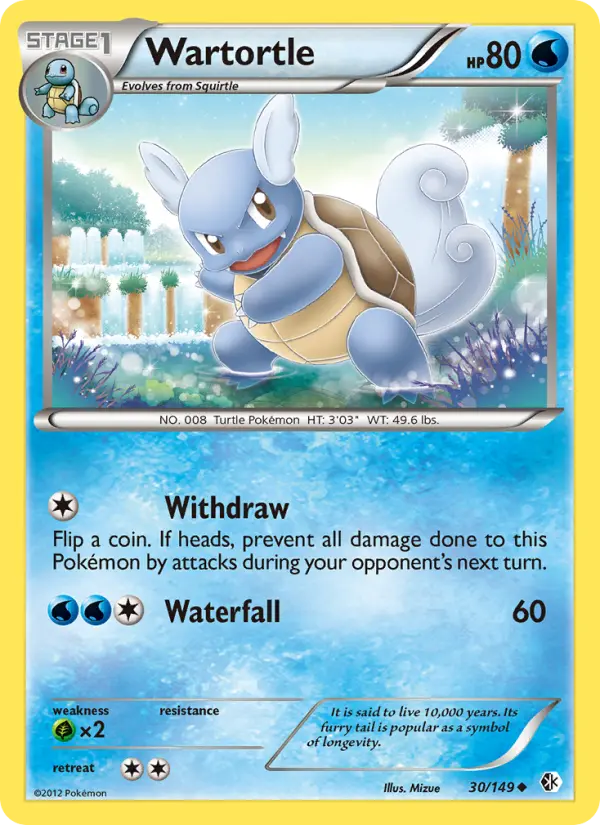
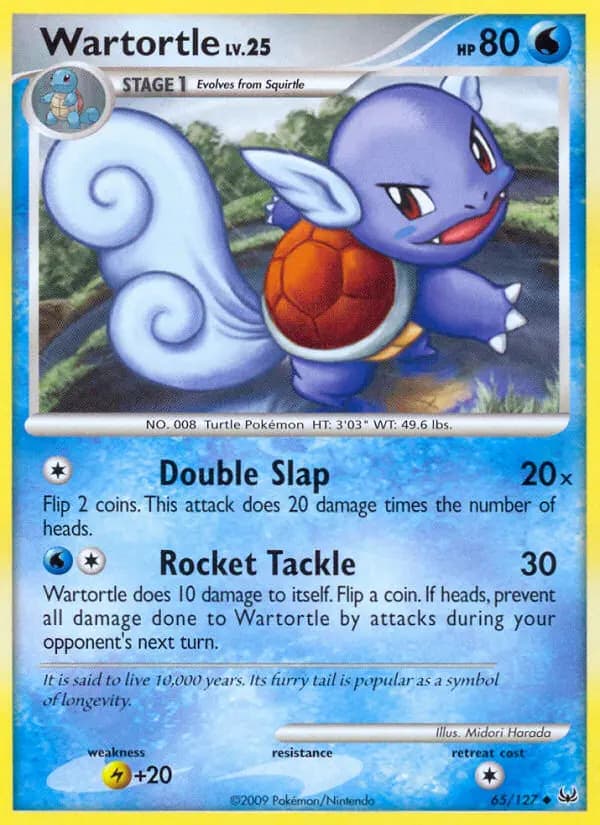
It is said to live 10,000 years. Its furry tail is popular as a symbol of longevity.
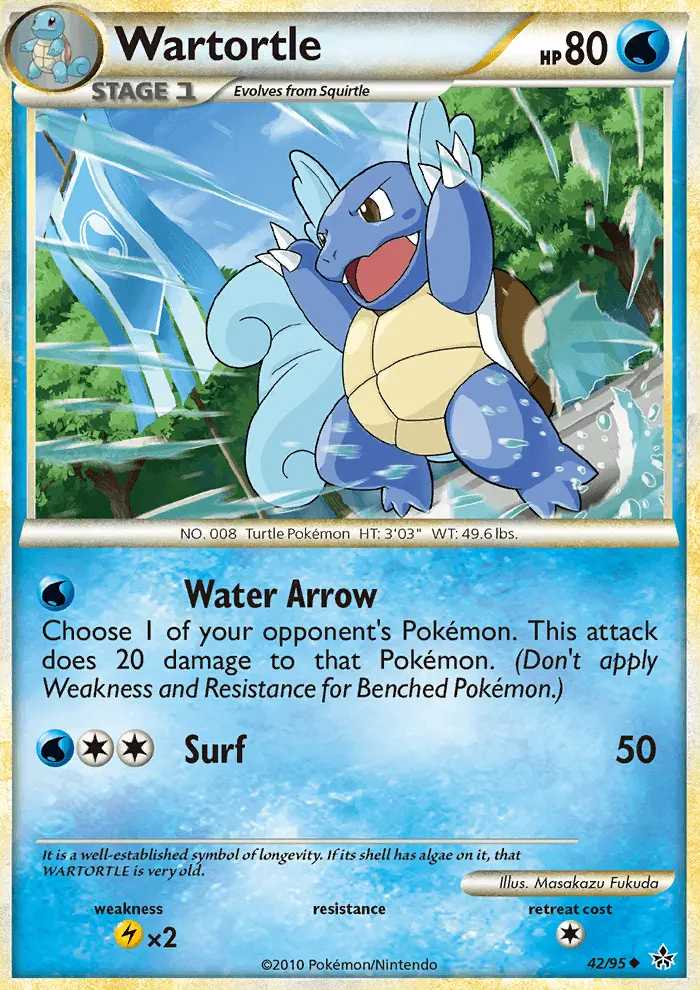
It is a well-established symbol of longevity. If its shell has algae on it, that WARTORTLE is very old.
It cleverly controls its furry ears and tail to maintain its balance while swimming.
It is said to live 10,000 years. Its furry tail is popular as a symbol of longevity.
It is said to live 10,000 years. Its furry tail is popular as a symbol of longevity.
When tapped, this Pokémon will pull in its head, but its tail will still stick out a little bit.
It is said to live 10,000 years. Its furry tail is popular as a symbol of longevity.
Its tail is large and covered with a rich, thick fur. The tail becomes increasingly deeper in color as Wartortle ages. The scratches on its shell are evidence of this Pokémon’s toughness as a battler.
When tapped on its head, this Pokémon will pull it in, but its tail will still stick out a little bit.
It is recognized as a symbol of longevity. If its shell has algae on it, that Wartortle is very old.
It cleverly controls its furry ears and tail to maintain its balance while swimming.
Wartortle Name Origin & Design Inspiration
Wartortle's name traces back to a combination of 'wart' and 'turtle,' reflecting the bumpy, battle-worn appearance that develops on mature specimens' shells. The Japanese name, Kameil (カメール), combines 'kame' (turtle) with a suffix suggesting a middle or intermediate stage, perfectly capturing its position in the evolutionary line. The design philosophy behind Wartortle represents an intentional transition in aesthetic and capability: while Squirtle is cute and compact, Wartortle develops more pronounced features that suggest maturity and increased combat experience. The feather-like ears were specifically designed to provide visual interest while serving functional purposes in the Pokémon's biology, creating a distinctive silhouette that immediately distinguishes it from other Water-type Pokémon. The prominent tail, particularly its ability to darken with age, was carefully crafted to reflect the Pokémon's lifespan and experience level, allowing trainers to visually gauge the relative age of individual specimens. This design choice has made Wartortle's tail one of the most recognizable features in the entire Pokémon franchise, contributing to its lasting appeal and cultural significance across multiple generations.
Learnable Moves
Wartortle can learn 90 moves:
Move | Type | Cat. | Power | Acc. | PP |
|---|---|---|---|---|---|
| attract | normal | Status | — | 100 | 15 |
| bide | normal | Physical | — | — | 10 |
| bite | dark | Physical | 60 | 100 | 25 |
| blizzard | ice | Special | 110 | 70 | 5 |
| body slam | normal | Physical | 85 | 100 | 15 |
| brick break | fighting | Physical | 75 | 100 | 15 |
| brine | water | Special | 65 | 100 | 10 |
| bubble | water | Special | 40 | 100 | 30 |
| bubble beam | water | Special | 65 | 100 | 20 |
| chilling water | water | Special | 50 | 100 | 20 |
| confide | normal | Status | — | — | 20 |
| counter | fighting | Physical | — | 100 | 20 |
| curse | ghost | Status | — | — | 10 |
| defense curl | normal | Status | — | — | 40 |
| dig | ground | Physical | 80 | 100 | 10 |
| dive | water | Physical | 80 | 100 | 10 |
| double team | normal | Status | — | — | 15 |
| double edge | normal | Physical | 120 | 100 | 15 |
| dynamic punch | fighting | Physical | 100 | 50 | 5 |
| endure | normal | Status | — | — | 10 |
| facade | normal | Physical | 70 | 100 | 20 |
| fake out | normal | Physical | 40 | 100 | 10 |
| false swipe | normal | Physical | 40 | 100 | 40 |
| flail | normal | Physical | — | 100 | 15 |
| fling | dark | Physical | — | 100 | 10 |
| flip turn | water | Physical | 60 | 100 | 20 |
| focus punch | fighting | Physical | 150 | 100 | 20 |
| frustration | normal | Physical | — | 100 | 20 |
| gyro ball | steel | Physical | — | 100 | 5 |
| hail | ice | Status | — | — | 10 |
| haze | ice | Status | — | — | 30 |
| headbutt | normal | Physical | 70 | 100 | 15 |
| helping hand | normal | Status | — | — | 20 |
| hidden power | normal | Special | 60 | 100 | 15 |
| hydro pump | water | Special | 110 | 80 | 5 |
| ice beam | ice | Special | 90 | 100 | 10 |
| ice punch | ice | Physical | 75 | 100 | 15 |
| ice spinner | ice | Physical | 80 | 100 | 15 |
| icy wind | ice | Special | 55 | 95 | 15 |
| iron defense | steel | Status | — | — | 15 |
| iron tail | steel | Physical | 100 | 75 | 15 |
| life dew | water | Status | — | — | 10 |
| liquidation | water | Physical | 85 | 100 | 10 |
| mega kick | normal | Physical | 120 | 75 | 5 |
| mega punch | normal | Physical | 80 | 85 | 20 |
| mimic | normal | Status | — | — | 10 |
| mirror coat | psychic | Special | — | 100 | 20 |
| mist | ice | Status | — | — | 30 |
| mud shot | ground | Special | 55 | 95 | 15 |
| mud slap | ground | Special | 20 | 100 | 10 |
| natural gift | normal | Physical | — | 100 | 15 |
| outrage | dragon | Physical | 120 | 100 | 10 |
| power up punch | fighting | Physical | 40 | 100 | 20 |
| protect | normal | Status | — | — | 10 |
| rage | normal | Physical | 20 | 100 | 20 |
| rain dance | water | Status | — | — | 5 |
| rapid spin | normal | Physical | 50 | 100 | 40 |
| reflect | psychic | Status | — | — | 20 |
| rest | psychic | Status | — | — | 5 |
| return | normal | Physical | — | 100 | 20 |
| rock slide | rock | Physical | 75 | 90 | 10 |
| rock smash | fighting | Physical | 40 | 100 | 15 |
| rollout | rock | Physical | 30 | 90 | 20 |
| round | normal | Special | 60 | 100 | 15 |
| scald | water | Special | 80 | 100 | 15 |
| secret power | normal | Physical | 70 | 100 | 20 |
| seismic toss | fighting | Physical | — | 100 | 20 |
| shell smash | normal | Status | — | — | 15 |
| skull bash | normal | Physical | 130 | 100 | 10 |
| sleep talk | normal | Status | — | — | 10 |
| snore | normal | Special | 50 | 100 | 15 |
| strength | normal | Physical | 80 | 100 | 15 |
| submission | fighting | Physical | 80 | 80 | 20 |
| substitute | normal | Status | — | — | 10 |
| surf | water | Special | 90 | 100 | 15 |
| swagger | normal | Status | — | 85 | 15 |
| tackle | normal | Physical | 40 | 100 | 35 |
| tail whip | normal | Status | — | 100 | 30 |
| take down | normal | Physical | 90 | 85 | 20 |
| tera blast | normal | Special | 80 | 100 | 10 |
| toxic | poison | Status | — | 90 | 10 |
| water gun | water | Special | 40 | 100 | 25 |
| water pledge | water | Special | 80 | 100 | 10 |
| water pulse | water | Special | 60 | 100 | 20 |
| waterfall | water | Physical | 80 | 100 | 15 |
| wave crash | water | Physical | 120 | 100 | 10 |
| whirlpool | water | Special | 35 | 85 | 15 |
| withdraw | water | Status | — | — | 40 |
| work up | normal | Status | — | — | 30 |
| yawn | normal | Status | — | — | 10 |
Wartortle Competitive Battle Guide
Looking at its competitive profile, Wartortle occupies an interesting niche as a defensive Water-type that can function effectively in lower-tier formats and casual play. Its base Defense and Special Defense values of 80 each provide solid defensive coverage, though its overall stat distribution of 405 places it below the power threshold preferred in official competitive formats. The species possesses the ability Torrent, which strengthens Water-type moves to 1.5× their damage output when Wartortle's health drops to one-third of its maximum HP or lower, providing a potential comeback mechanism in desperate situations. Its hidden ability Rain Dish offers strategic flexibility by healing Wartortle for 1/16 of its maximum HP each turn during rain, enabling weather-based strategies that were particularly relevant in rain-heavy team compositions during certain metagame eras. Wartortle's movepool includes access to moves like Hydro Pump, Ice Beam, Surf, and Aqua Jet through various means, providing offensive options despite its moderate Special Attack stat of 65. In practice, most competitive players utilize Wartortle primarily in lower-tier competitive formats like PU (PicoUber) or as a stepping stone toward Blastoise evolution. However, trainers seeking to use Wartortle as a finished product should consider weather-based teams that leverage Rain Dish, or defensive pivot roles that capitalize on its balanced defensive typing and respectable bulkiness.
Commonly Asked Questions About Wartortle
What type is Wartortle?
Wartortle is a water type Pokemon.
What does Wartortle evolve into?
Wartortle evolves into blastoise.
What are Wartortle's weaknesses?
Wartortle is weak to grass and electric type moves.
Does Wartortle evolve by trading?
No — Wartortle evolves entirely through leveling up, with no trade required at any stage.
Wartortle Cultural Impact & Franchise History
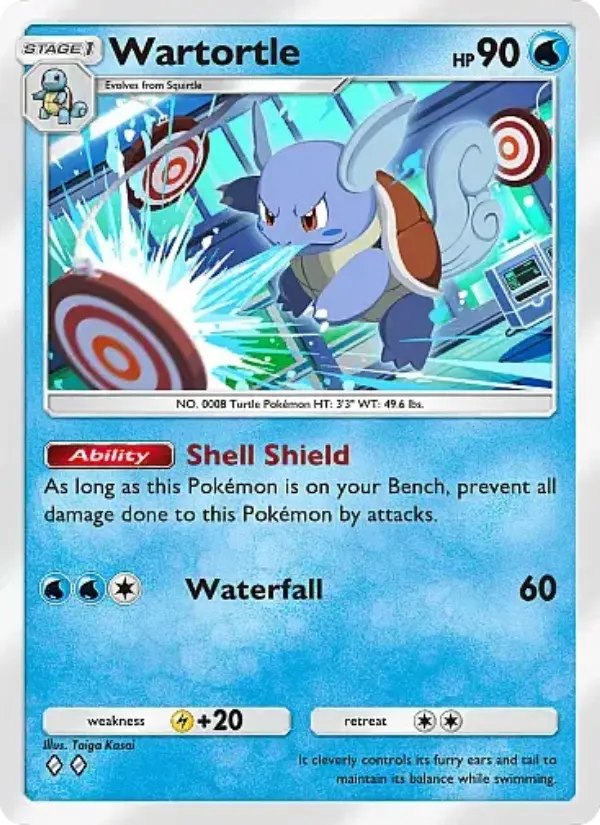
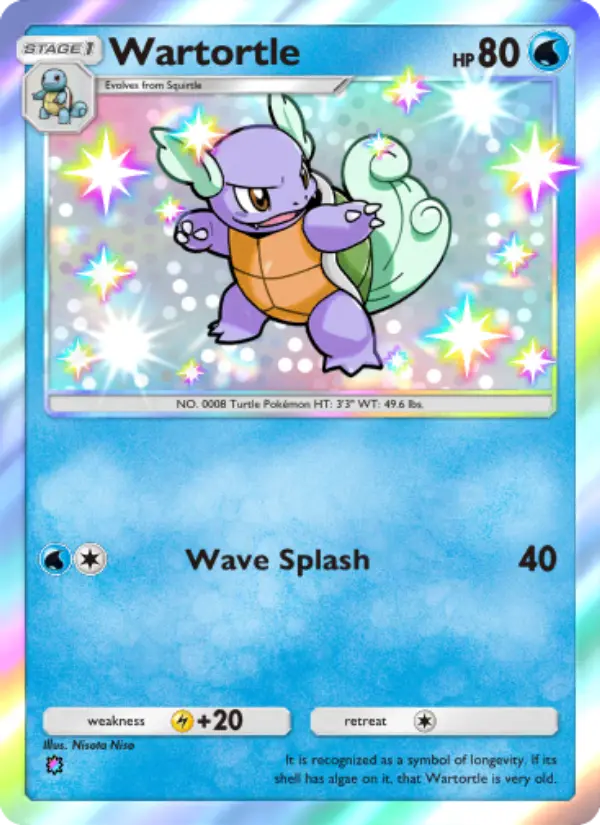
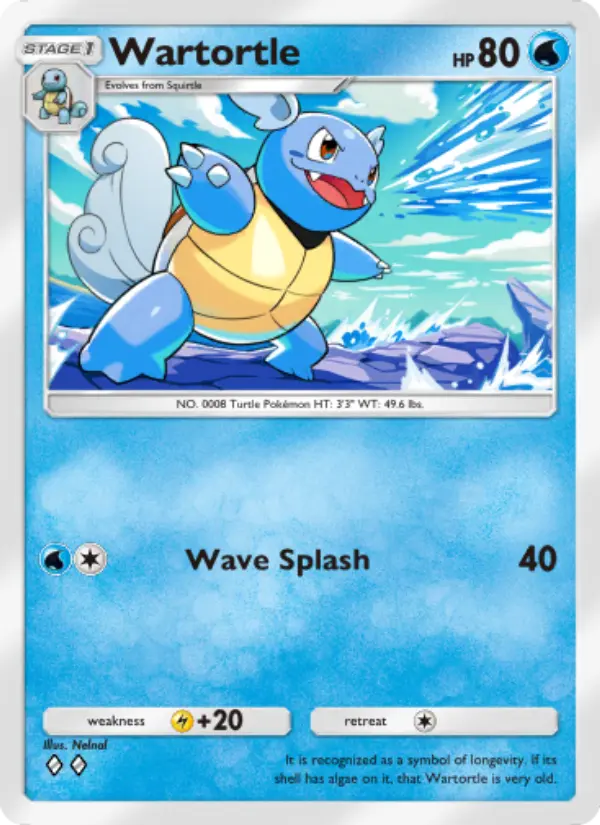
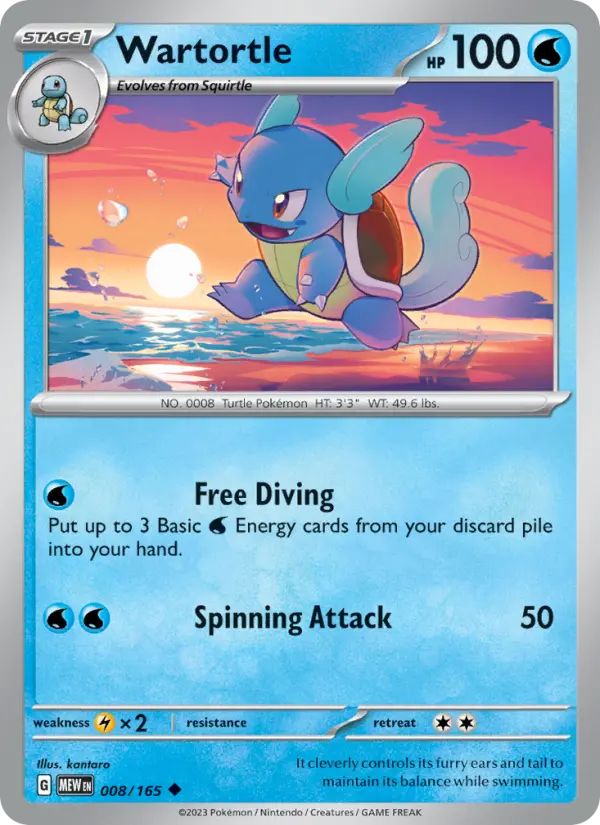
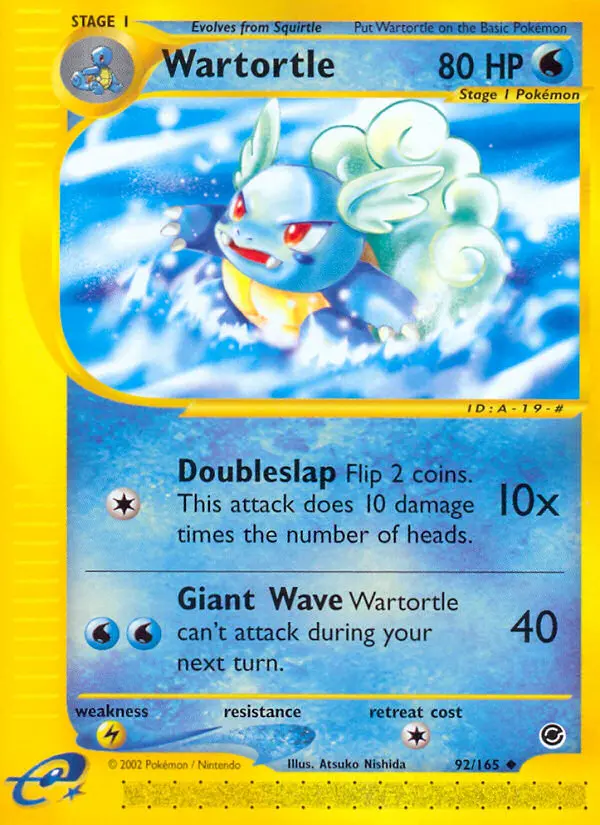
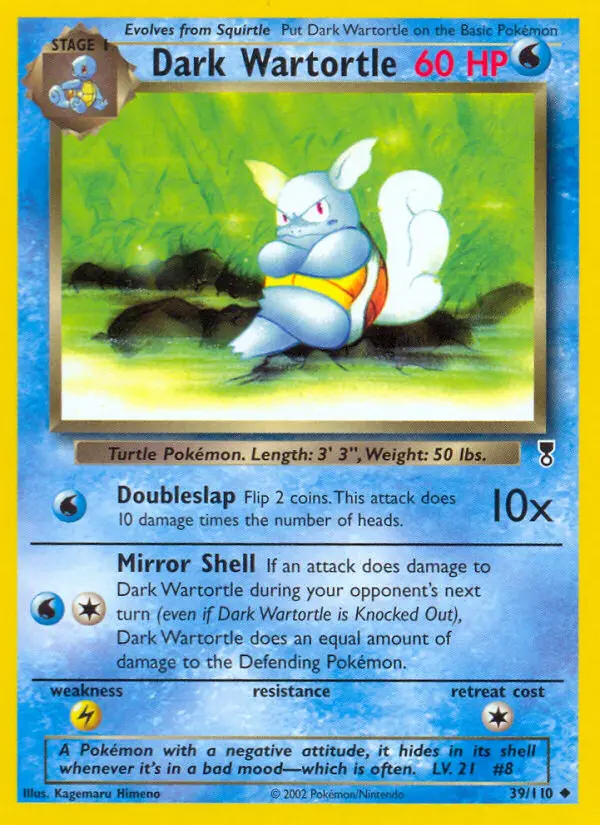
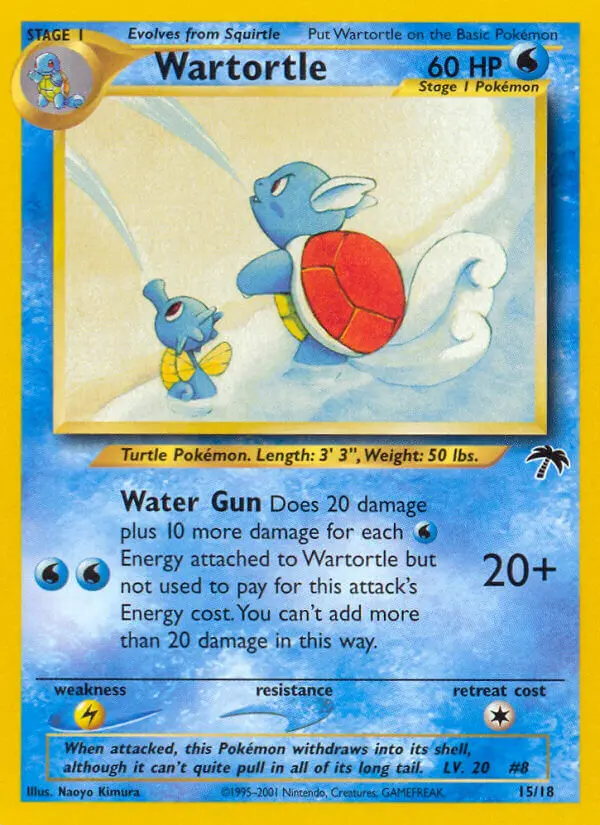
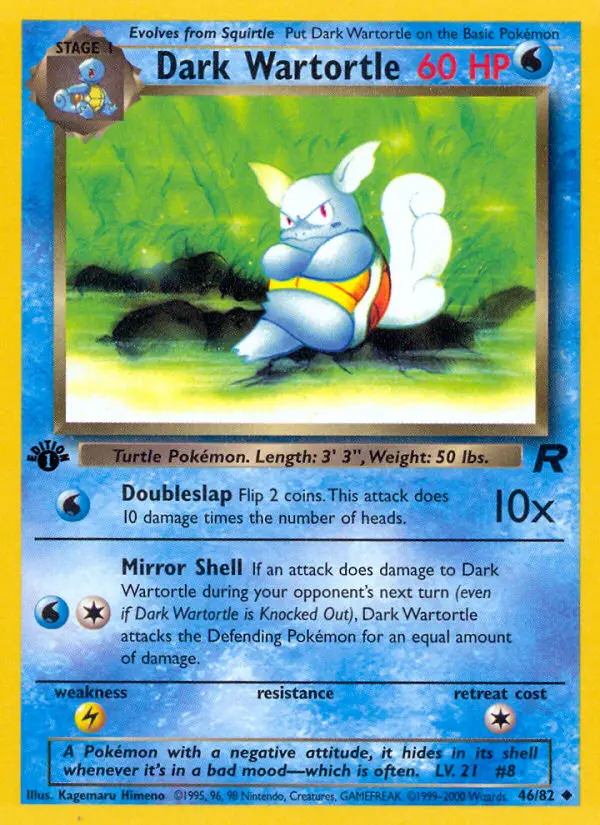
Wartortle has secured a significant position in Pokémon culture extending far beyond its role as a starter evolution, becoming one of the most recognizable and beloved Water-type Pokémon among fans worldwide. The species achieved particular prominence through its appearances in the animated series, where it appeared as part of Team Wartortle and as May's reliable Pokémon companion, introducing millions of viewers to its endearing personality and battle capabilities. The design's success is evident in its widespread merchandising appeal, with Wartortle appearing on countless trading cards, plushes, and collectibles throughout the Pokémon Trading Card Game's history. Its cultural significance within Japanese traditions deserves particular note: the long, furry tail symbolizing longevity and good fortune has resonated strongly with audiences in regions where such symbolism holds historical weight, contributing to its popularity among older trainers and in cultural contexts valuing tradition and lifespan. The species represents a crucial link in one of Pokémon's most iconic evolutionary lines, and its balanced blend of cute and battle-hardened characteristics has made it a gateway Pokémon for many players discovering competitive mechanics for the first time. Wartortle's presence in spin-off games, merchandise, and fan communities demonstrates its lasting cultural footprint that continues to attract new fans decades after its original introduction.
Where to Find Wartortle in Every Pokémon Game
Wartortle remains widely available across the entire Pokémon game franchise, appearing in virtually every generation since its introduction in Generation I. Players can obtain Wartortle through the standard method of evolving Squirtle at level 16, with Squirtle itself being available as a starter choice in most main-series games including Red, Blue, Yellow, FireRed, LeafGreen, HeartGold, SoulSilver, X, Y, Omega Ruby, Alpha Sapphire, and the newer Let's Go Pikachu and Let's Go Eevee titles. The species has received expanded availability options throughout its history, appearing in wild encounters in specific areas of certain games and through various in-game trade opportunities. In Pokémon Sword and Shield's DLC expansions, Wartortle appears in both The Isle of Armor and The Indigo Disk post-game content, making it accessible to modern players seeking classic Generation I Pokémon. The catch rate of 45 makes wild Wartortle captures moderately challenging but achievable with standard Poké Balls when encountered at appropriate health levels. Competitive players and casual collectors can also obtain Wartortle through the Pokémon Home transfer system, which allows migration from older games and provides cross-generational availability. The species' consistent availability across decades of Pokémon games underscores its importance to the franchise, ensuring that new and veteran trainers alike can reliably add this beloved Turtle Pokémon to their teams regardless of which game generation they prefer.