Zubat
Generation I · #0041 — Bat Pokémon
At 0.8 m and 7.5 kg, Zubat doesn't look like much on paper, but its inner focus ability shapes how it actually plays more than its size suggests. It measures 0.8 m and 7.5 kg, dimensions that pair with that stat lean in noticeable ways. Its widespread availability and early evolution into the more formidable Golbat at level 22 make it a frequent companion for trainers exploring dark caverns and underground passages. With a remarkable catch rate of 255, Zubat is among the easiest Pokémon to catch, making it an accessible starter option for many players. The species' unique biological adaptations and role in cave ecosystems have made it a fascinating subject of study within Pokémon lore.
Editor's Take
Zubat is the Pokémon most players have encountered the highest number of times and the fewest players have ever used, and Crobat being genuinely good is a punchline nobody expects.
Base Stats
Height
0.8m
Weight
7.5kg
Category
Bat Pokémon
Gender
Male 50% / Female 50%
Color
purple
Shape
wings
Habitat
cave
Abilities
Prevents flinching.
Bypasses light screen, reflect, and safeguard.

Zubat Biology & Physical Characteristics
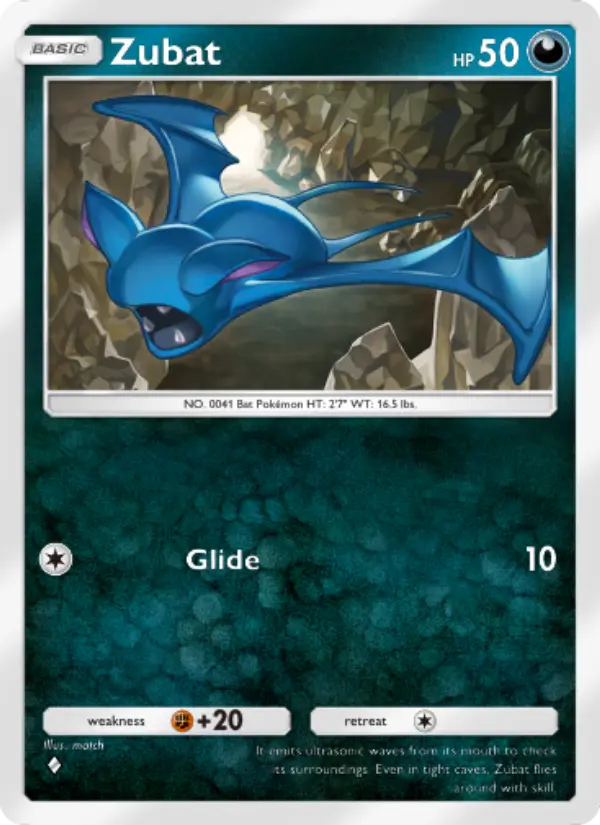
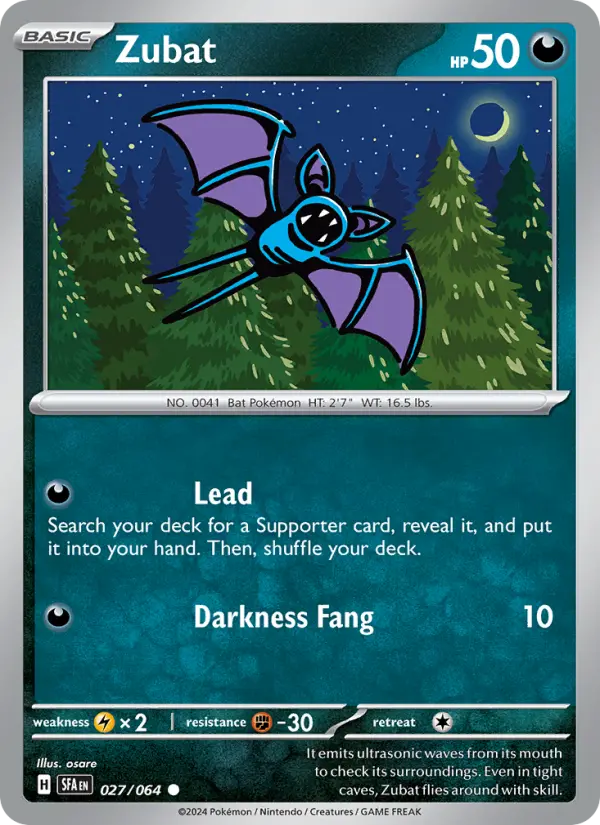
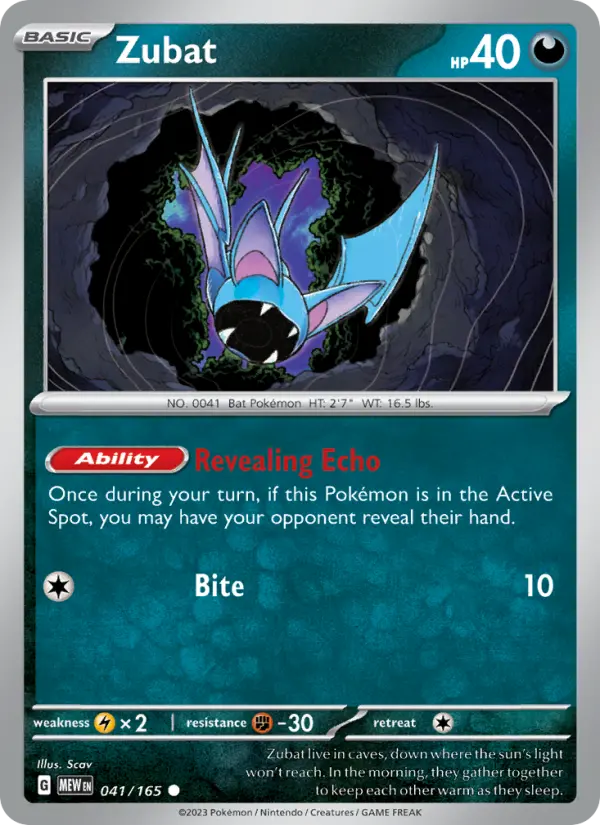
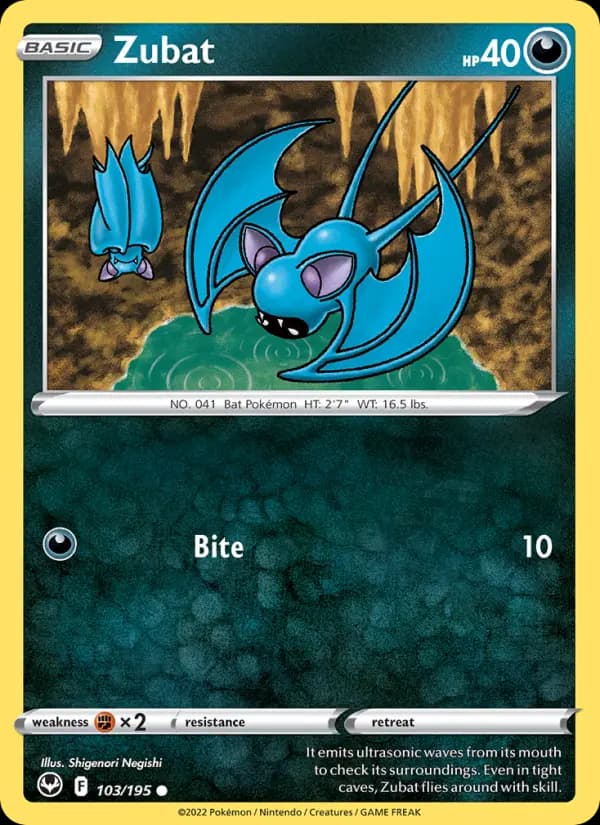
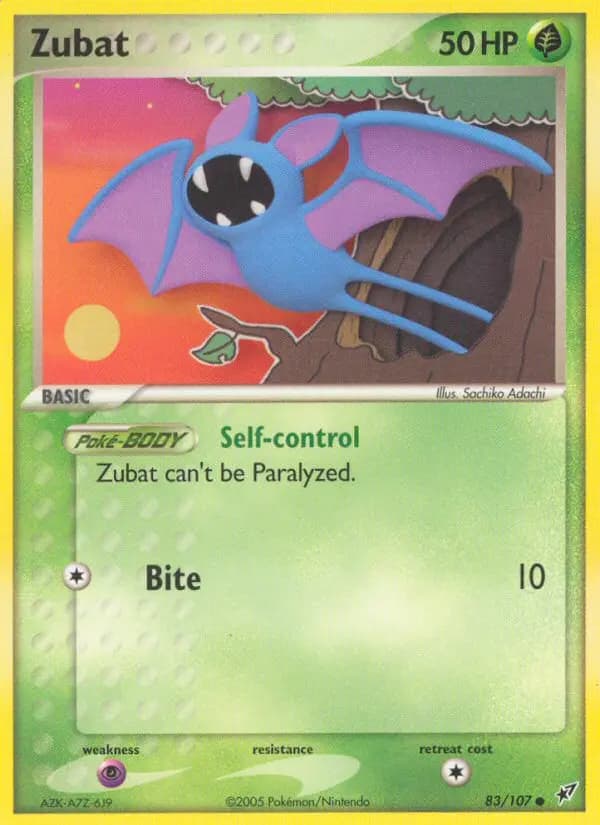
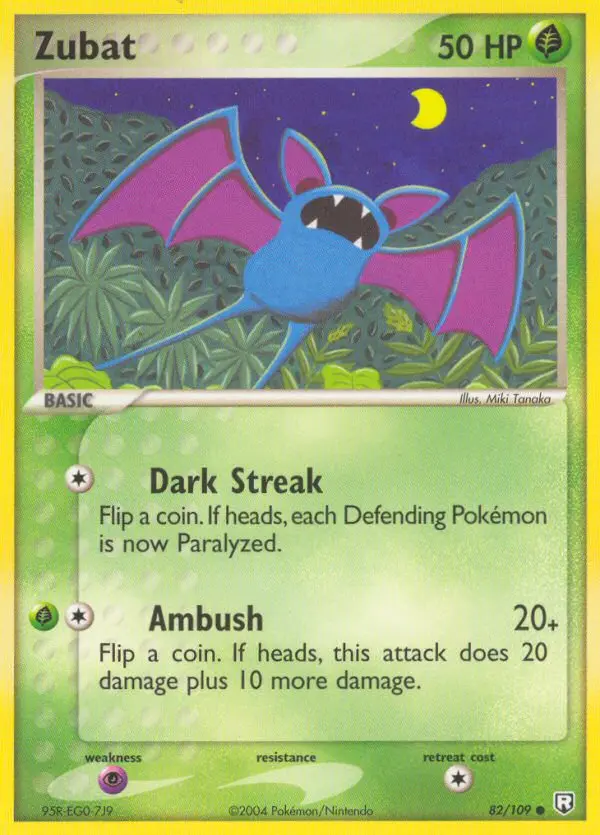
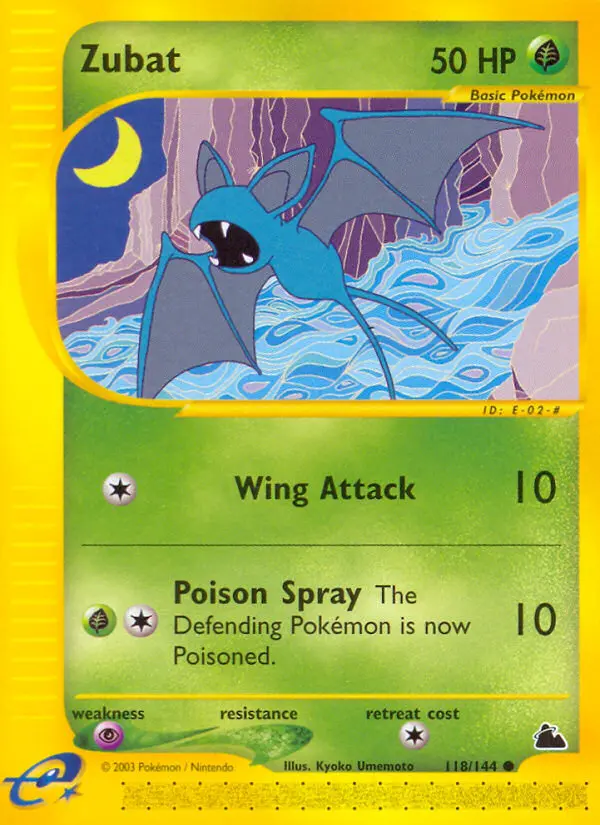
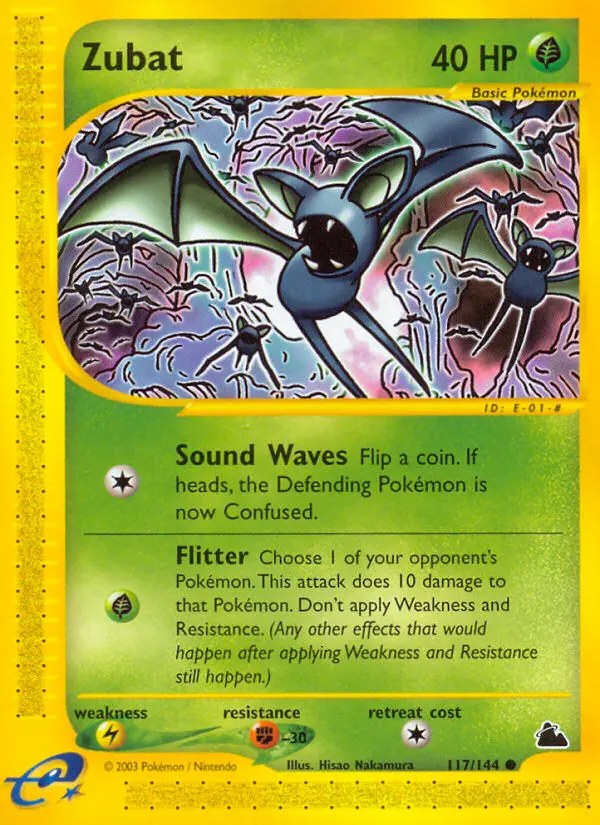
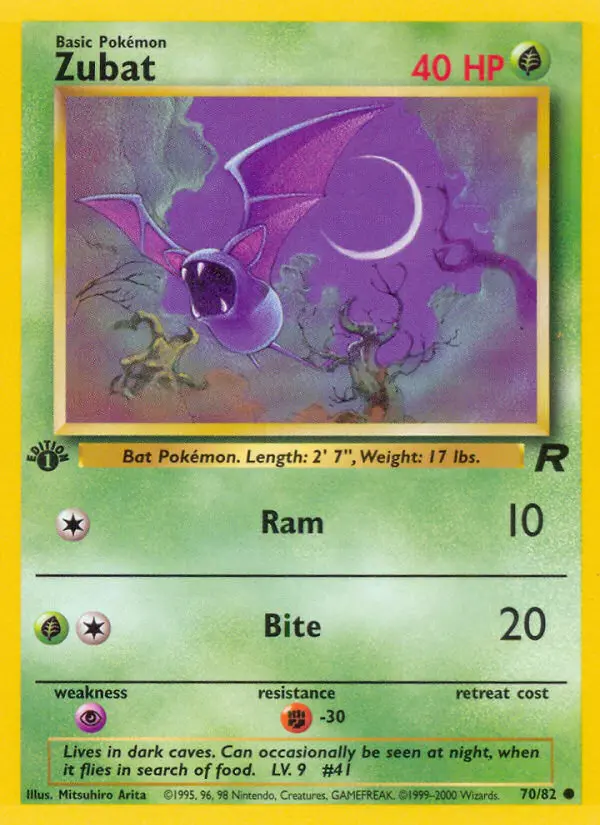
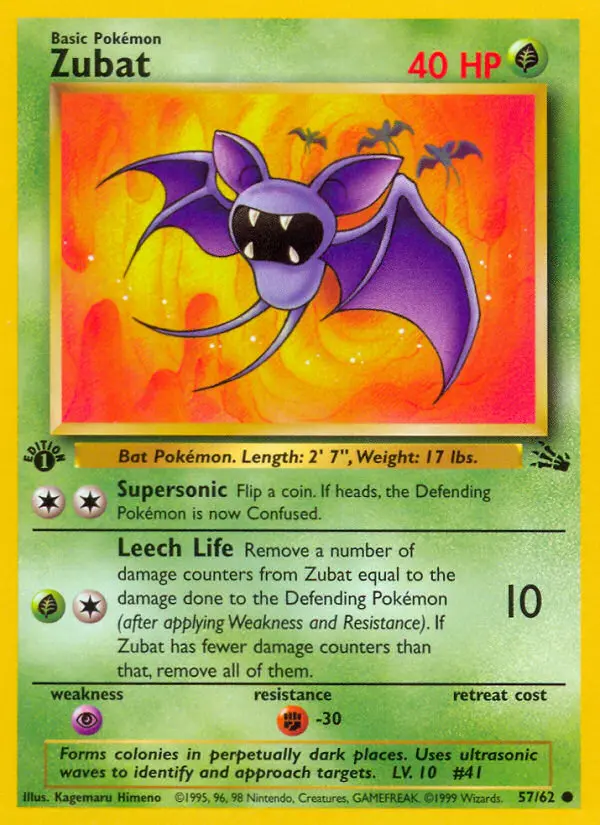
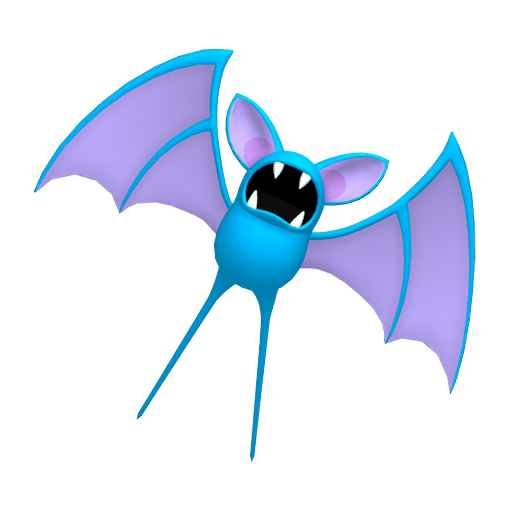
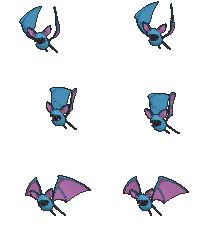
Zubat is a small, chiropteran Pokémon measuring 0.8 meters in height and weighing only 7.5 kilograms, making it a compact flyer despite its winged nature. The creature displays a distinctly purple coloration with a blue body, pointed ears with purple inner membranes, and a distinctive mouth featuring two sharp teeth on each jaw—notably, males possess larger fangs than females. Its most remarkable biological feature is the complete absence of eyes; instead of relying on vision, Zubat possesses highly developed echolocation abilities. The Pokémon's wings are supported by two elongated fingers and its hind legs are thin and elongated without distinct feet, a physiology perfectly suited for navigating tight cave passages. Perhaps most notably, Zubat lacks nostrils entirely, having evolved beyond the need for conventional sensory organs through millions of years of adaptation to perpetually dark underground environments.
Pokedex Numbers
Training
Breeding
Zubat Breeding, Gender Ratio & Egg Groups
Zubat's population splits evenly by gender, 50% each way, allowing for straightforward breeding in most contexts where trainers wish to produce eggs. As a member of the Flying egg group, Zubat can breed with various other Pokémon that share this classification, providing flexibility for breeders seeking specific movesets or abilities. Notably, male Zubat can be visually distinguished from females by their larger fangs, a sexually dimorphic trait that adds biological realism to the species. The base friendship value of 70 for newly caught Zubat indicates moderate initial loyalty, though this can be improved through careful training and care. With an egg hatch counter of 15 cycles, Zubat eggs require a moderate amount of time to hatch compared to other Pokémon, making it a reasonably accessible option for breeders who wish to prepare multiple individuals. The breeding mechanics available for Zubat have evolved across game generations, but its accessibility and balanced genetics make it a practical choice for trainers interested in breeding projects.
Sprites


TMs & HMs
tm01
lets go pikachu lets go eevee
tm02
yellow
tm02
red blue
tm02
crystal
tm02
gold silver
tm02
lets go pikachu lets go eevee
tm02
blue japan
tm02
red green japan
tm03
crystal
tm03
gold silver
tm04
yellow
tm04
red blue
tm04
red green japan
tm04
blue japan
tm05
lets go pikachu lets go eevee
tm06
yellow
tm06
gold silver
tm06
red blue
tm06
crystal
tm06
emerald
+572 more TMs/HMs
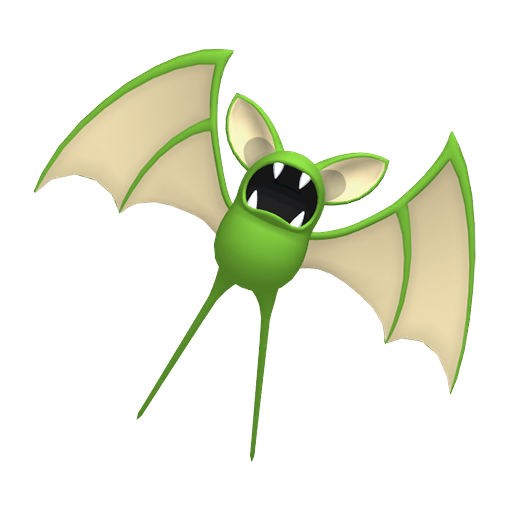
Gender Differences
This Pokémon has visible differences between male and female forms.
Zubat's Evolution Chain


Zubat Evolution, Mega Evolution & Special Forms
Zubat's evolutionary line represents a fascinating progression of power and capability. At level 22, Zubat evolves into Golbat, its direct successor that retains the Poison/Flying typing while gaining significantly improved base stats, particularly in Attack and Special Defense. The evolution chain culminates in Crobat, obtained by leveling up Golbat with high friendship, a condition that rewarded trainers for developing strong bonds with their Pokémon. This friendship requirement for the final evolution represents one of the game's earliest mechanics encouraging trainer-Pokémon relationship building. The progression from Zubat to Golbat to Crobat shows a clear pattern of increased combat viability, with each evolution bringing substantial stat improvements that transform the line from early-game fodder into a legitimate competitive threat. Crobat, in particular, becomes a fast and formidable special attacker, demonstrating that even Pokémon with humble origins can achieve remarkable potential through evolution.
Where to Find
Kanto Victory Road 2
kanto
+12 more
Mt Moon
kanto
+78 more
Rock Tunnel
kanto
+44 more
Seafoam Islands
kanto
+43 more
Mt Mortar
johto
+33 more
Slowpoke Well
johto
+24 more
Johto Route 32
johto
+4 more
Ice Path
johto
+49 more
Burned Tower
johto
+11 more
Tohjo Falls
johto
+2 more
Whirl Islands
johto
+25 more
Dark Cave
johto
+26 more
Union Cave
johto
+29 more
Johto Route 42
johto
+6 more
Kanto Route 4
kanto
+2 more
Kanto Route 3
kanto
+2 more
Johto Route 33
johto
+12 more
Ilex Forest
johto
+9 more
Kanto Route 9
kanto
Johto Route 30
johto
+31 more locations in other games
Zubat Behaviour and Natural Habitat
Zubat forms colonies in perpetually dark places, with caves being its primary habitat, though it has also been documented dwelling in forests and beneath the eaves of old buildings. The species exhibits a strongly nocturnal behavior pattern, remaining stationary and hanging upside down from cave ceilings and building eaves during daylight hours to avoid sun exposure, which causes its body to become unhealthy or slightly burned. As noted in various Pokédex entries, Zubat leaves its abode at night in great numbers to seek prey, using its remarkable ultrasonic echolocation system to navigate and hunt. The frequency of these ultrasonic cries can differ slightly from colony to colony, suggesting complex social structures and communication patterns within Zubat populations. Its ability to fly safely in complete darkness while emitting constant ultrasonic waves from its mouth makes it perfectly adapted to cave exploration, using these sound waves as a living sonar to check for obstacles and identify targets in its environment.
Pokedex Entries
Forms colonies in perpetually dark places. Uses ultrasonic waves to identify and approach targets.
Emits ultrasonic cries while it flies. They act as a sonar used to check for ob jects in its way.
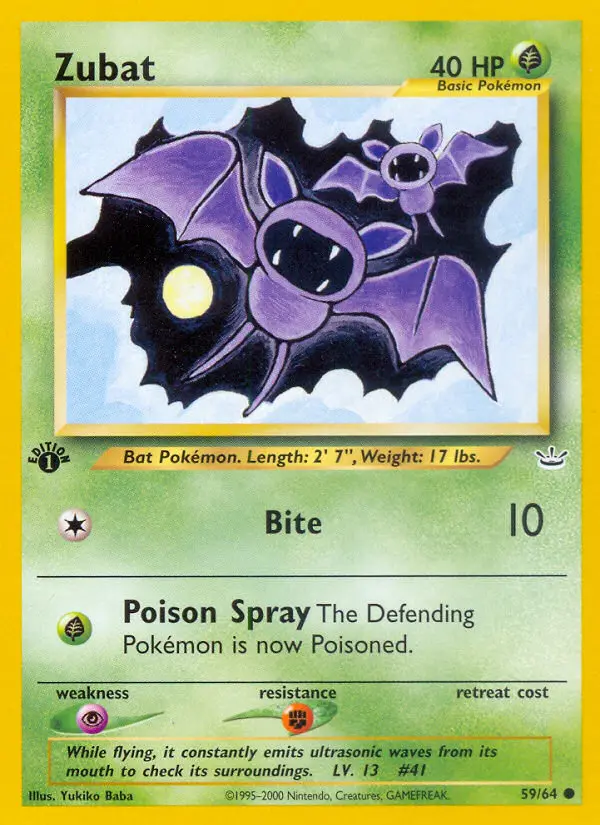
While flying, it constantly emits ultrasonic waves from its mouth to check its sur roundings.
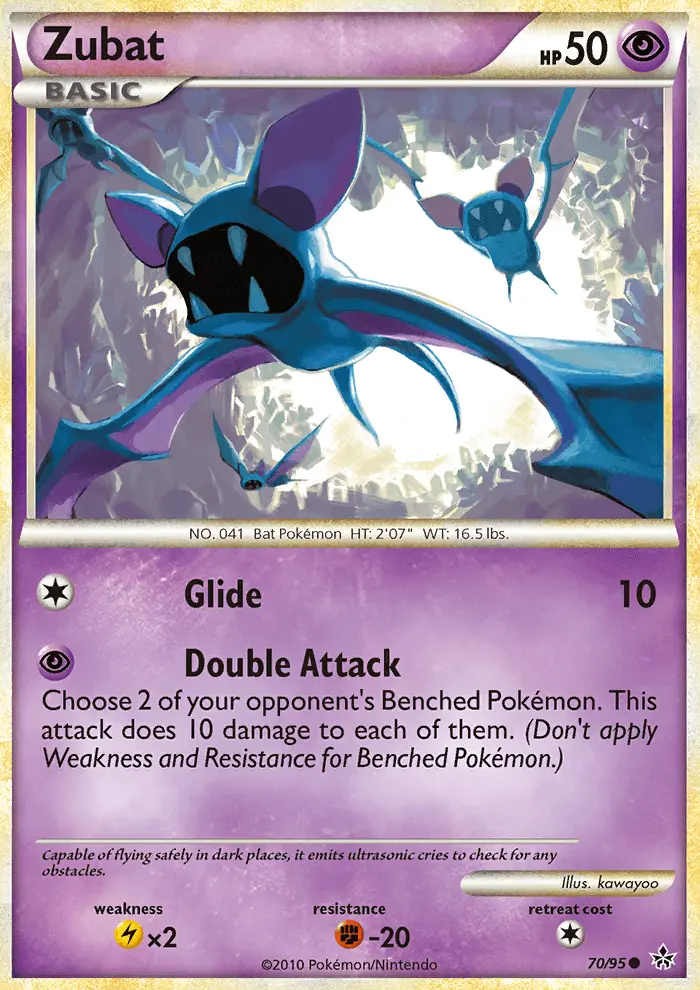
Capable of flying safely in dark places, it emits ultrasonic cries to check for any obstacles.
During the day, it gathers with others and hangs from the ceilings of old buildings and caves.
ZUBAT remains quietly unmoving in a dark spot during the bright daylight hours. It does so because prolonged exposure to the sun causes its body to become slightly burned.
ZUBAT avoids sunlight because exposure causes it to become unhealthy. During the daytime, it stays in caves or under the eaves of old houses, sleeping while hanging upside down.
While living in pitch-black caverns, their eyes gradually grew shut and deprived them of vision. They use ultrasonic waves to detect obstacles.
It has no eyes. Instead, it relies on its ultrasonic cries for echo location to flit about in darkness.
It forms colonies in perpetually dark places and uses ultrasonic waves to identify and approach targets.
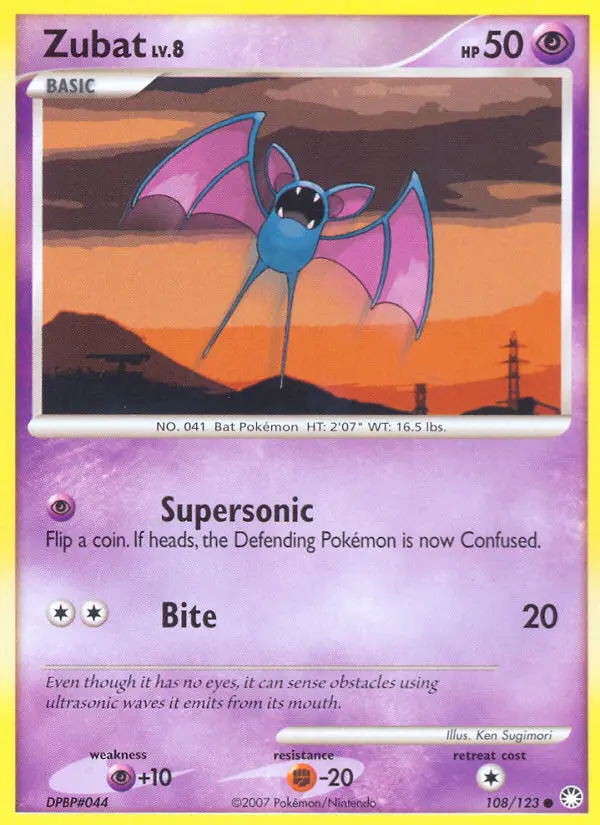
Even though it has no eyes, it can sense obstacles using ultrasonic waves it emits from its mouth.
Disliking sunlight, it sleeps deep in forests and caves until sundown.
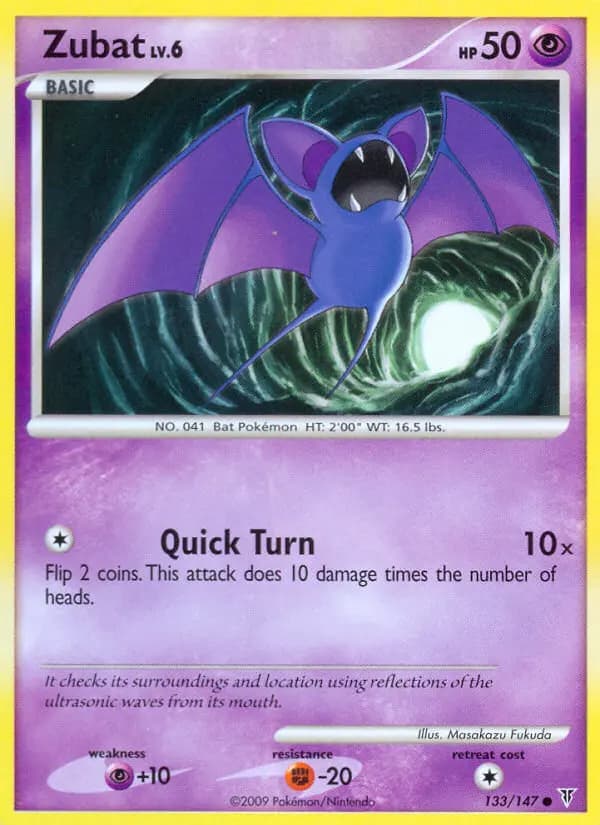
It checks its surroundings and location using reflections of the ultrasonic waves from its mouth.
While flying, it constantly emits ultrasonic waves from its mouth to check its surroundings.
Capable of flying safely in dark places, it emits ultrasonic cries to check for any obstacles.
It checks its surroundings and location using reflections of the ultrasonic waves from its mouth.
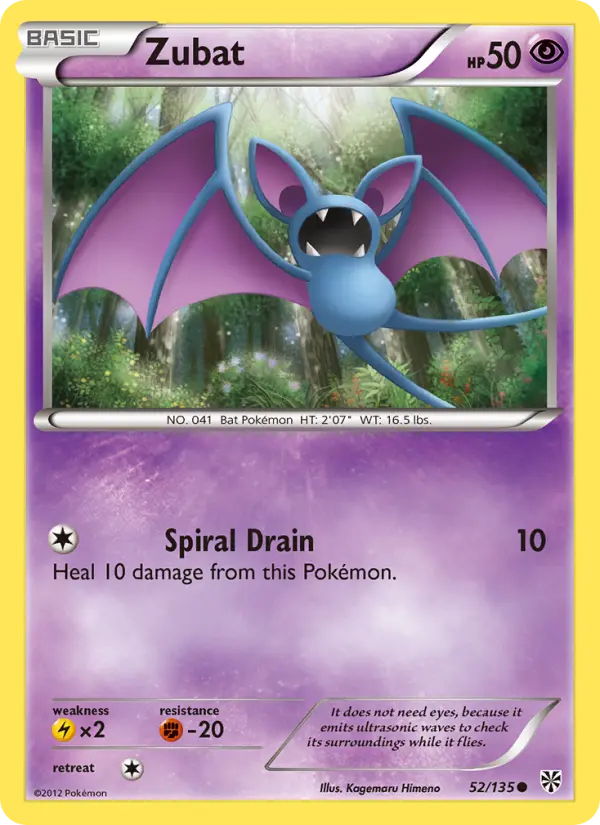
It does not need eyes, because it emits ultrasonic waves to check its surroundings while it flies.
Even though it has no eyes, it can sense obstacles using ultrasonic waves it emits from its mouth.
It has no eyes. Instead, it relies on its ultrasonic cries for echolocation to flit about in darkness.
Zubat remains quietly unmoving in a dark spot during the bright daylight hours. It does so because prolonged exposure to the sun causes its body to become slightly burned.
Zubat avoids sunlight because exposure causes it to become unhealthy. During the daytime, it stays in caves or under the eaves of old houses, sleeping while hanging upside down.
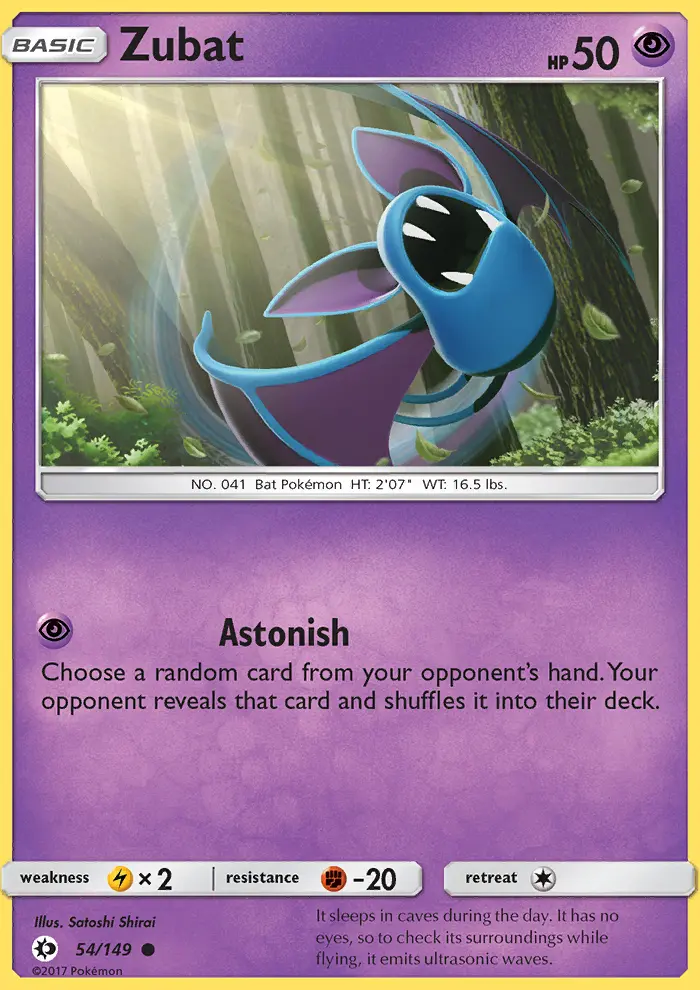
It sleeps in caves during the day. It has no eyes, so to check its surroundings while flying, it emits ultrasonic waves.
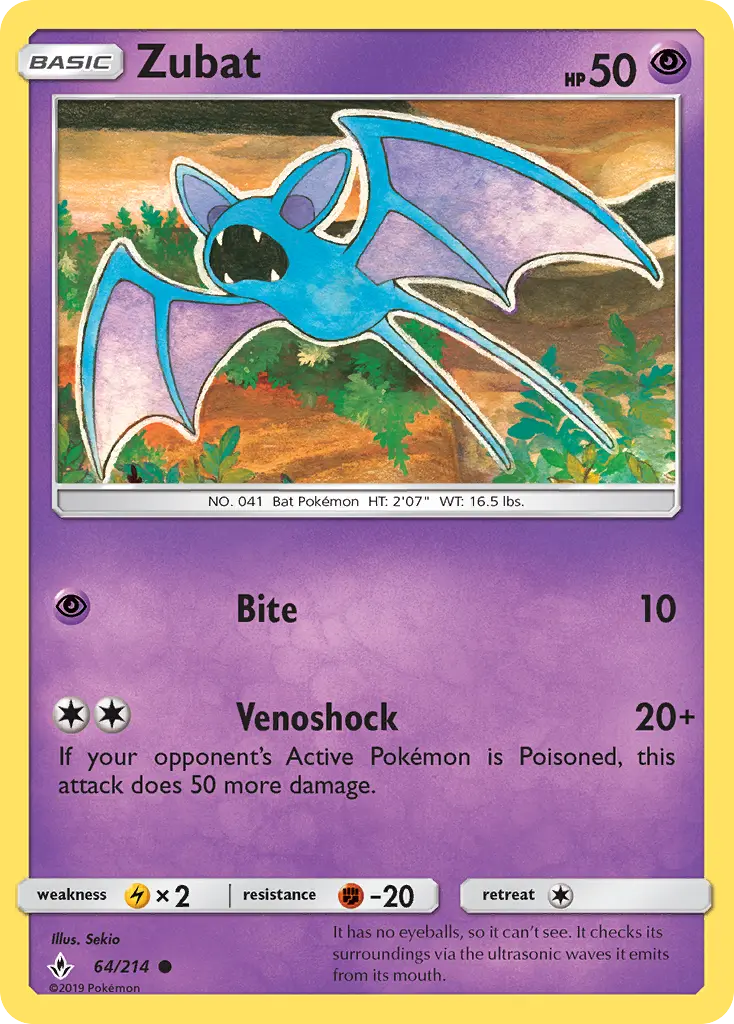
It has no eyeballs, so it can’t see. It checks its surroundings via the ultrasonic waves it emits from its mouth.
When exposed to sunlight, they suffer burns. The frequency of their ultrasonic waves can differ slightly from colony to colony.
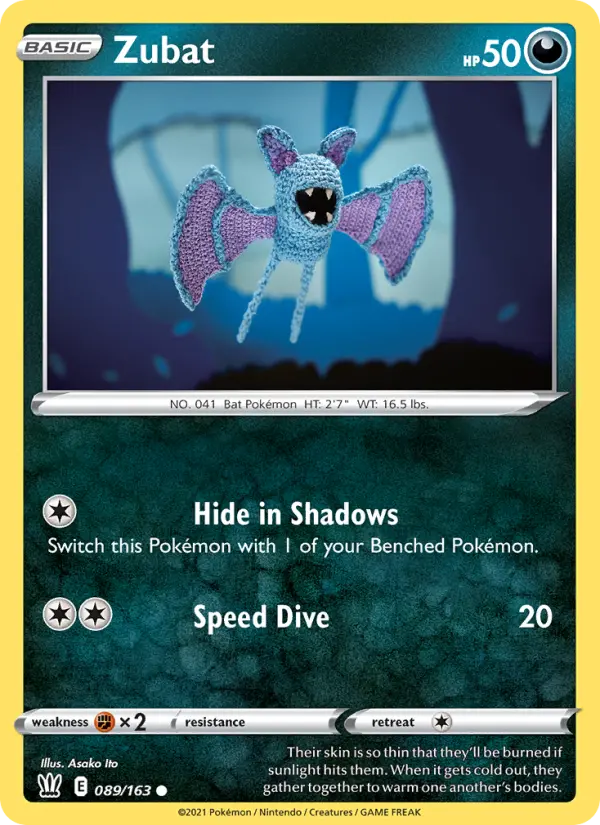
Their skin is so thin that they’ll be burned if sunlight hits them. When it gets cold out, they gather together to warm one another’s bodies.
Emits ultrasonic cries while it flies. They act as a sonar used to check for objects in its way.
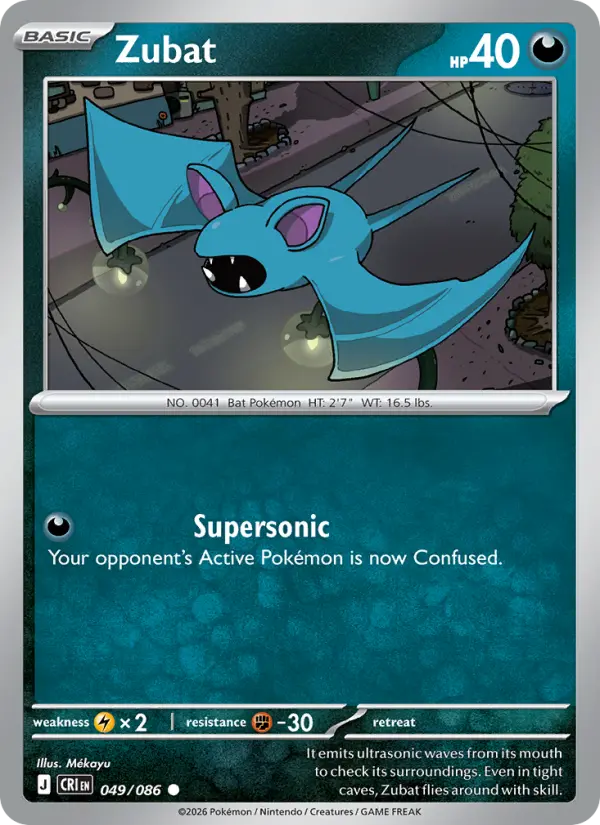
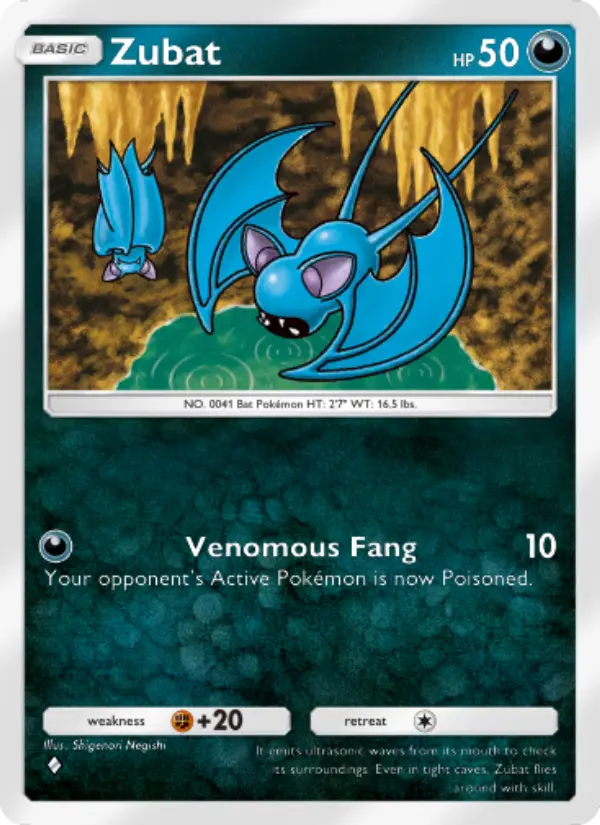
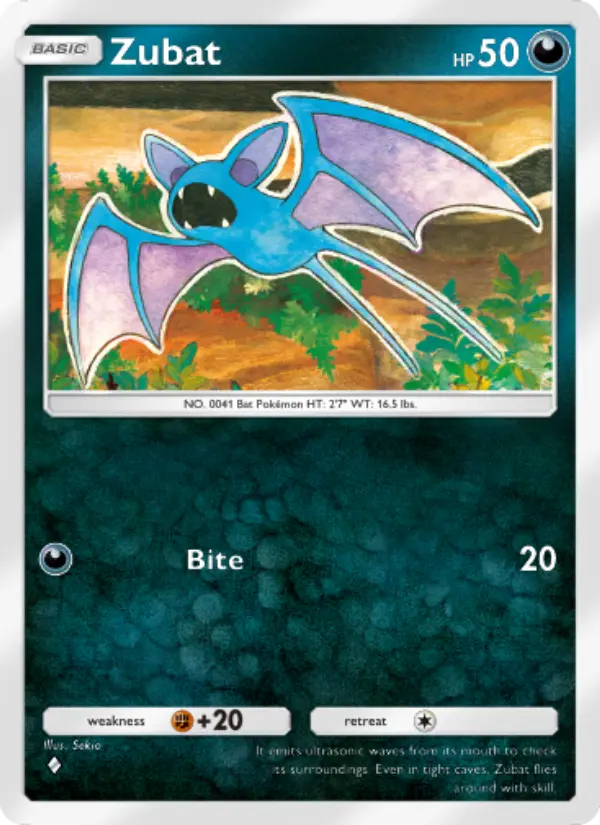
It emits ultrasonic waves from its mouth to check its surroundings. Even in tight caves, Zubat flies around with skill.
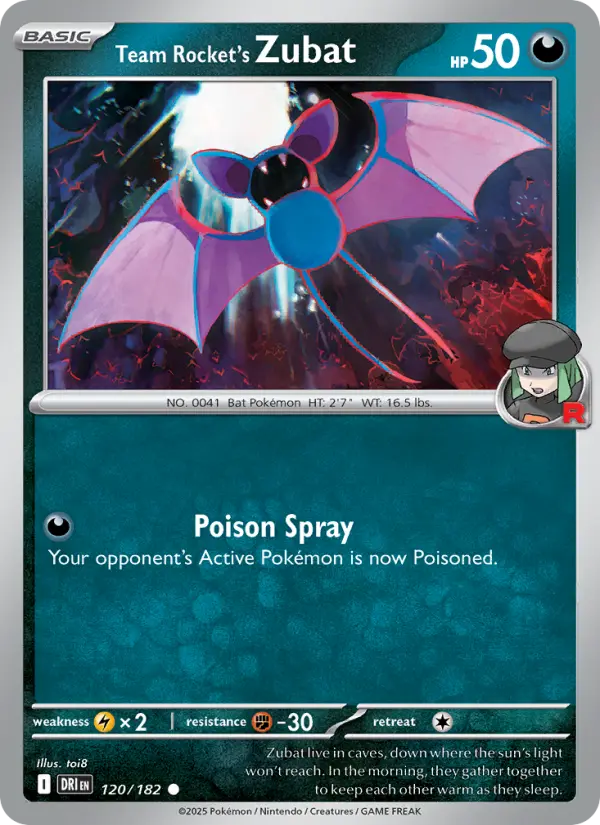
Zubat live in caves, down where the sun’s light won’t reach. In the morning, they gather together to keep each other warm as they sleep.
Makes its home in gloomy caves. Atrophied eyes have left this Pokémon blind, so it scans its surroundings via sound waves that it emits from its mouth as it flies.
Zubat Name Origin & Design Inspiration
Zubat's name origin lies in the Japanese onomatopoeia 'zubazuba,' representing a swishing or rustling sound, combined with 'bat' to create a name that reflects both its nature as a flying mammal and its swift, darting movements through the air. The species is classified as the 'Bat Pokémon,' the most straightforward descriptor, as Zubat is clearly based on real-world bats with its membranous wings, hanging posture, and echolocation abilities. However, Zubat's design takes inspiration from vampire bats, evident in its sharp fangs and nocturnal predatory behavior, adding an element of danger to its otherwise small and unimposing frame. The purple coloration and lack of eyes distinguish it from typical bat depictions in nature, giving it a distinctly fantastical appearance while remaining grounded in biological principles. The design elegantly balances realism with the whimsical nature required for a Pokémon, creating a creature that feels both naturalistic in its adaptations and fantastical in its execution.
Learnable Moves
Zubat can learn 82 moves:
Move | Type | Cat. | Power | Acc. | PP |
|---|---|---|---|---|---|
| absorb | grass | Special | 20 | 100 | 25 |
| acrobatics | flying | Physical | 55 | 100 | 15 |
| aerial ace | flying | Physical | 60 | — | 20 |
| agility | psychic | Status | — | — | 30 |
| air cutter | flying | Special | 60 | 95 | 25 |
| air slash | flying | Special | 75 | 95 | 15 |
| assurance | dark | Physical | 60 | 100 | 10 |
| astonish | ghost | Physical | 30 | 100 | 15 |
| attract | normal | Status | — | 100 | 15 |
| bide | normal | Physical | — | — | 10 |
| bite | dark | Physical | 60 | 100 | 25 |
| brave bird | flying | Physical | 120 | 100 | 15 |
| captivate | normal | Status | — | 100 | 20 |
| confide | normal | Status | — | — | 20 |
| confuse ray | ghost | Status | — | 100 | 10 |
| cross poison | poison | Physical | 70 | 100 | 20 |
| crunch | dark | Physical | 80 | 100 | 15 |
| curse | ghost | Status | — | — | 10 |
| defog | flying | Status | — | — | 15 |
| detect | fighting | Status | — | — | 5 |
| double team | normal | Status | — | — | 15 |
| double edge | normal | Physical | 120 | 100 | 15 |
| endure | normal | Status | — | — | 10 |
| facade | normal | Physical | 70 | 100 | 20 |
| feint attack | dark | Physical | 60 | — | 20 |
| fly | flying | Physical | 90 | 95 | 15 |
| frustration | normal | Physical | — | 100 | 20 |
| giga drain | grass | Special | 75 | 100 | 10 |
| gust | flying | Special | 40 | 100 | 35 |
| haze | ice | Status | — | — | 30 |
| headbutt | normal | Physical | 70 | 100 | 15 |
| heat wave | fire | Special | 95 | 90 | 10 |
| hidden power | normal | Special | 60 | 100 | 15 |
| hypnosis | psychic | Status | — | 60 | 20 |
| leech life | bug | Physical | 80 | 100 | 10 |
| mean look | normal | Status | — | — | 5 |
| mega drain | grass | Special | 40 | 100 | 15 |
| mimic | normal | Status | — | — | 10 |
| nasty plot | dark | Status | — | — | 20 |
| natural gift | normal | Physical | — | 100 | 15 |
| ominous wind | ghost | Special | 60 | 100 | 5 |
| payback | dark | Physical | 50 | 100 | 10 |
| pluck | flying | Physical | 60 | 100 | 20 |
| poison fang | poison | Physical | 50 | 100 | 15 |
| protect | normal | Status | — | — | 10 |
| pursuit | dark | Physical | 40 | 100 | 20 |
| quick attack | normal | Physical | 40 | 100 | 30 |
| quick guard | fighting | Status | — | — | 15 |
| rage | normal | Physical | 20 | 100 | 20 |
| rain dance | water | Status | — | — | 5 |
| razor wind | normal | Special | 80 | 100 | 10 |
| rest | psychic | Status | — | — | 5 |
| return | normal | Physical | — | 100 | 20 |
| roost | flying | Status | — | — | 5 |
| round | normal | Special | 60 | 100 | 15 |
| secret power | normal | Physical | 70 | 100 | 20 |
| shadow ball | ghost | Special | 80 | 100 | 15 |
| sleep talk | normal | Status | — | — | 10 |
| sludge bomb | poison | Special | 90 | 100 | 10 |
| snatch | dark | Status | — | — | 10 |
| snore | normal | Special | 50 | 100 | 15 |
| steel wing | steel | Physical | 70 | 90 | 25 |
| substitute | normal | Status | — | — | 10 |
| sunny day | fire | Status | — | — | 5 |
| super fang | normal | Physical | — | 90 | 10 |
| supersonic | normal | Status | — | 55 | 20 |
| swagger | normal | Status | — | 85 | 15 |
| swift | normal | Special | 60 | — | 20 |
| tailwind | flying | Status | — | — | 15 |
| take down | normal | Physical | 90 | 85 | 20 |
| taunt | dark | Status | — | 100 | 20 |
| thief | dark | Physical | 60 | 100 | 25 |
| torment | dark | Status | — | 100 | 15 |
| toxic | poison | Status | — | 90 | 10 |
| twister | dragon | Special | 40 | 100 | 20 |
| u turn | bug | Physical | 70 | 100 | 20 |
| uproar | normal | Special | 90 | 100 | 10 |
| venom drench | poison | Status | — | 100 | 20 |
| venoshock | poison | Special | 65 | 100 | 10 |
| whirlwind | normal | Status | — | — | 20 |
| wing attack | flying | Physical | 60 | 100 | 35 |
| zen headbutt | psychic | Physical | 80 | 90 | 15 |
Zubat Competitive Battle Guide
In terms of competitive use, Zubat's role is limited primarily to early-game encounters and casual formats, as its overall stat sum of 245 places it firmly in the lower tier of Pokémon viability. Its individual stats reflect its role as a low-level encounter Pokémon: 40 HP, 45 Attack, 35 Defense, 30 Special Attack, 40 Special Defense, and 55 Speed create a creature that struggles against established competition. However, Zubat does possess two useful abilities that provide tactical options. Inner Focus prevents flinching, protecting it from disruption in competitive formats where flinch moves might otherwise undermine strategies. The hidden ability Infiltrator bypasses protective effects like Light Screen, Reflect, and Safeguard, potentially offering utility in specific matchups where these barriers are prevalent. Most competitive use of this evolutionary line involves training Golbat or, more likely, Crobat to level 50 competition standards, where the superior stats make the species genuinely threatening. For those interested in using Zubat competitively, its high Speed base and early access to flying-type moves provide a foundation for building an unconventional strategy.
Commonly Asked Questions About Zubat
What type is Zubat?
Zubat is a poison and flying type Pokemon.
What does Zubat evolve into?
Zubat evolves into golbat, then into crobat.
What are Zubat's weaknesses?
Zubat is weak to ground, rock, electric, psychic and ice type moves.
Does Zubat evolve by trading?
No — Zubat evolves entirely through leveling up, with no trade required at any stage.
Where can I find Zubat?
Zubat can be found in kanto victory road 2 (kanto), mt moon (kanto) and rock tunnel (kanto) and 48 other locations.
Zubat Cultural Impact & Franchise History
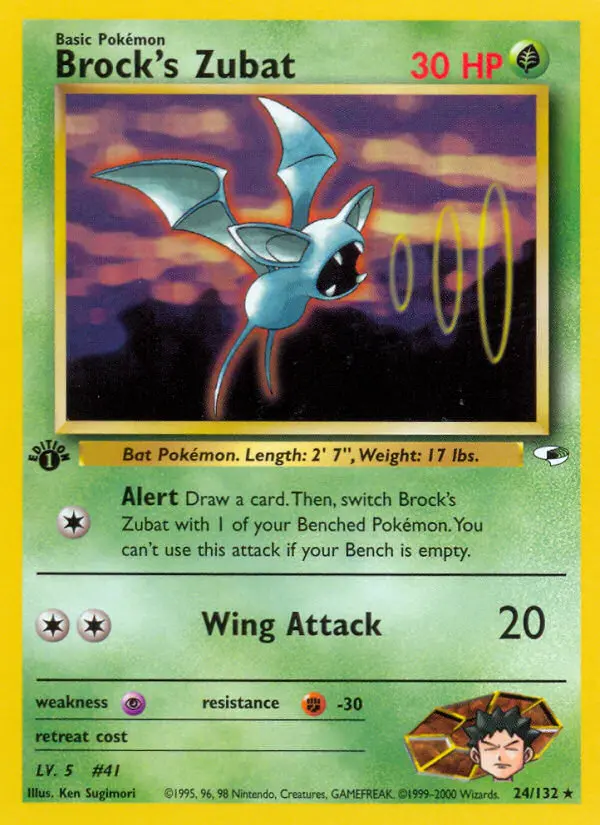
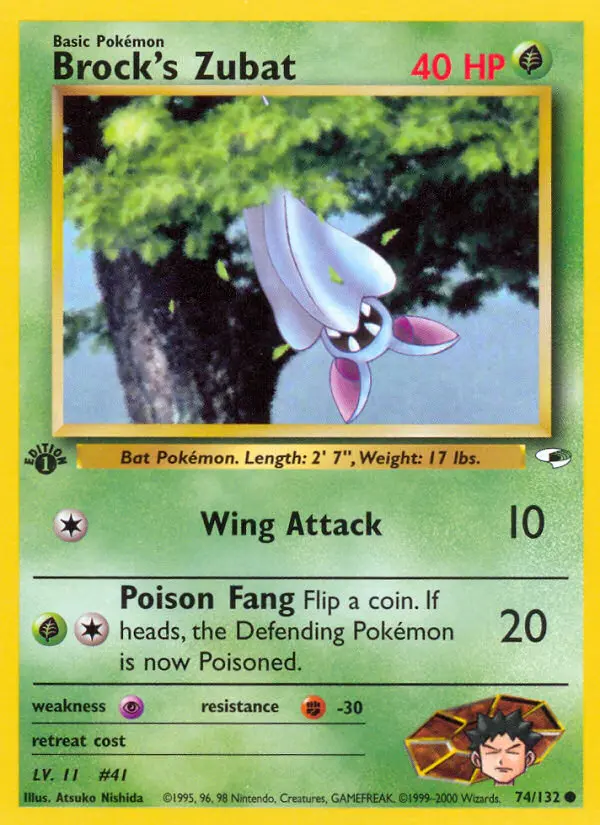
Zubat has achieved iconic status in Pokémon culture as one of the series' most memorable early-game encounters, particularly through its prominent role in Brock's team throughout the original Pokémon animated series. Brock's Zubat, which evolved into his signature Golbat and later Crobat, became a beloved character that demonstrated the potential for growth and strong bonds with trainers. The Pokémon's prevalence in caves throughout multiple game generations has cemented its identity as the quintessential cave-dwelling Pokémon, making it virtually synonymous with cave exploration in the Pokémon experience. Its appearance in countless player parties and fondness among trainers has given it substantial cultural recognition despite its modest competitive viability. The species has become a subject of humor within the community, with its overwhelming frequency in caves being a running joke among players. Additionally, Zubat's evolution line, particularly the friendship-based evolution into Crobat, has been celebrated as exemplifying Pokémon's themes of bonding and mutual growth between trainer and Pokémon, making it more than just a mechanical creature but a symbol of the franchise's core philosophy.
Where to Find Zubat in Every Pokémon Game
Zubat's extraordinary accessibility represents one of its defining characteristics, with the species available in virtually every Pokémon game iteration from Generation I onwards. In the original Red, Blue, and Yellow versions, Zubat can be found in caves throughout Kanto, establishing its role as a foundational cave encounter Pokémon. Subsequent generations have consistently included Zubat in cave formations across every region, from Johto's Mt. Moon to Hoenn's various caverns, ensuring that trainers pursuing main story progression will encounter it regularly. Its catch rate of 255, the maximum possible value, makes Zubat extraordinarily easy to capture with even basic Poké Balls, requiring no strategy or specialized equipment. The species appears in side games, competitive formats, and special distribution events, though it is rarely the focus of these offerings due to its ubiquitous availability through standard gameplay. In modern entries like Pokémon Legends: Arceus and the Sword/Shield Crown Tundra DLC, Zubat remains accessible to players seeking to complete their collections. Its high base friendship value of 70 in many generations facilitates relatively quick evolution into Golbat, and with sufficient care and affection, players can achieve the final Crobat evolution within reasonable timeframes, making the entire line accessible to average players without specialized breeding or training efforts.