Dratini
Generation I · #0147 — Dragon Pokémon
Dratini, known as the Dragon Pokémon and catalogued as #147 in the National Pokédex, stands as one of Generation I's most iconic and enigmatic species. For generations, this serpentine creature was considered nothing more than myth and legend until its existence was finally confirmed by a dedicated fisherman who spent ten hours attempting to capture the elusive Pokémon. Originally referred to as the "Mirage Pokémon" due to centuries of skepticism surrounding its reality, Dratini has since captivated trainers and researchers alike with its unique biology and tremendous growth potential. As a pure Dragon-type Pokémon, it occupies a special place in the hearts of dragon enthusiasts, serving as the first step in one of the most prestigious evolutionary lines in all of Pokémon. Despite its humble initial appearance—measuring just 1.8 meters in length and weighing a mere 3.3 kilograms—Dratini carries within it the potential to eventually become the formidable Dragonite, one of the most powerful Pokémon in existence.
Editor's Take
Dratini's line takes until level 55 to fully evolve, the latest of any pseudo-legendary, and that grind is the reason Dragonite carries more nostalgic weight than its stats alone earn.
Base Stats
Height
1.8m
Weight
3.3kg
Category
Dragon Pokémon
Gender
Male 50% / Female 50%
Color
blue
Shape
squiggle
Habitat
waters-edge
Abilities
Has a 33% chance of curing any major status ailment after each turn.
Increases Defense to 1.5× with a major status ailment.

Dratini Biology & Physical Characteristics
Dratini exhibits a distinctly serpentine morphology characterized by its smooth, blue reptilian body with a contrasting white underside that extends along its length. The Pokémon's most distinctive features include three-pronged white fins positioned on either side of its head, which serve as sensory organs and aids in aquatic navigation, and a small white bump protruding from its forehead that represents its horn in the early stages of development. Its rounded, white snout frames two large, expressive purple eyes that convey intelligence and curiosity. One of Dratini's most remarkable biological characteristics is its constant state of growth driven by an ever-increasing internal life energy that demands continuous physical expansion. This unceasing growth necessitates regular skin-shedding cycles throughout its lifetime, a process that leaves Dratini particularly vulnerable due to the softness of its newly exposed skin. To protect itself during these critical molting periods, Dratini instinctively positions itself behind the protective curtain of rapid waterfalls, where the rushing water shields it from predators and environmental hazards. The shed skin itself has practical value in human society, as it can be processed and tanned into luxury leather goods, particularly high-quality boots sought after by collectors and craftspeople.
Pokedex Numbers
Training
Breeding
Dratini Breeding, Gender Ratio & Egg Groups
Dratini maintains a perfectly balanced gender ratio with 50% male and 50% female distribution, ensuring equal breeding prospects regardless of the individual specimen's sex. The species belongs to two breeding egg groups simultaneously: the Water 1 group and the Dragon group, providing significant flexibility for breeding programs and allowing cross-breeding opportunities with various other Pokémon species. This dual egg group classification proves particularly valuable for trainers seeking to produce Dratini with specific move combinations through inherited moves from compatible breeding partners. When breeding Dratini, trainers should anticipate a relatively lengthy incubation period, as eggs require 40 cycles to hatch, translating to approximately 10,024 to 10,280 steps depending on specific conditions. The modest base happiness value of 35 extends to newly hatched Dratini, meaning that eggs produced through breeding do not emerge with particularly elevated friendship levels and require standard bonding procedures. Dratini's slow growth rate compounds the breeding experience, as trainers who rely on hatched Dratini specimens will need patience and dedication to raise them to their evolutionary thresholds. Despite these time-intensive requirements, breeding Dratini remains popular among dedicated collectors and competitive players seeking perfect IV specimens, as the dragon's eventual power justifies the investment of breeding effort.
Sprites






Held Items
Dragon Scale
evolution
Traded on a Seadra: Holder evolves into Kingdra.
Cost: 2000
Dragon Scale
evolution
Traded on a Seadra: Holder evolves into Kingdra.
Cost: 2000
Dragon Scale
evolution
Traded on a Seadra: Holder evolves into Kingdra.
Cost: 2000
Dragon Scale
evolution
Traded on a Seadra: Holder evolves into Kingdra.
Cost: 2000
Dragon Scale
evolution
Traded on a Seadra: Holder evolves into Kingdra.
Cost: 2000
Dragon Scale
evolution
Traded on a Seadra: Holder evolves into Kingdra.
Cost: 2000
Dragon Scale
evolution
Traded on a Seadra: Holder evolves into Kingdra.
Cost: 2000
Dragon Scale
evolution
Traded on a Seadra: Holder evolves into Kingdra.
Cost: 2000
Dragon Scale
evolution
Traded on a Seadra: Holder evolves into Kingdra.
Cost: 2000
Dragon Scale
evolution
Traded on a Seadra: Holder evolves into Kingdra.
Cost: 2000
Dragon Scale
evolution
Traded on a Seadra: Holder evolves into Kingdra.
Cost: 2000
Dragon Scale
evolution
Traded on a Seadra: Holder evolves into Kingdra.
Cost: 2000
Dragon Scale
evolution
Traded on a Seadra: Holder evolves into Kingdra.
Cost: 2000
Dragon Scale
evolution
Traded on a Seadra: Holder evolves into Kingdra.
Cost: 2000
Dragon Scale
evolution
Traded on a Seadra: Holder evolves into Kingdra.
Cost: 2000
Dragon Scale
evolution
Traded on a Seadra: Holder evolves into Kingdra.
Cost: 2000
Dragon Scale
evolution
Traded on a Seadra: Holder evolves into Kingdra.
Cost: 2000
Dragon Scale
evolution
Traded on a Seadra: Holder evolves into Kingdra.
Cost: 2000
Dragon Scale
evolution
Traded on a Seadra: Holder evolves into Kingdra.
Cost: 2000
Dragon Scale
evolution
Traded on a Seadra: Holder evolves into Kingdra.
Cost: 2000
TMs & HMs
tm01
lets go pikachu lets go eevee
tm02
crystal
tm02
gold silver
tm03
crystal
tm03
gold silver
tm03
ruby sapphire
tm03
platinum
tm03
firered leafgreen
tm03
heartgold soulsilver
tm03
diamond pearl
tm03
emerald
tm03
xd
tm03
colosseum
tm03
lets go pikachu lets go eevee
tm05
lets go pikachu lets go eevee
tm06
yellow
tm06
gold silver
tm06
red blue
tm06
crystal
tm06
emerald
+655 more TMs/HMs
Dratini's Evolution Chain


Dratini Evolution, Mega Evolution & Special Forms
Dratini occupies the foundational position in one of Pokémon's most celebrated evolutionary lineages, representing the humble beginning of an extraordinary transformation. At level 30, Dratini evolves into Dragonair, a Dragon-type that gains slightly improved statistics and develops visible wing-like appendages. This intermediate form serves as a crucial transitional stage, allowing trainers to observe the accelerating growth and power increase that characterizes the Dratini line. The true pinnacle of this evolutionary progression arrives at level 55, when Dragonair undergoes a dramatic metamorphosis into Dragonite, a formidable Dragon and Flying-type Pokémon. The evolution from Dratini to Dragonite represents one of the most significant stat jumps in the entire Pokédex, as Dratini's humble base stat total of 300 compounds exponentially through each evolutionary stage. Unlike many modern Pokémon lines, Dratini and its evolutionary relatives receive no Mega Evolution or alternative forms, remaining true to their original Generation I design while still maintaining competitive viability through extensive movepool options and ability combinations. This straightforward but effective evolution line has endured as a fan favorite throughout all nine generations of Pokémon games, with each stage representing a distinct and meaningful progression marker in a trainer's journey.
Where to Find
Kanto Safari Zone
kanto
+25 more
Dragons Den
johto
+21 more
Johto Route 45
johto
+3 more
Mt Coronet
sinnoh
Johto Safari Zone
johto
+1 more
Dragonspiral Tower
unova
+13 more
Floccesy Town
unova
Kalos Route 21
kalos
Poni Gauntlet
alola
+5 more
Vast Poni Canyon
alola
+1 more
Poni Meadow
alola
+5 more
Kanto Route 10
kanto
Dratini Behaviour and Natural Habitat
Dratini inhabits freshwater environments characterized by swift currents and turbulent water conditions, showing a particular preference for areas surrounding powerful waterfalls and their plunge pools. These aquatic dragons live a predominantly quiet and sedentary lifestyle, dwelling on the bottom of their chosen water bodies where they subsist on food matter that naturally sinks from above. This bottom-feeding behavior reflects an adaptation to low-visibility environments where hunting active prey would prove inefficient. The rarity of Dratini encounters in the wild stems from its deep-water preference and nocturnal tendencies, factors that long contributed to its status as a mythical creature in folklore. Dratini colonies have been documented in specific underground waterways and isolated river systems, suggesting that the species maintains territorial family groups despite their generally solitary presentation. The Pokémon's sleeping patterns were historically shrouded in mystery due to its extreme rarity, though recent behavioral studies have begun to illuminate the peculiar rest cycles this dragon employs. In captivity and under trainer care, Dratini demonstrates a notably low base happiness value of 35, indicating that this Pokémon requires patient, dedicated training and significant bonding efforts before it fully trusts its caretaker.
Pokedex Entries
Long considered a mythical POKéMON until recently when a small colony was found living underwater.
The existence of this mythical POKéMON was only recently confirmed by a fisherman who caught one.
It is born large to start with. It repeatedly sheds its skin as it steadily grows longer.
This POKéMON is full of life ener gy. It continually sheds its skin and grows steadily larger.
It sheds many lay ers of skin as it grows larger. Dur ing this process, it is protected by a rapid waterfall.
DRATINI continually molts and sloughs off its old skin. It does so because the life energy within its body steadily builds to reach uncontrollable levels.
A DRATINI continually molts and sloughs off its old skin. It does so because the life energy within its body steadily builds to reach uncontrollable levels.
Even the young can exceed 6.5 feet in length. It grows larger by repeatedly shedding skin.
Long considered a mythical POKéMON until recently, when a small colony was found living underwater.
It is called the “Mirage Pokémon” because so few have seen it. Its shed skin has been found.
It is born large to start with. It repeatedly sheds its skin as it steadily grows longer.
This Pokémon is full of life energy. It continually sheds its skin and grows steadily larger.
It is called the “Mirage Pokémon” because so few have seen it. Its shed skin has been found.
It is called the “Mirage Pokémon” because so few have seen it. Its shed skin has been found.
It is called the “Mirage Pokémon” because so few have seen it. Its shed skin has been found.
This Pokémon is full of life energy. It continually sheds its skin and grows steadily larger.
Dratini continually molts and sloughs off its old skin. It does so because the life energy within its body steadily builds to reach uncontrollable levels.
It grows by molting repeatedly. Boots made from the tanned cast-off skin are a super luxury item.
It’s still weak, so it lurks on the floor of bodies of water, eating whatever food sinks down and living a quiet life.
After a 10-hour struggle, a fisherman was able to pull one up and confirm its existence.
It sheds its skin—almost on a daily basis—and grows larger. Its skin is soft just after it’s been shed.
Long thought to be a myth, this Pokémon’s existence was only recently confirmed by a fisherman who caught one.
Dratini dwells near bodies of rapidly flowing water, such as the plunge pools of waterfalls. As it grows, Dratini will shed its skin many times.
This Pokémon was long considered to be no more than a myth. The small lump on a Dratini’s forehead is actually a horn that’s still coming in.
Dratini Name Origin & Design Inspiration
The name "Dratini" derives from a clever linguistic fusion of "dragon" and "tiny," perfectly encapsulating the Pokémon's role as a diminutive precursor to its fully-fledged draconic evolution. In Japanese, Dratini is known as "Miniryu," which similarly combines "mini" (miniature) and "ryu" (dragon), emphasizing the same conceptual contrast between the Pokémon's modest size and its prestigious lineage. The visual design draws inspiration from traditional depictions of Chinese dragons and serpents, particularly the elongated, limbless body plan characteristic of Eastern dragon mythology. The three-pronged fins on either side of Dratini's head echo traditional dragon imagery while serving practical biological functions, and the developing horn on its forehead invokes classical dragon iconography seen across numerous cultures. Dratini's color scheme of blue with white accents reflects aquatic themes consistent with its water-dwelling habitat and its inclusion in both the Water 1 and Dragon egg groups. The overall aesthetic captures a sense of untapped potential—the design intentionally emphasizes fragility and immaturity to underscore the dramatic transformation awaiting the trainer patient enough to nurture this rare creature to adulthood. Game Freak's original designers achieved remarkable character depth through this relatively simple silhouette, creating a Pokémon instantly recognizable while simultaneously inviting speculation about its ultimate form.
Learnable Moves
Dratini can learn 66 moves:
Move | Type | Cat. | Power | Acc. | PP |
|---|---|---|---|---|---|
| agility | psychic | Status | — | — | 30 |
| aqua tail | water | Physical | 90 | 90 | 10 |
| attract | normal | Status | — | 100 | 15 |
| bide | normal | Physical | — | — | 10 |
| bind | normal | Physical | 15 | 85 | 20 |
| blizzard | ice | Special | 110 | 70 | 5 |
| body slam | normal | Physical | 85 | 100 | 15 |
| bubble beam | water | Special | 65 | 100 | 20 |
| curse | ghost | Status | — | — | 10 |
| detect | fighting | Status | — | — | 5 |
| double team | normal | Status | — | — | 15 |
| double edge | normal | Physical | 120 | 100 | 15 |
| dragon breath | dragon | Special | 60 | 100 | 20 |
| dragon dance | dragon | Status | — | — | 20 |
| dragon rage | dragon | Special | — | 100 | 10 |
| endure | normal | Status | — | — | 10 |
| facade | normal | Physical | 70 | 100 | 20 |
| fire blast | fire | Special | 110 | 85 | 5 |
| fire spin | fire | Special | 35 | 85 | 15 |
| flamethrower | fire | Special | 90 | 100 | 15 |
| frustration | normal | Physical | — | 100 | 20 |
| hail | ice | Status | — | — | 10 |
| haze | ice | Status | — | — | 30 |
| headbutt | normal | Physical | 70 | 100 | 15 |
| helping hand | normal | Status | — | — | 20 |
| hidden power | normal | Special | 60 | 100 | 15 |
| hydro pump | water | Special | 110 | 80 | 5 |
| hyper beam | normal | Special | 150 | 90 | 5 |
| ice beam | ice | Special | 90 | 100 | 10 |
| icy wind | ice | Special | 55 | 95 | 15 |
| iron tail | steel | Physical | 100 | 75 | 15 |
| leer | normal | Status | — | 100 | 30 |
| light screen | psychic | Status | — | — | 30 |
| mimic | normal | Status | — | — | 10 |
| mist | ice | Status | — | — | 30 |
| outrage | dragon | Physical | 120 | 100 | 10 |
| protect | normal | Status | — | — | 10 |
| rage | normal | Physical | 20 | 100 | 20 |
| rain dance | water | Status | — | — | 5 |
| reflect | psychic | Status | — | — | 20 |
| rest | psychic | Status | — | — | 5 |
| return | normal | Physical | — | 100 | 20 |
| safeguard | normal | Status | — | — | 25 |
| secret power | normal | Physical | 70 | 100 | 20 |
| shock wave | electric | Special | 60 | — | 20 |
| skull bash | normal | Physical | 130 | 100 | 10 |
| slam | normal | Physical | 80 | 75 | 20 |
| sleep talk | normal | Status | — | — | 10 |
| snore | normal | Special | 50 | 100 | 15 |
| substitute | normal | Status | — | — | 10 |
| sunny day | fire | Status | — | — | 5 |
| supersonic | normal | Status | — | 55 | 20 |
| surf | water | Special | 90 | 100 | 15 |
| swagger | normal | Status | — | 85 | 15 |
| swift | normal | Special | 60 | — | 20 |
| take down | normal | Physical | 90 | 85 | 20 |
| thunder | electric | Special | 110 | 70 | 10 |
| thunder wave | electric | Status | — | 90 | 20 |
| thunderbolt | electric | Special | 90 | 100 | 15 |
| toxic | poison | Status | — | 90 | 10 |
| twister | dragon | Special | 40 | 100 | 20 |
| water gun | water | Special | 40 | 100 | 25 |
| water pulse | water | Special | 60 | 100 | 20 |
| waterfall | water | Physical | 80 | 100 | 15 |
| wrap | normal | Physical | 15 | 90 | 20 |
| zap cannon | electric | Special | 120 | 50 | 5 |
Dratini Competitive Battle Guide
In competitive Pokémon play, Dratini itself sees minimal direct utilization due to its exceptionally low total stat allocation of 300, which distributes unevenly across its stats with a meager 41 HP and 45 Defense forming a fragile foundation. The Pokémon's highest offensive stat reaches only 64 Attack, while both Special Attack and Speed cap at 50, leaving Dratini outclassed by virtually every other Pokémon at similar experience levels. However, Dratini's significance in the competitive sphere stems entirely from its role as a stepping stone toward Dragonite, one of the most potent Dragon-types ever introduced. Trainers primarily value Dratini for its two available abilities: Shed Skin, which grants a 33% chance each turn to cure major status conditions automatically, and its hidden ability Marvel Scale, which increases Defense to 1.5 times its normal value whenever the Pokémon carries any major status ailment. The Shed Skin ability carries genuine strategic merit in competitive formats, potentially mitigating crippling effects like paralysis, poison, or burns that would otherwise compromise Dratini's limited speed or offensive capabilities. Despite these ability advantages, Dratini remains almost exclusively confined to early-game encounters and casual play, with competitive specialists universally recommend immediate evolution to access Dragonair's superior stats and eventually Dragonite's elite competitive presence.
Commonly Asked Questions About Dratini
What type is Dratini?
Dratini is a dragon type Pokemon.
What does Dratini evolve into?
Dratini evolves into dragonair, then into dragonite.
What are Dratini's weaknesses?
Dratini is weak to ice, dragon and fairy type moves.
Does Dratini evolve by trading?
No — Dratini evolves entirely through leveling up, with no trade required at any stage.
Where can I find Dratini?
Dratini can be found in kanto safari zone (kanto), dragons den (johto) and johto route 45 (johto) and 9 other locations.
Dratini Cultural Impact & Franchise History
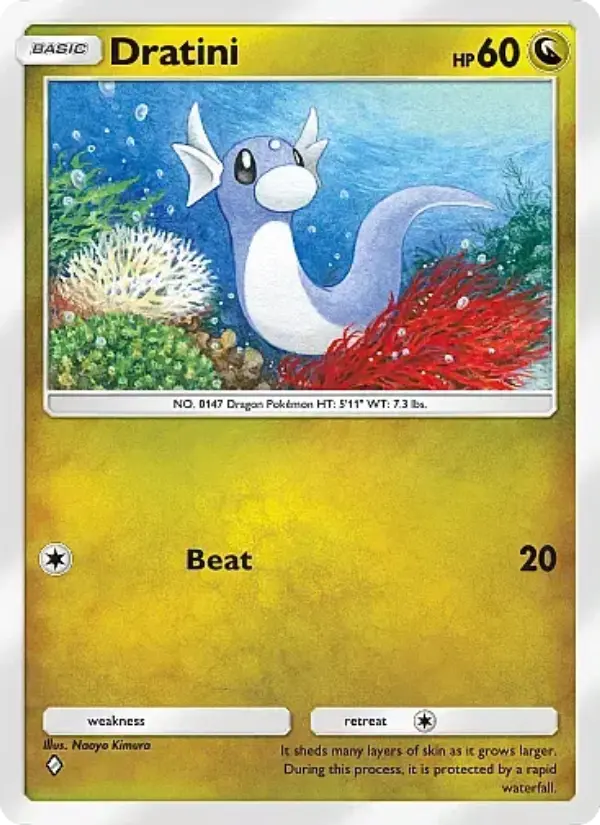
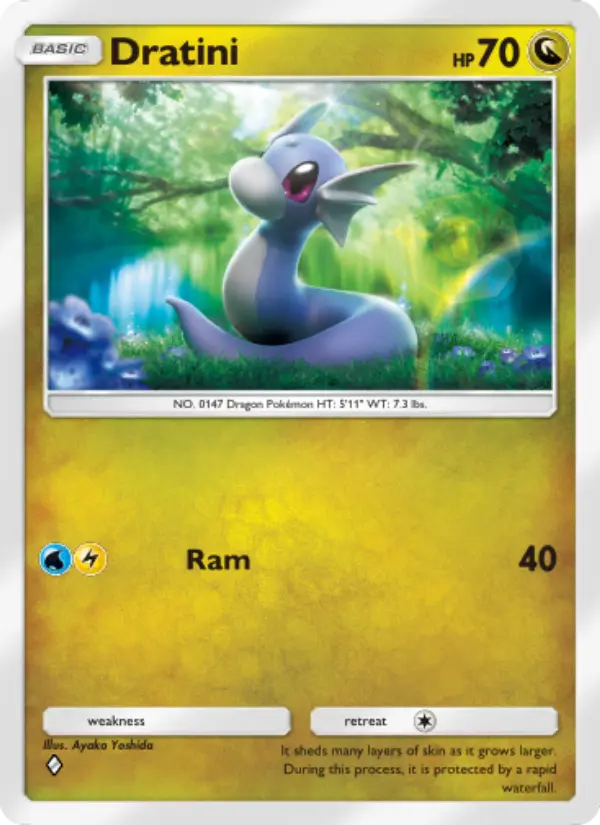
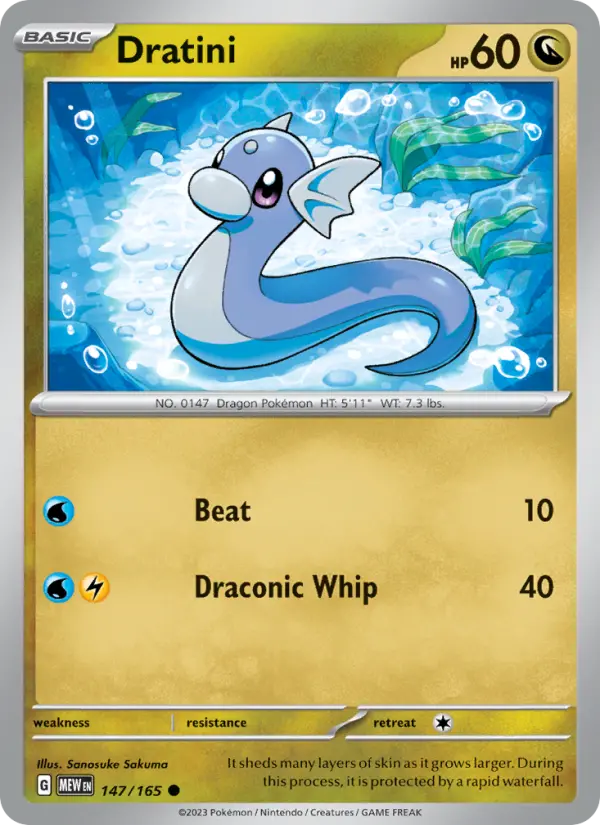
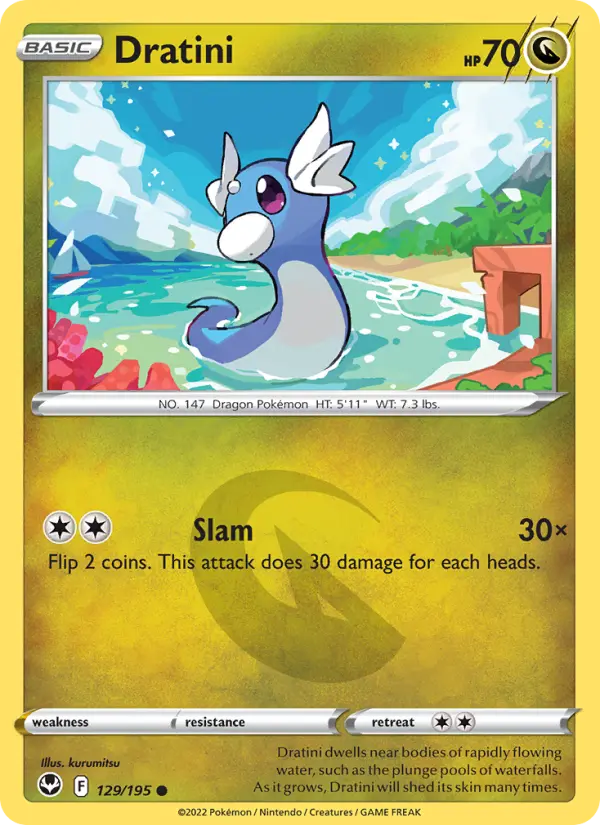
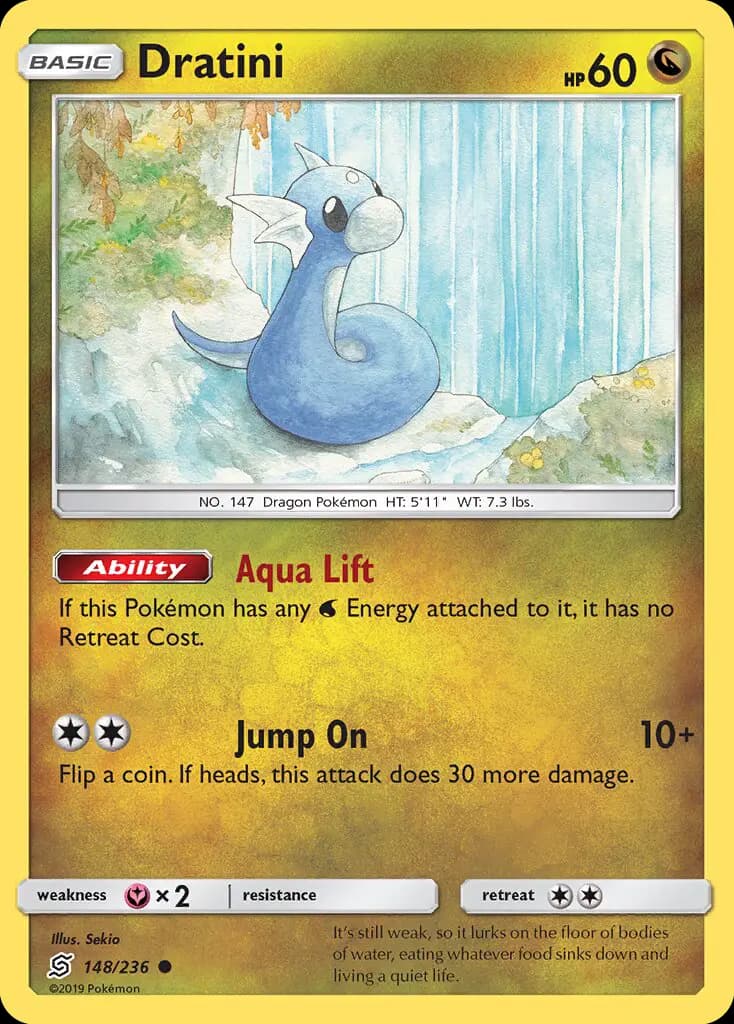
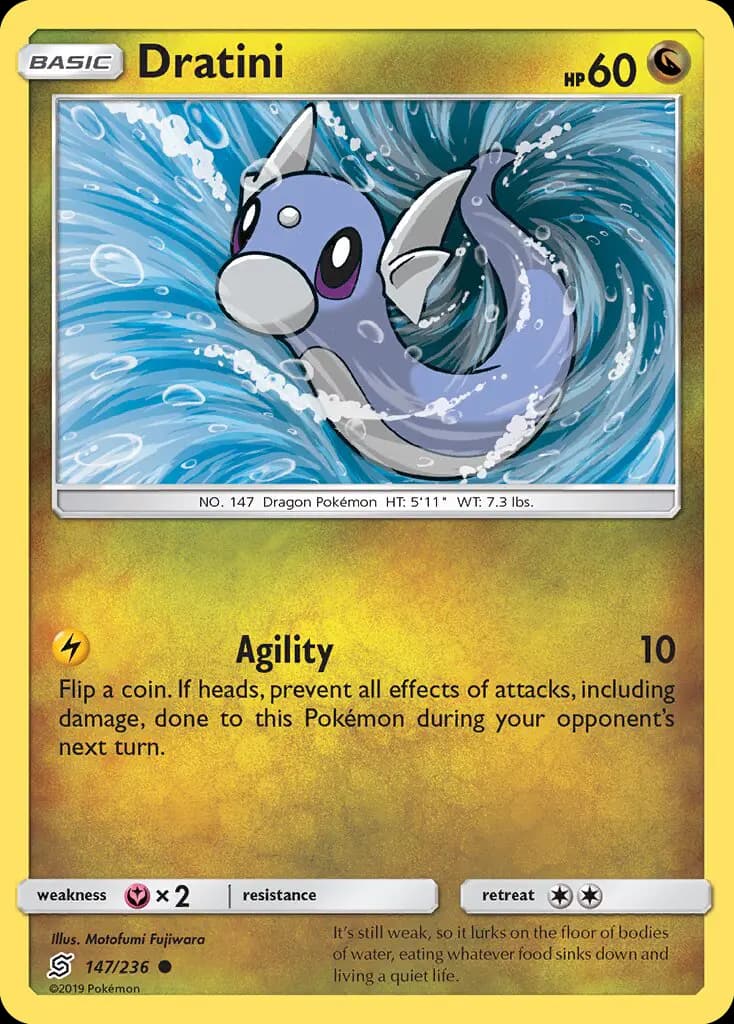
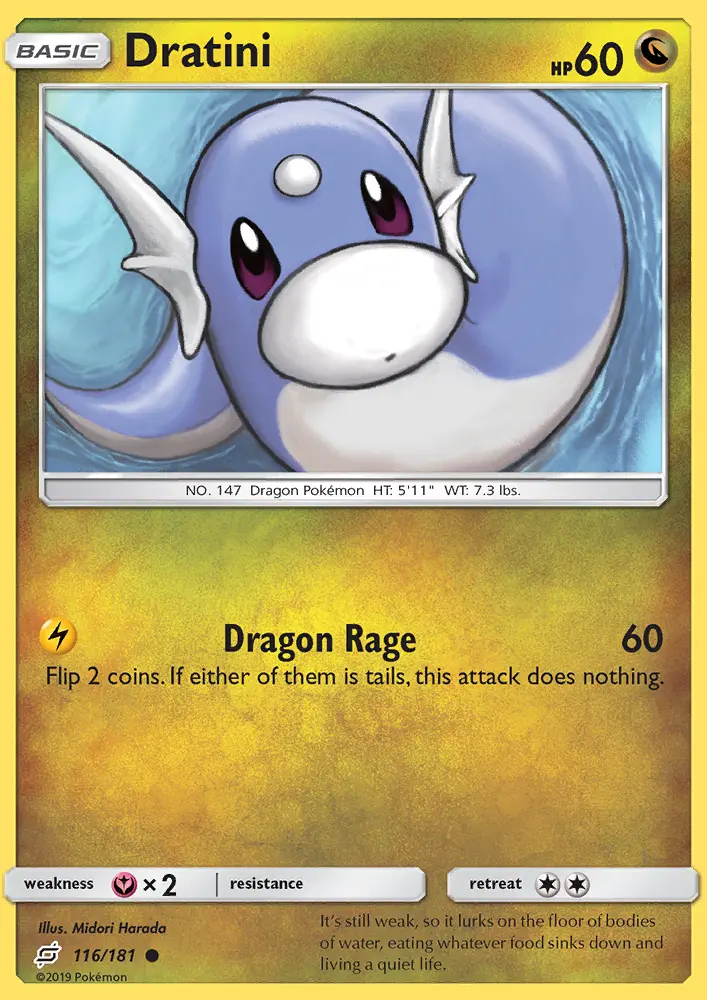
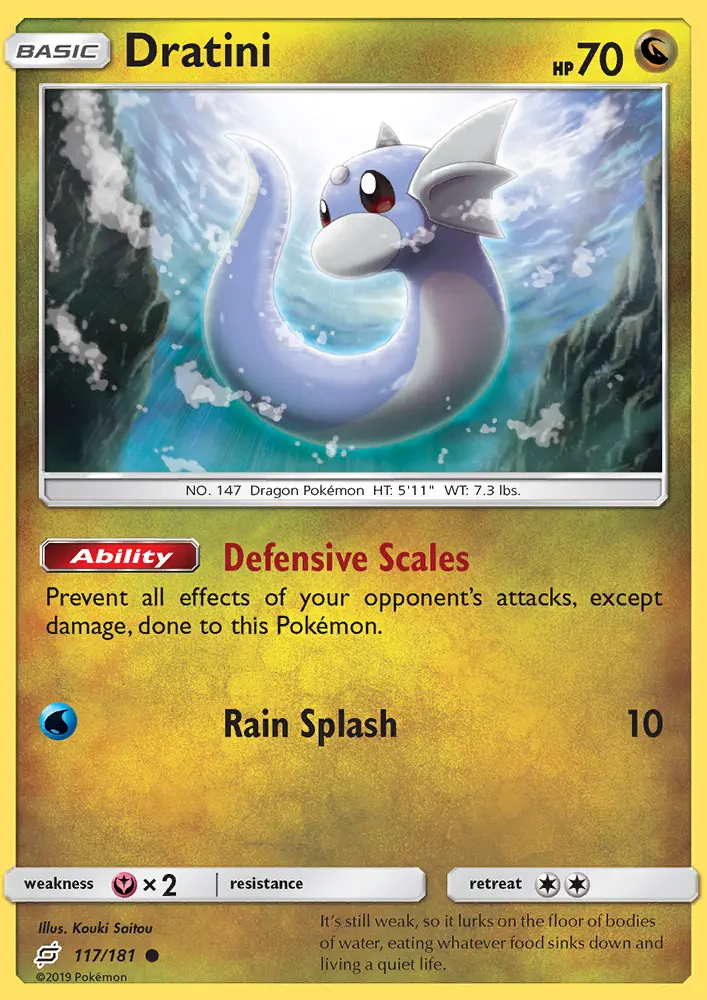
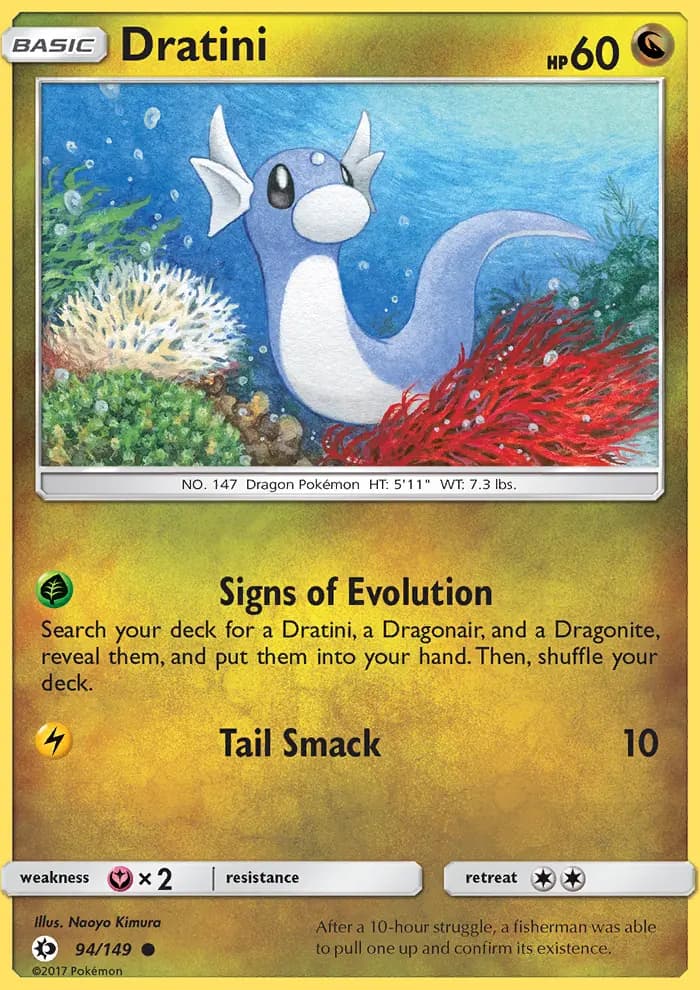
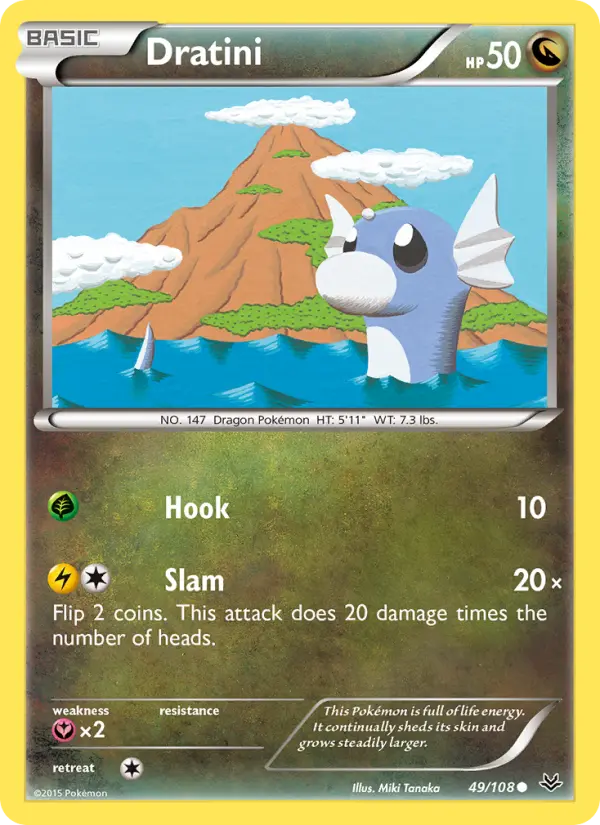
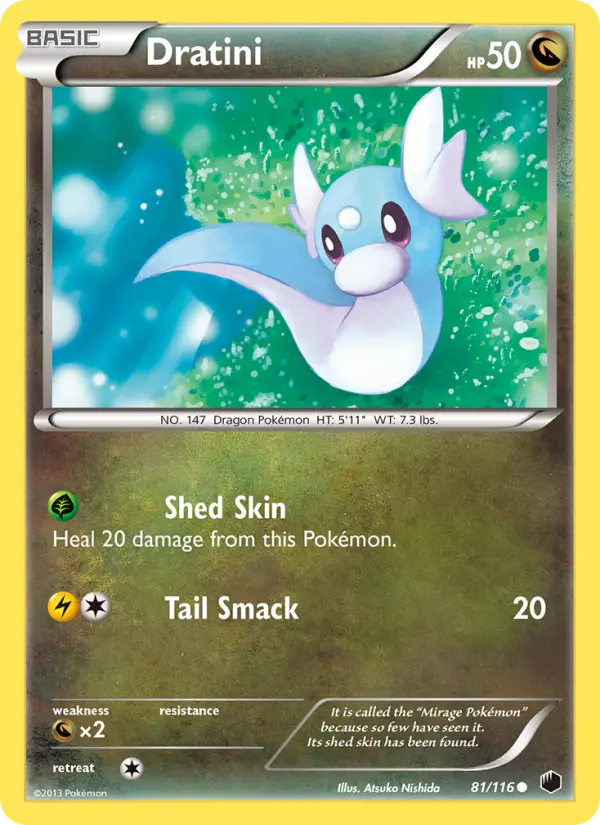
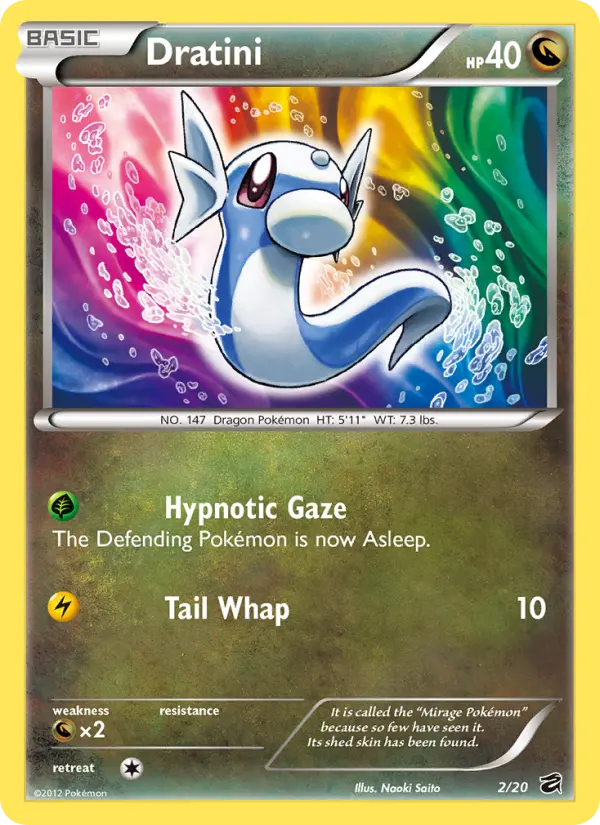
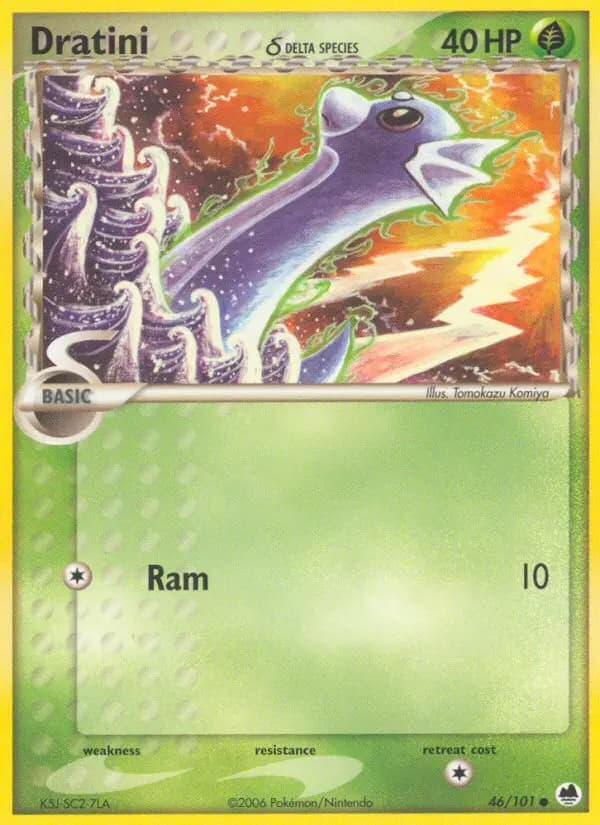
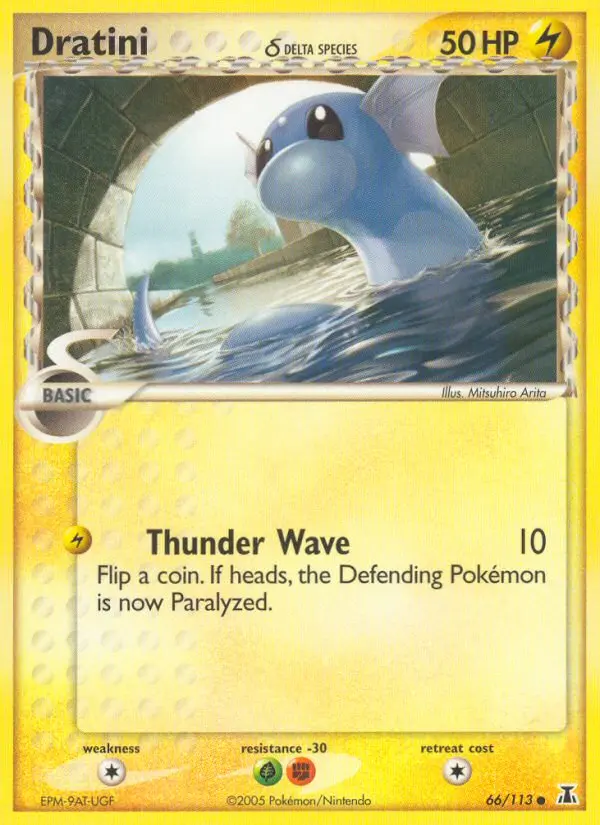
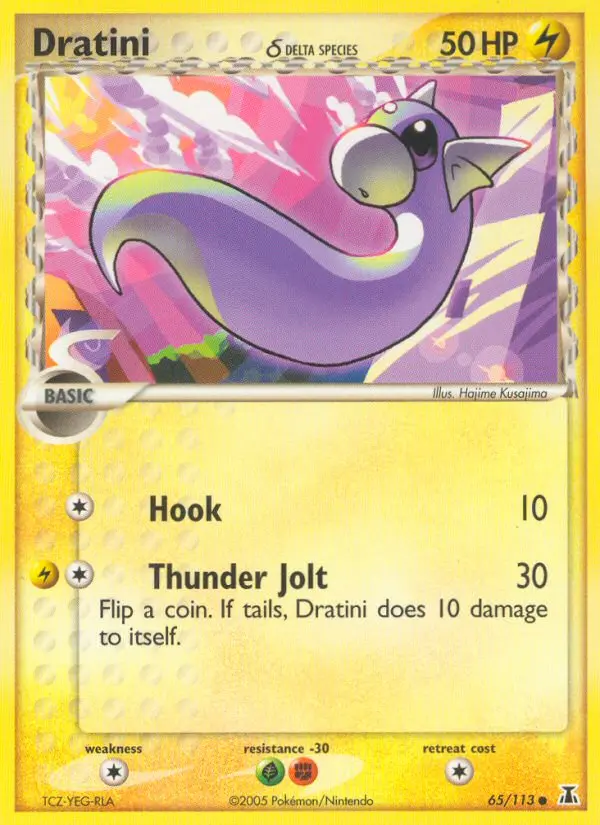
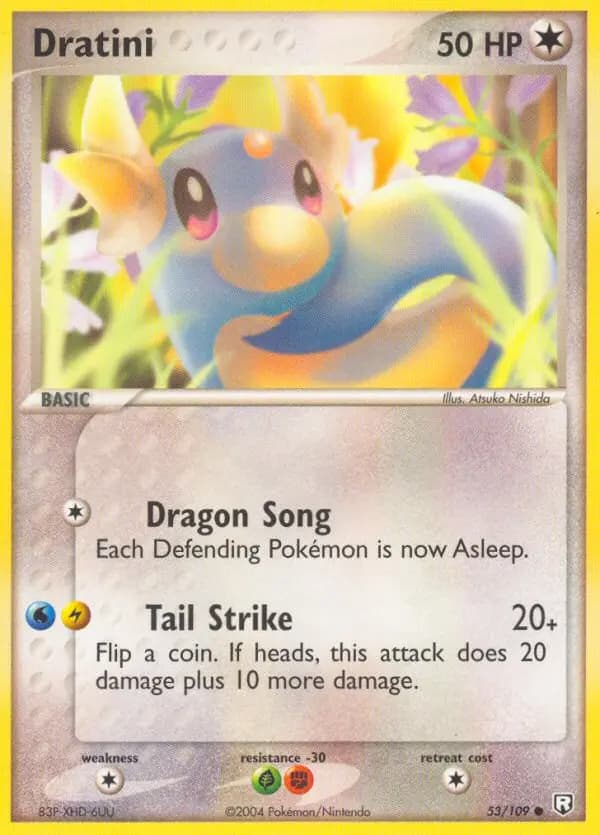
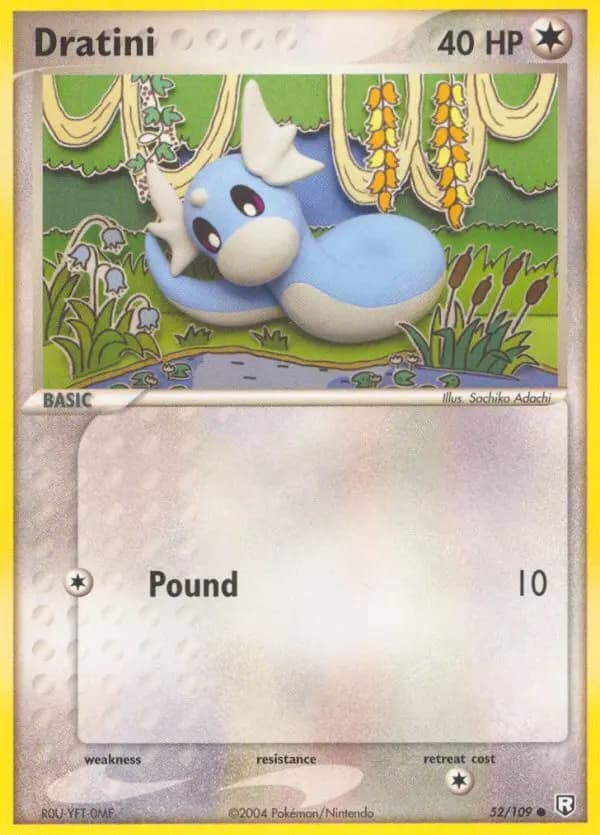
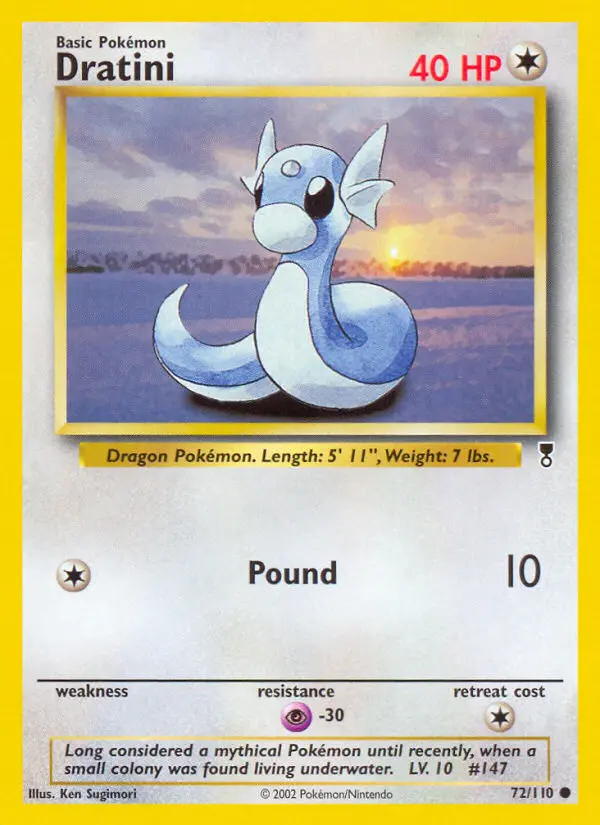
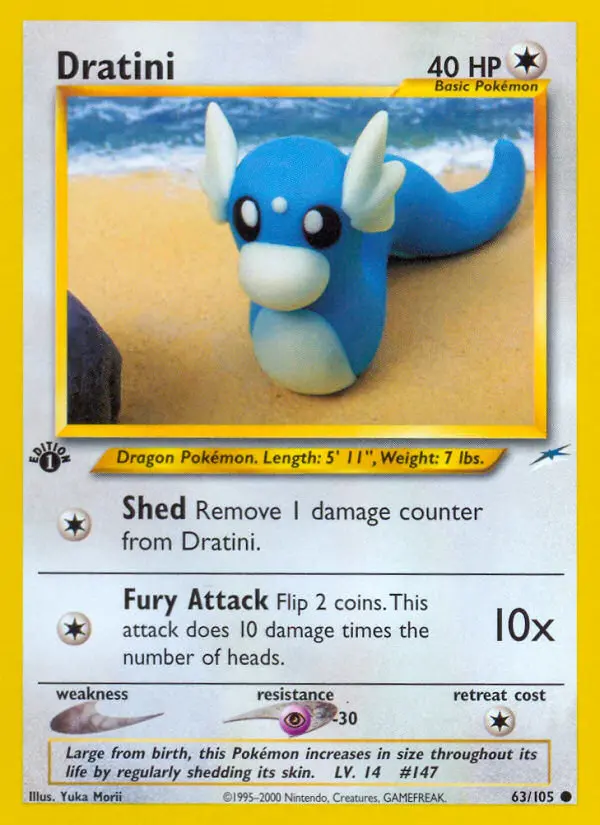
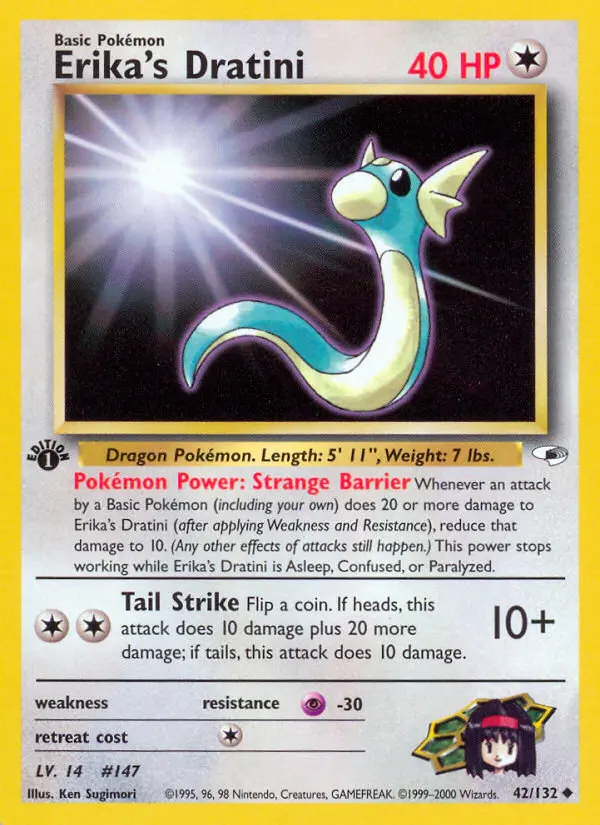
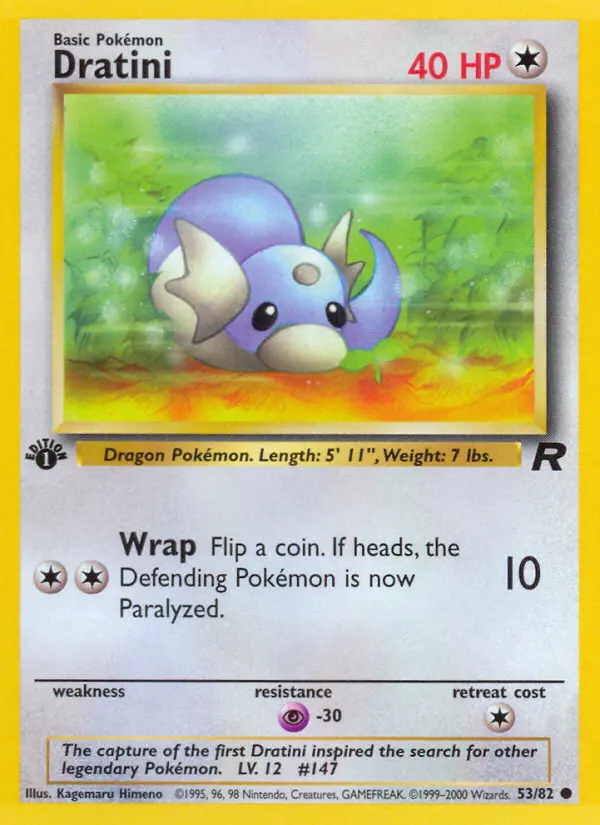
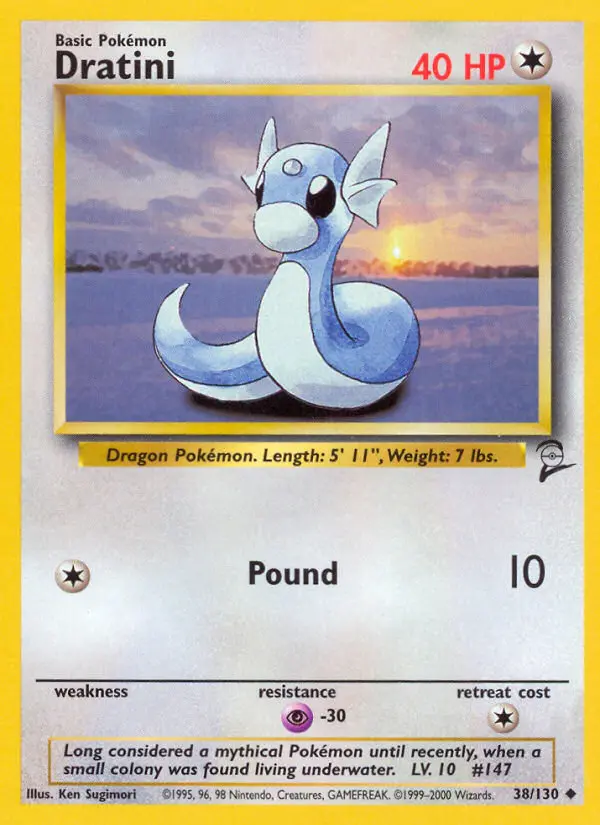
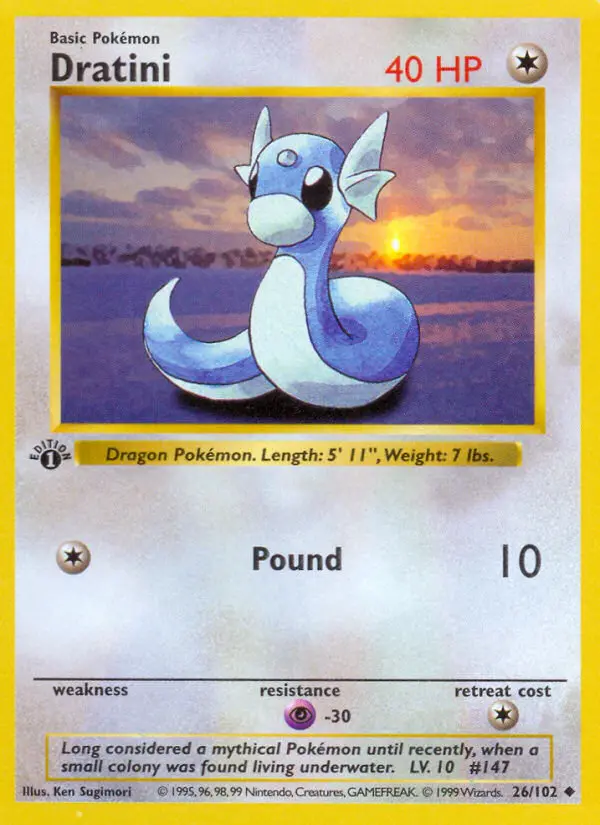
Dratini occupies a uniquely significant position within Pokémon popular culture as the series' quintessential "rare dragon," a designation that established the template for how subsequent generations would treat dragon-type Pokémon rarity and prestige. The Pokémon's famous mythical status resonated powerfully with audiences, creating a persistent cultural narrative around the validation of previously dismissed legends and the discovery of creatures thought to exist only in folklore. This narrative proved so compelling that later generations repeatedly referenced Dratini's journey from myth to confirmed reality, with various Pokédex entries acknowledging the fisherman who discovered it as a legendary figure in Pokémon history. The species achieved additional prominence through its appearance in the Pokémon Trading Card Game, where various Dratini cards have become collector's items, particularly earlier editions featuring vintage artwork. In the animated series, Dratini received several memorable appearances, most notably through Clair's Dratini in the Johto region episodes, where the creature's rarity and evolutionary potential became central plot elements. The Pokémon has maintained consistent visual recognition across all nine generations of games, never receiving design alterations despite extensive Pokédex expansion, testament to the timeless appeal of its original conception. Dratini continues to represent the dragon-type archetype in introductory Pokémon discussions and merchandise, serving as a gateway specimen that inspires players to pursue the legendary dragon-type journey.
Where to Find Dratini in Every Pokémon Game
Dratini's availability varies considerably across Pokémon games, reflecting both its legendary rarity within the fictional world and practical game design decisions about trainer accessibility. In the original Generation I games (Red, Blue, and Yellow), Dratini proves notoriously difficult to obtain, typically available only through fishing in specific locations or exclusive to particular trainer battles, maintaining the species' mystique through scarcity. Subsequent generations generally relaxed availability constraints, featuring Dratini in various water routes and caves depending on the regional Pokédex structure. In recent generation titles like Pokémon Sword and Shield, Dratini appears as a moderately common encounter in the Crown Tundra expansion area, though availability remains tied to specific water-based locations rather than appearing universally across all regions. The Let's Go Pikachu and Let's Go Eevee remakes restored some of the original accessibility patterns while updating encounter mechanics for modern gameplay. Dratini's capture rate of 45 indicates moderate difficulty in securing specimens without adequate preparation, requiring standard-grade Poké Balls or status condition applications for efficient capture. The species experiences a capture rate multiplier based on health status and ball type, with Dratini typically requiring multiple attempts or tactical status condition application for reliable capture. For players committed to obtaining competitive-viable Dratini specimens with optimal individual values, breeding remains the most reliable method, ensuring control over stats and inherited move pools despite the lengthy incubation periods required.