Electrode
Generation I · #0101 — Ball Pokémon
Electrode's profile is easy to undersell: 1.2 m, 66.6 kg, and a electric typing that doesn't scream power — until you look at its Speed of 150. The Pokédex consistently warns of Electrode's volatile nature; it is described as inherently dangerous due to the immense electrical energy compressed within its spherical body, capable of detonating with minimal provocation. Its Abilities—Soundproof, Static, and the hidden Aftermath—each provide distinct tactical advantages, allowing it to either block sonic assaults, potentially paralyze physical attackers, or damage opponents through explosive retaliation.
Editor's Take
Electrode was the fastest Pokémon in Gen 1 with 140 base Speed and almost nothing to do with it, which makes it the earliest example of Speed alone not being a strategy.
Base Stats
Height
1.2m
Weight
66.6kg
Category
Ball Pokémon
Gender
Genderless
Color
red
Shape
ball
Habitat
urban
Abilities
Protects against sound-based moves.
Has a 30% chance of paralyzing attacking Pokémon on contact.
Damages the attacker for 1/4 its max HP when knocked out by a contact move.
Electrode Biology & Physical Characteristics
Electrode's body is a perfect sphere, deliberately resembling an upside-down Poké Ball in design, with its top hemisphere rendered in white and the lower hemisphere in vivid red, accented by a perpetual black-line smile, slit eyes, and prominent eyebrows that convey an almost mischievous expression. Standing at 1.2 meters tall and weighing 66.6 kilograms, Electrode maintains a compact, dense form despite containing a catastrophic amount of stored electrical energy. The Pokédex entries from multiple generations paint a picture of a creature functioning as a living capacitor; it stores electric energy under extremely high pressure within its biological structure, with even minimal external shock potentially triggering violent explosions. Its weight and proportions suggest a core of densely packed electrical potential, analogous to industrial power accumulators. Electrode's physiology appears to thrive on electricity itself—it is famously attracted to power plants where freshly generated electricity provides both sustenance and stimulation. The species exhibits genderless characteristics, reproducing through the Mineral egg group, and hatches from eggs after approximately 20 cycles, indicating a relatively straightforward biological development despite its volatile nature.
Pokedex Numbers
Training
Breeding
Electrode Breeding, Gender Ratio & Egg Groups
Electrode, like its pre-evolution Voltorb, exhibits genderless characteristics, meaning it lacks the male/female distinction that defines reproductive roles in most Pokémon species. This genderless status places Electrode within the Mineral egg group, a classification that encompasses various rock-like, metallic, and crystalline Pokémon whose reproductive biology diverges substantially from biological norms. Genderless Pokémon breed by pairing with Ditto, the shape-shifting Pokémon capable of assuming any form necessary for reproduction, or occasionally with other genderless Pokémon within the same egg group. The egg cycle counter for Electrode stands at 20 cycles, translating to approximately 4,884 to 5,140 steps of in-game travel before an egg containing a Voltorb hatches—placing it in the moderate-hatching-time category. This reproductive biology suggests that Electrode and Voltorb reproduce through mechanisms more akin to mineral crystallization or electrical regeneration than traditional biological reproduction, consistent with their nature as creatures composed primarily of contained electrical energy rather than organic tissue. The genderless classification reflects the species' fundamental nature as mobile repositories of electrical force, transcending the gendered reproduction paradigm. Trainers seeking to breed Electrode for specific movesets or stats should employ Ditto, selecting partners with desirable natures and individual values to optimize offspring potential.
Sprites






TMs & HMs
tm01
lets go pikachu lets go eevee
tm02
crystal
tm02
gold silver
tm02
lets go pikachu lets go eevee
tm03
crystal
tm03
gold silver
tm03
lets go pikachu lets go eevee
tm04
gold silver
tm04
crystal
tm04
lets go pikachu lets go eevee
tm05
lets go pikachu lets go eevee
tm06
yellow
tm06
gold silver
tm06
red blue
tm06
crystal
tm06
emerald
tm06
firered leafgreen
tm06
diamond pearl
tm06
platinum
tm06
ruby sapphire
+577 more TMs/HMs
Electrode's Evolution Chain


Electrode Evolution, Mega Evolution & Special Forms
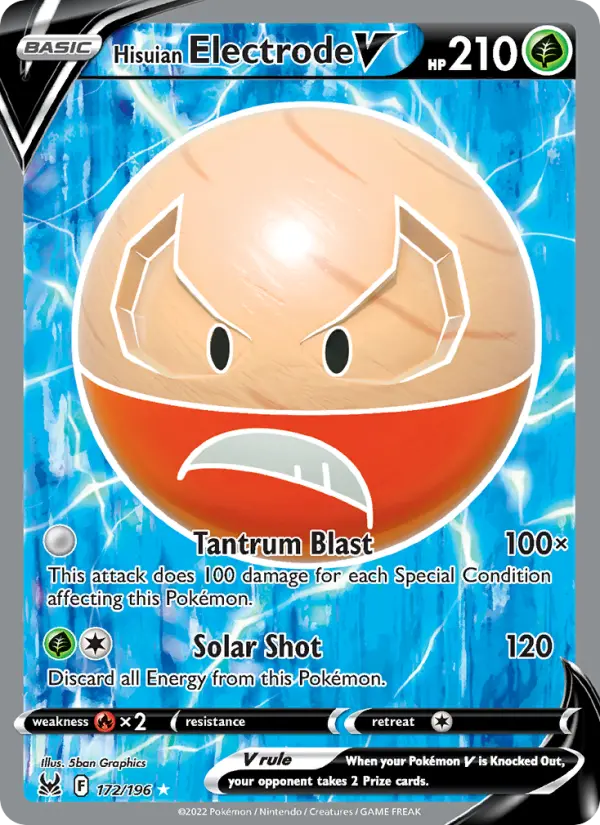
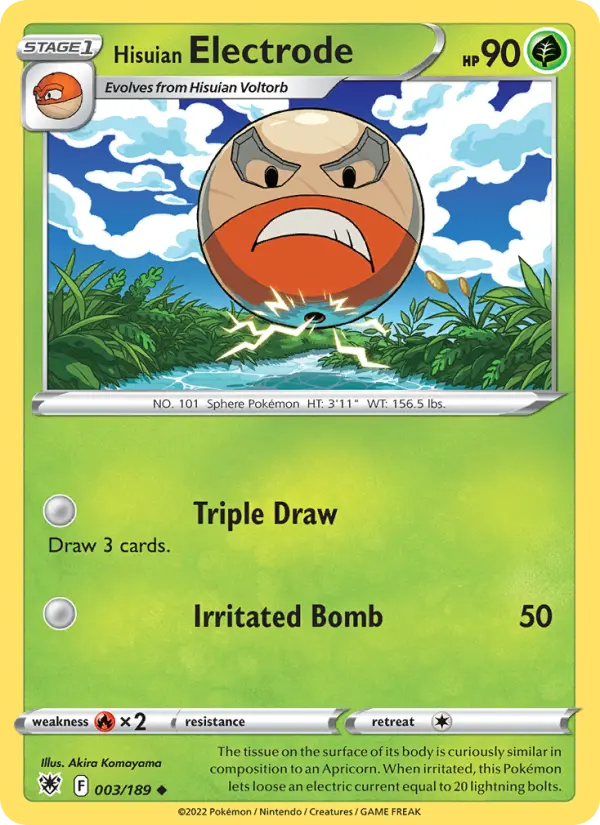
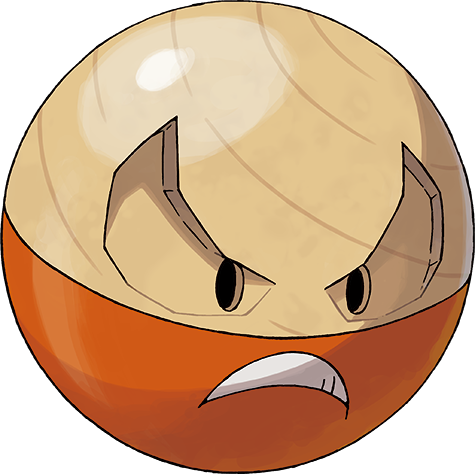
Electrode's evolution from Voltorb at level 30 represents a straightforward progression in the natural lifecycle, but one accompanied by a dramatic increase in power and capability. Upon evolution, Voltorb transforms its compact structure into Electrode's distinctive spherical form while simultaneously enhancing its electrical output and, most notably, dramatically accelerating its movement speed. The base Speed stat jumps from Voltorb's already respectable 100 to Electrode's exceptional 150, making this one of the most significant stat improvements upon evolution in Generation I. Special Attack and Special Defense both increase from 65 to 80, providing meaningful boosts to both offensive and defensive special capabilities, while Physical Attack remains comparatively low at 50, reflecting the species' specialization in special-based combat. This evolution exemplifies the principle that sometimes physical transformation in Pokémon is less dramatic than the underlying power enhancement—Electrode appears only slightly altered from its pre-evolved form, yet becomes substantially more formidable. In the Hisuian region, discovered through Pokémon Legends: Arceus, an Electric/Grass-type variant of Electrode evolves from Hisuian Voltorb when exposed to a Leaf Stone, introducing regional environmental factors into the evolutionary line and demonstrating how Electrode's potential adapts across different geographical and ecological contexts.
Where to Find
Power Plant
kanto
+15 more
Cerulean Cave
kanto
+17 more
Team Rocket Hq
johto
+18 more
Liberty Garden
unova
New Mauville
hoenn
+6 more
Team Magma Hideout
hoenn
+5 more
Team Aqua Hideout
hoenn
+3 more
Lost Hotel
kalos
+1 more
Team Rockets Castle
alola
+1 more
Electrode Behaviour and Natural Habitat
Electrode is naturally drawn to electrical power plants, where it congregates with others of its kind to feed on freshly generated electricity—a behavior that has made it simultaneously fascinating to researchers and problematic to power company operators. The creature appears to experience a form of restlessness when electrical energy levels are high; various Pokédex entries note that when Electrode possesses more electricity than it can safely contain and has insufficient outlets for its energy, it amuses itself by exploding, suggesting not mere mechanical instability but a genuine behavioral compulsion related to its energy saturation. Its habitat preference for industrial electrical infrastructure indicates an unusual adaptation to artificial environments, though this may reflect evolutionary history in regions with heavy electrical development. Despite its volatile tendencies, Electrode maintains relatively high base happiness (70), suggesting it is not inherently aggressive but rather simply energetically unpredictable. Its speed—unmatched among most Pokémon—appears essential to its survival strategy, allowing rapid escape or repositioning before potential detonations occur. In competitive settings and natural encounters, Electrode demonstrates the characteristic personality of an Electric-type: energetic, impulsive, and perpetually charged with potential action.
Pokedex Entries
It stores electric energy under very high pressure. It often explodes with little or no provocation.
Stores electrical energy inside its body. Even the slightest shock could trigger a huge explosion.
It is dangerous. If it has too much electricity and has nothing to do, it amuses itself by exploding.
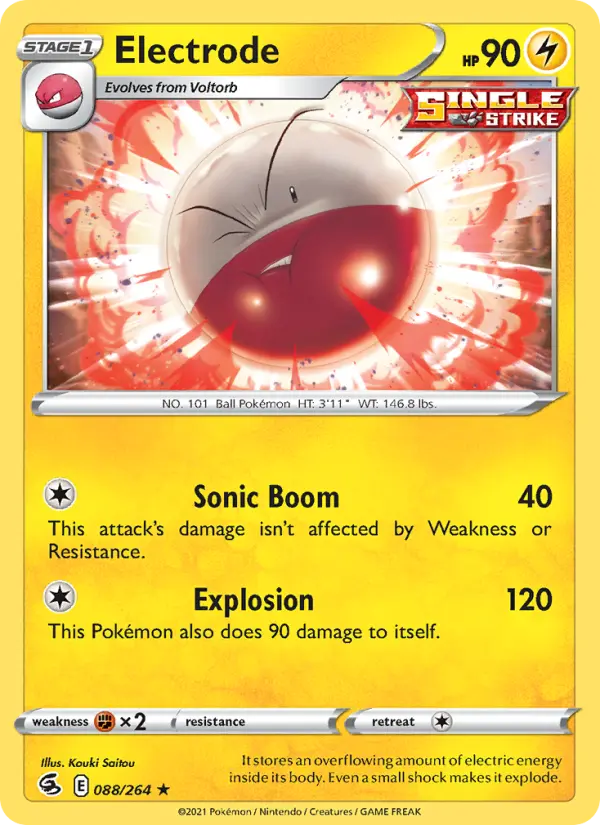
It stores an over flowing amount of electric energy inside its body. Even a small shock makes it explode.
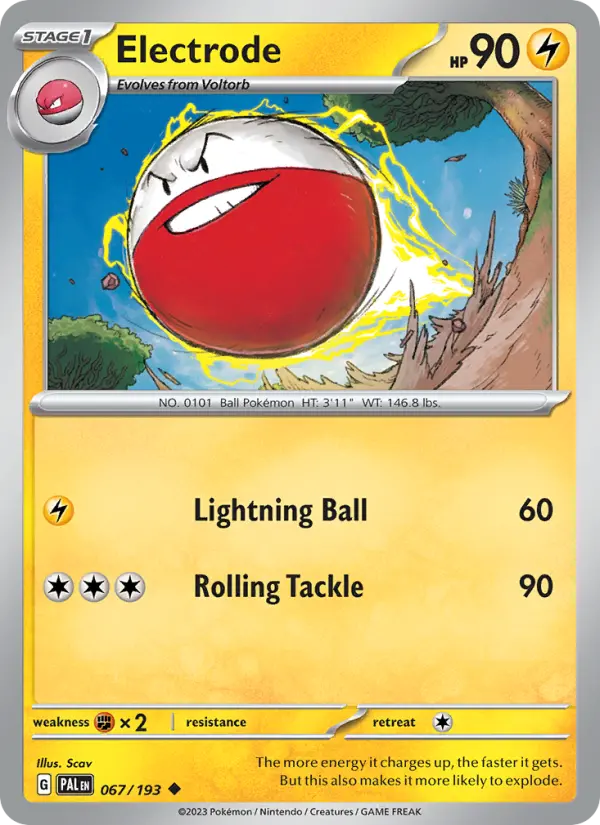
The more energy it charges up, the faster it gets. But this also makes it more likely to explode.
ELECTRODE eats electricity in the atmosphere. On days when lightning strikes, you can see this POKéMON exploding all over the place from eating too much electricity.
One of ELECTRODE’s characteristics is its attraction to electricity. It is a problematical POKéMON that congregates mostly at electrical power plants to feed on electricity that has just been generated.
They appear in great numbers at electric power plants. Because they feed on electricity, they cause massive and chaotic blackouts in nearby cities.
It explodes in response to even minor stimuli. It is feared, with the nickname of “The Bomb Ball.”
It stores electric energy under very high pressure. It often explodes with little or no provocation.
It is known to drift on winds if it is bloated to bursting with stored electricity.
It is dangerous. If it has too much electricity and has nothing to do, it amuses itself by exploding.
It stores an overflowing amount of electric energy inside its body. Even a small shock makes it explode.
It is known to drift on winds if it is bloated to bursting with stored electricity.
It is known to drift on winds if it is bloated to bursting with stored electricity.
It explodes in response to even minor stimuli. It is feared, with the nickname of “The Bomb Ball.”
It stores an overflowing amount of electric energy inside its body. Even a small shock makes it explode.
Electrode eats electricity in the atmosphere. On days when lightning strikes, you can see this Pokémon exploding all over the place from eating too much electricity.
One of Electrode’s characteristics is its attraction to electricity. It is a problematical Pokémon that congregates mostly at electrical power plants to feed on electricity that has just been generated.
Stores electrical energy inside its body. Even the slightest shock could trigger a huge explosion.
The tissue on the surface of its body is curiously similar in composition to an Apricorn. When irritated, this Pokémon lets loose an electric current equal to 20 lightning bolts.
Electrode Name Origin & Design Inspiration
Electrode's design as an inverted Poké Ball is immediately iconic and deliberately intentional, serving as a visual pun that grounded the species in Generation I's foundational lore and aesthetics. The name 'Electrode' derives from the concept of electrodes—the terminals through which electrical current enters or leaves a conductor—perfectly capturing the creature's role as a conduit and repository of electrical energy. The Japanese name 'Marumine' (マルマイン) combines 'maru' (circular/round) with 'mine' (a mining reference, possibly alluding to mineral wealth or electrical ore), emphasizing both its spherical form and mineral-related biology reflected in its Mineral egg group classification. The design language of wide eyebrows and a perpetual smile-like mouth marking creates an expression that reads as either gleeful energy or mischievous intensity—appropriate for a Pokémon prone to explosive outbursts. The color scheme's intentional resemblance to a Poké Ball inverted creates thematic coherence within the broader Generation I design philosophy, where several Pokémon reflected the franchise's mechanical foundation. The spherical form itself serves practical design purposes, suggesting maximum surface area for rapid electromagnetic discharge while maintaining a compact, aerodynamic profile befitting its extraordinary velocity. This elegant simplicity in design—refined from Voltorb's nearly identical appearance—demonstrates how subtle enhancements in detail and proportion can communicate evolution without requiring radical visual transformation.
Learnable Moves
Electrode can learn 73 moves:
Move | Type | Cat. | Power | Acc. | PP |
|---|---|---|---|---|---|
| agility | psychic | Status | — | — | 30 |
| bide | normal | Physical | — | — | 10 |
| charge | electric | Status | — | — | 20 |
| charge beam | electric | Special | 50 | 90 | 10 |
| confide | normal | Status | — | — | 20 |
| curse | ghost | Status | — | — | 10 |
| discharge | electric | Special | 80 | 100 | 15 |
| double team | normal | Status | — | — | 15 |
| double edge | normal | Physical | 120 | 100 | 15 |
| eerie impulse | electric | Status | — | 100 | 15 |
| electric terrain | electric | Status | — | — | 10 |
| electro ball | electric | Special | — | 100 | 10 |
| electroweb | electric | Special | 55 | 95 | 15 |
| endure | normal | Status | — | — | 10 |
| explosion | normal | Physical | 250 | 100 | 5 |
| facade | normal | Physical | 70 | 100 | 20 |
| flash | normal | Status | — | 100 | 20 |
| foul play | dark | Physical | 95 | 100 | 15 |
| frustration | normal | Physical | — | 100 | 20 |
| giga impact | normal | Physical | 150 | 90 | 5 |
| gyro ball | steel | Physical | — | 100 | 5 |
| headbutt | normal | Physical | 70 | 100 | 15 |
| helping hand | normal | Status | — | — | 20 |
| hidden power | normal | Special | 60 | 100 | 15 |
| hyper beam | normal | Special | 150 | 90 | 5 |
| light screen | psychic | Status | — | — | 30 |
| magic coat | psychic | Status | — | — | 15 |
| magnet rise | electric | Status | — | — | 10 |
| magnetic flux | electric | Status | — | — | 20 |
| metal sound | steel | Status | — | 85 | 40 |
| mimic | normal | Status | — | — | 10 |
| mirror coat | psychic | Special | — | 100 | 20 |
| natural gift | normal | Physical | — | 100 | 15 |
| protect | normal | Status | — | — | 10 |
| rage | normal | Physical | 20 | 100 | 20 |
| rain dance | water | Status | — | — | 5 |
| reflect | psychic | Status | — | — | 20 |
| rest | psychic | Status | — | — | 5 |
| return | normal | Physical | — | 100 | 20 |
| rollout | rock | Physical | 30 | 90 | 20 |
| round | normal | Special | 60 | 100 | 15 |
| scary face | normal | Status | — | 100 | 10 |
| screech | normal | Status | — | 85 | 40 |
| secret power | normal | Physical | 70 | 100 | 20 |
| self destruct | normal | Physical | 200 | 100 | 5 |
| shock wave | electric | Special | 60 | — | 20 |
| signal beam | bug | Special | 75 | 100 | 15 |
| skull bash | normal | Physical | 130 | 100 | 10 |
| sleep talk | normal | Status | — | — | 10 |
| snore | normal | Special | 50 | 100 | 15 |
| sonic boom | normal | Special | — | 90 | 20 |
| spark | electric | Physical | 65 | 100 | 20 |
| substitute | normal | Status | — | — | 10 |
| sucker punch | dark | Physical | 70 | 100 | 5 |
| supercell slam | electric | Physical | 100 | 95 | 15 |
| swagger | normal | Status | — | 85 | 15 |
| swift | normal | Special | 60 | — | 20 |
| tackle | normal | Physical | 40 | 100 | 35 |
| take down | normal | Physical | 90 | 85 | 20 |
| taunt | dark | Status | — | 100 | 20 |
| telekinesis | psychic | Status | — | — | 15 |
| teleport | psychic | Status | — | — | 20 |
| tera blast | normal | Special | 80 | 100 | 10 |
| thief | dark | Physical | 60 | 100 | 25 |
| thunder | electric | Special | 110 | 70 | 10 |
| thunder shock | electric | Special | 40 | 100 | 30 |
| thunder wave | electric | Status | — | 90 | 20 |
| thunderbolt | electric | Special | 90 | 100 | 15 |
| torment | dark | Status | — | 100 | 15 |
| toxic | poison | Status | — | 90 | 10 |
| volt switch | electric | Special | 70 | 100 | 20 |
| wild charge | electric | Physical | 90 | 100 | 15 |
| zap cannon | electric | Special | 120 | 50 | 5 |
Electrode Competitive Battle Guide
Assessing its battle viability, Electrode occupies a specialized niche as a speed-centric special attacker with remarkable base 150 Speed, ensuring it acts first in nearly every scenario where no priority moves intervene. Its base Special Attack of 80, while moderate compared to dedicated special attackers, becomes substantially more threatening when amplified by favorable natures, strategic item selection (such as Life Orb or Choice Specs), and movepool diversity. Electrode can learn an extensive array of Electric-type moves including Thunderbolt, Thunder Wave, and Volt Switch, alongside coverage options like Focus Blast and Hidden Power variants, allowing flexible teambuilding strategies. The Static ability provides passive paralysis opportunity against physical attackers, while Soundproof protection against sound-based moves—though niche—offers defensive utility in specific metagames. Its greatest limitation stems from modest defensive stats (70 Defense, 80 Special Defense, 60 HP), making it vulnerable to priority moves and bulky threats that can withstand its offense. The hidden Ability Aftermath, dealing 1/4 damage to physical attackers upon fainting, introduces a deterrent against aggressive physical opponents. In modern competitive formats, Electrode faces competition from faster or bulkier Electric-types, though its exceptional speed tier and special movepool maintain its relevance in formats demanding rapid offensive setup or pivoting via Volt Switch. Successful Electrode builds exploit Trick Room reversal, utilize entry hazard support, or leverage its mobility for hit-and-run tactical approaches.
Commonly Asked Questions About Electrode
What type is Electrode?
Electrode is a electric type Pokemon.
What does Electrode evolve from?
Electrode evolved from voltorb.
What are Electrode's weaknesses?
Electrode is weak to ground type moves.
Where can I find Electrode?
Electrode can be found in power plant (kanto), cerulean cave (kanto) and team rocket hq (johto) and 6 other locations.
Electrode Cultural Impact & Franchise History
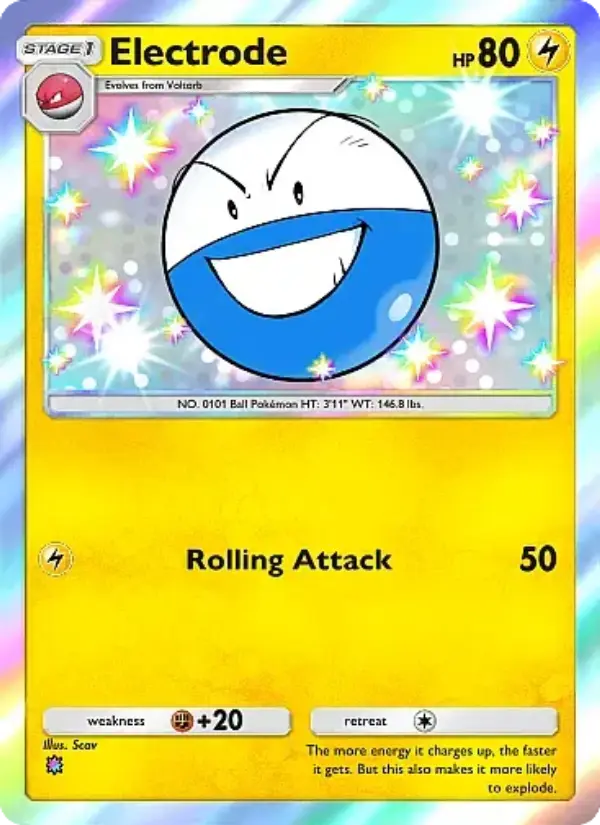
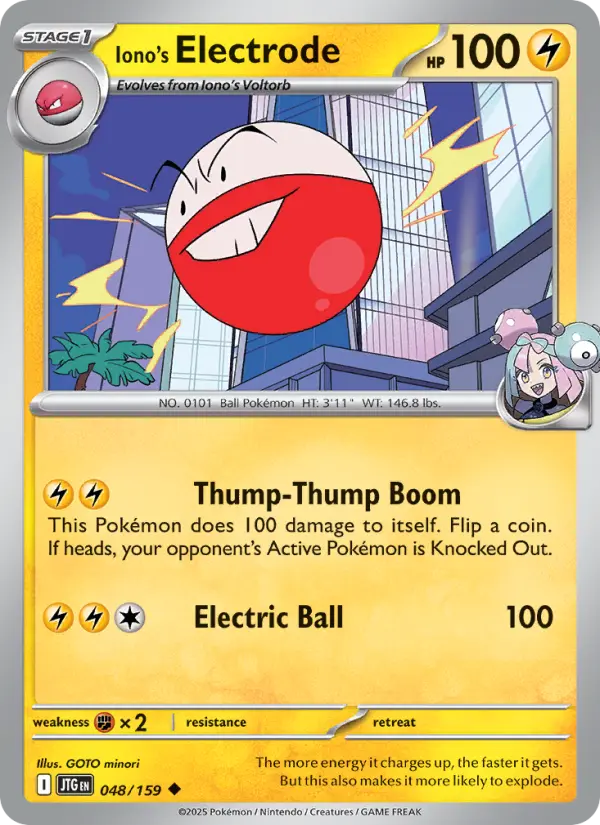
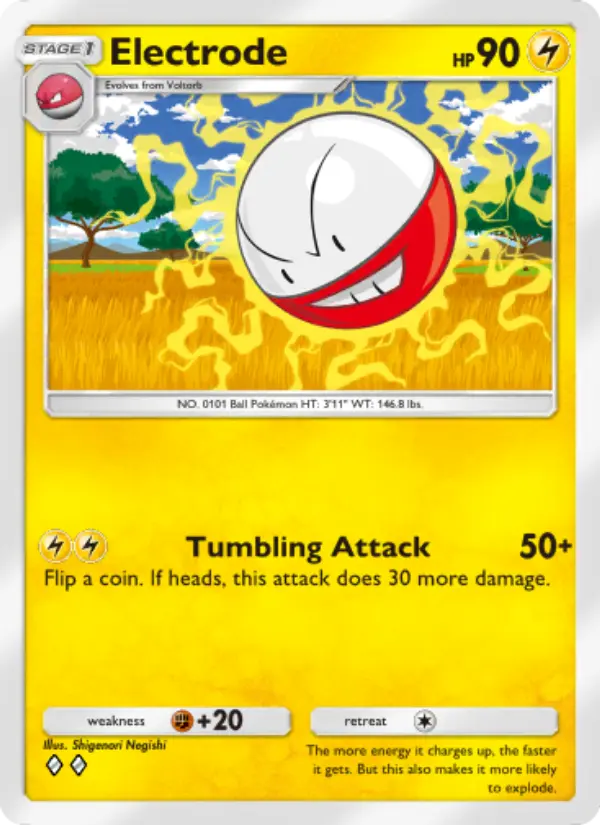
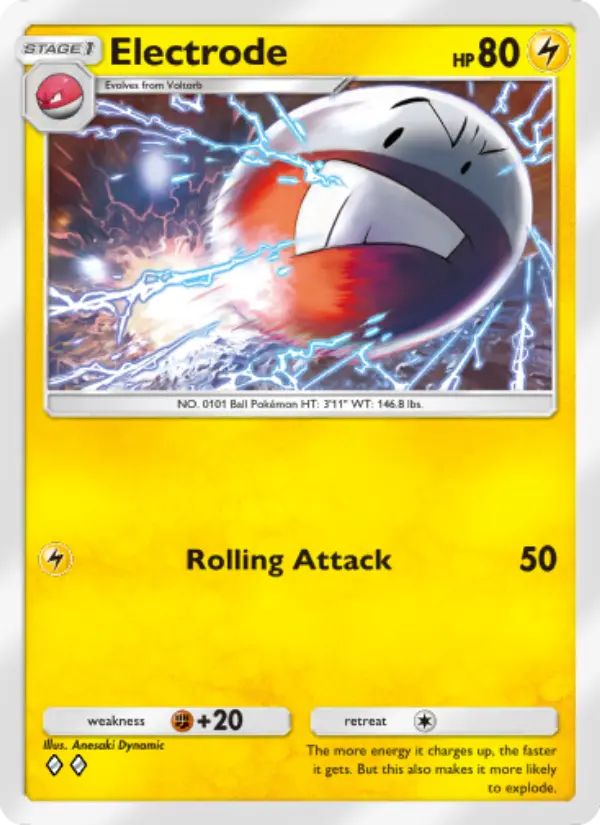
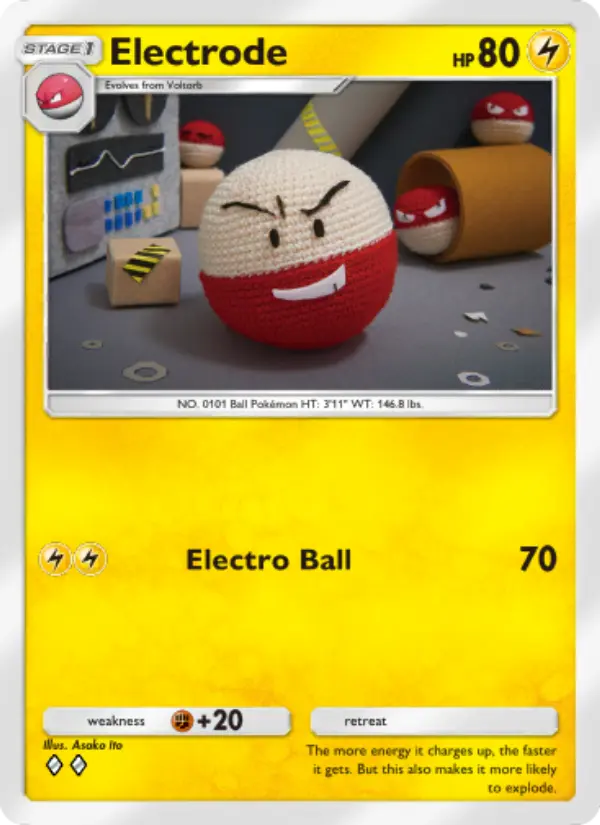
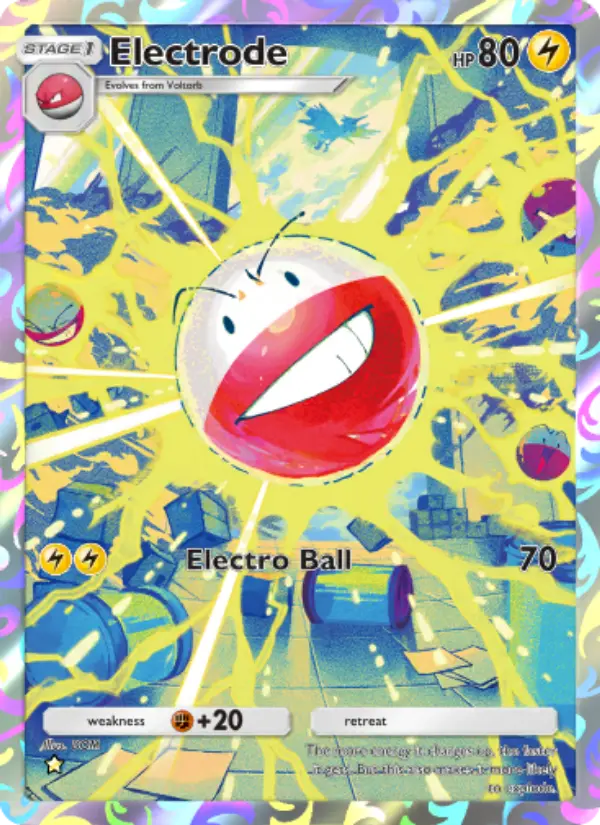
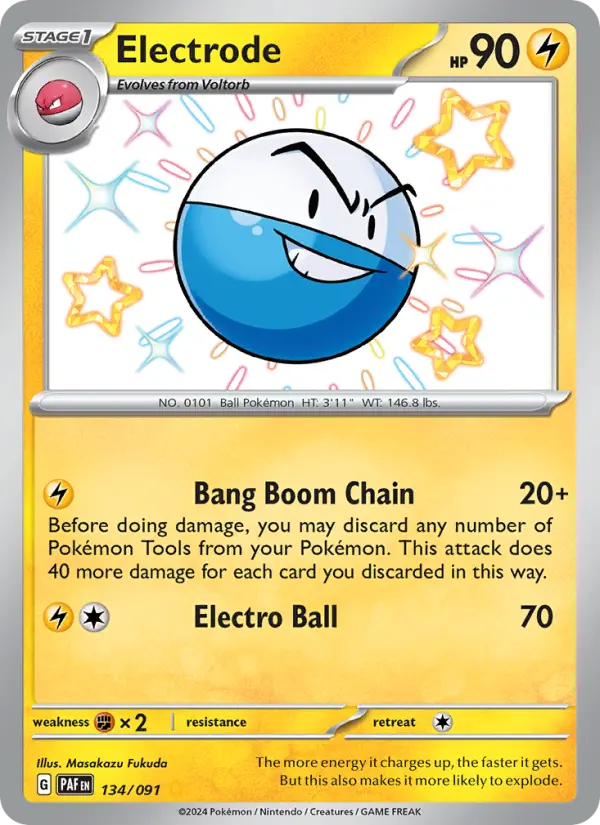
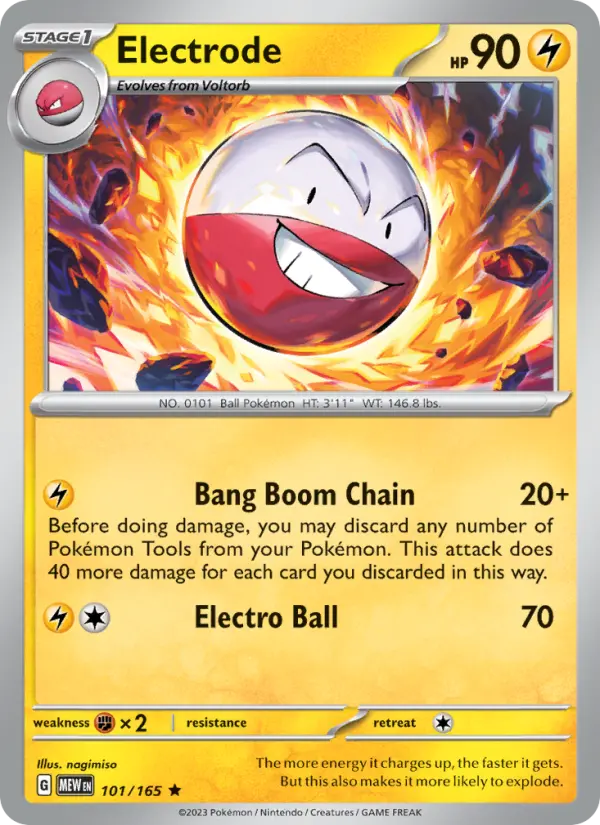
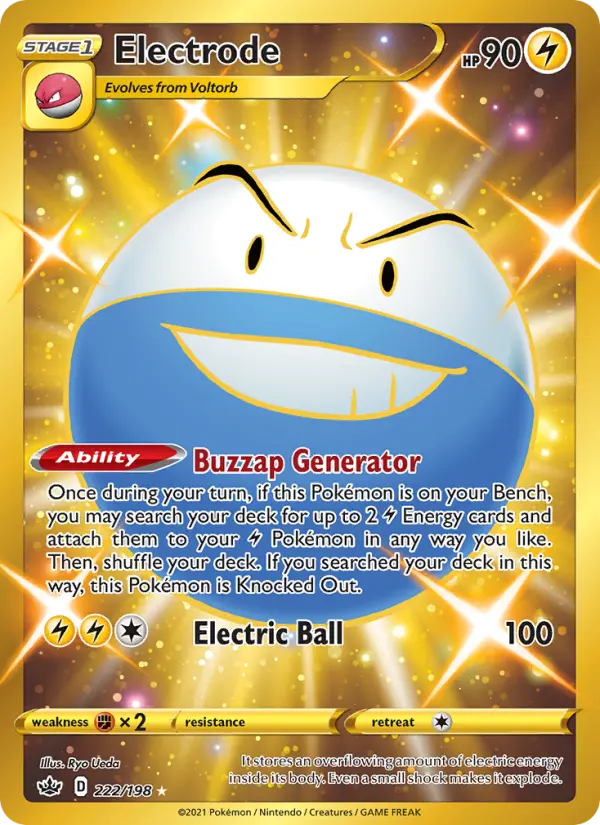
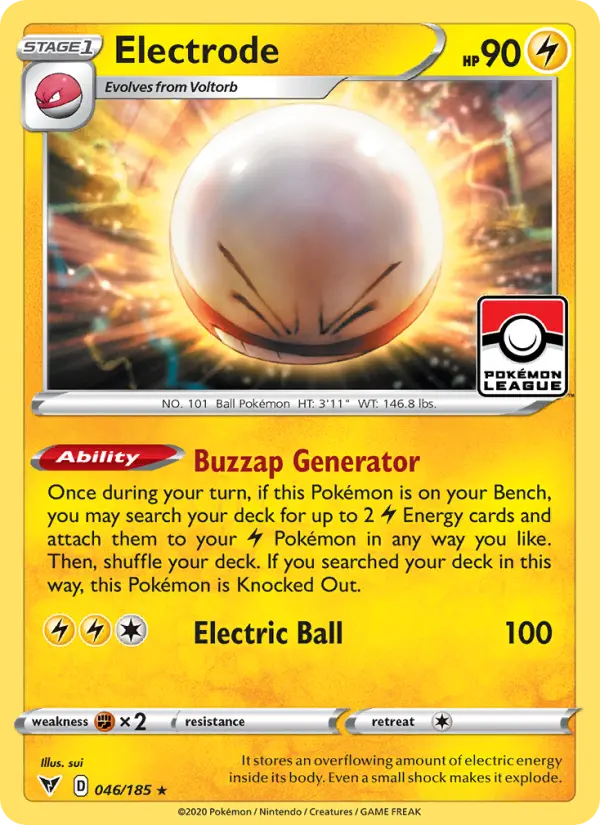
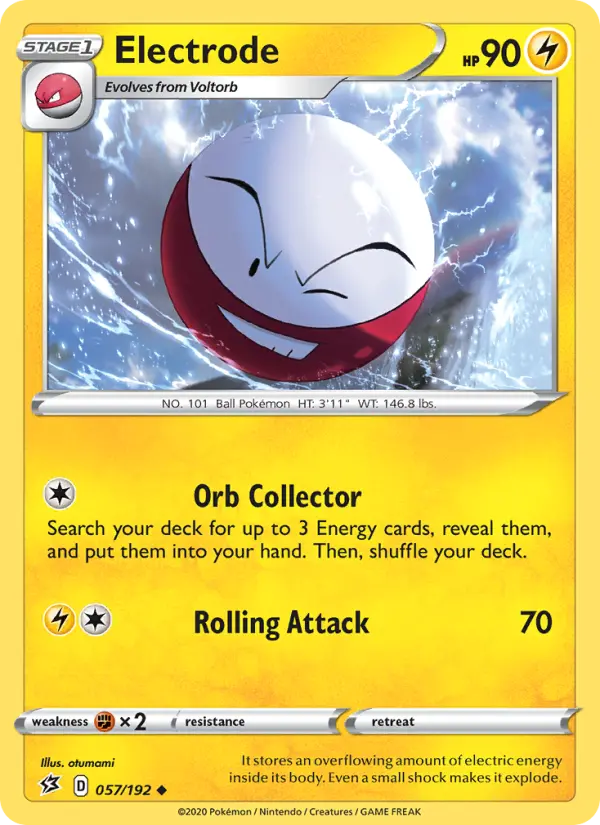
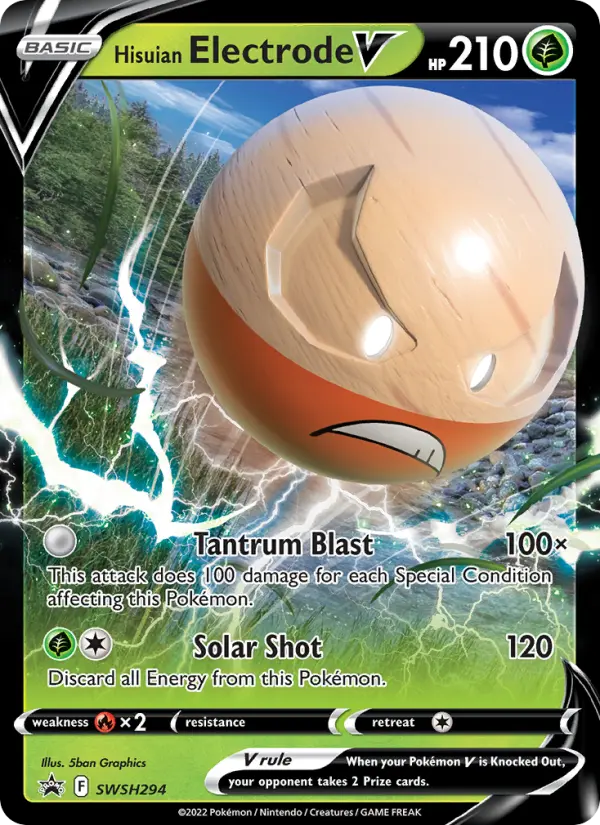
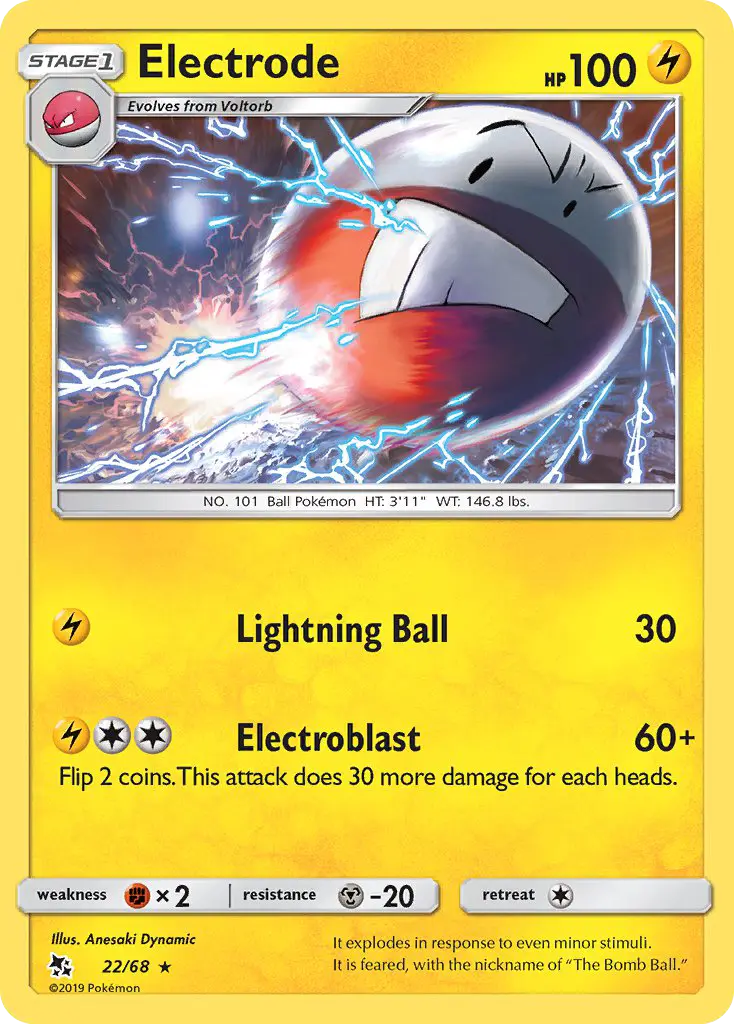
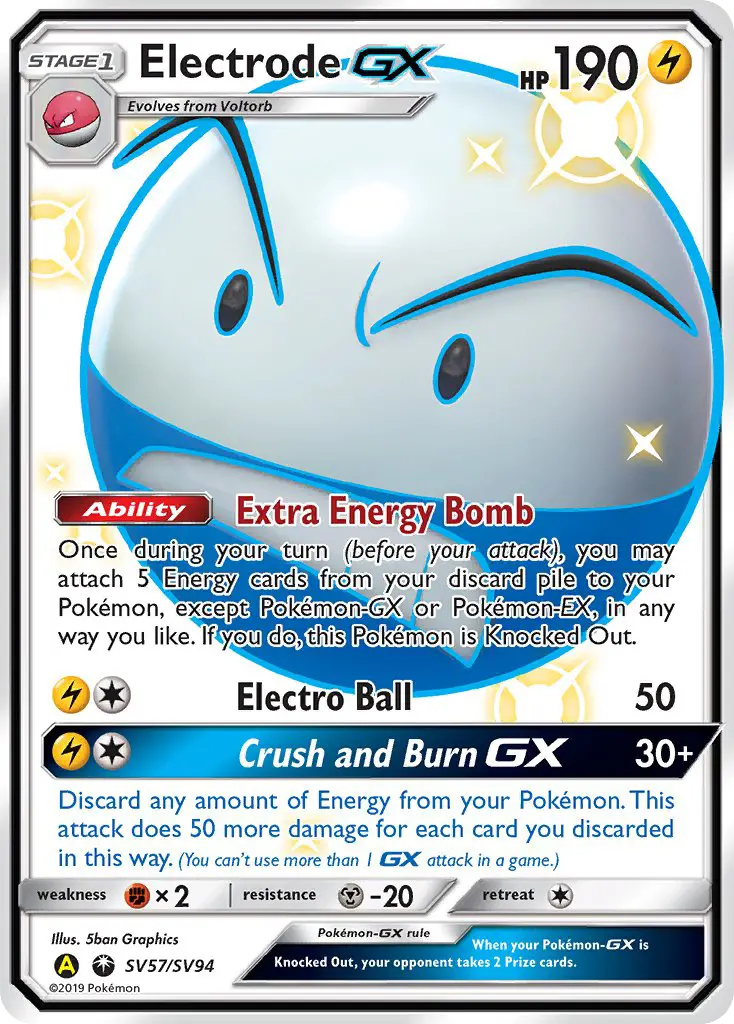
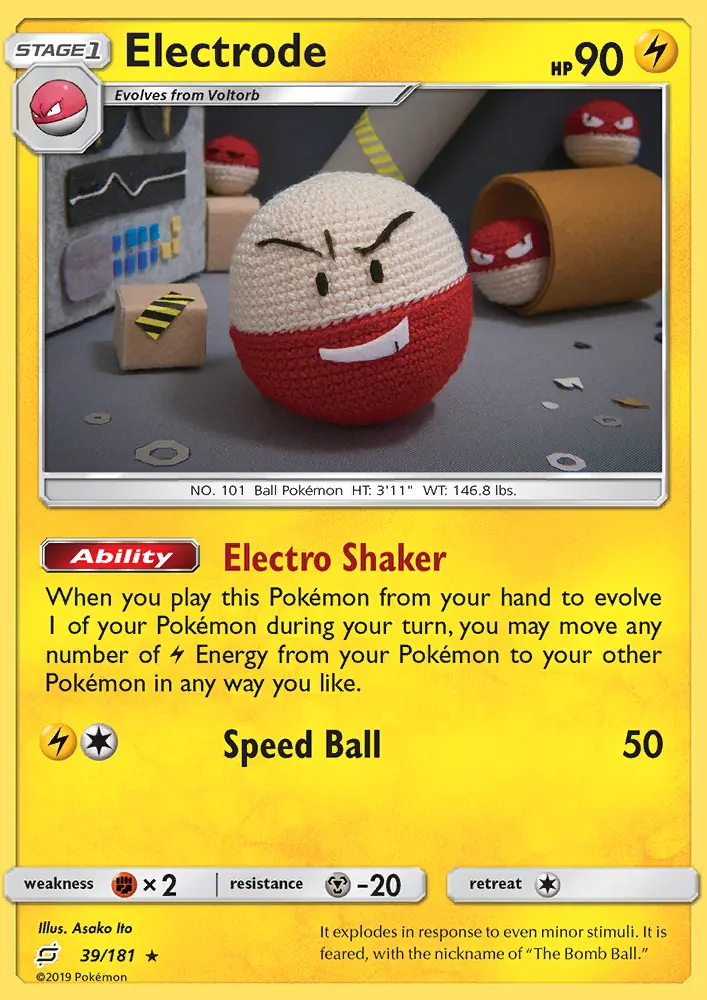
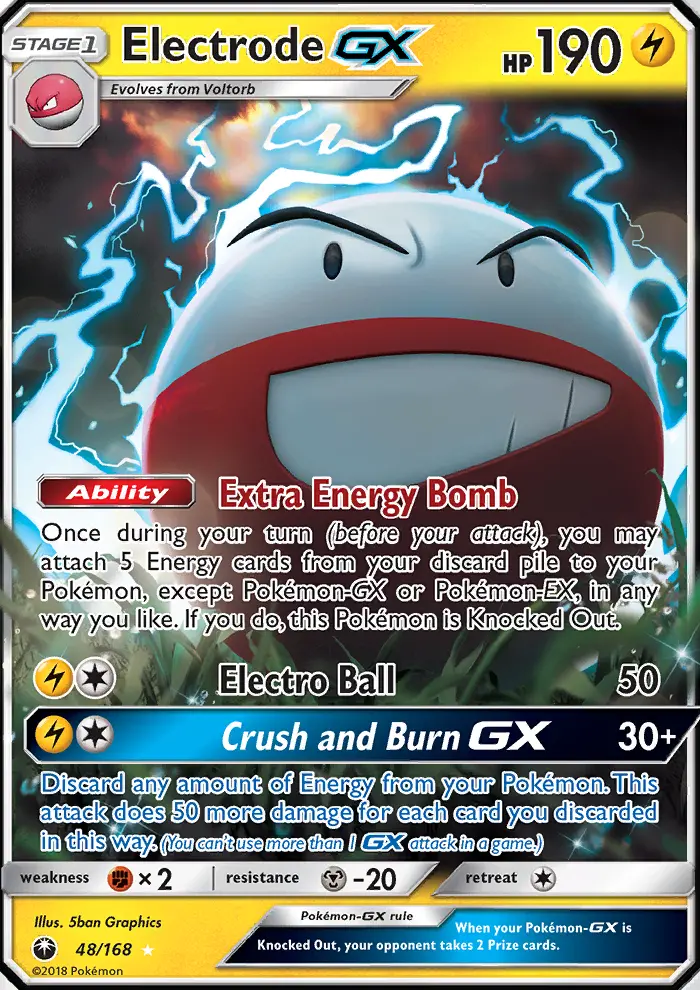
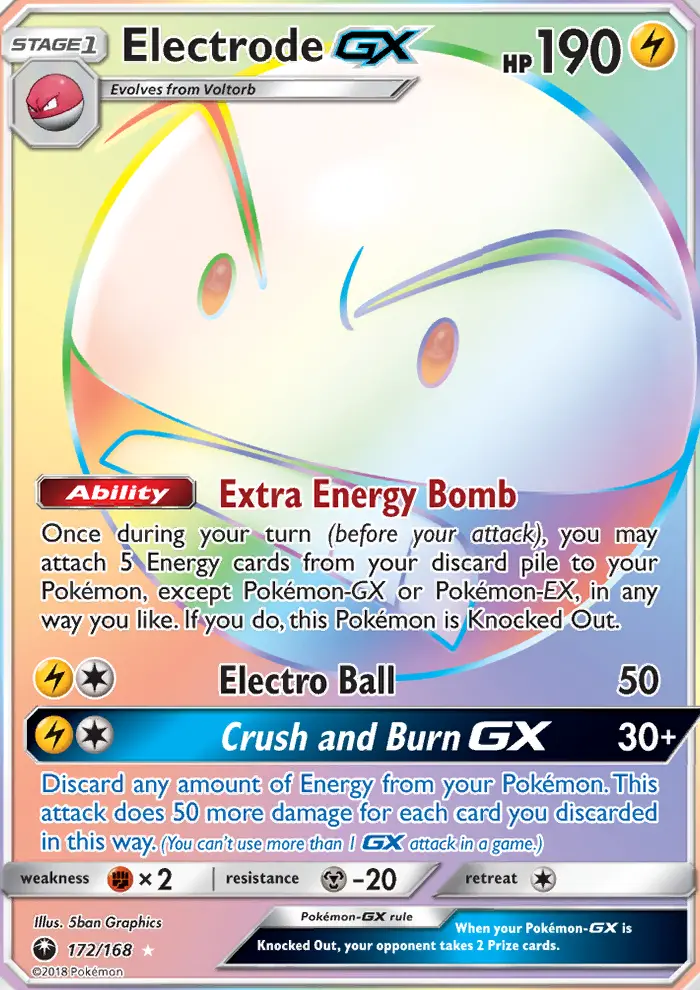
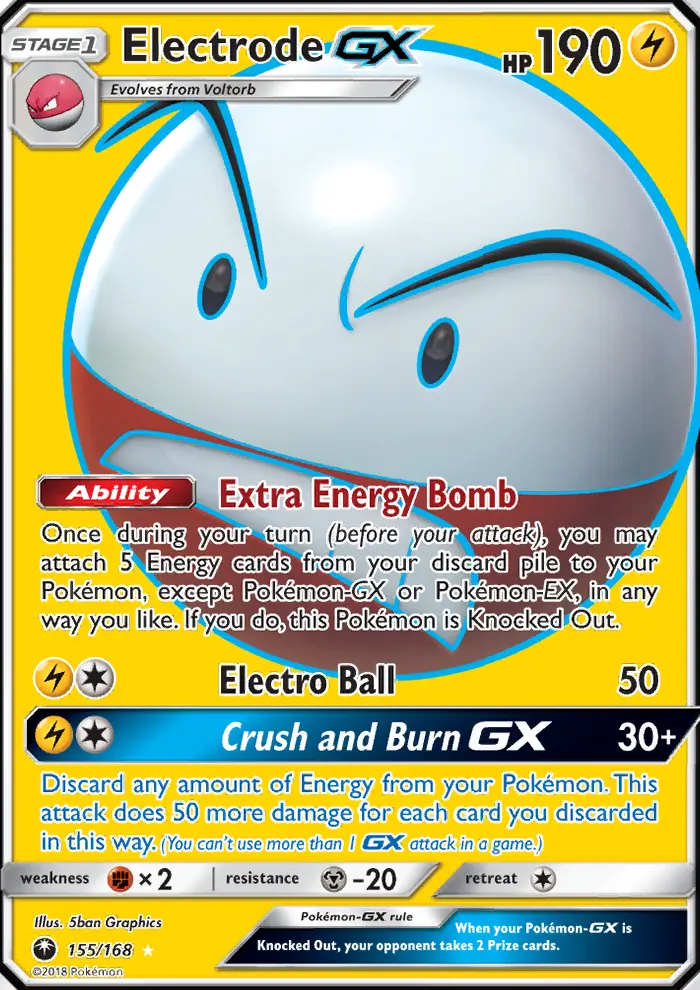
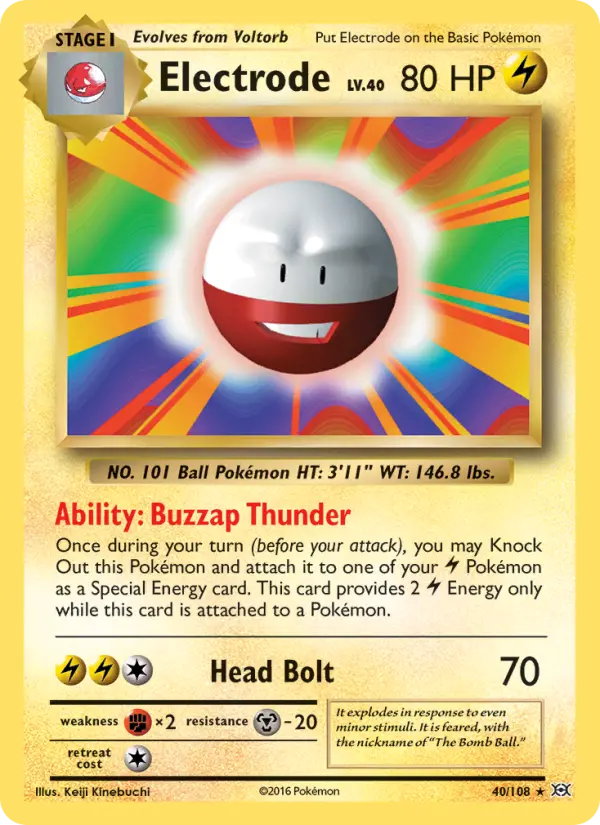
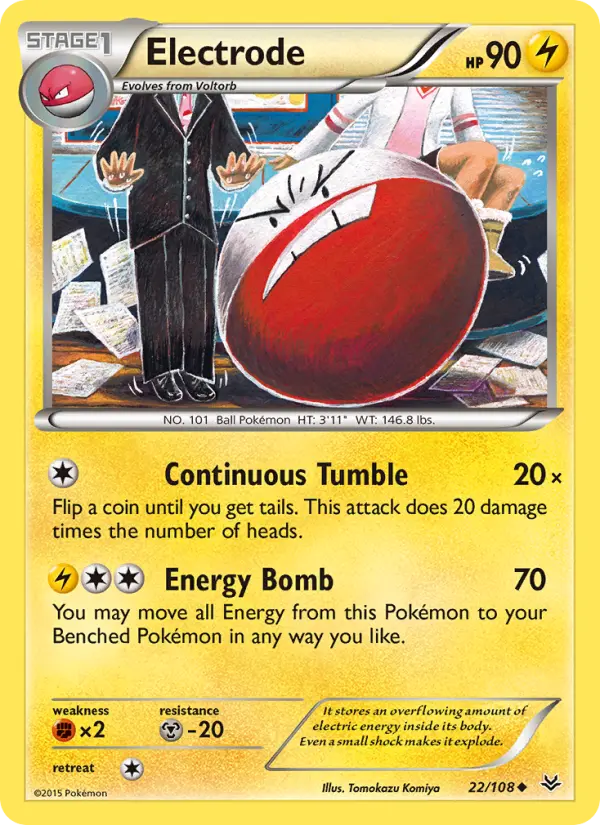
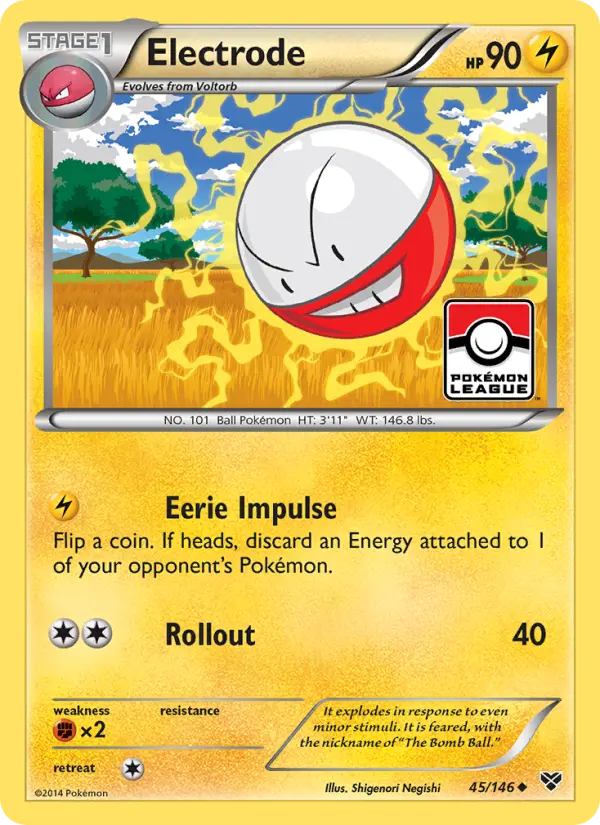
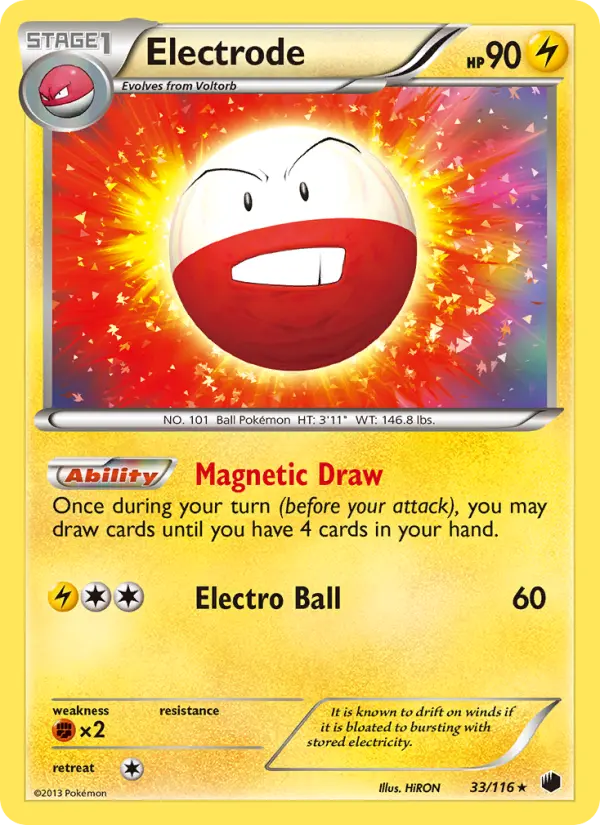
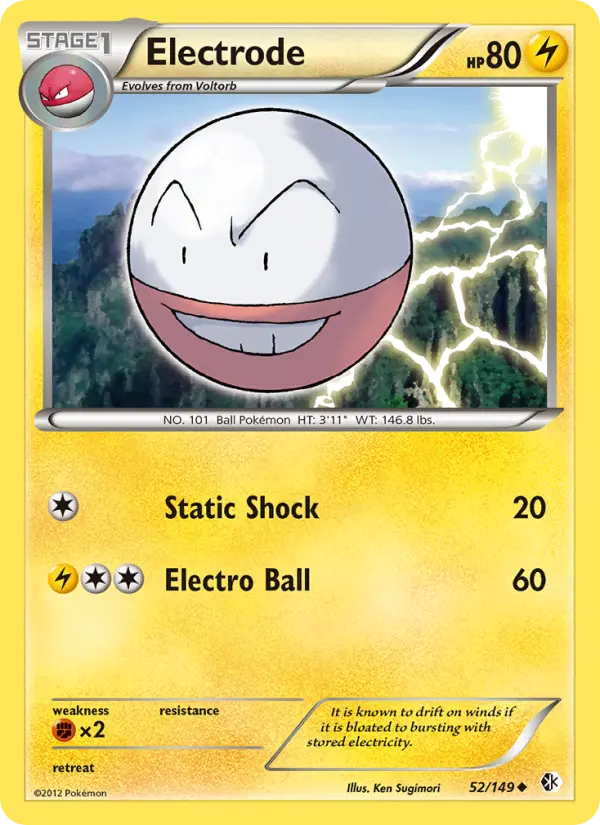
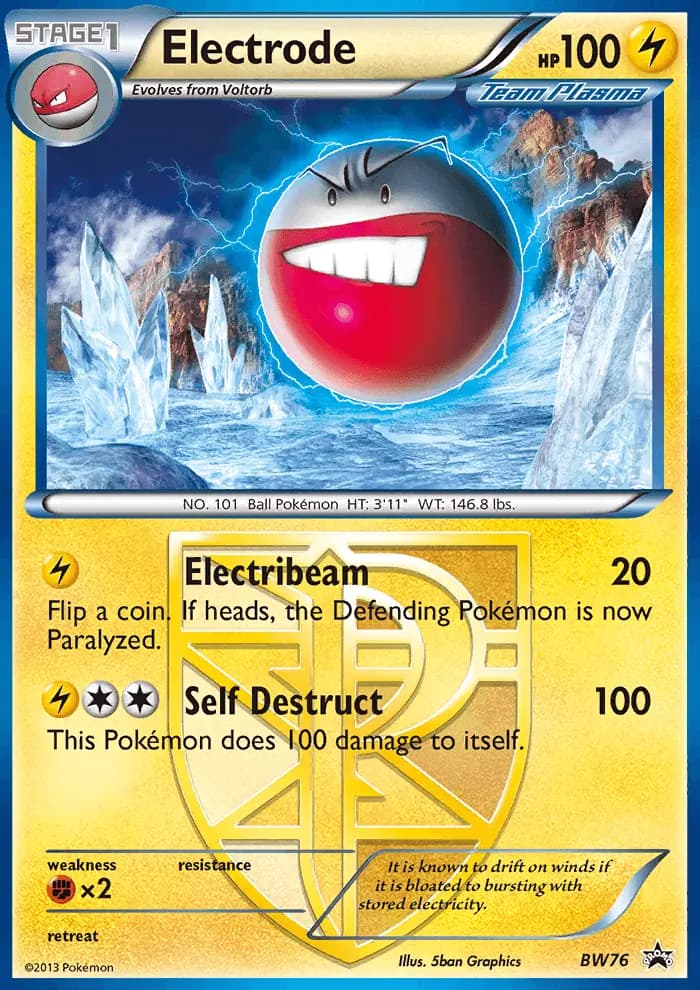
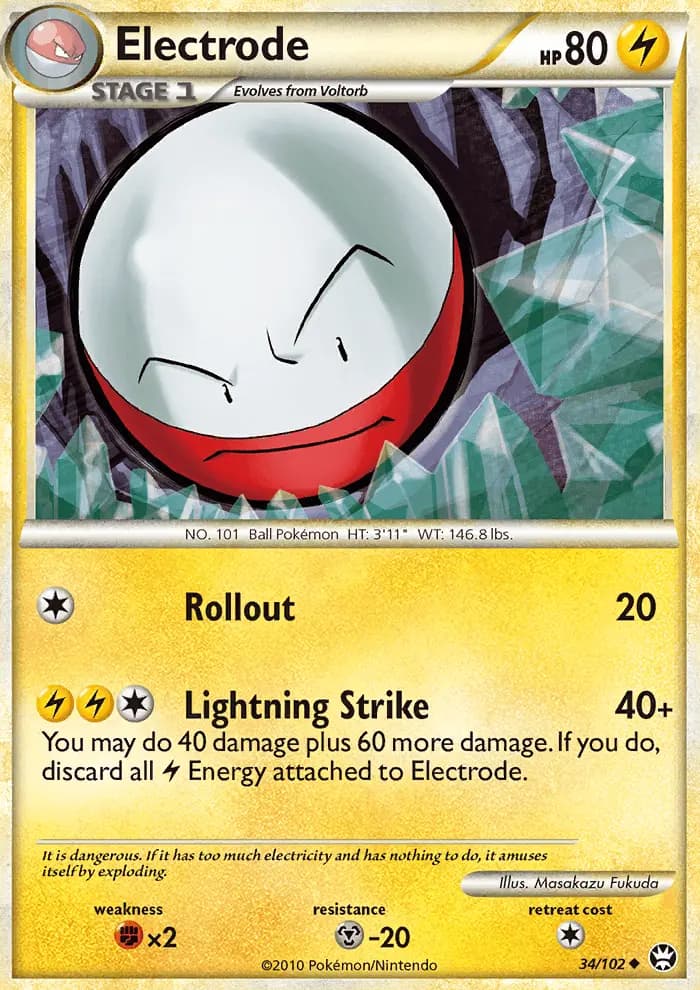
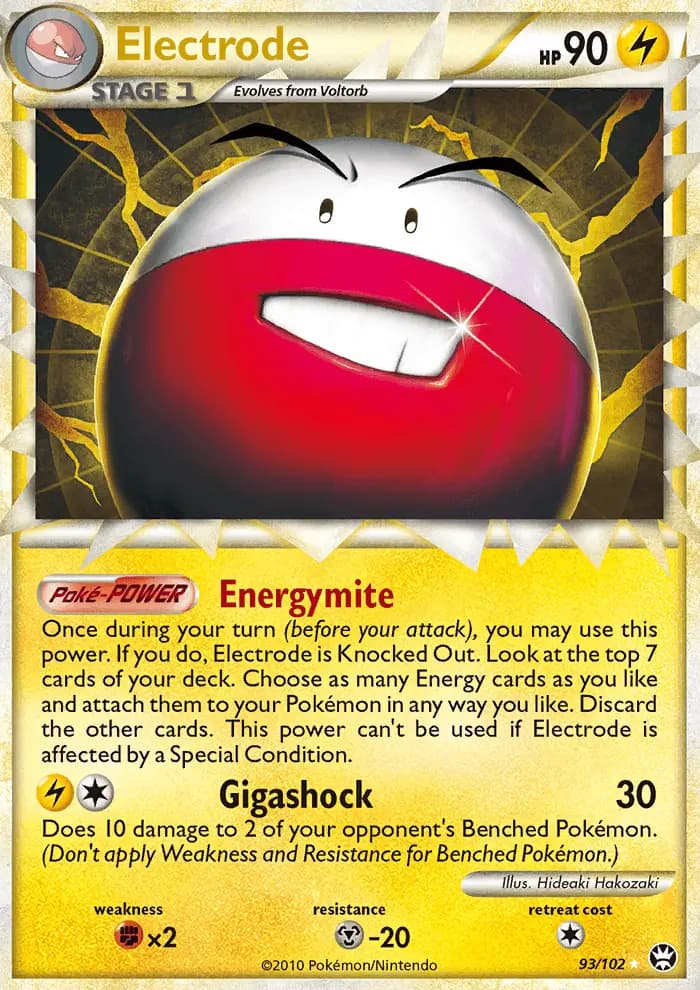
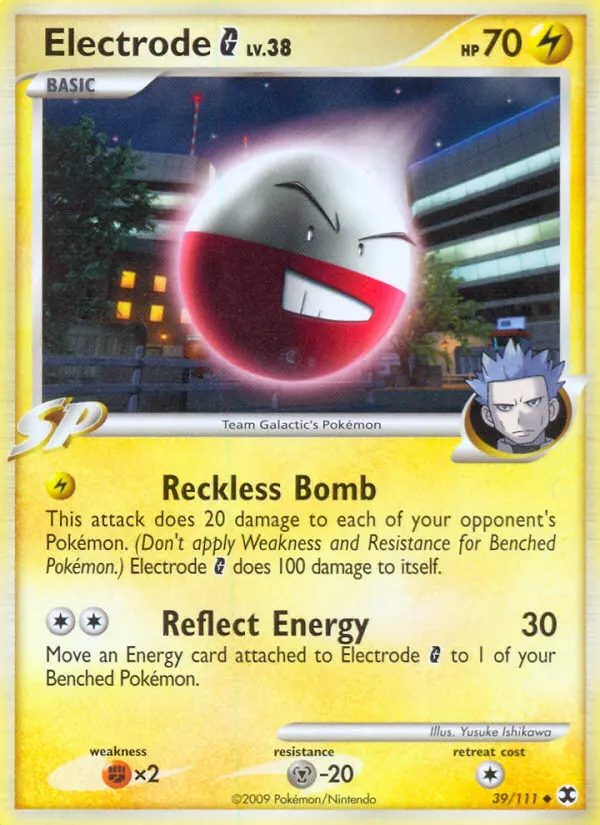
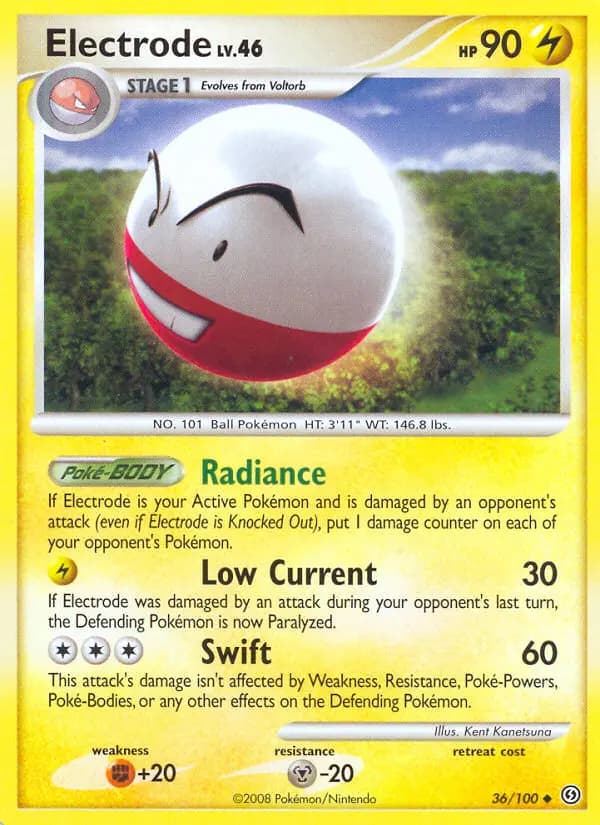
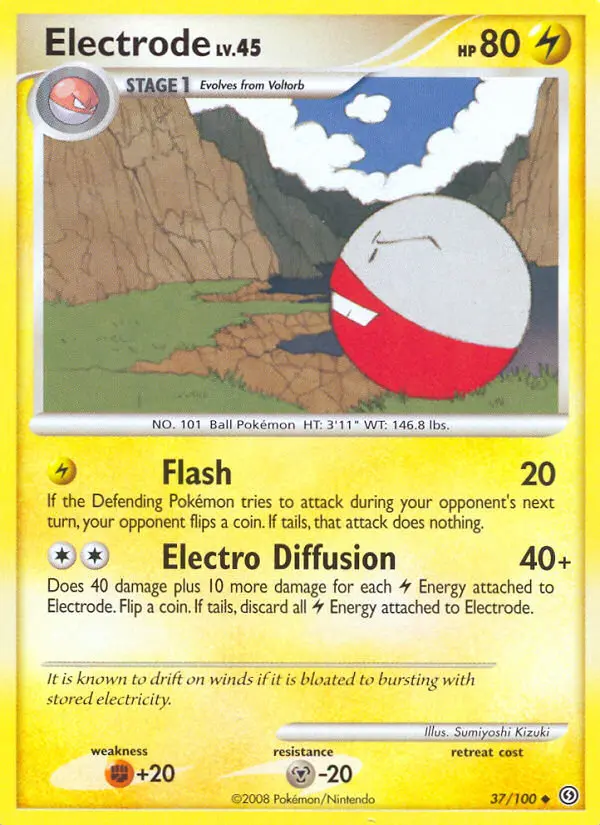
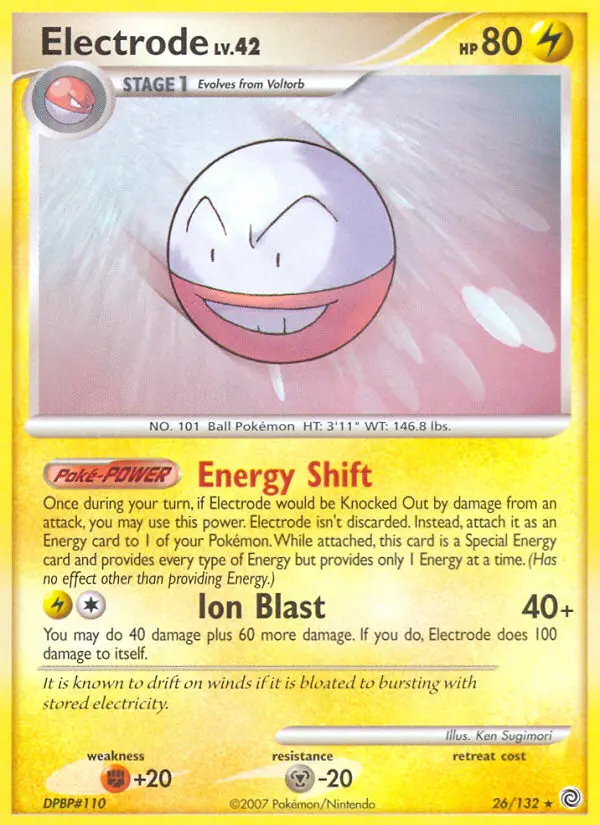
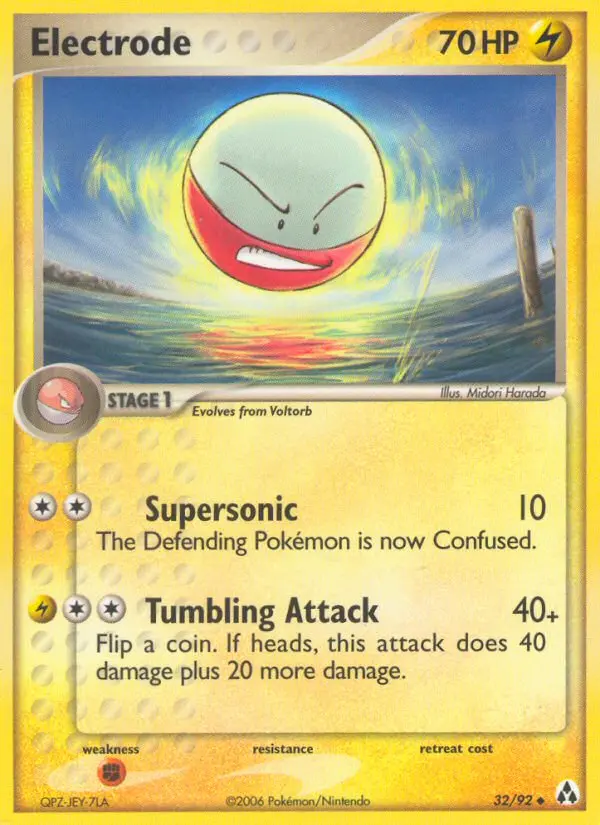
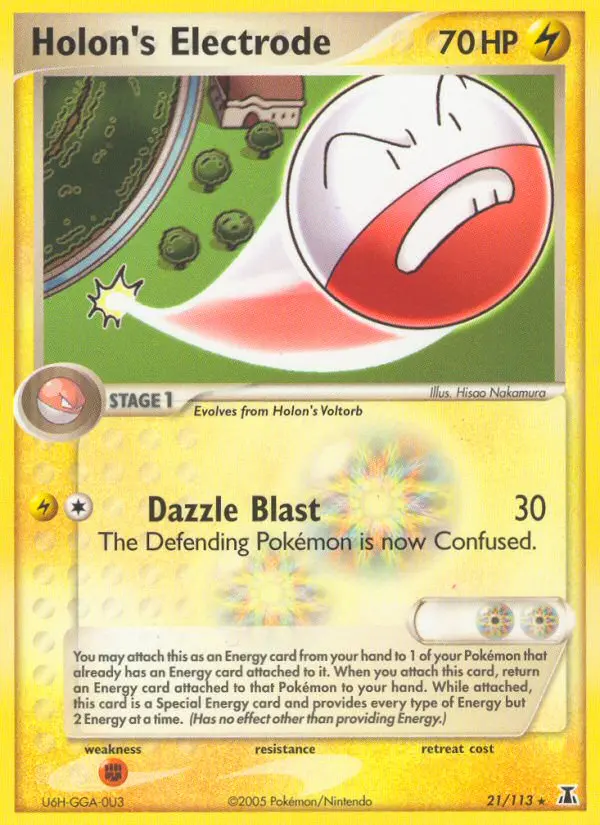
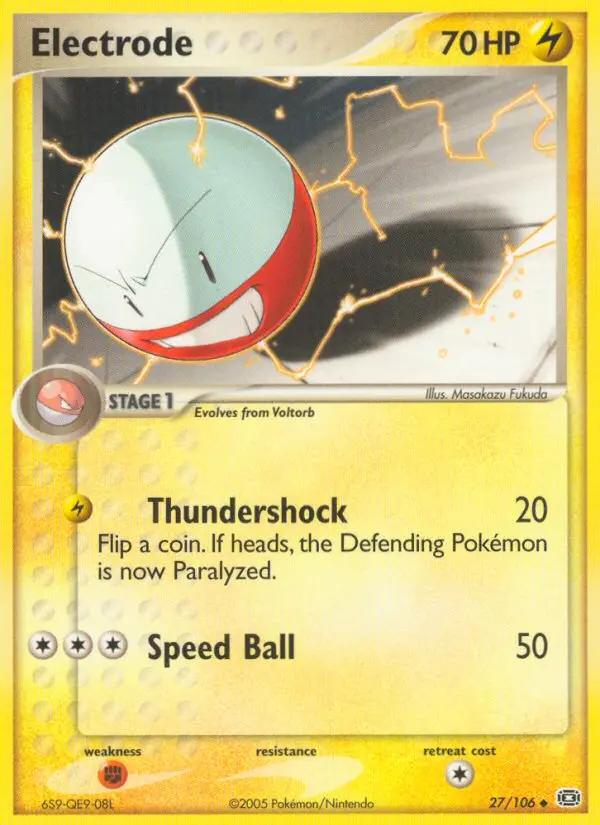
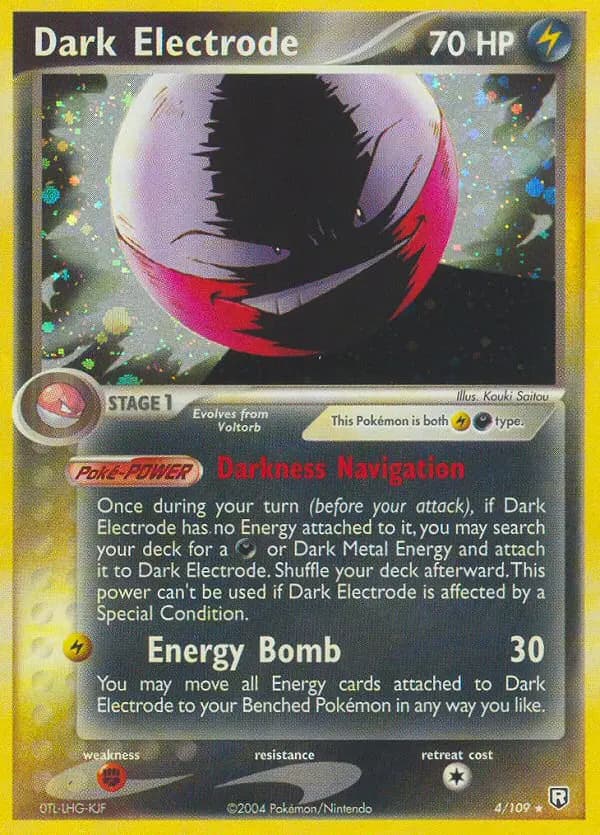
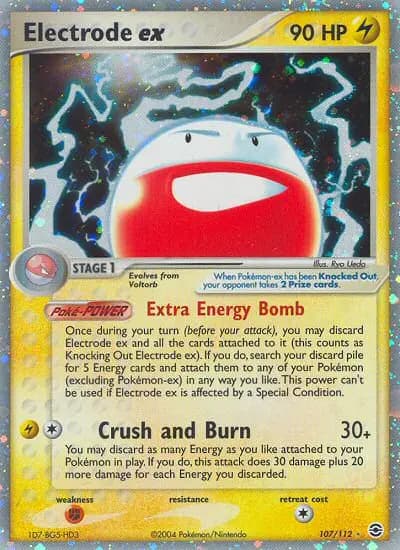
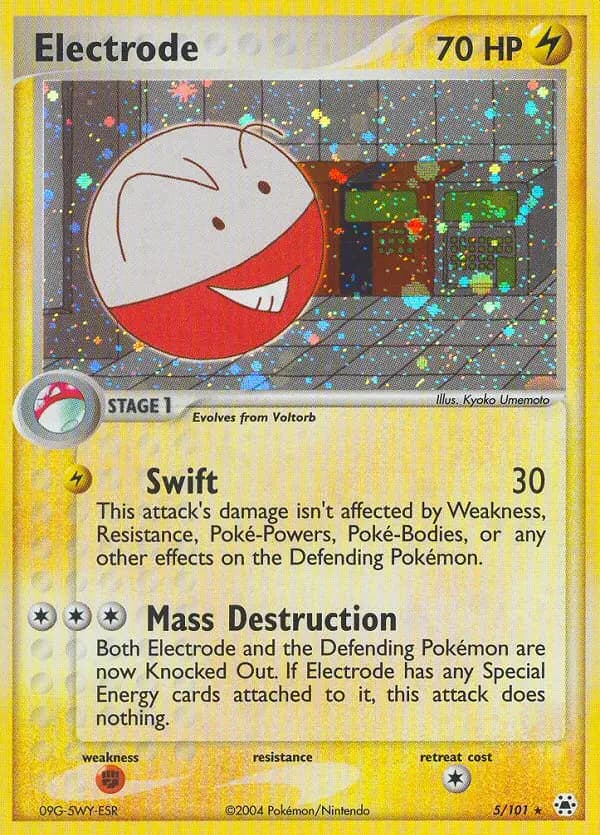
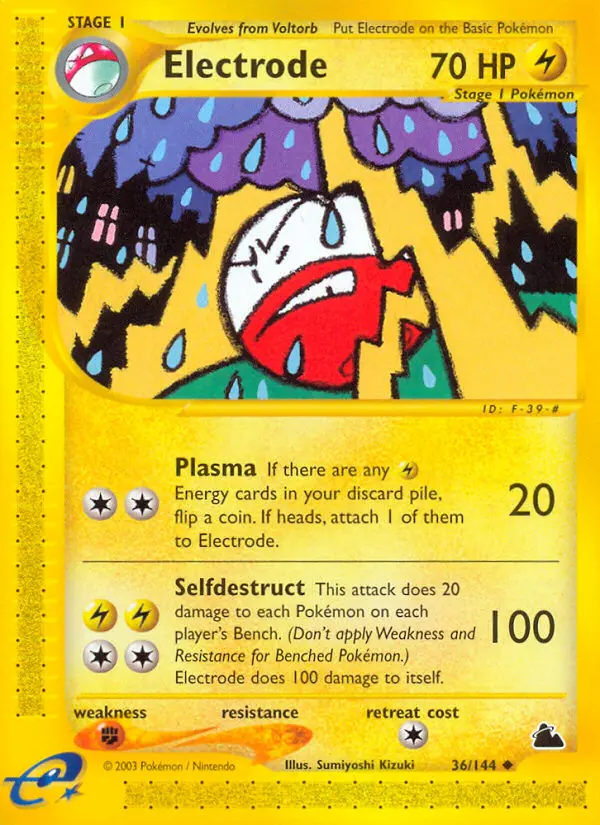
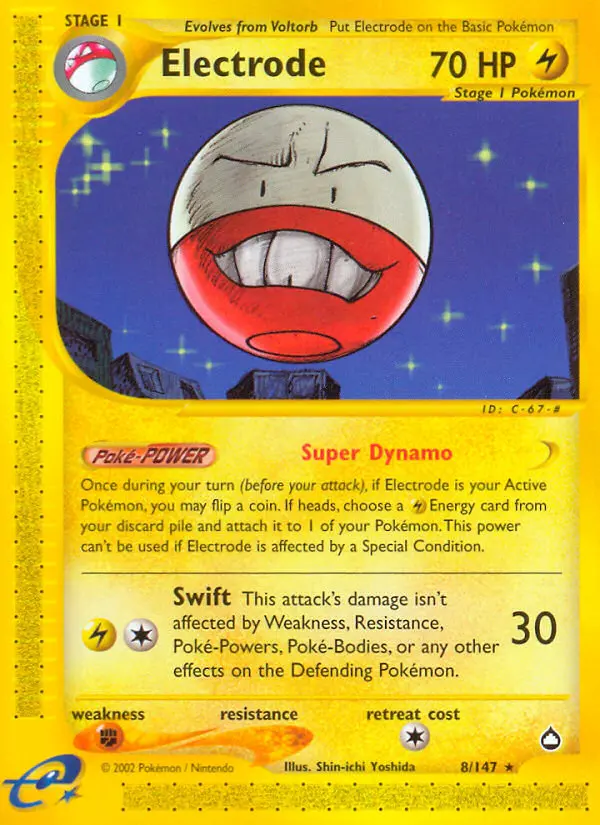
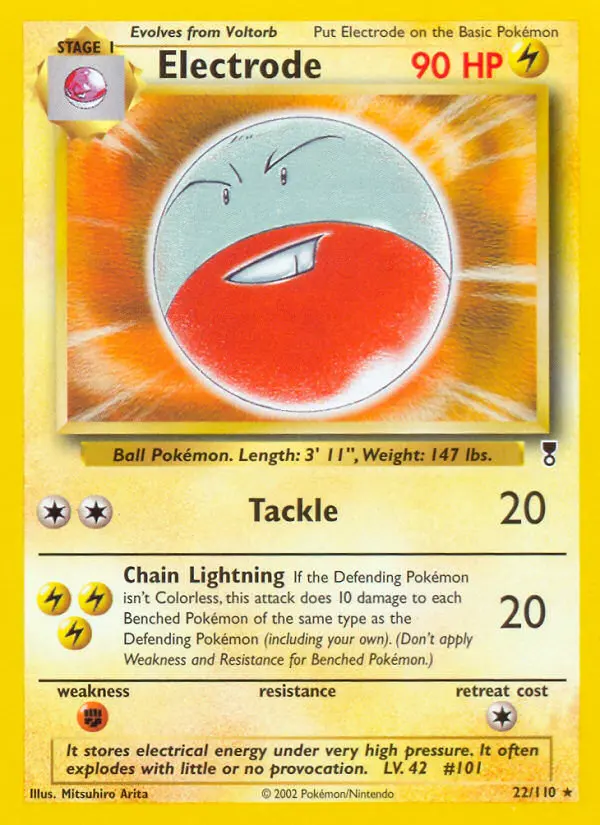
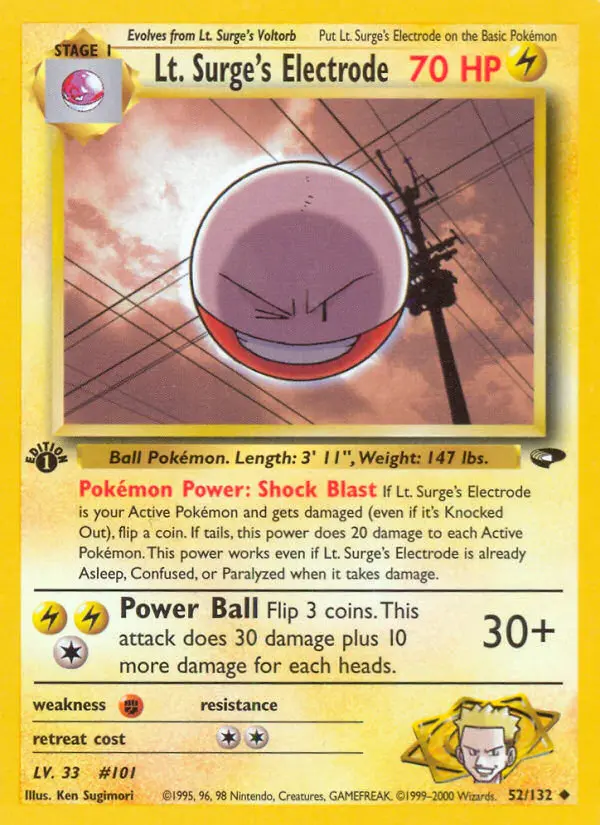
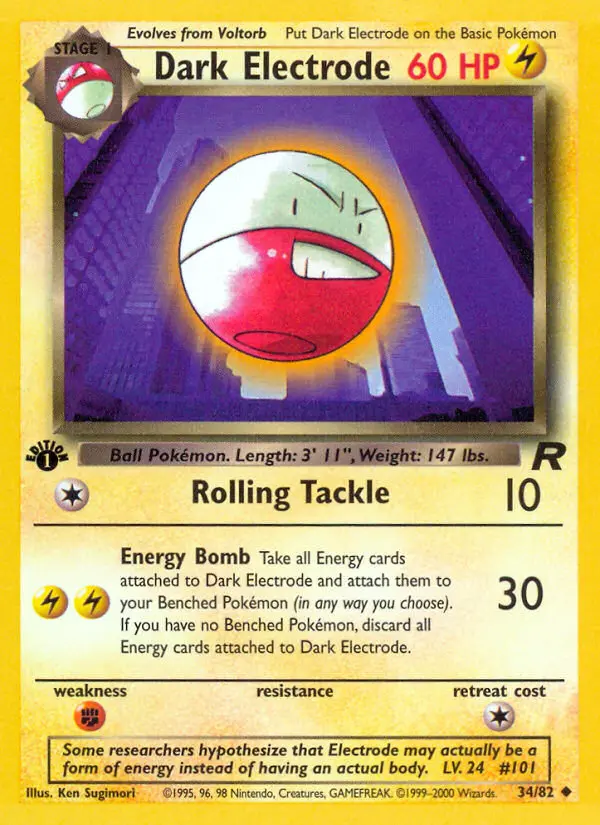
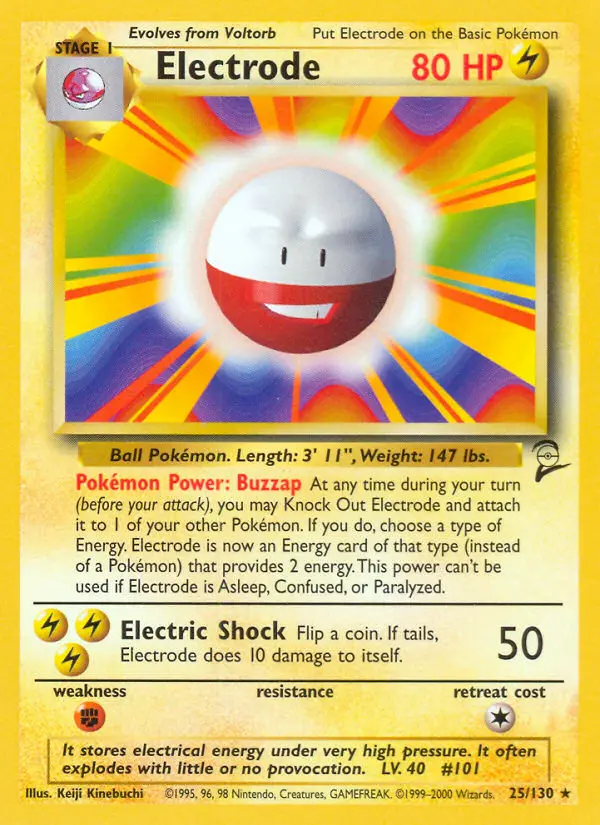
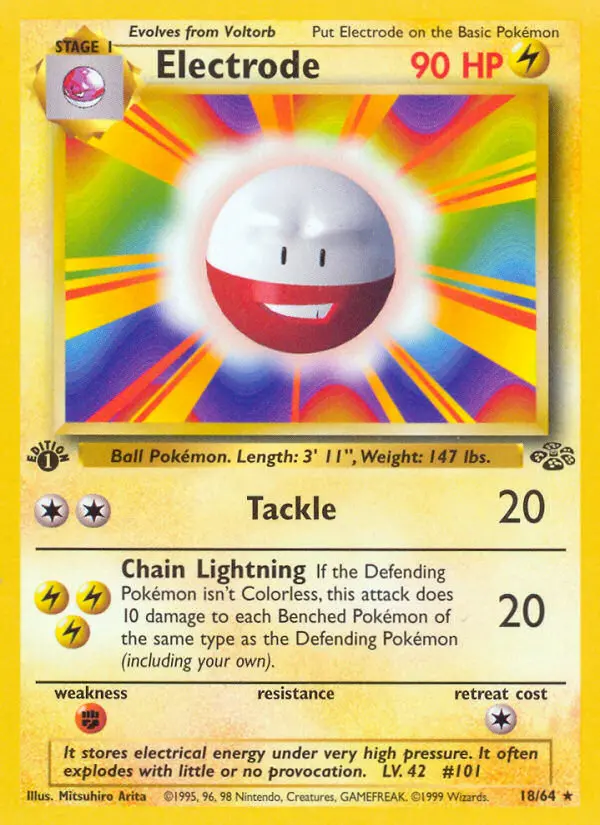
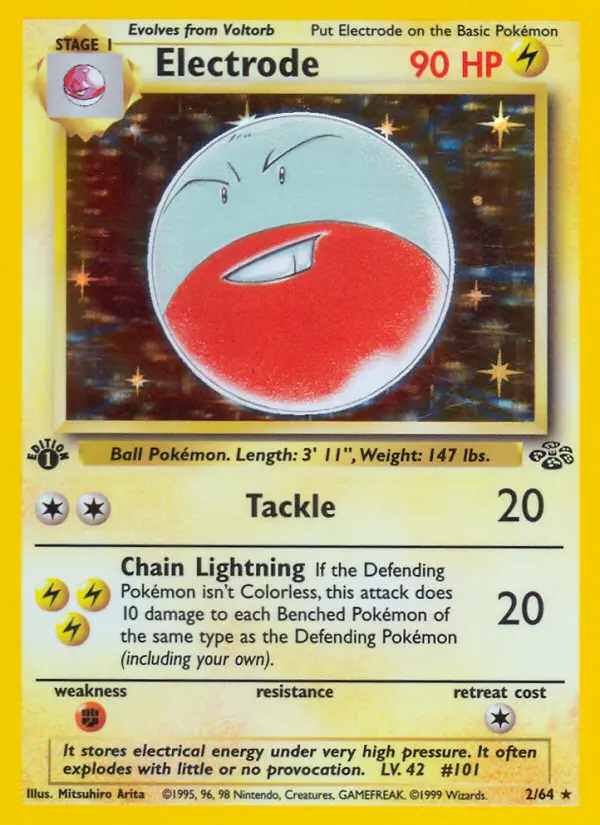
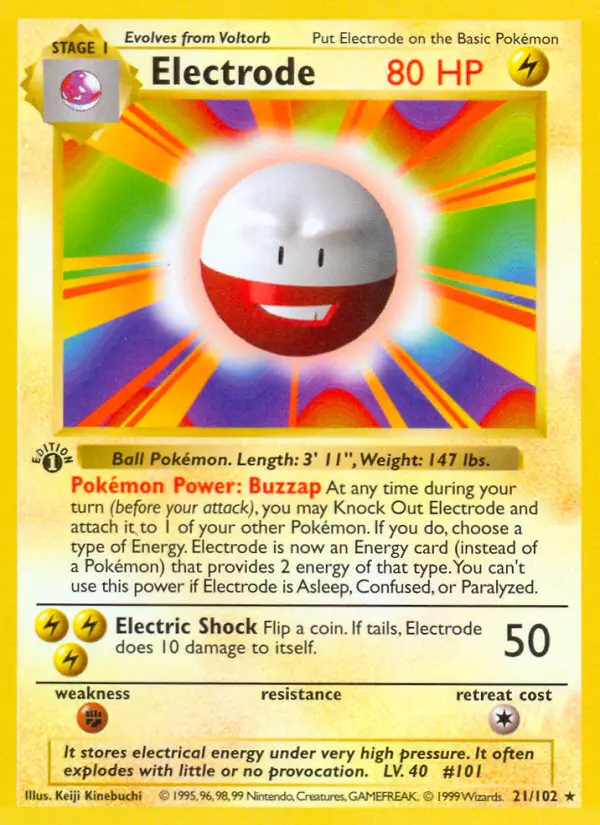
Electrode has maintained significant cultural prominence since Generation I's release, featured prominently in Pokémon anime episodes and merchandising as the quintessential embodiment of electric speed and volatility. Its distinctive inverted Poké Ball design has rendered it immediately recognizable to casual and competitive audiences alike, making it an enduring visual icon within the broader Pokémon franchise. The species has appeared in numerous competitive tournaments, with notable trainers utilizing Electrode as a strategic component of their teams, contributing to its reputation as a viable competitive choice throughout multiple generations. In the trading card game, Electrode has received numerous printings across different eras, with certain iterations becoming collector items valued for their artwork and rarity designations. The species appears frequently in Pokédex cultural references and educational materials discussing electricity, speed, and energy—serving as a pedagogical tool for introducing concepts of electrical storage and rapid movement. Electrode's volatile personality and explosion-prone nature have made it a subject of humor and meme culture within the Pokémon community, with players joking about its unpredictable detonations and the challenges of containing such energetic creatures. The introduction of Hisuian Electrode in Pokémon Legends: Arceus, presenting an Electric/Grass-type variant, demonstrated continued franchise interest in revisiting and reimagining classic Generation I species through regional variation, ensuring Electrode's relevance extends into contemporary gaming discourse.
Where to Find Electrode in Every Pokémon Game
Electrode has been consistently available across nearly every mainline Pokémon game released since Generation I, though its precise location and acquisition method vary by generation and version. In the original Red, Blue, and Yellow versions, players could encounter Voltorb in power plants or electrical facilities, evolving it to Electrode through standard leveling. Subsequent generations maintained this availability pattern with minor regional variations—HeartGold and SoulSilver featured Voltorb in Pokémon power plants, while later games including X and Y, Omega Ruby and Alpha Sapphire, Let's Go Pikachu and Eevee, and Scarlet and Violet included Voltorb in appropriate electrical or mechanical-themed locations. The capture rate of 60 places Electrode in the moderate-to-high catchability range, though players typically prefer breeding Voltorb or training caught specimens to evolve them naturally at level 30 rather than attempting to catch Electrode directly. Pokémon GO introduced Electrode as a regional variant available through Pokémon encounters and special events, contributing to its accessibility across gaming platforms. The Hisuian variant, exclusively obtained in Pokémon Legends: Arceus, requires exposing Hisuian Voltorb to a Leaf Stone and represents the most location-restricted Electrode form. Modern Pokémon Sword and Shield, Scarlet and Violet, and Pokémon Home integration systems provide streamlined access to Electrode across contemporary games. Trainers can obtain Electrode through breeding Voltorb in the Mineral egg group with Ditto or appropriate partners, allowing efficient acquisition of multiple specimens with optimized individual values and natures.