Voltorb
Generation I · #0100 — Ball Pokémon
Voltorb is a electric-type Pokémon whose speed — 100 at base — does more to define its role than its overall spread does. First discovered at the manufacturing facility where modern Poké Balls are produced, Voltorb's connection to these iconic red and white spheres remains one of Pokémon lore's most compelling mysteries. According to various Pokédex entries, Voltorb's components do not occur naturally in the environment, suggesting it may have been created when a Poké Ball was exposed to a powerful pulse of electrical energy. This diminutive Electric-type stands merely 0.5 meters tall and weighs only 10.4 kilograms, making it one of the smallest electric Pokémon trainers can encounter. With a combined stat total of 330, Voltorb prioritizes speed above all else, boasting an exceptional base speed stat of 100 that allows it to outpace many opponents in battle.
Editor's Take
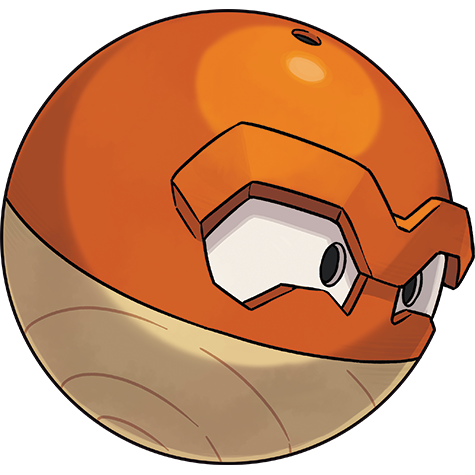
Voltorb being a Poké Ball that explodes is the single best visual joke in Gen 1, and the Hisuian variant turning it into a wooden ball is a genuinely funny follow-up thirty years later.
Base Stats
Height
0.5m
Weight
10.4kg
Category
Ball Pokémon
Gender
Genderless
Color
red
Shape
ball
Habitat
urban
Abilities
Protects against sound-based moves.
Has a 30% chance of paralyzing attacking Pokémon on contact.
Damages the attacker for 1/4 its max HP when knocked out by a contact move.
Voltorb Biology & Physical Characteristics
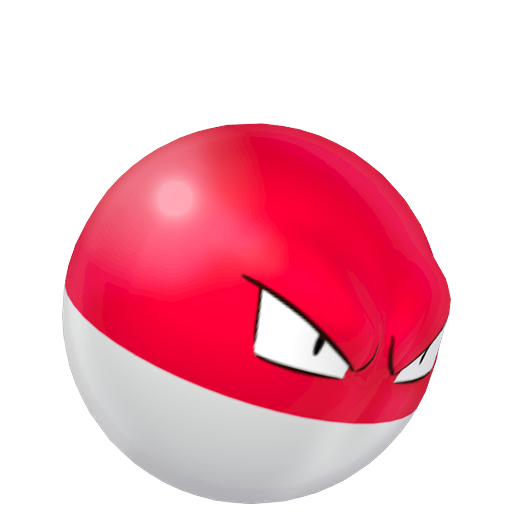
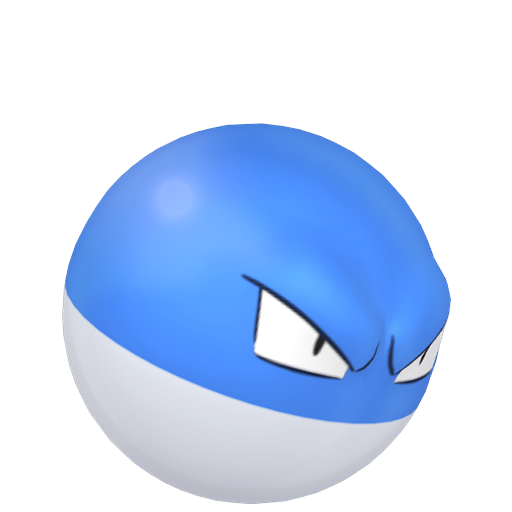
Voltorb's spherical body is its most distinctive feature, with a red upper hemisphere and white lower hemisphere that perfectly mirrors the appearance of a standard Poké Ball, earning it the alternate genus designation of Sphere Pokémon in certain regions. The species is genderless, belonging exclusively to the Mineral egg group, which reflects its artificially-created composition. Its compact body houses electrical organs capable of generating considerable power relative to its size, with base Special Attack and Special Defense stats both reaching 55. The Pokémon's design is deceptively simple yet remarkably effective for its ecological niche, featuring a smooth, frictionless surface that allows it to roll with remarkable efficiency. Voltorb's biological systems appear fundamentally different from natural Pokémon, as confirmed by scientific studies revealing that its constituent materials cannot be found occurring naturally in the wild. This artificial nature contributes to its volatile temperament and explosive tendencies. The species evolved into Hisuian Voltorb in the ancient Hisui region, where it developed a dual Electric and Grass typing, gaining a slightly increased weight of 13.0 kilograms and becoming known as the Sphere Pokémon rather than the Ball Pokémon. Hisuian Voltorb's Grass-type component gave it an entirely different ecological role in that historical setting.
Pokedex Numbers
Training
Breeding
Voltorb Breeding, Gender Ratio & Egg Groups
Voltorb is a genderless Pokémon, existing outside the traditional binary breeding system that characterizes most biological creatures. This genderlessness reflects its artificial creation and fundamentally different biological nature compared to naturally-evolved Pokémon species. Despite lacking gender, Voltorb can participate in breeding through the Mineral egg group, producing eggs that hatch into new Voltorb after approximately 20 egg cycles, equivalent to roughly 4,884 to 5,140 steps of travel. The breeding mechanics for genderless Pokémon like Voltorb require pairing with Ditto, the only Pokémon capable of reproducing with species lacking traditional gender differentiation. A newly hatched Voltorb exhibits moderate base friendship of 70, making it reasonably receptive to bonding with its trainer from the moment it enters the world. The artificial nature of Voltorb's reproduction through eggs, despite its inorganic origins, suggests a fascinating intersection between its manufactured biology and the natural reproductive cycles observed in organic Pokémon. This breeding capability indicates that whatever process created the original Voltorb granted it reproductive autonomy, allowing the species to propagate itself indefinitely without continued human intervention.
Sprites




TMs & HMs
tm01
lets go pikachu lets go eevee
tm02
crystal
tm02
gold silver
tm02
lets go pikachu lets go eevee
tm03
crystal
tm03
gold silver
tm03
lets go pikachu lets go eevee
tm04
gold silver
tm04
crystal
tm04
lets go pikachu lets go eevee
tm05
lets go pikachu lets go eevee
tm06
yellow
tm06
gold silver
tm06
red blue
tm06
crystal
tm06
emerald
tm06
firered leafgreen
tm06
diamond pearl
tm06
platinum
tm06
ruby sapphire
+535 more TMs/HMs
Voltorb's Evolution Chain


Voltorb Evolution, Mega Evolution & Special Forms
Voltorb evolves into Electrode starting at level 30, transforming from a stationary defensive sphere into a more streamlined, dynamic Electric-type that gains significant improvements across all stat categories. This evolution represents a natural maturation of Voltorb's electrical capabilities, with Electrode achieving substantially higher Attack, Speed, and overall offensive presence that makes it viable for competitive play. The evolution line represents a straightforward progression from a sentient electrical sphere to a faster, more mobile variant. In the ancient Hisui region, Voltorb followed an alternative evolutionary path, requiring exposure to a Leaf Stone to evolve into Hisuian Electrode, a dual Electric and Grass-type form that diverged significantly from its modern counterpart. This regional form evolution suggests that Voltorb's evolutionary potential is influenced by environmental factors and available elemental energy, allowing it to adapt to different ecological conditions across time and geography. The Leaf Stone requirement for Hisuian evolution creates a parallel to other Pokémon whose evolutionary paths branch based on item exposure, indicating that Voltorb possesses genetic plasticity that enables different developmental outcomes depending on circumstances.
Where to Find
Power Plant
kanto
+43 more
Kanto Route 10
kanto
+32 more
Team Rocket Hq
johto
+33 more
New Mauville
hoenn
+56 more
Sinnoh Route 218
sinnoh
+3 more
Voltorb Behaviour and Natural Habitat
Voltorb typically inhabits power plants and industrial facilities where strong electrical fields permeate the environment, as it feeds on the ambient electrical energy available in such locations. The species is known for its extremely volatile and sensitive disposition, reacting explosively to even the slightest physical stimulus or disturbance. Pokédex records repeatedly warn that uneven ground can cause a rolling Voltorb to strike an unexpected bump, triggering a spontaneous detonation. This explosive nature has led to numerous incidents where unsuspecting trainers and workers mistook wild Voltorb for actual Poké Balls, resulting in dangerous electrical discharge that has zapped many people throughout history. Despite its dangerous temperament, Voltorb demonstrates moderate base happiness values of 70, suggesting it can bond with patient trainers who understand its sensitive nature. The species' volatile behavior appears to be an inherent aspect of its physiology rather than learned aggression, as even newly discovered specimens exhibit these explosive tendencies. Voltorb's reliance on electrical fields for survival means it congregates in areas of high electrical concentration, making power plants and electrical substations its primary habitat throughout most regions.
Pokedex Entries
Usually found in power plants. Easily mistaken for a POKé BALL, they have zapped many people.
It is said to camouflage itself as a POKé BALL. It will self-destruct with very little stimulus.
It rolls to move. If the ground is uneven, a sudden jolt from hitting a bump can cause it to explode.
It was discovered when POKé BALLS were introduced. It is said that there is some connection.
During the study of this POKéMON, it was discovered that its compo nents are not found in nature.
VOLTORB was first sighted at a company that manufactures POKé BALLS. The link between that sighting and the fact that this POKéMON looks very similar to a POKé BALL remains a mystery.
VOLTORB is extremely sensitive - it explodes at the slightest of shocks. It is rumored that it was first created when a POKé BALL was exposed to a powerful pulse of energy.
It bears an uncanny and unexplained resemblance to a POKé BALL. Because it explodes at the slightest shock, even veteran TRAINERS treat it with caution.
A life-form whose identity is unknown. It is said to SCREECH or suddenly SELFDESTRUCT.
Usually found in power plants. Easily mistaken for a POKé BALL, it has zapped many people.
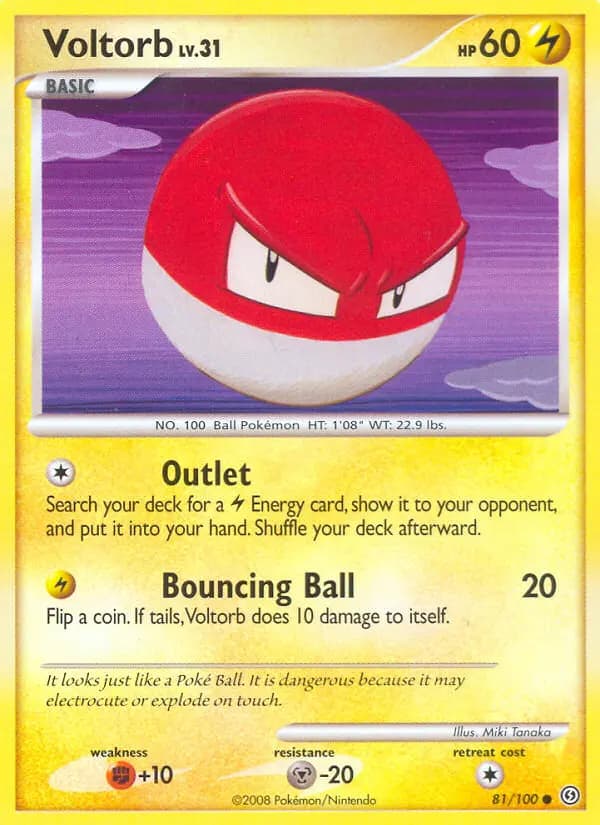
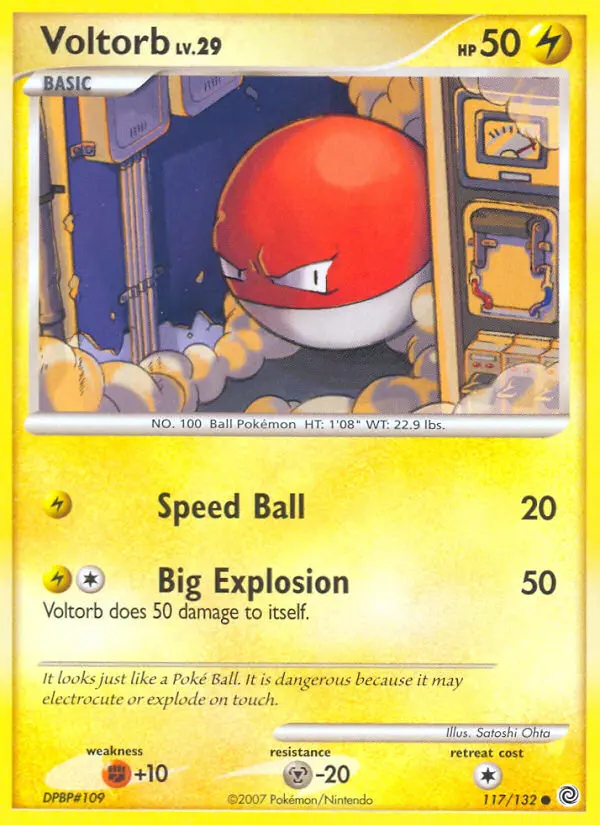
It looks just like a Poké Ball. It is dangerous because it may electrocute or explode on touch.
It rolls to move. If the ground is uneven, a sudden jolt from hitting a bump can cause it to explode.
It was discovered when Poké Balls were introduced. It is said that there is some connection.
It looks just like a Poké Ball. It is dangerous because it may electrocute or explode on touch.
It looks just like a Poké Ball. It is dangerous because it may electrocute or explode on contact.
It was discovered when Poké Balls were introduced. It is said that there is some connection.
Usually found in power plants. Easily mistaken for a Poké Ball, it has zapped many people.
Voltorb was first sighted at a company that manufactures Poké Balls. The link between that sighting and the fact that this Pokémon looks very similar to a Poké Ball remains a mystery.
Voltorb is extremely sensitive—it explodes at the slightest of shocks. It is rumored that it was first created when a Poké Ball was exposed to a powerful pulse of energy.
It is said to camouflage itself as a Poké Ball. It will self-destruct with very little stimulus.
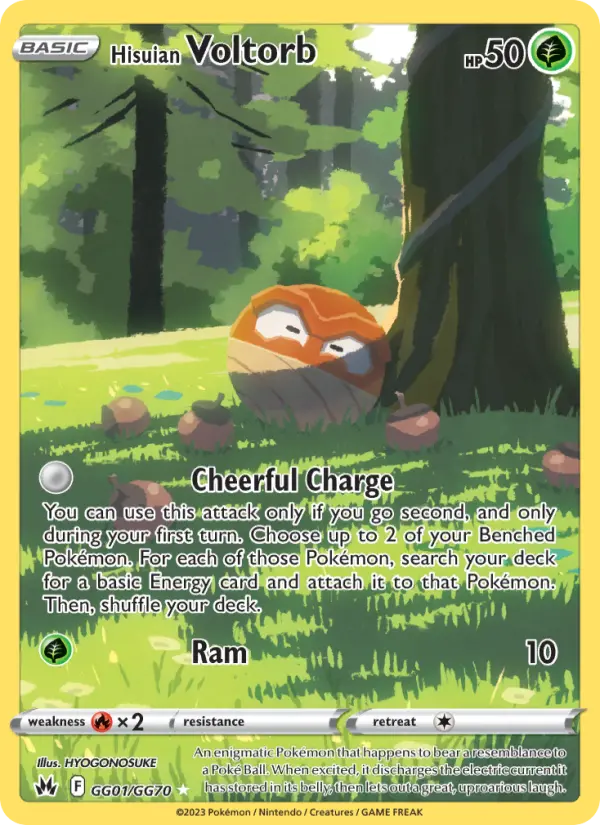
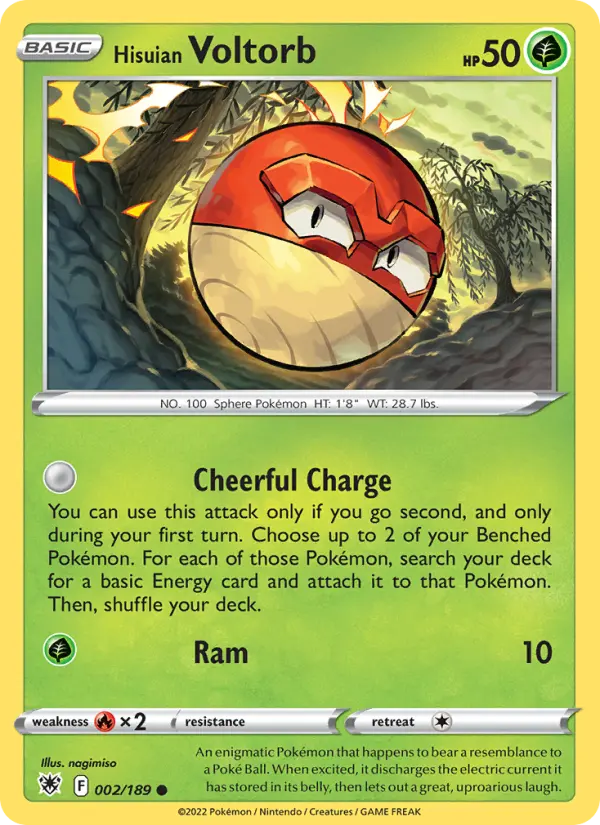
An enigmatic Pokémon that happens to bear a resemblance to a Poké Ball. When excited, it discharges the electric current it has stored in its belly, then lets out a great, uproarious laugh.
Voltorb Name Origin & Design Inspiration
Voltorb's design brilliantly capitalizes on the visual similarity between its spherical body and a Poké Ball, creating a Pokémon that perfectly embodies the concept of camouflage through form mimicry. The name itself derives from the combination of 'volt,' referencing electrical current and voltage, and 'orb,' describing its spherical shape. Its Japanese name, Biriridama, similarly combines onomatopoeia for electrical sound with 'dama' meaning ball or sphere. The design choice to create a Pokémon resembling a Poké Ball was thematic and conceptually brilliant, as it immediately communicates the species' artificial origin and its connection to human technology rather than natural evolution. The red and white coloration is identical to standard Poké Ball design, featuring the characteristic split between the two colors at the sphere's equator. This design decision creates instant visual recognition and makes Voltorb instantly distinctive among Electric-type Pokémon. The circular, minimalist aesthetic contrasts sharply with more ornately designed Pokémon, emphasizing Voltorb's artificial, manufactured nature. The species' design subtly suggests that it exists at the intersection of technology and biology, a living artifact of human innovation that somehow achieved sentience and agency despite its inorganic origins.
Learnable Moves
Voltorb can learn 67 moves:
Move | Type | Cat. | Power | Acc. | PP |
|---|---|---|---|---|---|
| agility | psychic | Status | — | — | 30 |
| bide | normal | Physical | — | — | 10 |
| charge | electric | Status | — | — | 20 |
| charge beam | electric | Special | 50 | 90 | 10 |
| confide | normal | Status | — | — | 20 |
| curse | ghost | Status | — | — | 10 |
| discharge | electric | Special | 80 | 100 | 15 |
| double team | normal | Status | — | — | 15 |
| double edge | normal | Physical | 120 | 100 | 15 |
| eerie impulse | electric | Status | — | 100 | 15 |
| electric terrain | electric | Status | — | — | 10 |
| electro ball | electric | Special | — | 100 | 10 |
| electroweb | electric | Special | 55 | 95 | 15 |
| endure | normal | Status | — | — | 10 |
| explosion | normal | Physical | 250 | 100 | 5 |
| facade | normal | Physical | 70 | 100 | 20 |
| flash | normal | Status | — | 100 | 20 |
| foul play | dark | Physical | 95 | 100 | 15 |
| frustration | normal | Physical | — | 100 | 20 |
| gyro ball | steel | Physical | — | 100 | 5 |
| headbutt | normal | Physical | 70 | 100 | 15 |
| helping hand | normal | Status | — | — | 20 |
| hidden power | normal | Special | 60 | 100 | 15 |
| light screen | psychic | Status | — | — | 30 |
| magic coat | psychic | Status | — | — | 15 |
| magnet rise | electric | Status | — | — | 10 |
| metal sound | steel | Status | — | 85 | 40 |
| mimic | normal | Status | — | — | 10 |
| mirror coat | psychic | Special | — | 100 | 20 |
| natural gift | normal | Physical | — | 100 | 15 |
| protect | normal | Status | — | — | 10 |
| rage | normal | Physical | 20 | 100 | 20 |
| rain dance | water | Status | — | — | 5 |
| recycle | normal | Status | — | — | 10 |
| reflect | psychic | Status | — | — | 20 |
| rest | psychic | Status | — | — | 5 |
| return | normal | Physical | — | 100 | 20 |
| rollout | rock | Physical | 30 | 90 | 20 |
| round | normal | Special | 60 | 100 | 15 |
| screech | normal | Status | — | 85 | 40 |
| secret power | normal | Physical | 70 | 100 | 20 |
| self destruct | normal | Physical | 200 | 100 | 5 |
| shock wave | electric | Special | 60 | — | 20 |
| signal beam | bug | Special | 75 | 100 | 15 |
| sleep talk | normal | Status | — | — | 10 |
| snore | normal | Special | 50 | 100 | 15 |
| sonic boom | normal | Special | — | 90 | 20 |
| spark | electric | Physical | 65 | 100 | 20 |
| substitute | normal | Status | — | — | 10 |
| sucker punch | dark | Physical | 70 | 100 | 5 |
| swagger | normal | Status | — | 85 | 15 |
| swift | normal | Special | 60 | — | 20 |
| tackle | normal | Physical | 40 | 100 | 35 |
| take down | normal | Physical | 90 | 85 | 20 |
| taunt | dark | Status | — | 100 | 20 |
| teleport | psychic | Status | — | — | 20 |
| tera blast | normal | Special | 80 | 100 | 10 |
| thief | dark | Physical | 60 | 100 | 25 |
| thunder | electric | Special | 110 | 70 | 10 |
| thunder shock | electric | Special | 40 | 100 | 30 |
| thunder wave | electric | Status | — | 90 | 20 |
| thunderbolt | electric | Special | 90 | 100 | 15 |
| torment | dark | Status | — | 100 | 15 |
| toxic | poison | Status | — | 90 | 10 |
| volt switch | electric | Special | 70 | 100 | 20 |
| wild charge | electric | Physical | 90 | 100 | 15 |
| zap cannon | electric | Special | 120 | 50 | 5 |
Voltorb Competitive Battle Guide
From a competitive standpoint, Voltorb functions primarily as a speed-based special attacker despite its modest base Special Attack of 55, leveraging its exceptional base speed stat of 100 that exceeds many defensive-oriented Pokémon. Its abilities, Soundproof and Static, provide useful utility in different metagames, with Static offering a 30 percent chance to paralyze attacking Pokémon on contact, potentially disrupting fast opponents' speed advantage. The hidden ability Aftermath provides an alternative defensive strategy, dealing one-quarter of an attacker's maximum HP as damage when Voltorb is knocked out by a contact move, potentially punishing physical attackers. Voltorb's balanced Special Attack and Special Defense statistics of 55 each allow it to function as either an offensive or defensive special Pokémon, though its extremely low Attack of 30 and limited HP of 40 restrict it from physical offensive roles. Its movepool includes electric-type staples like Thunderbolt, Thunder, and Discharge, supplemented by utility moves like Sonic Boom and Swift that bypass accuracy calculations. The relatively low combined stat total of 330 limits Voltorb's viability in higher-tier competitive formats, though it remains viable in lower-tier competitions and formats emphasizing speed-based strategy. Trainers seeking to utilize Voltorb competitively typically rely on maximizing its speed investment while utilizing its special attack and utility moves to outpace and disable opposing threats.
Commonly Asked Questions About Voltorb
What type is Voltorb?
Voltorb is a electric type Pokemon.
What does Voltorb evolve into?
Voltorb evolves into electrode.
What are Voltorb's weaknesses?
Voltorb is weak to ground type moves.
Does Voltorb evolve by trading?
No — Voltorb evolves entirely through leveling up, with no trade required at any stage.
Where can I find Voltorb?
Voltorb can be found in power plant (kanto), kanto route 10 (kanto) and team rocket hq (johto) and 2 other locations.
Voltorb Cultural Impact & Franchise History
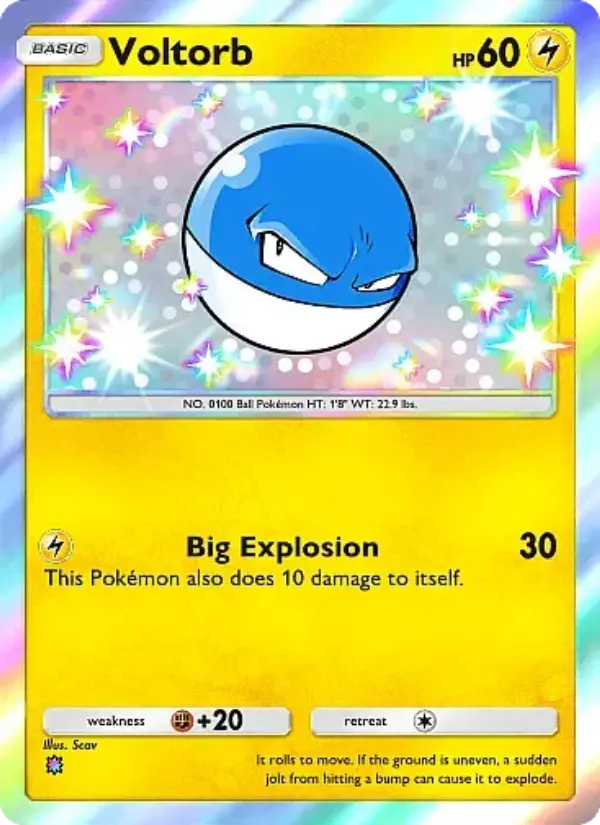
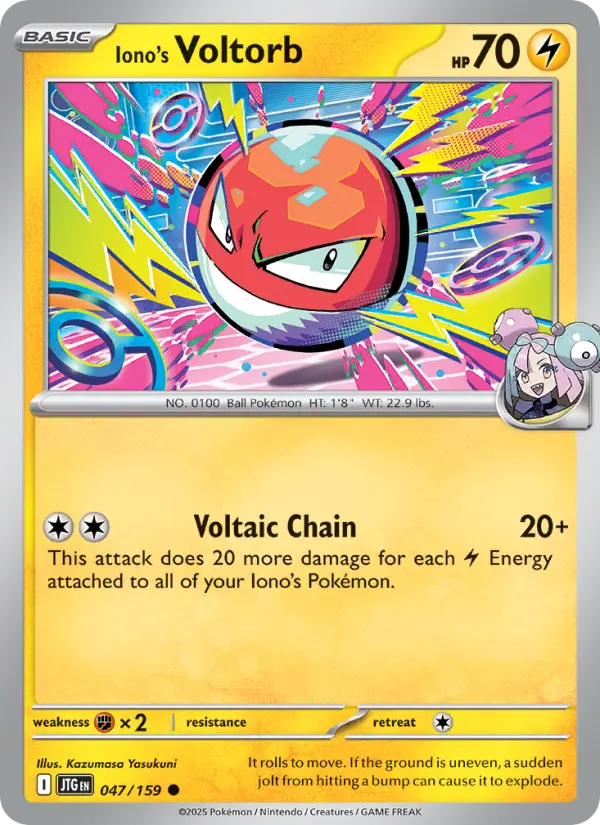
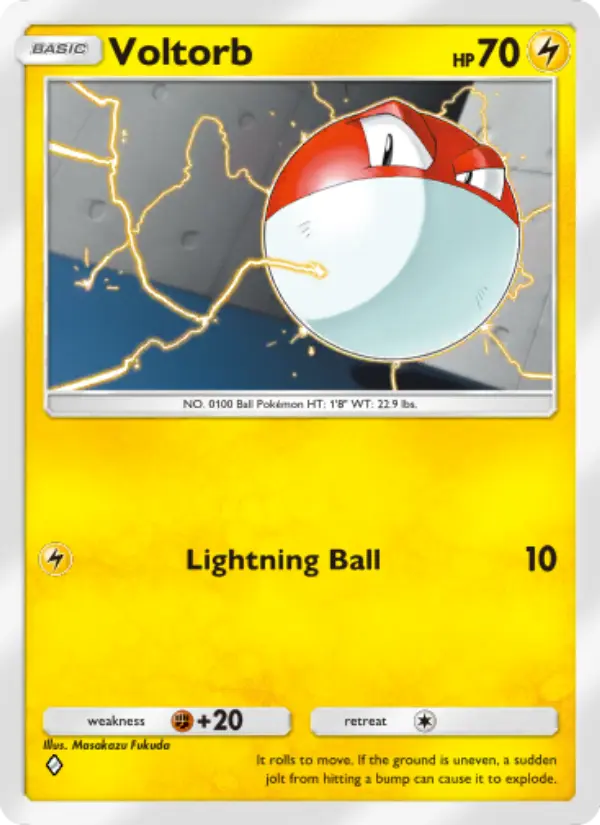
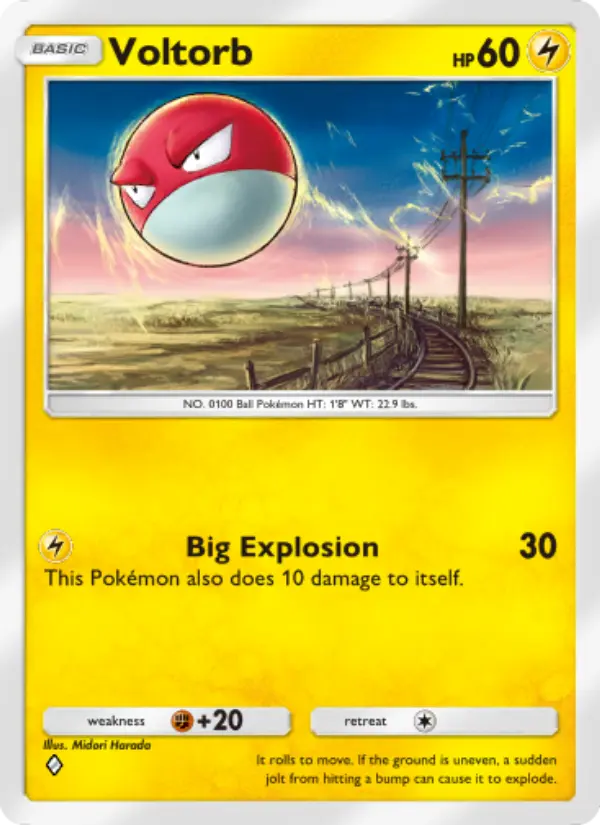
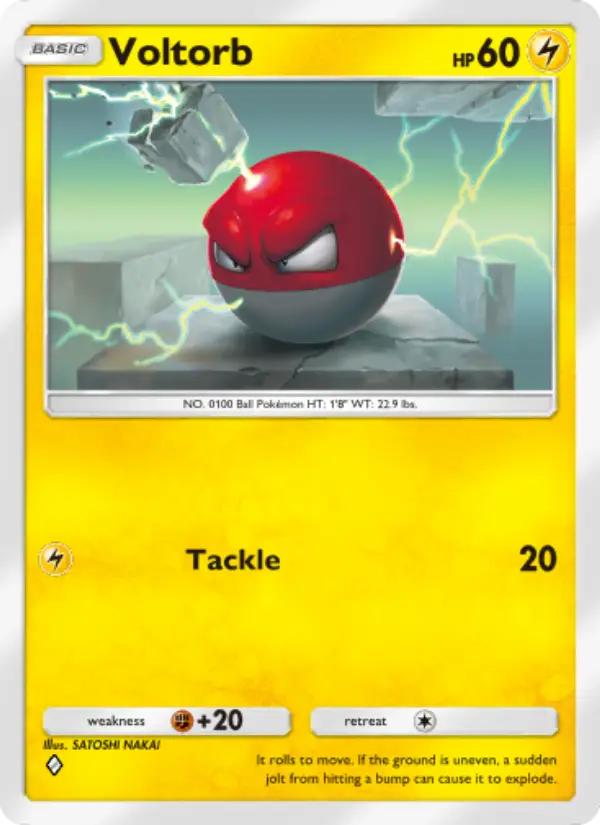
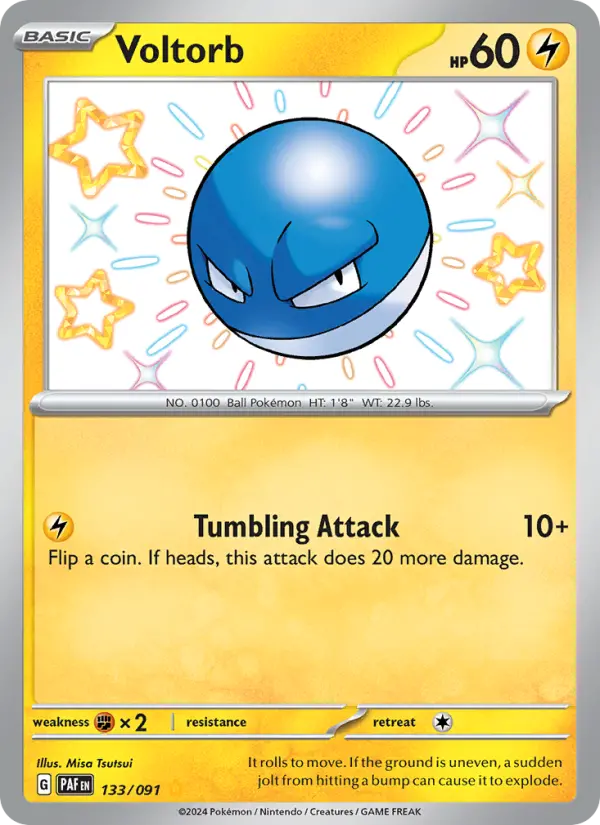
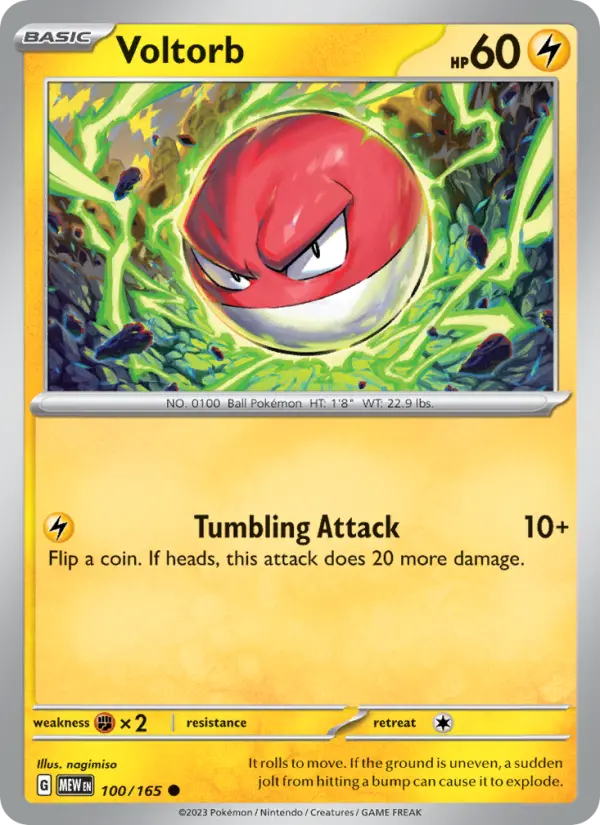
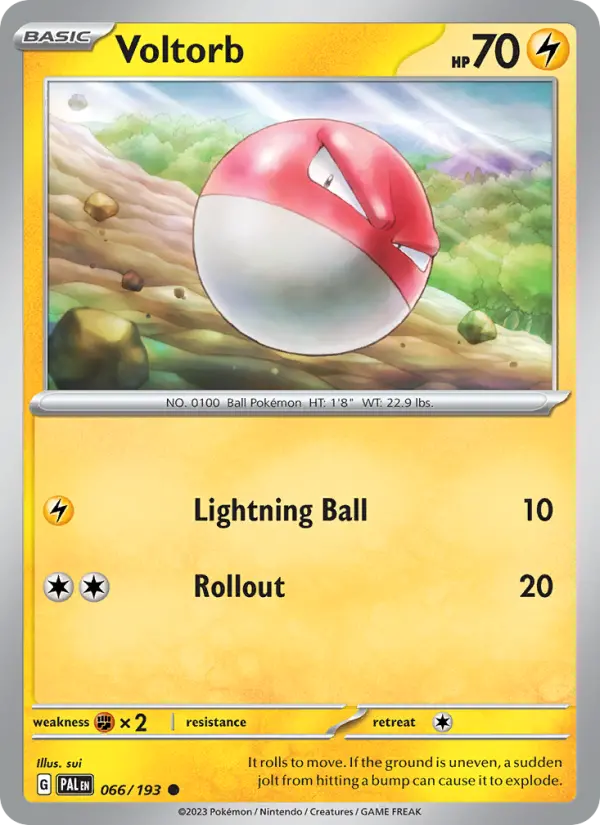
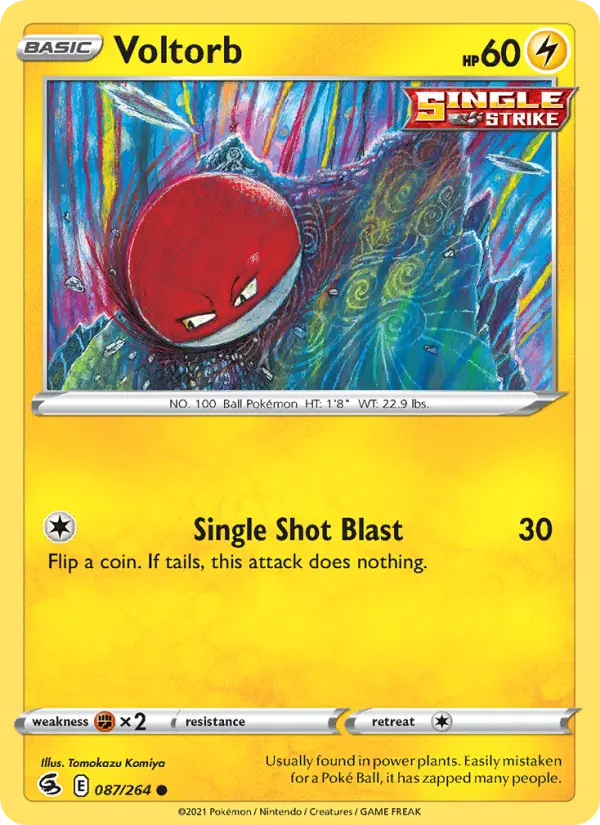
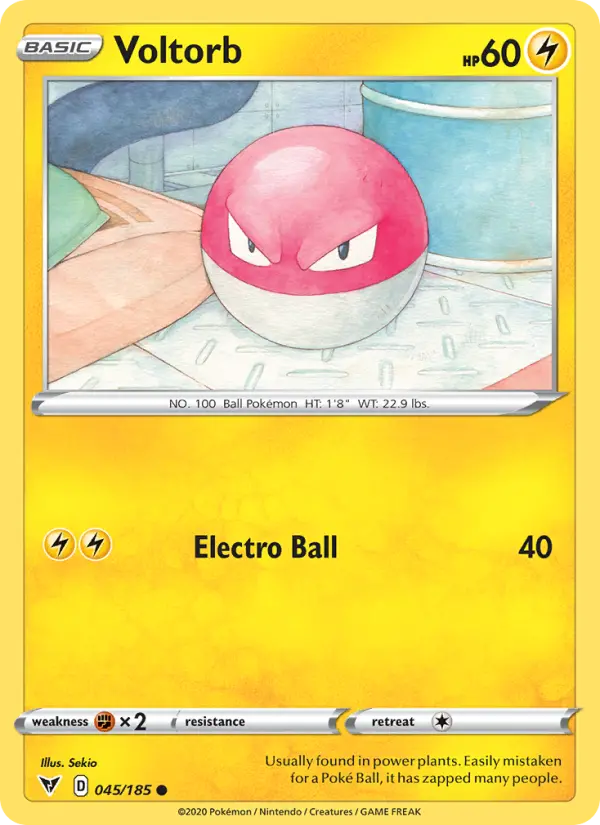
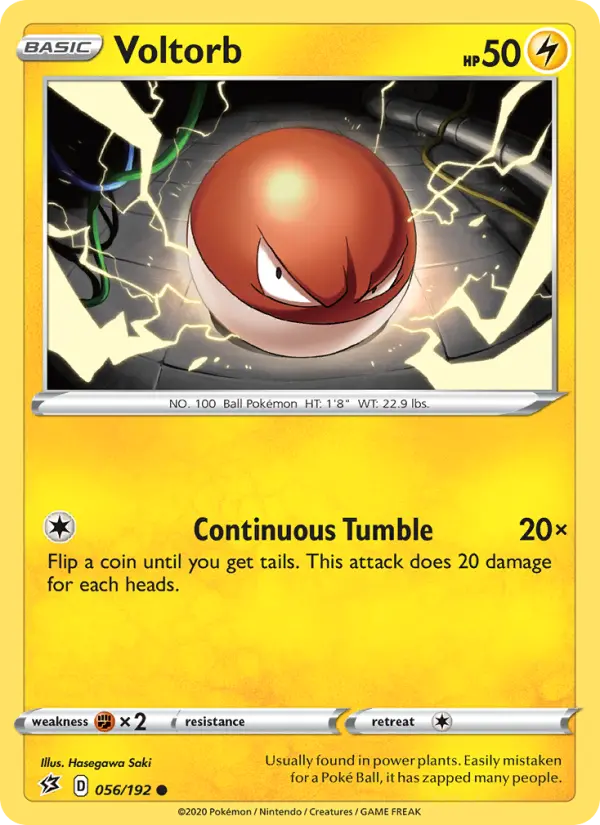
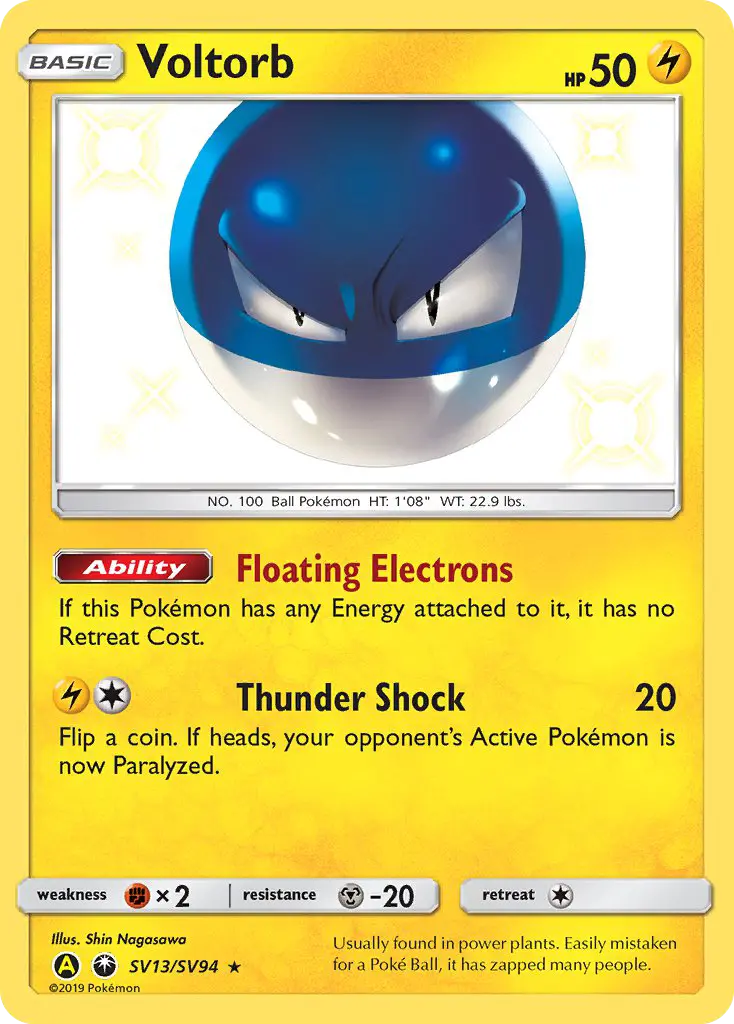
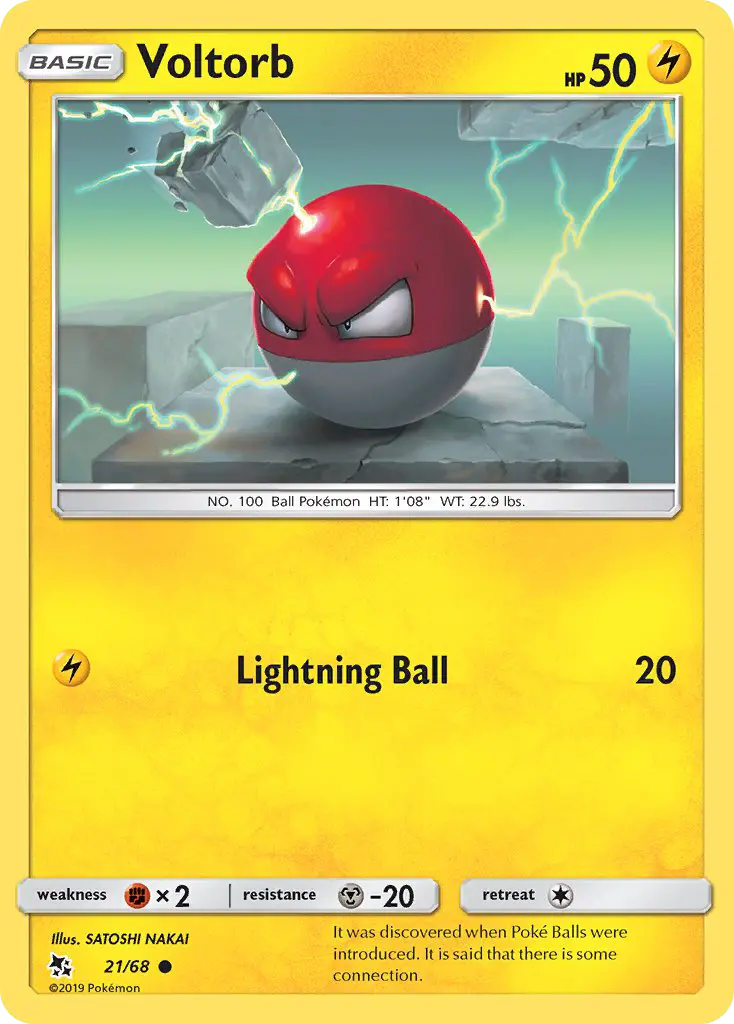
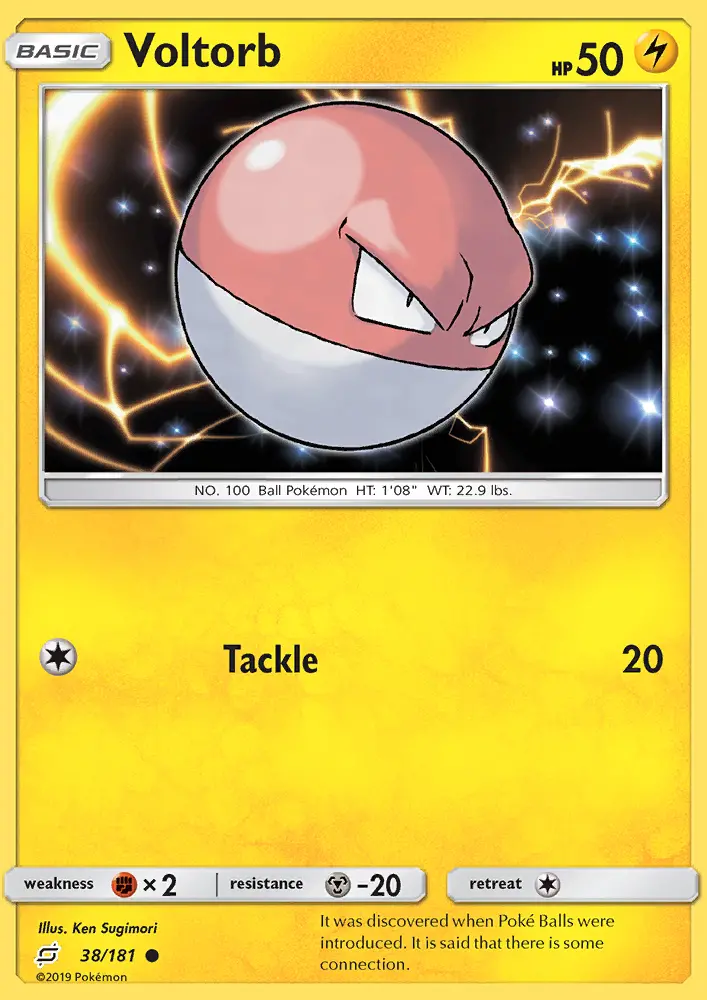
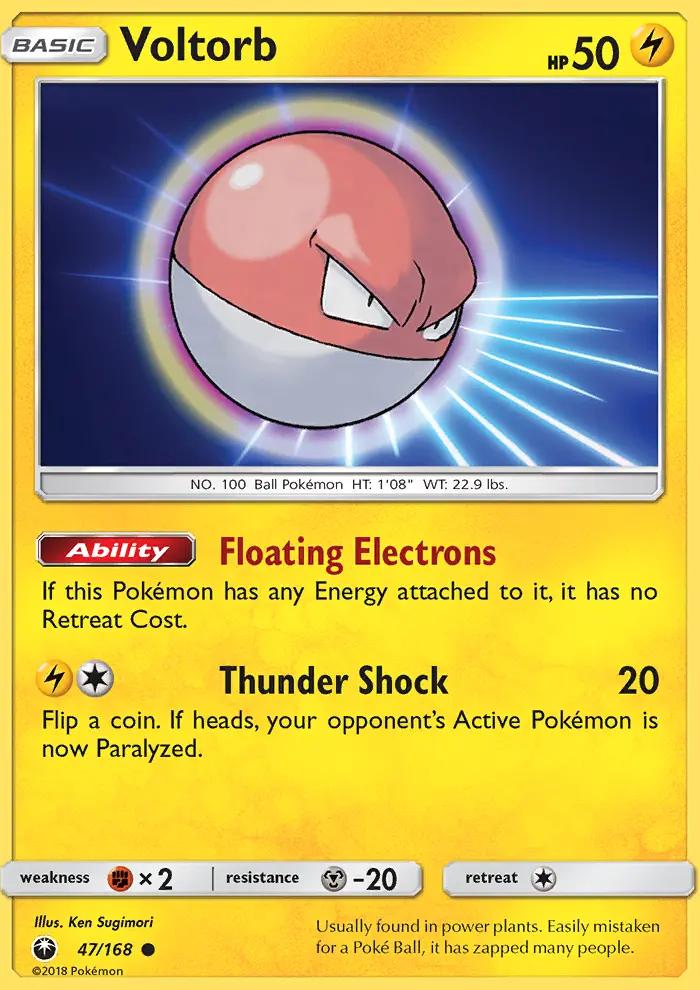
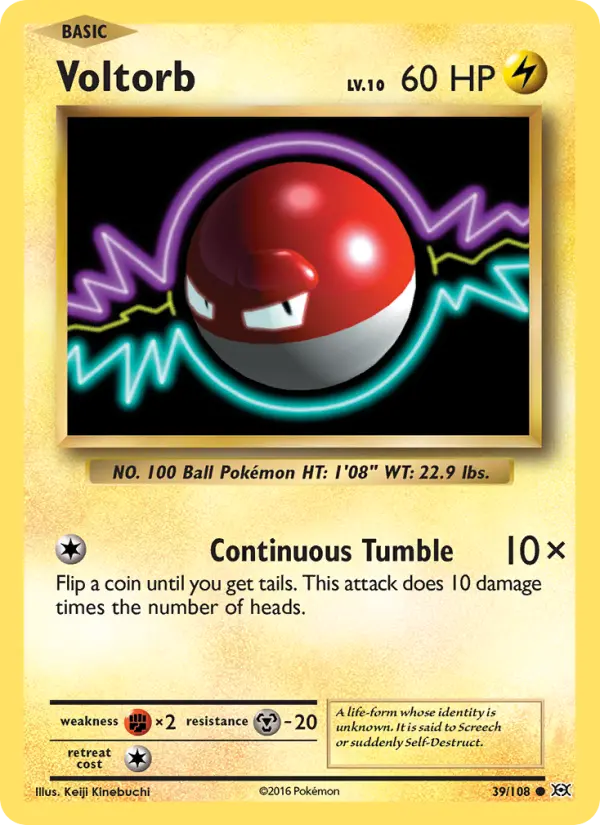
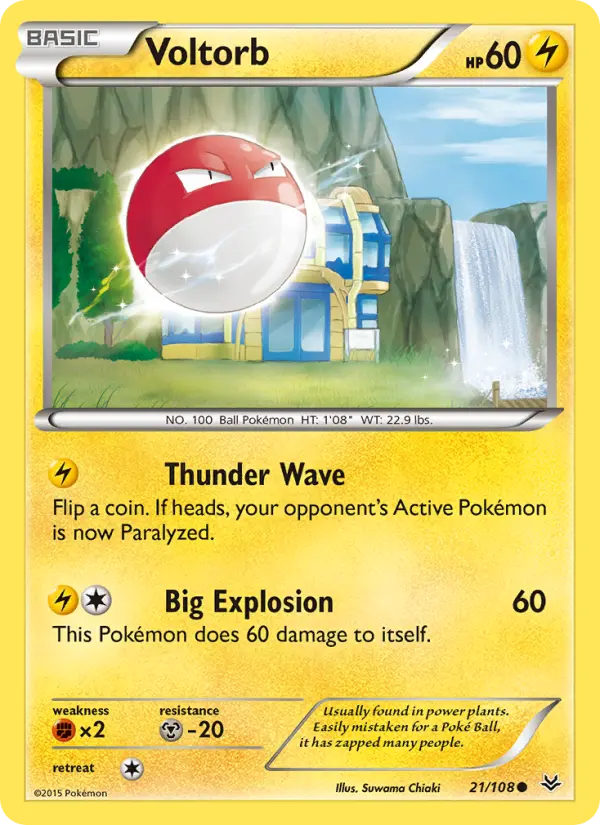
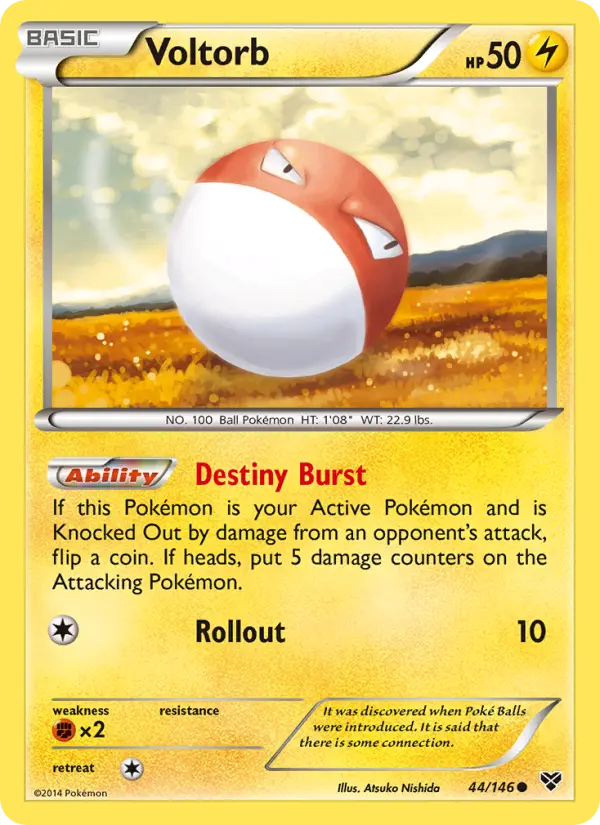
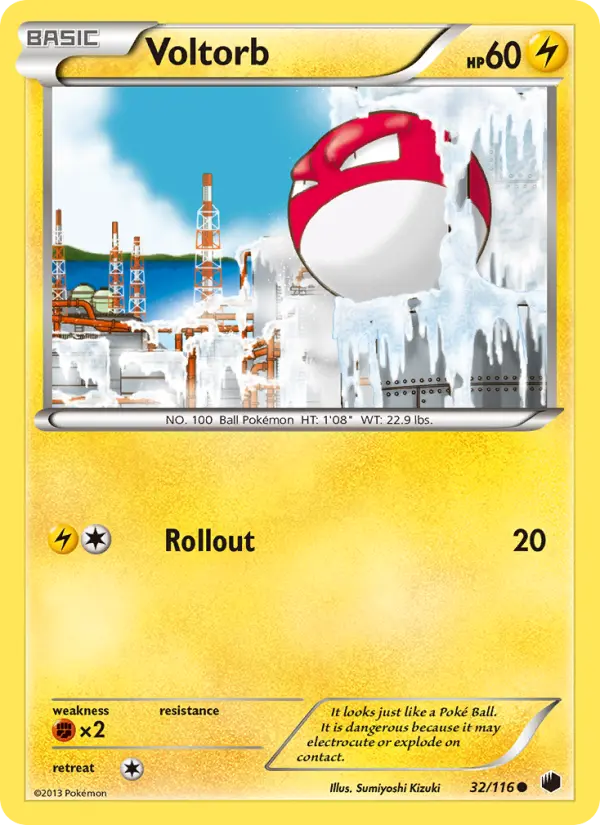
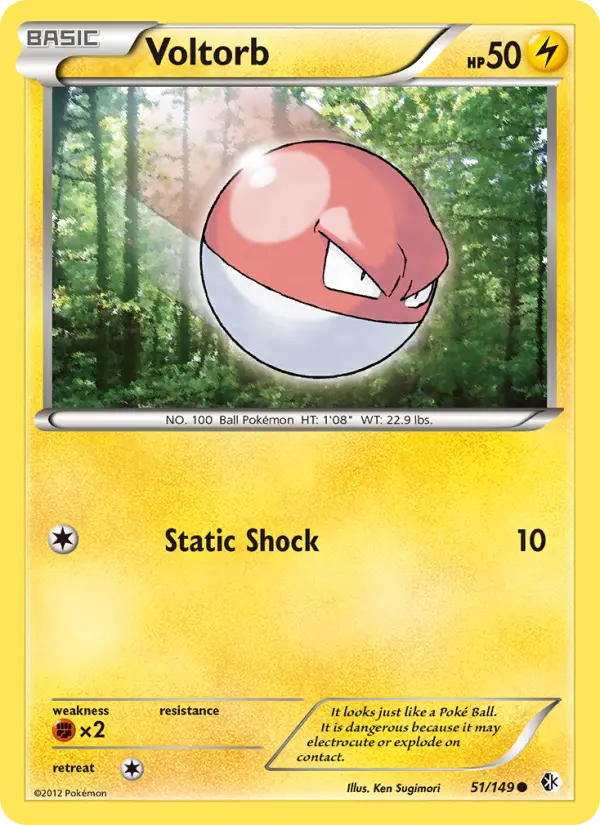
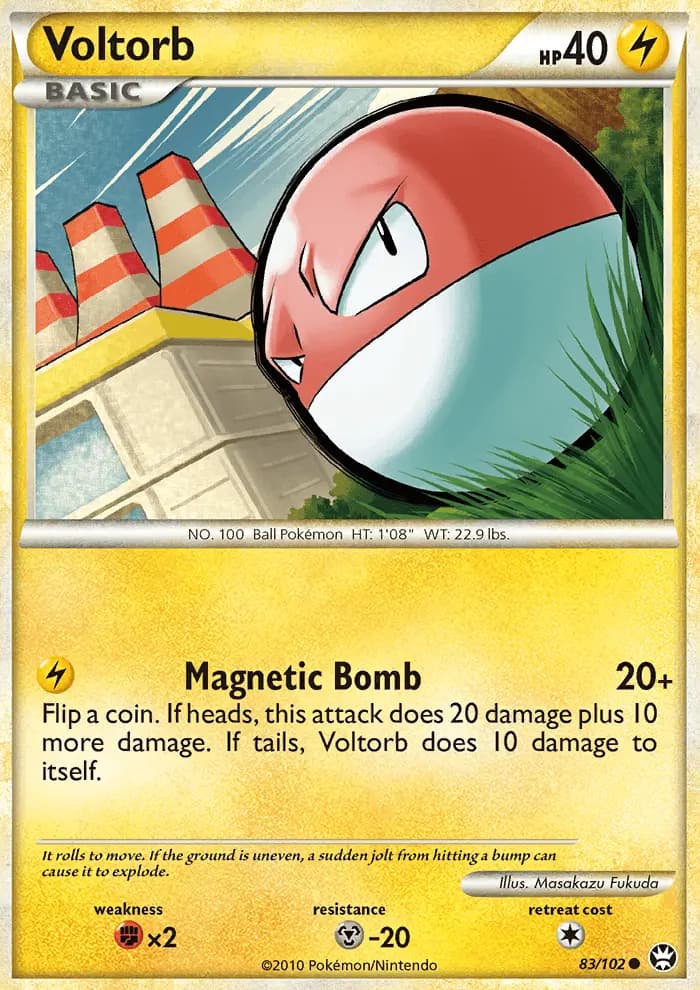
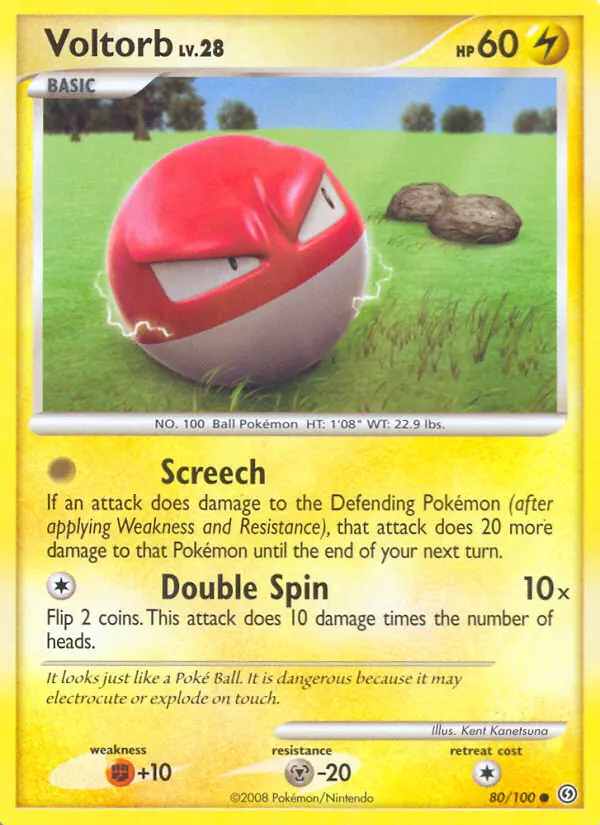
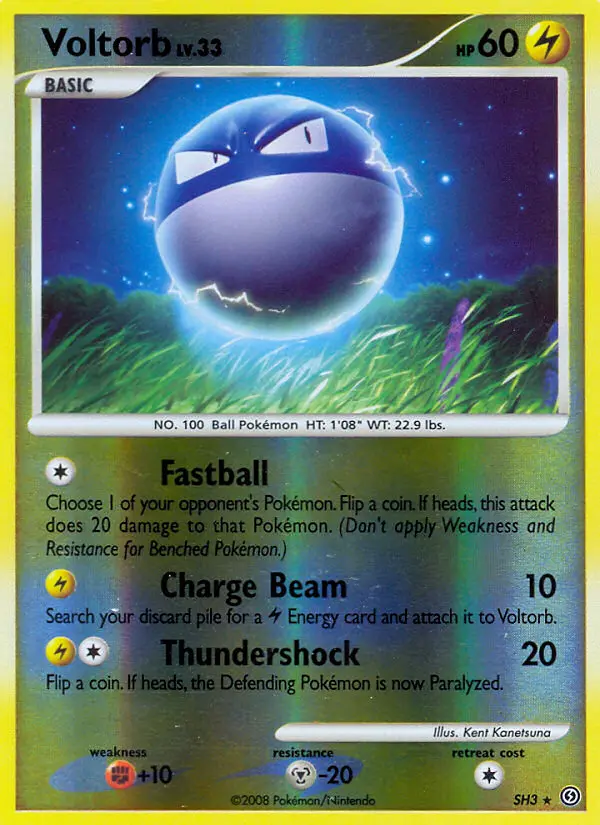
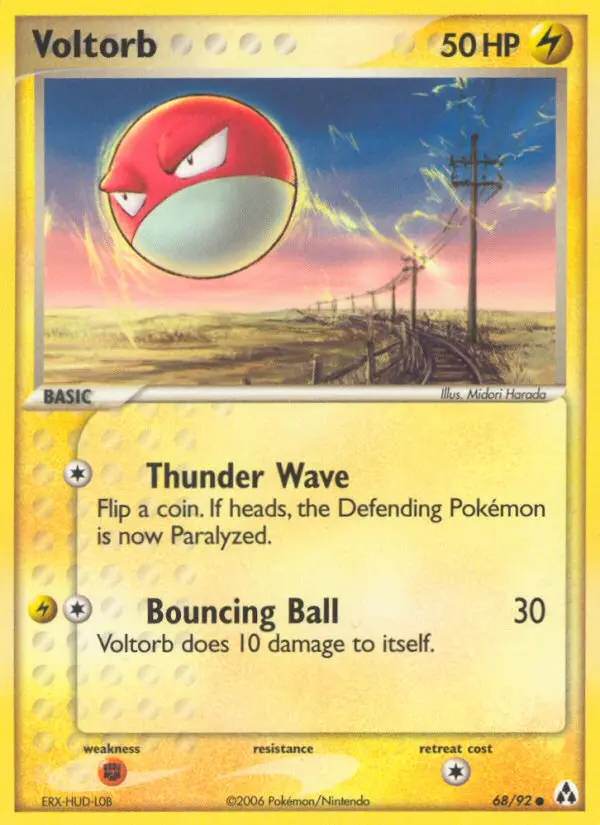
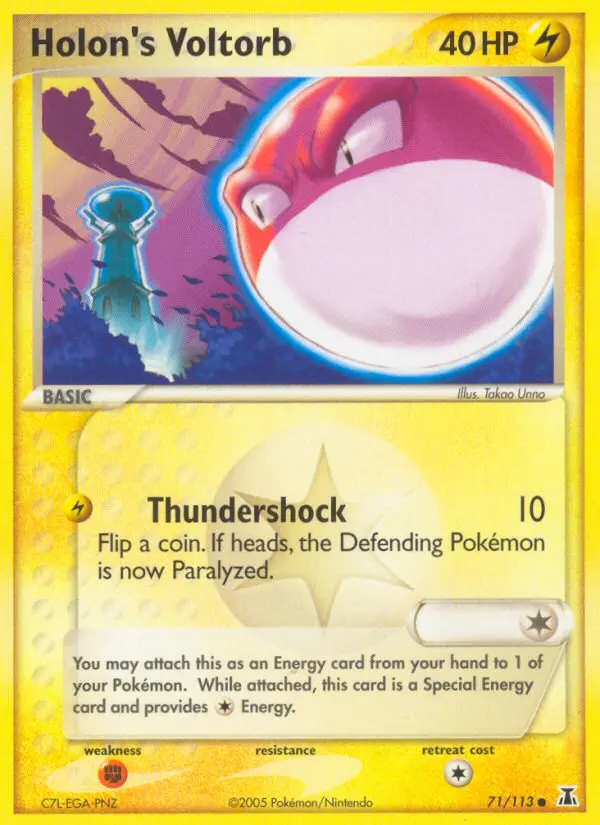
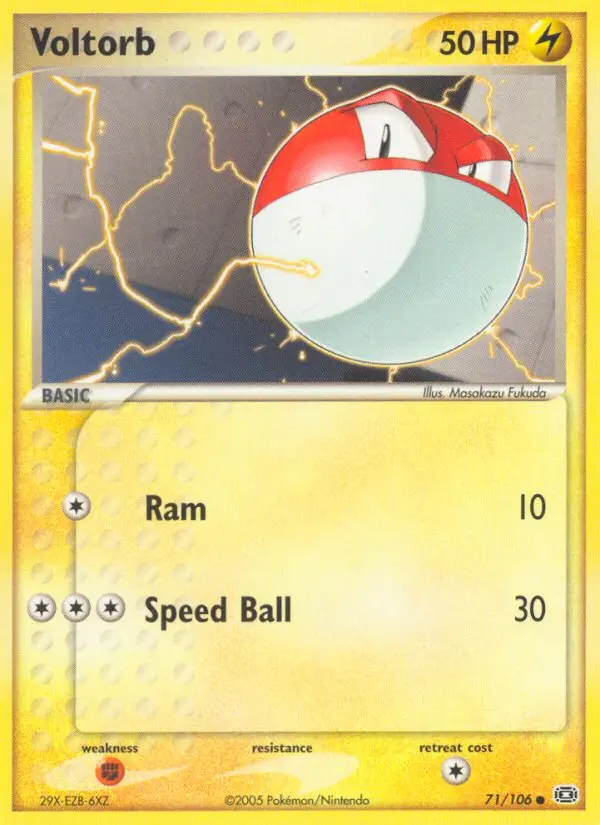
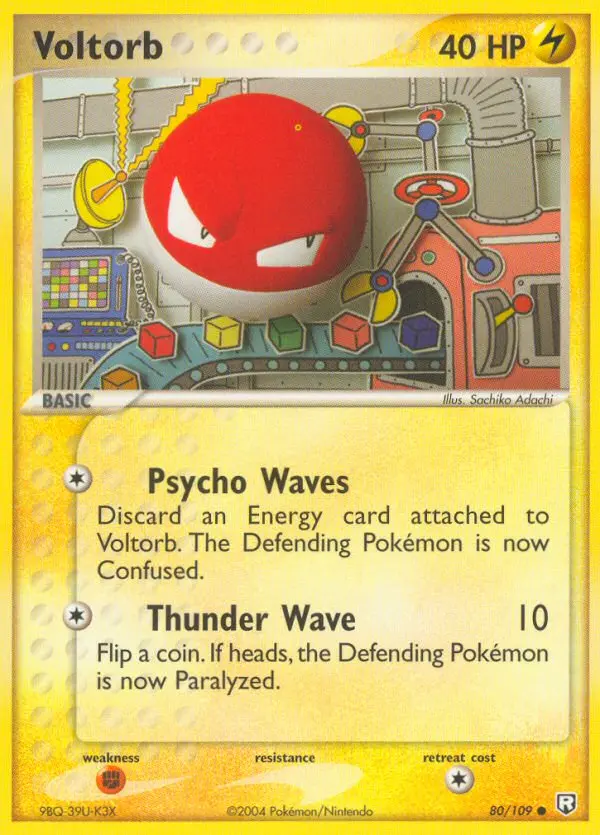
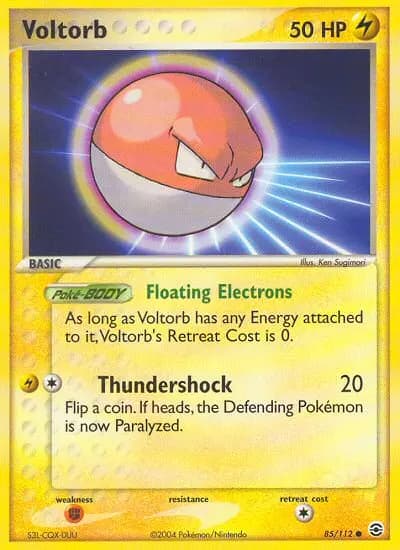
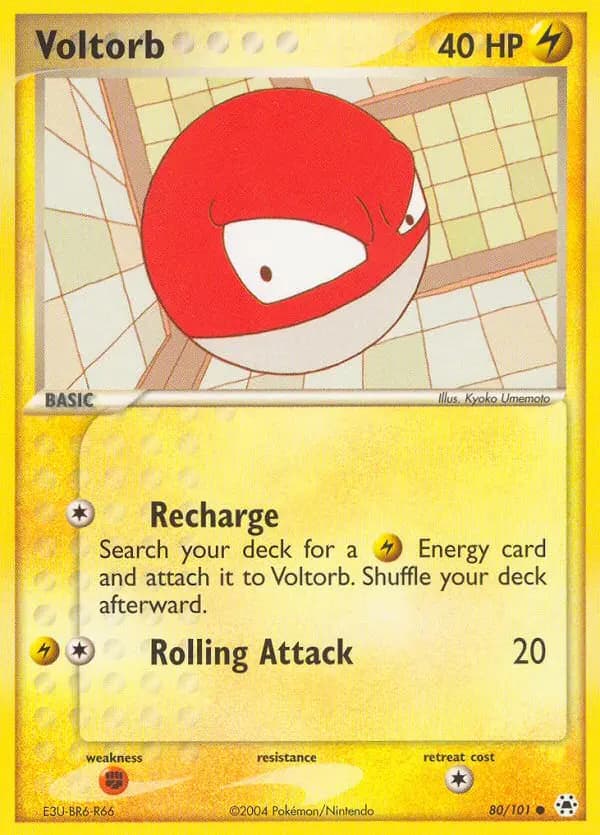
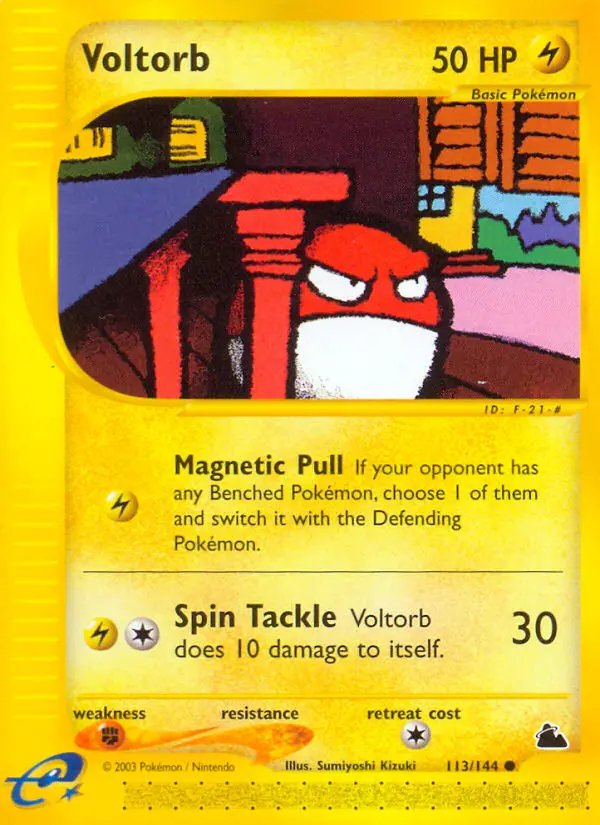
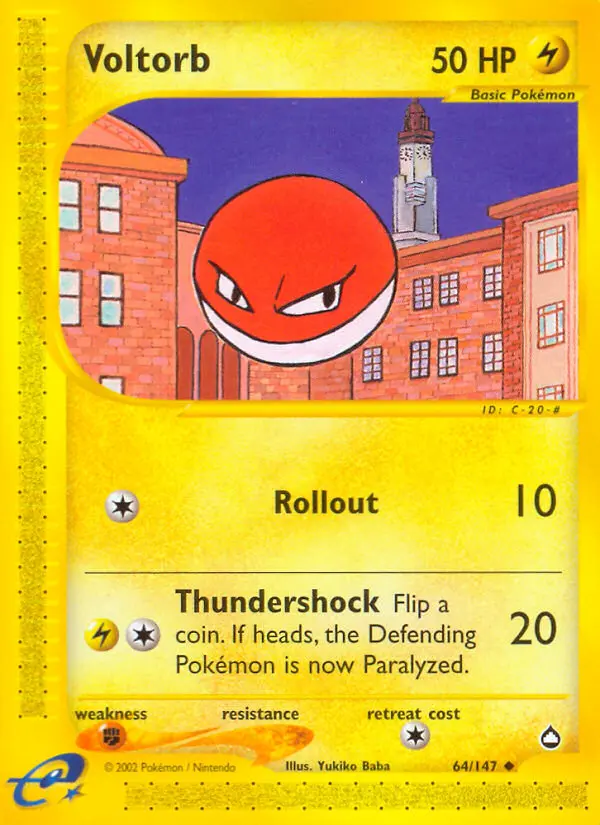
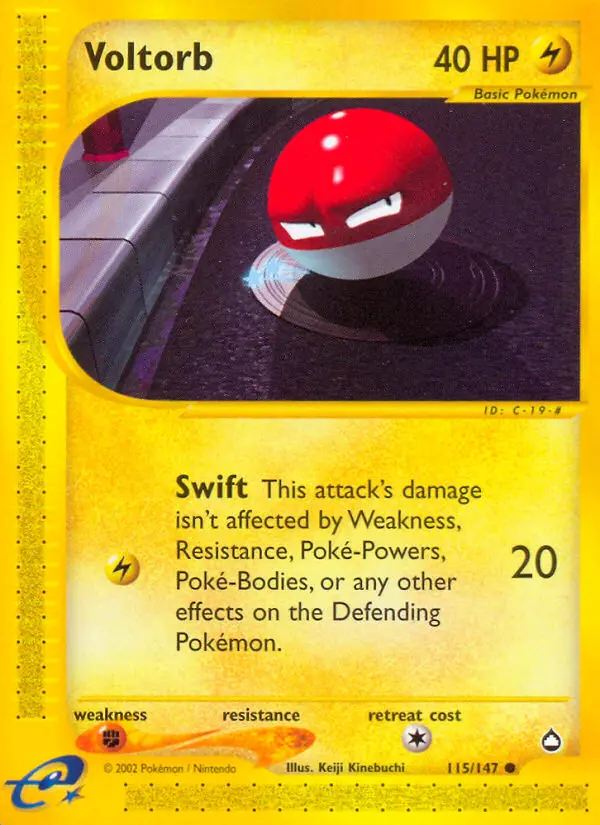
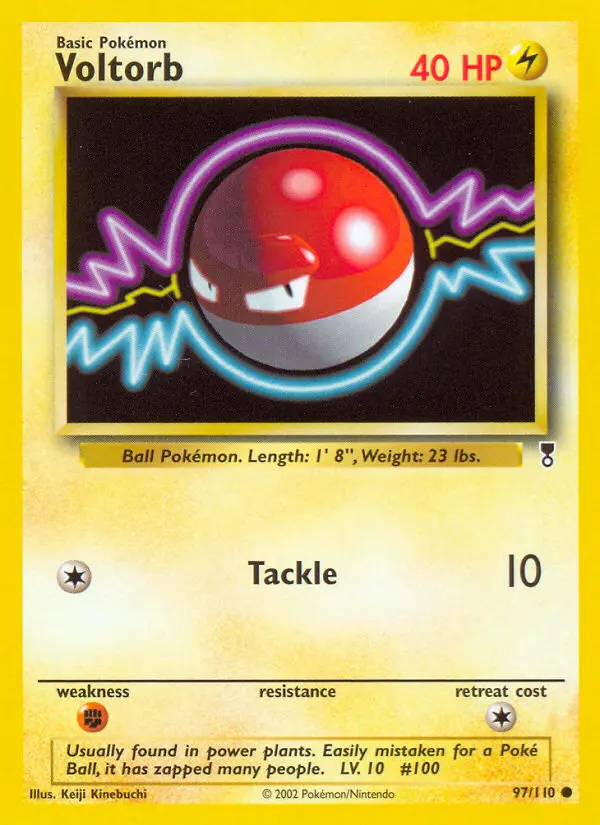
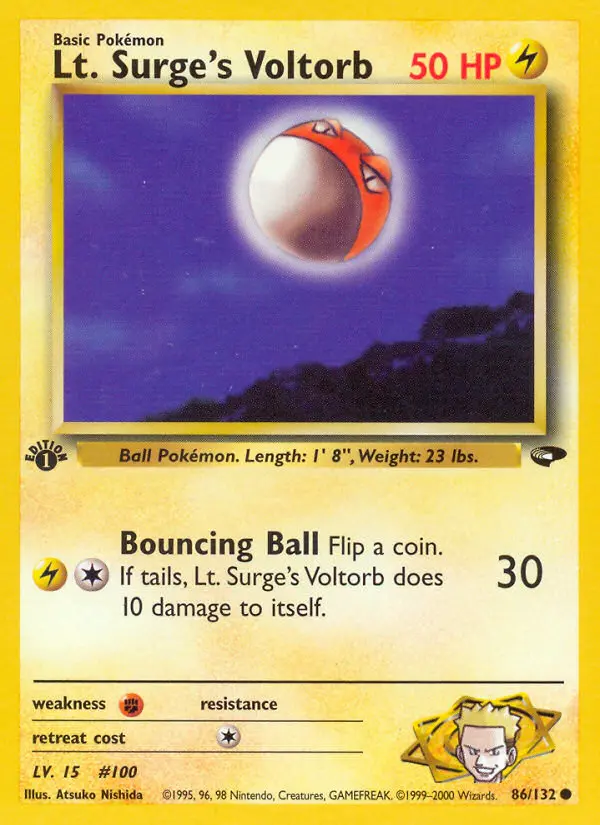
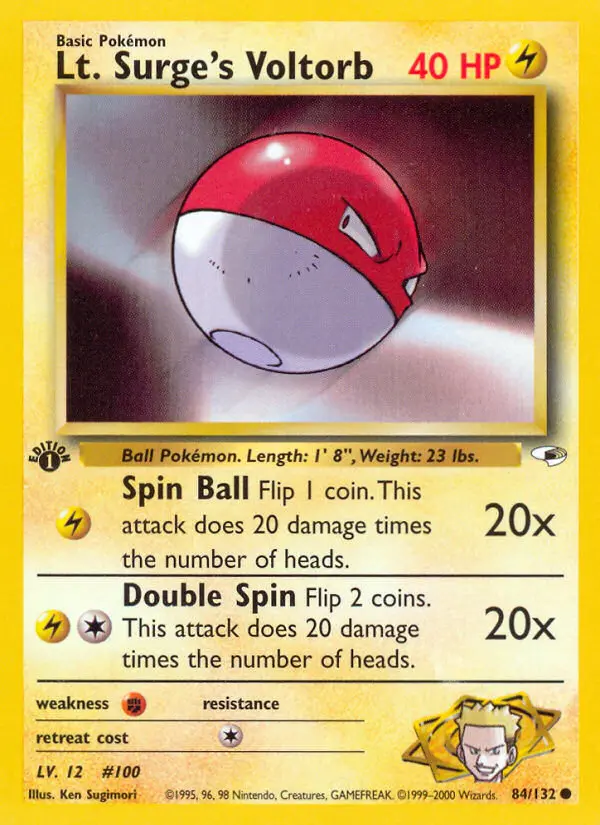
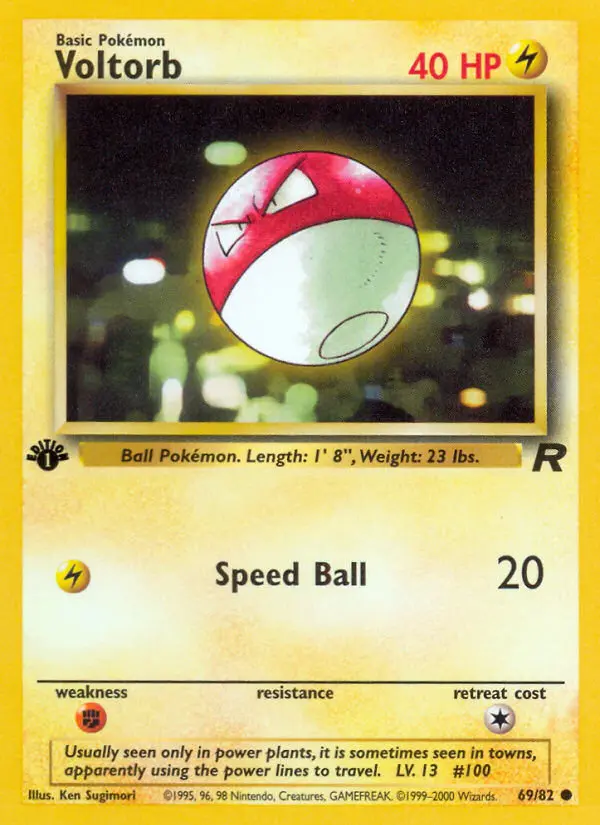
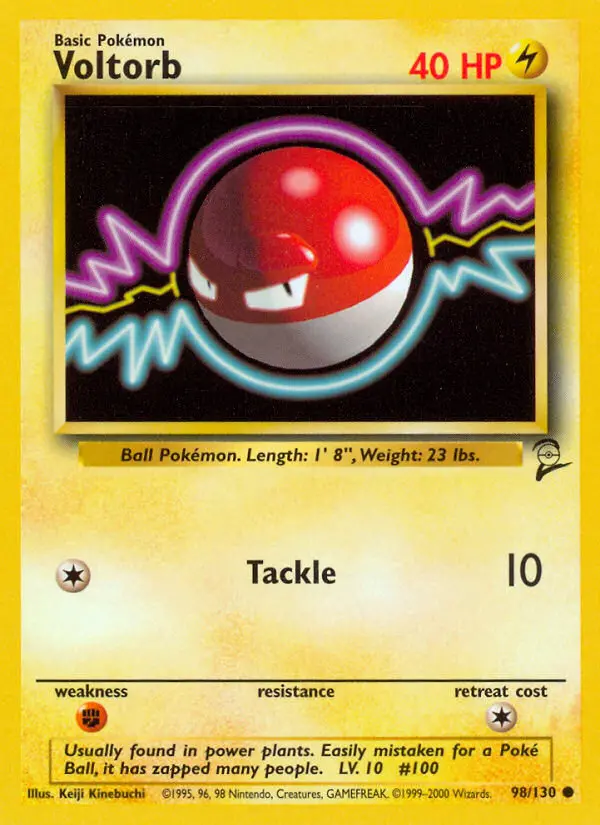
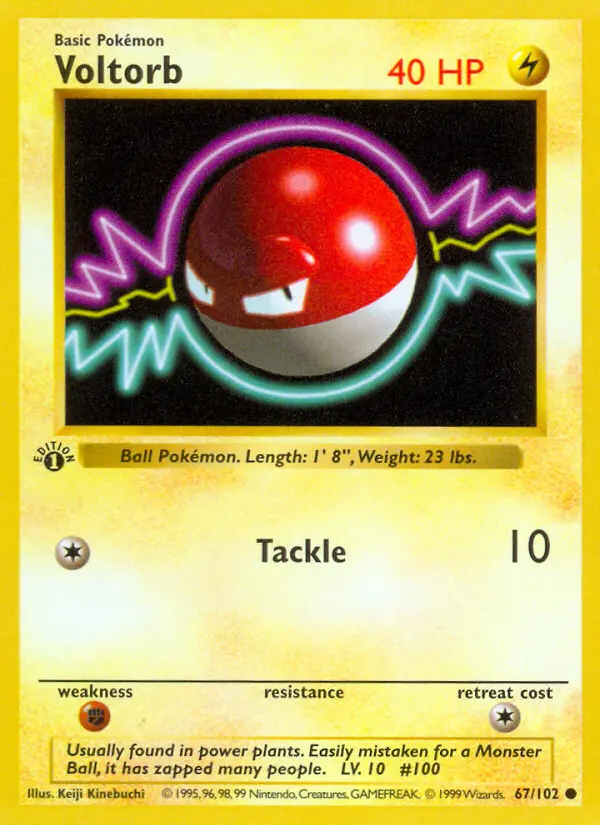
Voltorb has secured a unique place in Pokémon culture due to its striking visual design and the enduring mystery surrounding its origins and connection to Poké Balls themselves. The species has appeared prominently in the Pokémon Trading Card Game throughout multiple generations, often receiving special illustration treatments emphasizing its explosive nature and electrical capabilities. In the Pokémon animated series, Voltorb has appeared in numerous episodes, often portrayed as a dangerous but ultimately tamable Pokémon that challenges trainers to look beyond its deceptive appearance. The species has inspired fan theories and lore discussions for decades, with trainers and researchers continually speculating about the true nature of Voltorb's creation and whether it represents evidence of Pokémon modification or creation by ancient humans. Voltorb's appearance in Pokémon Legends: Arceus, featuring the Hisuian regional variant, renewed interest in the species by revealing how it evolved differently in ancient times, adding new dimensions to its mysterious background. The Pokémon's iconic spherical design has made it recognizable across all media formats, appearing in merchandise, mobile games, and spin-off titles consistently since its debut. Voltorb represents one of Pokémon's most enduring mysteries, embodying questions about the boundary between natural evolution and artificial creation that resonate throughout Pokémon philosophy.
Where to Find Voltorb in Every Pokémon Game
Voltorb appears consistently across the majority of Pokémon games, typically found in power plants, electrical facilities, and locations with high electrical field concentrations. In the original Red and Blue versions, Voltorb is available in the Power Plant, becoming one of the first Electric-type Pokémon many players encounter during their journey through Kanto. The species maintains availability across subsequent generations with varying locations, appearing in the Burnt Tower and other electrical sites in Gold and Silver, the Power Plant in Ruby and Sapphire, and similar facilities in newer generations like Scarlet and Violet. Hisuian Voltorb is exclusively available in Pokémon Legends: Arceus, appearing in specific locations throughout the Hisui region that reflect the game's historical setting and different environmental characteristics. The capture rate of 190 makes Voltorb relatively easy to catch compared to many Pokémon, encouraging trainers to attempt capture when encountered. With a base experience yield of 66, Voltorb provides moderate experience returns, making it a reasonable training option for players building their teams in early-game stages. The species' availability through breeding via the Mineral egg group ensures that trainers can always obtain Voltorb regardless of version or generation, as long as they possess a compatible breeding partner and the requisite time investment. Distribution through special events and Pokémon HOME further ensures accessibility for players seeking to complete their Pokédex entries across different game titles and regions.