Emolga
Generation V · #0587 — Sky Squirrel Pokémon
As a Generation V electric/flying-type, Emolga leans on static to cover what its raw numbers don't, particularly on the speed side. Its dual typing grants it interesting resistances and immunities, including a crucial immunity to Ground-type moves, which would normally be devastating to pure Electric types. Emolga cannot evolve into or from any other Pokémon, standing as a standalone entry in the Pokédex and representing a complete evolutionary line unto itself.
Editor's Take
Emolga is still one of very few Pokémon with a pure Electric/Flying typing, which sounds like it should be a slam dunk competitively, but a 4x weakness lurking under that novelty is exactly why it never lived up to the typing on paper.
Base Stats
Height
0.4m
Weight
5.0kg
Category
Sky Squirrel Pokémon
Gender
Male 50% / Female 50%
Color
white
Shape
quadruped
Abilities
Has a 30% chance of paralyzing attacking Pokémon on contact.
Absorbs electric moves, raising Speed one stage.

Emolga Biology & Physical Characteristics
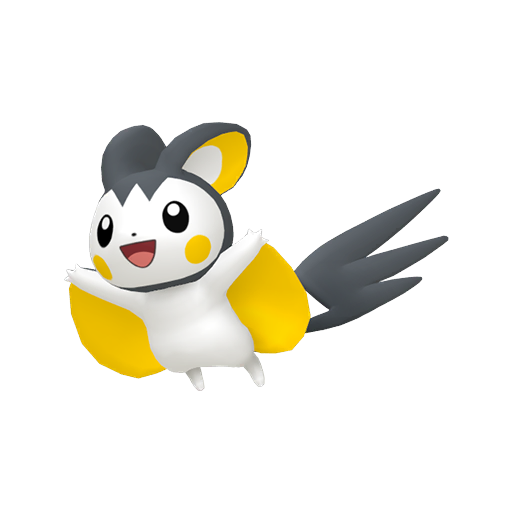
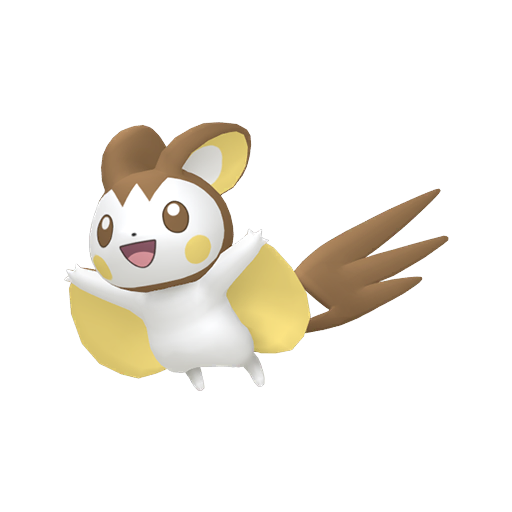
Emolga is a white, rodent-like Pokémon bearing a striking resemblance to a flying squirrel, with distinctive yellow electric sacs prominently displayed on its cheeks. The creature features rounded black ears positioned atop its head, each with yellow and white interior sections, along with black eyes and a small nose that contribute to its characteristically cute appearance. Most notably, Emolga possesses winglike membrane flaps connected to its three-fingered arms, which it uses for gliding rather than true flight. These membranes serve as conduits for the electrical energy generated in its cheek pouches—the Pokédex entries confirm that Emolga generates electricity in these specialized sacs and stores the energy within its membrane before discharging it during gliding. Its jagged black tail and small white feet complete the design, while the hood-like black patterning around its head with a spiky extension creates an almost mischievous expression. The membrane itself is cape-like in appearance, enabling the Pokémon to glide smoothly from tree to tree while maintaining electrical control. A Shiny Emolga — recognizable by its non-standard color palette — is one of the rarer catches in the wild, though Masuda Method breeding and chain-encounter methods both shorten the odds considerably for trainers specifically hunting one.
Pokedex Numbers
Training
Breeding
Emolga Breeding, Gender Ratio & Egg Groups
Emolga's population splits evenly by gender, 50% each way, allowing for relatively straightforward breeding prospects for trainers seeking to obtain multiple specimens. The species belongs to the Field egg group, which encompasses a diverse range of Pokémon and offers flexibility in breeding combinations when cross-breeding is desired. With a base happiness value of 70, Emolga demonstrates moderate friendliness toward trainers, making it reasonably cooperative and affectionate without requiring extensive bonding efforts. The species has a medium growth rate, placing it squarely in the middle of the evolution speed spectrum, and requires 20 egg cycles to hatch from an egg in the form of a newly born Emolga. The relatively short incubation period of 4,884 to 5,140 steps makes breeding for Emolga a relatively efficient process compared to species with longer hatch times. The medium growth rate combined with moderate base happiness and balanced gender distribution makes Emolga an accessible choice for breeders of all experience levels. The Field egg group placement also means that Emolga can contribute genetic material to a wide variety of offspring when bred with compatible partners, adding versatility to breeding strategies.
Sprites




Held Items
Cheri Berry
medicine
Held: Consumed when paralyzed to cure paralysis.
Cost: 80
Cheri Berry
medicine
Held: Consumed when paralyzed to cure paralysis.
Cost: 80
Cheri Berry
medicine
Held: Consumed when paralyzed to cure paralysis.
Cost: 80
Cheri Berry
medicine
Held: Consumed when paralyzed to cure paralysis.
Cost: 80
TMs & HMs
tm02
lets go pikachu lets go eevee
tm03
lets go pikachu lets go eevee
tm05
lets go pikachu lets go eevee
tm06
yellow
tm06
gold silver
tm06
red blue
tm06
crystal
tm06
emerald
tm06
firered leafgreen
tm06
diamond pearl
tm06
platinum
tm06
ruby sapphire
tm06
colosseum
tm06
black 2 white 2
tm06
xd
tm06
black white
tm06
heartgold soulsilver
tm06
omega ruby alpha sapphire
tm06
lets go pikachu lets go eevee
tm06
ultra sun ultra moon
+555 more TMs/HMs
Emolga Evolution, Mega Evolution & Special Forms
Emolga does not evolve into any other Pokémon, nor does it evolve from any prior form, making it a standalone species within the Pokédex. This lack of evolutionary progression is relatively uncommon among Pokémon introduced in Generation V and sets Emolga apart from many of its contemporaries. The absence of evolution does not diminish Emolga's viability in competitive play or casual battles, as its base stats are sufficiently distributed to allow for multiple viable playstyles. Furthermore, Emolga has no Mega Evolution form, regional variants, or alternative forms across any generation, meaning the Emolga encountered in Generation V remains functionally identical to those found in subsequent games. This design choice emphasizes Emolga's role as a complete and fully-realized Pokémon species, neither dependent on evolution for power progression nor subjected to post-release forms that would alter its fundamental nature. The stasis of Emolga's design across generations has allowed it to maintain consistency in the eyes of the Pokémon community.
Where to Find
Unova Route 13
unova
+1 more
Unova Route 15
unova
+1 more
Unova Route 11
unova
+1 more
Unova Route 14
unova
+1 more
Unova Route 16
unova
+1 more
Unova Route 10
unova
+1 more
Village Bridge
unova
+1 more
Abundant Shrine
unova
+1 more
Unova Route 9
unova
+1 more
Unova Route 12
unova
+1 more
Unova Route 7
unova
+1 more
Lostlorn Forest
unova
+1 more
Giant Chasm
unova
Unova Route 6
unova
+5 more
Dragonspiral Tower
unova
+5 more
Unova Route 5
unova
+1 more
Unova Route 23
unova
Unova Route 22
unova
Kalos Route 10
kalos
+5 more
Poke Pelago
alola
+1 more locations in other games
Emolga Behaviour and Natural Habitat
Emolga is an arboreal Pokémon that makes its home in treetops, frequently nesting in holes that have been gouged out by other Pokémon such as Pikipek. The species employs its electrical abilities as a survival mechanism, using electric shocks to scare away bird Pokémon that might otherwise compete for food resources or threaten its safety. This defensive application of electricity allows Emolga to gather substantial quantities of food unmolested. Once food is obtained, Emolga exhibits a curious culinary practice: it grills both berries and bug Pokémon with electric shocks before consuming them, as documented in the Moon Pokédex entry. Despite its diminutive and endearing appearance, Emolga has a reputation for being troublesome and mischievous, often causing difficulties for those around it. The creature's tendency to stuff its cheeks with food sometimes hampers its flying ability, as the added weight and bulk of stored provisions can impede its gliding performance. Emolga's nocturnal behavior is particularly striking, with the Ultra Sun entry noting that during thunderstorms at night, Emolga populations can become so numerous that they nearly blot out the sky.
Pokedex Entries
The energy made in its cheeks’ electric pouches is stored inside its membrane and released while it is gliding.
It glides on its outstretched membrane while shocking foes with the electricity stored in the pouches on its cheeks.
They live on treetops and glide using the inside of a cape-like membrane while discharging electricity.
They live on treetops and glide using the inside of a cape-like membrane while discharging electricity.
The energy made in its cheeks’ electric pouches is stored inside its membrane and released while it is gliding.
They live on treetops and glide using the inside of a cape-like membrane while discharging electricity.
The energy made in its cheeks’ electric pouches is stored inside its membrane and released while it is gliding.
It glides using its cape-like membrane. Electrical energy scatters from it, shocking its friends and foes alike.
They store up electricity to fly through the air. When thunder cracks at night, sometimes there are almost enough of them to blot out the sky.
It grills berries and bug Pokémon with electric shocks and makes a meal of them. It usually nests in the holes gouged in trees by Pikipek.
As it flies, it scatters electricity around, so bird Pokémon keep their distance. That’s why Emolga can keep all its food to itself.
As Emolga flutters through the air, it crackles with electricity. This Pokémon is cute, but it can cause a lot of trouble.
This Pokémon absolutely loves sweet berries. Sometimes it stuffs its cheeks full of so much food that it can’t fly properly.
Emolga Name Origin & Design Inspiration
The name Emolga is believed to derive from a combination of linguistic roots reflecting its dual nature as both an electrical and flying creature. The name construction likely combines elements referencing electricity and the flying squirrel inspiration that forms the creature's biological basis. Visually, Emolga's design clearly takes inspiration from flying squirrels, particularly the membrane structure that these real-world animals use for gliding, adapted here to serve the dual purpose of both locomotion and electrical discharge. The yellow cheek sacs are an obvious homage to Pikachu's iconic design elements, establishing a visual connection to the Electric-type family while simultaneously distinguishing Emolga through its aerial specialization. The color palette of white, yellow, and black creates a clean, appealing aesthetic that reads as both cute and slightly mischievous, befitting its characterization in the Pokédex. The spiky hood-like pattern around its head suggests an almost playful or devilish nature, which aligns perfectly with the behavioral descriptions that emphasize Emolga's troublemaking tendencies. The overall design successfully bridges the gap between adorability and functionality, making Emolga visually distinct despite the crowded Electric-type roster.
Learnable Moves
Emolga can learn 67 moves:
Move | Type | Cat. | Power | Acc. | PP |
|---|---|---|---|---|---|
| acrobatics | flying | Physical | 55 | 100 | 15 |
| aerial ace | flying | Physical | 60 | — | 20 |
| agility | psychic | Status | — | — | 30 |
| air slash | flying | Special | 75 | 95 | 15 |
| astonish | ghost | Physical | 30 | 100 | 15 |
| attract | normal | Status | — | 100 | 15 |
| baton pass | normal | Status | — | — | 40 |
| charge | electric | Status | — | — | 20 |
| charge beam | electric | Special | 50 | 90 | 10 |
| charm | fairy | Status | — | 100 | 20 |
| confide | normal | Status | — | — | 20 |
| covet | normal | Physical | 60 | 100 | 25 |
| cut | normal | Physical | 50 | 95 | 30 |
| defog | flying | Status | — | — | 15 |
| discharge | electric | Special | 80 | 100 | 15 |
| double team | normal | Status | — | — | 15 |
| dual wingbeat | flying | Physical | 40 | 90 | 10 |
| eerie impulse | electric | Status | — | 100 | 15 |
| electro ball | electric | Special | — | 100 | 10 |
| electroweb | electric | Special | 55 | 95 | 15 |
| encore | normal | Status | — | 100 | 5 |
| endure | normal | Status | — | — | 10 |
| energy ball | grass | Special | 90 | 100 | 10 |
| facade | normal | Physical | 70 | 100 | 20 |
| flash | normal | Status | — | 100 | 20 |
| fling | dark | Physical | — | 100 | 10 |
| frustration | normal | Physical | — | 100 | 20 |
| helping hand | normal | Status | — | — | 20 |
| hidden power | normal | Special | 60 | 100 | 15 |
| ion deluge | electric | Status | — | — | 25 |
| iron tail | steel | Physical | 100 | 75 | 15 |
| knock off | dark | Physical | 65 | 100 | 20 |
| last resort | normal | Physical | 140 | 100 | 5 |
| light screen | psychic | Status | — | — | 30 |
| nuzzle | electric | Physical | 20 | 100 | 20 |
| protect | normal | Status | — | — | 10 |
| pursuit | dark | Physical | 40 | 100 | 20 |
| quick attack | normal | Physical | 40 | 100 | 30 |
| rain dance | water | Status | — | — | 5 |
| rest | psychic | Status | — | — | 5 |
| return | normal | Physical | — | 100 | 20 |
| rising voltage | electric | Special | 70 | 100 | 20 |
| roost | flying | Status | — | — | 5 |
| round | normal | Special | 60 | 100 | 15 |
| secret power | normal | Physical | 70 | 100 | 20 |
| shock wave | electric | Special | 60 | — | 20 |
| signal beam | bug | Special | 75 | 100 | 15 |
| sleep talk | normal | Status | — | — | 10 |
| snore | normal | Special | 50 | 100 | 15 |
| solar beam | grass | Special | 120 | 100 | 10 |
| spark | electric | Physical | 65 | 100 | 20 |
| speed swap | psychic | Status | — | — | 10 |
| substitute | normal | Status | — | — | 10 |
| swagger | normal | Status | — | 85 | 15 |
| swift | normal | Special | 60 | — | 20 |
| tail whip | normal | Status | — | 100 | 30 |
| tailwind | flying | Status | — | — | 15 |
| taunt | dark | Status | — | 100 | 20 |
| thunder | electric | Special | 110 | 70 | 10 |
| thunder shock | electric | Special | 40 | 100 | 30 |
| thunder wave | electric | Status | — | 90 | 20 |
| thunderbolt | electric | Special | 90 | 100 | 15 |
| tickle | normal | Status | — | 100 | 20 |
| toxic | poison | Status | — | 90 | 10 |
| u turn | bug | Physical | 70 | 100 | 20 |
| volt switch | electric | Special | 70 | 100 | 20 |
| wild charge | electric | Physical | 90 | 100 | 15 |
Emolga Competitive Battle Guide
Within competitive battling, Emolga occupies a modest niche defined primarily by its exceptional Speed stat of 103, which grants it valuable priority in turn order and allows it to function as a speedy special attacker or support Pokémon. The base Special Attack of 75, paired with its Attack stat of 75, provides reasonable offensive pressure, though neither stat reaches the heights necessary for guaranteed OHKO (one-hit knockout) potential against bulky opponents. Emolga's defensive capabilities are modest, with base Defense and Special Defense both standing at 60, making it vulnerable to physical and special attacks alike and necessitating careful play and positioning. The Static ability grants a 30% chance of paralyzing any Pokémon that makes physical contact with Emolga, providing a useful deterrent against physical attackers and potential revenge damage mitigation. The hidden ability Motor Drive is significantly more valuable in competitive contexts, as it allows Emolga to absorb Electric-type moves directed at it and increase its Speed by one stage in response, effectively turning Electric attacks into setup opportunities. Emolga's movepool includes access to useful moves such as Acrobatics, which receives a power boost when the Pokémon holds no item, along with Volt Switch for pivoting and momentum control. The low base HP of 55 severely limits Emolga's bulk despite its defensive typing, making it dependent on speed and evasion rather than durability, positioning it as a glass cannon or pivoting support Pokémon rather than a sustained battler.
Commonly Asked Questions About Emolga
What type is Emolga?
Emolga is a electric and flying type Pokemon.
What does Emolga evolve from?
Emolga does not evolve.
What are Emolga's weaknesses?
Emolga is weak to ground, rock and ice type moves.
Where can I find Emolga?
Emolga can be found in unova route 13 (unova), unova route 15 (unova) and unova route 11 (unova) and 18 other locations.
Is Shiny Emolga different in stats from a normal Emolga?
No — a Shiny Emolga has identical base stats, abilities, and movepool to the standard form. The only difference is the color palette; nothing about its performance in or out of battle changes.
How rare is Shiny Emolga in the wild?
Like any Shiny Pokémon, a wild Shiny Emolga has roughly a 1-in-4096 base encounter rate in modern games (better with a Shiny Charm). Breeding with the Masuda Method or building up an Odds/chain encounter both shorten those odds significantly for trainers hunting one specifically.
Emolga Cultural Impact & Franchise History
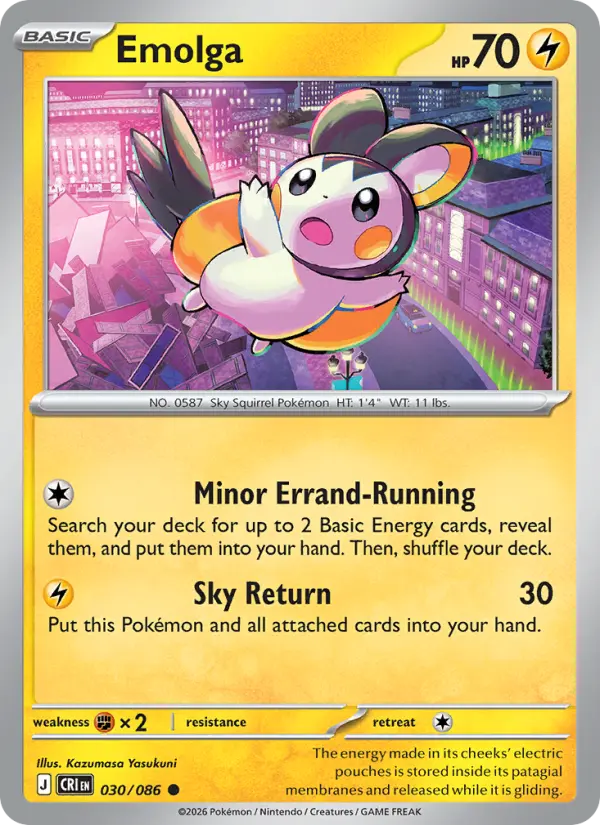
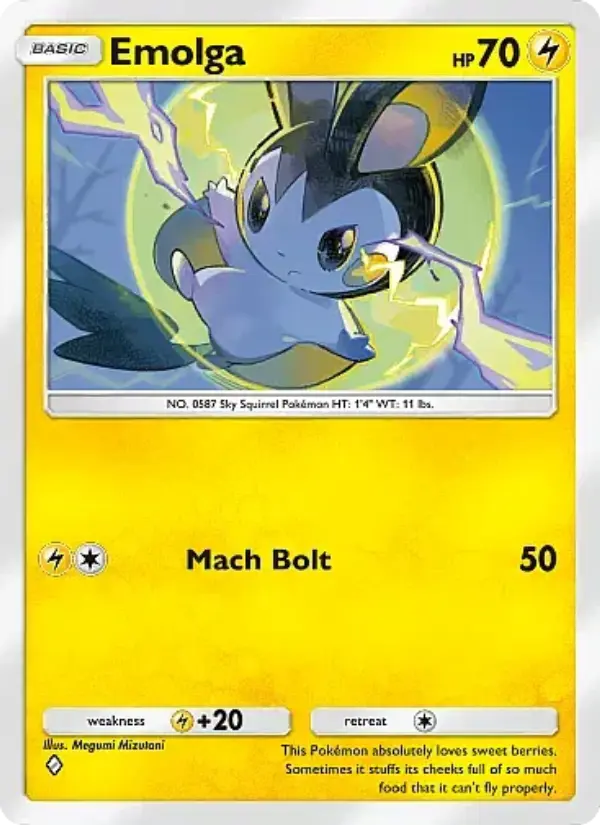
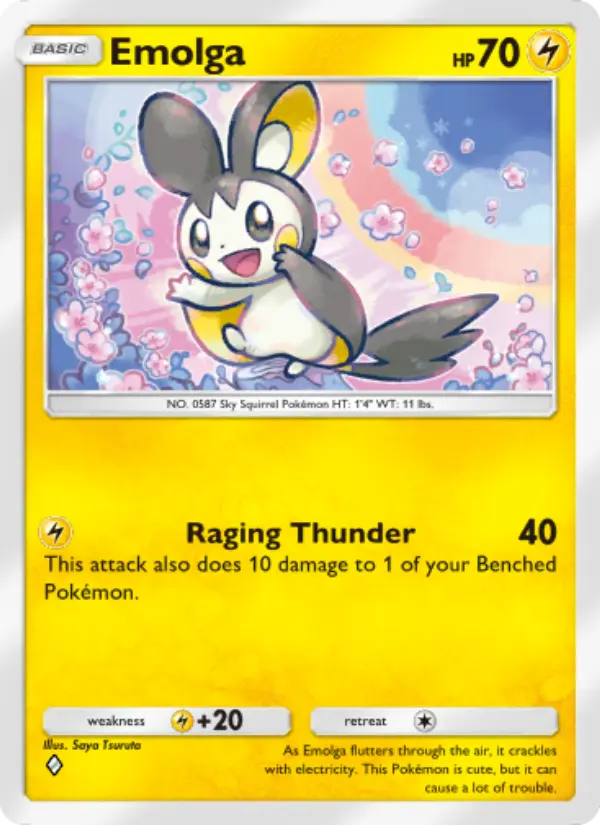
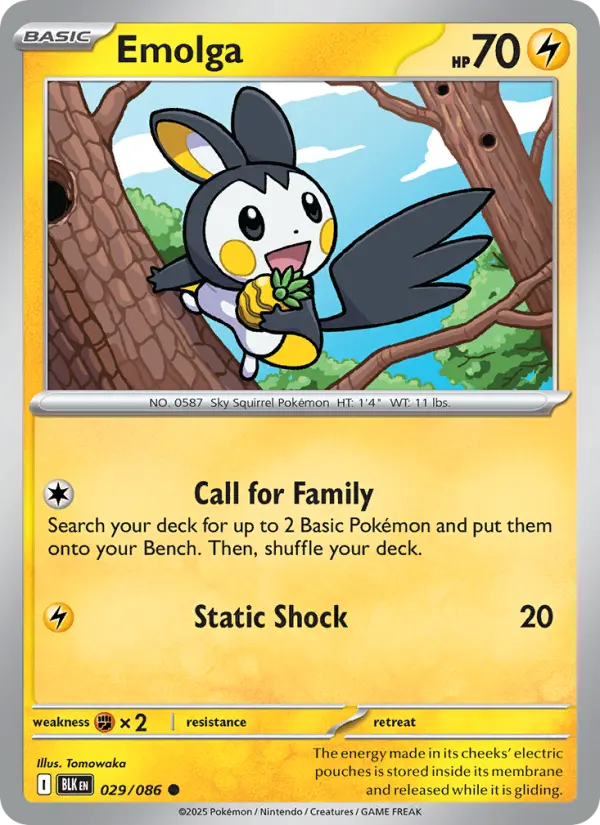
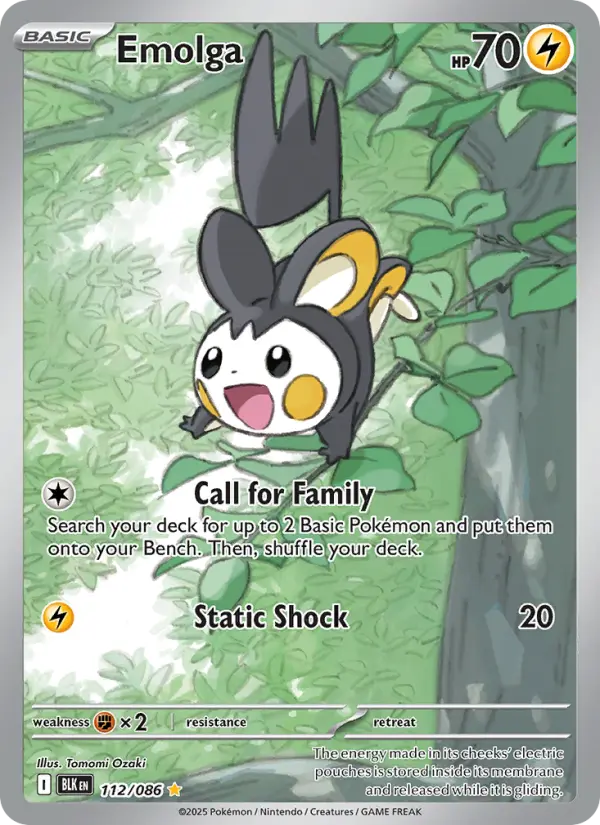
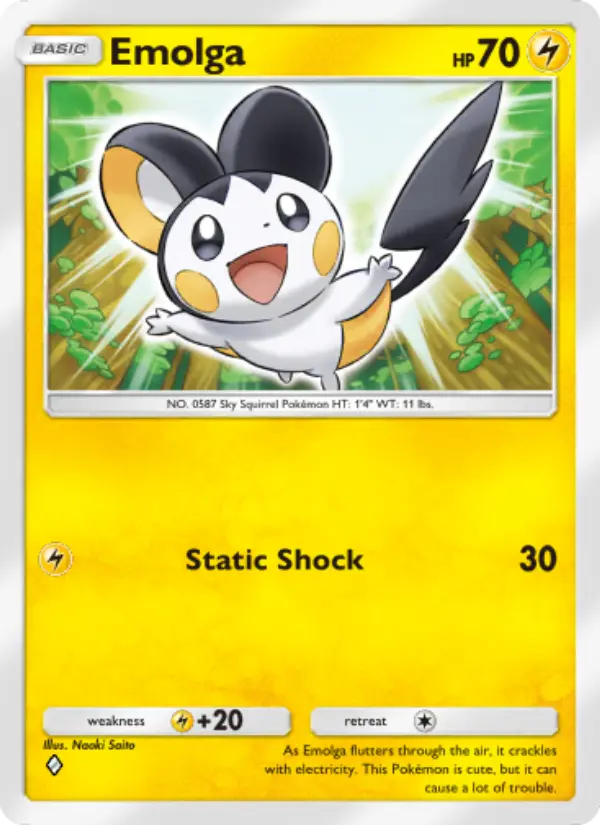
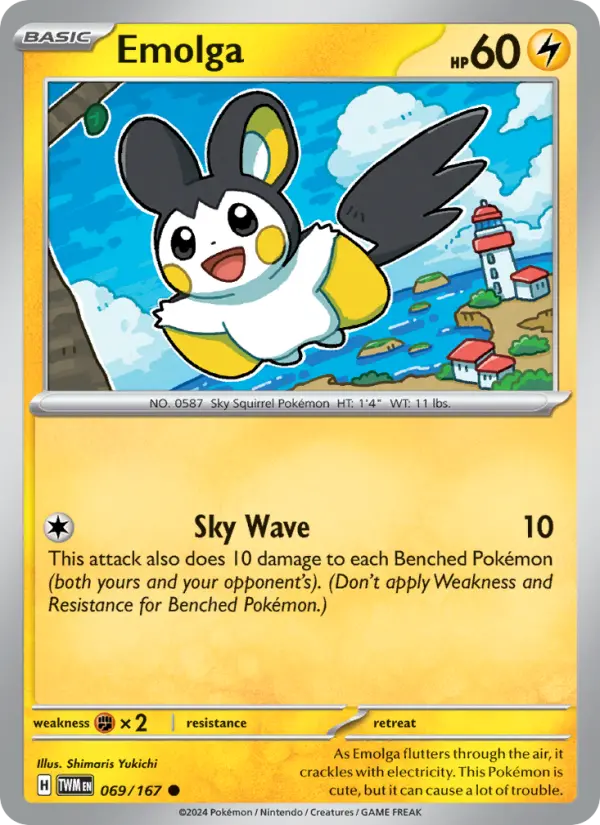
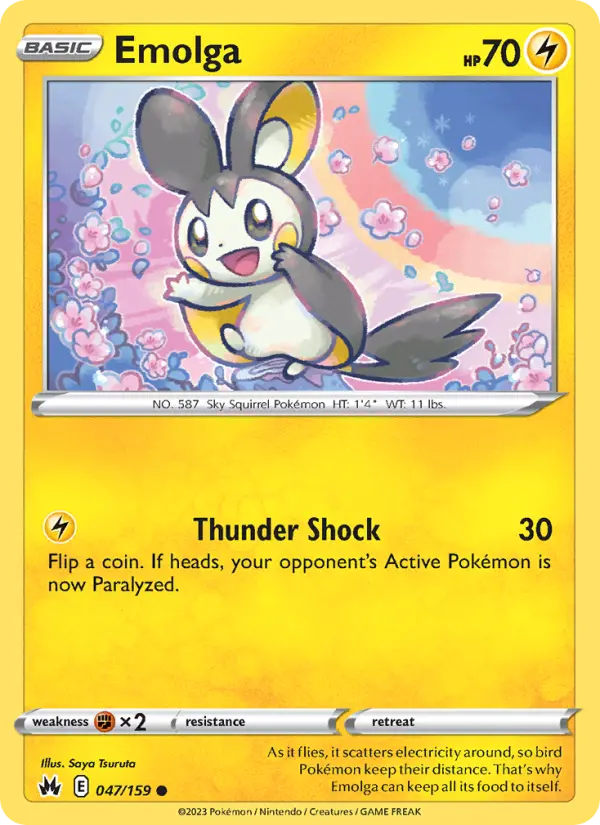
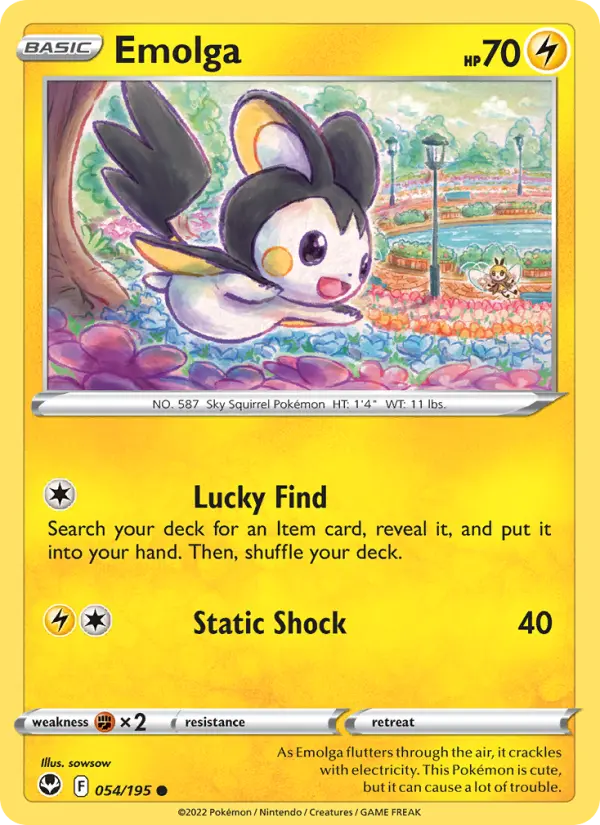
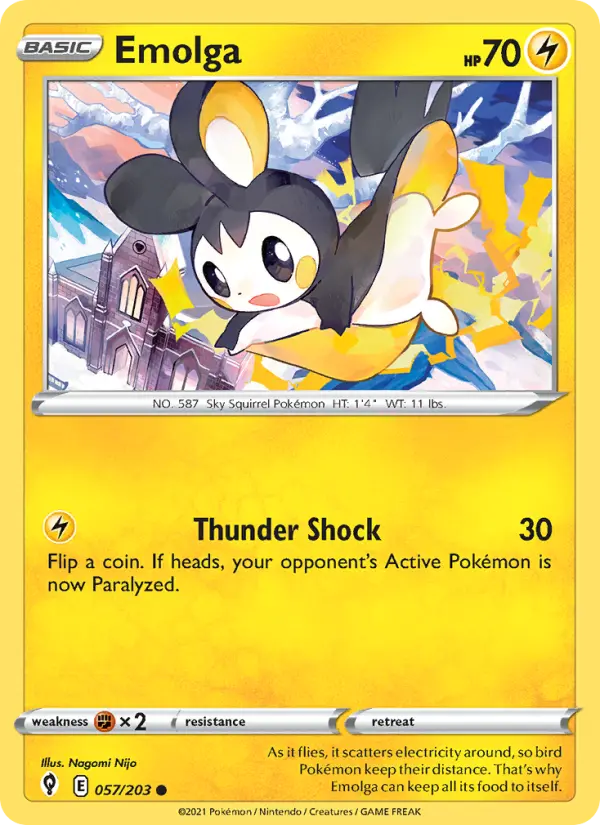
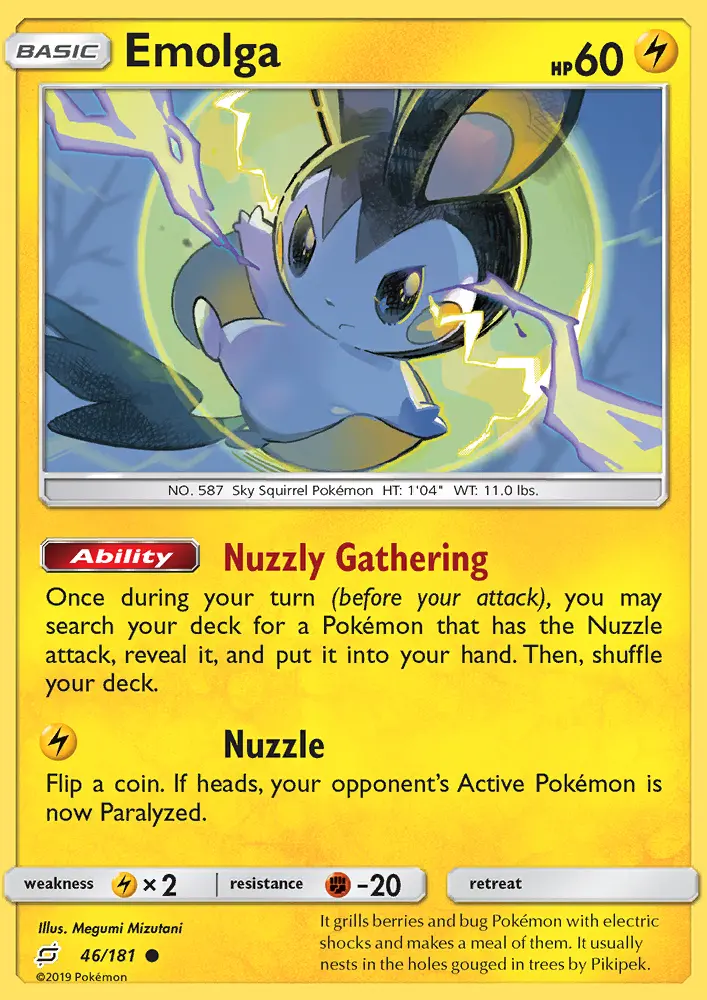
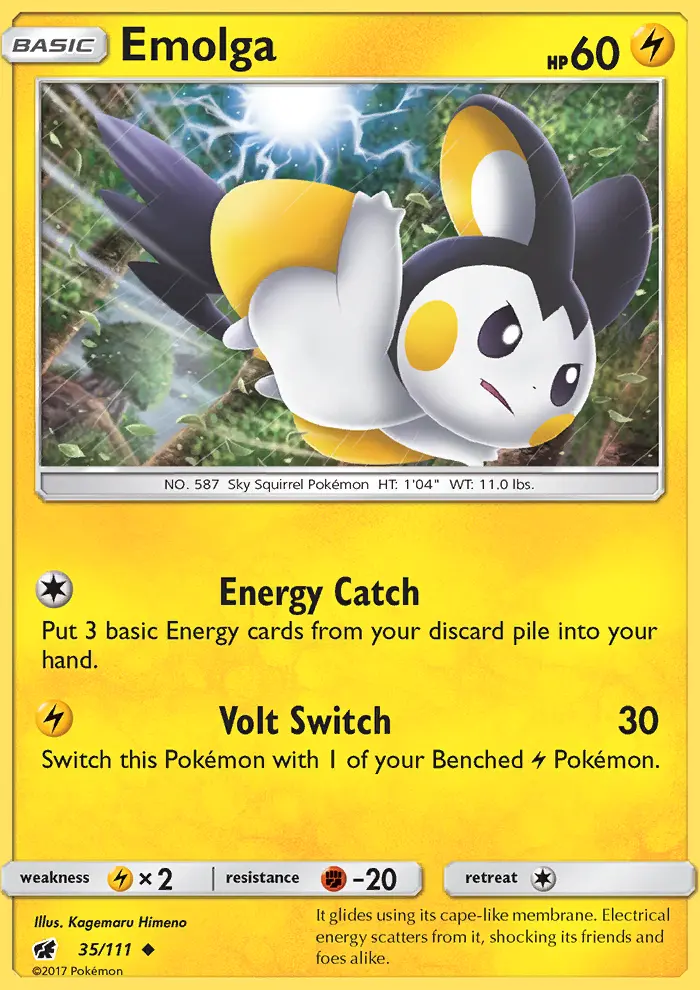
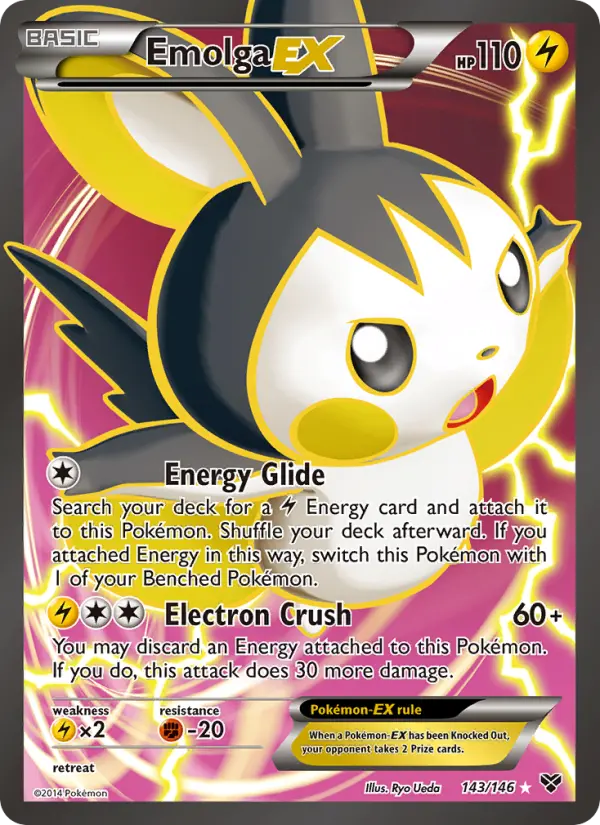
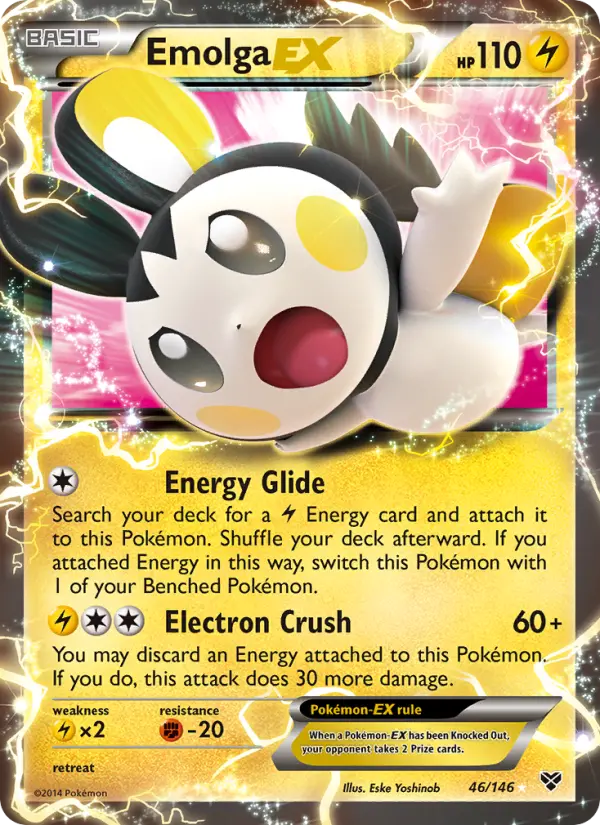
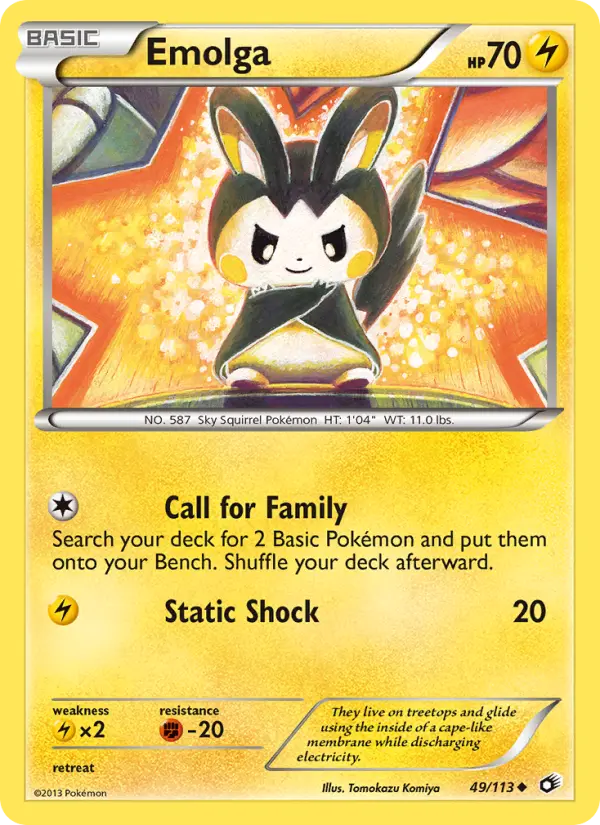
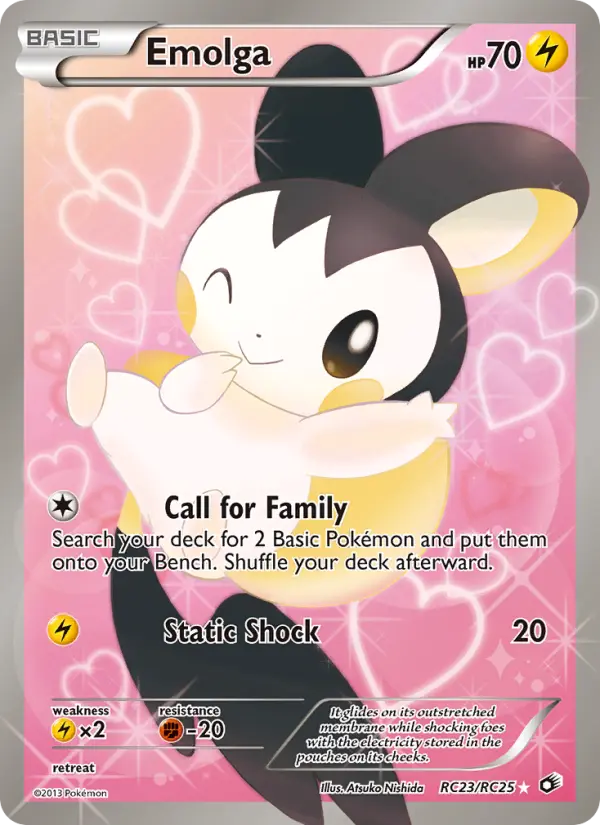
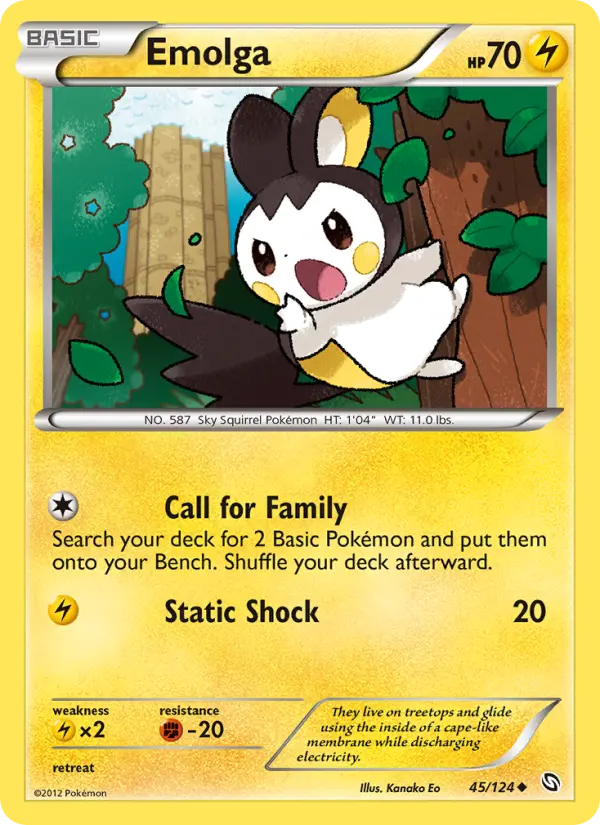
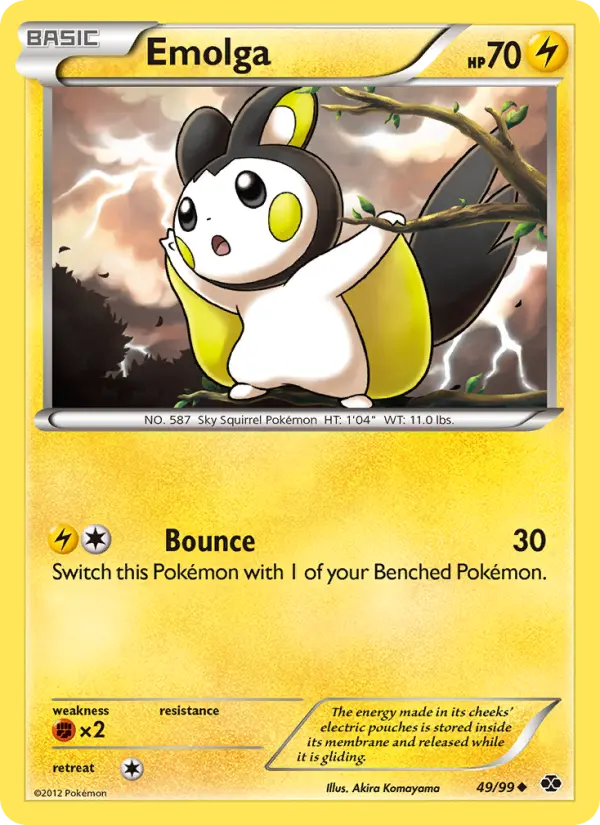
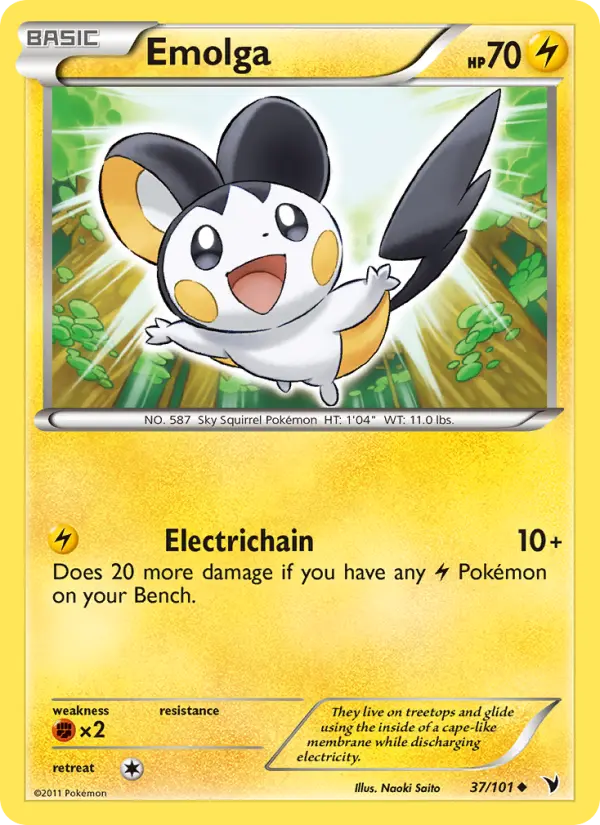
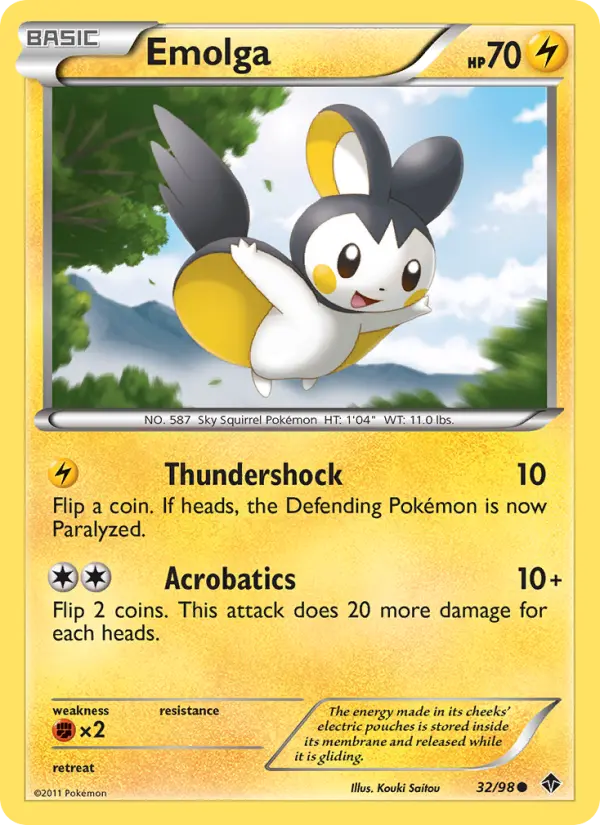
Emolga achieved considerable prominence through its appearance in the Pokémon anime series, particularly through Iris's Emolga, which became a memorable companion character with distinctive personality traits and a penchant for mischief that perfectly embodied the species' established behavioral patterns. The character's recurring antics and battles helped introduce Emolga to a broad audience of anime viewers, establishing it as a recognizable and beloved creature beyond the core gaming community. Emolga has appeared in the Pokémon Trading Card Game across multiple generations, receiving various card interpretations that reflect its Electric/Flying typing and competitive viability. The Pokédex entries' emphasis on Emolga's troublemaking nature and its tendency to cause problems has endeared it to trainers who appreciate Pokémon with personality quirks and imperfect dispositions. In the broader Pokémon community, Emolga has developed a reputation as an underappreciated gem—a Pokémon that may be overlooked due to its modest stats and lack of evolution, yet remains competitively viable and thematically distinct. The creature has been featured in various Pokémon media properties, including appearances in the Pokémon Detective Pikachu film, expanding its cultural footprint beyond traditional gaming channels. Its cute-yet-mischievous design has made it a popular subject for fan art and fan fiction, cementing its place in the hearts of the Pokémon fandom.
Where to Find Emolga in Every Pokémon Game
Emolga was first introduced in Generation V and has appeared consistently across subsequent generations with varying availability depending on regional Pokédex inclusions. In Pokémon Black and White, where it was first available, Emolga held a relatively high local Pokédex number of #0093 among Unova region Pokémon, indicating moderate prominence in the region's ecosystem. In Black 2 and White 2, it received a different local number of #0144, reflecting the reorganized Pokédex of those titles. The species has appeared in the Kalos region's Coastal Pokédex in Pokémon X and Y at local number #0086, making it accessible to trainers exploring that region. In Pokémon Sun and Moon, Emolga was included in the Alola regional Pokédex at positions #0274 (base) and #0364 (Ultra versions), confirming its continued availability in that generation. The creature returned in Pokémon Sword and Shield as part of the Isle of Armor DLC content at local number #0102, allowing trainers to obtain Emolga in those titles. More recent generations have continued to include Emolga in their respective Pokédexes, ensuring that this beloved Electric/Flying type remains accessible to trainers across multiple platforms and generations. Its consistent inclusion across generations speaks to its enduring popularity and the developers' recognition of its appeal to the player base. The catch rate of 200, equivalent to a 26.1% capture rate with a standard Poké Ball when the target is at full health, places Emolga in the moderate difficulty range for capture, making it neither trivially easy nor frustratingly difficult to obtain in the wild.