Sawsbuck
Generation V · #0586 — Season Pokémon
Since its Generation V debut, Sawsbuck has carried a stat spread built around attack — 100 at base, its clearest strength.
Editor's Take
Sawsbuck's Sap Sipper granting Grass immunity and an Attack boost on a Normal/Grass type is a genuinely good ability, and 95 base Speed is nearly enough to use it.
Base Stats
Height
1.9m
Weight
92.5kg
Category
Season Pokémon
Gender
Male 50% / Female 50%
Color
brown
Shape
quadruped
Abilities
Doubles Speed during strong sunlight.
Absorbs grass moves, raising Attack one stage.
Doubles the chance of moves' extra effects occurring.

Sawsbuck Biology & Physical Characteristics
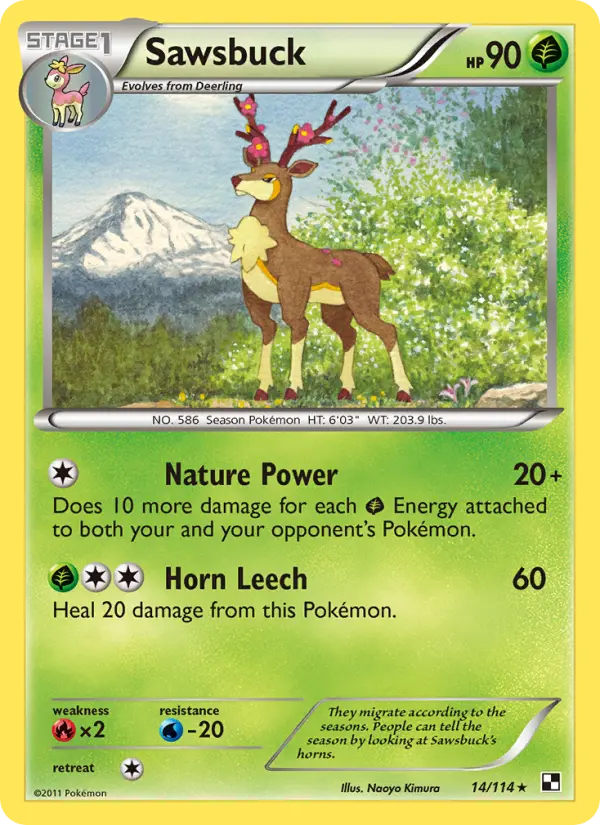
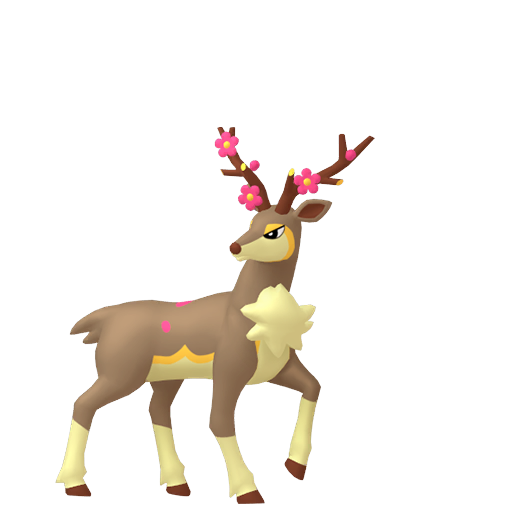
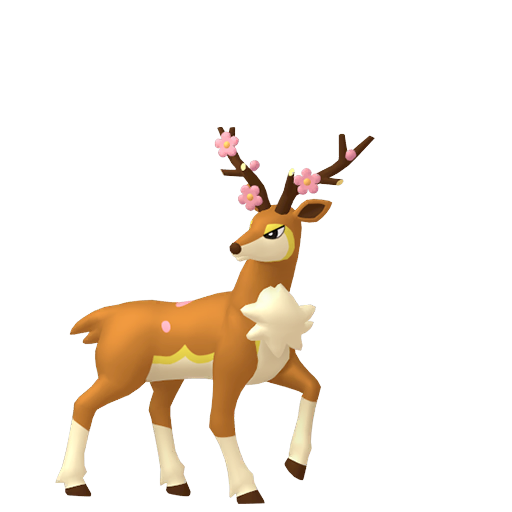
Sawsbuck exhibits a striking brown and cream coloration scheme, featuring rhomboid ears with darker interiors and distinctive light-orange facial markings that curve gracefully down the sides of its face. The creature's most iconic feature is its set of magnificent antlers, which serve as a natural canvas for seasonal vegetation. In its Spring Form, delicate pink flowers bloom from the antlers, complemented by a tuft of cream fur on its chest and pink-hued spots adorning its back. The underbelly and lower regions display light-orange striping that provides visual contrast against its darker dorsal coloring. This botanical ornamentation is not merely decorative; according to Pokédex entries, the plants growing upon Sawsbuck's horns actually absorb nutrients during their growth cycle, with particularly flower-laden specimens exhibiting slightly slower growth rates due to this nutrient exchange. The spring manifestation represents a balance between aesthetic beauty and biological sustainability, making Sawsbuck a living embodiment of the season's renewal and growth.
Pokedex Numbers
Training
Breeding
Sawsbuck Breeding, Gender Ratio & Egg Groups
Half of all Sawsbuck are male, half are female — no skew to plan around, with both genders contributing equally to breeding populations across all regions. The species belongs to the Field egg group, indicating compatibility with numerous other terrestrial and quadrupedal Pokémon for breeding purposes. With a hatch counter of 20 cycles (approximately 4,884 to 5,140 steps), Sawsbuck eggs incubate at a moderate pace, reflecting the species' medium-fast growth rate that allows young Deerling to mature into their adult Sawsbuck form within a reasonable timeframe. Base happiness starts at 70 in earlier generations, dropping slightly to 50 in later entries, suggesting that while Sawsbuck can form bonds with trainers, they require moderate affection development to reach maximum friendship potential. The species' breeding mechanics align well with its ecological presentation as a migratory herd animal, implying that captive Sawsbuck may require environmental conditions that remind them of their natural seasonal cycles to breed successfully. Trainers seeking to breed Sawsbuck competitively should invest time in raising friendship levels and providing conditions that simulate natural seasonal transitions.
Sprites



TMs & HMs
tm01
ultra sun ultra moon
tm01
sun moon
tm03
yellow
tm03
crystal
tm03
gold silver
tm03
red blue
tm03
lets go pikachu lets go eevee
tm03
blue japan
tm03
red green japan
tm05
lets go pikachu lets go eevee
tm06
yellow
tm06
gold silver
tm06
red blue
tm06
crystal
tm06
emerald
tm06
firered leafgreen
tm06
diamond pearl
tm06
platinum
tm06
ruby sapphire
tm06
colosseum
+636 more TMs/HMs
Forms
springDefault summer
 autumn
 winter
Sawsbuck's Evolution Chain


Sawsbuck Evolution, Mega Evolution & Special Forms
Sawsbuck evolves from Deerling upon reaching level 34, a straightforward progression that transforms the smaller, slighter deer into a more imposing and powerful herbivore. Unlike many Generation V evolutions that introduce dramatic type changes or form variations, Sawsbuck maintains Deerling's Normal/Grass typing while significantly enhancing its physical capabilities and overall presence. The evolution process itself appears to coincide with physical maturation, as Sawsbuck's increased height and weight suggest a transition from juvenile to adult stages of development. Sawsbuck does not possess a Mega Evolution variant, remaining a standard evolved form throughout its competitive lifespan. However, the species' utility lies in its unique seasonal form mechanics rather than mega-evolution capabilities. Each of the four seasonal forms—Spring, Summer, Autumn, and Winter—maintains the same base stats and typing, though some competitive players argue that the visual distinction represents a fundamental shift in aesthetic appeal and trainer preference, with spring-form Sawsbuck being particularly sought after for its delicate floral presentation.
Where to Find
Dragonspiral Tower
unova
+57 more
Sawsbuck Behaviour and Natural Habitat
Sawsbuck migrates seasonally across diverse geographical regions, with populations shifting their habitats in accordance with climatic changes throughout the year. These creatures are highly social, moving in organized herds where leaders possess particularly magnificent and ornate horns that command respect among their peers. The spring form of Sawsbuck is so closely associated with the season's arrival that many cultures refer to them as "harbingers of spring," recognizing their appearance as a reliable indicator of seasonal transition. Their migratory patterns are predictable and synchronized with their environmental surroundings, allowing trainers and researchers to anticipate their movements. In modern gaming contexts, spring-form Sawsbuck can be encountered in specific regional zones that correspond to spring conditions, particularly in southern provinces where warmer temperatures trigger their seasonal transformation. The species demonstrates a balanced temperament with a base happiness rating of 70, suggesting that individual Sawsbuck can form genuine bonds with trainers who respect their nature-bound lifestyle and seasonal needs.
Pokedex Entries
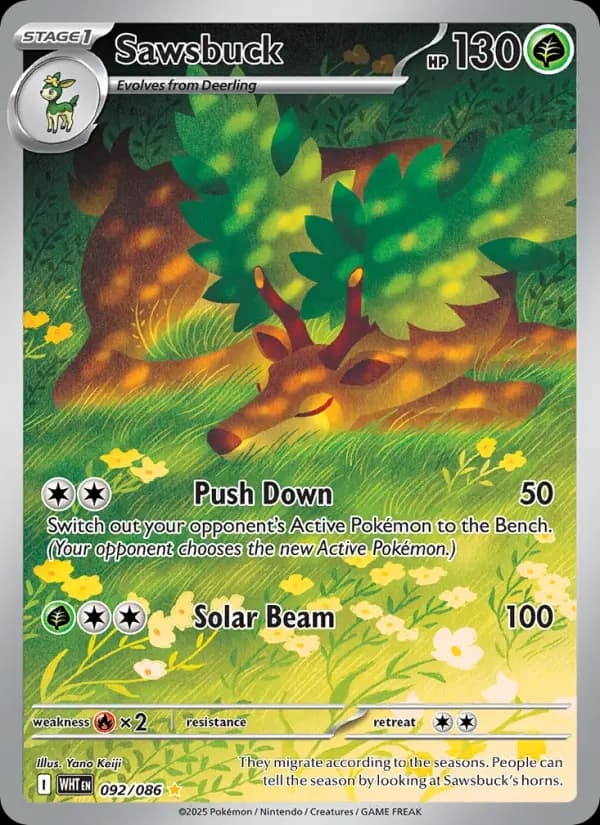
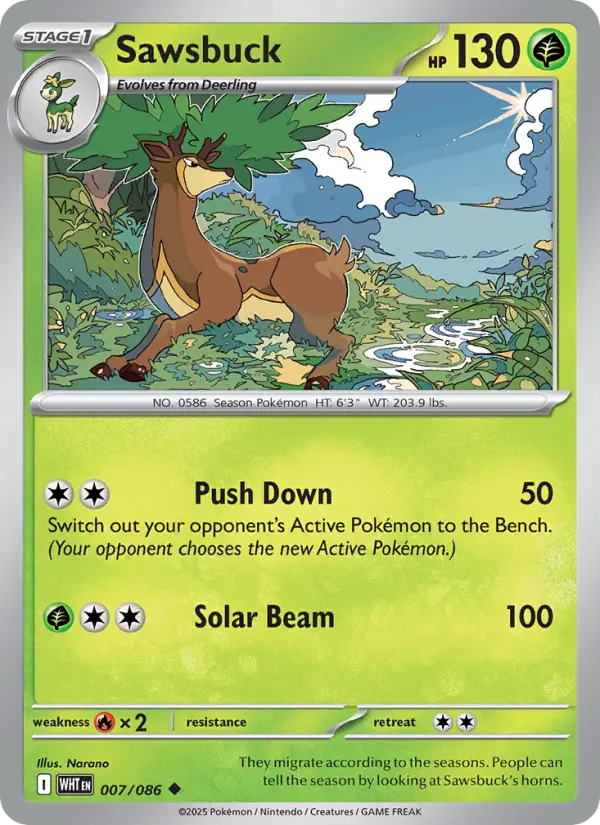
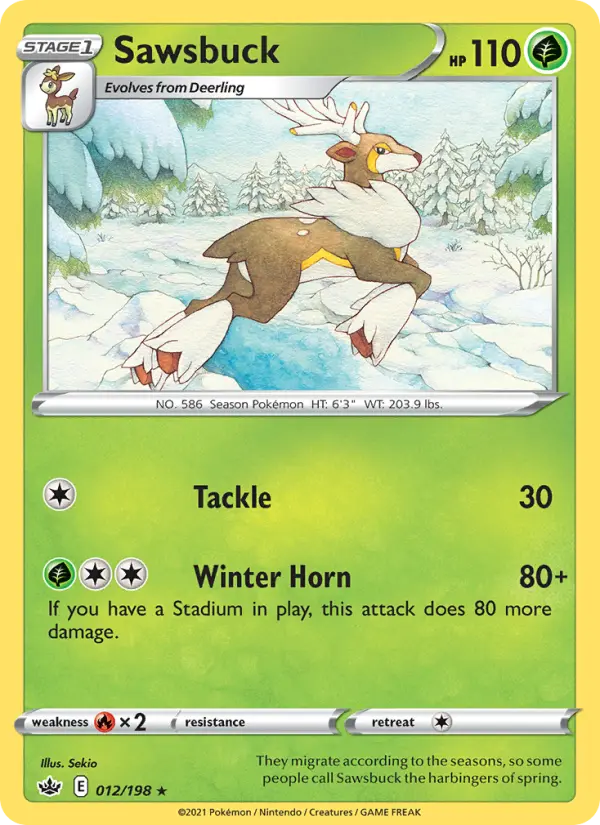
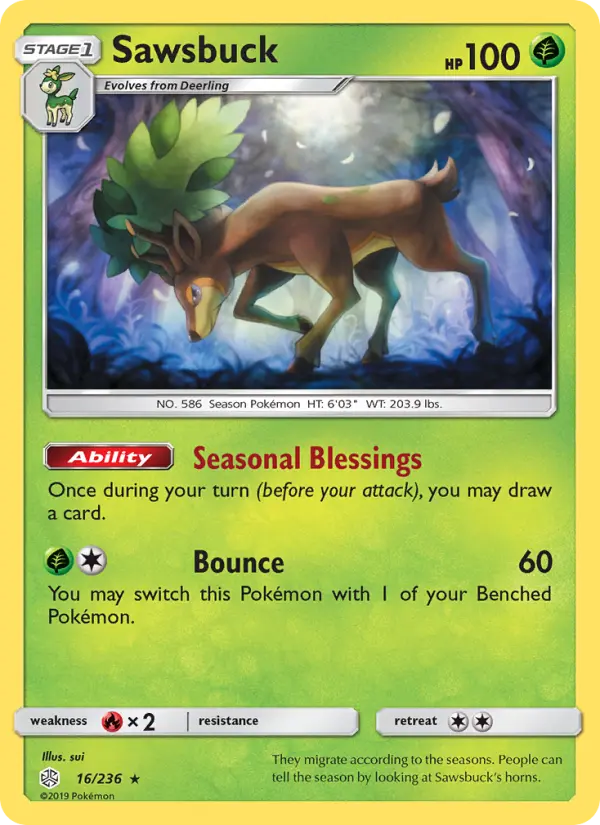
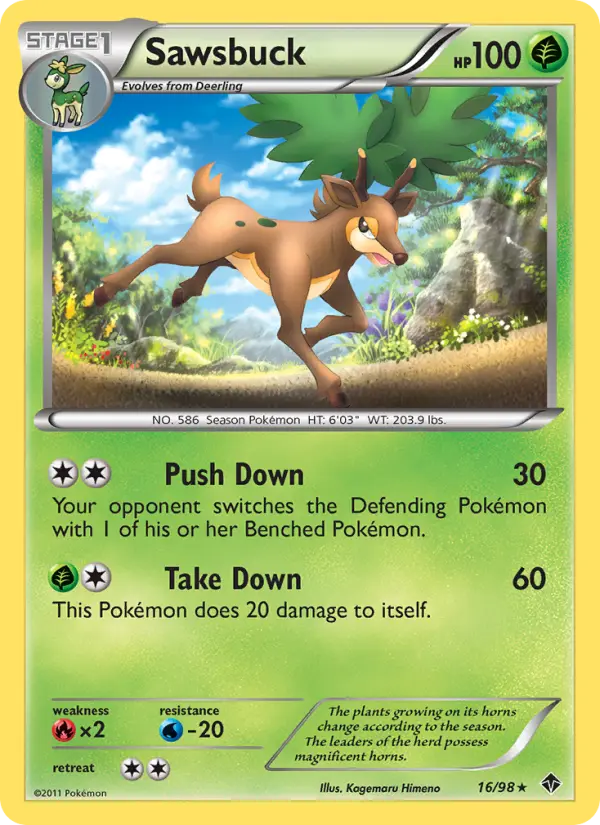
They migrate according to the seasons. People can tell the season by looking at Sawsbuck’s horns.
They migrate according to the seasons, so some people call Sawsbuck the harbingers of spring.
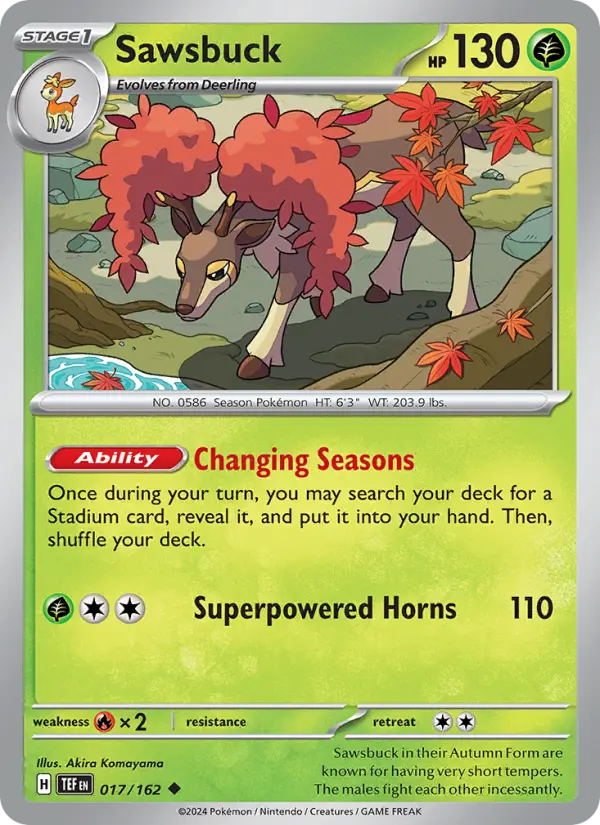
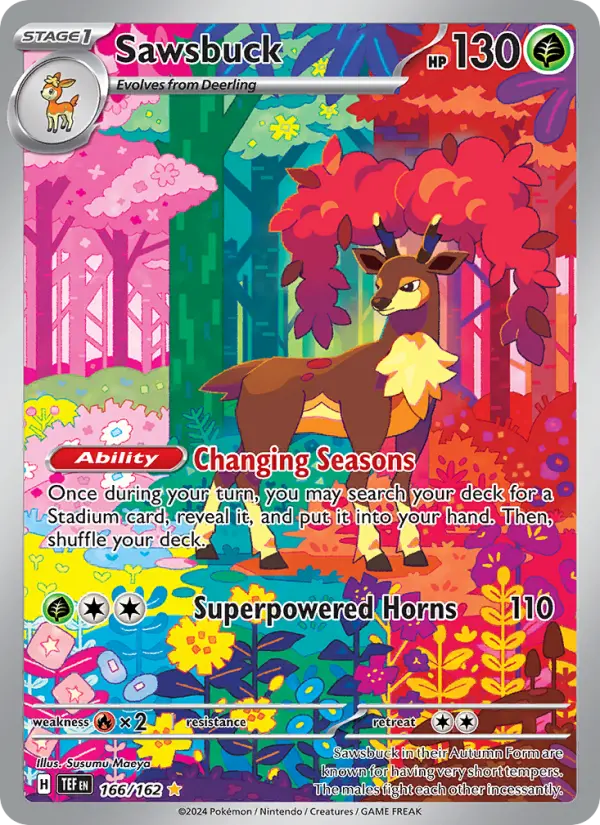
The plants growing on its horns change according to the season. The leaders of the herd possess magnificent horns.
They migrate according to the seasons. People can tell the season by looking at Sawsbuck’s horns.
They migrate according to the seasons, so some people call Sawsbuck the harbingers of spring.
They migrate according to the seasons. People can tell the season by looking at Sawsbuck’s horns.
They migrate according to the seasons, so some people call Sawsbuck the harbingers of spring.
Sawsbuck Name Origin & Design Inspiration
The name "Sawsbuck" derives from a combination of English words that evoke the creature's physical characteristics: "saw," referencing the sharp, serrated appearance of antlers, and "buck," the term for a male deer. This nomenclature perfectly encapsulates the Pokémon's deer-like nature while hinting at its somewhat aggressive ornamentation. The Japanese name "Mebukijika" combines "me" (eye/appearance), "buki" (bloom/sprout), and "jika" (deer), reflecting the creature's defining feature of blooming plants adorning its antlers. The design philosophy behind Sawsbuck emphasizes the symbiotic relationship between flora and fauna, presenting a creature whose biological success is intrinsically linked to its capacity to support plant growth. The Spring Form specifically showcases the delicate pink flowers that emerge as part of the natural seasonal cycle, with Pokédex entries noting that trainers value specimens with paler pink coloration as particularly beautiful. This aesthetic preference suggests that within Sawsbuck's culture, there exists a form of natural selection based on the visual qualities of their floral adornments, similar to how real-world deer display antlers as signals of genetic fitness.
Learnable Moves
Sawsbuck can learn 80 moves:
Move | Type | Cat. | Power | Acc. | PP |
|---|---|---|---|---|---|
| agility | psychic | Status | — | — | 30 |
| aromatherapy | grass | Status | — | — | 5 |
| attract | normal | Status | — | 100 | 15 |
| baton pass | normal | Status | — | — | 40 |
| body slam | normal | Physical | 85 | 100 | 15 |
| bounce | flying | Physical | 85 | 85 | 5 |
| bulldoze | ground | Physical | 60 | 100 | 20 |
| bullet seed | grass | Physical | 25 | 100 | 30 |
| camouflage | normal | Status | — | — | 20 |
| charm | fairy | Status | — | 100 | 20 |
| confide | normal | Status | — | — | 20 |
| curse | ghost | Status | — | — | 10 |
| cut | normal | Physical | 50 | 95 | 30 |
| dig | ground | Physical | 80 | 100 | 10 |
| double kick | fighting | Physical | 30 | 100 | 30 |
| double team | normal | Status | — | — | 15 |
| double edge | normal | Physical | 120 | 100 | 15 |
| echoed voice | normal | Special | 40 | 100 | 15 |
| endeavor | normal | Physical | — | 100 | 5 |
| endure | normal | Status | — | — | 10 |
| energy ball | grass | Special | 90 | 100 | 10 |
| facade | normal | Physical | 70 | 100 | 20 |
| fake tears | dark | Status | — | 100 | 20 |
| feint attack | dark | Physical | 60 | — | 20 |
| flash | normal | Status | — | 100 | 20 |
| frustration | normal | Physical | — | 100 | 20 |
| giga drain | grass | Special | 75 | 100 | 10 |
| giga impact | normal | Physical | 150 | 90 | 5 |
| grass knot | grass | Special | — | 100 | 20 |
| grassy glide | grass | Physical | 55 | 100 | 20 |
| grassy terrain | grass | Status | — | — | 10 |
| growl | normal | Status | — | 100 | 40 |
| helping hand | normal | Status | — | — | 20 |
| hidden power | normal | Special | 60 | 100 | 15 |
| high horsepower | ground | Physical | 95 | 95 | 10 |
| horn leech | grass | Physical | 75 | 100 | 10 |
| hyper beam | normal | Special | 150 | 90 | 5 |
| jump kick | fighting | Physical | 100 | 95 | 10 |
| last resort | normal | Physical | 140 | 100 | 5 |
| leaf storm | grass | Special | 130 | 90 | 5 |
| leech seed | grass | Status | — | 90 | 10 |
| light screen | psychic | Status | — | — | 30 |
| magical leaf | grass | Special | 60 | — | 20 |
| megahorn | bug | Physical | 120 | 85 | 10 |
| nature power | normal | Status | — | — | 20 |
| petal blizzard | grass | Physical | 90 | 100 | 15 |
| play rough | fairy | Physical | 90 | 90 | 10 |
| protect | normal | Status | — | — | 10 |
| rain dance | water | Status | — | — | 5 |
| rest | psychic | Status | — | — | 5 |
| retaliate | normal | Physical | 70 | 100 | 5 |
| return | normal | Physical | — | 100 | 20 |
| rock smash | fighting | Physical | 40 | 100 | 15 |
| round | normal | Special | 60 | 100 | 15 |
| safeguard | normal | Status | — | — | 25 |
| sand attack | ground | Status | — | 100 | 15 |
| secret power | normal | Physical | 70 | 100 | 20 |
| seed bomb | grass | Physical | 80 | 100 | 15 |
| shadow ball | ghost | Special | 80 | 100 | 15 |
| sleep talk | normal | Status | — | — | 10 |
| smart strike | steel | Physical | 70 | — | 10 |
| snore | normal | Special | 50 | 100 | 15 |
| solar beam | grass | Special | 120 | 100 | 10 |
| stomping tantrum | ground | Physical | 75 | 100 | 10 |
| substitute | normal | Status | — | — | 10 |
| sunny day | fire | Status | — | — | 5 |
| swagger | normal | Status | — | 85 | 15 |
| swords dance | normal | Status | — | — | 20 |
| synthesis | grass | Status | — | — | 5 |
| tackle | normal | Physical | 40 | 100 | 35 |
| take down | normal | Physical | 90 | 85 | 20 |
| tera blast | normal | Special | 80 | 100 | 10 |
| throat chop | dark | Physical | 80 | 100 | 15 |
| thunder wave | electric | Status | — | 90 | 20 |
| toxic | poison | Status | — | 90 | 10 |
| trailblaze | grass | Physical | 50 | 100 | 20 |
| wild charge | electric | Physical | 90 | 100 | 15 |
| work up | normal | Status | — | — | 30 |
| worry seed | grass | Status | — | 100 | 10 |
| zen headbutt | psychic | Physical | 80 | 90 | 15 |
Sawsbuck Competitive Battle Guide
Judged by competitive standards, Sawsbuck occupies a niche role as a physical attacker with solid speed, bolstered by an attack stat of 100 that allows it to threaten opponents with consistent physical offense. The species' signature ability, Chlorophyll, doubles its speed stat during strong sunlight, transforming Sawsbuck into a formidable weather-dependent sweeper that can outspeed many traditionally faster threats under favorable conditions. Alternative ability Sap Sipper provides defensive utility by absorbing grass-type moves and raising attack by one stage, making Sawsbuck a potential threat to grass-heavy teams while simultaneously punishing predictable play patterns. The hidden ability Serene Grace doubles the chance of move effects occurring, enabling strategies centered around paralysis, flinching, or stat drops through moves like Iron Head, Body Slam, and Headbutt. Sawsbuck's move pool includes solid physical options such as Wild Charge, Stone Edge, and X-Scissor, providing excellent coverage against flying, rock, and dark-type threats. However, its defensive profile proves somewhat fragile, with defense and special defense both sitting at 70, limiting its ability to withstand sustained pressure from faster or more powerful opponents. Competitive success with Sawsbuck typically requires careful team composition that leverages weather support or strategic positioning to maximize its offensive potential before defensive liabilities become exploitable.
Commonly Asked Questions About Sawsbuck
What type is Sawsbuck?
Sawsbuck is a normal and grass type Pokemon.
What does Sawsbuck evolve from?
Sawsbuck evolved from deerling.
What are Sawsbuck's weaknesses?
Sawsbuck is weak to fighting, flying, poison, bug, fire and ice type moves.
Where can I find Sawsbuck?
Sawsbuck can be found in dragonspiral tower (unova).
Sawsbuck Cultural Impact & Franchise History
Sawsbuck has cultivated a dedicated following among Pokémon enthusiasts who appreciate its seasonal aesthetic and the representation of nature's cyclical patterns within gameplay mechanics. The species' association with spring and renewal has made it particularly popular in communities celebrating seasonal themes, with spring-form Sawsbuck becoming iconic imagery for Generation V promotional materials and seasonal game events. The concept of form changes based on environmental factors inspired later Pokémon designs and influenced game development philosophy, establishing precedent for climate-responsive Pokémon mechanics that would appear in subsequent generations. Trainers have organized communities dedicated to collecting all four seasonal forms, treating each variation as a distinct collectible despite their identical base statistics, much like real-world enthusiasts curate collections based on aesthetic preference. Sawsbuck's appearance in competitive play, particularly in doubles formats where Chlorophyll receives weather support from teammates, has established it as a legitimate threat in certain metagames, earning respect from tournament players despite its modest base stat total. The Pokédex entries noting that "there are many Sawsbuck enthusiasts" who judge specimens based on the coloration and density of their horns reflect a meta-commentary on the community's own evaluative culture, where individual variation and personal preference drive desirability.
Where to Find Sawsbuck in Every Pokémon Game
Sawsbuck's availability varies significantly across different game generations due to its unique seasonal mechanics. In Generation V games (Black, White, Black 2, and White 2), Sawsbuck can be found in the wild with forms corresponding to the current real-world season on the trainer's system clock, allowing players to encounter each variant through natural gameplay. From Generation VI through VIII (X, Y, Omega Ruby, Alpha Sapphire, Sun, Moon, Ultra Sun, Ultra Moon, Sword, and Shield), only the Spring Form appears in standard wild encounters, with other seasonal forms accessible exclusively through transfer from Generation V titles or through Pokémon GO's seasonal event systems. Pokémon Legends: Arceus restricts Sawsbuck availability entirely, removing the species from its dex due to the game's historical Sinnoh setting. In Generation IX (Scarlet and Violet), Sawsbuck returns to full availability with renewed seasonal mechanics in Paldea, where form distribution correlates with geographical provinces rather than real-world seasons: Spring Form in the South Province, Summer Form in the East Province, Autumn Form in the West Province, and Winter Form in the North Province. This regional system replaced the real-time seasonal mechanics of earlier games, allowing trainers greater flexibility in collecting all forms within a single playthrough. The Hidden Ability Serene Grace requires breeding or special encounter conditions, typically obtainable through raid dens or specific in-game events.