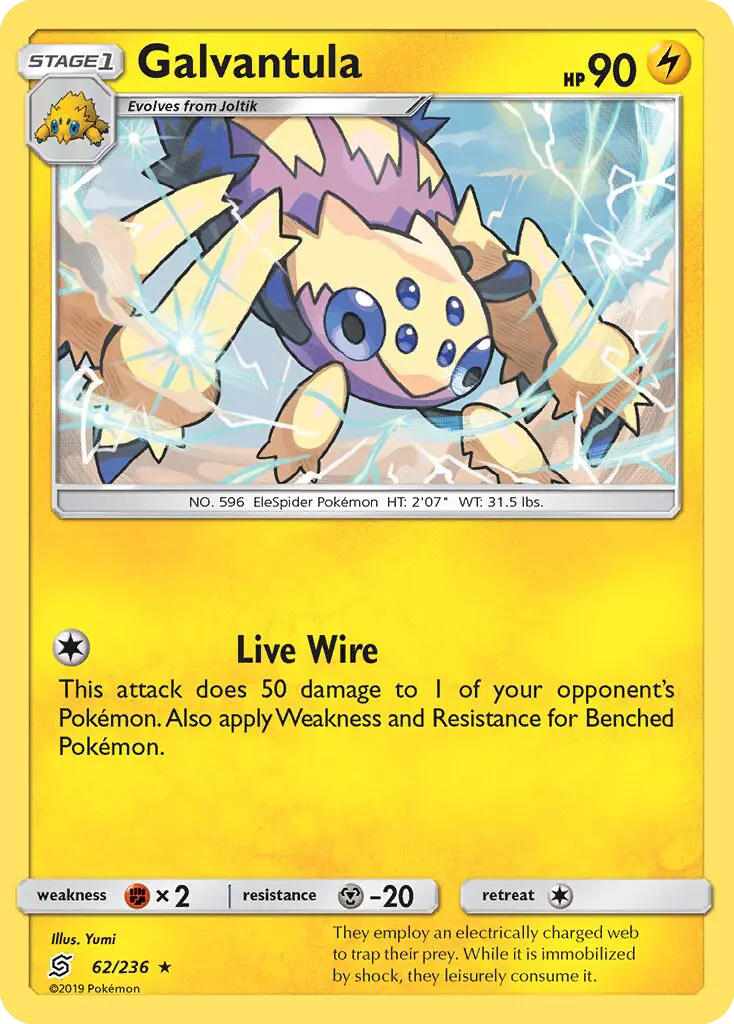
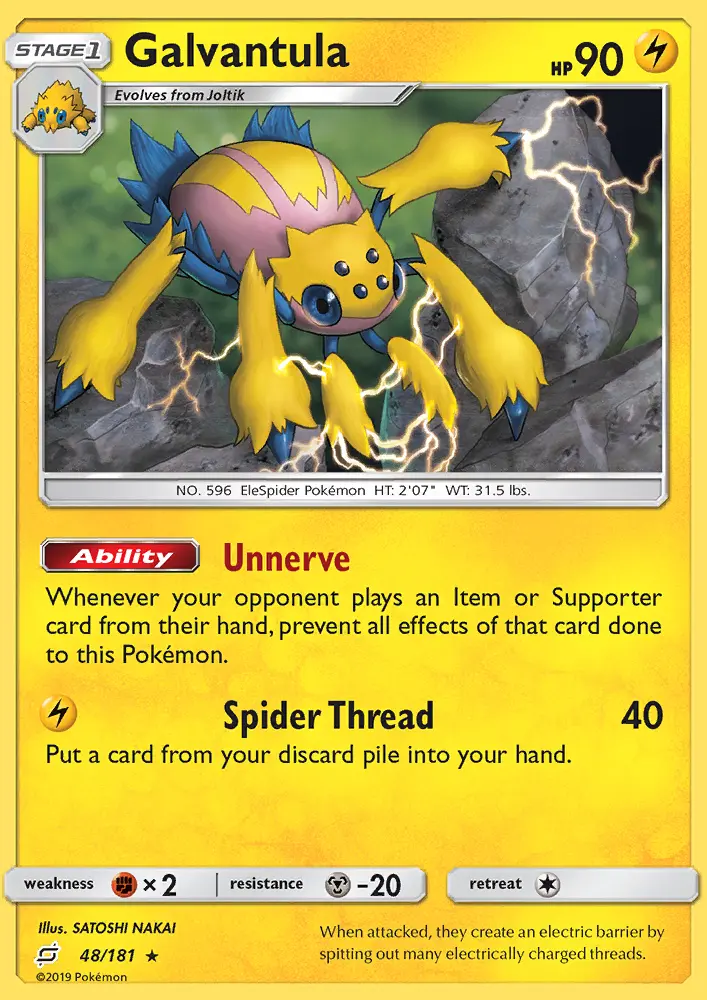
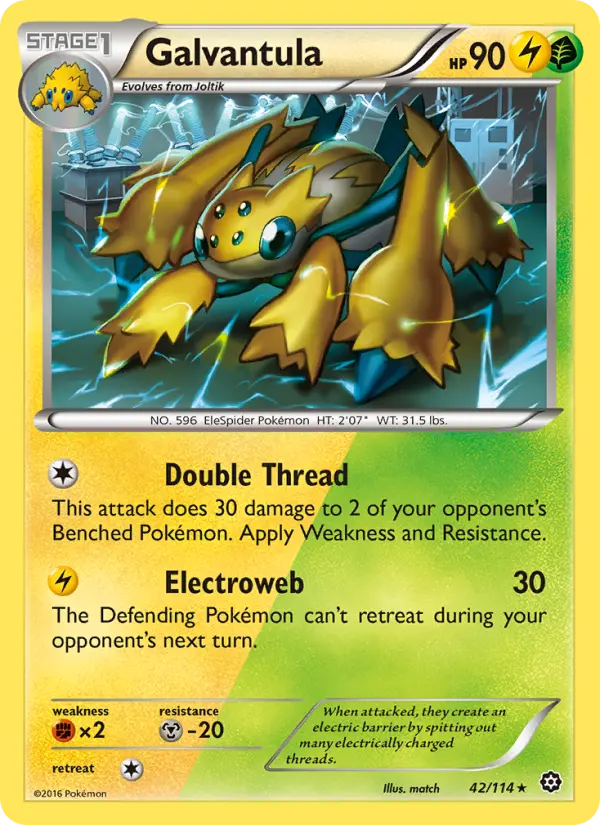
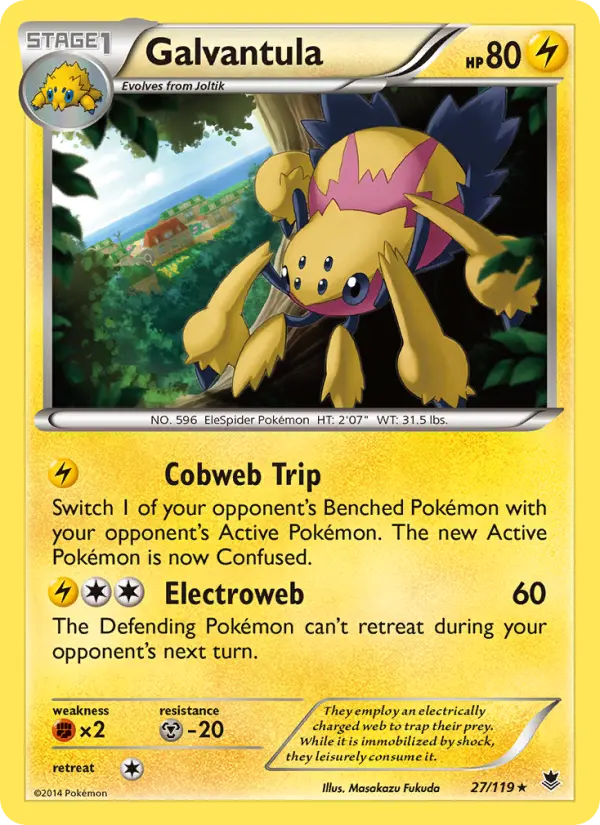
Galvantula
Generation V · #0596 — EleSpider Pokémon
Galvantula's bug/electric typing gets most of the attention, but compound eyes is doing just as much work in how it holds up in practice. Its three possible abilities—Compound Eyes, Unnerve, and the hidden ability Swarm—provide versatile strategic options for trainers seeking to optimize their team composition.
Editor's Take
Galvantula's Compound Eyes boosting Thunder's accuracy plus Sticky Web access makes it one of the best hazard leads in the game, and Bug/Electric is a rare typing that works.
Base Stats
Height
0.8m
Weight
14.3kg
Category
EleSpider Pokémon
Gender
Male 50% / Female 50%
Color
yellow
Shape
armor
Abilities
Increases moves' accuracy to 1.3×.
Prevents opposing Pokémon from eating held Berries.
Strengthens bug moves to inflict 1.5× damage at 1/3 max HP or less.

Galvantula Biology & Physical Characteristics
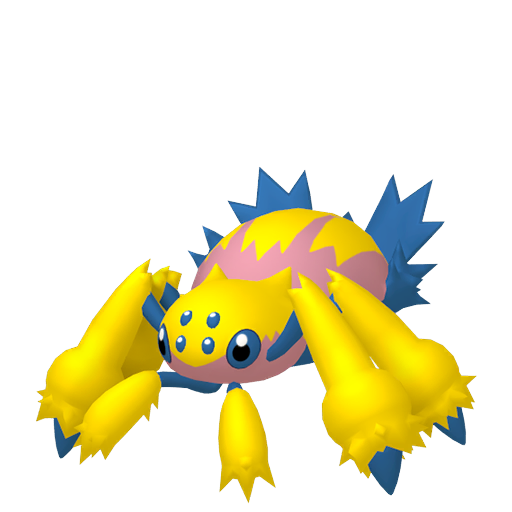
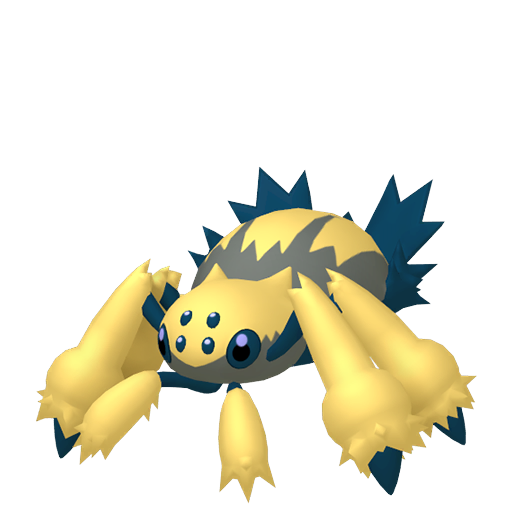
Galvantula is a visually striking arachnid Pokémon with a predominantly yellow coloration contrasted by light purple and blue accents throughout its body structure. The creature's head features two large, forward-facing blue eyes with black pupils that dominate its facial appearance, supplemented by four smaller simple eyes arranged in a 2×2 pattern across its forehead. Its two long pedipalps extend from beneath its head, displaying a distinctive two-tone coloration with blue, hairless lower halves and thick yellow fur covering the upper portions. The abdomen is covered in yellow and light purple fur adorned with four prominent tufts that sprout upward, with three thick yellow stripes running along its back. Interestingly, despite being based on arachnids, Galvantula possesses only four legs rather than the typical eight, each featuring a blue upper half connected to the head with yellow-furred bell-shaped lower sections terminating in blue conical feet. Most remarkably, Galvantula generates and manipulates electricity through the fur located on its abdomen, using this natural biological adaptation to charge its silk and create the electrified webs that define its hunting and defensive strategies.
Pokedex Numbers
Training
Breeding
Galvantula Breeding, Gender Ratio & Egg Groups
There's no gender skew here: Galvantula breeds at an even 50% male / 50% female rate, allowing for breeding flexibility and ensuring neither gender experiences artificial scarcity in trainer populations. The species belongs exclusively to the Bug egg group, which means Galvantula can only breed with other Pokémon within this specific egg group classification, limiting breeding partner options to fellow Bug-type and Bug-group species. When bred, Galvantula exhibits a moderate growth rate classification, hatch time of 20 egg cycles (approximately 4,884 to 5,140 steps to complete incubation), and a base friendship value that differs slightly across generations—historically 70 in Generations 5-7 before adjusting to 50 in later iterations. Female Galvantula serve as viable breeding partners when crossed with compatible males from the Bug egg group, creating eggs that hatch into the basic Joltik form regardless of parental forms. The breeding mechanics allow trainers to obtain Galvantula with specific natures, individual values, and move pools through careful selection and breeding practices, though the creature's relative simplicity in the evolutionary line means Joltik itself is typically the preferred breeding candidate. The capture rate of 75 ensures wild Galvantula can be caught without excessive difficulty, making natural acquisition a viable alternative to breeding for most trainers seeking this species.
Sprites




TMs & HMs
tm03
lets go pikachu lets go eevee
tm05
lets go pikachu lets go eevee
tm06
yellow
tm06
gold silver
tm06
red blue
tm06
crystal
tm06
emerald
tm06
firered leafgreen
tm06
diamond pearl
tm06
platinum
tm06
ruby sapphire
tm06
colosseum
tm06
black 2 white 2
tm06
xd
tm06
black white
tm06
heartgold soulsilver
tm06
omega ruby alpha sapphire
tm06
lets go pikachu lets go eevee
tm06
ultra sun ultra moon
tm06
sun moon
+550 more TMs/HMs
Galvantula's Evolution Chain


Galvantula Evolution, Mega Evolution & Special Forms
Galvantula's evolution from Joltik represents a dramatic transformation that occurs at level 36, marking a significant power increase across multiple statistical categories. Joltik, the diminutive pre-evolved form, is a small yellow spider that generates electricity through biological processes, but upon reaching level 36 and evolving into Galvantula, the Pokémon undergoes substantial physiological changes that enhance its combat effectiveness. The evolution brings increased body mass and refined musculature, with the creature's Special Attack stat jumping significantly to 108, bolstered by an exceptional Speed stat of 108 that allows Galvantula to move with remarkable velocity in both battle and hunting scenarios. The transition also involves the development of more sophisticated electrical generation capabilities, enabling Galvantula to produce the complex electrified webbing that its pre-evolved form cannot execute with the same precision. Unlike some Pokémon evolutionary lines, Galvantula does not possess a Mega Evolution form, meaning trainers and competitive players work with the standard evolved form as the pinnacle of Joltik's development. This single-stage evolution into Galvantula ensures that once achieved, trainers possess a complete and fully-realized combat form ready for serious competitive or adventuring scenarios.
Where to Find
Location data not available for this Pokémon in the database.
Galvantula Behaviour and Natural Habitat
Galvantula exhibits sophisticated predatory behavior refined through its evolutionary development from Joltik, demonstrating intelligence and tactical awareness in its hunting methods. According to Pokédex entries, Galvantula specifically targets the chicks of bird Pokémon that have not yet developed adequate flying abilities by strategically laying traps of electrified threads near their nests. When it captures prey, Galvantula employs an electrically charged web to immobilize its victims through paralysis, allowing it to leisurely consume the stunned prey without resistance. When threatened or attacked, Galvantula employs an impressive defensive mechanism by spitting out numerous electrically charged threads that form a barrier around itself, simultaneously protecting the creature while delivering electrical damage to attackers. This dual-purpose use of electrified silk demonstrates the species' remarkable adaptation to its environment, where electric-imbued webbing serves as both weapon and armor. The creature's electrical nature, combined with its arachnid hunting instincts, makes Galvantula a formidable presence in environments where smaller flying-type Pokémon congregate, particularly during the breeding and fledgling seasons.
Pokedex Entries
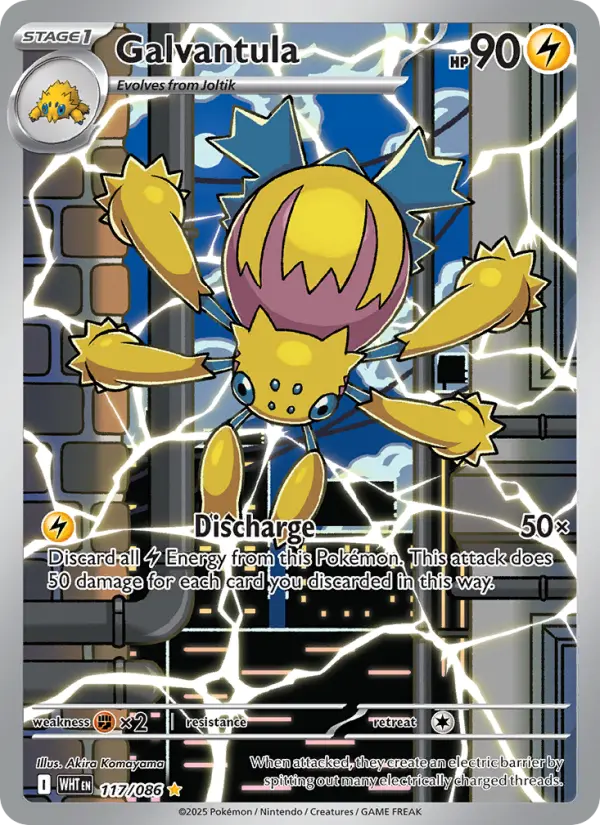
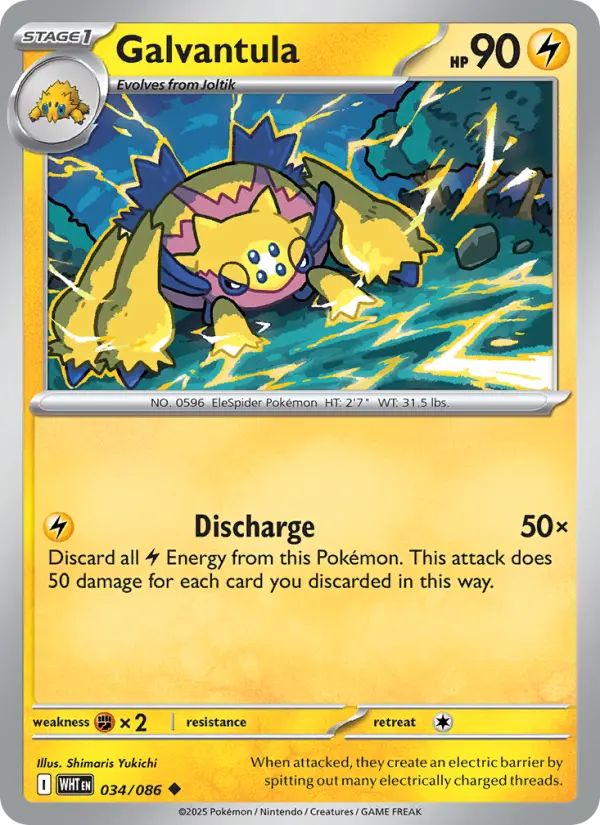
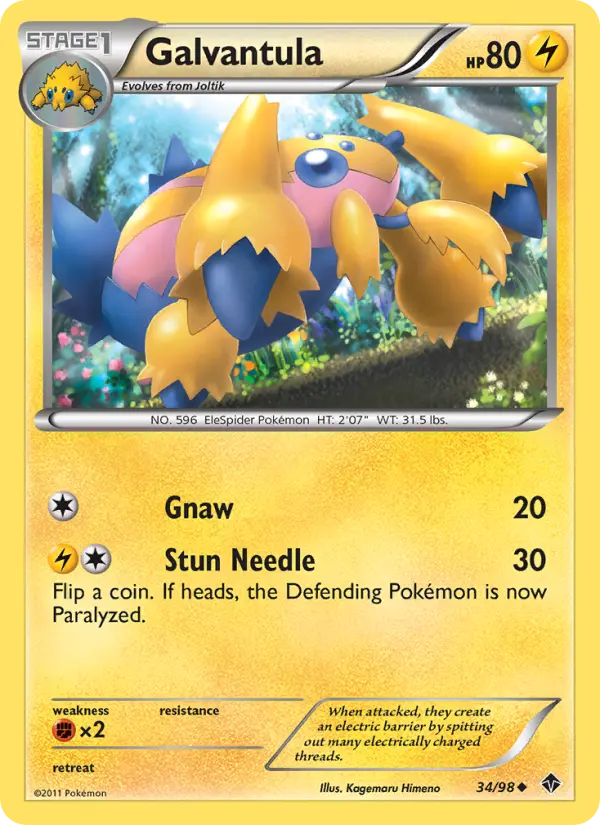
When attacked, they create an electric barrier by spitting out many electrically charged threads.
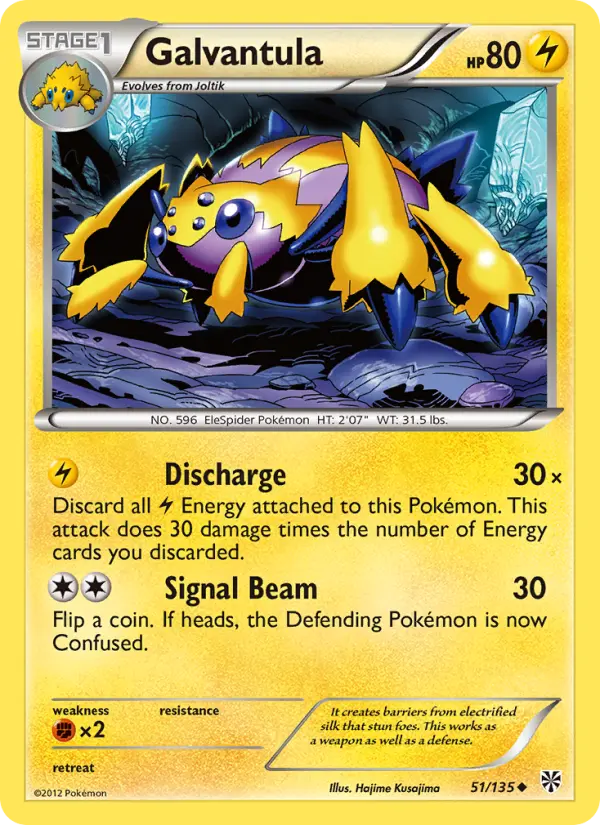
It creates barriers from electrified silk that stun foes. This works as a weapon as well as a defense.
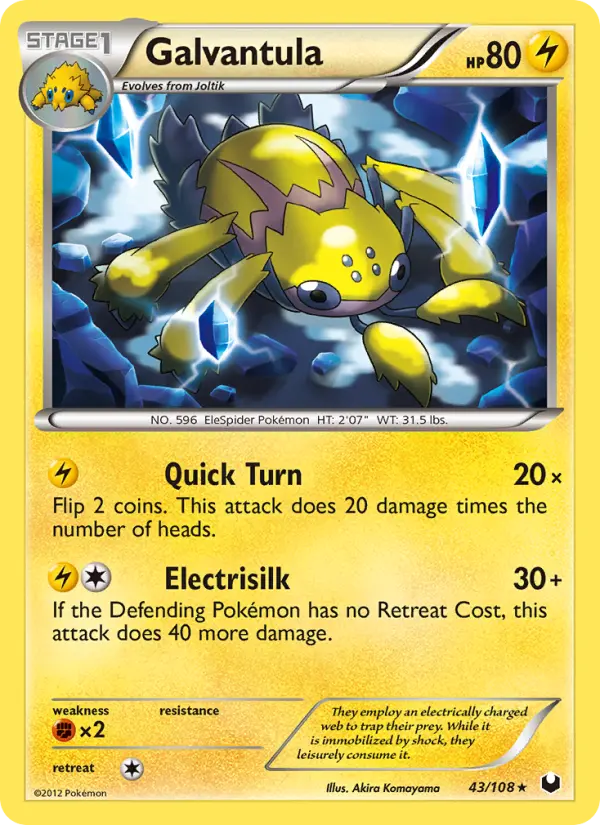
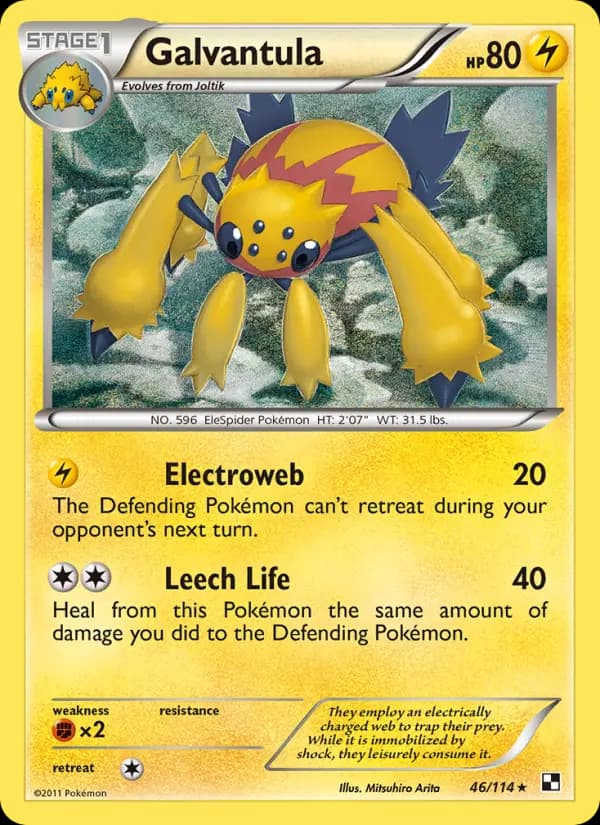
They employ an electrically charged web to trap their prey. While it is immobilized by shock, they leisurely consume it.
They employ an electrically charged web to trap their prey. While it is immobilized by shock, they leisurely consume it.
When attacked, they create an electric barrier by spitting out many electrically charged threads.
They employ an electrically charged web to trap their prey. While it is immobilized by shock, they leisurely consume it.
When attacked, they create an electric barrier by spitting out many electrically charged threads.
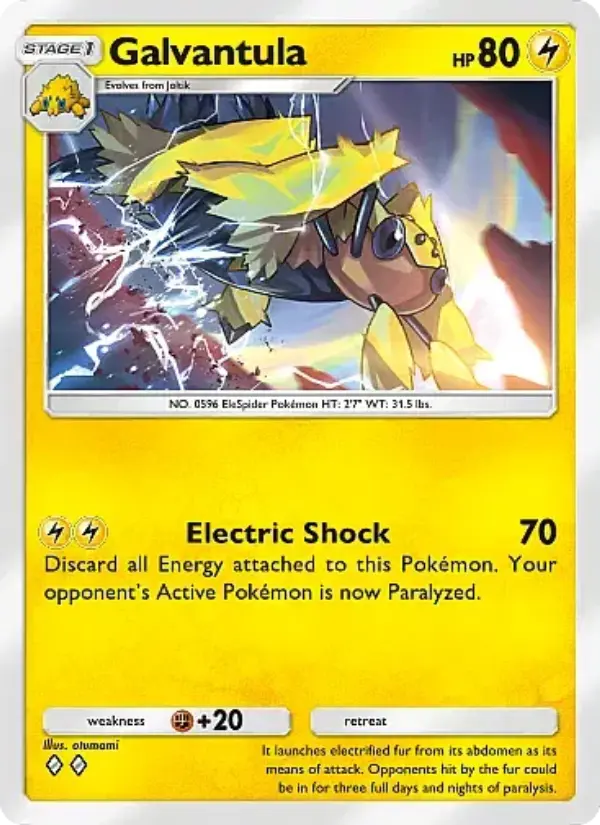
It launches electrified fur from its abdomen as its means of attack. Opponents hit by the fur could be in for three full days and nights of paralysis.
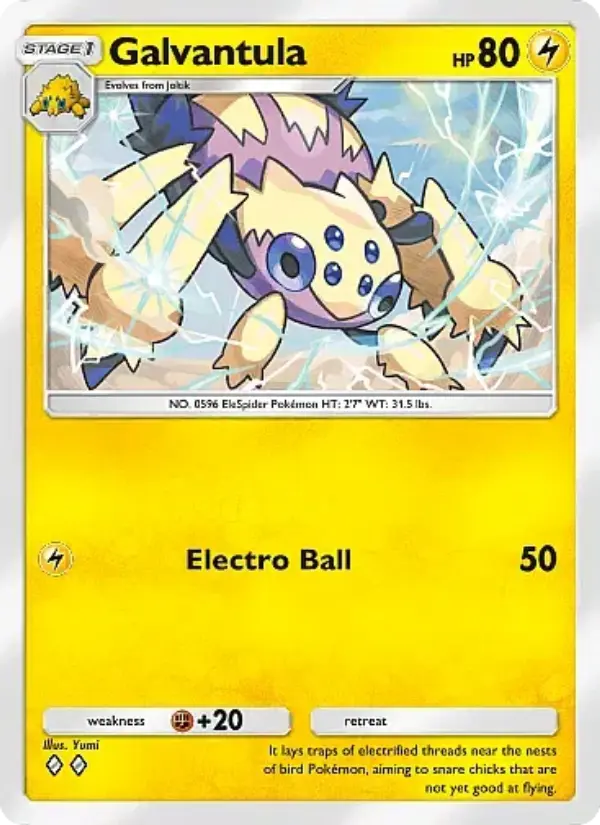
It lays traps of electrified threads near the nests of bird Pokémon, aiming to snare chicks that are not yet good at flying.
Galvantula Name Origin & Design Inspiration
Galvantula's name traces back to a clever linguistic blend of "galvanize," referring to the application of electrical charge or protective coating, and "tarantula," the large ground-dwelling spider family upon which the Pokémon's design is based. In Japanese, Galvantula is known as Dentula, combining "denchou" (電蝶, electric butterfly) and "tarantula," though the creature is distinctly arachnid rather than lepidopteran in design. The visual design brilliantly captures the fearsome aesthetic of tarantulas while incorporating clearly fantastical elements through its vibrant yellow coloration, multiple eye types, and electrical capabilities that no real spider possesses. The four-legged configuration, while departing from authentic spider anatomy, provides improved visual balance and easier animation compared to the eight-legged norm, making the creature immediately recognizable and visually distinct from genuine arachnids. Galvantula's design succeeds in bridging the gap between realistic biological inspiration and Pokémon's characteristic stylization, creating a creature that feels both naturally derived and fantastically enhanced. The deliberate choice to emphasize the abdominal fur region as the source of electrical generation reflects real-world tarantula physiology, where similar fur-covered regions serve sensory functions, ingeniously repurposing biological features into electrical apparatus.
Learnable Moves
Galvantula can learn 69 moves:
Move | Type | Cat. | Power | Acc. | PP |
|---|---|---|---|---|---|
| absorb | grass | Special | 20 | 100 | 25 |
| agility | psychic | Status | — | — | 30 |
| attract | normal | Status | — | 100 | 15 |
| bounce | flying | Physical | 85 | 85 | 5 |
| bug bite | bug | Physical | 60 | 100 | 20 |
| bug buzz | bug | Special | 90 | 100 | 10 |
| charge | electric | Status | — | — | 20 |
| charge beam | electric | Special | 50 | 90 | 10 |
| confide | normal | Status | — | — | 20 |
| cross poison | poison | Physical | 70 | 100 | 20 |
| cut | normal | Physical | 50 | 95 | 30 |
| discharge | electric | Special | 80 | 100 | 15 |
| double team | normal | Status | — | — | 15 |
| electro ball | electric | Special | — | 100 | 10 |
| electroweb | electric | Special | 55 | 95 | 15 |
| endure | normal | Status | — | — | 10 |
| energy ball | grass | Special | 90 | 100 | 10 |
| facade | normal | Physical | 70 | 100 | 20 |
| flash | normal | Status | — | 100 | 20 |
| frustration | normal | Physical | — | 100 | 20 |
| fury cutter | bug | Physical | 40 | 95 | 20 |
| gastro acid | poison | Status | — | 100 | 10 |
| giga drain | grass | Special | 75 | 100 | 10 |
| giga impact | normal | Physical | 150 | 90 | 5 |
| helping hand | normal | Status | — | — | 20 |
| hidden power | normal | Special | 60 | 100 | 15 |
| hyper beam | normal | Special | 150 | 90 | 5 |
| infestation | bug | Special | 20 | 100 | 20 |
| leech life | bug | Physical | 80 | 100 | 10 |
| light screen | psychic | Status | — | — | 30 |
| lunge | bug | Physical | 80 | 100 | 15 |
| magnet rise | electric | Status | — | — | 10 |
| pin missile | bug | Physical | 25 | 95 | 20 |
| poison jab | poison | Physical | 80 | 100 | 20 |
| poison sting | poison | Physical | 15 | 100 | 35 |
| pounce | bug | Physical | 50 | 100 | 20 |
| protect | normal | Status | — | — | 10 |
| rain dance | water | Status | — | — | 5 |
| rest | psychic | Status | — | — | 5 |
| return | normal | Physical | — | 100 | 20 |
| rising voltage | electric | Special | 70 | 100 | 20 |
| round | normal | Special | 60 | 100 | 15 |
| screech | normal | Status | — | 85 | 40 |
| secret power | normal | Physical | 70 | 100 | 20 |
| shock wave | electric | Special | 60 | — | 20 |
| signal beam | bug | Special | 75 | 100 | 15 |
| skitter smack | bug | Physical | 70 | 90 | 10 |
| slash | normal | Physical | 70 | 100 | 20 |
| sleep talk | normal | Status | — | — | 10 |
| snore | normal | Special | 50 | 100 | 15 |
| speed swap | psychic | Status | — | — | 10 |
| spider web | bug | Status | — | — | 10 |
| sticky web | bug | Status | — | — | 20 |
| string shot | bug | Status | — | 95 | 40 |
| struggle bug | bug | Special | 50 | 100 | 20 |
| substitute | normal | Status | — | — | 10 |
| sucker punch | dark | Physical | 70 | 100 | 5 |
| swagger | normal | Status | — | 85 | 15 |
| swift | normal | Special | 60 | — | 20 |
| tera blast | normal | Special | 80 | 100 | 10 |
| thief | dark | Physical | 60 | 100 | 25 |
| throat chop | dark | Physical | 80 | 100 | 15 |
| thunder | electric | Special | 110 | 70 | 10 |
| thunder wave | electric | Status | — | 90 | 20 |
| thunderbolt | electric | Special | 90 | 100 | 15 |
| toxic | poison | Status | — | 90 | 10 |
| volt switch | electric | Special | 70 | 100 | 20 |
| wild charge | electric | Physical | 90 | 100 | 15 |
| x scissor | bug | Physical | 80 | 100 | 15 |
Galvantula Competitive Battle Guide
Galvantula emerges as a notable competitive Pokémon, particularly valued for its exceptional Speed stat of 108 and respectable Special Attack of 97, which positions it as a swift special attacker capable of threatening slower opponents before they can respond. The ability Compound Eyes significantly enhances Galvantula's accuracy to 1.3× multiplier, making moves that normally suffer accuracy issues dramatically more reliable—this proves particularly valuable for moves like Thunder Wave and other inherently risky attacks that become nearly guaranteed with this ability. Competitively, Galvantula typically runs a Special Attacker set with movepool including Thunder, Volt Switch, Bug Buzz, and supporting moves like Thunder Wave or Energy Ball, allowing it to function both as a primary threat and momentum generator through Volt Switch pivoting. The hidden ability Swarm presents an alternative competitive angle by amplifying Bug-type moves to 1.5× damage when Galvantula falls below one-third health, transforming the Pokémon into a desperate but dangerous sweeper in clutch situations where it can execute a final sacrificial attack. Galvantula's moderate defenses (60 Defense, 60 Special Defense) necessitate careful play and speed advantage utilization; it functions best as a lead Pokémon or as a pivot that switches in on predicted Electric-type attacks thanks to its typing. While not occupying top-tier competitive positions, Galvantula maintains viability in lower-level competitive formats and casual play, where its speed and special attack combination allows it to outpace and eliminate significant threats before they threaten Galvantula's frail defensive profile.
Commonly Asked Questions About Galvantula
What type is Galvantula?
Galvantula is a bug and electric type Pokemon.
What does Galvantula evolve from?
Galvantula evolved from joltik.
What are Galvantula's weaknesses?
Galvantula is weak to rock and fire type moves.
Galvantula Cultural Impact & Franchise History
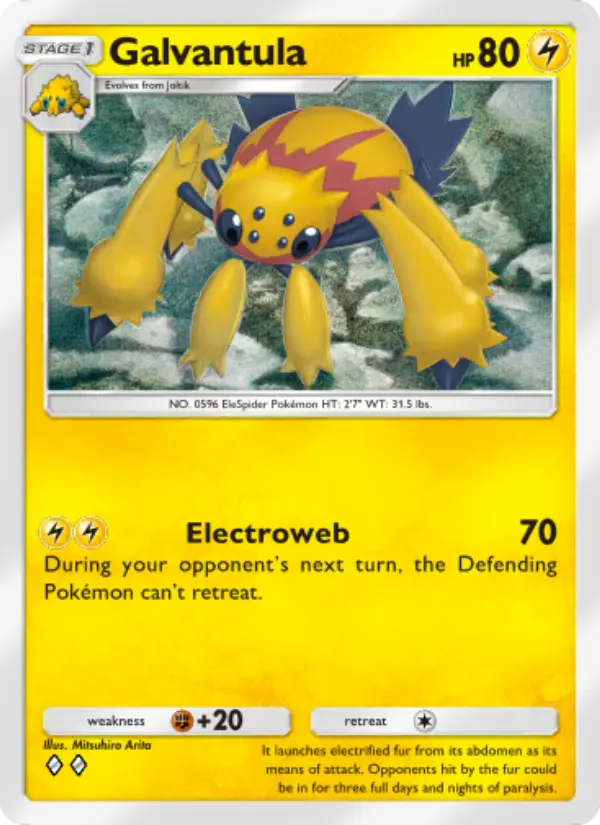
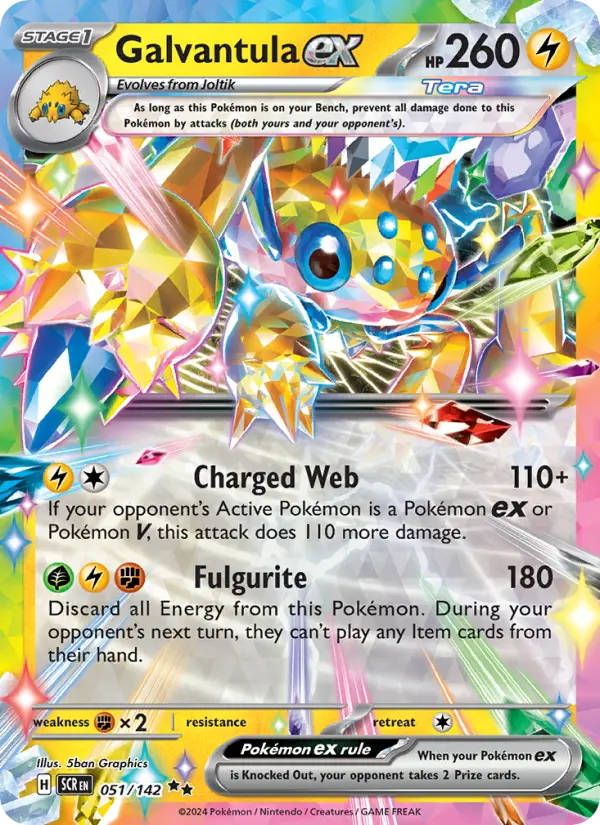
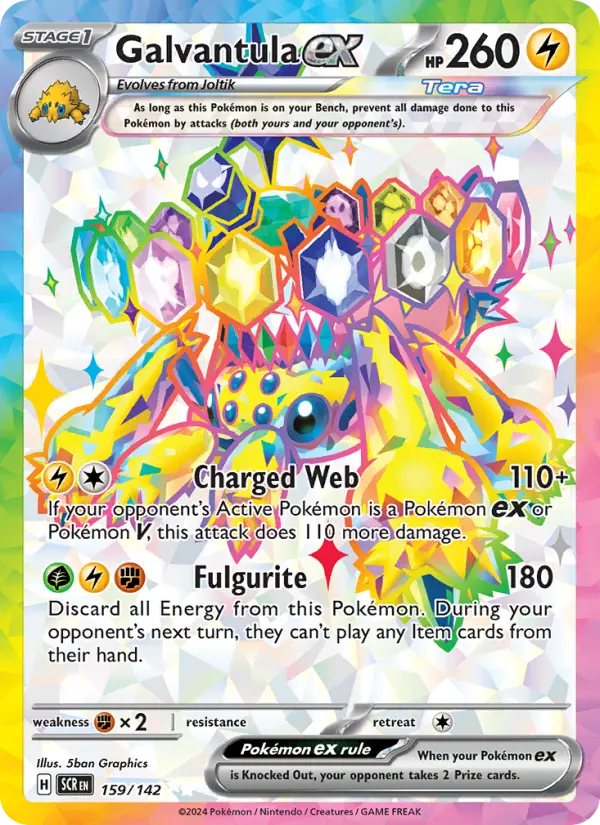
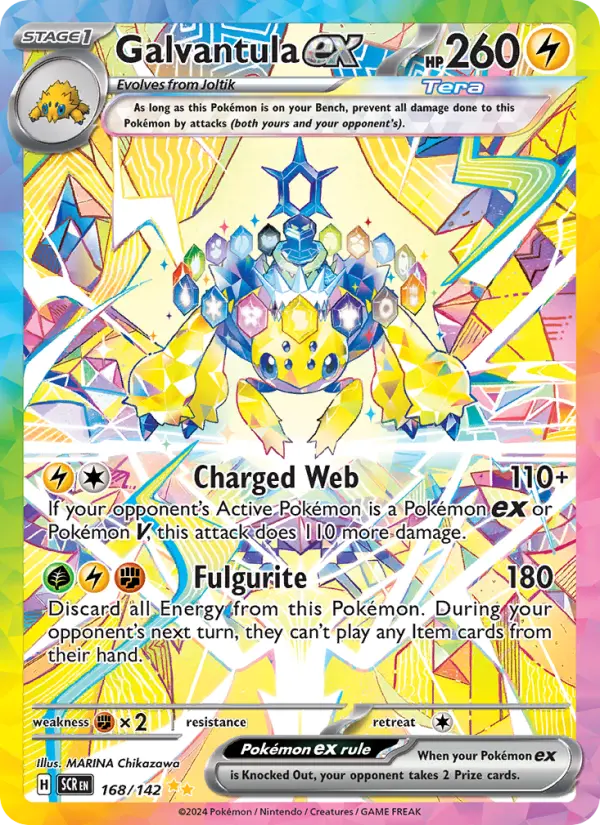
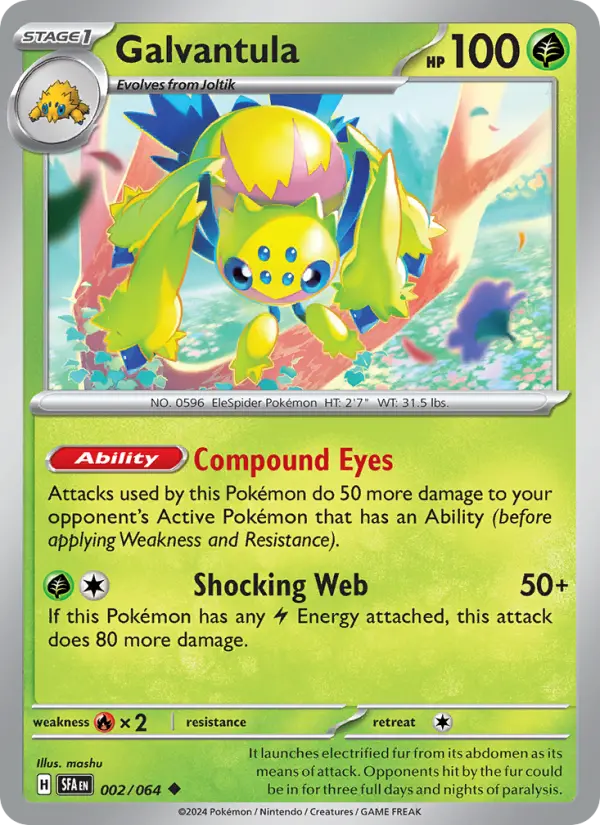
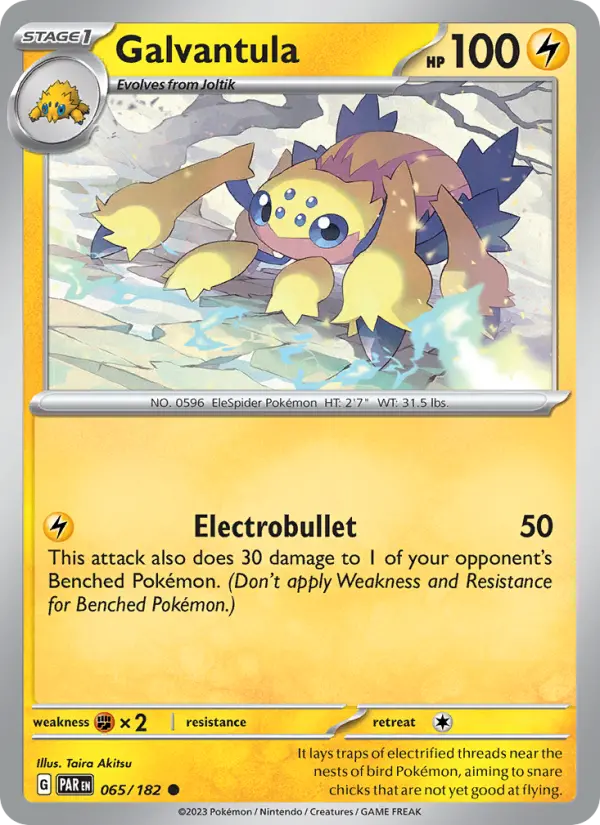
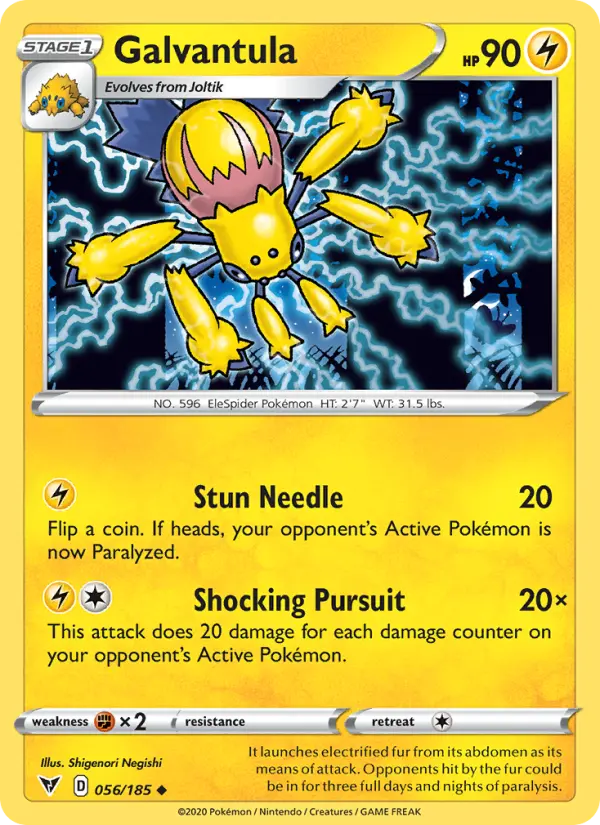
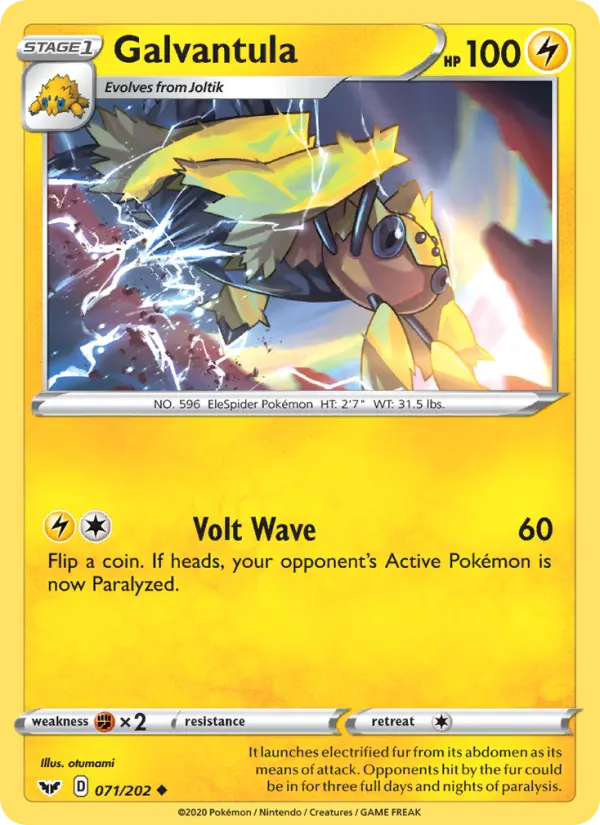
Galvantula has established itself as a recognizable and beloved Pokémon within the broader franchise, particularly appreciated by players who favor Bug-type specialists and those drawn to the elegant combination of arachnid design with electrical theming. The species achieved additional prominence through appearances in the Pokémon anime series, where its hunting behaviors and electrified web creation provided visually compelling battle sequences that demonstrated the Pokémon's combat capabilities to audiences. Bug-type enthusiasts specifically celebrate Galvantula as one of Generation V's most competently designed creatures, offering both aesthetic appeal and genuine competitive viability unlike some earlier Bug-type offerings that suffered from poor stats and limited movepool options. The creature's design has influenced subsequent Bug-type Pokémon development, establishing electrical Bug-type combinations as a viable design direction that bridged two previously separate type categories. Internet communities dedicated to Pokémon design frequently cite Galvantula as an example of successful fusion evolution, where two contrasting concepts (spiders and electricity) merge seamlessly into a cohesive whole rather than feeling forced or artificial. Trading card game representations have consistently portrayed Galvantula with dynamic artwork emphasizing its electrical web-generation, and the species maintains steady representation across various Pokémon media formats from trading cards to merchandise, indicating sustained franchise engagement.
Where to Find Galvantula in Every Pokémon Game
Galvantula's availability has evolved across different Pokémon generations, with the species originally introduced in Generation V becoming increasingly accessible through subsequent game releases and remakes. In Black and White versions, Galvantula appears with Pokédex number 0102 in the regional listing and can be encountered as an evolved form found in specific locations, though Joltik (its pre-evolution) appears more frequently for trainers seeking to raise their own Galvantula from base form. Black 2 and White 2 updated Galvantula's local Pokédex number to 0174, indicating its continued relevance in Generation V's enhanced sequels with improved availability and placement in the regional progression. Subsequent generations including X/Y, Sword/Shield, and Scarlet/Violet have featured Galvantula with varying levels of availability; Sword/Shield assigned it local Pokédex number 0065 with additional appearances in the Crown Tundra DLC (0094) and the Indigo Disk DLC (0133). The species maintains a capture rate of 75, classifying it as reasonably capturable with standard Pokéballs when encountered at full health, making natural acquisition straightforward for most trainers. Galvantula's consistent appearance across multiple generations ensures trainers possess reliable methods to obtain the species whether through wild encounters, evolution of caught Joltik, or trading with other trainers, making it one of the more accessible Bug/Electric-type options available to contemporary players.