Joltik
Generation V · #0595 — Attaching Pokémon
Joltik is built around Speed first — 65 at base is the clearest signal of how it's meant to be used, more than its bug/electric typing alone would suggest. At a mere 0.1 meters tall and weighing only 0.6 kilograms, Joltik holds the distinction of being one of the smallest Pokémon in existence, rivaling only a handful of other diminutive species. Despite its tiny stature, this arachnid Pokémon possesses a unique ecological niche, having evolved an ingenious survival strategy that relies on parasitic energy absorption rather than independent electricity generation. With a combined stat total of only 319, Joltik is clearly designed as an early-game Pokémon, yet it carries the potential for significant growth upon evolving into Galvantula at level 36, making it an integral part of many trainers' journey through the Unova region.
Editor's Take
Joltik is the smallest Pokémon in the series at 10 centimetres, and Galvantula's Compound Eyes taking Thunder to 91% accuracy is a genuinely useful thing.
Base Stats
Height
0.1m
Weight
0.6kg
Category
Attaching Pokémon
Gender
Male 50% / Female 50%
Color
yellow
Shape
armor
Abilities
Increases moves' accuracy to 1.3×.
Prevents opposing Pokémon from eating held Berries.
Strengthens bug moves to inflict 1.5× damage at 1/3 max HP or less.
Joltik Biology & Physical Characteristics
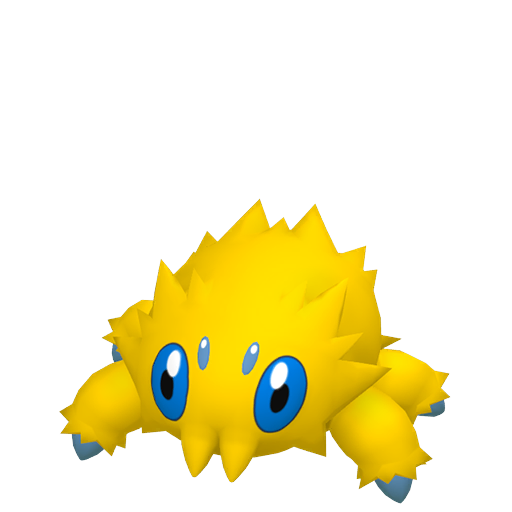
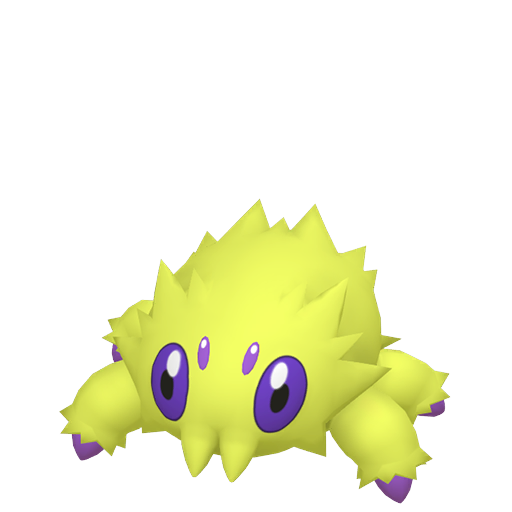
Joltik's anatomy is distinctly arachnid in nature, featuring four legs that terminate in blue, conical feet designed for efficient climbing and clinging to host Pokémon. Its body is entirely covered in distinctive yellow fur with notable tufts extending from each side of its face just above its eyes, as well as along its lower back, giving it a characteristically fluffy appearance. The Pokémon possesses four blue eyes—two larger compound eyes set relatively far apart on its face with visible black pupils, and two smaller simple eyes positioned between the first pair, situated slightly higher and lacking both eyelids and pupils. These unique ocular features remain perpetually open even during sleep or blinking, suggesting an evolutionary adaptation to maintain constant vigilance for electrical sources. Its mandibles point downward and closely resemble hair-like tufts at the bottom of its face, yet these structures possess a remarkable function: they are capable of producing silk, enabling Joltik to hang from trees and construct web-like structures. Most crucially, Joltik possesses a specialized electric pouch on its body where it stores absorbed electrical energy, which serves as its primary survival mechanism given its inability to generate electricity independently.
Pokedex Numbers
Training
Breeding
Joltik Breeding, Gender Ratio & Egg Groups
Gender-wise, Joltik is an even 50/50 split between males and females, making it equally accessible to trainers regardless of which sex they encounter or capture. The species belongs to the Bug Egg Group, restricting its breeding compatibility exclusively to other Pokémon within this classification, a limitation that somewhat constrains breeding strategies compared to species occupying multiple egg groups. With a base friendship value of 70 (in Generations 5-7, though this was adjusted to 50 in later generations), Joltik demonstrates moderate natural affinity for trainers, suggesting moderate ease in bonding during the early stages of capture and training. The egg cycle value of 20 cycles, equivalent to approximately 4,884 to 5,140 steps, places Joltik within a reasonable hatching timeframe, neither exceptionally fast nor particularly slow compared to other early-game Pokémon. Female Joltik possess identical stats and capabilities to their male counterparts, ensuring that gender selection presents no strategic advantage or disadvantage in gameplay or breeding endeavors. This gender equality extends to visual appearance, with no sexual dimorphism distinguishing males from females, a characteristic simplifying identification and team-building processes for trainers.
Sprites




TMs & HMs
tm03
lets go pikachu lets go eevee
tm05
lets go pikachu lets go eevee
tm06
yellow
tm06
gold silver
tm06
red blue
tm06
crystal
tm06
emerald
tm06
firered leafgreen
tm06
diamond pearl
tm06
platinum
tm06
ruby sapphire
tm06
colosseum
tm06
black 2 white 2
tm06
xd
tm06
black white
tm06
heartgold soulsilver
tm06
omega ruby alpha sapphire
tm06
lets go pikachu lets go eevee
tm06
ultra sun ultra moon
tm06
sun moon
+514 more TMs/HMs
Joltik's Evolution Chain


Joltik Evolution, Mega Evolution & Special Forms
Joltik evolves into Galvantula upon reaching level 36, marking a dramatic transformation in both appearance and capability. While no Mega Evolution exists for Joltik or its evolutionary line, the standard evolution into Galvantula represents a complete metamorphosis that addresses many of the base form's limitations. Galvantula's increased stats across the board—particularly the significant boost to Special Attack (from 57 to 108), Speed (from 65 to 108), and overall Base Stat Total jumping from 319 to 472—fundamentally alter Joltik's role in combat. The evolution process maintains the Bug/Electric typing while granting Galvantula the ability to generate its own electrical power, liberating it from the parasitic existence Joltik endures. This evolution line stands as a testament to the Pokémon design philosophy of Generation V, where even the smallest and seemingly most limited creatures possess a pathway to competitive viability. The transformation is not merely aesthetic but represents a biological maturation where the juvenile Joltik transitions from an energy-dependent larval stage into a fully autonomous predator capable of independent existence and offensive capability.
Where to Find
Chargestone Cave
unova
+45 more
Joltik Behaviour and Natural Habitat
Joltik's behavioral patterns are largely dictated by its fundamental biological limitation—it cannot generate its own electricity and therefore must actively seek electrical sources to survive. The Pokédex entries reveal that wild Joltik primarily inhabit caves and cities where electricity is abundant, with notable preference for attaching themselves to larger Pokémon, particularly Yamper, where they absorb static electricity through constant contact. In urban environments, Joltik has demonstrated remarkable adaptability and intelligence, having learned techniques to directly access electrical outlets within human residences, essentially becoming domestic scavengers of electrical power. According to observations from the animated series, notably in the episode "Crisis at Chargestone Cave!", Joltik becomes immobilized and faces serious danger if it cannot locate a sufficient energy source, highlighting the critical nature of its symbiotic relationship with electricity. Despite its dependence, Joltik is not inherently aggressive; however, it will vigorously defend itself when threatened or disturbed, displaying a feisty temperament that belies its diminutive size. This species shows a base friendship value of 70, suggesting a natural docility and willingness to bond with trainers who provide consistent access to electrical energy.
Pokedex Entries
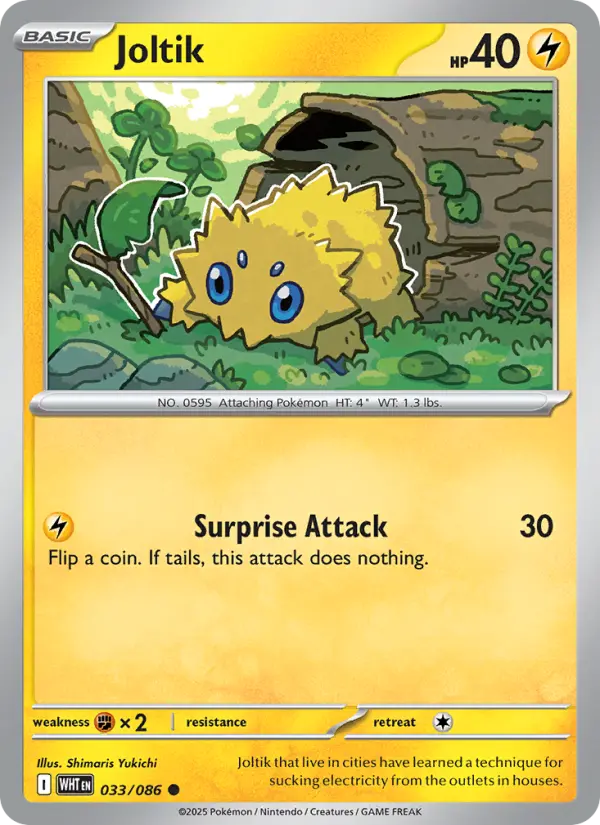
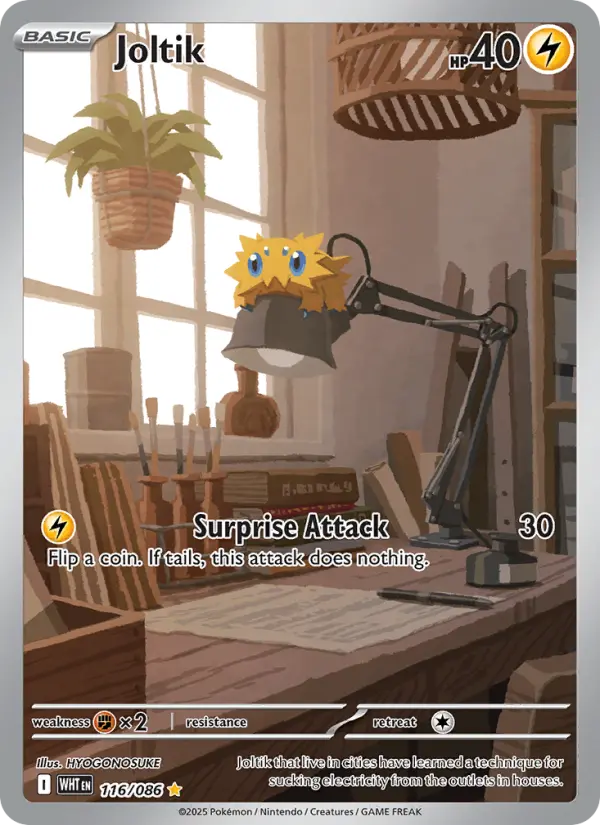
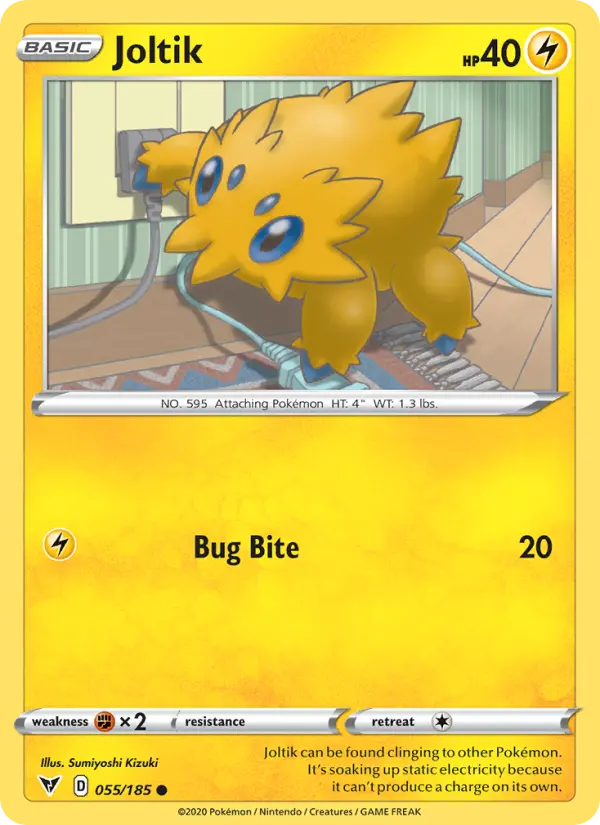
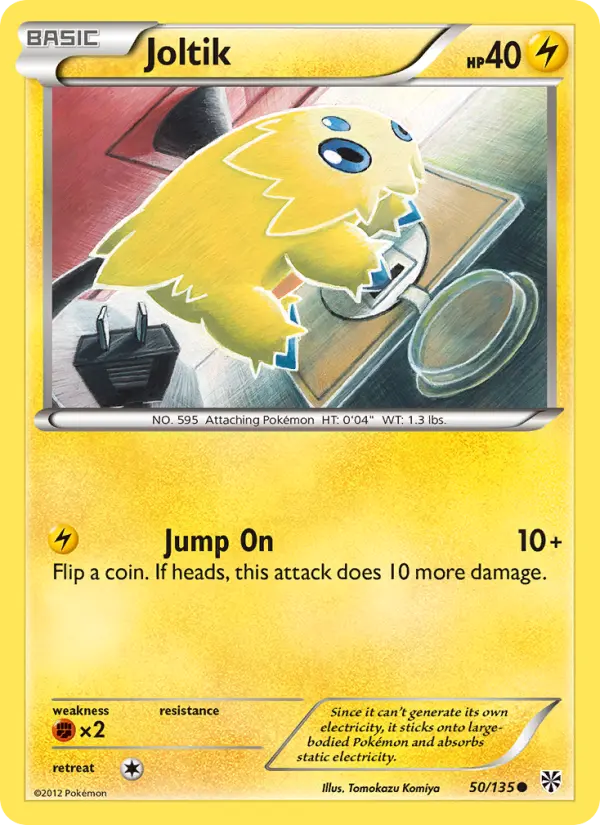
Joltik that live in cities have learned a technique for sucking electricity from the outlets in houses.
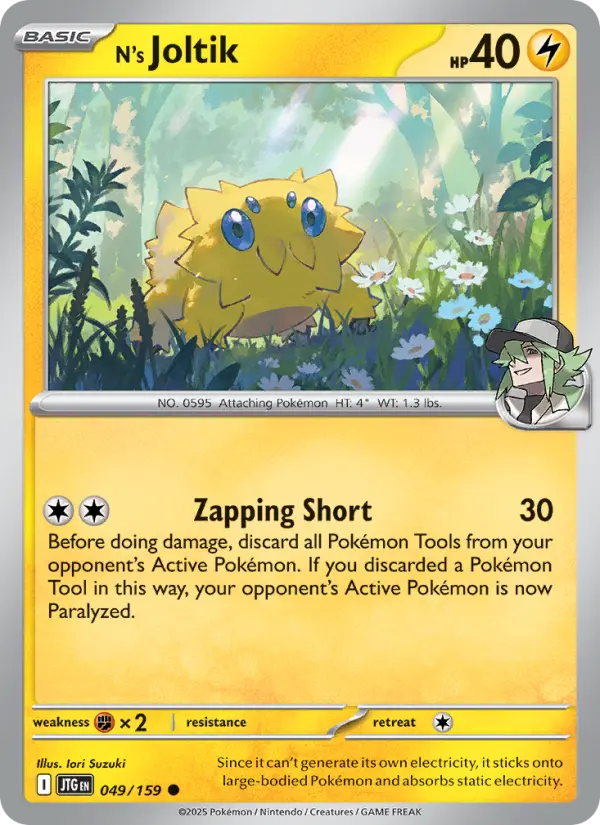
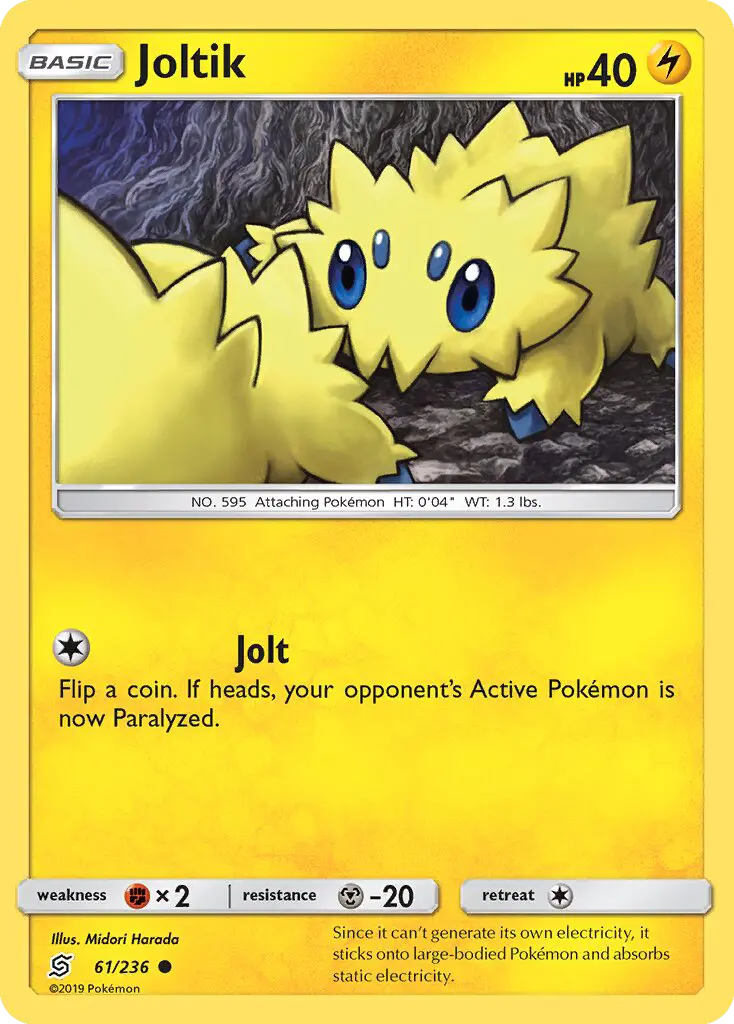
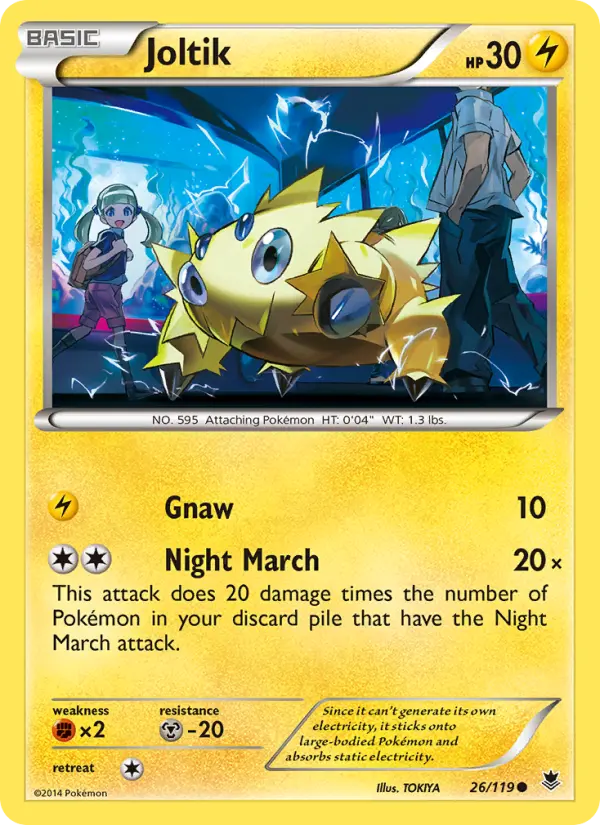
Since it can’t generate its own electricity, it sticks onto large-bodied Pokémon and absorbs static electricity.
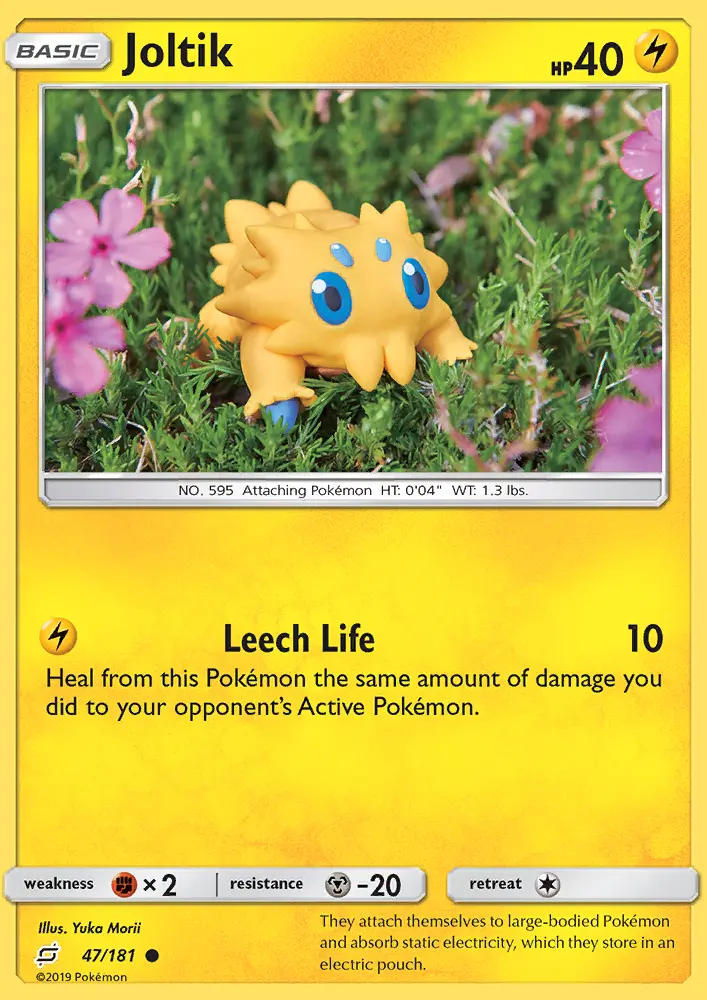
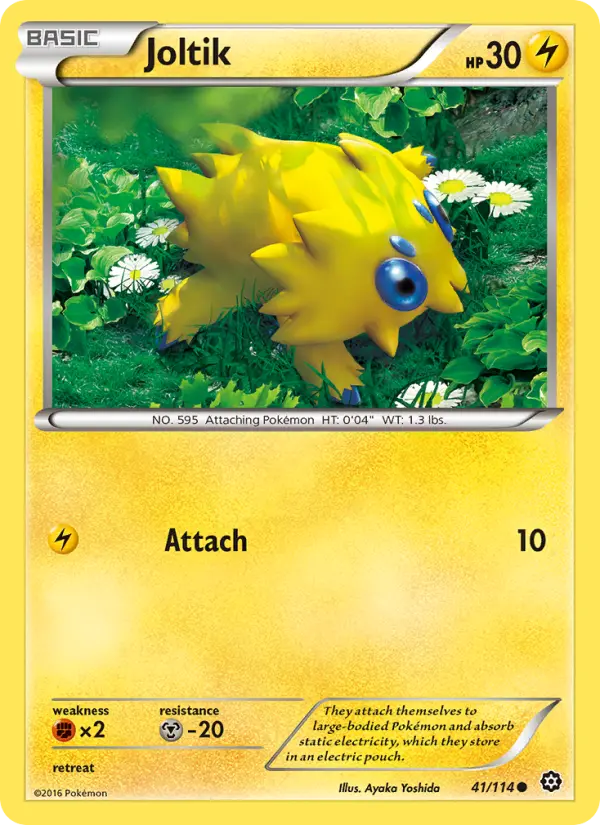
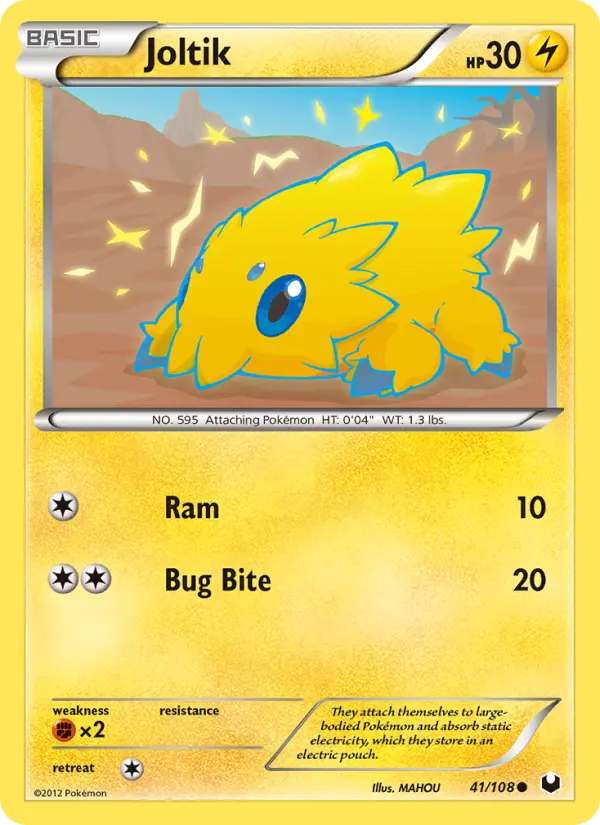
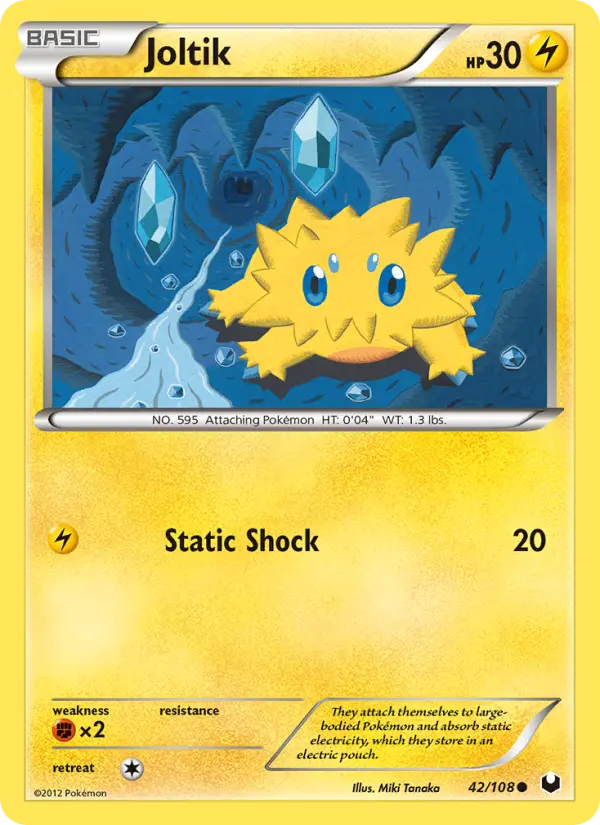
They attach themselves to large-bodied Pokémon and absorb static electricity, which they store in an electric pouch.
Since it can’t generate its own electricity, it sticks onto large-bodied Pokémon and absorbs static electricity.
They attach themselves to large-bodied Pokémon and absorb static electricity, which they store in an electric pouch.
Since it can’t generate its own electricity, it sticks onto large-bodied Pokémon and absorbs static electricity.
They attach themselves to large-bodied Pokémon and absorb static electricity, which they store in an electric pouch.
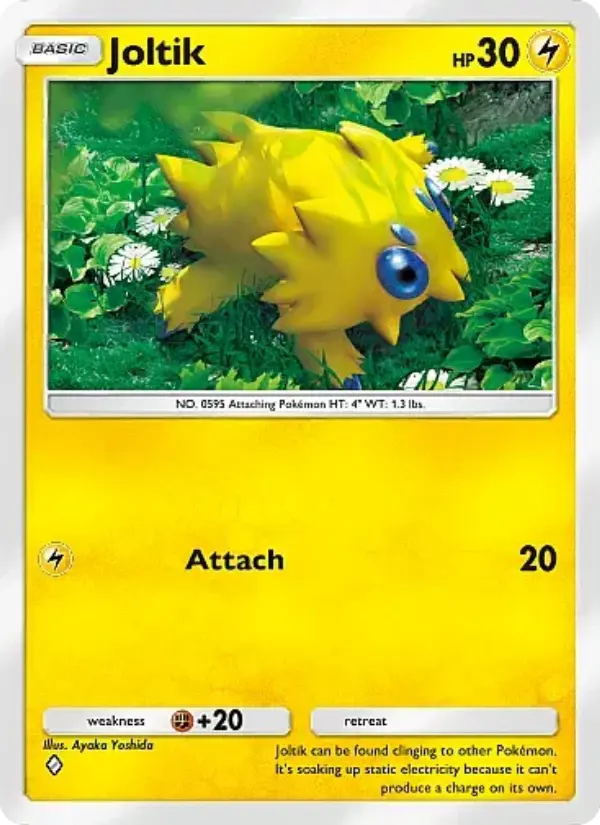
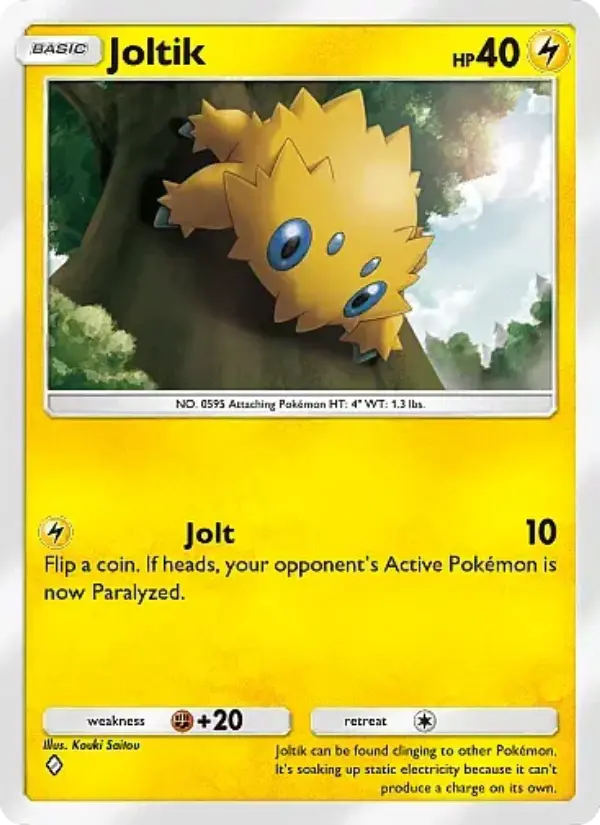
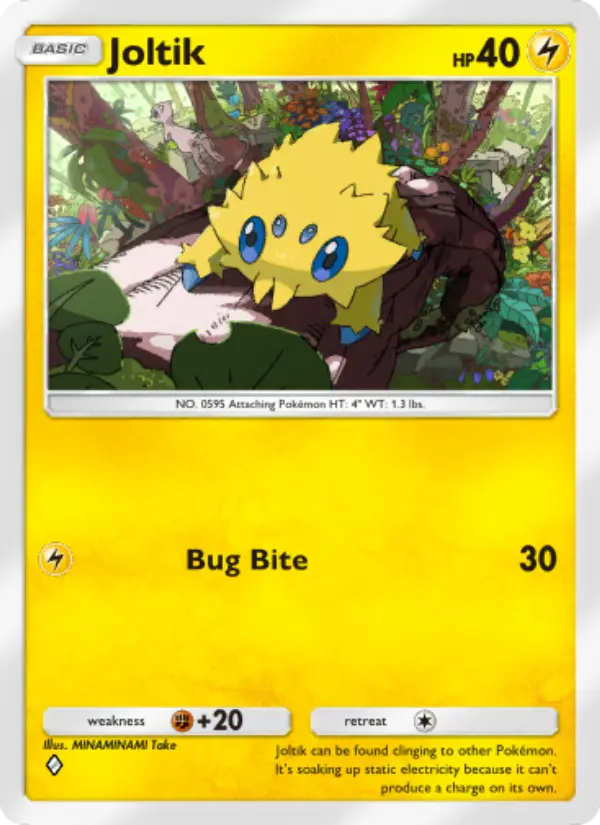
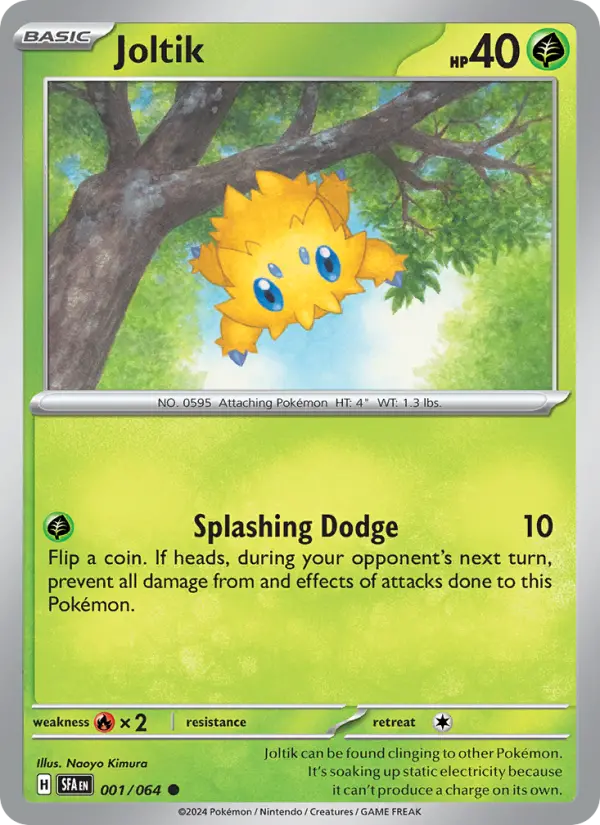
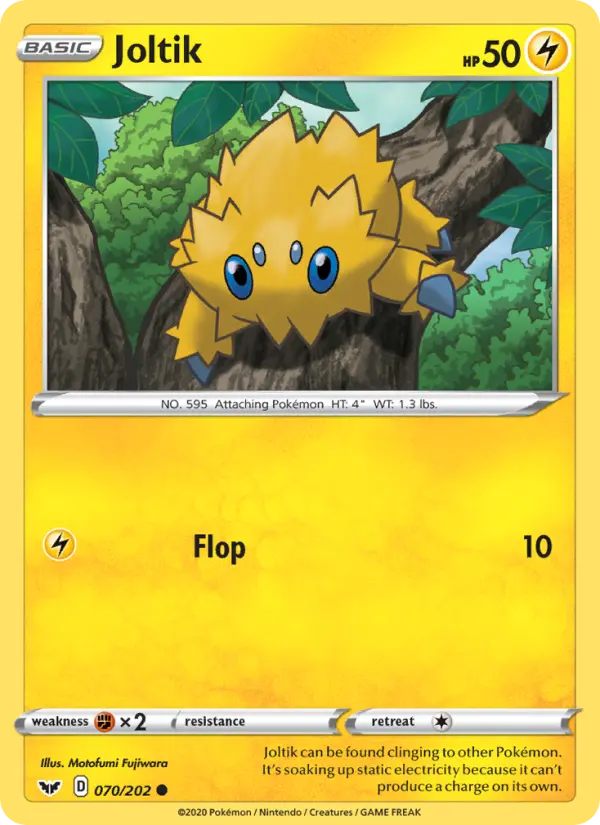
Joltik can be found clinging to other Pokémon. It’s soaking up static electricity because it can’t produce a charge on its own.
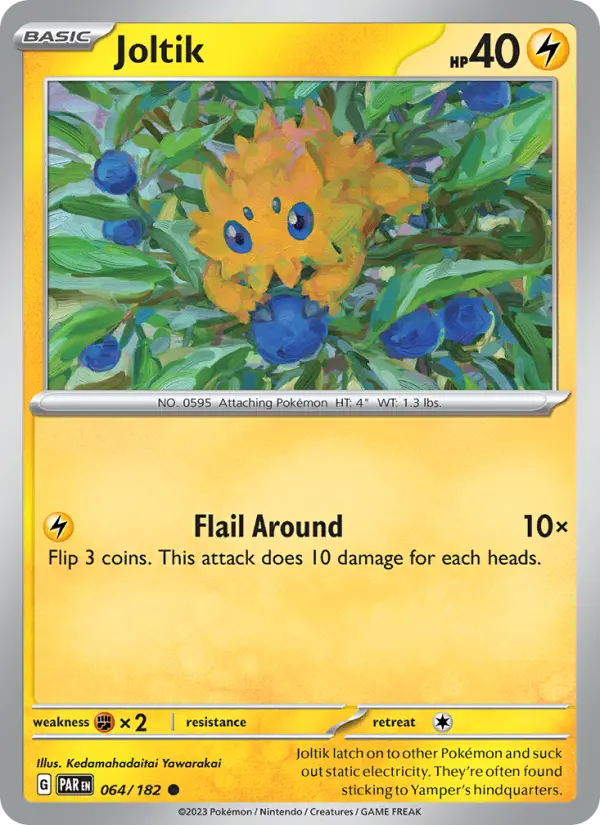
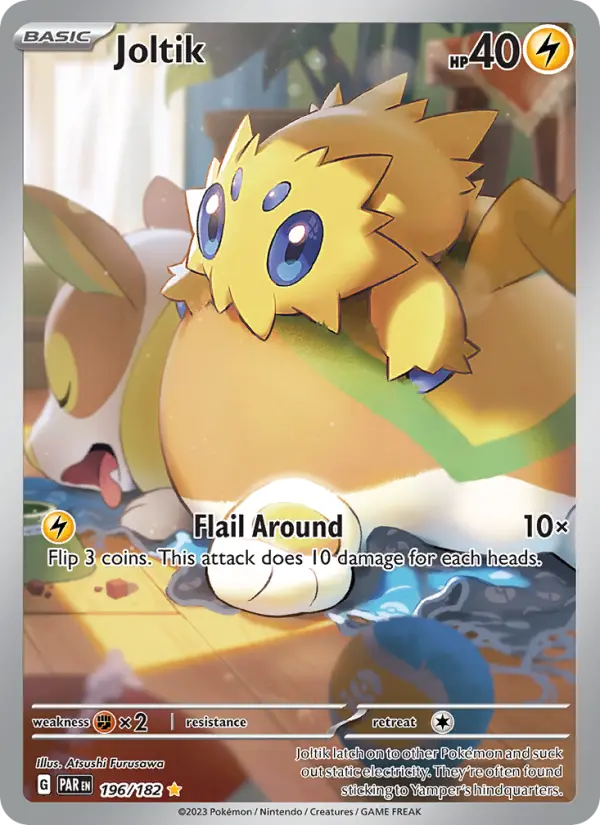
Joltik latch on to other Pokémon and suck out static electricity. They’re often found sticking to Yamper’s hindquarters.
Joltik Name Origin & Design Inspiration
Joltik's name comes from the onomatopoeia "jolt," referencing both its electrical nature and the startling movements characteristic of insects, combined with "mite," emphasizing its diminutive size as a tiny arachnid creature. The Japanese designation "Bachuru" (バチュル) carries etymological roots in "batsu" (バツ), meaning "bad" or "naughty," alongside "chigau" references, though the exact construction remains somewhat obscure in origin. The design itself appears to be inspired by common household spiders, specifically incorporating visual elements of jumping spiders with their characteristic arrangement of multiple eyes and compact body structure. The yellow coloration with blue accents creates a striking visual identity that immediately communicates its dual Bug/Electric typing without requiring explicit representation of both types through separate body segments. The tufted hair-like features and overall aesthetic deliberately emphasize Joltik's small, almost cute appearance—a deliberate design choice that creates cognitive dissonance with its nature as a parasitic energy vampire. This juxtaposition between adorable appearance and parasitic behavior exemplifies the nuanced character design philosophy of Generation V, creating a Pokémon that is simultaneously endearing and alien in its ecological role.
Learnable Moves
Joltik can learn 69 moves:
Move | Type | Cat. | Power | Acc. | PP |
|---|---|---|---|---|---|
| absorb | grass | Special | 20 | 100 | 25 |
| agility | psychic | Status | — | — | 30 |
| attract | normal | Status | — | 100 | 15 |
| bounce | flying | Physical | 85 | 85 | 5 |
| bug bite | bug | Physical | 60 | 100 | 20 |
| bug buzz | bug | Special | 90 | 100 | 10 |
| camouflage | normal | Status | — | — | 20 |
| charge beam | electric | Special | 50 | 90 | 10 |
| confide | normal | Status | — | — | 20 |
| cross poison | poison | Physical | 70 | 100 | 20 |
| cut | normal | Physical | 50 | 95 | 30 |
| disable | normal | Status | — | 100 | 20 |
| discharge | electric | Special | 80 | 100 | 15 |
| double team | normal | Status | — | — | 15 |
| electro ball | electric | Special | — | 100 | 10 |
| electroweb | electric | Special | 55 | 95 | 15 |
| endure | normal | Status | — | — | 10 |
| energy ball | grass | Special | 90 | 100 | 10 |
| facade | normal | Physical | 70 | 100 | 20 |
| feint attack | dark | Physical | 60 | — | 20 |
| flash | normal | Status | — | 100 | 20 |
| frustration | normal | Physical | — | 100 | 20 |
| fury cutter | bug | Physical | 40 | 95 | 20 |
| gastro acid | poison | Status | — | 100 | 10 |
| giga drain | grass | Special | 75 | 100 | 10 |
| helping hand | normal | Status | — | — | 20 |
| hidden power | normal | Special | 60 | 100 | 15 |
| infestation | bug | Special | 20 | 100 | 20 |
| leech life | bug | Physical | 80 | 100 | 10 |
| light screen | psychic | Status | — | — | 30 |
| lunge | bug | Physical | 80 | 100 | 15 |
| magnet rise | electric | Status | — | — | 10 |
| pin missile | bug | Physical | 25 | 95 | 20 |
| poison jab | poison | Physical | 80 | 100 | 20 |
| poison sting | poison | Physical | 15 | 100 | 35 |
| pounce | bug | Physical | 50 | 100 | 20 |
| protect | normal | Status | — | — | 10 |
| pursuit | dark | Physical | 40 | 100 | 20 |
| rain dance | water | Status | — | — | 5 |
| rest | psychic | Status | — | — | 5 |
| return | normal | Physical | — | 100 | 20 |
| rising voltage | electric | Special | 70 | 100 | 20 |
| rock climb | normal | Physical | 90 | 85 | 20 |
| round | normal | Special | 60 | 100 | 15 |
| screech | normal | Status | — | 85 | 40 |
| secret power | normal | Physical | 70 | 100 | 20 |
| shock wave | electric | Special | 60 | — | 20 |
| signal beam | bug | Special | 75 | 100 | 15 |
| skitter smack | bug | Physical | 70 | 90 | 10 |
| slash | normal | Physical | 70 | 100 | 20 |
| sleep talk | normal | Status | — | — | 10 |
| snore | normal | Special | 50 | 100 | 15 |
| speed swap | psychic | Status | — | — | 10 |
| spider web | bug | Status | — | — | 10 |
| string shot | bug | Status | — | 95 | 40 |
| struggle bug | bug | Special | 50 | 100 | 20 |
| substitute | normal | Status | — | — | 10 |
| sucker punch | dark | Physical | 70 | 100 | 5 |
| swagger | normal | Status | — | 85 | 15 |
| swift | normal | Special | 60 | — | 20 |
| tera blast | normal | Special | 80 | 100 | 10 |
| thief | dark | Physical | 60 | 100 | 25 |
| thunder | electric | Special | 110 | 70 | 10 |
| thunder wave | electric | Status | — | 90 | 20 |
| thunderbolt | electric | Special | 90 | 100 | 15 |
| toxic | poison | Status | — | 90 | 10 |
| volt switch | electric | Special | 70 | 100 | 20 |
| wild charge | electric | Physical | 90 | 100 | 15 |
| x scissor | bug | Physical | 80 | 100 | 15 |
Joltik Competitive Battle Guide
Within competitive battling, Joltik occupies a negligible role due to its extremely limited base stats and suboptimal stat distribution, with a total of only 319 points distributed across all six stats. The Pokémon's highest stat is Speed at 65, followed by Special Attack at 57, both of which fall considerably short of competitive thresholds at the earliest stages of gameplay. Joltik's available abilities present some utility despite its weak offensive profile: Compound Eyes increases move accuracy to 1.3 times the normal value, potentially enabling more reliable coverage moves, while Unnerve prevents opposing Pokémon from consuming held Berries, providing strategic disruption potential. The hidden ability Swarm boosts Bug-type move power to 1.5 times when Joltik's HP falls to one-third or below, creating a potential sweeping opportunity if preserved at low health through careful play, though this requires significant team support to execute. Joltik's movepool includes valuable moves such as Thunder Wave for paralysis support, Electroweb for Speed reduction, Bug Bite for insect-based damage, and Electro Ball which scales with Speed advantage, providing some coverage options. However, the true competitive value of Joltik lies not in its direct usage but rather in its evolution into Galvantula, which becomes a legitimate threat in lower-tier competitive formats with significantly enhanced stats and a superior move pool.
Commonly Asked Questions About Joltik
What type is Joltik?
Joltik is a bug and electric type Pokemon.
What does Joltik evolve into?
Joltik evolves into galvantula.
What are Joltik's weaknesses?
Joltik is weak to rock and fire type moves.
Does Joltik evolve by trading?
No — Joltik evolves entirely through leveling up, with no trade required at any stage.
Where can I find Joltik?
Joltik can be found in chargestone cave (unova).
Joltik Cultural Impact & Franchise History
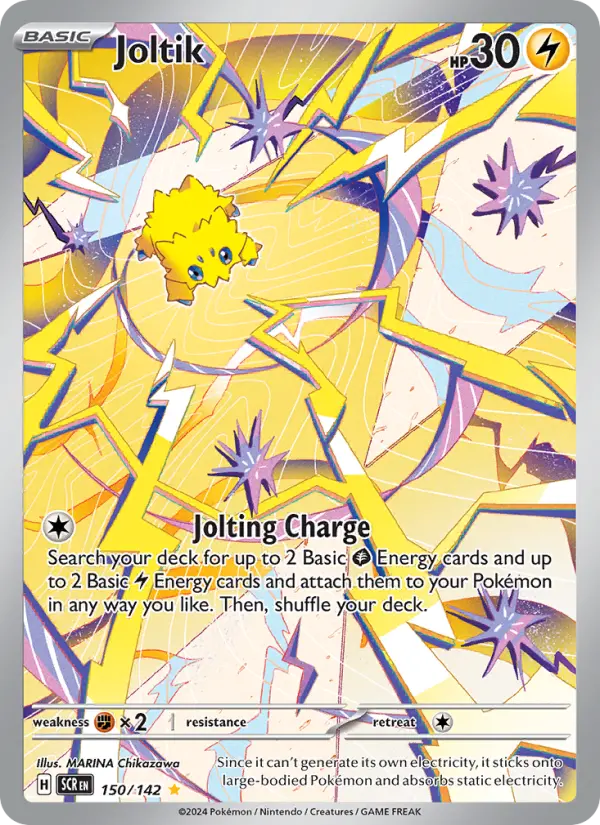
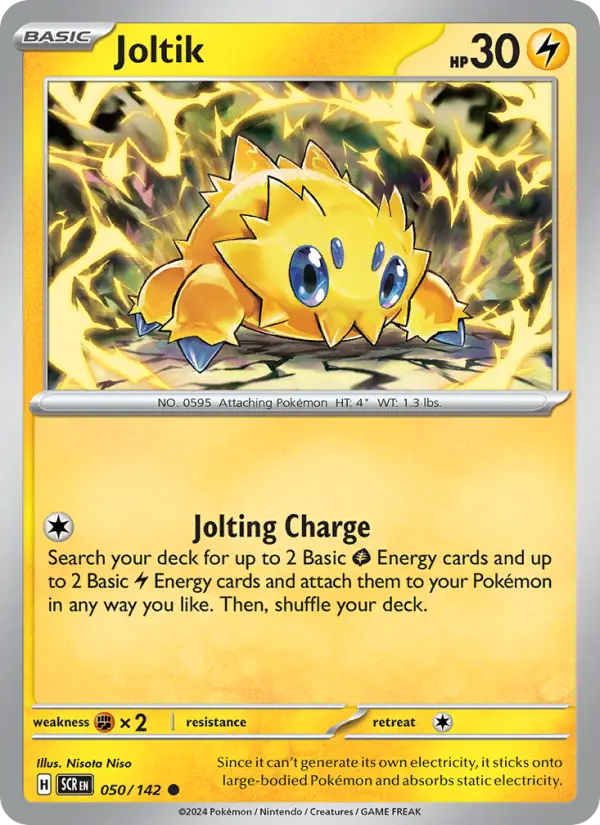
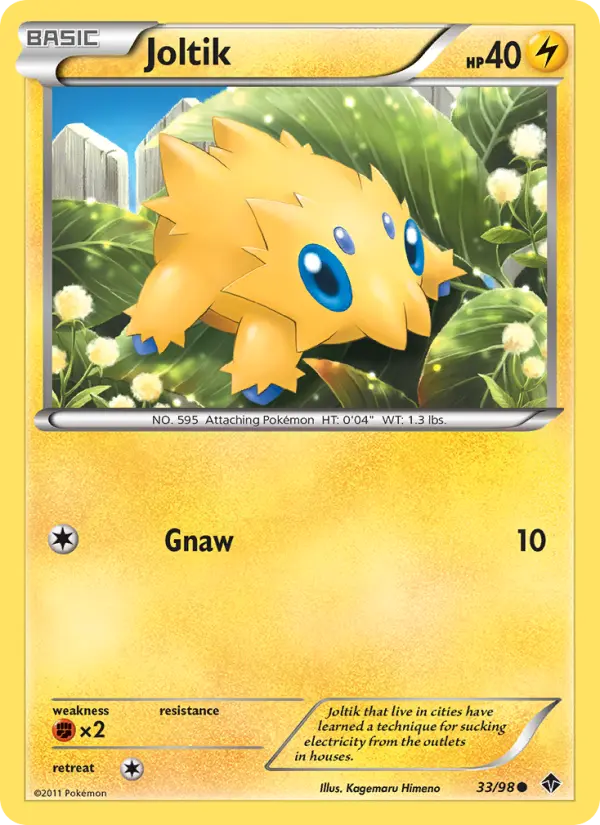
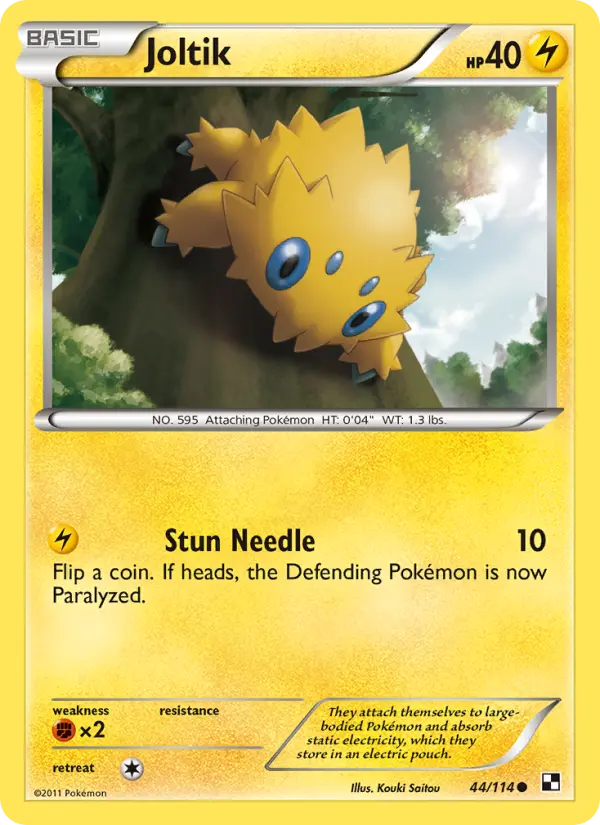
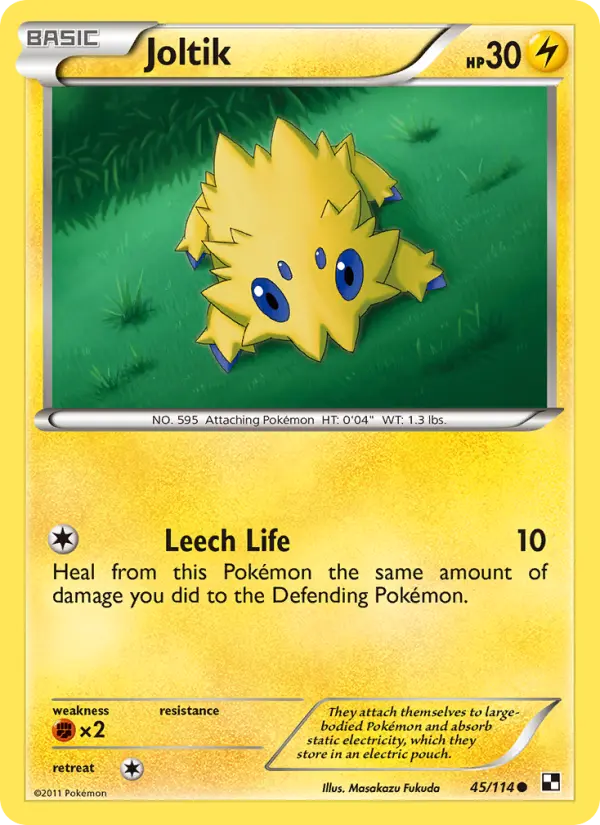
Joltik has achieved notable recognition within Pokémon media and fan communities despite its status as an early-game Pokémon with minimal competitive viability. The species gained significant exposure through the animated series "Pokémon the Series: Black & White," where it featured prominently in episodes such as "Oshawott's Lost Scalchop!" and "Crisis at Chargestone Cave!", establishing its parasitic nature and energy dependency as core narrative elements. Its distinctive appearance and unique ecological role as a tiny energy-dependent creature generated considerable appeal among fans who appreciated the creative biological design philosophy represented by Generation V Pokémon. Joltik's presence in Pokémon GO and various mobile applications has maintained its visibility among casual players, ensuring recognition beyond the core gaming audience. The Pokémon has become emblematic of Generation V's design ambitions—creating creatures that fulfilled traditional ecological niches despite unconventional appearances, representing evolution in both the Darwinian and Pokémon mechanical senses. Trading card game representations of Joltik have consistently portrayed its parasitic nature through artwork depicting it clinging to larger Pokémon, reinforcing this core characteristic across multiple media formats and maintaining thematic consistency.
Where to Find Joltik in Every Pokémon Game
Joltik's availability varies significantly across the Pokémon game generations, with its primary introduction occurring in Generation V through Pokémon Black and White. In these foundational games, Joltik appears as a wild encounter in Chargestone Cave and surrounding areas, holding the local Pokédex number 0101, making it a relatively obtainable species for early-to-mid game team construction. Subsequent appearances in Pokémon Black 2 and White 2 assigned it local Pokédex number 0173, maintaining reasonable availability through cave encounters, while Generation VI iterations (X and Y) incorporated Joltik into their regional Pokédex with accessible capture opportunities. More recent generations including Pokémon Sword and Shield place Joltik within the main game progression with local Pokédex number 0064 in the base game and 0093 in the Crown Tundra expansion, ensuring continued accessibility for contemporary trainers. The Pokémon also appears in Pokémon Legends: Z-A, the latest generation title, confirming its continued relevance within the modern gaming ecosystem. A capture rate of 190 makes Joltik relatively easy to catch with standard Poké Balls, particularly at low health values, facilitating straightforward acquisition for trainers seeking to add this unique Bug/Electric type to their collections. Additionally, Joltik remains available through Pokémon HOME and various trading mechanisms, ensuring availability regardless of which specific game title a trainer might possess.