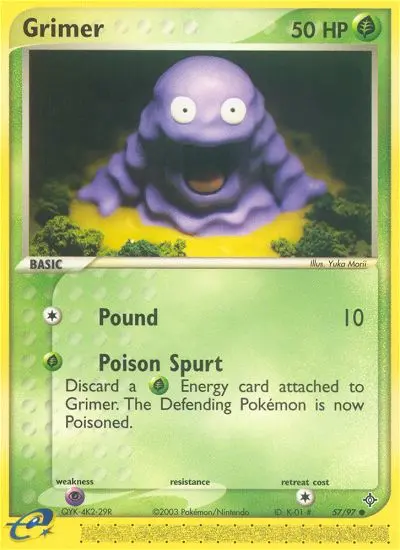
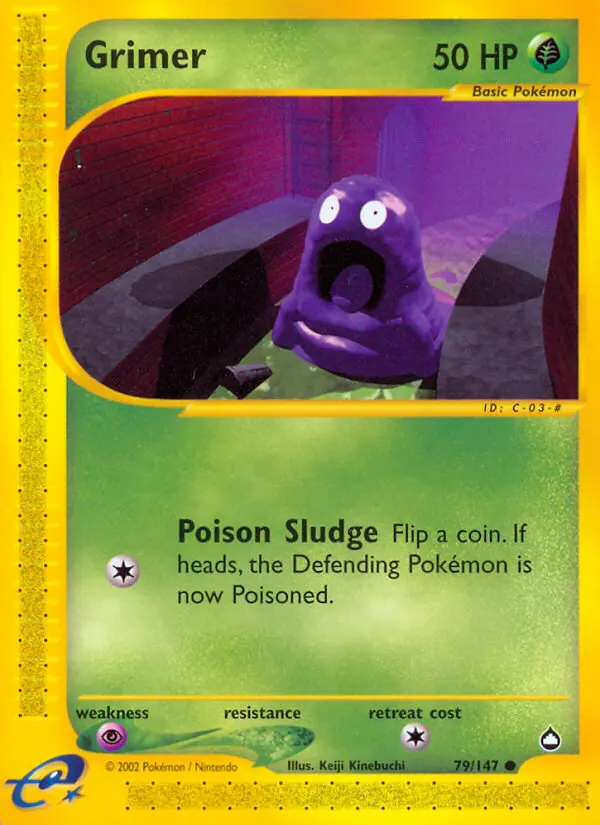
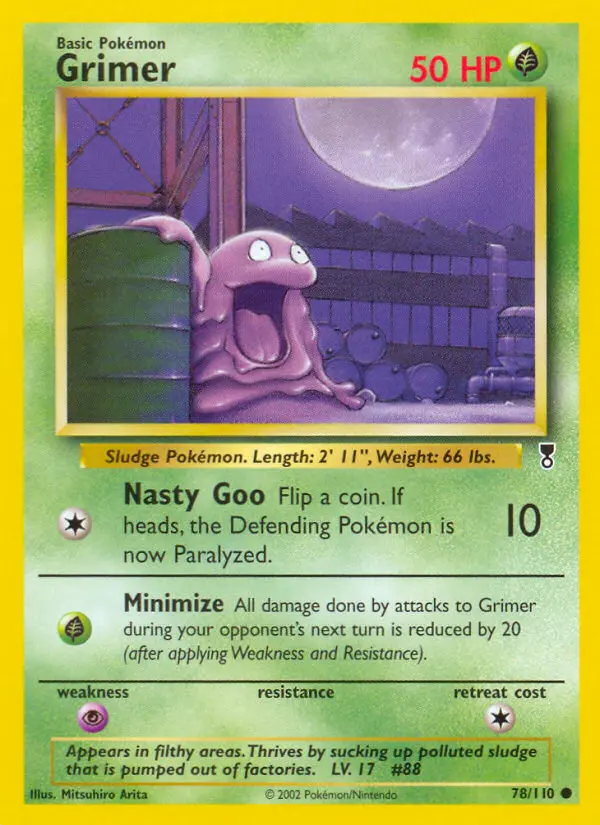
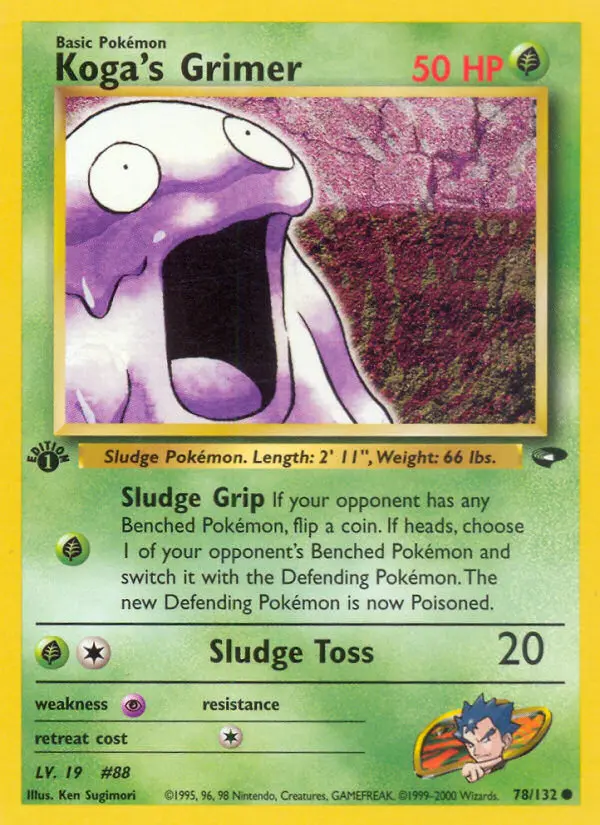
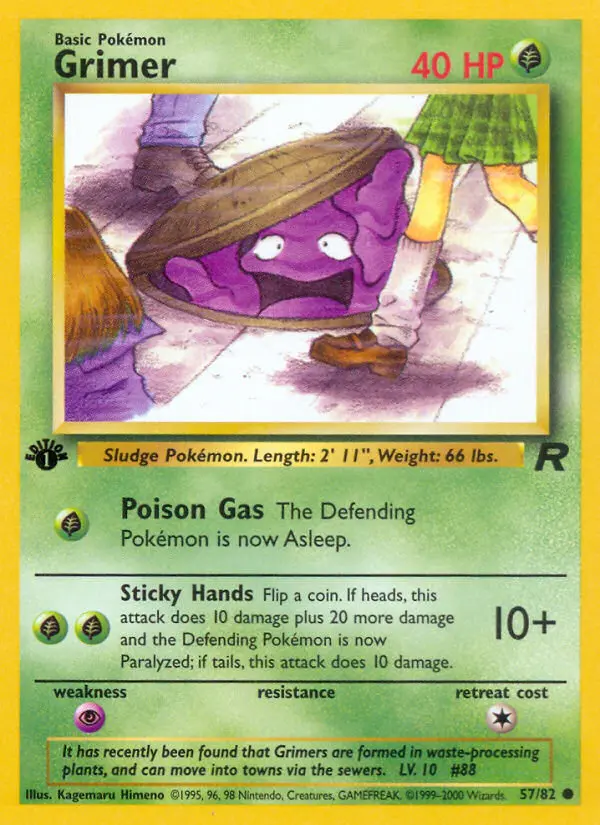
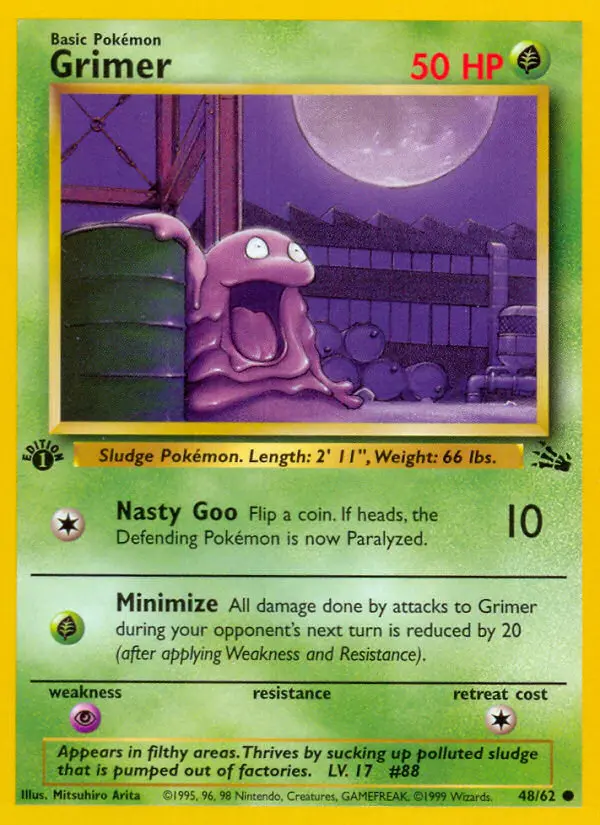
Grimer
Generation I · #0088 — Sludge Pokémon
Grimer's stench ability is the first thing worth knowing about it — everything else, from its poison typing to its build, follows from how that ability gets used. This amorphous blob thrives in the filthiest environments imaginable—filthy areas, polluted seabeds, and factory waste systems—where it consumes the toxic sludge that would prove lethal to other lifeforms. With a cumulative stat total of 325, Grimer possesses balanced offensive capabilities with HP and Attack both sitting at 80, though its Speed stat of 25 severely hampers its competitive viability. Its unique ability to regenerate and reproduce by shedding pieces of its gelatinous body makes it an ecological nightmare, spreading contamination wherever it travels and rendering soil permanently barren in its wake.
Editor's Take
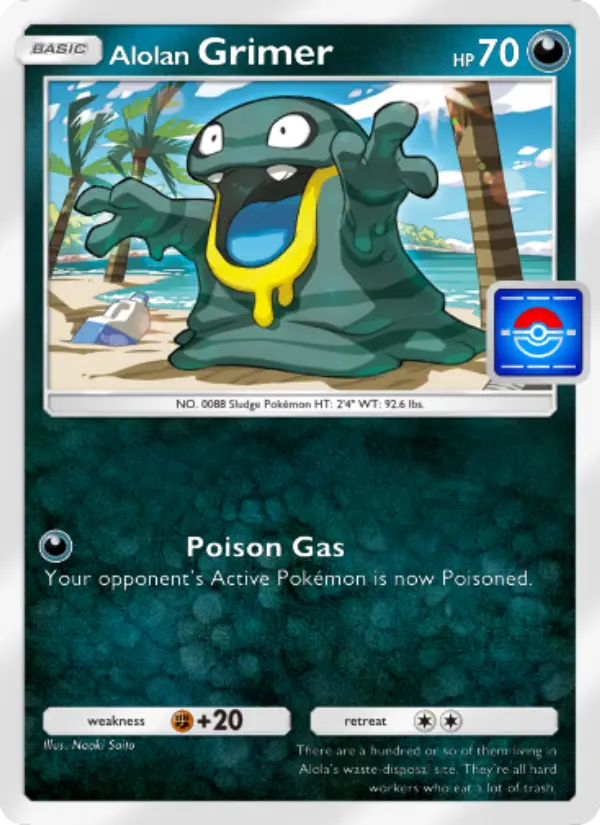
Grimer's Alolan variant gaining Dark typing and Poison Touch is a case where the regional form is clearly the better Pokémon, which happens more often than the originals would like.
Base Stats
Height
0.9m
Weight
30.0kg
Category
Sludge Pokémon
Gender
Male 50% / Female 50%
Color
purple
Shape
arms
Habitat
urban
Abilities
Has a 10% chance of making target Pokémon flinch with each hit.
Prevents a held item from being removed by other Pokémon.
Has a 30% chance of poisoning target Pokémon upon contact.
Grimer Biology & Physical Characteristics
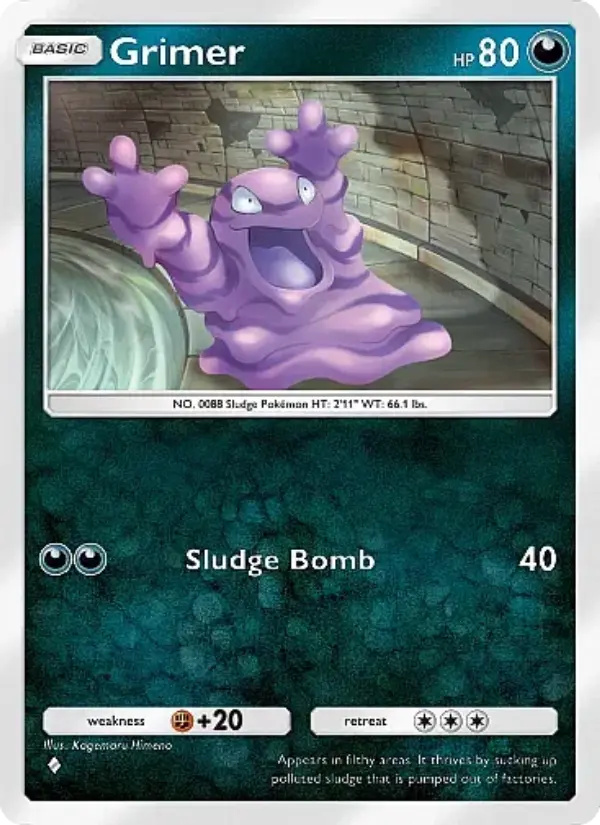
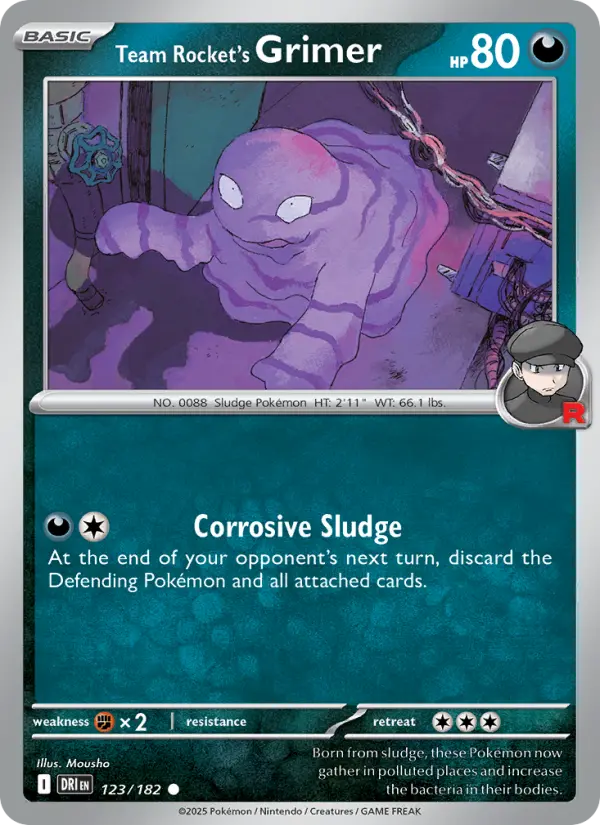
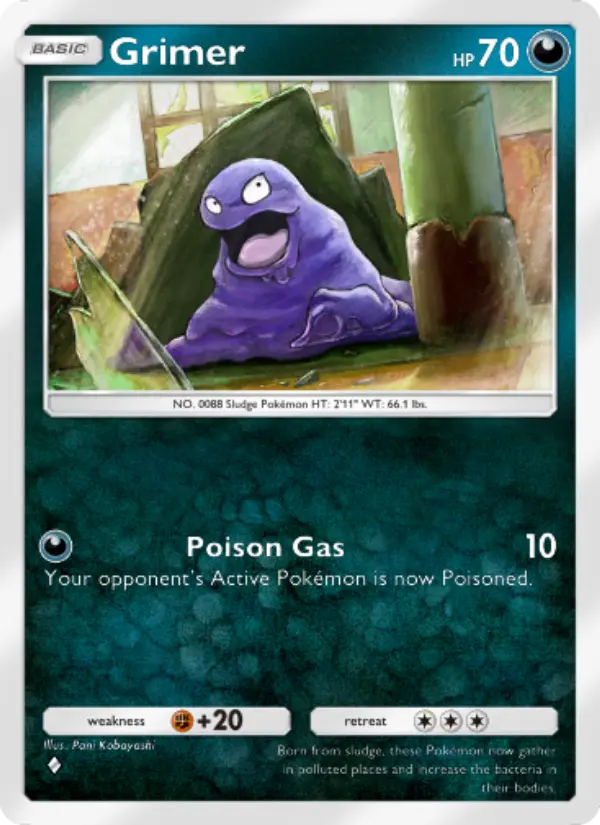
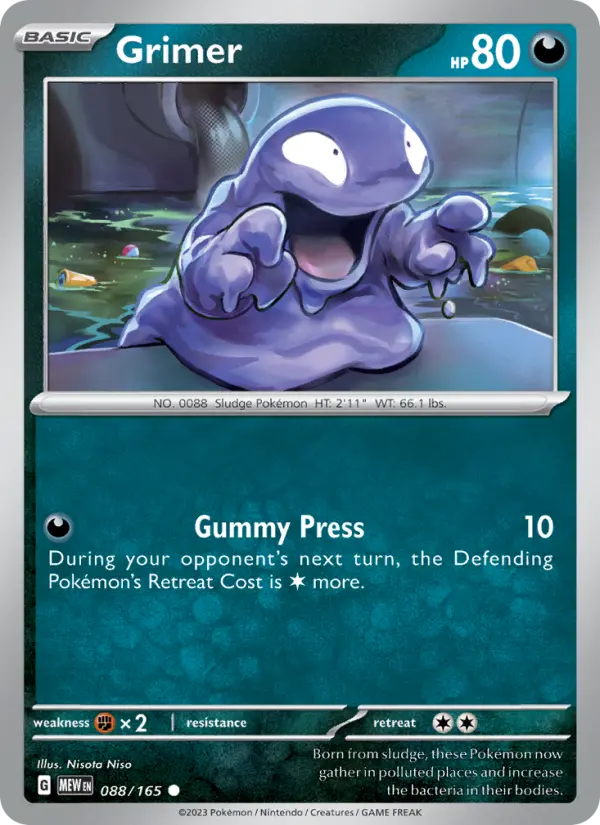
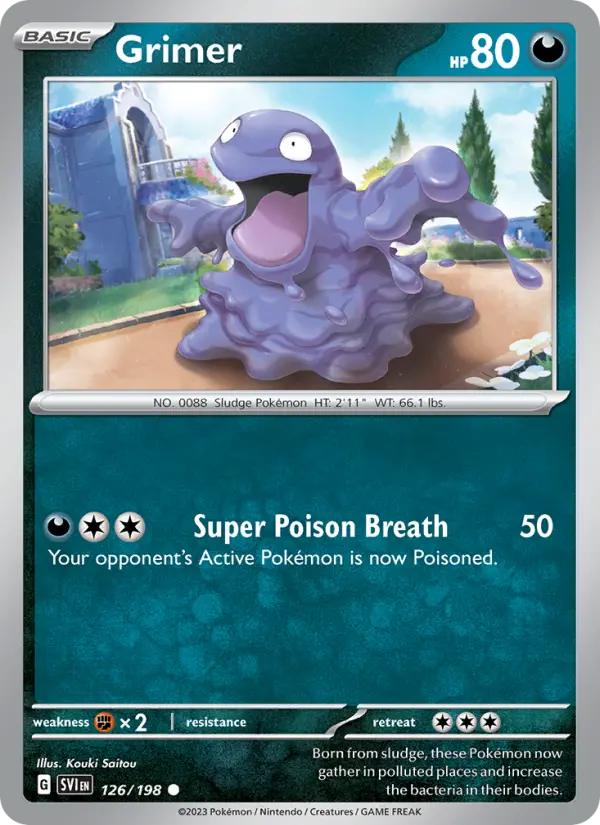
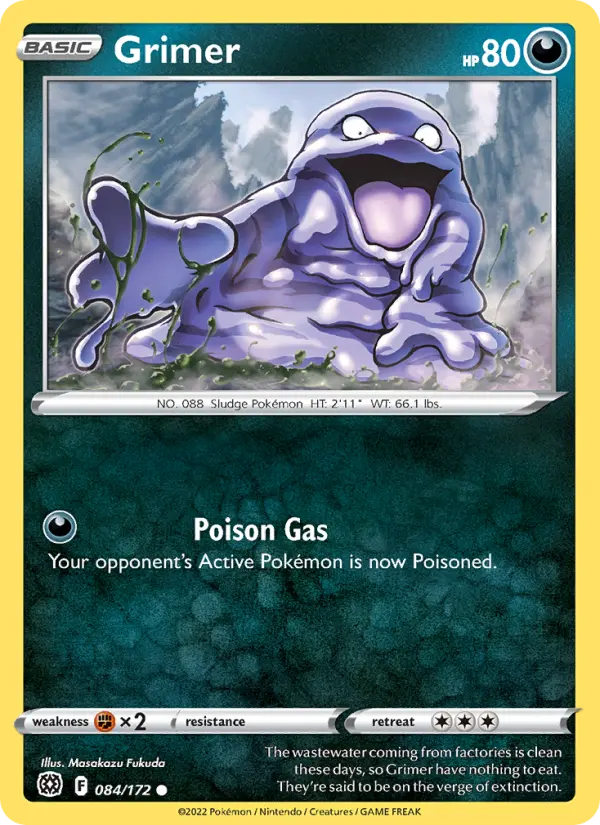
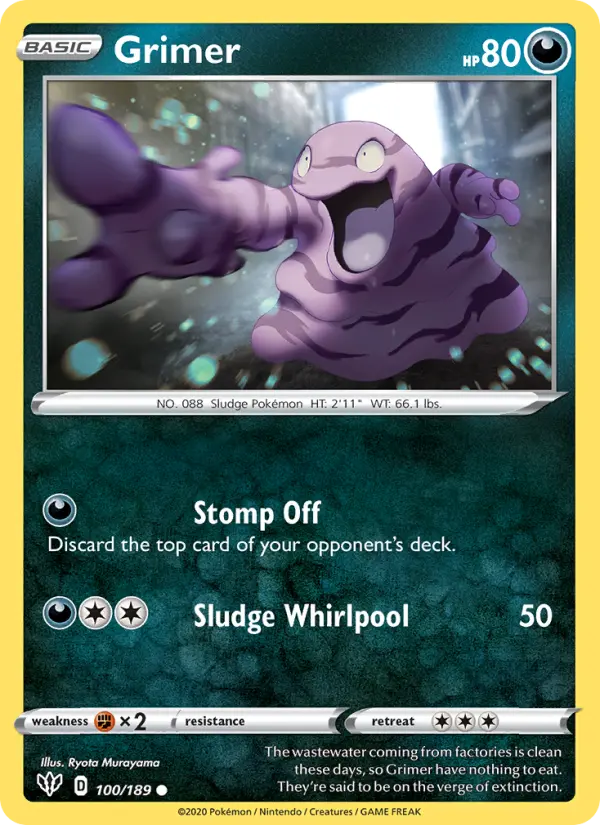
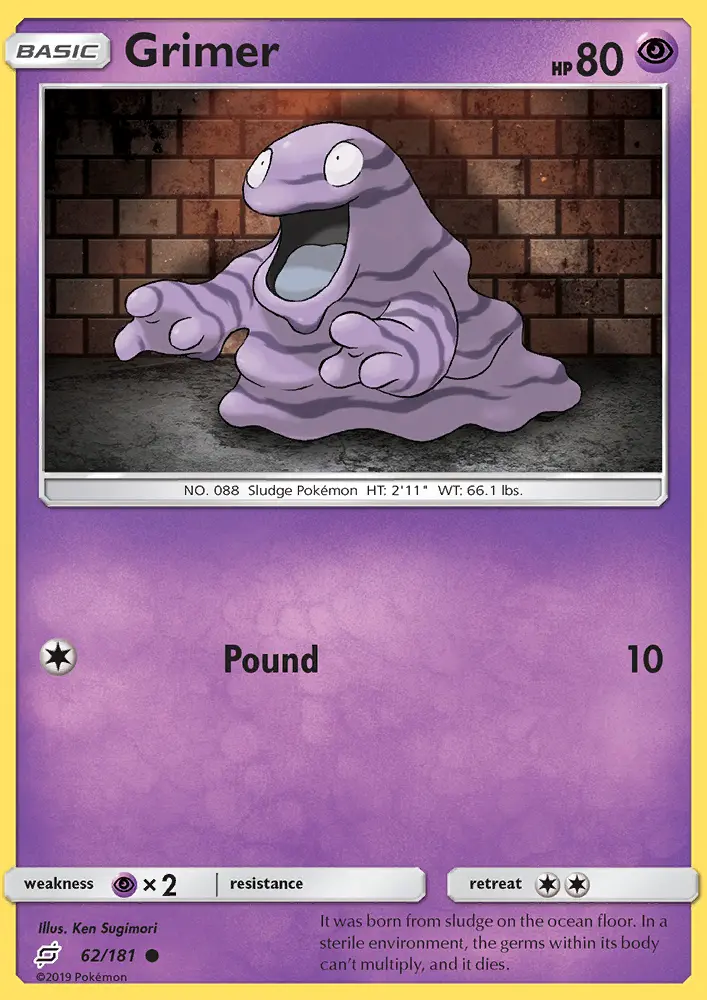
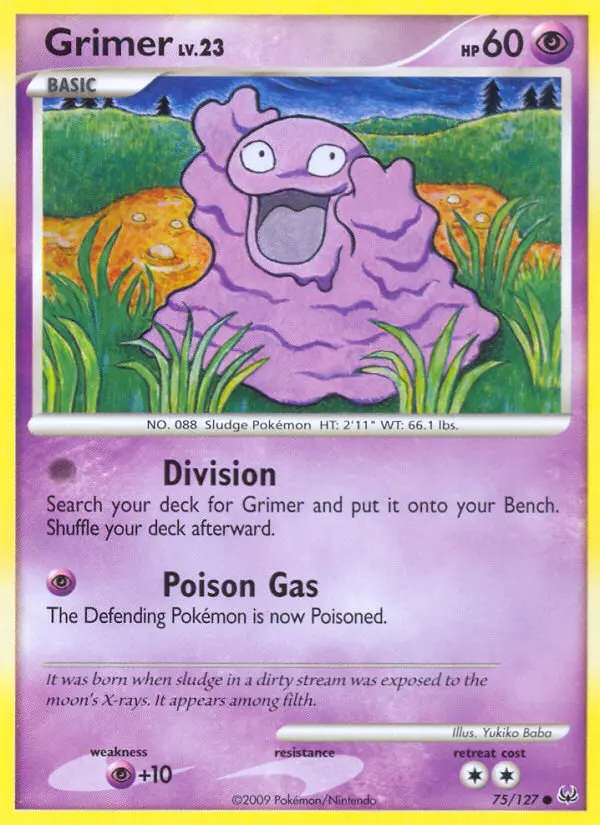
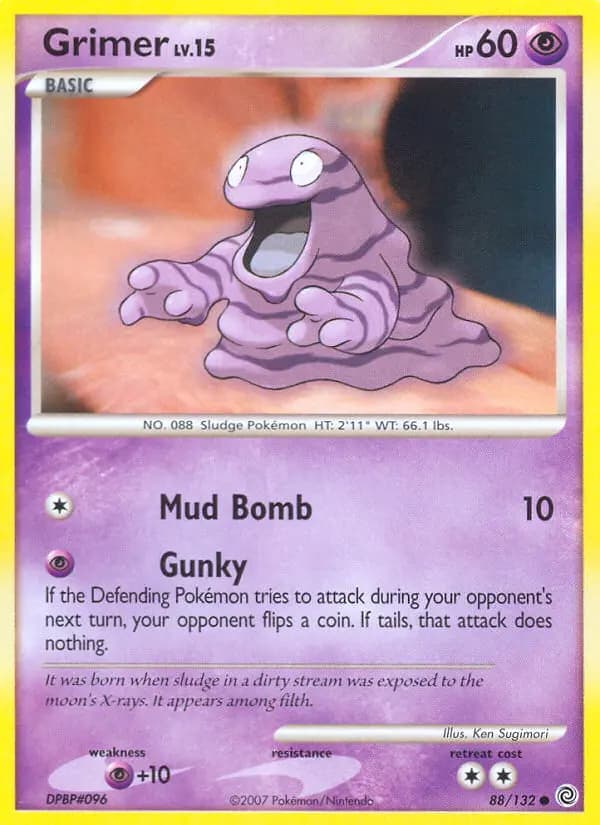
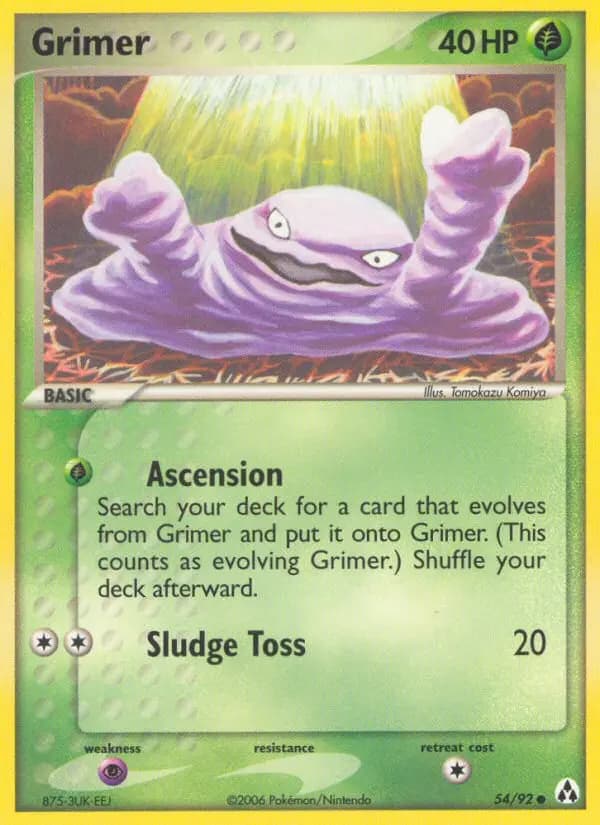
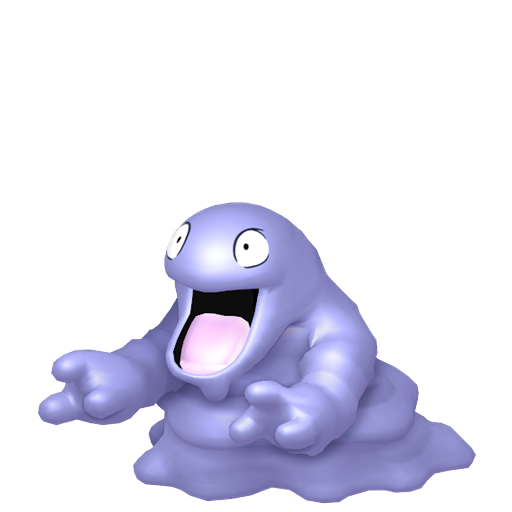
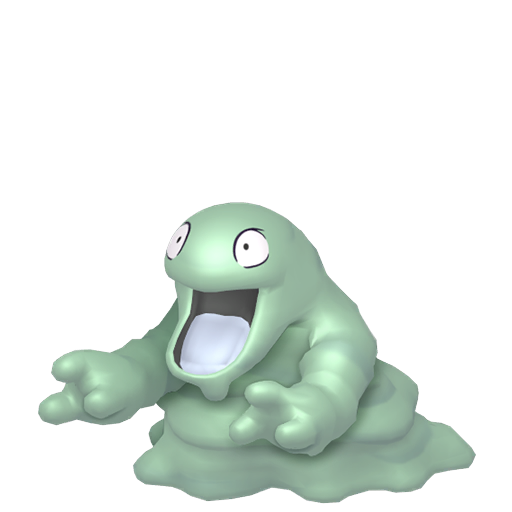
Grimer is a gelatinous, amorphous Pokémon composed entirely of sludge and toxic compounds, lacking a rigid skeletal structure that would constrain its form. Its body is predominantly purple in coloration and features two prominent, beady-eyed orbs that serve as its eyes, positioned above a gaping mouth lined with a gray tongue. Despite lacking visible legs, Grimer possesses two stubby arms, each equipped with three digits capable of manipulating objects. The creature's most defining biological characteristic is the perpetual leakage of bacteria-rich fluid from every pore of its body—a constant oozing that leaves behind traces of potent germs capable of sterilizing soil and preventing plant growth indefinitely. According to Pokédex entries, Grimer's internal composition contains a complex ecosystem of various pungent bacteria that are essential to its survival; if these germs are depleted, the creature dies. Its rubbery, sludgy body is remarkably flexible and can compress through incredibly small openings, allowing it to navigate through sewer pipes and industrial plumbing systems where it actively seeks contaminated wastewater to consume as sustenance.
Pokedex Numbers
Training
Breeding
Grimer Breeding, Gender Ratio & Egg Groups
Half of all Grimer are male, half are female — no skew to plan around. The species belongs to the Amorphous egg group, a classification that includes other shapeless or blob-like Pokémon such as Ditto, Koffing, and Muk. This egg group categorization is thematically appropriate given Grimer's gelatinous, undefined form and reflects the biological flexibility that comes with lacking a traditional skeletal structure. Grimer has a relatively modest base friendship value of 70, indicating that while it's not inherently hostile to trainers, it doesn't form attachments as readily as some friendlier species. The breeding mechanics involving Grimer are uncomplicated, as compatible parents from the Amorphous group can produce Grimer eggs with a 20-cycle hatch counter, translating to approximately 4,884 to 5,140 steps before the egg hatches into a fresh Grimer. Notably, Grimer cannot be obtained as a baby form—it is the base form in its evolutionary line, meaning any Grimer encountered or bred is already the first stage of development. The moderate catch rate of 190 means that wild Grimer are relatively approachable with standard Poké Balls at full health, making them accessible captures for players early in their journey.
Sprites




Held Items
Nugget
loot
Sell for 5000 Pokédollars, or to Ore Collector for 10000 Pokédollars.
Cost: 10000
Nugget
loot
Sell for 5000 Pokédollars, or to Ore Collector for 10000 Pokédollars.
Cost: 10000
Nugget
loot
Sell for 5000 Pokédollars, or to Ore Collector for 10000 Pokédollars.
Cost: 10000
Nugget
loot
Sell for 5000 Pokédollars, or to Ore Collector for 10000 Pokédollars.
Cost: 10000
Nugget
loot
Sell for 5000 Pokédollars, or to Ore Collector for 10000 Pokédollars.
Cost: 10000
Nugget
loot
Sell for 5000 Pokédollars, or to Ore Collector for 10000 Pokédollars.
Cost: 10000
Nugget
loot
Sell for 5000 Pokédollars, or to Ore Collector for 10000 Pokédollars.
Cost: 10000
Nugget
loot
Sell for 5000 Pokédollars, or to Ore Collector for 10000 Pokédollars.
Cost: 10000
Nugget
loot
Sell for 5000 Pokédollars, or to Ore Collector for 10000 Pokédollars.
Cost: 10000
Nugget
loot
Sell for 5000 Pokédollars, or to Ore Collector for 10000 Pokédollars.
Cost: 10000
Black Sludge
held-items
Held: Poison-type holder recovers 1/16 (6.25%) max HP each turn. Non-Poison-Types take 1/8 (12.5%) max HP damage.
Cost: 4000
Black Sludge
held-items
Held: Poison-type holder recovers 1/16 (6.25%) max HP each turn. Non-Poison-Types take 1/8 (12.5%) max HP damage.
Cost: 4000
Black Sludge
held-items
Held: Poison-type holder recovers 1/16 (6.25%) max HP each turn. Non-Poison-Types take 1/8 (12.5%) max HP damage.
Cost: 4000
Black Sludge
held-items
Held: Poison-type holder recovers 1/16 (6.25%) max HP each turn. Non-Poison-Types take 1/8 (12.5%) max HP damage.
Cost: 4000
Black Sludge
held-items
Held: Poison-type holder recovers 1/16 (6.25%) max HP each turn. Non-Poison-Types take 1/8 (12.5%) max HP damage.
Cost: 4000
Black Sludge
held-items
Held: Poison-type holder recovers 1/16 (6.25%) max HP each turn. Non-Poison-Types take 1/8 (12.5%) max HP damage.
Cost: 4000
Black Sludge
held-items
Held: Poison-type holder recovers 1/16 (6.25%) max HP each turn. Non-Poison-Types take 1/8 (12.5%) max HP damage.
Cost: 4000
Black Sludge
held-items
Held: Poison-type holder recovers 1/16 (6.25%) max HP each turn. Non-Poison-Types take 1/8 (12.5%) max HP damage.
Cost: 4000
Black Sludge
held-items
Held: Poison-type holder recovers 1/16 (6.25%) max HP each turn. Non-Poison-Types take 1/8 (12.5%) max HP damage.
Cost: 4000
Black Sludge
held-items
Held: Poison-type holder recovers 1/16 (6.25%) max HP each turn. Non-Poison-Types take 1/8 (12.5%) max HP damage.
Cost: 4000
Nugget
loot
Sell for 5000 Pokédollars, or to Ore Collector for 10000 Pokédollars.
Cost: 10000
Nugget
loot
Sell for 5000 Pokédollars, or to Ore Collector for 10000 Pokédollars.
Cost: 10000
Nugget
loot
Sell for 5000 Pokédollars, or to Ore Collector for 10000 Pokédollars.
Cost: 10000
Nugget
loot
Sell for 5000 Pokédollars, or to Ore Collector for 10000 Pokédollars.
Cost: 10000
Nugget
loot
Sell for 5000 Pokédollars, or to Ore Collector for 10000 Pokédollars.
Cost: 10000
Nugget
loot
Sell for 5000 Pokédollars, or to Ore Collector for 10000 Pokédollars.
Cost: 10000
Nugget
loot
Sell for 5000 Pokédollars, or to Ore Collector for 10000 Pokédollars.
Cost: 10000
Nugget
loot
Sell for 5000 Pokédollars, or to Ore Collector for 10000 Pokédollars.
Cost: 10000
Nugget
loot
Sell for 5000 Pokédollars, or to Ore Collector for 10000 Pokédollars.
Cost: 10000
Nugget
loot
Sell for 5000 Pokédollars, or to Ore Collector for 10000 Pokédollars.
Cost: 10000
Black Sludge
held-items
Held: Poison-type holder recovers 1/16 (6.25%) max HP each turn. Non-Poison-Types take 1/8 (12.5%) max HP damage.
Cost: 4000
Black Sludge
held-items
Held: Poison-type holder recovers 1/16 (6.25%) max HP each turn. Non-Poison-Types take 1/8 (12.5%) max HP damage.
Cost: 4000
Black Sludge
held-items
Held: Poison-type holder recovers 1/16 (6.25%) max HP each turn. Non-Poison-Types take 1/8 (12.5%) max HP damage.
Cost: 4000
Black Sludge
held-items
Held: Poison-type holder recovers 1/16 (6.25%) max HP each turn. Non-Poison-Types take 1/8 (12.5%) max HP damage.
Cost: 4000
Black Sludge
held-items
Held: Poison-type holder recovers 1/16 (6.25%) max HP each turn. Non-Poison-Types take 1/8 (12.5%) max HP damage.
Cost: 4000
Black Sludge
held-items
Held: Poison-type holder recovers 1/16 (6.25%) max HP each turn. Non-Poison-Types take 1/8 (12.5%) max HP damage.
Cost: 4000
Black Sludge
held-items
Held: Poison-type holder recovers 1/16 (6.25%) max HP each turn. Non-Poison-Types take 1/8 (12.5%) max HP damage.
Cost: 4000
Black Sludge
held-items
Held: Poison-type holder recovers 1/16 (6.25%) max HP each turn. Non-Poison-Types take 1/8 (12.5%) max HP damage.
Cost: 4000
Black Sludge
held-items
Held: Poison-type holder recovers 1/16 (6.25%) max HP each turn. Non-Poison-Types take 1/8 (12.5%) max HP damage.
Cost: 4000
Black Sludge
held-items
Held: Poison-type holder recovers 1/16 (6.25%) max HP each turn. Non-Poison-Types take 1/8 (12.5%) max HP damage.
Cost: 4000
TMs & HMs
tm01
gold silver
tm01
crystal
tm01
lets go pikachu lets go eevee
tm02
crystal
tm02
gold silver
tm02
lets go pikachu lets go eevee
tm03
crystal
tm03
gold silver
tm03
lets go pikachu lets go eevee
tm03
sword shield
tm04
sword shield
tm05
sword shield
tm05
lets go pikachu lets go eevee
tm06
yellow
tm06
gold silver
tm06
red blue
tm06
crystal
tm06
emerald
tm06
firered leafgreen
tm06
diamond pearl
+652 more TMs/HMs


Grimer Evolution, Mega Evolution & Special Forms
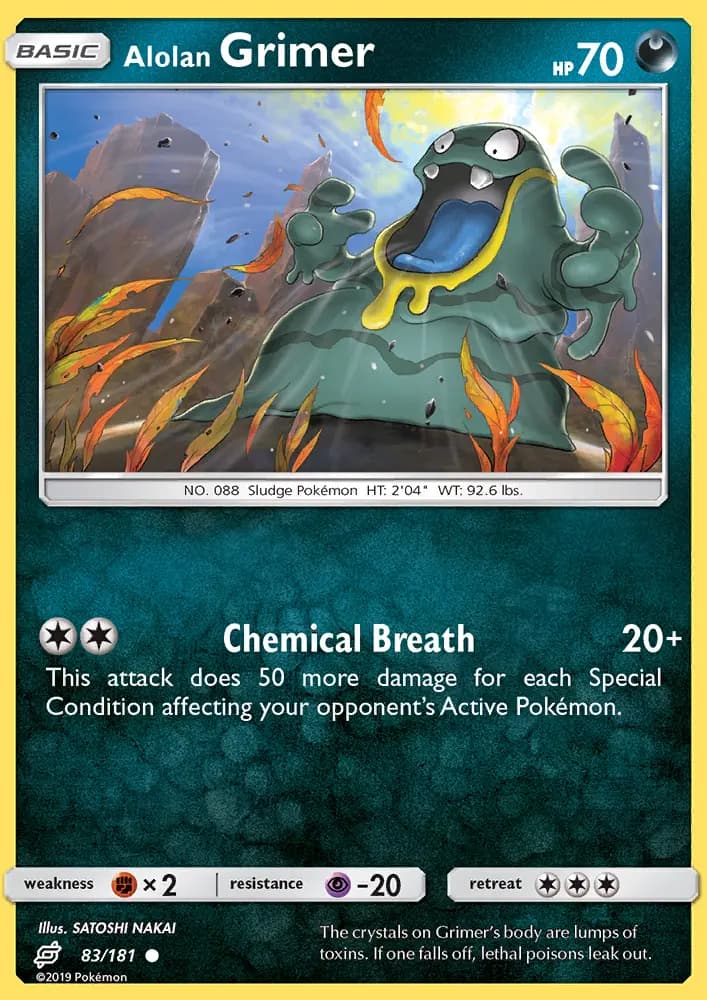
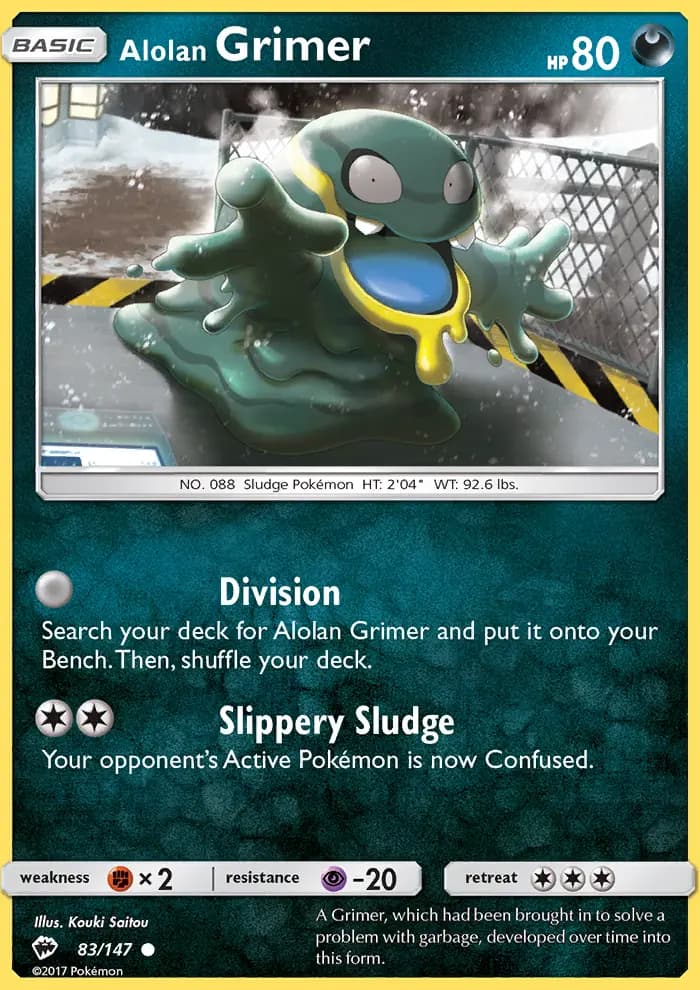
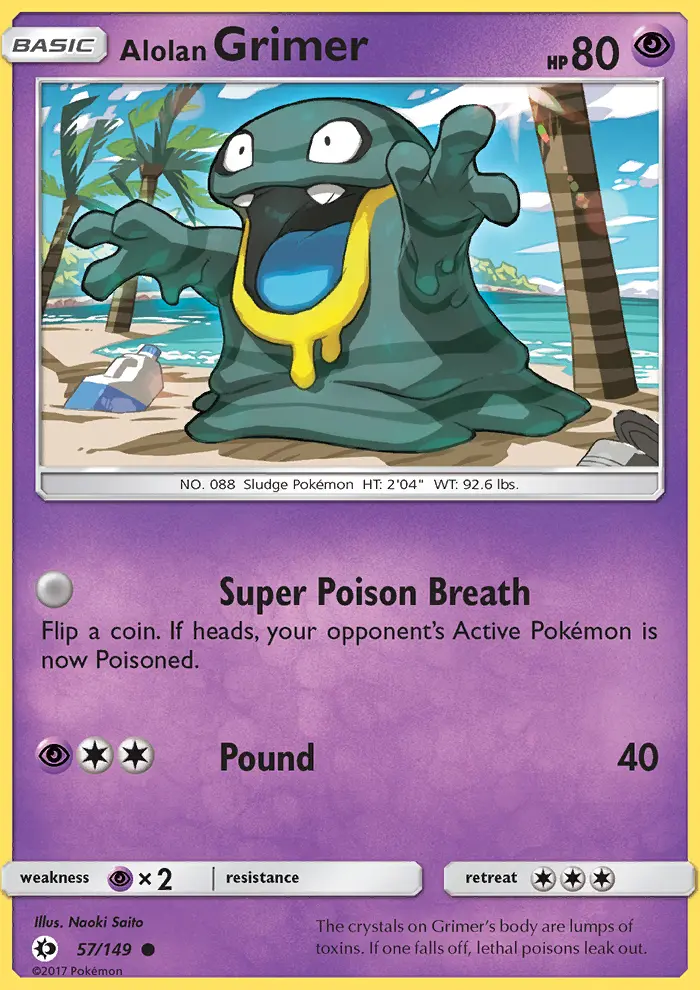
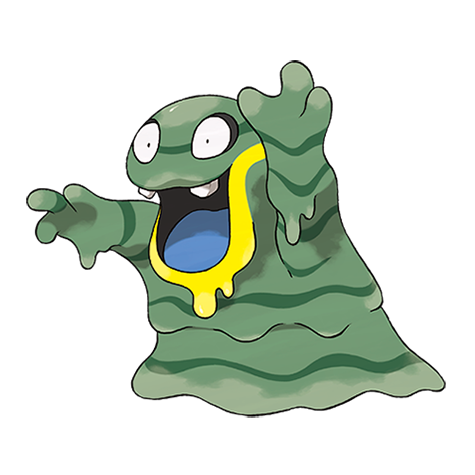
Grimer evolves into Muk, the Toxic Pokémon, when it reaches level 38. This evolution represents a maturation and consolidation of Grimer's amorphous form into a more cohesive (though still liquid-like) body structure. The evolution is straightforward without branching paths in the original form, though Alola introduced a regional variant of Grimer that evolves into Alolan Muk with a dual Poison/Dark typing instead of pure Poison. Both evolution lines occur at the identical level threshold, suggesting that the environmental conditions of Alola influence not just the appearance but the fundamental type composition of the evolved form. The transition from Grimer to Muk involves consolidation of the sludge mass and reorganization of the bacterial colonies within, resulting in increased size and darker coloration in the standard form. For trainers seeking to evolve their Grimer, reaching level 38 is entirely straightforward with no special items, held items, or environmental triggers required—a rarity among Pokémon that speaks to Grimer's universal applicability across different regional contexts.
Where to Find
Pokemon Mansion
kanto
+53 more
Power Plant
kanto
Kanto Route 18
kanto
+32 more
Celadon City
kanto
+9 more
Kanto Route 16
kanto
+30 more
Kanto Route 17
kanto
+34 more
Fiery Path
hoenn
+3 more
Sinnoh Route 212
sinnoh
+9 more
Johto Safari Zone
johto
+7 more
Castelia Sewers
unova
+65 more
Grimer Behaviour and Natural Habitat
Grimer is drawn to environments of extreme pollution and filth, thriving in locations where other Pokémon would perish from toxic exposure. It inhabits filthy streams, contaminated seabeds, and especially the drainage systems of industrial factories where polluted sludge is continuously pumped outward. The creature deliberately seeks these degraded environments, actively consuming the toxic waste that serves as its primary food source. A particularly troubling aspect of Grimer's behavior is its reproductive tendency—as it moves through these contaminated zones, it constantly sheds pieces of its gelatinous form, and these fragments spontaneously develop into new Grimer, effectively multiplying the pollution problem wherever it travels. This uncontrolled reproduction makes Grimer a genuine ecological hazard, as each new individual contributes to the spread of bacteria-laden sludge across wider territories. When two Grimer combine their bodies together, they generate entirely new types of poisonous compounds, suggesting a form of chemical interaction between individuals. The creature's putrid stench is so overwhelming that it discourages most other lifeforms from approaching, making it an effective territorial organism that monopolizes its preferred habitat.
Pokedex Entries
Appears in filthy areas. Thrives by sucking up polluted sludge that is pumped out of factories.
Made of hardened sludge. It smells too putrid to touch. Even weeds won't grow in its path.
As it moves, it loses bits of its body from which new GRIMER emerge. This worsens the stench around it.
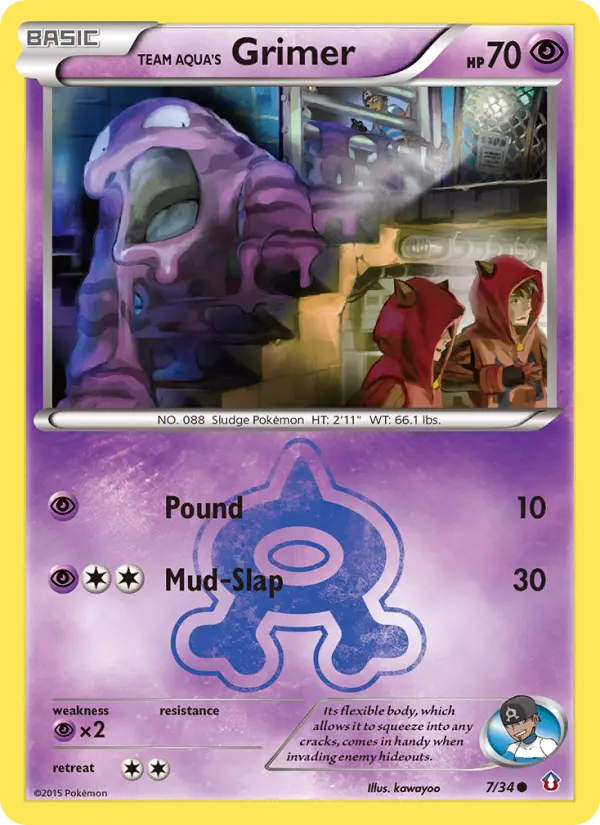
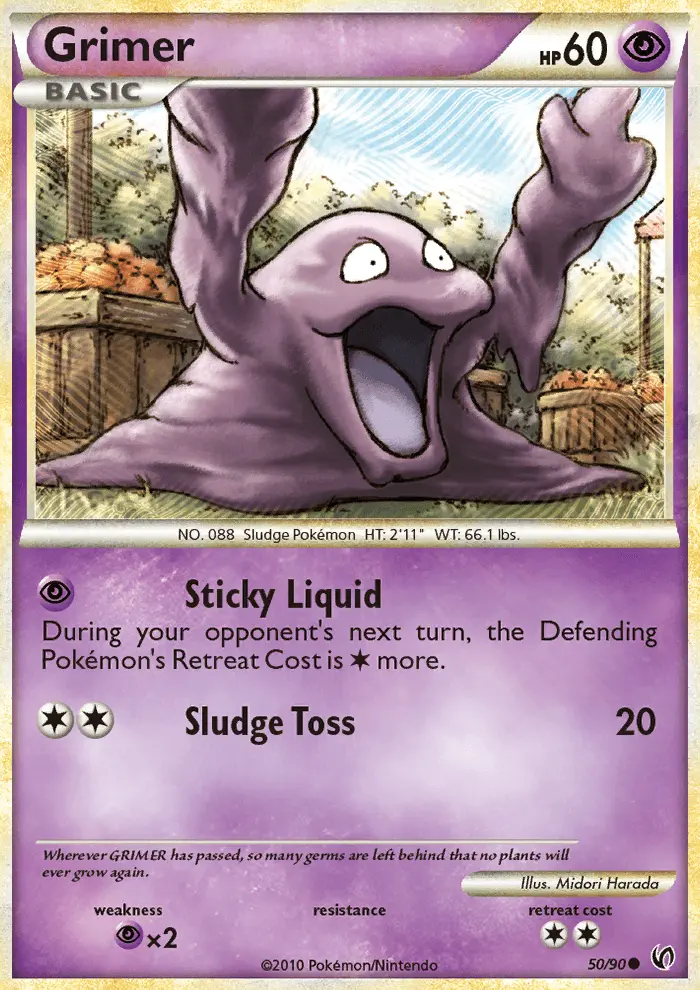
Wherever GRIMER has passed, so many germs are left behind that no plants will ever grow again.
When two of these POKéMON's bodies are combined together, new poisons are created.
GRIMER’s sludgy and rubbery body can be forced through any opening, however small it may be. This POKéMON enters sewer pipes to drink filthy wastewater.
GRIMER emerged from the sludge that settled on a polluted seabed. This POKéMON loves anything filthy. It constantly leaks a horribly germ- infested fluid from all over its body.
Born from polluted sludge in the sea, GRIMER’s favorite food is anything filthy. They feed on wastewater pumped out from factories.
Sludge exposed to X rays from the moon transformed into GRIMER. It loves feeding on filthy things.
Appears in filthy areas. It thrives by sucking up polluted sludge that is pumped out of factories.
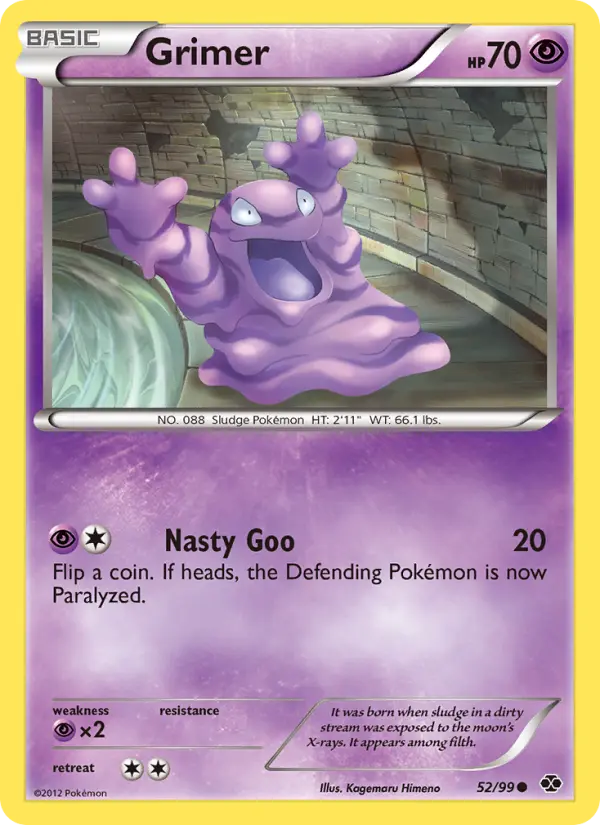
It was born when sludge in a dirty stream was exposed to the moon’s X-rays. It appears among filth.
As it moves, it loses bits of its body, from which new GRIMER emerge. This worsens the stench around it.
Wherever GRIMER has passed, so many germs are left behind that no plants will ever grow again.
It was born when sludge in a dirty stream was exposed to the moon’s X-rays. It appears among filth.
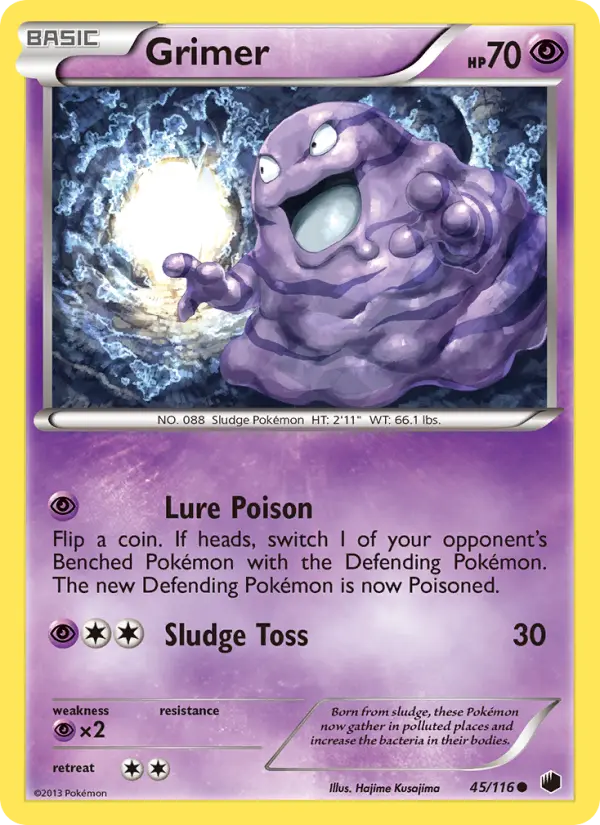
Born from sludge, these Pokémon now gather in polluted places and increase the bacteria in their bodies.
Sludge exposed to X-rays from the moon transformed into Grimer. It loves feeding on filthy things.
Appears in filthy areas. It thrives by sucking up polluted sludge that is pumped out of factories.
Grimer’s sludgy and rubbery body can be forced through any opening, however small it may be. This Pokémon enters sewer pipes to drink filthy wastewater.
Grimer emerged from the sludge that settled on a polluted seabed. This Pokémon loves anything filthy. It constantly leaks a horribly germ-infested fluid from all over its body.
Its main source of food is the slimy industrial waste of factories. This Pokémon’s numbers have been decreasing in recent years.
It was born from sludge on the ocean floor. In a sterile environment, the germs within its body can’t multiply, and it dies.
It was born from sludge transformed by exposure to X-rays from the moon. When its internal load of germs decreases, it dies.
The wastewater coming from factories is clean these days, so Grimer have nothing to eat. They’re said to be on the verge of extinction.
Made of congealed sludge. It smells too putrid to touch. Even weeds won’t grow in its path.
Grimer Name Origin & Design Inspiration
Grimer's name traces to a combination of "grime"—referring to dirt and filth—and the suffix "-er," creating a creature whose very designation announces its thematic purpose. In Japanese, Grimer is called Betbeter (ベトベター), which comes from "beta-beta" or "beto-beto," onomatopoeia representing the sound and sensation of sticky, sludgy movement. The design itself brilliantly captures the essence of sentient industrial waste: a shapeless, oozing mass of purple sludge with expressive eyes that paradoxically make this disgusting creature endearing rather than purely repellent. Artist Satoshi Tajiri and the design team deliberately created Grimer as a visual representation of environmental consequences, embedding ecological commentary into its very being. The creature's appearance reflects 1990s anxieties about industrial pollution and toxic waste, particularly in Japan where such concerns were culturally significant. Its amorphous form allows for remarkable flexibility in animation and illustration, while the consistent color palette and expressive features ensure immediate visual recognition despite the complete absence of traditional anatomical structure. The decision to make Grimer round and relatively small (0.9 meters tall, 30 kilograms) rather than imposingly large emphasizes that contamination can manifest at any scale and isn't necessarily dramatic or obvious.
Learnable Moves
Grimer can learn 75 moves:
Move | Type | Cat. | Power | Acc. | PP |
|---|---|---|---|---|---|
| acid armor | poison | Status | — | — | 20 |
| attract | normal | Status | — | 100 | 15 |
| bide | normal | Physical | — | — | 10 |
| body slam | normal | Physical | 85 | 100 | 15 |
| confuse ray | ghost | Status | — | 100 | 10 |
| curse | ghost | Status | — | — | 10 |
| dig | ground | Physical | 80 | 100 | 10 |
| disable | normal | Status | — | 100 | 20 |
| double team | normal | Status | — | — | 15 |
| dynamic punch | fighting | Physical | 100 | 50 | 5 |
| endure | normal | Status | — | — | 10 |
| explosion | normal | Physical | 250 | 100 | 5 |
| facade | normal | Physical | 70 | 100 | 20 |
| fire blast | fire | Special | 110 | 85 | 5 |
| fire punch | fire | Physical | 75 | 100 | 15 |
| flamethrower | fire | Special | 90 | 100 | 15 |
| frustration | normal | Physical | — | 100 | 20 |
| giga drain | grass | Special | 75 | 100 | 10 |
| harden | normal | Status | — | — | 30 |
| haze | ice | Status | — | — | 30 |
| headbutt | normal | Physical | 70 | 100 | 15 |
| helping hand | normal | Status | — | — | 20 |
| hidden power | normal | Special | 60 | 100 | 15 |
| ice punch | ice | Physical | 75 | 100 | 15 |
| imprison | psychic | Status | — | — | 10 |
| lick | ghost | Physical | 30 | 100 | 30 |
| mean look | normal | Status | — | — | 5 |
| mega drain | grass | Special | 40 | 100 | 15 |
| memento | dark | Status | — | 100 | 10 |
| metronome | normal | Status | — | — | 10 |
| mimic | normal | Status | — | — | 10 |
| minimize | normal | Status | — | — | 10 |
| mud shot | ground | Special | 55 | 95 | 15 |
| mud slap | ground | Special | 20 | 100 | 10 |
| natural gift | normal | Physical | — | 100 | 15 |
| pain split | normal | Status | — | — | 20 |
| payback | dark | Physical | 50 | 100 | 10 |
| poison gas | poison | Status | — | 90 | 40 |
| pound | normal | Physical | 40 | 100 | 35 |
| protect | normal | Status | — | — | 10 |
| rage | normal | Physical | 20 | 100 | 20 |
| rain dance | water | Status | — | — | 5 |
| rest | psychic | Status | — | — | 5 |
| return | normal | Physical | — | 100 | 20 |
| rock slide | rock | Physical | 75 | 90 | 10 |
| rock tomb | rock | Physical | 60 | 95 | 15 |
| sandstorm | rock | Status | — | — | 10 |
| scary face | normal | Status | — | 100 | 10 |
| screech | normal | Status | — | 85 | 40 |
| secret power | normal | Physical | 70 | 100 | 20 |
| self destruct | normal | Physical | 200 | 100 | 5 |
| shadow ball | ghost | Special | 80 | 100 | 15 |
| shadow punch | ghost | Physical | 60 | — | 20 |
| shock wave | electric | Special | 60 | — | 20 |
| sleep talk | normal | Status | — | — | 10 |
| sludge | poison | Special | 65 | 100 | 20 |
| sludge bomb | poison | Special | 90 | 100 | 10 |
| smog | poison | Special | 30 | 70 | 20 |
| snore | normal | Special | 50 | 100 | 15 |
| spit up | normal | Special | — | 100 | 10 |
| stockpile | normal | Status | — | — | 20 |
| strength | normal | Physical | 80 | 100 | 15 |
| substitute | normal | Status | — | — | 10 |
| sunny day | fire | Status | — | — | 5 |
| swagger | normal | Status | — | 85 | 15 |
| swallow | normal | Status | — | — | 10 |
| take down | normal | Physical | 90 | 85 | 20 |
| taunt | dark | Status | — | 100 | 20 |
| thief | dark | Physical | 60 | 100 | 25 |
| thunder | electric | Special | 110 | 70 | 10 |
| thunder punch | electric | Physical | 75 | 100 | 15 |
| thunderbolt | electric | Special | 90 | 100 | 15 |
| torment | dark | Status | — | 100 | 15 |
| toxic | poison | Status | — | 90 | 10 |
| zap cannon | electric | Special | 120 | 50 | 5 |
Grimer Competitive Battle Guide
In competitive Pokémon environments, Grimer occupies a challenging niche due to its severely limited Speed stat of 25, which makes it one of the slowest Pokémon species available. However, its balanced HP and Attack stats of 80 each provide a foundation for physical offense, particularly in slower metagames or when utilizing Speed-reducing natures and strategies. The species' three ability options provide distinct strategic applications: Stench offers a 10% chance to make opposing Pokémon flinch with each physical contact, creating pressure through disruption; Sticky Hold prevents opponents from removing held items through moves like Knock Off or Trick, which can be surprisingly valuable in certain competitive formats; and the hidden ability Poison Touch grants a 30% chance of poisoning contacted opponents, enabling chip damage and status infliction. Grimer's modest special defense of 50 leaves it vulnerable to special attackers, while its low special attack of 40 similarly limits its effectiveness with special moves. Most competitive players consider Grimer too slow and offensively limited to use effectively in standard competitive formats, though its early-game availability and typing can make it situationally useful in nuzlockes or restricted tier formats. The species' move pool is reasonably comprehensive for a Poison-type, including moves like Poison Powder, Acid, and Minimize, though it lacks the coverage moves that would elevate it to genuine competitive relevance.
Commonly Asked Questions About Grimer
What type is Grimer?
Grimer is a poison type Pokemon.
What does Grimer evolve into?
Grimer evolves into muk.
What are Grimer's weaknesses?
Grimer is weak to ground and psychic type moves.
Does Grimer evolve by trading?
No — Grimer evolves entirely through leveling up, with no trade required at any stage.
Where can I find Grimer?
Grimer can be found in pokemon mansion (kanto), power plant (kanto) and kanto route 18 (kanto) and 7 other locations.
Grimer Cultural Impact & Franchise History
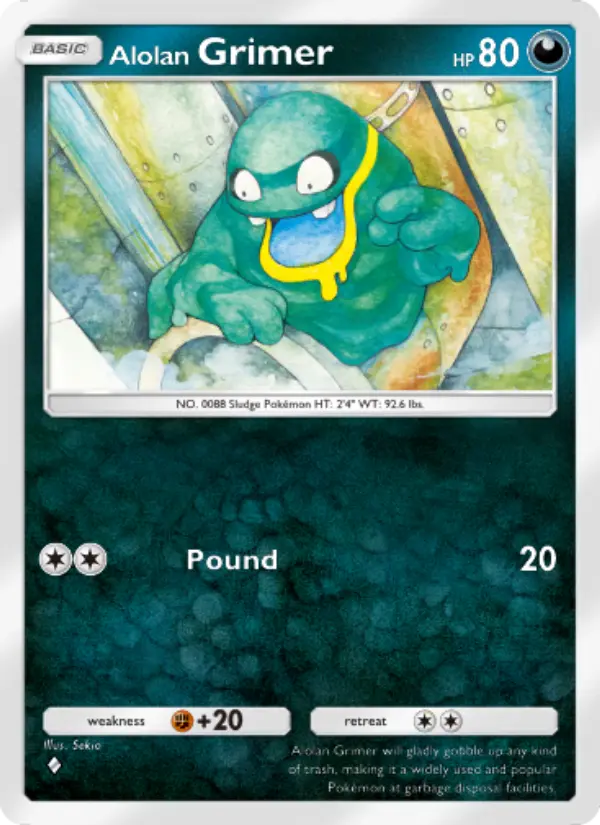
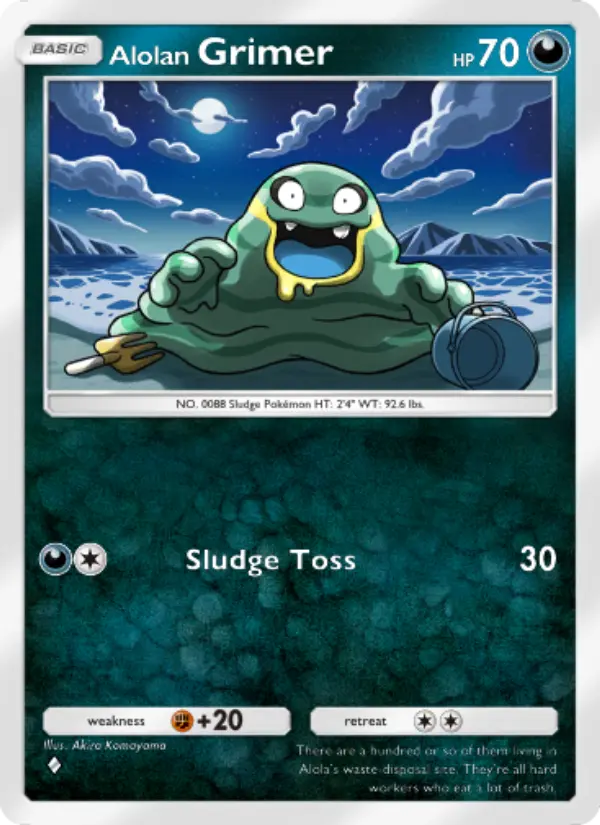
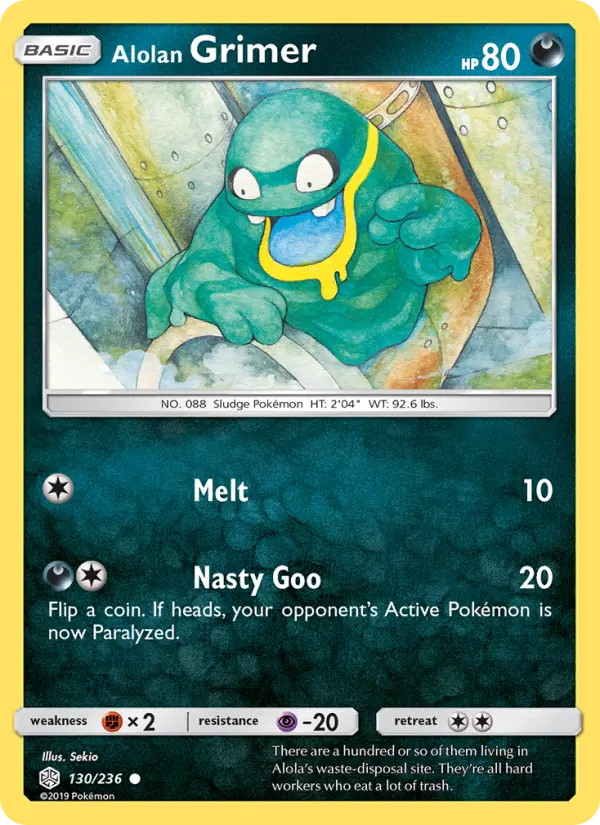
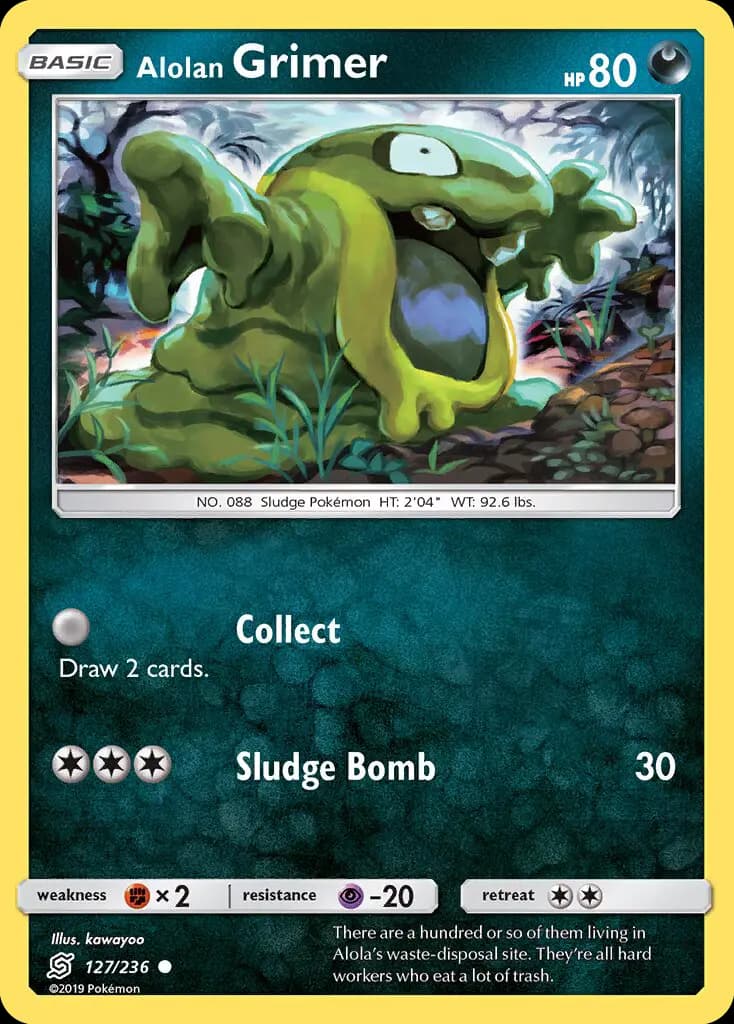
Grimer represents an early and unapologetic commitment by Pokémon to incorporating environmental themes into its creatures, serving as a mascot for pollution and waste long before eco-consciousness became mainstream in gaming. The character's design resonates with players because it transforms something universally considered disgusting—toxic sludge—into a creature that is simultaneously revolting and oddly sympathetic through its expressive features. In the anime series, Goh notably captured a Grimer in the Galar region, featuring it prominently in Pokémon Journeys and allowing audiences to develop affection for this typically reviled species. This representation in animation has contributed significantly to Grimer's cultural footprint, transforming it from a simple Pokédex entry into a character with narrative presence and personality. The species' thematic connection to environmental degradation has become increasingly relevant in contemporary discussions about climate change and ecological collapse, making Grimer oddly prescient for a Pokémon designed in the 1990s. Merchandise, fan art, and competitive communities all maintain interest in Grimer despite its competitive limitations, suggesting that cultural impact derives as much from distinctive design and thematic weight as from battle effectiveness. The introduction of Alolan Grimer in later generations expanded its cultural relevance by exploring how the same species could manifest differently under regional environmental pressures, essentially gamifying the concept of adaptive evolution.
Where to Find Grimer in Every Pokémon Game
Grimer's availability has expanded significantly across generations, making it accessible in most mainline Pokémon games, though specific locations vary by generation and region. In the original Red, Blue, and Yellow versions, Grimer could be found in polluted areas and was available early enough to be useful for the main campaign. The Alola region introduced Alolan Grimer as a regional variant with Poison/Dark typing, available in Pokémon Sun and Moon, with expanded access in Ultra Sun and Ultra Moon. More recently, Grimer appears in Pokémon Scarlet and Violet at National Pokédex number 194, maintaining its presence as a fundamental part of the Pokédex. The species was notably obtainable in Pokémon Let's Go Pikachu and Eevee, which utilized the original Generation I Pokédex. For trainers seeking Grimer outside of traditional wild encounters, it frequently appears in Pokémon Sword and Shield, Brilliant Diamond and Shining Pearl, and other recent titles, with wild encounters typically occurring in areas thematically consistent with polluted environments like industrial zones, sewers, or contaminated water sources. The Indigo Disk DLC for Pokémon Scarlet and Violet provided additional availability through the Terarium facilities, allowing players to encounter Grimer in a variety of regions within the game. Its consistent inclusion across generations and regions, combined with its relatively high catch rate of 190, makes Grimer one of the more reliably obtainable Pokémon for players seeking to complete their Pokédex or build a balanced team early in their adventure.