Krabby
Generation I · #0098 — River Crab Pokémon
Krabby, the River Crab Pokémon, is a Water-type creature that has been a fixture of the Pokémon world since Generation I. As National Pokédex entry #98, this crustacean occupies an important niche in the early-game water-type roster, offering trainers a compact yet formidable ally. Standing at just 0.4 meters tall and weighing a modest 6.5 kilograms, Krabby belies its small stature with impressive physical prowess. Its defining characteristic is an exceptional Attack stat of 105, which stands among the highest for Pokémon available in the early game, making it a disproportionately powerful combatant despite its other moderate base stats totaling only 325.
Editor's Take
Krabby's line demonstrates the Gen 1 Attack stat problem perfectly — Kingler's 130 base Attack was theoretically terrifying and practically useless without the Speed to deploy it.
Base Stats
Height
0.4m
Weight
6.5kg
Category
River Crab Pokémon
Gender
Male 50% / Female 50%
Color
red
Shape
armor
Habitat
waters-edge
Abilities
Prevents Attack from being lowered by other Pokémon.
Protects against critical hits.
Strengthens moves with extra effects to 1.3× their power, but prevents their extra effects.

Krabby Biology & Physical Characteristics
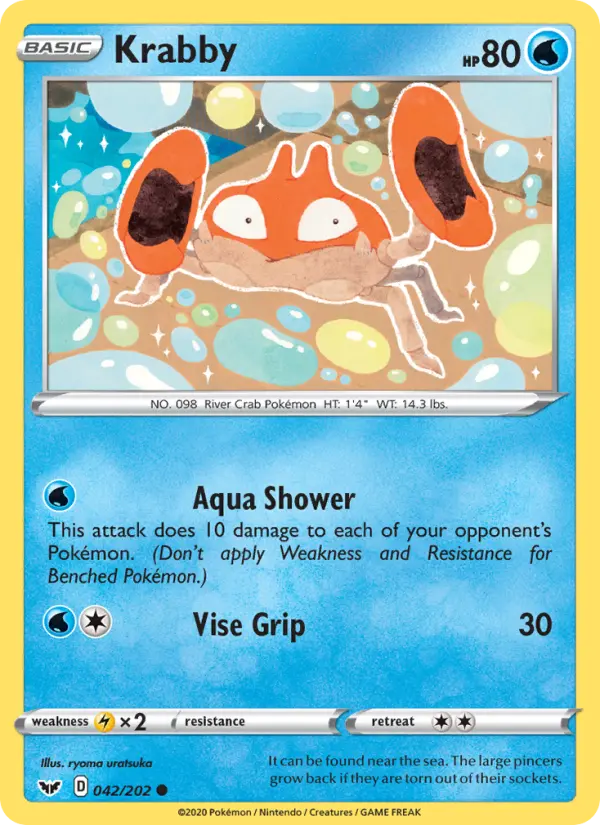
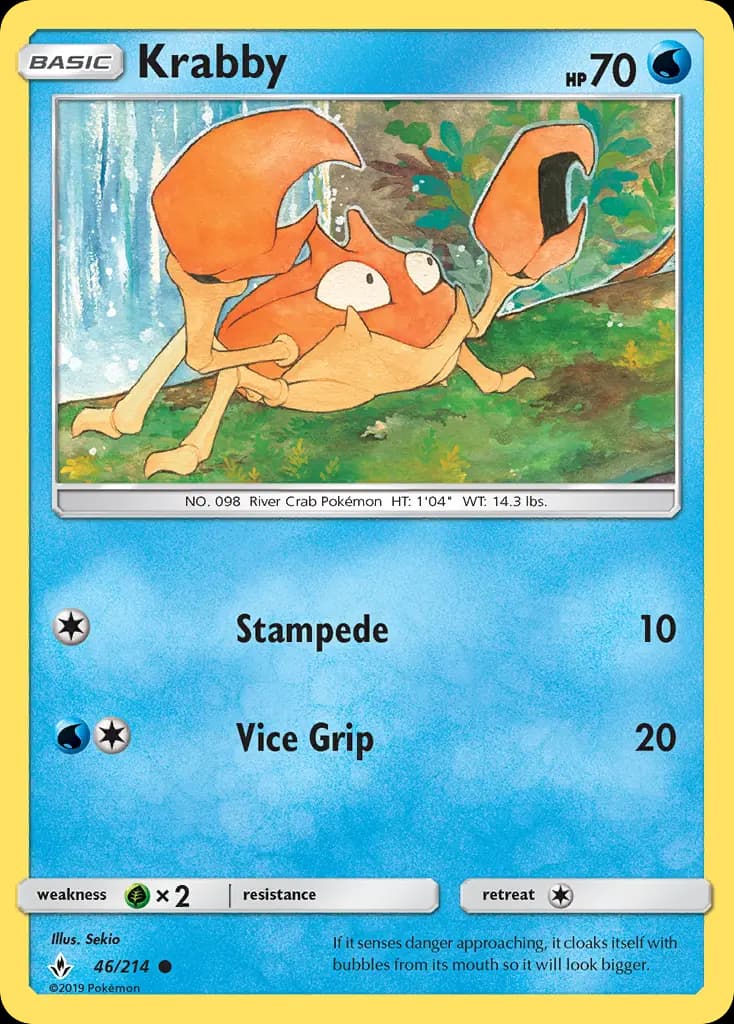
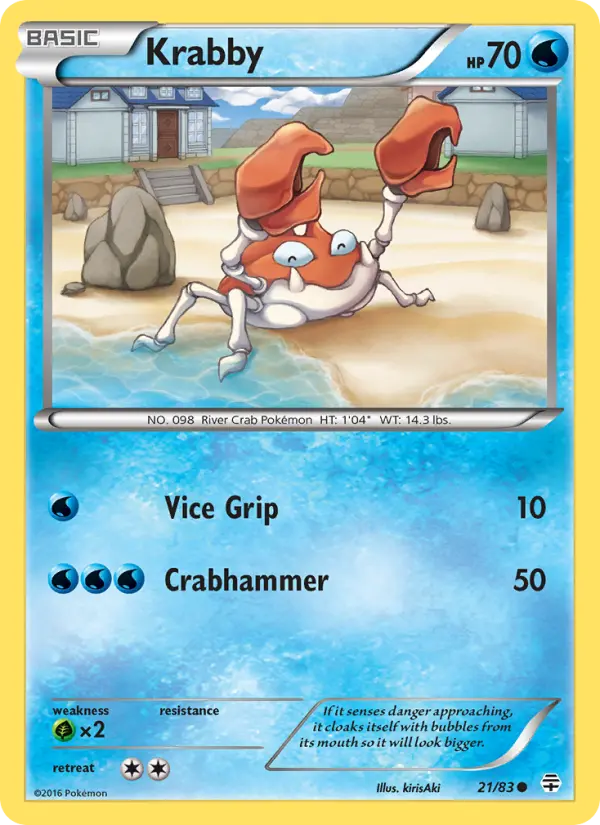
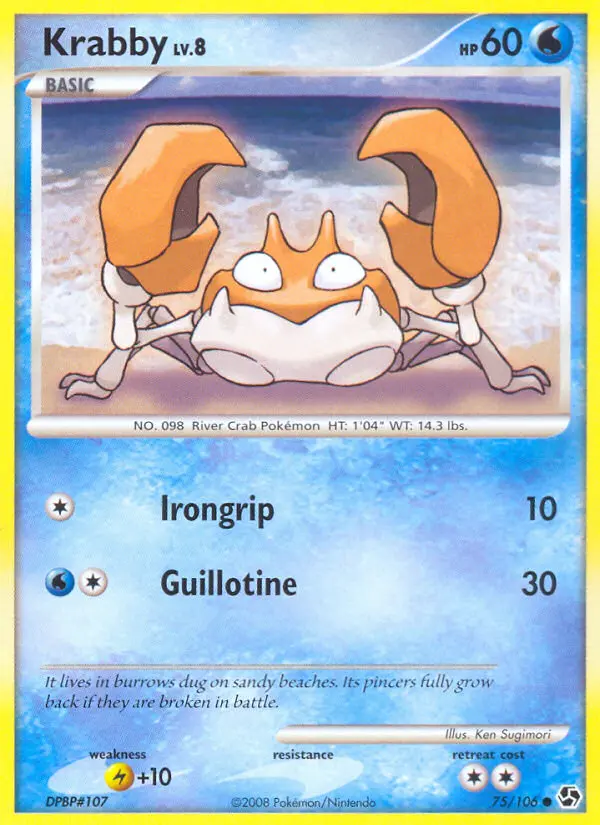
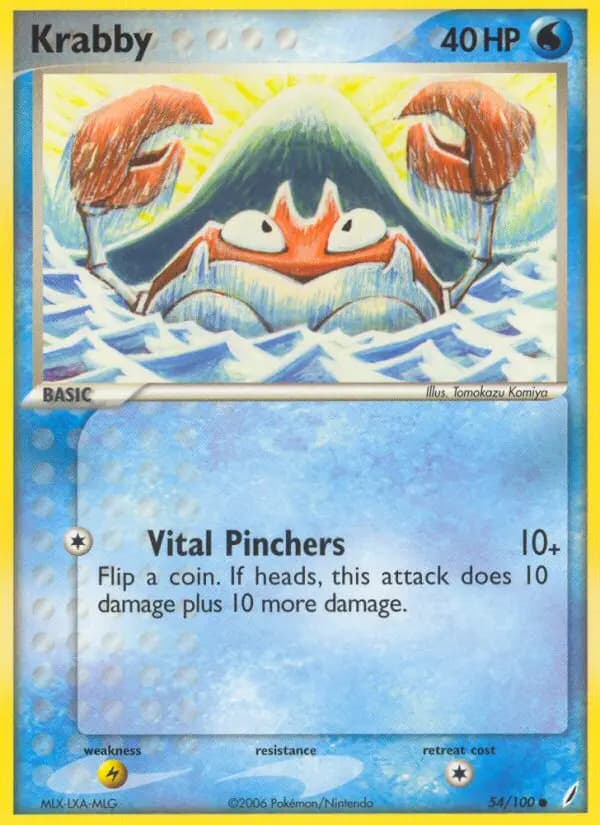
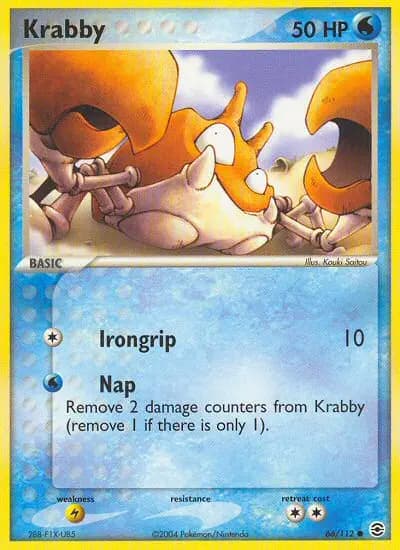
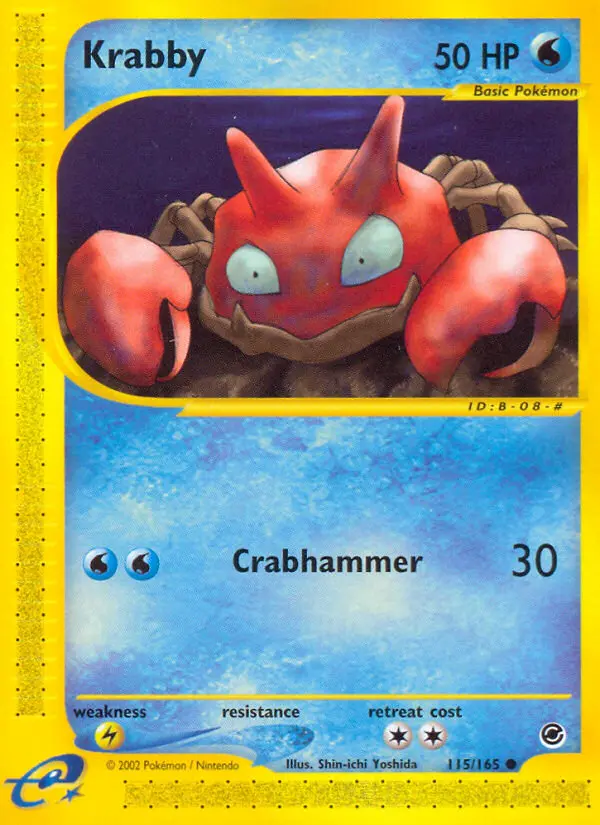
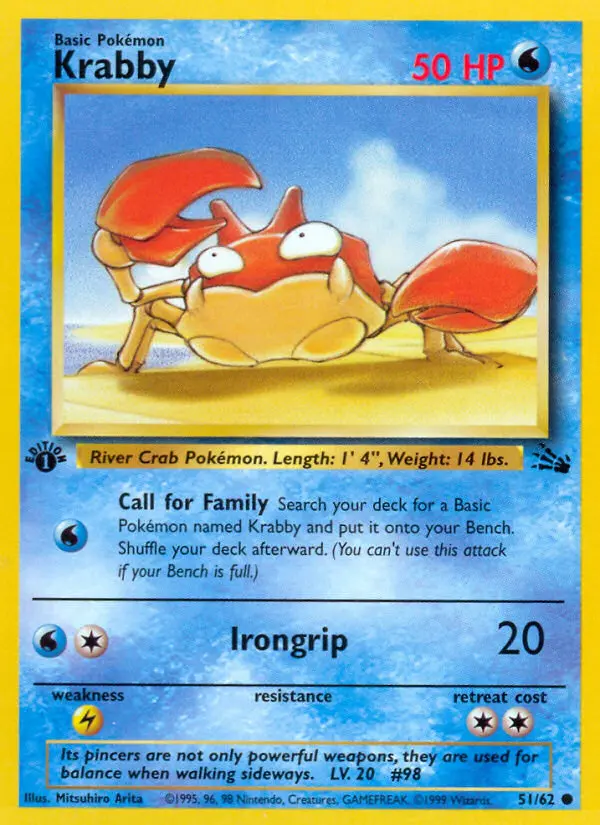
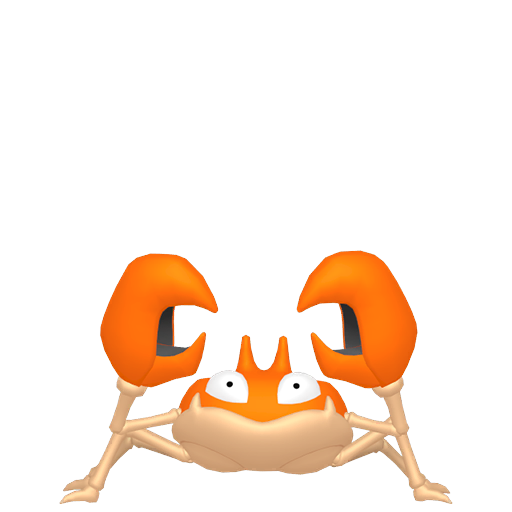
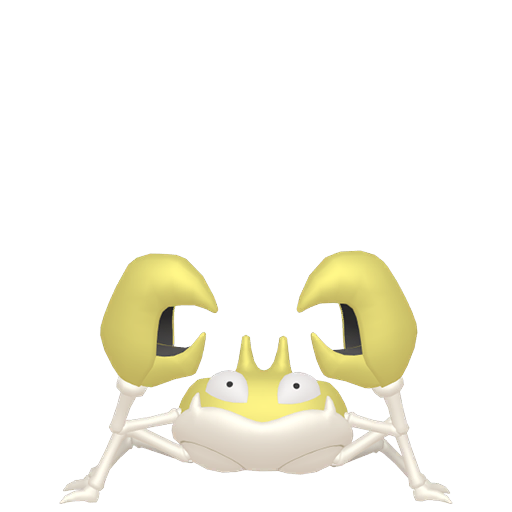
Krabby is a crustacean Pokémon with a distinctive red and light tan coloration that reflects its aquatic nature. The creature's body features a protective outer shell with a red upper half housing two small spikes atop its head and a pair of proportionate eyes. Its most striking features are undoubtedly the two large, powerful red pincers that extend from its arms, which serve as both devastating weapons and essential balance mechanisms for its characteristic sideways locomotion. The lower body transitions to light tan and functions as a jaw with two overlapping fangs, supported by four long, thin legs each ending in a claw-like foot. Remarkably, Krabby possesses a regenerative capability—its pincers can break off during battle or be forcibly removed, yet they regenerate over a relatively short period, allowing the creature to recover from physical trauma that would disable other organisms.
Pokedex Numbers
Training
Breeding
Krabby Breeding, Gender Ratio & Egg Groups
There's no gender skew here: Krabby breeds at an even 50% male / 50% female rate, ensuring balanced breeding potential regardless of which sex a trainer obtains. This species belongs to the Water 3 Egg Group, which includes a diverse array of aquatic and semi-aquatic Pokémon, allowing for strategic breeding combinations with compatible creatures. With a base happiness value of 70 and a hatch counter of 20 cycles, Krabby eggs require moderate time investment to hatch, translating to approximately 4,884 to 5,140 steps of walking while carrying the egg. The relatively high base happiness indicates that Krabby has a naturally friendly disposition, which is reflected in its generally manageable temperament even as a newly-hatched Pokémon. Trainers breeding Krabby can expect consistent results due to its medium growth rate, and the species' availability in various games has made it a reliable choice for breeding projects involving Water 3 group members. The balanced gender ratio also means that trainers have equal opportunity to develop either male or female Krabby based on personal preference or competitive strategy.
Sprites




TMs & HMs
tm01
lets go pikachu lets go eevee
tm02
crystal
tm02
gold silver
tm03
yellow
tm03
crystal
tm03
gold silver
tm03
ruby sapphire
tm03
red blue
tm03
platinum
tm03
firered leafgreen
tm03
heartgold soulsilver
tm03
diamond pearl
tm03
emerald
tm03
xd
tm03
colosseum
tm03
blue japan
tm03
red green japan
tm05
lets go pikachu lets go eevee
tm06
yellow
tm06
gold silver
+583 more TMs/HMs


Krabby Evolution, Mega Evolution & Special Forms
Krabby evolves into Kingler starting at level 28, marking a significant transformation in size, power, and capability. Upon evolution, Kingler gains a substantial increase in all base stats, most notably in Attack, Defense, and HP, resulting in a more balanced and formidable combatant. While Kingler maintains the Water typing of its pre-evolution, it develops enhanced special capabilities and a more imposing physical presence, becoming a fully-fledged threat in competitive and casual play alike. The evolution represents a natural progression from Krabby's juvenile state to its mature form, paralleling the biological development of real crustaceans as they molt and grow larger. This single-stage evolution line makes Krabby an excellent choice for trainers seeking a straightforward developmental path without the complexity of branching evolution chains, and the relatively low level requirement of 28 ensures that players can achieve the evolution during typical early-to-mid game progression.
Where to Find
Fuchsia City
kanto
+5 more
Kanto Route 24
kanto
+10 more
Kanto Safari Zone
kanto
+29 more
Kanto Route 25
kanto
+7 more
Vermilion City
kanto
+24 more
Kanto Route 11
kanto
+14 more
Kanto Route 18
kanto
+5 more
Kanto Route 17
kanto
+5 more
Kanto Route 6
kanto
+9 more
Kanto Route 12
kanto
+12 more
Kanto Route 13
kanto
+12 more
Cerulean City
kanto
+10 more
Seafoam Islands
kanto
+46 more
Kanto Route 10
kanto
+6 more
Johto Sea Route 40
johto
+55 more
Whirl Islands
johto
+132 more
Cianwood City
johto
+57 more
Johto Route 34
johto
+52 more
Dark Cave
johto
Olivine City
johto
+52 more
+32 more locations in other games
Krabby Behaviour and Natural Habitat
Krabby inhabits beaches and the edges of water sources in both freshwater and saltwater environments, where it burrows into the sand to create its home. These Pokémon are territorial creatures that can become quite aggressive when defending their burrows, particularly in areas where food is scarce. According to Pokédex entries, on sandy beaches with limited food sources, Krabby engage in frequent territorial squabbles with one another, displaying competitive and combative behavior toward rivals. When sensing danger, Krabby employs a clever defensive strategy by cloaking itself with bubbles produced from its mouth, creating the illusion of a much larger creature to intimidate potential threats. In times of nutritional scarcity, Krabby demonstrates resourcefulness by swallowing mouthfuls of sand to absorb vital nutrients, allowing it to survive in inhospitable conditions. The creature generally keeps to itself, preferring a solitary existence within its burrow rather than engaging in group behavior.
Pokedex Entries
Its pincers are not only powerful weapons, they are used for balance when walking sideways.
Its pincers are superb weapons. They sometimes break off during battle, but they grow back fast.
If it senses dan ger approaching, it cloaks itself with bubbles from its mouth so it will look bigger.
The pincers break off easily. If it loses a pincer, it somehow becomes incapable of walk ing sideways.
If it is unable to find food, it will absorb nutrients by swallowing a mouthful of sand.
KRABBY live on beaches, burrowed inside holes dug into the sand. On sandy beaches with little in the way of food, these POKéMON can be seen squabbling with each other over territory.
KRABBY live in holes dug into beaches. On sandy shores with little in the way of food, they can be seen squabbling with each other over territory.
It can be found near the sea. The large pincers grow back if they are torn out of their sockets.
Its pincers are not only powerful weapons, they are used for balance when walking sideways.
It lives in burrows dug on sandy beaches. Its pincers fully grow back if they are broken in battle.
If it senses danger approaching, it cloaks itself with bubbles from its mouth so it will look bigger.
The pincers break off easily. If it loses a pincer, it somehow becomes incapable of walking sideways.
It lives in burrows dug on sandy beaches. Its pincers fully grow back if they are broken in battle.
It lives in burrows dug on sandy beaches. Its pincers fully grow back if they are broken in battle.
If it senses danger approaching, it cloaks itself with bubbles from its mouth so it will look bigger.
It can be found near the sea. The large pincers grow back if they are torn out of their sockets.
Krabby live on beaches, burrowed inside holes dug into the sand. On sandy beaches with little in the way of food, these Pokémon can be seen squabbling with each other over territory.
Krabby live on beaches, burrowed inside holes dug into the sand. On sandy beaches with little in the way of food, these Pokémon can be seen squabbling with each other over territory.
Its pincers are superb weapons. They sometimes break off during battle, but they grow back fast.
It can be found near the sea. The large pincers grow back if they are torn out of their sockets.
If it senses danger approaching, it cloaks itself with bubbles from its mouth so it will look bigger.
Krabby Name Origin & Design Inspiration
Krabby's name derives directly from the English word 'crab,' with the Japanese designation 'Crab' (クラブ) making the etymology transparent and straightforward. The design itself is a stylized interpretation of a true crab, incorporating exaggerated anatomical features that emphasize its most dangerous and iconic elements—the oversized pincers and territorial nature. The creature's distinctive red coloration, paired with its tan lower body, creates a visually distinctive silhouette that remains instantly recognizable despite Krabby's relatively simple design. The inclusion of characteristics like the foam-generation ability and regenerative pincers adds layers of biological plausibility while also providing mechanical functions within the games. The sideways walking behavior referenced in multiple Pokédex entries directly mirrors the locomotion of real crabs, grounding the fictional creature in observable natural history. The name's simplicity and the design's clarity exemplify the straightforward approach to Generation I Pokémon design, where creatures typically had obvious real-world inspirations with fantastical enhancements.
Learnable Moves
Krabby can learn 70 moves:
Move | Type | Cat. | Power | Acc. | PP |
|---|---|---|---|---|---|
| agility | psychic | Status | — | — | 30 |
| amnesia | psychic | Status | — | — | 20 |
| ancient power | rock | Special | 60 | 100 | 5 |
| attract | normal | Status | — | 100 | 15 |
| bide | normal | Physical | — | — | 10 |
| blizzard | ice | Special | 110 | 70 | 5 |
| body slam | normal | Physical | 85 | 100 | 15 |
| brick break | fighting | Physical | 75 | 100 | 15 |
| brine | water | Special | 65 | 100 | 10 |
| bubble | water | Special | 40 | 100 | 30 |
| bubble beam | water | Special | 65 | 100 | 20 |
| crabhammer | water | Physical | 100 | 90 | 10 |
| curse | ghost | Status | — | — | 10 |
| cut | normal | Physical | 50 | 95 | 30 |
| dig | ground | Physical | 80 | 100 | 10 |
| dive | water | Physical | 80 | 100 | 10 |
| double team | normal | Status | — | — | 15 |
| double edge | normal | Physical | 120 | 100 | 15 |
| endure | normal | Status | — | — | 10 |
| facade | normal | Physical | 70 | 100 | 20 |
| false swipe | normal | Physical | 40 | 100 | 40 |
| flail | normal | Physical | — | 100 | 15 |
| frustration | normal | Physical | — | 100 | 20 |
| fury cutter | bug | Physical | 40 | 95 | 20 |
| guillotine | normal | Physical | — | 30 | 5 |
| hail | ice | Status | — | — | 10 |
| hammer arm | fighting | Physical | 100 | 90 | 10 |
| harden | normal | Status | — | — | 30 |
| haze | ice | Status | — | — | 30 |
| headbutt | normal | Physical | 70 | 100 | 15 |
| hidden power | normal | Special | 60 | 100 | 15 |
| ice beam | ice | Special | 90 | 100 | 10 |
| icy wind | ice | Special | 55 | 95 | 15 |
| iron defense | steel | Status | — | — | 15 |
| knock off | dark | Physical | 65 | 100 | 20 |
| leer | normal | Status | — | 100 | 30 |
| metal claw | steel | Physical | 50 | 95 | 35 |
| mimic | normal | Status | — | — | 10 |
| mud shot | ground | Special | 55 | 95 | 15 |
| mud sport | ground | Status | — | — | 15 |
| mud slap | ground | Special | 20 | 100 | 10 |
| natural gift | normal | Physical | — | 100 | 15 |
| protect | normal | Status | — | — | 10 |
| rage | normal | Physical | 20 | 100 | 20 |
| rain dance | water | Status | — | — | 5 |
| rest | psychic | Status | — | — | 5 |
| return | normal | Physical | — | 100 | 20 |
| rock slide | rock | Physical | 75 | 90 | 10 |
| rock smash | fighting | Physical | 40 | 100 | 15 |
| rock tomb | rock | Physical | 60 | 95 | 15 |
| secret power | normal | Physical | 70 | 100 | 20 |
| slam | normal | Physical | 80 | 75 | 20 |
| slash | normal | Physical | 70 | 100 | 20 |
| sleep talk | normal | Status | — | — | 10 |
| snore | normal | Special | 50 | 100 | 15 |
| stomp | normal | Physical | 65 | 100 | 20 |
| strength | normal | Physical | 80 | 100 | 15 |
| substitute | normal | Status | — | — | 10 |
| superpower | fighting | Physical | 120 | 100 | 5 |
| surf | water | Special | 90 | 100 | 15 |
| swagger | normal | Status | — | 85 | 15 |
| swords dance | normal | Status | — | — | 20 |
| take down | normal | Physical | 90 | 85 | 20 |
| thief | dark | Physical | 60 | 100 | 25 |
| tickle | normal | Status | — | 100 | 20 |
| toxic | poison | Status | — | 90 | 10 |
| vise grip | normal | Physical | 55 | 100 | 30 |
| water gun | water | Special | 40 | 100 | 25 |
| water pulse | water | Special | 60 | 100 | 20 |
| whirlpool | water | Special | 35 | 85 | 15 |
Krabby Competitive Battle Guide
In competitive Pokémon, Krabby occupies a niche primarily as an early-game physical sweeper, with its exceptional Attack stat of 105 serving as the primary draw for team building. Its two standard abilities, Hyper Cutter and Shell Armor, offer distinct strategic advantages—Hyper Cutter prevents Attack reductions from opposing Pokémon, while Shell Armor eliminates the threat of critical hits, both valuable in maintaining offensive pressure. The hidden ability Sheer Force represents a more specialized option, amplifying moves with secondary effects to 1.3 times their power at the cost of those secondary effects, creating a glass cannon dynamic that rewards careful move selection. With a relatively modest Speed stat of 50 and defensive stats of 90 and 25 in Defense and Special Defense respectively, Krabby struggles against faster opponents and special attackers, necessitating protective support or careful team composition. At higher competitive levels, Krabby rarely sees usage due to Kingler's superior stats and movepool, but in lower-tier formats and early-game focused tournaments, its high Attack and access to physical moves like Crabhammer, Superpower, and Stone Edge provide legitimate offensive threat potential.
Commonly Asked Questions About Krabby
What type is Krabby?
Krabby is a water type Pokemon.
What does Krabby evolve into?
Krabby evolves into kingler.
What are Krabby's weaknesses?
Krabby is weak to grass and electric type moves.
Does Krabby evolve by trading?
No — Krabby evolves entirely through leveling up, with no trade required at any stage.
Where can I find Krabby?
Krabby can be found in fuchsia city (kanto), kanto route 24 (kanto) and kanto safari zone (kanto) and 49 other locations.
Krabby Cultural Impact & Franchise History
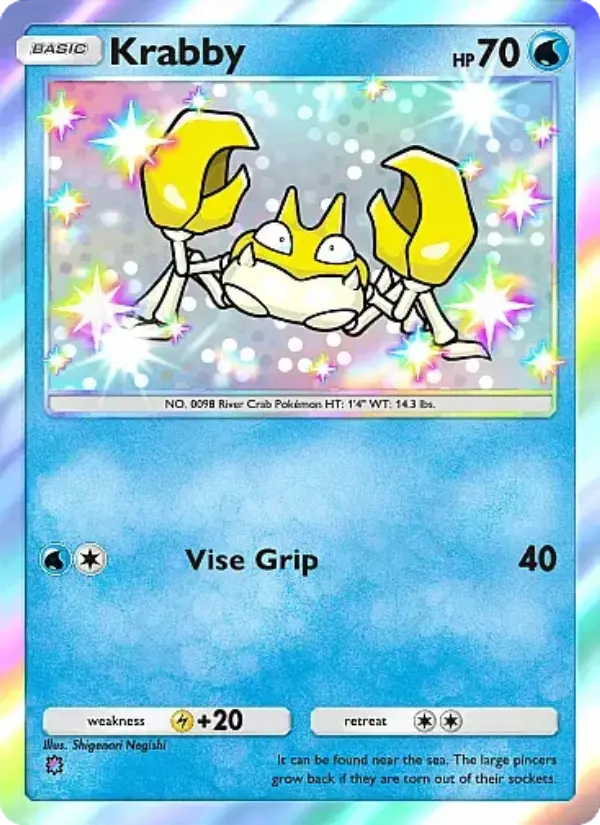
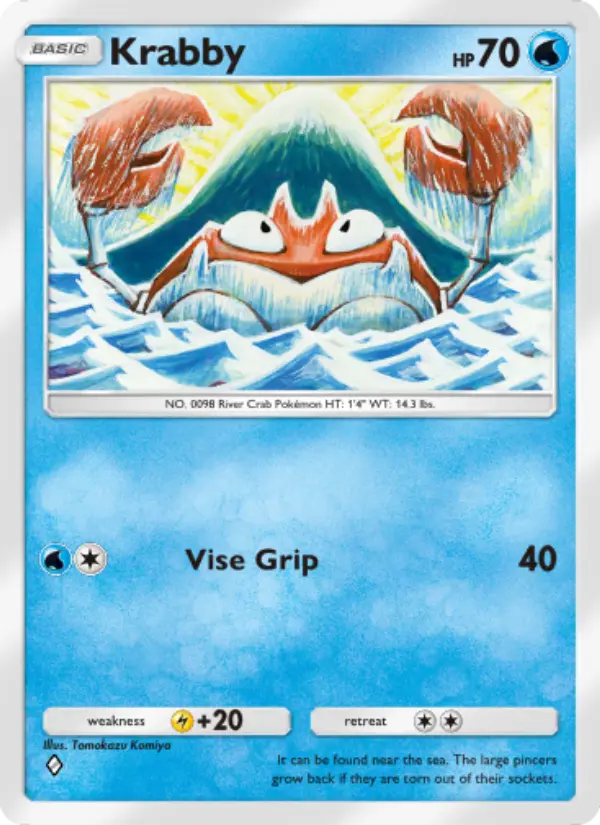
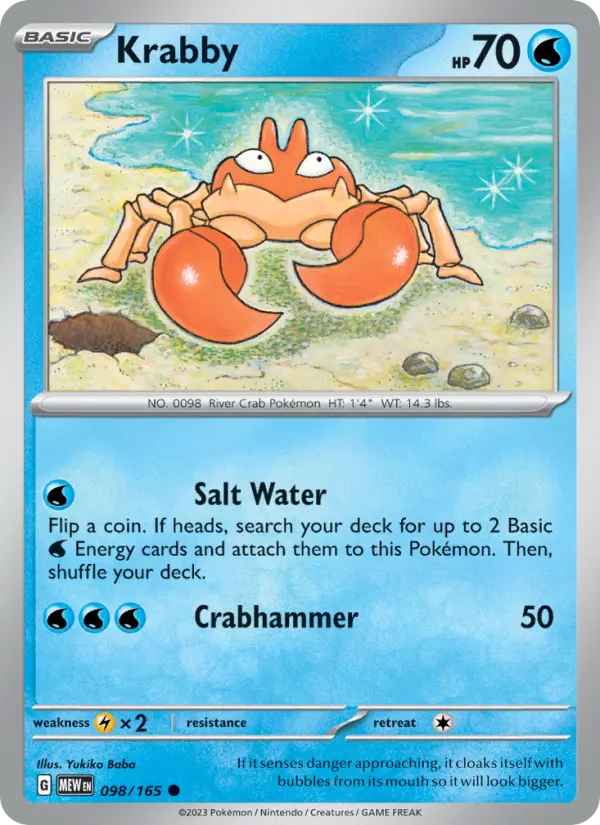
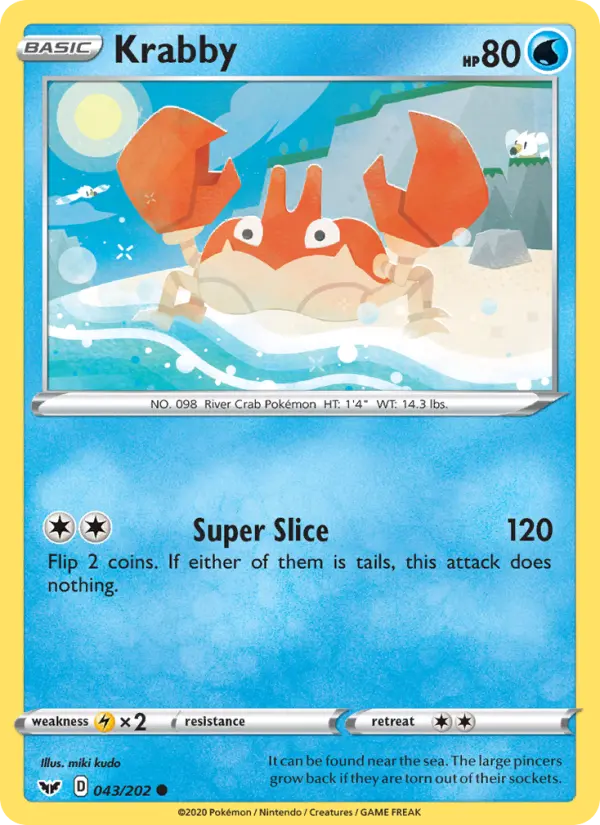
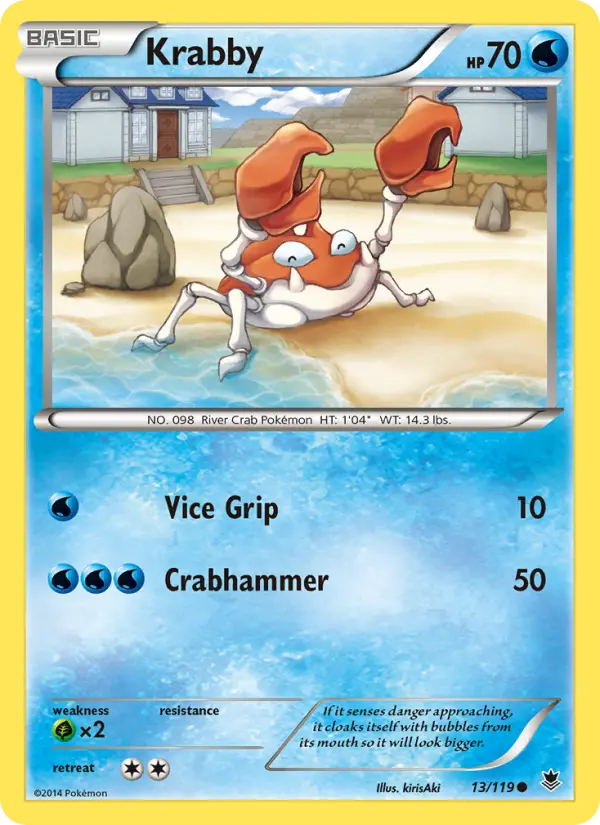
Krabby holds a significant place in Pokémon history as one of the original 151 creatures introduced in Generation I, contributing to the franchise's foundational identity. The species has appeared extensively throughout Pokémon animation, most notably through Ash's Krabby, which played important roles in several memorable episodes and eventually evolved into a competitive Kingler. Its design has become iconic enough to serve as a recognizable symbol of Water-type Pokémon and crustacean creatures within the broader gaming community. The creature's relative simplicity and clear real-world inspiration have made it a favorite subject for fan art and discussion, with its characterful sideways walk and aggressive pincer-wielding personality generating numerous memorable moments in the animated series. Krabby appears across multiple Pokémon trading card game sets and has been featured in various official merchandise, from plushies to collectible figurines, maintaining steady cultural relevance across different media formats. The species' continued availability in contemporary games ensures that new generations of players encounter and potentially develop attachments to Krabby, perpetuating its role as a recognizable and beloved part of the Pokémon franchise legacy.
Where to Find Krabby in Every Pokémon Game
Krabby enjoys wide availability across the Pokémon games, being accessible to players in nearly every mainline title since Generation I. In the original Red and Blue versions, Krabby can be found along coastal areas and in water routes, establishing its presence in the foundational Kanto region. The species maintains consistent availability in subsequent generations, appearing in body of water locations throughout Johto, Hoenn, Sinnoh, Unova, Kalos, and beyond, with specific encounter locations varying by generation. In more recent titles like Pokémon Sword and Shield, Krabby appears in appropriate water-based areas, including specific locations within the Isle of Armor expansion. The relatively high capture rate of 225 makes encountering and catching Krabby straightforward for most players, and its early availability in many games ensures that trainers can add it to their team during the opening hours of gameplay. Additionally, Krabby is regularly distributed through Pokémon Mystery Gift events and special distributions, providing alternative acquisition methods for players who may not encounter wild specimens in their version. The species' widespread availability, combined with its straightforward evolution path and competitive viability at lower levels, has made it a consistently reliable option for casual and semi-competitive trainers across the entire Pokémon franchise.