Omanyte
Generation I · #0138 — Spiral Pokémon
Omanyte's rock/water typing gets most of the attention, but swift swim is doing just as much work in how it holds up in practice.
Editor's Take
Omanyte's Shell Smash on a Pokémon with 85 base Special Attack turns a fossil curiosity into a genuine sweeper, and it is by far the better of the two Gen 1 fossils.
Base Stats
Height
0.4m
Weight
7.5kg
Category
Spiral Pokémon
Gender
Male 87.5% / Female 12.5%
Color
blue
Shape
tentacles
Habitat
sea
Abilities
Doubles Speed during rain.
Protects against critical hits.
Raises Speed and lowers Defense by one stage each upon being hit by a physical move.

Omanyte Biology & Physical Characteristics
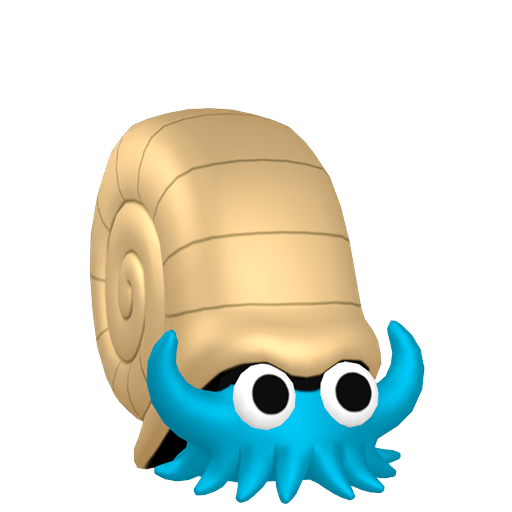
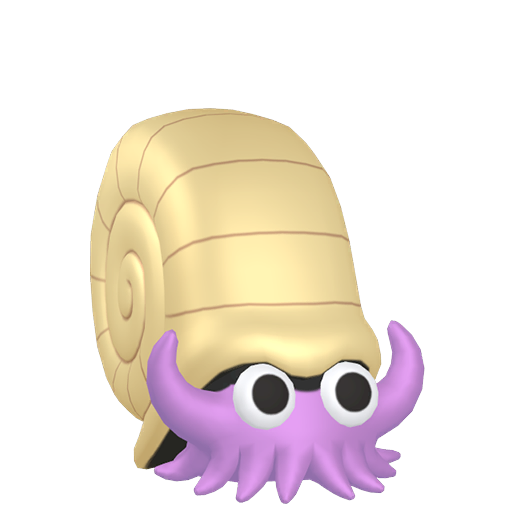
Omanyte is a small cephalopod mollusk Pokémon bearing remarkable resemblance to ancient ammonites and nautiluses that inhabited Earth's prehistoric oceans. Its body measures just 0.4 meters in height and weighs a mere 7.5 kilograms, making it one of the more diminutive aquatic Pokémon despite its ancient origins. The creature features a distinctive sky-blue body equipped with ten dexterous tentacles that it uses for precise movement and manipulation of its environment. Crowning this compact form is a pale yellow shell with an intricate helix spiral pattern, rimmed with two prominent circular indents that frame its large, saucer-like eyes—organs that allowed it to navigate the murky ancient seas with remarkable precision. According to fossil evidence and Pokédex records, Omanyte maintained its buoyancy through an ingenious biological mechanism: storing and releasing air within its shell allowed it to sink and rise through the water column, while the coordinated twisting of its ten tentacles provided directional control and propulsion. Fossil analysis reveals that Omanyte was a planktivore, feeding on microscopic organisms suspended in the prehistoric oceans, though it faced formidable predators including the fierce Archeops, which left distinctive bite marks on recovered fossils.
Pokedex Numbers
Training
Breeding
Omanyte Breeding, Gender Ratio & Egg Groups
Omanyte exhibits a heavily male-skewed gender ratio, with approximately 87.5 percent of wild specimens being male while only 12.5 percent present as female, a characteristic shared with several other water-type fossil Pokémon. This significant gender imbalance likely reflects the biological realities of many mollusks and cephalopods in nature, though it creates practical breeding challenges for trainers seeking to propagate the species. Despite the apparent rarity of female Omanyte, successful breeding programs have been established, with the species belonging to both the Water 1 and Water 3 egg groups, allowing for diverse breeding compatibility with numerous aquatic and amphibious Pokémon. The species maintains a base friendship value of 70, indicating moderate receptiveness to trainer bonding and breeding cooperation. Omanyte offspring require approximately 30 egg cycles to hatch, translating to roughly 7,454 to 7,710 steps, making the species moderately accessible for dedicated breeders. The dual egg group membership provides strategic flexibility for breeders seeking specific move combinations or competitive attributes, as Omanyte can be crossed with different compatible species to produce offspring with inherited moves and abilities.
Sprites




TMs & HMs
tm01
lets go pikachu lets go eevee
tm02
crystal
tm02
gold silver
tm03
crystal
tm03
gold silver
tm04
gold silver
tm04
crystal
tm05
lets go pikachu lets go eevee
tm06
yellow
tm06
gold silver
tm06
red blue
tm06
crystal
tm06
emerald
tm06
firered leafgreen
tm06
diamond pearl
tm06
platinum
tm06
ruby sapphire
tm06
colosseum
tm06
black 2 white 2
tm06
xd
+589 more TMs/HMs
Omanyte's Evolution Chain


Omanyte Evolution, Mega Evolution & Special Forms
Omanyte undergoes a straightforward evolutionary transformation into Omastar upon reaching level 40, a milestone that marks a dramatic increase in combat capability and physical development. This evolution sees the diminutive spiral Pokémon transform into a significantly larger and more powerful form, with Omastar developing enhanced physical attributes particularly in special attack and overall bulk. The evolution process represents more than mere physical growth; it reflects the maturation of Omanyte's biological systems, allowing the evolved form to access a considerably expanded movepool and exhibit behaviors more befitting an apex predator. No Mega Evolution or regional variants of Omanyte exist, keeping the species' evolutionary line relatively straightforward compared to some of its contemporary fossil Pokémon. The level 40 evolution threshold is relatively accessible to most trainers, making Omanyte a reliable stepping stone to obtaining a potent water-type ally relatively early in gameplay progression. The transition from Omanyte to Omastar exemplifies how restoration technology has allowed these ancient creatures to continue their natural developmental cycles despite millions of years of extinction.
Where to Find
Cinnabar Island
kanto
+6 more
Alola Route 8
alola
Omanyte Behaviour and Natural Habitat
In its natural prehistoric state, Omanyte inhabited the seabeds of ancient oceans, where it would glide along the seafloor in search of plankton-rich currents. The species demonstrated remarkable behavioral adaptability, as evidenced by its ability to rapidly retreat into its hardened shell when threatened by predators, a defensive mechanism that remains relevant in modern interactions. Modern Omanyte, whether restored from fossils or born to previously resurrected specimens, display similar behavioral patterns despite millions of years of separation from their natural environment. These creatures prefer aquatic environments, thriving in both saltwater and freshwater conditions, though populations now exist in locations far removed from the ancient oceans where their species evolved. Omanyte exhibits a somewhat timid temperament, quickly withdrawing into its protective shell when faced with aggression or environmental disturbances. Interestingly, the species has become somewhat problematic in certain ecosystems due to the proliferation of restored specimens and their escaped descendants, which have established wild populations and begun competing with native aquatic Pokémon for ecological niches. The species shows a base happiness value of 70, suggesting moderate sociability when properly cared for by trainers.
Pokedex Entries
Although long extinct, in rare cases, it can be genetically resurrected from fossils.
An ancient POKéMON that was recovered from a fossil. It swims by cleverly twisting its 10 tentacles about.
Revived from an ancient fossil, this POKéMON uses air stored in its shell to sink and rise in water.
This POKéMON from ancient times is said to have navi gated the sea by adeptly twisting its 10 tentacles.
In prehistoric times, it swam on the sea floor, eating plankton. Its fossils are sometimes found.
OMANYTE is one of the ancient and long- since-extinct POKéMON that have been regenerated from fossils by people. If attacked by an enemy, it withdraws itself inside its hard shell.
One of the ancient and long-since-extinct POKéMON that have been regenerated from fossils by humans. If attacked, it withdraws into its hard shell.
A prehistoric POKéMON that lived in the primordial sea, it swims by twisting its 10 tentacles about.
Although long extinct, in rare cases, it can be genetically regenerated from fossils.
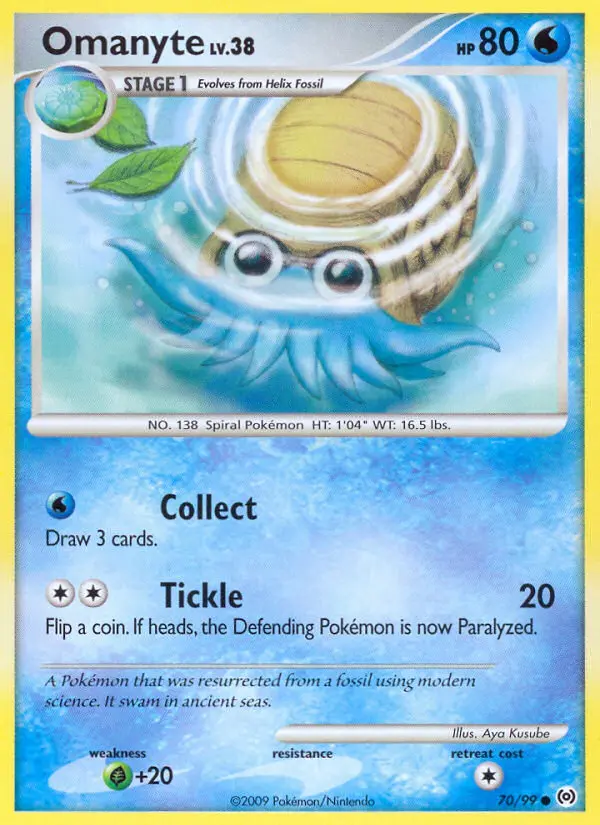
A Pokémon that was resurrected from a fossil using modern science. It swam in ancient seas.
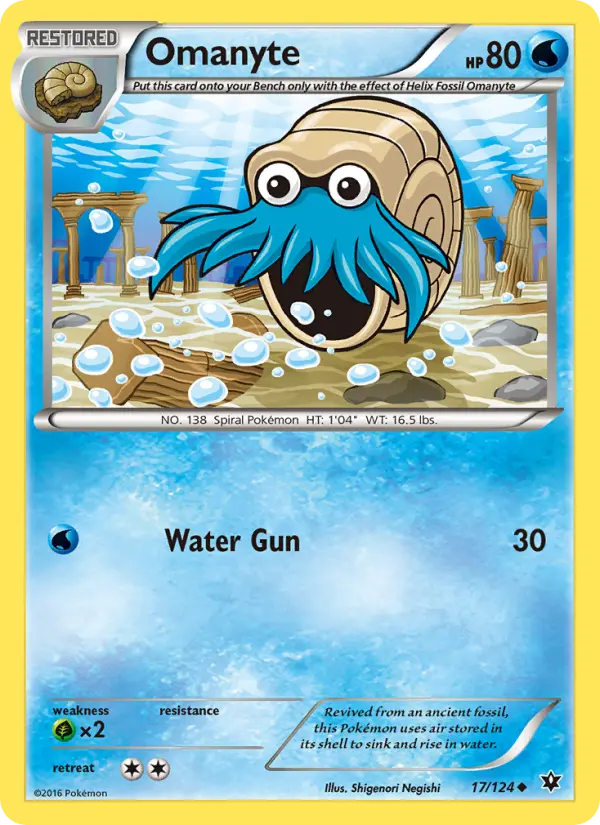
Revived from an ancient fossil, this Pokémon uses air stored in its shell to sink and rise in water.
This Pokémon from ancient times is said to have navigated the sea by adeptly twisting its 10 tentacles.
A Pokémon that was resurrected from a fossil using modern science. It swam in ancient seas.
A Pokémon that was resurrected from a fossil using modern science. It swam in ancient seas.
A prehistoric Pokémon that lived in the primordial sea, it swims by twisting its 10 tentacles about.
Revived from an ancient fossil, this Pokémon uses air stored in its shell to sink and rise in water.
Omanyte is one of the ancient and long-since-extinct Pokémon that have been regenerated from fossils by people. If attacked by an enemy, it withdraws itself inside its hard shell.
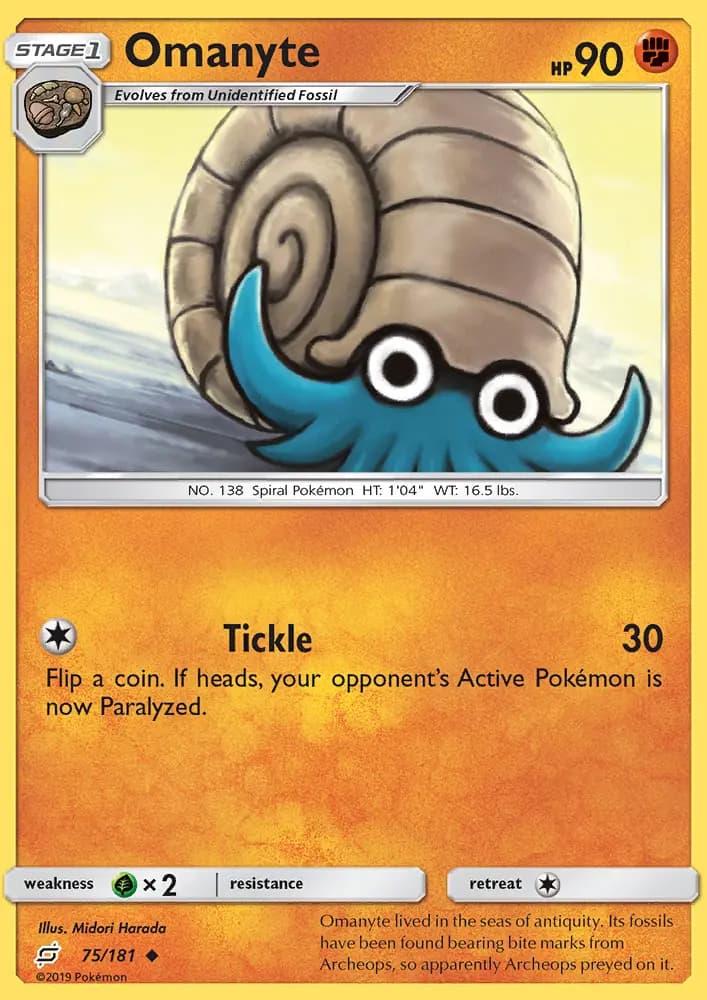
Omanyte lived in the seas of antiquity. Its fossils have been found bearing bite marks from Archeops, so apparently Archeops preyed on it.
It was restored from an ancient fossil. Those Helix Fossils are excavated from areas that were once oceans long, long ago.
An ancient Pokémon that was recovered from a fossil. It swam by cleverly twisting its 10 tentacles about.
Because some Omanyte manage to escape after being restored or are released into the wild by people, this species is becoming a problem.
This Pokémon is a member of an ancient, extinct species. Omanyte paddles through water with its 10 tentacles, looking like it’s just drifting along.
Omanyte Name Origin & Design Inspiration
The name "Omanyte" derives from a clever portmanteau of "omni" (all-encompassing) and "nautiloid" (referring to the nautilus class of cephalopods), perfectly encapsulating the creature's biological nature as a universal ancient mollusk. In Japanese, it is called "オムナイト" (Omnite), following the same etymological pattern with "omni" combined with "nautile." The design philosophy behind Omanyte draws heavily from real-world ammonites and nautiluses, marine cephalopods that dominated prehistoric oceans before their extinction. The distinctive helix spiral shell is directly inspired by ammonoid fossils, one of nature's most aesthetically remarkable structures, while the ten tentacles reflect the anatomical accuracy of cephalopod morphology. The color scheme of sky-blue body with pale yellow spiral shell was deliberately chosen to evoke the appearance of fossilized remains and the contrast between preserved organic material and mineralized shell composition. The designation "Spiral Pokémon" as its genus name emphasizes the most visually striking aspect of its design, making it immediately identifiable and memorable. This thoughtful integration of paleontological science with creative creature design established Omanyte as an exemplar of how Pokémon could authentically represent prehistoric life while maintaining an appealing and distinctive visual identity.
Learnable Moves
Omanyte can learn 78 moves:
Move | Type | Cat. | Power | Acc. | PP |
|---|---|---|---|---|---|
| ancient power | rock | Special | 60 | 100 | 5 |
| attract | normal | Status | — | 100 | 15 |
| aurora beam | ice | Special | 65 | 100 | 20 |
| bide | normal | Physical | — | — | 10 |
| bind | normal | Physical | 15 | 85 | 20 |
| bite | dark | Physical | 60 | 100 | 25 |
| blizzard | ice | Special | 110 | 70 | 5 |
| body slam | normal | Physical | 85 | 100 | 15 |
| brine | water | Special | 65 | 100 | 10 |
| bubble beam | water | Special | 65 | 100 | 20 |
| captivate | normal | Status | — | 100 | 20 |
| confide | normal | Status | — | — | 20 |
| constrict | normal | Physical | 10 | 100 | 35 |
| curse | ghost | Status | — | — | 10 |
| dive | water | Physical | 80 | 100 | 10 |
| double team | normal | Status | — | — | 15 |
| double edge | normal | Physical | 120 | 100 | 15 |
| earth power | ground | Special | 90 | 100 | 10 |
| endure | normal | Status | — | — | 10 |
| facade | normal | Physical | 70 | 100 | 20 |
| frustration | normal | Physical | — | 100 | 20 |
| hail | ice | Status | — | — | 10 |
| haze | ice | Status | — | — | 30 |
| headbutt | normal | Physical | 70 | 100 | 15 |
| hidden power | normal | Special | 60 | 100 | 15 |
| horn attack | normal | Physical | 65 | 100 | 25 |
| hydro pump | water | Special | 110 | 80 | 5 |
| ice beam | ice | Special | 90 | 100 | 10 |
| icy wind | ice | Special | 55 | 95 | 15 |
| iron defense | steel | Status | — | — | 15 |
| knock off | dark | Physical | 65 | 100 | 20 |
| leer | normal | Status | — | 100 | 30 |
| meteor beam | rock | Special | 120 | 90 | 10 |
| mimic | normal | Status | — | — | 10 |
| mud shot | ground | Special | 55 | 95 | 15 |
| muddy water | water | Special | 90 | 85 | 10 |
| natural gift | normal | Physical | — | 100 | 15 |
| protect | normal | Status | — | — | 10 |
| rage | normal | Physical | 20 | 100 | 20 |
| rain dance | water | Status | — | — | 5 |
| reflect | psychic | Status | — | — | 20 |
| reflect type | normal | Status | — | — | 15 |
| rest | psychic | Status | — | — | 5 |
| return | normal | Physical | — | 100 | 20 |
| rock blast | rock | Physical | 25 | 90 | 10 |
| rock polish | rock | Status | — | — | 20 |
| rock slide | rock | Physical | 75 | 90 | 10 |
| rock smash | fighting | Physical | 40 | 100 | 15 |
| rock throw | rock | Physical | 50 | 90 | 15 |
| rock tomb | rock | Physical | 60 | 95 | 15 |
| rollout | rock | Physical | 30 | 90 | 20 |
| round | normal | Special | 60 | 100 | 15 |
| sand attack | ground | Status | — | 100 | 15 |
| sandstorm | rock | Status | — | — | 10 |
| scald | water | Special | 80 | 100 | 15 |
| secret power | normal | Physical | 70 | 100 | 20 |
| shell smash | normal | Status | — | — | 15 |
| slam | normal | Physical | 80 | 75 | 20 |
| sleep talk | normal | Status | — | — | 10 |
| smack down | rock | Physical | 50 | 100 | 15 |
| snore | normal | Special | 50 | 100 | 15 |
| spike cannon | normal | Physical | 20 | 100 | 15 |
| spikes | ground | Status | — | — | 20 |
| stealth rock | rock | Status | — | — | 20 |
| substitute | normal | Status | — | — | 10 |
| supersonic | normal | Status | — | 55 | 20 |
| surf | water | Special | 90 | 100 | 15 |
| swagger | normal | Status | — | 85 | 15 |
| take down | normal | Physical | 90 | 85 | 20 |
| thief | dark | Physical | 60 | 100 | 25 |
| tickle | normal | Status | — | 100 | 20 |
| toxic | poison | Status | — | 90 | 10 |
| toxic spikes | poison | Status | — | — | 20 |
| water gun | water | Special | 40 | 100 | 25 |
| waterfall | water | Physical | 80 | 100 | 15 |
| whirlpool | water | Special | 35 | 85 | 15 |
| withdraw | water | Status | — | — | 40 |
| wring out | normal | Special | — | 100 | 5 |
Omanyte Competitive Battle Guide
Judged by competitive standards, Omanyte occupies a niche position as a relatively bulky special attacker with exceptional defensive capabilities in one stat but vulnerability in others. Its base Defense stat of 100 stands as its most impressive attribute, providing substantial physical bulk, while its Special Attack reaches a respectable 90, allowing it to function as a competent offensive threat. However, its HP of 35 and Speed of 35 represent significant liabilities, requiring careful team support and strategic movepool selection to maximize effectiveness. The species has access to three distinct abilities: Swift Swim, which doubles its Speed during rain and transforms it into a formidable sweeper under weather support; Shell Armor, which eliminates critical hit vulnerability and provides consistent survivability; and the hidden ability Weak Armor, which increases Speed while decreasing Defense upon taking physical attacks, creating an interesting risk-reward dynamic. Competitively viable movesets typically leverage Omanyte's special attack prowess with moves like Hydro Pump, Ancient Power, and Ice Beam, while defensive sets incorporate utility moves such as Toxic Spikes and Reflect. The introduction of rain-based team synergies, particularly with Pokémon like Kyogre or weather-setters, can elevate Omanyte to surprising relevance in competitive formats, though it remains overshadowed by its evolution Omastar in most professional contexts. Omanyte's role is typically as a specialized team component rather than a standalone threat, best utilized in rain-centric strategies or double battle formats where its unique characteristics can be maximized.
Commonly Asked Questions About Omanyte
What type is Omanyte?
Omanyte is a rock and water type Pokemon.
What does Omanyte evolve into?
Omanyte evolves into omastar.
What are Omanyte's weaknesses?
Omanyte is weak to fighting, ground, grass and electric type moves.
Does Omanyte evolve by trading?
No — Omanyte evolves entirely through leveling up, with no trade required at any stage.
Where can I find Omanyte?
Omanyte can be found in cinnabar island (kanto) and alola route 8 (alola).
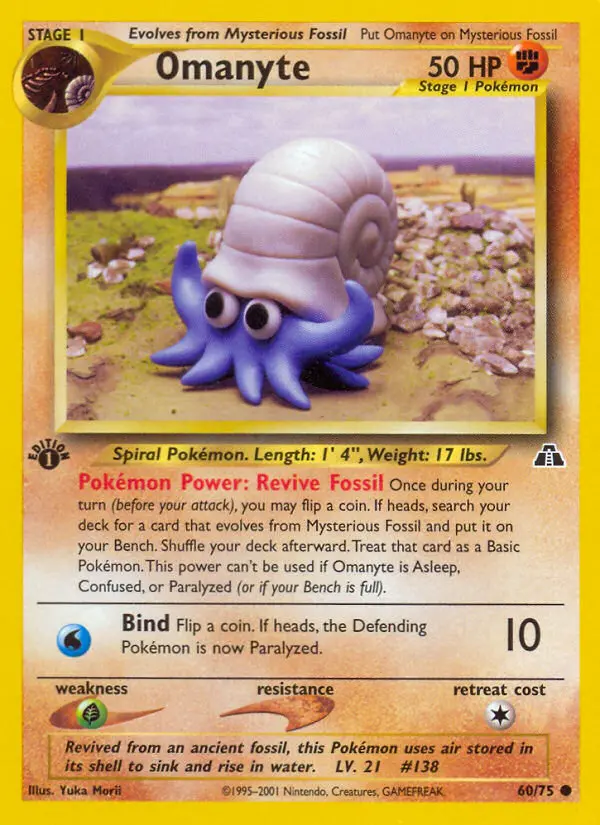
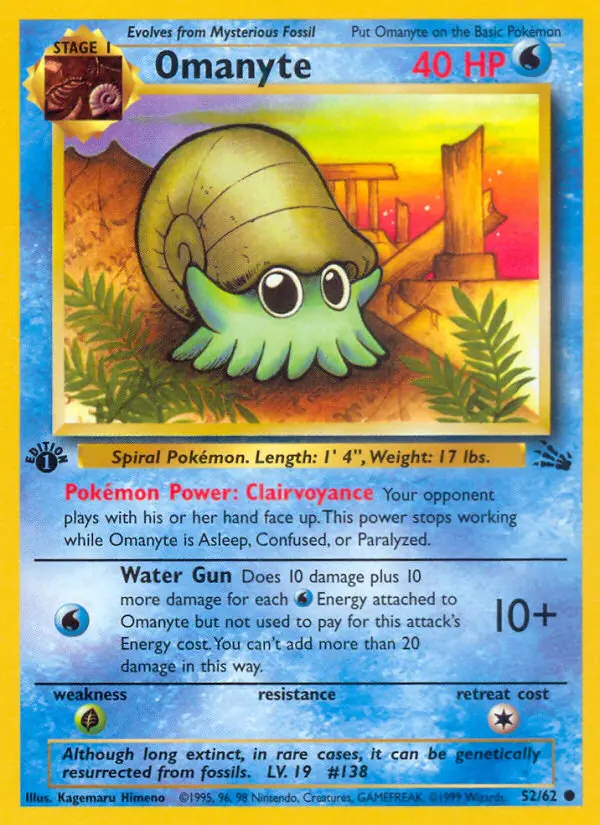
Omanyte Cultural Impact & Franchise History
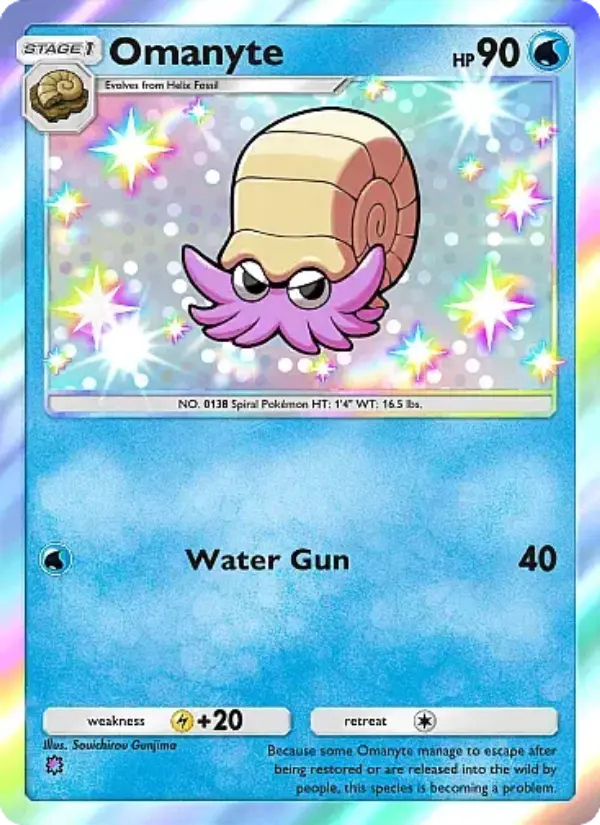
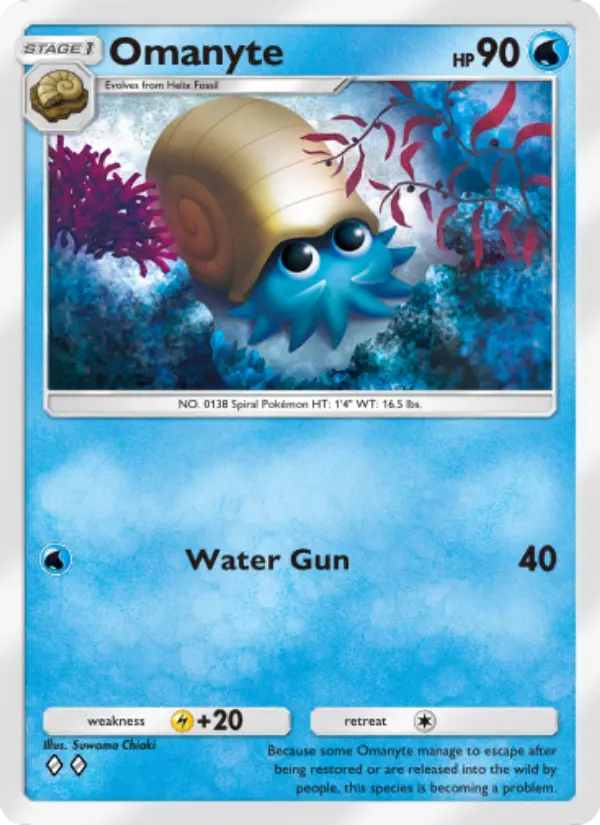
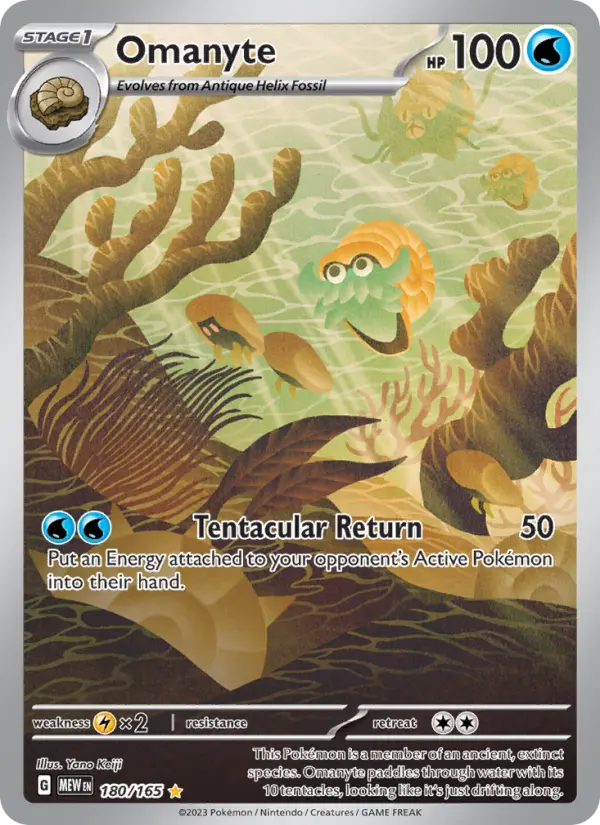
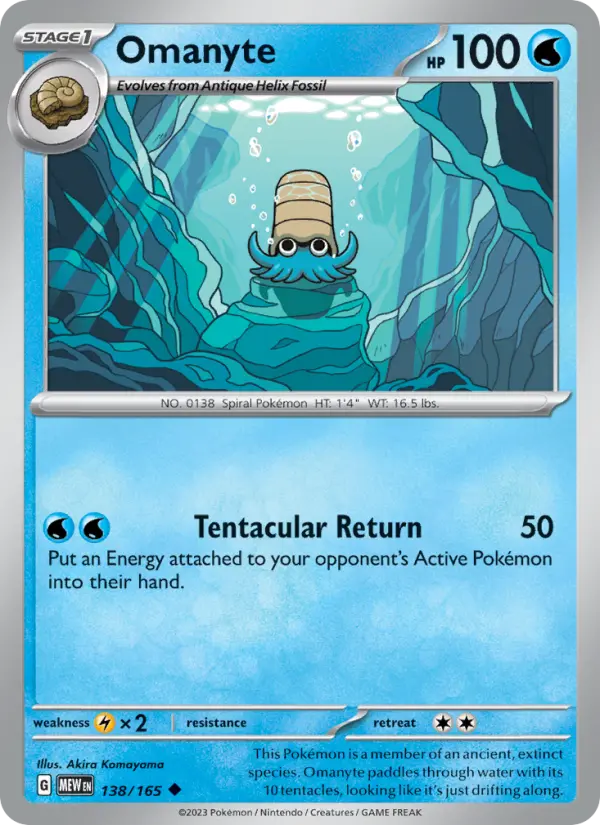
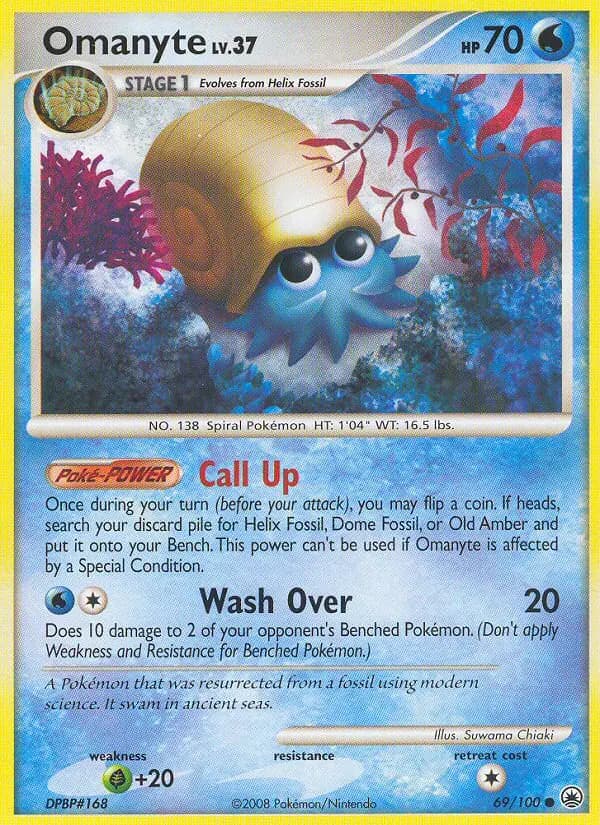
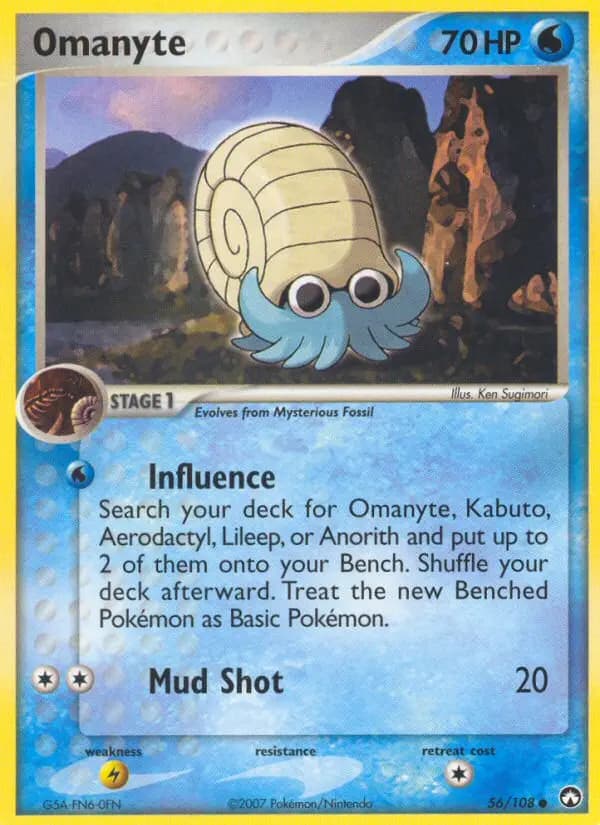
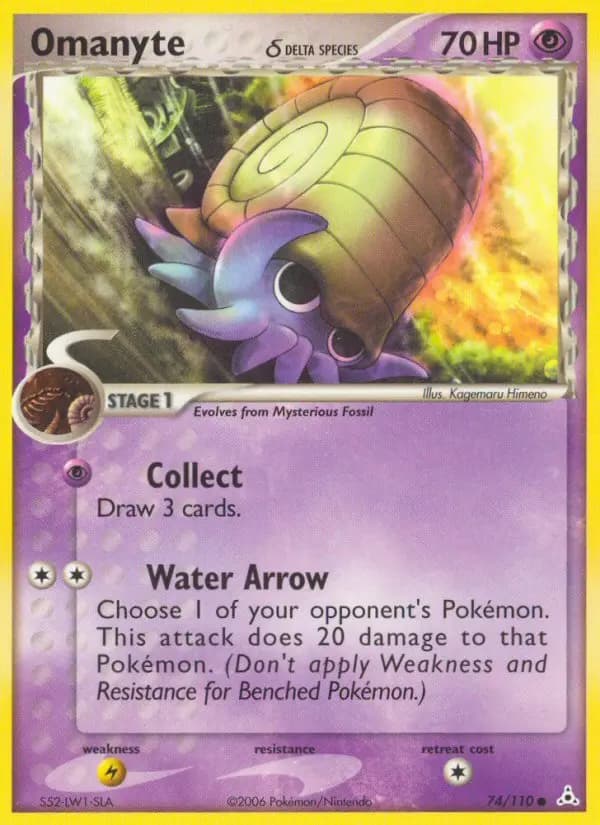
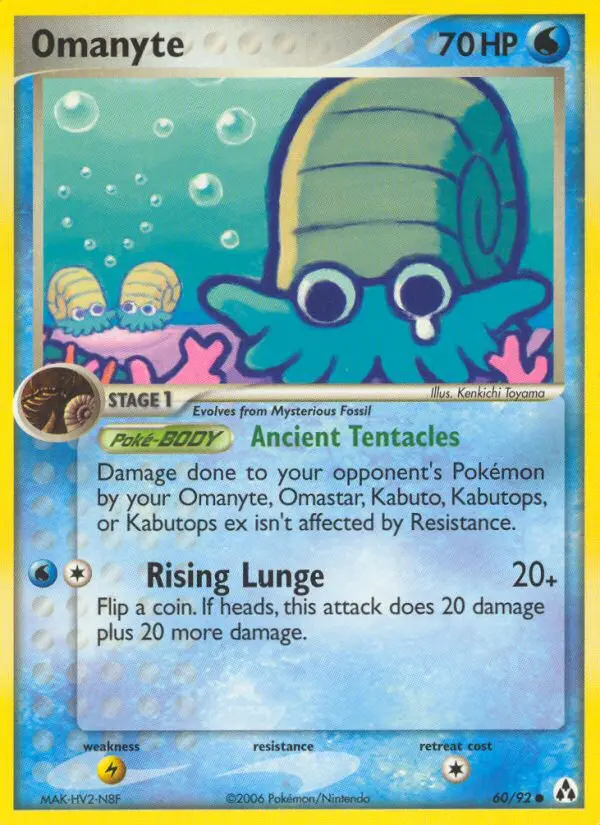
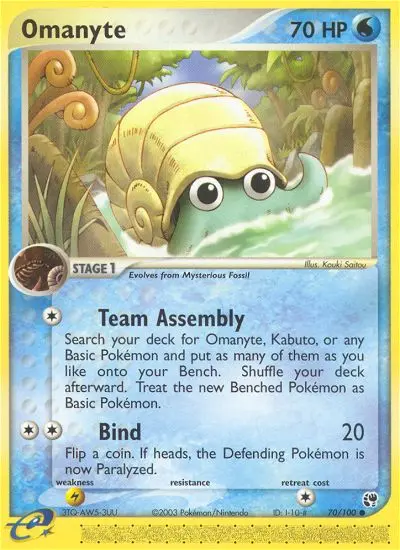
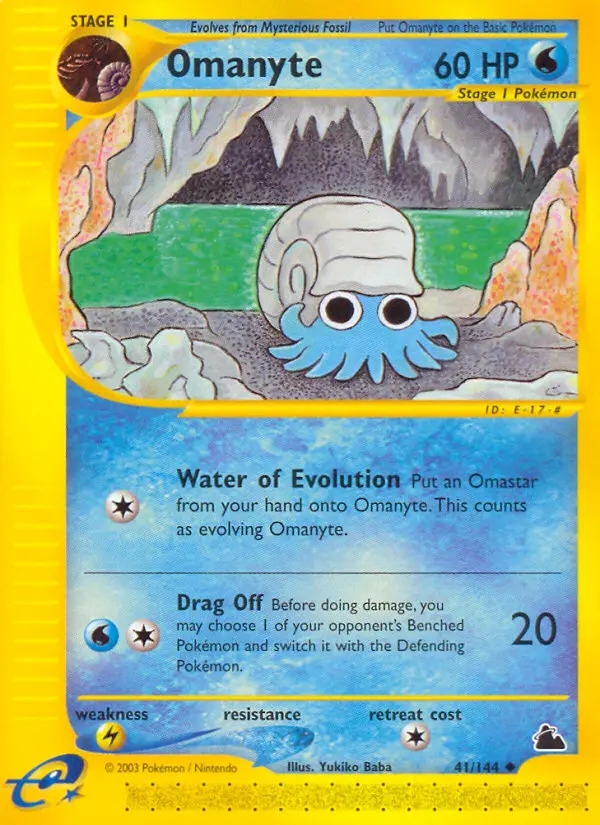
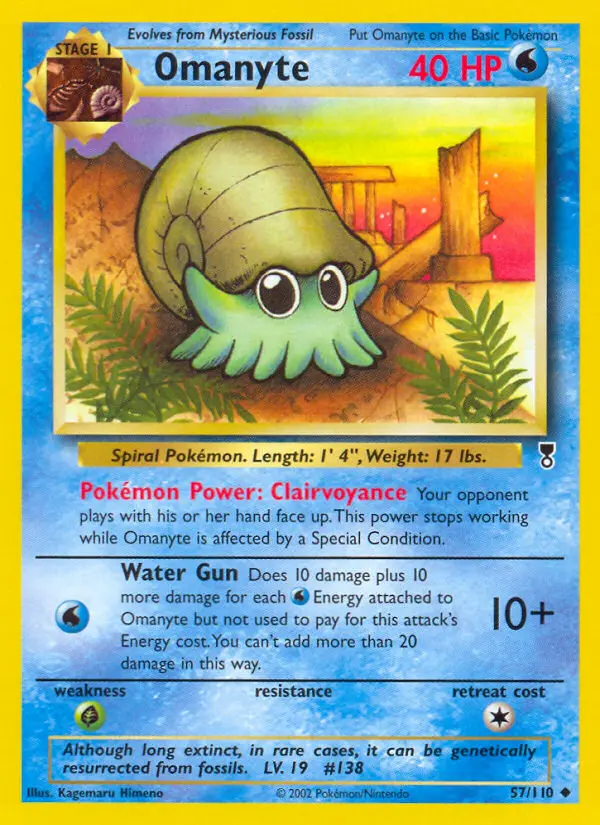
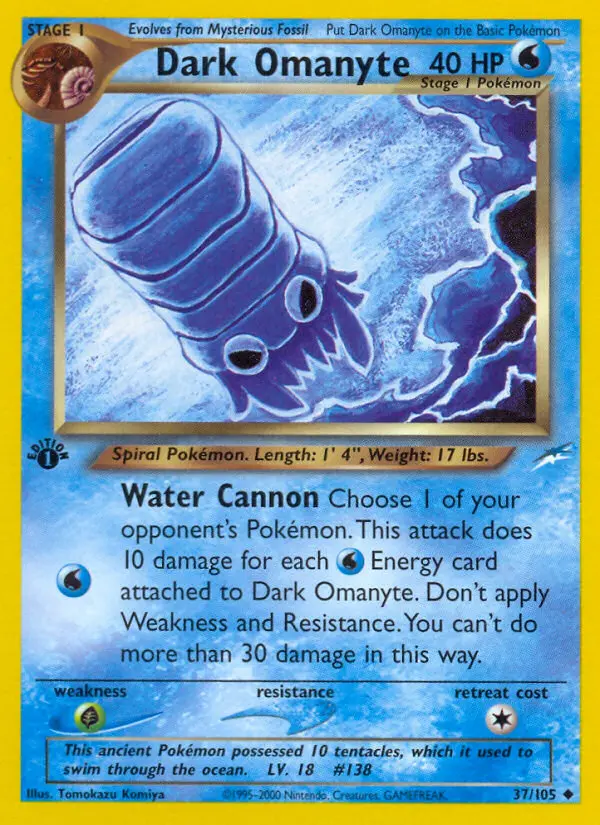
Omanyte holds a special place in Pokémon lore as one of the original fossil Pokémon introduced in Generation I, establishing the entire concept of resurrecting prehistoric creatures from fossils—a mechanic that would become iconic to the franchise. The discovery that Omanyte could be restored from Helix Fossils fundamentally altered the narrative possibilities within the Pokémon world, introducing players to paleontological themes and the philosophical implications of resurrection technology. In the Pokémon animated series, Omanyte and its evolutionary line have appeared in various episodes, contributing to the show's world-building and demonstrating how ancient Pokémon adapt to modern environments. The species has maintained consistent cultural relevance through multiple game generations, appearing prominently in the Pokédex entries with poetic descriptions of its ancient lifestyle and predator-prey relationships with Archeops. Trading card game representations of Omanyte have featured consistently since the original Base Set, with various artwork styles showcasing different interpretations of the spiral Pokémon, from scientifically accurate depictions to more stylized portrayals. The fossil resurrection mechanic that Omanyte exemplifies has spawned countless fan theories and discussions about the ethics of resurrecting extinct species, making it a conceptually significant Pokémon beyond its statistical capabilities. Its enduring presence in remakes and new generations demonstrates that Omanyte remains beloved by players who appreciate its blend of paleontological authenticity and creative design.
Where to Find Omanyte in Every Pokémon Game
Omanyte's availability varies significantly across different Pokémon games and generations, though it has maintained presence in the majority of titles since its debut. In the original Red, Blue, and Yellow versions, Omanyte could be obtained by choosing the Helix Fossil during the Mt. Moon dungeon sequence, positioning it as an early-game acquisition available to all players. Subsequent generations including FireRed and LeafGreen continued this tradition, maintaining Omanyte as an accessible fossil Pokémon within the Kanto region remakes. In Gold, Silver, and Crystal, Omanyte appeared in the Johto Pokédex as a fossil restoration option, though with a different local number reflecting the expanded regional catalogue. Modern entries including HeartGold and SoulSilver, Omega Ruby and Alpha Sapphire, and the Let's Go series have all included Omanyte as a restorable fossil Pokémon, ensuring consistent availability across major game iterations. The Crown Tundra expansion for Pokémon Sword and Shield introduced Omanyte to the Galar region through fossil restoration mechanics, though with updated fossil pairing systems. More recent generations have generally maintained Omanyte's status as an obtainable Pokémon, though not always as a readily available wild encounter. The species has also appeared in spin-off titles, mobile games like Pokémon GO where it can be obtained through fossil research tasks, and numerous remakes, ensuring that dedicated trainers and collectors can reliably obtain this ancient spiral Pokémon across most platforms and game versions.