Pawniard
Generation V · #0624 — Sharp Blade Pokémon
Pawniard measures in at 0.5 m and 10.2 kg, a build that matches its defiant ability better than it matches raw offense or defense. Standing 0.5 m tall and weighing 10.2 kg, it's built around a distinct combination of dark traits that shapes how it performs both in the wild and in battle. Despite its modest stature, Pawniard is renowned throughout the Pokémon world for its exceptional courage and unwavering determination in battle. This small but fearless Pokémon serves as the first stage in an evolutionary line that culminates in the formidable Kingambit, establishing itself as a crucial foundation for those seeking to build a powerful Dark and Steel-type team. With a aggregate stat total of 340, Pawniard is a competent early-game Pokémon that prioritizes physical attack capabilities above all else.
Editor's Take
Pawniard's line ends in Bisharp and eventually Kingambit, and Defiant raising Attack whenever a stat is lowered makes Intimidate actively dangerous to use against it.
Base Stats
Height
0.5m
Weight
10.2kg
Category
Sharp Blade Pokémon
Gender
Male 50% / Female 50%
Color
red
Shape
humanoid
Abilities
Raises Attack two stages upon having any stat lowered.
Prevents flinching.
Increases the PP cost of moves targetting the Pokémon by one.

Pawniard Biology & Physical Characteristics
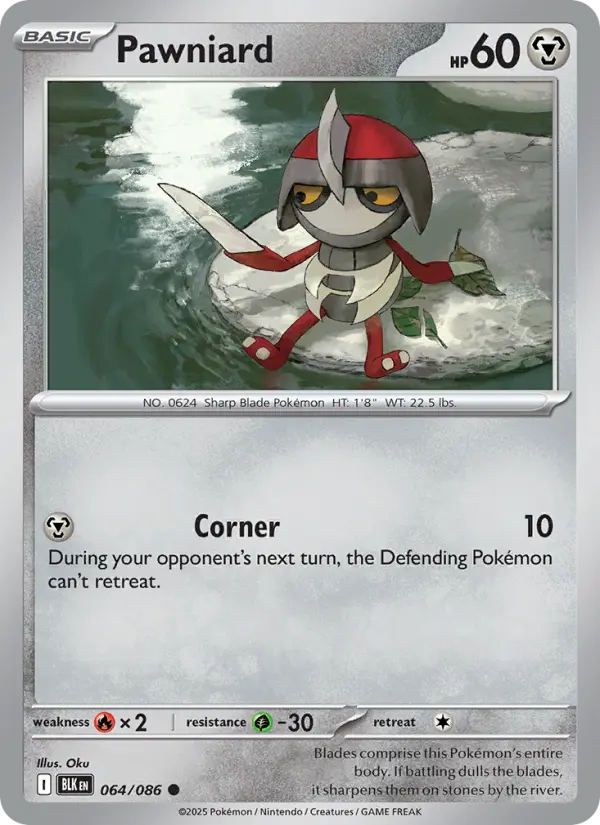
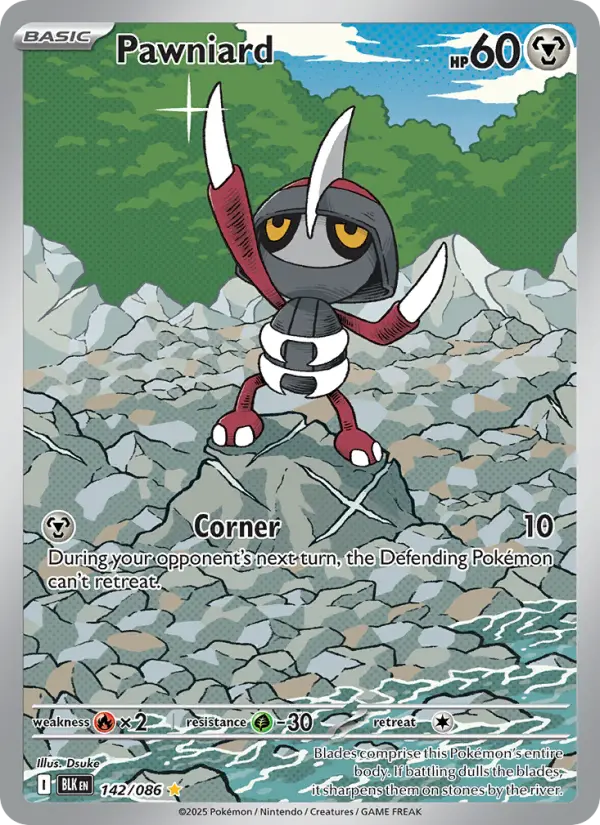
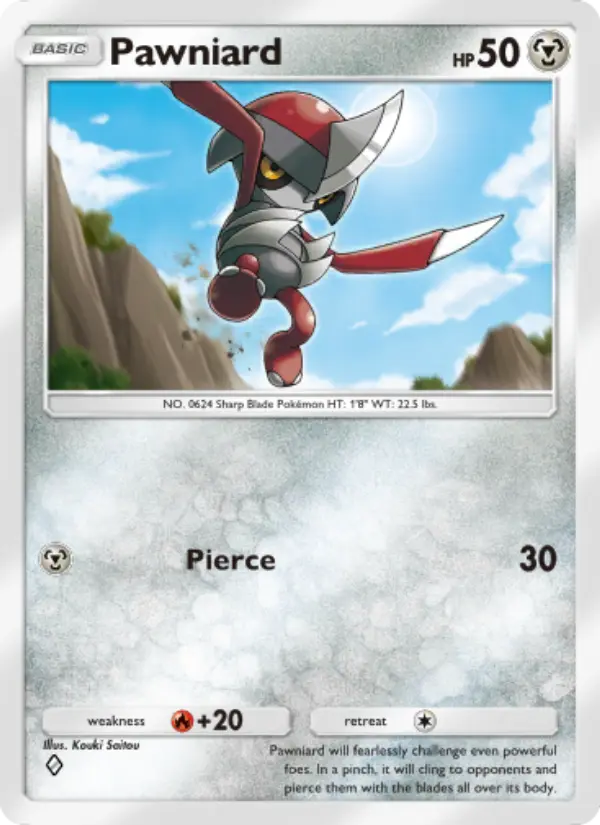
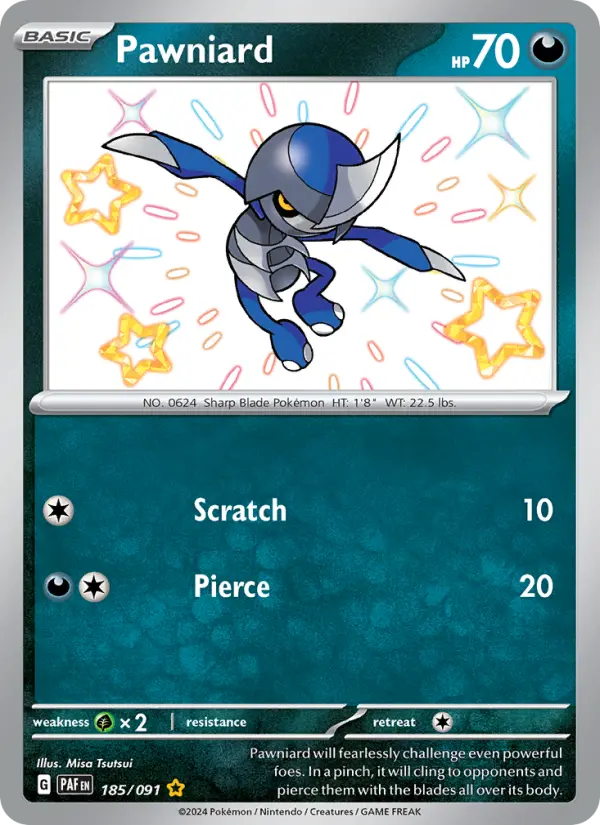
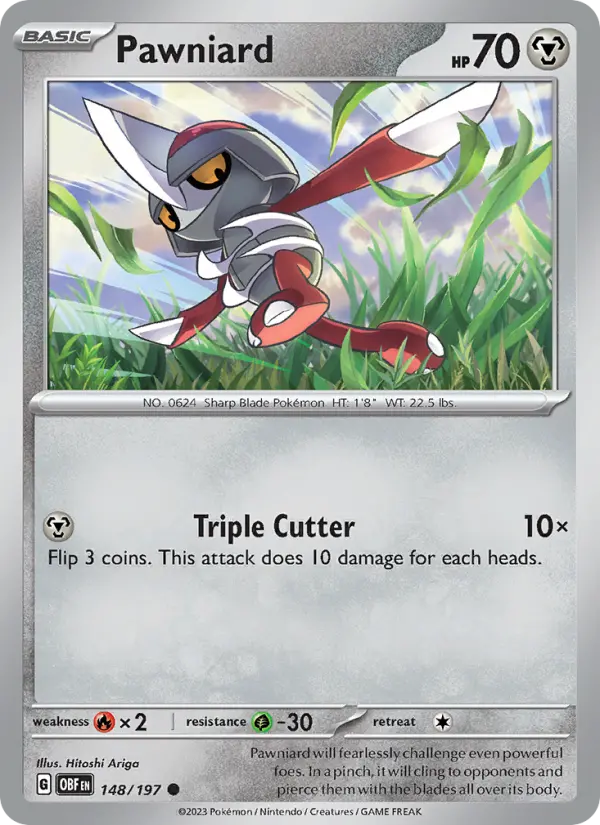
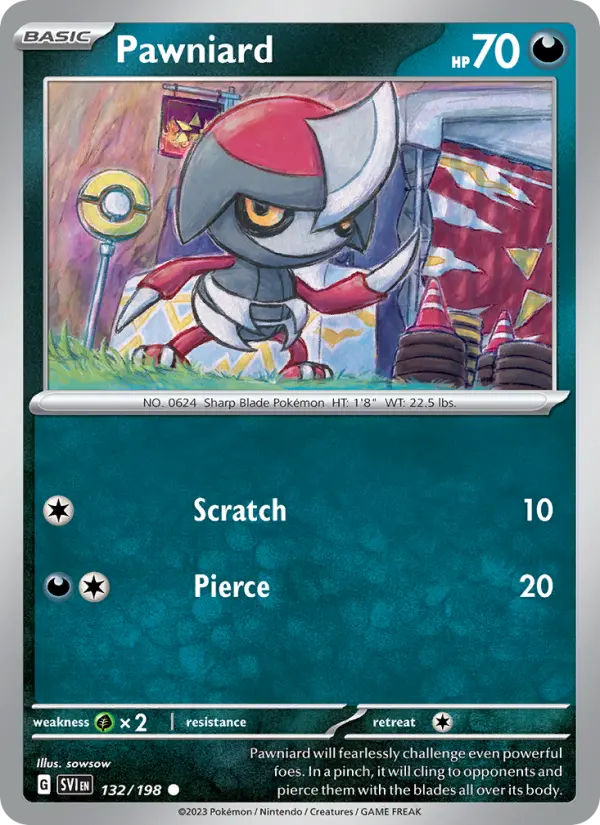
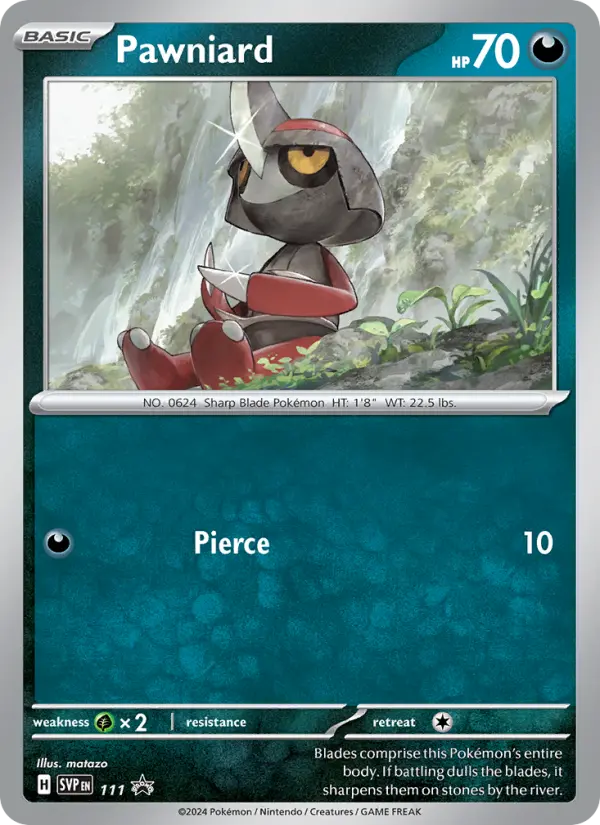
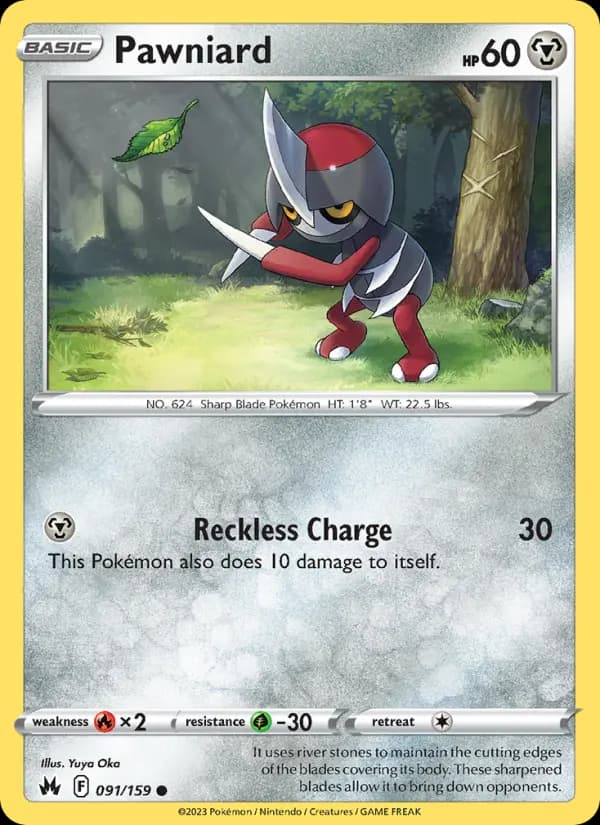
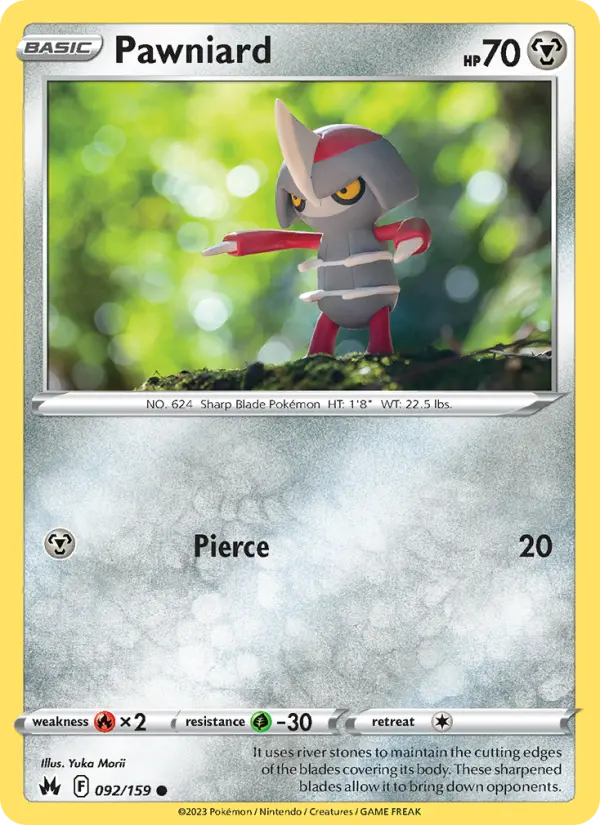
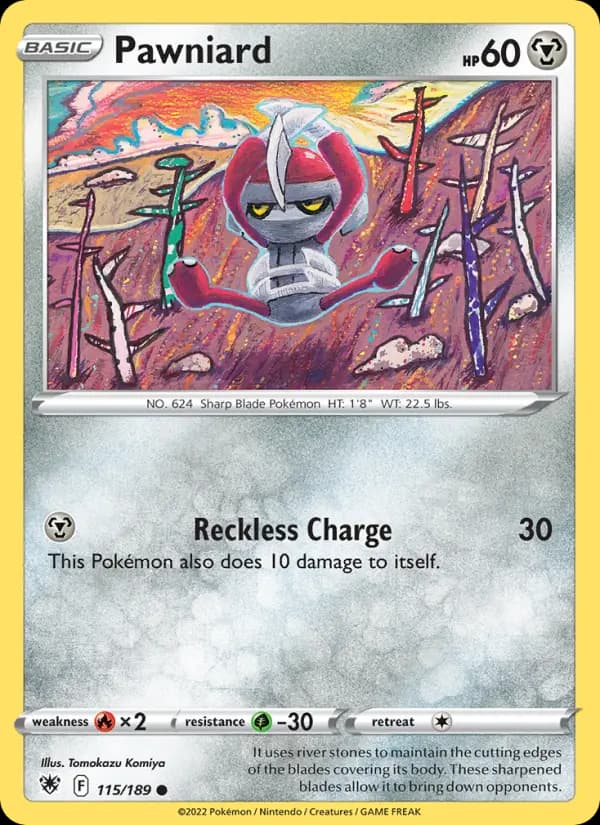
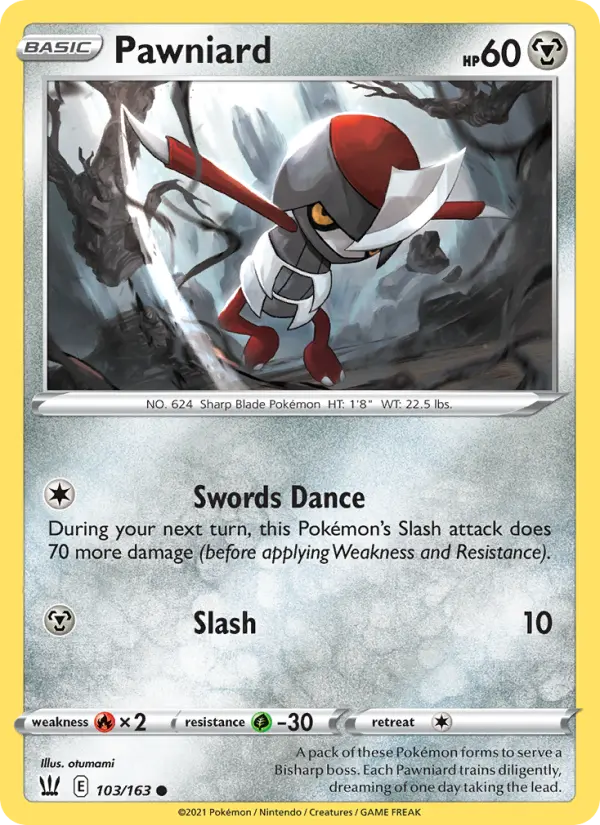
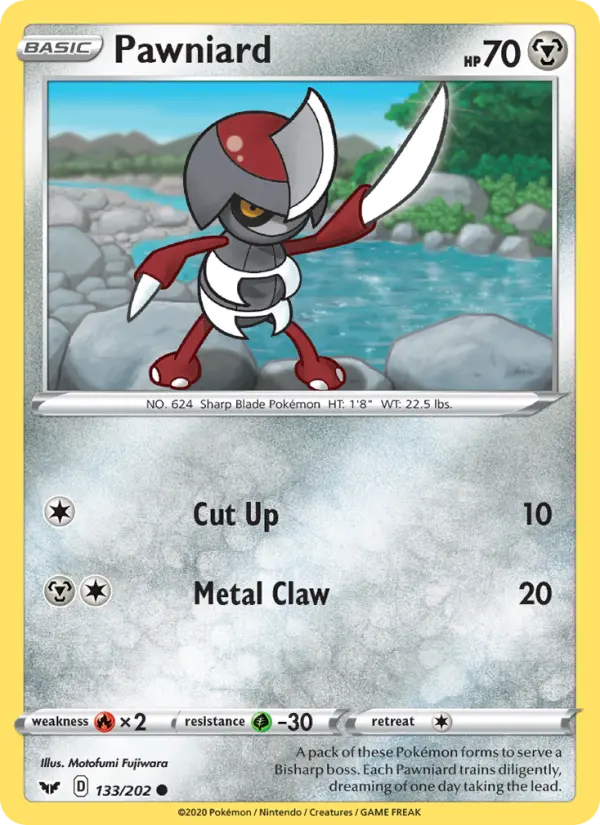
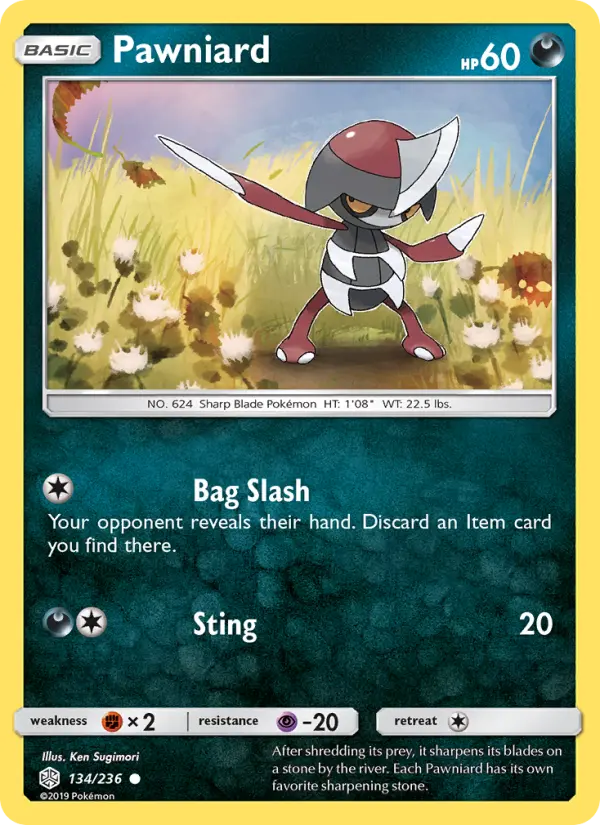
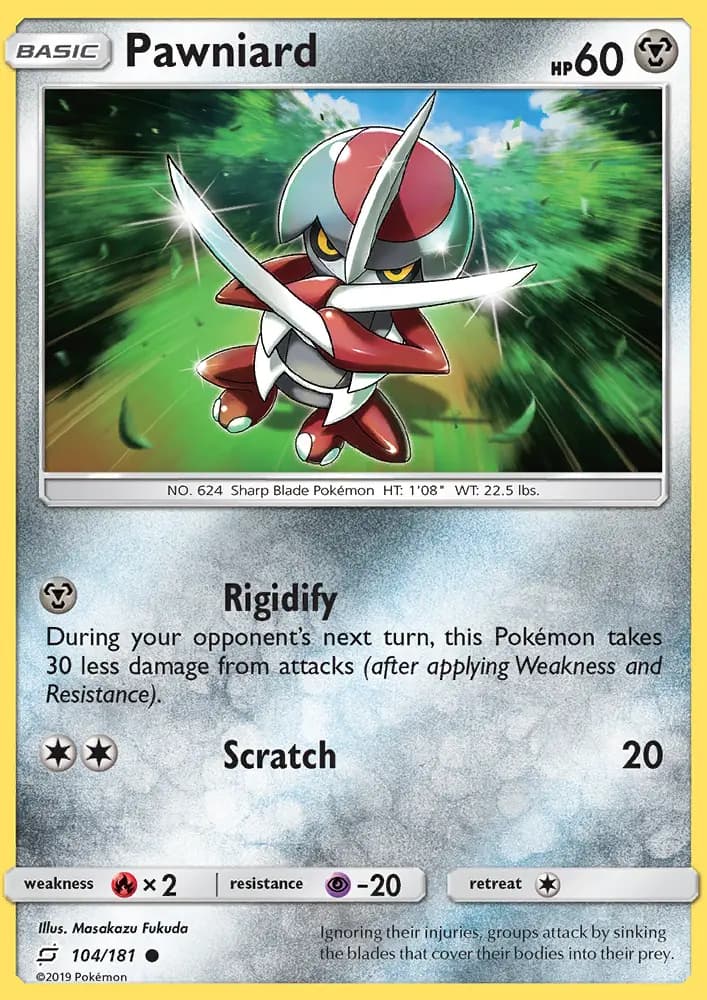
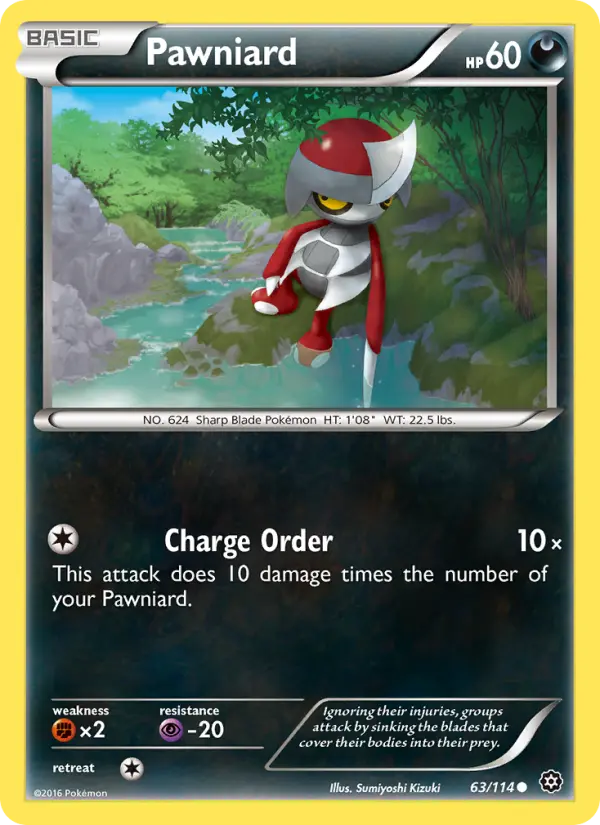
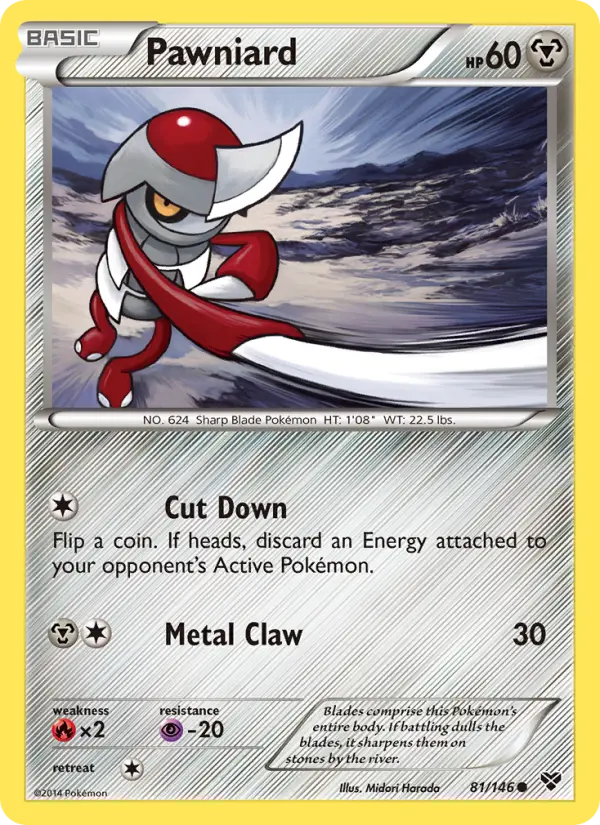
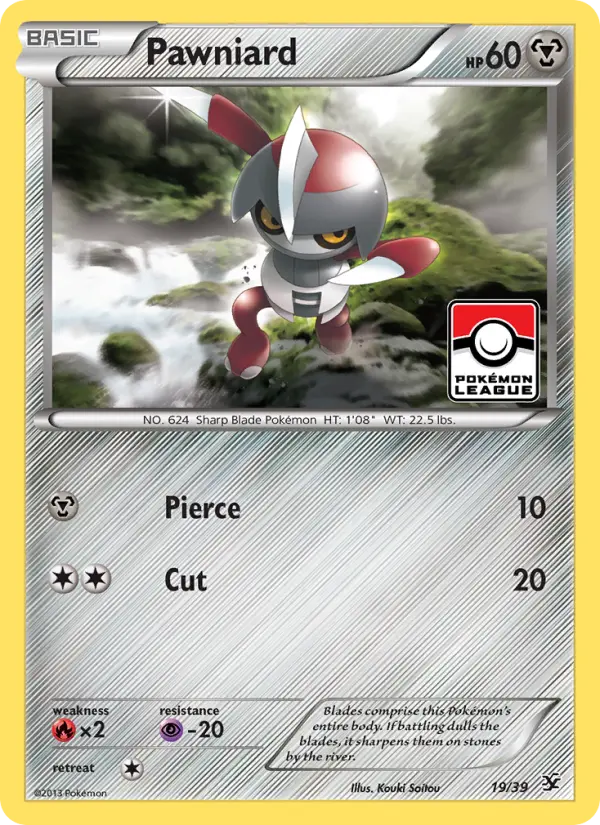
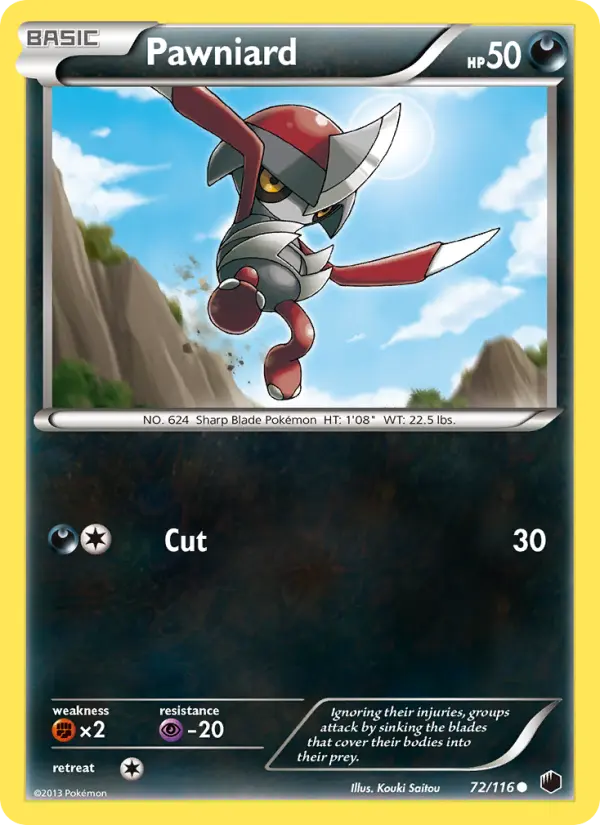
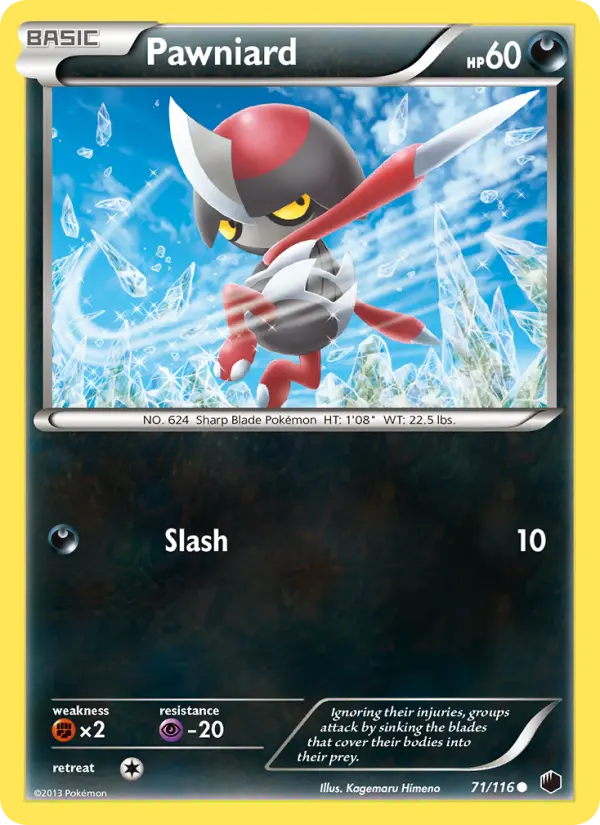
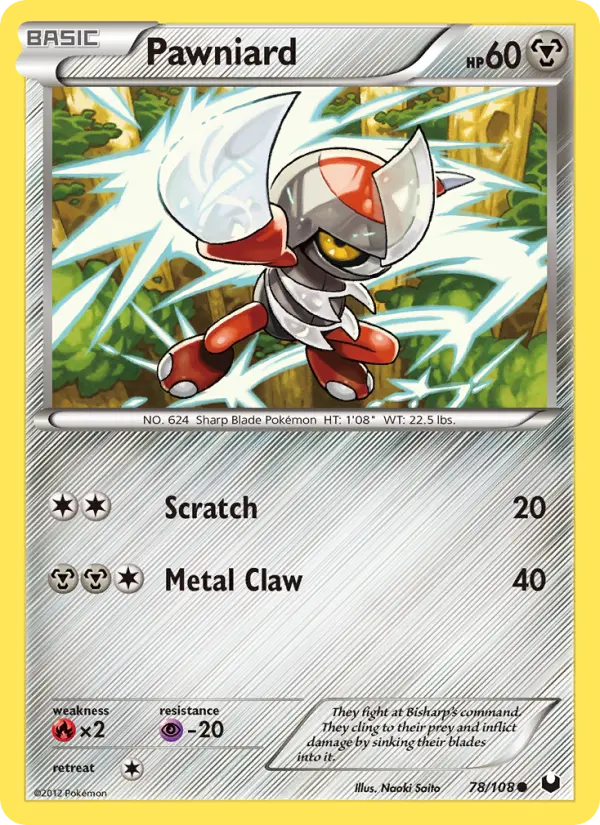
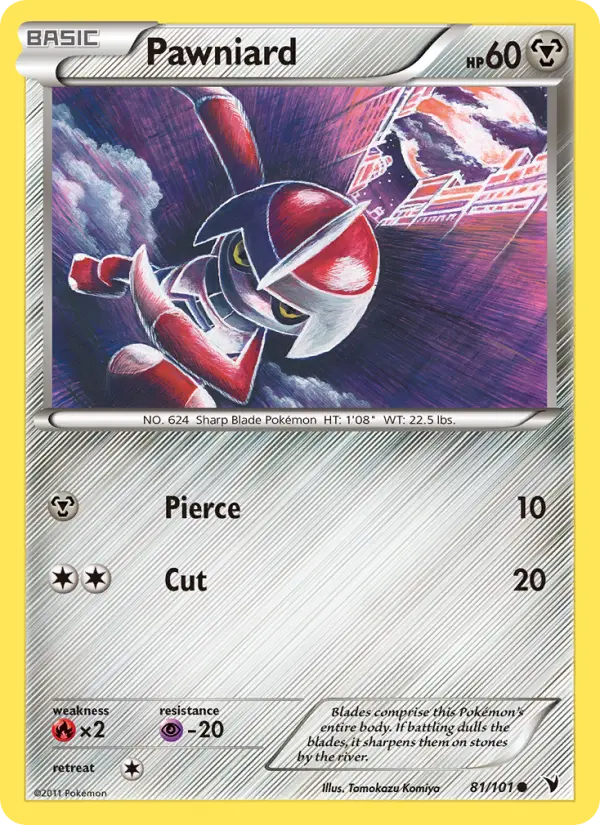
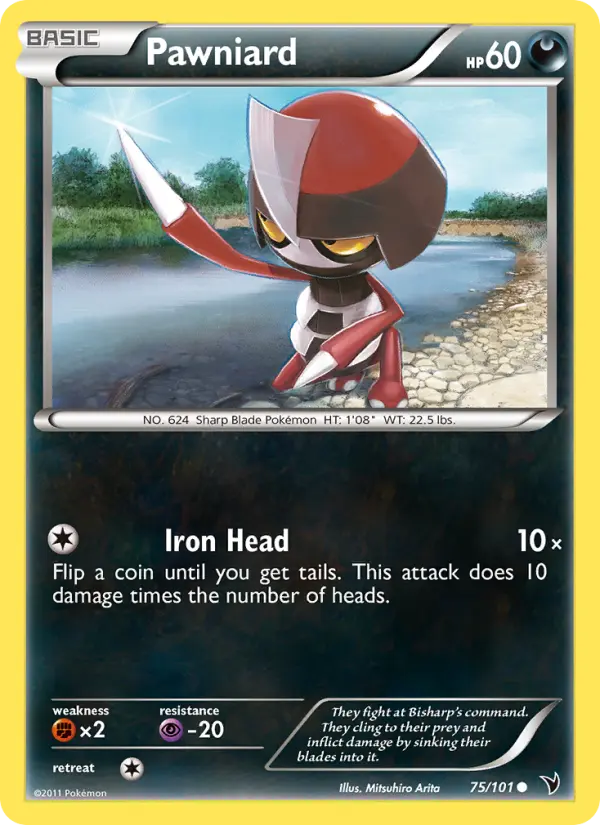
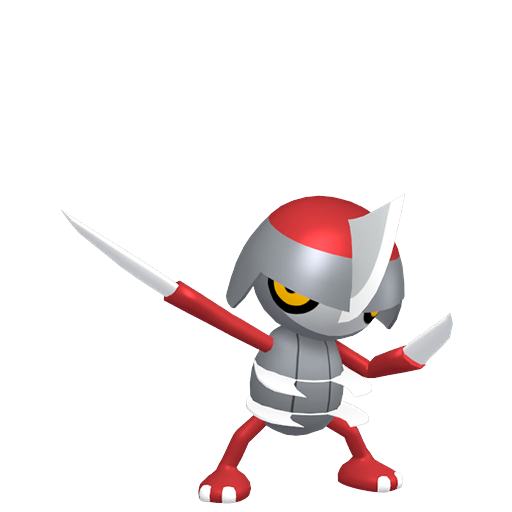
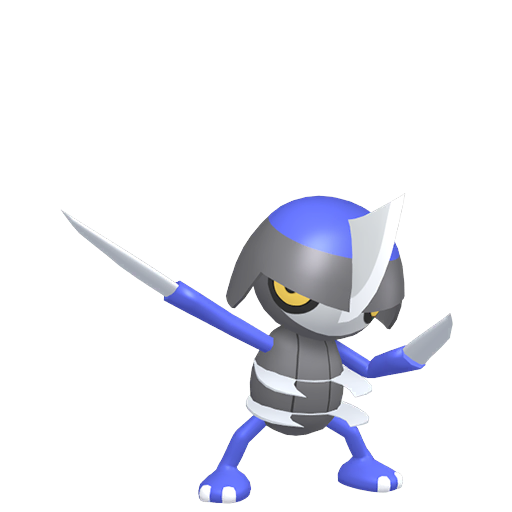
Pawniard possesses a striking appearance that emphasizes its combat-oriented nature, with blades comprising virtually its entire body structure. This diminutive Pokémon exhibits a rounded red and black head crowned with a silvery blade extending from the front, while its gray face features distinctive yellow eyes that convey an intense, determined gaze. Two pairs of steel blades protrude prominently from either side of its black torso, connected by reinforced steel ribs that provide structural integrity to its blade-laden frame. Most notably, Pawniard's arms terminate not in conventional hands but instead feature extendable knife-like blades capable of inflicting devastating wounds, while its red legs are supported by two white-toed feet positioned on both sides. The entire body structure reflects an evolutionary adaptation for predatory combat, with every anatomical feature serving a cutting, slashing, or piercing function. According to multiple Pokédex entries, Pawniard's blades require constant maintenance, and any chips or dulling of these critical edges would prove potentially fatal, necessitating regular sharpening against river stones to maintain combat effectiveness.
Pokedex Numbers
Training
Breeding
Pawniard Breeding, Gender Ratio & Egg Groups
Pawniard splits evenly down the middle — 50% male, 50% female, ensuring equal representation of both sexes in wild populations and breeding programs. Belonging to the Human-Like Egg Group, Pawniard can only breed with other Pokémon sharing this classification, limiting breeding partner options but creating interesting strategic possibilities for competitive breeding. The species has a base friendship value of only 35, significantly lower than most Pokémon, reflecting its naturally aloof and combat-oriented temperament that makes bonding with trainers a longer, more challenging process requiring consistent positive interaction. Pawniard eggs take 20 cycles to hatch, translating to approximately 4,884 to 5,140 steps, making them moderately quick to produce compared to more legendary or heavily armored Pokémon species. When breeding Pawniard, trainers should consider passing down advantageous movepool entries from compatible parents in the Human-Like Egg Group, as this can significantly improve the offspring's competitive viability from the earliest stages of development.
Sprites




TMs & HMs
tm01
black white
tm01
black 2 white 2
tm01
lets go pikachu lets go eevee
tm01
omega ruby alpha sapphire
tm01
x y
tm02
crystal
tm02
gold silver
tm02
lets go pikachu lets go eevee
tm03
yellow
tm03
red blue
tm03
blue japan
tm03
red green japan
tm05
lets go pikachu lets go eevee
tm06
yellow
tm06
gold silver
tm06
red blue
tm06
crystal
tm06
emerald
tm06
firered leafgreen
tm06
diamond pearl
+664 more TMs/HMs
Pawniard's Evolution Chain


Pawniard Evolution, Mega Evolution & Special Forms
Pawniard begins its evolutionary journey at level 52, transforming into the considerably more powerful Bisharp, a process that significantly enhances its physical capabilities and introduces it to leadership roles within pack hierarchies. The second evolutionary stage, Kingambit, represents a unique evolution mechanic introduced in Generation IX that requires the player to defeat three Bisharp holding a Leader's Crest while the Bisharp itself levels up, creating a challenging but rewarding path for dedicated trainers. This three-stage evolution line reflects Pawniard's narrative journey from humble soldier within a pack to commanding officer and finally to supreme ruler, with each stage gaining increased stats and refined battle capabilities. The evolution from Pawniard to Bisharp at level 52 provides substantial increases to Attack, Defense, Special Attack, and Speed, transforming the raw physical attacker into a more versatile combatant capable of leading group strategies. The evolution into Kingambit further emphasizes physical prowess and introduces additional Dark-type moves, establishing the final form as a genuinely competitive threat in higher-tier competitive environments.
Where to Find
Unova Route 9
unova
+21 more
Unova Route 11
unova
Kalos Route 15
kalos
+3 more
Lost Hotel
kalos
+1 more
Alola Route 17
alola
Pawniard Behaviour and Natural Habitat
In their natural habitat, Pawniard inhabit areas near rivers where suitable sharpening stones can be found, demonstrating remarkable awareness of environmental resources essential for survival. These Pokémon are exceptionally social creatures, living in organized packs governed by a dominant Bisharp leader who commands their attacks with absolute authority. According to Pokédex entries, Pawniard display remarkable courage and follow Bisharp's orders with unwavering obedience, attacking enemies on command and continuing to fight even when severely injured. Each member of the pack trains diligently with the dream of one day ascending to leadership, creating a hierarchical society driven by martial ambition. When hunting, Pawniard employs a distinctive tactical approach, clinging to prey and repeatedly stabbing with their blade-covered bodies before clanging their arm blades together in what appears to be both a celebratory gesture and a maintenance ritual. Pawniard exhibits low base friendship levels of 35, reflecting their somewhat aloof and combat-focused nature rather than any inherent hostility. Tinkatuff represents their natural enemy, creating an interesting biological opposition within Galar's ecosystem.
Pokedex Entries
Blades comprise this Pokémon’s entire body. If battling dulls the blades, it sharpens them on stones by the river.
Ignoring their injuries, groups attack by sinking the blades that cover their bodies into their prey.
They fight at Bisharp’s command. They cling to their prey and inflict damage by sinking their blades into it.
Blades comprise this Pokémon’s entire body. If battling dulls the blades, it sharpens them on stones by the river.
Ignoring their injuries, groups attack by sinking the blades that cover their bodies into their prey.
Blades comprise this Pokémon’s entire body. If battling dulls the blades, it sharpens them on stones by the river.
Ignoring their injuries, groups attack by sinking the blades that cover their bodies into their prey.
After shredding its prey, it sharpens its blades on a stone by the river. Each Pawniard has its own favorite sharpening stone.
It follows Bisharp’s orders to a tee when it attacks enemies. After slashing an opponent, Pawniard clangs both of its blades together.
It uses river stones to maintain the cutting edges of the blades covering its body. These sharpened blades allow it to bring down opponents.
A pack of these Pokémon forms to serve a Bisharp boss. Each Pawniard trains diligently, dreaming of one day taking the lead.
Pawniard Name Origin & Design Inspiration
The name Pawniard combines 'pawn,' referencing chess terminology and reflecting the Pokémon's role as a subordinate soldier within hierarchical pack structures, with 'nard,' likely derived from 'poniard,' an archaic term for a small, slender dagger. Its Japanese name, Komatana, derives from 'koma,' meaning 'small,' and 'katana,' the legendary Japanese curved blade, emphasizing both its diminutive size and blade-centric design philosophy. The design draws substantial inspiration from both insectoid armor and weaponized humanoid forms, creating a unique aesthetic that bridges biological and mechanical elements. Pawniard's visual concept appears influenced by medieval phalanx warfare tactics, with its red and black coloration suggesting both militaristic design and natural warning coloration. The repetition of blades across its entire body structure, from its head blade through its paired torso blades to its finger-blade arms, emphasizes the theming of a living weapon perfected for a singular purpose. This design philosophy contrasts sharply with the eventual evolution into Kingambit, which develops a more regal, commanding appearance befitting its ascension to leadership status.
Learnable Moves
Pawniard can learn 84 moves:
Move | Type | Cat. | Power | Acc. | PP |
|---|---|---|---|---|---|
| aerial ace | flying | Physical | 60 | — | 20 |
| air slash | flying | Special | 75 | 95 | 15 |
| assurance | dark | Physical | 60 | 100 | 10 |
| attract | normal | Status | — | 100 | 15 |
| beat up | dark | Physical | — | 100 | 10 |
| brick break | fighting | Physical | 75 | 100 | 15 |
| confide | normal | Status | — | — | 20 |
| cut | normal | Physical | 50 | 95 | 30 |
| dark pulse | dark | Special | 80 | 100 | 15 |
| dig | ground | Physical | 80 | 100 | 10 |
| double team | normal | Status | — | — | 15 |
| dual chop | dragon | Physical | 40 | 90 | 15 |
| embargo | dark | Status | — | 100 | 15 |
| endure | normal | Status | — | — | 10 |
| facade | normal | Physical | 70 | 100 | 20 |
| false swipe | normal | Physical | 40 | 100 | 40 |
| feint attack | dark | Physical | 60 | — | 20 |
| flash cannon | steel | Special | 80 | 100 | 10 |
| fling | dark | Physical | — | 100 | 10 |
| foul play | dark | Physical | 95 | 100 | 15 |
| frustration | normal | Physical | — | 100 | 20 |
| fury cutter | bug | Physical | 40 | 95 | 20 |
| grass knot | grass | Special | — | 100 | 20 |
| guillotine | normal | Physical | — | 30 | 5 |
| headbutt | normal | Physical | 70 | 100 | 15 |
| hidden power | normal | Special | 60 | 100 | 15 |
| hone claws | dark | Status | — | — | 15 |
| iron defense | steel | Status | — | — | 15 |
| iron head | steel | Physical | 80 | 100 | 15 |
| knock off | dark | Physical | 65 | 100 | 20 |
| laser focus | normal | Status | — | — | 30 |
| lash out | dark | Physical | 75 | 100 | 5 |
| leer | normal | Status | — | 100 | 30 |
| low kick | fighting | Physical | — | 100 | 20 |
| low sweep | fighting | Physical | 65 | 100 | 20 |
| magnet rise | electric | Status | — | — | 10 |
| mean look | normal | Status | — | — | 5 |
| metal claw | steel | Physical | 50 | 95 | 35 |
| metal sound | steel | Status | — | 85 | 40 |
| night slash | dark | Physical | 70 | 100 | 15 |
| payback | dark | Physical | 50 | 100 | 10 |
| poison jab | poison | Physical | 80 | 100 | 20 |
| power up punch | fighting | Physical | 40 | 100 | 20 |
| protect | normal | Status | — | — | 10 |
| psycho cut | psychic | Physical | 70 | 100 | 20 |
| pursuit | dark | Physical | 40 | 100 | 20 |
| quick guard | fighting | Status | — | — | 15 |
| rain dance | water | Status | — | — | 5 |
| rest | psychic | Status | — | — | 5 |
| retaliate | normal | Physical | 70 | 100 | 5 |
| return | normal | Physical | — | 100 | 20 |
| revenge | fighting | Physical | 60 | 100 | 10 |
| rock polish | rock | Status | — | — | 20 |
| rock smash | fighting | Physical | 40 | 100 | 15 |
| rock tomb | rock | Physical | 60 | 95 | 15 |
| role play | psychic | Status | — | — | 10 |
| round | normal | Special | 60 | 100 | 15 |
| sandstorm | rock | Status | — | — | 10 |
| scary face | normal | Status | — | 100 | 10 |
| scratch | normal | Physical | 40 | 100 | 35 |
| screech | normal | Status | — | 85 | 40 |
| secret power | normal | Physical | 70 | 100 | 20 |
| shadow claw | ghost | Physical | 70 | 100 | 15 |
| slash | normal | Physical | 70 | 100 | 20 |
| sleep talk | normal | Status | — | — | 10 |
| snarl | dark | Special | 55 | 95 | 15 |
| snatch | dark | Status | — | — | 10 |
| snore | normal | Special | 50 | 100 | 15 |
| spite | ghost | Status | — | 100 | 10 |
| stealth rock | rock | Status | — | — | 20 |
| steel beam | steel | Special | 140 | 95 | 5 |
| stone edge | rock | Physical | 100 | 80 | 5 |
| substitute | normal | Status | — | — | 10 |
| sucker punch | dark | Physical | 70 | 100 | 5 |
| swagger | normal | Status | — | 85 | 15 |
| swords dance | normal | Status | — | — | 20 |
| take down | normal | Physical | 90 | 85 | 20 |
| taunt | dark | Status | — | 100 | 20 |
| tera blast | normal | Special | 80 | 100 | 10 |
| thief | dark | Physical | 60 | 100 | 25 |
| thunder wave | electric | Status | — | 90 | 20 |
| torment | dark | Status | — | 100 | 15 |
| toxic | poison | Status | — | 90 | 10 |
| x scissor | bug | Physical | 80 | 100 | 15 |
Pawniard Competitive Battle Guide
Pawniard's competitive viability is heavily dependent on its exceptional Attack stat of 85, which stands as its most prominent offensive capability, supported by a respectable Defense value of 70 that provides moderate physical durability. The Pokémon's base Speed of only 60 presents a significant limitation, making it slower than many competitive threats and requiring careful team composition to mitigate this disadvantage. Its special stats are disappointingly low at 40 for both Special Attack and Special Defense, confirming Pawniard's role as an exclusive physical attacker incapable of leveraging special moves effectively. The Defiant ability proves particularly valuable in competitive play, raising Attack two stages whenever any of Pawniard's stats are lowered, creating interesting tactical opportunities against opponents employing stat-reduction strategies such as Intimidate users or terrain-based stat manipulations. Inner Focus provides an alternative ability that prevents flinching, valuable against priority move users like Aqua Jet or Mach Punch, while the hidden ability Pressure increases PP consumption of opponent moves, offering long-term battle attrition strategies. For competitive trainers, Pawniard functions best as a physical attacker operating within dedicated Dark and Steel-type team structures, though most serious competitive players prefer waiting for the evolution into Bisharp or Kingambit, which offer superior stat distributions.
Commonly Asked Questions About Pawniard
What type is Pawniard?
Pawniard is a dark and steel type Pokemon.
What does Pawniard evolve into?
Pawniard evolves into bisharp, then into kingambit.
What are Pawniard's weaknesses?
Pawniard is weak to fighting, ground and fire type moves.
Does Pawniard evolve by trading?
No — Pawniard evolves entirely through leveling up, with no trade required at any stage.
Where can I find Pawniard?
Pawniard can be found in unova route 9 (unova), unova route 11 (unova) and kalos route 15 (kalos) and 2 other locations.
Pawniard Cultural Impact & Franchise History
Pawniard occupies a fascinating niche within Pokémon media and fan communities as a strategically designed creature that embodies the philosophical concept of the warrior underling destined for greater roles. The species resonates particularly strongly with fans interested in military strategy and hierarchical systems, as its pack-based behavior and subordinate role within Bisharp-led groups create compelling narrative depth rarely explored in other Pokémon designs. Its appearance in competitive and casual player teams has generated substantial discussion regarding optimal training methodologies and evolution timing, with dedicated communities debating whether to utilize Pawniard immediately or invest the experience necessary for evolution. The Pokémon's design has influenced subsequent Dark and Steel-type introductions, establishing a template for weapon-themed Pokémon that balance biological and mechanical aesthetics. In anime and manga appearances, Pawniard has been featured primarily as loyal pack members, reinforcing its canonical role as a subordinate fighter following Bisharp's commands. Fan artwork and creative communities have extensively explored Pawniard's character potential, particularly its relationship dynamics within pack hierarchies and its individual aspirations for leadership.
Where to Find Pawniard in Every Pokémon Game
Pawniard's availability varies considerably across different Pokémon generations and regional Pokédexes, first appearing in Black and White versions as entry 0130 in the regional Pokédex, establishing it as a Generation V original. In Black 2 and White 2, Pawniard remains accessible as entry 0223, maintaining presence in the Unova region's evolutionary ecosystem. The species appears in X and Y as entry 0048 within the Mountain Kalos Pokédex, reflecting its presence in the Kalos region's mountainous terrain. Ultra Sun and Ultra Moon feature Pawniard as entry 0337 in the Alola Pokédex, incorporating it into the region's competitive battling scene. Sword and Shield incorporate Pawniard as entry 0246 in the Galar Pokédex, with Isle of Armor DLC providing alternate availability as entry 0029. Scarlet and Violet continue Pawniard's availability as entry 0367 in the standard Pokédex, with the Teal Mask DLC listing it as entry 0186, ensuring contemporary trainers can readily acquire this generation-defining species. The species' consistently high capture rate of 120 makes acquisition relatively straightforward once encountered in the wild, allowing trainers of varying skill levels to add this versatile Dark and Steel-type to their teams.