Pidgey
Generation I · #0016 — Tiny Bird Pokémon
Pidgey measures in at 0.3 m and 1.8 kg, a build that matches its keen eye ability better than it matches raw offense or defense. With a overall stat sum of 251, Pidgey excels primarily in Speed with a base stat of 56, making it a swift flier despite its diminutive stature of just 0.3 meters in height and weighing only 1.8 kilograms. As a Pokémon with exceptional homing instincts and a peaceful temperament, Pidgey embodies the gentle nature of many early-game bird Pokémon, serving as an ideal starter companion for novice trainers seeking to build a balanced team.
Editor's Take
Pidgey is the Pokémon most Gen 1 players used to grind and then quietly boxed, and Pidgeot's Mega arriving twenty years later to give it No Guard Hurricane is a strangely touching bit of course correction.
Base Stats
Height
0.3m
Weight
1.8kg
Category
Tiny Bird Pokémon
Gender
Male 50% / Female 50%
Color
brown
Shape
wings
Habitat
forest
Abilities
Prevents accuracy from being lowered.
Doubles evasion when confused.
Protects against Defense drops.

Pidgey Biology & Physical Characteristics
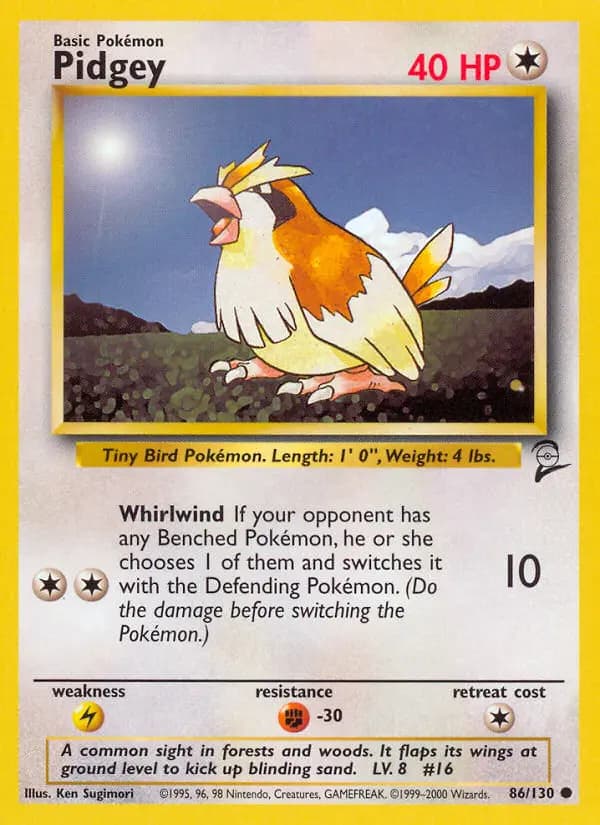
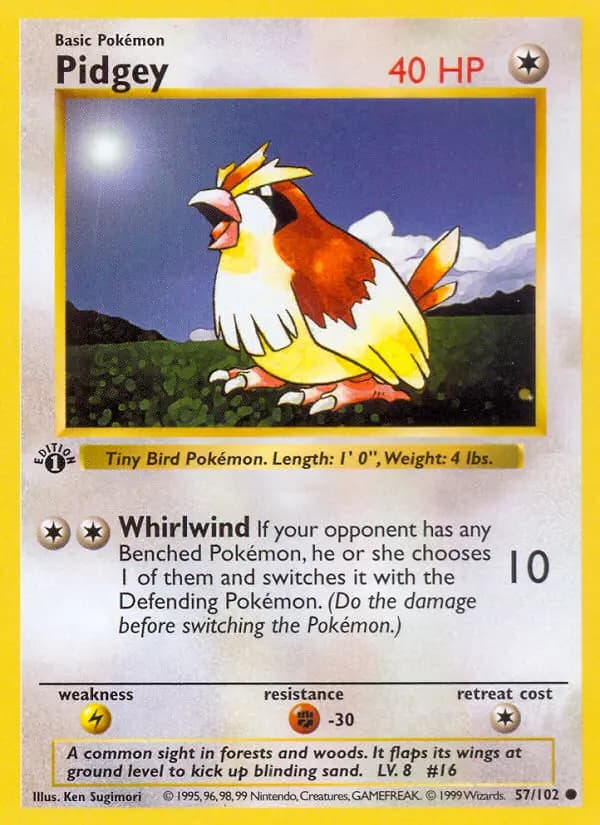
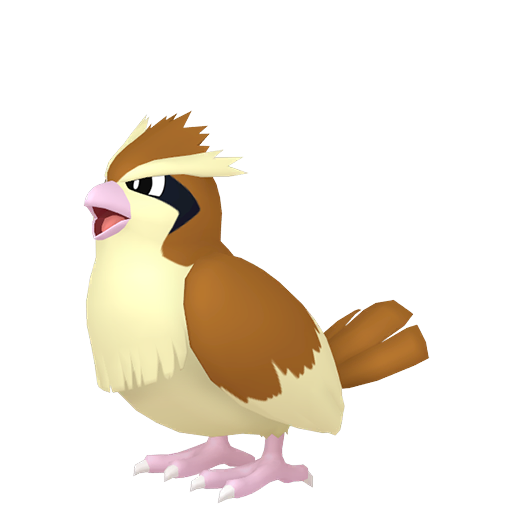
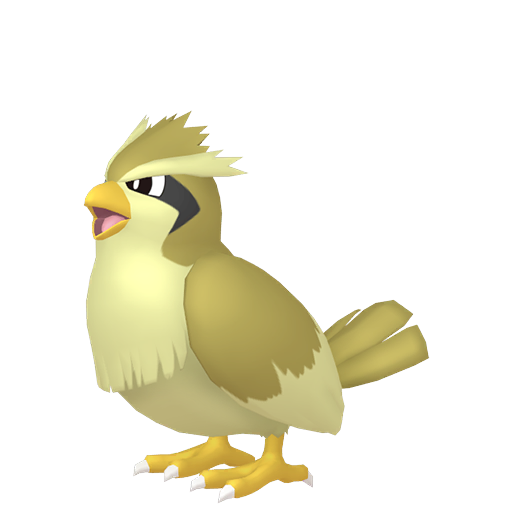
Pidgey is a small, round-bodied avian Pokémon with predominantly brown plumage and a cream-colored face, underside, and flight feathers that create a striking contrast against its darker coloration. Its most distinctive feature is the distinctive crest atop its head, composed of three tufts where the center feathers are brown while the outer two tufts display a cream coloration. The Pokémon possesses narrow, expressive eyes with white sclera and black irises, accompanied by angular black markings that extend from behind the eyes down along its cheeks, giving it an alert yet gentle appearance. Its beak and feet are a soft grayish-pink color, with the feet featuring the characteristic avian structure of two forward-facing toes and one rear toe, while its short, three-feathered brown tail completes its compact frame. Pidgey's remarkable biological feature is its exceptionally sharp sense of direction and highly developed homing instincts, allowing the species to navigate with pinpoint accuracy across vast distances and return unerringly to its nest regardless of how far it may have traveled.
Pokedex Numbers
Training
Breeding
Pidgey Breeding, Gender Ratio & Egg Groups
Half of all Pidgey are male, half are female — no skew to plan around. As a member of the Flying egg group, Pidgey shares breeding compatibility with numerous other avian and aerially-capable Pokémon, allowing trainers to create diverse hybrid combinations and transfer moves between compatible species. The species exhibits a base happiness value of 70, indicating a generally pleasant and cooperative disposition that makes it responsive to trainer affection and care, though not exceptionally rare in terms of friendship potential. With an egg hatch counter of 15 cycles, representing approximately 3,599 to 3,855 steps required for the egg to hatch, Pidgey falls into the moderate range of breeding duration, making it reasonably accessible for trainers engaged in breeding projects without demanding excessive time investment. The species' medium-slow growth rate means that while Pidgey requires moderate experience points to level up compared to Pokémon with slow growth rates, it still develops at a somewhat leisurely pace that extends the training period compared to fast-growing species.
Sprites




TMs & HMs
tm01
lets go pikachu lets go eevee
tm01
ultra sun ultra moon
tm01
sun moon
tm02
yellow
tm02
red blue
tm02
crystal
tm02
gold silver
tm02
blue japan
tm02
red green japan
tm03
crystal
tm03
gold silver
tm04
yellow
tm04
red blue
tm04
red green japan
tm04
blue japan
tm05
lets go pikachu lets go eevee
tm06
yellow
tm06
gold silver
tm06
red blue
tm06
crystal
+466 more TMs/HMs
Pidgey's Evolution Chain


Pidgey Evolution, Mega Evolution & Special Forms
Pidgey exists within a three-stage evolutionary line that represents a classic progression of increasing power and capability. Beginning at level 18, Pidgey evolves into its second form, Pidgeotto, a significantly larger bird that retains the Normal/Flying typing while substantially improving its stats, particularly in Attack and Special Attack. This evolution represents a notable power spike where the young bird develops stronger wings and more aggressive hunting capabilities. The final evolution occurs at level 36 when Pidgeotto transforms into Pidgeot, the apex form of the evolutionary line and a powerful flying-type Pokémon that gains access to significantly enhanced stats across all categories, with particularly impressive improvements to its Speed and Attack power. Unlike many other Pokémon lines, Pidgeot does not receive a Mega Evolution form, but the standard final evolution provides tremendous utility and competitive viability. This straightforward three-stage evolution makes the Pidgey line accessible to trainers of varying skill levels, with each evolutionary stage providing meaningful improvements that encourage the development of a long-term partnership.
Where to Find
Kanto Route 1
kanto
+92 more
Kanto Route 8
kanto
+15 more
Kanto Route 7
kanto
+15 more
Kanto Route 12
kanto
+24 more
Kanto Route 2
kanto
+59 more
Kanto Route 6
kanto
+44 more
Kanto Sea Route 21
kanto
+13 more
Kanto Route 14
kanto
+7 more
Kanto Route 5
kanto
+58 more
Kanto Route 24
kanto
+16 more
Kanto Route 13
kanto
+14 more
Kanto Route 25
kanto
+32 more
Kanto Route 15
kanto
+9 more
Kanto Route 3
kanto
+13 more
Kanto Route 11
kanto
+3 more
Viridian Forest
kanto
+8 more
National Park
johto
+33 more
Johto Route 35
johto
+15 more
Johto Route 29
johto
+41 more
Johto Route 30
johto
+29 more
+18 more locations in other games
Pidgey Behaviour and Natural Habitat
Pidgey is a common sight throughout forests, woodlands, and grassy areas, where it spends much of its time foraging for small insects and other small prey among the vegetation. According to multiple Pokédex entries, this species is remarkably docile and profoundly dislikes conflict, preferring to flee from danger rather than engage in direct confrontation with potential threats. When threatened or disturbed, Pidgey employs a distinctive defensive strategy by rapidly flapping its wings at ground level to kick up clouds of blinding sand and dust, a technique that simultaneously serves to protect itself and flush out hidden prey items from their hiding places. This peaceful temperament, combined with its tendency to hide in tall grass during the day, makes Pidgey an excellent prey species for various predatory Pokémon. The species demonstrates remarkable behavioral consistency across different generations and regional variations, with trainers universally reporting the same gentle disposition and sand-kicking behavior that defines the species' interaction with its environment.
Pokedex Entries
A common sight in forests and woods. It flaps its wings at ground level to kick up blinding sand.
Very docile. If attacked, it will often kick up sand to protect itself rather than fight back.
It usually hides in tall grass. Be cause it dislikes fighting, it pro tects itself by kicking up sand.
Common in grassy areas and forests, it is very docile and will chase off enemies by flap ping up sand.
It rapidly flaps its wings in the grass, stirring up a dust cloud that drives insect prey out into the open.
PIDGEY has an extremely sharp sense of direction. It is capable of unerringly returning home to its nest, however far it may be removed from its familiar surroundings.
It has an extremely sharp sense of direction. It can unerringly return home to its nest, however far it may be removed from its familiar surroundings.
Does not like to fight. It hides in tall grass and so on, foraging for food such as small bugs.
A common sight in forests and woods. It flaps its wings at ground level to kick up blinding sand.
It is docile and prefers to avoid conflict. If disturbed, however, it can ferociously strike back.
It usually hides in tall grass. Because it dislikes fighting, it protects itself by kicking up sand.
Common in grassy areas and forests, it is very docile and will chase off enemies by flapping up sand.
It is docile and prefers to avoid conflict. If disturbed, however, it can ferociously strike back.
It is docile and prefers to avoid conflict. If disturbed, however, it can ferociously strike back.
A common sight in forests and woods. It flaps its wings at ground level to kick up blinding sand.
It is docile and prefers to avoid conflict. If disturbed, however, it can ferociously strike back.
Pidgey has an extremely sharp sense of direction. It is capable of unerringly returning home to its nest, however far it may be removed from its familiar surroundings.
Pidgey has an extremely sharp sense of direction. It is capable of unerringly returning home to its nest, however far it may be removed from its familiar surroundings.
Very docile. If attacked, it will often kick up sand to protect itself rather than fight back.
Pidgey Name Origin & Design Inspiration
Pidgey's design represents a deliberate homage to common pigeons and doves, drawing inspiration from the everyday birds one might encounter in urban and natural settings worldwide. The name itself derives from a combination of 'pigeon' and 'midget,' referencing both the species' avian nature and its diminutive size compared to other bird Pokémon. In Japan, Pidgey is known as Poppo, an onomatopoeia that mimics the cooing sounds pigeons produce, creating a linguistic connection between the name and the creature's behavior and vocalizations. The design's simplicity and accessibility were intentional choices for Generation I's early-game content, establishing a template that would influence avian Pokémon design for generations to come. The color scheme of brown and cream reflects actual pigeon coloration found in nature, while the distinctive head crest provides an element of visual distinctiveness that prevents Pidgey from being a simple direct copy of a real-world bird. This balance between naturalistic design and fantastical elements exemplifies the thoughtful approach Game Freak employed when creating Generation I's iconic roster.
Learnable Moves
Pidgey can learn 64 moves:
Move | Type | Cat. | Power | Acc. | PP |
|---|---|---|---|---|---|
| aerial ace | flying | Physical | 60 | — | 20 |
| agility | psychic | Status | — | — | 30 |
| air cutter | flying | Special | 60 | 95 | 25 |
| air slash | flying | Special | 75 | 95 | 15 |
| attract | normal | Status | — | 100 | 15 |
| bide | normal | Physical | — | — | 10 |
| brave bird | flying | Physical | 120 | 100 | 15 |
| captivate | normal | Status | — | 100 | 20 |
| confide | normal | Status | — | — | 20 |
| curse | ghost | Status | — | — | 10 |
| defog | flying | Status | — | — | 15 |
| detect | fighting | Status | — | — | 5 |
| double team | normal | Status | — | — | 15 |
| double edge | normal | Physical | 120 | 100 | 15 |
| endure | normal | Status | — | — | 10 |
| facade | normal | Physical | 70 | 100 | 20 |
| feather dance | flying | Status | — | 100 | 15 |
| feint attack | dark | Physical | 60 | — | 20 |
| fly | flying | Physical | 90 | 95 | 15 |
| foresight | normal | Status | — | — | 40 |
| frustration | normal | Physical | — | 100 | 20 |
| gust | flying | Special | 40 | 100 | 35 |
| headbutt | normal | Physical | 70 | 100 | 15 |
| heat wave | fire | Special | 95 | 90 | 10 |
| hidden power | normal | Special | 60 | 100 | 15 |
| hurricane | flying | Special | 110 | 70 | 10 |
| mimic | normal | Status | — | — | 10 |
| mirror move | flying | Status | — | — | 20 |
| mud slap | ground | Special | 20 | 100 | 10 |
| natural gift | normal | Physical | — | 100 | 15 |
| ominous wind | ghost | Special | 60 | 100 | 5 |
| pluck | flying | Physical | 60 | 100 | 20 |
| protect | normal | Status | — | — | 10 |
| pursuit | dark | Physical | 40 | 100 | 20 |
| quick attack | normal | Physical | 40 | 100 | 30 |
| rage | normal | Physical | 20 | 100 | 20 |
| rain dance | water | Status | — | — | 5 |
| razor wind | normal | Special | 80 | 100 | 10 |
| reflect | psychic | Status | — | — | 20 |
| rest | psychic | Status | — | — | 5 |
| return | normal | Physical | — | 100 | 20 |
| roost | flying | Status | — | — | 5 |
| round | normal | Special | 60 | 100 | 15 |
| sand attack | ground | Status | — | 100 | 15 |
| secret power | normal | Physical | 70 | 100 | 20 |
| sky attack | flying | Physical | 140 | 90 | 5 |
| sleep talk | normal | Status | — | — | 10 |
| snore | normal | Special | 50 | 100 | 15 |
| steel wing | steel | Physical | 70 | 90 | 25 |
| substitute | normal | Status | — | — | 10 |
| sunny day | fire | Status | — | — | 5 |
| swagger | normal | Status | — | 85 | 15 |
| swift | normal | Special | 60 | — | 20 |
| tackle | normal | Physical | 40 | 100 | 35 |
| tailwind | flying | Status | — | — | 15 |
| take down | normal | Physical | 90 | 85 | 20 |
| thief | dark | Physical | 60 | 100 | 25 |
| toxic | poison | Status | — | 90 | 10 |
| twister | dragon | Special | 40 | 100 | 20 |
| u turn | bug | Physical | 70 | 100 | 20 |
| uproar | normal | Special | 90 | 100 | 10 |
| whirlwind | normal | Status | — | — | 20 |
| wing attack | flying | Physical | 60 | 100 | 35 |
| work up | normal | Status | — | — | 30 |
Pidgey Competitive Battle Guide
Looking at its competitive profile, Pidgey's utility is primarily limited to early-game and beginner-level competition due to its modest overall stat sum of 251, with the Speed stat of 56 being its most valuable offensive attribute. The species benefits from three distinct ability options: Keen Eye, which prevents its accuracy from being lowered by opposing moves or abilities, providing defensive utility against accuracy-reducing tactics; Tangled Feet, which doubles evasion when Pidgey becomes confused, enabling potential defensive strategies; and Big Pecks as its hidden ability, which protects against Defense-lowering moves from opponents. Pidgey's movepool is relatively limited compared to its evolved forms, featuring primarily Normal and Flying-type moves that provide consistent but unspectacular offensive coverage, with Sand-Attack being particularly notable for the species' signature defensive strategy of reducing opponent accuracy. While Pidgey itself sees minimal competitive usage in serious tournaments, it serves as an excellent stepping stone in early-game competition and in formats that restrict teams to first-stage Pokémon. Trainers seeking to use Pidgey effectively in competitive contexts should focus on maximizing its Speed through nature selection and investment, utilizing its Keen Eye ability to counter offensive teams reliant on accuracy reduction, and building a team composition that provides necessary offensive coverage for the Pidgey line's limitations.
Commonly Asked Questions About Pidgey
What type is Pidgey?
Pidgey is a normal and flying type Pokemon.
What does Pidgey evolve into?
Pidgey evolves into pidgeotto, then into pidgeot.
What are Pidgey's weaknesses?
Pidgey is weak to rock, electric and ice type moves.
Does Pidgey evolve by trading?
No — Pidgey evolves entirely through leveling up, with no trade required at any stage.
Where can I find Pidgey?
Pidgey can be found in kanto route 1 (kanto), kanto route 8 (kanto) and kanto route 7 (kanto) and 35 other locations.
Pidgey Cultural Impact & Franchise History
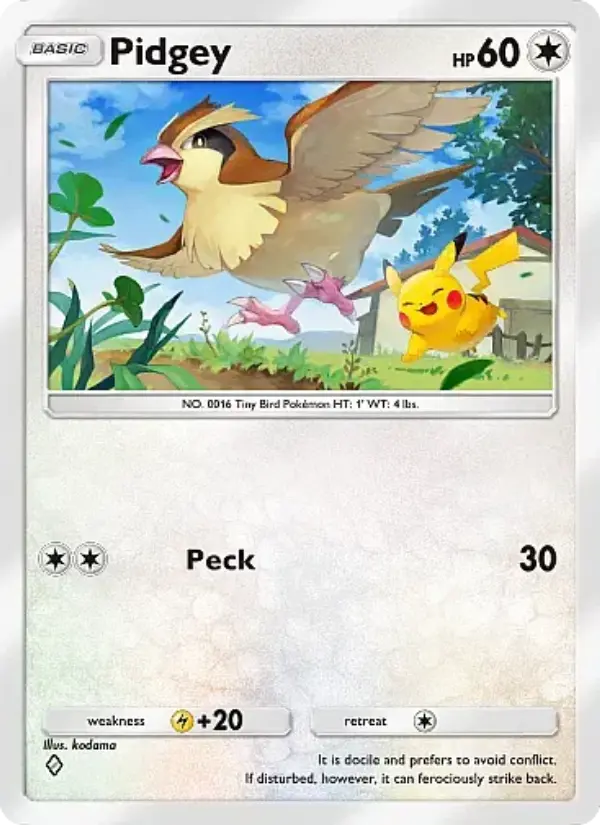
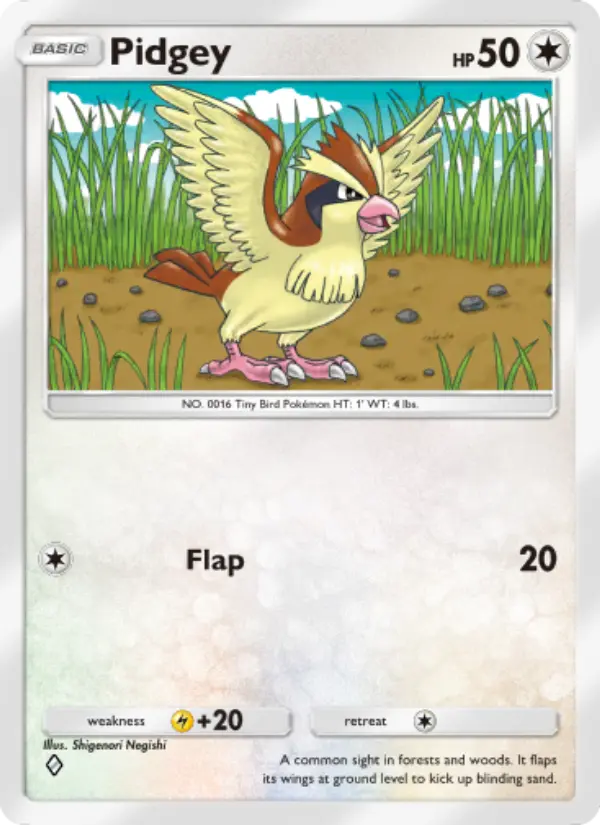
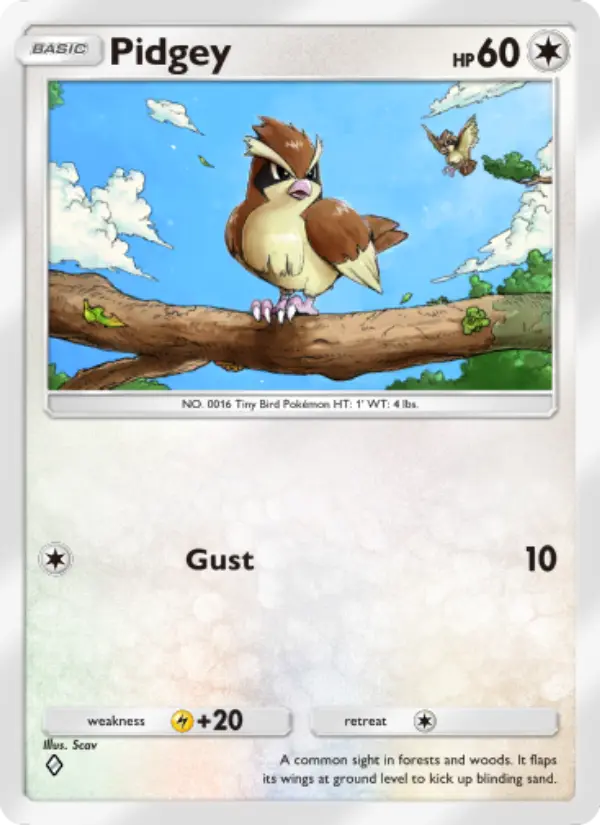
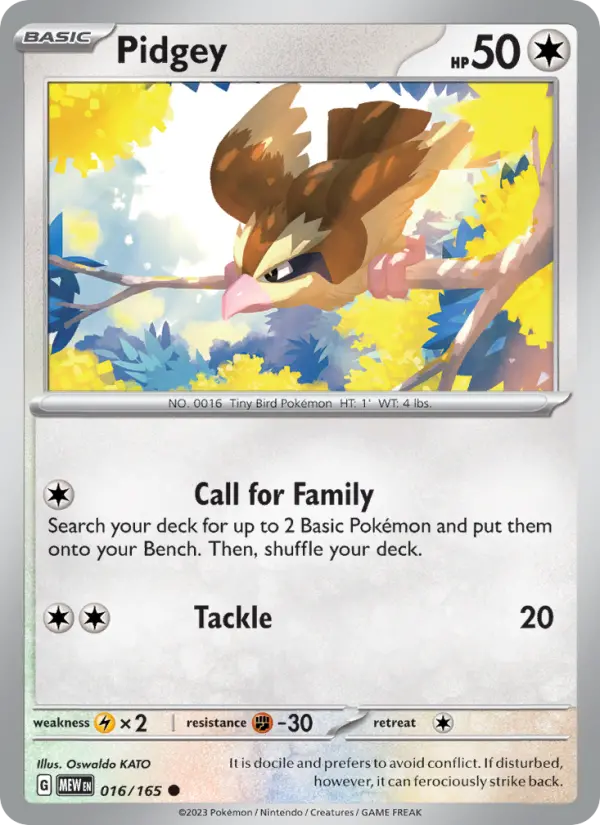
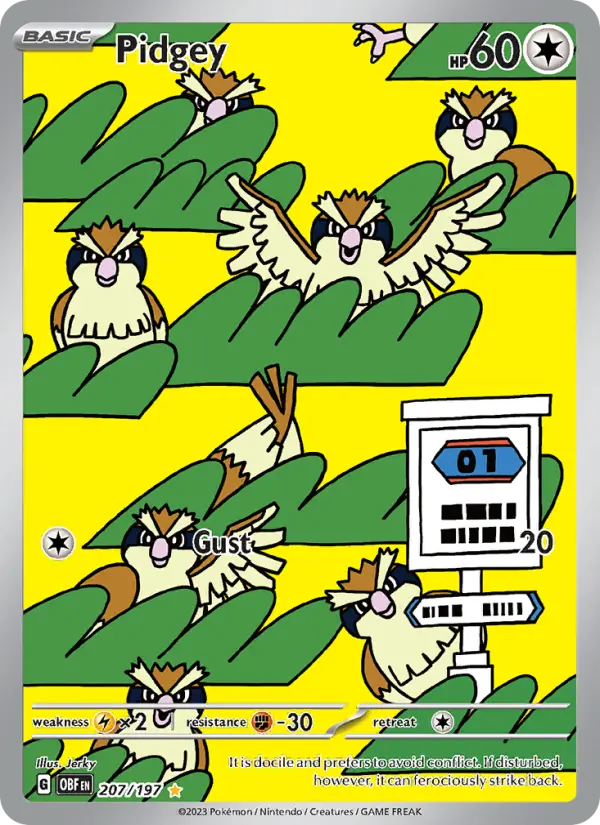
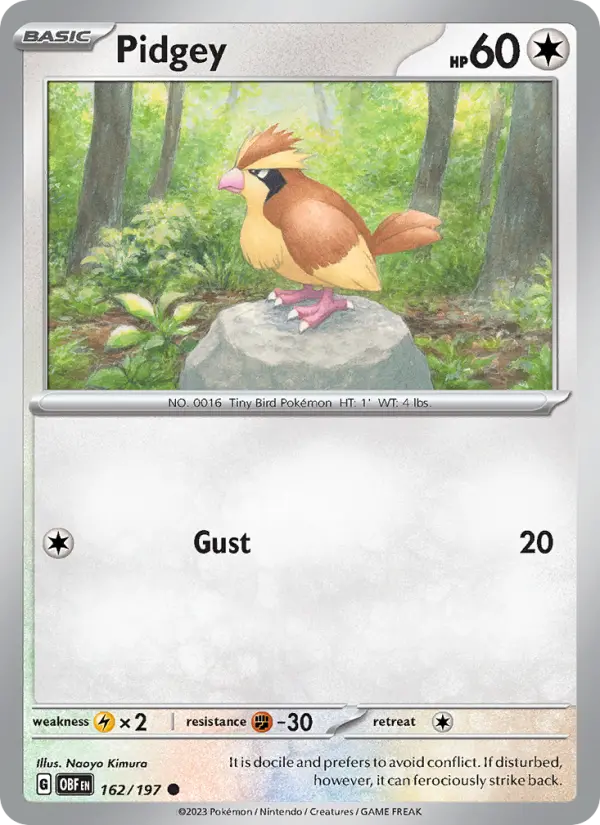
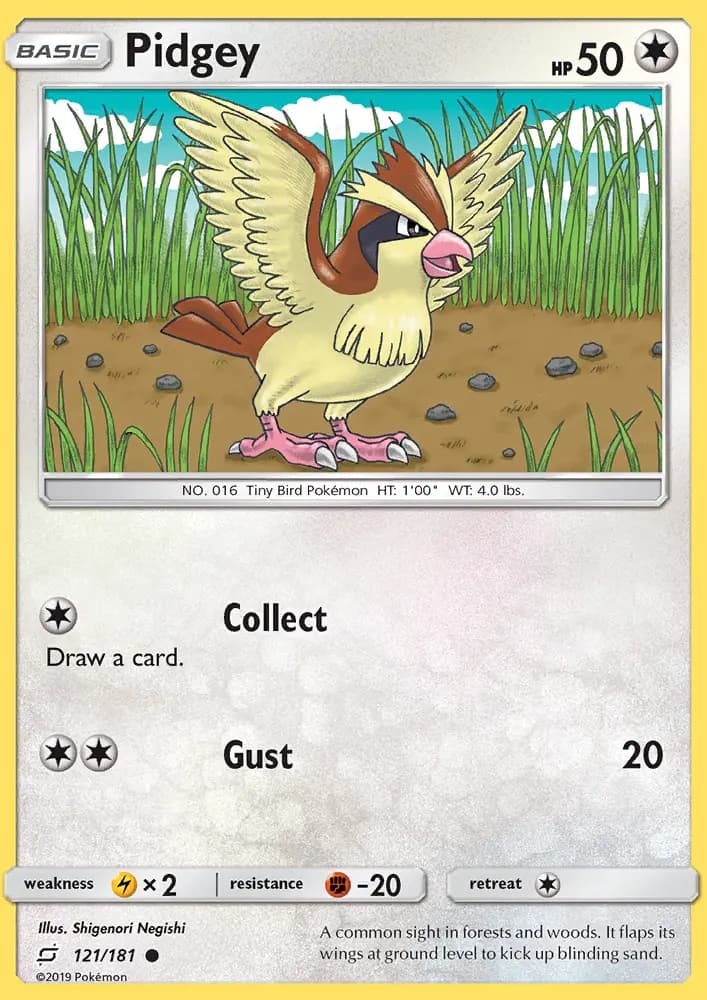
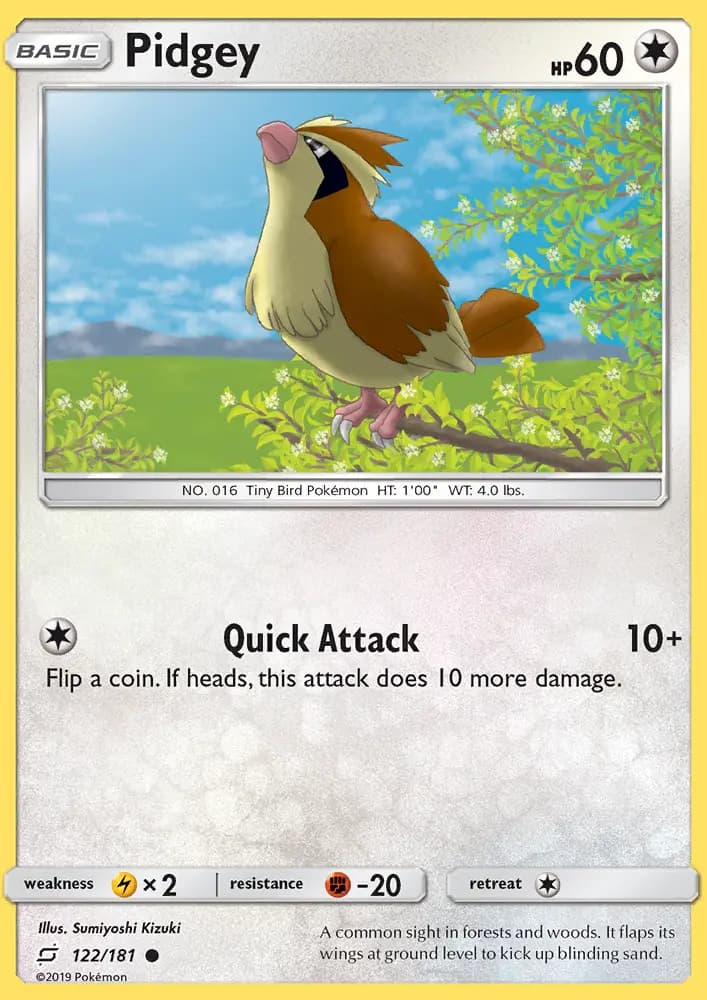
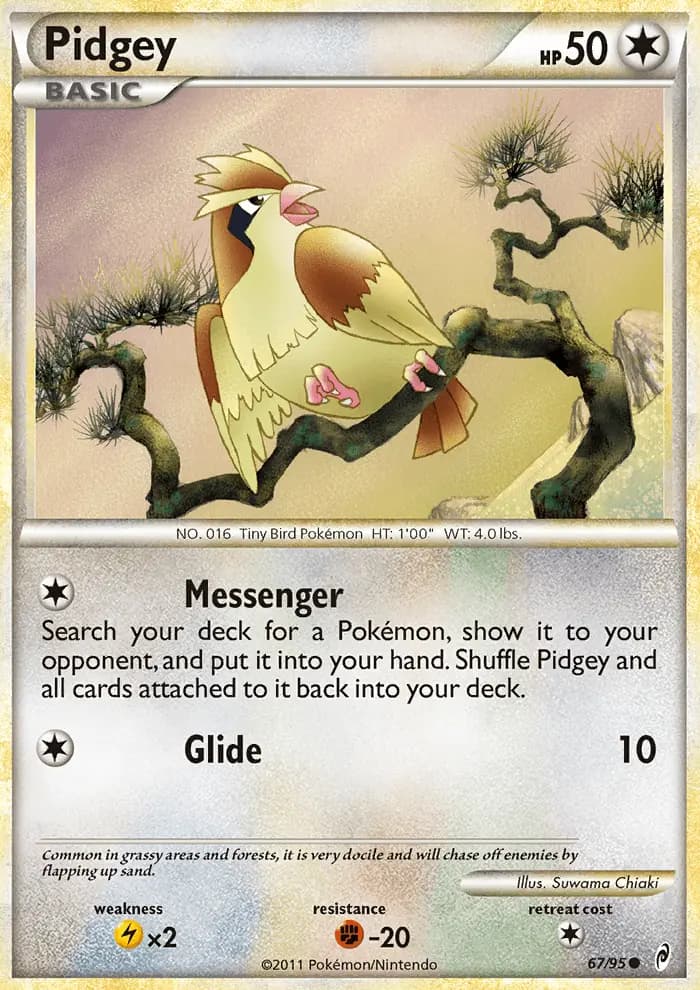
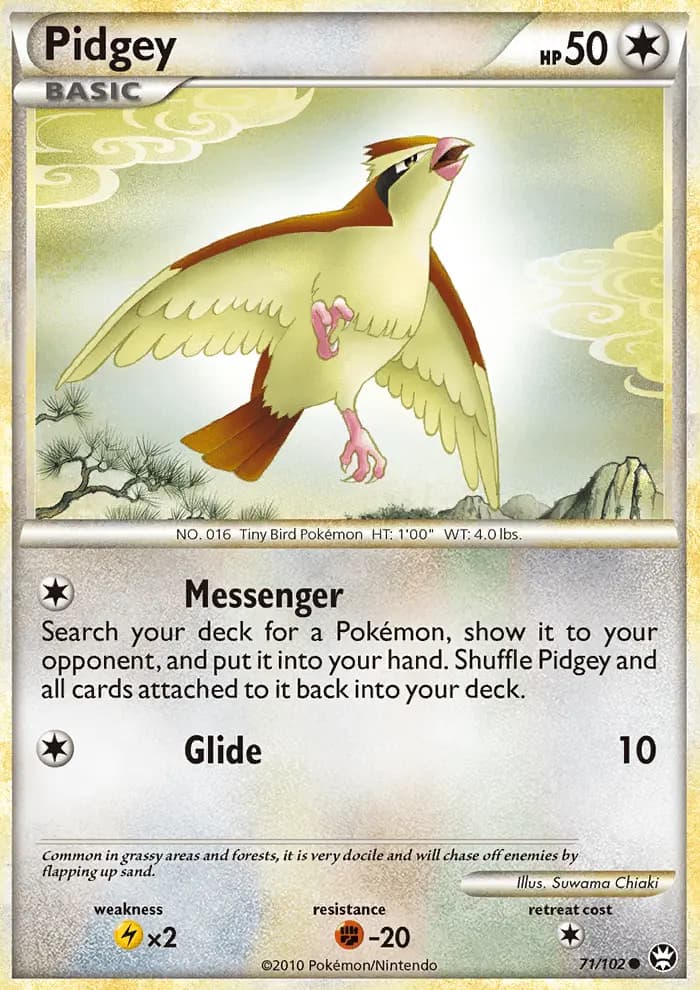
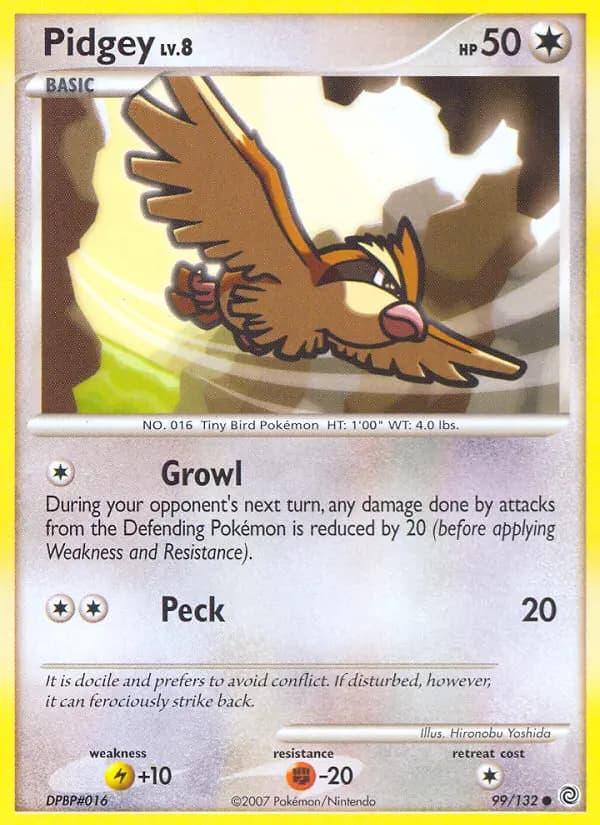
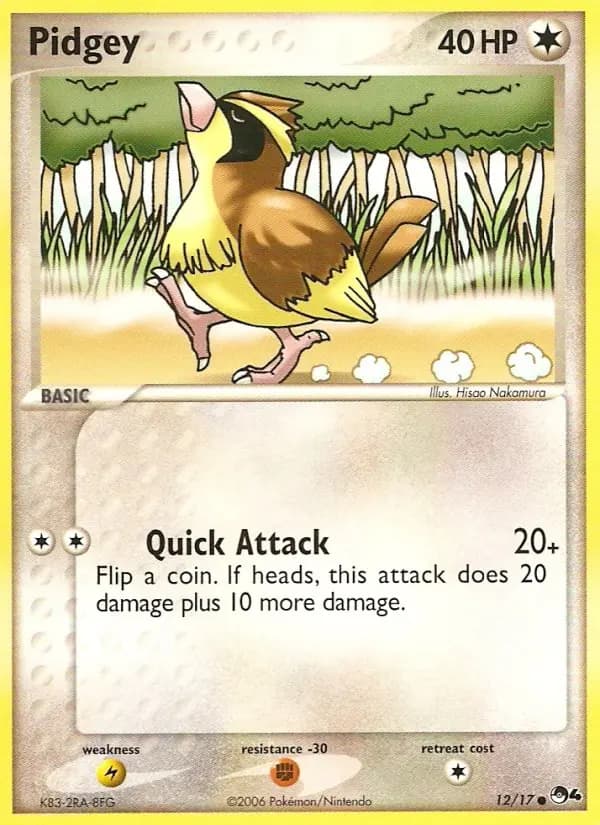
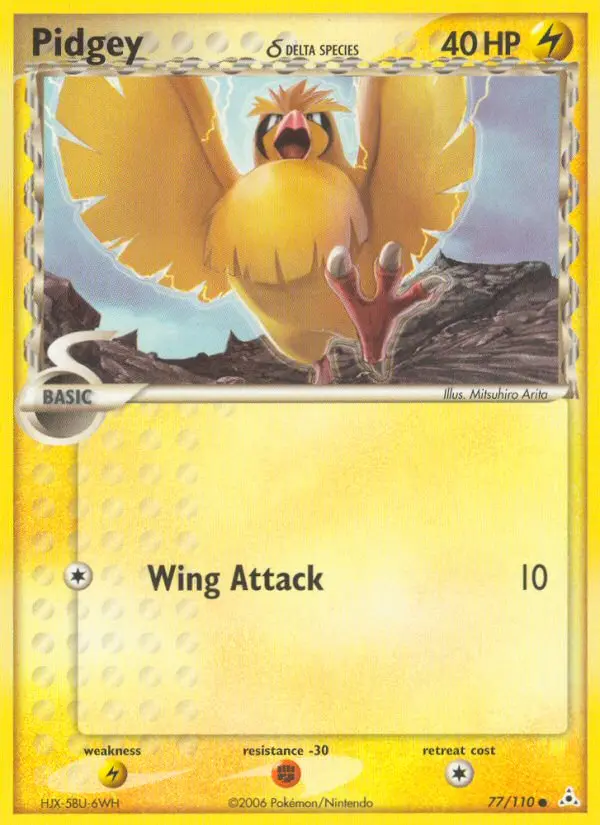
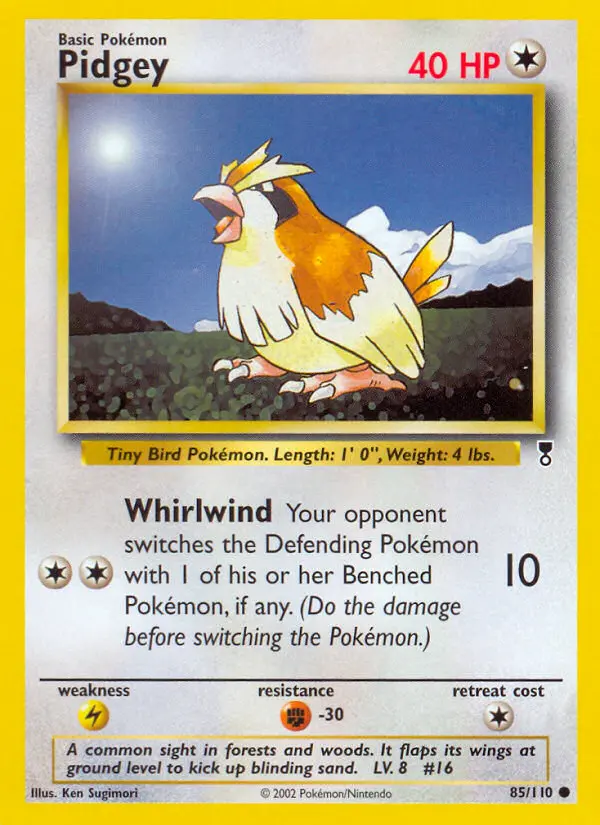
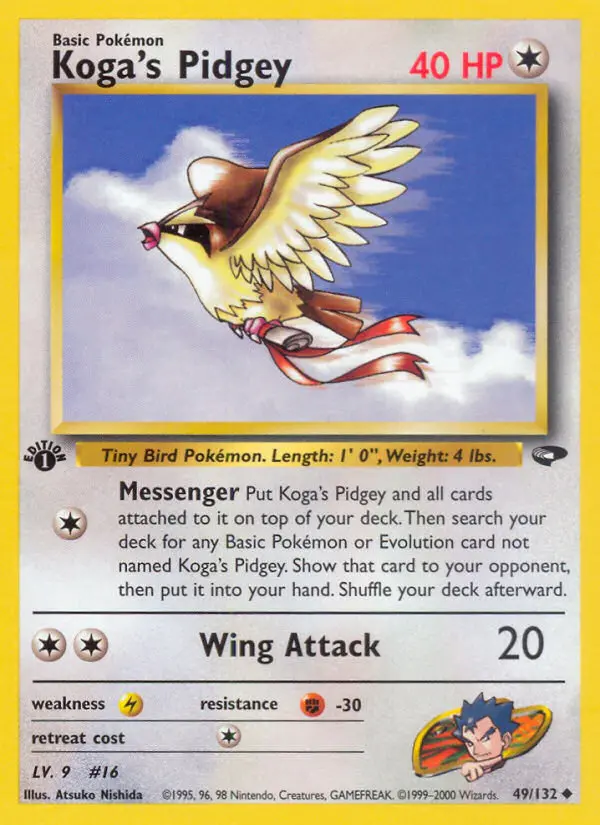
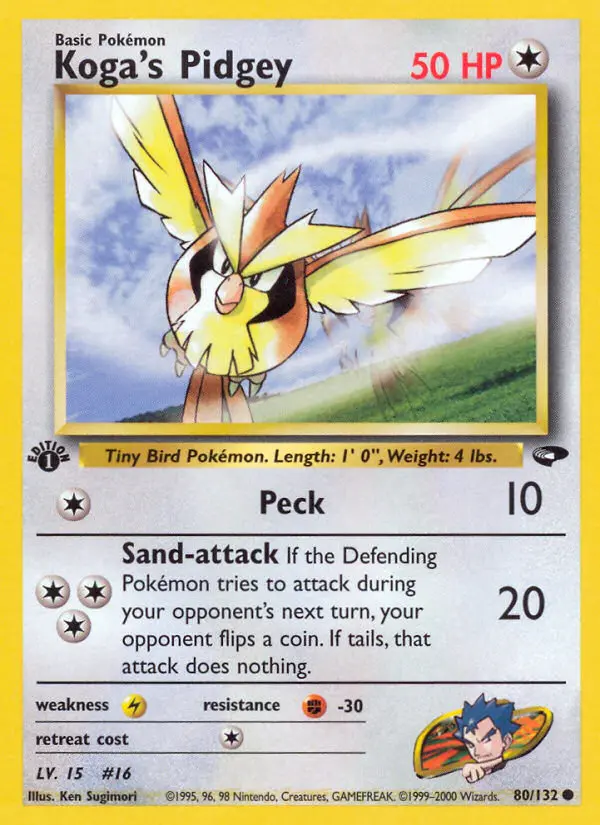
Pidgey holds a significant place in Pokémon culture as one of the first flying-type Pokémon many players encounter in the canonical games, establishing the species as an iconic representation of accessible bird Pokémon in popular consciousness. The species appears prominently in the early episodes of the Pokémon animated series, establishing visual and behavioral precedent for how bird Pokémon are depicted in media, with various Pidgey appearing in multiple episodes and story arcs. In competitive trading card game circles, Pidgey has received numerous card illustrations across various set releases, with vintage Generation I cards featuring Pidgey becoming collectible items for nostalgic players and serious TCG collectors. The species demonstrates remarkable consistency across international releases, maintaining recognizable characteristics and design elements that have allowed Pidgey to remain relevant across multiple gaming generations despite the introduction of hundreds of new Pokémon species. Pidgey's peaceful nature and accessibility have made it a favorite choice for new trainers and casual players seeking a reliable flying-type companion without the complexity of obtaining rarer species. The species continues to receive modern representation in current Pokémon titles, including appearances in Pokémon Legends: Arceus and other recent releases, ensuring its relevance to contemporary audiences.
Where to Find Pidgey in Every Pokémon Game
Pidgey demonstrates exceptional availability across virtually every core Pokémon game released since Generation I, appearing in the early routes of most regional Pokédex games and serving as one of the most consistently accessible Pokémon across the entire franchise. In the original Red, Blue, and Yellow versions, Pidgey appears early in the game and carries a capture rate of 255, the maximum possible rate, making it trivially easy to catch and establish in a team. The species appears with regularity in subsequent generations including Gold/Silver/Crystal, FireRed/LeafGreen, Ruby/Sapphire/Emerald, and every subsequent generation through to modern titles, with availability typically concentrated in grassy areas, forests, and early-game routes. In Pokémon Legends: Arceus, Pidgey receives a local Pokédex number of 0021, indicating continued integration into contemporary game designs despite the introduction of numerous alternate flying-type options. The species' ubiquitous availability reflects Game Freak's deliberate design philosophy of establishing common, accessible Pokémon that serve as reliable introductions to the series for new players while providing veteran trainers with nostalgic options. This consistent availability, combined with its gentle nature and straightforward evolution line, ensures that Pidgey remains perpetually accessible to trainers of all skill levels regardless of which generation or regional version they pursue.