
Phd Pikachu
Generation I · #10083 — Mouse Pokémon
Pikachu (PhD form) is an Electric-type Pokémon that represents a specialized variant of the iconic Mouse Pokémon, National Pokédex #25. This form maintains the core characteristics of standard Pikachu while embodying a more intellectually refined appearance befitting its designation. With a modest frame standing at just 0.4 meters tall and weighing 6.0 kilograms, Pikachu PhD form retains the same base stats as its standard counterpart, boasting a total of 320 stats distributed across its six attributes. The form evolves from Pichu when leveled up with high friendship and represents an intermediate stage in the evolutionary line leading to Raichu. This specialized variant captures the essence of academic pursuit while maintaining the electric prowess that defines the entire Pikachu lineage.
Editor's Take
PhD Pikachu's Electric Terrain predates the ability becoming common by a full generation, which makes the least visually serious Cosplay form quietly the most mechanically forward-looking of the five.
Base Stats
Height
0.4m
Weight
6.0kg
Category
Mouse Pokémon
Gender
Male 50% / Female 50%
Color
yellow
Shape
quadruped
Habitat
forest
Abilities
Has a 30% chance of paralyzing attacking Pokémon on contact.
Redirects single-target electric moves to this Pokémon where possible. Absorbs Electric moves, raising Special Attack one stage.

Phd Pikachu Biology & Physical Characteristics
As an Electric-type Pokémon, Pikachu PhD form possesses distinctive biological features centered around electrical generation and storage. The Pokémon retains the characteristic cheek pouches that serve as electricity-storing organs, which become electrically charged during sleep and occasionally discharge electricity when the Pokémon awakens drowsy. These pouches are not merely aesthetic features but functional organs essential to Pikachu's survival and combat capabilities. The form's physical composition allows for rapid electrical discharge, with the ability to roast hard berries using controlled electrical output, demonstrating sophisticated control over its innate electrical reserves. Standing 0.4 meters in height and weighing 6.0 kilograms, Pikachu PhD form has a compact yet efficient body structure. The elevated tail, raised to monitor surroundings, occasionally becomes struck by lightning in this characteristic pose, suggesting the Pokémon's natural affinity for electrical phenomena in its environment.
Pokedex Numbers
Training
Breeding
Phd Pikachu Breeding, Gender Ratio & Egg Groups
Pikachu PhD form exhibits a balanced gender distribution of 50 percent male and 50 percent female, allowing for equal breeding opportunities regardless of the trainer's preferred gender. The species belongs to both the Ground and Fairy egg groups, enabling diverse breeding combinations with compatible Pokémon from these categories. With a base happiness value of 70, Pikachu demonstrates moderate friendliness toward trainers, a characteristic that influences its willingness to evolve from Pichu form. The breeding cycle requires 10 egg cycles to complete, translating to 2,314 to 2,570 steps before a Pichu egg hatches, making it a relatively quick breeding process compared to many other Pokémon species. The catch rate of 190 out of 255 indicates that Pikachu PhD form is notably easy to capture in the wild, suggesting its prevalence in its natural habitats and making it an accessible Pokémon for trainers new to the franchise. The medium growth rate category indicates that Pikachu reaches higher levels at a moderate pace, balancing early-game accessibility with long-term development potential.
Sprites


Held Items
Light Ball
species-specific
Doubles Pikachu’s Attack and Special Attack. Breed on Pikachu or Raichu: Pichu Egg will have Volt Tackle.
Cost: 1000
Light Ball
species-specific
Doubles Pikachu’s Attack and Special Attack. Breed on Pikachu or Raichu: Pichu Egg will have Volt Tackle.
Cost: 1000
TMs & HMs
tm01
platinum
tm01
emerald
tm01
diamond pearl
tm01
firered leafgreen
tm01
ruby sapphire
tm01
xd
tm01
colosseum
tm01
heartgold soulsilver
tm03
lets go pikachu lets go eevee
tm05
sword shield
tm05
lets go pikachu lets go eevee
tm06
yellow
tm06
gold silver
tm06
red blue
tm06
crystal
tm06
emerald
tm06
firered leafgreen
tm06
diamond pearl
tm06
platinum
tm06
ruby sapphire
+510 more TMs/HMs
Regional & Special Forms
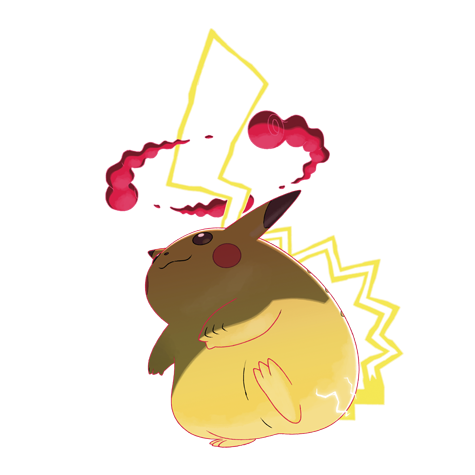
Phd Pikachu also has 16 related forms: Pikachu, Rock Star Pikachu, Belle Pikachu, Pop Star Pikachu, Libre Pikachu, Cosplay Pikachu, Original Cap Pikachu, Hoenn Cap Pikachu, Sinnoh Cap Pikachu, Unova Cap Pikachu, Kalos Cap Pikachu, Alolan Cap Pikachu, Partner Cap Pikachu, Starter Pikachu, World Cap Pikachu and Gigantamax Pikachu.















Gender Differences
This Pokémon has visible differences between male and female forms.
Phd Pikachu's Evolution Chain


Phd Pikachu Evolution, Mega Evolution & Special Forms
Pikachu PhD form evolves from Pichu when leveled up with high friendship, representing the second stage in a three-stage evolutionary line that culminates in Raichu. This evolution marks a significant increase in the Pokémon's power and maturity, though interestingly, Pikachu PhD form maintains identical base stats to its pre-evolved Pichu form, with 35 HP, 55 Attack, 40 Defense, 50 Special Attack, 50 Special Defense, and 90 Speed. The evolutionary process from Pichu to Pikachu is driven by the bond between trainer and Pokémon rather than experience points or items, reflecting the importance of friendship in the Pokémon's development. Upon exposure to a Thunder Stone, Pikachu PhD form can further evolve into Raichu, a significantly more powerful Electric-type that gains enhanced stats and a modified appearance. In the Alola region, this evolutionary path diverges, with Pikachu exposed to a Thunder Stone evolving into the Electric/Water-type Alolan Raichu instead. Notably, special variant forms such as Pikachu in a cap, Cosplay Pikachu, Partner Pikachu, and those with the Gigantamax Factor are unable to evolve, making them permanent variants.
Where to Find
Location data not available for this Pokémon in the database.
Phd Pikachu Behaviour and Natural Habitat
Pikachu PhD form exhibits intelligent behavior patterns consistent with its scholarly designation, demonstrating curiosity toward novel stimuli in its environment. When encountering something new, Pikachu blasts it with controlled jolts of electricity, a behavior that has occasionally resulted in blackened berries from miscalibrated electrical discharge. The Pokémon is notably cautious, keeping its distinctive tail raised to monitor its surroundings at all times, ready to bite if its tail is yanked or if it feels threatened. When angered, Pikachu immediately discharges the energy stored in its cheek pouches with remarkable precision. These Pokémon are naturally social creatures that gather in groups, and when multiple Pikachu congregate, their combined electrical output can build sufficiently to cause lightning storms. Their habitat preferences align with areas where electrical phenomena are common, and they demonstrate adaptability across diverse environments from forests to urban settings.
Pokedex Entries
When several of these POKéMON gather, their electricity could build and cause lightning storms.
It keeps its tail raised to monitor its surroundings. If you yank its tail, it will try to bite you.
This intelligent POKéMON roasts hard BERRIES with electricity to make them tender enough to eat.
It raises its tail to check its sur roundings. The tail is sometimes struck by light ning in this pose.
When it is anger ed, it immediately discharges the energy stored in the pouches in its cheeks.
Whenever PIKACHU comes across something new, it blasts it with a jolt of electricity. If you come across a blackened berry, it’s evidence that this POKéMON mistook the intensity of its charge.
This POKéMON has electricity-storing pouches on its cheeks. These appear to become electrically charged during the night while PIKACHU sleeps. It occasionally discharges electricity when it is dozy after waking up.
It stores electricity in the electric sacs on its cheeks. When it releases pent-up energy in a burst, the electric power is equal to a lightning bolt.
It has small electric sacs on both its cheeks. If threatened, it looses electric charges from the sacs.
When several of these POKéMON gather, their electricity can build and cause lightning storms.
It lives in forests with others. It stores electricity in the pouches on its cheeks.
If it looses crackling power from the electric pouches on its cheeks, it is being wary.
It occasionally uses an electric shock to recharge a fellow PIKACHU that is in a weakened state.
This intelligent Pokémon roasts hard berries with electricity to make them tender enough to eat.
It raises its tail to check its surroundings. The tail is sometimes struck by lightning in this pose.
It occasionally uses an electric shock to recharge a fellow Pikachu that is in a weakened state.
It occasionally uses an electric shock to recharge a fellow Pikachu that is in a weakened state.
It raises its tail to check its surroundings. The tail is sometimes struck by lightning in this pose.
It has small electric sacs on both its cheeks. If threatened, it looses electric charges from the sacs.
Whenever Pikachu comes across something new, it blasts it with a jolt of electricity. If you come across a blackened berry, it’s evidence that this Pokémon mistook the intensity of its charge.
This Pokémon has electricity-storing pouches on its cheeks. These appear to become electrically charged during the night while Pikachu sleeps. It occasionally discharges electricity when it is dozy after waking up.
A plan was recently announced to gather many Pikachu and make an electric power plant.
Its nature is to store up electricity. Forests where nests of Pikachu live are dangerous, since the trees are so often struck by lightning.
It’s in its nature to store electricity. It feels stressed now and then if it’s unable to fully discharge the electricity.
While sleeping, it generates electricity in the sacs in its cheeks. If it’s not getting enough sleep, it will be able to use only weak electricity.
This forest-dwelling Pokémon stores electricity in its cheeks, so you’ll feel a tingly shock if you touch it.
Pikachu that can generate powerful electricity have cheek sacs that are extra soft and super stretchy.
When Pikachu meet, they’ll touch their tails together and exchange electricity through them as a form of greeting.
Possesses cheek sacs in which it stores electricity. This clever forest-dweller roasts tough berries with an electric shock before consuming them.
Phd Pikachu Name Origin & Design Inspiration
The name Pikachu derives from onomatopoeia, combining 'pika' (the sound of electrical sparks) with 'chu' (the sound of mouse squeaks in Japanese), creating a name that perfectly encapsulates the Pokémon's dual nature as an electric rodent. This naming convention has proven remarkably effective in conveying the Pokémon's essence across language barriers. The PhD form designation suggests an academic or scholarly variant, adding an intellectually refined element to the traditional Pikachu design. Visually, Pikachu PhD form maintains the characteristic features that define the species: yellow coloring as its primary pigmentation, round ears with black tips, red cheek pouches containing electrical organs, and a lightning bolt-shaped tail that serves both functional and aesthetic purposes. The form's design evokes the image of a studious creature, with proportions and presentation suggesting intellectual pursuits alongside its electrical capabilities. The species classification as the Mouse Pokémon accurately reflects its rodent-like appearance and small stature, though its electrical powers and intelligence elevate it far beyond typical rodent characteristics.
Learnable Moves
Phd Pikachu can learn 55 moves:
Move | Type | Cat. | Power | Acc. | PP |
|---|---|---|---|---|---|
| agility | psychic | Status | — | — | 30 |
| attract | normal | Status | — | 100 | 15 |
| brick break | fighting | Physical | 75 | 100 | 15 |
| charge beam | electric | Special | 50 | 90 | 10 |
| confide | normal | Status | — | — | 20 |
| covet | normal | Physical | 60 | 100 | 25 |
| dig | ground | Physical | 80 | 100 | 10 |
| discharge | electric | Special | 80 | 100 | 15 |
| double team | normal | Status | — | — | 15 |
| echoed voice | normal | Special | 40 | 100 | 15 |
| electric terrain | electric | Status | — | — | 10 |
| electro ball | electric | Special | — | 100 | 10 |
| electroweb | electric | Special | 55 | 95 | 15 |
| facade | normal | Physical | 70 | 100 | 20 |
| feint | normal | Physical | 30 | 100 | 10 |
| flash | normal | Status | — | 100 | 20 |
| fling | dark | Physical | — | 100 | 10 |
| focus punch | fighting | Physical | 150 | 100 | 20 |
| frustration | normal | Physical | — | 100 | 20 |
| grass knot | grass | Special | — | 100 | 20 |
| growl | normal | Status | — | 100 | 40 |
| helping hand | normal | Status | — | — | 20 |
| hidden power | normal | Special | 60 | 100 | 15 |
| iron tail | steel | Physical | 100 | 75 | 15 |
| knock off | dark | Physical | 65 | 100 | 20 |
| light screen | psychic | Status | — | — | 30 |
| magnet rise | electric | Status | — | — | 10 |
| nuzzle | electric | Physical | 20 | 100 | 20 |
| play nice | normal | Status | — | — | 20 |
| protect | normal | Status | — | — | 10 |
| quick attack | normal | Physical | 40 | 100 | 30 |
| rain dance | water | Status | — | — | 5 |
| rest | psychic | Status | — | — | 5 |
| return | normal | Physical | — | 100 | 20 |
| rock smash | fighting | Physical | 40 | 100 | 15 |
| round | normal | Special | 60 | 100 | 15 |
| secret power | normal | Physical | 70 | 100 | 20 |
| shock wave | electric | Special | 60 | — | 20 |
| signal beam | bug | Special | 75 | 100 | 15 |
| slam | normal | Physical | 80 | 75 | 20 |
| sleep talk | normal | Status | — | — | 10 |
| snore | normal | Special | 50 | 100 | 15 |
| spark | electric | Physical | 65 | 100 | 20 |
| strength | normal | Physical | 80 | 100 | 15 |
| substitute | normal | Status | — | — | 10 |
| swagger | normal | Status | — | 85 | 15 |
| tail whip | normal | Status | — | 100 | 30 |
| thunder | electric | Special | 110 | 70 | 10 |
| thunder punch | electric | Physical | 75 | 100 | 15 |
| thunder shock | electric | Special | 40 | 100 | 30 |
| thunder wave | electric | Status | — | 90 | 20 |
| thunderbolt | electric | Special | 90 | 100 | 15 |
| toxic | poison | Status | — | 90 | 10 |
| volt switch | electric | Special | 70 | 100 | 20 |
| wild charge | electric | Physical | 90 | 100 | 15 |
Phd Pikachu Competitive Battle Guide
In competitive battling, Pikachu PhD form's modest cumulative stat total of 320 positions it as a relatively weak option compared to evolved forms and other dedicated Electric-type competitors. With a Special Attack of 50 and Special Defense of 50, Pikachu lacks the specialized stat distribution necessary for effective special-based offense or defense, while its Attack of 55 similarly limits physical strategies. The standout stat is its Speed of 90, providing Pikachu with respectable quickness that allows it to outpace many slower opponents in competitive scenarios. The ability Static grants a 30 percent chance of paralyzing attacking Pokémon on contact, potentially crippling fast sweepers that rely on physical attacks. The hidden ability Lightning Rod offers superior competitive utility by redirecting single-target Electric-type moves and absorbing them to raise Pikachu's Special Attack one stage, transforming it into a potential setup sweeper against Electric-type teams. However, Pikachu PhD form's limited stat pool means it rarely sees competitive play at higher tiers, where its evolved form Raichu or other Electric-type specialists like Magnezone or Thundurus significantly outperform it. Its primary competitive niche exists in lower-tier competitive formats or in specific doubles scenarios where its abilities can be strategically leveraged.
Commonly Asked Questions About Phd Pikachu
What type is Phd Pikachu?
Phd Pikachu is a electric type Pokemon.
What does Phd Pikachu evolve into?
Phd Pikachu does not evolve into any other Pokemon. It is the final form in its evolution line.
What are Phd Pikachu's weaknesses?
Phd Pikachu is weak to ground type moves.
Phd Pikachu Cultural Impact & Franchise History
Pikachu holds an unparalleled position as the iconic mascot of the entire Pokémon franchise and serves as one of Nintendo's most recognizable and beloved characters worldwide. Its cultural significance extends far beyond gaming, appearing prominently in the Pokémon animated series as Ash Ketchum's primary companion and the emotional center of the show. The species has become synonymous with the Pokémon brand itself, featured on countless merchandise items, trading cards, and promotional materials that have generated billions of dollars in revenue since its introduction in Generation I. Pikachu's design has influenced the entire genre of creature-collection gaming, establishing aesthetic and behavioral standards that countless other franchises have emulated. The Pokémon appears on the covers of multiple spin-off games and serves as the mandatory starting Pokémon in Pokémon Yellow Version and Pokémon Let's Go Pikachu, cementing its status as the franchise ambassador. The creature's universal appeal stems from its combination of cuteness, competence, and symbolic representation of the human-Pokémon bond. In Japanese popular culture particularly, Pikachu has transcended its gaming origins to become a cultural ambassador, appearing in parades, museums, and major events as a symbol of creative innovation and entertainment excellence.
Where to Find Phd Pikachu in Every Pokémon Game
Pikachu PhD form can be obtained across numerous Pokémon games spanning multiple generations, with specific availability varying by regional Pokédex number and game version. In the original Red and Blue versions along with Yellow, Pikachu occupies National Pokédex slot #25 and can be encountered in wild areas. Its local Pokédex number shifts depending on the region: #22 in Gold/Silver/Crystal, #156 in Ruby/Sapphire/Emerald, #25 in FireRed/LeafGreen, #104 in Diamond/Pearl and Platinum, and #22 in HeartGold/SoulSilver. More recent generations continue this pattern with varied regional Pokédex placements, including #36 in X/Y's Central Kalos, #25 in Sun/Moon's Alola dex, #194 in Sword/Shield, and #104 in Brilliant Diamond/Shining Pearl. The catch rate of 190 facilitates relatively easy capture using standard Poké Balls, making Pikachu accessible to trainers at various skill levels. Special event distributions have provided various capped Pikachu variants including Original Cap, Hoenn Cap, Sinnoh Cap, Unova Cap, Kalos Cap, Alola Cap, and World Cap versions, though these special forms cannot evolve. Pikachu has consistently remained one of the most widely available Pokémon throughout the series, ensuring new and veteran trainers can readily add this iconic species to their teams.