Pichu
BabyGeneration II · #0172 — Tiny Mouse Pokémon
The numbers on Pichu tell you where to look first: Speed at 60, well above what its electric typing alone would predict. As a pure Electric-type, Pichu embodies the untamed, volatile nature of electrical energy contained within an inexperienced body. With a total stat allocation of just 205, Pichu is intentionally fragile and underdeveloped, reflecting its status as a creature still learning to control its powers. Its high capture rate of 190 and base friendship of 70 encourage trainers to catch and bond with this species early in their journey. Despite its diminutive stature and limited combat capabilities, Pichu has become a beloved character in Pokémon media, serving as the mascot for numerous spin-off games and gaining significant cultural recognition alongside its evolution, Pikachu.
Editor's Take
Pichu is one of the only Pokémon that gets objectively worse in Smash Bros for accuracy's sake — it deals recoil damage to itself using electric moves, matching its actual in-game fragility rather than smoothing it over for competitive balance.
Base Stats
Height
0.3m
Weight
2.0kg
Category
Tiny Mouse Pokémon
Gender
Male 50% / Female 50%
Color
yellow
Shape
quadruped
Habitat
forest
Abilities
Has a 30% chance of paralyzing attacking Pokémon on contact.
Redirects single-target electric moves to this Pokémon where possible. Absorbs Electric moves, raising Special Attack one stage.

Pichu Biology & Physical Characteristics
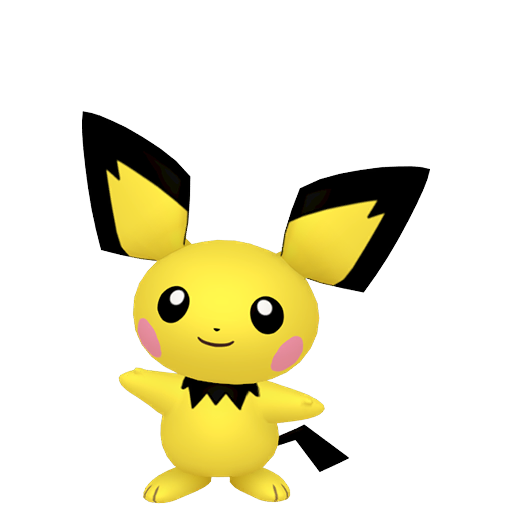
Pichu is a small, ground-dwelling rodent Pokémon measuring just 0.3 meters in height and weighing only 2.0 kilograms, making it one of the lightest Electric-types in existence. Its body is covered in pale yellow fur, with distinctive black ear-tips, a black collar marking, and a black tail that tapers to an angular point. The most notable feature of Pichu's biology is its pair of pink cheek pouches, which serve as electrical sacs capable of storing and generating electric energy. These pouches are significantly smaller and less developed than those of its evolution Pikachu, directly contributing to its poor ability to regulate electrical discharge. Pichu's tiny, dot-like nose and small round eyes give it an adorable appearance that contrasts sharply with the potentially dangerous electricity it harbors. The species' underdeveloped electrical system means it cannot reliably store or contain its power, leading to frequent accidental discharges that often startle the creature itself, as documented in multiple Pokédex entries across various regions.
Pokedex Numbers
Training
Breeding
Pichu Breeding, Gender Ratio & Egg Groups
Despite being classified as a baby Pokémon that belongs to the 'Undiscovered' or 'No Eggs' egg group, Pichu maintains a standard 50% male to 50% female gender ratio, suggesting that the species can reproduce normally in its natural habitat. The classification as 'baby' and its placement in the egg group exclusion reflects the design philosophy that baby Pokémon in the games cannot be bred by players—instead, they must be obtained through other means such as hatching them from eggs left behind by their evolved forms or receiving them as in-game gifts. This mechanic creates an interesting paradox where Pichu cannot breed in gameplay despite having a defined gender distribution. The high base friendship value of 70 encourages immediate bonding between trainers and caught Pichu, facilitating the emotional connection necessary for evolution into Pikachu. Interestingly, female and male Pichu display identical base stats and appearance in standard gameplay, with visual dimorphism only appearing in certain special variants like the Spiky-eared Pichu exclusive to HeartGold and SoulSilver. The breeding restrictions on baby Pokémon fundamentally shaped how players experience Pichu, as the only method to obtain one involves either catching it in the wild or receiving it through in-game events or breeding chains starting from evolved forms.
Sprites





Held Items
Oran Berry
medicine
Held: Consumed at 1/2 max HP to recover 10 HP.
Cost: 80
Oran Berry
medicine
Held: Consumed at 1/2 max HP to recover 10 HP.
Cost: 80
Oran Berry
medicine
Held: Consumed at 1/2 max HP to recover 10 HP.
Cost: 80
Oran Berry
medicine
Held: Consumed at 1/2 max HP to recover 10 HP.
Cost: 80
Oran Berry
medicine
Held: Consumed at 1/2 max HP to recover 10 HP.
Cost: 80
Oran Berry
medicine
Held: Consumed at 1/2 max HP to recover 10 HP.
Cost: 80
Oran Berry
medicine
Held: Consumed at 1/2 max HP to recover 10 HP.
Cost: 80
Oran Berry
medicine
Held: Consumed at 1/2 max HP to recover 10 HP.
Cost: 80
Oran Berry
medicine
Held: Consumed at 1/2 max HP to recover 10 HP.
Cost: 80
Oran Berry
medicine
Held: Consumed at 1/2 max HP to recover 10 HP.
Cost: 80
TMs & HMs
tm00
sword shield
tm01
yellow
tm01
red blue
tm01
lets go pikachu lets go eevee
tm01
blue japan
tm01
red green japan
tm01
sword shield
tm02
crystal
tm02
gold silver
tm03
crystal
tm03
gold silver
tm03
lets go pikachu lets go eevee
tm04
gold silver
tm04
crystal
tm05
red blue
tm05
yellow
tm05
sword shield
tm05
red green japan
tm05
lets go pikachu lets go eevee
tm06
yellow
+576 more TMs/HMs
Forms
pichuDefault spiky-eared
Pichu's Evolution Chain


Pichu Evolution, Mega Evolution & Special Forms
Pichu evolves into Pikachu through a unique mechanism unavailable to most other Pokémon species: it requires leveling up with high friendship rather than reaching a specific level. This evolution method emphasizes the bond between trainer and Pokémon, rewarding players who treat their Pichu with care and affection. The friendship requirement reflects the narrative concept that Pichu's emotional maturity and confidence must develop alongside its trainer's connection to it, allowing the creature to better master and contain its electrical abilities. Once evolved into Pikachu, the Pokémon's base stats improve dramatically across all categories, with particular gains in its offensive and defensive capabilities. Pikachu can then undergo a second evolution into Raichu by exposure to a Thunder Stone, further enhancing its raw power and electrical prowess. In the Alola region, Raichu gains a secondary Psychic-type and transforms into a surfing, more robust variant, though this form is inaccessible to Pichu directly. The evolutionary line progression represents a complete transformation from an uncontrolled infant into a formidable electric powerhouse, making the journey from Pichu to Raichu one of the most satisfying progressions in Pokémon gameplay.
Where to Find
Johto Route 34
johto
Trophy Garden
sinnoh
+11 more
Alola Route 1
alola
+1 more
Hauoli City
alola
Pichu Behaviour and Natural Habitat
Pichu exhibits the playful, curious nature typical of young Pokémon, though its behavior is heavily complicated by its inability to control its electrical output. According to Pokédex entries, Pichu may discharge electricity when amused, startled, or simply excited, often surprising itself with the resulting sparks. The species is most active during thunderstorms or in dry climates, when atmospheric conditions naturally charge its electrical sacs more efficiently, as noted in Ruby version entries. When multiple Pichu gather to play together, their interactions frequently result in electrical short circuits that create impressive showers of sparks, typically causing the young Pokémon to cry out in alarm. Pichu prefers ground-dwelling habitats and is rarely found at significant heights, though it has been documented in various ecosystems across multiple regions. The species' tendency to discharge energy spontaneously when shocked demonstrates that unlike its evolved forms, Pichu lacks the neurological and physiological maturity to suppress involuntary electrical releases, making it a genuinely unpredictable companion despite its diminutive and seemingly harmless appearance.
Pokedex Entries
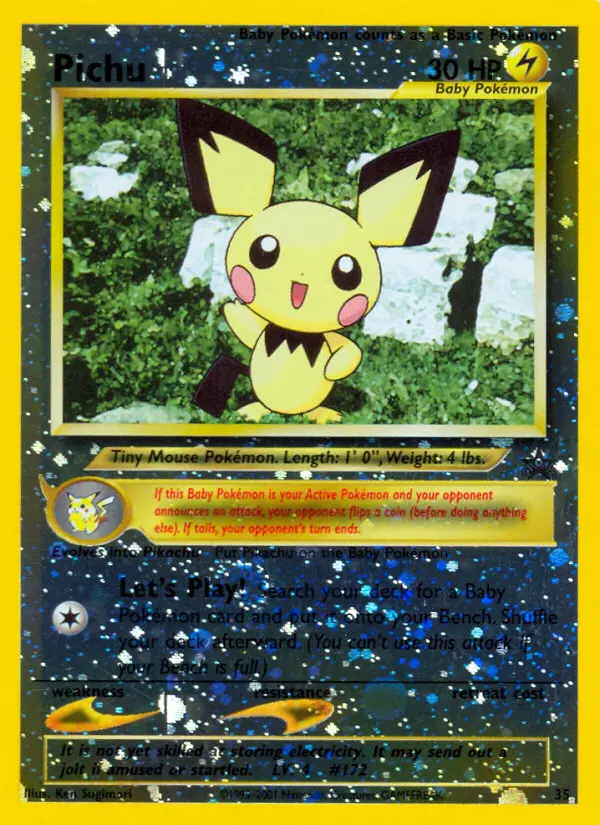
It is not yet skilled at storing electricity. It may send out a jolt if amused or startled.
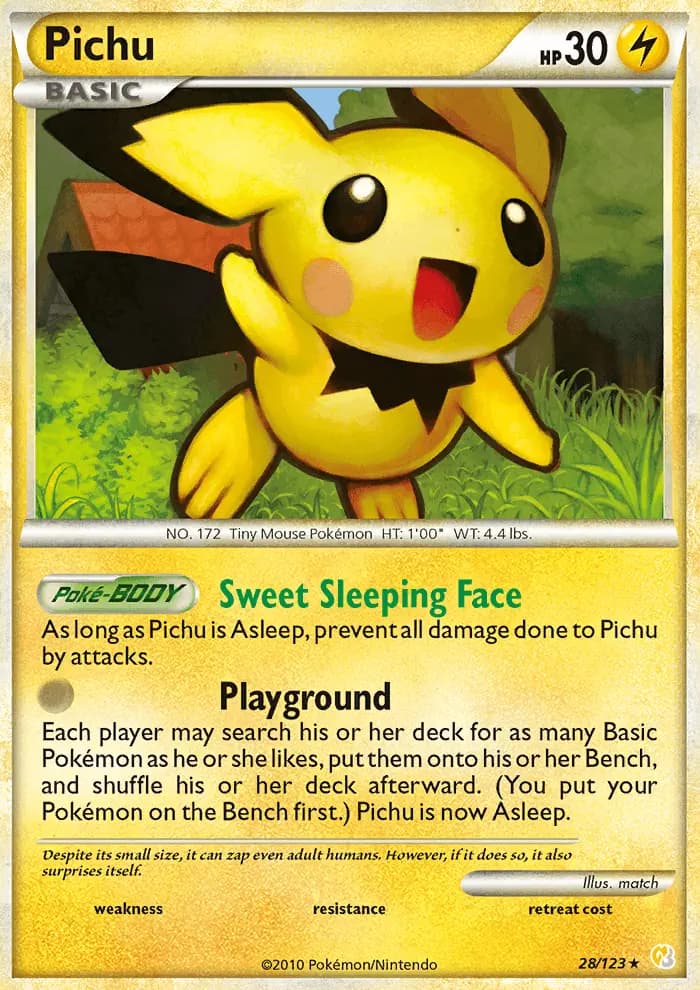
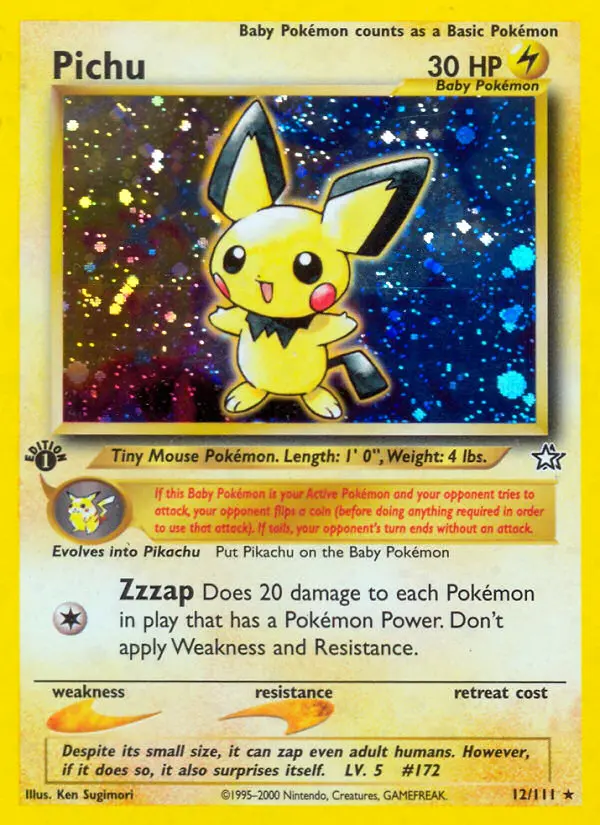
Despite its small size, it can zap even adult humans. However, if it does so, it also surprises itself.
It is unskilled at storing electric power. Any kind of shock causes it to discharge energy spontaneously.
PICHU charges itself with electricity more easily on days with thunderclouds or when the air is very dry. You can hear the crackling of static electricity coming off this POKéMON.
When PICHU plays with others, it may short out electricity with another PICHU, creating a shower of sparks. In that event, this POKéMON will begin crying, startled by the flash of sparks.
It is still inept at retaining electricity. When it is startled, it discharges power accidentally. It gets better at holding power as it grows older.
Despite its small size, it can zap even adult humans. However, if it does so, it also surprises itself.
It is not yet skilled at storing electricity. It may send out a jolt if amused or startled.
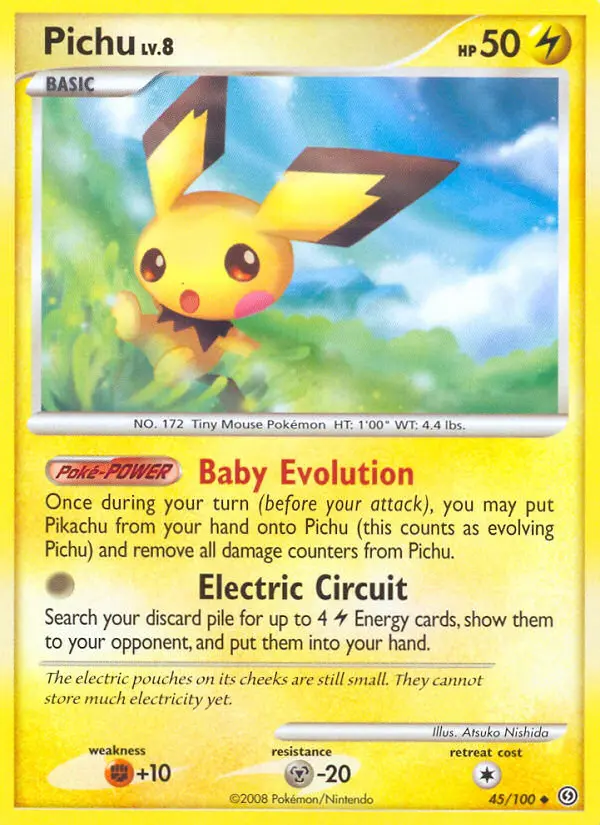
The electric pouches on its cheeks are still small. They cannot store much electricity yet.
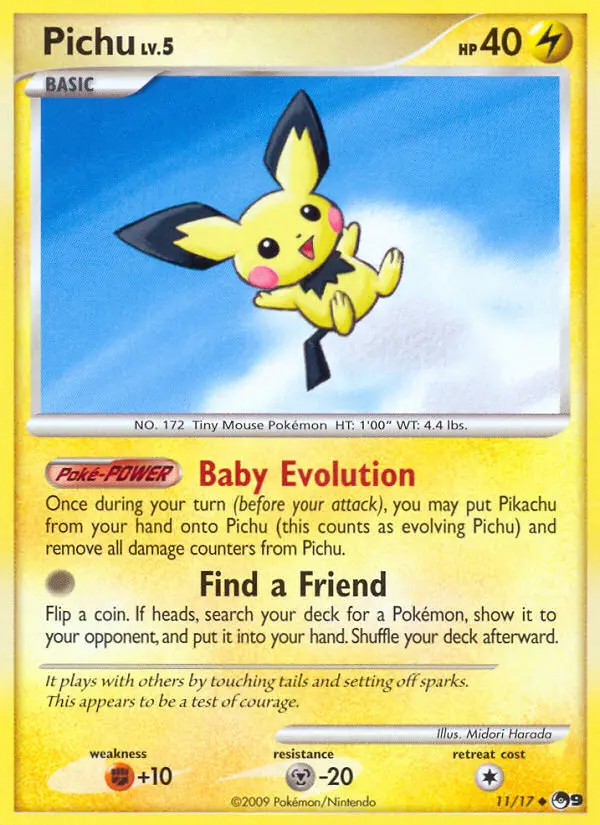
It plays with others by touching tails and setting off sparks. This appears to be a test of courage.
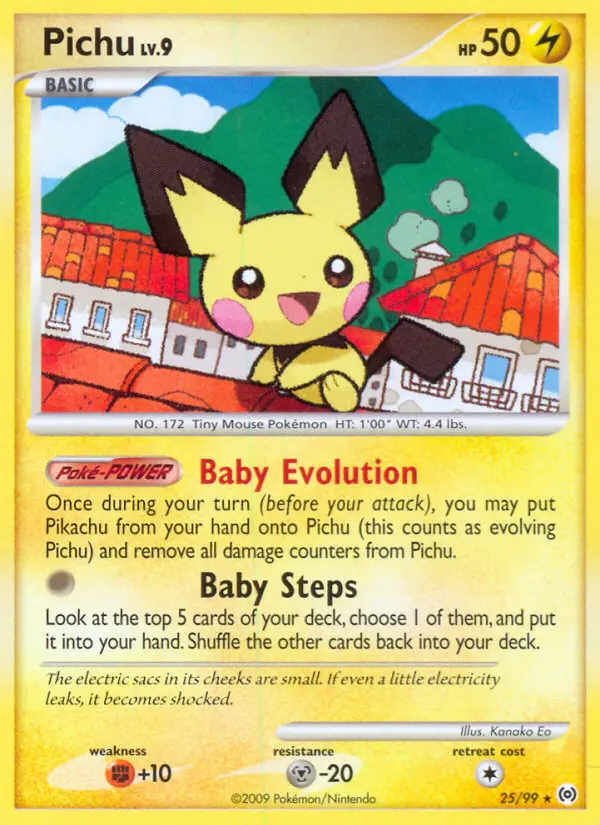
The electric sacs in its cheeks are small. If even a little electricity leaks, it becomes shocked.
It is not yet skilled at storing electricity. It may send out a jolt if amused or startled.
Despite its small size, it can zap even adult humans. However, if it does so, it also surprises itself.
The electric sacs in its cheeks are small. If even a little electricity leaks, it becomes shocked.
The electric sacs in its cheeks are small. If even a little electricity leaks, it becomes shocked.
It plays with others by touching tails and setting off sparks. This appears to be a test of courage.
It is not yet skilled at storing electricity. It may send out a jolt if amused or startled.
Pichu charges itself with electricity more easily on days with thunderclouds or when the air is very dry. You can hear the crackling of static electricity coming off this Pokémon.
When Pichu plays with others, it may short out electricity with another Pichu, creating a shower of sparks. In that event, this Pokémon will begin crying, startled by the flash of sparks.
It is not yet skilled at controlling electricity. If you take your eyes off it, it may shock itself.
It still can’t use electricity well. When it’s surprised or excited, it discharges electricity unintentionally.
Despite this Pokémon’s cute appearance, those who want to live with one should prepare to be on the receiving end of its electric jolts.
It has electric sacs in its cheeks. When they’re fully charged, Pichu plays very energetically.
Despite its small size, it can zap even adult humans. However, if it does so, it also surprises itself.
The electric sacs in its cheeks are small. If even a little electricity leaks, it becomes shocked.
Pichu stores electricity in the sacs on its cheeks but discharges it inadvertently when agitated or excited. Being yet immature, the Pokémon's handling of electricity is rather inept.
Pichu Name Origin & Design Inspiration
Pichu's name traces to the Japanese onomatopoeia 'pikapika,' which represents the sound of sparkling or twinkling, combined with the diminutive suffix 'chu' commonly used in Japanese to denote small or baby versions of things. This naming convention directly parallels its evolution Pikachu, which uses the same 'chu' suffix to indicate a slightly more mature form, while Raichu replaces it entirely to signify full adulthood. The design intentionally captures the essence of an immature mouse through its proportions—smaller ears, rounder proportions, and less defined features compared to Pikachu's more angular, confident silhouette. The pale yellow coloring with black accents establishes visual cohesion with the rest of its evolutionary line while the prominent pink cheek pouches serve as the primary identifier of the species' underdeveloped electrical system. The overall aesthetic conveys both cuteness and danger simultaneously, presenting a creature that appears harmless but poses legitimate electrical hazards. Designers incorporated the characteristic tail and ear shapes from the later evolutions, ensuring instant recognizability as a member of the Pikachu line while the rounder, softer features distinguish it as the youngest member of the family.
Learnable Moves
Pichu can learn 87 moves:
Move | Type | Cat. | Power | Acc. | PP |
|---|---|---|---|---|---|
| attract | normal | Status | — | 100 | 15 |
| bestow | normal | Status | — | — | 15 |
| bide | normal | Physical | — | — | 10 |
| body slam | normal | Physical | 85 | 100 | 15 |
| captivate | normal | Status | — | 100 | 20 |
| charge | electric | Status | — | — | 20 |
| charge beam | electric | Special | 50 | 90 | 10 |
| charm | fairy | Status | — | 100 | 20 |
| confide | normal | Status | — | — | 20 |
| counter | fighting | Physical | — | 100 | 20 |
| covet | normal | Physical | 60 | 100 | 25 |
| curse | ghost | Status | — | — | 10 |
| defense curl | normal | Status | — | — | 40 |
| detect | fighting | Status | — | — | 5 |
| disarming voice | fairy | Special | 40 | — | 15 |
| double slap | normal | Physical | 15 | 85 | 10 |
| double team | normal | Status | — | — | 15 |
| double edge | normal | Physical | 120 | 100 | 15 |
| echoed voice | normal | Special | 40 | 100 | 15 |
| electric terrain | electric | Status | — | — | 10 |
| electro ball | electric | Special | — | 100 | 10 |
| electroweb | electric | Special | 55 | 95 | 15 |
| encore | normal | Status | — | 100 | 5 |
| endure | normal | Status | — | — | 10 |
| facade | normal | Physical | 70 | 100 | 20 |
| fake out | normal | Physical | 40 | 100 | 10 |
| flail | normal | Physical | — | 100 | 15 |
| flash | normal | Status | — | 100 | 20 |
| fling | dark | Physical | — | 100 | 10 |
| follow me | normal | Status | — | — | 20 |
| frustration | normal | Physical | — | 100 | 20 |
| grass knot | grass | Special | — | 100 | 20 |
| headbutt | normal | Physical | 70 | 100 | 15 |
| helping hand | normal | Status | — | — | 20 |
| hidden power | normal | Special | 60 | 100 | 15 |
| iron tail | steel | Physical | 100 | 75 | 15 |
| light screen | psychic | Status | — | — | 30 |
| lucky chant | normal | Status | — | — | 30 |
| magnet rise | electric | Status | — | — | 10 |
| mega kick | normal | Physical | 120 | 75 | 5 |
| mega punch | normal | Physical | 80 | 85 | 20 |
| mimic | normal | Status | — | — | 10 |
| mud slap | ground | Special | 20 | 100 | 10 |
| nasty plot | dark | Status | — | — | 20 |
| natural gift | normal | Physical | — | 100 | 15 |
| nuzzle | electric | Physical | 20 | 100 | 20 |
| play nice | normal | Status | — | — | 20 |
| play rough | fairy | Physical | 90 | 90 | 10 |
| present | normal | Physical | — | 90 | 15 |
| protect | normal | Status | — | — | 10 |
| quick attack | normal | Physical | 40 | 100 | 30 |
| rain dance | water | Status | — | — | 5 |
| reflect | psychic | Status | — | — | 20 |
| rest | psychic | Status | — | — | 5 |
| return | normal | Physical | — | 100 | 20 |
| reversal | fighting | Physical | — | 100 | 15 |
| rollout | rock | Physical | 30 | 90 | 20 |
| round | normal | Special | 60 | 100 | 15 |
| secret power | normal | Physical | 70 | 100 | 20 |
| seismic toss | fighting | Physical | — | 100 | 20 |
| shock wave | electric | Special | 60 | — | 20 |
| signal beam | bug | Special | 75 | 100 | 15 |
| sleep talk | normal | Status | — | — | 10 |
| snore | normal | Special | 50 | 100 | 15 |
| spark | electric | Physical | 65 | 100 | 20 |
| substitute | normal | Status | — | — | 10 |
| surf | water | Special | 90 | 100 | 15 |
| swagger | normal | Status | — | 85 | 15 |
| sweet kiss | fairy | Status | — | 75 | 10 |
| swift | normal | Special | 60 | — | 20 |
| tail whip | normal | Status | — | 100 | 30 |
| take down | normal | Physical | 90 | 85 | 20 |
| tera blast | normal | Special | 80 | 100 | 10 |
| thunder | electric | Special | 110 | 70 | 10 |
| thunder punch | electric | Physical | 75 | 100 | 15 |
| thunder shock | electric | Special | 40 | 100 | 30 |
| thunder wave | electric | Status | — | 90 | 20 |
| thunderbolt | electric | Special | 90 | 100 | 15 |
| tickle | normal | Status | — | 100 | 20 |
| toxic | poison | Status | — | 90 | 10 |
| trailblaze | grass | Physical | 50 | 100 | 20 |
| uproar | normal | Special | 90 | 100 | 10 |
| volt switch | electric | Special | 70 | 100 | 20 |
| volt tackle | electric | Physical | 120 | 100 | 15 |
| wild charge | electric | Physical | 90 | 100 | 15 |
| wish | normal | Status | — | — | 10 |
| zap cannon | electric | Special | 120 | 50 | 5 |
Pichu Competitive Battle Guide
Pichu occupies a unique niche in competitive Pokémon battles as an intentionally weak early-game Pokémon with minimal competitive viability in standard formats. Its total stat allocation of 205 ranks among the lowest in the entire Pokédex, with particularly anemic defensive stats of 15 defense and 35 special defense that leave it vulnerable to virtually any attack. However, Pichu's speed stat of 60 provides its sole redeeming quality in competitive contexts, though even this pales in comparison to dedicated speed-focused Pokémon. The Electric-type combination provides useful resistances to Flying and Steel-type moves, and both of its abilities offer situational benefits. Static grants a 30% chance to paralyze attackers on contact, potentially crippling faster opponents and providing a modicum of defense, while the hidden ability Lightning Rod redirects single-target Electric moves and raises Special Attack by one stage, enabling setup opportunities against Electric-reliant teams. Despite these ability advantages, Pichu's movepool and stat distribution prevent it from functioning as anything more than a novelty pick in casual or Little Cup formats. In competitive play, trainers typically evolve Pichu into Pikachu immediately upon obtaining it, as the stat improvements are immediately transformative. Some dedicated players have experimented with Pichu in Pokémon Legends: Arceus and earlier generations where the stat differences prove less catastrophic, but its intentional weakness makes it fundamentally incompatible with serious competitive strategy.
Commonly Asked Questions About Pichu
What type is Pichu?
Pichu is a electric type Pokemon.
What does Pichu evolve into?
Pichu evolves into pikachu, then into raichu.
What are Pichu's weaknesses?
Pichu is weak to ground type moves.
Does Pichu evolve by trading?
No — Pichu evolves entirely through leveling up, with no trade required at any stage.
Where can I find Pichu?
Pichu can be found in johto route 34 (johto), trophy garden (sinnoh) and alola route 1 (alola) and 1 other locations.
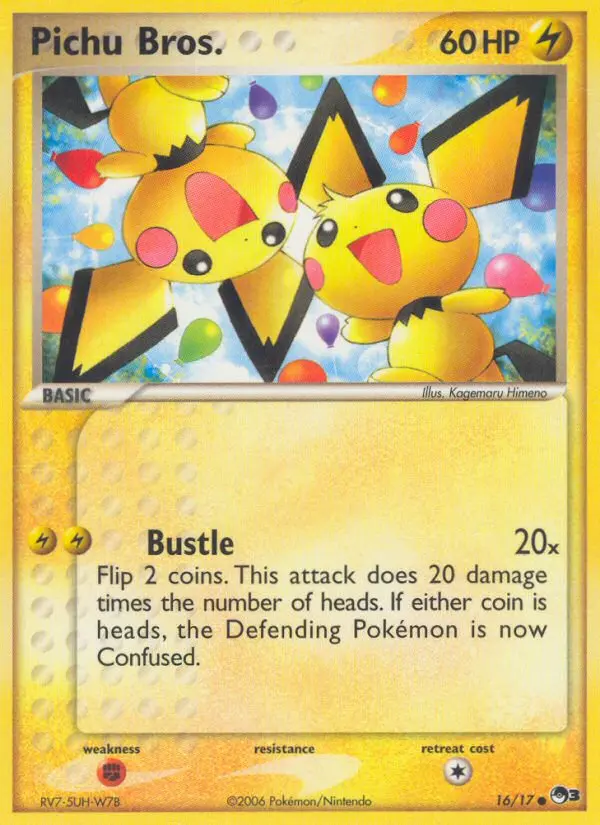
Pichu Cultural Impact & Franchise History
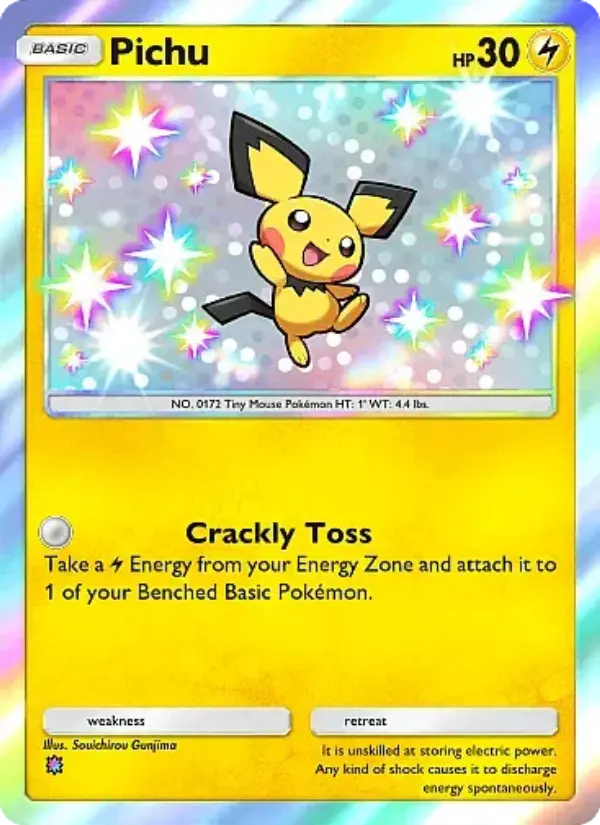
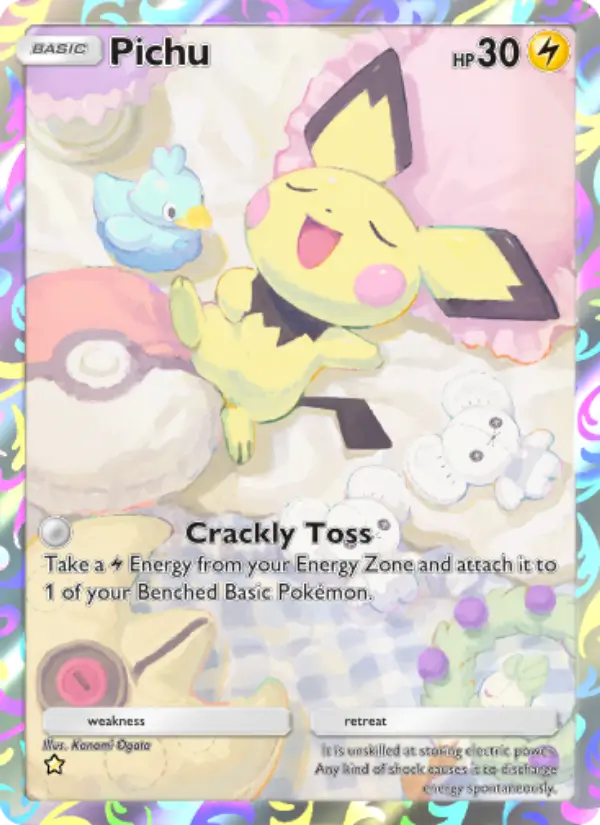
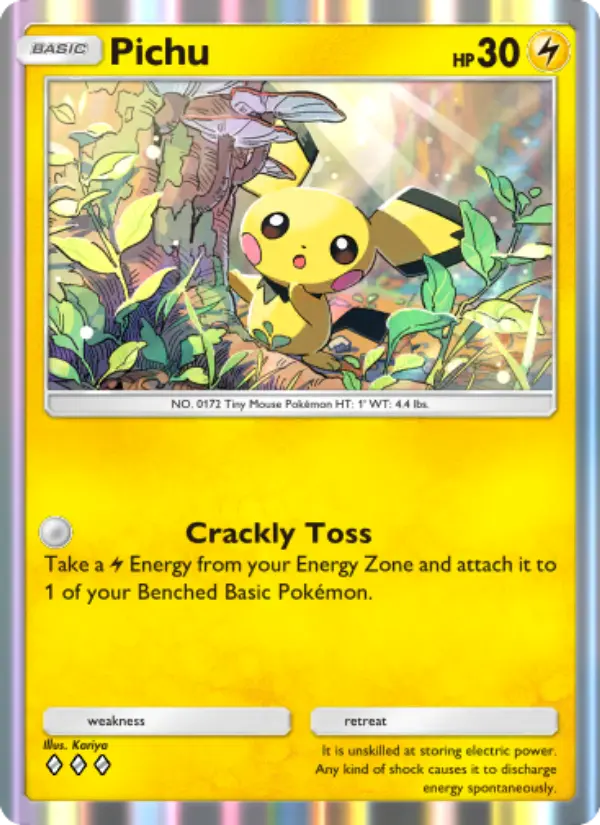
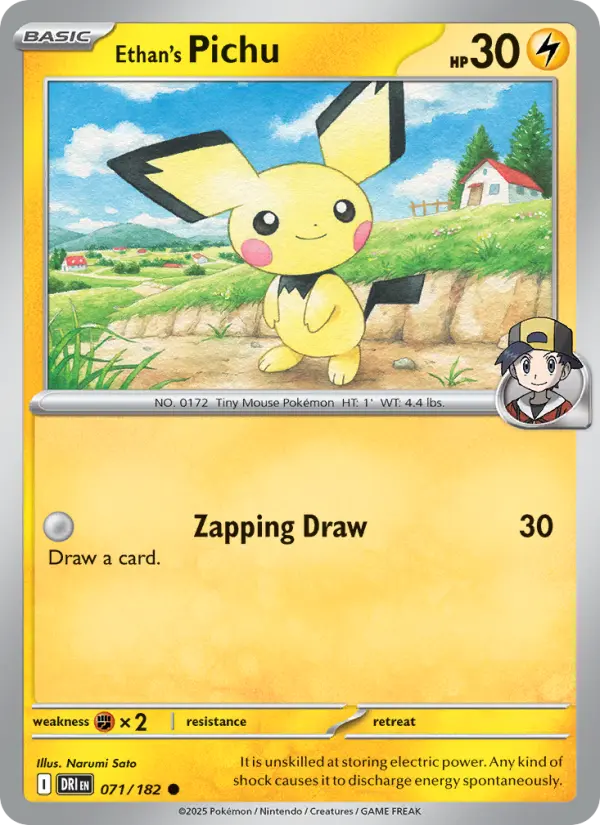
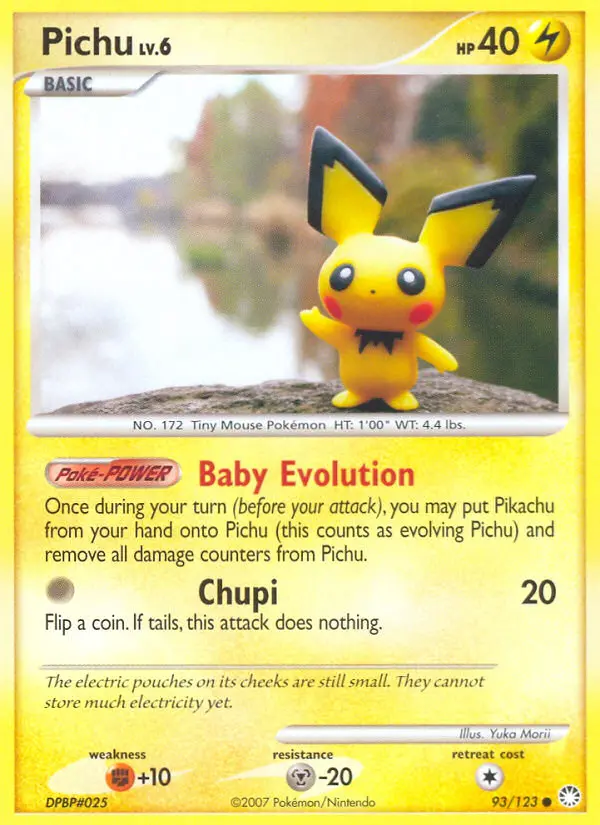
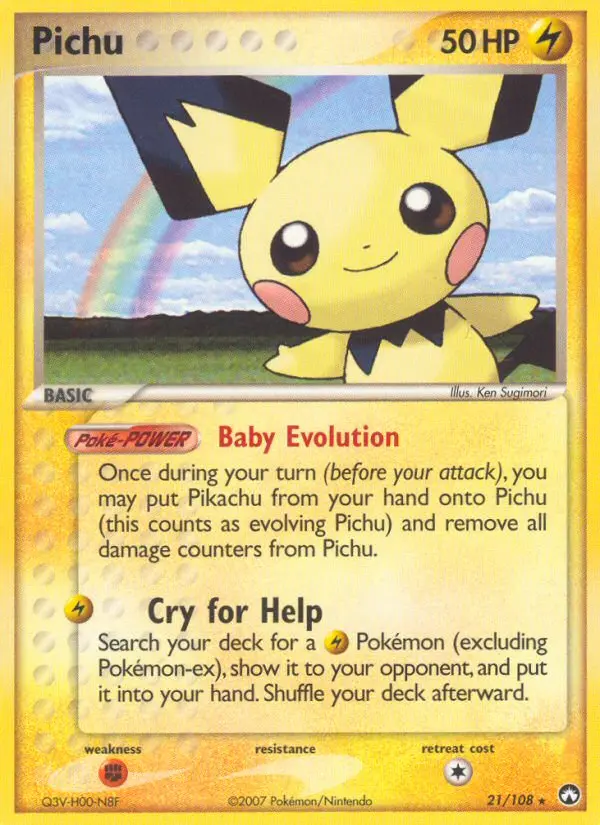
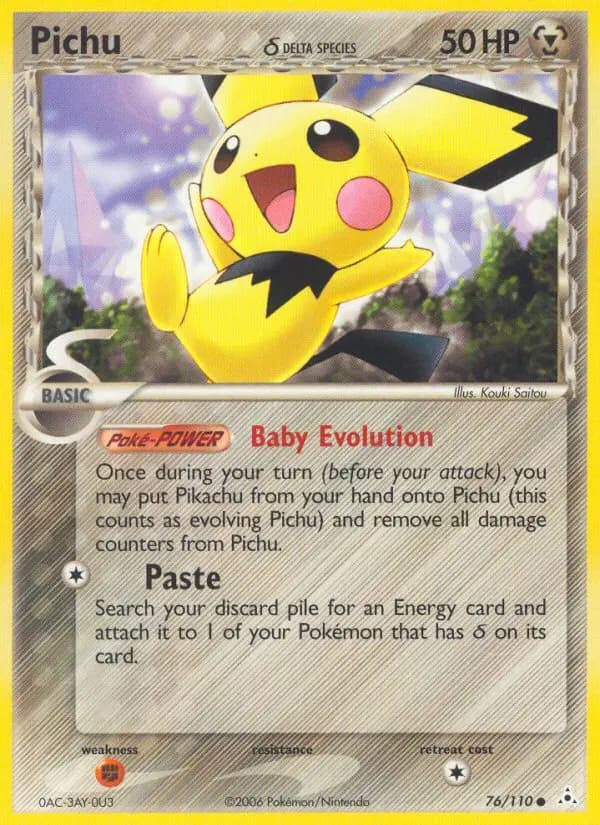
Pichu has achieved substantial cultural prominence as one of the franchise's most recognizable baby Pokémon, spawning multiple dedicated storylines in the anime series and serving as the primary character in several spin-off projects. The Pichu Brothers, featured in Pokémon: Pichu Bros. in a Fuzzy Christmas and later in the main anime series, became fan-favorite characters whose comedic misadventures resonated with audiences worldwide. The Spiky-eared Pichu variant gained prominence through HeartGold and SoulSilver, featuring prominently in the anime's Special episodes and developing a notable fan following. Ukulele Pichu, the player's initial Partner Pokémon in Pokémon Ranger: Guardian Signs, introduced the species to younger audiences through that franchise's unique gameplay mechanics. The species has been featured extensively in Pokémon merchandise, trading cards, and media adaptations, often positioned as a cuter, more comedic counterpart to the serious and iconic Pikachu. Pichu's underdeveloped electrical abilities have been a consistent source of humor in the anime, with episodes frequently depicting the Pokémon accidentally shocking itself or others in endearing ways. The design has proven so popular that Pichu received representation as a fighter in Super Smash Bros. Ultimate, further cementing its status as a culturally significant Pokémon beyond merely serving as a stepping stone in Pikachu's evolution chain.
Where to Find Pichu in Every Pokémon Game
Pichu's availability has varied significantly across generations and game versions, reflecting its status as a baby Pokémon tied to specific regional locations and in-game events. In Generation II games (Gold, Silver, and Crystal), Pichu can be found in the wild with moderate rarity, with the highest encounter rates in areas where Pikachu appear. HeartGold and SoulSilver continued this tradition while introducing the Spiky-eared Pichu as an exclusive form obtainable through specific in-game events that reward player progression. Across subsequent generations, Pichu has consistently appeared in games where its evolution Pikachu is present, though often with limited wild encounter availability, encouraging players to breed Pikachu instead. The species appears as a catchable Pokémon in most main series titles, including X and Y (Central Kalos Pokédex), Sun and Moon (Alola Dex), Sword and Shield, Brilliant Diamond and Shining Pearl, Legends: Arceus, and Scarlet and Violet. Distribution has expanded dramatically through Pokémon GO and Nintendo Switch Online events, allowing contemporary players easy access to Pichu that would have required specific game versions in earlier generations. Special Pichu distributions have occurred through various promotional events, including the aforementioned Ukulele Pichu in Pokémon Ranger and event-exclusive variants with different movesets or abilities in downloadable distributions across multiple console platforms.