Lanturn
Generation II · #0171 — Light Pokémon
Trainers who write off Lanturn on looks alone are missing that its HP of 125 is genuinely one of the higher marks among water/electric-type Pokémon. With a overall stat sum of 460, Lanturn boasts exceptional HP at 125, making it one of the tankiest Water-type Pokémon available, while maintaining balanced Special Attack and Special Defense stats of 76 each. The Pokédex entries describe it as "the deep-sea star" for its illuminated antenna, capable of producing light so brilliant that it can illuminate the sea's surface from depths exceeding three miles below—a remarkable feat that underscores Lanturn's unique ecological niche as a bioluminescent hunter of the abyss.
Editor's Take
Lanturn has 125 base HP and a typing with exactly one weakness, and it has spent every generation being a perfectly good defensive Pokémon nobody remembers to bring.
Base Stats
Height
1.2m
Weight
22.5kg
Category
Light Pokémon
Gender
Male 50% / Female 50%
Color
blue
Shape
fish
Habitat
sea
Abilities
Absorbs electric moves, healing for 1/4 max HP.
Doubles the wild encounter rate.
Absorbs water moves, healing for 1/4 max HP.

Lanturn Biology & Physical Characteristics
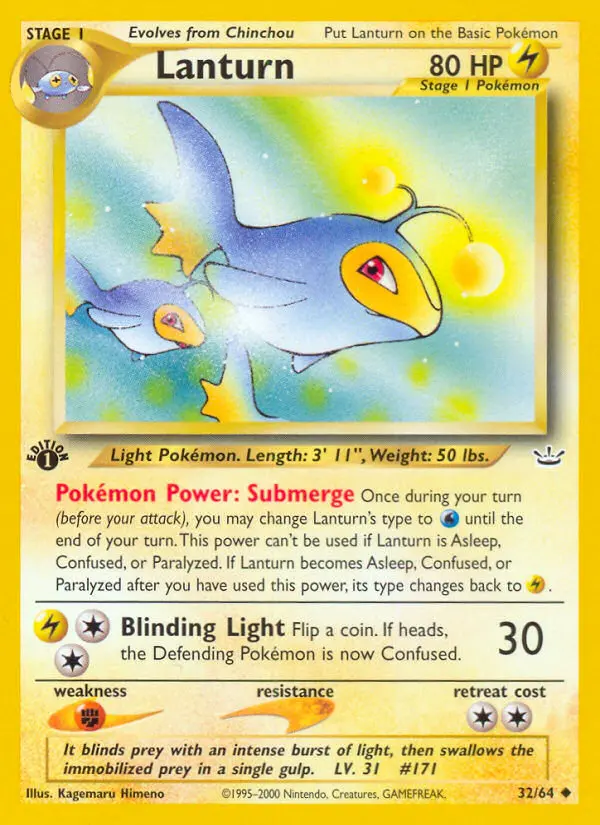
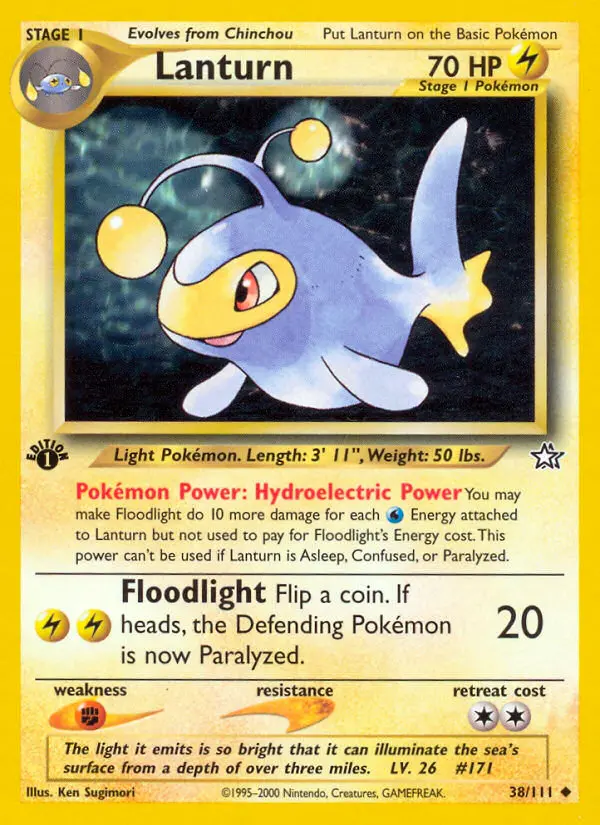
Lanturn is a remarkable piscine Pokémon that bears striking similarities to real-world anglerfish, featuring a blue body with distinctive morphological adaptations for deep-sea life. Its most striking feature is the Y-shaped antenna protruding from its back, which evolved from its dorsal fin and terminates in spherical, glowing orbs on each tip. These orbs contain symbiotic bacteria that produce light through a biochemical reaction with Lanturn's bodily fluids, creating a natural bioluminescent system of extraordinary brilliance. The Pokémon possesses prominent red eyes surrounded by a distinctive yellow mask-like marking, complemented by small, light blue pectoral fins and a lower tailfin colored yellow with jagged edges. According to the Pokédex, Lanturn uses its bioluminescent orbs in a sophisticated hunting strategy: it first lures prey toward the light with the gentle glow, then delivers a blinding flash of intense illumination that temporarily immobilizes its target, allowing the predator to swallow the prey whole in a single gulp. The creature's design perfectly encapsulates deep-sea adaptation, with relatively weak physical attack and defense stats (both 58) offset by its exceptional HP pool, suggesting a creature built for endurance rather than combat prowess.
Pokedex Numbers
Training
Breeding
Lanturn Breeding, Gender Ratio & Egg Groups
Lanturn has one of the simplest gender ratios in the game — a flat 50/50, allowing trainers equal opportunity to breed either gender with compatible partners from the Water 2 egg group. The species possesses a base happiness value of 70, indicating a naturally friendly disposition that makes it relatively easy to bond with compared to more temperamental Pokémon species. As a Water 2 egg group member, Lanturn can breed with a diverse range of Water-type and other compatible Pokémon, including Gyarados, Lapras, Blastoise, and various other aquatic species, providing breeders with numerous options for creating interesting hybrid movesets. The species requires 20 egg cycles to hatch from its egg state, translating to 4,884–5,140 steps of in-game travel before a Chinchou emerges from the egg, making it moderately demanding but not excessively time-consuming compared to legendary or pseudo-legendary Pokémon breeding projects. Trainers breeding Lanturn with specific movesets benefit from the species' moderate growth rate, which provides ample time for careful EV training and nature selection to optimize the resulting offspring. The combination of balanced gender distribution, reasonable base happiness, and membership in an expansive breeding group makes Lanturn an accessible choice for breeders seeking to create competitive or specialized individuals with customized movesets unavailable through standard leveling.
Sprites






Held Items
Yellow Shard
collectibles
No effect. Can be traded for items or moves.
Cost: 1000
Yellow Shard
collectibles
No effect. Can be traded for items or moves.
Cost: 1000
Yellow Shard
collectibles
No effect. Can be traded for items or moves.
Cost: 1000
Yellow Shard
collectibles
No effect. Can be traded for items or moves.
Cost: 1000
Yellow Shard
collectibles
No effect. Can be traded for items or moves.
Cost: 1000
Deep Sea Scale
species-specific
Doubles Clamperl’s Special Defense. Traded on a Clamperl: Holder evolves into Gorebyss.
Cost: 2000
Deep Sea Scale
species-specific
Doubles Clamperl’s Special Defense. Traded on a Clamperl: Holder evolves into Gorebyss.
Cost: 2000
Deep Sea Scale
species-specific
Doubles Clamperl’s Special Defense. Traded on a Clamperl: Holder evolves into Gorebyss.
Cost: 2000
Deep Sea Scale
species-specific
Doubles Clamperl’s Special Defense. Traded on a Clamperl: Holder evolves into Gorebyss.
Cost: 2000
Deep Sea Scale
species-specific
Doubles Clamperl’s Special Defense. Traded on a Clamperl: Holder evolves into Gorebyss.
Cost: 2000
Deep Sea Scale
species-specific
Doubles Clamperl’s Special Defense. Traded on a Clamperl: Holder evolves into Gorebyss.
Cost: 2000
Deep Sea Scale
species-specific
Doubles Clamperl’s Special Defense. Traded on a Clamperl: Holder evolves into Gorebyss.
Cost: 2000
Deep Sea Scale
species-specific
Doubles Clamperl’s Special Defense. Traded on a Clamperl: Holder evolves into Gorebyss.
Cost: 2000
Deep Sea Scale
species-specific
Doubles Clamperl’s Special Defense. Traded on a Clamperl: Holder evolves into Gorebyss.
Cost: 2000
Deep Sea Scale
species-specific
Doubles Clamperl’s Special Defense. Traded on a Clamperl: Holder evolves into Gorebyss.
Cost: 2000
Deep Sea Scale
species-specific
Doubles Clamperl’s Special Defense. Traded on a Clamperl: Holder evolves into Gorebyss.
Cost: 2000
Deep Sea Scale
species-specific
Doubles Clamperl’s Special Defense. Traded on a Clamperl: Holder evolves into Gorebyss.
Cost: 2000
Deep Sea Scale
species-specific
Doubles Clamperl’s Special Defense. Traded on a Clamperl: Holder evolves into Gorebyss.
Cost: 2000
Deep Sea Scale
species-specific
Doubles Clamperl’s Special Defense. Traded on a Clamperl: Holder evolves into Gorebyss.
Cost: 2000
Deep Sea Scale
species-specific
Doubles Clamperl’s Special Defense. Traded on a Clamperl: Holder evolves into Gorebyss.
Cost: 2000
Deep Sea Scale
species-specific
Doubles Clamperl’s Special Defense. Traded on a Clamperl: Holder evolves into Gorebyss.
Cost: 2000
Deep Sea Scale
species-specific
Doubles Clamperl’s Special Defense. Traded on a Clamperl: Holder evolves into Gorebyss.
Cost: 2000
TMs & HMs
tm03
crystal
tm03
gold silver
tm03
ruby sapphire
tm03
platinum
tm03
firered leafgreen
tm03
heartgold soulsilver
tm03
diamond pearl
tm03
emerald
tm03
xd
tm03
colosseum
tm05
lets go pikachu lets go eevee
tm06
yellow
tm06
gold silver
tm06
red blue
tm06
crystal
tm06
emerald
tm06
firered leafgreen
tm06
diamond pearl
tm06
platinum
tm06
ruby sapphire
+617 more TMs/HMs
Lanturn's Evolution Chain


Lanturn Evolution, Mega Evolution & Special Forms
Lanturn evolves from Chinchou starting at level 27, a relatively modest level requirement that reflects the straightforward nature of Generation II evolution mechanics. Unlike many Pokémon that gain significant stat boosts upon evolution, Lanturn's evolution from Chinchou represents more of a maturation and specialization than a dramatic transformation. Upon reaching level 27, Chinchou undergoes physical changes that enhance its bioluminescent capabilities and refine its predatory adaptations, developing the characteristic Y-shaped antenna with its glowing orbs and refining its hunting instincts. The evolutionary process takes Chinchou's base stats and redistributes them toward the bulkier, more specialized design Lanturn requires for survival in its deep-sea habitat. While Lanturn does not possess a Mega Evolution form, its base form represents the final stage of the evolutionary line, as no further evolutions have been introduced in subsequent generations despite numerous Pokédex revisions and generation expansions. The evolution itself serves as the culmination of Chinchou's development journey, transforming the juvenile form into a fully-fledged deep-sea predator capable of utilizing its bioluminescent abilities with devastating effectiveness in the darkness of the abyss.
Where to Find
Johto Sea Route 41
johto
+2 more
Kanto Sea Route 20
kanto
+2 more
Vermilion City
kanto
+7 more
Kanto Sea Route 21
kanto
+2 more
Kanto Route 27
kanto
+2 more
Kanto Route 26
kanto
+2 more
Pallet Town
kanto
+2 more
Cinnabar Island
kanto
+2 more
New Bark Town
johto
+2 more
Sinnoh Sea Route 220
sinnoh
+1 more
Johto Route 47
johto
Driftveil City
unova
+1 more
Undella Bay
unova
Shalour City
kalos
Azure Bay
kalos
Alola Route 8
alola
+1 more
Akala Outskirts
alola
+1 more
Lanturn Behaviour and Natural Habitat
Lanturn inhabits the deepest regions of the ocean, where sunlight never penetrates and pressure would crush most surface-dwelling Pokémon. Its natural habitat puts it in constant competition with other deep-sea predators, most notably Lumineon and Starmie, with which it shares its ecological niche as a hunter of smaller creatures. The species demonstrates intelligent predatory behavior, employing its bioluminescence not merely as a hunting tool but as a complex luring mechanism that exploits the curiosity and attraction of prey species toward light in the absolute darkness of the abyss. Lanturn's natural predators include the formidable Sharpedo and Frillish, creatures equally adapted to deep-sea existence. The Pokédex entries from Sapphire evoke a poetic image of Lanturn creating an artificial starlit night in the depths, with sailors observing their lights rising from below the surface of the ocean at night—a phenomenon that has likely contributed to numerous deep-sea legends and maritime folklore. This nocturnal and abyssal lifestyle necessitates the exceptional HP stat of 125, allowing Lanturn to withstand the environmental stresses of extreme depth and the occasional encounters with larger predators that roam those crushing depths.
Pokedex Entries
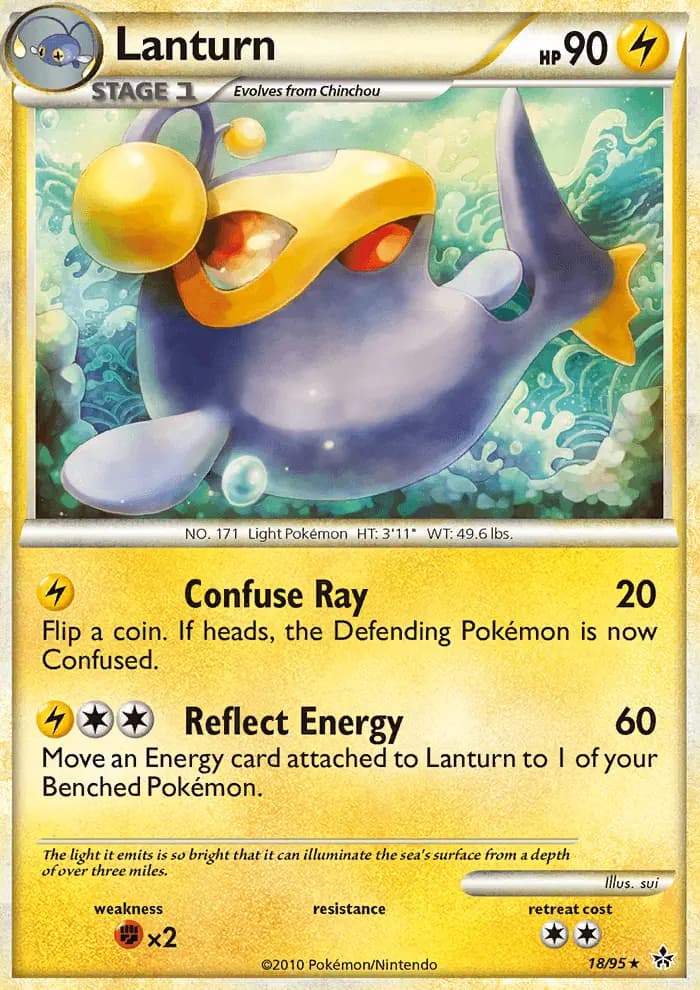
The light it emits is so bright that it can illuminate the sea's surface from a depth of over three miles.
It blinds prey with an intense burst of light, then swallows the immobilized prey in a single gulp.
This POKéMON uses the bright part of its body, which changed from a dorsal fin, to lure prey.
LANTURN is nicknamed “the deep-sea star” for its illuminated antenna. This POKéMON produces light by causing a chemical reaction between bacteria and its bodily fluids inside the antenna.
LANTURN is known to emit light. If you peer down into the dark sea from a ship at night, you can sometimes see this POKéMON’s light rising from the depths where it swims. It gives the sea an appearance of a starlit night.
The light-emitting orbs on its back are very bright. They are formed from a part of its dorsal fin. This POKéMON illuminates the inky darkness of deep seas.
It blinds prey with an intense burst of light, then swallows the immobilized prey in a single gulp.
The light it emits is so bright that it can illuminate the sea’s surface from a depth of over three miles.
LANTURN’s light can shine up from great depths. It is nicknamed “The Deep-Sea Star.”
The light it emits is so bright that it can illuminate the sea’s surface from a depth of over three miles.
It blinds prey with an intense burst of light. With the prey incapacitated, the Pokémon swallows it in a single gulp.
Lanturn’s light can shine up from great depths. It is nicknamed “The Deep-Sea Star.”
Lanturn’s light can shine up from great depths. It is nicknamed “The Deep-Sea Star.”
Lanturn’s light can shine up from great depths. It is nicknamed “The Deep-Sea Star.”
It blinds prey with an intense burst of light. With the prey incapacitated, the Pokémon swallows it in a single gulp.
Lanturn is nicknamed “the deep-sea star” for its illuminated antenna. This Pokémon produces light by causing a chemical reaction between bacteria and its bodily fluids inside the antenna.
Lanturn is known to emit light. If you peer down into the dark sea from a ship at night, you can sometimes see this Pokémon’s light rising from the depths where it swims. It gives the sea an appearance of a starlit night.
Should you peer into the ocean at night and see a light shining like the stars, that is Lanturn.
When the bacteria living inside its antennae absorb Lanturn’s bodily fluids, a strong luminescent effect is produced.
This Pokémon flashes a bright light that blinds its prey. This creates an opening for it to deliver an electrical attack.
It lives far down in the depths of the ocean. It blinds its prey with light, using the moment they’re dazzled to swallow them whole.
The light it emits is so bright that it can illuminate the sea’s surface from a depth of over three miles.
This Pokémon flashes a bright light that blinds its prey. This creates an opening for it to deliver an electrical attack.
Lanturn Name Origin & Design Inspiration
The name "Lanturn" is a clever linguistic blend derived from "lantern" and "turn," perfectly capturing the essence of a Pokémon whose entire biological existence revolves around producing and controlling light in the perpetual darkness of the ocean. The Japanese name "ランターン" (Lantern) is even more direct, emphasizing the bioluminescent orbs that serve as the creature's defining characteristic. The design itself draws heavily from the anglerfish family, specifically mimicking the sexual dimorphism and bioluminescent luring mechanisms observed in deep-sea species like Melanocetus and Cryptopsaras, though adapted for Pokémon's more fantastical aesthetic. The Y-shaped antenna represents a stylized evolution of the dorsal fin mentioned in Pokédex entries, transformed into an unmistakable silhouette that immediately communicates the Pokémon's bioluminescent nature to trainers at a glance. The color scheme of deep blue body with yellow accents and red eyes creates strong visual contrast that makes Lanturn memorable despite its relatively simple geometric design. This design philosophy—combining real-world biological inspiration with fantastical Pokémon characteristics—has made Lanturn an enduring fan favorite among players who appreciate thoughtful creature design grounded in actual evolutionary biology and ecological principles.
Learnable Moves
Lanturn can learn 84 moves:
Move | Type | Cat. | Power | Acc. | PP |
|---|---|---|---|---|---|
| agility | psychic | Status | — | — | 30 |
| amnesia | psychic | Status | — | — | 20 |
| aqua ring | water | Status | — | — | 20 |
| aqua tail | water | Physical | 90 | 90 | 10 |
| attract | normal | Status | — | 100 | 15 |
| blizzard | ice | Special | 110 | 70 | 5 |
| bounce | flying | Physical | 85 | 85 | 5 |
| brine | water | Special | 65 | 100 | 10 |
| bubble | water | Special | 40 | 100 | 30 |
| bubble beam | water | Special | 65 | 100 | 20 |
| captivate | normal | Status | — | 100 | 20 |
| charge | electric | Status | — | — | 20 |
| charge beam | electric | Special | 50 | 90 | 10 |
| chilling water | water | Special | 50 | 100 | 20 |
| confide | normal | Status | — | — | 20 |
| confuse ray | ghost | Status | — | 100 | 10 |
| curse | ghost | Status | — | — | 10 |
| dazzling gleam | fairy | Special | 80 | 100 | 10 |
| discharge | electric | Special | 80 | 100 | 15 |
| dive | water | Physical | 80 | 100 | 10 |
| double team | normal | Status | — | — | 15 |
| double edge | normal | Physical | 120 | 100 | 15 |
| eerie impulse | electric | Status | — | 100 | 15 |
| electric terrain | electric | Status | — | — | 10 |
| electro ball | electric | Special | — | 100 | 10 |
| electroweb | electric | Special | 55 | 95 | 15 |
| endure | normal | Status | — | — | 10 |
| facade | normal | Physical | 70 | 100 | 20 |
| flail | normal | Physical | — | 100 | 15 |
| flash | normal | Status | — | 100 | 20 |
| flip turn | water | Physical | 60 | 100 | 20 |
| frustration | normal | Physical | — | 100 | 20 |
| giga impact | normal | Physical | 150 | 90 | 5 |
| hail | ice | Status | — | — | 10 |
| heal bell | normal | Status | — | — | 5 |
| hidden power | normal | Special | 60 | 100 | 15 |
| hydro pump | water | Special | 110 | 80 | 5 |
| hyper beam | normal | Special | 150 | 90 | 5 |
| ice beam | ice | Special | 90 | 100 | 10 |
| icy wind | ice | Special | 55 | 95 | 15 |
| ion deluge | electric | Status | — | — | 25 |
| liquidation | water | Physical | 85 | 100 | 10 |
| mimic | normal | Status | — | — | 10 |
| mist | ice | Status | — | — | 30 |
| muddy water | water | Special | 90 | 85 | 10 |
| natural gift | normal | Physical | — | 100 | 15 |
| protect | normal | Status | — | — | 10 |
| psybeam | psychic | Special | 65 | 100 | 20 |
| rain dance | water | Status | — | — | 5 |
| rest | psychic | Status | — | — | 5 |
| return | normal | Physical | — | 100 | 20 |
| rising voltage | electric | Special | 70 | 100 | 20 |
| round | normal | Special | 60 | 100 | 15 |
| scald | water | Special | 80 | 100 | 15 |
| screech | normal | Status | — | 85 | 40 |
| secret power | normal | Physical | 70 | 100 | 20 |
| shock wave | electric | Special | 60 | — | 20 |
| signal beam | bug | Special | 75 | 100 | 15 |
| sleep talk | normal | Status | — | — | 10 |
| snore | normal | Special | 50 | 100 | 15 |
| soak | water | Status | — | 100 | 20 |
| spark | electric | Physical | 65 | 100 | 20 |
| spit up | normal | Special | — | 100 | 10 |
| spotlight | normal | Status | — | — | 15 |
| stockpile | normal | Status | — | — | 20 |
| substitute | normal | Status | — | — | 10 |
| sucker punch | dark | Physical | 70 | 100 | 5 |
| supersonic | normal | Status | — | 55 | 20 |
| surf | water | Special | 90 | 100 | 15 |
| swagger | normal | Status | — | 85 | 15 |
| swallow | normal | Status | — | — | 10 |
| take down | normal | Physical | 90 | 85 | 20 |
| tera blast | normal | Special | 80 | 100 | 10 |
| thunder | electric | Special | 110 | 70 | 10 |
| thunder wave | electric | Status | — | 90 | 20 |
| thunderbolt | electric | Special | 90 | 100 | 15 |
| toxic | poison | Status | — | 90 | 10 |
| volt switch | electric | Special | 70 | 100 | 20 |
| water gun | water | Special | 40 | 100 | 25 |
| water pulse | water | Special | 60 | 100 | 20 |
| waterfall | water | Physical | 80 | 100 | 15 |
| whirlpool | water | Special | 35 | 85 | 15 |
| wild charge | electric | Physical | 90 | 100 | 15 |
| zap cannon | electric | Special | 120 | 50 | 5 |
Lanturn Competitive Battle Guide
In competitive battling, Lanturn occupies a niche role as a specially-bulky Water/Electric-type support Pokémon capable of absorbing Electric-type moves through its Volt Absorb ability or increasing encounter rates through Illuminate, with the hidden ability Water Absorb providing an alternative defensive strategy. The exceptional HP stat of 125 serves as Lanturn's primary defensive asset, allowing it to survive special attacks that would eliminate frailer Pokémon, while the balanced Special Attack and Special Defense stats of 76 each enable it to function equally well as an offensive or defensive team member. Its relatively low Attack (58) and Defense (58) statistics necessitate that Lanturn avoid physical attackers entirely, instead relying on its typing advantages—resisting Water, Ice, Flying, and Psychic-type moves while maintaining immunity to Electric-type attacks through its abilities. The Speed stat of 67 is decidedly underwhelming, leaving Lanturn vulnerable to faster threats and requiring careful team building to provide appropriate speed control through trick room support or priority moves. Volt Absorb remains Lanturn's most strategically valuable ability in competitive formats, allowing it to heal for 25% of its maximum HP whenever an Electric-type attack targets it, effectively punishing opponents for using their own Electric-type moves and turning a potential weakness into a defensive asset. Despite its competitively mixed performance across different formats, Lanturn has found success in lower-tier competitive scenes where its defensive bulk and typing provide valuable team support, particularly in formats where its Water/Electric coverage and access to moves like Scald, Thunderbolt, Heal Bell, and Toxic Spikes can make meaningful contributions to team success.
Commonly Asked Questions About Lanturn
What type is Lanturn?
Lanturn is a water and electric type Pokemon.
What does Lanturn evolve from?
Lanturn evolved from chinchou.
What are Lanturn's weaknesses?
Lanturn is weak to ground and grass type moves.
Where can I find Lanturn?
Lanturn can be found in johto sea route 41 (johto), kanto sea route 20 (kanto) and vermilion city (kanto) and 14 other locations.
Lanturn Cultural Impact & Franchise History
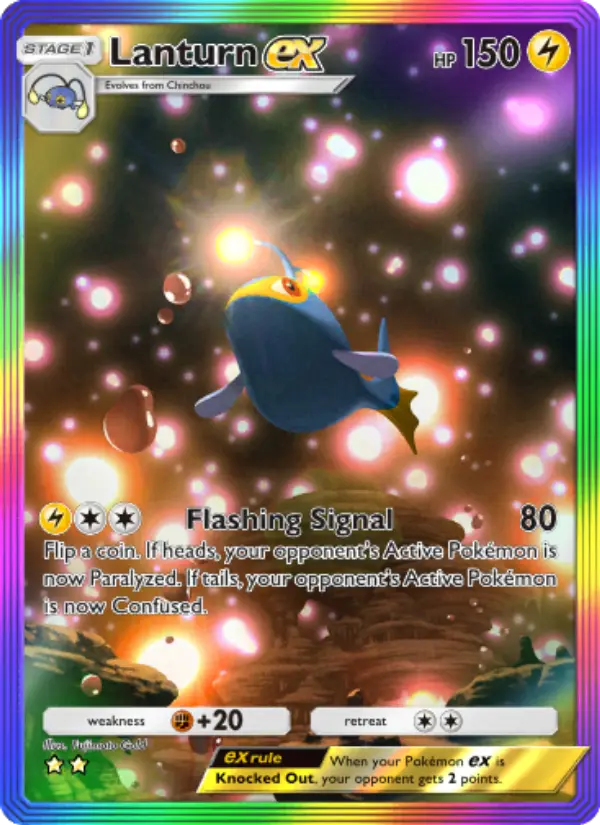
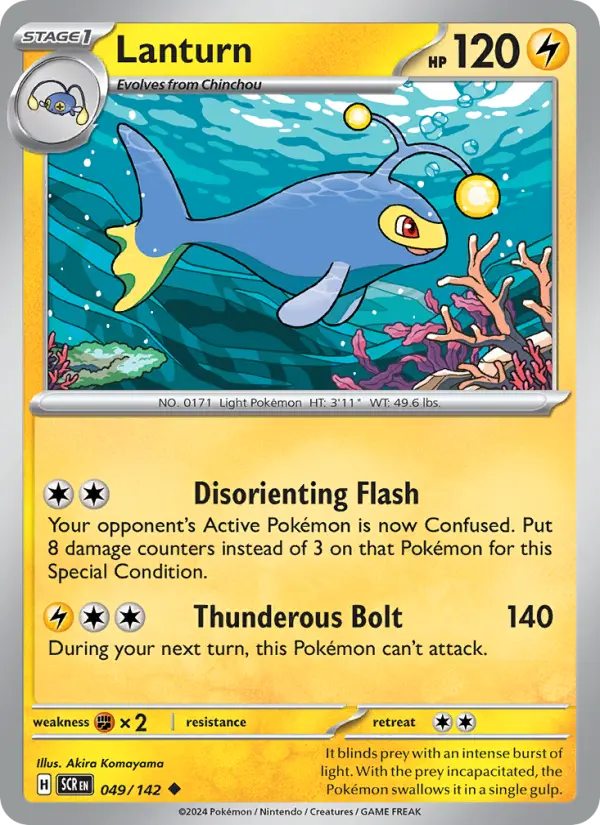
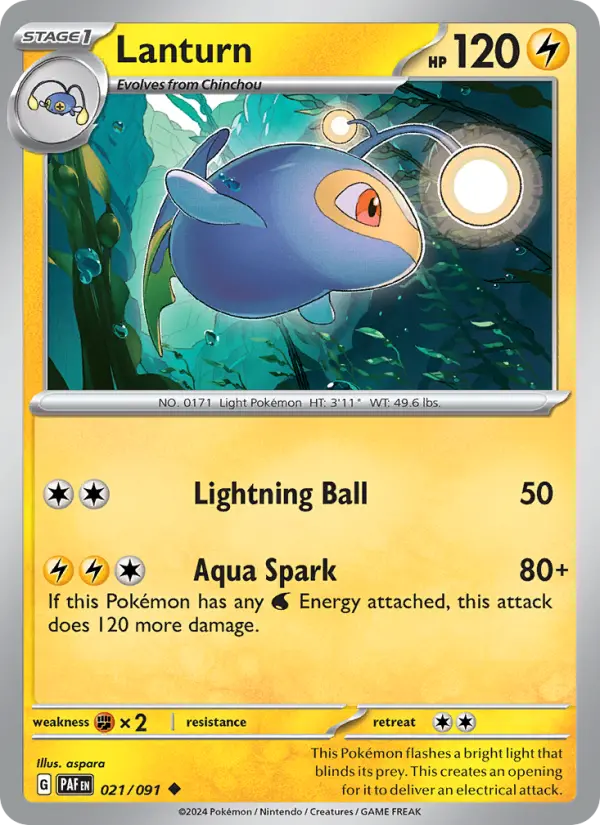
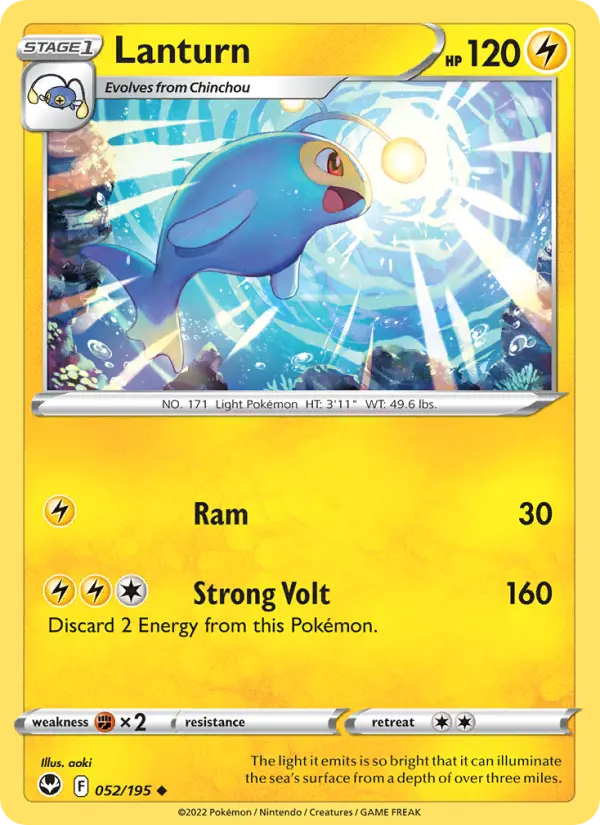
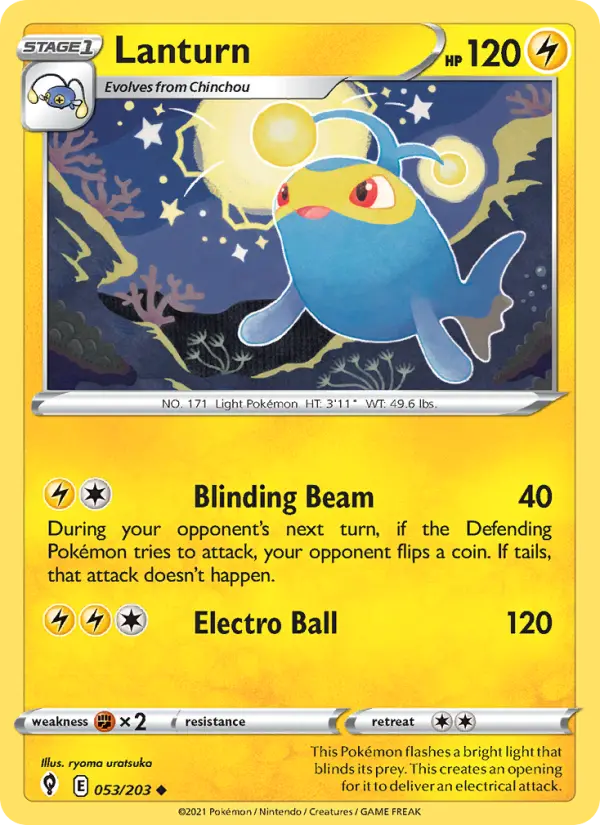
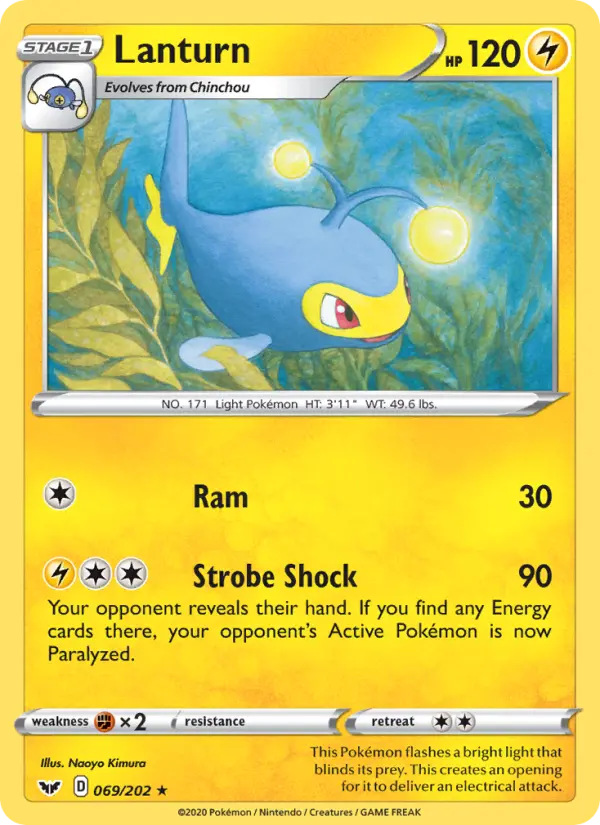
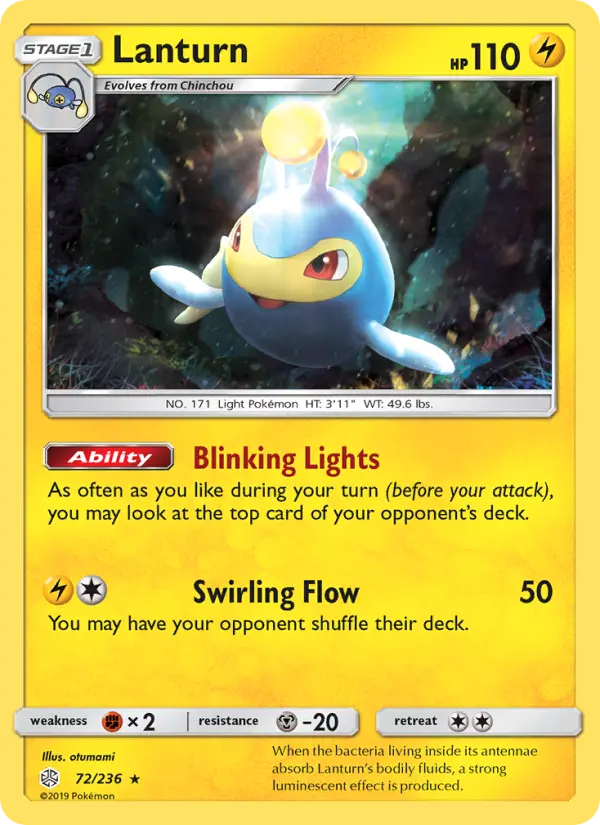
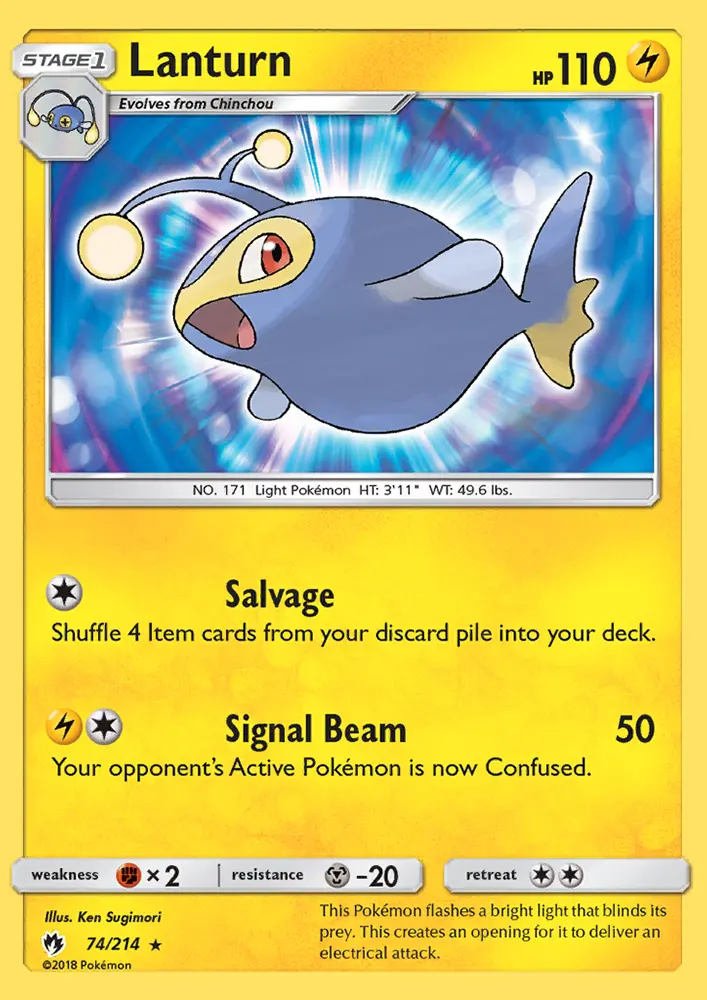
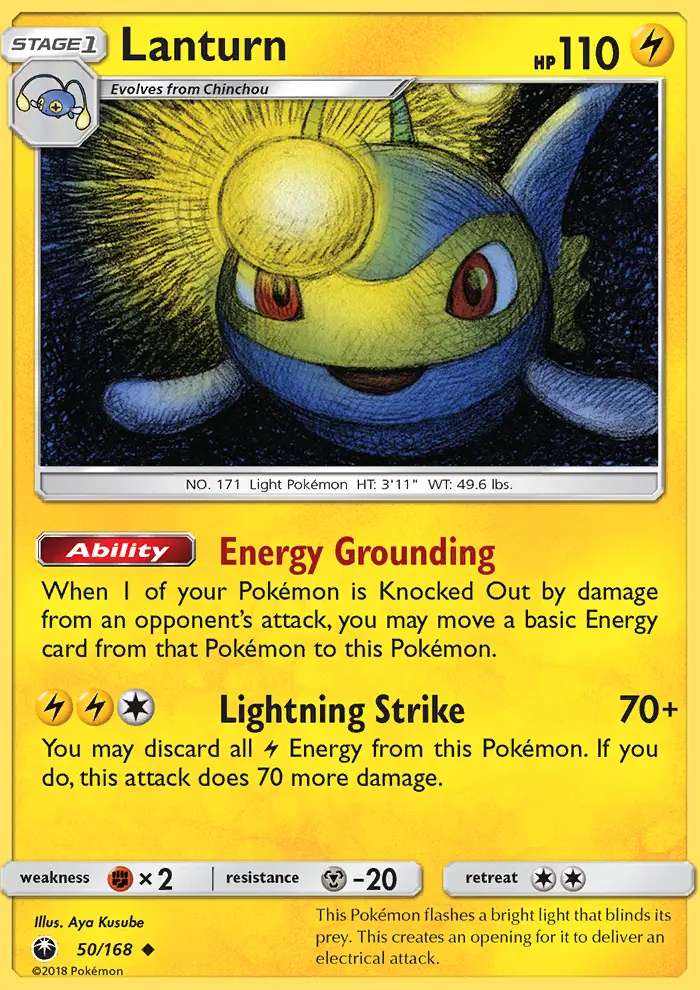
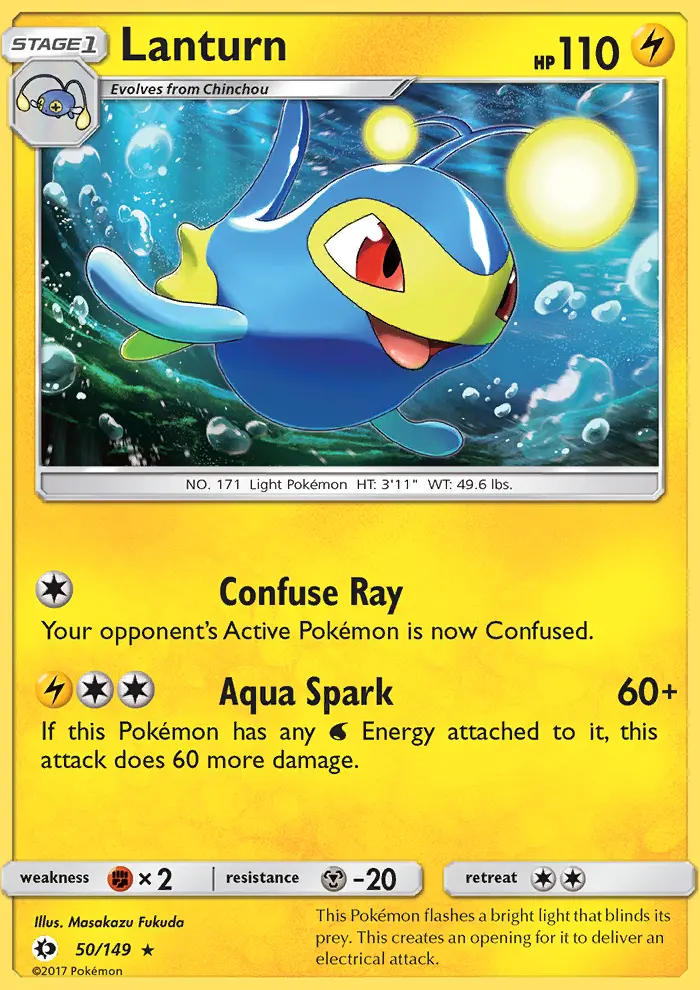
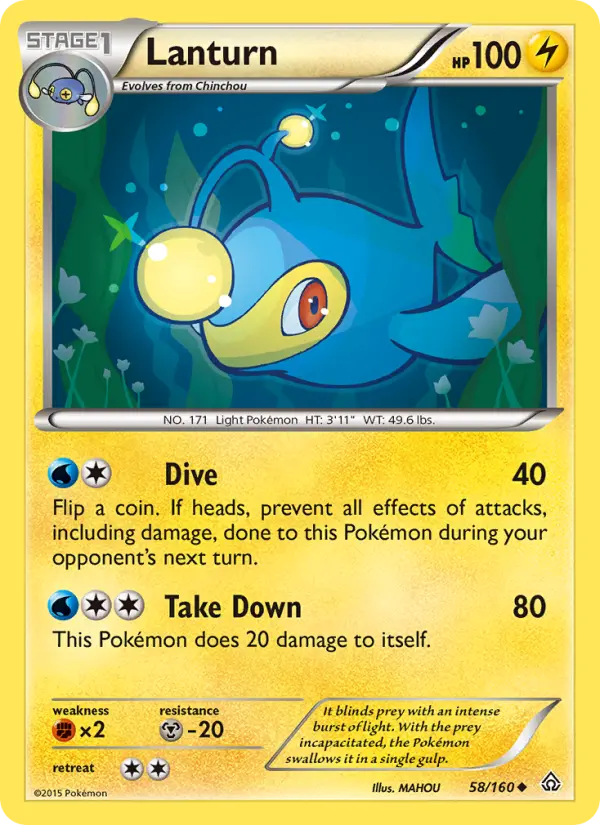
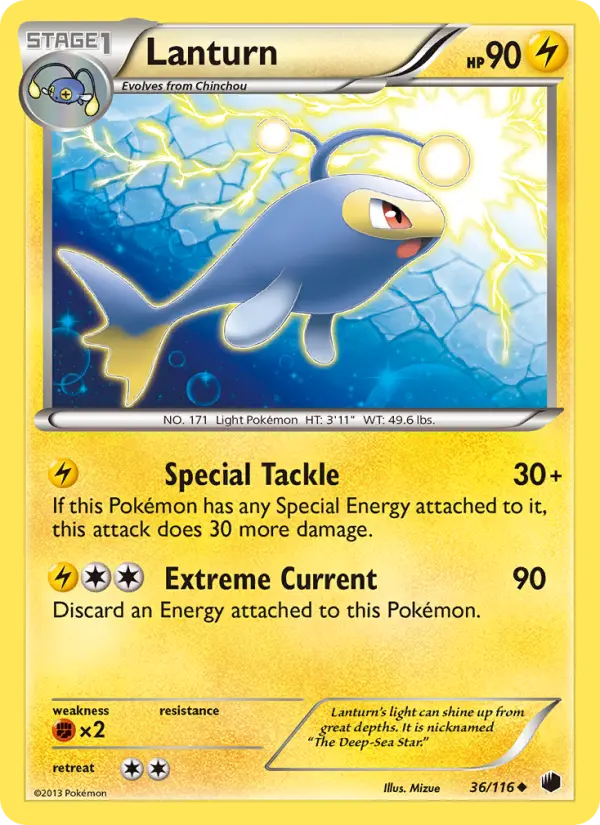
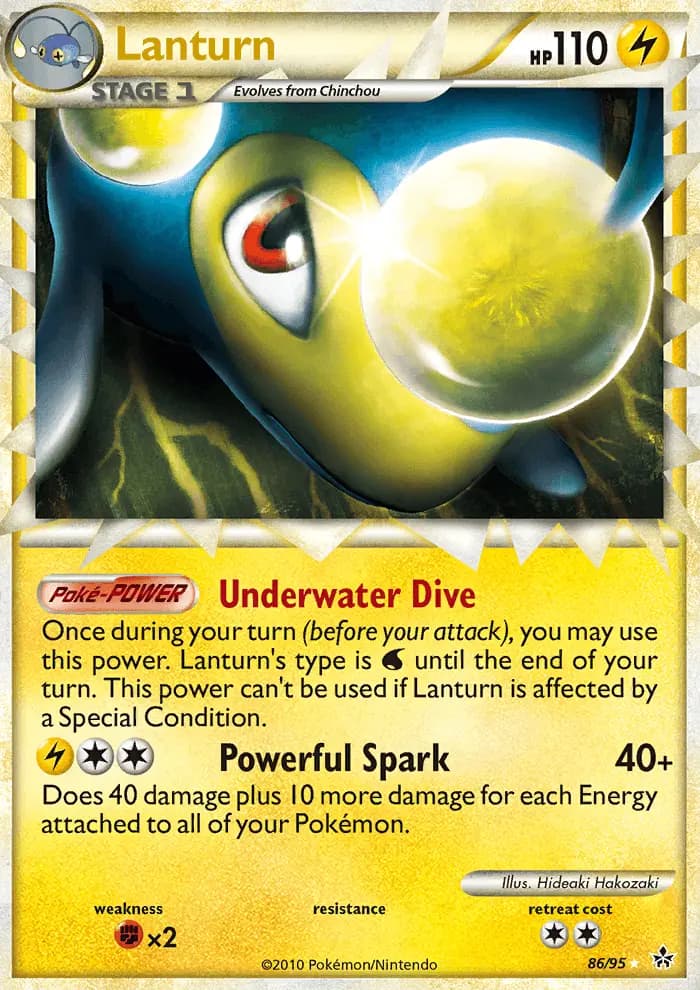
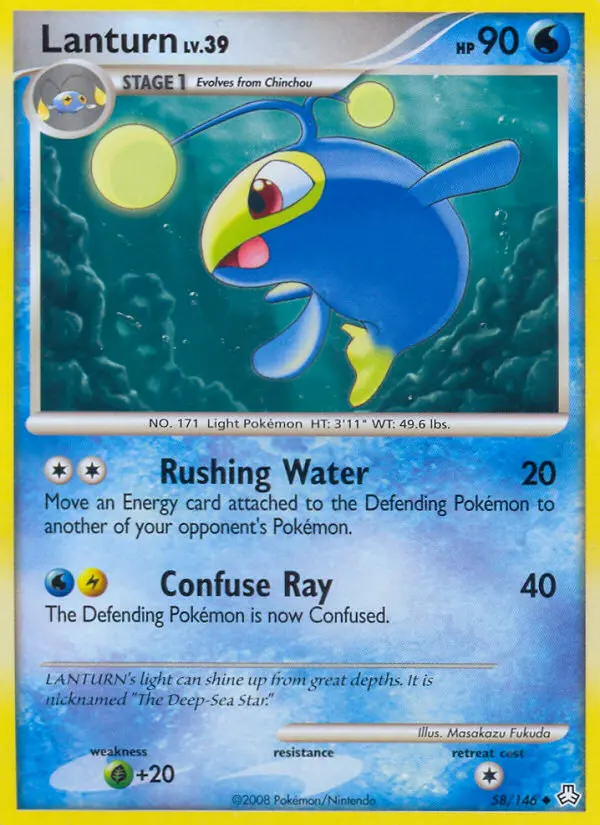
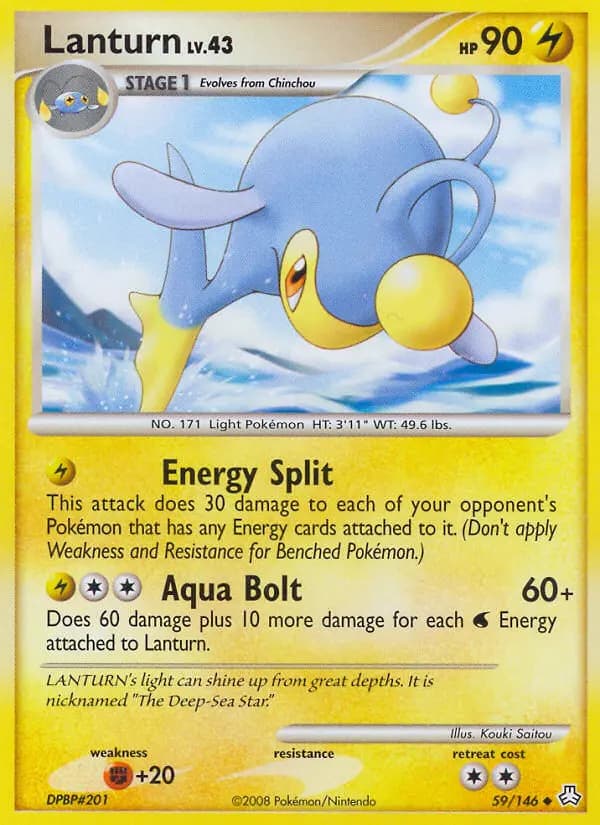
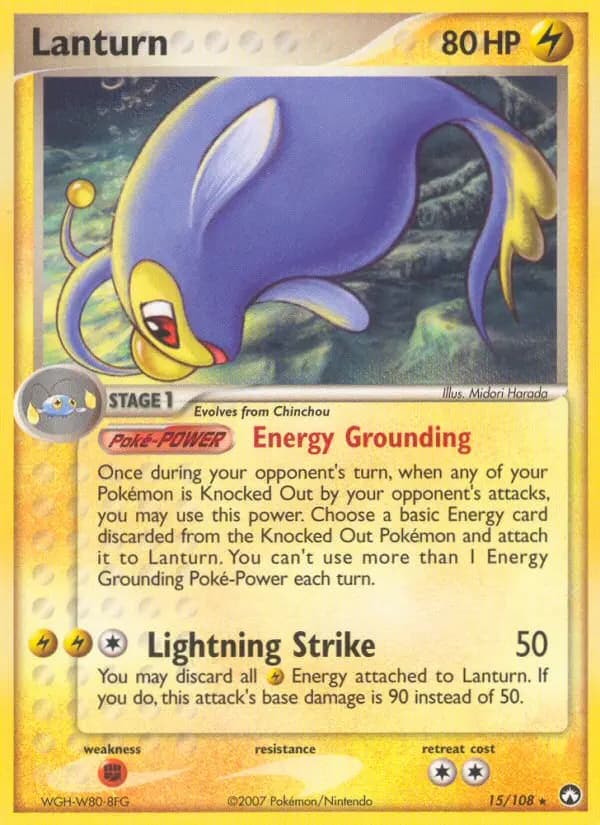
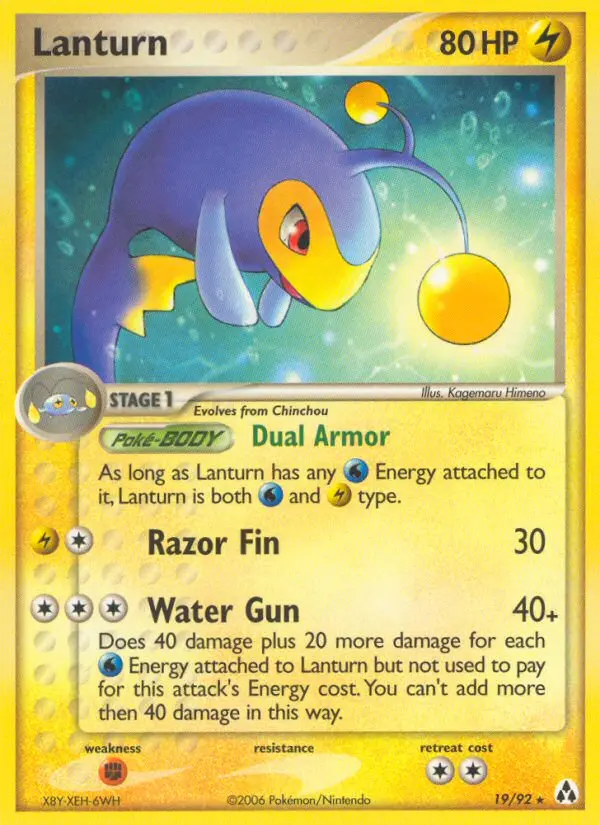
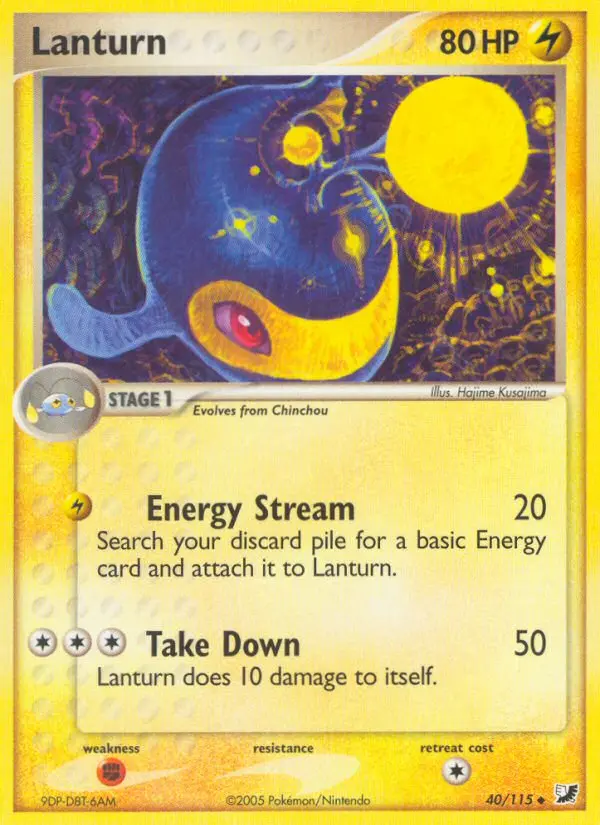
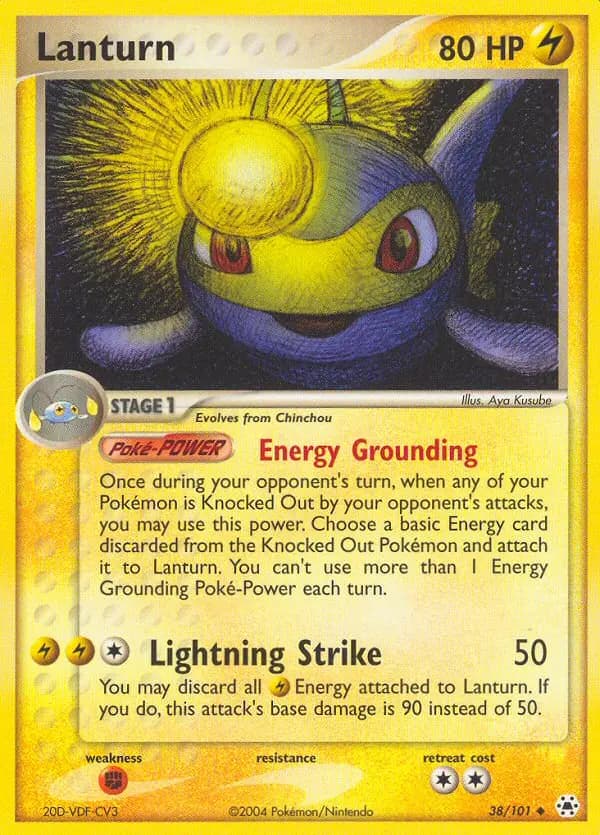
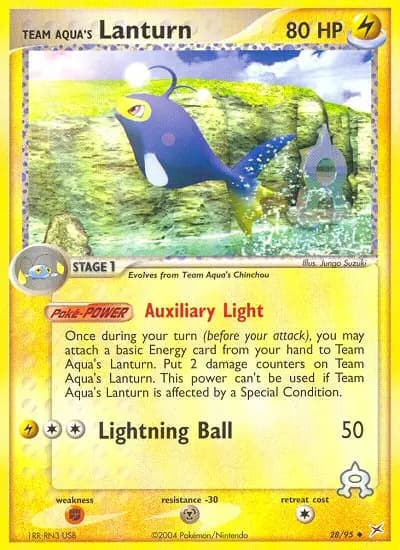
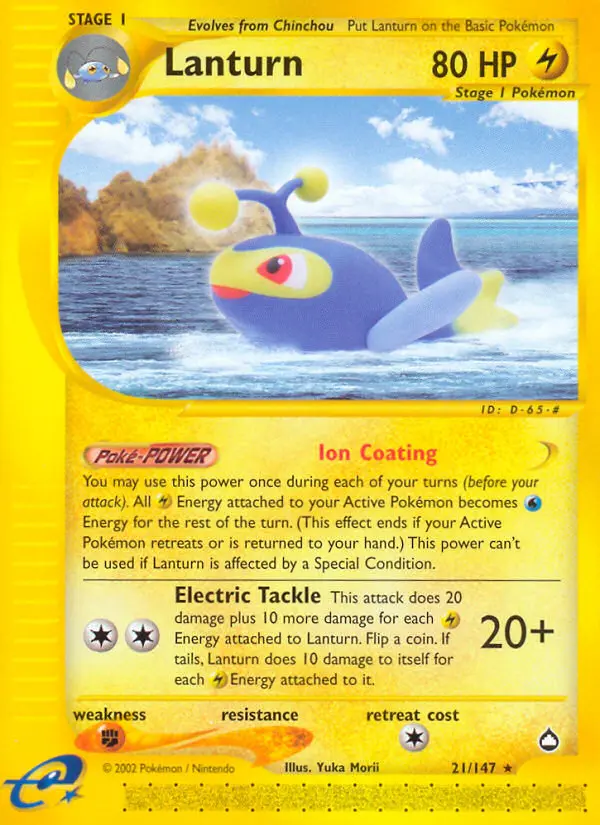
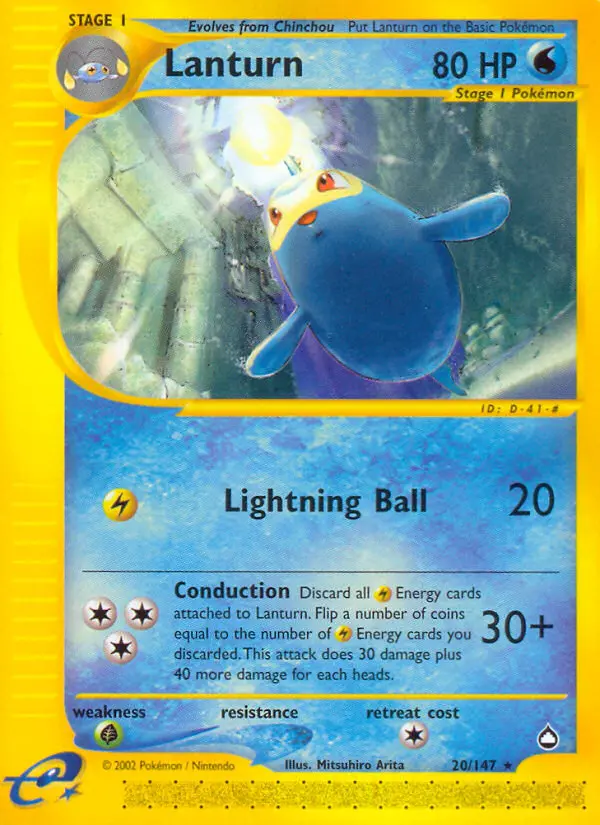
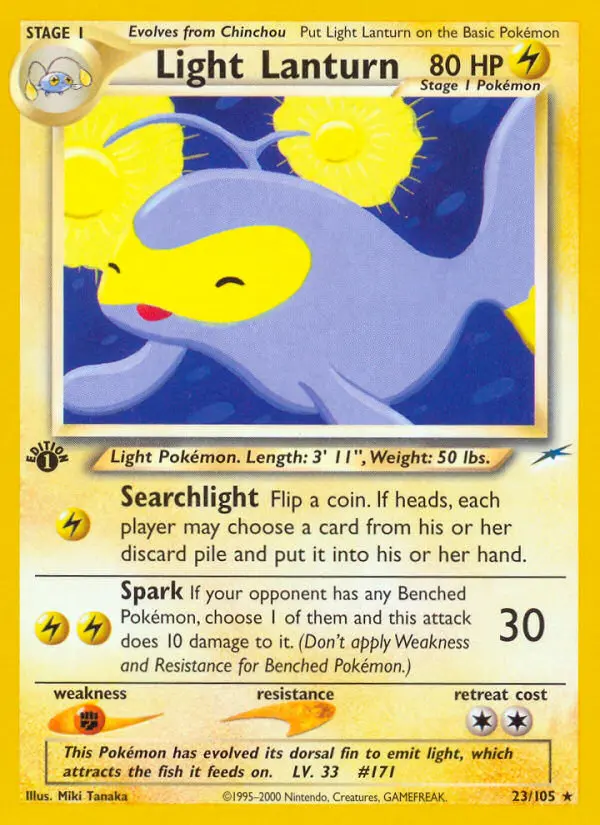
Lanturn has maintained a steady presence in Pokémon media since its introduction in Generation II, appearing in various anime episodes, films, and trading card game releases that have contributed to its recognition among longtime franchise fans. The Pokémon's striking bioluminescent design has made it a favorite subject for fan art and custom merchandise, with the glowing orbs particularly appealing to creators exploring themes of light, darkness, and deep-sea wonder. In the Trading Card Game, Lanturn has received numerous card implementations across multiple sets, sometimes featuring its bioluminescent abilities as central mechanics, such as cards that damage opponents based on light or darkness themes. The species embodies a particular archetype within the Pokémon franchise—the thoughtfully designed creature based on genuine biological principles—that appeals to players with interests in marine biology and evolutionary ecology. Lanturn's role as a deep-sea predator has inspired various interpretations in fan fiction communities, where writers explore themes of adaptation, survival in extreme environments, and the hidden wonders of unexplored oceanic depths. The Pokémon has also served as a representation of bioluminescence in educational contexts, with some players and educators utilizing Lanturn as a vehicle for discussing real-world deep-sea biology and light production in organisms, making it a surprisingly effective bridge between entertainment and scientific literacy.
Where to Find Lanturn in Every Pokémon Game
Lanturn's availability has varied significantly across different generations and regions, reflecting the evolution of game design and regional Pokédex curation. In Generation II (Gold, Silver, and Crystal versions), Lanturn appears in the Johto regional Pokédex as entry #175, making it a relative rarity in its debut generation. Throughout subsequent generations in the Hoenn region (Ruby, Sapphire, and Emerald), Lanturn became more accessible as a water-type option, appearing in various coastal and oceanic routes. In Generation IV's Sinnoh region (Diamond, Pearl, Platinum), and later in Unova and Kalos, Lanturn's availability fluctuated based on the specific game and regional Pokédex composition, sometimes requiring breeding or trading to obtain. The species has achieved consistent availability in modern generations, appearing in Sword and Shield's Galar Pokédex as entry #221, while also being featured in Scarlet and Violet's expanded national Pokédex. Lanturn can be encountered in various water-based locations across multiple games, though trainers seeking specific natures, abilities, or IV values often resort to breeding—a process facilitated by Lanturn's membership in the Water 2 egg group and 75 capture rate, which makes obtaining wild specimens moderately straightforward. In Pokémon GO, Lanturn has been available through evolution of its pre-evolution Chinchou, making it accessible to mobile players seeking a Water/Electric-type option for their teams. The species' consistent inclusion across generations demonstrates its enduring appeal to Game Freak developers, ensuring that players in nearly any Pokémon generation can obtain Lanturn with reasonable effort.