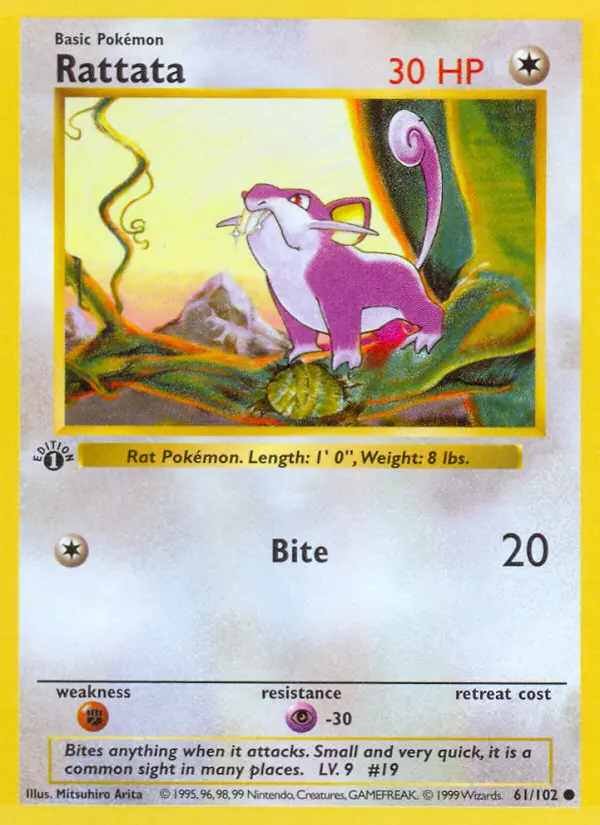
Rattata
Generation I · #0019 — Mouse Pokémon
Rattata's run away ability is the first thing worth knowing about it — everything else, from its normal typing to its build, follows from how that ability gets used. With a aggregate stat total of 253, Rattata emphasizes speed above all else, boasting a base Speed stat of 72 that allows it to outpace many early-game rivals. The diminutive rodent stands merely 0.3 meters tall and weighs only 3.5 kilograms, making it one of the smallest and lightest Pokémon available to new trainers. Its exceptional catch rate of 255 ensures that trainers can reliably add Rattata to their teams, while its base happiness of 70 reflects the friendly nature of this common creature.
Editor's Take
Rattata's Hyper Fang at 80 base power on a level 4 catch is genuinely disproportionate, and it's the reason the Gen 1 early game is easier than anyone remembers it being.
Base Stats
Height
0.3m
Weight
3.5kg
Category
Mouse Pokémon
Gender
Male 50% / Female 50%
Color
purple
Shape
quadruped
Habitat
grassland
Abilities
Ensures success fleeing from wild battles.
Increases Attack to 1.5× with a major status ailment.
Strengthens physical moves to inflict 1.5× damage, but decreases their accuracy to 0.8×.

Rattata Biology & Physical Characteristics
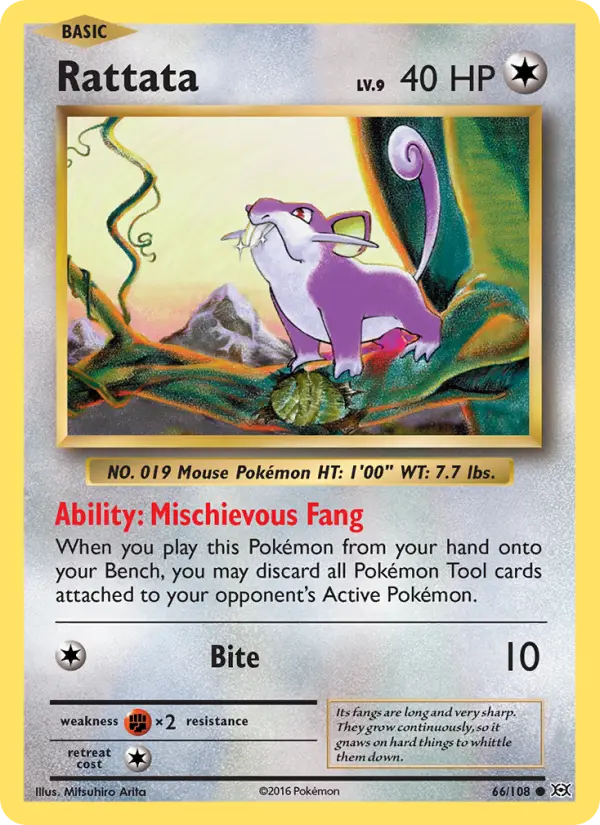
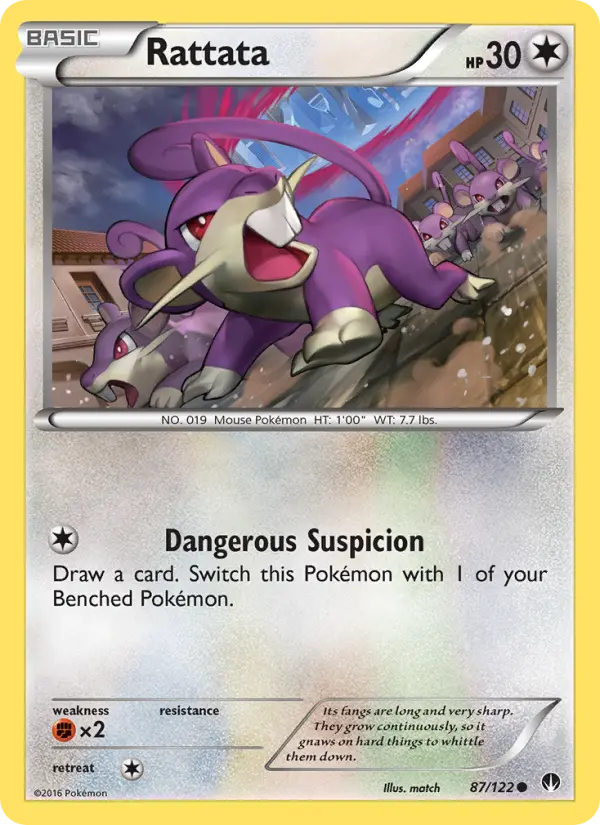
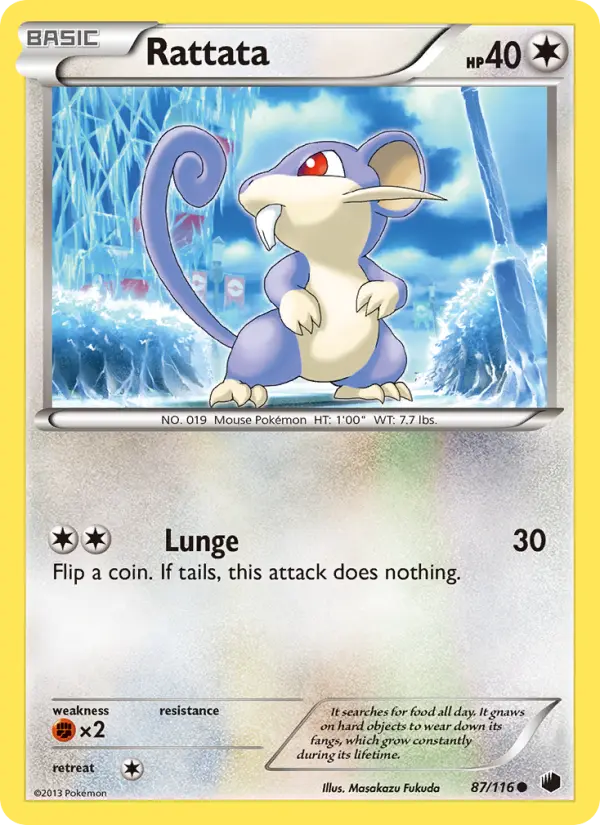
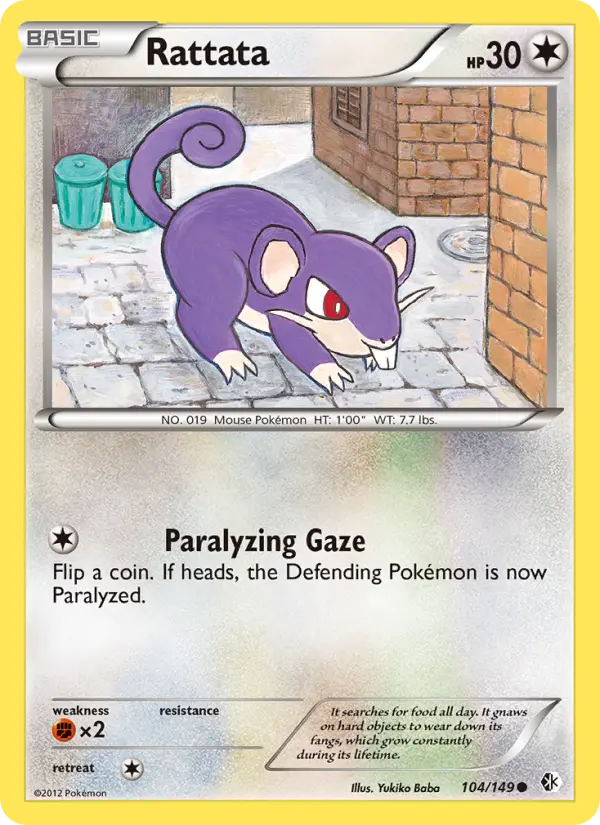
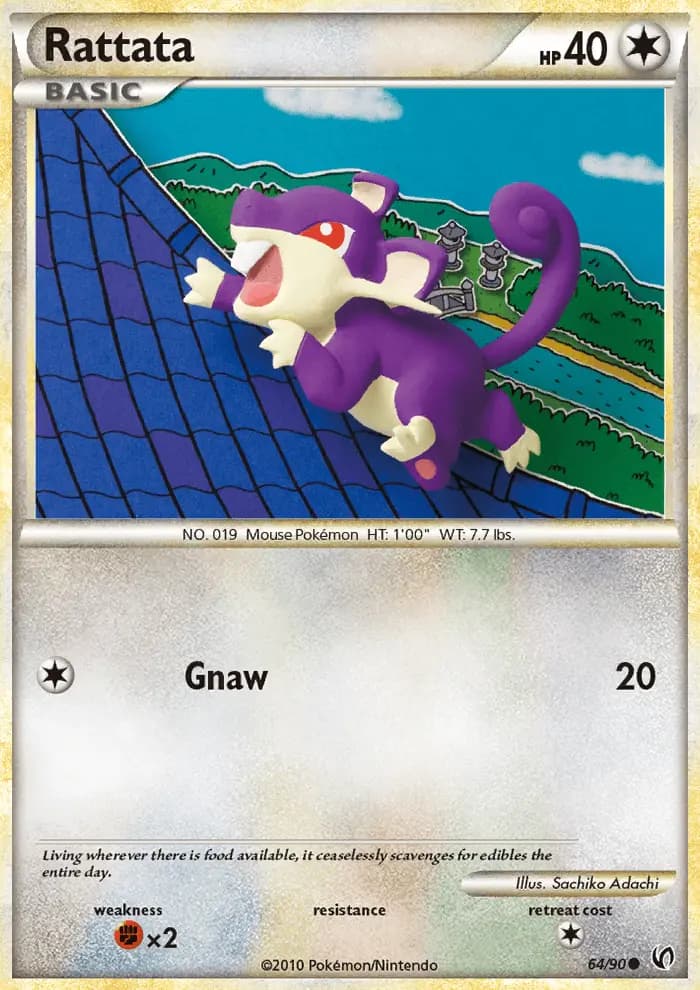
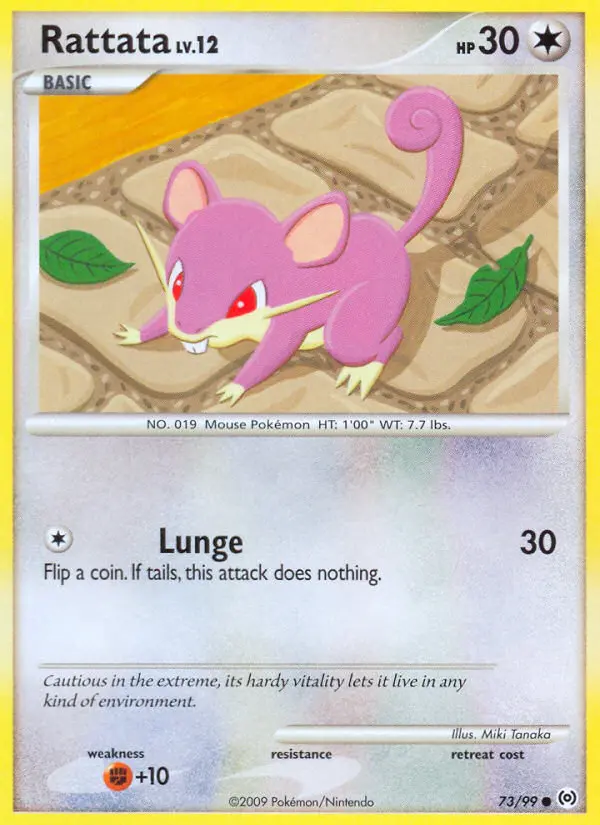
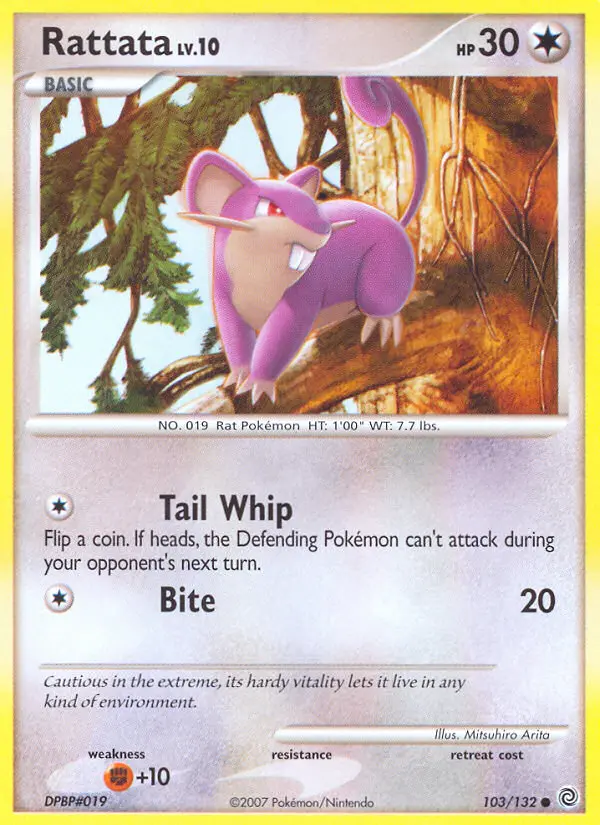
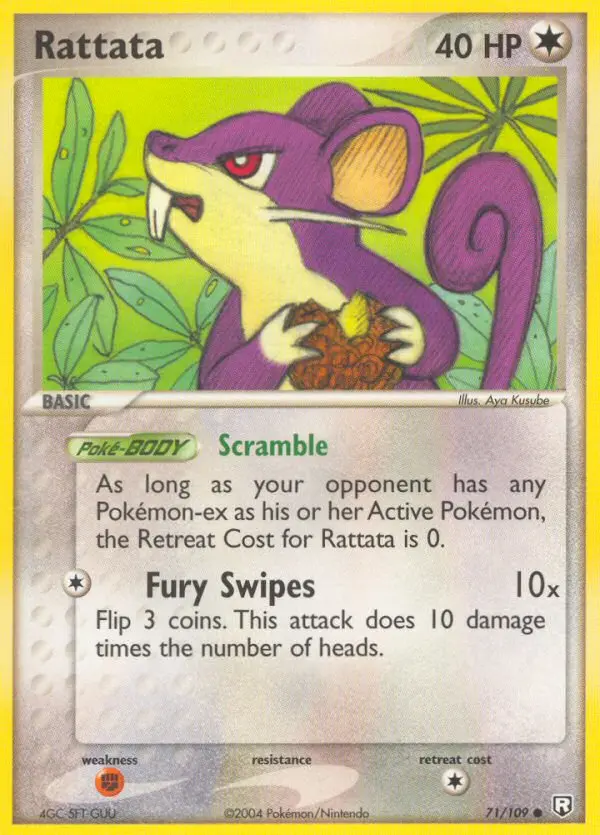
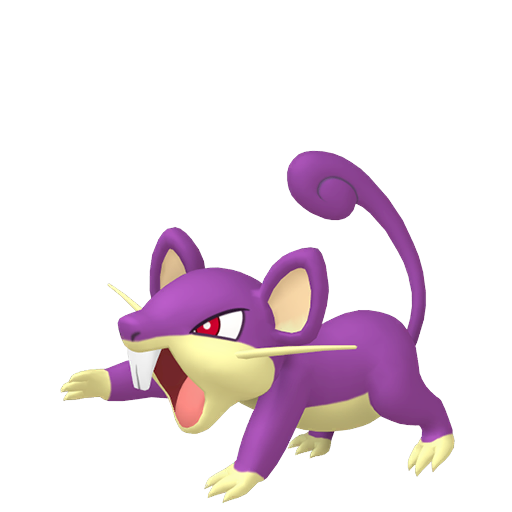
Rattata is a small, quadrupedal rodent Pokémon featuring a distinctly proportioned body that reflects its rodent inspiration. The creature displays purple fur across its body, complemented by cream-colored markings on its face, paws, and underbelly that create striking contrast. Its facial features include narrow eyes with distinctive white sclera and pupils rimmed in red irises, rounded ears lined with cream-colored inner tissue, and a single prominent whisker protruding from each cheek. The biological design emphasizes its predatory nature, with a mouth built for its signature behavior of biting, and a body structure optimized for rapid movement. The species exhibits perfect gender balance, with a 50% male to 50% female distribution among wild populations, making Rattata equally likely to be encountered as either sex. Its physiology allows it to survive in nearly any environment, a trait directly reflected in its impressive vital capacity and rapid reproductive capability that enable populations to flourish wherever sustenance becomes available.
Pokedex Numbers
Training
Breeding
Rattata Breeding, Gender Ratio & Egg Groups
Gender-wise, Rattata is an even 50/50 split between males and females, ensuring equal representation of both sexes within wild populations and bred specimens. The species belongs to the Field egg group, placing it alongside numerous other rodent-like and quadrupedal Pokémon capable of producing offspring together through breeding mechanics. With a hatch counter of 15 cycles, Rattata eggs require approximately 3,599 to 3,855 steps to incubate and hatch, a relatively moderate timeframe that makes breeding Rattata reasonably efficient for trainers seeking specific natures or individual values. The species' medium-fast experience growth rate means that hatched Rattata develop at a moderate pace compared to other Pokémon, reaching level 20 evolution threshold in reasonable timeframes without excessive grinding. Rattata's base happiness of 70 reflects its generally amenable temperament toward trainers, though breeding specimens may require additional affection and care to maximize happiness bonuses in battle. The remarkable breeding capacity noted in Pokédex entries describing continuous offspring production wherever food is available translates mechanically into the species' viability as a breeding Pokémon, with balanced stats distribution making it suitable for developing perfect-IV specimens through successive generations.
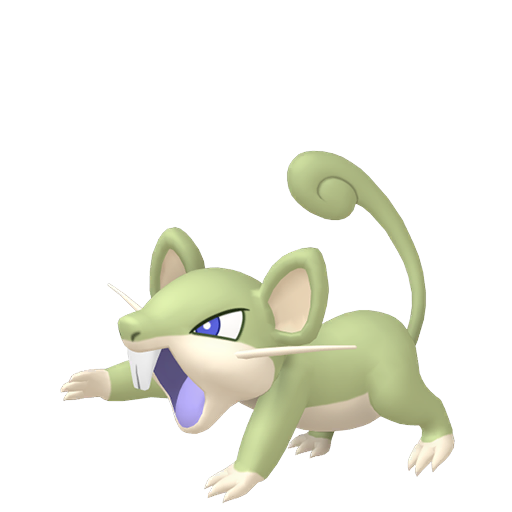
Sprites




Held Items
Chilan Berry
type-protection
Held: Consumed when struck by a Normal-type attack to halve the damage.
Cost: 80
Chilan Berry
type-protection
Held: Consumed when struck by a Normal-type attack to halve the damage.
Cost: 80
Chilan Berry
type-protection
Held: Consumed when struck by a Normal-type attack to halve the damage.
Cost: 80
Chilan Berry
type-protection
Held: Consumed when struck by a Normal-type attack to halve the damage.
Cost: 80
Chilan Berry
type-protection
Held: Consumed when struck by a Normal-type attack to halve the damage.
Cost: 80
Chilan Berry
type-protection
Held: Consumed when struck by a Normal-type attack to halve the damage.
Cost: 80
Chilan Berry
type-protection
Held: Consumed when struck by a Normal-type attack to halve the damage.
Cost: 80
Chilan Berry
type-protection
Held: Consumed when struck by a Normal-type attack to halve the damage.
Cost: 80
Chilan Berry
type-protection
Held: Consumed when struck by a Normal-type attack to halve the damage.
Cost: 80
Chilan Berry
type-protection
Held: Consumed when struck by a Normal-type attack to halve the damage.
Cost: 80
Chilan Berry
type-protection
Held: Consumed when struck by a Normal-type attack to halve the damage.
Cost: 80
Chilan Berry
type-protection
Held: Consumed when struck by a Normal-type attack to halve the damage.
Cost: 80
Chilan Berry
type-protection
Held: Consumed when struck by a Normal-type attack to halve the damage.
Cost: 80
Chilan Berry
type-protection
Held: Consumed when struck by a Normal-type attack to halve the damage.
Cost: 80
TMs & HMs
tm01
lets go pikachu lets go eevee
tm01
ultra sun ultra moon
tm01
sun moon
tm02
crystal
tm02
gold silver
tm02
lets go pikachu lets go eevee
tm03
crystal
tm03
gold silver
tm05
lets go pikachu lets go eevee
tm06
yellow
tm06
gold silver
tm06
red blue
tm06
crystal
tm06
emerald
tm06
firered leafgreen
tm06
diamond pearl
tm06
platinum
tm06
ruby sapphire
tm06
colosseum
tm06
black 2 white 2
+660 more TMs/HMs
Gender Differences
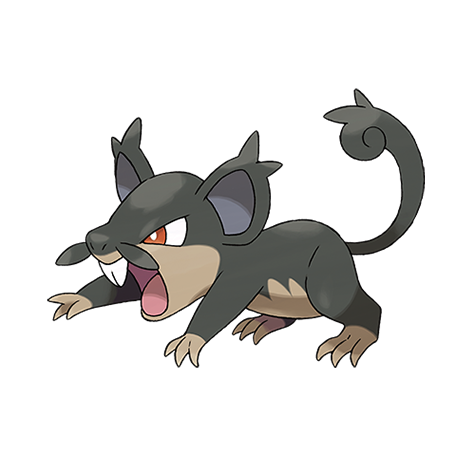
This Pokémon has visible differences between male and female forms.


Rattata Evolution, Mega Evolution & Special Forms
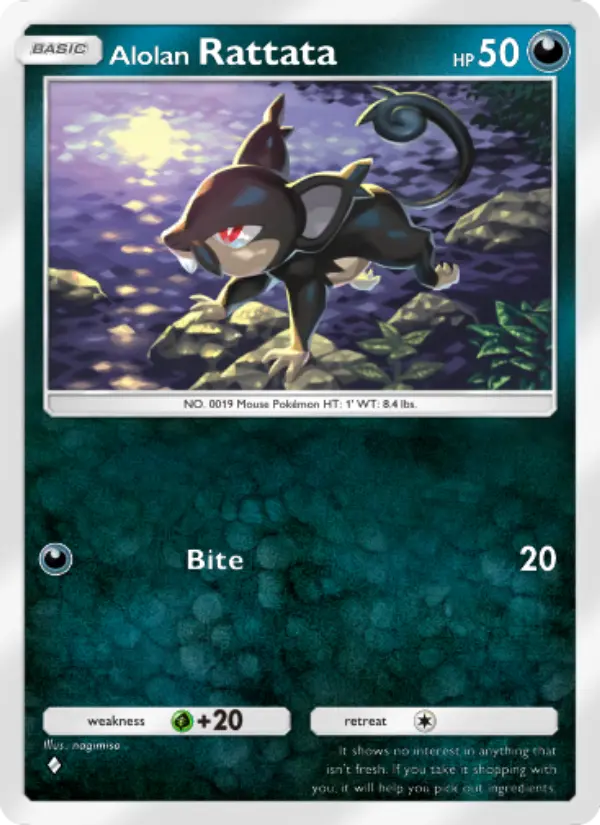
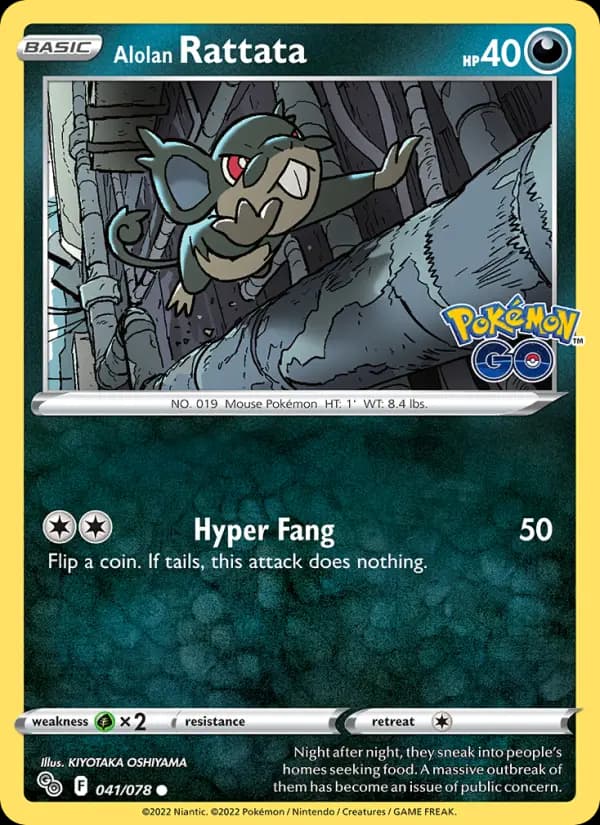
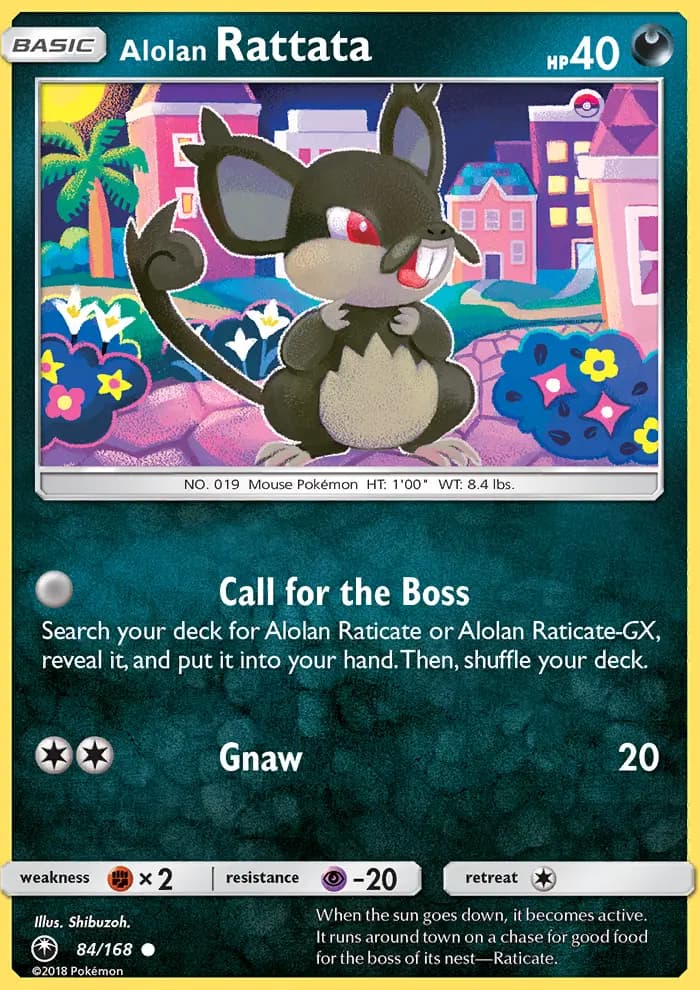
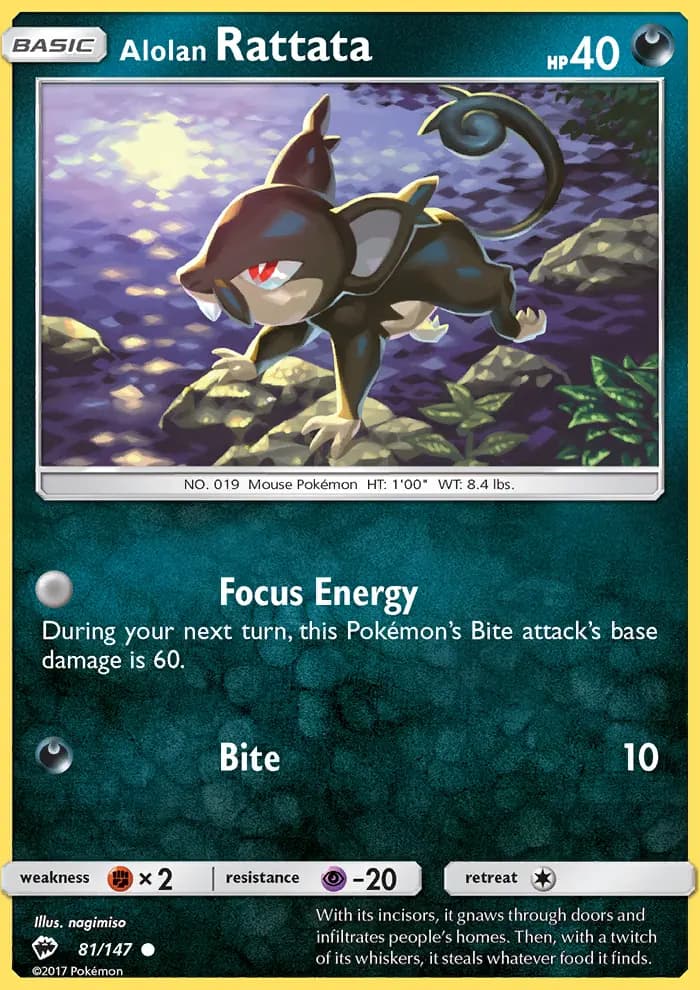
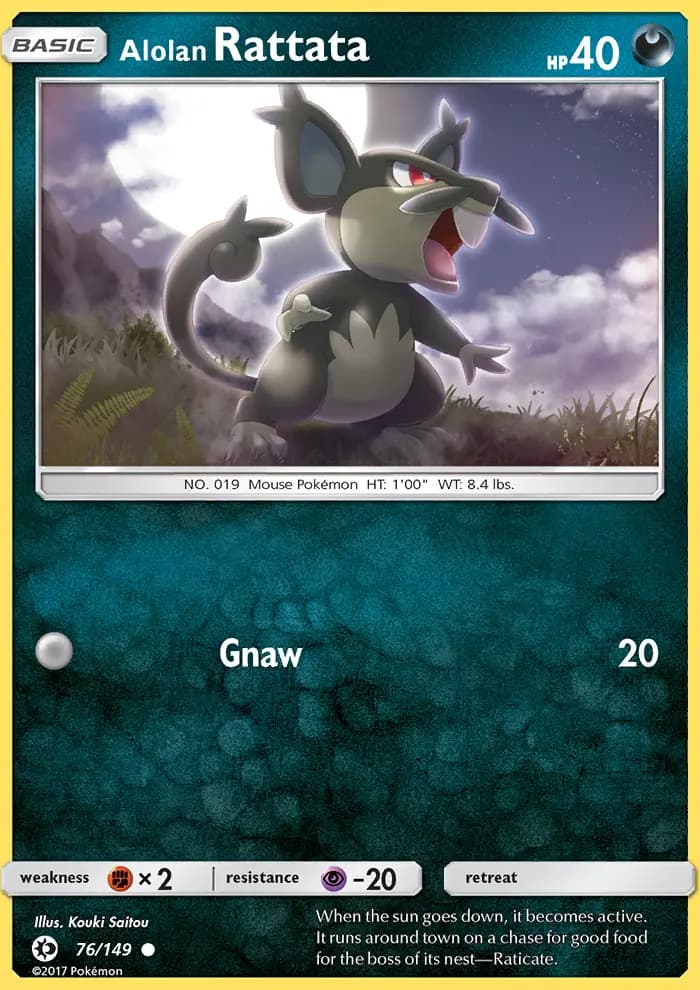
Rattata evolves into Raticate when it reaches level 20, a transformation that represents a significant power increase as it transitions from a small, weak creature into a formidable mid-stage Pokémon. The evolution line consists solely of these two stages, with no Mega Evolution or further developments available in standard gameplay. This straightforward evolution path makes Rattata an excellent choice for trainers seeking a reliable companion that can be quickly developed into a capable battle partner. The Alolan regional form of Rattata, introduced in Generation VII, represents a fascinating adaptation to Alola's unique ecosystem and cultural environment. Alolan Rattata adopts a Dark-type secondary typing alongside its Normal-type base, creating a Dark/Normal-type Pokémon with notably different characteristics and behavioral patterns. This Alolan variant evolves into Alolan Raticate exclusively at night when reaching level 20, reflecting environmental and temporal mechanics specific to the Alola region's games. The regional form maintains the same base stat total of 253 but redistributes stats differently, offering trainers an alternative approach to utilizing this evolutionary line with distinct type advantages and ability options including Gluttony and Thick Fat.
Where to Find
Kanto Route 9
kanto
+28 more
Kanto Route 2
kanto
+15 more
Kanto Route 1
kanto
+34 more
Kanto Route 16
kanto
+15 more
Kanto Route 22
kanto
+37 more
Kanto Route 4
kanto
+30 more
Kanto Sea Route 21
kanto
+6 more
Kanto Route 6
kanto
+1 more
Kanto Route 5
kanto
Pokemon Mansion
kanto
+25 more
Kanto Route 3
kanto
+18 more
Kanto Route 11
kanto
+3 more
Kanto Route 8
kanto
+2 more
Kanto Route 18
kanto
+3 more
Kanto Route 10
kanto
Kanto Route 7
kanto
+9 more
Bell Tower
johto
+443 more
Sprout Tower
johto
+100 more
Johto Route 46
johto
+17 more
Mt Mortar
johto
+15 more
+15 more locations in other games
Rattata Behaviour and Natural Habitat
Rattata demonstrates exceptional caution despite its small stature, a behavioral trait that proves crucial to its survival. Even while sleeping, Rattata maintains constant vigilance by rotating its ears to monitor its surroundings for potential threats, showcasing an instinctive awareness that belies its timid nature. The species is remarkably omnivorous and opportunistic, consuming virtually anything edible and settling wherever food becomes available, leading to rapid population expansion in fertile areas. According to Pokédex entries, spotting a single Rattata virtually guarantees the presence of at least forty more living in the vicinity, highlighting their propensity for establishing large colonies. These creatures are not selective about their habitats and will establish nests anywhere conditions permit, whether in human settlements, forests, caves, or grasslands. Their ceaselessly scavenging behavior ensures they exploit every food source within their territory throughout the entire day, making them adaptive survivors in diverse ecosystems. This adaptive success has made Rattata a genuinely common sight in many regions, as noted in multiple Pokédex entries describing them as ubiquitous throughout various territories.
Pokedex Entries
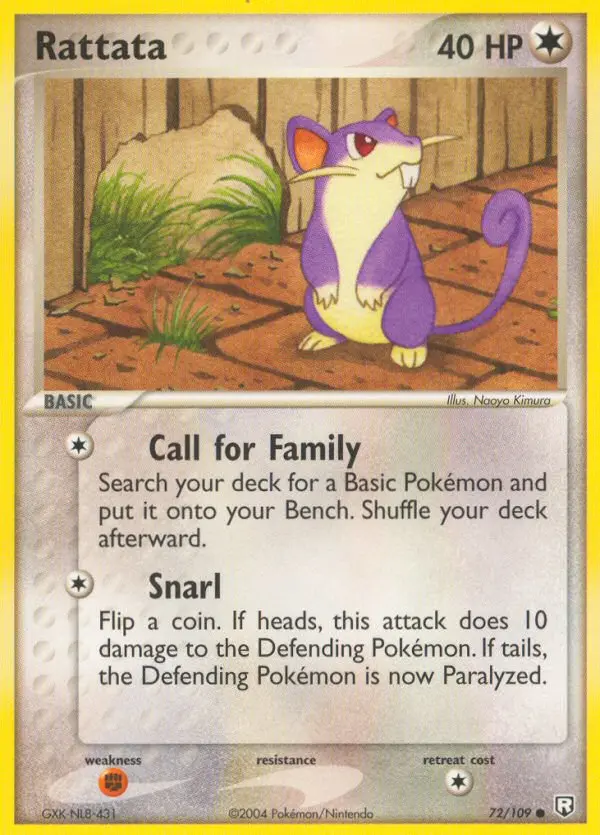
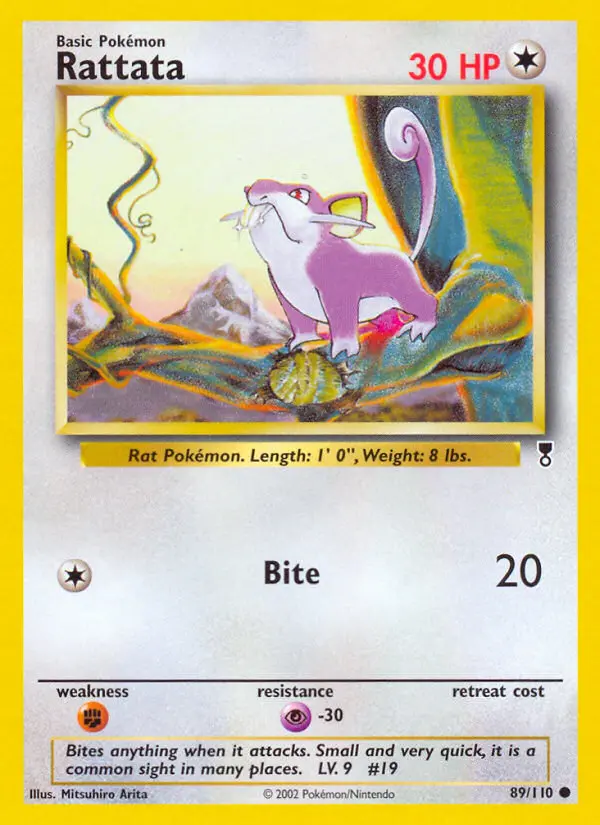
Bites anything when it attacks. Small and very quick, it is a common sight in many places.
Will chew on any thing with its fangs. If you see one, it is certain that 40 more live in the area.
It eats anything. Wherever food is available, it will settle down and produce offspring continuously.
Living wherever there is food available, it ceaselessly scav enges for edibles the entire day.
This POKéMON's impressive vital ity allows it to live anywhere. It also multiplies very quickly.
RATTATA is cautious in the extreme. Even while it is asleep, it constantly listens by moving its ears around. It is not picky about where it lives - it will make its nest anywhere.
A RATTATA is cautious in the extreme. Even while it is asleep, it constantly moves its ears and listens for danger. It will make its nest anywhere.
Its fangs are long and very sharp. They grow continuously, so it gnaws on hard things to whittle them down.
Bites anything when it attacks. Small and very quick, it is a common sight in many places.
Cautious in the extreme, its hardy vitality lets it live in any kind of environment.
It eats anything. Wherever food is available, it will settle down and produce offspring continuously.
Living wherever there is food available, it ceaselessly scavenges for edibles the entire day.
Cautious in the extreme, its hardy vitality lets it live in any kind of environment.
It searches for food all day. It gnaws on hard objects to wear down its fangs, which grow constantly during its lifetime.
Living wherever there is food available, it ceaselessly scavenges for edibles the entire day.
Its fangs are long and very sharp. They grow continuously, so it gnaws on hard things to whittle them down.
Rattata is cautious in the extreme. Even while it is asleep, it constantly listens by moving its ears around. It is not picky about where it lives—it will make its nest anywhere.
Rattata is cautious in the extreme. Even while it is asleep, it constantly listens by moving its ears around. It is not picky about where it lives—it will make its nest anywhere.
Its incisors continue growing until its death. If its Trainer doesn’t offer it a file to gnaw on, it will gnaw on door frames, table legs, and so on.
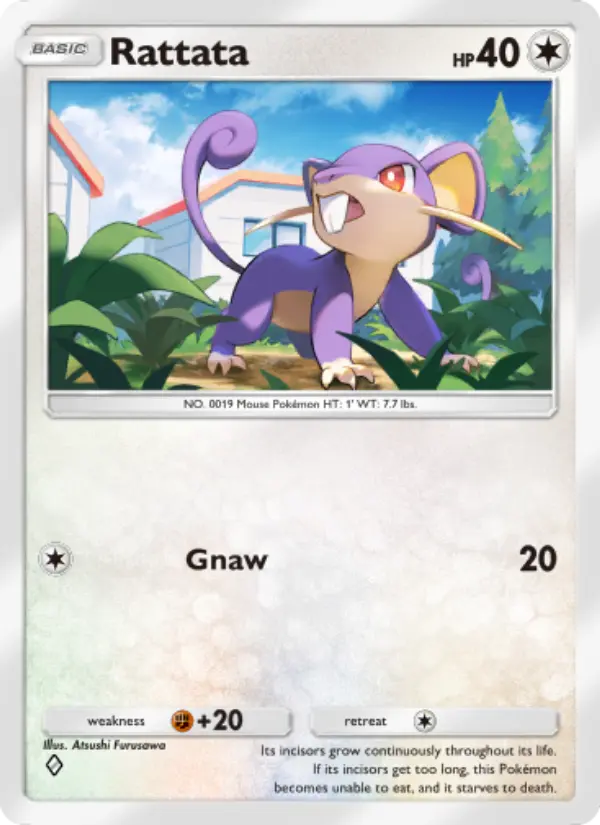
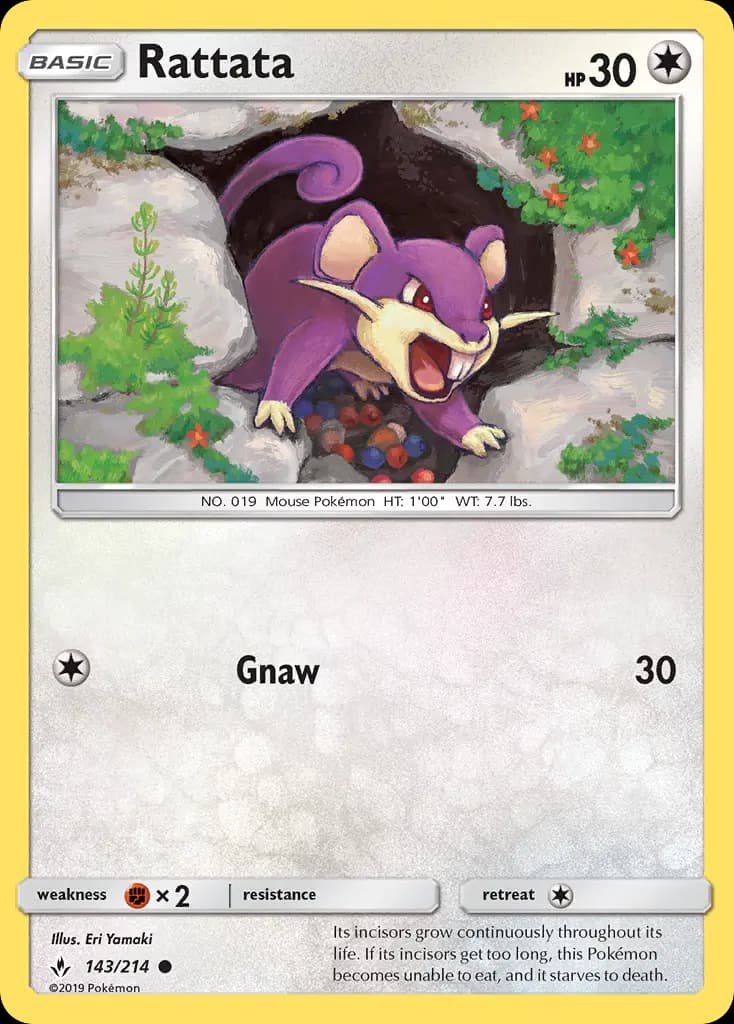
Its incisors grow continuously throughout its life. If its incisors get too long, this Pokémon becomes unable to eat, and it starves to death.
With their strong capacity for survival, they can live in dirty places without concern. Left unchecked, their numbers multiply rapidly.
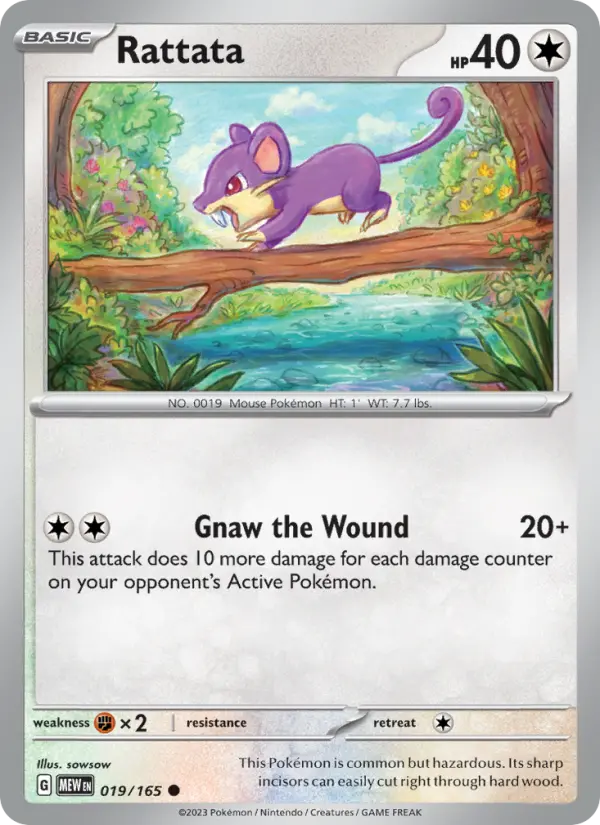
This Pokémon is common but hazardous. Its sharp incisors can easily cut right through hard wood.
Will chew on anything with its fangs. If you see one, you can be certain that 40 more live in the area.
Rattata Name Origin & Design Inspiration
The name Rattata derives directly from the English word 'rat,' combined with a reduplicative syllable 'ta' that creates an onomatopoetic quality suggesting rapid movement and the creature's squeaking vocalizations. The Japanese designation 'Koratta' similarly references the concept of rodents, incorporating phonetic elements that resonate with the creature's diminutive size and squeaking nature. Rattata's design draws clear inspiration from real-world rats and mice, translating their biological characteristics—rapid movement, sharp teeth, keen ears, and prolific breeding—into Pokémon form. The color palette of purple fur with cream-colored accents creates a distinctly fantastical interpretation of a standard rodent, differentiating it sufficiently from reality while maintaining recognizable features. The creature's physical proportions emphasize its role as a quick, nimble Pokémon perfectly suited to early-game encounters, with an elongated body and prominent tail that aid balance during swift movement. The whiskers present on both cheeks serve as sensory organs in biological terms, represented in the design as distinct features that enhance the creature's cute yet predatory appearance. Alolan Rattata's darker coloration and adoption of Dark-type characteristics reflect regional adaptation and the influence of Alola's distinct cultural and environmental factors on wild Pokémon evolution.
Learnable Moves
Rattata can learn 79 moves:
Move | Type | Cat. | Power | Acc. | PP |
|---|---|---|---|---|---|
| assurance | dark | Physical | 60 | 100 | 10 |
| attract | normal | Status | — | 100 | 15 |
| bide | normal | Physical | — | — | 10 |
| bite | dark | Physical | 60 | 100 | 25 |
| blizzard | ice | Special | 110 | 70 | 5 |
| body slam | normal | Physical | 85 | 100 | 15 |
| bubble beam | water | Special | 65 | 100 | 20 |
| captivate | normal | Status | — | 100 | 20 |
| charge beam | electric | Special | 50 | 90 | 10 |
| confide | normal | Status | — | — | 20 |
| counter | fighting | Physical | — | 100 | 20 |
| covet | normal | Physical | 60 | 100 | 25 |
| crunch | dark | Physical | 80 | 100 | 15 |
| curse | ghost | Status | — | — | 10 |
| cut | normal | Physical | 50 | 95 | 30 |
| defense curl | normal | Status | — | — | 40 |
| dig | ground | Physical | 80 | 100 | 10 |
| double team | normal | Status | — | — | 15 |
| double edge | normal | Physical | 120 | 100 | 15 |
| endeavor | normal | Physical | — | 100 | 5 |
| endure | normal | Status | — | — | 10 |
| facade | normal | Physical | 70 | 100 | 20 |
| final gambit | fighting | Special | — | 100 | 5 |
| flame wheel | fire | Physical | 60 | 100 | 25 |
| focus energy | normal | Status | — | — | 30 |
| frustration | normal | Physical | — | 100 | 20 |
| fury swipes | normal | Physical | 18 | 80 | 15 |
| grass knot | grass | Special | — | 100 | 20 |
| headbutt | normal | Physical | 70 | 100 | 15 |
| hidden power | normal | Special | 60 | 100 | 15 |
| hyper fang | normal | Physical | 80 | 90 | 15 |
| ice beam | ice | Special | 90 | 100 | 10 |
| icy wind | ice | Special | 55 | 95 | 15 |
| iron tail | steel | Physical | 100 | 75 | 15 |
| last resort | normal | Physical | 140 | 100 | 5 |
| me first | normal | Status | — | — | 20 |
| mimic | normal | Status | — | — | 10 |
| mud slap | ground | Special | 20 | 100 | 10 |
| protect | normal | Status | — | — | 10 |
| pursuit | dark | Physical | 40 | 100 | 20 |
| quick attack | normal | Physical | 40 | 100 | 30 |
| rage | normal | Physical | 20 | 100 | 20 |
| rain dance | water | Status | — | — | 5 |
| rest | psychic | Status | — | — | 5 |
| retaliate | normal | Physical | 70 | 100 | 5 |
| return | normal | Physical | — | 100 | 20 |
| revenge | fighting | Physical | 60 | 100 | 10 |
| reversal | fighting | Physical | — | 100 | 15 |
| rock smash | fighting | Physical | 40 | 100 | 15 |
| round | normal | Special | 60 | 100 | 15 |
| screech | normal | Status | — | 85 | 40 |
| secret power | normal | Physical | 70 | 100 | 20 |
| shadow ball | ghost | Special | 80 | 100 | 15 |
| shock wave | electric | Special | 60 | — | 20 |
| skull bash | normal | Physical | 130 | 100 | 10 |
| sleep talk | normal | Status | — | — | 10 |
| sludge bomb | poison | Special | 90 | 100 | 10 |
| snore | normal | Special | 50 | 100 | 15 |
| substitute | normal | Status | — | — | 10 |
| sucker punch | dark | Physical | 70 | 100 | 5 |
| sunny day | fire | Status | — | — | 5 |
| super fang | normal | Physical | — | 90 | 10 |
| swagger | normal | Status | — | 85 | 15 |
| swift | normal | Special | 60 | — | 20 |
| tackle | normal | Physical | 40 | 100 | 35 |
| tail whip | normal | Status | — | 100 | 30 |
| take down | normal | Physical | 90 | 85 | 20 |
| taunt | dark | Status | — | 100 | 20 |
| thief | dark | Physical | 60 | 100 | 25 |
| thunder | electric | Special | 110 | 70 | 10 |
| thunder wave | electric | Status | — | 90 | 20 |
| thunderbolt | electric | Special | 90 | 100 | 15 |
| toxic | poison | Status | — | 90 | 10 |
| u turn | bug | Physical | 70 | 100 | 20 |
| uproar | normal | Special | 90 | 100 | 10 |
| water gun | water | Special | 40 | 100 | 25 |
| wild charge | electric | Physical | 90 | 100 | 15 |
| work up | normal | Status | — | — | 30 |
| zen headbutt | psychic | Physical | 80 | 90 | 15 |
Rattata Competitive Battle Guide
Within competitive battling, Rattata's aggregate stat total of 253 places it far below viable thresholds for serious tournament battling, relegating it primarily to casual formats and Pokémon League challenges where level caps create more balanced matchups. Its Speed stat of 72 represents its most significant asset, allowing Rattata to outspeed many other early-game Pokémon and establish priority in turn order against slower threats. The Attack stat of 56 provides a foundation for physical moves, though it remains insufficient for dealing significant damage to competitively-trained opponents. Rattata's three ability options offer different strategic approaches: Run Away provides guaranteed escape from wild encounters, Guts raises Attack to 1.5× when affected by status ailments, and its hidden ability Hustle increases physical move power to 1.5× while reducing accuracy to 0.8×. The Guts ability theoretically enables a strategy utilizing status-inducing moves or items to boost Rattata's Attack significantly, though its frail defenses of 35 base Defense and 35 base Special Defense mean it cannot withstand sustained offensive pressure from competitive teams. Alolan Rattata's Dark-type addition provides slightly different type coverage and access to Dark-type moves, along with Thick Fat as a hidden ability that resists damage from Fire and Ice moves, yet these adjustments do not substantially elevate the species to viability in competitive formats.
Commonly Asked Questions About Rattata
What type is Rattata?
Rattata is a normal type Pokemon.
What does Rattata evolve into?
Rattata evolves into raticate.
What are Rattata's weaknesses?
Rattata is weak to fighting type moves.
Does Rattata evolve by trading?
No — Rattata evolves entirely through leveling up, with no trade required at any stage.
Where can I find Rattata?
Rattata can be found in kanto route 9 (kanto), kanto route 2 (kanto) and kanto route 1 (kanto) and 32 other locations.
Rattata Cultural Impact & Franchise History
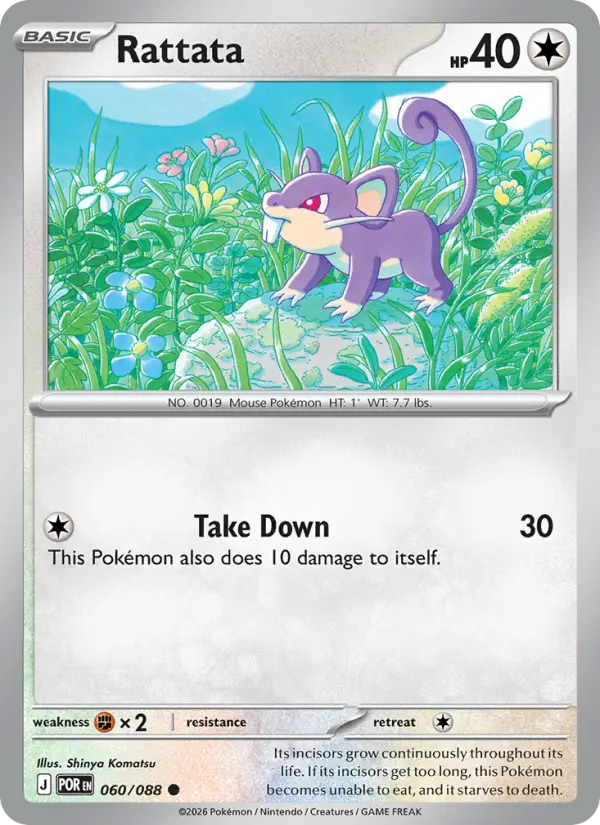
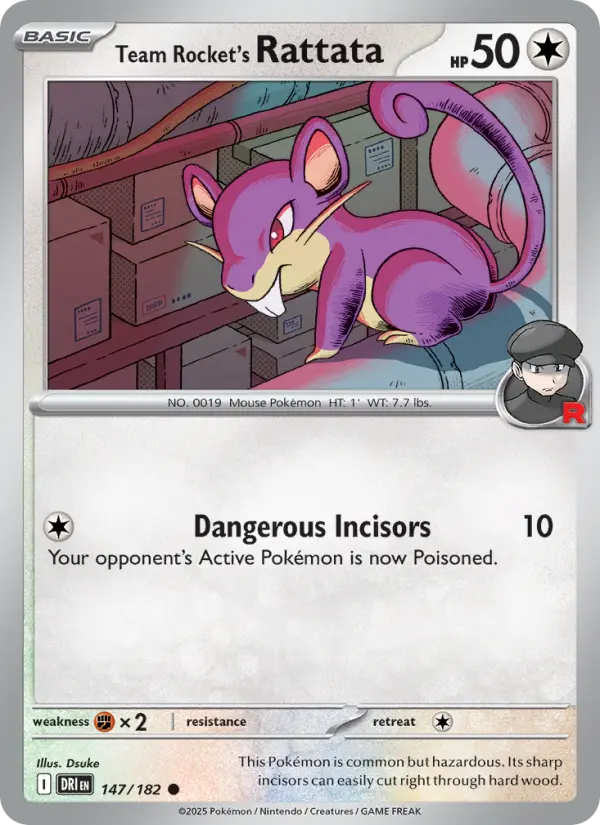
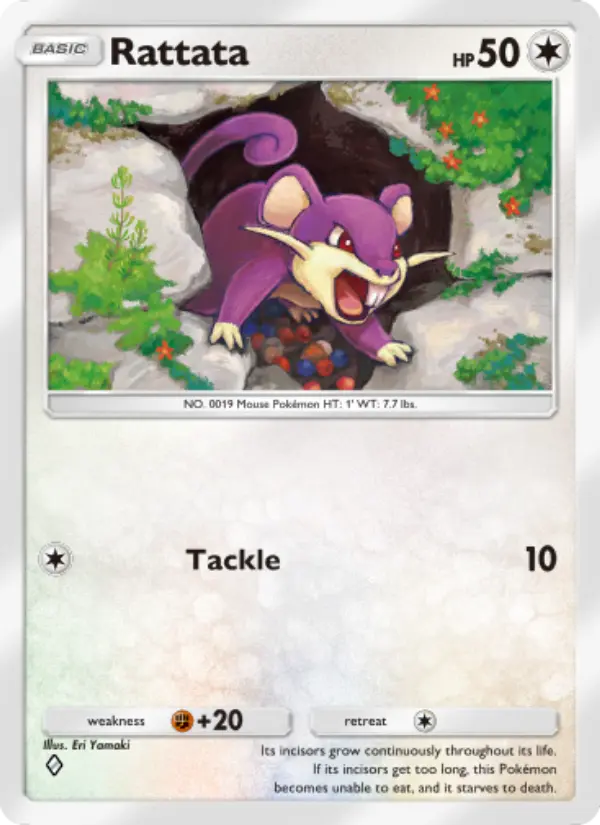
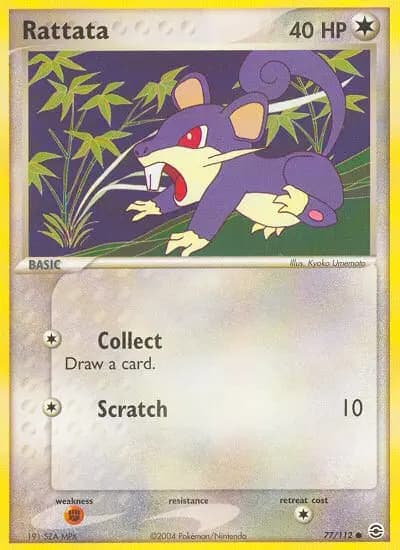
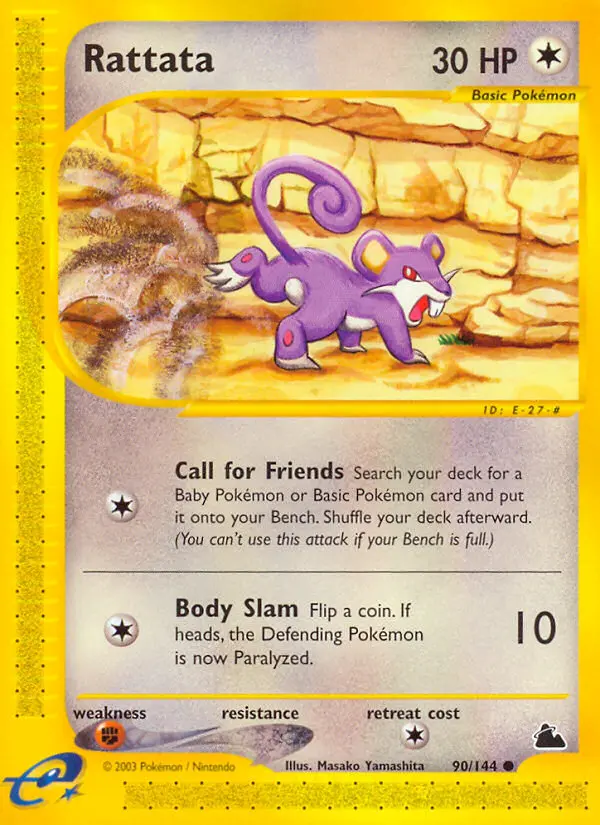
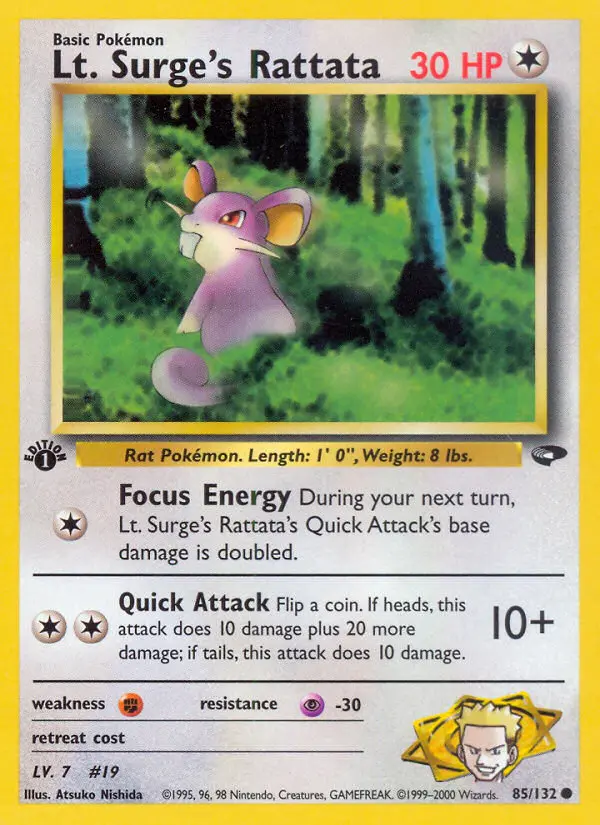
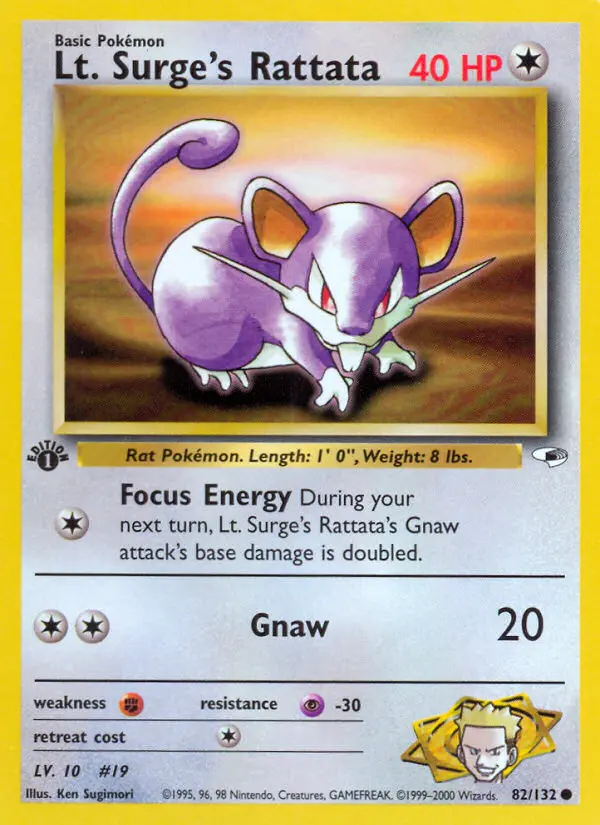
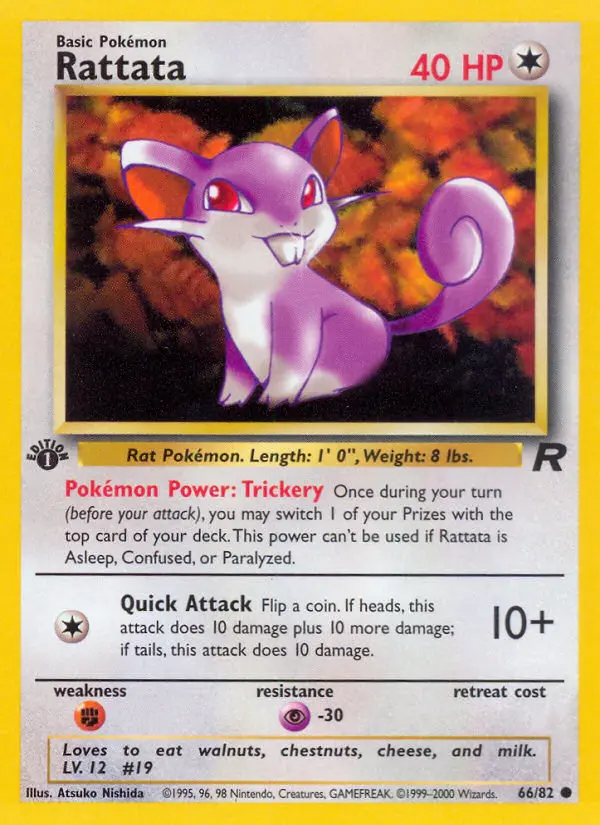
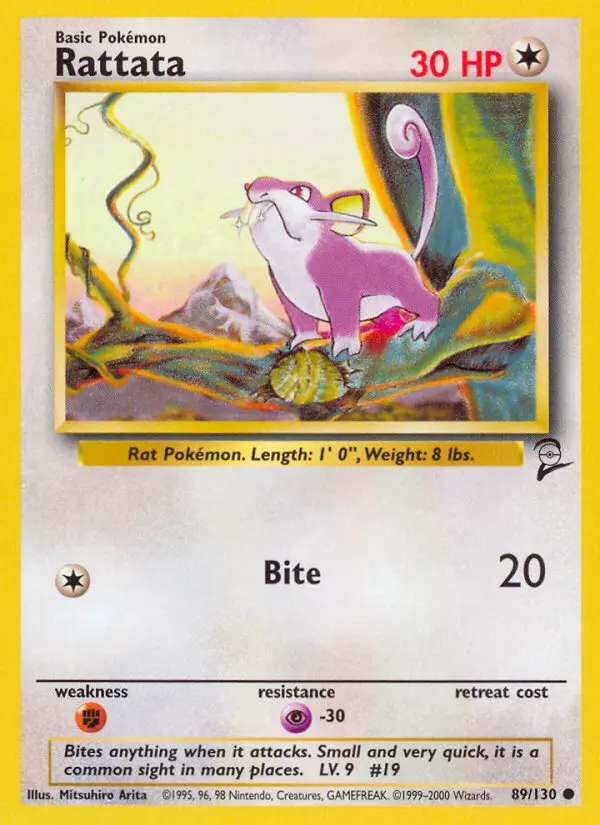
Rattata holds significant cultural importance as one of the original 151 Pokémon that defined the franchise's early identity and remains recognizable to audiences worldwide across generations. As a creature appearing prominently in early-game routes of the original Red and Blue versions, millions of trainers encountered Rattata during their first Pokémon experiences, creating a nostalgic connection to the species across diverse player demographics. The creature appears consistently throughout the anime series in both background roles and as featured Pokémon for various trainers, cementing its place in popular culture and visual Pokémon iconography. Rattata's prolific nature and ubiquitous presence in game worlds parallels its cultural representation as a symbol of adaptation, survival, and determination despite humble origins—themes that resonate with trainers experiencing their early journey progression. The species has appeared in multiple anime episodes, manga adaptations, and trading card game sets, establishing it as a cornerstone character in the broader Pokémon multimedia ecosystem. Its status as a near-universal first encounter creature has made Rattata emblematic of childhood wonder and the beginning of Pokémon adventures for generations of fans. The Alolan regional form's introduction in Generation VII demonstrated continued developer interest in reimagining Rattata for contemporary audiences, ensuring the species remained relevant and exciting for both new and returning players.
Where to Find Rattata in Every Pokémon Game
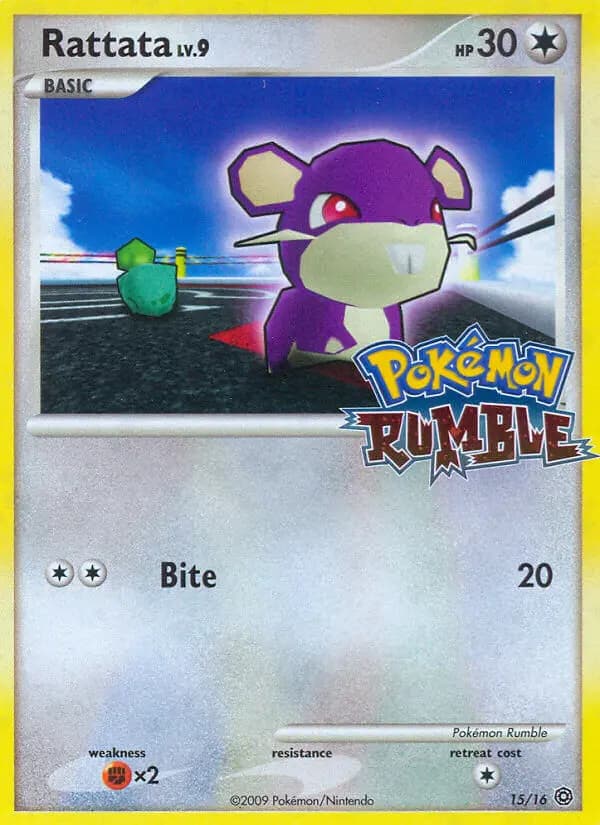
Rattata maintains exceptional availability across nearly every mainline Pokémon game, appearing in early routes where it serves as a primary encounter for beginning trainers establishing their starter teams. In Generation I games (Red, Blue, Yellow), Rattata appears in Routes 1, 2, and additional early-game locations with consistently high encounter rates, reflecting its role as a foundational Pokémon for new players. Subsequent generations have maintained Rattata's early-game prominence, placing it strategically in opening routes across FireRed and LeafGreen, HeartGold and SoulSilver, and newer entries. Its base capture rate of 255 ensures trainers can reliably catch Rattata with minimal resources, making it accessible regardless of preparedness level. The species also appears in side games including Pokémon Rumble and Pokémon Rumble Rush, where it serves as the player's first collectible Toy Pokémon, further extending its presence across the franchise. Alolan Rattata's availability in Sun and Moon games and their enhanced variants (Ultra Sun and Ultra Moon) introduced regional form accessibility to trainers exploring Alola's ecosystem. The species' prominence in Pokémon Let's Go Pikachu and Eevee further demonstrates its continued importance as an early-game staple in modern interpretations. Breeding availability ensures that trainers can obtain Rattata even in games where wild encounters do not feature the species prominently, guaranteeing consistent accessibility across all competitive and casual player populations.