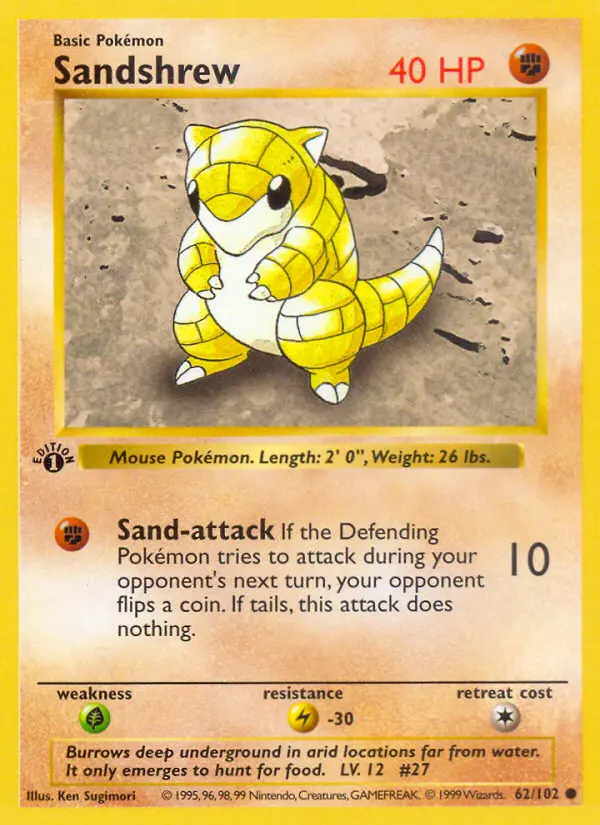
Sandshrew
Generation I · #0027 — Mouse Pokémon
Sandshrew debuted in Generation I, and its ground typing has aged into one of its more defining traits, especially paired with sand veil. Despite its diminutive stature, Sandshrew possesses a hardy constitution with notably robust defensive capabilities, boasting a base Defense stat of 85 that allows it to withstand significant punishment in battle. The species is remarkably common in the wild, reflected in its extraordinarily high catch rate of 255, making Sandshrew one of the easiest Pokémon to capture and an ideal choice for beginning trainers exploring arid environments.
Editor's Take
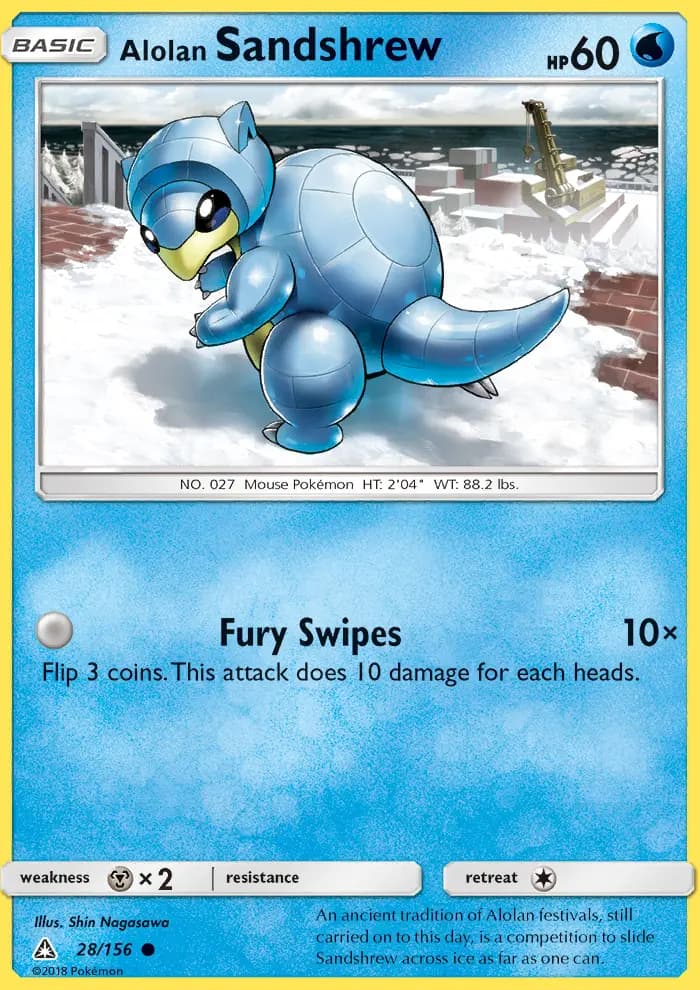
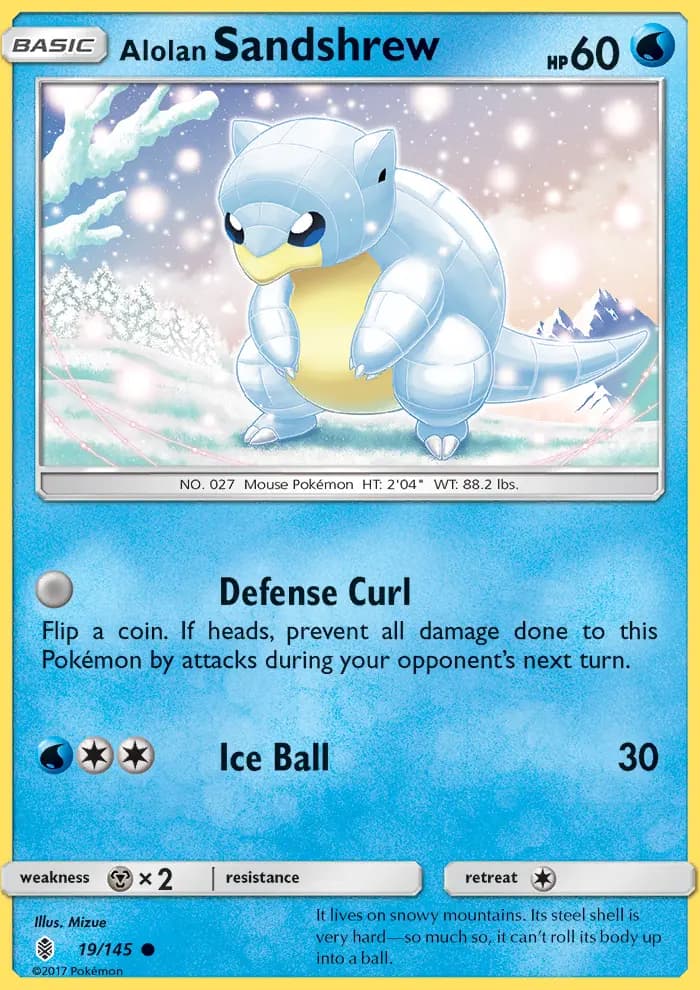
Sandshrew's line got an Alolan variant that swapped Ground for Ice and Steel, and that change is more interesting than anything the original did in seven generations.
Base Stats
Height
0.6m
Weight
12.0kg
Category
Mouse Pokémon
Gender
Male 50% / Female 50%
Color
yellow
Shape
upright
Habitat
rough-terrain
Abilities
Increases evasion to 1.25× during a sandstorm. Protects against sandstorm damage.
Doubles Speed during a sandstorm. Protects against sandstorm damage.

Sandshrew Biology & Physical Characteristics
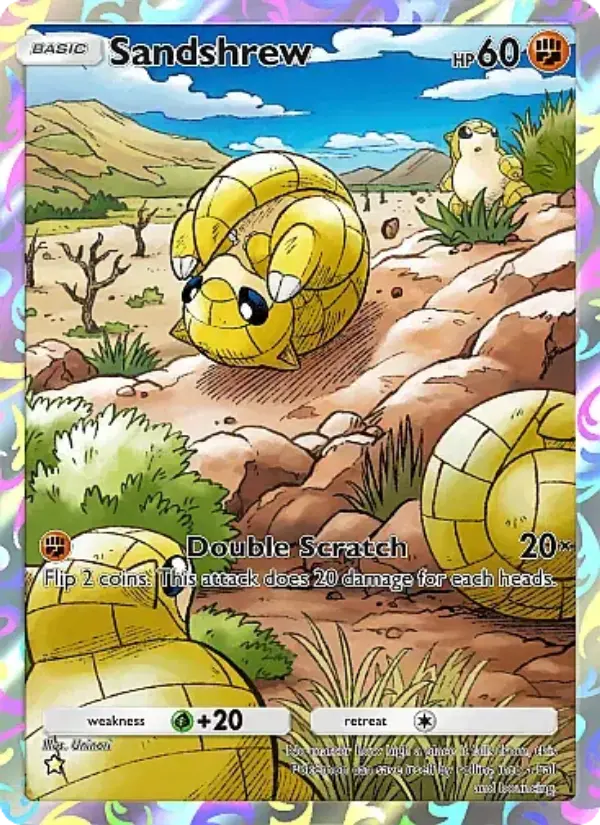
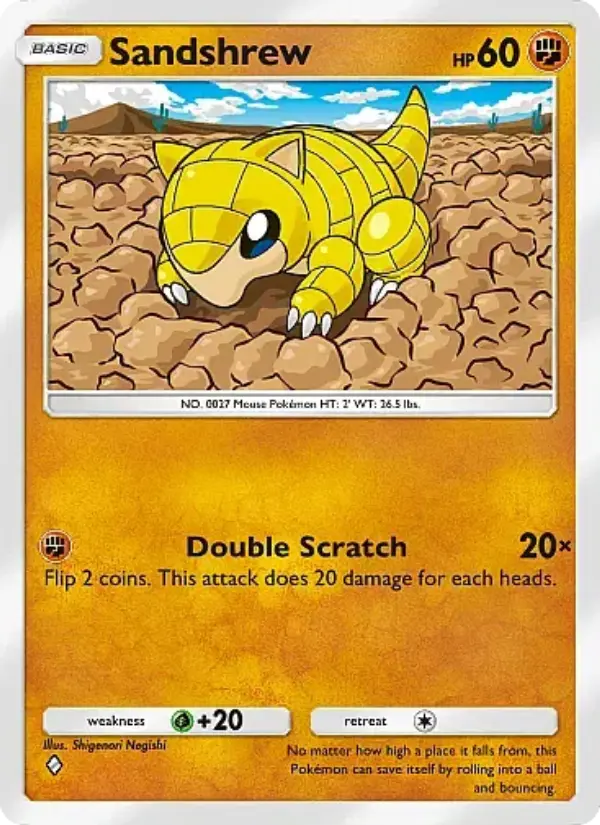
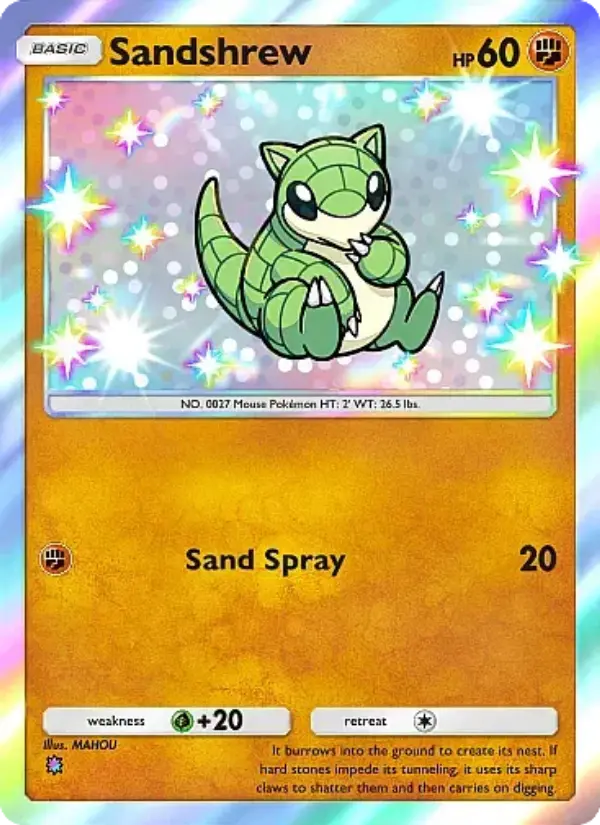
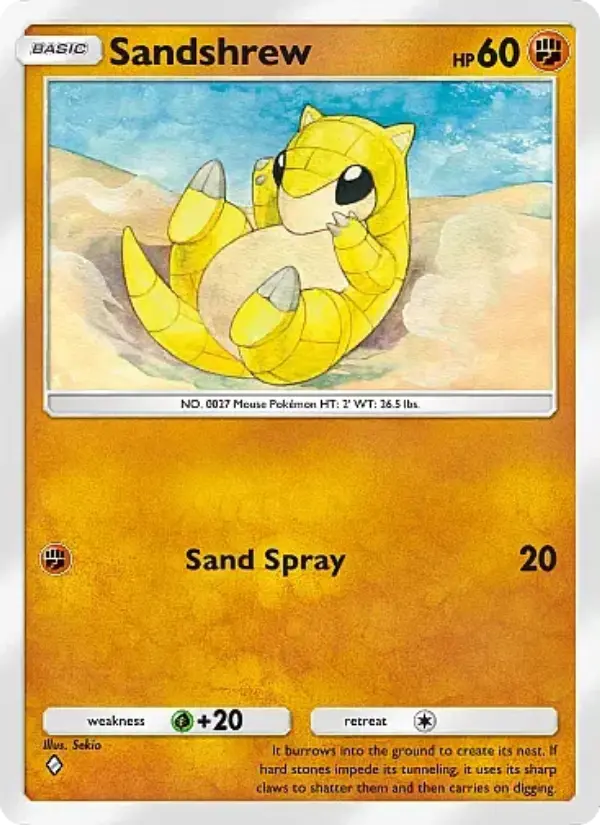
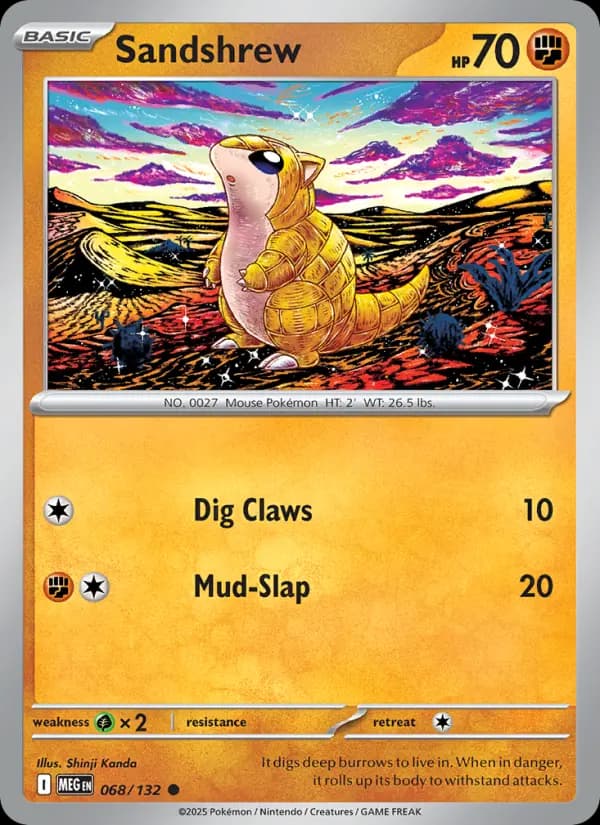
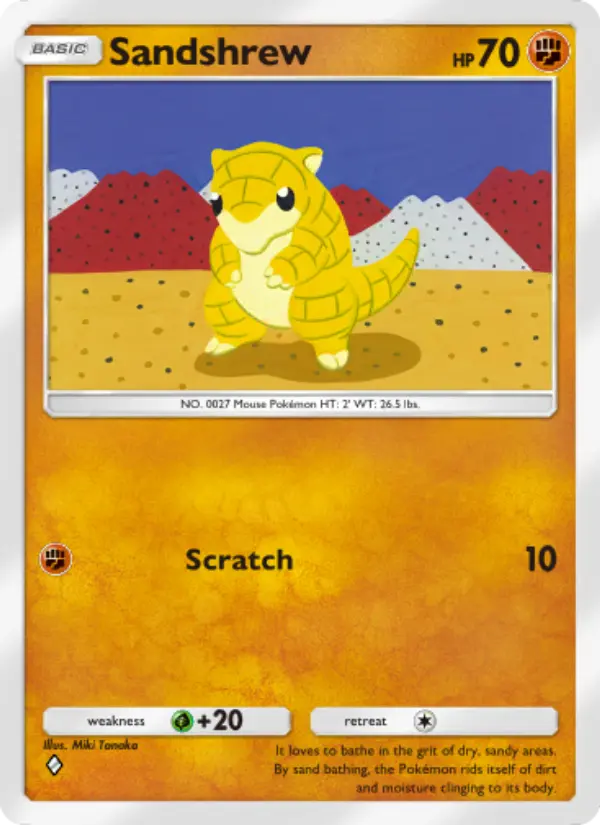
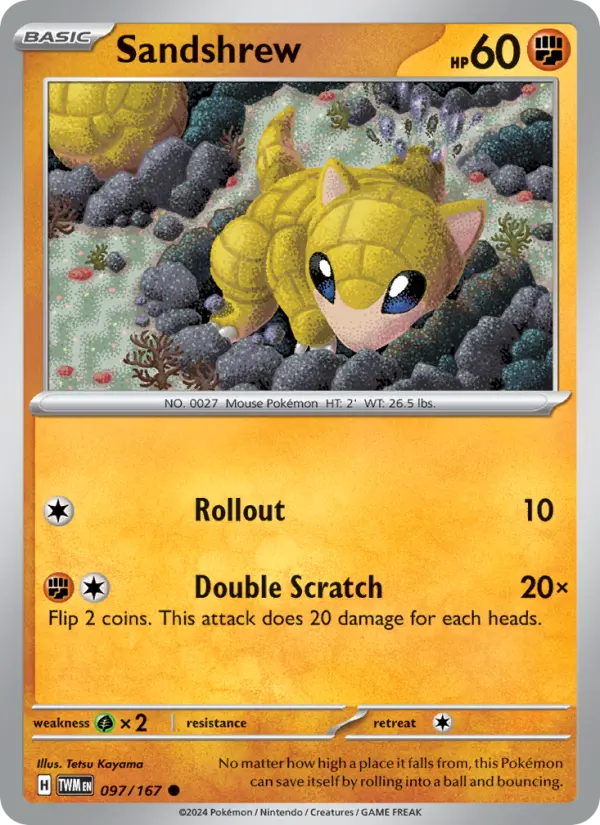
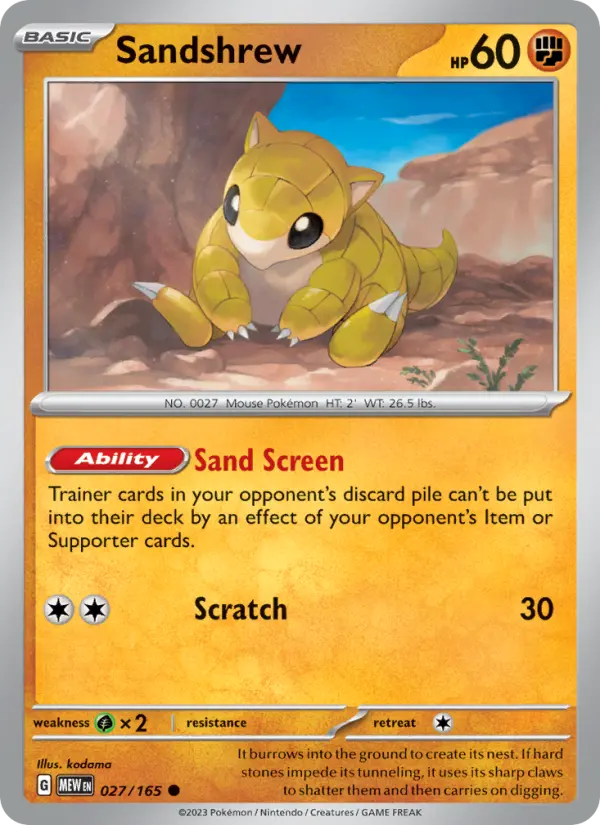
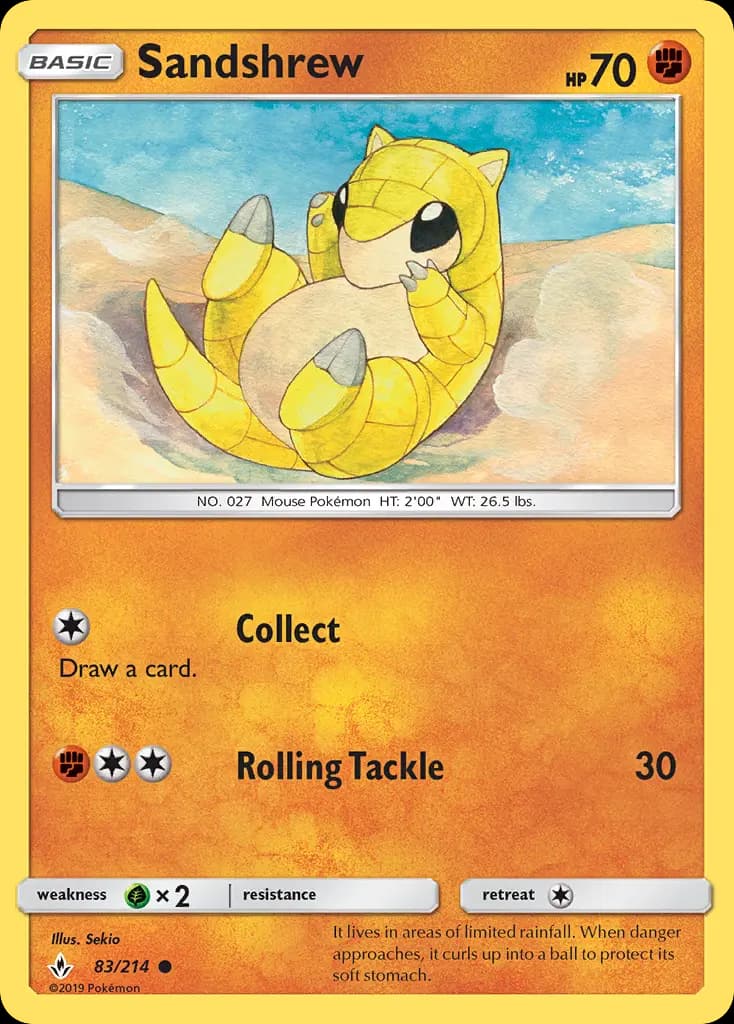
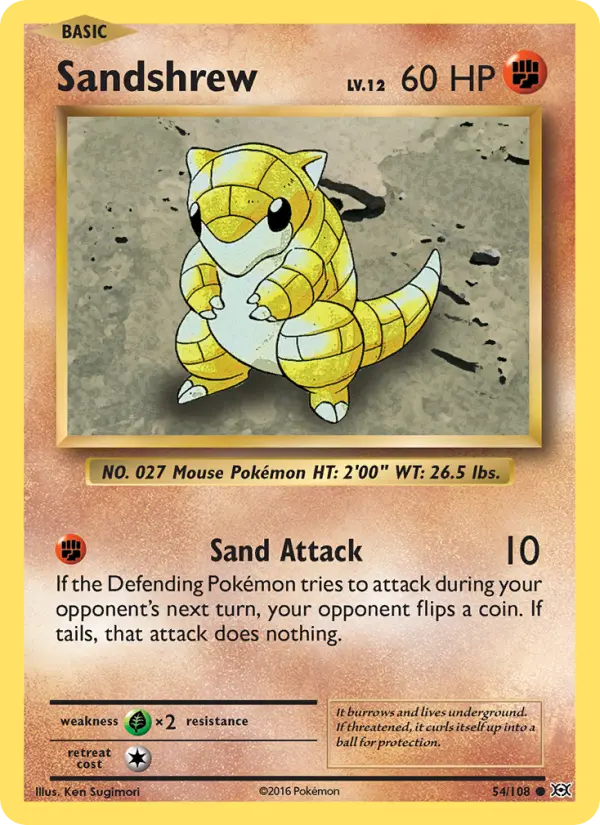
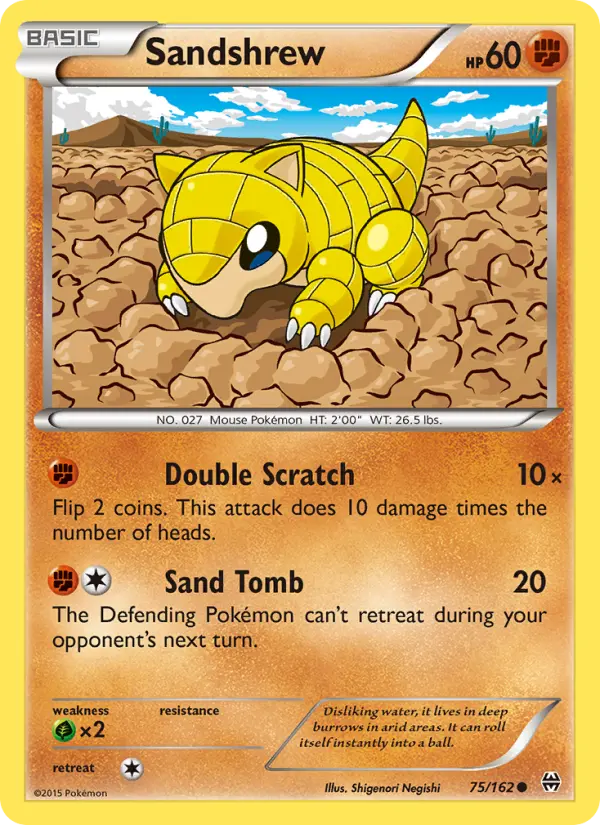
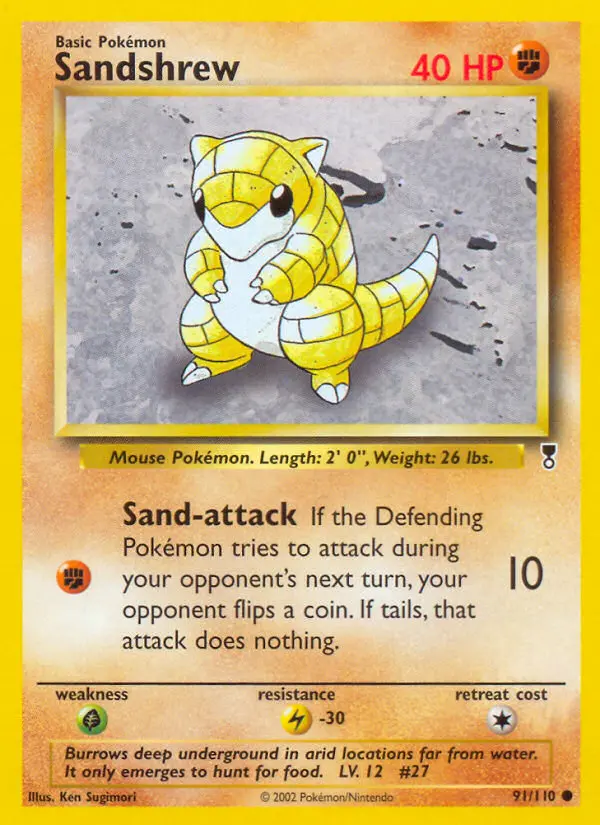
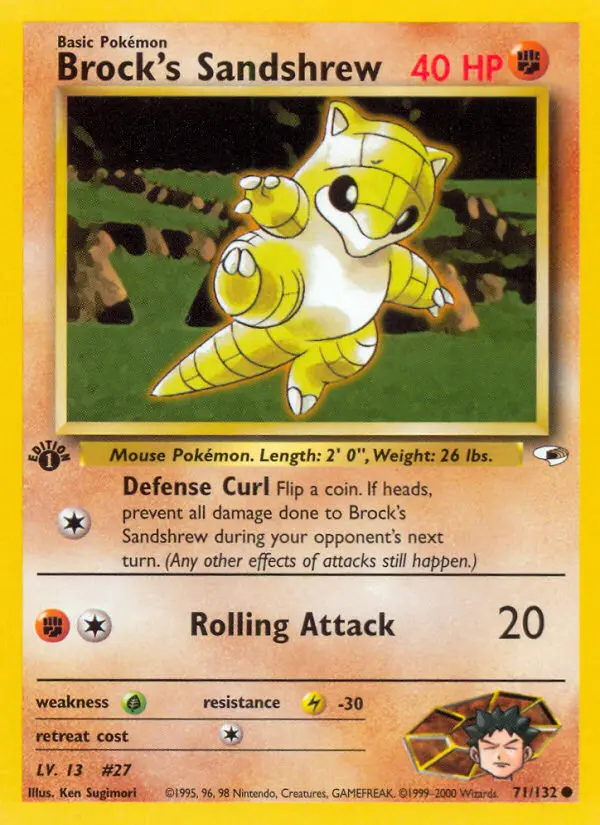
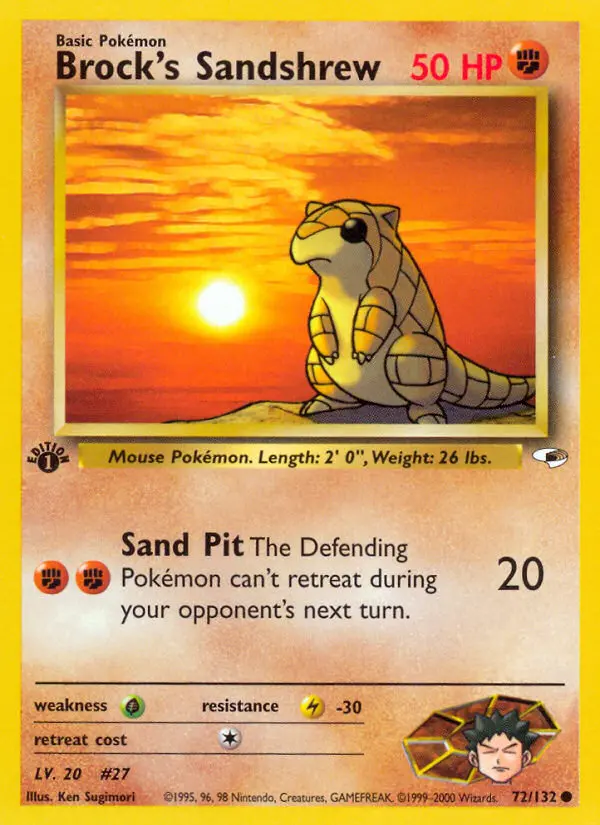
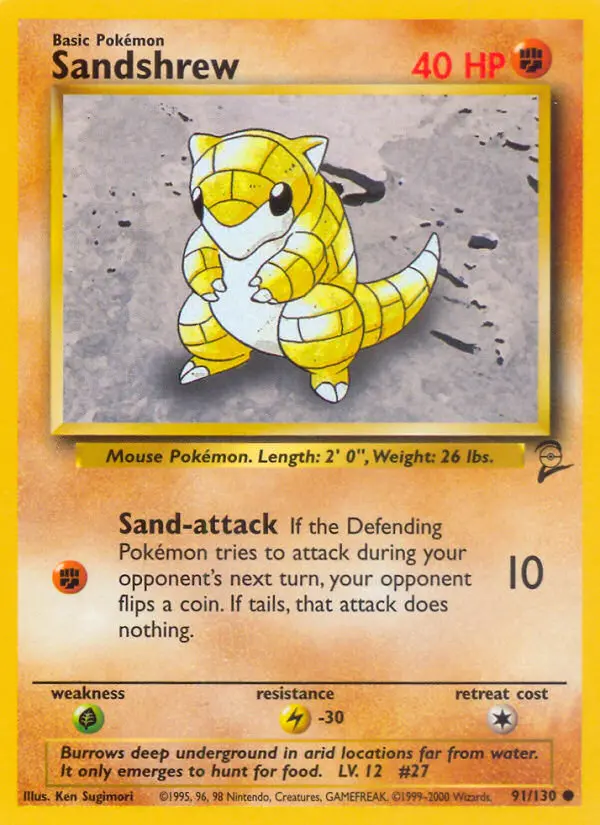
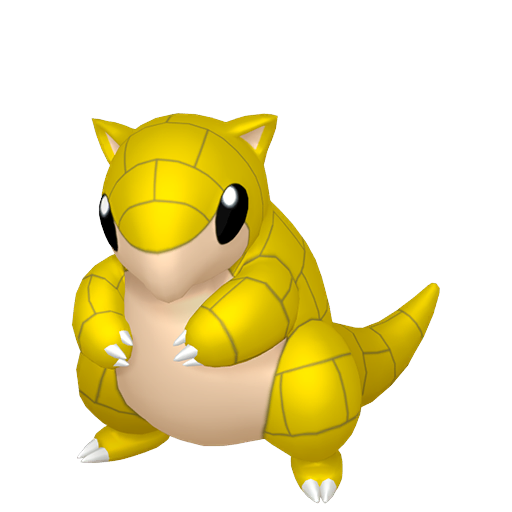
Sandshrew presents a distinctly pholidotic appearance, featuring a brick-patterned yellow hide that provides effective camouflage against desert sand and rocky terrain. Its body is characterized by a tough, moisture-resistant exterior designed specifically for survival in arid climates, with a soft white underbelly and muzzle standing in contrast to its protective outer coating. The Pokémon possesses distinctive blue, almond-shaped eyes, a pointed snout, and triangular ears lined with white fur, while its thick, conical tail serves as a counterbalance during movement. Sandshrew's most notable anatomical features are the sharp claws adorning its limbs: two elongated claws on each foot and three razor-sharp claws on its forepaws, specialized tools perfectly evolved for excavating burrows through compacted desert soil. Its body configuration allows Sandshrew to absorb water without waste, enabling survival in the harshest desert environments where liquid water is scarce or entirely absent.
Pokedex Numbers
Training
Breeding
Sandshrew Breeding, Gender Ratio & Egg Groups
Sandshrew has one of the simplest gender ratios in the game — a flat 50/50, allowing for straightforward breeding in compatible pairs without genetic predisposition toward either sex. The species belongs to the Field egg group, classifying it alongside other terrestrial and mammalian Pokémon that share similar reproductive characteristics and breeding mechanics. Sandshrew eggs require 20 cycles to hatch, translating to approximately 4,884 to 5,140 steps of travel with a compatible parent in the player's active party. The species displays a base happiness rating of 70, indicating a moderate but not exceptional level of affection when first caught, though this value increases through consistent training, feeding berries, and general interaction. This breeding accessibility makes Sandshrew an excellent candidate for players interested in competitive breeding projects or those seeking to establish a personal breeding chain for distribution to friends.
Sprites




Held Items
Quick Claw
held-items
Held: Holder has a 3/16 (18.75%) chance to move first.
Cost: 4000
Quick Claw
held-items
Held: Holder has a 3/16 (18.75%) chance to move first.
Cost: 4000
Quick Claw
held-items
Held: Holder has a 3/16 (18.75%) chance to move first.
Cost: 4000
Quick Claw
held-items
Held: Holder has a 3/16 (18.75%) chance to move first.
Cost: 4000
Quick Claw
held-items
Held: Holder has a 3/16 (18.75%) chance to move first.
Cost: 4000
Quick Claw
held-items
Held: Holder has a 3/16 (18.75%) chance to move first.
Cost: 4000
Quick Claw
held-items
Held: Holder has a 3/16 (18.75%) chance to move first.
Cost: 4000
Quick Claw
held-items
Held: Holder has a 3/16 (18.75%) chance to move first.
Cost: 4000
Quick Claw
held-items
Held: Holder has a 3/16 (18.75%) chance to move first.
Cost: 4000
Quick Claw
held-items
Held: Holder has a 3/16 (18.75%) chance to move first.
Cost: 4000
Quick Claw
held-items
Held: Holder has a 3/16 (18.75%) chance to move first.
Cost: 4000
Quick Claw
held-items
Held: Holder has a 3/16 (18.75%) chance to move first.
Cost: 4000
Quick Claw
held-items
Held: Holder has a 3/16 (18.75%) chance to move first.
Cost: 4000
Quick Claw
held-items
Held: Holder has a 3/16 (18.75%) chance to move first.
Cost: 4000
Quick Claw
held-items
Held: Holder has a 3/16 (18.75%) chance to move first.
Cost: 4000
Quick Claw
held-items
Held: Holder has a 3/16 (18.75%) chance to move first.
Cost: 4000
Quick Claw
held-items
Held: Holder has a 3/16 (18.75%) chance to move first.
Cost: 4000
Quick Claw
held-items
Held: Holder has a 3/16 (18.75%) chance to move first.
Cost: 4000
Quick Claw
held-items
Held: Holder has a 3/16 (18.75%) chance to move first.
Cost: 4000
Quick Claw
held-items
Held: Holder has a 3/16 (18.75%) chance to move first.
Cost: 4000
Quick Claw
held-items
Held: Holder has a 3/16 (18.75%) chance to move first.
Cost: 4000
Quick Claw
held-items
Held: Holder has a 3/16 (18.75%) chance to move first.
Cost: 4000
Quick Claw
held-items
Held: Holder has a 3/16 (18.75%) chance to move first.
Cost: 4000
Quick Claw
held-items
Held: Holder has a 3/16 (18.75%) chance to move first.
Cost: 4000
Grip Claw
held-items
Held: Holder’s multi-turn trapping moves last 5 turns.
Cost: 4000
Grip Claw
held-items
Held: Holder’s multi-turn trapping moves last 5 turns.
Cost: 4000
Grip Claw
held-items
Held: Holder’s multi-turn trapping moves last 5 turns.
Cost: 4000
Grip Claw
held-items
Held: Holder’s multi-turn trapping moves last 5 turns.
Cost: 4000
Grip Claw
held-items
Held: Holder’s multi-turn trapping moves last 5 turns.
Cost: 4000
Grip Claw
held-items
Held: Holder’s multi-turn trapping moves last 5 turns.
Cost: 4000
Quick Claw
held-items
Held: Holder has a 3/16 (18.75%) chance to move first.
Cost: 4000
Quick Claw
held-items
Held: Holder has a 3/16 (18.75%) chance to move first.
Cost: 4000
Quick Claw
held-items
Held: Holder has a 3/16 (18.75%) chance to move first.
Cost: 4000
Quick Claw
held-items
Held: Holder has a 3/16 (18.75%) chance to move first.
Cost: 4000
Grip Claw
held-items
Held: Holder’s multi-turn trapping moves last 5 turns.
Cost: 4000
Grip Claw
held-items
Held: Holder’s multi-turn trapping moves last 5 turns.
Cost: 4000
Grip Claw
held-items
Held: Holder’s multi-turn trapping moves last 5 turns.
Cost: 4000
Grip Claw
held-items
Held: Holder’s multi-turn trapping moves last 5 turns.
Cost: 4000
Grip Claw
held-items
Held: Holder’s multi-turn trapping moves last 5 turns.
Cost: 4000
Grip Claw
held-items
Held: Holder’s multi-turn trapping moves last 5 turns.
Cost: 4000
TMs & HMs
tm01
gold silver
tm01
crystal
tm01
platinum
tm01
emerald
tm01
diamond pearl
tm01
firered leafgreen
tm01
ruby sapphire
tm01
xd
tm01
colosseum
tm01
heartgold soulsilver
tm01
lets go pikachu lets go eevee
tm02
crystal
tm02
gold silver
tm03
yellow
tm03
crystal
tm03
gold silver
tm03
red blue
tm03
blue japan
tm04
gold silver
tm03
red green japan
+576 more TMs/HMs
Sandshrew's Evolution Chain


Sandshrew Evolution, Mega Evolution & Special Forms
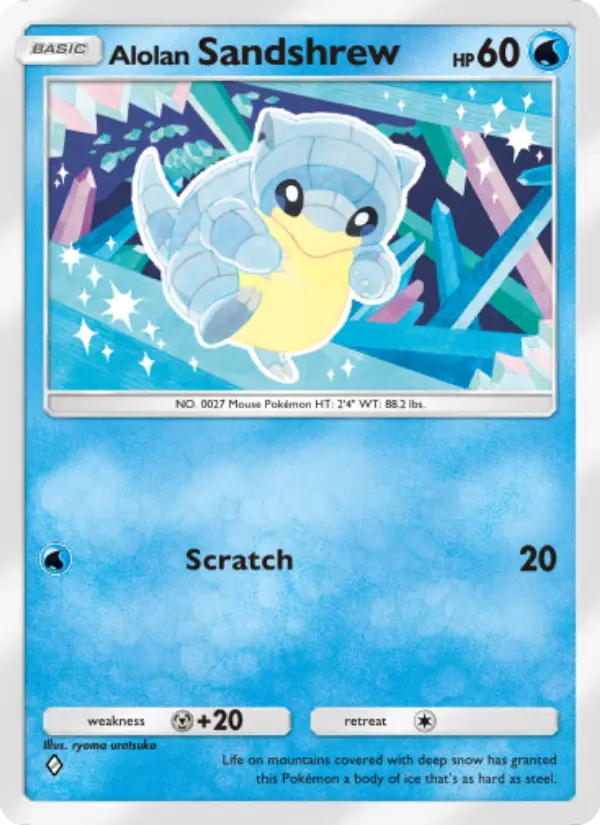
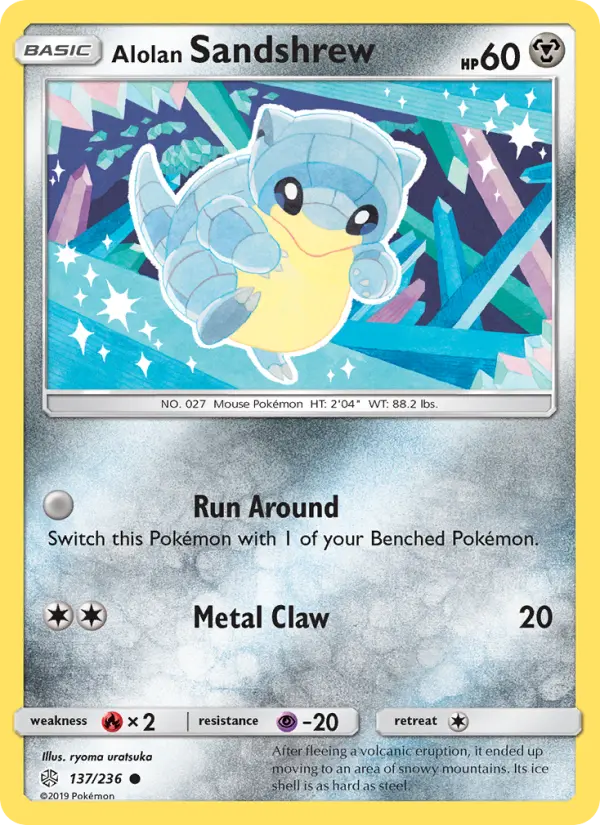
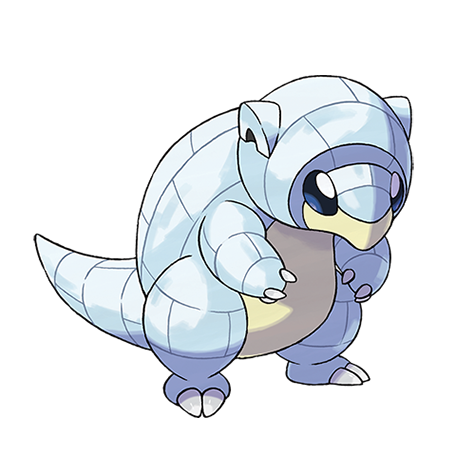
Sandshrew evolves into the more formidable Sandslash upon reaching level 22, a transformation that significantly enhances its combat capabilities and physical stature. This evolution does not require external items or specific conditions, making it accessible to any trainer who has invested sufficient time training their Sandshrew through early-game encounters. The evolution represents a natural progression in the species' lifecycle, with Sandslash inheriting and amplifying Sandshrew's defensive strengths while gaining superior offensive capability. Additionally, Alola introduced a regional variant of Sandshrew, classified as Ice/Steel type, which evolves into Alolan Sandslash through exposure to an Ice Stone rather than level progression. This alternate form represents a fascinating case of environmental adaptation, where Sandshrew's lineage in the frozen volcanic landscape of Alola developed completely different characteristics and typing, demonstrating the franchise's commitment to showing how Pokémon species adapt to different geographical regions.
Where to Find
Kanto Route 8
kanto
+5 more
Kanto Route 4
kanto
+12 more
Kanto Route 9
kanto
+9 more
Kanto Route 10
kanto
+9 more
Kanto Route 23
kanto
+1 more
Kanto Route 11
kanto
+8 more
Kanto Route 3
kanto
Mt Moon
kanto
+5 more
Union Cave
johto
+5 more
Hoenn Route 113
hoenn
+3 more
Hoenn Route 111
hoenn
+6 more
Mirage Tower
hoenn
+3 more
Wayward Cave
sinnoh
+9 more
Johto Safari Zone
johto
+21 more
Desert Resort
unova
+7 more
Relic Castle
unova
+1 more
Sandshrew Behaviour and Natural Habitat
Sandshrew is a predominantly nocturnal creature that spends the majority of its existence concealed within deep burrows excavated into arid, sandy terrain, far removed from water sources. The species only emerges from its underground refuge when hunger demands, timing its hunting expeditions to coincide with cooler hours to minimize water loss through evaporation. According to Pokédex records, Sandshrew exhibits a remarkable ability to curl into a protective ball at a moment's notice, a defensive maneuver that both shields its vulnerable underbelly and allows it to roll away from threats with surprising velocity. The creature's preference for dry environments is absolute; it actively avoids water and will seek out sandy locations specifically to utilize the granules as protection when threatened. This behavior pattern demonstrates Sandshrew's complete specialization for desert existence, making it virtually dependent on arid conditions for survival and comfort.
Pokedex Entries
Burrows deep underground in arid locations far from water. It only emerges to hunt for food.
Its body is dry. When it gets cold at night, its hide is said to become coated with a fine dew.
If it fell from a great height, this POKéMON could save itself by rolling into a ball and bouncing.
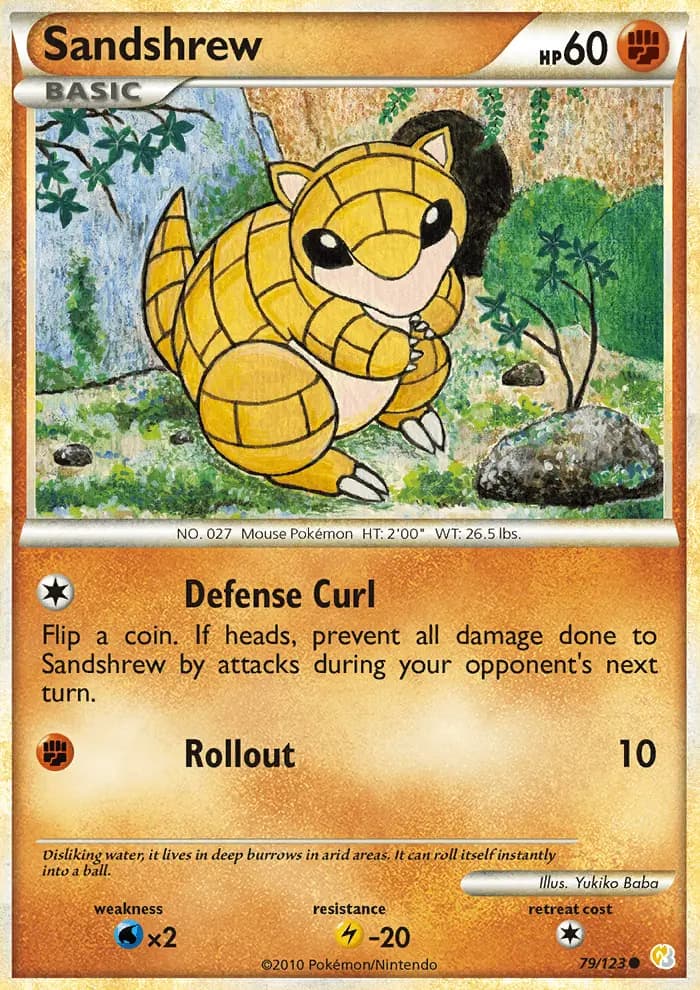
Disliking water, it lives in deep burrows in arid areas. It can roll itself instantly into a ball.
It prefers dry, sandy places because it uses the sand to protect itself when threatened.
SANDSHREW’s body is configured to absorb water without waste, enabling it to survive in an arid desert. This POKéMON curls up to protect itself from its enemies.
SANDSHREW has a very dry hide that is extremely tough. The POKéMON can roll into a ball that repels any attack. At night, it burrows into the desert sand to sleep.
When it curls up in a ball, it can make any attack bounce off harmlessly. Its hide has turned tough and solid as a result of living in the desert.
It burrows and lives underground. If threatened, it curls itself up into a ball for protection.
Burrows deep underground in arid locations far from water. It only emerges to hunt for prey.
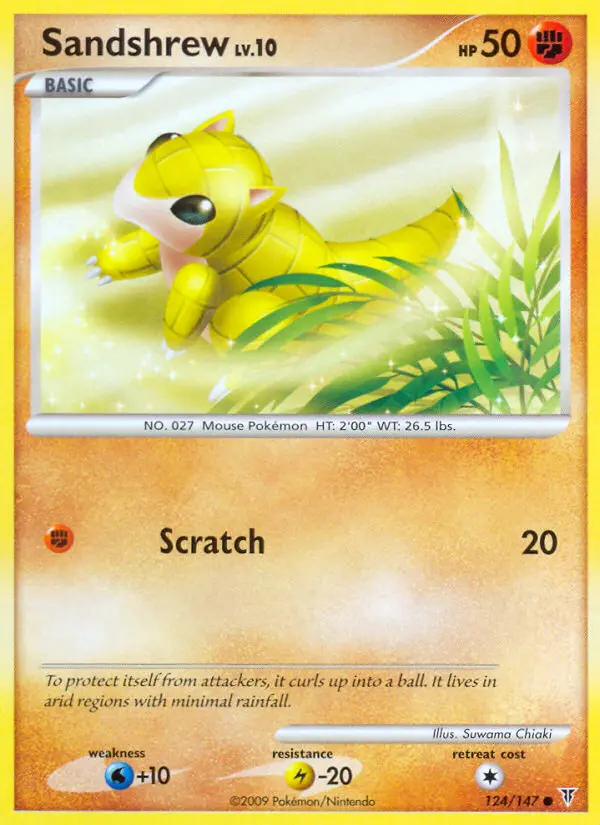
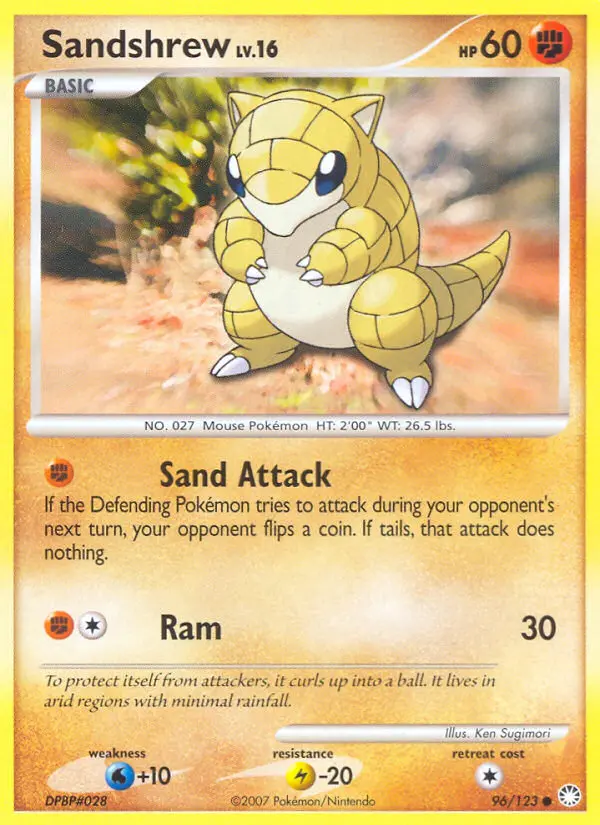
To protect itself from attackers, it curls up into a ball. It lives in arid regions with minimal rainfall.
If it fell from a great height, this Pokémon could save itself by rolling into a ball and bouncing.
Disliking water, it lives in deep burrows in arid areas. It can roll itself instantly into a ball.
To protect itself from attackers, it curls up into a ball. It lives in arid regions with minimal rainfall.
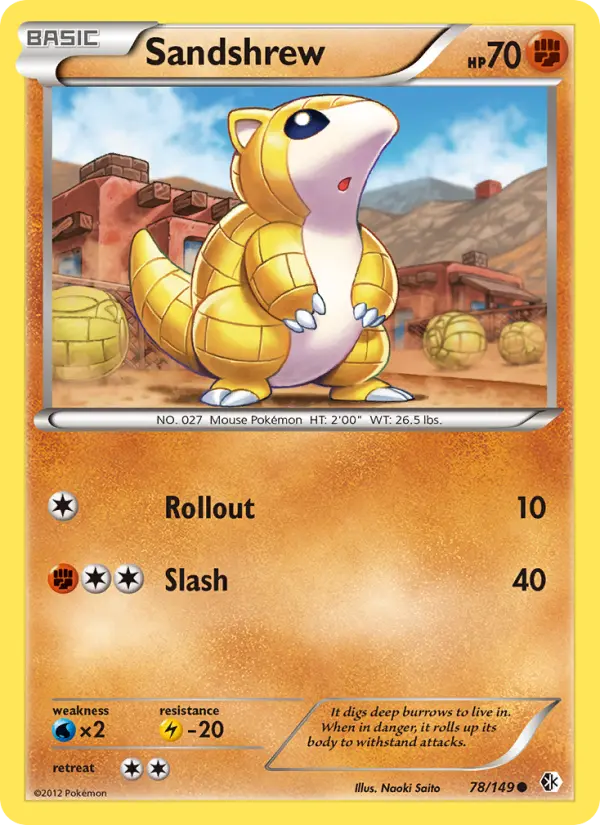
It digs deep burrows to live in. When in danger, it rolls up its body to withstand attacks.
It burrows and lives underground. If threatened, it curls itself up into a ball for protection.
Disliking water, it lives in deep burrows in arid areas. It can roll itself instantly into a ball.
Sandshrew’s body is configured to absorb water without waste, enabling it to survive in an arid desert. This Pokémon curls up to protect itself from its enemies.
Sandshrew has a very dry hide that is extremely tough. The Pokémon can roll into a ball that repels any attack. At night, it burrows into the desert sand to sleep.
It can roll its body into a ball. It moves through the desert by rolling at high speeds.
It lives in areas of limited rainfall. When danger approaches, it curls up into a ball to protect its soft stomach.
It usually makes its home in deserts and arid zones, where rain does not fall. It digs holes to catch Bug-type Pokémon.
When its skin gets wrinkled from moisture, it heads for a volcano. It lies flat on a spot with a lot of geothermal heat and dries itself out.
Its body is dry. When it gets cold at night, its hide is said to become coated with a fine dew.
It loves to bathe in the grit of dry, sandy areas. By sand bathing, the Pokémon rids itself of dirt and moisture clinging to its body.
It burrows into the ground to create its nest. If hard stones impede its tunneling, it uses its sharp claws to shatter them and then carries on digging.
Sandshrew Name Origin & Design Inspiration
The name Sandshrew derives directly from its habitat and appearance: "sand" references its desert environment and sandy coloration, while "shrew" designates it as a rodent-like creature, reinforcing the Mouse Pokémon classification. The Japanese name サンド (Sando) similarly emphasizes the sand association, creating linguistic consistency across regions. The design itself appears inspired by real-world animals such as pangolins and armadillos, whose scaled or plated bodies provide natural armor against threats, combined with the burrowing expertise of shrews and moles. The brick-pattern detailing on Sandshrew's hide specifically evokes desert rock formations and compressed earth, visual cues that immediately communicate the Pokémon's environmental specialization to players. This thoughtful design approach, combining practical defensive features with immediately recognizable thematic elements, exemplifies the original Generation I Pokémon design philosophy of creating creatures that felt simultaneously alien and grounded in observable natural phenomena.
Learnable Moves
Sandshrew can learn 70 moves:
Move | Type | Cat. | Power | Acc. | PP |
|---|---|---|---|---|---|
| agility | psychic | Status | — | — | 30 |
| amnesia | psychic | Status | — | — | 20 |
| attract | normal | Status | — | 100 | 15 |
| bide | normal | Physical | — | — | 10 |
| body slam | normal | Physical | 85 | 100 | 15 |
| brick break | fighting | Physical | 75 | 100 | 15 |
| counter | fighting | Physical | — | 100 | 20 |
| crush claw | normal | Physical | 75 | 95 | 10 |
| curse | ghost | Status | — | — | 10 |
| cut | normal | Physical | 50 | 95 | 30 |
| defense curl | normal | Status | — | — | 40 |
| detect | fighting | Status | — | — | 5 |
| dig | ground | Physical | 80 | 100 | 10 |
| double team | normal | Status | — | — | 15 |
| double edge | normal | Physical | 120 | 100 | 15 |
| dynamic punch | fighting | Physical | 100 | 50 | 5 |
| earthquake | ground | Physical | 100 | 100 | 10 |
| endeavor | normal | Physical | — | 100 | 5 |
| endure | normal | Status | — | — | 10 |
| facade | normal | Physical | 70 | 100 | 20 |
| false swipe | normal | Physical | 40 | 100 | 40 |
| fissure | ground | Physical | — | 30 | 5 |
| flail | normal | Physical | — | 100 | 15 |
| focus punch | fighting | Physical | 150 | 100 | 20 |
| frustration | normal | Physical | — | 100 | 20 |
| fury cutter | bug | Physical | 40 | 95 | 20 |
| fury swipes | normal | Physical | 18 | 80 | 15 |
| headbutt | normal | Physical | 70 | 100 | 15 |
| hidden power | normal | Special | 60 | 100 | 15 |
| iron tail | steel | Physical | 100 | 75 | 15 |
| knock off | dark | Physical | 65 | 100 | 20 |
| leech life | bug | Physical | 80 | 100 | 10 |
| low kick | fighting | Physical | — | 100 | 20 |
| magnitude | ground | Physical | — | 100 | 30 |
| metal claw | steel | Physical | 50 | 95 | 35 |
| mimic | normal | Status | — | — | 10 |
| mud slap | ground | Special | 20 | 100 | 10 |
| poison sting | poison | Physical | 15 | 100 | 35 |
| protect | normal | Status | — | — | 10 |
| rage | normal | Physical | 20 | 100 | 20 |
| rapid spin | normal | Physical | 50 | 100 | 40 |
| rest | psychic | Status | — | — | 5 |
| return | normal | Physical | — | 100 | 20 |
| rock slide | rock | Physical | 75 | 90 | 10 |
| rock smash | fighting | Physical | 40 | 100 | 15 |
| rock tomb | rock | Physical | 60 | 95 | 15 |
| rollout | rock | Physical | 30 | 90 | 20 |
| safeguard | normal | Status | — | — | 25 |
| sand attack | ground | Status | — | 100 | 15 |
| sand tomb | ground | Physical | 35 | 85 | 15 |
| sandstorm | rock | Status | — | — | 10 |
| scratch | normal | Physical | 40 | 100 | 35 |
| secret power | normal | Physical | 70 | 100 | 20 |
| seismic toss | fighting | Physical | — | 100 | 20 |
| skull bash | normal | Physical | 130 | 100 | 10 |
| slash | normal | Physical | 70 | 100 | 20 |
| sleep talk | normal | Status | — | — | 10 |
| snore | normal | Special | 50 | 100 | 15 |
| spikes | ground | Status | — | — | 20 |
| strength | normal | Physical | 80 | 100 | 15 |
| submission | fighting | Physical | 80 | 80 | 20 |
| substitute | normal | Status | — | — | 10 |
| sunny day | fire | Status | — | — | 5 |
| super fang | normal | Physical | — | 90 | 10 |
| swagger | normal | Status | — | 85 | 15 |
| swift | normal | Special | 60 | — | 20 |
| swords dance | normal | Status | — | — | 20 |
| take down | normal | Physical | 90 | 85 | 20 |
| thief | dark | Physical | 60 | 100 | 25 |
| toxic | poison | Status | — | 90 | 10 |
Sandshrew Competitive Battle Guide
In competitive battle environments, Sandshrew's viability is substantially limited by its mediocre offensive and speed statistics, with base Attack of 75 and Speed of 40 ranking among the lowest in its generation's early-game offerings. However, its exceptional base Defense stat of 85 paired with respectable HP of 50 grants Sandshrew legitimate survivability, allowing it to absorb physical attacks that would devastate frailer opponents. Sandshrew's true competitive potential emerges through its ability interactions: Sand Veil increases evasion to 1.25 times during sandstorm conditions, providing passive survivability boosts, while the hidden ability Sand Rush doubles the Pokémon's Speed during sandstorm, transforming it from a cumbersome creature into a moderately threatening physical attacker. Most competitive players, however, utilize Sandshrew primarily as a lead or support Pokémon in sandstorm-based team compositions, using its abilities to enable faster sweepers like Tyranitar or specialized sandstorm abusers. The evolution into Sandslash provides significantly superior competitive options, making Sandshrew itself more valuable as a stepping stone than as an endgame competitive threat.
Commonly Asked Questions About Sandshrew
What type is Sandshrew?
Sandshrew is a ground type Pokemon.
What does Sandshrew evolve into?
Sandshrew evolves into sandslash.
What are Sandshrew's weaknesses?
Sandshrew is weak to water, grass and ice type moves.
Does Sandshrew evolve by trading?
No — Sandshrew evolves entirely through leveling up, with no trade required at any stage.
Where can I find Sandshrew?
Sandshrew can be found in kanto route 8 (kanto), kanto route 4 (kanto) and kanto route 9 (kanto) and 13 other locations.
Sandshrew Cultural Impact & Franchise History
As one of the original 151 Pokémon and a creature featured prominently in early Pokémon media, Sandshrew holds considerable nostalgic significance for longtime franchise fans. The character appeared early in the Pokémon animated series, establishing itself as a recognizable iconic species despite lacking the mainstream popularity of Pikachu or Charizard. Sandshrew's introduction of regional variants through the Alolan form in Generation VII demonstrated Game Freak's willingness to reimagine classic Pokémon designs, spawning community discussions about ecological adaptation and environmental influence on species development. The creature's consistent availability across nearly every mainline game installment has cemented its status as a reliable, if unremarkable, species within the broader franchise ecosystem. Sandshrew's cultural persistence demonstrates how even less celebrated Pokémon can maintain relevance through accessibility and consistent representation across multiple generations of games.
Where to Find Sandshrew in Every Pokémon Game
Sandshrew enjoys remarkable distribution throughout the Pokémon game canon, appearing in wild grass and cave encounters across numerous regional Pokédex entries. The species was available in the original Red, Blue, and Yellow versions of Generation I, and has appeared in virtually every subsequent mainline game including Gold/Silver/Crystal, Ruby/Sapphire/Emerald, FireRed/LeafGreen, Diamond/Pearl/Platinum, HeartGold/SoulSilver, Black 2/White 2, X/Y, Omega Ruby/Alpha Sapphire, Sun/Moon, Ultra Sun/Ultra Moon, Sword/Shield, Legends: Arceus, and Scarlet/Violet. Its status as a common species with a maximum catch rate of 255 means that capturing Sandshrew requires minimal effort or specialized equipment, typically succeeding with standard Poké Balls even at full health. The introduction of the Alolan regional form expanded Sandshrew's availability across additional game versions, with the variant appearing in Sun/Moon, Ultra Sun/Ultra Moon, and subsequently in Pokémon Legends: Arceus and the Indigo Disk DLC of Pokémon Scarlet/Violet. This ubiquitous presence across the franchise ensures that trainers seeking Sandshrew will find it accessible regardless of which Pokémon generation they choose to explore.