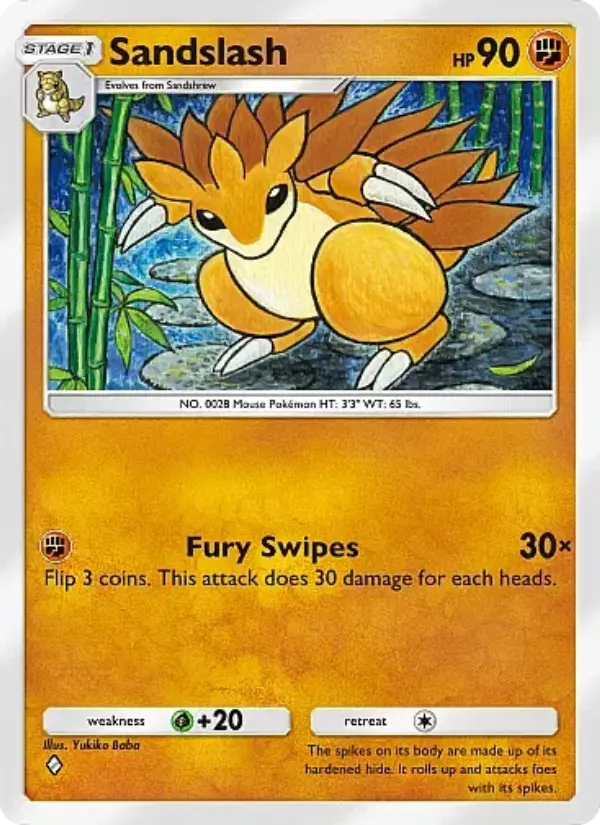
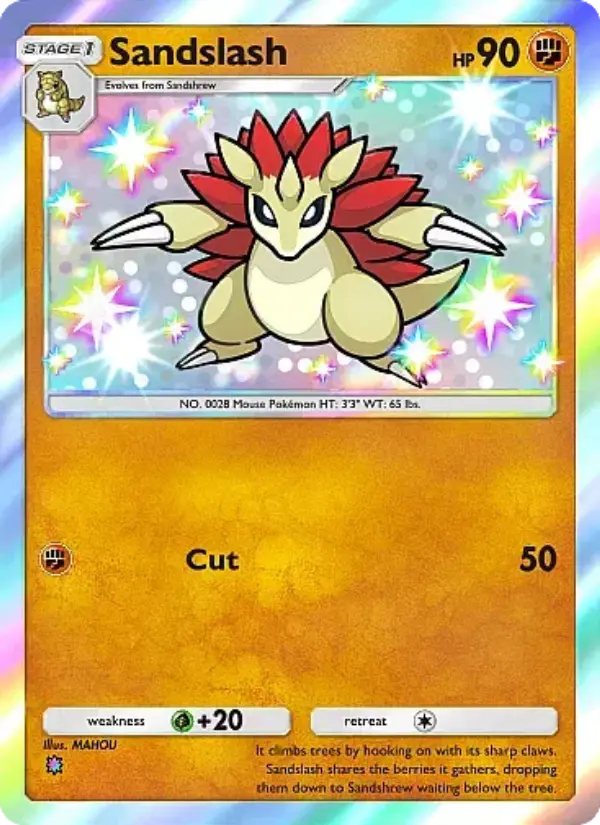
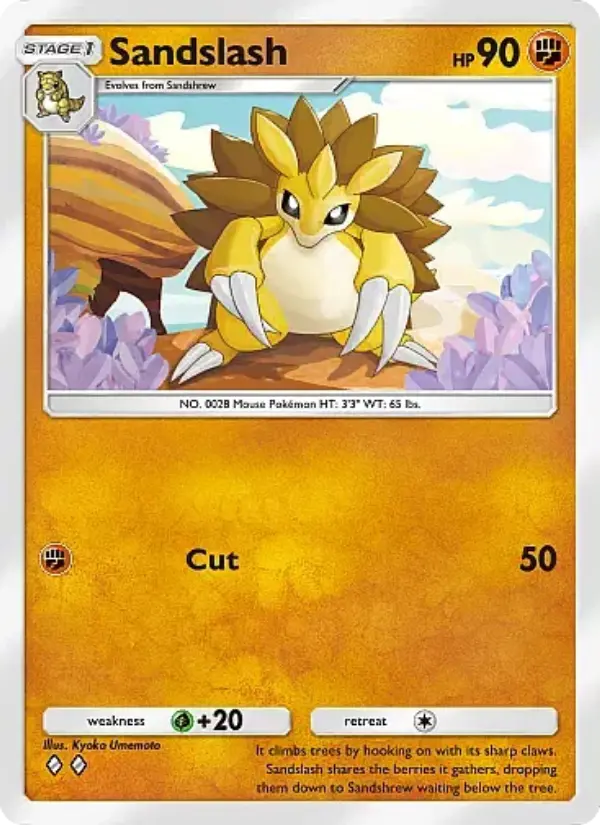
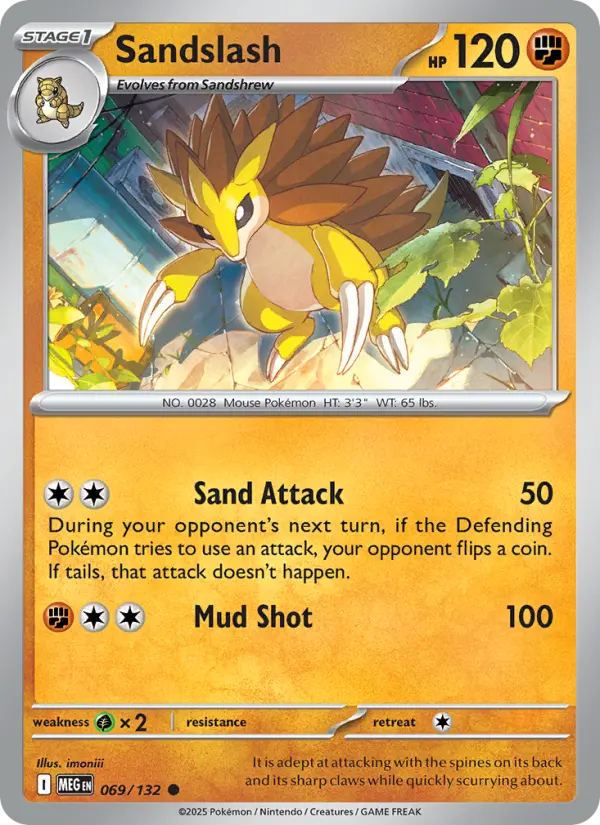
Sandslash
Generation I · #0028 — Mouse Pokémon
Sandslash entered the roster in Generation I as a ground-type, and what's stuck since is less its typing than its sand veil ability.
Editor's Take
Sandslash has 110 base Defense and a movepool that never gave it anything to do with the time it buys — a wall with no win condition is just a delay.
Base Stats
Height
1.0m
Weight
29.5kg
Category
Mouse Pokémon
Gender
Male 50% / Female 50%
Color
yellow
Shape
upright
Habitat
rough-terrain
Abilities
Increases evasion to 1.25× during a sandstorm. Protects against sandstorm damage.
Doubles Speed during a sandstorm. Protects against sandstorm damage.

Sandslash Biology & Physical Characteristics
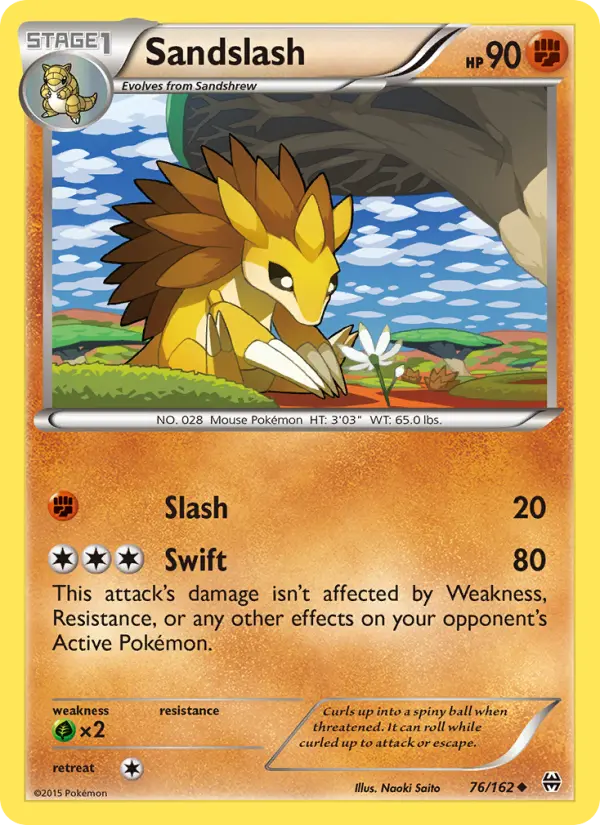
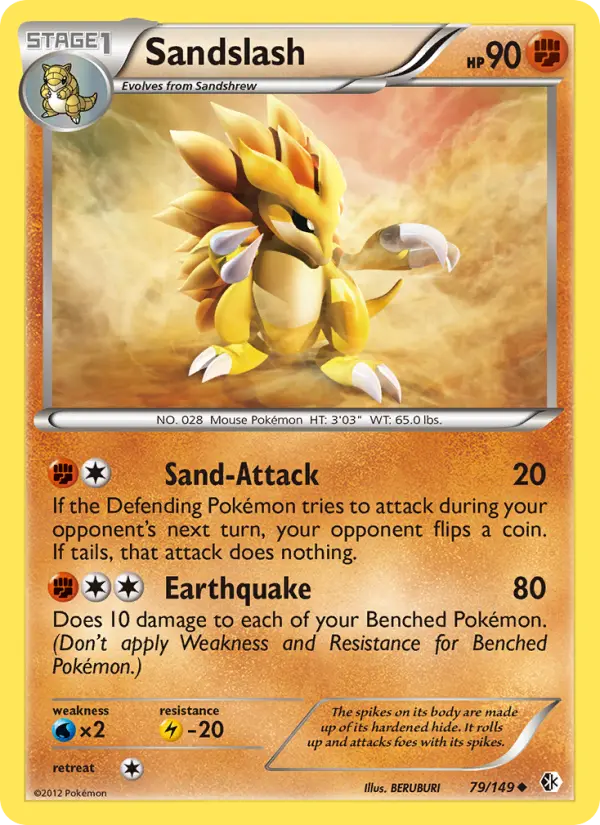
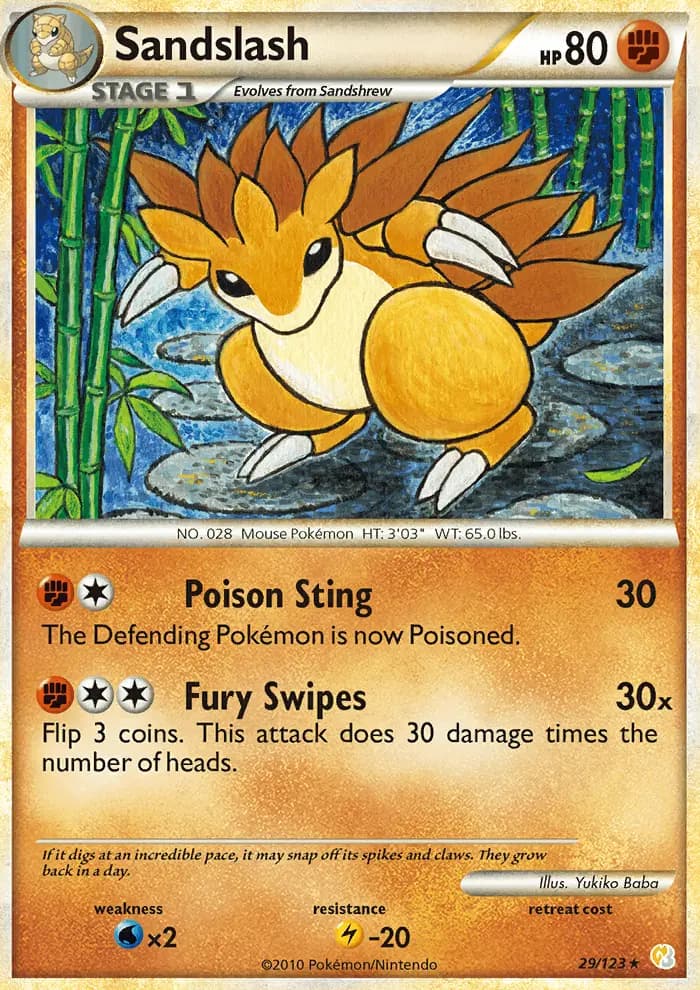
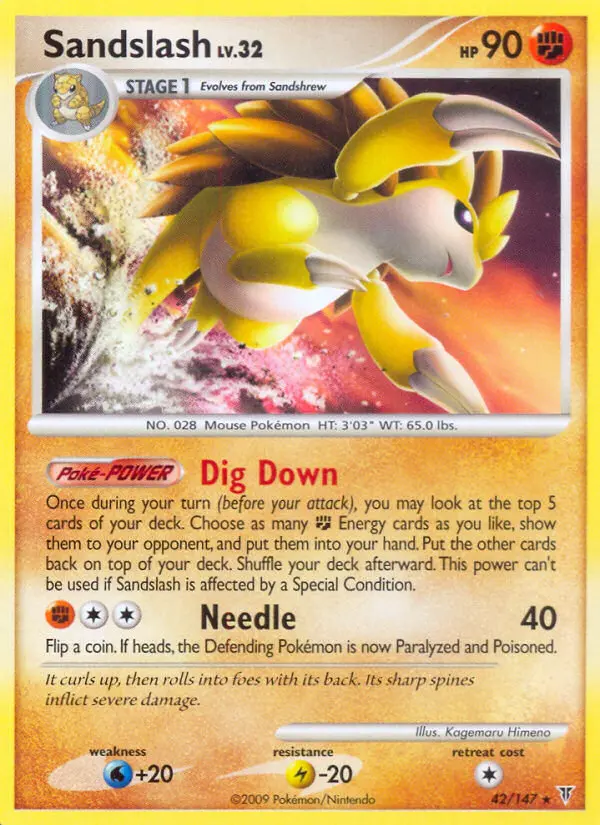
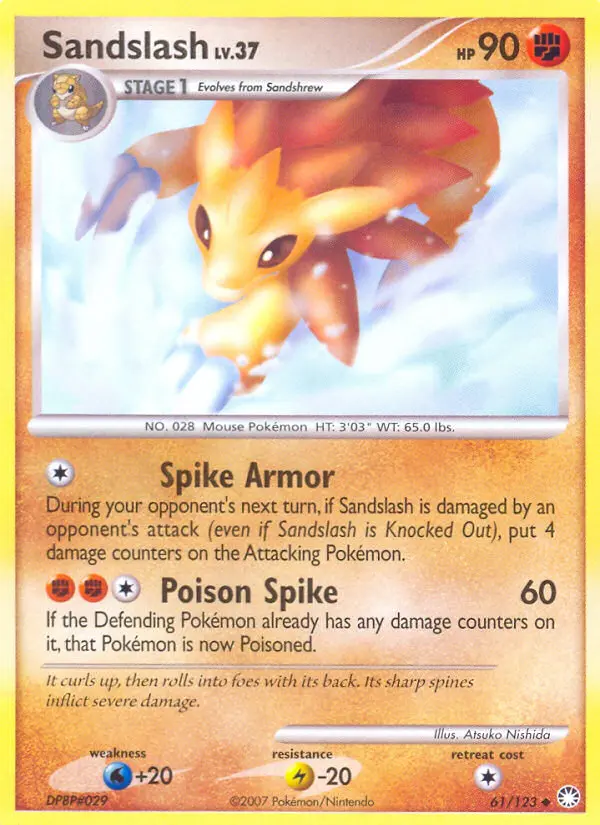
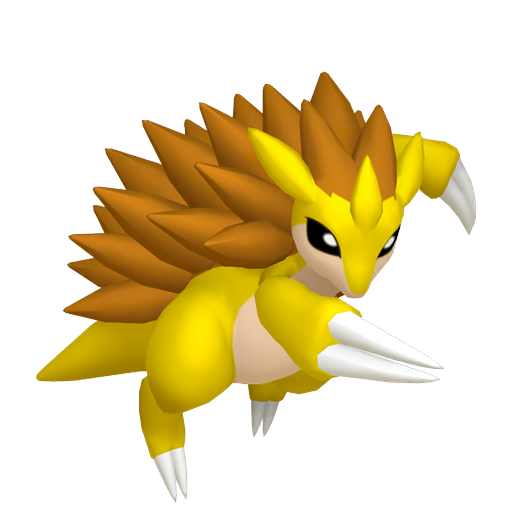
Sandslash is a bipedal, pholidote Pokémon whose body is predominantly yellow with a distinctive white underbelly, creating a striking contrast that aids in both identification and camouflage within desert environments. Its most defining feature is the array of sharp, brown quills that cover its back and body, hardened sections of its hide that serve as formidable defensive structures. The Pokémon possesses a narrow muzzle adorned with piercing almond-shaped blue eyes, while its most dangerous weapons are the two large claws on each paw and foot, used primarily for slashing attacks but equally effective for burrowing through sand. According to Pokédex entries, these claws and spikes are remarkably resilient yet replaceable; they can break off during intense burrowing or combat, but regenerate completely within a single day, with the Pokémon shedding its entire spike layer once yearly to replace it with fresh growths emerging from beneath the old ones. This remarkable regenerative capacity ensures that Sandslash maintains peak physical condition despite the wear and tear of its harsh desert lifestyle.
Pokedex Numbers
Training
Breeding
Sandslash Breeding, Gender Ratio & Egg Groups
Sandslash exhibits a perfect gender split, with exactly 50% of wild populations being male and 50% being female, providing breeders with equal opportunities to obtain either gender from either parent. The species belongs to the Field Egg Group, allowing it to breed with a wide variety of Pokémon including other ground-dwelling species and various mammals, creating possibilities for move pool expansion through inherited techniques. With a base happiness value of 70 and a catch rate of 90 (approximately 11.8% success rate when thrown with a standard Poké Ball at full health), Sandslash is reasonably accessible to trainers and demonstrates moderate friendliness levels, neither particularly affectionate nor aloof. The breeding process requires 20 egg cycles to hatch, equivalent to 4,884 to 5,140 steps in most games, a relatively standard timeframe that positions Sandslash among the middle tier of hatch speeds. Female Sandslash can pass down ground-type moves to offspring through egg inheritance, while male specimens can contribute genetic material to broaden the move sets of compatible female Pokémon, making both genders valuable for competitive breeding projects.
Sprites




Held Items
Quick Claw
held-items
Held: Holder has a 3/16 (18.75%) chance to move first.
Cost: 4000
Quick Claw
held-items
Held: Holder has a 3/16 (18.75%) chance to move first.
Cost: 4000
Quick Claw
held-items
Held: Holder has a 3/16 (18.75%) chance to move first.
Cost: 4000
Quick Claw
held-items
Held: Holder has a 3/16 (18.75%) chance to move first.
Cost: 4000
Quick Claw
held-items
Held: Holder has a 3/16 (18.75%) chance to move first.
Cost: 4000
Quick Claw
held-items
Held: Holder has a 3/16 (18.75%) chance to move first.
Cost: 4000
Quick Claw
held-items
Held: Holder has a 3/16 (18.75%) chance to move first.
Cost: 4000
Quick Claw
held-items
Held: Holder has a 3/16 (18.75%) chance to move first.
Cost: 4000
Quick Claw
held-items
Held: Holder has a 3/16 (18.75%) chance to move first.
Cost: 4000
Quick Claw
held-items
Held: Holder has a 3/16 (18.75%) chance to move first.
Cost: 4000
Quick Claw
held-items
Held: Holder has a 3/16 (18.75%) chance to move first.
Cost: 4000
Quick Claw
held-items
Held: Holder has a 3/16 (18.75%) chance to move first.
Cost: 4000
Quick Claw
held-items
Held: Holder has a 3/16 (18.75%) chance to move first.
Cost: 4000
Quick Claw
held-items
Held: Holder has a 3/16 (18.75%) chance to move first.
Cost: 4000
Soft Sand
type-enhancement
Held: Ground-Type moves from holder do 20% more damage.
Cost: 1000
Soft Sand
type-enhancement
Held: Ground-Type moves from holder do 20% more damage.
Cost: 1000
Grip Claw
held-items
Held: Holder’s multi-turn trapping moves last 5 turns.
Cost: 4000
Grip Claw
held-items
Held: Holder’s multi-turn trapping moves last 5 turns.
Cost: 4000
Grip Claw
held-items
Held: Holder’s multi-turn trapping moves last 5 turns.
Cost: 4000
Grip Claw
held-items
Held: Holder’s multi-turn trapping moves last 5 turns.
Cost: 4000
Grip Claw
held-items
Held: Holder’s multi-turn trapping moves last 5 turns.
Cost: 4000
Grip Claw
held-items
Held: Holder’s multi-turn trapping moves last 5 turns.
Cost: 4000
Quick Claw
held-items
Held: Holder has a 3/16 (18.75%) chance to move first.
Cost: 4000
Quick Claw
held-items
Held: Holder has a 3/16 (18.75%) chance to move first.
Cost: 4000
Quick Claw
held-items
Held: Holder has a 3/16 (18.75%) chance to move first.
Cost: 4000
Quick Claw
held-items
Held: Holder has a 3/16 (18.75%) chance to move first.
Cost: 4000
Quick Claw
held-items
Held: Holder has a 3/16 (18.75%) chance to move first.
Cost: 4000
Quick Claw
held-items
Held: Holder has a 3/16 (18.75%) chance to move first.
Cost: 4000
Quick Claw
held-items
Held: Holder has a 3/16 (18.75%) chance to move first.
Cost: 4000
Quick Claw
held-items
Held: Holder has a 3/16 (18.75%) chance to move first.
Cost: 4000
Quick Claw
held-items
Held: Holder has a 3/16 (18.75%) chance to move first.
Cost: 4000
Quick Claw
held-items
Held: Holder has a 3/16 (18.75%) chance to move first.
Cost: 4000
Quick Claw
held-items
Held: Holder has a 3/16 (18.75%) chance to move first.
Cost: 4000
Quick Claw
held-items
Held: Holder has a 3/16 (18.75%) chance to move first.
Cost: 4000
Quick Claw
held-items
Held: Holder has a 3/16 (18.75%) chance to move first.
Cost: 4000
Quick Claw
held-items
Held: Holder has a 3/16 (18.75%) chance to move first.
Cost: 4000
Soft Sand
type-enhancement
Held: Ground-Type moves from holder do 20% more damage.
Cost: 1000
Soft Sand
type-enhancement
Held: Ground-Type moves from holder do 20% more damage.
Cost: 1000
Grip Claw
held-items
Held: Holder’s multi-turn trapping moves last 5 turns.
Cost: 4000
Grip Claw
held-items
Held: Holder’s multi-turn trapping moves last 5 turns.
Cost: 4000
Grip Claw
held-items
Held: Holder’s multi-turn trapping moves last 5 turns.
Cost: 4000
Grip Claw
held-items
Held: Holder’s multi-turn trapping moves last 5 turns.
Cost: 4000
Grip Claw
held-items
Held: Holder’s multi-turn trapping moves last 5 turns.
Cost: 4000
Grip Claw
held-items
Held: Holder’s multi-turn trapping moves last 5 turns.
Cost: 4000
TMs & HMs
tm01
gold silver
tm01
crystal
tm01
platinum
tm01
emerald
tm01
diamond pearl
tm01
firered leafgreen
tm01
ruby sapphire
tm01
xd
tm01
colosseum
tm01
heartgold soulsilver
tm01
lets go pikachu lets go eevee
tm02
crystal
tm02
gold silver
tm03
yellow
tm03
crystal
tm03
gold silver
tm03
red blue
tm03
blue japan
tm04
gold silver
tm03
red green japan
+652 more TMs/HMs
Sandslash's Evolution Chain


Sandslash Evolution, Mega Evolution & Special Forms
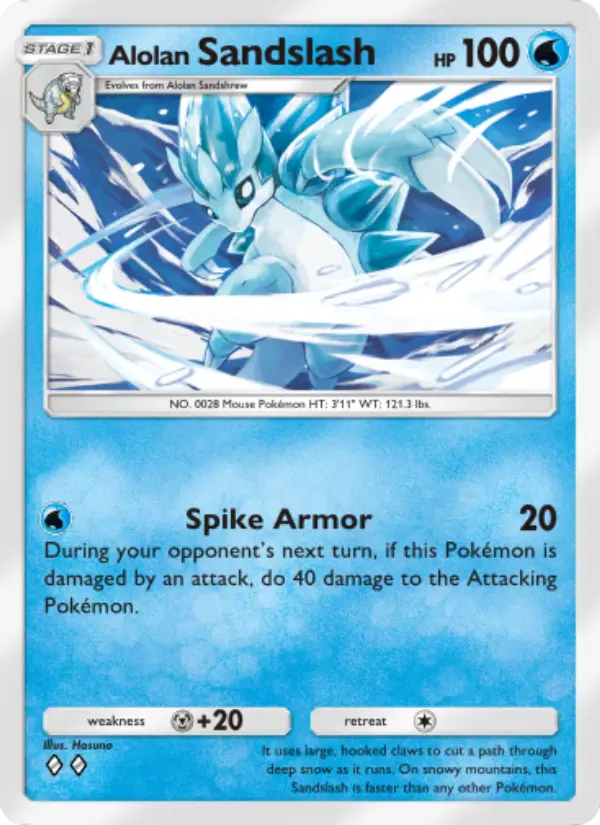
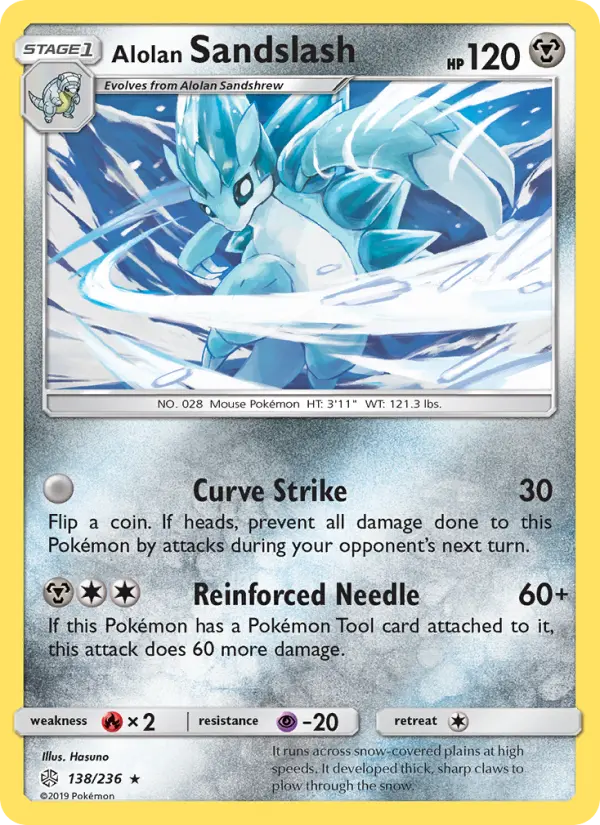
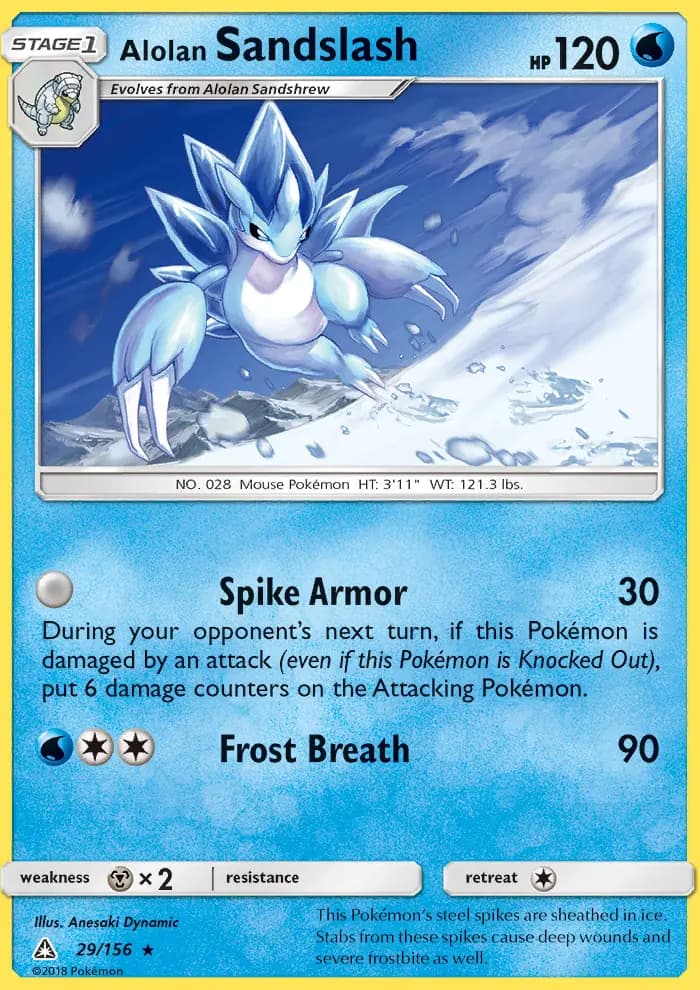
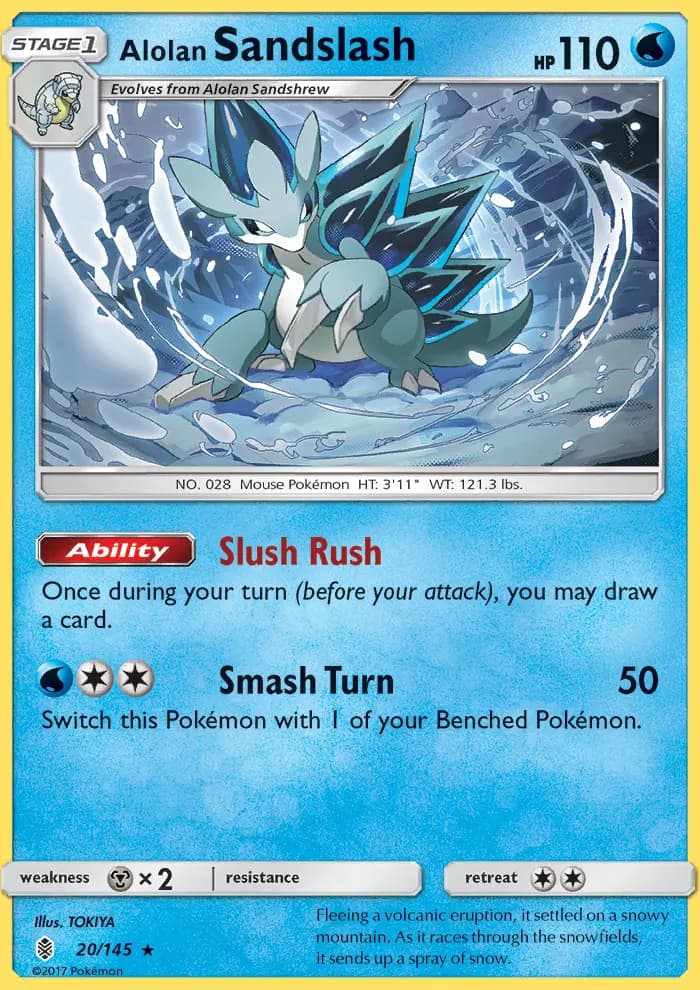
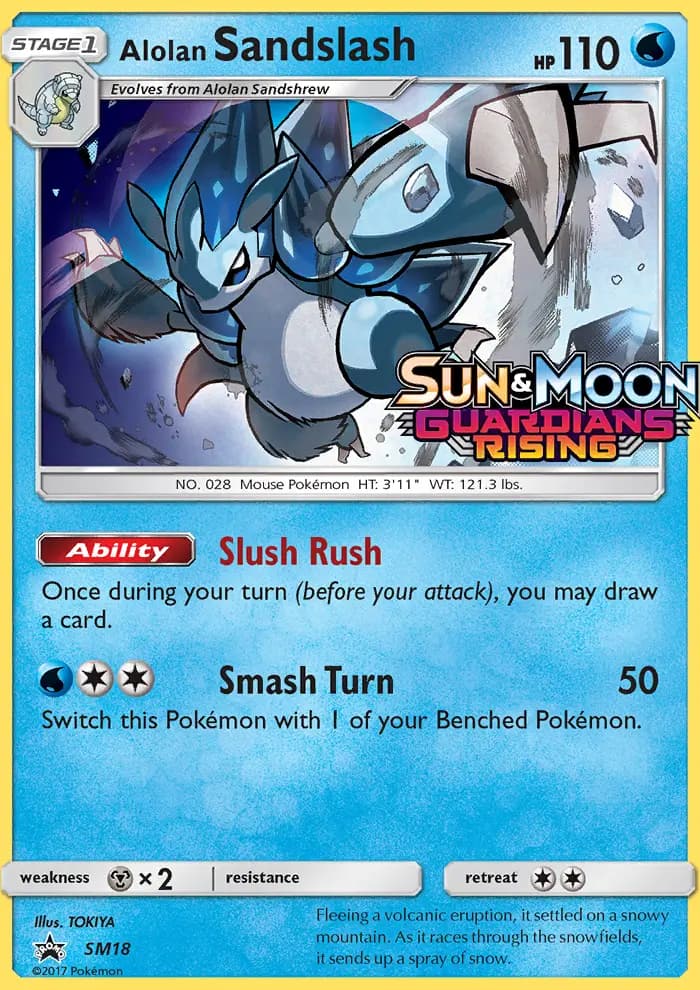
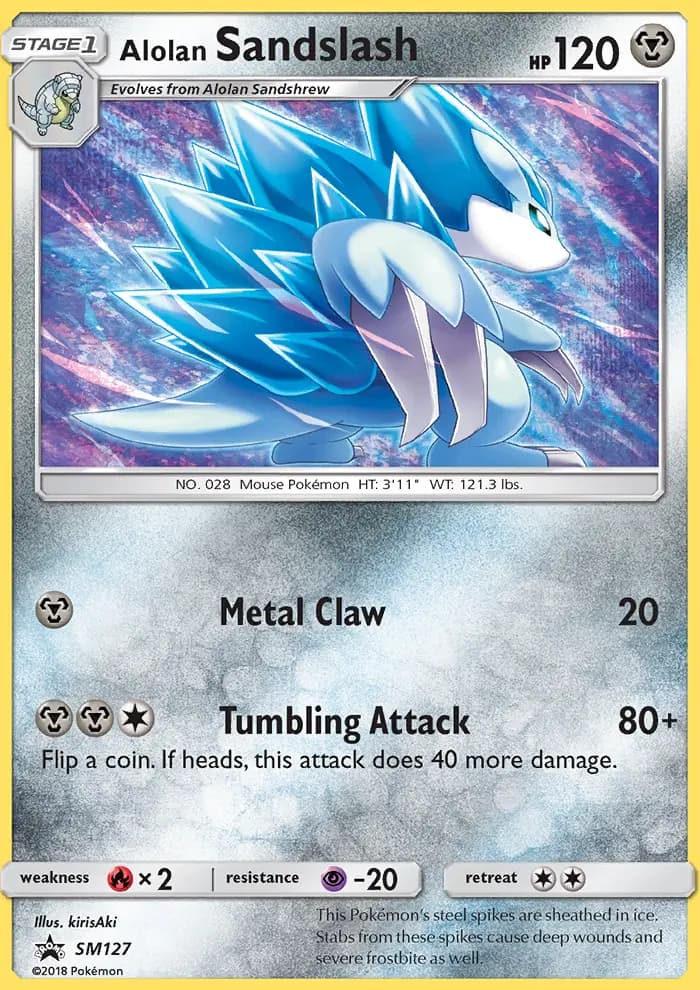
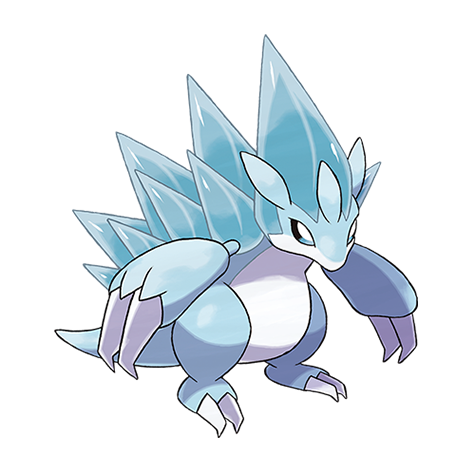
Sandslash evolves from Sandshrew starting at level 22, a transformation that significantly enhances its physical capabilities and battle effectiveness. The evolution process results in modest increases in both Attack and Defense stats, with Attack rising from Sandshrew's 75 to a respectable 100, while Defense jumps substantially from 85 to 110, creating a Pokémon that is nearly as defensively oriented as it is offensively capable. Notably, Sandslash received regional variant treatment in the Alola region, where it exists as an Ice/Steel-type form that evolves from Alolan Sandshrew when exposed to an Ice Stone rather than through leveling. This Alolan variant boasts enhanced Defense of 120 and dramatically increased Special Defense of 65, though it sacrifices Special Attack almost entirely at just 25 base points. The Alolan Sandslash replaces the traditional sand-focused abilities with Snow Cloak and Slush Rush, allowing it to thrive in snowy environments rather than deserts, making it a distinctly different Pokémon despite sharing the same evolutionary lineage and overall stat distribution.
Where to Find
Kanto Route 23
kanto
Cerulean Cave
kanto
+3 more
Kanto Route 26
kanto
+4 more
Mt Moon
kanto
+2 more
Kanto Route 27
kanto
+5 more
Kanto Victory Road 1
kanto
+3 more
Kanto Victory Road 2
kanto
Sinnoh Route 228
sinnoh
+3 more
Johto Safari Zone
johto
+15 more
Relic Castle
unova
+5 more
Unova Route 15
unova
+5 more
Terminus Cave
kalos
+17 more
Kalos Route 18
kalos
+3 more
Sandslash Behaviour and Natural Habitat
Sandslash exhibits remarkable behavioral adaptations to its arid environment, most notably its signature defensive posture of curling into a spiny ball when threatened, transforming itself into an impenetrable sphere of hardened spikes. When in this defensive form, Sandslash can roll at considerable speeds, using this rolling motion both as an escape mechanism and as an offensive tactic to strike enemies with its protruding spines. The Pokédex reveals that Sandslash is particularly adept at climbing trees and will often position itself in elevated locations before unfurling its spiky ball form to attack unsuspecting foes from above. In its natural habitat, Sandslash displays incredible burrowing speed and dexterity, capable of digging at such frenetic paces that it occasionally snaps off its own spikes and claws in the process—a testament to its commitment to underground locomotion. When evading detection, Sandslash will run at top speed to generate massive dust storms that blind pursuers and allow it to disappear into the desert landscape. During battles, the Pokémon employs its sharp claws with precision, slashing at opponents with remarkable skill, and demonstrates sophisticated combat tactics such as attempting to make foes flinch with spine jabs before leaping in to tear at them with its full arsenal of claws.
Pokedex Entries
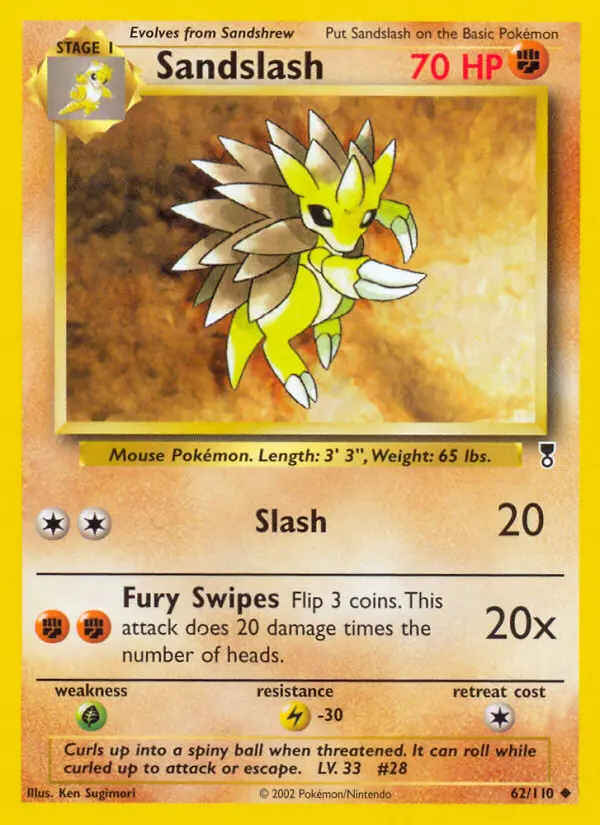
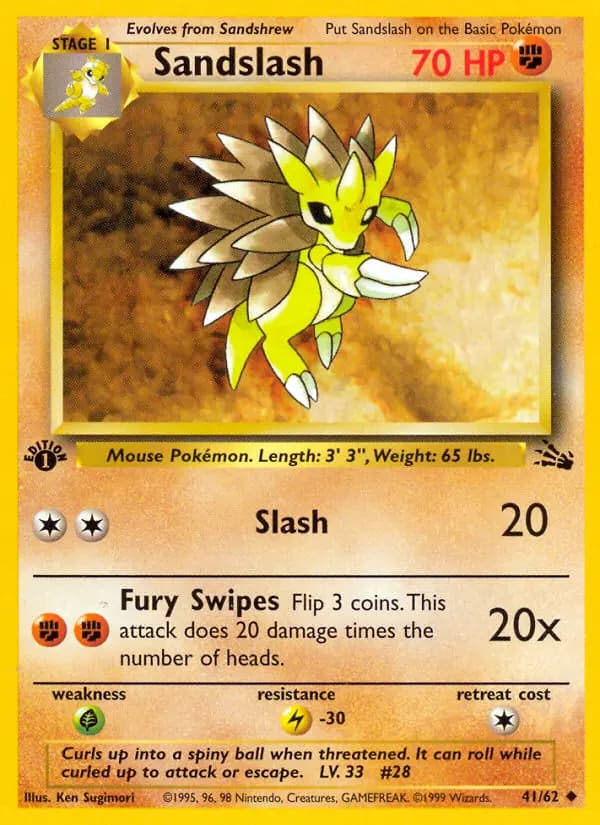
Curls up into a spiny ball when threatened. It can roll while curled up to attack or escape.
It is skilled at slashing enemies with its claws. If broken, they start to grow back in a day.
In an attempt to hide itself, it will run around at top speed to kick up a blinding dust storm.
If it digs at an incredible pace, it may snap off its spikes and claws. They grow back in a day.
Adept at climbing trees, it rolls into a spiny ball, then attacks its enemies from above.
SANDSLASH’s body is covered by tough spikes, which are hardened sections of its hide. Once a year, the old spikes fall out, to be replaced with new spikes that grow out from beneath the old ones.
SANDSLASH can roll up its body as if it were a ball covered with large spikes. In battle, this POKéMON will try to make the foe flinch by jabbing it with its spines. It then leaps at the stunned foe to tear wildly with its sharp claws.
It curls up in a ball to protect itself from enemy attacks. It also curls up to prevent heatstroke during the daytime when temperatures rise sharply.
It is adept at attacking with the spines on its back and its sharp claws while quickly scurrying about.
Curls up into a spiny ball when threatened. It can roll while curled up to attack or escape.
It curls up, then rolls into foes with its back. Its sharp spines inflict severe damage.
In an attempt to hide itself, it will run around at top speed to kick up a blinding dust storm.
If it digs at an incredible pace, it may snap off its spikes and claws. They grow back in a day.
It curls up, then rolls into foes with its back. Its sharp spines inflict severe damage.
The spikes on its body are made up of its hardened hide. It rolls up and attacks foes with its spikes.
If it digs at an incredible pace, it may snap off its spikes and claws. They grow back in a day.
Curls up into a spiny ball when threatened. It can roll while curled up to attack or escape.
Sandslash’s body is covered by tough spikes, which are hardened sections of its hide. Once a year, the old spikes fall out, to be replaced with new spikes that grow out from beneath the old ones.
Sandslash can roll up its body as if it were a ball covered with large spikes. In battle, this Pokémon will try to make the foe flinch by jabbing it with its spines. It then leaps at the stunned foe to tear wildly with its sharp claws.
Although they are sharp, its claws and spikes often break off. They grow back the next day, so it is not bothered by the temporary loss.
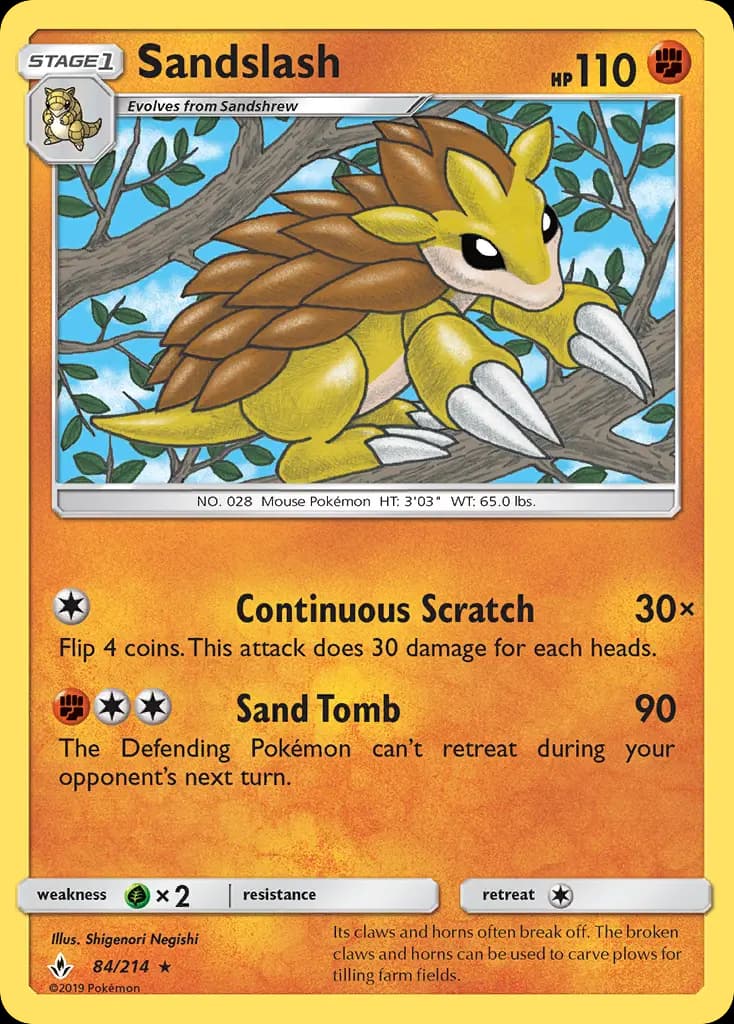
Its claws and horns often break off. The broken claws and horns can be used to carve plows for tilling farm fields.
It uses its claws to climb trees and then curls its body into a spiny ball, ready to drop onto any prey that appears.
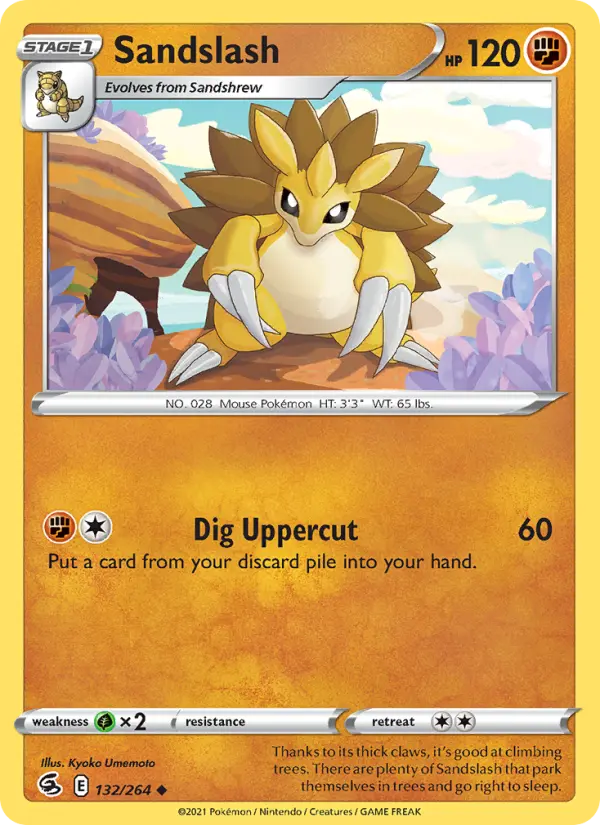
Thanks to its thick claws, it’s good at climbing trees. There are plenty of Sandslash that park themselves in trees and go right to sleep.
It is skilled at slashing enemies with its claws. If broken, they start to grow back in a day.
The drier the area Sandslash lives in, the harder and smoother the Pokémon’s spikes will feel when touched.
It climbs trees by hooking on with its sharp claws. Sandslash shares the berries it gathers, dropping them down to Sandshrew waiting below the tree.
Sandslash Name Origin & Design Inspiration
The name Sandslash is a straightforward combination of 'sand,' referencing the Pokémon's desert habitat and sand-based characteristics, and 'slash,' denoting its primary attack method through its prominent claws. In Japan, it is called Sandpan, a name derived from 'sand' and the Japanese word 'pan,' which can relate to bread or flat objects, possibly alluding to its ability to flatten itself into a ball-like form. The design itself draws inspiration from pangolins, the only mammalian order with large keratin scales that cover their bodies, though Sandslash's spikes are more explicitly porcupine-like in their presentation. The evolutionary progression from Sandshrew to Sandslash mirrors the natural maturation process of these armored creatures, with Sandslash presenting a more robust, aggressive appearance befitting its increased offensive capabilities. The Pokémon's aesthetic perfectly encapsulates the Generation I design philosophy of creating creatures that are immediately understandable in their ecological niche while remaining fantastically distinctive, with the sharp spikes and prominent claws leaving no question about whether this is a creature built for combat and burrowing.
Learnable Moves
Sandslash can learn 77 moves:
Move | Type | Cat. | Power | Acc. | PP |
|---|---|---|---|---|---|
| aerial ace | flying | Physical | 60 | — | 20 |
| agility | psychic | Status | — | — | 30 |
| amnesia | psychic | Status | — | — | 20 |
| attract | normal | Status | — | 100 | 15 |
| bide | normal | Physical | — | — | 10 |
| body slam | normal | Physical | 85 | 100 | 15 |
| brick break | fighting | Physical | 75 | 100 | 15 |
| counter | fighting | Physical | — | 100 | 20 |
| covet | normal | Physical | 60 | 100 | 25 |
| crush claw | normal | Physical | 75 | 95 | 10 |
| curse | ghost | Status | — | — | 10 |
| cut | normal | Physical | 50 | 95 | 30 |
| defense curl | normal | Status | — | — | 40 |
| detect | fighting | Status | — | — | 5 |
| dig | ground | Physical | 80 | 100 | 10 |
| double team | normal | Status | — | — | 15 |
| double edge | normal | Physical | 120 | 100 | 15 |
| dynamic punch | fighting | Physical | 100 | 50 | 5 |
| earthquake | ground | Physical | 100 | 100 | 10 |
| endure | normal | Status | — | — | 10 |
| facade | normal | Physical | 70 | 100 | 20 |
| false swipe | normal | Physical | 40 | 100 | 40 |
| fissure | ground | Physical | — | 30 | 5 |
| flail | normal | Physical | — | 100 | 15 |
| fling | dark | Physical | — | 100 | 10 |
| focus punch | fighting | Physical | 150 | 100 | 20 |
| frustration | normal | Physical | — | 100 | 20 |
| fury cutter | bug | Physical | 40 | 95 | 20 |
| fury swipes | normal | Physical | 18 | 80 | 15 |
| giga impact | normal | Physical | 150 | 90 | 5 |
| gyro ball | steel | Physical | — | 100 | 5 |
| headbutt | normal | Physical | 70 | 100 | 15 |
| hidden power | normal | Special | 60 | 100 | 15 |
| hyper beam | normal | Special | 150 | 90 | 5 |
| iron tail | steel | Physical | 100 | 75 | 15 |
| leech life | bug | Physical | 80 | 100 | 10 |
| low kick | fighting | Physical | — | 100 | 20 |
| magnitude | ground | Physical | — | 100 | 30 |
| metal claw | steel | Physical | 50 | 95 | 35 |
| mimic | normal | Status | — | — | 10 |
| mud shot | ground | Special | 55 | 95 | 15 |
| mud slap | ground | Special | 20 | 100 | 10 |
| natural gift | normal | Physical | — | 100 | 15 |
| pin missile | bug | Physical | 25 | 95 | 20 |
| poison sting | poison | Physical | 15 | 100 | 35 |
| protect | normal | Status | — | — | 10 |
| rage | normal | Physical | 20 | 100 | 20 |
| rapid spin | normal | Physical | 50 | 100 | 40 |
| rest | psychic | Status | — | — | 5 |
| return | normal | Physical | — | 100 | 20 |
| rock slide | rock | Physical | 75 | 90 | 10 |
| rock smash | fighting | Physical | 40 | 100 | 15 |
| rock tomb | rock | Physical | 60 | 95 | 15 |
| rollout | rock | Physical | 30 | 90 | 20 |
| safeguard | normal | Status | — | — | 25 |
| sand attack | ground | Status | — | 100 | 15 |
| sand tomb | ground | Physical | 35 | 85 | 15 |
| sandstorm | rock | Status | — | — | 10 |
| scratch | normal | Physical | 40 | 100 | 35 |
| seismic toss | fighting | Physical | — | 100 | 20 |
| shadow claw | ghost | Physical | 70 | 100 | 15 |
| skull bash | normal | Physical | 130 | 100 | 10 |
| slash | normal | Physical | 70 | 100 | 20 |
| sleep talk | normal | Status | — | — | 10 |
| snore | normal | Special | 50 | 100 | 15 |
| spikes | ground | Status | — | — | 20 |
| strength | normal | Physical | 80 | 100 | 15 |
| submission | fighting | Physical | 80 | 80 | 20 |
| substitute | normal | Status | — | — | 10 |
| sunny day | fire | Status | — | — | 5 |
| super fang | normal | Physical | — | 90 | 10 |
| swagger | normal | Status | — | 85 | 15 |
| swift | normal | Special | 60 | — | 20 |
| swords dance | normal | Status | — | — | 20 |
| take down | normal | Physical | 90 | 85 | 20 |
| thief | dark | Physical | 60 | 100 | 25 |
| toxic | poison | Status | — | 90 | 10 |
Sandslash Competitive Battle Guide
From a competitive standpoint, Sandslash occupies a niche role primarily dependent on environmental weather conditions, particularly sandstorm-based team compositions. The Pokémon's abilities prove crucial to its viability: Sand Veil increases evasion to 1.25 times during sandstorms while simultaneously protecting against sandstorm damage, while the hidden ability Sand Rush dramatically doubles Speed during sandstorm conditions, transforming Sandslash from a relatively slow Pokémon (base 65 Speed) into a formidable offensive threat. With an Attack stat of 100 and Defense of 110, Sandslash functions effectively as a physical wall that can simultaneously threaten opponents, particularly when equipped with moves like Earthquake, Stone Edge, and X-Scissor to ensure coverage against common threats. Its modest Special Defense of 55 presents a significant vulnerability to special attackers, requiring careful positioning and team support to mitigate. The Alolan variant introduces different competitive dynamics as an Ice/Steel type, trading the weather dependency for alternative typing advantages and disadvantages, performing better against ice, normal, flying, psychic, bug, rock, dragon, and fairy types while suffering fourfold weakness to fire-type attacks. In modern competitive formats ranging from Little Cup to VGC, Sandslash remains a consideration on sandstorm-heavy teams, though its relatively modest stats limit its effectiveness against faster, more aggressively-statted modern competitors.
Commonly Asked Questions About Sandslash
What type is Sandslash?
Sandslash is a ground type Pokemon.
What does Sandslash evolve from?
Sandslash evolved from sandshrew.
What are Sandslash's weaknesses?
Sandslash is weak to water, grass and ice type moves.
Where can I find Sandslash?
Sandslash can be found in kanto route 23 (kanto), cerulean cave (kanto) and kanto route 26 (kanto) and 10 other locations.
Sandslash Cultural Impact & Franchise History
Sandslash emerged as an iconic Pokémon during the franchise's infancy as part of the original 151 Kanto Pokédex, securing its place in the cultural consciousness of first-generation fans worldwide. The species appeared prominently in early anime episodes, establishing visual recognition among casual and competitive audiences alike, and its distinctive design featuring sharp spikes and prominent claws made it instantly recognizable across all media formats. The introduction of regional variants through Alolan Sandslash in Pokémon Sun and Moon revitalized interest in the evolutionary line, introducing new players and veterans alike to a reimagined version that demonstrated how Game Freak could refresh classic designs while maintaining their essential character. Sandslash's prevalence in desert-based routes and its utility in various single-player campaigns established it as a reliable ground-type option that competing directly with Dugtrio, Rhydon, and other burrowing specialists, though its accessible evolution level and balanced stat distribution made it particularly appealing to casual players. The Pokémon has maintained consistent representation across all nine generations of Pokémon games, appearing in every major title and receiving consistent competitive consideration as sandstorm weather teams fluctuate in and out of viability throughout competitive seasons.
Where to Find Sandslash in Every Pokémon Game
Sandslash and its pre-evolution Sandshrew have been consistently available across nearly every Pokémon game since Generation I, typically found in desert biomes, arid routes, and cave systems where sand and rocky terrain predominate. In the original Red and Blue versions, Sandshrew appears in routes 3, 8, 9, and 10, with players encountering Sandslash in late-game caves or through leveling their own caught specimens to level 22. Throughout subsequent generations, the species has appeared in desert-themed regions including Hoenn's desert routes, Sinnoh's desert ruins, Unova's desert complexes, and Kalos's rocky mountain areas, maintaining consistent availability for players seeking ground-type team members. The Alolan regional variant became available in Pokémon Sun and Moon, found in the Alola region's Poni Meadow and Poni Wilds areas, and subsequently reappeared in Ultra Sun and Ultra Moon with slightly adjusted locations. In Pokémon Sword and Shield, both standard and Alolan Sandslash became accessible in the Isle of Armor DLC through the Dojo's training programs, while Pokémon Scarlet and Violet granted availability through the Teal Mask DLC in Kitakami and the Indigo Disk DLC in Blueberry Academy. The high capture rate of 90 and relatively common encounter rates ensure that dedicated trainers can reliably obtain Sandslash without excessive grinding or post-game hunting, making it accessible from early-game stages through endgame content.