Tangela
Generation I · #0114 — Vine Pokémon
Tangela is a grass-type Pokémon whose defense — 115 at base — does more to define its role than its overall spread does. Standing 1.0 m tall and weighing 35.0 kg, it's built around a distinct combination of grass traits that shapes how it performs both in the wild and in battle. Despite its unique appearance, Tangela's true form remains largely obscured beneath its masses of constantly-growing blue vines, leading to decades of speculation among trainers about what might lie beneath. With a aggregate stat total of 435, Tangela demonstrates a curious distribution that emphasizes defensive capabilities while maintaining respectable special attack prowess, making it a surprisingly versatile addition to any team despite its modest base stats.
Editor's Take
Tangela's Regenerator healing on switch-out is the single most valuable defensive ability in the game, and it's attached to a Gen 1 Pokémon almost nobody thinks to use.
Base Stats
Height
1.0m
Weight
35.0kg
Category
Vine Pokémon
Gender
Male 50% / Female 50%
Color
blue
Shape
legs
Habitat
grassland
Abilities
Doubles Speed during strong sunlight.
Protects against major status ailments during strong sunlight.
Heals for 1/3 max HP upon switching out.

Tangela Biology & Physical Characteristics
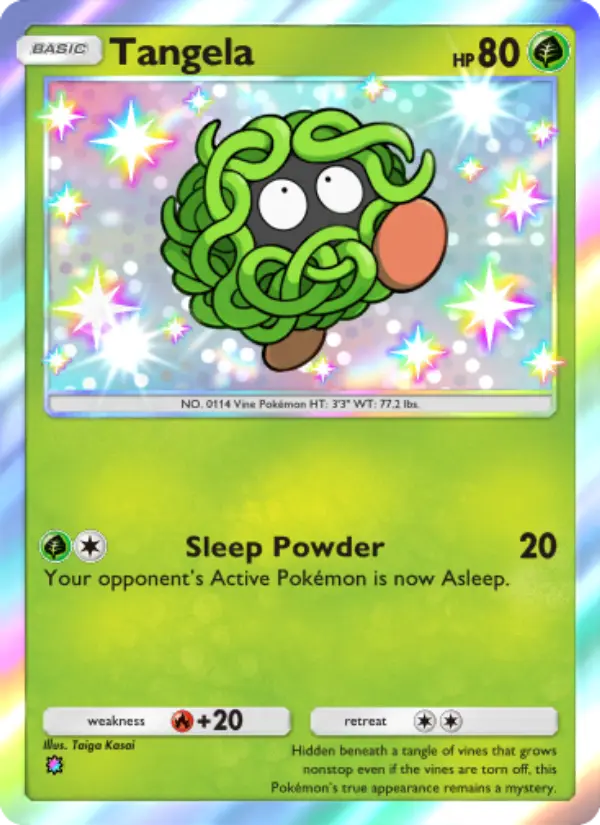
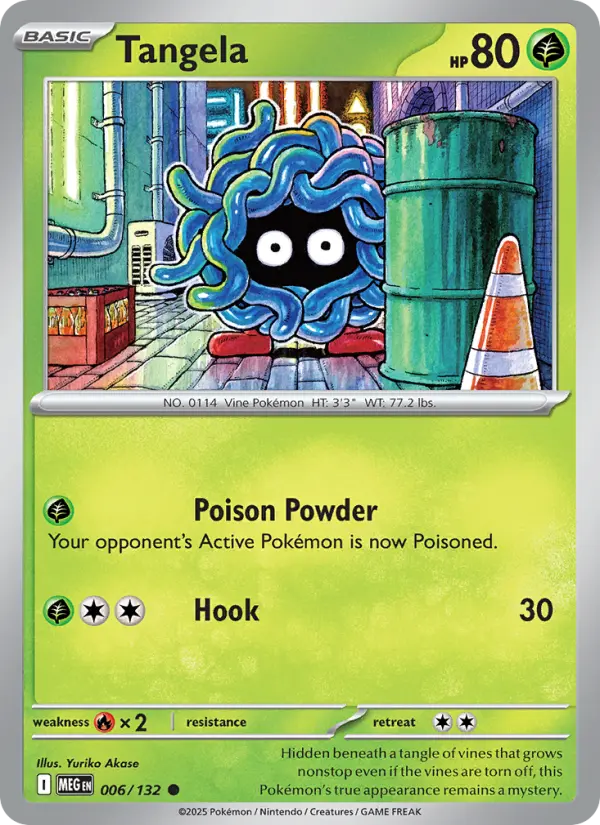
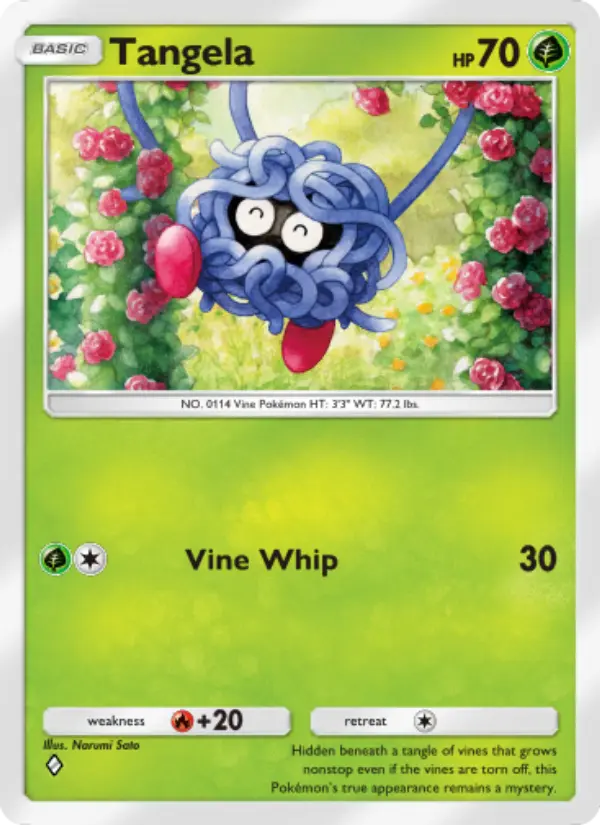
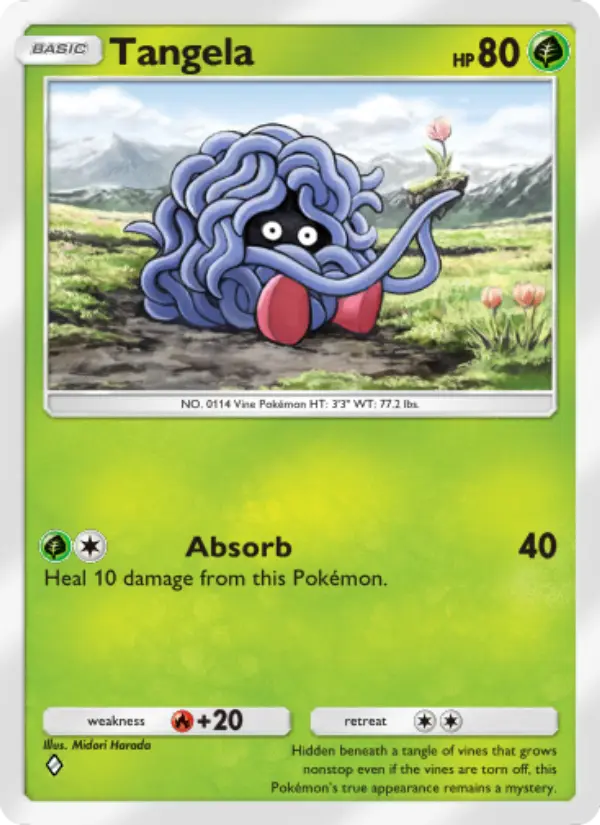
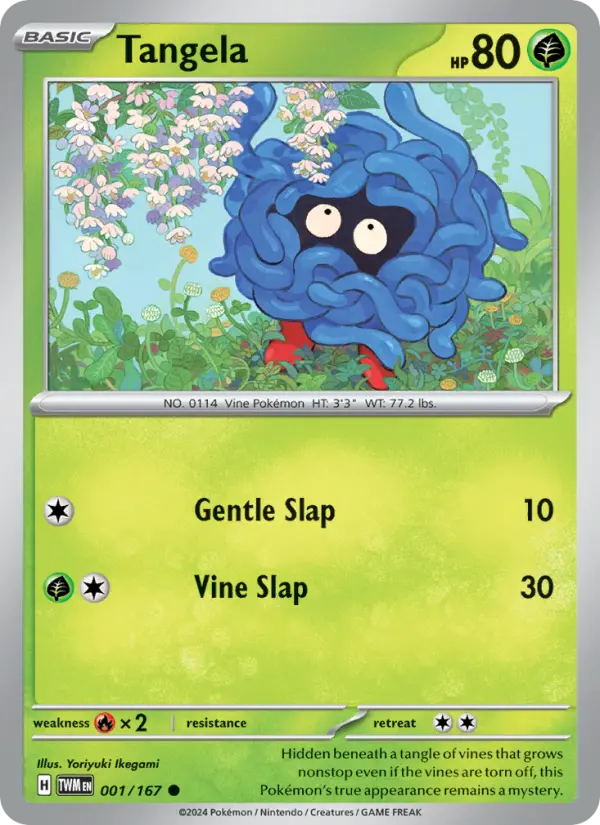
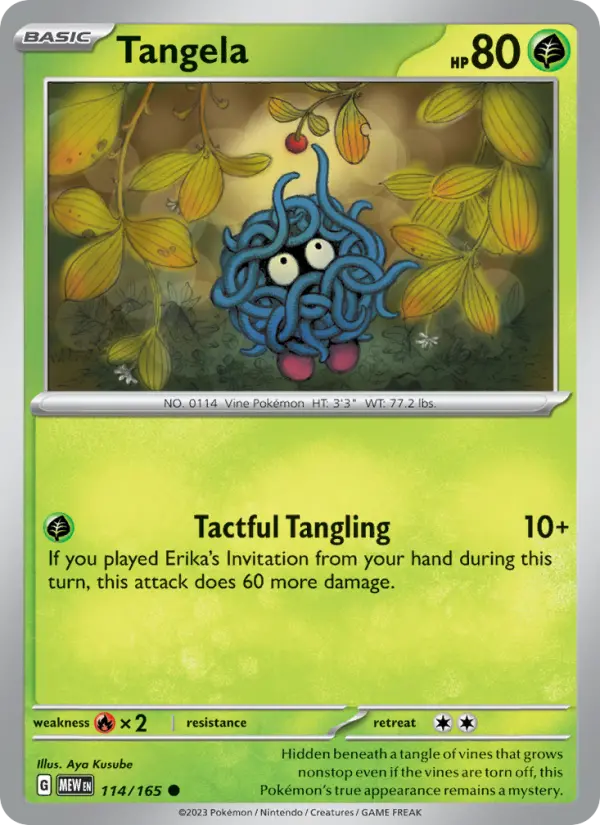
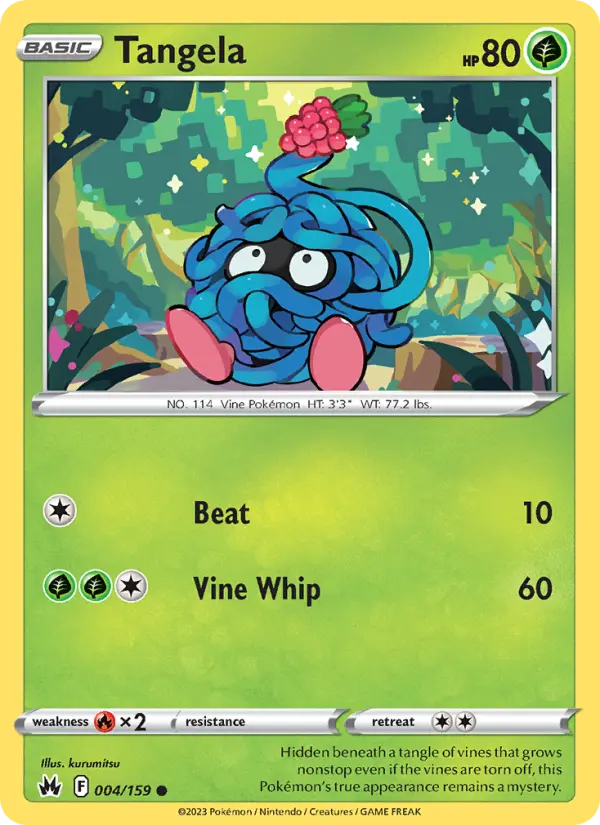
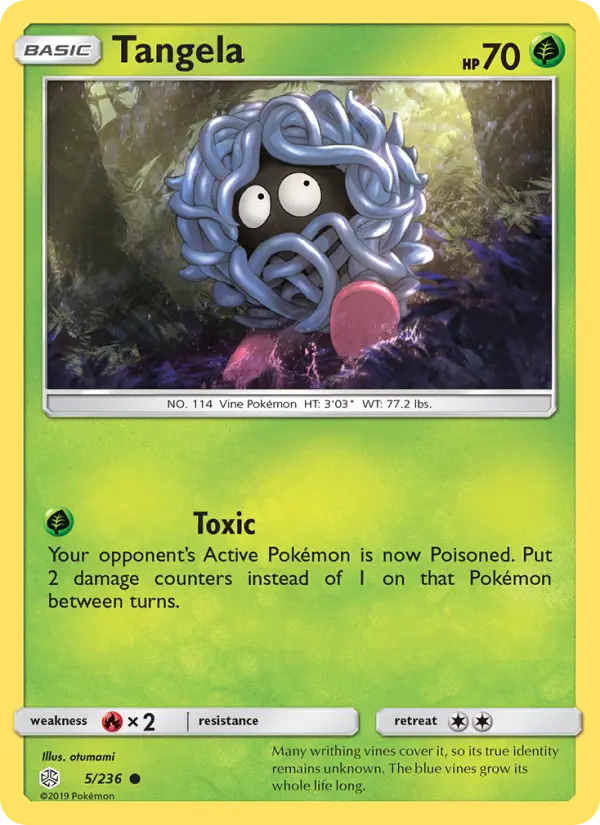
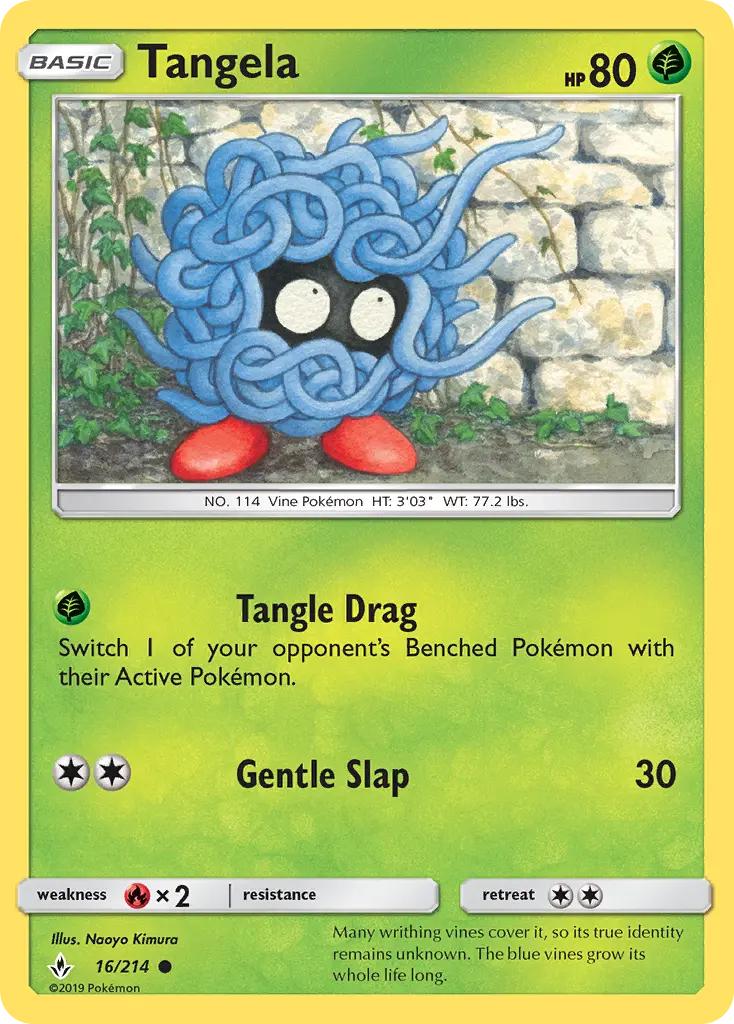
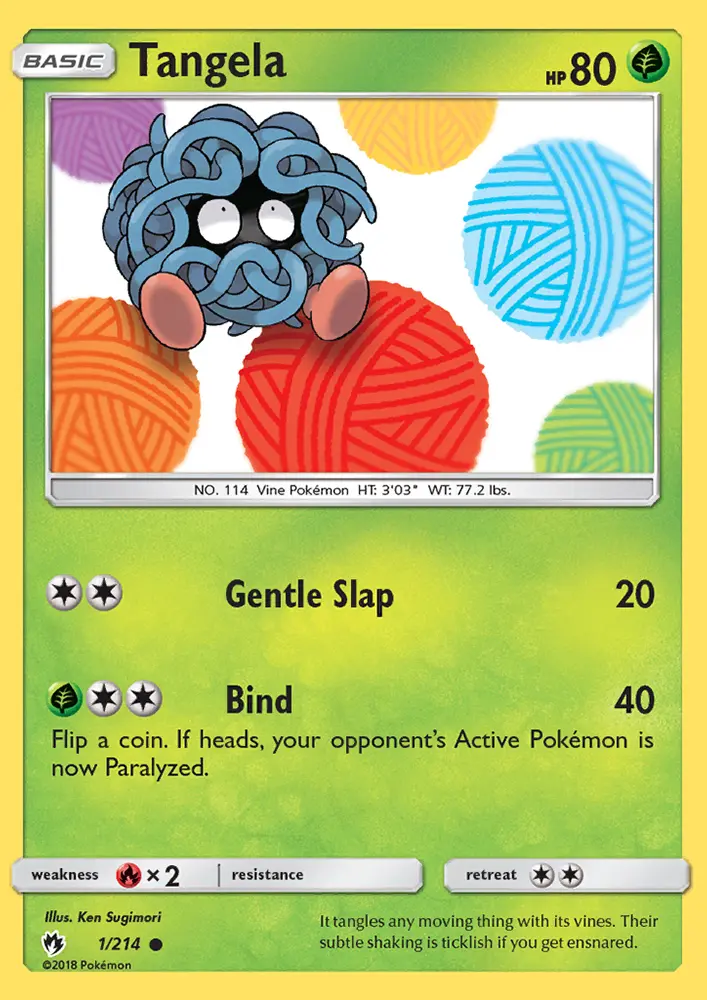
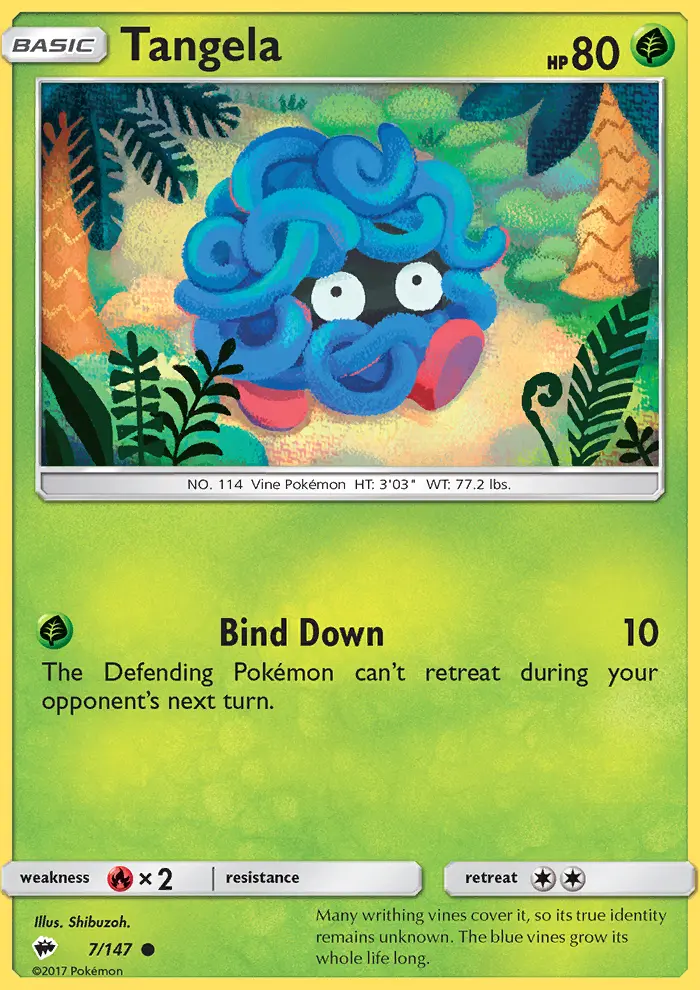
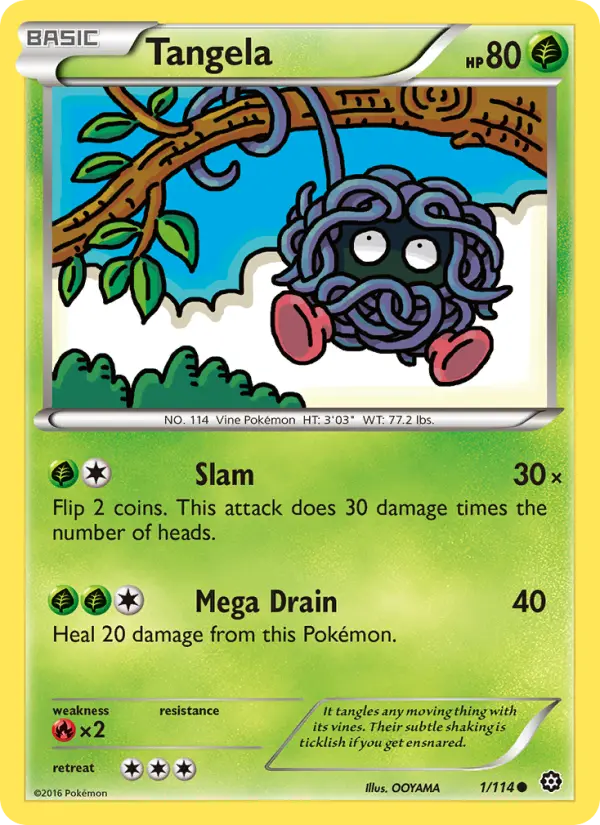
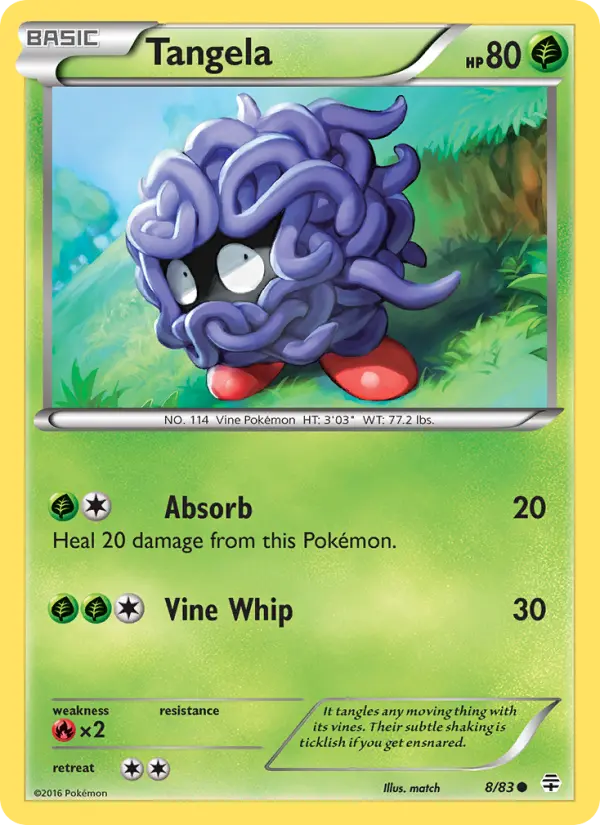
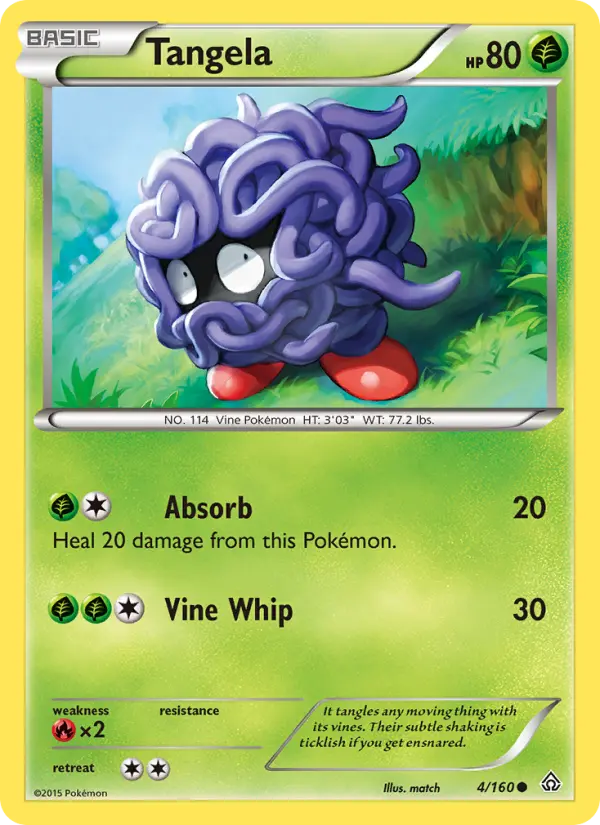
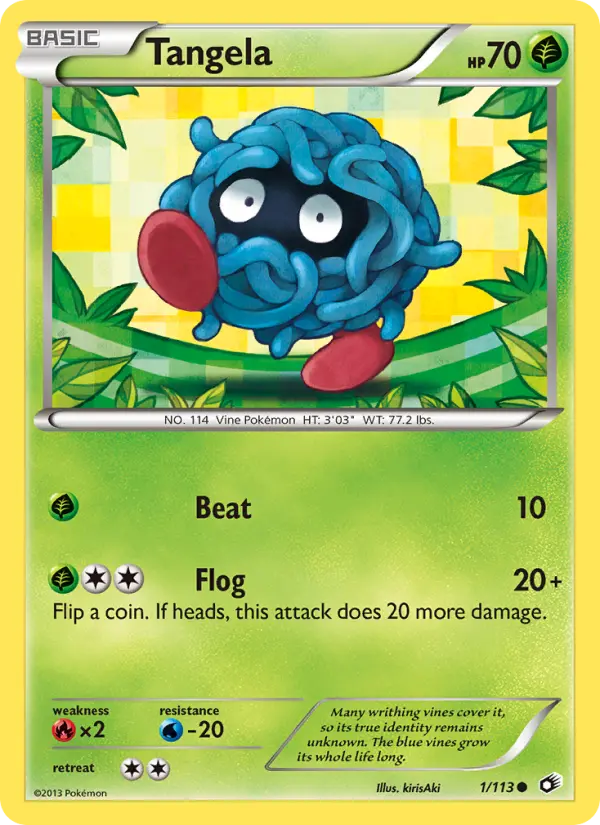
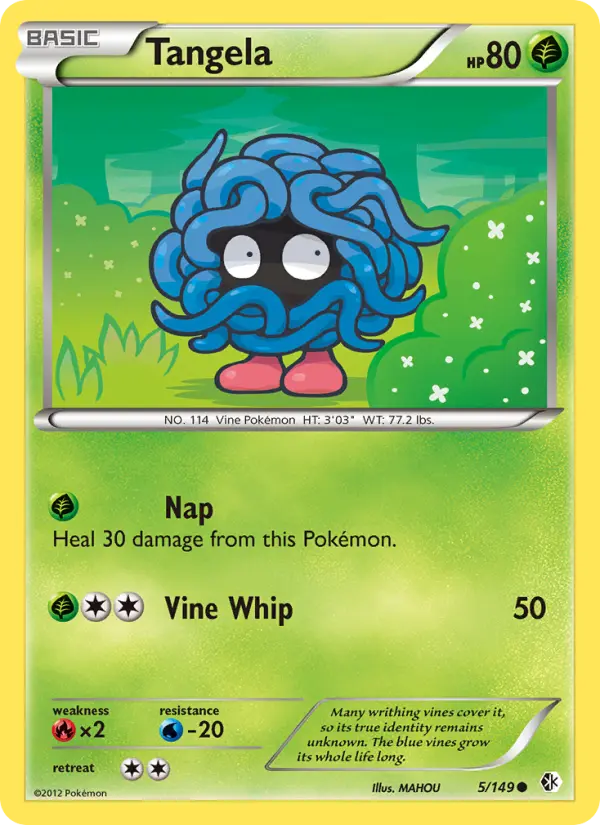
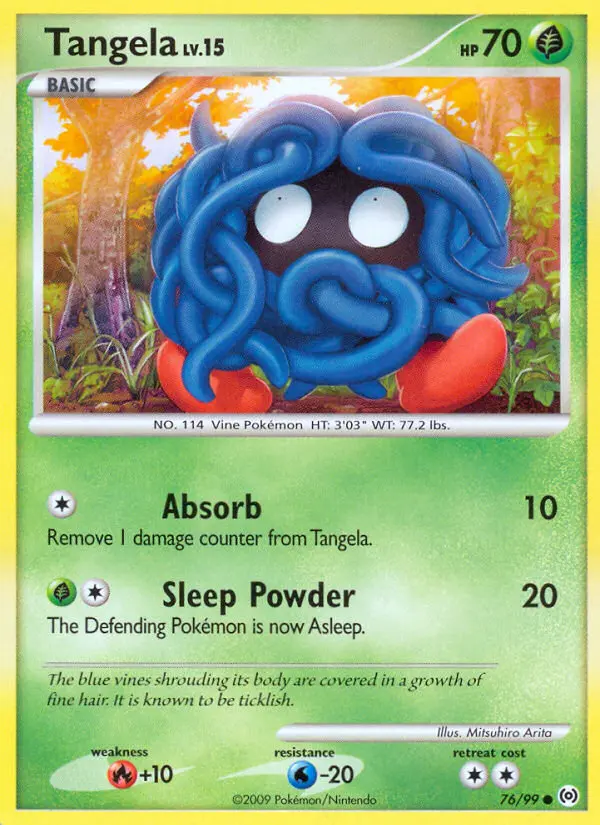
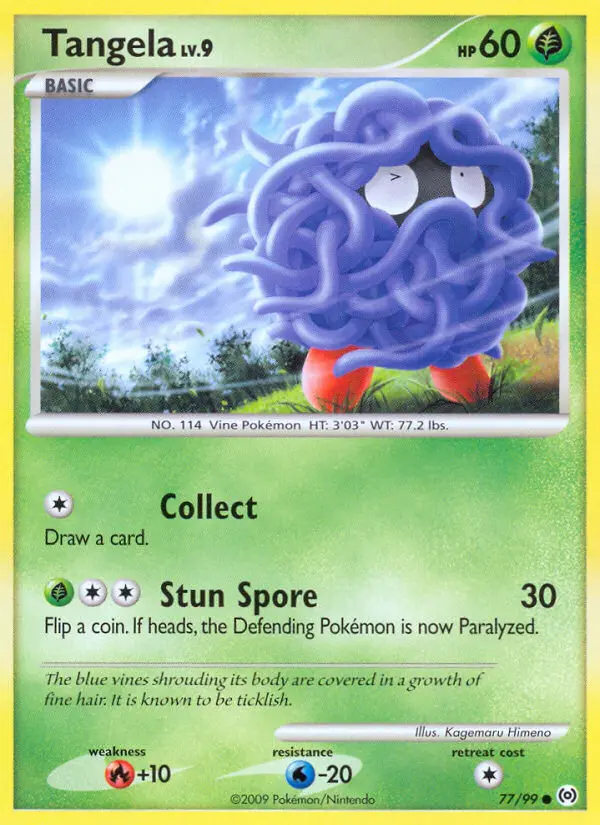
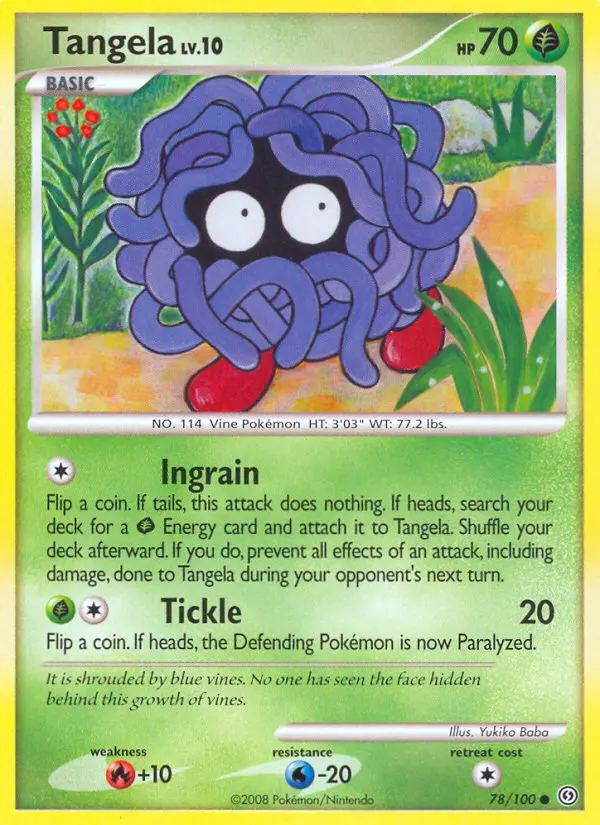
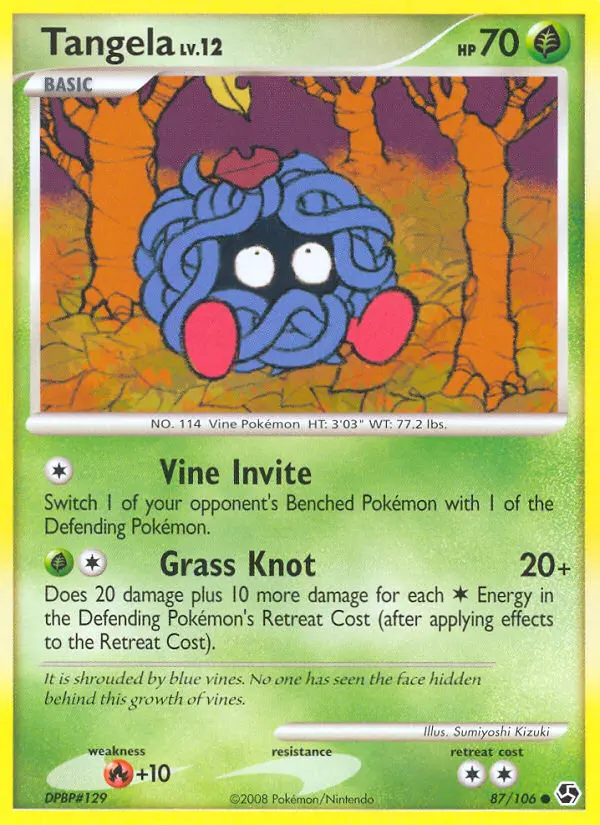
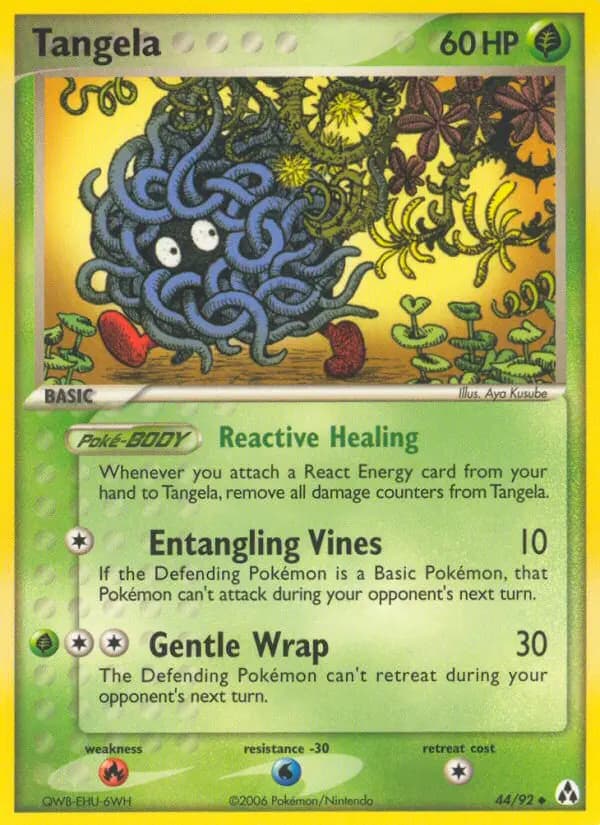
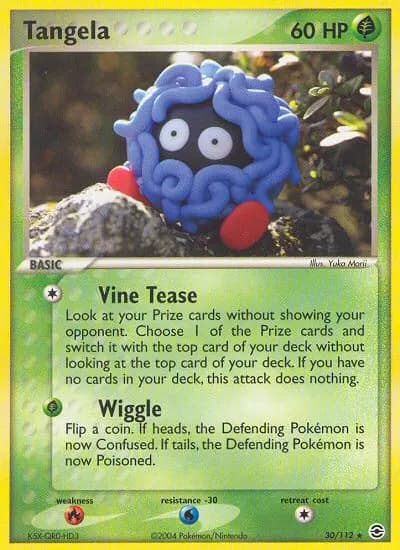
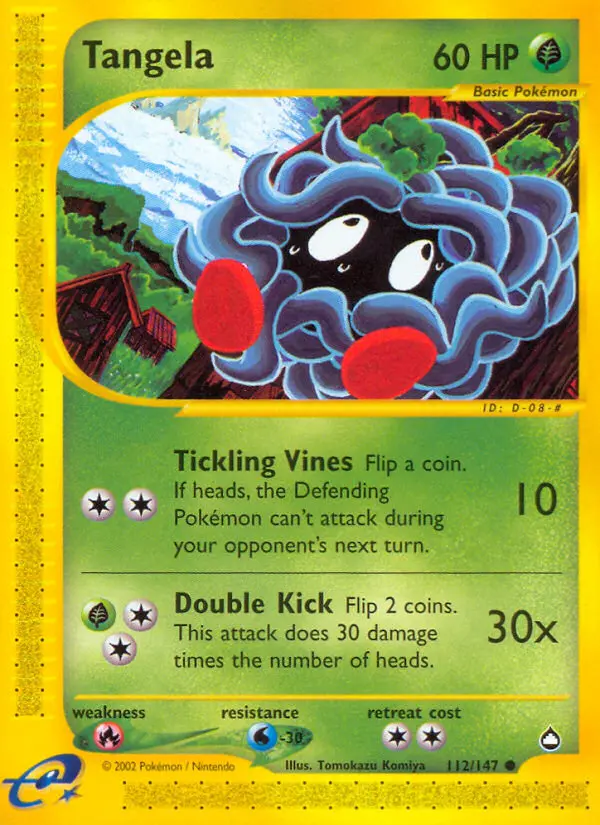
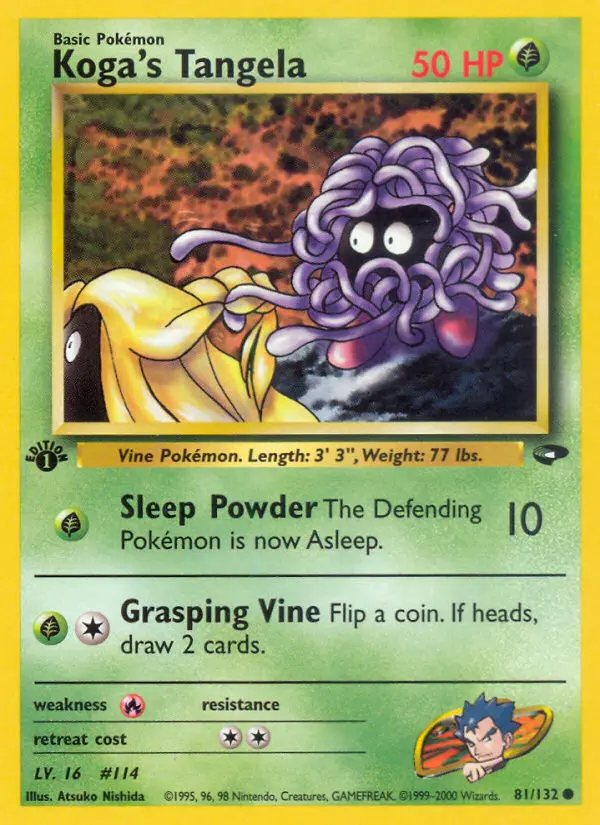
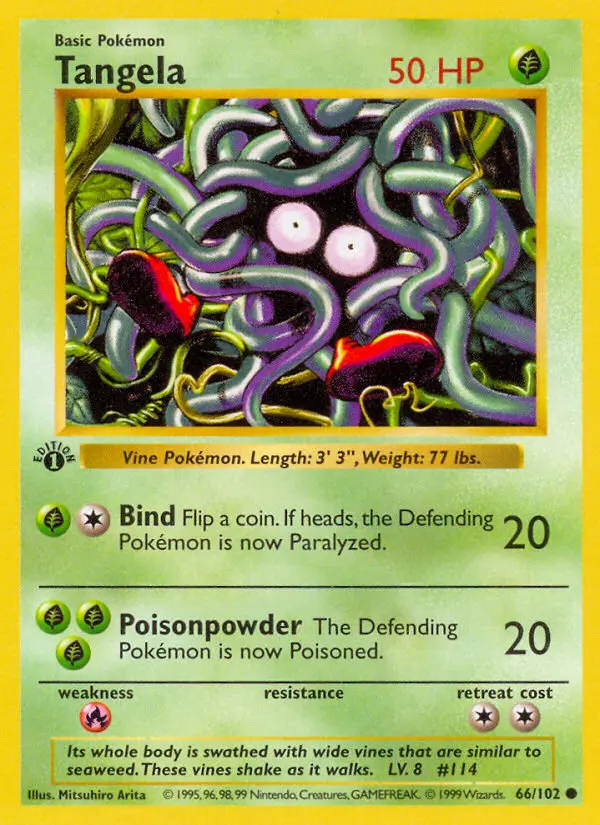
Tangela's entire body is swathed in thick, blue vine-like appendages that are structurally similar to seaweed, creating a round, bulbous silhouette that makes the Pokémon's true form completely unidentifiable. These vines are covered in fine hair and possess a remarkable growth rate, constantly extending and regenerating throughout the Pokémon's lifetime. Tucked beneath this verdant mass are a pair of distinctive red, boot-like feet, though no visible arms exist, suggesting that Tangela manipulates its environment entirely through its vine appendages. The vines display a small opening that reveals its eyes, surrounded by dark coloring that creates a captivating, almost hypnotic appearance. According to Galarian lore, Tangela's vines possess a refreshing flavor and aromatic quality, leading local communities to harvest them as herbs for culinary and medicinal purposes. The vines shake and jiggle constantly, even during rest, exhibiting an almost autonomous quality that has fascinated researchers and trainers for generations.
Pokedex Numbers
Training
Breeding
Tangela Breeding, Gender Ratio & Egg Groups
Tangela splits evenly down the middle — 50% male, 50% female. As a member of the Grass egg group, Tangela can breed with other Grass-type Pokémon and compatible creatures, producing Tangela offspring that inherit genetic traits from both parents. The species maintains a base happiness value of 70, indicating a moderately sociable nature that responds positively to trainer interaction and care. Tangela requires 20 egg cycles to hatch from its egg, a standard gestation period that places it among the more quickly-breeding Grass types, making it accessible to players seeking to build competitive specimens or complete their Pokédex through breeding efforts. The inheritance of moves and abilities through breeding with compatible Pokémon allows trainers to create specialized Tangela variants that might not be available through standard capture or leveling methods. Its Grass egg group classification connects it to a diverse lineage of plant-based Pokémon, creating breeding possibilities that trainers can explore to develop unique movesets and ability combinations.
Sprites






TMs & HMs
tm01
lets go pikachu lets go eevee
tm02
crystal
tm02
gold silver
tm03
yellow
tm03
crystal
tm03
gold silver
tm03
red blue
tm03
blue japan
tm03
red green japan
tm05
lets go pikachu lets go eevee
tm06
yellow
tm06
gold silver
tm06
red blue
tm06
crystal
tm06
emerald
tm06
firered leafgreen
tm06
diamond pearl
tm06
platinum
tm06
ruby sapphire
tm06
colosseum
+524 more TMs/HMs


Tangela Evolution, Mega Evolution & Special Forms
Tangela evolves into Tangrowth, a significant transformation that occurs when the Pokémon learns the move Ancient Power during leveling. This evolution represents a maturation process where Tangela's vine-based physiology undergoes substantial expansion and development, resulting in a larger and more formidable Grass-type. Tangrowth inherits and amplifies the defensive characteristics that make Tangela notable, while also gaining additional offensive capabilities that make it a genuinely threatening competitive presence. The evolution mechanism itself is unique within Generation I, as it diverges from standard level-based evolution by requiring the knowledge of a specific move, demonstrating how Pokémon evolution can reflect learning and growth rather than mere age progression. This evolution line represents one of the earlier examples of conditional evolution mechanics that would become increasingly common in later generations, establishing a template for move-based evolution requirements that appear throughout the franchise.
Where to Find
Kanto Sea Route 21
kanto
+96 more
Kanto Safari Zone
kanto
Mt Silver
johto
+10 more
Johto Route 44
johto
+6 more
Kanto Route 28
kanto
+10 more
Treasure Beach
kanto
+1 more
Great Marsh
sinnoh
+39 more
Giant Chasm
unova
+17 more
Unova Route 13
unova
+21 more
Tangela Behaviour and Natural Habitat
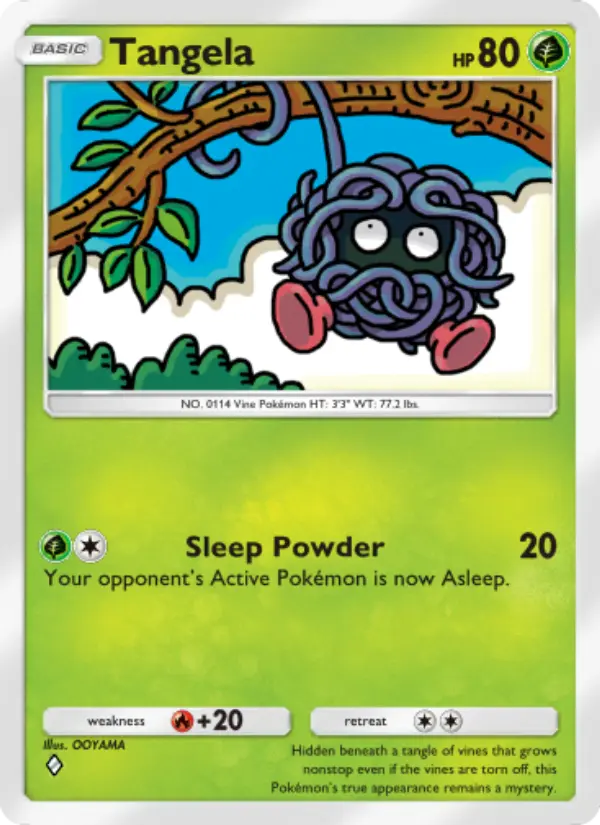
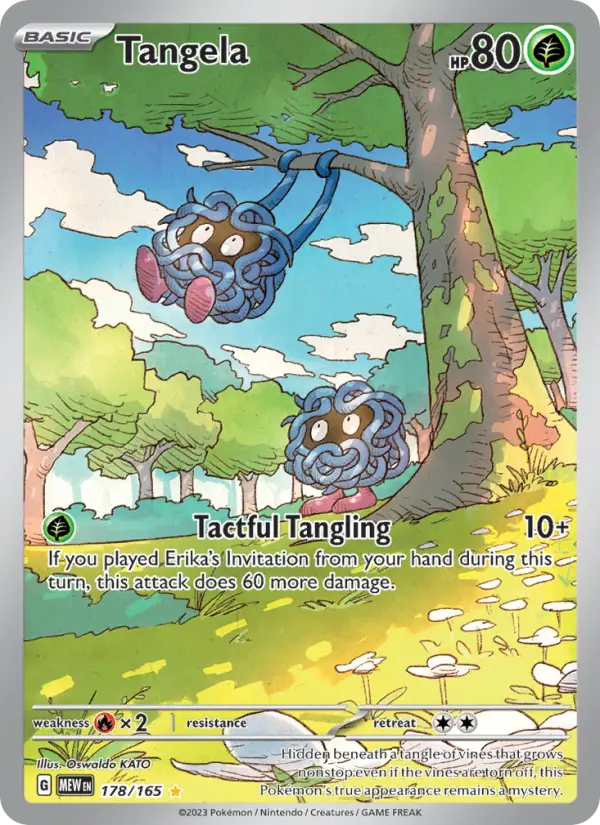
Tangela inhabits temperate grasslands and swampy environments where its vine-based physiology allows it to thrive in moisture-rich conditions. The Pokémon is notably playful in nature, frequently observed swinging from tree branches using its powerful vines, displaying behavior reminiscent of arboreal creatures despite its plant-based biology. When confronted by threats or potential prey, Tangela actively ensnares and entangles moving objects with its vines, a behavior that serves both offensive and defensive purposes during encounters. The constant jiggling and swaying of its vines serves a psychological function, effectively unnerving opponents through what trainers describe as an unsettling and hypnotic movement pattern. In battle situations, Tangela deliberately intensifies its vine movements to annoy and distract adversaries, transforming a physical feature into a tactical advantage. The Pokédex notes that being ensnared by Tangela's vines produces a tickling sensation rather than painful constriction, suggesting that the Pokémon possesses a degree of control and gentleness in its interactions despite its predatory nature.
Pokedex Entries
The whole body is swathed with wide vines that are similar to sea weed. Its vines shake as it walks.
Its identity is obscured by masses of thick, blue vines. The vines are said to never stop growing.
The vines that cloak its entire body are always jiggling. They effectively un nerve its foes.
It tangles any moving thing with its vines. Their subtle shaking is ticklish if you get ensnared.
During battle, it constantly moves the vines that cover its body in order to annoy its opponent.
TANGELA’s vines snap off easily if they are grabbed. This happens without pain, allowing it to make a quick getaway. The lost vines are replaced by newly grown vines the very next day.
Its vines snap off easily and painlessly if they are grabbed, allowing it to make a quick getaway. The lost vines are replaced by new growth the very next day.
Blue plant vines cloak the POKéMON’s identity in a tangled mass. It entangles anything that gets close.
The whole body is swathed with wide vines that are similar to seaweed. The vines sway as it walks.
It is shrouded by blue vines. No one has seen the face hidden behind this growth of vines.
The blue vines shrouding its body are covered in a growth of fine hair. It is known to be ticklish.
The vines that cloak its entire body are always jiggling. They effectively unnerve its foes.
It tangles any moving thing with its vines. Their subtle shaking is ticklish if you get ensnared.
The blue vines shrouding its body are covered in a growth of fine hair. It is known to be ticklish.
Many writhing vines cover it, so its true identity remains unknown. The blue vines grow its whole life long.
Many writhing vines cover it, so its true identity remains unknown. The blue vines grow its whole life long.
It tangles any moving thing with its vines. Their subtle shaking is ticklish if you get ensnared.
Tangela’s vines snap off easily if they are grabbed. This happens without pain, allowing it to make a quick getaway. The lost vines are replaced by newly grown vines the very next day.
Tangela’s vines snap off easily if they are grabbed. This happens without pain, allowing it to make a quick getaway. The lost vines are replaced by newly grown vines the very next day.
Its identity is obscured by masses of thick blue vines. The vines are said to never stop growing.
Hidden beneath a tangle of vines that grows nonstop even if the vines are torn off, this Pokémon’s true appearance remains a mystery.
The vines of a Tangela have a distinct scent. In some parts of Galar, Tangela vines are used as herbs.
It is cloaked entirely in blue vines, preventing any glimpse of its true identity. The vines impart a refreshing sensation when chewed—they're useful as a spice.
Tangela Name Origin & Design Inspiration
Tangela's name derives from the words 'tangle' and 'vine,' perfectly capturing the Pokémon's defining characteristic of being covered in intricate, intertwined vines that obscure its true identity. Its Japanese name, Monjara, combines roots suggesting vines and entanglement, emphasizing the same thematic elements across linguistic boundaries. The design philosophy centers on mystery and concealment, creating a Pokémon whose appearance is fundamentally paradoxical—a creature defined by what cannot be seen rather than what can. The visual inspiration draws heavily from seaweed and aquatic vegetation, translating underwater plant biology into a terrestrial Pokémon that maintains that organic, flowing aesthetic. The color palette of vibrant blue vines against the glimpses of darker skin creates striking visual contrast that makes Tangela instantly recognizable despite its abstract form. The boot-like feet represent an intentional design choice that grounds the otherwise ethereal vine-creature in concrete reality, providing visual anchoring points that prevent the design from becoming completely amorphous and unreadable.
Learnable Moves
Tangela can learn 68 moves:
Move | Type | Cat. | Power | Acc. | PP |
|---|---|---|---|---|---|
| absorb | grass | Special | 20 | 100 | 25 |
| amnesia | psychic | Status | — | — | 20 |
| ancient power | rock | Special | 60 | 100 | 5 |
| attract | normal | Status | — | 100 | 15 |
| bide | normal | Physical | — | — | 10 |
| bind | normal | Physical | 15 | 85 | 20 |
| body slam | normal | Physical | 85 | 100 | 15 |
| bullet seed | grass | Physical | 25 | 100 | 30 |
| confusion | psychic | Special | 50 | 100 | 25 |
| constrict | normal | Physical | 10 | 100 | 35 |
| curse | ghost | Status | — | — | 10 |
| cut | normal | Physical | 50 | 95 | 30 |
| double team | normal | Status | — | — | 15 |
| double edge | normal | Physical | 120 | 100 | 15 |
| endeavor | normal | Physical | — | 100 | 5 |
| endure | normal | Status | — | — | 10 |
| energy ball | grass | Special | 90 | 100 | 10 |
| facade | normal | Physical | 70 | 100 | 20 |
| flail | normal | Physical | — | 100 | 15 |
| flash | normal | Status | — | 100 | 20 |
| frustration | normal | Physical | — | 100 | 20 |
| giga drain | grass | Special | 75 | 100 | 10 |
| growth | normal | Status | — | — | 20 |
| headbutt | normal | Physical | 70 | 100 | 15 |
| hidden power | normal | Special | 60 | 100 | 15 |
| hyper beam | normal | Special | 150 | 90 | 5 |
| ingrain | grass | Status | — | — | 20 |
| knock off | dark | Physical | 65 | 100 | 20 |
| leech seed | grass | Status | — | 90 | 10 |
| mega drain | grass | Special | 40 | 100 | 15 |
| mimic | normal | Status | — | — | 10 |
| natural gift | normal | Physical | — | 100 | 15 |
| nature power | normal | Status | — | — | 20 |
| pain split | normal | Status | — | — | 20 |
| poison powder | poison | Status | — | 75 | 35 |
| power swap | psychic | Status | — | — | 10 |
| protect | normal | Status | — | — | 10 |
| psych up | normal | Status | — | — | 10 |
| rage | normal | Physical | 20 | 100 | 20 |
| reflect | psychic | Status | — | — | 20 |
| rest | psychic | Status | — | — | 5 |
| return | normal | Physical | — | 100 | 20 |
| rock smash | fighting | Physical | 40 | 100 | 15 |
| secret power | normal | Physical | 70 | 100 | 20 |
| seed bomb | grass | Physical | 80 | 100 | 15 |
| shock wave | electric | Special | 60 | — | 20 |
| skull bash | normal | Physical | 130 | 100 | 10 |
| slam | normal | Physical | 80 | 75 | 20 |
| sleep powder | grass | Status | — | 75 | 15 |
| sleep talk | normal | Status | — | — | 10 |
| sludge bomb | poison | Special | 90 | 100 | 10 |
| snore | normal | Special | 50 | 100 | 15 |
| solar beam | grass | Special | 120 | 100 | 10 |
| stun spore | grass | Status | — | 75 | 30 |
| substitute | normal | Status | — | — | 10 |
| sunny day | fire | Status | — | — | 5 |
| swagger | normal | Status | — | 85 | 15 |
| sweet scent | normal | Status | — | 100 | 20 |
| swords dance | normal | Status | — | — | 20 |
| synthesis | grass | Status | — | — | 5 |
| take down | normal | Physical | 90 | 85 | 20 |
| thief | dark | Physical | 60 | 100 | 25 |
| tickle | normal | Status | — | 100 | 20 |
| toxic | poison | Status | — | 90 | 10 |
| vine whip | grass | Physical | 45 | 100 | 25 |
| wake up slap | fighting | Physical | 70 | 100 | 10 |
| worry seed | grass | Status | — | 100 | 10 |
| wring out | normal | Special | — | 100 | 5 |
Tangela Competitive Battle Guide
Tangela's competitive viability stems primarily from its exceptional base Defense stat of 115, making it surprisingly durable against physical attacks despite its modest 65 HP base stat. Its special attack of 100 provides reasonable offensive capability, particularly in competitive formats where it can exploit coverage moves to threaten opponents that expect a purely defensive wall. The hidden ability Regenerator grants Tangela exceptional staying power in competitive play, restoring one-third of maximum HP upon switching out, effectively doubling its longevity in extended battles by enabling hit-and-run tactics unavailable to many Grass types. Its standard abilities offer valuable utility in weathered formats—Chlorophyll doubles speed in sunlight for a Pokemon normally hindered by its modest base 60 speed, while Leaf Guard prevents status conditions during sunny weather, protecting Tangela from crippling burns, paralysis, or poison. The defensive typing provides resilience against common physical attackers while the grass typing grants resistances to water, grass, ground, and electric attacks, though vulnerabilities to fire, ice, flying, and poison moves remain significant concerns. Tangela's moveset depth, combined with its defensive bulk, special attack capability, and hidden ability utility, establishes it as a legitimate defensive pivot and special wall option in competitive formats, particularly in lower tiers where its stat distribution becomes increasingly valuable.
Commonly Asked Questions About Tangela
What type is Tangela?
Tangela is a grass type Pokemon.
What does Tangela evolve into?
Tangela evolves into tangrowth.
What are Tangela's weaknesses?
Tangela is weak to flying, poison, bug, fire and ice type moves.
Does Tangela evolve by trading?
No — Tangela evolves entirely through leveling up, with no trade required at any stage.
Where can I find Tangela?
Tangela can be found in kanto sea route 21 (kanto), kanto safari zone (kanto) and mt silver (johto) and 6 other locations.
Tangela Cultural Impact & Franchise History
While Tangela lacks the iconic status of Generation I's most famous Pokémon, it has maintained a consistent presence throughout the franchise as a beloved example of creative Pokémon design that prioritizes mystery and visual distinctiveness. The Pokémon's appearance in the anime series, particularly in Misty's team during the early seasons, introduced millions of viewers to its unique characteristics and endearing personality, establishing it as a recognizable presence in popular culture. Tangela's design philosophy—creating an entire Pokémon from concealed components and environmental interaction—influenced later generations of Pokémon design, encouraging developers to explore more abstract and unconventional body plans. In the Galar region's cultural context, Tangela gains particular significance through its local use as medicinal and culinary herbs, representing how Pokémon integrate into regional human societies in practical ways beyond battling. Fan communities have extensively discussed and speculated about Tangela's true appearance beneath its vines, with its mysterious nature spurring creative interpretations and fan artwork that extends its cultural resonance beyond official canon. The species' continued inclusion in main-series games and competitive formats demonstrates its enduring appeal despite being overshadowed by more prominent Grass-type Pokémon, cementing its place as an underappreciated classic of the original generation.
Where to Find Tangela in Every Pokémon Game
Tangela's availability varies significantly across the numerous Pokémon games spanning multiple generations and platforms. In the original Red, Blue, and Yellow versions, Tangela inhabits Viridian Forest and other grassland areas with moderate encounter rates, making it an accessible catch for players early in their journey. Throughout subsequent generations, Tangela appears in diverse locations reflecting its preference for temperate grasslands and swampy environments—it can be found in Route areas and wetlands across multiple regions including Kanto, Johto, Hoenn, Sinnoh, Unova, and Kalos. In modern entries including Pokémon Let's Go Pikachu and Eevee, Tangela remains accessible through standard encounter methods, maintaining its presence as an available creature for contemporary players. The Galar region's Isle of Armor DLC makes Tangela available to trainers in Pokémon Sword and Shield, expanding its availability to eighth-generation players and accommodating its evolved form Tangrowth within the expanded Pokédex. For trainers seeking specific ability combinations like the hidden ability Regenerator, various game mechanics and breeding strategies provide pathways to obtain optimally-trained specimens. Tangela's consistent availability across generations reflects its status as a foundational Generation I Pokémon, ensuring that players across different eras and platforms can reliably obtain this distinctive vine-covered creature and integrate it into their teams and Pokédex collections.