Tangrowth
Generation IV · #0465 — Vine Pokémon
Since its Generation IV debut, Tangrowth has carried a stat spread built around hp — 50 at base, its clearest strength. The Pokédex number 465 places Tangrowth firmly in the Sinnoh regional dex, where it became a popular addition to many trainers' teams. Its National Pokédex designation reflects its importance in the broader Pokémon world as a mature, formidable Grass-type combatant that bridges the gap between support and offensive roles in competitive battling.
Editor's Take
Tangrowth's Regenerator plus 125 base Defense makes it one of the best physical walls in the game, and it is a genuinely excellent Gen 4 evolution of a forgotten Gen 1 Pokémon.
Base Stats
Height
2.0m
Weight
128.6kg
Category
Vine Pokémon
Gender
Male 50% / Female 50%
Color
blue
Shape
humanoid
Abilities
Doubles Speed during strong sunlight.
Protects against major status ailments during strong sunlight.
Heals for 1/3 max HP upon switching out.

Tangrowth Biology & Physical Characteristics
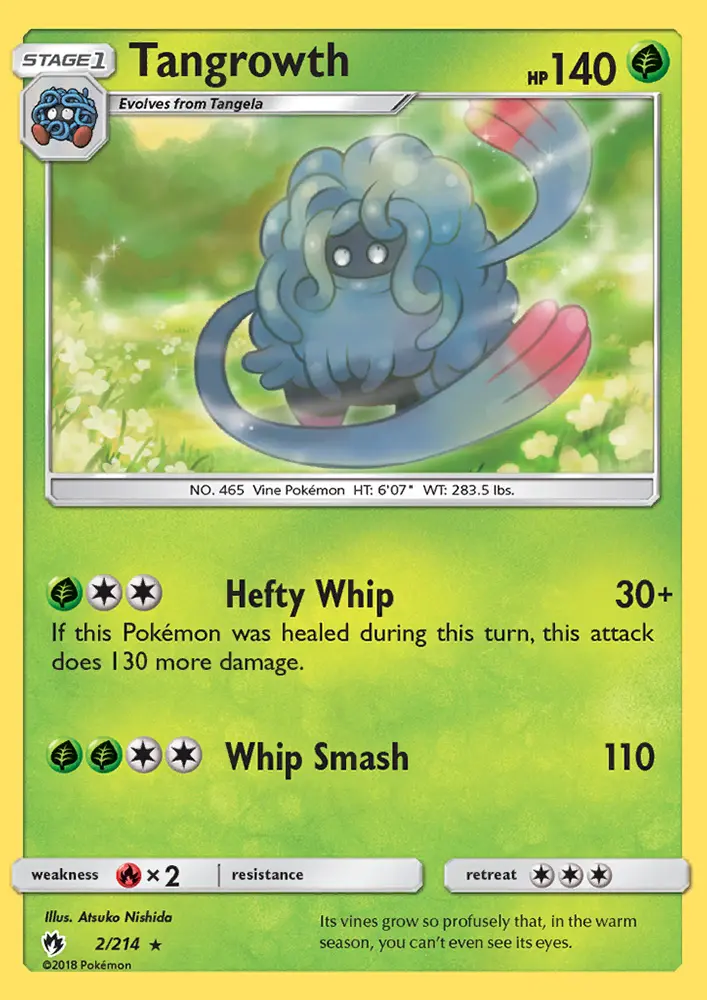
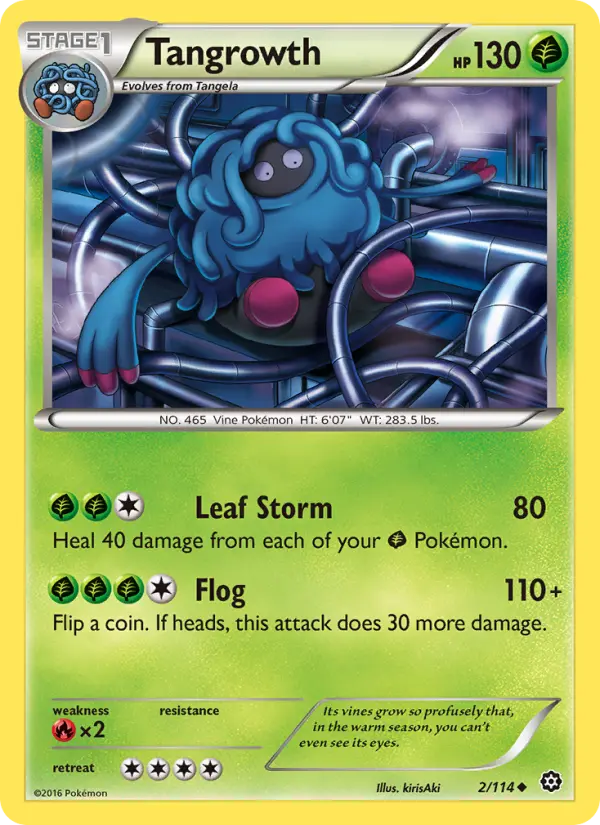
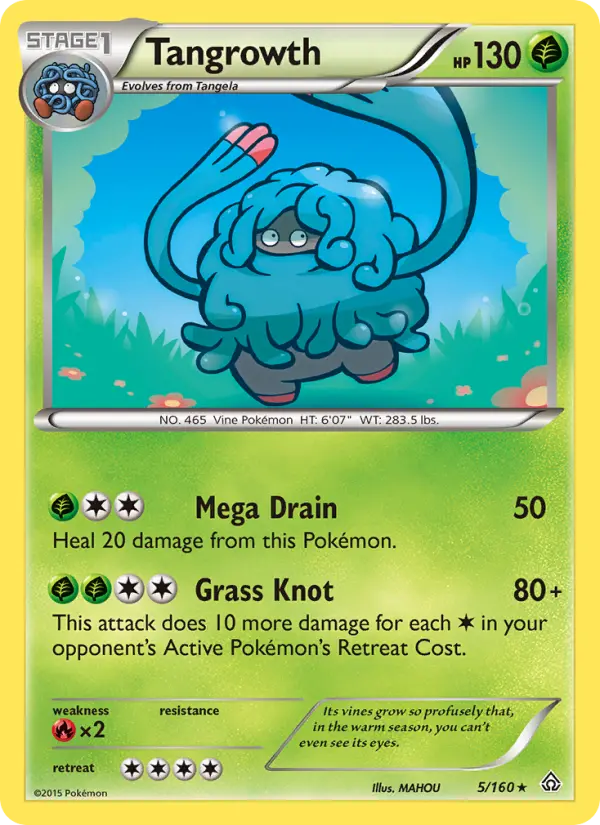
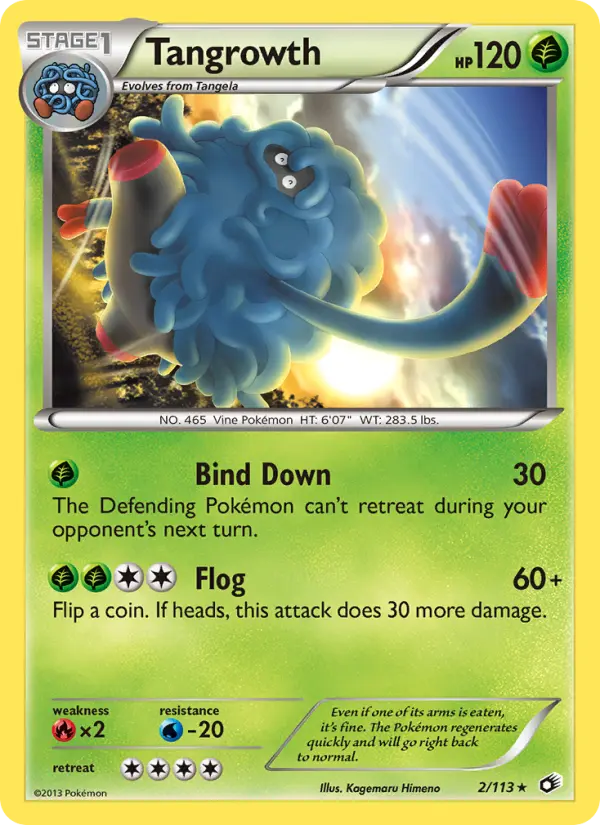
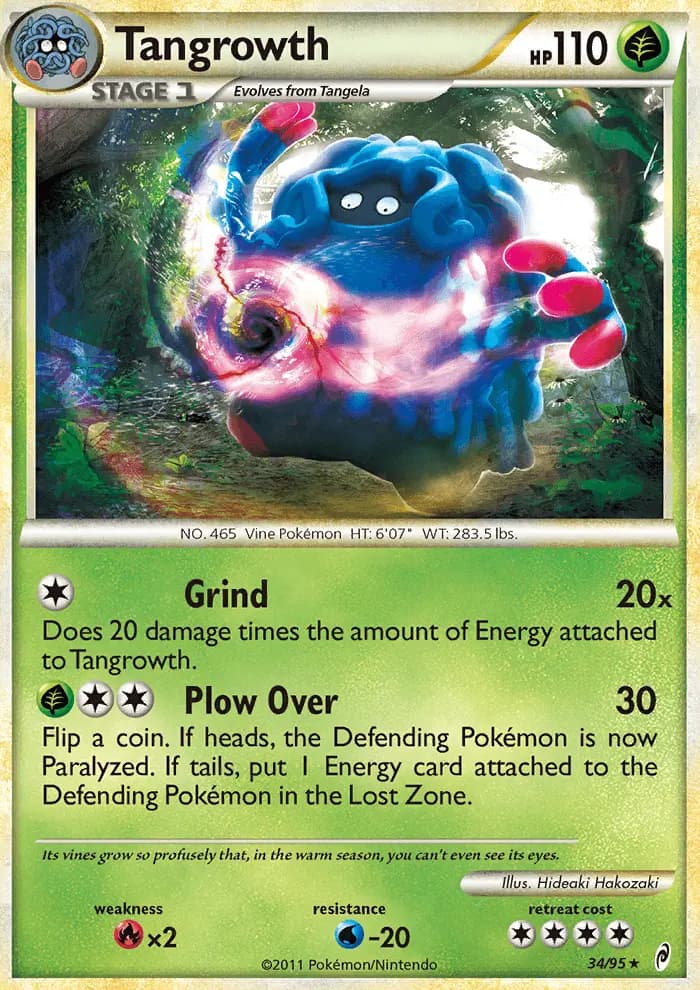
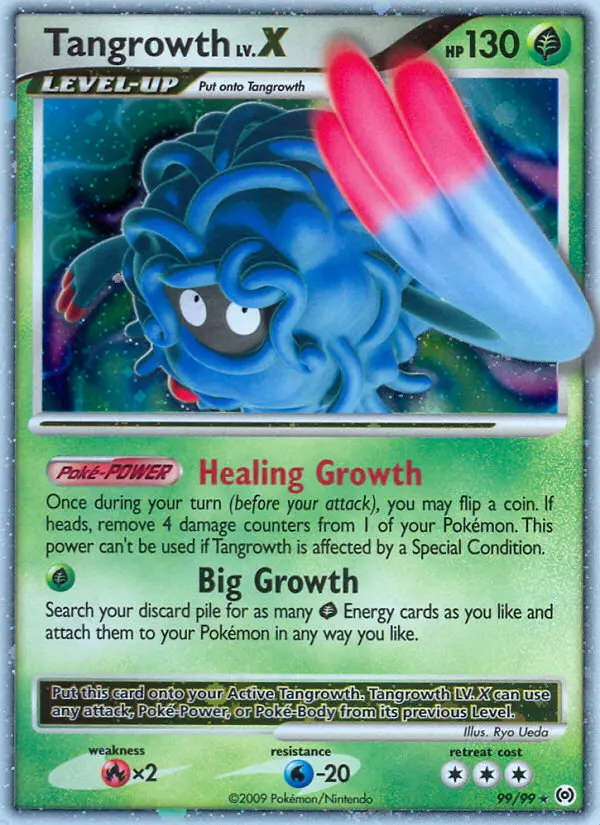
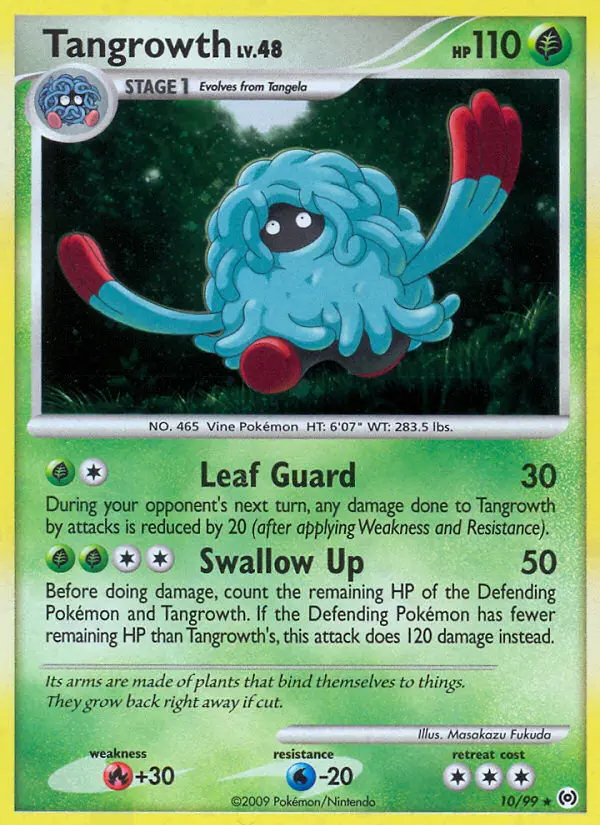
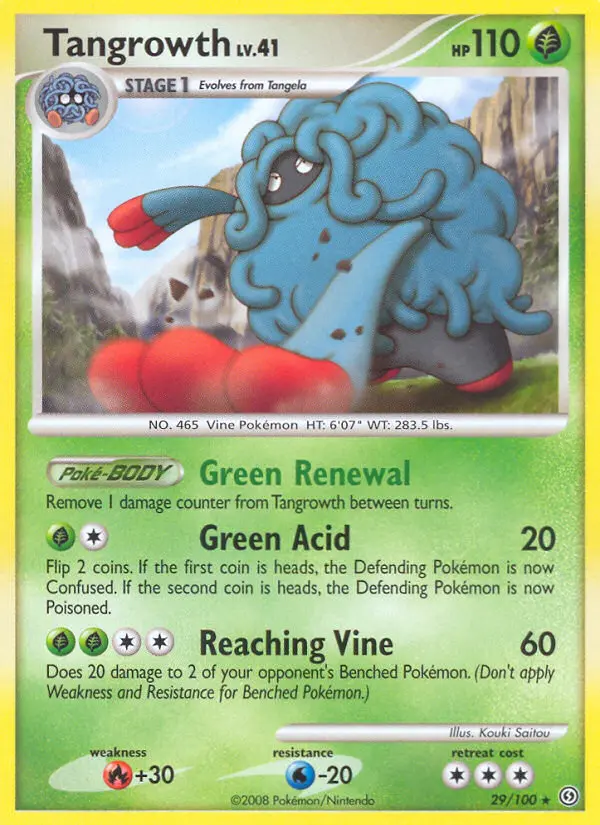
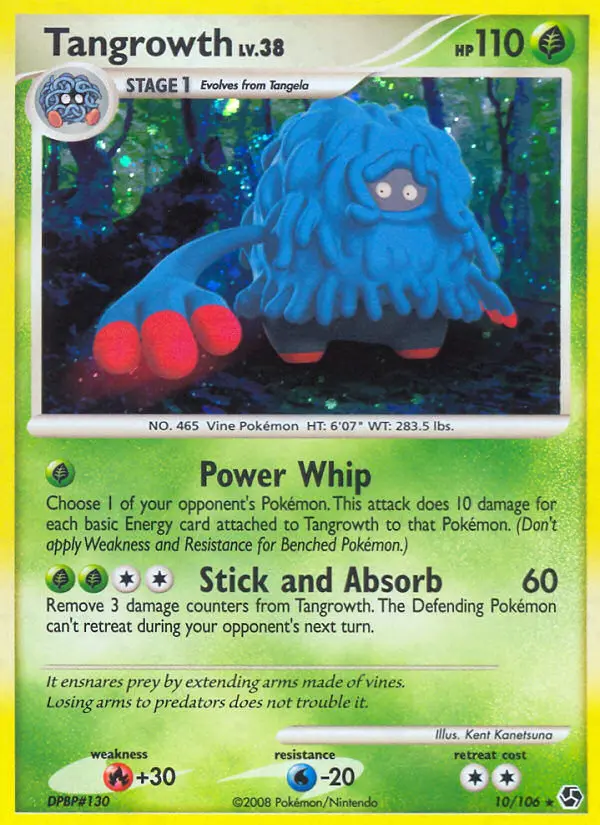
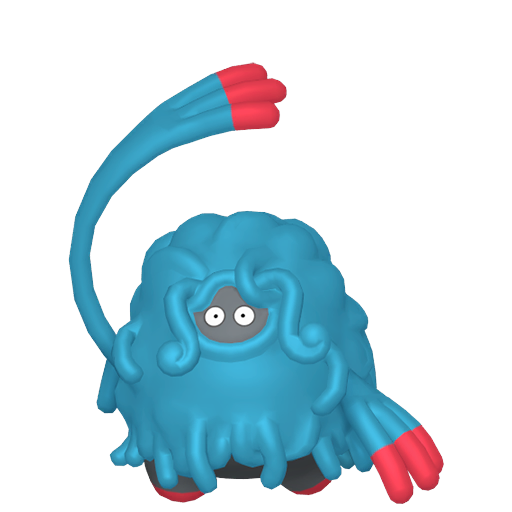
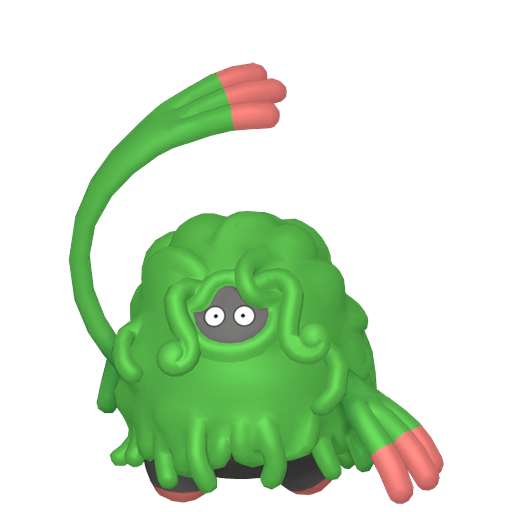
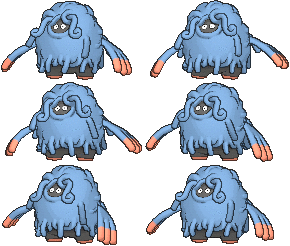
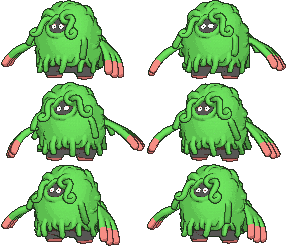
Tangrowth's physiology is dominated by an extensive network of blue vines that completely envelop its black body, creating an appearance that closely resembles a large, animated shrub. The Pokémon possesses two distinctive boneless arms composed entirely of bundled vines, each terminating in three fingers that are colored red. A notable sexual dimorphism exists in Tangrowth's anatomy: female specimens display completely red finger coloration, while males have red tips on their fingers. Beneath the tangled mass of vines lie a pair of saucer-like eyes that barely peer through the dense vegetation, and two stubby black feet tipped with red support its massive frame. Most remarkably, Tangrowth exhibits an extraordinary regenerative ability—if one of its vine arms is severed or consumed by a predator, it will rapidly regrow without causing the Pokémon apparent distress or impairment. During warm seasons, Tangrowth's vine growth accelerates dramatically, becoming so profuse that even its eyes become completely obscured by the botanical covering. When its vines become excessively long, Tangrowth actively maintains them by tearing off excess growth, demonstrating a degree of self-awareness and grooming behavior unusual among Pokémon.
Pokedex Numbers
Training
Breeding
Tangrowth Breeding, Gender Ratio & Egg Groups
Tangrowth maintains an even gender distribution with 50% male and 50% female individuals in the wild, ensuring balanced breeding potential across Pokémon populations. The species belongs to the Grass egg group, meaning it can only breed with other Pokémon within that same egg classification, limiting its breeding compatibility. In terms of gender expression, Tangrowth exhibits noticeable sexual dimorphism primarily through finger coloration—an aesthetic difference that, while visually striking, does not impact competitive viability or gameplay mechanics. The base friendship value of 70 (later reduced to 50 in certain game generations) indicates that Tangrowth is moderately receptive to training and bonding with trainers, though it is not naturally inclined toward extreme loyalty like some other Pokémon species. Breeding Tangrowth requires a substantial commitment, as eggs hatch after 20 cycles (equivalent to approximately 4,884–5,140 steps), which is a relatively long incubation period reflecting the Pokémon's complexity and mature nature. Female Tangrowth can pass down their species to offspring, and with the proper breeding partner within the Grass egg group, trainers can produce Tangela offspring that may eventually evolve into competitive Tangrowth through the Ancient Power method.
Sprites


TMs & HMs
tm01
lets go pikachu lets go eevee
tm02
crystal
tm02
gold silver
tm03
yellow
tm03
red blue
tm03
blue japan
tm03
red green japan
tm05
lets go pikachu lets go eevee
tm06
yellow
tm06
gold silver
tm06
red blue
tm06
crystal
tm06
emerald
tm06
firered leafgreen
tm06
diamond pearl
tm06
platinum
tm06
ruby sapphire
tm06
colosseum
tm06
black 2 white 2
tm06
xd
+719 more TMs/HMs
Gender Differences
This Pokémon has visible differences between male and female forms.


Tangrowth Evolution, Mega Evolution & Special Forms
Tangrowth evolves from Tangela, the small, ball-shaped Grass-type Pokémon, through a mechanic unique to Generation IV: leveling up while knowing the move Ancient Power. This evolution method represented an innovative approach to evolution mechanics at the time, distinguishing Tangrowth from the simple level-based or trade-based evolution methods seen in earlier generations. The evolution results in a dramatic transformation—Tangela's compact, round form with hidden eyes expands into Tangrowth's imposing, vine-covered mass, with its previously hidden body becoming almost completely obscured by the extensive botanical growth. The evolution grants Tangrowth significantly improved stats across the board, most notably a substantial increase in Defense from Tangela's 75 to Tangrowth's formidable 125, improving its physical bulk considerably. Additionally, Tangrowth gains access to a broader movepool and improved base stats in HP (100 compared to Tangela's 65) and Special Attack (110 compared to Tangela's 100), making it a far more viable competitive option. The Special Defense stat remains relatively modest at 50, maintaining a potential vulnerability that trainers must account for in team building. Tangrowth represents the culmination of Tangela's growth, transforming from a young, agile vine Pokémon into a mature, defensively-oriented creature suited for prolonged battles.
Where to Find
Giant Chasm
unova
+5 more
Unova Route 13
unova
+5 more
Tangrowth Behaviour and Natural Habitat
Tangrowth employs sophisticated predatory tactics, relying on camouflage and ambush strategies to capture unsuspecting prey. When remaining motionless, the Pokémon becomes virtually indistinguishable from an ordinary large shrub, allowing prey to wander within striking distance before it suddenly ensnares them with its extendable vine arms. This hunting method proves highly effective in its natural habitat of temperate grasslands and swamps, where Tangrowth can blend seamlessly into its surroundings. Despite being classified as a carnivorous predator based on its hunting behavior, Tangrowth also consumes fruit and plant matter, demonstrating dietary flexibility. The Pokémon is notably rare in the wild, though this rarity may be partially attributable to its successful cryptic nature rather than a truly limited population. Tangrowth exhibits a methodical temperament, capable of remaining perfectly still for extended periods while waiting for prey. Its remarkable defensive capabilities and regenerative nature suggest that Tangrowth evolved in an environment where predation pressure was significant, necessitating the development of redundant bodily systems that could withstand loss of limbs.
Pokedex Entries
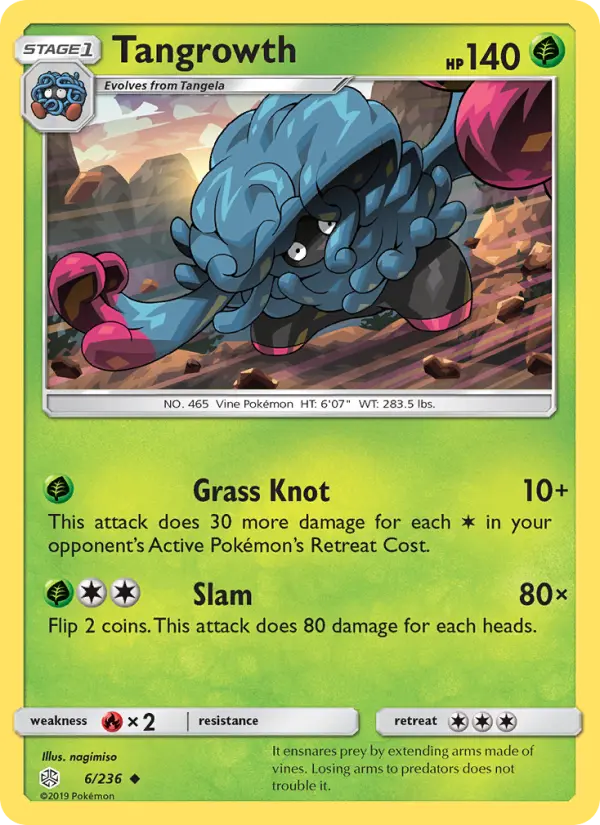
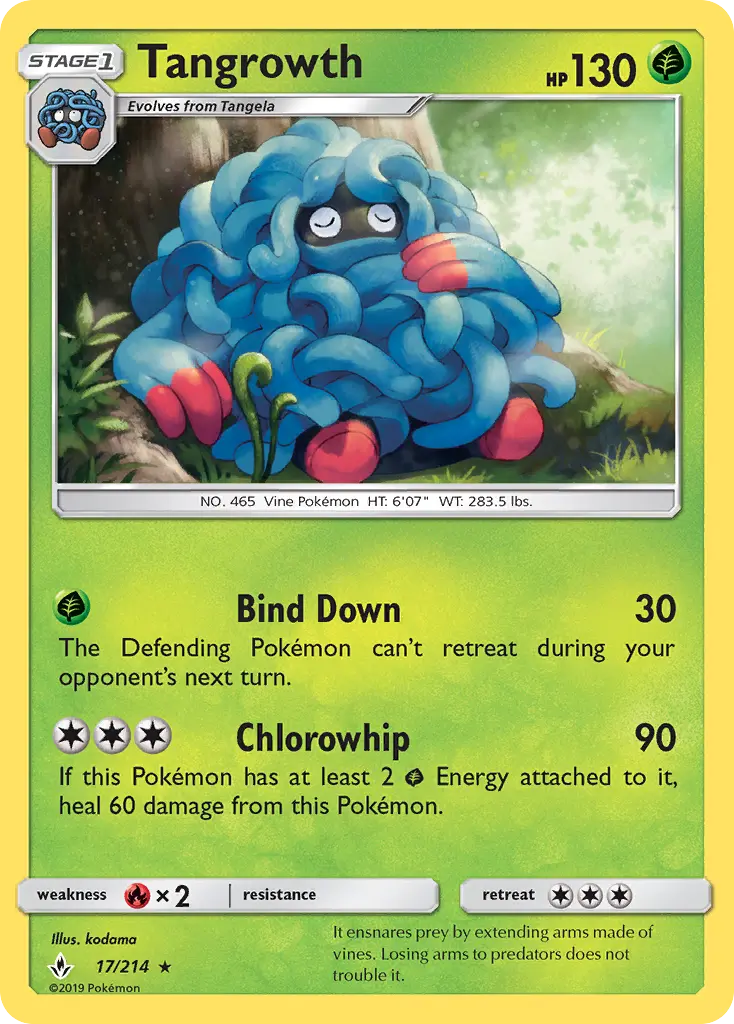
It ensnares prey by extending arms made of vines. Losing arms to predators does not trouble it.
Its arms are made of plants that bind themselves to things. They grow back right away if cut.
When it remains still, it appears to be a large shrub. Unsuspecting prey that wander near get ensnared by its vines.
Its vines grow so profusely that, in the warm season, you can’t even see its eyes.
Its arms are made of plants that bind themselves to things. They grow back right away if cut.
Even if one of its arms is eaten, it’s fine. The Pokémon regenerates quickly and will go right back to normal.
It ensnares prey by extending arms made of vines. Losing arms to predators does not trouble it.
Its vines grow so profusely that, in the warm season, you can’t even see its eyes.
It ensnares prey by extending arms made of vines. Losing arms to predators does not trouble it.
Its vines grow so profusely that, in the warm season, you can’t even see its eyes.
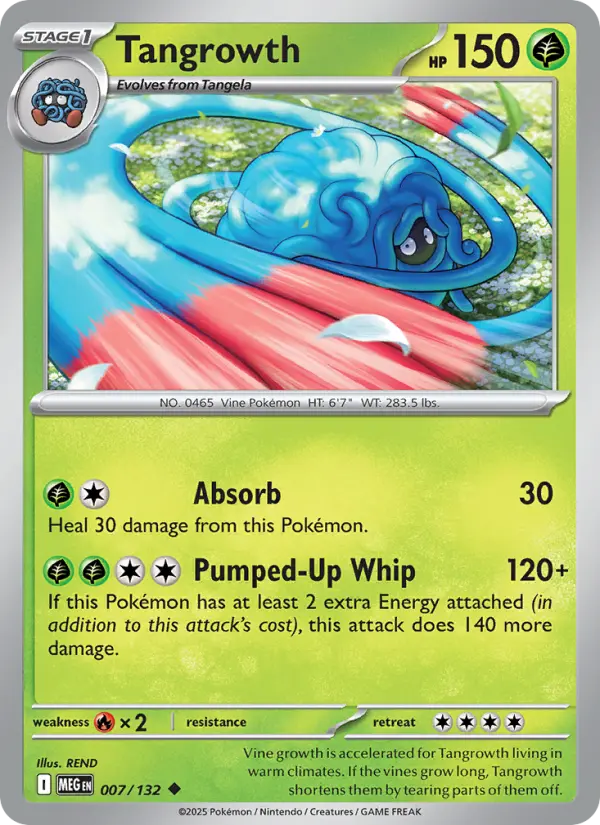
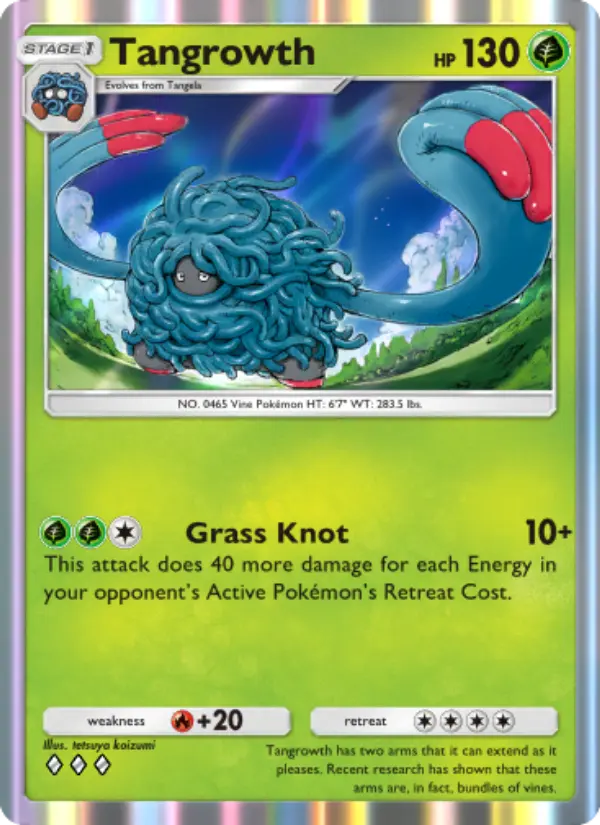
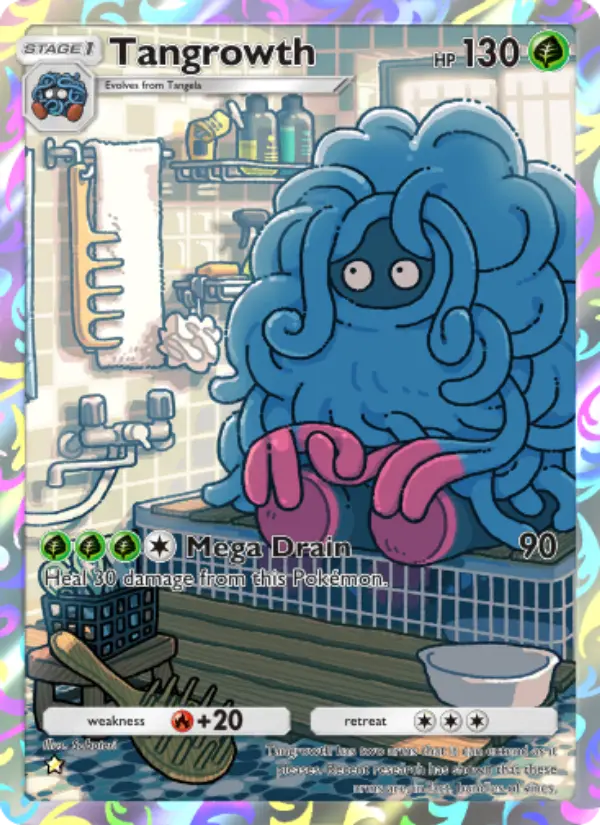
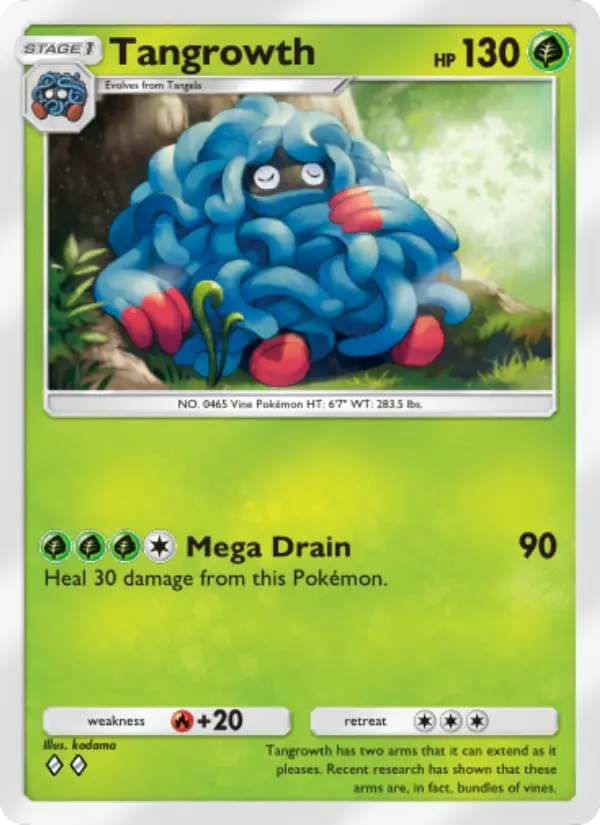
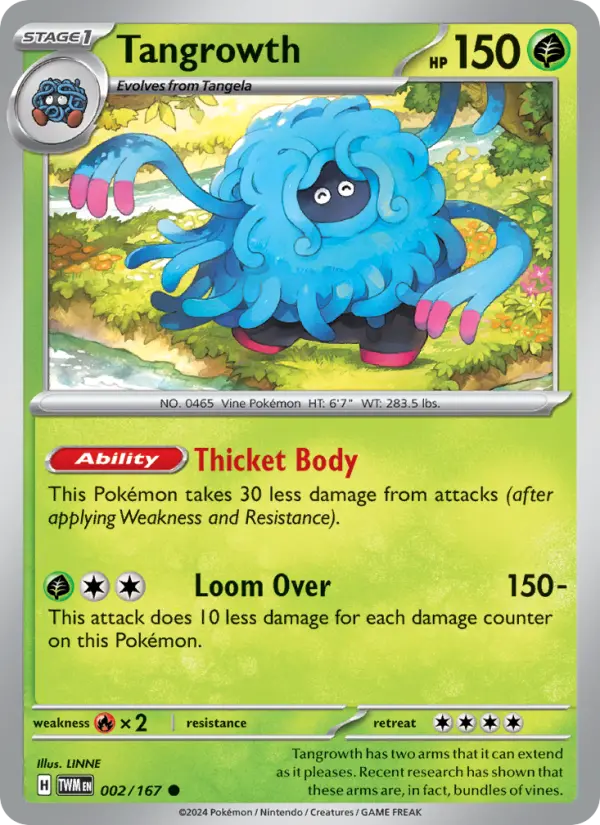
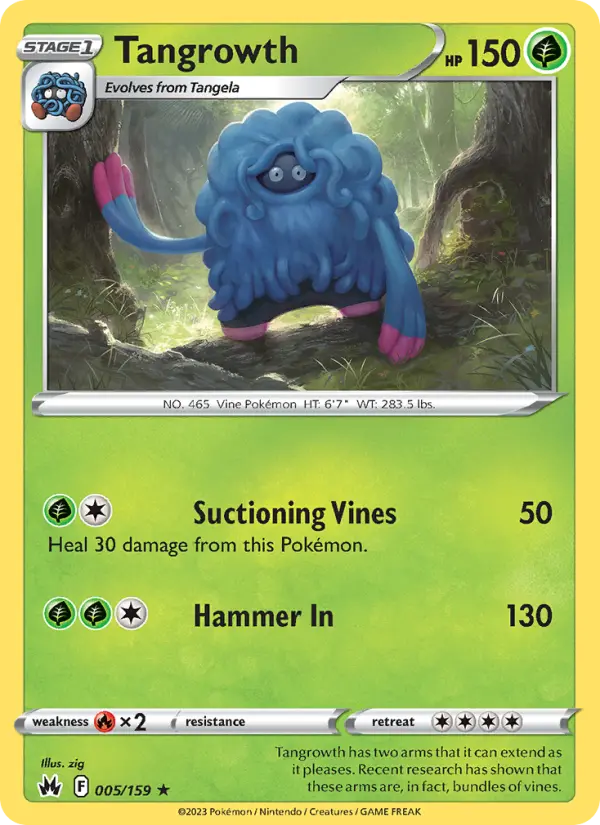
Tangrowth has two arms that it can extend as it pleases. Recent research has shown that these arms are, in fact, bundles of vines.
Vine growth is accelerated for Tangrowth living in warm climates. If the vines grow long, Tangrowth shortens them by tearing parts of them off.
Draped with long vines, it resembles a shrub in appearance. It swings bundles of vines as though they were arms, wrapping them around prey to ensnare them.
Tangrowth Name Origin & Design Inspiration
The name 'Tangrowth' combines 'tangle' and 'growth,' directly referencing the Pokémon's defining characteristic of being composed of ever-growing, tangled vines. The Japanese name 'Mojumbo' derives from 'mojame,' meaning 'dried squid,' likely referencing the tentacle-like appearance of Tangrowth's vine arms in a somewhat humorous fashion. Visually, Tangrowth's design builds directly upon Tangela's established theme while significantly expanding and elaborating upon it; where Tangela appears as a relatively compact bundle of vines, Tangrowth represents what happens when those vines are allowed to grow profusely and uninhibitedly. The Pokémon's blue-and-black color scheme mirrors Tangela's palette while creating greater contrast and visual impact befitting its larger frame. The addition of the visible black body core, red-tipped feet, and more prominently featured vine arms creates a more complex and memorable silhouette compared to its pre-evolution. The gender-based difference in finger coloration—completely red for females versus red-tipped for males—represents a subtle but meaningful design choice that encourages closer observation. Tangrowth's overall aesthetic successfully conveys both its botanical nature and its role as a formidable, nature-based combatant, with the tangled vine mass suggesting both offensive capability and defensive resilience.
Learnable Moves
Tangrowth can learn 84 moves:
Move | Type | Cat. | Power | Acc. | PP |
|---|---|---|---|---|---|
| absorb | grass | Special | 20 | 100 | 25 |
| acid spray | poison | Special | 40 | 100 | 20 |
| aerial ace | flying | Physical | 60 | — | 20 |
| amnesia | psychic | Status | — | — | 20 |
| ancient power | rock | Special | 60 | 100 | 5 |
| attract | normal | Status | — | 100 | 15 |
| bind | normal | Physical | 15 | 85 | 20 |
| block | normal | Status | — | — | 5 |
| body slam | normal | Physical | 85 | 100 | 15 |
| brick break | fighting | Physical | 75 | 100 | 15 |
| brutal swing | dark | Physical | 60 | 100 | 20 |
| bulldoze | ground | Physical | 60 | 100 | 20 |
| bullet seed | grass | Physical | 25 | 100 | 30 |
| captivate | normal | Status | — | 100 | 20 |
| confide | normal | Status | — | — | 20 |
| constrict | normal | Physical | 10 | 100 | 35 |
| cut | normal | Physical | 50 | 95 | 30 |
| double hit | normal | Physical | 35 | 90 | 10 |
| double team | normal | Status | — | — | 15 |
| earthquake | ground | Physical | 100 | 100 | 10 |
| endeavor | normal | Physical | — | 100 | 5 |
| endure | normal | Status | — | — | 10 |
| energy ball | grass | Special | 90 | 100 | 10 |
| facade | normal | Physical | 70 | 100 | 20 |
| flash | normal | Status | — | 100 | 20 |
| fling | dark | Physical | — | 100 | 10 |
| focus blast | fighting | Special | 120 | 70 | 5 |
| frustration | normal | Physical | — | 100 | 20 |
| giga drain | grass | Special | 75 | 100 | 10 |
| giga impact | normal | Physical | 150 | 90 | 5 |
| grass knot | grass | Special | — | 100 | 20 |
| grassy glide | grass | Physical | 55 | 100 | 20 |
| grassy terrain | grass | Status | — | — | 10 |
| growth | normal | Status | — | — | 20 |
| headbutt | normal | Physical | 70 | 100 | 15 |
| hidden power | normal | Special | 60 | 100 | 15 |
| hyper beam | normal | Special | 150 | 90 | 5 |
| infestation | bug | Special | 20 | 100 | 20 |
| ingrain | grass | Status | — | — | 20 |
| knock off | dark | Physical | 65 | 100 | 20 |
| leaf storm | grass | Special | 130 | 90 | 5 |
| mega drain | grass | Special | 40 | 100 | 15 |
| mud slap | ground | Special | 20 | 100 | 10 |
| natural gift | normal | Physical | — | 100 | 15 |
| nature power | normal | Status | — | — | 20 |
| pain split | normal | Status | — | — | 20 |
| payback | dark | Physical | 50 | 100 | 10 |
| poison jab | poison | Physical | 80 | 100 | 20 |
| poison powder | poison | Status | — | 75 | 35 |
| power swap | psychic | Status | — | — | 10 |
| power whip | grass | Physical | 120 | 85 | 10 |
| protect | normal | Status | — | — | 10 |
| psych up | normal | Status | — | — | 10 |
| reflect | psychic | Status | — | — | 20 |
| rest | psychic | Status | — | — | 5 |
| return | normal | Physical | — | 100 | 20 |
| rock slide | rock | Physical | 75 | 90 | 10 |
| rock smash | fighting | Physical | 40 | 100 | 15 |
| rock tomb | rock | Physical | 60 | 95 | 15 |
| round | normal | Special | 60 | 100 | 15 |
| secret power | normal | Physical | 70 | 100 | 20 |
| seed bomb | grass | Physical | 80 | 100 | 15 |
| shock wave | electric | Special | 60 | — | 20 |
| slam | normal | Physical | 80 | 75 | 20 |
| sleep powder | grass | Status | — | 75 | 15 |
| sleep talk | normal | Status | — | — | 10 |
| sludge bomb | poison | Special | 90 | 100 | 10 |
| snore | normal | Special | 50 | 100 | 15 |
| solar beam | grass | Special | 120 | 100 | 10 |
| solar blade | grass | Physical | 125 | 100 | 10 |
| stomping tantrum | ground | Physical | 75 | 100 | 10 |
| strength | normal | Physical | 80 | 100 | 15 |
| stun spore | grass | Status | — | 75 | 30 |
| substitute | normal | Status | — | — | 10 |
| sunny day | fire | Status | — | — | 5 |
| swagger | normal | Status | — | 85 | 15 |
| swords dance | normal | Status | — | — | 20 |
| synthesis | grass | Status | — | — | 5 |
| thief | dark | Physical | 60 | 100 | 25 |
| tickle | normal | Status | — | 100 | 20 |
| toxic | poison | Status | — | 90 | 10 |
| vine whip | grass | Physical | 45 | 100 | 25 |
| worry seed | grass | Status | — | 100 | 10 |
| wring out | normal | Special | — | 100 | 5 |
Tangrowth Competitive Battle Guide
In terms of competitive use, Tangrowth occupies a specialized niche as a defensive, physically bulky Grass-type with legitimate offensive presence. Its exceptional base Defense of 125 allows it to withstand physical assaults effectively, and its base HP of 100 provides a solid foundation for survival in sustained engagements. The base Special Attack of 110 gives Tangrowth respectable offensive capability on the special side, allowing it to threaten common opponents with moves like Giga Drain, Leaf Storm, and Focus Blast. Its abilities significantly influence its competitive viability: Chlorophyll doubles Speed during sunlight, transforming Tangrowth from a slow Pokémon (base Speed 50) into a formidable sweeper in sun-based teams. Leaf Guard prevents status conditions during sunny weather, providing crucial protection against paralysis, poison, and burns that would otherwise cripple its effectiveness. The hidden ability Regenerator grants automatic health recovery of one-third maximum HP upon switching out, enabling Tangrowth to function as a reliable pivoting member of balanced teams. However, Tangrowth's weak base Special Defense of 50 creates a significant vulnerability to special attacks, particularly Fire-type moves, Ice-type moves, and Flying-type attacks, all of which deal super-effective damage. Competitive trainers typically utilize Tangrowth in weather-dependent teams, particularly those capitalizing on Chlorophyll's Speed boost, or in defensive cores where its bulk and regenerative capabilities allow it to wear down opponents gradually.
Commonly Asked Questions About Tangrowth
What type is Tangrowth?
Tangrowth is a grass type Pokemon.
What does Tangrowth evolve from?
Tangrowth evolved from tangela.
What are Tangrowth's weaknesses?
Tangrowth is weak to flying, poison, bug, fire and ice type moves.
Where can I find Tangrowth?
Tangrowth can be found in giant chasm (unova) and unova route 13 (unova).
Tangrowth Cultural Impact & Franchise History
Tangrowth has maintained a consistent presence in Pokémon media and the broader fan community since its introduction in Generation IV, though it remains somewhat overshadowed by more iconic Grass-type Pokémon such as Venusaur or Vileplume. The species has appeared in the Pokémon anime series in both major and minor capacities, contributing to its recognition among viewers. Tangrowth's unique evolution mechanic—requiring knowledge of Ancient Power—made it a memorable addition to the Sinnoh generation, as players who encountered it had to specifically engineer Tangela's moveset to achieve the evolution, creating a gameplay moment distinct from other Pokémon evolution experiences. Within competitive Pokémon communities, Tangrowth maintains a respected but not dominant position, occasionally appearing in tournament teams where its specific abilities and bulk provide value in particular metagames. The Pokémon's design has resonated with players who appreciate vegetative, botanical-themed creatures, and its regenerative abilities have made it a thematic favorite for trainers interested in nature-based team concepts. Tangrowth's appearance in the Pokédex spanning numerous game generations—from Diamond and Pearl through Legends: Arceus—demonstrates its continued relevance to the franchise, even as newer Grass-type Pokémon constantly emerge.
Where to Find Tangrowth in Every Pokémon Game
Tangrowth's availability varies significantly across different Pokémon game generations and titles. In Generation IV games (Diamond, Pearl, and Platinum), Tangela can be found in various wild locations and evolved into Tangrowth through the Ancient Power method, making it a legitimate option for playthrough teams. In subsequent generations, Tangrowth's availability has fluctuated with each game's regional dex composition. The species appears in HeartGold and SoulSilver (Generation IV remakes) as local dex number 183, allowing players of those titles to obtain Tangrowth through standard gameplay. In Black 2 and White 2, Tangrowth is available as local dex number 218, maintaining its presence in the competitive scene during Generation V. The Pokémon reappeared in later generations including X and Y, Omega Ruby and Alpha Sapphire, and the Galar region in Sword and Shield (where it was included in The Isle of Armor DLC as local dex number 081). More recently, Tangrowth appears in Pokémon Legends: Arceus as local dex number 96 and in Pokémon Brilliant Diamond and Shining Pearl, the Sinnoh remakes, allowing contemporary players to experience Tangrowth in its origin generation with modernized gameplay. For competitive players seeking Tangrowth, Pokémon Home integration across multiple titles has simplified the transfer process, enabling access to this Pokémon from diverse game sources.