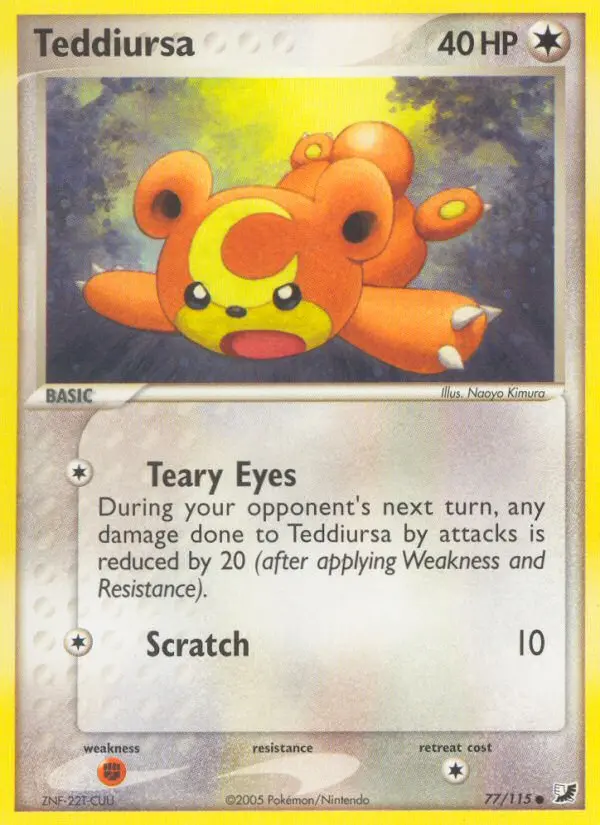
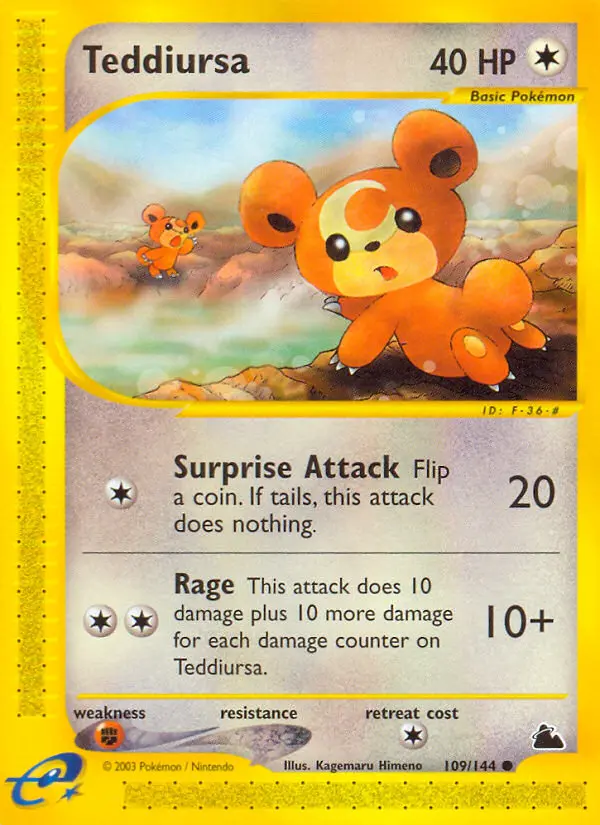
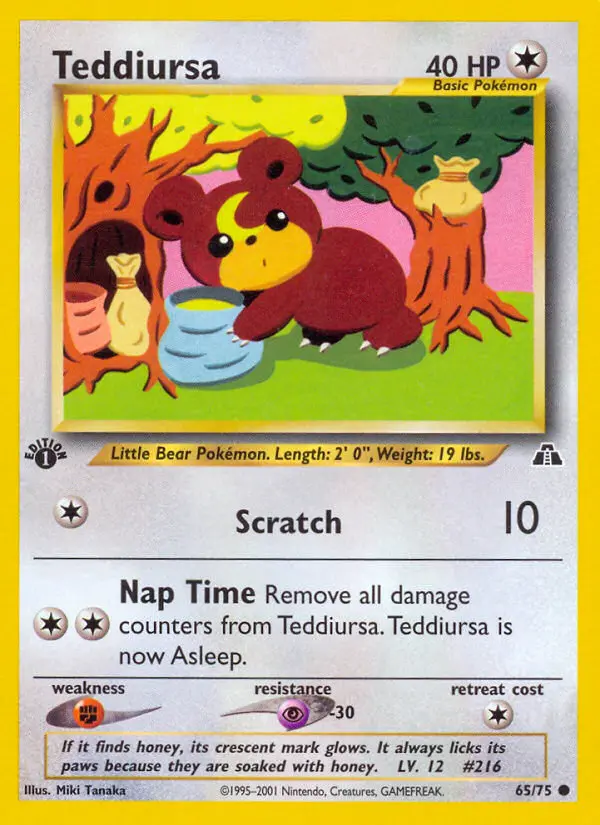
Teddiursa
Generation II · #0216 — Little Bear Pokémon
As a Generation II normal-type, Teddiursa leans on pickup to cover what its raw numbers don't, particularly on the attack side. Standing 0.6 m tall and weighing 8.8 kg, it's built around a distinct combination of normal traits that shapes how it performs both in the wild and in battle. With a National Pokédex number of #216, Teddiursa occupies a unique position in the game as a creature that perfectly balances adorable design with respectable combat capabilities. The species boasts a overall stat sum of 330, with its most prominent strength being its 80 Attack stat, making it surprisingly effective for early-game encounters despite its diminutive stature and size of just 0.6 meters.
Editor's Take
Teddiursa waited eight generations for Ursaluna, and the Bloodmoon form arriving after that makes this one of the most generously expanded Gen 2 lines in the series.
Base Stats
Height
0.6m
Weight
8.8kg
Category
Little Bear Pokémon
Gender
Male 50% / Female 50%
Color
brown
Shape
upright
Habitat
mountain
Abilities
Picks up other Pokémon's used and Flung held items. May also pick up an item after battle.
Increases Speed to 1.5× with a major status ailment.
The Pokémon may pick up honey after battle.
Teddiursa Biology & Physical Characteristics
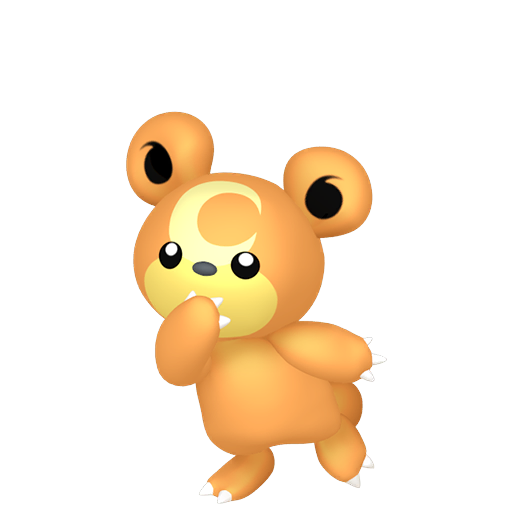
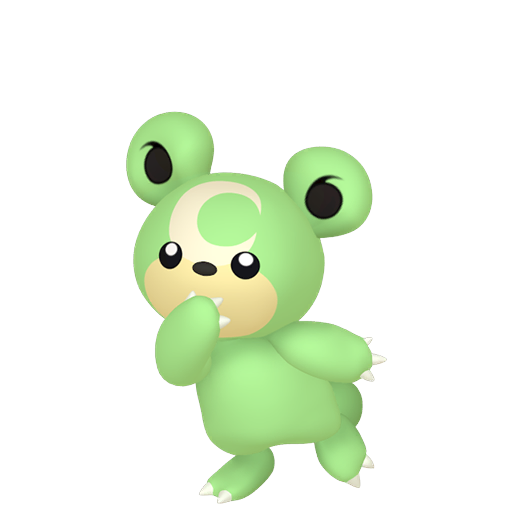
Teddiursa is a bipedal, ursine Pokémon covered in short, orange-brown fur that gives it an endearing appearance befitting its classification as a Little Bear. The creature's muzzle is noticeably lighter in coloration, displaying a soft tan hue with a small black nose and distinctive black eyes rimmed with white irises. Perhaps most striking is the crescent moon marking that adorns its face, a feature that glows brilliantly whenever it discovers honey—serving as both a biological marker and a practical indicator of the Pokémon's food-seeking success. Teddiursa possesses three claws on each of its forepaws and two claws on its hind paws, which are equipped with distinctive yellow pads that contribute to its charming silhouette. Its tail is characteristically short, round, and puffy, complementing the overall cute aesthetic of the species. What truly sets Teddiursa apart biologically is its palms, which are perpetually soaked in honey that gives each individual Teddiursa a uniquely flavored taste—no two Teddiursa have identical honey-flavored paws, making this characteristic a form of individual identity within the species.
Pokedex Numbers
Training
Breeding
Teddiursa Breeding, Gender Ratio & Egg Groups
Teddiursa maintains a perfectly balanced gender distribution with an even 50/50 split between male and female individuals, allowing trainers equal opportunity to breed either gender for competitive or collection purposes. The species falls within the Field Egg Group, a classification it shares with numerous other terrestrial and quadrupedal Pokémon, making it relatively straightforward to breed with compatible partners when attempting to pass down specific moves or abilities to offspring. With a base friendship value of 70, Teddiursa shows moderate affection towards its trainer from the outset, making it more receptive to training and bonding compared to species with lower base happiness ratings. The species exhibits a relatively standard hatch time, requiring 20 egg cycles (approximately 4,884 to 5,140 steps) before a newly laid egg produces a healthy Teddiursa, making it accessible for players who wish to breed for perfect IV specimens or specific natures early in their playthrough. The combination of high catch rate (120), moderate friendliness, and inclusive gender ratio makes Teddiursa an excellent choice for both casual players looking to complete their Pokédex and serious breeders seeking to develop competitive lineups, as the species offers flexibility without requiring specialized breeding conditions or rare partner Pokémon.
Sprites




Held Items
Oran Berry
medicine
Held: Consumed at 1/2 max HP to recover 10 HP.
Cost: 80
Oran Berry
medicine
Held: Consumed at 1/2 max HP to recover 10 HP.
Cost: 80
Sitrus Berry
medicine
Held: Consumed at 1/2 max HP to recover 1/4 max HP.
Cost: 80
Sitrus Berry
medicine
Held: Consumed at 1/2 max HP to recover 1/4 max HP.
Cost: 80
TMs & HMs
tm00
sword shield
tm01
yellow
tm01
gold silver
tm01
crystal
tm01
red blue
tm01
platinum
tm01
emerald
tm01
diamond pearl
tm01
firered leafgreen
tm01
ruby sapphire
tm01
xd
tm01
colosseum
tm01
heartgold soulsilver
tm01
lets go pikachu lets go eevee
tm01
blue japan
tm01
red green japan
tm01
sword shield
tm02
crystal
tm02
gold silver
tm02
lets go pikachu lets go eevee
+666 more TMs/HMs
Teddiursa's Evolution Chain


Teddiursa Evolution, Mega Evolution & Special Forms
Teddiursa's evolutionary path represents one of the most significant transformations in Pokémon game history, as the little bear undergoes two distinct evolutionary stages before reaching its final form. At level 30, Teddiursa evolves into Ursaring, a much larger and more powerful Normal-type Pokémon that boasts significantly improved stats across the board. This initial evolution marks a dramatic increase in physical capability, with Ursaring's Attack stat jumping substantially to 130, making it a formidable physical attacker in its own right. However, the evolutionary line reaches its apex with the introduction of Ursaluna in Pokémon Legends: Arceus, where Ursaring can evolve during a full moon when exposed to a Peat Block—a condition that fundamentally alters the creature's type composition. Upon this transformation, Ursaluna shifts from pure Normal-type to a unique Ground/Normal-type combination, gaining access to an entirely new movepool and capability set that emphasizes its connection to earth and nature. This three-stage line represents an interesting design philosophy where each stage builds upon the last, with Teddiursa serving as the foundation for increasingly powerful and specialized forms that players can develop as their journey progresses.
Where to Find
Johto Route 45
johto
Dark Cave
johto
Hoenn Altering Cave
hoenn
+9 more
Hoenn Safari Zone
hoenn
Kanto Altering Cave
kanto
+21 more
Sinnoh Route 211
sinnoh
+7 more
Acuity Lakefront
sinnoh
+1 more
Lake Acuity
sinnoh
Mt Silver
johto
+1 more
Teddiursa Behaviour and Natural Habitat
Teddiursa exhibits fascinating behavioral patterns that revolve almost entirely around its obsession with honey and food acquisition. The most distinctive behavior is its constant licking of its own paws, which it engages in throughout its waking hours to enjoy the sweet honey that has soaked into them. According to Pokédex entries, when Teddiursa feels nervous or stressed, it will lick its paws to calm itself down, suggesting that this behavior serves both nutritional and psychological purposes. The species demonstrates remarkable resourcefulness in obtaining honey; while it is capable of producing its own honey by blending fruits and pollen collected by Beedrill, Teddiursa is also known to be cunning and opportunistic, stealing honey from the carefully constructed nests of Combee by stealthily following them to their hidden locations. Ecologically, Teddiursa inhabits mountainous forests where it thrives in environments rich with natural food sources. Before winter arrives and food becomes scarce, Teddiursa exhibits intelligent foraging behavior by hoarding food in numerous hidden locations throughout its territory, demonstrating the kind of preparation and foresight that would serve it well through harsh seasons.
Pokedex Entries
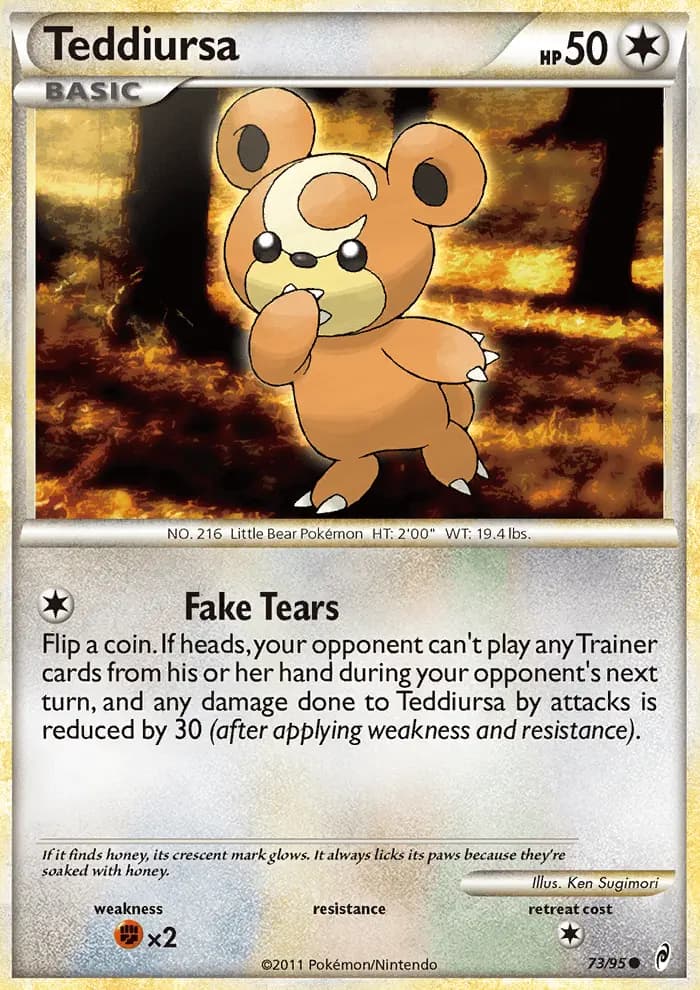
If it finds honey, its crescent mark glows. It always licks its paws because they are soaked with honey.
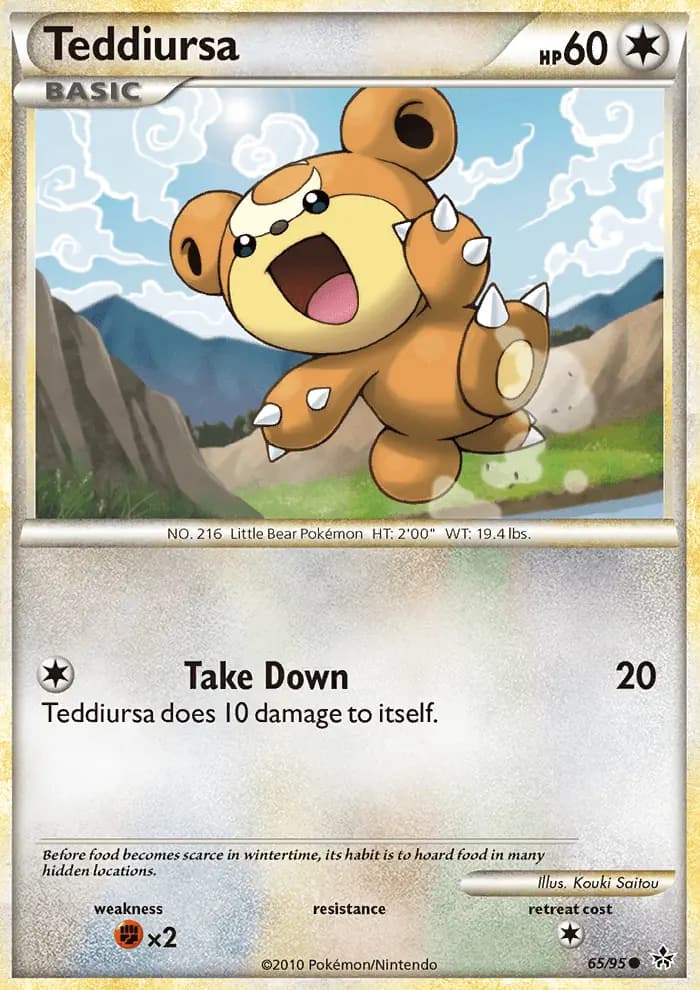
Before food be comes scarce in wintertime, its habit is to hoard food in many hid den locations.
It always licks honey. Its palm tastes sweet because of all the honey it has absorbed.
This POKéMON likes to lick its palms that are sweetened by being soaked in honey. TEDDIURSA concocts its own honey by blending fruits and pollen collected by BEEDRILL.
It licks its palms that are sweetened by being soaked in honey. A TEDDIURSA makes its own honey by blending fruits and pollen collected by BEEDRILL.
Before food becomes scarce in wintertime, its habit is to hoard food in many hidden locations.
If it finds honey, its crescent mark glows. It always licks its paws because they are soaked with honey.
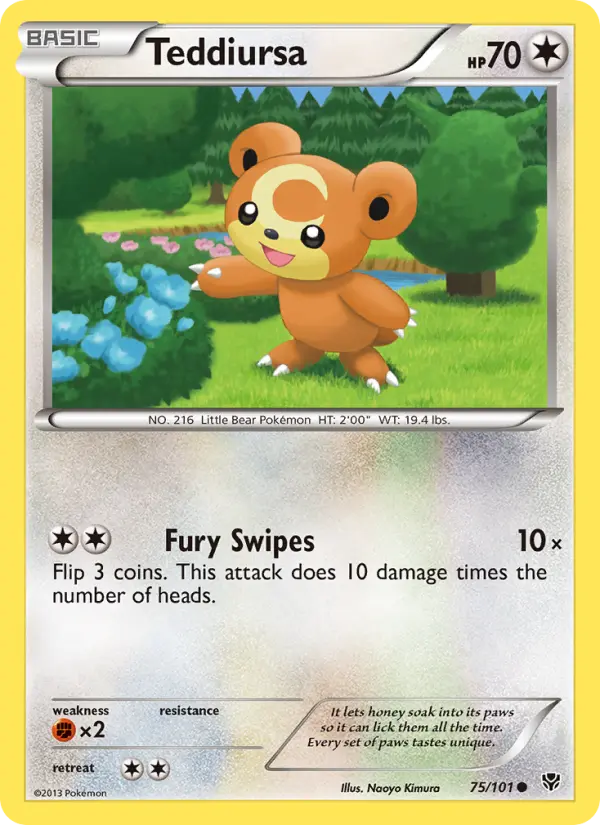
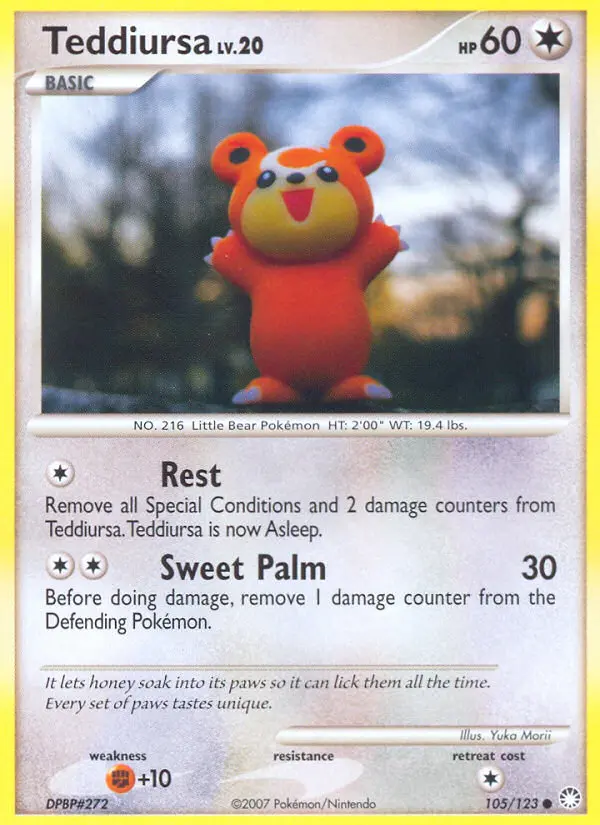
It lets honey soak into its paws so it can lick them all the time. Every set of paws tastes unique.
If it finds honey, its crescent mark glows. It always licks its paws because they’re soaked with honey.
Before food becomes scarce in wintertime, its habit is to hoard food in many hidden locations.
It lets honey soak into its paws so it can lick them all the time. Every set of paws tastes unique.
It lets honey soak into its paws so it can lick them all the time. Every set of paws tastes unique.
If it finds honey, its crescent mark glows. It always licks its paws because they’re soaked with honey.
Before food becomes scarce in wintertime, its habit is to hoard food in many hidden locations.
This Pokémon likes to lick its palms that are sweetened by being soaked in honey. Teddiursa concocts its own honey by blending fruits and pollen collected by Beedrill.
It licks its paws because of the sweet honey that has soaked into them. It is cunning, stealing into the nests of Combee and taking for itself the honey that the Combee have amassed.
Teddiursa Name Origin & Design Inspiration
The name Teddiursa is a charming portmanteau derived from 'teddy' and 'ursus,' the Latin term for bear, directly referencing its design as a teddy bear-like creature that captures the adorable essence parents and children associate with plush toys. The Japanese name, Himeguma, combines 'hime' (princess) with 'kuma' (bear), reflecting the species' feminine and diminutive appearance despite having a perfectly balanced 50/50 gender ratio. The design itself draws inspiration from real bears, particularly their upright, bipedal stance and the characteristic bear paw structure, while incorporating fantastical elements like the glowing crescent moon marking and honey-soaked paws that elevate it beyond simple animal imitation. The crescent moon marking serves both aesthetic and functional purposes, connecting Teddiursa thematically to lunar cycles and seasonal changes that influence its behavioral patterns, particularly its winter food-hoarding instinct. The honey emphasis in the design creates a cohesive identity that permeates every aspect of the species—from its behavior and habitat preferences to its biology and even its characteristic appearance. This thoughtful design integration makes Teddiursa immediately recognizable and memorable, contributing to its enduring popularity among fans since its introduction over two decades ago.
Learnable Moves
Teddiursa can learn 81 moves:
Move | Type | Cat. | Power | Acc. | PP |
|---|---|---|---|---|---|
| aerial ace | flying | Physical | 60 | — | 20 |
| attract | normal | Status | — | 100 | 15 |
| belly drum | normal | Status | — | — | 10 |
| body slam | normal | Physical | 85 | 100 | 15 |
| brick break | fighting | Physical | 75 | 100 | 15 |
| bulk up | fighting | Status | — | — | 20 |
| charm | fairy | Status | — | 100 | 20 |
| close combat | fighting | Physical | 120 | 100 | 5 |
| counter | fighting | Physical | — | 100 | 20 |
| covet | normal | Physical | 60 | 100 | 25 |
| cross chop | fighting | Physical | 100 | 80 | 5 |
| crunch | dark | Physical | 80 | 100 | 15 |
| curse | ghost | Status | — | — | 10 |
| cut | normal | Physical | 50 | 95 | 30 |
| defense curl | normal | Status | — | — | 40 |
| dig | ground | Physical | 80 | 100 | 10 |
| double team | normal | Status | — | — | 15 |
| double edge | normal | Physical | 120 | 100 | 15 |
| dynamic punch | fighting | Physical | 100 | 50 | 5 |
| earthquake | ground | Physical | 100 | 100 | 10 |
| endure | normal | Status | — | — | 10 |
| facade | normal | Physical | 70 | 100 | 20 |
| fake tears | dark | Status | — | 100 | 20 |
| feint attack | dark | Physical | 60 | — | 20 |
| fire punch | fire | Physical | 75 | 100 | 15 |
| fling | dark | Physical | — | 100 | 10 |
| focus energy | normal | Status | — | — | 30 |
| focus punch | fighting | Physical | 150 | 100 | 20 |
| frustration | normal | Physical | — | 100 | 20 |
| fury cutter | bug | Physical | 40 | 95 | 20 |
| fury swipes | normal | Physical | 18 | 80 | 15 |
| headbutt | normal | Physical | 70 | 100 | 15 |
| helping hand | normal | Status | — | — | 20 |
| hidden power | normal | Special | 60 | 100 | 15 |
| hyper voice | normal | Special | 90 | 100 | 10 |
| ice punch | ice | Physical | 75 | 100 | 15 |
| leer | normal | Status | — | 100 | 30 |
| lick | ghost | Physical | 30 | 100 | 30 |
| low kick | fighting | Physical | — | 100 | 20 |
| mega kick | normal | Physical | 120 | 75 | 5 |
| mega punch | normal | Physical | 80 | 85 | 20 |
| metal claw | steel | Physical | 50 | 95 | 35 |
| metronome | normal | Status | — | — | 10 |
| mimic | normal | Status | — | — | 10 |
| mud slap | ground | Special | 20 | 100 | 10 |
| natural gift | normal | Physical | — | 100 | 15 |
| payback | dark | Physical | 50 | 100 | 10 |
| protect | normal | Status | — | — | 10 |
| rain dance | water | Status | — | — | 5 |
| rest | psychic | Status | — | — | 5 |
| return | normal | Physical | — | 100 | 20 |
| roar | normal | Status | — | — | 20 |
| rock slide | rock | Physical | 75 | 90 | 10 |
| rock smash | fighting | Physical | 40 | 100 | 15 |
| rock tomb | rock | Physical | 60 | 95 | 15 |
| rollout | rock | Physical | 30 | 90 | 20 |
| scratch | normal | Physical | 40 | 100 | 35 |
| secret power | normal | Physical | 70 | 100 | 20 |
| seismic toss | fighting | Physical | — | 100 | 20 |
| slash | normal | Physical | 70 | 100 | 20 |
| sleep talk | normal | Status | — | — | 10 |
| snore | normal | Special | 50 | 100 | 15 |
| strength | normal | Physical | 80 | 100 | 15 |
| substitute | normal | Status | — | — | 10 |
| sunny day | fire | Status | — | — | 5 |
| superpower | fighting | Physical | 120 | 100 | 5 |
| swagger | normal | Status | — | 85 | 15 |
| sweet scent | normal | Status | — | 100 | 20 |
| swift | normal | Special | 60 | — | 20 |
| swords dance | normal | Status | — | — | 20 |
| tackle | normal | Physical | 40 | 100 | 35 |
| take down | normal | Physical | 90 | 85 | 20 |
| taunt | dark | Status | — | 100 | 20 |
| thief | dark | Physical | 60 | 100 | 25 |
| thrash | normal | Physical | 120 | 100 | 10 |
| thunder punch | electric | Physical | 75 | 100 | 15 |
| torment | dark | Status | — | 100 | 15 |
| toxic | poison | Status | — | 90 | 10 |
| uproar | normal | Special | 90 | 100 | 10 |
| yawn | normal | Status | — | — | 10 |
| zap cannon | electric | Special | 120 | 50 | 5 |
Teddiursa Competitive Battle Guide
While Teddiursa's competitive viability in serious tournament play is limited due to its modest overall stat sum of 330, the species serves as an excellent stepping stone for developing young trainers' strategic thinking and understanding of type matchups. With a base Attack stat of 80, Teddiursa functions as a competent physical attacker in early-game encounters and lower-tier competitive formats, particularly when equipped with appropriate moves like Crunch, Close Combat, or coverage moves learned through breeding. Its ability options provide interesting tactical considerations: Pickup allows Teddiursa to scavenge held items from defeated opponents, potentially gaining additional resources during longer battles, while Quick Feet transforms the species into a surprisingly fast combatant when afflicted with a status condition, potentially doubling its already-modest Speed stat of 40. The hidden ability Honey Gather, while thematically appealing, has minimal competitive application as it merely grants a chance to obtain honey after battle. Teddiursa's Normal typing grants it a comparatively straightforward matchup chart with only Fighting-type moves threatening serious damage, though its modest defenses across all categories leave it vulnerable to most offensive threats. While the species rarely appears in competitive tournaments at higher levels, trainers utilizing Teddiursa in local competitions or casual formats should focus on its Attack-based moves and consider its evolution to Ursaring or Ursaluna for substantially improved offensive and defensive capabilities.
Commonly Asked Questions About Teddiursa
What type is Teddiursa?
Teddiursa is a normal type Pokemon.
What does Teddiursa evolve into?
Teddiursa evolves into ursaring, then into ursaluna.
What are Teddiursa's weaknesses?
Teddiursa is weak to fighting type moves.
Does Teddiursa evolve by trading?
No — Teddiursa evolves entirely through leveling up, with no trade required at any stage.
Where can I find Teddiursa?
Teddiursa can be found in johto route 45 (johto), dark cave (johto) and hoenn altering cave (hoenn) and 6 other locations.
Teddiursa Cultural Impact & Franchise History
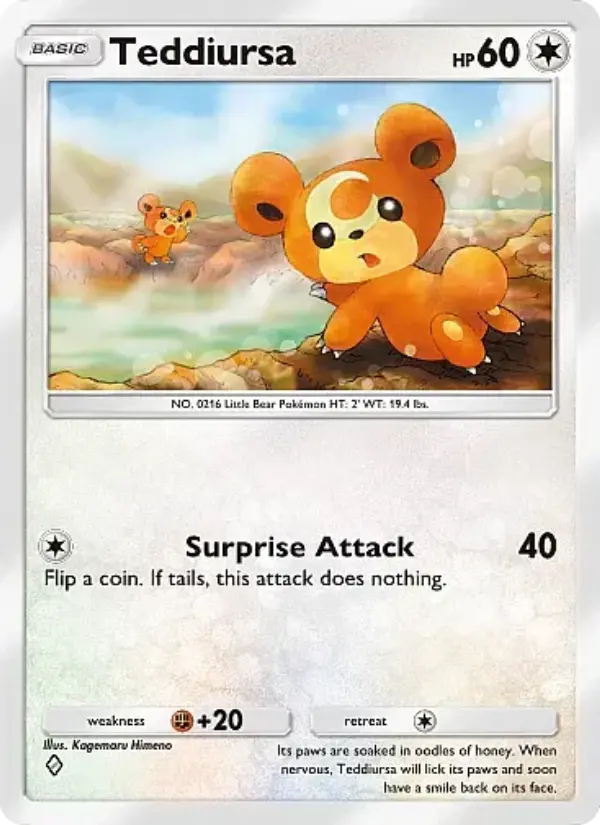
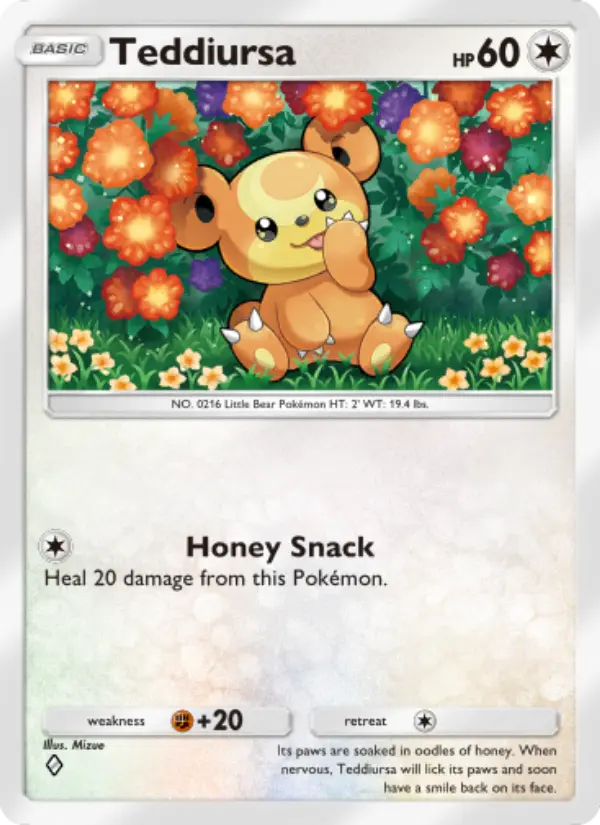
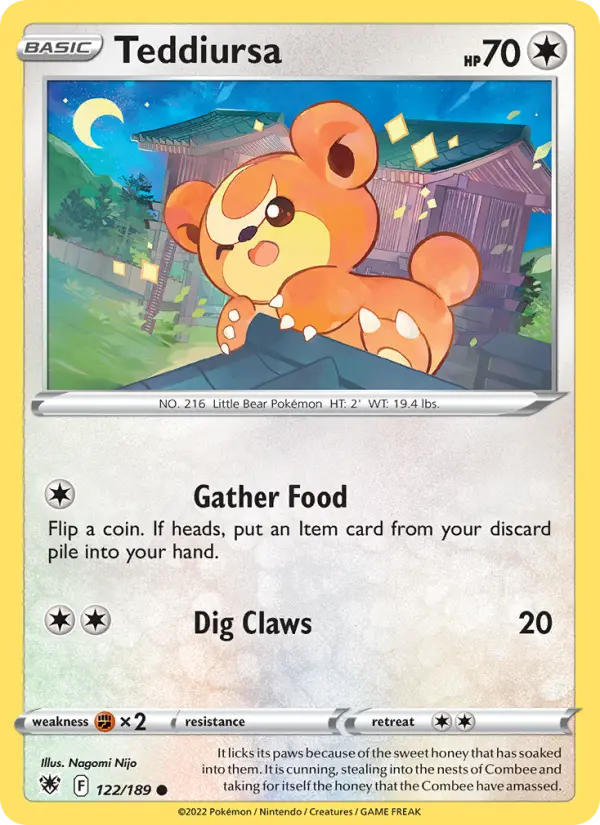
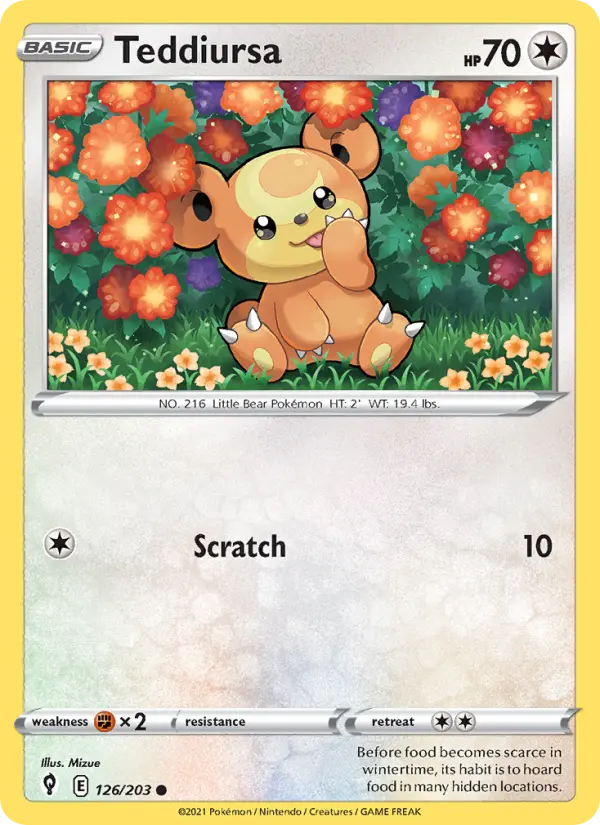
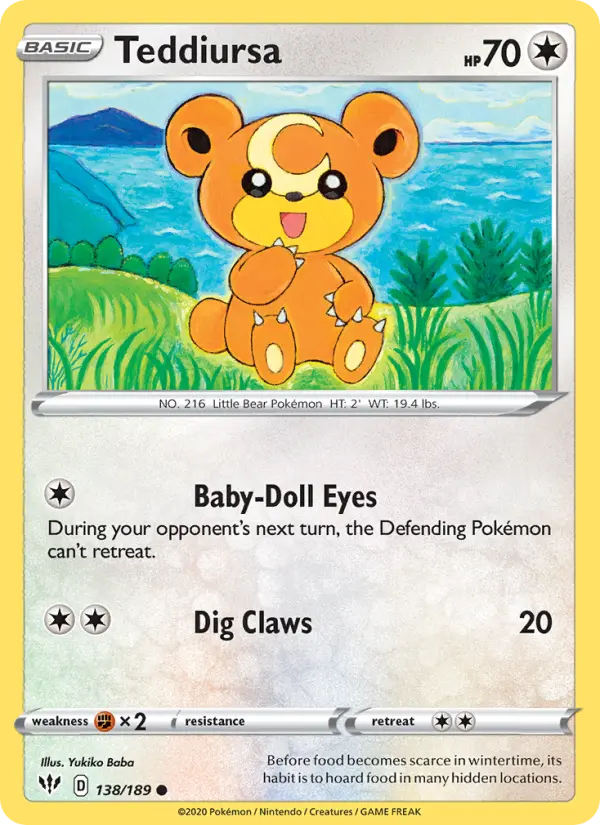
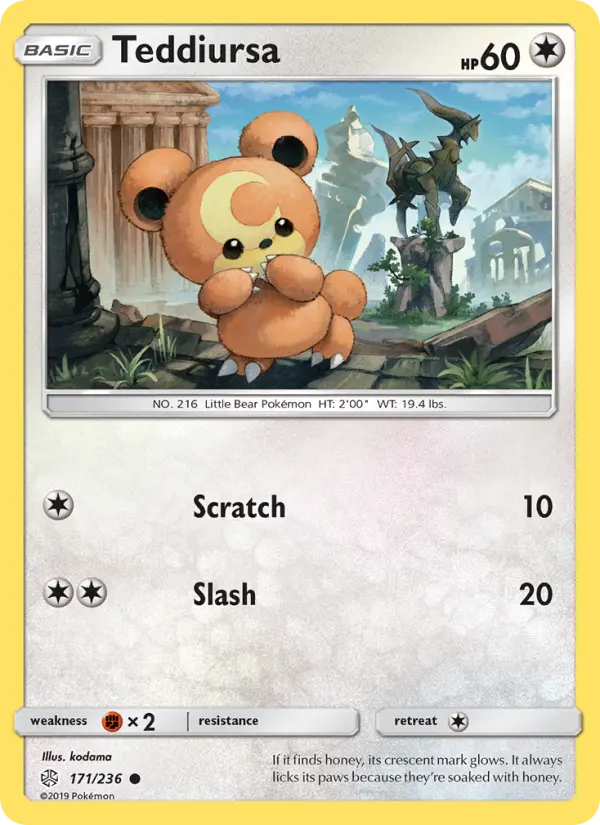
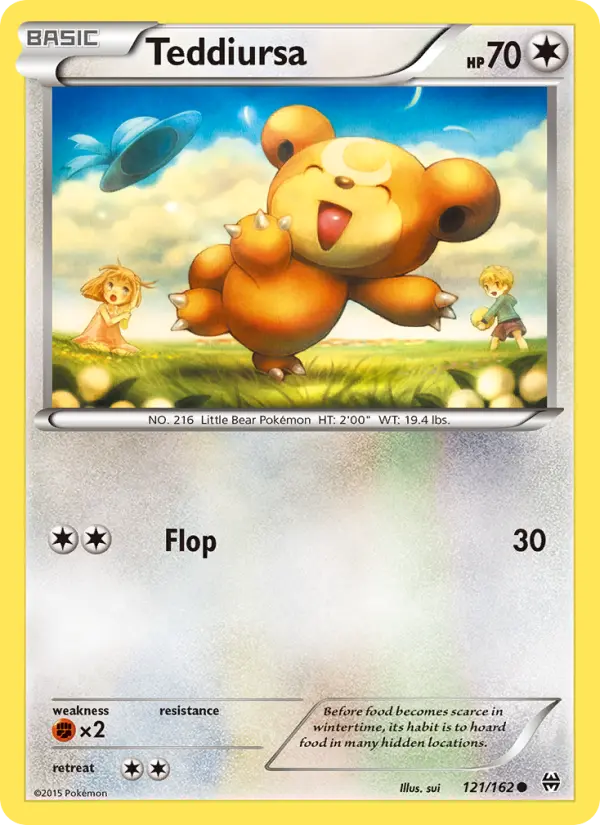
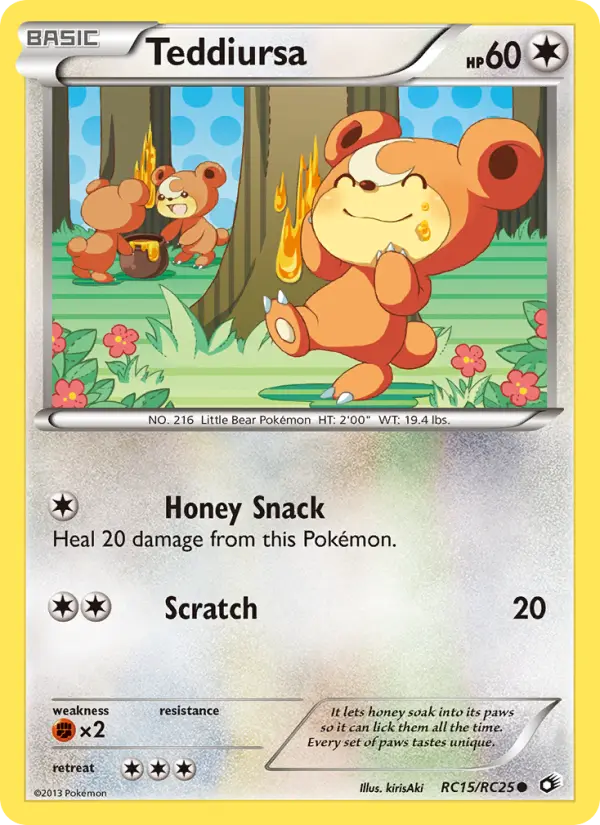
Teddiursa has established itself as a beloved fixture within Pokémon culture since its introduction in Generation II, resonating with audiences through its irresistible design that merges ursine realism with stuffed animal charm. The species appears prominently in various Pokémon animated adaptations, including the main series where it has featured in multiple episodes, contributing to its recognition among viewers who may not be familiar with the games themselves. The constant honey-licking behavior has become the species' defining characteristic, making it instantly identifiable in merchandise, fan art, and online communities where trainers frequently discuss and share their favorite depictions of Teddiursa. The introduction of Ursaluna in Pokémon Legends: Arceus revitalized interest in the entire evolutionary line, as fans appreciated the regional evolution concept and the dramatic type-shift from Normal to Ground/Normal, sparking renewed discussions about how classic Pokémon can remain relevant across generations. Teddiursa's presence in trading card game sets since Generation II has made it a recognizable character to collectors, with vintage Teddiursa cards becoming nostalgic touchstones for long-time fans. The species has inspired numerous creative works within fan communities, from fanart celebrating its honey-obsessed nature to fan fiction exploring the dynamics between Teddiursa and its honey sources, demonstrating how the simple, single-concept character design has proven remarkably enduring in capturing imaginations.
Where to Find Teddiursa in Every Pokémon Game
Teddiursa's availability has varied significantly throughout the Pokémon game series, reflecting its regional status and the design decisions of each game's development team. In the original Generation II games (Gold, Silver, and Crystal), Teddiursa appeared as a wild encounter in specific locations within the Johto region, establishing it as a signature regional Pokémon for that generation. The species returned in subsequent remakes—HeartGold and SoulSilver—with similar encounter methods, allowing players to obtain it early in their journey. Teddiursa has appeared in numerous main series titles across various generations, including the Sinnoh region games (Diamond, Pearl, and Platinum), Kalos region games (X and Y), and more recent titles like Pokémon Legends: Arceus and Pokémon Scarlet and Violet. In Pokémon Legends: Arceus specifically, Teddiursa occupies Local Pokédex entry #112, emphasizing its importance within that region's legendary context. The species is commonly available through breeding if one obtains a female Teddiursa or an Ursaring, making it consistently accessible to players even if wild encounters prove elusive in their current game. Additionally, Teddiursa's relatively common appearance in starter distributions and early-game encounter tables across multiple games ensures that most trainers who wish to include one in their team can do so without excessive grinding or trading, contributing to its status as one of Generation II's most recognizable and obtainable creatures.