
Hisuian Voltorb
Generation I · #10231 — Ball Pokémon
Hisuian Voltorb is a regional variant of the classic Electric-type Pokémon, reimagined as an Electric/Grass-type hybrid in the ancient Hisui region. Introduced in Pokémon Legends: Arceus, this form represents a fascinating departure from its modern counterpart, suggesting that Voltorb's evolution in ancient times took a different ecological path influenced by Hisui's unique flora and environment. While maintaining the same overall silhouette and iconic sphere-like appearance that makes the original Voltorb so distinctive, the Hisuian form incorporates botanical elements that hint at a symbiotic relationship with plant life. As a Ball Pokémon, it retains the mysterious connection to Poké Balls that has defined the species since its discovery, though the addition of Grass-type characteristics creates intriguing questions about how this variant adapted to prehistoric Hisui's diverse biomes.
Editor's Take
Hisuian Voltorb being a wooden Poké Ball rather than a modern one is a genuinely funny historical joke, and Electric/Grass is a typing that had never existed before.
Base Stats
Height
0.5m
Weight
13.0kg
Category
Ball Pokémon
Gender
Genderless
Color
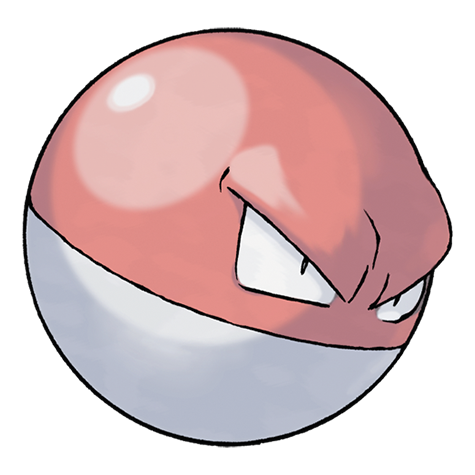
red
Shape
ball
Habitat
urban
Abilities
Protects against sound-based moves.
Has a 30% chance of paralyzing attacking Pokémon on contact.
Damages the attacker for 1/4 its max HP when knocked out by a contact move.
Hisuian Voltorb Biology & Physical Characteristics
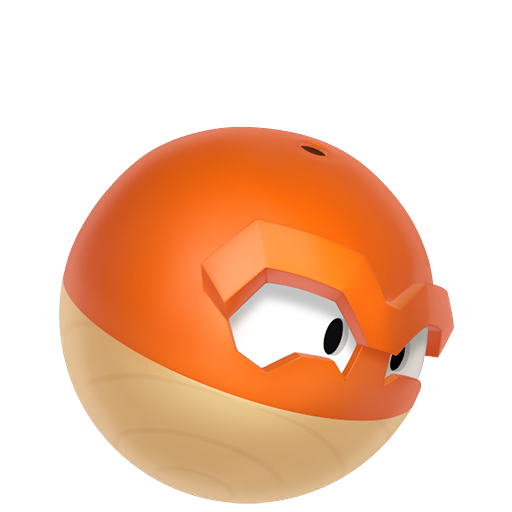
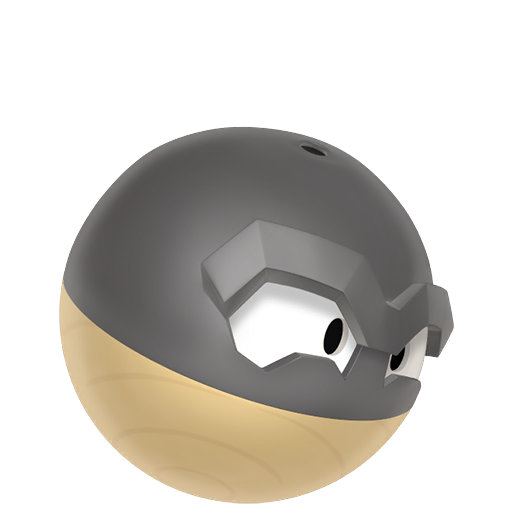
Hisuian Voltorb shares the compact spherical body structure of its Electric-type ancestor, measuring just 0.5 meters in height but weighing slightly more at 13.0 kilograms due to its denser botanical composition. The Hisuian form exhibits visible plant-like features woven into its design, with mossy or grass-like textures replacing some of the clean geometric patterns of the original form. This biological adaptation suggests that over generations in the ancient Hisui region, Voltorb developed a symbiotic relationship with plant life, absorbing chlorophyll and photosynthetic capabilities into its cellular structure. The dual Electric/Grass typing reflects both the electrical charge that remains its primary characteristic and a secondary capacity to harness solar and plant-based energy. Despite these botanical modifications, the core electrical apparatus that generates its signature discharges remains unchanged, allowing Hisuian Voltorb to maintain the volatile nature and explosive temperament for which the species is notorious. The Pokédex notes that this form's components similarly do not occur naturally, suggesting that even in ancient times, the species' origins remained somewhat mysterious and possibly artificial in nature.
Pokedex Numbers
Training
Breeding
Hisuian Voltorb Breeding, Gender Ratio & Egg Groups
Like all members of the Voltorb evolutionary line, Hisuian Voltorb is genderless, lacking conventional biological sex characteristics and reproducing through means not entirely understood by modern Pokémon science. This asexual reproduction trait aligns with the Mineral egg group classification shared by Voltorb variants and other artificially-seeming Pokémon species, further supporting the mysterious hypothesis that Voltorb may have originated from technological or experimental processes rather than natural evolutionary development. The species' base happiness of 70 suggests moderate affinity toward trainers and caregivers, making them trainable despite their volatile nature and tendency toward explosive reactions. Hisuian Voltorb's genderless status means that breeding requires one parent to be Voltorb or Electrode of either form and one to be from the Mineral egg group, creating diverse breeding possibilities in competitive cultivation. Despite lacking sexual dimorphism, individual Hisuian Voltorb may display slight variations in the prominence of botanical features or electrical coloration, allowing trainers to identify and select for breeding stock with desirable traits. The species' 20-egg-cycle hatching period aligns with typical Pokémon gestation timelines, and with adequate care and training, newborn Hisuian Voltorb demonstrate the same potential for competitive viability as wild-caught specimens, making the species viable for both casual and competitive breeding programs.
Sprites




TMs & HMs
tm02
lets go pikachu lets go eevee
tm04
gold silver
tm04
crystal
tm05
lets go pikachu lets go eevee
tm07
lets go pikachu lets go eevee
tm08
lets go pikachu lets go eevee
tm09
yellow
tm09
red blue
tm09
ruby sapphire
tm09
firered leafgreen
tm09
emerald
tm09
diamond pearl
tm09
xd
tr65
sword shield
tr80
sword shield
tm50
scarlet violet
tm72
scarlet violet
tm159
scarlet violet
tm173
scarlet violet
tm180
scarlet violet
+399 more TMs/HMs
Hisuian Voltorb's Evolution Chain


Hisuian Voltorb Evolution, Mega Evolution & Special Forms
Hisuian Voltorb evolves into Hisuian Electrode when exposed to a Leaf Stone, representing a dramatic transformation that emphasizes its Grass-type heritage alongside its electrical nature. This evolution method differs notably from the original Voltorb's level-based evolution into regular Electrode at level 30, highlighting how environmental and evolutionary pressures in ancient Hisui created a divergent path for the species. The Leaf Stone requirement suggests that Hisuian Voltorb's evolution is fundamentally tied to botanical energy, requiring an infusion of pure plant-based power to trigger its metamorphosis into its final form. This conditional evolution mechanic reflects the interconnected nature of Hisui's ecosystems, where ancient Pokémon often depended on specific environmental elements to reach their full potential. Trainers seeking to complete their Hisuian Pokédex must acquire Leaf Stones through exploration and collection in the region, adding an additional layer of strategy to Voltorb's evolutionary line. The resulting Hisuian Electrode represents the pinnacle of this botanical-electrical fusion, embodying characteristics that would have been essential for survival and thriving in the ancient Hisui region's unique conditions.
Where to Find
Location data not available for this Pokémon in the database.
Hisuian Voltorb Behaviour and Natural Habitat
Hisuian Voltorb is typically found in the verdant valleys and overgrown ruins of the Hisui region, particularly in areas where electrical fields intersect with lush vegetation. Unlike its modern counterpart's preference for power plants and industrial facilities, this historical variant thrives in natural environments rich with plant life, rolling grasslands, and ancient clearings where natural electromagnetic phenomena occur. The species maintains the extremely volatile and sensitive temperament characteristic of all Voltorb, exploding at the slightest provocation or unexpected jolt, though the addition of Grass-type energy may influence its behavior patterns in subtle ways. It moves by rolling across uneven terrain, and as with all Voltorb variants, the ground's irregularities pose constant danger of accidental detonation. Trainers and ancient Hisuian inhabitants report that the creature is easily mistaken for a Poké Ball, leading to numerous dangerous encounters. The Hisuian form's preference for areas with both electrical and botanical abundance suggests it was a common encounter in the region's wilder territories, where it could feed on the ambient electromagnetic energy while drawing sustenance from the rich plant matter surrounding it, making it a truly unique adaptation to its environment.
Pokedex Entries
Usually found in power plants. Easily mistaken for a POKé BALL, they have zapped many people.
It is said to camouflage itself as a POKé BALL. It will self-destruct with very little stimulus.
It rolls to move. If the ground is uneven, a sudden jolt from hitting a bump can cause it to explode.
It was discovered when POKé BALLS were introduced. It is said that there is some connection.
During the study of this POKéMON, it was discovered that its compo nents are not found in nature.
VOLTORB was first sighted at a company that manufactures POKé BALLS. The link between that sighting and the fact that this POKéMON looks very similar to a POKé BALL remains a mystery.
VOLTORB is extremely sensitive - it explodes at the slightest of shocks. It is rumored that it was first created when a POKé BALL was exposed to a powerful pulse of energy.
It bears an uncanny and unexplained resemblance to a POKé BALL. Because it explodes at the slightest shock, even veteran TRAINERS treat it with caution.
A life-form whose identity is unknown. It is said to SCREECH or suddenly SELFDESTRUCT.
Usually found in power plants. Easily mistaken for a POKé BALL, it has zapped many people.
It looks just like a Poké Ball. It is dangerous because it may electrocute or explode on touch.
It rolls to move. If the ground is uneven, a sudden jolt from hitting a bump can cause it to explode.
It was discovered when Poké Balls were introduced. It is said that there is some connection.
It looks just like a Poké Ball. It is dangerous because it may electrocute or explode on touch.
It looks just like a Poké Ball. It is dangerous because it may electrocute or explode on contact.
It was discovered when Poké Balls were introduced. It is said that there is some connection.
Usually found in power plants. Easily mistaken for a Poké Ball, it has zapped many people.
Voltorb was first sighted at a company that manufactures Poké Balls. The link between that sighting and the fact that this Pokémon looks very similar to a Poké Ball remains a mystery.
Voltorb is extremely sensitive—it explodes at the slightest of shocks. It is rumored that it was first created when a Poké Ball was exposed to a powerful pulse of energy.
It is said to camouflage itself as a Poké Ball. It will self-destruct with very little stimulus.
An enigmatic Pokémon that happens to bear a resemblance to a Poké Ball. When excited, it discharges the electric current it has stored in its belly, then lets out a great, uproarious laugh.
Hisuian Voltorb Name Origin & Design Inspiration
The Hisuian variant's design cleverly merges the iconic spherical Poké Ball-like appearance with naturalistic elements that suggest ancient origins and connection to Hisui's primordial ecosystem. The name Voltorb itself derives from combining 'volt,' referencing electrical voltage, with 'orb,' describing its perfectly spherical shape—a naming convention that applies equally to both forms. The Hisuian iteration maintains this electrical designation while incorporating subtle design cues suggesting moss, vines, or leafy growths integrated into its structure, reflecting a design philosophy that respects the original while establishing regional identity. The form's heavier weight (13.0 kg versus the original's 10.4 kg) despite identical height suggests denser botanical material comprising much of its body, while the coloration likely incorporates verdant greens and earth tones alongside the traditional red and white Poké Ball pattern. This design approach creates visual continuity with Hisuian variants of other Pokémon species, which often display ancient or nature-integrated aesthetics reflecting their prehistoric setting. The designation as 'Sphere Pokémon' rather than 'Ball Pokémon' in some contexts emphasizes the distinction between the natural spheroid form and the manufactured Poké Ball, a subtle but meaningful linguistic difference acknowledging its evolution beyond the original form's thematic connection to human technology.
Learnable Moves
Hisuian Voltorb can learn 50 moves:
Move | Type | Cat. | Power | Acc. | PP |
|---|---|---|---|---|---|
| agility | psychic | Status | — | — | 30 |
| bullet seed | grass | Physical | 25 | 100 | 30 |
| charge | electric | Status | — | — | 20 |
| charge beam | electric | Special | 50 | 90 | 10 |
| discharge | electric | Special | 80 | 100 | 15 |
| double edge | normal | Physical | 120 | 100 | 15 |
| electric terrain | electric | Status | — | — | 10 |
| electro ball | electric | Special | — | 100 | 10 |
| electroweb | electric | Special | 55 | 95 | 15 |
| endure | normal | Status | — | — | 10 |
| energy ball | grass | Special | 90 | 100 | 10 |
| explosion | normal | Physical | 250 | 100 | 5 |
| facade | normal | Physical | 70 | 100 | 20 |
| foul play | dark | Physical | 95 | 100 | 15 |
| giga drain | grass | Special | 75 | 100 | 10 |
| grass knot | grass | Special | — | 100 | 20 |
| grassy glide | grass | Physical | 55 | 100 | 20 |
| grassy terrain | grass | Status | — | — | 10 |
| gyro ball | steel | Physical | — | 100 | 5 |
| ice ball | ice | Physical | 30 | 90 | 20 |
| leaf storm | grass | Special | 130 | 90 | 5 |
| leech seed | grass | Status | — | 90 | 10 |
| magical leaf | grass | Special | 60 | — | 20 |
| protect | normal | Status | — | — | 10 |
| rain dance | water | Status | — | — | 5 |
| recycle | normal | Status | — | — | 10 |
| reflect | psychic | Status | — | — | 20 |
| rest | psychic | Status | — | — | 5 |
| rollout | rock | Physical | 30 | 90 | 20 |
| screech | normal | Status | — | 85 | 40 |
| seed bomb | grass | Physical | 80 | 100 | 15 |
| self destruct | normal | Physical | 200 | 100 | 5 |
| sleep talk | normal | Status | — | — | 10 |
| solar beam | grass | Special | 120 | 100 | 10 |
| spark | electric | Physical | 65 | 100 | 20 |
| stun spore | grass | Status | — | 75 | 30 |
| substitute | normal | Status | — | — | 10 |
| swift | normal | Special | 60 | — | 20 |
| tackle | normal | Physical | 40 | 100 | 35 |
| take down | normal | Physical | 90 | 85 | 20 |
| taunt | dark | Status | — | 100 | 20 |
| tera blast | normal | Special | 80 | 100 | 10 |
| thief | dark | Physical | 60 | 100 | 25 |
| thunder | electric | Special | 110 | 70 | 10 |
| thunder shock | electric | Special | 40 | 100 | 30 |
| thunder wave | electric | Status | — | 90 | 20 |
| thunderbolt | electric | Special | 90 | 100 | 15 |
| volt switch | electric | Special | 70 | 100 | 20 |
| wild charge | electric | Physical | 90 | 100 | 15 |
| worry seed | grass | Status | — | 100 | 10 |
Hisuian Voltorb Competitive Battle Guide
Hisuian Voltorb occupies a specialized niche in competitive Pokémon battling, leveraging its exceptional Speed stat of 100 to outpace most opponents despite modest offensive capabilities. With a Special Attack base of 55 and Special Defense base of 55, it functions best as a fast support or utility Pokémon rather than a primary damage dealer, though its Electric/Grass typing grants access to diverse move pools including Thunderbolt, Power Whip, and Leaf Storm for offensive pressure. The ability to choose between Soundproof, which blocks sound-based moves, or Static, which has a 30% chance of paralyzing attackers on contact, provides tactical flexibility depending on the metagame and team composition. Its hidden ability Aftermath offers defensive value by damaging attacking Pokémon for one-quarter of their maximum HP when Hisuian Voltorb is knocked out by a contact move, potentially discouraging physical attackers and creating team dynamics around sacrificial plays. The relatively low Attack (30) and Defense (50) stats, combined with modest HP (40), mean Hisuian Voltorb cannot tolerate sustained physical assault, requiring careful team building and positioning to maximize its contributions. Competitively viable sets typically emphasize Speed-boosting natures and EV investment in Speed and Special Attack, potentially incorporating Light Screen or Reflect for team support, making Hisuian Voltorb an excellent choice for trainers seeking a fast utility Pokémon with unique typing and interesting ability interactions.
Commonly Asked Questions About Hisuian Voltorb
What type is Hisuian Voltorb?
Hisuian Voltorb is a electric and grass type Pokemon.
What does Hisuian Voltorb evolve into?
Hisuian Voltorb does not evolve into any other Pokemon. It is the final form in its evolution line.
What are Hisuian Voltorb's weaknesses?
Hisuian Voltorb is weak to poison, bug, fire and ice type moves.
Hisuian Voltorb Cultural Impact & Franchise History
Voltorb's iconic design as a Poké Ball doppelgänger has made it a beloved and recognizable Pokémon across generations, and the Hisuian form extends this cultural significance by recontextualizing the species within a historical framework. In the setting of Pokémon Legends: Arceus, Hisuian Voltorb represents humanity's hypothetical pre-industrial encounters with Pokémon, a fascinating thought experiment about how species would adapt and be perceived before modern Poké Ball technology existed. The botanical integration into its design appeals to players interested in ecological themes and natural Pokémon adaptation, differentiating it from the sterile, technological implications of the original form's resemblance to mechanical devices. Fans appreciate the Hisuian form as an example of thoughtful regional variant design, one that respects the original concept while creating a distinct identity that enriches the species' lore and evolutionary possibilities. The form has become a symbol of Pokémon Legends: Arceus' distinct aesthetic and setting, featuring prominently in promotional materials and fan communities dedicated to the ancient Hisui region. Tournament players and competitive enthusiasts recognize Hisuian Voltorb's unique typing and ability pool as valuable contributions to team diversity, while casual players enjoy the Poké Ball mystery element that has always surrounded the species. The existence of regional variants like Hisuian Voltorb demonstrates Game Freak's commitment to refreshing classic Pokémon with contemporary design sensibilities and evolving storytelling, ensuring that even iconic Gen I species remain relevant and exciting to modern audiences.
Where to Find Hisuian Voltorb in Every Pokémon Game
Hisuian Voltorb is exclusively available in Pokémon Legends: Arceus, where it can be encountered throughout various regions of ancient Hisui, particularly in grassy areas and environments with electrical phenomena. The species has not been officially released in subsequent generations including Scarlet and Violet, making it accessible only to players who have access to Legends: Arceus or who can trade with trainers who have captured specimens in that game. In Legends: Arceus, Hisuian Voltorb appears in the wild with reasonable frequency, particularly in the Obsidian Fieldlands and Crimson Mirelands, where combinations of electricity and vegetation create optimal habitats for the species. The catch rate of 190 indicates that capturing Hisuian Voltorb is relatively straightforward compared to legendary or rare Pokémon, making it an accessible addition to any trainer's team or Pokédex. Players seeking specific natures or individual values can exploit the game's mechanics to reset encounters or breed from captured specimens using the Mineral egg group compatibility. For players wishing to use Hisuian Electrode in competitive formats where Legends: Arceus-compatible games are supported, acquiring and evolving Hisuian Voltorb represents the only viable method of obtaining the evolved form. The species' limited availability outside Legends: Arceus has created a collectible value among dedicated fans and competitive players, with some trainers maintaining carefully bred Hisuian Voltorb lineages specifically for trading with players in other games or generations once official transfer methods become available.